

The Law Offices of Anidjar and Levine help protect the accused’s rights from the earliest investigation through charging, hearings, negotiation, and trial preparation.
Counsel reviews the specific statute alleged, examines witness credibility, preserves digital and physical evidence, and identifies weaknesses in the State’s proof.
Early guidance also helps prevent damaging statements and supports informed decisions about plea options, defense strategy, and long-term consequences.
The sections below explain the process, risks, and available legal protections.
For additional legal resources, visit Florida Sexual Assault Lawyer.
Main Takeaways
- A Florida lewd or lascivious acts lawyer reviews the exact charge, alleged conduct, ages involved, and evidence before advising on defense strategy.
- Early legal counsel helps protect your rights, prevent damaging statements, and preserve texts, messages, records, and other critical evidence.
- Defense strategy often focuses on statutory elements, witness credibility, conflicting statements, digital context, and weaknesses in the State’s proof.
- A lawyer can guide you through investigation, release, charging, plea negotiations, court hearings, and sentencing with clear, practical advice.
- Because penalties can be severe and long-lasting, immediate, disciplined representation is important for reducing exposure and protecting future interests.
How We Can Help With Your Florida Lewd or Lascivious Acts Claim
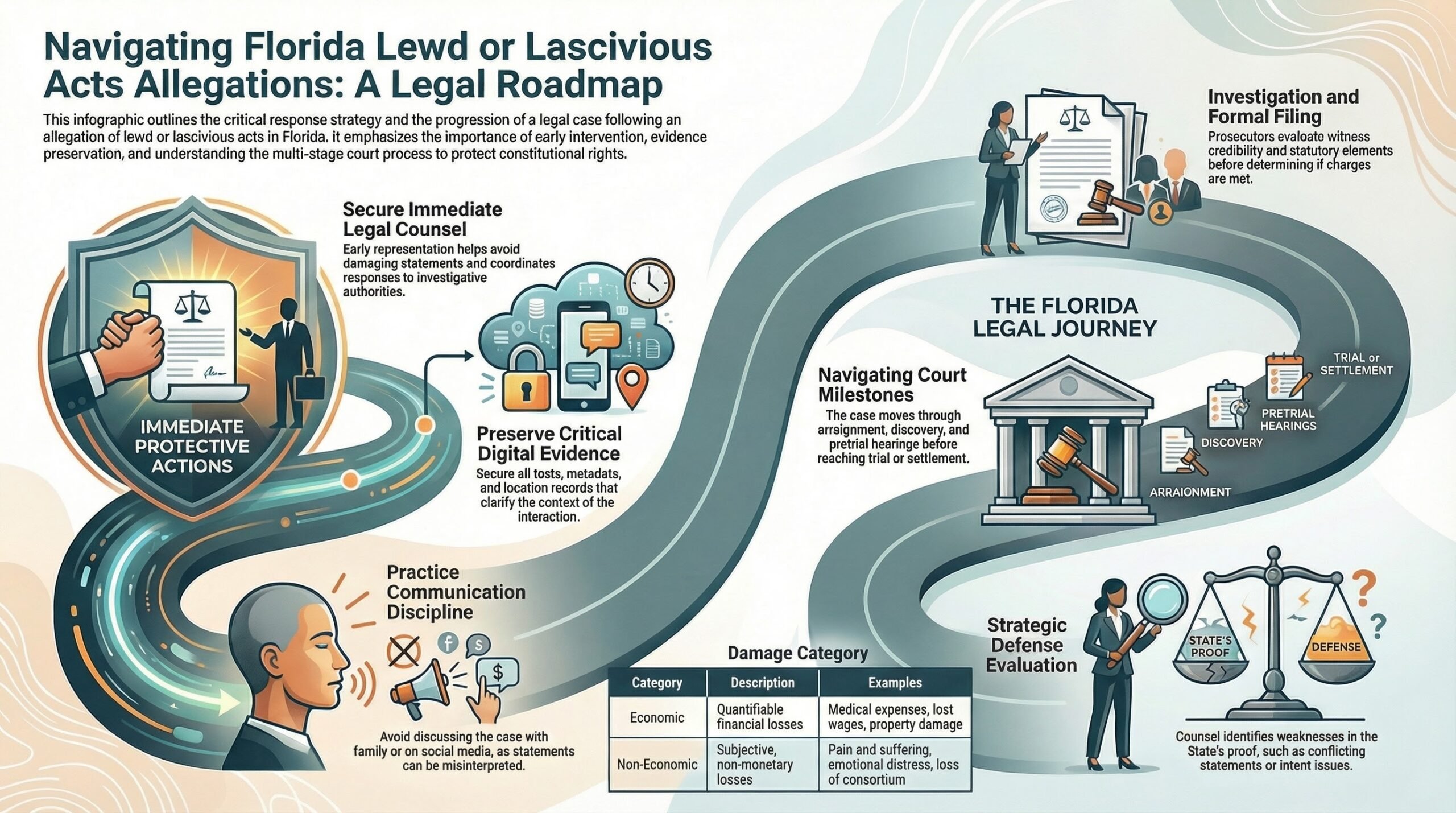
Facing a lewd or lascivious acts allegation in Florida requires a careful, strategic response from the outset. Counsel provides steady guidance, helping clients act responsibly while protecting their rights, reputation, and ability to continue serving family, work, and community obligations during a difficult period.
Representation often begins with immediate case assessment, client interviews, and Evidence preservation to prevent harmful misunderstandings from hardening into lasting damage. An attorney coordinates communications, reviews records, identifies weaknesses in the state’s position, and prepares a disciplined defense strategy tailored to the client’s circumstances and goals.


Where appropriate, counsel also evaluates alternatives to prolonged litigation, including plea negotiation designed to minimize exposure and safeguard long-term interests. Throughout the process, the firm offers clear advice, timely updates, and practical direction so clients can make informed decisions. This support helps restore stability, reduces avoidable errors, and ensures that every step taken serves a constructive legal purpose and preserves future opportunities.
Understanding Lewd or Lascivious Acts Cases in Florida
OUR CONSULTATIONSARE FREE
START YOUR FREE CASE REVIEW

Because allegations of lewd or lascivious acts in Florida can arise under several distinct statutes, a clear understanding of the legal framework is essential at the outset of any case. Florida law separates offenses by conduct, age, and surrounding circumstances, which means a careful reading of the charging language is necessary before any response is planned.
A sound review usually considers the elements prosecutors must prove, the available defenses, and the possible penalties that may follow a conviction. Witness credibility often becomes central, especially when statements conflict or important details change over time. Evidence documentation is equally important, since messages, records, timelines, and forensic material may either support or weaken the State’s position. Those assisting affected individuals should recognize that these cases demand accuracy, patience, and respect for due process.
An informed approach helps families, advocates, and community members respond responsibly while protecting legal rights and promoting fair, careful treatment for everyone involved throughout proceedings.
Common Scenarios When Lewd or Lascivious Acts Might Take Place in Florida


Allegations of lewd or lascivious acts in Florida may arise in a range of settings, each presenting distinct factual and legal concerns. Common examples include school and youth environments, online messaging encounters, family or household situations, and incidents alleged to have occurred in public places or at community events. Identifying the context of the accusation is often crucial to understanding how an investigation begins and how a defense strategy may be evaluated.
School And Youth Settings
Although schools and youth programs are structured to protect minors, these environments can still become the focus of lewd or lascivious act investigations in Florida when alleged conduct occurs in classrooms, locker rooms, school vehicles, extracurricular activities, or other settings where adults and minors interact. Reports may involve teachers, coaches, volunteers, aides, or older students in positions of trust. In these matters, schools often coordinate with law enforcement and child protective agencies while taking immediate safety measures.
Careful fact review is critical because misunderstandings, conflicting accounts, and policy violations may overlap. Pretrial discovery can shape how records, witness statements, and surveillance evidence are evaluated. At the same time, victim advocacy services may support minors and families as proceedings move forward. These cases demand respectful attention, procedural fairness, and a strong commitment to community protection.
Online Messaging Encounters
Digital communication has expanded the range of settings in which lewd or lascivious act investigations may arise in Florida, extending concerns beyond in-person environments such as schools and youth programs. Online messaging encounters may involve social media, gaming chats, private apps, or direct texts, where allegations develop through requests, images, or suggestive exchanges. Investigators often review account histories, metadata, and Text message context to assess intent, age awareness, and escalation over time.
Service-minded professionals may focus on careful documentation, lawful reporting, and victim safety planning when concerns emerge. These matters can become intricate when identities are unclear, messages are deleted, or communication crosses platforms rapidly. A structured response helps preserve evidence, support affected individuals, and make sure that inquiries proceed with fairness, diligence, and appropriate attention to community protection overall.
Family Or Household Situations
When concerns arise within family or household settings, the circumstances often involve repeated access, private spaces, and relationships marked by trust or authority. In Florida, allegations may emerge in homes shared by parents, stepparents, relatives, caregivers, or others with regular contact. These matters can be especially complicated because routines, dependence, and isolation may affect disclosure and investigation. A careful legal response often considers household dynamics, available evidence, and the safety of everyone involved.
Professionals serving affected families may help identify immediate needs, explain reporting procedures, and connect individuals with Victim Support resources. Courts may also consider Protective Orders when circumstances suggest ongoing risk. Because these cases carry severe personal and legal consequences, prompt guidance, respectful communication, and informed advocacy remain important for protecting rights and promoting stability during an uncertain process.
Public Places And Events
In public places and at community events, allegations of lewd or lascivious acts may arise in settings where large crowds, limited supervision, or brief unsupervised contact create opportunities for misconduct or misunderstanding. Such claims may involve parks, festivals, schools, malls, or public beach events, where interactions can be misread or reported by multiple witnesses.
Authorities may also investigate dating app incidents that lead to meetings in cars, parking lots, hotels, or other semi-public areas. In service-minded communities, families, volunteers, and organizers often seek safe environments for children and vulnerable persons, which can increase scrutiny when complaints arise. Video footage, conflicting statements, and rapid reporting frequently shape these cases. A careful legal review typically examines the location, witness credibility, digital communications, and whether any conduct actually meets Florida’s statutory elements and proof standards.
Legal Rights of Victims of Lewd or Lascivious Acts in Florida
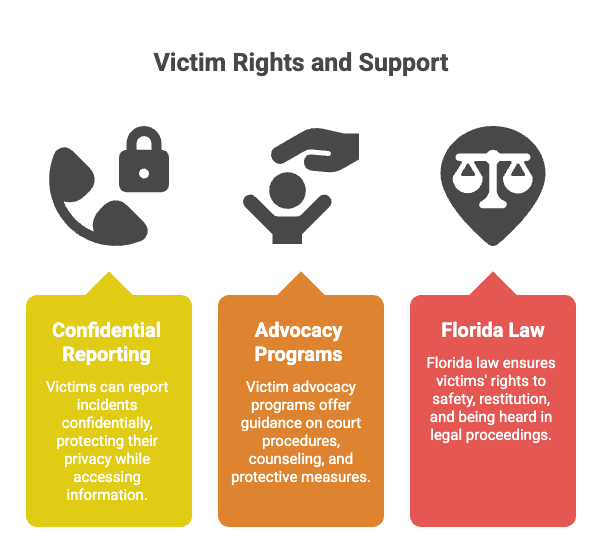
Victims of lewd or lascivious acts in Florida possess important legal rights designed to protect their safety, dignity, and access to justice. State law recognizes their interest in respectful treatment, privacy, and meaningful participation throughout criminal proceedings.
These protections help communities respond with care while honoring the needs of those harmed.
- Victims may seek confidential reporting options in certain settings, preserving privacy while receiving information about available services and legal protections.
- Through victim advocacy programs, they may obtain guidance on court procedures, notifications, counseling referrals, and assistance in requesting protective measures.
- Florida law also supports rights related to safety, restitution, and being heard at crucial stages, including release, plea, and sentencing proceedings.
These rights exist to promote accountability and, where possible, restore stability. A knowledgeable Florida lawyer may help explain applicable protections, safeguard communications, and support lawful access to resources intended to serve victims and the public good.
Steps to Take After a Lewd or Lascivious Acts Incident in Florida
After an alleged lewd or lascivious acts incident in Florida, the initial response can greatly affect both legal exposure and case strategy. Prompt legal counsel is often pivotal, while careful preservation of messages, records, and other relevant evidence may help protect important facts. It is also generally advisable to avoid self-incrimination by refraining from statements to law enforcement or others before obtaining legal guidance.
Seek Immediate Legal Counsel
Why is immediate legal counsel so important in allegations involving lewd or lascivious acts in Florida? Early representation helps an accused person understand rights, avoid harmful statements, and respond appropriately to investigators, schools, or child protective authorities. Counsel also provides guidance that serves families, protects reputations, and supports a measured, lawful response during a deeply disruptive time.
An attorney can assess the allegation, explain potential charges, and develop a strategy before the matter intensifies. Prompt advice may reduce missteps that damage credibility or limit defenses later. Legal counsel also coordinates required next steps, including Evidence protection and obtaining witness statements through proper channels, while helping clients comply with court orders and investigative requests. Immediate assistance offers structure, preserves options, and promotes decisions grounded in service, responsibility, and care for everyone involved.
Preserve Key Evidence
Because allegations of lewd or lascivious acts often turn on credibility, timing, and context, preserving critical evidence should begin as soon as possible and be handled carefully. A person in this situation should secure texts, emails, call logs, social media messages, photographs, location records, receipts, and calendar entries that may clarify events. Original files should be maintained, and screenshots should be backed up with dates and source details whenever possible.
Orderly investigation documentation can also support those working to protect all involved and promote a fair process. Names of potential witnesses, relevant timelines, and any prior communications should be organized in one place. Thoughtful retention of witness statements is equally important, especially when memories may fade quickly. Consistent recordkeeping helps counsel evaluate facts accurately and respond effectively under pressure.
Avoid Self-Incrimination
When an allegation involves possible criminal exposure, the accused person should avoid discussing the matter with law enforcement, the complaining witness, family members, friends, or on social media until legal counsel has been consulted. Casual explanations, apologies, or denials may be misinterpreted and later used against the person who made them.
Counsel can evaluate whether silence, limited disclosure, or a formal response best protects legal interests while preserving respectful treatment of others involved. This guidance also allows a defense team to conduct Witness Interviewing carefully, identify inconsistent statements, and prevent avoidable harm to the case. In some matters, disciplined communication supports better outcomes during Plea Negotiations or trial preparation.
By refraining from self-incrimination, the accused person gives counsel the opportunity to serve effectively, protect constitutional rights, and promote a fair, orderly legal process for everyone.

How a Florida Lewd or Lascivious Acts Lawyer Can Help You Initiate a Case
Although the early stages of a lewd or lascivious acts case can be confusing and time-sensitive, a Florida defense lawyer can help initiate the matter by determining the allegations, explaining the applicable charges, and identifying the immediate steps needed to protect the accused person’s rights. Counsel often begins by reviewing reports, preserving communications, and advising the accused on lawful, respectful conduct during the investigation.
Early analysis may also identify Criminal intent defenses and issues involving the preparation of victim testimony.
Early legal guidance helps clarify allegations, protect rights, preserve evidence, and identify potential defenses in a lewd acts investigation.
A lawyer’s initial assistance commonly includes:
- assessing the facts, possible defenses, and procedural risks;
- communicating with investigators or prosecutors when appropriate;
- gathering records, witness statements, and digital evidence before they are lost.
This measured approach supports informed decision-making and helps families respond responsibly while avoiding further harm. By organizing facts early, counsel can challenge weak assumptions, prepare for hearings, and build a defense strategy that serves justice, protects constitutional rights, and promotes careful treatment of everyone involved.
Long-term Effects of Lewd or Lascivious Acts Trauma
The long-term effects of lewd or lascivious acts trauma often include significant emotional and psychological harm, which may persist well beyond the initial incident. These experiences can also disrupt personal relationships, affecting trust, communication, and the ability to maintain stability with others. In many cases, lasting behavioral challenges emerge, including withdrawal, anxiety, and other patterns that interfere with daily functioning.
Emotional And Psychological Impact
Because trauma associated with lewd or lascivious acts often extends far beyond the initial incident, many victims experience long-term emotional and psychological effects that interfere with daily functioning, relationships, and overall well-being. Common responses include persistent fear, shame, hypervigilance, depression, sleep disruption, and intrusive memories that impair concentration and decision-making. Some individuals struggle with Trauma disclosure, especially when trust, self-protection, and fear of judgment complicate reporting or seeking help.
Effective support often includes anxiety treatment, trauma-informed counseling, and careful safety planning designed to reduce distress and restore stability. Service-minded professionals recognize that long-term rehabilitation is rarely linear. Symptoms may intensify during legal proceedings, anniversaries, or other reminders, requiring consistent advocacy, patient listening, and coordinated care that respects the victim’s dignity, autonomy, and pace of recovery.
Effects On Relationships
When lewd or lascivious acts trauma remains unresolved, it often disrupts a victim’s ability to form, maintain, or trust close relationships over time. The emotional effects may include persistent fear, shame, and difficulty feeling safe with others, even when support is sincere and consistent. As a result, intimate partnerships, friendships, and family bonds may become strained by misunderstanding, withdrawal, or misplaced guilt.
In caregiving communities and service-oriented families, these relational injuries can create family fallout that reaches beyond the individual survivor. Loved ones may struggle to respond appropriately, while the victim may feel isolated despite genuine concern. Over time, unresolved trauma can weaken communication, reduce healthy connections, and complicate efforts to build stability, mutual respect, and dependable support across personal and household relationships for many years.
Lasting Behavioral Challenges
Relational strain often coincides with longer-term behavioral changes that persist well after the immediate trauma response has faded. Survivors may demonstrate withdrawal, hypervigilance, disrupted sleep, irritability, or difficulty trusting authority figures and caregivers. Trauma triggers can intensify these patterns, especially in settings that resemble prior abuse or undermine personal safety.
Over time, affected individuals may struggle with school, employment, and consistent community involvement, which can limit their ability to serve others and maintain stable routines. Effective support frequently includes structured therapy, patient advocacy, and practical coping strategies that reinforce safety, predictability, and emotional regulation. A careful legal response may also reduce stress by protecting rights and limiting harmful exposure during proceedings.
With informed intervention, some long-term challenges become more manageable, allowing healthier behavior, stronger boundaries, and improved daily functioning over time.
What to Expect During a Florida Lewd or Lascivious Acts Claim Process
A Florida lewd or lascivious acts claim process generally begins with an initial investigation, during which law enforcement gathers statements, reviews evidence, and assesses the allegations. If prosecutors determine that sufficient grounds exist, formal charges may be filed, followed by a court process that can include arraignment, pretrial hearings, negotiations, and trial preparation over an extended timeline.
Throughout this process, defense strategy options may focus on challenging the evidence, protecting procedural rights, and evaluating whether dismissal, reduction, or trial presents the strongest course.
Initial Investigation Steps
At the outset of a Florida lewd or lascivious acts investigation, law enforcement typically begins by collecting statements, reviewing digital communications, and seeking any physical or forensic evidence that may support the allegation. Investigators often coordinate with child protection professionals, schools, or medical personnel to ensure safety, preserve records, and meet Reporting Obligations under Florida law.
Early case activity may also include Victim Interview Prep, typically conducted by trained forensic interviewers who use developmentally appropriate methods to reduce trauma and improve reliability. Officers may identify witnesses, secure phones or computers, request surveillance footage, and document timelines. In many situations, the accused is approached for an interview, though participation should be considered carefully. Families and caregivers are often encouraged to remain cooperative, organized, and attentive to support needs while the inquiry continues.
Formal Charge Filing
Once investigators believe sufficient evidence exists, the case may be forwarded to the State Attorney’s Office for a formal review of whether criminal charges for lewd or lascivious conduct should be filed under Florida law. Prosecutors then evaluate reports, witness statements, digital records, and other Trial evidence to decide whether the legal standard for filing has been met. This review is intended to promote fairness, protect the community, and ensure that decisions rest on reliable facts rather than assumptions.
If charges are approved, the formal allegations are prepared and filed with the court. Defense counsel may also begin presenting mitigating information, identifying evidentiary weaknesses, or addressing constitutional concerns. In some matters, early discussions regarding plea bargaining may arise, though filing decisions remain grounded in prosecutorial discretion and the available evidence.
Court Process Timeline
Because criminal allegations for lewd or lascivious acts can move through the Florida courts in several distinct stages, it is important to understand the general timeline and the purpose of each step. After formal charges are filed, the accused typically appears for arraignment, where the court addresses the plea and sets future dates. Pretrial hearings then manage scheduling, discovery, and motions, while Evidence preservation remains important for all parties.
As the case progresses, prosecutors and defense counsel exchange information and address legal issues before the judge. Some matters are resolved before trial, while others continue toward trial preparation and jury selection. If a trial occurs, the court hears testimony, reviews exhibits, and applies the law. Sentencing, if necessary, follows a conviction, and post-trial proceedings or appeals may come afterward.
Defense Strategy Options
With the court process underway, attention often turns to the defense strategies that may shape the outcome of a Florida lewd or lascivious acts case. Counsel typically begins by reviewing police reports, witness statements, digital records, and forensic evidence for weaknesses, inconsistencies, or constitutional violations. A careful Bail strategy may also support stability, employment, and family responsibilities while the matter proceeds.
Further options may include challenging identification, disputing intent, questioning interview methods, or seeking suppression of unlawfully obtained evidence. In some circumstances, counsel may seek dismissal of the case, especially where the evidence is insufficient or the proceedings were improper. Negotiation may also be considered when it protects long-term interests and reduces harm to all involved. Throughout the process, effective representation remains focused on fairness, dignity, accountability, and informed decision-making for everyone affected.

Compensation for Florida lewd or Lascivious Acts Damages
Although criminal charges for lewd or lascivious acts in Florida primarily expose a defendant to incarceration, probation, and registration consequences, they can also lead to substantial financial liability through restitution, court-imposed costs, and related damages arising from the alleged conduct. Careful attention to Evidentiary requirements and police report review may affect contested compensation claims, especially when advocates seek outcomes that protect all involved.
Courts may order payment as part of sentencing or probation, and nonpayment can create additional legal problems. A disciplined legal response often examines documentation, causation, and statutory limits before agreeing to any amount. In service-oriented representation, counsel may also encourage lawful, responsible resolutions that preserve dignity, promote accountability, and address legitimate needs without conceding unsupported financial demands.
Economic vs Non-Economic Damages in Florida Lewd or Lascivious Acts Cases
In Florida lewd or lascivious acts cases, damages are generally divided into economic and non-economic categories, each addressing a different form of harm. Economic damages usually concern measurable financial losses, while non-economic damages relate to pain, emotional distress, and other intangible effects. Any claim for either type of damage must be supported by credible evidence, as the strength of the proof often shapes the scope of recovery.
Economic Damages Explained
Because damages in Florida lewd or lascivious acts cases may extend far beyond the immediate event, the law distinguishes between economic and non-economic losses when evaluating a victim’s claim. Economic damages refer to measurable financial harm supported by records, invoices, employment documents, and expert assessment.
These losses may include medical expenses, counseling costs, prescription needs, transportation to treatment, and lost wages from missed work. In some matters, diminished earning capacity may also apply when trauma affects future employment. Victim restitution in a criminal case may address certain out-of-pocket losses, while a civil claim can pursue broader recovery supported by evidence. A careful legal review helps identify every documented expense, preserving resources that may support treatment, stability, and practical recovery needs for the person harmed and the family.
Non-Economic Losses Overview
While economic damages can be calculated through bills and wage records, non-economic losses address the personal harm that does not appear on a ledger. In Florida lewd or lascivious acts cases, these losses often include pain, emotional distress, humiliation, anxiety, and loss of enjoyment of life. Their purpose is to recognize human suffering and the need for compassionate survivor support when measurable expenses alone are inadequate.
These harms may also affect relationships, personal dignity, and a survivor’s sense of safety within the community. Case developments, including concerns about Witness credibility, allegations of evidence tampering, or a plea negotiation, can shape how these losses are understood in a broader legal context. A careful overview helps families, advocates, and service-minded readers appreciate that justice involves more than finances and requires attention to lasting personal consequences.
Proving Damage Claims
To prove damage claims in Florida lewd or lascivious acts cases, a claimant generally must present reliable evidence that connects the wrongful conduct to specific financial and personal harm. Economic damages often include treatment costs, lost income, and expenses tied to relocation or safety needs. Non-economic damages may involve pain, emotional distress, humiliation, and loss of enjoyment of life.
Courts and insurers often examine medical records, therapy notes, employment documentation, and testimony from qualified professionals. Evidence preservation is important because timelines, communications, and receipts can help show causation and the extent of loss. Witness credibility also matters, especially when claims involve trauma-related symptoms that developed over time. In many cases, expert opinions regarding future counseling, long-term care, and continuing impairment help establish a fair valuation of both present and future damages.
When a Florida lewd or Lascivious Acts Case Goes to Trial vs Settlement
Although many Florida lewd or lascivious acts cases are resolved before trial, the decision to pursue a negotiated outcome or proceed to court depends on the strength of the evidence, the credibility of witnesses, and the legal risks facing both sides.
In practice, trial strategy often centers on whether the prosecution can prove each element beyond a reasonable doubt and whether the defense can challenge identification, intent, or reliability. Plea negotiations may be considered when they reduce exposure, limit uncertainty, or protect important personal and family interests. A case is more likely to go to trial when accounts conflict sharply, forensic support is weak, or constitutional issues affect admissibility.
Settlement discussions may advance when both sides seek a measured resolution that conserves resources and reduces stress on those involved. Careful counsel reviews records, evaluates witness testimony, and explains likely outcomes so informed decisions can be made. That process helps individuals act responsibly while protecting their future and dignity.
The Statute of Limitations for Florida Lewd or Lascivious Acts Cases
Timing can shape the course of a lewd or lascivious acts case just as much as trial strategy or plea discussions. In Florida, the statute of limitations depends on the charged offense, the alleged victim’s age, and whether later-discovered facts affect the filing period. Some charges may be prosecuted many years after the alleged conduct, while others have shorter deadlines established by statute.
A careful review of dates, charging documents, and applicable exceptions is often necessary to understand whether a prosecution is timely. This issue can affect both accountability and fairness, especially when memories fade and records become harder to obtain. Early evidence preservation may also serve the interests of all involved, including families seeking accurate information and responsible outcomes. In matters involving vulnerable individuals, communities often benefit from clear guidance, respectful communication, and emotional support resources. These considerations help people respond with care while remaining attentive to legal obligations and procedural limits.

When to Contact a Lewd or Lascivious Acts Lawyer in Florida
When a person learns of an investigation, receives contact from law enforcement, or anticipates an arrest related to alleged lewd or lascivious acts, immediate consultation with a Florida defense lawyer is often crucial. Early legal guidance helps protect constitutional rights, reduce harmful missteps, and support orderly communication with investigators and the court.
Contact is also appropriate after a search warrant, a school inquiry, a protective order, or a formal charge. Prompt counsel may help address police report accuracy, preserve records, and identify legal reporting deadlines that affect the case. If children or vulnerable individuals are involved, counsel can coordinate with families regarding safety planning and related practical concerns. In matters where community care is important, attention to Victim support may also intersect with case management, compliance obligations, and respectful boundaries.
Seeking legal advice at the earliest sign of risk allows informed decisions, steadier planning, and a more responsible response to a serious allegation while protecting the interests of all involved parties.
Why You Need an Experienced Florida Lewd or Lascivious Acts Lawyer
Early consultation often protects a person’s immediate interests, but the quality of that representation can shape the course of the entire case. In Florida, allegations of lewd or lascivious acts carry severe legal, personal, and professional consequences, so experienced counsel is often crucial from the outset. Knowledgeable representation helps identify procedural errors, challenge unreliable statements, and address charging decisions before they harden into lasting harm.
Experience also matters because these cases demand careful judgment under pressure. An attorney with a substantial background understands the urgency of preserving evidence, including securing digital records, witness statements, and other materials before they disappear or are misinterpreted. Such counsel also approaches trial vs. settlement planning with discipline, weighing legal exposure, long-term service opportunities, and reputational concerns while keeping the client’s broader responsibilities in view.
Effective advocacy does more than respond to accusations. It builds a structured defense, protects rights, and supports outcomes that limit unnecessary damage to families and communities alike.
How to Choose the Right Lewd or Lascivious Acts Lawyer for Your Case in Florida
Because the attorney selected in a lewd or lascivious acts case can influence every stage of the proceedings, the choice should rest on more than general criminal defense experience or advertising claims. A careful review of the lawyer’s background in sex crime defense, trial work, and Florida court procedure is crucial.
A qualified attorney should provide Confidential Consultations, clearly explain possible outcomes, and treat sensitive facts with dignity. It also helps to assess how the lawyer approaches Evidence Handling, including digital records, witness statements, forensic material, and challenges to improper police conduct. Families often benefit from counsel who communicates promptly, prepares thoroughly, and remains steady under pressure.
Reputation matters as well, particularly among former clients, judges, and opposing counsel. Fee structure, availability, and willingness to answer hard questions should also be considered. Selecting counsel with skill, judgment, and a service-minded approach can support informed decisions during a deeply serious legal matter.
About The Law Offices of Anidjar & Levine
Few decisions in a Florida lewd or lascivious acts case carry more practical importance than the selection of defense counsel, and The Law Offices of Anidjar & Levine presents itself as a firm prepared to address those demands with focused legal representation.
The firm emphasizes responsive communication, careful preparation, and a disciplined approach to each stage of litigation.
Its work in this area may include early case assessment, Criminal case investigation, review of witness statements, and examination of digital or forensic evidence.
In matters involving sensitive allegations, the firm also recognizes the broader human impact on families and communities, and it may help clients identify appropriate Victim support resources when those services are relevant to the legal process.
This balanced approach reflects an understanding that justice requires diligence, fairness, and respect for all persons affected.
For individuals seeking counsel that values service, accountability, and informed advocacy, the firm presents itself as a serious option within Florida’s criminal defense landscape.

Frequently Asked Questions
Can I Sue if the Accused Was Never Criminally Convicted?
Yes, a person may still sue even if the accused was never criminally convicted. Civil claims are separate from criminal cases, and they apply a lower civil standard. In court, the burden of proof is not guilt beyond a reasonable doubt, but whether the evidence more likely supports liability. This distinction allows harmed individuals to seek accountability and compensation when prosecutors decline charges or a criminal case does not succeed.
Will My Identity Remain Private During a Civil Lawsuit?
A person’s identity may remain partly private during a civil lawsuit, but complete secrecy is uncommon. Courts sometimes allow Anonymous case options, especially where sensitive harm is alleged, and public disclosure could cause further injury. Confidentiality during discovery may also protect personal records, testimony, and identifying details from broader release. Because judges balance privacy, fairness, and public access, counsel should request protective measures early to safeguard everyone involved.
Can Social Media Posts Affect My Lewd or Lascivious Acts Case?
Yes, social media posts can remarkably affect a criminal case. Prosecutors may use social media evidence to argue intent, credibility, location, or contact with others, even when a post seems harmless. Defense counsel may examine context, authenticity, and timing, and may raise First Amendment defenses when protected expression is involved. Anyone facing allegations should avoid posting, preserve existing content, and seek prompt legal guidance to protect all parties involved.
Are Schools or Employers Liable for Failing to Prevent Abuse?
Schools or employers may be liable when they breach a duty to supervise and fail to implement reasonable safeguards against foreseeable abuse. Liability often depends on what they knew, what warning signs existed, and whether their response was adequate under the circumstances. Institutions serving others are expected to act with care, protect vulnerable individuals, and follow reporting and prevention standards. A careful legal review is usually necessary to assess responsibility.
Can I Pursue a Case if the Incident Happened Years Ago?
Yes, a case may still be pursued years later, depending on the statute of limitations and the specific facts involved. A careful legal review can determine whether deadlines were extended by age, delayed discovery, or other exceptions. Evidence preservation remains critical, because records, witness statements, and related documentation can strengthen a claim. Prompt consultation with qualified counsel helps protect available rights and supports accountable action in the service of community safety.
—————————
Victims of lewd or lascivious acts in Florida may face significant legal, emotional, and practical challenges.
A qualified attorney can help protect their rights, explain available legal options, and pursue accountability through the appropriate civil process.
By acting promptly and choosing experienced legal counsel, victims can place themselves in a stronger position to seek justice and recover damages.
The Florida Sexual Assault Lawyer team at Law Offices of Anidjar & Levine provides informed guidance and dedicated representation throughout each stage of a claim.

