Law Offices of Anidjar and Levine helps protect a child’s safety, preserve records and digital evidence, and identify individuals or institutions whose abuse, negligence, or reporting failures allowed harm.
Counsel may address foster homes, group homes, transportation, or supervised visitation settings, while coordinating with authorities and explaining legal rights, deadlines, and possible compensation.
Florida claims often require careful documentation, timely action, and trauma-informed guidance.
The sections below explain the process, risks, and next steps.
Learn more by visiting our Florida Sexual Assault Lawyer page.
Main Takeaways
- A Florida foster care sexual abuse lawyer helps protect the child, preserve evidence, and explain legal rights, deadlines, and next steps.
- Lawyers investigate foster homes, agencies, contractors, and government entities to identify who may be legally responsible for the abuse.
- Cases often examine grooming, negligent supervision, poor screening, inadequate training, and failures to follow mandatory reporting requirements.
- Abuse may occur in foster homes, group homes, transportation, or visitation settings, especially where warning signs or boundary violations were ignored.
- After suspected abuse, prioritize safety, report promptly, preserve records and communications, and seek legal guidance grounded in Florida law.


How We Can Help With Your Florida Foster Care Sexual Abuse Claim
When a child has been harmed in foster care, securing timely legal guidance can be vital to protecting the child’s rights and preserving important evidence. A legal team can assist families and concerned advocates by gathering records, identifying responsible parties, and coordinating with appropriate agencies to reduce further risk. Their role is to provide clear direction, careful case evaluation, and practical next steps grounded in Florida law.
Effective representation also includes addressing wrongful reporting that may distract from the child’s needs or discourage truthful disclosures. Counsel can help develop safety planning measures that prioritize stability, privacy, and continued access to critical services. Just as important, they can connect clients with survivor support resources, including counseling referrals and community-based assistance, so legal action proceeds with the child’s well-being in view.
Through organized advocacy and disciplined preparation, they help those serving vulnerable children pursue accountability while protecting dignity, trust, and future stability for everyone involved.
OUR CONSULTATIONSARE FREE
START YOUR FREE CASE REVIEW

Understanding Foster Care Sexual Abuse Cases in Florida
A clear understanding of foster care sexual abuse cases in Florida helps families and advocates recognize how these claims arise, what legal standards may apply, and which parties may bear responsibility. These matters often involve minors placed in state-supervised settings, where adults and institutions owe heightened duties of protection, supervision, and prompt intervention.
Florida claims may turn on evidence of abuse, negligence, and institutional failures, as well as whether warning signs were missed or ignored. Courts may examine licensing requirements, screening practices, staff training, supervision policies, and compliance with mandatory reporting laws. Victim grooming is also important because abuse may develop through manipulation, secrecy, trust-building, or coercion rather than immediate force.
Potentially responsible parties can include individual abusers, foster parents, agencies, contractors, or governmental entities, depending on the facts. A service-minded approach requires careful documentation, trauma-informed communication, and attention to timelines, because legal action can support accountability, protect other children, and advance recovery for affected families and communities.
Common Scenarios When Foster Care Sexual Abuse Might Take Place in Florida
Foster care sexual abuse in Florida may arise in several settings, including private foster homes, group homes, transportation arrangements, and supervised visitation. Risk can increase when screening is inadequate, supervision is inconsistent, or institutional safeguards are poorly enforced. These scenarios often point to broader oversight failures that may expose children to preventable harm.
Abuse In Foster Homes
Although foster homes are intended to provide stability and protection, sexual abuse can occur in settings where a child is left alone with a foster parent, an older household member, or another individual who has regular access to the home. Risk may increase during overnight hours, transportation, bathing, discipline, or unsupervised caregiving. Abuse may also involve grooming, secrecy, threats, or manipulation that discourages disclosure.
In Florida, warning signs can be overlooked when adults fail to recognize behavioral changes, boundary violations, or inappropriate favoritism. Careful screening, supervision, and adherence to mandatory reporting duties are required to reduce harm. When abuse is suspected, prompt action, trauma-informed support, and victim advocacy can help protect the child, preserve evidence, and support accountability for those responsible while promoting safety, wellness, and long-term recovery for survivors.
Group Home Risk Factors
When children are placed in group homes, the risk of sexual abuse may increase in environments where staffing shortages, inadequate supervision, and poor enforcement of safety protocols create opportunities for misconduct. These settings often involve rotating personnel, shared living spaces, and vulnerable youth with complicated needs, all of which can weaken protective oversight.
Warning signs may emerge when staff supervision is inconsistent, reporting procedures are ignored, or residents are left alone with peers or adults without accountability. Failures in background checks may allow unsuitable employees or volunteers to enter positions of trust.
Poor training, weak documentation, and limited administrative response can further expose children to harm. For families, advocates, and service professionals committed to protecting others, recognizing these group home risk factors is an important step toward prevention, accountability, and safer care.
Transport And Visitation Incidents
Because transportation and visitation often occur outside the structure of a residential setting, these periods can present distinct opportunities for sexual abuse in Florida’s foster care system. Travel to appointments, school, family contact, or other placements may place a child alone with a driver, aide, or approved adult, sometimes without immediate witnesses. Visitation exchanges can also create moments of isolation before, during, or after supervised contact.
In these settings, attention to child safety is critical, especially when a child shows fear, withdrawal, or sudden behavioral changes. Caregivers, professionals, and volunteers who serve vulnerable children should understand Mandatory reporting duties and respond promptly to concerning statements or indicators. Timely intervention can help limit further harm, preserve evidence, and connect the child with victim support, protection, and appropriate trauma-informed care services.
Institutional Oversight Failures
Where institutional safeguards are weak or inconsistently enforced, the risk of sexual abuse within Florida’s foster care system may increase markedly. Oversight failures can emerge when agencies neglect background checks, ignore prior complaints, or allow excessive caseloads that limit meaningful supervision. In these settings, vulnerable children may be left without consistent protection or trusted avenues for disclosure.
Institutional breakdowns also appear through training failures, poor documentation, and weak compliance with mandated reporting duties. When caregivers, caseworkers, or administrators do not recognize warning signs, respond promptly, or escalate concerns, opportunities for intervention may be lost. Service-minded advocates often focus on whether policies existed only on paper or were actively enforced. Careful review of audits, incident histories, and supervisory practices may reveal preventable conditions that allowed abuse to occur within foster placements.


Legal Rights of Foster Care Sexual Abuse Victims in Florida
Although foster care placements are intended to provide safety and stability, Florida law recognizes that children who suffer sexual abuse in these settings retain important legal rights. Those rights are designed to protect dignity, support Trauma recovery, and promote accountability among caregivers, agencies, and institutions entrusted with vulnerable children.
Florida law protects the dignity, recovery, and legal rights of children sexually abused in foster care settings.
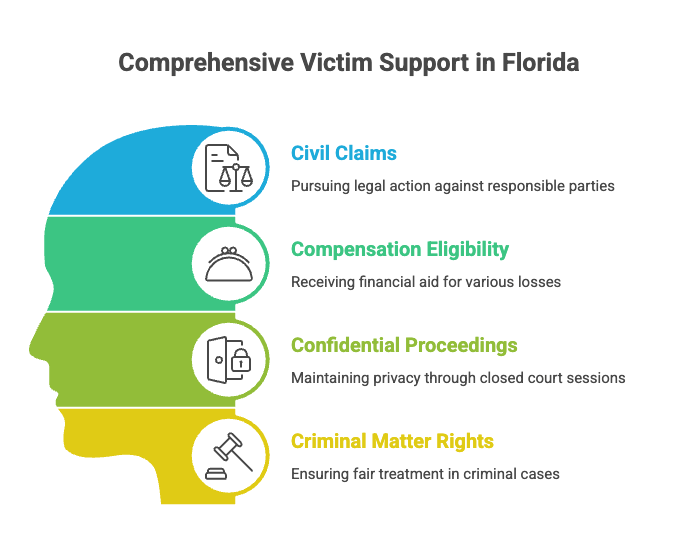
- Victims may pursue civil claims against responsible individuals and, in some cases, organizations whose negligence allowed abuse to occur.
- They may have compensation eligibility for medical care, counseling, educational support, and other losses tied to the abuse and its effects.
- Florida law may permit confidential proceedings or protective measures that reduce unnecessary exposure and help preserve privacy.
- Survivors also have rights in related criminal matters, including notice, participation, and respectful treatment under victim-protection provisions.
These protections reflect a public commitment to service, relief, and justice. In many cases, legal remedies exist not only to address past harm but also to encourage safer foster care practices for children.
Steps to Take After a Foster Care Sexual Abuse Incident in Florida
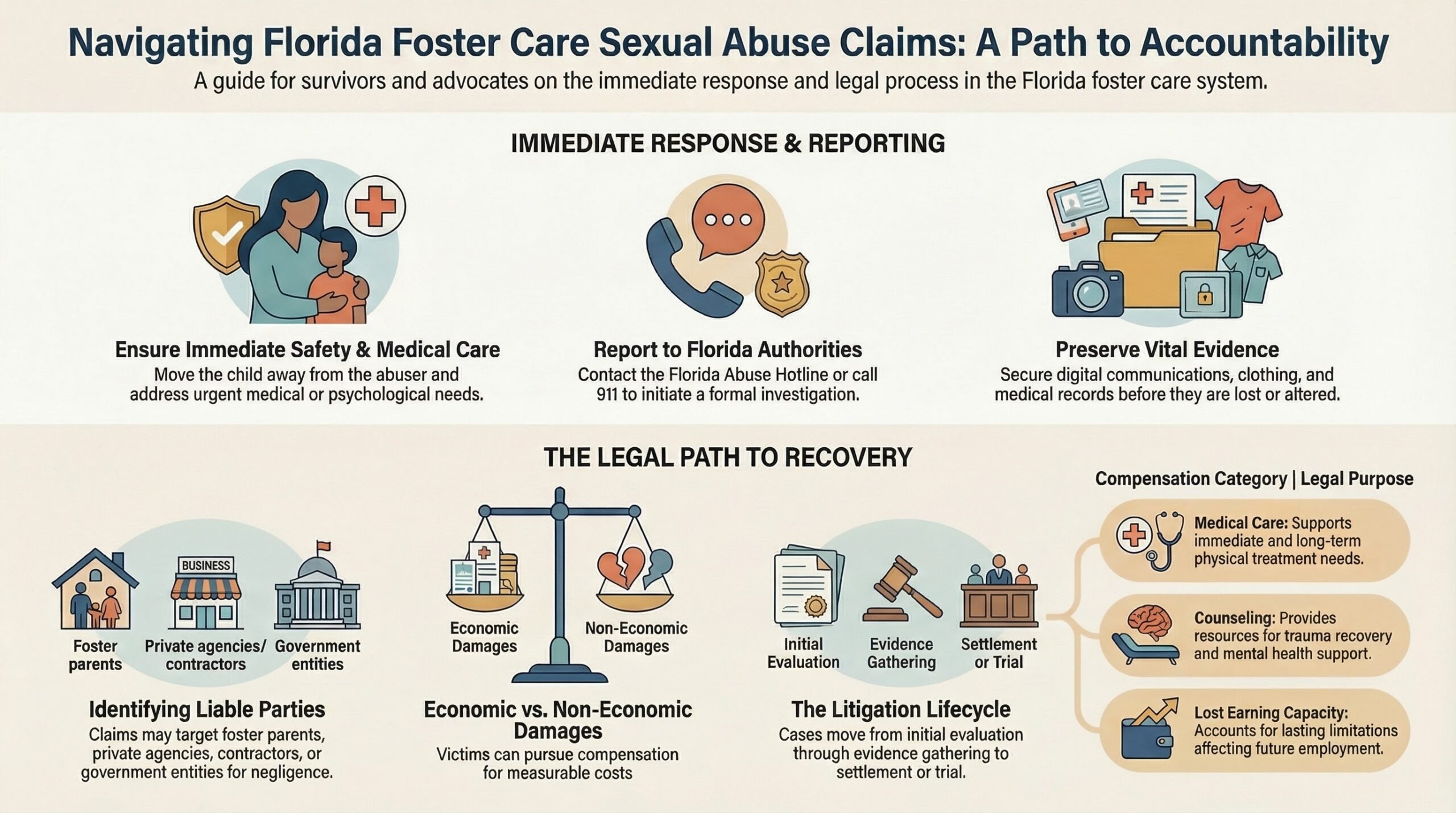
After a foster care sexual abuse incident in Florida, the first priority is to make sure the child’s immediate safety and remove the child from any ongoing risk of harm. The abuse should then be reported promptly to the appropriate authorities, as timely reporting can support both protection efforts and any subsequent investigation. It is also important to preserve vital evidence, including medical records, communications, photographs, and other relevant documentation, because these materials may be essential in establishing the facts of the case.
Ensure Immediate Safety
If a child in foster care may have been sexually abused, immediate safety must be the first priority. The child should be moved away from the suspected abuser and any environment that could increase fear, retaliation, or further harm. Caregivers and professionals should stay calm, reduce Trauma triggers, and provide steady reassurance without pressing for details.
Attention should then turn to immediate medical needs, including urgent care for injuries, pain, or distress. Thoughtful safety planning can help identify secure placement, trusted adults, and practical steps for the next several hours and days. Adults serving the child should maintain stability, protect privacy, and carefully document immediate concerns. Florida professionals must also remain mindful of mandatory reporting duties while keeping the child’s physical and emotional protection at the center.
Report The Abuse
In Florida, suspected sexual abuse in foster care should be reported without delay to the Florida Abuse Hotline, and any immediate danger should also be reported to law enforcement by calling 911. Reporting methods include phone, online, and fax submissions, allowing caregivers, professionals, and concerned adults to act promptly to protect a child.
Florida law also imposes mandatory reporting duties on many individuals who learn of abuse, neglect, or exploitation. A timely report should provide clear facts, identify the parties involved when known, and support coordinated witness interviews conducted by trained investigators. Appropriate evidence handling begins with accurate, objective reporting rather than personal investigation or confrontation. Those serving vulnerable children should document the date, time, and agency contacted, then cooperate fully with child welfare authorities and law enforcement as the case proceeds.
Preserve Key Evidence
Preserving crucial evidence should begin as soon as a report has been made, because the quality of that evidence often affects both child protection efforts and any later civil or criminal case. Caregivers, advocates, and professionals should document dates, times, observable injuries, and changes in behavior while avoiding actions that could alter physical proof or contaminate a scene.
Service-minded responders should promptly interview witnesses, secure digital communications such as texts, emails, and social media messages, and support the preservation of medical records through timely examinations and written requests to providers. Clothing, bedding, photographs, and electronic devices should be stored carefully and tracked through a clear chain of custody. Organized, respectful evidence handling can strengthen accountability, protect the child’s interests, and assist attorneys and investigators in pursuing informed, effective next steps.
How a Florida Foster Care Sexual Abuse Lawyer Can Help You Initiate a Case
When allegations of sexual abuse arise within Florida’s foster care system, a lawyer can provide the structure and legal guidance needed to begin a case properly. Counsel helps survivors and supportive caregivers understand legal rights, deadlines, and the practical requirements for filing a case, while keeping the process organized and service-focused.
A lawyer helps Florida foster care abuse survivors understand their rights, deadlines, and the steps required to properly begin a case.
- A lawyer reviews available facts, identifies potential defendants, and explains which courts or agencies may have authority.
- Counsel coordinates evidence preservation by securing records, witness statements, placement histories, and communications before essential information is lost.
- An attorney prepares notices, drafts filings, and manages procedural rules so the claim is presented clearly and on time.
- Legal counsel outlines compensation steps, including damages that may be pursued for medical care, counseling costs, and other documented losses.
Long-Term Effects of Foster Care Sexual Abuse Trauma
Foster care sexual abuse can produce lasting emotional and psychological harm that extends well beyond childhood. Survivors often experience serious difficulties with trust and relationships, which can affect personal stability, social functioning, and future attachments. In many cases, the trauma also contributes to lifelong mental health challenges that require ongoing treatment and support.
Emotional And Psychological Impact
Often, the long-term emotional and psychological impact of sexual abuse in foster care extends far beyond the period of abuse itself, affecting a survivor’s sense of safety, trust, and personal identity for years. Survivors may experience persistent anxiety, depression, shame, dissociation, sleep disturbance, and difficulty regulating emotions. These effects can interfere with education, employment, and daily functioning.
Those who serve survivors should understand that trauma triggers may reactivate fear, panic, or emotional numbness long after physical danger has ended. Careful symptom recognition is crucial because trauma may appear as withdrawal, irritability, self-blame, hypervigilance, or sudden changes in behavior. Professional support, trauma-informed care, and consistent advocacy can help survivors regain stability, strengthen self-worth, and build healthier coping strategies over time, while promoting safety, dignity, and long-term emotional recovery.
Relationship And Trust Struggles
Because sexual abuse in foster care can undermine a child’s basic sense of safety, the resulting trauma frequently carries into later relationships and affects the ability to trust others. Survivors may approach closeness with caution, expecting betrayal, manipulation, or abandonment even when support is genuine. Boundaries erosion during abuse can distort what feels normal, making it difficult to recognize healthy limits, consent, and respectful care.
In adulthood, trauma triggers may arise during ordinary interactions, causing withdrawal, people pleasing, conflict avoidance, or intense vigilance. These patterns can disrupt friendships, family bonds, intimate partnerships, and workplace dynamics. Service-minded advocates should recognize that mistrust is often a protective response rather than defiance. Consistent respect, clear communication, and reliable conduct can help survivors recover trust over time with support.
Lifelong Mental Health Challenges
The same erosion of safety and trust can also shape mental health across the lifespan, leaving effects that persist long after a child leaves the foster care system. Survivors may face chronic anxiety, depression, post-traumatic stress, self-blame, and difficulty regulating emotions, often while appearing outwardly stable.
Without consistent support, these conditions can interfere with education, employment, parenting, and physical health. Some individuals struggle with substance misuse, sleep disruption, or isolation, while others experience recurring crises during major life changes. Effective care often requires trauma therapy delivered by qualified professionals who understand intricate childhood abuse.
Recovery is rarely linear, yet meaningful progress remains possible when services are stable, compassionate, and informed. For those seeking to help, long-term commitment, trust rebuilding, and access to coordinated mental health care can make a lasting difference.
What to Expect During a Florida Foster Care Sexual Abuse Claim Process
A Florida foster care sexual abuse claim process typically begins with an initial case evaluation, during which the facts, potential defendants, and legal options are assessed. The process then focuses on gathering evidence and documentation, followed by the formal filing of the claim and any related investigation by attorneys, agencies, or other authorities. Depending on the strength of the evidence and the parties’ positions, the matter may conclude through settlement or proceed to trial.
Initial Case Evaluation
What should an individual expect during an initial case evaluation for a Florida foster care sexual abuse claim? During this meeting, legal counsel generally listens carefully, outlines the process, and identifies immediate concerns affecting safety, well-being, and accountability. The purpose is to provide informed guidance that supports recovery and service to others.
The evaluation often begins with Understanding Victim Eligibility, including the person’s relationship to foster care entities, the timing of events, and potential legal avenues. Counsel may also discuss Collecting Witness Statements by identifying people who observed behavior, made disclosures, or responded institutionally.
Questions usually address the nature of abuse, reporting history, and the roles of caregivers or agencies. This stage helps determine whether a claim may proceed and what compassionate, lawful next steps best protect the survivor’s interests and dignity.
Evidence And Documentation
Because evidence often shapes both the strength and direction of a Florida foster care sexual abuse claim, this stage typically focuses on identifying, preserving, and organizing records that may support the survivor’s account and clarify institutional responsibility. Relevant materials may include each medical record, counseling notes, placement histories, and agency communications.
Careful documentation can help service-minded advocates understand patterns, timelines, and prior warnings. Witness statements from caregivers, siblings, teachers, or professionals may provide context, while incident reports can show how concerns were recorded or overlooked.
Digital evidence, including messages, emails, photos, or metadata, may also assist in establishing chronology and access. Attorneys often encourage prompt preservation of information, since records can be lost, altered, or dispersed across multiple entities. A well-organized evidentiary file supports informed decision-making and promotes accountability for those entrusted with child safety.
Filing And Investigation
When a Florida foster care sexual abuse claim moves from documentation to formal action, the process generally begins with a detailed legal review of the facts, the potential defendants, and the available evidence. Counsel may assess timelines, agency involvement, and whether mandatory reporting duties were met. This stage often includes careful preservation of evidence and organized case documentation to support a clear, service-oriented presentation of the claim.
After filing, the investigation typically focuses on verifying records, identifying institutional failures, and clarifying how harm occurred. Attorneys may request agency files, medical records, and communications, while witness interviews help confirm patterns, notice, and supervision issues. Depending on the circumstances, experts may be consulted to evaluate trauma, policy compliance, or child welfare standards. Throughout this phase, accuracy, discretion, and protection of the claimant remain central concerns.
Settlement Or Trial
Although many Florida foster care sexual abuse claims resolve before a courtroom verdict, the settlement-or-trial stage generally requires careful evaluation of liability, damages, and the strength of the available evidence. Counsel typically reviews witness statements, expert opinions, institutional records, and Evidence preservation efforts to determine whether the negotiated resolution fairly reflects the harm suffered and future needs.
When insurers, agencies, or other defendants dispute responsibility, a trial may become necessary. In that setting, attorneys prepare exhibits, testimony, and legal arguments designed to present a clear, credible account of abuse, negligence, and resulting losses. Settlement discussions may continue throughout litigation, especially when strong documentation increases settlement leverage. The process often demands patience, discipline, and informed judgment, with each decision guided by accountability, survivor support, and the pursuit of meaningful protection for others.
Compensation for Florida Foster Care Sexual Abuse Damages
While no financial award can undo the harm caused by sexual abuse in foster care, Florida law may allow survivors to pursue compensation for the physical, emotional, and financial losses that result from that abuse. Claims often allege wrongful conduct by abusers, agencies, or other responsible parties, and courts may assess punitive damages in exceptional cases involving intentional or reckless misconduct.
| Compensation Issue | Purpose |
|---|---|
| Medical care | Supports treatment needs |
| Counseling | Addresses trauma recovery |
| Lost earning capacity | Accounts for lasting limitations |
| Out-of-pocket costs | Reimburses related expenses |
| Case evaluation | Measures claim strength |
A careful legal review can identify available sources of recovery, including insurance coverage, institutional liability, and other accountable entities. This process may help survivors and supportive families seek resources that promote stability, treatment access, and long-term restoration. In service-oriented advocacy, compensation is viewed as one part of accountability, protection, and meaningful support for survivors statewide.
Economic vs Non-Economic Damages in Florida Foster Care Sexual Abuse Cases
In Florida foster care sexual abuse cases, damages are generally divided into economic losses and non-economic harm. Economic damages address measurable costs, such as medical treatment, counseling expenses, and lost earning capacity, while non-economic damages concern pain, suffering, emotional distress, and other intangible effects. Compensation in either category depends on the quality of the evidence presented, including financial records, treatment history, expert opinions, and other documentation supporting the extent of the harm.
Economic Damages Explained
For many survivors, economic damages address the measurable financial losses caused by sexual abuse in foster care, including medical treatment, counseling, prescription costs, lost income, reduced earning capacity, and other out-of-pocket expenses tied to the harm. These damages focus on documented costs that can be calculated through records, invoices, employment history, and expert review.
In Florida foster care sexual abuse cases, Medical bills often form a central part of this analysis, alongside therapy expenses, transportation to treatment, and future care needs. Courts and insurers evaluate settlement factors such as the severity of injuries, duration of treatment, employment disruption, and the likelihood of ongoing expenses. A careful assessment helps families and advocates pursue resources that support stability, accountability, and continued service to the survivor’s long-term recovery and practical needs.
Non-Economic Harm Valuation
Because many consequences of foster care sexual abuse cannot be captured by receipts or wage records, non-economic damages address the human impact of the abuse, including pain and suffering, emotional distress, humiliation, loss of enjoyment of life, and lasting psychological harm. In Florida cases, valuation is necessarily individualized and considers the severity, duration, and life effects of the abuse.
A careful trauma assessment may help describe how fear, shame, sleep disruption, relationship difficulties, and impaired trust continue over time. Courts and counsel also examine the survivor’s age, developmental stage, and daily functioning when assigning value. Non-economic valuation does not place a price on dignity, but it seeks meaningful recognition of profound loss. Credibility proof can influence how consistently these harms are understood, while the central focus remains compassionate accountability and survivor-centered justice.
Evidence Supporting Compensation
To support compensation in a Florida foster care sexual abuse case, the evidence must connect the abuse to specific financial losses and to the broader personal harm that followed. Economic damages often rely on records showing therapy costs, medical treatment, medications, lost income, and future care needs. Non-economic damages are supported through testimony describing pain, trauma, fear, relationship disruption, and diminished quality of life.
A clear Evidence timeline helps show when symptoms appeared, how treatment progressed, and whether the abuse affected education or employment. Courts and insurers also examine witness credibility, including statements from caregivers, professionals, and others who observed behavioral changes. When documents, expert opinions, and consistent testimony align, they provide a stronger foundation for compensation that recognizes both measurable losses and enduring human harm in service to justice.
When a Florida Foster Care Sexual Abuse Case Goes to Trial vs Settlement
Although many Florida foster care sexual abuse claims resolve through negotiated settlement, some proceed to trial when liability is disputed, the value of damages is contested, or the defendants refuse to accept responsibility. In either path, Evidence preservation, witness testimony, emotional trauma, and damages valuation shape strategy and outcomes for survivors seeking accountability and protection for others.
Settlement may offer privacy, faster resolution, and reduced stress, which can be important when survivors are still recovering. Trial may become necessary when agencies, foster parents, or other parties deny misconduct, minimize harm, or challenge credibility. A courtroom process allows a judge or jury to assess records, expert opinions, and testimony under oath. However, trials can require more time, expense, and emotional endurance.
An attorney evaluates strengths, risks, and likely compensation before recommending either course. The central aim remains the same: pursuing a result that recognizes harm, supports recovery, and encourages safer foster care practices across Florida communities.
The Statute of Limitations for Florida Foster Care Sexual Abuse Cases
In Florida foster care sexual abuse cases, the statute of limitations can materially affect whether a survivor may still bring a civil claim, making early legal review especially important. Florida law has changed over time, and the filing deadline may depend on the survivor’s age, the date of abuse, and the type of defendant involved.
Courts may examine statute discovery issues, including when the survivor first connected psychological injury to the abuse. They may also consider tolling exceptions that pause or extend the deadline in limited circumstances, such as fraud, concealment, or legal incapacity. These rules can be highly fact-specific.
Because foster care cases often involve vulnerable children and institutional oversight, careful analysis of dates, records, and prior disclosures is crucial. A timely claim can help protect community members, support accountability, and preserve access to damages for therapy, medical care, and other losses tied to the abuse and its long-term effects.
When to Contact a Foster Care Sexual Abuse Lawyer in Florida
Several circumstances signal that contacting a foster care sexual abuse lawyer in Florida should happen as soon as possible. Prompt action is often necessary after disclosure, suspected abuse, injuries, threats, retaliation, or any concern that records, communications, or witness memories could be lost. Families, caregivers, and advocates focused on protecting children should consider When to Call whenever safety, documentation, or Initial Reporting raises serious questions.
Legal Urgency also increases when a child needs immediate protection, medical care, access to counseling, or help in preserving evidence tied to agency files, placement histories, digital messages, photographs, and incident notes. An organized Evidence Checklist may support timely action by identifying dates, names, reports, treatment records, school concerns, and prior complaints. Contact may also be appropriate when authorities have been notified, but responses remain unclear, delayed, or incomplete. Early legal guidance can help concerned adults understand next steps, support accountability, and better protect the child’s well-being and future safety.
Why You Need an Experienced Florida Foster Care Sexual Abuse Lawyer
For children harmed within Florida’s foster care system, experienced legal representation serves a pivotal role in protecting rights, uncovering facts, and pursuing accountability against every responsible party. An experienced Florida foster care sexual abuse lawyer understands how abuse claims intersect with agency duties, reporting failures, licensing standards, and institutional negligence. That knowledge helps build a stronger case while reducing avoidable delays.
Skilled counsel also supports broader service to the child by coordinating legal action with Trauma recovery planning and other protective measures. Attorneys can identify witnesses, secure records, and provide evidence-preservation tips that may help prevent key information from being lost or altered. In many matters, multiple entities may share responsibility, including foster parents, contractors, supervising agencies, or state actors.
Experienced representation helps ensure no source of liability is overlooked. Through careful investigation and disciplined advocacy, legal counsel advances safety, accountability, and resources that may support long-term restoration, stability, and meaningful justice for survivors.
How to Choose the Right Foster Care Sexual Abuse Lawyer for Your Case in Florida
Because the lawyer selected can shape the outcome of both the investigation and the civil claim, choosing counsel for a foster care sexual abuse case in Florida requires careful attention to experience, resources, and judgment. A sound choice often begins with reviewing the attorney’s background in abuse litigation, familiarity with Florida dependency systems, and record of handling trauma-informed communication with survivors and families.
Careful evaluation should also include how the firm approaches Client eligibility reviews, case strategy, and evidence preservation priorities from the earliest stage. Lawyers should explain deadlines, likely challenges, and whether outside experts may be needed to strengthen accountability claims against agencies, caregivers, or institutions.
Clear communication matters, especially when a family hopes to protect others from similar harm while pursuing justice for one child. It is also wise to assess whether counsel demonstrates consistency, respect, and the ability to handle sensitive facts without losing focus on long-term legal and community safety goals.
About The Law Offices of Anidjar & Levine
That evaluation process naturally leads to a closer look at The Law Offices of Anidjar & Levine and the role the firm may play in Florida foster-care sexual abuse matters.
The firm presents itself as a resource for survivors and families seeking clear guidance, careful case preparation, and respectful treatment during a difficult legal process.
Its approach emphasizes listening, investigation, and steady communication, which can be especially important when allegations involve children, caregivers, agencies, and institutions.
Through confidential consultations, the firm allows potential clients to discuss concerns privately and understand possible legal options.
Its work is also framed around compassionate advocacy, reflecting an effort to protect dignity while pursuing accountability.
In cases involving foster care sexual abuse, that combination may help families evaluate claims, preserve evidence, and seek civil remedies against responsible parties.
For those motivated by protection, justice, and the well-being of vulnerable children, the firm may offer meaningful legal support and direction.
Frequently Asked Questions
Can Foster Care Sexual Abuse Claims Remain Confidential in Florida?
Yes, foster care sexual abuse claims in Florida can often remain confidential, though confidentiality limits apply. Courts may protect identifying details through sealed records, pseudonyms, or restricted filings, especially when minors or vulnerable adults are involved. However, some information may become accessible during litigation, reporting obligations, or court proceedings. Careful legal guidance helps survivors and those serving them understand available protections, preserve privacy, and pursue accountability within Florida law.
Are Foster Parents Required to Carry Insurance for Abuse-Related Civil Claims?
No, foster parents are not universally required to carry personal insurance for abuse-related civil claims, although agency contracts and state licensing rules may impose specific insurance duties. Coverage also often excludes intentional abuse, limiting protection even when a policy exists. A neglect claim may trigger a different review depending on the facts and policy terms. Caregivers and advocates should examine placement agreements carefully to protect children and fulfill legal responsibilities.
Can Undocumented Foster Youth Pursue Sexual Abuse Claims in Florida?
Yes, undocumented foster youth in Florida may pursue sexual abuse claims, and immigration status does not bar access to civil courts. Their ability to recover depends on the facts, available evidence, and compliance with statute limitations. Because these matters often involve institutional responsibility and vulnerable minors, timely legal review is crucial. Careful guidance can help protect rights, preserve claims, and support accountability for those entrusted with a child’s safety.
How Are Out-Of-State Foster Placements Handled in Florida Abuse Cases?
Out-of-state custody placements are typically examined through Florida jurisdiction, the receiving state’s authority, and interstate compact requirements. Courts assess where the abuse occurred, which agencies approved placement, and whether Florida retained oversight duties. Choice-of-law issues may determine which state’s substantive rules apply, while Venue transfer can shift proceedings to a more appropriate forum. Effective case review focuses on accountability, survivor protection, and coordinated interstate compliance.
Can Social Media Posts Affect a Foster Care Sexual Abuse Claim?
Yes, social media posts can affect a foster care sexual abuse claim. They may support credibility, reveal inconsistencies, or raise Privacy limits affecting disclosure. Courts evaluate posts under admissibility standards, including relevance and authenticity, while parties must avoid tampering with evidence by deleting or altering it. Those seeking to protect vulnerable children should carefully preserve content and promptly consult qualified counsel, because even informal posts may substantially influence the outcomes of investigations, settlements, or trials.
—————————
Foster care sexual abuse claims in Florida demand careful legal analysis, prompt action, and a clear understanding of victims’ rights.
An experienced attorney can help identify liable parties, preserve vital evidence, and pursue compensation through the appropriate legal channels.
The Florida Sexual Assault Lawyer team at Law Offices of Anidjar & Levine provides focused representation for individuals and families confronting these serious matters.
With informed legal guidance, victims may take meaningful steps toward accountability, protection, and recovery under Florida law.