Law Offices of Anidjar and Levine helps survivors of forced prostitution in Florida secure immediate safety, preserve evidence, and assess claims involving coercion, threats, fraud, or abuse of vulnerability.
Counsel can coordinate with advocates, medical providers, and investigators while protecting privacy and documenting economic and non-economic harm.
These cases may involve hotels, online escort schemes, gang control, or drug dependency.
Legal guidance from a Florida Personal Injury Lawyer also helps survivors understand reporting options, court protections, civil remedies, and the steps that may follow next.
Main Takeaways
- A Florida forced prostitution lawyer helps secure immediate safety, confidential support, and trauma-informed guidance before legal decisions are made.
- They evaluate coercion, threats, fraud, confinement, and exploitation to identify criminal and civil legal options under Florida law.
- A lawyer preserves critical evidence like texts, hotel records, financial documents, photos, and witness information to strengthen the case.
- They explain the claim process, including case evaluation, filing, documentation, settlement negotiations, and possible trial.
- They coordinate with advocates, medical providers, shelters, and law enforcement to support protection, reporting, and long-term recovery.


How We Can Help With Your Florida Forced Prostitution Claim
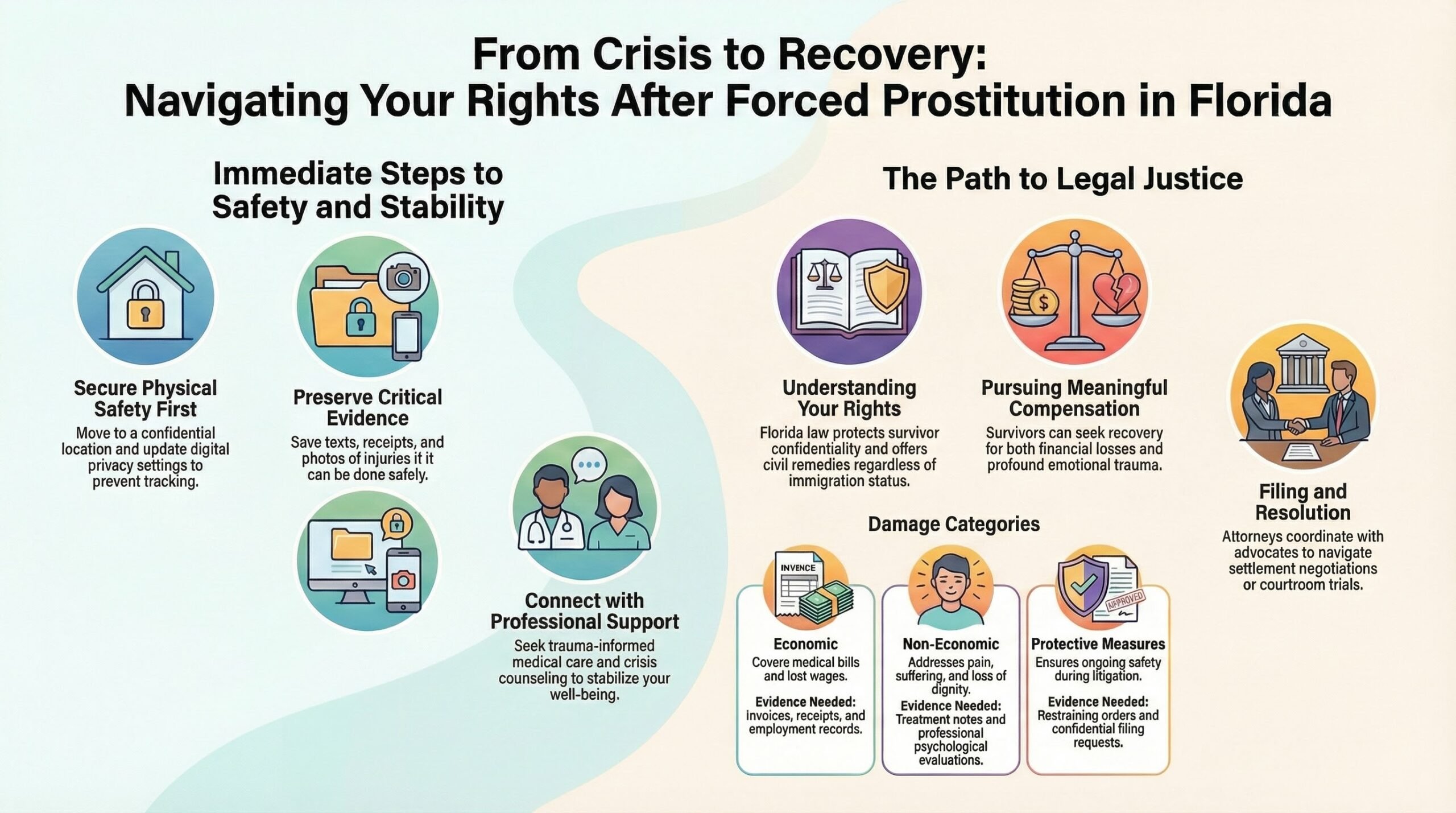
When an individual has been compelled into prostitution through force, fraud, or coercion, legal counsel can play a central role in protecting that person’s rights and pursuing accountability under Florida law. A lawyer’s assistance often begins with careful listening, immediate safety planning, and practical victim support tailored to the person’s urgent needs, including referrals to trusted medical, housing, and counseling resources.
Counsel may also guide evidence preservation efforts, helping to secure messages, financial records, photographs, and other materials that may strengthen a civil claim. In a service-minded approach, the attorney can coordinate with advocates and professionals, reduce unnecessary burdens, and communicate with opposing parties when appropriate.
Legal representation also helps a survivor understand available options, meet deadlines, and make informed decisions without added pressure. Throughout the process, counsel can center dignity, privacy, and stability, while building a claim designed to seek meaningful relief and promote long-term recovery and personal security.
OUR CONSULTATIONSARE FREE
START YOUR FREE CASE REVIEW

Understanding Forced Prostitution Cases in Florida
Legal support often becomes more effective when grounded in a clear understanding of how forced prostitution cases arise and are addressed under Florida law. These matters may involve coercion, threats, fraud, confinement, or abuse of vulnerability, and they are often evaluated through both criminal statutes and civil remedies available to survivors.
A service-minded legal approach recognizes that evidence must be gathered with care, accuracy, and respect for dignity. Victim testimony preservation can be critical when memory is affected by fear, trauma, or ongoing intimidation. Trauma-informed interviewing also supports more reliable fact-finding by reducing retraumatization and promoting clearer communication.
Florida cases may require coordination with law enforcement, social service providers, medical professionals, and advocates who prioritize safety and long-term stability. Courts and attorneys often assess control, consent, dependency, and documented harm when determining liability and available protections. A well-prepared case can help survivors pursue accountability, security, and meaningful legal relief.
Common Scenarios When Forced Prostitution Might Take Place in Florida
Forced prostitution in Florida may arise in several recurring settings, each involving different methods of control and concealment. Common examples include coercion in hotels and motels, exploitation through online escort arrangements, and trafficking schemes sustained by drug dependency. In other cases, gang-controlled street prostitution may be used to isolate victims, enforce compliance, and reduce the likelihood of outside intervention.
Hotel And Motel Coercion
Because hotels and motels provide a steady flow of guests, frequent room turnover, and a degree of anonymity, they are often identified as common locations where prostitution coercion may occur in Florida. Staff, service workers, and compassionate bystanders may notice signs such as controlling companions, repeated short stays, visible fear, restricted movement, or unexplained injuries.
In these settings, a lawyer may help survivors and concerned families understand protective options, including Client safety planning and careful reporting to appropriate authorities. Practical evidence collection tips may include preserving receipts, access card records, surveillance requests, text messages, photographs of injuries, and witness names when this can be done without increasing danger. A service-minded legal approach focuses on dignity, immediate safety, and coordinated support with advocates, healthcare providers, and law enforcement.
Online Escort Exploitation
Although online escort platforms may appear to offer independent work arrangements, they can also be used to conceal prostitution coercion in Florida through false advertisements, controlled communications, and closely monitored travel. In these situations, a controller may create profiles, set prices, screen clients, and intercept messages so the person advertised has little freedom to refuse encounters or leave. Online systems can further isolate victims by restricting access to phones, accounts, identification, and transportation.
Pretextual threats may involve warnings about fabricated debts, exposure, or legal consequences if demands are not met. Consent deception often appears when promises of legitimate modeling, companionship, or promotional work are used to secure participation before conditions change. For those committed to protecting vulnerable people, recognizing these indicators can support timely reporting, intervention, and informed legal guidance.
Trafficking Through Drug Dependency
Where substance dependency is present, coercive prostitution in Florida may be maintained through control of access to drugs, medication, or treatment. Traffickers may exploit addiction by withholding substances, inducing withdrawal, or promising relief only if commercial sex acts continue. These coercion tactics can create intense compliance, especially when a person lacks stable housing, medical care, or trusted relationships.
Those seeking to serve vulnerable individuals should recognize signs of dependency-based control and respond with informed care. Effective intervention may include Drug treatment referrals, trauma-aware victim support, and careful legal documentation of threats, withdrawals, and financial manipulation. A lawyer evaluating these cases may consider medical records, messages, witness accounts, and service provider observations to help establish force, fraud, or coercion under Florida law while protecting the survivor’s dignity and safety.
Gang-Controlled Street Prostitution
In some Florida communities, gang-controlled street prostitution may involve organized oversight, territorial enforcement, and threats designed to keep individuals engaged in commercial sex acts. These operations may target minors, migrants, and others facing instability, then use intimidation, debt, or violence to maintain control. Observers serving affected populations may notice restricted movement, scripted responses, unexplained injuries, or fear of law enforcement and rival groups.
From a legal and community safety perspective, this pattern can overlap with the exploitation of vulnerable adults and other trafficking-related crimes. Effective trafficking prevention efforts often depend on coordinated reporting, trauma-informed outreach, and prompt access to shelter, medical care, and legal protection. A lawyer examining these cases may assess coercion, third-party profit, and evidence showing organized criminal involvement rather than voluntary activity by the person exploited.


Legal Rights of Forced Prostitution Victims in Florida
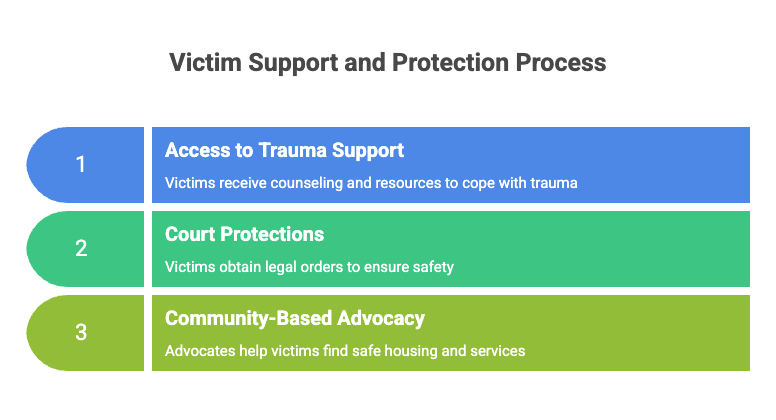
Recognizing these protections is essential because victims of forced prostitution in Florida have legal rights that extend beyond the criminal case against a trafficker or exploiter. State law may protect victim confidentiality, limit public disclosure, and support requests for restraining orders when continued contact threatens safety.
Civil remedies may also allow recovery for losses tied to coercion, abuse, and exploitation.
- Access to trauma support can strengthen stability and informed decision-making.
- Court protections may include restraining orders and related safety measures.
- Community-based advocacy may help secure safe housing and service coordination.
Florida victims may qualify for assistance through service providers, compensation programs, and court-related protections designed to reduce further harm. In some cases, prior prostitution-related charges may be reviewed in light of coercion or trafficking circumstances. These rights reflect a broader public interest in protecting dignity, promoting recovery, and helping vulnerable individuals regain a sense of security while legal matters proceed through proper channels.
Steps to Take After a Forced Prostitution Incident in Florida
After a forced prostitution incident in Florida, the first priority is to secure immediate safety by moving to a secure location and obtaining urgent medical attention when necessary. The matter should then be reported to law enforcement or other appropriate authorities, as prompt reporting can support protection efforts and preserve important evidence. Legal support is also necessary, since an experienced attorney can explain available rights, assist with protective measures, and guide the next steps in the process.
Ensure Immediate Safety
One of the most urgent priorities following a forced prostitution incident in Florida is securing immediate physical safety. A survivor should be moved to a secure, confidential location away from traffickers, customers, and anyone connected to the exploitation. Trusted support persons, shelter staff, or crisis advocates can assist with transportation, basic needs, and careful Escape planning.
Attention should also be given to urgent medical concerns, rest, hydration, and access to clean clothing. If emotional distress is severe, a qualified crisis counselor may help stabilize the situation, and a therapist referral can support ongoing recovery. Phone locations, passwords, and social media settings should be reviewed to reduce the risk of tracking. Those assisting should remain calm, protect privacy, and avoid actions that could increase danger. Immediate safety creates the foundation for every later decision.
Report To Authorities
When it is reasonably safe to do so, reporting the incident to law enforcement or a human trafficking hotline can help document the abuse, begin an investigation, and connect the survivor with protective services. A trusted advocate, medical provider, or caseworker may assist with guidance on police reports, helping the survivor share facts clearly and reduce added stress.
Prompt reporting may help preserve evidence, including messages, photographs, clothing, locations, and the names of the involved persons. Accurate trauma documentation can strengthen records without requiring the survivor to relive every detail at once. Authorities and service providers should understand that memory gaps, fear, and delayed disclosure do not diminish Victim credibility.
Careful reporting also helps identify ongoing danger to others, which can support broader intervention, coordinated safety planning, and access to community-based assistance and emergency shelter.
Seek Legal Support
Legal support can help a survivor understand available rights, protect personal safety, and evaluate options for pursuing accountability in Florida. An attorney may explain reporting choices, preserve evidence, and identify deadlines that could affect civil or criminal matters. This guidance can reduce confusion and support informed decisions during a difficult period.
Counsel may also coordinate with advocacy resources and victim support organizations to address housing, counseling, transportation, and safety planning needs. When appropriate, legal professionals can seek protective orders, communicate with investigators, and help limit unwanted contact from traffickers or third parties. A careful legal review may also reveal grounds for compensation through lawsuits or state programs. Prompt consultation often strengthens a survivor’s ability to protect well-being, serve family members, and pursue a stable recovery with confidence.
How a Florida Forced Prostitution Lawyer Can Help You Initiate a Case
Although the first steps after experiencing forced prostitution may feel uncertain, a Florida forced prostitution lawyer can provide the structure needed to begin a case with clarity and purpose. Counsel typically starts by listening carefully, identifying immediate safety concerns, and explaining available legal options in plain terms.
Through victim advocacy, trauma support, witness protection, and a focused case strategy, the lawyer helps establish an informed path forward that honors dignity and service to others.
- Reviews facts, records, and communications to preserve evidence and strengthen the initial filing.
- Coordinates with trusted professionals, agencies, and advocates to support safety, reporting, and documentation needs.
- Prepares the client for interviews, court procedures, and decisions that may arise at each early stage.
This early guidance can reduce confusion, protect rights, and promote accountability. By organizing information, meeting deadlines, and communicating with relevant parties, a lawyer helps initiate the case on stable legal ground for lasting justice.
Long-Term Effects of Forced Prostitution Trauma
Forced prostitution trauma often produces emotional and psychological scars that persist long after the exploitation has ended, affecting daily functioning and overall stability. Survivors may also experience significant relationship and trust challenges, as coercion and abuse can disrupt their sense of safety, attachment, and personal boundaries. In addition, lasting physical health effects may remain, creating ongoing medical concerns that can complicate recovery and require sustained support.
Emotional And Psychological Scars
Often, the emotional and psychological scars of forced prostitution persist long after the immediate exploitation has ended, affecting nearly every aspect of a survivor’s daily life. Many experience chronic anxiety, depression, shame, hypervigilance, intrusive memories, and emotional numbness, all of which can impair concentration, sleep, and basic decision-making. These effects may also disrupt employment, education, and consistent self-care over time.
For those committed to helping survivors, recognizing these wounds is necessary to meaningful support. Compassionate advocacy often includes connecting individuals with therapy options tailored to intricate trauma, including counseling, psychiatric care, and crisis stabilization services. Because trauma recovery is rarely linear, survivors may require sustained, patient, and coordinated care. A careful legal and social response can help protect dignity, reinforce safety, and support long-term recovery while honoring each survivor’s individual pace.
Relationship And Trust Challenges
Long-term trauma from forced prostitution frequently extends into a survivor’s ability to form and maintain healthy relationships, particularly where trust, safety, and personal boundaries are concerned.
Many survivors have been conditioned through fear-based control and manipulative promises, which can distort their expectations of intimacy, loyalty, and care. As a result, they may struggle to identify respectful behavior, set appropriate limits, or believe that support can exist without exploitation. Some become guarded and emotionally distant, while others remain vulnerable to coercive dynamics that resemble prior abuse.
These patterns are not character flaws but protective responses formed in response to prolonged trauma. For those seeking to serve survivors well, consistent respect, patient communication, and clear boundaries are crucial to restoring a sense of relational safety, dignity, and informed trust over time.
Lasting Physical Health Effects
Although the psychological consequences of sexual exploitation are widely recognized, the physical effects can be equally persistent and disruptive to a survivor’s long-term well-being. Survivors may experience chronic pain, gastrointestinal disorders, reproductive injuries, sleep disruption, headaches, and weakened immune functioning. Repeated exposure to violence, coercion, neglect, and unsafe conditions can also increase the risk of sexually transmitted infections, cardiovascular strain, and substance-related medical complications.
For those seeking to serve survivors effectively, careful attention to trauma recovery options and consistent medical care is critical. Early evaluation may support treatment planning, while follow-up care can address conditions that surface over time. Practical medical documentation tips, including preserving records, noting symptoms, and tracking diagnoses, may also strengthen continuity of care and help professionals respond with informed, compassionate, and legally useful support.
What to Expect During a Florida Forced Prostitution Claim Process
A Florida forced prostitution claim process typically begins with an initial case evaluation, during which legal counsel assesses the facts, potential claims, and available remedies. The next stages generally include filing the claim and assembling evidence and documentation, such as records, witness statements, and other supporting materials relevant to liability and damages. Depending on the strength of the case and the opposing party’s response, the matter may proceed to settlement negotiations or trial.
Initial Case Evaluation
What occurs during an initial case evaluation in a Florida forced prostitution claim often shapes the direction of the matter from the outset. During this meeting, counsel generally reviews the survivor’s account, identifies immediate risks, and explains available legal protections in clear terms. Safety planning is often addressed first, especially when ongoing coercion, threats, or unstable housing are present.
The evaluation also focuses on gathering preliminary facts, documents, communications, and names of potential witnesses. A lawyer may outline how victim advocacy services can support medical care, counseling, shelter, and practical needs while legal options are considered. Questions about confidentiality, deadlines, and evidence preservation are commonly answered. The purpose is not pressure, but informed understanding, so the individual and those assisting can make careful decisions grounded in protection, dignity, and service.
Filing The Claim
Once the preliminary evaluation identifies the facts, safety concerns, and available legal paths, the filing stage generally begins with a careful review of where the claim should be brought and which parties may be named. Counsel typically assesses civil, criminal, or administrative avenues under Florida law, while considering jurisdiction, deadlines, confidentiality protections, and immediate crisis resources for the claimant.
After that review, formal pleadings or reports are prepared and submitted to the appropriate court or agency. The process may also involve requests for protective measures, coordination with service providers, and notice to defendants when required by law. Throughout the filing, the legal team often advises on evidence preservation to ensure the matter proceeds responsibly and without avoidable delay. This structured approach supports accountability, safeguards dignity, and helps those assisting survivors respond with steadiness and purpose.
Evidence And Documentation
Because evidentiary support often determines how a Florida forced prostitution claim advances, the documentation stage typically centers on identifying, preserving, and organizing records that can corroborate the reported conduct and resulting harm. Attorneys often guide survivors and supportive advocates in gathering medical records, counseling notes, transportation receipts, employment documents, photographs, and communications that may establish timelines, coercion, and damages.
Digital evidence preservation is especially important when relevant text messages, emails, social media content, location data, or online advertisements could be altered or deleted. The process may also include collecting witness statements from service providers, family members, coworkers, or others with direct knowledge of observable changes or pivotal events. Careful recordkeeping helps maintain accuracy, supports informed legal evaluation, and allows those assisting survivors to contribute in a structured, protective, and service-oriented manner.
Settlement Or Trial
After records and supporting proof have been assembled, a Florida forced prostitution claim generally moves toward either negotiated resolution or courtroom litigation, depending on the available evidence, the parties’ positions, and the scope of the harm alleged. Counsel may present a demand package, evaluate insurance or defendant resources, and assess whether settlement can provide timely support, privacy, and accountability.
If negotiations remain inadequate, formal litigation proceeds through pleadings, discovery, motions, and possible mediation. Throughout this stage, Victim advocacy often remains central, helping survivors understand choices, prepare for testimony, and access services. A careful trial strategy may focus on coercion, damages, witness credibility, and corroborating records. Whether resolved by settlement or verdict, the process typically aims to secure compensation, recognition of wrongdoing, and measures that promote safety and long-term stability.
Compensation for Florida Forced Prostitution Damages
In Florida forced prostitution cases, compensation may include both economic and non-economic damages intended to address the full scope of the victim’s losses. Courts may consider trafficker liability, related criminal prosecution outcomes, and Civil damages claims when determining available relief. Early evidence preservation often strengthens a survivor’s position and supports service-minded advocates seeking accountability.
| Issue | Why It Matters | Supportive Action |
|---|---|---|
| Medical harm | Documents treatment needs | Preserve records |
| Lost income | Shows an interrupted livelihood | Gather employment proof |
| Emotional injury | Supports personal impact | Obtain evaluations |
Compensation can arise from negotiated settlements or court judgments, depending on the facts, available evidence, and applicable law. A careful legal approach helps connect misconduct to measurable harm while protecting dignity and privacy. By pursuing compensation, counsel may help restore stability, fund recovery resources, and reinforce community efforts that place survivor safety, accountability, and long-term recuperation at the center.
Economic vs Non-Economic Damages in Florida Forced Prostitution Cases
Florida forced prostitution cases often involve both economic damages, such as medical expenses, lost income, and other measurable financial losses, and non-economic damages, including pain and suffering, emotional distress, and loss of dignity. The distinction between these categories is important because each requires different forms of proof and may affect how compensation is calculated. Establishing the value of either type of damage typically depends on records, expert opinions, and other evidence that connects the harm suffered to the underlying conduct.
Economic Damage Categories
Because forced prostitution cases often produce losses that extend far beyond immediate out-of-pocket expenses, damages are generally divided into economic and non-economic categories to measure the full scope of harm under Florida law. Economic damages focus on verifiable financial consequences. These may include emergency and ongoing medical bills, therapy expenses, relocation costs, transportation costs, and the value of property lost due to traffickers or related criminal activity.
They may also include lost wages, diminished future earning capacity, and expenses tied to securing personal safety or stable housing. In some cases, records from employers, healthcare providers, landlords, and financial institutions help establish these losses with greater accuracy. A careful assessment of categories of economic damage can support accountability and help survivors obtain the practical resources needed to rebuild stability and independence after exploitation.
Non-Economic Losses
Although financial records can document many direct costs, non-economic losses address the profound personal harm that forced prostitution often causes, and that cannot be measured through bills or receipts alone. These losses may include pain, emotional distress, shame, fear, loss of dignity, disrupted relationships, and diminished enjoyment of daily life. In Florida forced prostitution cases, careful attention to victim credibility helps explain why invisible injuries merit serious consideration, especially when survivors have endured coercion, manipulation, or repeated abuse.
Trauma documentation from counselors, physicians, and other qualified professionals can also describe symptoms such as anxiety, depression, sleep disturbance, and post-traumatic stress. A service-minded legal approach recognizes these harms as central, not secondary, because restoring a survivor’s sense of safety, stability, and human worth remains a critical part of meaningful civil justice.
Proving Damage Value
Establishing the value of damages requires more than identifying the types of harm a survivor has suffered. In Florida forced prostitution cases, economic damages often include medical expenses, counseling costs, lost income, and diminished earning capacity. These losses are usually supported by records, invoices, employment history, and expert evaluations that connect the exploitation to measurable financial consequences.
Non-economic damages require a different form of proof because emotional harm, trauma, humiliation, and loss of enjoyment do not appear on a bill. Attorneys may rely on treatment notes, professional opinions, and testimony from the survivor and trusted witnesses to show the depth and duration of suffering. A careful presentation helps courts and insurers understand why full financial compensation should fairly address both tangible losses and profound personal injury.
When a Florida Forced Prostitution Case Goes to Trial vs Settlement
When a Florida forced prostitution case moves into litigation, the decision to proceed to trial or pursue a settlement usually depends on the strength of the evidence, the extent of the victim’s damages, and the willingness of the parties to accept risk. Counsel commonly evaluates witness credibility, available records, and whether defendants may offer meaningful compensation without prolonged proceedings. Early planning often includes victim safety planning and an overview of courtroom strategy.
Settlement may provide privacy, faster financial relief, and reduced emotional strain for survivors who seek stability and continued services. Trial, however, may become necessary when liability is denied, settlement offers are inadequate, or public accountability is important to the client’s goals. Attorneys serving survivors weigh trauma-informed preparation, expert testimony, and the potential value of a jury verdict against the uncertainty, delay, and exposure that litigation can bring. A disciplined review of legal, practical, and human factors helps determine which path best protects the survivor’s interests and broader well-being.
The Statute of Limitations for Florida Forced Prostitution Cases
After evaluating whether a forced prostitution claim should be resolved through settlement or presented at trial, attention often turns to the filing deadline that governs the case. In Florida, statute of limitations deadlines can vary depending on the legal theory asserted, the survivor’s age, and whether related criminal conduct affects the timeline. Careful review of the controlling statute is critical because a missed deadline may bar recovery entirely.
Courts may also examine tolling circumstances, including delayed discovery, minority, incapacity, or concealment by a wrongdoer. Even when tolling applies, prompt preservation of evidence remains important because records, communications, and witness memories may fade. Jurisdiction venue can also influence procedural questions, especially when the conduct crossed county or state lines or involved multiple defendants. A disciplined approach to limitations analysis helps service-minded advocates protect survivors, support accountability, and confirm claims are filed within the proper period and forum under Florida law.
When to Contact a Forced Prostitution Lawyer in Florida
Because early legal guidance can materially affect both safety planning and case preservation, contact with a forced prostitution lawyer in Florida is often advisable as soon as coercion, exploitation, or trafficking-related conduct is suspected. Prompt consultation may help a victim, family member, caregiver, or advocate understand immediate options without delaying needed Emergency support or creating avoidable risks.
Contact is especially important after threats, physical restraint, document confiscation, online advertising, debt manipulation, or pressure to engage in commercial sex acts. It is also prudent when there are concerns about report safety, minors, immigration vulnerabilities, or ongoing contact from traffickers. Early communication can assist with evidence preservation, including messages, payment records, location data, medical documentation, and witness information.
It may also support coordination with service providers for shelter planning, trauma counseling, and other protective resources. For those seeking to serve and protect vulnerable people, timely action can strengthen safety, documentation, and informed decision-making during a highly unstable period.
Why You Need an Experienced Florida Forced Prostitution Lawyer
Although any lawyer may offer general guidance, an experienced Florida forced prostitution lawyer is often critical where coercion, trafficking indicators, and victim-protection concerns intersect with complicated criminal and civil issues. Such matters rarely involve a single accusation. They may include unlawful force, debt manipulation, immigration concerns, housing instability, and trauma-related evidence that can affect statements and courtroom perception.
Experienced counsel helps protect legal rights while advancing victim advocacy through informed coordination with investigators, service providers, and courts. This level of representation is especially important when Credibility challenges arise, because survivors may have delayed reporting, inconsistent recollections, or prior records connected to exploitation. A knowledgeable lawyer can present these facts in a proper context and work to prevent further harm.
In service-oriented communities, skilled legal support also promotes accountability and access to remedies, including protection orders, compensation claims, and appropriate referrals. Careful advocacy can strengthen both immediate safety and long-term stability for vulnerable individuals.
How to Choose the Right Forced Prostitution Lawyer for Your Case in Florida
How should a person evaluate legal counsel when a forced prostitution case involves safety risks, trauma-related evidence, and overlapping criminal or civil concerns? The right attorney typically demonstrates trauma-informed representation, clear knowledge of Florida trafficking laws, and experience coordinating with investigators, advocates, and service providers. Attention to Victim privacy is critical, especially when records, communications, or public filings could expose a survivor to retaliation.
A careful review should also consider whether counsel explains strategy plainly, responds consistently, and understands urgent remedies such as a protection order. Strong representation often includes sensitivity to witness preparation, documentation of coercion, and referrals for counseling or housing support. An attorney’s experience with complex litigation, courtroom advocacy, and negotiation may indicate readiness for cases involving multiple defendants or related charges.
Community-minded readers may value counsel who respects survivor autonomy, prioritizes safety planning, and pursues legal options that support long-term recovery, accountability, and restoration for affected individuals and families.
About The Law Offices of Anidjar & Levine
After reviewing the qualities that matter in counsel for forced prostitution cases, attention often turns to the law firm’s broader approach to client service and case management.
The Law Offices of Anidjar & Levine presents itself as a firm focused on responsive communication, practical guidance, and organized legal support for people facing deeply harmful exploitation.
Its work in these matters generally centers on careful case evaluation, strategic planning, and consistent follow-through.
Victim advocacy is reflected in efforts to protect dignity, clearly explain legal options, and coordinate support throughout the process.
Evidence collection also plays a significant role, because strong documentation may influence both civil claims and related proceedings.
The firm is also known for maintaining accessibility, which can be especially important when clients need updates, guidance, or reassurance.
In service-oriented legal representation, this combination of attentiveness, structure, and preparedness may help survivors pursue accountability while reducing unnecessary confusion during an already difficult period.
Frequently Asked Questions
Can Undocumented Victims File a Forced Prostitution Claim in Florida?
Yes, undocumented victims may file a forced prostitution claim in Florida, provided they satisfy applicable eligibility requirements under civil or criminal law. Their immigration status does not automatically bar them from accessing protection, reporting, or certain legal remedies. Service providers and attorneys often help undocumented victims document coercion, preserve evidence, and pursue relief safely. Careful legal guidance is important because deadlines, available claims, and protective options can vary by case.
Will Filing a Claim Affect My Privacy or Public Record Exposure?
Filing a claim may affect privacy, because some court filings can become public unless protections apply. A careful review of privacy protection options is essential, including initials, confidential filings, and limited disclosure requests. However, sealed records limits mean complete secrecy is not always possible, especially during litigation. Those assisting victims should help them understand what information may be made public and what legal steps may reduce unnecessary exposure and risk.
Can I Switch Lawyers During an Ongoing Forced Prostitution Case?
Yes, a person may usually switch lawyers during an ongoing case, provided That Legal consent requirements are satisfied and court deadlines are met. The handover should be handled carefully to avoid delay, prejudice, or disruption to those seeking justice and support. Client disqualification rules, fee agreements, and pending motions may affect timing. A replacement attorney should promptly review the file, advise on the risks, and request substitution in accordance with applicable court procedures.
Are Communications With My Forced Prostitution Lawyer Confidential in Florida?
Yes, communications with a lawyer in Florida are generally confidential under the attorney-client privilege. That protection helps individuals seek honest guidance, which supports informed decisions and effective service to others. However, confidentiality limits apply. Privilege may not protect discussions intended to further future crimes or fraud, and certain disclosures may be required by law or ethics rules. A lawyer can explain how these protections apply to specific facts.
Do I Need to Pay Upfront Fees to Hire a Florida Lawyer?
Not always. A Florida lawyer may require an upfront cost, such as a retainer, but many firms offer various payment options based on the case, expected work, and client circumstances. Some matters use flat fees, hourly billing, or payment plans, while others may allow a limited initial payment. A person seeking guidance should ask for a written fee agreement, so service expectations, billing practices, and financial responsibilities remain clear.
—————————
Victims of forced prostitution in Florida have legal options, and timely action can help protect both their safety and their rights.
An experienced attorney can assess the facts, explain potential remedies, and seek accountability from those responsible.
With informed legal guidance, survivors may pursue compensation and other relief under Florida law.
The Florida Sexual Assault Lawyer team at Law Offices of Anidjar & Levine represents clients with a focused, professional approach, offering clear direction throughout a difficult and highly sensitive legal matter.