Law Offices of Anidjar and Levine helps sexual abuse survivors in Florida protect legal rights, preserve evidence, and evaluate both civil and criminal options under state law.
Legal counsel can identify liable individuals or institutions, organize records, explain reporting pathways, and pursue damages for medical care, counseling, lost income, and emotional harm.
Early guidance also supports safety planning, confidentiality, and deadline compliance, including issues related to statute limitations that may affect a claim’s viability.
The sections below explain these considerations in greater detail.
For broader injury-related legal support, visit Florida Sexual Assault Lawyer.
Main Takeaways
- A Florida sexual abuse lawyer explains criminal and civil options, helping survivors pursue accountability, damages, and protection while preserving important legal deadlines.
- Early legal help can organize evidence, identify liable individuals or institutions, and coordinate reporting with law enforcement or appropriate Florida agencies.
- After abuse, prioritize safety by reaching a secure location and calling 911 if immediate danger exists.
- Preserving evidence like clothing, photos, messages, and dated notes can strengthen criminal investigations and civil claims.
- A lawyer can seek compensation for therapy, medical care, lost income, pain and suffering, and other lasting emotional and financial harm.


How We Can Help With Your Florida Sexual Abuse Claim
When sexual abuse has caused lasting physical, emotional, and financial harm, legal representation can play a central role in holding the responsible parties accountable. Counsel can assist survivors by organizing evidence, identifying liable individuals or institutions, and protecting their interests throughout each stage of the claim. This support helps families and advocates focus on safety, recovery, and practical next steps.
An attorney may explain criminal vs. civil pathways in clear terms while pursuing the remedies available through a civil claim. Legal guidance often includes calculating damages, documenting treatment needs, and seeking Victim Compensation for medical care, counseling, lost income, and other related losses. Representation may also involve communication with insurers, institutions, and opposing counsel, reducing unnecessary stress on survivors. By managing deadlines, records, and negotiations, counsel strengthens the claim and advances a process grounded in accountability, dignity, and service to those who need dependable support after profound harm and injustice.
OUR CONSULTATIONSARE FREE
START YOUR FREE CASE REVIEW

Understanding Sexual Abuse Cases in Florida
A clear understanding of sexual abuse cases in Florida helps place legal strategy within the broader framework of survivor protection and civil accountability. These matters often involve parallel systems, in which criminal prosecutions seek punishment and public safety, while civil claims pursue damages, accountability, and access to supportive resources for those harmed.
A useful overview of criminal charges notes that prosecutors must prove guilt beyond a reasonable doubt, while civil plaintiffs generally meet a lower evidentiary standard. This distinction affects case planning, documentation, witness preparation, and expectations about timing. A careful overview of statute deadlines is also fundamental, because filing periods may vary based on the claimant’s age, the nature of the abuse, and other legal factors recognized under Florida law. Prompt evaluation helps preserve evidence and protect procedural rights. For those committed to serving others, understanding these core principles supports informed guidance, responsible advocacy, and a more stable path toward justice, safety, and long-term restoration for survivors and families.
Common Scenarios When Sexual Abuse Might Take Place in Florida
Sexual abuse in Florida may arise in a range of settings where trust, authority, or dependency are present. Common examples include workplace and professional environments, schools and youth programs, religious and community institutions, and nursing homes and care facilities. Each setting presents distinct risks and legal considerations, which may affect how claims are investigated and pursued.
Workplace And Professional Settings
Although many people associate abuse with private or domestic environments, workplace and professional settings can also create conditions in which sexual abuse occurs, particularly where authority, trust, or economic dependence limits a person’s ability to resist or report misconduct.
In Florida, abuse may arise in offices, medical facilities, service industries, religious institutions, or other professional environments where supervisors, colleagues, clients, or licensed practitioners misuse access and influence. Workplace harassment can escalate beyond verbal misconduct into coercive touching, threats, or exploitation tied to scheduling, promotion, housing, or continued employment.
Similar risks may exist when professionals abuse confidential relationships with patients, congregants, or vulnerable adults seeking care or guidance. Effective prevention often depends on training, oversight, clear complaint channels, and mandatory reporting policies that support accountability, protection, and timely intervention for others.
Schools And Youth Programs
Warning signs may include boundary violations, private communications, favoritism, unexplained gifts, or efforts to bypass established reporting procedures. Because child consent is not legally recognized in abuse matters, any sexual contact involving a minor demands serious attention and immediate protective action. Schools, camps, sports leagues, and after-school programs are expected to implement screening, training, supervision, and prompt response measures. When concerns arise, families and advocates often seek guidance to protect children, preserve evidence, and support accountability through appropriate legal and institutional channels.
Religious And Community Institutions
Recognizing patterns within religious and community institutions is essential because abuse may occur in settings where trust, authority, and regular access to children are deeply embedded. In Florida, these environments may include churches, volunteer ministries, sports leagues, and neighborhood organizations. Risks can increase when Institutional policies are unclear, supervision is inconsistent, or complaints are handled internally without independent review.
Clergy misconduct and abuse by respected volunteers may remain hidden because reporting barriers often include fear, loyalty, stigma, and concern for the institution’s reputation. Families who seek to protect others often look for whether leaders responded promptly, documented concerns, and restricted access after warning signs appeared.
Strong community safeguards, transparent screening, mandatory reporting compliance, and trauma-informed responses can help reduce harm and support accountability when allegations arise within trusted groups.
Nursing Homes And Care Facilities
Similar concerns arise in nursing homes and care facilities, where residents may depend on staff for intimate daily assistance and may be less able to report misconduct promptly. In these settings, abuse may occur during bathing, dressing, transfers, medication rounds, or overnight supervision, especially when cognitive decline, isolation, or physical frailty increase vulnerability. Effective prevention often depends on Staff training that emphasizes boundaries, resident consent, and immediate intervention when warning signs appear.
Administrators and caregivers serving vulnerable adults are generally expected to recognize grooming behaviors, carefully document concerns, and follow applicable reporting requirements without delay. When oversight failures occur, improper hiring, weak supervision, or ignored complaints can permit ongoing harm. A careful legal review may help families understand accountability, evaluate institutional practices, and protect residents from further abuse and neglect.


Legal Rights of Sexual Abuse Victims in Florida
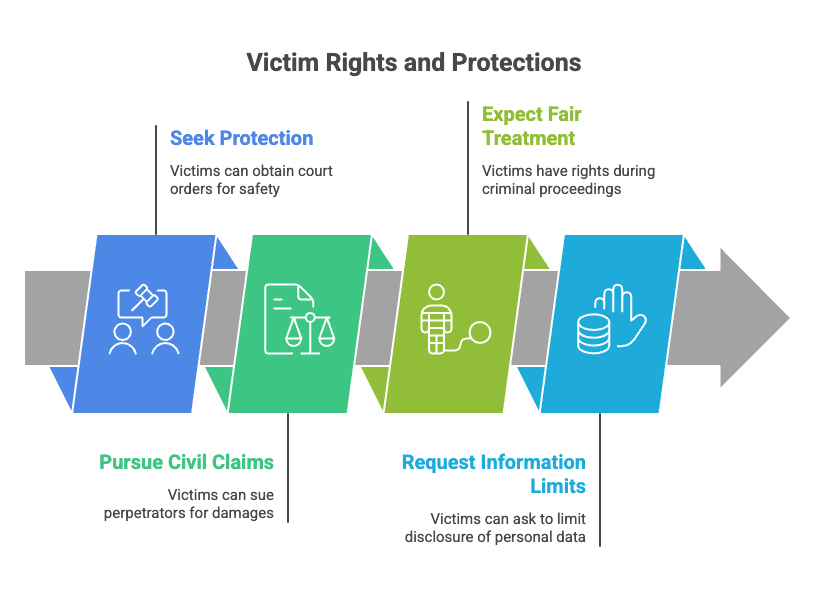
Although each case turns on its specific facts, sexual abuse victims in Florida generally possess important legal rights designed to protect their safety, privacy, and ability to pursue accountability through both the civil and criminal justice systems.
These rights help communities respond with dignity, service, and respect, while recognizing the need for rightful documentation, victim privacy, compassionate reporting, and trauma-informed support.
- Victims may seek protection through court orders and other legal safeguards.
- They may pursue civil claims for damages against perpetrators or negligent institutions.
- They may expect fair treatment during criminal proceedings, including notice and participation rights.
- They may request measures that limit unnecessary disclosure of sensitive personal information.
Florida law also recognizes interests in access to advocacy resources, reasonable accommodations, and processes intended to reduce further harm. When these protections are honored, survivors are better positioned to seek justice, preserve autonomy, and support broader efforts that protect others from future abuse.
Steps to Take After a Sexual Abuse Incident in Florida
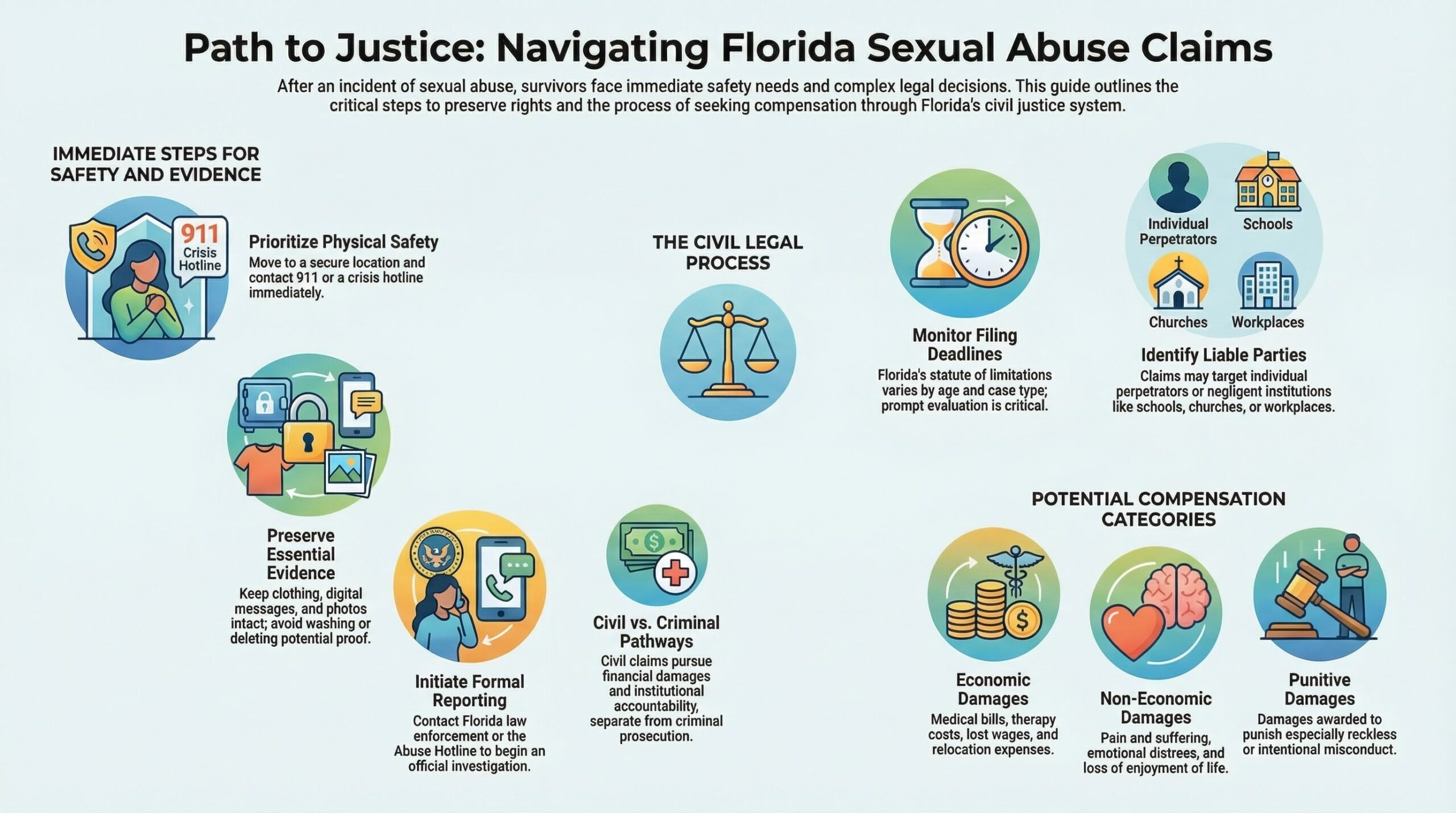
After a sexual abuse incident in Florida, the priority is to seek immediate safety and move to a secure location away from further harm. It is also important to preserve essential evidence, including clothing, messages, photographs, and medical records, as these materials may support both a criminal investigation and a civil claim. Prompt contact with Florida authorities, such as local law enforcement or, when applicable, child protective services, is a major step toward initiating protection and accountability.
Seek Immediate Safety
When sexual abuse occurs, the immediate priority is to move to a safe location away from the alleged abuser and any environment that presents further risk. This may include going to a trusted friend’s home, a public place, or a domestic violence shelter where trained staff can assist calmly and discreetly.
After reaching safety, emergency protective steps should be considered without delay. These may involve contacting 911 if danger is immediate, requesting assistance from campus or workplace security, or seeking help from a crisis hotline. Confidential reporting options can also provide guidance for those who are not ready to involve law enforcement at once.
In Florida, advocates, community organizations, and victim service providers often help survivors identify secure housing, transportation, and immediate support resources while prioritizing dignity, privacy, and continued protection.
Preserve Critical Evidence
If possible, key evidence should be preserved as soon as safety has been secured, because early documentation can materially affect both criminal investigations and civil legal claims. Clothing, bedding, photographs of injuries, damaged property, and saved messages may help establish timelines and corroborate accounts. Washing, deleting texts, or repairing items can unintentionally destroy important proof.
Thoughtful victim documentation may include dated notes describing events, symptoms, witnesses, and changes in behavior or routine. Medical records, counseling records, and work or school communications can also become relevant later. In matters involving phones, computers, email, or social media, Digital forensic preservation may be especially valuable because metadata, location history, and deleted content can sometimes support a clearer factual record. Careful preservation serves accountability, protects vulnerable individuals, and supports informed legal guidance.
Contact Florida Authorities
Why does prompt reporting matter in these cases? Timely contact with Florida authorities can protect others, preserve evidence, and support a coordinated response. A survivor, advocate, or trusted caregiver may report to local law enforcement, the Florida Abuse Hotline, or emergency services when immediate danger exists. Clear reporting helps officials assess safety needs and begin an appropriate investigation promptly.
Florida law also recognizes Mandatory reporting duties for certain professionals, including teachers, medical personnel, and caregivers. Those serving vulnerable people should understand when reporting is legally required and how to document concerns accurately. At the same time, survivor confidentiality remains important throughout the process. Sensitive information should be shared only with appropriate agencies and support providers. Careful, lawful reporting can strengthen protection efforts while respecting dignity, privacy, and long-term recovery needs.
How a Florida Sexual Abuse Lawyer Can Help You Initiate a Case
Because the first steps after sexual abuse can feel legally and emotionally overwhelming, a Florida sexual abuse lawyer helps a survivor begin a case with structure, discretion, and a clear understanding of available options. Counsel often explains confidential reporting options, preserves basic evidence, and identifies child victim support resources when minors are involved.
This early guidance allows caring families and advocates to act responsibly while protecting privacy and legal rights.
- Evaluate the facts, timelines, and possible defendants.
- Coordinate reporting, documentation, and communication with agencies.
- Explain filing deadlines, civil remedies, and case procedures.
- Arrange supportive referrals that promote safety and stability.
A Florida sexual abuse lawyer also prepares initial paperwork, gathers records, and advises against harmful contact with the accused or third parties. By organizing the process from the outset, counsel helps survivors and those serving them make informed decisions, reduce avoidable missteps, and pursue accountability through lawful, well-documented action with confidence.
Long-Term Effects of Sexual Abuse Trauma
Sexual abuse trauma can produce lasting emotional and psychological harm, including anxiety, depression, and other mental health challenges that may persist for years. It may also contribute to physical symptoms and behavioral changes, affecting daily functioning, personal stability, and overall well-being. In many cases, survivors experience ongoing difficulties with relationships and trust, which can influence family dynamics, social interactions, and future intimate connections.
Emotional And Psychological Impact
Although the physical harm may fade over time, the emotional and psychological effects of sexual abuse often persist for years and can alter nearly every aspect of a survivor’s daily life. Many survivors experience Trauma triggers that disrupt concentration, relationships, and a stable sense of safety. Emotional suffering may include shame, anxiety, depression, guilt, and persistent fear, often complicating education, work, and community involvement.
Recovery often requires compassionate, structured care. Effective coping strategies may help survivors manage distress, strengthen emotional regulation, and restore a measure of control. Trust rebuilding is frequently a gradual process, especially when abuse involved manipulation by a familiar person or authority figure. Access to qualified mental health support can provide validation, treatment planning, and trauma-informed guidance, helping survivors pursue long-term healing with dignity and informed assistance.
Physical And Behavioral Changes
Over time, survivors of sexual abuse may exhibit physical and behavioral changes that reflect the lasting effects of trauma on the body and mind. These changes can include chronic pain, headaches, gastrointestinal distress, appetite shifts, and persistent sleep disturbances that impair daily functioning. Trauma triggers may also cause heightened startle responses, avoidance behaviors, irritability, or periods of emotional shutdown.
In service-centered settings, careful observation of these patterns can support informed, compassionate responses. Some survivors struggle with concentration, self-care, and maintaining consistent routines, while others develop coping behaviors that appear protective but interfere with recovery. Trust issues may influence how a survivor responds to assistance, even in safe environments. With appropriate behavioral therapy and stable support, many individuals gradually regain a sense of regulation, safety, and greater control over their lives.
Relationship And Trust Struggles
Beyond physical and behavioral symptoms, many survivors face persistent difficulties with relationships and trust that can affect nearly every area of life. Past boundary violations may leave a person guarded, fearful of closeness, or uncertain about safe attachment. They may struggle to identify healthy limits, especially when abuse involves emotional manipulation, grooming tactics, or a severe power imbalance.
These effects can influence family dynamics, friendships, workplaces, and intimate partnerships. Survivors may withdraw to avoid harm or remain in harmful relationships because coercive patterns feel familiar. Others may question their own perceptions, making it difficult to recognize danger or ask for support.
For those seeking to serve and protect others, understanding these long-term struggles is crucial to offering informed guidance, steady compassion, and practical advocacy that respects autonomy and promotes safety.
What to Expect During a Florida Sexual Abuse Claim Process
A Florida sexual abuse claim process typically begins with an initial case evaluation, during which the facts, legal options, and applicable deadlines are assessed. It then proceeds to filing the civil claim and developing the case through evidence collection and investigation, which may include records, witness statements, and other supporting materials. Depending on the strength of the evidence and the parties’ positions, the matter may conclude through settlement or proceed to trial for judicial resolution.
Initial Case Evaluation
How does an initial case evaluation shape the course of a Florida sexual abuse claim? During this meeting, counsel reviews the survivor’s account, identifies potential defendants, and assesses whether available facts support a civil action. The evaluation also clarifies immediate priorities that protect the survivor’s well-being while preserving important information for those seeking accountability and service to others.
Counsel typically discusses Trauma documentation, including medical records, counseling notes, and personal timelines that help explain harm and its impact. Evidence preservation is also addressed, such as communications, photographs, witness names, and institutional reports. Attorneys may explain confidentiality, likely challenges, and available support resources, so the survivor can make informed decisions. A careful evaluation establishes direction, strengthens preparation, and promotes a respectful process grounded in dignity, accuracy, and public protection.
Filing The Civil Claim
Once counsel determines that the facts support a civil action, filing the claim formally begins the Florida sexual abuse case process and establishes the framework for the litigation ahead. The complaint identifies defendants, states the legal basis for liability, and outlines the relief sought on behalf of the survivor.
After filing, the court issues deadlines and service requirements that all parties must follow carefully. Counsel may address venue, confidentiality concerns, and initial motions intended to clarify disputed legal issues. Early damage calculation helps present the scope of losses, including medical needs, counseling costs, and other measurable harm.
Evidence preservation is also addressed through notices and court procedures designed to protect relevant materials. This stage promotes accountability, organizes the case efficiently, and supports a service-centered pursuit of justice for those harmed.
Evidence And Investigation
During the evidence and investigation phase, counsel works to assemble the factual record needed to support the survivor’s claim and assess the full extent of liability. This work often includes collecting medical records, communications, employment files, and other report documentation that may clarify events, injuries, and institutional knowledge.
Counsel may interview witnesses, evaluate their credibility, and identify inconsistencies that require further review. The investigative timeline is examined carefully to determine when abuse occurred, who knew or should have known, and whether required actions were delayed or ignored. Attention is also given to the law enforcement process, including prior reports, agency findings, and related criminal matters when available.
Throughout this phase, counsel methodically seeks information, with respect for the survivor and a focus on accountability, community protection, and informed legal decision-making.
Settlement Or Trial
Whether a Florida sexual abuse claim resolves through settlement or proceeds to trial depends on the strength of the evidence, the parties’ willingness to negotiate, and the legal issues in dispute. Attorneys generally evaluate damages, credibility, and institutional responsibility before recommending either path.
Settlement may provide privacy, faster resolution, and reduced emotional strain, which can help those focused on recovery and service to others. Trial may become necessary when liability is denied, compensation is inadequate, or accountability requires a public record. Throughout either process, counsel may seek Victim protection orders to limit contact, protect safety, and reduce intimidation.
Lawyers also share evidence-protection tips, including preserving messages, records, and witness information, to ensure the claim remains well supported. Each case requires careful judgment, steady advocacy, and a process centered on lawful protection and meaningful justice.
Compensation for Florida Sexual Abuse Damages
Although no amount of money can undo the harm caused by sexual abuse, compensation in a Florida civil claim can provide meaningful financial relief and a measure of accountability. Courts may consider losses tied to treatment, disrupted stability, and profound emotional distress. In some matters, punitive compensation may also be pursued when conduct was especially reckless or intentional, reinforcing community standards and protecting others from similar harm.
| Area | Purpose |
|---|---|
| Counseling support | Helps cover trauma-informed care |
| Safety needs | Assists with relocation or protection measures |
| Lost earning capacity | Addresses interrupted work or education |
| Accountability measures | Recognizes severe misconduct through civil remedies |
A careful presentation of claims can help survivors, families, and advocates access resources that support recovery and future service to others. Florida law allows civil remedies to address the lasting consequences of abuse while encouraging institutions and individuals to act responsibly, strengthen safeguards, and honor the dignity of those harmed.
Economic vs Non-Economic Damages in Florida Sexual Abuse Cases
Florida sexual abuse cases often involve both economic damages, which address measurable financial losses such as medical expenses, lost income, and therapy costs, and non-economic damages, which compensate for harms like pain, suffering, emotional distress, and loss of enjoyment of life. Distinguishing between these categories is important because each type of harm is assessed through different forms of evidence and valuation. The discussion that follows outlines how these damages are defined and how their value may be established in a claim in Florida.
Economic Damages Explained
When a sexual abuse claim proceeds in Florida, economic damages refer to the measurable financial losses caused by the abuse, while non-economic damages address the personal harms that do not have a fixed dollar amount. Economic damages may include medical bills, counseling expenses, prescription costs, lost wages, reduced earning capacity, relocation expenses, and other documented out-of-pocket losses.
A careful legal review often examines Workplace liability, criminal reporting, evidence gathering, and witness statements to connect those financial losses to the abuse. This process can help survivors and those assisting them pursue accountability that supports recovery and stability. Records such as invoices, employment files, insurance documents, and expert evaluations may be used to calculate losses with reasonable certainty. In Florida, clear documentation strengthens a claim and helps courts or insurers assess fair compensation for measurable harm.
Non-Economic Harm Types
Beyond documented financial losses, many sexual abuse claims in Florida also involve non-economic damages, which address harms that cannot be measured through receipts, invoices, or wage records. These harms often include pain and suffering, emotional distress, anxiety, depression, loss of enjoyment of life, sleep disruption, and damage to personal relationships. In many cases, survivors also experience humiliation, fear, isolation, and lasting effects on trust, intimacy, and daily functioning.
A service-oriented legal approach recognizes that these injuries may shape education, parenting, community involvement, and overall trauma recovery. Non-economic harm may also include the impact of stigma and credibility challenges, especially when survivors delay reporting or struggle to describe events consistently. Florida claims frequently acknowledge that deeply personal harm can persist long after visible injuries have recovered and everyday routines resume.
Proving Damage Value
Although every survivor’s experience is different, proving the value of damages in a Florida sexual abuse case generally requires clear evidence connecting the abuse to both measurable financial loss and substantial personal harm. Economic damages may include therapy costs, medical treatment, lost income, reduced earning capacity, and other documented expenses. Non-economic damages often address pain, emotional distress, humiliation, loss of enjoyment of life, and lasting psychological effects.
Courts and insurers often examine medical records, expert opinions, employment history, and testimony from treating providers to assess value. Evidence preservation is essential because billing records, journals, communications, and contemporaneous reports can strengthen causation and support the claimed impact. Witness credibility also matters, especially when the defense challenges timelines, symptoms, or severity. A careful presentation helps ensure survivors receive compensation that reflects the full scope of harm.
When a Florida Sexual Abuse Case Goes to Trial vs Settlement
Because every Florida sexual abuse claim turns on its own facts, the decision to resolve a case through settlement or proceed to trial usually depends on the strength of the evidence, the extent of the harm, the defendant’s willingness to accept responsibility, and the survivor’s legal and personal priorities.
In many matters, settlement negotiation offers privacy, faster resolution, and greater control over the outcome. It may also reduce the burden of testimony and limit prolonged conflict for survivors and their families. Still, a fair settlement often requires strong evidence of damages, credible witnesses, and documentation that demonstrates accountability.
A trial may become necessary when liability is disputed, offers are inadequate, or public accountability is at stake. Trial vs appeals concerns can influence strategy, since a verdict may bring closure but also invite further litigation. Success at trial often depends on careful jury persuasion, clear expert testimony, and a presentation that honors the survivor while helping decision-makers understand the full scope of harm and institutional failure involved.
The Statute of Limitations for Florida Sexual Abuse Cases
In Florida sexual abuse cases, the statute of limitations can be one of the most important issues affecting whether a civil claim may proceed. Florida law sets different filing deadlines depending on the survivor’s age, the nature of the abuse, and whether delayed discovery applies. These rules can determine whether a court will hear the matter.
A careful review of the criminal-versus-civil distinctions is also necessary because criminal prosecution deadlines do not always align with civil filing periods. In service to harmed individuals and their families, courts and advocates often examine the evidence timeline, including medical records, reports, witness statements, and disclosure history. This timeline may affect both credibility assessments and legal arguments about when a claim accrued. Because Florida’s statutes have changed over time, older cases may require close analysis of which version of the law governs. Accurate timing review helps preserve accountability, support informed decisions, and protect the orderly administration of justice for vulnerable people statewide.
When to Contact a Sexual Abuse Lawyer in Florida
Timing rules often shape whether a sexual abuse claim may be brought, and that same sense of urgency applies to seeking legal guidance. A Florida sexual abuse lawyer should be contacted as soon as abuse is suspected, disclosed, or documented, even when a person is uncertain about pursuing a civil claim. Early consultation can help clarify reporting options, immediate protective steps, and the practical impact of statute limitations on any future action.
Prompt contact also supports Evidence preservation. Relevant records, messages, photographs, medical findings, and witness recollections may become harder to obtain or verify as time passes. In matters involving children, dependent adults, or institutional settings, early legal guidance may help families, caregivers, and advocates respond in ways that prioritize safety and careful documentation.
Seeking counsel promptly may also reduce avoidable delays when questions arise about the identities of responsible parties, available records, or interactions with schools, employers, religious organizations, healthcare facilities, and law enforcement authorities.
Why You Need an Experienced Florida Sexual Abuse Lawyer
Although many abuse claims involve deeply personal facts, they also present complex legal and procedural issues that benefit from counsel with specific experience in Florida sexual abuse matters. An experienced lawyer understands filing deadlines, institutional liability, mandatory reporting requirements, and the standards governing civil claims arising from sexual misconduct.
Such representation also helps protect the survivor’s interests while advancing accountability. Skilled counsel coordinates evidence protection, secures records, identifies corroborating witnesses, and works carefully to reduce unnecessary retraumatization during interviews, discovery, and court proceedings. This measured approach supports both dignity and case strength.
Experience matters because these cases often involve schools, churches, employers, healthcare entities, or other organizations with substantial resources and established defense strategies. A knowledgeable Florida sexual abuse lawyer can evaluate damages, anticipate procedural obstacles, and connect survivors with Client trauma support services when appropriate. In this way, legal advocacy can serve broader recovery, public safety, and institutional responsibility across communities.
How to Choose the Right Sexual Abuse Lawyer for Your Case in Florida
How should a survivor or family evaluate counsel for a sexual abuse claim in Florida? A careful review should begin with the lawyer’s background in abuse litigation, knowledge of Florida procedure, and ability to explain options clearly and respectfully. Strong representation often reflects consistent Victim advocacy, including trauma-informed communication, attention to privacy, and responsiveness to urgent concerns.
The selection process should also examine whether counsel can build a sound case strategy tailored to the survivor’s circumstances. This includes assessing investigative resources, experience handling institutional defendants, and readiness for negotiation or trial. Families may also consider a professional’s reputation, transparent fee terms, and willingness to coordinate with counselors, guardians, or support organizations when appropriate.
An effective lawyer does more than file claims; they help protect dignity, preserve evidence, and pursue accountability through a disciplined, service-oriented approach. Thoughtful evaluation can help survivors choose counsel prepared to serve both legal needs and long-term well-being.
About The Law Offices of Anidjar & Levine
When survivors and families seek counsel for a sexual abuse claim in Florida, The Law Offices of Anidjar & Levine presents a client-focused approach grounded in personal injury advocacy and responsive legal service.
The firm is recognized for clear communication, attentive case management, and a commitment to helping clients pursue accountability through civil action while preserving dignity throughout the legal process.
Its attorneys and staff emphasize accessibility, practical guidance, and steady support during difficult circumstances.
This includes explaining legal options, coordinating investigations, and helping clients understand deadlines, evidence needs, and potential damages.
Victim support remains central to the firm’s service model, alongside referrals to community-based legal resources, counselors, and other professionals who may assist with recovery.
By combining legal knowledge with compassionate responsiveness, the firm aims to reduce uncertainty and strengthen informed decision-making.
For individuals seeking representation that values service, preparation, and respect, The Law Offices of Anidjar & Levine offers a structured and dependable legal presence statewide.
Frequently Asked Questions
Can I Switch Lawyers During My Florida Sexual Abuse Case?
Yes, a person may usually switch lawyers during a Florida sexual abuse case. Such a decision should be handled carefully, because a change can affect case strategy, communication, and the overall timeline. A prompt attorney consultation helps evaluate obligations, fees, and transfer procedures. Courts generally permit substitution of counsel, though timing matters. The person should prioritize steady representation, informed judgment, and service to others affected by the legal process.
Will My Sexual Abuse Claim Remain Confidential in Florida?
A sexual abuse claim in Florida may remain partly confidential, but not entirely. Courts, agencies, and counsel must observe privacy protections, yet confidentiality limits apply when reporting duties, discovery, or public filings arise. In some circumstances, a party may request that records be sealed to protect identities and sensitive facts. Those seeking to serve justice and safeguard others should consult qualified counsel promptly, because case-specific rules often determine how much information stays private.
Can Undocumented Immigrants File Sexual Abuse Claims in Florida?
Yes, undocumented immigrants can file sexual abuse claims in Florida. State courts generally allow survivors to pursue civil remedies regardless of immigration status, and many legal advocates emphasize Immigration Status Protections when evaluating options. Service-minded professionals often encourage prompt action, careful documentation, and informed legal support. Because time limits may apply, obtaining Filing Deadlines Guidance is critical. A qualified attorney can explain rights, confidentiality measures, and available protections under Florida law.
Do I Need a Police Report to File a Claim?
No, a police report is not always required to file a civil claim. A survivor timeline can help establish when abuse occurred and support case evaluation. Other evidence types, including medical records, counseling notes, witness statements, and communications, may also strengthen the claim. Reporting to law enforcement may still be beneficial in some situations, but its absence does not automatically prevent a survivor from pursuing accountability and obtaining legal remedies through the court.
How Are Attorney Fees Structured for Sexual Abuse Cases in Florida?
Attorney fees in these cases are often structured through contingency fees, meaning counsel is paid only if compensation is recovered. The percentage, litigation costs, and any case expenses should be stated clearly in written fee agreements. Florida rules may affect how those terms are presented and approved. Careful review helps survivors and those supporting them understand obligations, protect resources, and make informed decisions about representation before proceeding with a civil claim.
—————————
Victims of sexual abuse in Florida may face intricate legal, emotional, and practical challenges, making informed legal guidance critical. A qualified attorney can help protect their rights, gather evidence, and pursue compensation through the appropriate legal process.
With experienced representation, survivors may be better positioned to hold responsible parties accountable and move forward with greater security.
Florida Sexual Assault Lawyer services from Law Offices of Anidjar and Levine can provide focused support for those seeking clear advice and strong advocacy in these serious matters.