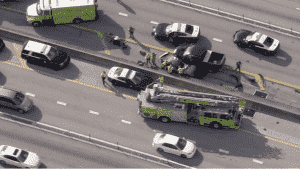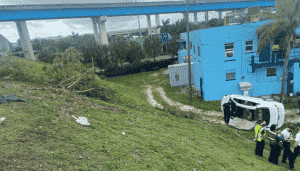
The Law Offices of Anidjar and Levine helps surviving families protect vital evidence, identify negligent parties, and pursue compensation under Florida law after a fatal crash. Counsel typically guides the personal representative through claim filing, insurer communications, damage assessment, and strict court deadlines.
These cases often involve evidence from crash reports, medical records, surveillance footage, and expert analysis. Recoverable damages may include funeral costs, lost support, and emotional losses for eligible survivors.
Families seeking guidance after a fatal collision can learn more from a Miami Car Accident Lawyer. The sections below explain the process, rights, and pivotal decisions.
Main Takeaways
- A Miami wrongful death car accident lawyer should be contacted immediately to preserve evidence and manage communications with insurers.
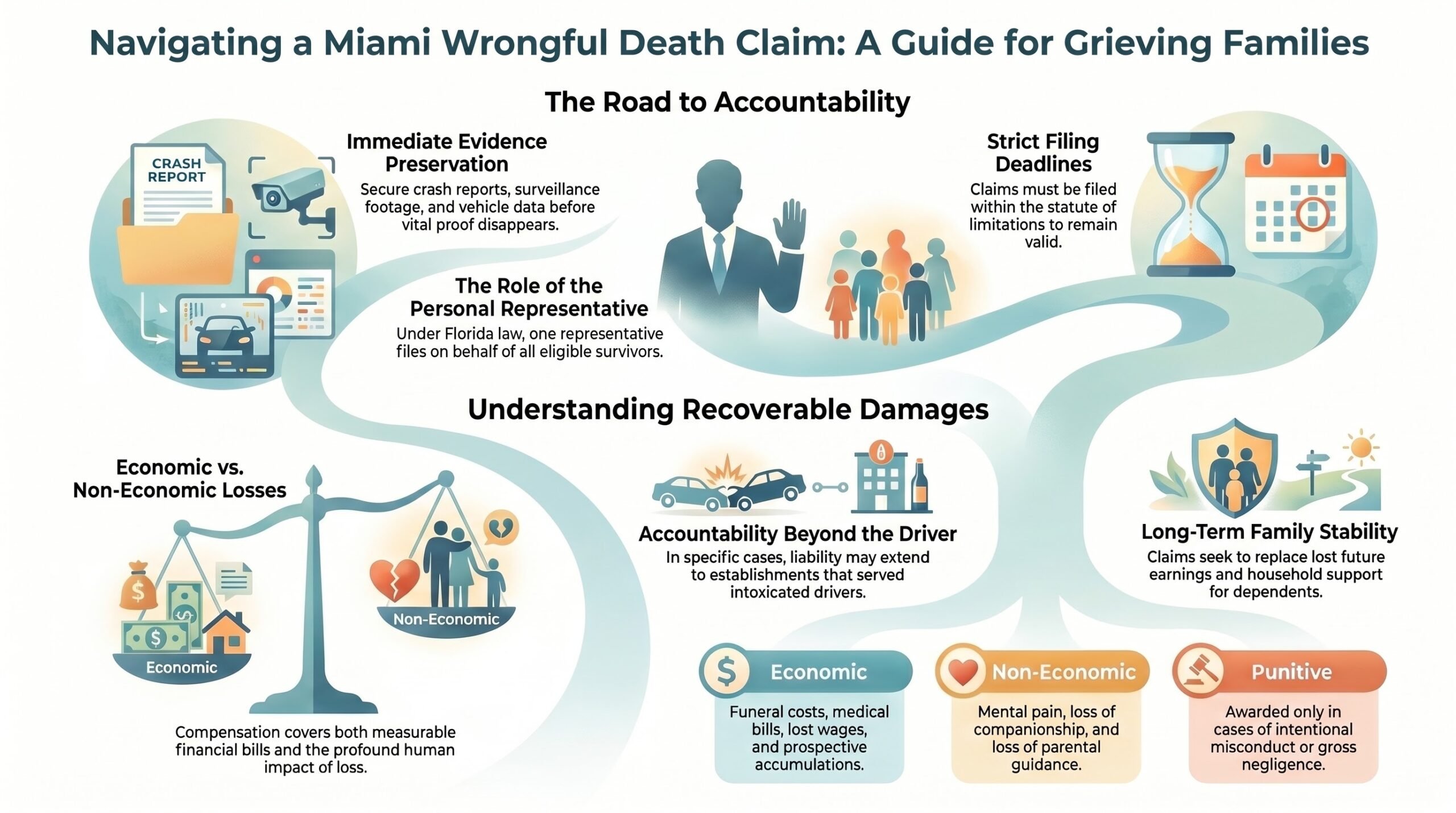
- In Florida, the personal representative files the wrongful death claim for eligible survivors and the estate.
- An attorney investigates liability using police reports, surveillance, vehicle data, medical records, and expert reconstruction.
- Lawyers calculate damages, including funeral costs, lost income, lost support, and other recoverable losses under Florida law.
- Counsel handles deadlines, filings, negotiations, and trial preparation while protecting grieving families from costly mistakes.
How We Can Help With Your Miami Wrongful Death Car Accident Injury Claim
In the aftermath of a fatal collision, families often face urgent legal and financial questions while trying to understand their rights under Florida law. A dedicated legal team can provide steady guidance, helping relatives gather records, preserve evidence, and manage insurer communications with care and discipline.
Support often extends beyond paperwork. Counsel may coordinate with investigators, consult qualified experts, and identify all available sources of recovery, while allowing loved ones time to focus on funeral logistics and immediate family needs. They can also assess losses with precision, including lost income, household services, and, where permitted, emotional compensation. Throughout the claim process, clear communication remains vital. Families benefit when attorneys explain each step, prepare required filings, and negotiate from a position of strength.
If resolution is not offered fairly, trial preparation can begin promptly. This service-centered approach helps surviving relatives pursue accountability, protect stability, and honor the life that was taken from them.
Understanding Miami Wrongful Death Car Accident Injury Cases


When a fatal crash results from another party’s negligence, a Miami wrongful death car accident injury case generally centers on whether the surviving family has a valid claim under Florida law and what damages may be recovered. In practice, the personal representative files the action on behalf of eligible survivors and the estate, seeking accountability and financial stability after a devastating loss.
OUR CONSULTATIONSARE FREE
START YOUR FREE CASE REVIEW

These cases often require careful review of records, witness statements, insurance materials, and medical evidence. Florida law may permit recovery for funeral expenses, lost support and services, loss of companionship, and certain estate losses, depending on the family’s circumstances. Timely action matters because filing deadlines and evidentiary demands can affect the outcome. A disciplined legal approach may also support broader service-oriented goals, including community outreach and policy reform, by promoting safer roads and stronger public awareness. Families pursuing justice often seek not only compensation, but also meaningful accountability that may help protect others.
Common Causes of Miami Wrongful Death Car Accident
Several recurring factors are frequently associated with wrongful death car accidents in Miami, each reflecting a serious breach of roadway safety. Common causes include distracted driving collisions, drunk driving crashes, speeding and reckless driving, and fatigued driver accidents, all of which can create catastrophic consequences. A clear understanding of these causes helps frame how liability may arise and why these fatal incidents often warrant close legal examination.
Distracted Driving Collisions


Across Miami roadways, distracted driving remains one of the most common and preventable causes of fatal car accidents. These collisions often arise when a driver diverts attention from the driving task, even for a few seconds, and the consequences can be irreversible for families and the broader community. Common sources include mobile distractions, in-vehicle technology, passenger conversations, and pedestrian distractions in dense urban areas. In heavy traffic, a delayed reaction may prevent braking, lane correction, or recognition of a vulnerable person entering a crosswalk.
Evidence in wrongful death claims may include phone records, surveillance footage, witness statements, and crash reconstruction findings. A careful legal review helps families understand how distraction contributed to the collision and how accountability may support both justice and safer conduct on Miami streets for everyone.
Drunk Driving Crashes
Drunk driving crashes continue to rank among the most dangerous and preventable causes of fatal car accidents in Miami. Alcohol impairs judgment, coordination, and reaction time, leaving innocent motorists, passengers, cyclists, and pedestrians exposed to catastrophic harm. In many wrongful death claims, evidence may include toxicology results, surveillance footage, witness statements, and prior DUI history.
Liability may extend beyond the intoxicated driver in limited circumstances. Questions of bar patron culpability may arise when establishments knowingly continue serving a visibly impaired person who later causes a deadly collision. Preventive measures such as education, designated drivers, responsible alcohol service, and ignition interlock requirements reflect a broader commitment to protecting the public. For families seeking accountability, these cases often highlight how one impaired decision can permanently damage many lives and communities.
Speeding And Reckless Driving
Beyond impaired driving, speeding and reckless driving remain leading causes of fatal car accidents in Miami, often turning ordinary traffic violations into deadly events. Excessive speed reduces reaction time, increases stopping distance, and magnifies crash force, leaving families and communities to bear preventable loss. Reckless conduct may include weaving through traffic, ignoring signals, making high-speed maneuvers, or engaging in street racing on busy roads.
Such behavior shows disregard for the safety of pedestrians, passengers, cyclists, and other motorists who share Miami’s streets as part of daily life. In wrongful death claims, these facts can help demonstrate negligence or conscious indifference to foreseeable harm. Careful investigation often focuses on surveillance footage, event data, witness accounts, and roadway evidence to identify how dangerous driving decisions contributed to a fatal collision.
Fatigued Driver Accidents
Often developing without obvious warning, driver fatigue can impair judgment, slow reaction time, and reduce attention in ways that closely resemble alcohol impairment. In Miami traffic, drowsy driving may arise after long work hours, overnight travel, inadequate sleep, or untreated medical conditions. Shift fatigue also affects commercial drivers, healthcare workers, and others serving demanding schedules, increasing the likelihood of lane departures, delayed braking, and deadly collisions.
When a fatal crash involves fatigue, investigators may review work records, phone data, surveillance footage, and witness statements to identify signs of exhaustion before impact. This cause of wrongful death is especially troubling because it is often preventable through rest, scheduling awareness, and responsible transportation choices. Families harmed by these losses merit careful legal guidance and a thorough investigation.
Legal Rights of Miami Wrongful Death Car Accident Injury Victims
Accountability under Florida law gives surviving family members and the decedent’s estate specific legal rights after a fatal car accident in Miami. These rights are intended to promote fairness, protect statutory heirs, and recognize the losses caused by another party’s misconduct.
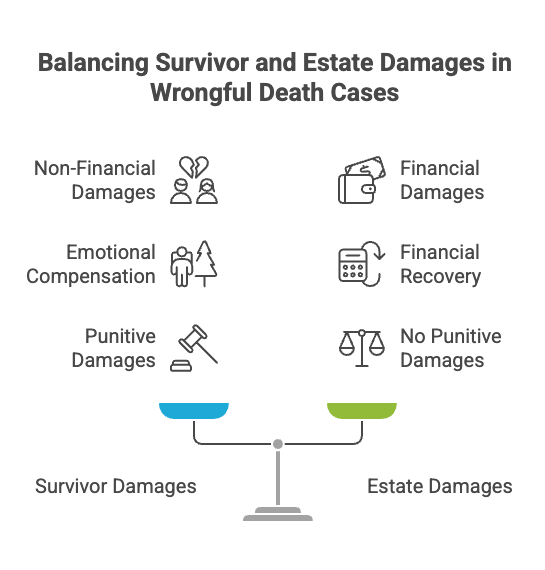
Florida’s wrongful death framework allows a personal representative to pursue compensation on behalf of the estate and eligible survivors.
- Survivors may seek damages for lost support, services, companionship, guidance, and mental pain and suffering, depending on their relationship to the decedent.
- The estate may recover certain financial losses, including medical or funeral expenses, lost earnings, and, in appropriate cases, the value of prospective accumulations.
- When the conduct was especially reckless or intentional, courts may permit punitive damages to punish wrongdoing and discourage similar harm to others.
These legal protections reflect a broader public commitment to accountability, community safety, and dignified justice for families affected by preventable fatal collisions in Miami.
Steps to Take After a Miami Wrongful Death Car Accident Injury
After a Miami wrongful death car accident injury, prompt action is necessary to protect both factual records and legal interests. Families should preserve essential evidence, secure official police and medical reports, and maintain all documentation related to the incident and resulting losses. Early contact with a wrongful death lawyer can help make certain that deadlines are met, evidence is properly evaluated, and the claim is positioned effectively.
Preserve Critical Evidence
Because crucial proof can disappear within hours of a fatal collision, preserving evidence should be treated as an immediate priority in any Miami wrongful death car accident case. Families and those assisting them should safeguard photographs, damaged property, surveillance footage, phone records, and vehicle data before loss, alteration, or disposal occurs.
Careful chain preservation helps protect the integrity of every item collected, especially when multiple people are trying to help during a difficult time. Digital forensics may also be necessary to secure text messages, navigation history, dash camera files, and event data recorder information. Personal notes describing roadway conditions, weather, visible injuries, and statements heard at the scene can further support a clear timeline. Prompt, organized preservation serves the broader goal of accountability and helps others pursue justice with reliable, credible evidence.
Obtain Official Reports
Prompt preservation of physical and digital evidence should be followed by the collection of all available official reports related to the fatal Miami collision. These records commonly include the traffic crash report, supplemental narratives, 911 recordings, toxicology findings, and any citations issued in accordance with applicable police procedures.
Families and those assisting them should monitor reporting timelines carefully, as agencies release records on different schedules. When information is withheld or delayed, properly framed FOIA requests may help secure public materials permitted by law. Official reports can identify witnesses, document roadway conditions, and preserve observations that may later support crash reconstruction. Hospital records, autopsy findings, and medical examiner documentation may also clarify causation and the sequence of events. An organized collection of these materials helps responsible advocates serve surviving relatives with accuracy, diligence, and respect.
Contact A Wrongful Death Lawyer
In the days following a fatal Miami collision, consultation with a wrongful death lawyer should be treated as an important protective step. Immediate consultation can help preserve evidence, clarify insurance communications, and prevent avoidable mistakes during a period of profound strain. Counsel may also explain who may bring a claim, what damages may be available, and which filing deadlines must be met under Florida law.
A careful attorney can coordinate with investigators, review official reports, and communicate with insurers so surviving relatives may focus on practical needs and the well-being of others. Professional guidance often supports orderly decision-making, especially when families are balancing memorial responsibilities, financial concerns, and grief resources. Early legal advice serves not only the estate’s interests, but also the broader goal of responsible accountability and community safety.
How a Miami Wrongful Death Car Accident Injury Lawyer Can Help You
After a fatal collision, a Miami wrongful death car accident injury lawyer can provide structured legal guidance to surviving family members while protecting their right to pursue compensation under Florida law. Counsel often coordinates practical support, including referrals for grief counseling and help addressing estate administration issues, so families can focus on caring for one another and honoring the deceased with dignity and purpose.
- An attorney investigates the crash, preserves evidence, and identifies negligent parties, creating a clear basis for a wrongful death claim.
- Counsel calculates recoverable losses, communicates with insurers, and seeks fair compensation for funeral costs, lost support, and other legally recognized damages.
- A lawyer manages filing deadlines, court procedures, and negotiations, reducing avoidable burdens on relatives who are trying to serve loved ones and their community during a difficult period.
This assistance promotes order, accountability, and informed decision-making when immediate legal and practical responsibilities can feel overwhelming and deeply pressing.
Long-Term Effects of Miami Wrongful Death Car Accident Injuries
The long-term effects of a Miami wrongful death car accident often extend far beyond the initial loss, affecting emotional stability, financial security, and daily family functioning. Surviving relatives may experience persistent emotional trauma, while the loss of income and added expenses can create significant financial hardship over time. In many cases, these consequences also disrupt family roles, relationships, and routines, leaving lasting changes that require ongoing adjustment.
Emotional Trauma Aftermath
Because a fatal car accident often causes more than immediate grief, surviving family members may face persistent emotional trauma that disrupts daily functioning, relationships, and long-term mental health. They may experience anxiety, depression, sleep disturbance, intrusive memories, and difficulty concentrating, especially when reminders of the crash appear in ordinary routines.
Over time, unresolved sorrow can alter family roles, reduce social engagement, and weaken a person’s sense of safety and trust. Children and older relatives may show distress in different ways, requiring careful attention and compassionate support. Professional care, such as grief counseling and trauma therapy, may assist survivors in processing loss, managing symptoms, and rebuilding stability. Community, faith, and service-oriented networks may also provide meaningful encouragement. In wrongful death matters, understanding these emotional effects helps families seek support while honoring the dignity and memory of the person lost.
Financial Hardship Effects
A family’s financial stability may deteriorate rapidly when a fatal car accident eliminates a wage earner, interrupts household planning, and creates sudden expenses that were neither expected nor manageable. In many cases, Medical bills incurred before death remain unpaid, while funeral costs, insurance disputes, and lost income place ongoing pressure on limited resources.
The long-term effects often extend beyond immediate debt. Savings may be depleted to cover housing, transportation, and basic necessities, especially when Job loss affects a surviving relative who must reduce work hours to address legal and administrative obligations. Credit damage, postponed education goals, and reliance on loans can follow. For those committed to protecting others, understanding these burdens is crucial, as timely legal guidance can help preserve assets, recover compensation, and reduce preventable financial harm after a wrongful death.
Family Life Disruption
Beyond financial strain, wrongful death often disrupts the structure of family life in ways that persist long after the accident itself. Daily routines may change abruptly as surviving relatives assume unfamiliar responsibilities, care for dependents, and manage emotional needs while grieving. Parenting adjustments often require a single caregiver to assume multiple roles, without adequate support or preparation.
Household restructuring may also alter living arrangements, decision-making authority, and the distribution of chores, transportation, and caregiving duties. Children frequently experience confusion, behavioral changes, or academic decline as stability weakens. Extended family members and community supporters may step in, yet their involvement can create additional coordination demands. In many cases, the family’s long-term capacity to serve one another, maintain healthy relationships, and preserve a sense of continuity is markedly reduced over time.
Proving Liability in Miami Wrongful Death Car Accident Injury Cases
Establishing liability in a Miami wrongful death car accident case requires clear, persuasive evidence that another party’s negligence directly caused the fatal collision. Attorneys often build these claims through police reports, eyewitness statements, crash scene photographs, surveillance footage, vehicle damage analysis, and medical records that connect the injuries to the death.
Florida law may also require careful evaluation of comparative negligence, especially when multiple drivers or contributing factors are involved. In those matters, courts examine whether the deceased or another party shared any responsibility, and how that affects recovery. Expert testimony from accident reconstruction specialists, medical professionals, and forensic authorities can clarify vehicle speed, road conditions, point of impact, and the medical cause of death.
This evidence helps families seeking accountability understand how a legal team may serve their interests with diligence and integrity. Strong proof of duty, breach, causation, and damages remains central to presenting a credible wrongful death claim in Miami courts.
Dealing With Insurance Companies After a Miami Wrongful Death Car Accident Injury
Once liability evidence has been assembled, attention often turns to the insurance companies that will evaluate, challenge, and in many cases attempt to limit a wrongful death car accident claim. Insurers commonly request recorded statements, broad medical authorizations, and extensive documentation, all while gauging exposure and protecting their financial interests. Families should recognize that courteous communication does not always reflect a fair valuation of the loss.
Careful documentation, disciplined communication, and informed claim negotiation can help preserve the strength of the case. Representatives may question income history, medical expenses, and the relationship between the deceased and surviving family members. They may also use delay, partial acceptance, or requests for repetitive information to reduce pressure on the company rather than advance justice. Professional guidance often helps families respond accurately, avoid harmful admissions, and remain focused on accountability. In this setting, legal counsel can provide structure, practical emotional support, and a steady voice for those seeking to honor a loved one through responsible action.
What to Expect During a Miami Wrongful Death Car Accident Injury Claim Process
A Miami wrongful death car accident injury claim typically begins with an initial case evaluation, during which the facts, potential damages, and legal standing are assessed. The process then moves to filing the claim and developing evidence to establish liability, including records, witness accounts, and other supporting documentation. From there, the matter may proceed toward settlement negotiations or, if necessary, trial.
Initial Case Evaluation
At the outset, an initial case evaluation in a Miami wrongful death car accident claim typically centers on a careful review of the fatal collision, the available evidence, and the legal relationship of the surviving family members to the deceased. During a free consultation, counsel generally conducts a structured case screening to assess whether negligence, causation, and compensable losses appear supportable under Florida law. This stage often includes examining crash reports, medical records, witness statements, insurance information, and any available photographs or video. Attorneys may also identify which survivor or estate representative may have standing to pursue relief.
For families motivated by service, accountability, and protection of others, the evaluation can clarify legal options while preserving dignity and focus. It also helps determine urgency, evidentiary needs, and practical next steps before more formal action begins.
Filing The Claim
With the preliminary review complete, filing a wrongful death car accident claim in Miami generally begins with identifying the proper plaintiff, confirming the decedent’s estate status, and preparing the factual and legal basis for the case. Counsel typically drafts the complaint, verifies court selection, and reviews nuances of the statute that may affect deadlines, beneficiaries, and recoverable damages under Florida law.
Once filed, the court issues procedural requirements that shape the claim timeline, including service, responses, and scheduling matters. The personal representative ordinarily acts on behalf of survivors and the estate, while counsel manages notices and required filings. Throughout this stage, families are often encouraged to stay organized, respond promptly, and remain focused on honoring the decedent through a careful, service-minded pursuit of lawful accountability and financial stability for those left behind.
Evidence And Liability
Establishing liability in a Miami wrongful death car accident claim usually depends on the prompt collection and careful analysis of evidence showing how the collision occurred, who acted negligently, and how that conduct caused the death. Investigators often review police reports, photographs, surveillance footage, vehicle data, and medical records.
They may also interview witnesses, consult experts, and perform chain reconstruction to trace events before, during, and after impact. Skid marks, roadway conditions, cell phone records, and toxicology findings can clarify whether speeding, distraction, impairment, or defective parts contributed to the loss. Statements from witnesses are evaluated for consistency, and concerns about witness immunity may affect how testimony is gathered. When evidence is preserved early and interpreted carefully, families seeking accountability are better positioned to understand responsibility and support the broader interests of safety.
Settlement Or Trial
Once evidence has been gathered and liability has been evaluated, a Miami wrongful death car accident claim typically enters into negotiations with the insurer, although some cases proceed to litigation when fault or damages remain in dispute. During this stage, counsel generally presents evidence of damages, responds to defense arguments, and advises the family on realistic settlement timelines. Many claims resolve through negotiated agreements that provide compensation without the burden of trial.
If settlement efforts fail, the matter may enter discovery, mediation, and ultimately trial. There, the court examines testimony, expert opinions, and documentary proof to determine responsibility and damages. Trial preparation also requires attention to jury dynamics, because juror perceptions can influence outcomes. Throughout either path, effective legal guidance helps surviving family members pursue accountability, preserve dignity, and secure resources that support others after profound loss.
Compensation for Miami Wrongful Death Car Accident Injury Damages
Accountability often begins with a careful assessment of the damages a surviving family may recover after a fatal car accident in Miami. In wrongful death litigation, compensation seeks to recognize profound losses, promote responsible conduct, and provide practical support for those left to carry on in service to one another.
Recoverable damages may include funeral and burial costs, loss of companionship and guidance, and emotional compensation for close relatives whose lives have been permanently altered. A claim may also address medical care provided before death and the value of support the deceased would likely have contributed to the household. In especially egregious cases, punitive damages may be available to discourage reckless behavior and reinforce public safety.
Because every family structure and set of circumstances differs, a careful legal review is crucial to identify the full scope of recoverable damages. Thorough documentation and timely action can strengthen a claim and help families pursue accountability with dignity, purpose, and compassion.
Economic vs Non-Economic Damages in Miami Wrongful Death Car Accident Cases
In Miami wrongful death car accident cases, damages are generally divided into economic losses and non-economic harms, each serving a distinct role in the overall claim. Economic loss categories often include medical expenses, funeral costs, lost income, and the value of lost support or services, while non-economic damage types may address pain and suffering, mental anguish, and loss of companionship. Proving damages in court typically requires financial records, expert testimony, and other evidence that can establish both the measurable and personal effects of the loss.
Economic Loss Categories
Calculating damages in a Miami wrongful death car accident case typically begins with the economic losses, which represent the measurable financial impact created by the death. These categories help surviving family members understand what support was taken away and what expenses now require careful documentation and recovery.
Economic damages commonly include Lost wages the deceased would have provided, along with Future earnings reasonably expected over a working lifetime. They may also include Funeral costs, burial expenses, medical bills related to the final injury, and Property damage involving the vehicle or other personal items. In service-oriented cases, these losses are evaluated to protect a household’s stability and preserve resources for dependents. Payroll records, tax returns, employment history, invoices, and repair estimates often provide the objective evidence needed to accurately establish these amounts.
Non-Economic Damage Types
Loss extends beyond bills and income, and Miami wrongful death car accident claims often include non-economic damages that address the human consequences of a death. These damages recognize harms that do not arrive with invoices, yet deeply affect surviving family members and the support they provide one another.
Common categories include emotional suffering, loss of companionship, loss of guidance, and the absence of comfort, care, and shared experiences. A careful pain assessment may describe the decedent’s conscious suffering before death, while family-centered considerations may reflect lasting sorrow and disruption. Grief counseling costs are generally economic, but the underlying anguish, loneliness, and diminished quality of life are non-economic in nature. In service-minded communities, these damages acknowledge relational loss and the enduring impact a sudden death may have on a family’s stability.
Proving Damages In Court
Those personal and relational harms must then be supported with evidence when a Miami wrongful death car accident case reaches settlement negotiations or trial. Economic damages are commonly proven through wage records, tax returns, medical bills, funeral invoices, and testimony from treating providers. In many matters, forensic economists calculate lost earnings, benefits, and household services, helping the court measure financial loss with reasonable certainty.
Non-economic damages require different proof. Testimony from family members, counselors, friends, and caregivers may show the depth of companionship loss, mental pain, and guidance the deceased provided. Courts compare credibility, consistency, and documentation when weighing these claims. In rare cases of extreme misconduct, punitive damages may also be sought, but they require clear, specific evidence of intentional wrongdoing or gross negligence by the at-fault party.
When a Miami Wrongful Death Car Accident Injury Case Goes to Trial vs Settlement
In many Miami wrongful death car accident cases, the decision to resolve the matter through settlement or proceed to trial depends on the strength of the evidence, the amount of available insurance coverage, and the extent of disagreement over liability and damages. Early settlement may occur when the fault is clear, the damages are well documented, and the insurers recognize significant exposure. Settlement timing often reflects the need to gather records, consult experts, and evaluate long-term financial losses before meaningful negotiations begin.
A trial becomes more likely when parties dispute causation, comparative fault, or the value of the survivors’ losses. Jury dynamics also influence strategy, since witness credibility, community attitudes, and the clarity of medical and economic proof can affect outcomes. While settlement may provide privacy, speed, and reduced expense, a trial may be necessary to pursue full accountability when offers remain inadequate. In either path, careful preparation supports informed decisions and responsible advocacy for grieving families and the wider community.
The Statute of Limitations for Miami Wrongful Death Car Accident Injury Cases
After a fatal car accident in Miami, the statute of limitations plays a central role in determining whether a wrongful death claim may proceed in court. Florida law generally imposes strict statute deadlines, and missing them can prevent surviving family members from pursuing accountability and financial recovery through the civil system.
In many wrongful death car accident matters, the filing period begins on the date of death, not necessarily the date of the crash. This distinction can affect case timing and court eligibility. Certain filing exceptions may apply in limited circumstances, such as the delayed discovery of relevant facts or issues involving governmental entities, but these exceptions are narrowly construed. Courts expect careful compliance with procedural rules, service requirements, and evidentiary preservation.
For families seeking to honor a loved one and protect others from preventable harm, understanding these legal time limits supports responsible action, preserves important rights, and helps make certain that a valid claim is not barred before review.
When to Contact a Miami Wrongful Death Car Accident Injury Lawyer
Prompt contact with a Miami wrongful death car accident injury lawyer is often advisable once a fatal collision raises questions about negligence, liability, insurance coverage, or the preservation of evidence. Families and those assisting them may benefit from seeking guidance before speaking extensively with insurers, signing releases, or accepting settlement discussions that could affect future claims and obligations.
Reaching out soon after the incident can also support early notification to relevant parties, including insurers, investigators, and representatives handling the estate. Timely legal communication may help secure crash reports, witness statements, electronic data, and vehicle information before records are lost or memories fade. In service-minded communities, prompt action can also help surviving relatives identify practical next steps, locate counseling resources, and coordinate documentation needed for funeral expenses and financial records.
Contact is especially important when liability is disputed, multiple vehicles are involved, or a government entity may bear responsibility in the fatal crash.
Why You Need an Experienced Miami Wrongful Death Car Accident Injury Lawyer
Early legal contact often serves as only the beginning, because the value of representation depends heavily on the lawyer’s experience with wrongful death and fatal car accident claims in Miami. In these cases, families often face insurers, investigators, and procedural deadlines while grieving a devastating loss. Experienced counsel helps protect evidence, identify liable parties, calculate long-term financial harm, and present a clear claim grounded in Florida law.
A knowledgeable lawyer also helps surviving relatives preserve time and energy for caregiving, memorial responsibilities, and community support. Strong representation can reduce avoidable conflict, answer urgent questions, and keep the case moving with discipline and care. Just as important, effective advocacy provides Emotional support through steady communication, practical guidance, and respect for the family’s goals. When a fatal collision interrupts a life of service and responsibility, experienced legal representation can help secure accountability and resources that allow loved ones to continue serving others with stability, dignity, and hope ahead.
How to Choose the Right Miami Wrongful Death Car Accident Injury Lawyer for Your Case
How can a grieving family determine which Miami wrongful death car accident injury lawyer is equipped to handle a fatal collision claim with the care and skill it requires? A careful selection process begins with reviewing courtroom experience, wrongful death results, and knowledge of Florida insurance and probate issues. Families often benefit from comparing several firms through client interviews that reveal responsiveness, compassion, and communication habits.
A sound choice also involves evaluating practical considerations. Clear explanations of strategy, timelines, and evidentiary needs can indicate whether counsel is prepared to protect the family’s interests and honor the life that was lost. Reviewing fee structures is equally important because transparency helps families avoid confusion during a painful period. Independent reviews, professional ratings, and disciplinary history may provide additional guidance. The right attorney demonstrates steady judgment, respectful service, and the ability to pursue accountability without placing unnecessary burdens on surviving relatives during litigation and throughout settlement negotiations.
About The Law Offices of Anidjar & Levine
Client-centered representation defines The Law Offices of Anidjar & Levine’s approach to wrongful-death car-accident matters in Miami. The firm is known for responsive service, careful case preparation, and advocacy focused on helping families pursue accountability after a fatal collision. Attorneys and staff maintain consistent communication, clearly explain legal options, and address practical concerns that often arise during a difficult period.
The Law Offices of Anidjar & Levine also demonstrates a broader commitment to service through community outreach and public education. That service-minded perspective supports families seeking guidance, stability, and informed decision-making. In evaluating the firm, many individuals consider its record of case results, attention to evidence, and willingness to negotiate or litigate when necessary. The firm’s work reflects an organized, disciplined approach intended to protect survivors’ interests and pursue compensation for losses such as funeral costs, lost income, and the value of a loved one’s support and companionship.
Frequently Asked Questions
Can Multiple Family Members File Separate Wrongful Death Claims in Miami?
No, separate wrongful death claims are generally not permitted in Miami. Florida law typically requires one action, filed by the estate representative, on behalf of all eligible survivors and the estate. Although multiple plaintiffs may benefit from the case, they usually do not file independently for the same death. This structure promotes orderly recovery, consistent rulings, and fair distribution of damages while helping families pursue accountability through a unified legal process.
How Are Wrongful Death Settlements Distributed Among Surviving Family Members?
Wrongful death settlements are generally distributed according to state law, the court’s approval, and the proven losses of each survivor. A personal representative typically allocates proceeds by considering the heirship hierarchy, including spouses, children, parents, and other dependents. Some jurisdictions apply statutory shares, while others permit tailored distributions based on financial support, loss of companionship, and medical or funeral expenses. Courts review fairness to protect all eligible family members.
Are Wrongful Death Car Accident Settlements in Florida Taxable?
Wrongful death car accident settlements in Florida are generally not taxable when they compensate survivors for physical injury, death-related losses, or emotional harm tied to the death. However, taxable portions may arise from interest, punitive damages, or certain allocated payments, depending on the settlement structure. Careful review helps families preserve resources and serve one another responsibly. In practice, professional tax guidance is often advisable before accepting or distributing settlement funds.
Can Undocumented Family Members Pursue a Wrongful Death Claim in Miami?
Yes, undocumented family members may pursue a wrongful death claim in Miami, because immigration status generally does not bar eligible survivors from seeking civil remedies under Florida law. Courts focus on the claimant’s legal relationship to the deceased and recoverable damages, not citizenship. They may also evaluate related ante mortem claims, depending on the facts. Careful legal guidance helps families protect rights, preserve evidence, and serve the decedent’s interests responsibly.
What Happens if the At-Fault Driver Dies in the Accident?
If the at-fault driver dies in the accident, a wrongful death or injury claim may still proceed against that driver’s insurance policy and, in some cases, the estate. Insurance implications often determine available compensation, policy limits, and deadlines. Criminal charges usually end upon the driver’s death, but civil liability can remain. Families seeking to serve and protect surviving loved ones should review evidence, coverage, and probate issues promptly with qualified counsel.
—————————
A Miami wrongful death car accident claim requires careful legal analysis, timely action, and a clear understanding of Florida law. Families facing these losses often benefit from experienced counsel that can protect their rights, preserve essential evidence, and pursue full compensation.
The Miami Car Accident Lawyer at Law Offices of Anidjar & Levine represents clients with focused advocacy and informed guidance throughout the process.
With qualified legal support, surviving family members can address intricate claims while seeking accountability and financial stability.