A Miami Dolphin Expressway car accident injury lawyer, such as The Law Offices of Anidjar and Levine, evaluates how the crash occurred, preserves evidence, and manages insurer communications to protect the claim.
Counsel reviews police reports, medical records, witness accounts, and available footage while evaluating losses, including treatment costs, lost income, and future care needs.
Early legal guidance from a Miami Car Accident Attorney can prevent common insurance mistakes and strengthen negotiations for fair compensation.
The sections below explain the process, legal options, and factors that often shape case value.
Main Takeaways
- A Dolphin Expressway car accident injury lawyer preserves evidence early, reviews crash reports, and identifies liability using photos, witnesses, and roadway conditions.
- Prompt medical evaluation after a Dolphin Expressway crash helps detect hidden injuries and creates records linking treatment to the collision.
- A lawyer calculates damages, including medical bills, lost income, vehicle damage, and future care needs, before preparing a demand package.
- Early legal guidance helps avoid insurer mistakes, explains deadlines, and assesses policy limits, comparative fault, and realistic claim value.
- Local counsel can use knowledge of Dolphin Expressway traffic patterns, surveillance sources, and Miami-area court procedures to strengthen negotiations.
How We Can Help With Your Miami Dolphin Expressway Car Accident Injury Claim
After a crash on the Dolphin Expressway, an attorney can provide structured guidance from the outset of an injury claim. Counsel may organize records, preserve crucial evidence, and coordinate communication with insurers and medical providers so injured people can focus on recovery and family responsibilities. This support often includes explaining Accident timelines, identifying immediate priorities, and helping clients understand which documents strengthen a claim.
A law firm may also carefully evaluate losses, including medical costs, lost income, and future care needs, while tracking Recovery milestones that show how injuries affect daily activities, work, and household duties. Through disciplined case management, attorneys can prepare demand materials, answer questions promptly, and shield clients from avoidable mistakes. They may connect families with trusted resources, maintain consistent updates, and advocate for fair compensation with steady professionalism.
The goal is practical assistance that protects legal rights, reduces confusion, and helps clients move forward with dignity, stability, and confidence.
Understanding Miami Dolphin Expressway Car Accident Injury Cases


On the Dolphin Expressway, car accident injury cases often involve more than a simple dispute over fault, as liability, medical evidence, and insurance issues frequently arise simultaneously. A careful review typically considers police reports, witness statements, treatment records, and the timing of symptoms. This process helps injured people and their families understand what support may be available while preserving accurate evidence.
OUR CONSULTATIONSARE FREE
START YOUR FREE CASE REVIEW

These cases also require attention to legal deadlines, policy terms, and the practical effects of Expressway congestion on emergency response, medical follow-up, and daily responsibilities. An informed approach may strengthen a claim by connecting injuries to documented events and by addressing insurer questions before disputes expand. Consideration of Dolphin safety concerns can also shape how damages are presented, especially when long-term care, lost income, or rehabilitation becomes necessary.
By organizing facts early and communicating clearly, injured individuals are better positioned to pursue accountability and secure resources that promote recovery and continued service to others.
Common Causes of Miami Dolphin Expressway Car Accidents
Several recurring factors contribute to car accidents on the Dolphin Expressway, often creating sudden and dangerous traffic conditions. Speeding and tailgating reduce reaction time, while distracted driving and unsafe lane changes frequently lead to preventable collisions. Weather-related visibility issues and road hazards can further increase the risk, especially when drivers fail to adjust their speed and attention.
Speeding And Tailgating


Increasing speeds and close following distances remain two of the most frequent contributors to serious collisions on the Dolphin Expressway. When drivers exceed safe limits, they reduce reaction distance, increase stopping time, and magnify crash severity for everyone nearby. Tailgating creates similar danger because even a minor slowdown can trigger a chain reaction involving several vehicles. These behaviors place families, commuters, and service professionals at unnecessary risk.
From a public safety standpoint, consistent speed enforcement helps discourage reckless habits and supports safer traffic flow. Maintaining adequate space between vehicles gives motorists more time to respond to sudden lane changes, merging traffic, or roadway hazards. Those who seek to protect others on the road often recognize that patience, lawful speeds, and respectful following distances are vital to preventing avoidable harm and preserving community well-being.
Distracted Driving Risks
Why do distracted driving incidents remain such a serious concern along the Dolphin Expressway? Heavy traffic, changing speeds, and limited reaction time create conditions where even brief inattention can harm many people. A driver may glance at a phone, adjust navigation, eat, or speak with passengers, and that momentary visual distraction can delay braking or awareness of stopped traffic ahead.
Distraction is not limited to devices. Cognitive lapses, including mind wandering, can impair judgment just as seriously, especially during routine commutes when drivers feel overly familiar with the road. Manual distraction, such as reaching for objects, further reduces control and attention. For families, commuters, and service-minded community members, understanding these risks supports safer driving habits and helps protect everyone who depends on the Dolphin Expressway each day for work and care.
Unsafe Lane Changes
Unsafe lane changes contribute markedly to collisions on the Dolphin Expressway, where dense traffic patterns and narrow gaps often leave little margin for error. Drivers who shift lanes without signaling, misjudge speed differences, or fail to check blind spots can place nearby motorists in immediate danger. These mistakes often occur during lane merging, when traffic flow demands patience, awareness, and sound judgment from every person on the road.
From a public safety perspective, unsafe lane changes can trigger sideswipe crashes, chain-reaction impacts, and sudden braking events that endanger families, workers, and emergency responders alike. Responsible driving practices, including clear signals, adequate following distance, and careful observation, help reduce preventable harm. When motorists respect surrounding vehicles and share roadway space conscientiously, they support safer travel for the broader community each day.
Weather And Road Hazards
Weather and road hazards also play a significant role in collisions on the Dolphin Expressway, where sudden rain, standing water, reduced visibility, and debris can quickly undermine a driver’s ability to maintain control. Wet pavement often lengthens stopping distances, while hydroplaning may cause vehicles to drift unexpectedly into adjacent lanes. Reduced visibility during storms can limit reaction time and make brake lights, lane markings, and disabled vehicles harder to detect.
Road debris, uneven surfaces, and poorly marked construction areas present additional dangers, especially at highway speeds. Drivers who are otherwise attentive may still face emergencies when tires lose traction or obstacles appear without warning. In efforts to protect others on the road, motorists are expected to slow down, increase following distance, and remain alert to changing conditions that demand cautious, responsible driving from everyone.
Legal Rights of Miami Dolphin Expressway Car Accident Injury Victims
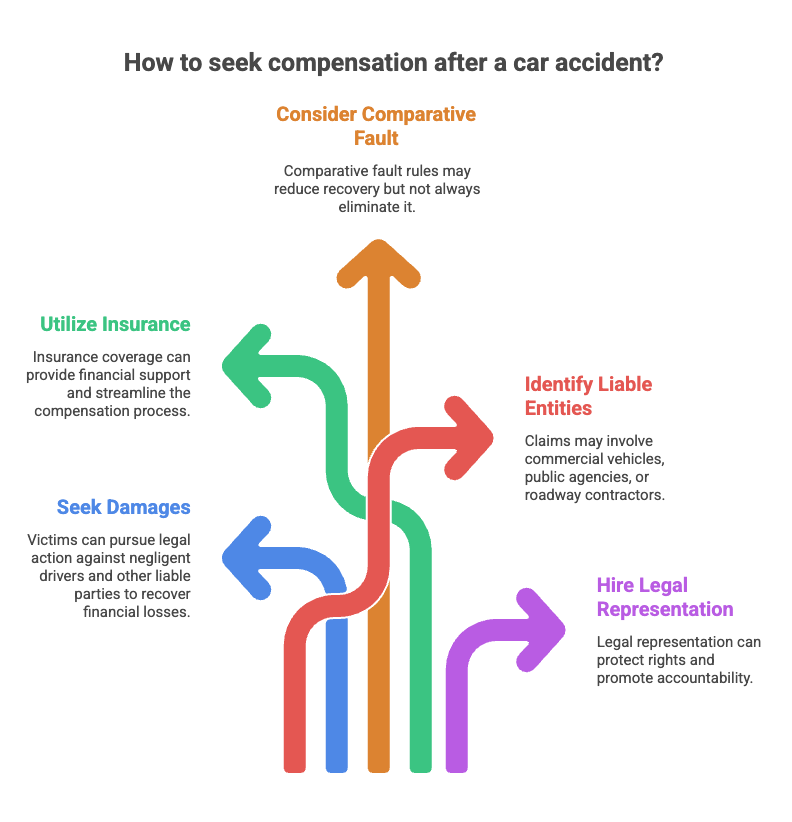
Accountability is a central principle in Miami Dolphin Expressway car accident claims, and injured victims generally have the right to pursue compensation when another party’s negligence caused or contributed to the crash. Under Florida law, these rights may include recovery for medical costs, lost income, property damage, and pain and suffering, depending on the facts.
Victim advocacy often supports fair treatment, while Traffic legislation helps define duties owed by drivers, employers, and other responsible parties.
- Victims may seek damages from negligent drivers and other liable entities.
- Insurance coverage can affect the scope and timing of compensation.
- Comparative fault rules may reduce recovery, but not always eliminate it.
- Claims may involve commercial vehicles, public agencies, or roadway contractors.
- Legal representation often helps protect rights and promote community-minded accountability.
These legal protections reflect a broader commitment to public safety, service, and justice for those harmed on one of Miami-Dade’s busiest transportation corridors today.
Steps to Take After a Miami Dolphin Expressway Car Accident Injury
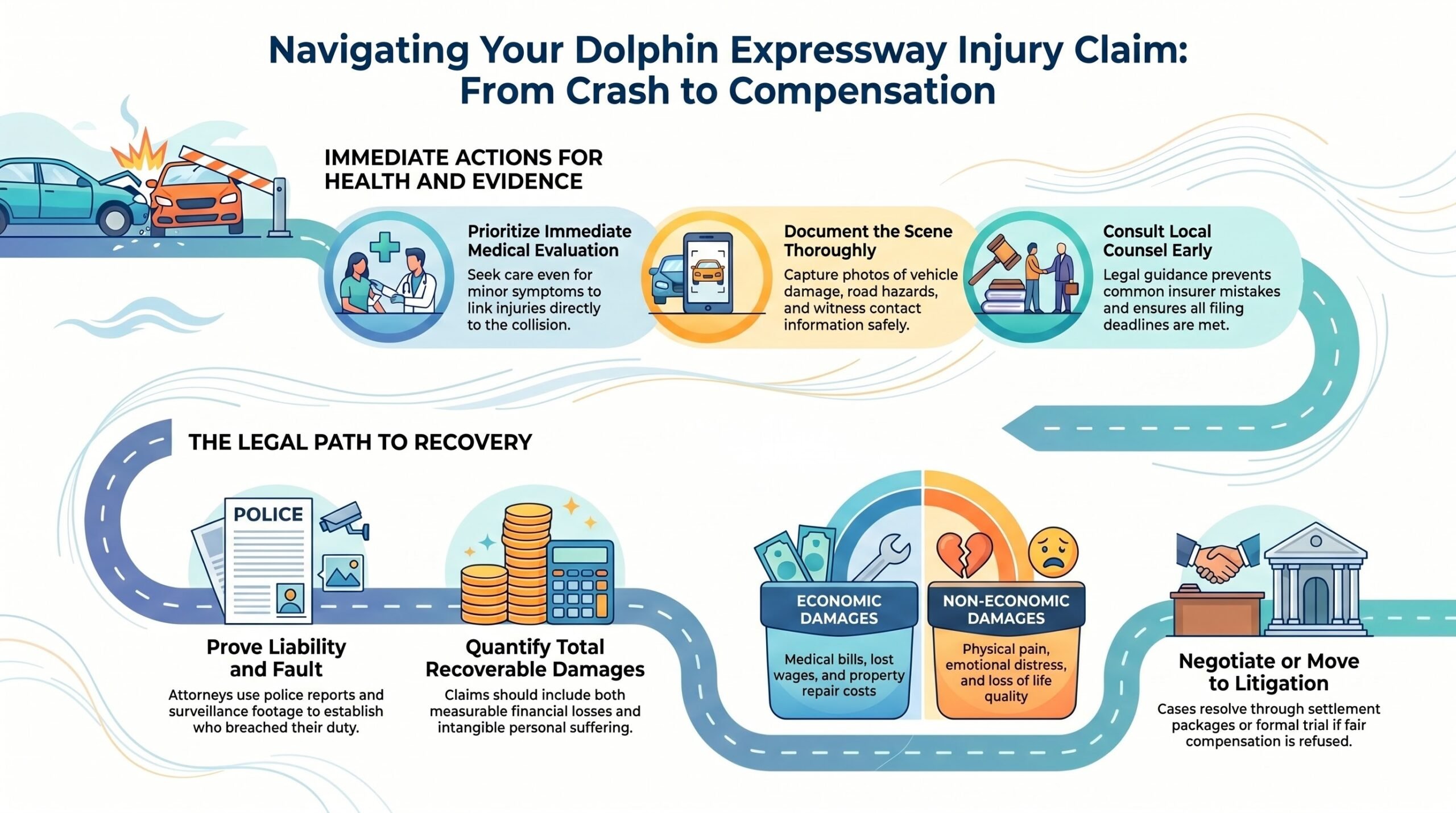
After a Dolphin Expressway car accident injury, prompt medical care is crucial to protect health and create a clear record of the harm sustained. It is also important to document the crash scene carefully, including vehicle damage, road conditions, and any available witness information. Early contact with a car accident lawyer can help preserve evidence, clarify legal options, and support an informed response to the claims process.
Seek Immediate Medical Care
In the moments following a Dolphin Expressway collision, seeking immediate medical care should be a priority, even when injuries appear minor or symptoms seem delayed. Prompt evaluation allows trained professionals to identify internal injuries, concussions, soft tissue damage, or shock before conditions worsen and affect long-term recovery.
Emergency responders and hospital staff can provide emergency stabilization, pain control, diagnostic testing, and instructions that protect both the injured person and those assisting with care. Early treatment also creates a clear medical timeline, which supports continuity of services and informed decision-making. Physicians commonly recommend follow-up monitoring because some injuries, including spinal trauma and brain-related symptoms, may emerge hours or days later. Seeking timely care reflects sound judgment, protects health, and helps ensure the individual can continue to serve family, work, and community responsibilities.
Document The Crash Scene
Once urgent medical needs have been addressed, careful documentation of the crash scene can preserve facts that may otherwise disappear within minutes. A prudent response includes photographing evidence from multiple angles, including vehicle damage, roadway conditions, traffic signs, debris, and visible injuries. If it can be done safely, the names of witnesses, badge numbers of responding officers, and the positions of vehicles should also be recorded.
Those assisting others after a Dolphin Expressway collision should understand that details often shape later evaluations of fault and harm. Notes about weather, lighting, lane closures, and driver statements may prove useful. When appropriate, measuring skidmarks, distances between vehicles, and nearby landmarks can help create an accurate timeline. Respectful, organized documentation serves injured people by preserving objective information that supports accountability, recovery, and informed decision-making thereafter.
Contact A Car Accident Lawyer
Following a collision on the Dolphin Expressway, contacting a car accident lawyer should be an early, practical step, particularly when injuries, disputed fault, or significant property damage are involved. Legal guidance helps preserve evidence, organize records, and prevent avoidable mistakes during insurer communications. An attorney can evaluate liability, explain options, and identify deadlines that may affect recovery. This support often allows injured individuals to focus on recuperation and family responsibilities.
Many firms offer free consultations, giving accident victims a chance to assess the strength of their claims before making decisions. A lawyer with local support can also recognize traffic patterns, roadway issues, and regional court procedures that influence a case. Prompt representation may improve negotiation leverage and help secure compensation for medical care, lost income, and ongoing needs.
How a Miami Dolphin Expressway Car Accident Injury Lawyer Can Help You
After a crash on the Dolphin Expressway, an experienced car accident injury lawyer can provide crucial guidance from the earliest stages of a claim. Counsel often protects a person’s rights, organizes evidence, and addresses insurers so the injured party can focus on immediate responsibilities and helping loved ones.
- Reviews police reports, photos, and medical records for accuracy and consistency
- Examines traffic patterns, roadway conditions, and available surveillance footage
- Conducts witness interviews to clarify how the collision likely occurred
- Calculates present losses, including treatment costs, lost income, and property damage
- Negotiates with insurers and prepares litigation when fair settlement efforts fail
This support can serve families and communities by promoting accountability and careful recovery planning. A lawyer may identify liable parties, explain deadlines, prevent harmful statements, and present a clear demand supported by documentation. When disputes arise, counsel can advocate in court with disciplined preparation and credible analysis.
Long-Term Effects of Miami Dolphin Expressway Car Accidents Injuries
Dolphin Expressway car accident injuries can produce consequences that extend far beyond the initial recovery period. Many individuals face chronic pain challenges and emotional trauma effects that disrupt daily functioning, personal relationships, and overall quality of life. These injuries may also create lasting financial burdens through ongoing medical care, reduced earning capacity, and other continuing expenses.
Chronic Pain Challenges
Many accident victims on the Dolphin Expressway face chronic pain that persists long after fractures have mended, bruises have faded, and emergency treatment has ended. Ongoing neck, back, nerve, and joint symptoms may interfere with work duties, household responsibilities, and community service, creating serious functional limitations. Effective pain management often requires coordinated medical care, physical therapy, medication monitoring, and periodic diagnostic review.
When symptoms remain unresolved, injured individuals may need assistance with transportation, daily tasks, and vocational adjustments. Chronic discomfort can also disrupt sleep, reduce mobility, and limit participation in family or volunteer activities that once reflected their commitment to helping others. Careful documentation of persistent symptoms, treatment needs, and activity restrictions is crucial because long-term pain frequently demands continuing support, practical accommodations, and a clear understanding of future medical needs.
Emotional Trauma Effects
Persistent physical pain is often accompanied by emotional trauma that can continue long after a collision on the Dolphin Expressway. Survivors may experience anxiety, depression, irritability, and a persistent sense of vulnerability that alters daily functioning and relationships. In some cases, Childhood triggers emerge unexpectedly, connecting present fear to earlier unresolved distress.
Emotional injuries may also appear through sleep disruption, concentration problems, social withdrawal, and the recurrence of nightmares. These responses can interfere with a person’s capacity to care for family, support colleagues, and participate fully in community life. Professional evaluation often identifies post-traumatic stress symptoms that require patient, structured treatment. With informed counseling, medical guidance, and compassionate support, many individuals gradually regain emotional stability.
Caregivers and advocates should recognize these invisible wounds and respond with consistency, dignity, patience, and practical understanding.
Lasting Financial Burdens
Uncertainty often defines the financial aftermath of a serious collision, as injury-related costs can continue long after emergency treatment ends. Many injured individuals face mounting expenses for rehabilitation, medications, follow-up appointments, and adaptive equipment. When recovery limits a person’s ability to work, Income loss can place additional strain on the household and disrupt long-term stability.
In many cases, Medical debt grows while vital obligations, including housing, transportation, and family care, remain unchanged. Some individuals must reduce hours, change occupations, or leave the workforce entirely because of persistent pain or disability. These burdens often affect not only the injured person, but also loved ones who step in to provide support. A careful legal evaluation may help families understand available remedies and pursue compensation that protects future well-being and promotes meaningful recovery for everyone involved.
Proving Liability in Miami Dolphin Expressway Car Accident Injury Cases
Establishing liability in Dolphin Expressway car accident injury cases requires a careful examination of how the collision occurred, who breached a duty of care, and whether that conduct directly caused the claimant’s injuries. Attorneys and investigators often begin with police reports, photographs, traffic camera footage, and vehicle damage patterns to identify negligent acts and preserve facts that may help affected families seek accountability.
They also assess witness credibility, because reliable testimony can clarify lane changes, speeding, distraction, or failure to yield. In more complicated collisions, accident reconstruction may be used to analyze skid marks, impact angles, roadway conditions, and timing. Medical records further link the crash to the claimed injuries. Comparative fault principles may also apply if more than one party contributed to the event. By organizing evidence carefully and presenting it clearly, legal advocates can support a fair determination of responsibility and help injured individuals pursue outcomes that protect their well-being and future stability with dignity.
Dealing With Insurance Companies After a Miami Dolphin Expressway Car Accident Injury
Pilot insurance communications carefully after a Dolphin Expressway car accident injury, because early statements, settlement offers, and document requests may affect the value and direction of a claim. Insurers often seek recorded statements, broad medical authorizations, and quick resolutions, which may not fully reflect the impact of injuries or losses.
A careful, service-minded approach emphasizes accuracy, dignity, and protection of the injured person’s interests. Written records of calls, emails, expenses, treatment, and missed work can help preserve important facts and reduce misunderstandings. Adjusters may question treatment, minimize pain, or rely on Claim denial patterns that overlook context. Requests should be reviewed closely before any response is given. When delays, misrepresentations, or unreasonable refusals appear, those actions may suggest Insurance bad faith.
Thoughtful legal guidance can help evaluate communications, safeguard documentation, and encourage fair treatment. This measured response supports accountability while allowing injured individuals and their families to focus on recovery and community responsibilities.
What to Expect During a Miami Dolphin Expressway Car Accident Injury Claim Process
The injury claim process typically begins with an initial evaluation of the case, including a review of liability, damages, and available insurance coverage. It then moves to the collection of evidence and documentation, followed by structured negotiations with the insurance company to assess whether a fair resolution can be reached. If settlement efforts are unsuccessful, the matter may proceed to litigation, where the claim is presented through the formal legal process.
Initial Claim Evaluation
Early-case review begins with a careful examination of how the Dolphin Expressway collision occurred, the nature of the injuries involved, and the insurance coverage that may apply. During this stage, legal counsel conducts a focused claim assessment to determine whether liability appears supportable and whether the matter warrants further action.
Attention is also given to immediate medical concerns, lost income, and the practical effects on family stability and daily service to others. A preliminary damages estimation helps identify the range of compensation that may address treatment needs, financial strain, and future limitations. Counsel may also evaluate policy limits, comparative fault issues, and potential timelines. This initial evaluation offers structure, sets reasonable expectations, and helps injured individuals make informed decisions with care, responsibility, and respect for everyone affected by the event.
Evidence And Documentation
During a Dolphin Expressway car accident injury claim, evidence and documentation often determine how clearly liability, damages, and causation can be established. Helpful materials may include crash reports, scene photographs, witness statements, vehicle damage images, surveillance footage, and dashcam preservation efforts completed as early as possible.
Medical recordkeeping is equally important because treatment notes, diagnostic results, prescriptions, and therapy records help link injuries to the collision and demonstrate their practical impact on daily responsibilities. Organized documentation of lost wages, repair estimates, towing bills, and related expenses also strengthens the claim’s factual foundation. When evidence is gathered promptly and preserved carefully, legal counsel can present a more reliable account of what occurred. This careful approach supports accountability, protects the injured person’s interests, and promotes informed decision-making throughout the claim process.
Insurance Negotiation Steps
In most cases, insurance negotiation begins after sufficient evidence and medical information have been gathered to present a clear picture of liability and damages. Representatives then review police reports, treatment records, wage loss information, and repair estimates to assess the claim’s value.
An attorney typically prepares a demand package that outlines injuries, expenses, and supporting facts. The insurer may respond with questions, requests for clarification, or initial offers shaped by common settlement tactics. Negotiations often involve counteroffers, evaluation of policy limits, and discussion of disputed damages. Throughout the claim timeline, careful communication helps protect the injured person from statements that could reduce compensation.
A service-minded legal team remains organized, responsive, and respectful, while advocating for fair treatment and helping families understand each step of the process without unnecessary confusion or delay during negotiations.
Settlement Or Litigation
Once insurance negotiations clarify the strengths of the claim and the scope of the losses, the case generally moves toward either settlement or litigation. Counsel typically evaluates liability evidence, medical documentation, and policy limits to recommend the most appropriate course of action for the injured person and their family.
Settlement may provide faster closure, greater privacy, and more predictable outcomes, though settlement timelines vary with treatment progress, disputed damages, and insurer cooperation. Litigation becomes necessary when fault, causation, or compensation remains contested. A lawsuit introduces formal discovery, depositions, motion practice, and court supervision, which can strengthen the evidence but often increase litigation costs and delay resolution. Throughout either path, disciplined preparation and honest communication help protect the claimant’s interests. The process is best guided by a lawyer focused on accountability, stability, and service to those affected.
Compensation for Miami Dolphin Expressway Car Accident Injury Damages
Accountability often begins with a clear understanding of the damages that may be recovered after a Dolphin Expressway car accident. Compensation may address the physical, financial, and practical harm caused when another party’s negligence disrupts a person’s ability to live and serve others fully. A careful claim evaluates present losses while also considering lasting consequences supported by records, testimony, and expert review.
Recoverable damages may include medical treatment, rehabilitation, medication costs, transportation to appointments, property loss, household assistance, and diminished capacity to work. In serious cases, compensation may also reflect future earnings when injuries limit career growth or prevent a return to prior employment. Attorneys and experts may also assess pain valuation through medical evidence, daily limitations, and the effect of injuries on ordinary responsibilities.
By identifying the full scope of harm, legal advocates help injured individuals pursue fair compensation and restore stability for themselves, their families, and those who depend on them.
Economic vs Non-Economic Damages in Miami Dolphin Expressway Car Accident Cases
In Dolphin Expressway car accident cases, damages generally fall into two categories: economic losses and non-economic harm. Economic damages typically include medical expenses, lost income, and other measurable financial costs, while non-economic damages address pain and suffering, emotional distress, and diminished quality of life. Establishing either form of damage requires clear evidence, including medical records, employment documentation, expert opinions, and other proof linking the losses to the accident.
Economic Damage Categories
Several forms of economic damages may arise after a Dolphin Expressway car accident, and these losses are generally distinct from non-economic damages such as pain and suffering. In service-oriented legal advocacy, economic damages refer to measurable financial harm supported by records, invoices, and employment documentation. Common categories include medical bills for emergency care, hospitalization, rehabilitation, medications, and future treatment needs reasonably expected after the crash.
They also include lost wages when an injured person cannot work during recovery, as well as diminished earning capacity if long-term limitations affect future income. Property damage, transportation expenses, household assistance, and other out-of-pocket costs may also qualify when directly connected to the collision. Careful documentation of each category helps counsel present a clear claim and pursue fair compensation for those harmed and their families.
Non-Economic Losses Explained
Unlike economic damages, non-economic losses address the human consequences of a Dolphin Expressway car accident that do not appear on bills, receipts, or wage statements. These damages recognize suffering that affects daily life, relationships, and a person’s ability to serve family, work, and community with the same energy and presence as before.
Common examples include physical pain, emotional distress, anxiety, loss of enjoyment of life, disfigurement, and the strain placed on close relationships. In fatal collisions, surviving relatives may also experience profound sorrow that leads to grief counseling and lasting emotional hardship. Because these harms are deeply personal, pain valuation considers severity, duration, and the extent to which injuries alter ordinary routines and human connections. Non-economic losses consequently reflect dignity, restoration, and compassionate acknowledgment of serious disruption.
Proving Accident Damages
Building on the personal and financial impact outlined above, proving accident damages in a Dolphin Expressway car accident case requires clear evidence that connects the collision to both measurable losses and human suffering. Economic damages are typically demonstrated through bills, wage records, repair estimates, and expert opinions supporting the valuation of damages. Non-economic damages, while less concrete, may be established through treatment notes, mental health evaluations, testimony from family members, and documentation describing pain, limitations, and diminished quality of life.
Strong medical causation evidence is critical because insurers often dispute whether symptoms stem from the crash or a prior condition. A careful presentation of records, witness statements, and professional analysis helps demonstrate the full scope of harm. This process supports fair compensation and helps injured people secure resources needed to rebuild and continue serving others.
When a Miami Dolphin Expressway Car Accident Injury Case Goes to Trial vs Settlement
In many Dolphin Expressway car accident injury cases, the decision to resolve a claim through settlement or proceed to trial depends on the strength of the evidence, the extent of the injuries, and the parties’ willingness to agree on fair compensation. Settlement timing often shapes strategy, especially when medical treatment is ongoing or insurers dispute liability. Early resolution may reduce stress and costs, but it can also undervalue long-term losses if the claimant’s condition remains uncertain.
A case may proceed to trial when negotiations stall, fault is contested, or the insurer refuses to offer reasonable compensation. Trial allows a fuller presentation of testimony, records, and expert opinions before a judge or jury. Jury dynamics can influence outcomes, as community values and witness credibility may affect damages awarded. A careful evaluation of risks, costs, and probable recovery helps injured individuals pursue an outcome that supports their recovery, protects their households, and promotes accountability for preventable harm within the broader community.
The Statute of Limitations for Miami Dolphin Expressway Car Accident Injury Cases
After a crash on the Dolphin Expressway, the statute of limitations establishes the legal deadline for filing a car accident injury claim, and missing that deadline can bar recovery regardless of the claim’s underlying validity. In Florida, these filing deadlines generally depend on the nature of the case, the date of the collision, and whether injuries or wrongful death are involved.
A careful review of timing rules helps injured people protect resources needed to support medical care, family stability, and future service to others. Certain statutory exceptions may extend or shorten the usual period, including situations involving minors, delayed discovery of harm, or claims against government entities. However, exceptions are limited and applied narrowly. Evidence can also become harder to secure over time, which may affect witness recollections, records, and accident reconstruction. For that reason, prompt attention to dates, documentation, and procedural requirements remains crucial in any Dolphin Expressway injury matter under Florida law.
When to Contact a Miami Dolphin Expressway Car Accident Injury Lawyer
Many injured drivers benefit from contacting a Dolphin Expressway car accidents injury lawyer as soon as possible, particularly when liability is disputed, injuries require ongoing treatment, or insurers seek recorded statements and early settlements.
The best timing often follows emergency care and initial reporting, when facts can still be preserved and witnesses located. Early contact may help families protect records, understand deadlines, and avoid missteps that could affect a claim’s value. Prompt legal guidance can also support those trying to serve injured loved ones by organizing medical bills, repair estimates, and wage documentation in a careful, orderly way. In less complicated matters, some people explore alternatives to hiring a lawyer, such as handling a minor property damage claim directly with an insurer.
Even then, consultation may remain prudent if symptoms worsen, coverage questions arise, or fault becomes contested. Reaching out early is often most helpful when uncertainty exists, because timely information allows more informed decisions and steadier support during recovery and related responsibilities.
Why You Need an Experienced Dolphin Expressway Car Accident Injury Lawyer
On the Dolphin Expressway, collision claims can quickly become complicated, especially when insurers question fault, injuries develop over time, or multiple parties share responsibility. An experienced injury lawyer helps protect injured people and their families by organizing evidence, addressing disputed liability, and presenting losses with clarity. This support allows those affected to focus on recovery while someone capable handles deadlines, records, and insurer communications.
Experience also matters because serious cases often require more than basic negotiation. A lawyer with Local knowledge understands roadway patterns, common crash causes, and how nearby courts and adjusters may evaluate claims. That insight can strengthen case preparation and improve the accuracy of damage assessments. When settlement efforts fail, Trial strategy becomes crucial. A seasoned advocate can anticipate defenses, prepare witnesses, and present a disciplined argument designed to secure fair compensation. In this way, experienced representation serves both accountability and the practical needs of injured community members.
How to Choose the Right Miami Dolphin Expressway Car Accident Injury Lawyer for Your Case
In selecting a Miami Dolphin Expressway car accident injury lawyer, careful attention should be given to qualifications, relevant case experience, and the ability to manage claims involving disputed liability or significant injuries. A lawyer’s background should reflect successful work with auto collision claims, insurance negotiations, and litigation when fair settlement efforts fail.
An attorney’s reputation should also be reviewed through client feedback, peer recognition, and disciplinary history. Clear communication matters, especially when injured people and their families need guidance that supports informed decisions and protects long-term recovery. The Fee structure should be explained in plain terms, including contingency percentages, case costs, and how expenses are handled if compensation is not recovered.
A careful selection process should include a consultation, questions about strategy, and an assessment of responsiveness. When counsel demonstrates skill, integrity, and respect for those seeking help, injured parties are better positioned to pursue accountability and obtain compensation that serves their medical and financial needs.
About The Law Offices of Anidjar & Levine
After the factors used to evaluate accident counsel are considered, attention may be directed to The Law Offices of Anidjar & Levine and the services the firm provides to injured motorists. The firm is known for client-focused representation, responsive communication, and practical guidance after serious highway collisions on routes such as the Dolphin Expressway.
Its firm history reflects sustained work in personal injury matters, including car accident claims involving medical costs, lost income, and disputed liability. From initial case review through settlement discussions or litigation, the practice emphasizes careful preparation and consistent support for clients and their families. This approach may appeal to people who value service, accountability, and dependable advocacy during recovery.
Beyond legal representation, the firm’s community outreach efforts indicate a broader commitment to public well-being. By supporting local initiatives and maintaining accessible service, The Law Offices of Anidjar & Levine presents itself as a resource for injured motorists seeking capable counsel and principled assistance.
Frequently Asked Questions
Can Weather Conditions Increase Crash Risks on the Miami Dolphin Expressway?
Yes, weather conditions can markedly increase crash risks on the Dolphin Expressway. Rain often creates wet pavement, which reduces tire traction and extends stopping distances. Storms and heavy cloud cover may also cause reduced visibility, limiting a driver’s ability to react safely. In serving public safety, it is important to recognize that cautious speeds, greater following distance, and proper vehicle maintenance can help lower the likelihood of weather-related collisions for everyone.
Are Rental Car Accidents on the Miami Dolphin Expressway Handled Differently?
Yes, rental car accidents on the Dolphin Expressway are often handled differently because they can involve rental liability, multiple insurance policies, and contractual terms that affect responsibility. A detached review typically examines the driver’s coverage, the rental company’s protections, and any third-party claims. Insurance disputes may arise over primary versus secondary coverage. Careful documentation, prompt reporting, and informed legal guidance help protect injured parties and support fair, service-oriented outcomes.
Do Out-Of-State Drivers Face Unique Issues After a Miami Dolphin Expressway Crash?
Yes, out-of-state drivers often face unique issues after a crash on the Dolphin Expressway. Interstate complications may affect reporting obligations, medical follow-up, vehicle repair logistics, and court appearances. Insurance jurisdiction can also create disputes over applicable policy terms, coverage limits, and claim procedures across state lines. They benefit from prompt documentation and coordinated legal guidance, which help protect their rights, reduce delays, and support a fair recovery while they continue to serve family and community needs.
How Do Toll Plazas Contribute to Dolphin Expressway Car Accidents?
Toll plazas contribute to car accidents on the Dolphin Expressway by creating sudden speed changes, lane narrowing, and toll queues, all of which increase driver error and rear-end collisions. Motorists may brake abruptly, merge without enough space, or become distracted while selecting payment options. These conditions also heighten the risk of sideswipes and confusion during peak traffic periods. Careful roadway design, clear signage, and patient driving practices serve the public by reducing preventable harm.
Can Road Construction Zones Affect Accident Frequency on the Dolphin Expressway?
Yes, road construction zones can increase the frequency of accidents on the Dolphin Expressway. They often create lane closures, abrupt merges, and altered traffic patterns that demand quick driver responses. Heavy equipment, narrowed shoulders, and reduced visibility further elevate risk, especially during peak travel periods or poor weather. Those who support community safety should recognize that careful signage, lower speeds, and attentive driving are crucial measures to protect motorists and reduce preventable collisions.
—————————
Dolphin Expressway car accident claims often involve significant injuries, disputed liability, and demanding insurance procedures. A qualified injury lawyer can assess the facts, protect the victim’s legal rights, and pursue fair compensation for medical costs, lost income, and related damages.
With experienced legal guidance, injured individuals are better positioned to make informed decisions and avoid costly mistakes.
Miami Car Accident Attorney services from the Law Offices of Anidjar and Levine provide focused representation for those seeking recovery after a serious collision on the Dolphin Expressway.