

The Law Offices of Anidjar and Levine investigates whether potholes, road debris, poor lighting, defective signals, construction hazards, or inadequate warnings contributed to a Boynton Beach car accident. A Boynton Beach Personal Injury Lawyer may gather photographs, crash reports, medical records, witness statements, maintenance histories, and roadway inspection evidence to establish duty, breach, causation, and notice. Potentially responsible parties may include government entities, contractors, property owners, or negligent drivers. Comparative fault, immunity rules, notice requirements, and filing deadlines can affect recovery. Further information can help explain available legal options and the evidence needed to pursue a claim.
Main Takeaways
- Investigates potholes, debris, poor lighting, defective signals, missing warnings, construction hazards, and dangerous roadway designs.
- Collects crash reports, photographs, witness statements, maintenance records, repair histories, and medical documentation to establish liability.
- Evaluates negligence by government agencies, contractors, property owners, and other drivers, including comparative fault issues.
- Explains potential compensation for medical expenses, lost income, rehabilitation, property damage, pain, and other qualifying losses.
- Protects claims by addressing evidence preservation, governmental notice requirements, Florida deadlines, settlement negotiations, and litigation options.


How We Can Help With Your Boynton Beach Car Accident Road & Highway Conditions Injury Claim
When hazardous road or highway conditions contribute to a collision in Boynton Beach, an experienced car accident lawyer can help identify the responsible parties and pursue appropriate compensation. Counsel may begin by reviewing crash reports, medical records, photographs, witness accounts, and available roadway maintenance information. This process can clarify how debris, inadequate lighting, defective signals, missing warnings, or dangerous surface conditions affected the incident.
Requesting driver negligence records may help determine whether a motorist’s conduct also contributed to the collision. Documenting hazard conditions promptly can preserve evidence before repairs, weather, traffic, or ordinary maintenance alter the scene. A legal team may coordinate with investigators and qualified experts to evaluate visibility, roadway design, signage, and applicable safety duties.
The lawyer can communicate with insurers, organize supporting documentation, calculate losses, and protect the injured person from premature settlement decisions. By handling procedural demands and presenting a clear claim, counsel allows clients and their families to focus on medical care, recovery, and continued service to others.
OUR CONSULTATIONSARE FREE
START YOUR FREE CASE REVIEW

Understanding Boynton Beach Car Accident Road & Highway Conditions Injury Cases
Road and highway conditions injury cases arise when a dangerous roadway feature, inadequate maintenance, or insufficient warnings contributes to a motor vehicle collision in Boynton Beach. These claims generally require proof that a responsible public or private entity owed a duty to maintain reasonably safe travel conditions, breached that duty, and caused measurable harm. Evidence may include photographs, inspection records, repair histories, traffic studies, witness accounts, and medical documentation.
The legal analysis also considers whether another driver’s conduct, including Distracted Driving, contributed to the collision. Comparative responsibility can affect the amount recovered, even when roadway conditions played a substantial role. In some claims involving governmental entities, notice requirements, immunity provisions, and statutory deadlines may apply. A Liability Threshold may also influence whether an injured person can pursue certain damages under Florida law. Careful case evaluation helps clarify responsible parties, available remedies, and procedural obligations while supporting injured individuals and their families through an orderly, informed process.
Common Causes of Boynton Beach Car Accident Road & Highway Conditions
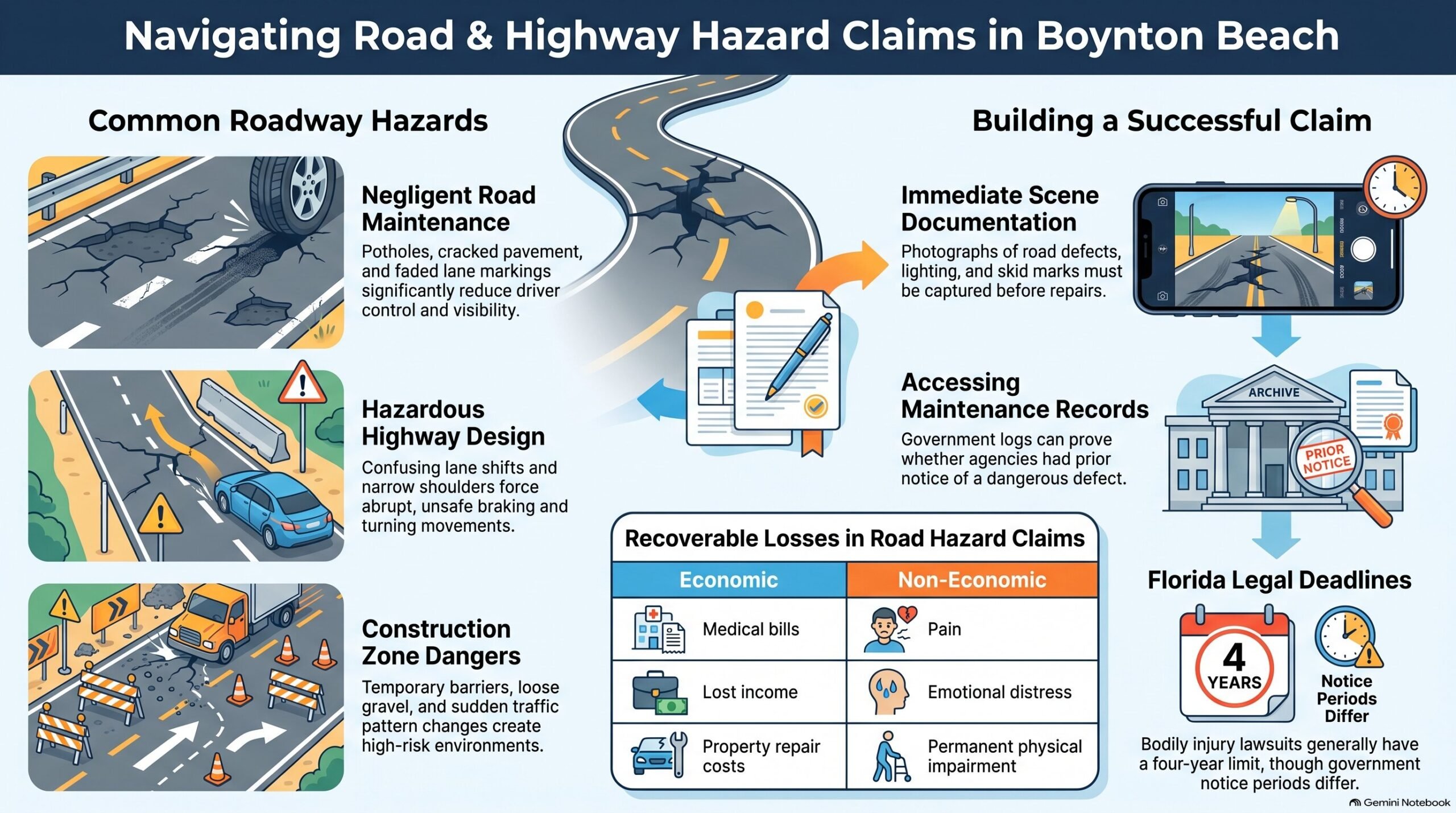
Boynton Beach collisions may result from poor road maintenance, including potholes, deteriorated pavement, inadequate signage, or obstructed visibility. Hazardous highway design and weather-related dangers, such as heavy rain, standing water, and reduced traction, can further increase crash risks. Construction zones may create additional hazards through lane shifts, uneven surfaces, temporary barriers, and changing traffic patterns.
Poor Road Maintenance
Poor road maintenance can create hazardous driving conditions and contribute to serious car accidents in Boynton Beach. Potholes, cracked pavement, uneven surfaces, and unrepaired shoulder damage can reduce vehicle control, especially during rain or heavy traffic. Negligent roadwork may leave construction materials, debris, or temporary barriers in travel lanes without adequate warnings. Lane marking failures can obscure boundaries, turning guidance, or other information drivers rely on to position vehicles safely. When public agencies or contractors fail to inspect, repair, and warn about known defects, affected motorists and passengers may face preventable injuries. Documentation such as photographs, repair records, witness statements, and crash reports can help clarify whether inadequate maintenance contributed to an incident. A knowledgeable attorney may assist injured individuals in identifying responsible parties and pursuing appropriate support.
Hazardous Highway Design
When highway design fails to account for traffic volume, visibility, or driver decision-making, it can increase the likelihood of a serious collision in Boynton Beach. Hazardous design may include confusing lane shifts, inadequate merge areas, poorly placed signals, narrow shoulders, or intersections with limited sight distance. These conditions can force abrupt braking, sudden lane changes, and unsafe turning movements, particularly when drivers must process multiple signs or traffic streams simultaneously. Clear markings, consistent signage, protected turning lanes, and properly timed signals can help reduce these risks and support safer travel for residents, visitors, and emergency responders. Safe driving habits remain important, but they cannot eliminate hazards created by defective roadway planning. Distracted driving may further magnify confusion, making a well-designed roadway and prompt corrective action crucial to public safety.
Weather-Related Road Dangers
Heavy rain, standing water, and reduced visibility can create dangerous road conditions for drivers in Boynton Beach. Rainy Visibility may limit a motorist’s ability to recognize vehicles, lane markings, signals, and roadway edges in time to respond safely. Water accumulating on travel lanes can cause hydroplaning, reducing tire contact with the road and steering control. Flooded Potholes may remain concealed beneath water, creating sudden impacts that damage tires, wheels, suspension components, or other vehicles. Strong winds can move debris into roadways, while lightning and intense storms may further distract drivers or encourage abrupt turns. Drivers should reduce speed, increase following distance, use headlights appropriately, and avoid driving through unfamiliar standing water. When weather contributes to a collision, documenting conditions and seeking qualified legal guidance can help protect affected individuals and families.
Construction Zone Hazards
Construction zones can create serious collision risks when lane patterns, traffic signals, or roadway surfaces change unexpectedly. Temporary lane closures may force motorists into unfamiliar paths, while narrowed lanes, uneven pavement, loose gravel, and reduced visibility can increase the likelihood of crashes. Work vehicles and equipment may enter travel lanes without sufficient warning, particularly when signs are blocked or poorly positioned. Drivers who speed, follow too closely, use mobile devices, or disregard flaggers place workers and other road users in danger. Effective driver safety training can help motorists recognize advance warnings, maintain safe distances, adjust speed, and remain attentive through active work areas. Transportation agencies and contractors also have responsibilities to provide consistent signage, adequate lighting, barriers, and clearly marked detours. Careful documentation may assist those injured in evaluating potential liability.
Don’t Wait. Call Our Florida Personal Injury Lawyers Now!


Legal Rights of Boynton Beach Car Accident Road & Highway Conditions Injury Victims
Road and highway conditions can significantly contribute to a Boynton Beach car accident, particularly when poor upkeep, inadequate signage, defective traffic signals, or active construction creates an unreasonable hazard.
Injured victims may have legal rights against responsible public entities, contractors, property owners, or other parties, depending on the evidence and applicable deadlines.
- Victims may seek compensation for medical expenses, lost income, rehabilitation, property damage, and pain related to qualifying injuries.
- Evidence such as photographs, maintenance records, witness statements, and crash reports can help establish notice, negligence, and causation.
- Comparative negligence defenses may reduce recovery if another party argues that the injured person contributed to the collision.
- Some roadway incidents may involve premises liability lawsuits, especially when conditions on private property affect access, visibility, or traffic safety.
A qualified attorney can protect these rights by identifying responsible parties, preserving evidence, evaluating settlement offers, and pursuing litigation when appropriate. Prompt legal guidance also helps ensure claims comply with Florida’s procedural requirements and limitation periods.
Why Do Boynton Beach Car Accident Road & Highway Conditions Injuries Happen?
Boynton Beach road and highway condition injuries often happen when roadway defects or hazardous traffic conditions interfere with a driver’s ability to see, react, or maintain control. Potholes, uneven pavement, inadequate drainage, faded lane markings, and malfunctioning signals can create sudden risks for motorists, bicyclists, and pedestrians. Construction zones may add narrowed lanes, confusing detours, loose materials, or insufficient warnings, particularly where traffic patterns change quickly.
Human behavior can intensify these dangers. Driver distraction trends, including mobile-device use and inattention, may prevent timely responses to hazards. Excessive speed reduces stopping distance and increases crash severity, while inconsistent enforcement of speed limits may encourage unsafe driving on heavily traveled corridors. Poor lighting, obstructed signs, congestion, and inclement weather can further limit visibility and traction.
Injuries may thus result from a combination of roadway, vehicle, and behavioral factors rather than from a single isolated event. Responsible public agencies, contractors, and motorists each play an important role in identifying hazards, maintaining safe conditions, and protecting those who depend on Boynton Beach roads.
What Should You Do After a Boynton Beach Car Accident Road & Highway Conditions Injury?
After a Boynton Beach car accident involving hazardous road or highway conditions, the injured person should seek immediate medical care, even if symptoms initially appear minor. The incident should be reported to the appropriate authorities, including any dangerous roadway conditions that may have contributed to the collision. Photographs, witness information, medical records, and other evidence should be collected promptly to document the accident scene.
Seek Immediate Medical Care
Even when injuries appear minor, anyone involved in a Boynton Beach car accident should seek immediate medical care. Some conditions, including concussions, internal injuries, and soft-tissue damage, may not produce noticeable symptoms immediately. Prompt evaluation allows healthcare professionals to identify concerns, begin appropriate treatment, and reduce the risk of complications. Medical records can also provide Injury Documentation by recording symptoms, diagnoses, prescribed care, and limitations connected to the collision. The injured person should accurately describe all discomfort, even if it seems insignificant, and follow the provider’s recommendations. Medical follow-up remains important because symptoms can develop or worsen after the initial examination. Attending scheduled appointments and completing recommended therapy supports recovery and creates a clear health history. Preserving discharge instructions, bills, prescriptions, and related records may assist those serving the injured person’s legal and practical needs.
Report Hazardous Road Conditions
Road and highway conditions that contributed to a Boynton Beach car accident should be reported promptly to the appropriate local or state transportation authority. A report may alert officials to hazards such as potholes, missing barriers, malfunctioning signals, flooding, debris, or inadequate lighting before another person is injured. Road safety reporting can often be completed through an agency website, a telephone line, or an emergency service when the danger poses an immediate threat. The individual should provide the location, roadway direction, hazard description, and relevant time without speculating about responsibility. If safe, driver warning signs, cones, or temporary closures should be requested until repairs occur. Reporting also supports community protection by helping transportation personnel prioritize inspections and corrective work. Legal counsel can explain additional reporting considerations once medical needs have been addressed.
Document The Accident Scene
When a Boynton Beach car accident involves hazardous road or highway conditions, the injured person should document the scene as soon as safety and medical needs permit. Photographs should show vehicle positions, damaged pavement, standing water, debris, inadequate lighting, obstructed signs, lane markings, and nearby traffic-control devices. A person assisting at the scene can record weather, visibility, time, location, and apparent road hazards without moving evidence or interfering with responders. Witnesses’ names and contact information should be preserved, along with statements describing warning signs, roadway maintenance, and Traffic signal timing. Medical treatment and official reporting should remain priorities. Counsel may also issue CCTV evidence requests to preserve footage from businesses, transportation agencies, or intersections before it is routinely deleted. Organized records can help protect injured people and clarify responsibility for unsafe conditions.
Critical Evidence in a Boynton Beach Car Accident Road & Highway Conditions Injury Case
Establishing liability in a Boynton Beach road-condition injury case requires evidence showing how a hazardous condition contributed to the collision and resulting injuries.
- Road hazard documentation
- Accident scene photos
- Maintenance record requests
- Witness statements and testimony
Together, these materials can clarify the hazard’s existence, responsible parties, and relationship to the accident.
Road Hazard Documentation
How a roadway defect contributed to a collision may depend on prompt, thorough documentation of the hazard and surrounding conditions. A person who encounters a damaged surface, missing warning, obstructed lane, or malfunctioning signal should report it to the appropriate agency and preserve the confirmation number. Written notes should identify the roadway, travel direction, lane, approximate location, date, time, weather, lighting, traffic conditions, and any visible maintenance concerns. Available records may include 911 communications, roadway service requests, inspection histories, repair orders, and surveillance footage. Camera-ready evidence can help preserve information before conditions change, while witness contact information may support independent accounts of what existed and how it affected travel. A legal professional can help obtain public records, organize documentation, and determine whether notice requirements or prior complaints establish responsibility for the dangerous condition.
Accident Scene Photos
At a Boynton Beach collision scene, photographs can preserve roadway conditions that may change before an investigation occurs. Images should capture vehicle positions, lane markings, traffic signs, lighting, skid marks, debris, standing water, potholes, and obstructions from multiple distances and angles. Close-up photographs may show damage or surface defects, while wider views can clarify sightlines, intersection design, and visibility. Documentation of damaged or misaligned signals may help identify possible Traffic signal failures without assuming causation. Eyewitness documentation, including photographs or recorded observations, can supplement official reports when accounts differ. Each image should retain its original date, time, and location information when available. A personal injury attorney may organize these materials for investigators, insurers, and courts, helping protect the interests of injured people and their families.
Maintenance Record Requests
Maintenance records can help determine whether a roadway condition was reported, inspected, or addressed before a car accident in Boynton Beach. A lawyer may request maintenance logs from the city, county, Florida Department of Transportation, or private contractor responsible for the roadway. These documents can identify inspection dates, pothole reports, repair orders, work completion, and recurring deficiencies. They may also reveal whether established safety procedures were followed or whether warnings and temporary measures were provided. Such information can serve as evidence of liability when an agency or contractor had notice of a dangerous condition but failed to respond reasonably. Records should be preserved promptly because routine retention policies may result in their deletion. Careful review can clarify responsibility, support injury claims, and promote accountability for safer roads serving the public.
Witness Statements and Testimony
Witness statements can provide independent evidence about the roadway condition, the accident sequence, and the conduct of government agencies or contractors before a Boynton Beach car accident. Drivers, pedestrians, passengers, and nearby workers may describe standing water, missing signs, debris, inadequate lighting, or repeated hazards. Their observations can help establish when a dangerous condition existed and whether responsible parties had notice.
A lawyer may compare these accounts with Traffic camera evidence, photographs, weather records, and roadway inspection materials. Police report details can identify witnesses, document initial observations, and preserve statements recorded at the scene. Although a report may not determine liability, consistent testimony can clarify disputed facts and expose inconsistencies in opposing accounts. Prompt interviews are important because memories change, witnesses relocate, and surveillance footage may be overwritten. Careful preparation helps present reliable evidence while supporting accountability and safer public roads.
Long-Term Effects of Boynton Beach Car Accident Road & Highway Conditions Injuries
Injuries caused by Boynton Beach road and highway conditions may result in chronic pain, reduced mobility, and lasting limitations on daily activities. Affected individuals may require ongoing medical treatment, rehabilitation, medication, or expert care. These consequences can also create significant emotional strain and financial hardship through lost income, recurring expenses, and diminished quality of life.
Chronic Pain and Mobility Loss
When a Boynton Beach car accident involves hazardous road or highway conditions, the resulting harm may extend well beyond the initial treatment period. Chronic pain can restrict walking, standing, lifting, driving, and participation in family or community responsibilities. Joint damage, nerve symptoms, or spinal injuries may also reduce balance and endurance, creating dependence on mobility aids or assistance from others. These limitations can affect employment, household tasks, social connection, and emotional well-being. A person’s daily functioning may fluctuate, making consistent documentation of symptoms and limitations important. Medication adherence and responsible pain management may help control symptoms, but persistent discomfort can remain despite reasonable efforts. Records describing changes in mobility, missed activities, and required assistance may help clarify the injury’s ongoing effects when evaluating potential legal recovery.
Ongoing Medical Treatment Needs
Over time, injuries caused by hazardous Boynton Beach roads or highway conditions may require continuing medical treatment rather than a single course of care. Physicians may monitor repair, revise medications, and order follow-up imaging when symptoms persist or complications develop. Physical or occupational therapy can help preserve strength, coordination, and safe movement, particularly after fractures, nerve injuries, or spinal trauma. Rehabilitation support plans should identify measurable goals, appropriate experts, and schedules that reflect the injured person’s changing condition. Pain management referrals may connect patients with qualified providers who evaluate medication, injections, therapeutic exercise, or other appropriate options. Regular appointments also document ongoing limitations and treatment responses. Coordinated care helps patients receive consistent guidance while reducing the risk that overlooked symptoms will interfere with recovery and long-term function.
Emotional and Financial Strain
Although physical recovery may continue, the effects of a Boynton Beach car accident can also create substantial emotional and financial strain. Traumatic stress may cause anxiety, sleep disruption, depression, or difficulty returning to ordinary responsibilities. These effects can influence employment, family relationships, and a person’s ability to make informed decisions during recovery. Financial pressure may develop as medical expenses, rehabilitation costs, lost wages, and necessary transportation accumulate. Debt obligations can remain even when income decreases, creating hardship for injured individuals and their households. Documentation of symptoms, treatment, missed work, and accident-related expenses may help establish the full scope of harm. Legal guidance can assist families in evaluating available compensation and addressing insurers or responsible parties while preserving resources needed for continued care and stability over time.
Don’t Wait. Call Our Florida Personal Injury Lawyers Now!
Proving Liability in Boynton Beach Car Accident Road & Highway Conditions Injury Cases
Proving liability in a Boynton Beach car accident involving hazardous road or highway conditions requires evidence that identifies the dangerous condition, establishes who was responsible for addressing it, and connects that condition to the resulting injuries. Useful evidence may include photographs, surveillance footage, police reports, maintenance records, inspection logs, weather data, and witness statements. Medical documentation can help demonstrate how the roadway defect or obstruction caused specific harm. The burden of proof generally requires showing that a responsible party knew or reasonably should have known about the danger and failed to correct it, provide warnings, or maintain safe travel conditions. Potential responsible parties may include governmental entities, contractors, property owners, or other drivers, depending on the location and circumstances. Liability defenses may allege lack of notice, reasonable maintenance, comparative negligence, or an unrelated cause of the collision. Careful investigation preserves relevant information and supports fair accountability for injured individuals and their families.
Dealing With Insurance Companies After a Boynton Beach Car Accident Road & Highway Conditions Injury
Insurance companies often become involved soon after a Boynton Beach collision involving a dangerous road or highway condition, and their handling of the claim may affect the injured person’s ability to recover compensation. Adjusters may request recorded statements, medical authorizations, photographs, or settlement agreements before the roadway hazard and resulting injuries are fully evaluated. An injured person should provide accurate information while avoiding speculation, admissions, or statements minimizing pain and limitations. Insurance denial tactics can include disputing notice of the dangerous condition, attributing fault to another driver, asserting preexisting injuries, or arguing that treatment was unnecessary. Evidence preservation tips include retaining photographs, vehicle damage records, medical bills, witness contact information, weather details, and communications with insurers or public agencies. A lawyer may communicate with the insurer, identify incomplete investigations, and protect the claimant from premature concessions. Careful documentation and measured responses help preserve a fair opportunity for compensation while supporting the interests of those seeking meaningful assistance.
What to Expect During a Boynton Beach Car Accident Road & Highway Conditions Injury Claim Process
A Boynton Beach car accident injury claim generally begins with an initial evaluation of the collision, injuries, liability, and available insurance coverage. The evidence-gathering process may include reviewing crash reports, medical records, photographs, witness statements, and road or highway conditions, followed by negotiations with the insurance company. If settlement discussions do not produce a fair resolution, the matter may proceed to trial.
Initial Claim Evaluation
When a Boynton Beach car accident involves hazardous road or highway conditions, the initial claim evaluation examines how the roadway may have contributed to the collision and resulting injuries. A preliminary liability investigation considers whether inadequate maintenance, poor signage, construction hazards, drainage problems, or roadway defects may support a claim against a responsible public or private entity. The evaluation also reviews the apparent connection between the condition, the crash, and the claimant’s medical needs. Counsel may explain applicable notice requirements, governmental protections, deadlines, and potential limitations on recovery. Early evidence preservation is important because road conditions can change due to repairs, weather, or normal traffic. The claimant may receive guidance about medical care, communications with insurers, and decisions that could affect recovery while the claim’s viability is assessed.
Evidence Gathering Process
During the evidence-gathering process, counsel investigates how the Boynton Beach road or highway condition contributed to the collision and the claimant’s injuries. The investigation may include photographs, video footage, weather reports, maintenance histories, and official crash records. Skid mark analysis can help establish vehicle movement, braking, and roadway traction before impact. Counsel may inspect pavement defects, drainage problems, lighting, signage, lane markings, and construction zones, while documenting when each condition existed. Traffic control documentation, including work-zone plans, inspection records, signal timing, and reported hazards, may identify responsible parties and notice of unsafe conditions. Witness statements and medical records can connect the roadway condition to the event and resulting harm. This careful process preserves reliable evidence and supports a complete, service-oriented presentation of the claimant’s circumstances.
Insurance Company Negotiations
Insurance company negotiations begin after the claimant’s attorney organizes the evidence showing how the Boynton Beach road or highway condition contributed to the collision and resulting injuries. The attorney submits claim documentation, including medical records, photographs, witness statements, crash reports, repair estimates, and available maintenance information. The insurer assigns an adjuster to evaluate liability, injury severity, coverage limits, and any potentially contributing conduct. Communications may involve written demands, requests for clarification, and discussions concerning disputed facts. Counsel protects the claimant’s Policyholder rights by reviewing policy language, identifying applicable coverage, and preventing premature or misleading statements. The claimant may need to provide recorded statements, authorizations, or additional records, and legal guidance can help ensure accuracy and protect privacy. Negotiations require patience, organized responses, and careful evaluation of insurer positions throughout the claims process.
Settlement Or Trial
Settlement or trial represents the point at which the claimant and the opposing parties determine how the Boynton Beach road or highway conditions injury claim will proceed. A settlement may provide compensation without courtroom proceedings, often after attorneys evaluate medical records, roadway evidence, liability, and future losses. Preliminary Mediation Options can help the parties identify disputed issues and pursue a resolution with guidance from a neutral mediator. If negotiations fail, the claimant may proceed toward trial, where evidence concerning roadway design, maintenance, warnings, visibility, and driver conduct will be presented. Trial Preparation Steps may include interviewing witnesses, consulting engineers or medical professionals, organizing photographs and reports, and preparing testimony. Throughout either path, counsel can explain procedural requirements, protect the claimant’s interests, and promote a fair outcome that supports recovery and community safety.
Compensation for Boynton Beach Car Accident Road & Highway Conditions Injury Damages
When hazardous road or highway conditions contribute to a Boynton Beach car accident, an injured person may be eligible for compensation for damages caused by the collision. Potentially responsible parties may include negligent drivers, contractors, maintenance companies, or governmental entities that failed to identify, repair, or warn about dangerous conditions. Establishing liability generally requires evidence such as photographs, witness statements, crash reports, maintenance records, and medical documentation. Florida comparative negligence may reduce recovery if the injured person is found partly responsible for the accident, making a careful investigation important. A legal representative can communicate with insurers, preserve relevant evidence, and pursue a timely claim while the injured person focuses on recovery. Insurance claim delays, incomplete investigations, and disputed responsibility can complicate the process. Prompt legal guidance may help protect applicable deadlines and ensure that responsible parties are properly identified. Compensation may be pursued through negotiation or litigation when insurers refuse to provide a fair resolution.
Economic vs Non-Economic Damages in Boynton Beach Car Accident Road & Highway Conditions Cases
Damages in Boynton Beach road and highway condition cases generally include economic losses, such as medical expenses, lost income, and property damage. Non-economic losses may involve pain, emotional distress, reduced quality of life, and lasting impairment. Establishing either category typically requires evidence linking the accident to the claimed harm, including records, expert opinions, and other documentation.
Economic Damage Categories
In Boynton Beach car accident cases involving hazardous roads or highway conditions, economic damages generally refer to the measurable financial losses resulting from the collision. These damages may include emergency transportation, hospital services, physician care, medication, rehabilitation, and other medically necessary treatment supported by invoices and payment records. Future medical expenses may also be calculated when injuries require continuing care, specialized equipment, or additional procedures. Lost income can include wages missed during recovery, reduced earning capacity, and employment benefits that were unavailable after the crash. Documentation of lost wages, such as pay statements, employer verification, tax records, and work schedules, can help establish these amounts. Vehicle repairs, towing, storage, and replacement costs may qualify as property losses. A property loss appraisal, repair estimate, or comparable valuation can help accurately measure the vehicle’s financial damage.
Non-Economic Losses
Beyond documented medical bills, lost income, and property expenses, a Boynton Beach car accident claim may include non-economic losses arising from the physical and personal effects of injuries caused by dangerous road or highway conditions. These losses can include pain, emotional distress, diminished enjoyment of life, inconvenience, scarring, and permanent impairment. Unlike economic damages, they do not have fixed prices or simple receipts. Their value depends on the injury’s severity, duration, prognosis, and influence on relationships and daily activities. Expert medical testimony may explain lasting limitations, while personal accounts can describe changes in ordinary routines. A comparative fault analysis may affect the amount compensable if another driver or claimant contributed to the collision. Careful evaluation helps ensure that injured individuals receive recognition for harms that extend beyond financial losses.
Proving Accident Damages
Establishing accident damages in a Boynton Beach car accident case requires evidence connecting the collision and applicable road or highway conditions to both economic and non-economic losses. Economic damages may include emergency treatment, ongoing medical care, prescription costs, lost wages, reduced earning capacity, vehicle repairs, and other documented expenses. Documentary medical records can demonstrate injury severity, treatment requirements, prognosis, and causation. Employment records, invoices, receipts, and expert testimony may further establish financial losses. Non-economic damages involve pain, emotional distress, diminished quality of life, disability, and loss of companionship, which may require testimony from the injured person, relatives, treating professionals, or vocational experts. Evidence of unsafe pavement, inadequate signage, construction hazards, or poor lighting may support a liability claim. Florida comparative negligence can reduce recovery according to the claimant’s assigned share of fault.
When a Boynton Beach Car Accident Road & Highway Conditions Injury Case Goes to Trial vs Settlement
When road or highway conditions contribute to a Boynton Beach car accident, the injured party may resolve the claim through settlement or proceed to trial. A settlement can provide compensation sooner, reduce uncertainty, and spare witnesses from having to testify. However, its amount may not fully reflect medical expenses, lost income, future care, or lasting limitations.
Trial preparation requires a focused Trial strategy addressing roadway design, maintenance, visibility, signage, debris, drainage, or other conditions connected to the collision. Attorneys may gather photographs, inspection records, repair histories, witness statements, medical documentation, and testimony from qualified professionals. This court evidence can clarify disputed facts and demonstrate how conditions affected the injury.
Negotiation leverage often increases when preparation shows that the claimant can present a credible case. Still, trial involves delay, expense, public proceedings, and an uncertain result. Settlement risk includes accepting less than a jury might award, while trial risk includes receiving nothing. Counsel can help evaluate these competing considerations and pursue the resolution that best serves the injured person’s needs.
Florida Laws That May Affect Your Boynton Beach Car Accident Road & Highway Conditions Case
Florida laws can materially affect a Boynton Beach car accident claim involving unsafe road or highway conditions. Liability may depend on roadway maintenance, warning requirements, driver conduct, and evidence identifying the responsible party.
Major considerations include:
- Comparative negligence rules may reduce compensation when an injured person, another driver, or a contractor contributed to the collision. Evidence such as photographs, witness accounts, inspection records, and crash reports can help clarify each party’s role.
- Sovereign immunity defenses may arise when a city, county, or state agency is accused of negligent maintenance. Claims against public entities involve special procedural requirements and statutory limitations that should be evaluated promptly.
- Florida negligence law generally requires proof of duty, breach, causation, and damages. Road design, construction, lighting, drainage, signage, and surface defects may each present distinct factual issues.
- Product liability or contractor-liability principles may apply when defective materials, improper construction, or negligent repairs contributed to the incident.
Careful legal review can support injured individuals, families, and community members seeking accountability while preserving reliable evidence and presenting a fair claim.
Don’t Wait. Call Our Florida Personal Injury Lawyers Now!
The Statute of Limitations for Boynton Beach Car Accident Road & Highway Conditions Injury Cases
Time limits can determine whether a Boynton Beach car accident claim involving unsafe road or highway conditions may proceed, regardless of the underlying evidence. Florida generally allows 4 years to file a negligence lawsuit for bodily injuries, although certain exceptions may shorten or extend that period. Claims involving a government entity, such as a municipality or transportation agency, can require earlier notice and compliance with special procedures. Wrongful-death claims typically have a two-year deadline, while claims involving minors or delayed discovery may involve different rules.
Accident victims and their families should promptly identify the applicable deadline rather than rely on assumptions. Evidence preservation remains important because roadway photographs, maintenance records, witness accounts, vehicle data, and medical documentation may become unavailable over time. Comparative fault can also affect recovery, making timely documentation of road conditions and each party’s conduct significant. Missing a filing or notice deadline may bar an otherwise valid claim, so prompt attention helps protect legal rights and supports informed decisions.
How a Boynton Beach Car Accident Road & Highway Conditions Lawyer Can Help You
A Boynton Beach car accident road and highway conditions lawyer can investigate whether defective design, inadequate maintenance, poor signage, construction hazards, or other roadway conditions contributed to the collision.
The lawyer’s work may support injured people and their families by clarifying responsibility and pursuing accountability from appropriate parties.
- Conduct site inspections, review crash reports, and consult engineers regarding roadway standards and foreseeable hazards.
- Request maintenance logs, design plans, traffic-control records, surveillance footage, and other materials through Legal Evidence Preservation efforts.
- Identify governmental entities, contractors, property owners, or other potentially responsible parties while addressing Liability Proof Challenges.
- Organize medical records, witness statements, photographs, and expert opinions to present a clear account of causation, harm, and financial losses.
This assistance can help protect public safety interests while ensuring that a claim is supported by reliable evidence. Counsel may also communicate with insurers, coordinate qualified professionals, and explain procedural requirements, allowing affected individuals to focus on recovery and family responsibilities.
When to Contact a Boynton Beach Car Accident Road & Highway Conditions Lawyer
When roadway design, maintenance, signage, construction activity, or other highway conditions may have contributed to a collision, contacting a Boynton Beach car accident road and highway conditions lawyer promptly can help preserve essential evidence. Immediately after medical needs are addressed, an injured person or family member should consider seeking guidance if a dangerous condition remains, has been repaired, or may be altered by traffic, weather, or public works. Timely legal contact may support efforts to preserve evidence, including photographs, surveillance footage, inspection records, work orders, roadway measurements, and relevant public notices. A lawyer may also help collect witness statements while memories remain clear and identify agencies, contractors, property owners, or other parties responsible for maintaining the area. Early communication is particularly important when injuries are serious, a roadway closure is temporary, or government entities may be involved, as special notice requirements may apply. Prompt attention helps ensure that safety concerns are documented and that affected individuals receive informed assistance while pursuing appropriate accountability.
Why You Need an Experienced Boynton Beach Car Accident Road & Highway Conditions Lawyer
An experienced Boynton Beach car accident road and highway conditions lawyer can evaluate whether a roadway defect, inadequate warning, construction hazard, or maintenance failure contributed to a collision. This investigation may identify evidence involving potholes, obstructed signs, poor lighting, uneven pavement, or Traffic signal failures. Experienced counsel understands how these conditions can affect liability, particularly when public agencies, contractors, or private property owners share responsibility.
Such a lawyer can preserve photographs, maintenance records, inspection reports, witness statements, and relevant video before evidence disappears. The attorney can also distinguish ordinary driving mistakes from hazards that reasonable roadway management should have addressed. This analysis helps injured individuals and families pursue appropriate medical, wage-loss, and property-damage claims while supporting the broader goal of holding responsible parties accountable.
Depending on the facts, legal guidance may clarify Government compensation options, notice requirements, sovereign-immunity limitations, and deadlines that differ from ordinary claims. Careful representation can protect community members seeking fair treatment after preventable roadway collisions.
How to Choose the Right Boynton Beach Car Accident Road & Highway Conditions Lawyer for Your Case
Selecting the right Boynton Beach car accident road and highway conditions lawyer requires careful evaluation of the attorney’s experience, investigative resources, and understanding of roadway liability. A suitable lawyer should demonstrate familiarity with crashes involving defective pavement, inadequate signage, construction zones, drainage problems, or dangerous intersections.
During consultations, prospective clients should ask how the lawyer identifies responsible parties, obtains traffic-camera footage, reviews maintenance records, and works with accident reconstruction professionals. Questions about evidence preservation can reveal whether the attorney will promptly secure photographs, vehicle data, witness statements, and relevant public documents.
The lawyer should also explain communication practices, anticipated case stages, and potential costs in clear terms. Clients should discuss Deadlines for filing insurance claims, along with any applicable notice requirements when a government entity or contractor is involved. Careful comparison of qualifications, investigative plans, and client-service standards helps injured individuals choose counsel prepared to protect their interests and support a fair resolution.
About The Law Offices of Anidjar & Levine
The Law Offices of Anidjar & Levine represents individuals injured in car accidents, including collisions influenced by unsafe road or highway conditions in Boynton Beach.
Its attorneys examine roadway design, construction activity, signage, lighting, drainage, maintenance records, and other factors that may have contributed to an accident.
This review can help identify responsible parties and preserve evidence before conditions change.
The firm also handles related personal injury matters, including slip-and-fall claims arising from hazardous property conditions.
Its legal team evaluates notice, causation, medical documentation, and applicable premises liability defenses when determining how a claim should proceed.
This experience may assist clients whose injuries involve negligent property owners, contractors, governmental entities, or other parties.
The firm’s approach centers on careful investigation, clear communication, and advocacy for injured individuals and their families.
Prospective clients can discuss available legal options, potential sources of compensation, filing deadlines, and the evidence needed to support a claim during a case evaluation.
Frequently Asked Questions
Can I Still Recover Damages if I Was Not Wearing a Seat Belt?
Yes, an injured person may still recover damages for not wearing a seat belt, although the omission may reduce compensation. Florida courts may consider seat belt defenses under comparative negligence principles, evaluating whether the failure to wear a seat belt contributed to the injuries and assigning a percentage of responsibility. The opposing party generally must present evidence supporting that defense. Because fault allocation depends on medical proof, crash evidence, and applicable law, qualified legal guidance can help protect the person’s interests.
What Happens if the At-Fault Driver Leaves Florida After the Accident?
If the at-fault driver leaves Florida after a collision, the injured person may still pursue a claim in Florida, provided Legal jurisdiction is established through the accident’s location, the parties’ connections, or applicable insurance rules. Departure does not eliminate liability, but it can complicate service, negotiations, and court proceedings. Prompt legal guidance supports the preservation of evidence, including photographs, medical records, witness information, vehicle data, and official crash reports, while protecting filing deadlines.
Can Family Members Attend Medical Appointments or Legal Consultations?
Family members may attend medical appointments or legal consultations with the patient’s or client’s permission, though providers and attorneys may limit their participation to protect privacy and encourage candid communication. Medical attendance rights generally depend on patient consent, confidentiality rules, and the individual’s capacity to make decisions. During Florida lawyer visits, relatives can offer support or information, but the client should clarify who is authorized to participate, especially when sensitive medical, financial, or litigation matters are discussed.
Will My Car Accident Case Affect My Immigration Status?
A car accident case generally does not affect an individual’s immigration status, particularly when the person is seeking compensation as an injured party. Effects of traffic may explain liability, while insurance documentation and police reports help establish facts without determining immigration eligibility. Medical privacy generally protects treatment information, though authorized legal disclosures may occur. Because the consequences of immigration matters can depend on criminal charges, documentation, and individual history, qualified legal counsel should review the circumstances before any statement is made.
Can I Recover Damages for Damage to Personal Property Inside My Vehicle?
A person may recover damages for personal property damaged or destroyed in a vehicle collision, provided responsibility and the property’s value can be established. Personal property claims generally require photographs, receipts, repair estimates, or other proof linking the loss to the accident. Compensation may also include reasonable reimbursement for a rental car when transportation was necessary during repairs. An attorney can help preserve evidence, evaluate coverage, and present these losses accurately to insurers or a court.
—————————
Road and highway conditions can contribute significantly to car accidents in Boynton Beach, especially when hazards are not properly maintained, repaired, or marked.
Depending on the circumstances and applicable deadlines, injured individuals may have legal options against negligent drivers, contractors, or governmental entities.
Boynton Beach Personal Injury Lawyer at The Law Offices of Anidjar and Levine can investigate the roadway, preserve evidence, identify potentially liable parties, and pursue appropriate compensation.
Promptly consulting an experienced Boynton Beach car accident lawyer can help protect valuable rights and support an informed claim strategy.

