A Jacksonville Personal Injury Lawyer from The Law Offices of Anidjar and Levine can help policyholders and injury victims address vessel damage, dock losses, marina incidents, and boating-related injuries. Legal support may include reviewing insurance policies, gathering evidence, analyzing repair records, and challenging delayed, denied, or undervalued claims. When negligence, unsafe conditions, or defective equipment cause harm, potential compensation may include medical expenses, lost income, pain and suffering, and property losses.
Main Takeaways
- A Jacksonville boat and marine claims lawyer can review policies, coverage limits, exclusions, and insurer reasons for delay, denial, or underpayment.
- Marine property claims may involve vessel damage, docks, lifts, equipment, theft, fire, collisions, electrical failures, or storm losses.
- Legal guidance can help organize repair estimates, surveyor reports, maintenance records, photos, communications, and other evidence supporting the claim.
- Disputes often involve valuation, total-loss determinations, salvage issues, maintenance concerns, repair reasonableness, or competing marine surveyor opinions.
- Injured victims may pursue compensation for medical expenses, lost income, pain, disability, and property losses when negligence caused the incident.
How We Can Help With Your Jacksonville Property Claim Boat & Marine Claims Injury Claim
When a boat or marine property claim is delayed, undervalued, or denied, experienced legal guidance can help protect the policyholder’s financial interests. A Jacksonville property claim boat and marine claims lawyer may review the policy, assess the insurer’s stated reasons, and identify whether the carrier failed to honor its obligations. This support can be especially important for owners, marinas, charter operators, and others who serve passengers, clients, or the boating community.
Legal counsel may address boat coverage questions, gather repair records, examine communications, and coordinate evidence that supports the claimed loss. When marine surveyor disputes arise, counsel may evaluate competing reports, challenge unsupported conclusions, and seek a fair assessment based on the policy and documented damage. The goal is to pursue proper payment while reducing unnecessary burden on the policyholder. Through organized advocacy, the lawyer helps preserve rights, clarify obligations, and support a timely, well-documented claim resolution.
Understanding Jacksonville Property Claim Boat & Marine Claims Injury Cases


Effective legal guidance begins with a clear understanding of how boat and marine claims arise under Jacksonville property insurance policies. These cases often involve damage to vessels, equipment, docks, lifts, or related marine property, with coverage depending on policy language, endorsements, and documented loss details. A careful review helps determine whether the claim falls within covered property damage or is limited by Insurance coverage exclusions.
OUR CONSULTATIONSARE FREE
START YOUR FREE CASE REVIEW

For policyholders serving families, customers, or community members, timely claim handling is necessary. Insurers may question valuation, maintenance records, storage conditions, or whether repairs are reasonable. When a vessel is declared a total loss, salvage yard options may affect both recovery value and future obligations under the policy.
A Jacksonville boat and marine claims lawyer evaluates the policy, loss evidence, communications, and payment position. This independent assessment helps identify underpayment, delays, or denials, while supporting a structured path to a fair insurance resolution for the property owner.
Common Causes of Jacksonville Property Claim Boat & Marine Claims
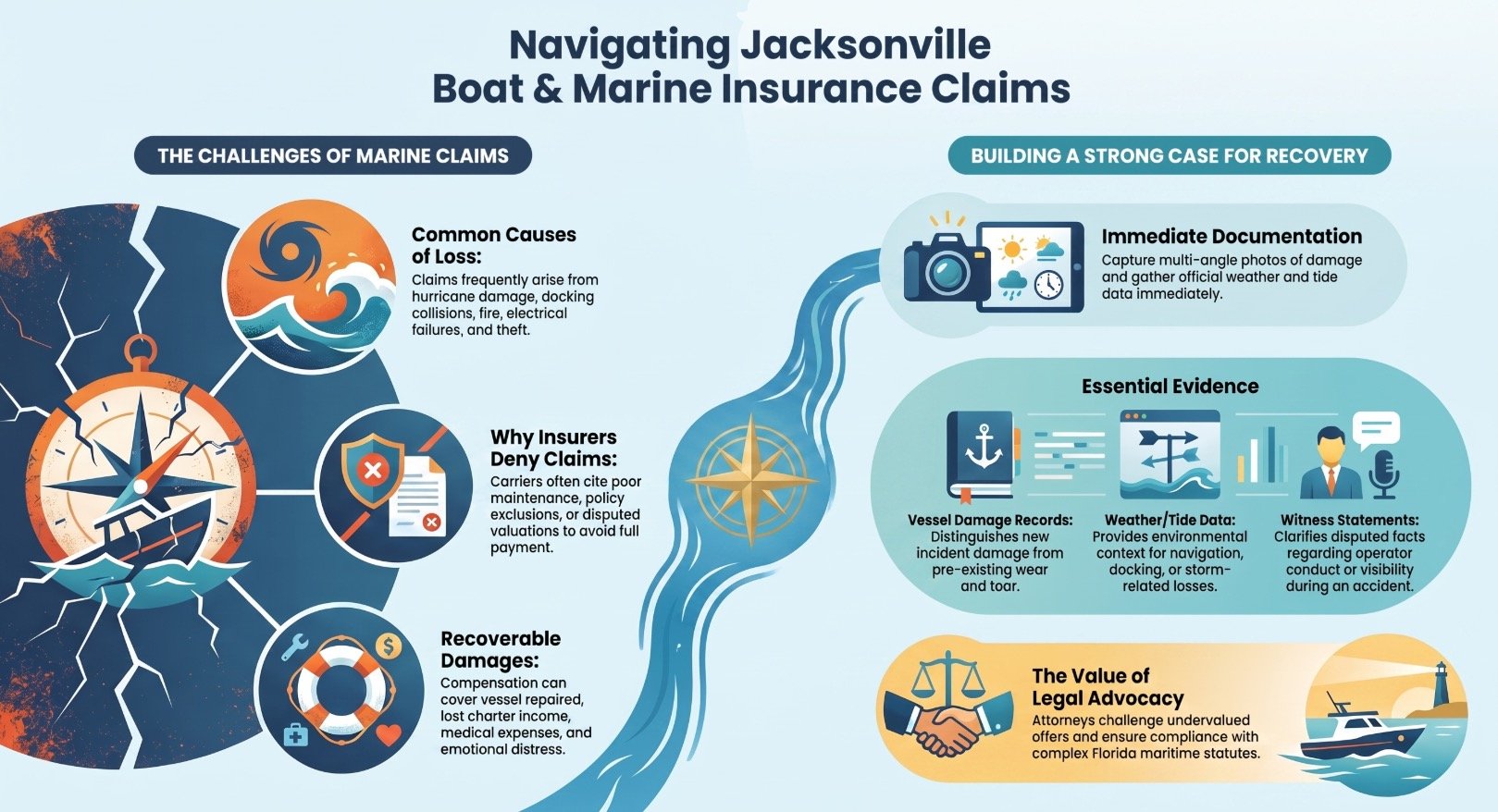
Boat and marine property claims in Jacksonville often arise from hurricane and storm damage, docking accidents, vessel collisions, fire, electrical failures, theft, and vandalism. Each cause presents distinct insurance coverage issues, documentation requirements, and potential disputes over the extent or source of the loss. Carefully evaluating these common claim origins helps determine liability, policy benefits, and the right course for pursuing compensation.
Hurricane And Storm Damage


Because Jacksonville’s coastal location exposes vessels and marinas to severe weather systems, hurricane and storm damage is one of the most common sources of boat and marine insurance claims in the area. High winds, storm surge, heavy rain, and floating debris can damage hulls, engines, electronics, moorings, and marina structures. Coastal insurance policies may cover these losses, yet disputes often arise over exclusions, valuation, maintenance records, or whether damage resulted from wind, flood, or neglect. A claim denial can place significant pressure on owners who must restore safe operations and protect those who rely on their services. Boat safety and hurricane preparedness, including securing vessels, documenting condition, and maintaining records, may support recovery efforts and strengthen a properly presented claim after a severe storm.
Docking And Collision Accidents
Severe weather is not the only source of marine property damage in Jacksonville, as docking and collision accidents also lead to significant boat and marine insurance claims. Vessels may strike pilings, seawalls, lifts, submerged objects, or other boats, causing hull fractures, damaged engines, bent railings, and compromised navigation equipment. These incidents often require careful documentation, including photographs, repair estimates, marina reports, and witness statements. Prompt action helps meet insurance claim deadlines and preserve evidence needed for a fair review. When insurers question fault, damage scope, or repair costs, knowledgeable guidance can support practical settlement negotiation strategies. For individuals and organizations serving families, guests, or the boating community, proper claim handling helps restore safe vessel use while reducing financial strain after an unexpected collision or docking incident.
Fire And Electrical Issues
Many marine fire and electrical claims in Jacksonville involve wiring failures, battery malfunctions, shore power problems, fuel system ignition, or overloaded circuits. These incidents can damage hulls, engines, electronics, docks, and nearby property, often requiring careful review of maintenance records, inspection reports, and policy language. For owners, marina operators, and service providers who prioritize anchored vessels’ safety, prompt documentation may support a fair claim and protect others from preventable harm. Investigations commonly examine whether corrosion, improper repairs, defective components, or neglected inspections contributed to the loss. Insurers may dispute causation, depreciation, exclusions, or compliance with safety standards, creating maintenance liability disputes that affect recovery. A structured claims approach helps identify responsible parties, preserve evidence, and pursue coverage for repairs, replacement, cleanup, and related losses after marine fires.
Theft And Vandalism Claims
When a vessel is stolen, stripped, or intentionally damaged, the resulting marine claim may involve losses to the boat, engines, electronics, trailers, personal property, and marina facilities. Theft and vandalism claims often require careful documentation, including police reports, marina records, photographs, repair estimates, and proof of ownership. Insurers may examine whether the vessel was properly secured, whether navigation equipment was listed, and whether damaged property falls within covered categories. An insurance dispute can arise when the carrier questions the timeline, valuation, or circumstances of the loss. Policy exclusions may also affect recovery, especially for unattended property, wear-related damage, or items not specifically scheduled. A thorough claim presentation helps protect valid interests, promotes fair evaluation, and supports restoration of boating access for families, workers, and community service needs.
Don’t Wait. Call Our Florida Personal Injury Lawyers Now!
Legal Rights of Jacksonville Property Claim Boat & Marine Claims Injury Victims
Boat and marine claim injury victims in Jacksonville may have legal rights that extend beyond immediate medical care, particularly when an accident involves negligent operation, unsafe vessel conditions, defective equipment, or inadequate maintenance. These rights may include pursuing compensation for medical expenses, lost income, pain, disability, and property-related losses tied to the incident. Courts may also consider Comparative negligence when responsibility is shared, which can affect the amount recovered.
Victims and their advocates often best support families by preserving records, seeking timely evaluations, and understanding available remedies.
Preserving evidence, seeking prompt care, and understanding legal options may help families protect their claims.
- A claim may address physical injuries, financial harm, and long-term care needs.
- Evidence such as reports, photographs, witness statements, and repair records may support a liability claim.
- Punitive damages may be available in limited cases involving reckless or intentional misconduct.
A Jacksonville boat and marine claims lawyer may help evaluate coverage, identify responsible parties, and guide injured individuals through negotiations or litigation with careful attention to deadlines and documentation.
Why Do Jacksonville Property Claim Boat & Marine Claims Injuries Happen?
Understanding legal rights also requires examining how these injuries occur, because the cause of a marine incident often determines liability, insurance coverage, and a claim’s value. In Jacksonville, boat and marine injuries may arise from unsafe vessel operation, crowded waterways, defective equipment, poor weather decisions, or inadequate supervision of passengers and guests. Maintenance negligence is another frequent factor, especially when owners, marinas, or service providers fail to inspect engines, rudder systems, fuel lines, electrical components, or safety gear.
Injuries may also occur near docks, marinas, and launch areas, where boat ramp safety is necessary. Slippery surfaces, poor lighting, missing warnings, and negligent traffic control can create preventable hazards for families, workers, volunteers, and visitors. When responsible parties disregard reasonable precautions, those who are harmed may face physical, financial, and practical burdens. Careful analysis of the incident helps identify whether misconduct, property conditions, or coverage disputes contributed to the loss.
What Should You Do After a Jacksonville Property Claim Boat & Marine Claims Injury?
After a Jacksonville boat or marine-related injury, the injured party should promptly seek medical attention, even when symptoms appear minor. Carefully document damage to the vessel, equipment, and surrounding property with photographs, reports, and preserved records. Contact legal counsel to evaluate the claim, protect important rights, and address any insurance or liability issues.
Seek Medical Attention
Seek immediate medical care whenever an injury occurs in connection with a Jacksonville boat or marine property claim, even if the symptoms appear minor at first. Prompt evaluation protects health, supports recovery, and helps caregivers identify hidden trauma, including concussions, internal injuries, infection risks, or delayed pain responses. Anyone caring for an injured family member, guest, crew member, or passenger should help with transportation, follow medical instructions, and encourage honest reporting of all symptoms. Treatment records may also provide critical timelines for later review by insurers or counsel. As part of prudent After Accident Communications, statements about injuries should remain accurate, calm, and limited to known facts. Among practical Insurance Claim Tips, timely medical care strengthens credibility, reduces disputes, and reflects responsible action after a marine-related incident.
Document The Damage
When a boat, dock, marina structure, cargo item, or personal property is damaged, start documenting as soon as conditions are safe. The affected person should photograph visible damage from multiple angles, including hull impact points, broken equipment, submerged items, torn coverings, and surrounding conditions. Keep safety gear in use when inspecting wet surfaces, unstable docks, or debris. Written notes should identify the date, time, location, weather, witnesses, and any immediate steps taken to prevent further loss. Receipts, maintenance records, storage agreements, and prior photographs may help show the property’s earlier condition. When practical, preserving damaged parts can also support later review. Because claim timing may affect available benefits, organize records promptly and keep them in a secure, accessible location.
Contact Legal Counsel
For significant boat or marine property damage, legal counsel should be contacted before the claimant gives recorded statements, signs releases, or accepts payment that may not reflect the full loss. An attorney can evaluate Insurance coverage options, identify policy exclusions, and help protect the claimant’s ability to recover fair compensation. Counsel may also provide documentation checklists to ensure repair estimates, photographs, ownership records, and maintenance history are preserved in an organized manner. If others witnessed the incident, legal guidance can include tips for witness testimony that support accurate, consistent accounts. A lawyer can also track timelines and deadlines, including notice requirements, proof-of-loss submissions, and filing limits. For those seeking to serve family, passengers, or business interests responsibly, early legal review promotes informed, careful decisions.
Critical Evidence in a Jacksonville Property Claim Boat & Marine Claims Injury Case
Essential evidence in a Jacksonville boat and marine claims injury case helps establish how the incident occurred, the extent of the damage, and the conditions affecting liability.
Primary materials often include:
- Incident scene photographs and vessel damage records
- Weather and tide data from reliable sources
- Witness statements that clarify disputed facts
Incident Scene Photographs
After a boating accident or marine property loss in Jacksonville, incident scene photographs often become some of the most important evidence in a claim. Clear images may show weather conditions, waterway markings, debris fields, dock conditions, vessel positions, lighting, and visible hazards before they change or disappear. These photographs can help adjusters, attorneys, and investigators understand how the event unfolded and support a fair review for all affected parties. When taken safely and promptly, photographs may also confirm whether Safety checklists were followed before departure or during emergency response. They can provide context for later repair estimates without addressing the full scope of vessel damage. For those serving injured passengers, owners, or maritime workers, accurate scene documentation helps preserve truth, accountability, and responsible claim evaluation.
Vessel Damage Records
When a vessel is damaged in a Jacksonville boating incident, detailed damage records can serve as essential proof in a marine property claim. These records may include repair estimates, surveyor reports, invoices, photographs of damaged components, and written assessments from qualified marine technicians. A consistent boat maintenance history can help show the vessel’s condition before the incident, allowing insurers, attorneys, and adjusters to distinguish new damage from preexisting wear. Marine insurance documentation also helps confirm coverage terms, claim requirements, prior inspections, and communications with the carrier. For those serving injured owners, passengers, or families, organized records support fair evaluation and responsible advocacy. Accurate vessel damage records can strengthen causation arguments, reduce disputes, and provide a reliable foundation for negotiating or litigating a Jacksonville boat and marine claim.
Weather And Tide Data
Because boating conditions can change quickly along the St. Johns River and nearby coastal waters, weather and tide data may provide essential context in a Jacksonville boat or marine claim. Official records can show rainfall, visibility, lightning activity, sea state, and wind forecast impacts that affected navigation, docking, or vessel control. These records help clarify whether damage or injury resulted from sudden conditions, poor preparation, or preventable exposure to known hazards. Tide timing considerations may also explain grounding, dock contact, current strength, or access limitations at marinas and ramps. For those committed to serving injured people and protecting responsible vessel owners, precise environmental evidence supports fair claim evaluation. Accurate data from trusted sources can preserve truth, reduce speculation, and guide informed legal decisions. Such documentation often strengthens causation analysis.
Witness Statements
Witness statements can provide crucial firsthand detail in a Jacksonville boat or marine claim, especially where physical evidence alone does not fully explain how an injury, collision, grounding, or property loss occurred. Neutral passengers, nearby boaters, dock workers, marina staff, or emergency responders may describe vessel speed, warnings, visibility, operator conduct, weather changes, and post-incident conditions. Their accounts can help clarify disputed facts and support a fair evaluation of responsibility. A careful attorney may compare statements with photographs, repair records, weather and tide data, and an Expert witness opinion to identify consistency or conflict. Preserving these statements early protects accuracy and strengthens the record. When credible testimony aligns with documented evidence, it may guide settlement strategy and help resolve claims efficiently, while respecting those affected.
Don’t Wait. Call Our Florida Personal Injury Lawyers Now!
Long-Term Effects of Jacksonville Property Claim Boat & Marine Claims Injuries
Boat and marine claim injuries in Jacksonville may result in long-term consequences, including chronic physical pain, lasting emotional trauma, and significant financial recovery challenges. These effects can interfere with medical treatment, work capacity, daily responsibilities, and overall stability. Carefully assessing these lasting impacts is vital when determining the full value and direction of a property claim involving injury-related losses.
Chronic Physical Pain
Chronic physical pain can become one of the most disruptive long-term consequences of injuries connected to Jacksonville boat and marine claims, particularly when trauma affects the back, neck, shoulders, joints, or soft tissue. Such pain may limit mobility, reduce work capacity, and interfere with caregiving, service, or household responsibilities. In marine settings, falls, collisions, lifting injuries, and unsafe vessel conditions may create lasting physical limitations that require consistent medical evaluation. Effective pain management may involve therapy, medication, injections, rehabilitation, or expert care, depending on the injury’s nature and severity. Documentation of ongoing symptoms, treatment needs, and functional restrictions can help clarify the full impact of harm. Strong maritime safety practices also support prevention, reducing risks for workers, passengers, volunteers, and others who depend on safe waterways.
Emotional Trauma Effects
After a serious marine incident, emotional trauma may persist long after physical injuries begin to stabilize. Survivors may experience emotional distress symptoms that affect sleep, concentration, memory, and daily trust in familiar environments. Sudden weather changes, engine sounds, or water-related settings may trigger fear responses that feel disproportionate yet are clinically significant. In some cases, post-traumatic stress may develop, marked by intrusive memories, avoidance, irritability, and heightened vigilance. These effects can influence family relationships, caregiving responsibilities, and the ability to participate fully in community life. Professionals serving injured individuals should recognize that psychological harm is not weakness, but a serious consequence requiring documentation, compassionate support, and appropriate care. Early recognition can help protect dignity, promote stability, and guide informed decisions during recovery after maritime trauma.
Financial Recovery Challenges
When serious marine injuries disrupt work capacity and household stability, financial recovery may become one of the most difficult long-term challenges. Injured individuals may face reduced wages, medical debt, vessel repair costs, and the need for ongoing assistance with daily responsibilities. Families trying to support an injured loved one often face added pressure when resources become limited. Insurance payout delays can intensify hardship, especially when treatment bills, marina fees, or replacement transportation expenses keep accruing. Documentation mistakes may also weaken a claim, creating disputes over damages, causation, or the value of losses. Careful recordkeeping, timely reporting, and organized proof of expenses remain critical. A structured claim process can help preserve financial stability while allowing caregivers and families to focus on recovery, safety, and long-term support.
Proving Liability in Jacksonville Property Claim Boat & Marine Claims Injury Cases
In Jacksonville boat and marine injury claims, proving liability requires a careful showing that another party’s conduct caused or contributed to the loss. This process often begins with identifying duties owed by vessel operators, marina owners, maintenance providers, or other responsible parties. Negligence proof may include photographs, incident reports, maintenance records, witness statements, navigation data, and expert evaluations addressing unsafe operation, defective equipment, poor supervision, or hazardous property conditions.
For injured individuals and families seeking fair accountability, the evidence must connect the wrongful act to the harm suffered. Florida’s comparative fault rules may also affect recovery when multiple parties share responsibility, including the injured person. A clear liability presentation helps guarantee that fault is evaluated accurately and that service-oriented legal advocates can protect those harmed by preventable marine incidents. Careful documentation, timely investigation, and consistent factual analysis are vital to building a credible claim in Jacksonville’s boating environment.
Dealing With Insurance Companies After a Jacksonville Property Claim Boat & Marine Claims Injury
Once liability evidence begins to take shape, communication with insurance companies becomes a substantial part of a Jacksonville boat and marine injury claim. Insurers may request statements, maintenance records, repair estimates, medical information, or proof of loss connected to vessel damage and related injuries. Each response should be accurate, measured, and consistent with documented facts, because incomplete or vague statements may affect valuation.
A careful policy limits review helps determine available coverage for bodily injury, vessel loss, dock damage, salvage expenses, and other covered losses. When storm impact, collision, sinking, or equipment failure is involved, water damage coverage may require close examination, including exclusions, notification duties, and depreciation issues. Clear communication protects the claimant’s position while promoting fair evaluation. For individuals focused on recovery, family responsibilities, or service to others, organized representation can reduce burdens and help ensure that insurer communications remain professional, timely, and aligned with the documented claim.
What to Expect During a Jacksonville Property Claim Boat & Marine Claims Injury Claim Process
A Jacksonville boat and marine injury claim typically begins with an initial claim review, followed by careful evidence gathering and documentation. The process may then involve negotiations with the insurance company, where liability, damages, and policy coverage are closely evaluated. If injury compensation is at issue, you must present medical records, lost income, and long-term impacts accurately and consistently.
Initial Claim Review
Before a Jacksonville boat or marine injury claim can be evaluated for recovery, the initial claim review should identify the nature of the incident, the parties involved, the applicable insurance coverage, and the evidence available to support liability and damages. This early assessment helps determine whether the matter involves a vessel collision, passenger injury, dockside accident, or another marine-related loss. It also considers the Coverage timeline, including notice requirements, policy deadlines, and any communications from insurers. A careful review may reveal exclusions, coverage disputes, or facts that could affect compensation. When serving injured individuals, this step supports responsible guidance, informed decisions, and protection against avoidable mistakes. If a claim is denied, the review should examine the stated reasons and available response options.
Evidence And Documentation
After the initial claim review identifies the type of marine loss and the potential coverage issues, evidence and documentation become the foundation for evaluating liability, damages, and the insurer’s obligations. Claim materials may include photographs, repair estimates, marina records, Coast Guard reports, witness statements, and communications with the carrier. Safety maintenance logs can be especially important when the condition of a vessel, dock, lift, or related equipment is disputed. Medical records, invoices, and proof of lost income may also support injury-related losses. Organized documentation helps preserve accuracy, reduces confusion, and supports those responsible for protecting an injured person’s interests. Insurance claim timelines should be monitored carefully, because late notice or delayed submissions may affect available remedies under the policy and Florida law. Counsel may help gather records.
Insurance Company Negotiations
Once the supporting evidence is assembled, insurance company negotiations typically focus on coverage, liability, the extent of the loss, and the amount payable under the applicable policy. Adjusters may request clarification, compare repair estimates, review marine survey findings, or dispute whether damage resulted from a covered incident. A well-organized presentation of records can improve Settlement leverage by showing the insurer that the claim has been carefully evaluated. During this stage, the claim timeline may be affected by inspections, supplemental documentation, or internal coverage review. Professional advocacy helps keep communications timely, accurate, and focused on policy obligations. For claimants committed to restoring vessels, protecting families, or serving clients, disciplined negotiations can support fair resolution while reducing confusion, unnecessary delay, and pressure to accept inadequate offers before review.
Injury Compensation Process
When a boating or marine incident causes physical injury, the compensation process generally begins with confirming how the accident occurred, identifying responsible parties, and documenting the full scope of harm. Medical records, incident reports, witness statements, vessel information, and photographs may help establish liability and damages. A claimant often must address insurance adjuster tactics, including early settlement offers, recorded statements, or requests that narrow the claim. Careful review helps prevent documentation pitfalls, such as missing treatment gaps, incomplete wage records, or unclear evidence of pain and limitations. The process may include claim submission, investigation, negotiation, and, when necessary, litigation. For those committed to serving injured individuals, the goal is to present a complete, truthful claim that supports fair compensation for medical care, lost income, and lasting impairment under applicable law.
Compensation for Jacksonville Property Claim Boat & Marine Claims Injury Damages
A damaged vessel can create financial losses that extend well beyond the cost of visible repairs. Compensation in Jacksonville boat and marine claims may address vessel restoration, damaged equipment, towing charges, storage fees, survey costs, and related losses tied to the covered event. When injuries are connected to the incident, documentation may also support recovery for medical treatment, rehabilitation needs, and other claim-related expenses without duplicating categories reserved for later valuation.
A property claim lawyer may evaluate policy language, marina contracts, repair invoices, photographs, witness accounts, and inspection reports to determine the scope of recoverable damages. Careful attention to insurance claim timelines is crucial, because delayed notice or incomplete submissions can weaken an otherwise valid claim. In matters involving negligent upkeep, docking conditions, or unsafe equipment, maintenance liability exposure may also affect available recovery. Through organized evidence and timely advocacy, the claims process can help injured parties, vessel owners, and families regain stability.
Economic vs Non-Economic Damages in Jacksonville Property Claim Boat & Marine Claims Cases
In Jacksonville boat and marine property claim cases, damages are often separated into economic and non-economic categories. Economic damages may include repair and replacement costs, as well as lost use damages when the vessel cannot be reasonably operated. Non-economic damages, such as emotional distress claims, require careful evaluation because they are less tangible and often depend on the specific facts of the loss.
Repair And Replacement Costs
For Jacksonville boat and marine property claims, repair and replacement costs typically constitute the core of economic damages because they reflect measurable financial losses tied to restoring or replacing the vessel, equipment, and related marine property. These costs may include hull repairs, engine work, electronics, rigging, trailers, safety gear, and other damaged components. Accurate estimates from qualified marine repair professionals help establish the reasonable expense of returning property to its prior condition. Maintenance documentation can support the claim by showing the vessel’s condition before the loss and confirming responsible ownership practices. Depreciation accounting may also affect valuation, especially when insurers compare replacement value with actual cash value. Careful cost analysis helps ensure that charitable, family, or commercial marine activities receive fair consideration after covered damage.
Lost Use Damages
When a damaged vessel cannot be used during repairs or replacement, lost use damages may become an important part of a Jacksonville boat and marine property claim. These damages generally address measurable economic loss, such as charter income, rental replacement costs, or interrupted service operations. Maintenance planning can help show whether downtime was reasonable and connected to the covered damage. A clear claim timeline may also support the period for which compensation is requested, especially when parts, inspections, or repair approvals cause delay. Strong insurance documentation, including invoices, schedules, logs, and business records, can distinguish legitimate loss from unsupported estimates. Witness credibility may matter when captains, mechanics, or clients confirm how the vessel was utilized. Careful presentation helps ensure lost use claims serve practical recovery needs.
Emotional Distress Claims
Lost use damages focus on measurable financial disruption, while emotional distress claims raise a different and often more difficult question in Jacksonville boat and marine property claim cases. Emotional distress may arise when an owner faces prolonged uncertainty, loses necessary transportation, or has disrupted family responsibilities tied to the vessel. These harms are non-economic, so they require careful proof, credible testimony, and a clear connection to the insurer’s conduct. A Wrongful delay may support such claims when it causes more than inconvenience and reflects unfair claim handling. In serious circumstances, insurance bad faith may also be examined, especially when an insurer disregards evidence or leaves policyholders without needed answers. For individuals committed to serving others, fair resolution helps restore stability, dignity, and the capacity to meet obligations.
When a Jacksonville Property Claim Boat & Marine Claims Injury Case Goes to Trial vs Settlement
Although many Jacksonville boat and marine injury claims resolve through settlement, some cases proceed to trial when liability, damages, policy coverage, or the value of the claim remains disputed. A careful settlement negotiation strategy may help narrow contested issues, preserve resources, and support fair compensation for injured individuals who need stability, treatment, and practical assistance.
When negotiations fail, litigation may provide a structured forum for presenting evidence, testimony, expert opinions, and documentation of losses. The decision between trial and arbitration can depend on contract terms, insurance provisions, and the forum available to resolve the dispute. Trial may offer broader procedural protections, while arbitration may be more limited and private. Each path carries risks, including delay, cost, and uncertainty. A Jacksonville property claim boat and marine claims lawyer may evaluate evidence, prepare witnesses, address insurer defenses, and help position the case for resolution that serves the claimant’s immediate and long-term needs.
Don’t Wait. Call Our Florida Personal Injury Lawyers Now!
Florida Laws That May Affect Your Jacksonville Property Claim Boat & Marine Claims Case
The path from negotiation to litigation depends not only on the facts of the boating or marine incident, but also on Florida laws governing insurance claims, injury liability, vessel operation, deadlines, and available damages. In Jacksonville, these rules may affect how fault is evaluated, how policy duties are enforced, and how losses are documented for review.
- Florida boating safety statutes may influence whether an operator, owner, marina, or maintenance provider acted with reasonable care.
- Insurance regulations may guide notice obligations, claim handling standards, inspections, and communications after covered marine damage.
- Florida evidence rules may determine which repair records, expert opinions, photographs, and witness statements can support a disputed claim.
Certain matters may also involve maritime lien rights, especially when unpaid services, repairs, storage, or supplies relate to a vessel. Careful legal analysis helps preserve claims, protect responsible stewardship, and promote fair resolution for injured parties, owners, and families affected by marine losses.
The Statute of Limitations for Jacksonville Property Claim Boat & Marine Claims Injury Cases
When a boating injury, vessel damage, marina loss, or marine insurance dispute occurs in Jacksonville, the statute of limitations can determine how long a claimant has to file a lawsuit or preserve a legal remedy. These time limits vary based on the nature of the claim, the parties involved, and whether state maritime, federal admiralty, or insurance contract principles apply. Injury claims, property damage claims, and coverage disputes may follow different filing periods, and delayed action can weaken an otherwise valid case.
Claimants should also respect Insurance deadlines in policies, including notice requirements, proof-of-loss provisions, and deadlines related to damage appraisal. These obligations may arise well before any lawsuit deadline. Prompt documentation of vessel condition, repair estimates, medical harm, and communications with insurers supports accurate review. For those serving families, passengers, customers, or marina communities, understanding these limits helps protect recovery rights and promotes responsible stewardship after a marine loss.
How a Jacksonville Property Claim Boat & Marine Claims Lawyer Can Help You
Deadlines are only one part of protecting a boat, marine property, or insurance claim after a Jacksonville loss. A Jacksonville property claim boat and marine claims lawyer can evaluate coverage, organize evidence, and address insurer tactics that delay fair payment. This guidance supports owners, families, and service-minded organizations seeking to restore safe use of vessels, docks, equipment, and related property.
- Reviews policies, endorsements, exclusions, and valuation terms in Home insurance disputes involving marine-related damage.
- Coordinates Water leak investigations and Mold damage documentation to connect damage conditions with covered events.
- Prepares Claim denial appeals with repair estimates, expert reports, photographs, and written responses to insurer positions.
Counsel may also communicate with adjusters, protect records, and identify underpaid portions of a claim. By presenting facts clearly, a lawyer can reduce confusion, preserve accountability, and support a resolution that lets property owners keep serving clients, relatives, crews, and the Jacksonville community.
When to Contact a Jacksonville Property Claim Boat & Marine Claims Lawyer
After a vessel, dock, marina structure, or related marine property sustains damage, legal guidance should be promptly considered as soon as coverage questions, repair disputes, or insurer delays arise. Early contact may be important when an owner receives a reservation of rights letter, a partial denial, an underpayment, or repeated requests for documents without clear explanation. Attention to Insurance timelines helps preserve claim rights, especially when policies require prompt notice, sworn proof of loss, inspections, or responses within specific periods.
A Jacksonville property claim boat and marine claims lawyer may also be contacted before accepting payment, signing releases, or authorizing repairs that could potentially affect later recovery. For owners responsible to families, customers, tenants, guests, or marina users, timely advice can support orderly decisions and reduce disruption. Legal review may clarify settlement options, identify disputed damage, and help ensure communications with the insurer remain accurate, complete, and properly documented throughout the claim process.
Why You Need an Experienced Jacksonville Property Claim Boat & Marine Claims Lawyer
Timely legal involvement is only one part of protecting a marine property claim, because the quality of that representation can materially affect how disputed damage, coverage issues, and insurer conduct are addressed. An experienced Jacksonville property claim boat and marine claims lawyer can evaluate vessel damage, dock losses, equipment claims, and storm-related issues with attention to both factual proof and policy language.
Marine claims often involve Insurance policy exclusions, valuation disputes, causation questions, and competing repair estimates. Skilled counsel can identify weak insurer positions, organize documentation, and present the claim in a manner that supports fair consideration. This guidance is especially important when claim proceeds are needed to restore livelihoods, protect family assets, or support community service through boating operations.
Experience also matters when applying Settlement negotiation tactics that address delay, underpayment, or improper denial. Effective advocacy helps keep the claim focused on evidence, contract duties, and accountable resolution.
How to Choose the Right Jacksonville Property Claim Boat & Marine Claims Lawyer for Your Case
Choosing the right Jacksonville property claim boat and marine claims lawyer requires careful attention to the lawyer’s experience with marine insurance disputes, property damage documentation, and insurer claim practices. A qualified lawyer should understand policy exclusions, repair estimates, salvage issues, and the evidence needed to support a claim after storms, collisions, fires, or theft.
Client selection criteria should include proven knowledge of boat and marina losses, clear communication, organized case handling, and a willingness to explain each step of the claims process. The lawyer should also be prepared to coordinate inspections, review surveyor reports, and challenge unfair delays or undervalued payments.
When losses involve collisions, sinkings, or injuries affecting property claims, experience with maritime accident investigation can be important. Careful investigation may identify contributing causes, preserve useful evidence, and strengthen negotiations with insurers. The right lawyer serves the client by pursuing a fair outcome with diligence, accuracy, and professional judgment throughout.
About The Law Offices of Anidjar & Levine
For individuals and businesses facing disputed boat or marine insurance claims in Jacksonville, The Law Offices of Anidjar & Levine provides legal representation focused on protecting policyholder interests. The firm assists clients who need steady guidance after vessel damage, storm loss, marina incidents, theft, or denied coverage. Its attorneys review policy terms, claim history, repair estimates, and insurer communications to identify whether benefits were undervalued, delayed, or wrongfully refused.
The firm’s approach reflects a service-centered commitment to helping clients regain stability while pursuing fair insurance outcomes. It explains Insurance claim basics in clear terms, allowing clients to understand duties, deadlines, coverage limits, and available legal options. The team also provides evidence-gathering tips, including preserving photographs, inspection reports, maintenance records, witness information, and correspondence with adjusters. By managing negotiations and preparing claims for litigation when necessary, The Law Offices of Anidjar & Levine helps policyholders pursue accountability through organized advocacy.
Frequently Asked Questions
Can I File a Claim for Hurricane-Related Boat Damage?
Yes, a hurricane-related boat damage claim may be filed if coverage applies. The owner should review policy exclusions, meet Filing deadlines, and preserve marine documentation, including photographs, repair estimates, logs, and marina records. A prompt damage assessment helps establish causation and loss value. Those assisting others should encourage careful reporting, honest records, and timely communication with insurers, since incomplete submissions may delay payment or reduce available recovery under the policy.
Does My Homeowners Policy Cover Damage to My Boat?
A homeowners policy may cover limited boat damage, usually for small watercraft, but protection is often narrow. Coverage limits may restrict payment for the vessel, trailer, equipment, or off-premises losses. Marine policy exclusions can also bar claims involving storms, sinking, navigation, or improper storage. A person seeking to serve family, guests, or the community safely should review the policy, document damage, and consider dedicated boat insurance promptly.
What if My Boat Was Damaged While in Storage?
If a boat was damaged while in storage, coverage depends on the policy terms, the cause of loss, and whether the storage location meets policy requirements. The owner should gather evidence of the damage, including photos, receipts, contracts, and witness statements. Proper insurance claim steps include timely notice, limiting damage, documenting the loss, and cooperating with inspections. Those assisting others should ensure records are organized, correct, and submitted within required timeframes.
Can I Dispute a Low Marine Insurance Settlement Offer?
Yes, a policyholder may dispute a low marine insurance settlement offer. Start by carefully reviewing the policy, the insurer’s valuation, and all evidence requirements. A sound Negotiation strategy may include repair estimates, surveyor reports, photographs, maintenance records, and comparable vessel values. When serving others responsibly, one should document every communication, challenge unsupported deductions, and seek qualified guidance before accepting any final release or payment.
Are Marina Owners Liable for Damage to Docked Boats?
Marina owners may be liable for damage to docked boats when Dock Liability arises from unsafe conditions, poor maintenance, inadequate security, or failure to warn. Under Negligence Standards, liability depends on whether the owner owed a duty of care, breached that duty, and caused measurable harm. Boat owners should document conditions, preserve contracts, report incidents promptly, and seek review of marina agreements, insurance terms, and available evidence.
—————————
A Jacksonville property claim, boat, or marine injury case can involve complicated insurance issues, liability disputes, and significant financial losses. Prompt legal guidance can help protect evidence, preserve deadlines, and pursue fair compensation. The Law Offices of Anidjar and Levine provides knowledgeable representation for injured clients and property owners facing these challenges. Those affected should consider speaking with an experienced Jacksonville Personal Injury Lawyer to understand their rights and determine the most effective path forward.