A Jacksonville property claim roof and structural damage lawyer helps homeowners and businesses address denied, delayed, or underpaid insurance claims involving storms, water intrusion, unsafe framing, and structural deterioration. The Law Offices of Anidjar and Levine reviews policy terms, documents damage, evaluates causation disputes, tracks deadlines, and coordinates with contractors or engineers when necessary. Legal support may be essential when insurers cite maintenance, timing, exclusions, or incomplete repair scopes. For related legal assistance, visit our Jacksonville Personal Injury Lawyer page.
Main Takeaways
- A Jacksonville property claim lawyer reviews policy language, exclusions, notice duties, and coverage for roof and structural damage.
- Attorneys help document storm, water, hail, wind, debris, foundation, and framing damage with photos, estimates, inspections, and expert reports.
- Legal guidance is useful when insurers dispute causation, maintenance history, delayed reporting, repair scope, or covered damage.
- Timely action protects deadlines for insurer notice, proof of loss, appraisal rights, and potential legal remedies.
- Safety comes first after roof or structural damage, especially with sagging ceilings, weakened decking, water intrusion, or collapse risks.
How We Can Help With Your Jacksonville Property Claim Roof & Structural Damage Injury Claim
When roof or structural damage disrupts a Jacksonville property, a lawyer can help the policyholder assess the claim, document the loss, and respond to the insurance company’s position with precision. Counsel may review the policy, identify applicable duties, and organize evidence such as photographs, repair estimates, inspection reports, and communications. This support helps families, landlords, nonprofits, and community caretakers protect resources needed to serve others safely.
A lawyer can also address disputes involving alleged Negligent maintenance, delayed reporting, or disagreement over the extent of covered damage. By coordinating with qualified contractors or engineers, counsel may clarify the cause of damage and present the claim in a structured manner. Guidance may include tracking temporary repairs, preserving damaged materials, and promoting mold prevention after water intrusion. When negotiations become difficult, legal representation can pursue a fair resolution while reducing procedural errors that could weaken the claim. This careful advocacy supports stability, accountability, and responsible property recovery.
Understanding Jacksonville Property Claim Roof & Structural Damage Injury Cases


Although each property loss depends on its specific facts, Jacksonville roof and structural damage claims commonly involve a careful review of the cause, timing, scope, and policy language tied to the damage. These cases may require evaluation of repair estimates, inspection findings, photographs, maintenance records, and communications with the insurer. A disciplined review helps determine whether the claim has been properly documented and whether the insurer has fairly addressed covered damage.
OUR CONSULTATIONSARE FREE
START YOUR FREE CASE REVIEW

For property owners serving families, tenants, employees, or community members, timely action is critical. Policy deadlines can affect notice, proof-of-loss submissions, appraisal rights, and legal options. Structural concerns may also raise safety issues, especially when damaged framing, decking, walls, or supports affect occupancy. In some cases, building code violations matter when repairs must meet current standards rather than restore only visible damage. Understanding these issues clarifies the insurer’s obligations, the property’s needs, and the path to recovery.
Common Causes of Jacksonville Property Claim Roof & Structural Damage
Roof and structural damage in Jacksonville property claims often arises from severe weather, gradual building movement, or sudden exterior impacts. Hurricane wind damage, hail and debris strikes, heavy rain intrusion, and foundation shifting issues can each compromise a property’s stability and create disputes over coverage. Identifying the cause of the damage is vital, as insurers frequently examine timing, maintenance history, and policy exclusions before approving payment.
Hurricane Wind Damage


Because hurricanes can generate sustained winds and violent gusts capable of stressing every part of a structure, wind damage is one of the most common causes of Jacksonville roof and structural property claims. Strong winds may lift shingles, loosen flashing, compromise roof decking, and create openings that allow water intrusion. They may also shift framing, damage exterior walls, or weaken connections that protect the home’s integrity. For property owners committed to protecting families, tenants, or community spaces, prompt documentation and careful evaluation are fundamental. Wind vs flooding issues often determine whether a claim is paid under a homeowners, windstorm, or separate flood policy. Policy coverage nuances, including exclusions, deductibles, and causation disputes, can greatly affect recovery and require focused legal review after a hurricane.
Hail And Debris
When severe storms move through Jacksonville, hail and windborne debris can cause roof and structural damage that is not always immediately visible from the ground. Hail may bruise shingles, dent flashing, fracture tiles, or weaken protective roof surfaces, while debris can puncture membranes, damage gutters, or strike siding and framing components. For families, churches, nonprofits, and service-focused property owners, prompt documentation helps protect resources needed to continue caring for others. Insurers may review impact patterns, repair estimates, and expert findings when evaluating causation, including wind vs. rain distinctions. A clear settlement strategy often requires photographs, inspection reports, maintenance records, and timely notice of loss. Legal guidance may help identify undervalued damage, challenge incomplete assessments, and pursue fair payment for necessary repairs after hail or debris impacts.
Heavy Rain Intrusion
After evaluating hail and debris impacts, heavy rain intrusion often becomes a separate focus in Jacksonville roof and structural damage claims. Wind-driven rain may enter through lifted shingles, failed flashing, clogged drainage paths, or weaknesses in the building envelope. When water moves beyond visible surfaces, it can affect decking, insulation, ceilings, and wall cavities, creating conditions for Mold growth. Careful documentation, including photographs, repair records, and moisture testing, helps identify the source and scope of damage. For property owners serving families, tenants, customers, or community members, prompt attention protects health, safety, and continuity of use. If contamination is confirmed, mold remediation may become necessary before structural repairs are completed. Claim disputes often concern timing, causation, and whether the insurer fully considered concealed water damage.
Foundation Shifting Issues
Although roof damage is often viewed from above, foundation shifting can be a major underlying cause of structural distress in Jacksonville property claims. When foundations settle, lift, or move unevenly, roof lines may warp, walls may crack, and framing connections may weaken. These conditions can complicate insurance evaluations, especially when damage appears in multiple areas of the structure. Soil movement risks are common in regions affected by heavy rainfall, poor drainage, expansive soils, or prior construction defects. Crawlspace damage may also signal moisture intrusion, weakened supports, or hidden displacement beneath the living area. A careful claim review helps identify whether roof and structural damage share the same source. For policyholders seeking fair treatment, proper documentation, inspections, and advocacy support can help protect repair resources and preserve stable housing.
Don’t Wait. Call Our Florida Personal Injury Lawyers Now!
Legal Rights of Jacksonville Property Claim Roof & Structural Damage Injury Victims
In Jacksonville, property owners who suffer roof or structural damage may have legal rights under their insurance policies, Florida law, and the specific facts surrounding the loss. These rights may include seeking fair claim evaluation, timely communication, and payment for covered repairs. When occupants, visitors, or caregivers face injury risks linked to damaged structures, careful action helps protect both people and property.
- Review policy duties, exclusions, deadlines, and coverage limits.
- Preserve evidence of damages, including photographs, estimates, reports, and damaged materials.
- Maintain insurance documentation, claim numbers, correspondence, and payment records.
- Request written explanations for denials, delays, or reduced payments.
- Consult counsel when the insurer undervalues or disputes the claim.
A Jacksonville property claim lawyer may assess whether the carrier complied with applicable obligations and whether additional recovery is available. This support can help families, landlords, faith groups, and service-focused organizations restore safe spaces while pursuing lawful compensation.
Why Do Jacksonville Property Claim Roof & Structural Damage Injuries Happen?
Why do roof and structural damage injuries occur after a Jacksonville property loss? They often happen because compromised buildings remain dangerous long after the initial storm, fire, or water event. Weakened roof decking, hidden moisture, unstable ceilings, and shifted framing can create hazards for occupants, workers, volunteers, and others trying to assist.
Roof deterioration timelines also matter. Damage that appears minor may worsen as heat, humidity, and repeated rain affect materials common to Jacksonville properties. A small leak can gradually undermine insulation, drywall, and support members, increasing the chance of collapse or falling debris.
Insurance claim delays can further contribute to unsafe conditions when necessary repairs are not approved or completed in time. While many people act to protect homes, families, or community spaces, unresolved structural problems can still put them at risk. These injuries typically arise from a combination of physical damage, delayed remediation, and hazardous exposure.
What Should You Do After a Jacksonville Property Claim Roof & Structural Damage Injury?
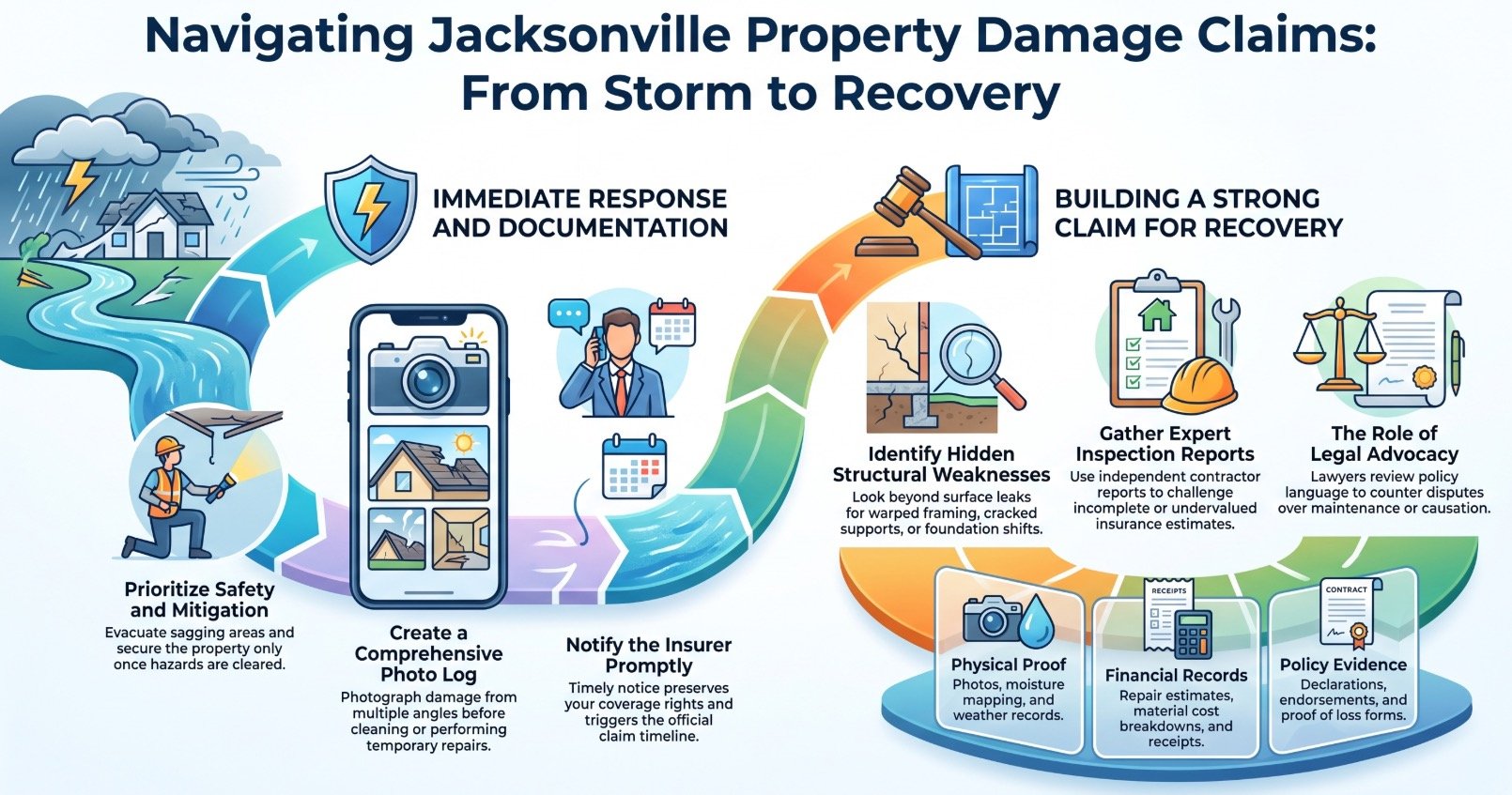
After roof or structural damage occurs, the property owner should first prioritize immediate safety, including avoiding unstable areas and addressing urgent hazards. Then document the damage thoroughly with photographs, videos, written notes, and any relevant records. Prompt notice to the insurer is also important, as delayed reporting may complicate the property claim process.
Prioritize Immediate Safety
When roof or structural damage creates a risk of injury, immediate safety must take priority over property preservation or claim documentation. Move occupants, guests, tenants, or workers away from sagging ceilings, exposed wiring, unstable walls, broken glass, and water intrusion. Immediate evacuation may be necessary when collapse, fire, electrical shock, or hazardous materials are possible.
A responsible property owner or manager should call local responders, medical personnel, utility providers, or qualified repair professionals when conditions threaten life or health. Hazard mitigation may include safely shutting off utilities, restricting access, and warning nearby residents. Secure property only after people are protected, danger is reduced, and trained assistance confirms that limited entry is reasonably safe.
Document All Damage
Clear, organized documentation helps establish the extent of roof and structural damage, the conditions that caused injury, and the repairs or safety measures that became necessary. Property owners should create a dated record as soon as conditions are safe, noting damaged rooms, fallen materials, leaks, ceiling stains, warped framing, and any visible hazards. Photographing damage from multiple angles can preserve important details before cleanup begins, including exterior roof areas, interior water intrusion, and damaged personal property. Written notes should identify where each item was found and how it affected safe use of the property. Keep receipts for temporary repairs, inspections, lodging, protective materials, and cleanup services to support later loss evaluation. Careful records help responsible parties, advocates, and professionals assess needs accurately and serve injured residents effectively.
Notify Your Insurer
Once immediate safety concerns are addressed, the property owner should notify the insurer promptly about the roof or structural damage and any related injury concerns. Timely Notification helps preserve coverage rights and allows the insurer to open a claim, assign an adjuster, and provide instructions. If the policy lists an Emergency Contact, use that number for urgent reporting, especially when water intrusion, collapse risk, or unsafe access remains present. The owner should describe the event clearly, identify known hazards, and avoid speculation about causes. Roof Safety should guide every decision, so no one should climb or inspect unstable areas without qualified help. Claim Documentation, including photographs, repair receipts, medical notes, and written communications, should be organized and retained to support fair evaluation and responsible recovery efforts.
Critical Evidence in a Jacksonville Property Claim Roof & Structural Damage Injury Case
Critical evidence in a Jacksonville property claim involving roof and structural damage may determine whether an insurer properly values, delays, or denies coverage.
Relevant proof often includes:
- Storm damage documentation, including photographs, videos, and weather records
- Contractor inspection reports identifying roof, framing, or structural defects
- Insurance policy evidence showing coverage terms, exclusions, and deadlines
- Repair cost estimates prepared by qualified construction professionals
- Communications with the insurer, adjusters, contractors, and claim representatives
A well-supported claim allows attorneys, adjusters, and experts to evaluate causation, scope of damage, and the true cost of restoration.
Storm Damage Documentation
When a storm causes roof or structural damage in Jacksonville, documentation often determines whether the property claim is supported by persuasive evidence or weakened by uncertainty. Timely records help clarify the condition of the property before temporary repairs, cleanup, or further weather exposure alters visible proof. A careful photo log may show missing shingles, ceiling staining, displaced materials, broken openings, and debris patterns, with dates and locations noted for accuracy. Moisture mapping can identify hidden water intrusion behind walls, under flooring, or within attic spaces, strengthening the connection between the storm and resulting damage. Written notes should describe the sequence of events, emergency measures taken, and areas affected. Organized documentation helps insurers, adjusters, and legal representatives evaluate the claim fairly and meet the property owner’s needs.
Contractor Inspection Reports
How can a contractor inspection report strengthen a Jacksonville roof or structural damage claim after a storm? It provides organized, independent observations that help clarify the cause, extent, and necessary repairs. A thorough Roof inspection may document lifted shingles, punctures, water intrusion, decking damage, or compromised supports. Contractor notes can preserve measurements, photographs, material conditions, and statements about safety concerns, creating a practical record for those helping the property owner recover.
The structural scope is especially important when damage extends beyond visible roofing surfaces into framing, ceilings, walls, or load-bearing components. Detailed repair recommendations can reveal estimate discrepancies, including omitted labor, undervalued materials, or incomplete restoration plans. When reviewed carefully, these reports help a claim team present damage in a clear, service-focused, and fact-based manner.
Insurance Policy Evidence
Why does the insurance policy itself matter so much in a Jacksonville roof or structural damage claim after a storm? It defines the duties, deadlines, limits, and coverages that guide every part of the claim. A careful Policy exclusions review helps identify provisions the insurer may cite to deny or reduce payment, including wear, deterioration, neglect, or flood-related limitations. This review also supports service-focused advocacy, because accurate guidance helps property owners protect homes, tenants, families, and community responsibilities. Policy declarations, endorsements, notices, and prior amendments should be preserved alongside the policy, since small wording changes can affect available benefits. Proof of loss preparation also depends on policy terms, including required forms, timing, sworn statements, and documentation standards. Strong policy evidence creates a reliable framework for fair claim evaluation.
Repair Cost Estimates
After the insurance policy identifies what may be covered, repair cost estimates help show the financial scope of the roof or structural damage claim. These estimates may explain the labor, equipment, permits, and replacement materials required to restore the property safely. A detailed Material cost breakdown can help clarify whether the claimed amount reflects current market pricing and necessary code-compliant work. In many Jacksonville claims, a contractor bid comparison may also reveal whether an insurer’s estimate is incomplete, outdated, or based on limited assumptions. Careful review supports fair treatment for property owners who are seeking needed repairs, not an inflated recovery. When estimates are organized and supported by photographs, inspection notes, and contractor credentials, they can become persuasive evidence during negotiation, appraisal, or litigation. Such records strengthen claim valuation.
Long-Term Effects of Jacksonville Property Claim Roof & Structural Damage Injuries
Long-term roof and structural damage may produce progressive deterioration that extends beyond the conditions visible after the initial loss. Hidden structural weakness can compromise load-bearing components, creating repair disputes when insurers underestimate the scope of damage. Worsening water intrusion may also affect interiors, insulation, and framing, underscoring the need for a complete property claim evaluation.
Progressive Roof Deterioration
When roof damage is not fully identified or repaired, the structure can continue to deteriorate in ways that may not be immediately visible. Moisture creep can spread beneath shingles, underlayment, and flashing, gradually enlarging areas of concern after storms or prolonged humidity. Poor attic ventilation may intensify heat and condensation, causing materials to age faster and reducing the roof’s ability to protect occupants. For property owners focused on caring for families, tenants, or community spaces, delayed action can create heavier burdens. Accurate inspections help document conditions, support clear cost breakdowns, and establish realistic repair timelines. In Jacksonville property claims, carefully evaluating progressive deterioration may clarify whether damage relates to covered events, incomplete repairs, or ongoing exposure that requires prompt attention. This evidence can guide responsible recovery decisions.
Hidden Structural Weakness
Although surface roof damage may appear limited, hidden structural weakness can develop beneath decking, trusses, rafters, ceiling joists, and load-bearing connections. Over time, compromised materials may lose stiffness, shift under routine loads, or transfer stress into adjacent portions of the structure. Hidden framing conditions can be difficult to detect without careful inspection, especially after wind, impact, or prolonged exposure has strained fasteners and joints. For property owners, early recognition supports responsible stewardship, protects occupants, and helps preserve resources needed to serve families, tenants, clients, or community members. Unseen rot may further reduce the reliability of structural members, even when interior finishes remain intact. Thorough documentation, qualified evaluation, and timely claim presentation can help establish the scope of loss and support repairs that restore stability and safety.
Worsening Water Intrusion
Hidden structural weakness often lets water intrusion worsen beyond the area first observed, especially where roof openings, lifted shingles, damaged flashing, or compromised underlayment allow repeated moisture entry. Over time, absorbed moisture can migrate through insulation, ceiling cavities, wall framing, and flooring systems, creating damage that may remain concealed until interior symptoms appear. Detecting mold growth becomes crucial because microbial spread can affect indoor air quality and complicate safe repairs for occupants, workers, and visitors. Evaluating drywall buckling also helps identify saturation patterns, compromised fasteners, and hidden deterioration behind finished surfaces. In Jacksonville property claims, careful documentation of worsening intrusion supports accurate repair scopes and fair evaluation. Prompt investigation enables responsible stewardship of damaged property, protects vulnerable occupants, and helps restore usable spaces with diligence, integrity, and informed care.
Proving Liability in Jacksonville Property Claim Roof & Structural Damage Injury Cases
Proving liability in Jacksonville roof and structural damage injury cases depends on identifying the party responsible for creating, allowing, or failing to correct the dangerous condition. Evidence may show that an owner, manager, contractor, or maintenance provider knew, or should have known, that weakened roofing, ceiling instability, water intrusion, or compromised supports placed lawful visitors at risk.
A careful investigation often reviews inspection records, repair history, building code compliance, photographs, witness statements, and prior complaints. Expert testimony may be necessary to explain how the defect developed, whether reasonable maintenance would have prevented the injury, and whether structural failures were foreseeable. Comparative negligence may also be evaluated if an injured person’s conduct is questioned, though responsibility remains tied to the facts and applicable duties. Establishing liability helps protect injured individuals, encourages safer property practices, and supports accountability when preventable hazards are left unaddressed in places where people live, work, serve, or gather.
Don’t Wait. Call Our Florida Personal Injury Lawyers Now!
Dealing With Insurance Companies After a Jacksonville Property Claim Roof & Structural Damage Injury
Once liability evidence begins to take shape, communications with insurance companies often become a significant part of a Jacksonville roof or structural damage injury claim. Insurers may request statements, estimates, photographs, medical information, and policy documentation to evaluate reported losses. Each response should be accurate, consistent, and limited to verified facts, because unclear wording may later affect coverage positions or settlement discussions.
A lawyer may help organize communications so the Claim process remains focused on documented damage, injury-related consequences, and applicable policy terms. This includes reviewing adjuster correspondence, identifying incomplete or improper requests, and preserving records of calls, emails, inspections, and payments. For individuals and families seeking to restore safety and stability, careful communication can protect both financial recovery and personal dignity. Insurance representatives serve an important role, yet their evaluation may not fully reflect the claimant’s losses. Guided interaction can reduce confusion, promote fairness, and support a more informed resolution.
What to Expect During a Jacksonville Property Claim Roof & Structural Damage Injury Claim Process
The Jacksonville property claim roof and structural damage process typically begins with a thorough damage assessment, followed by timely filing supported by clear documentation. Once submitted, the insurance company reviews the claim, conducts any necessary inspections, and issues a coverage determination or settlement position. If repair costs, scope of damage, or payment amounts are disputed, resolution may require additional evidence, negotiation, appraisal, or legal action.
Damage Assessment Steps
Before a Jacksonville property claim for roof or structural damage can move forward, you must assess the loss carefully, document it thoroughly, and understand the policy requirements. A qualified assessment often begins with a thorough inspection of roofing materials, attic spaces, ceilings, walls, and load-bearing components. Photographs, repair estimates, weather records, and maintenance history may help clarify the cause and extent of damage. Inspectors may also look for moisture intrusion, mold evidence, weakened framing, displaced shingles, or compromised flashing. For property owners serving families, tenants, customers, or communities, prompt evaluation helps protect safety and preserve the property’s essential use. Legal counsel may review findings, identify coverage concerns, and help ensure that damages are accurately organized before the claim process advances further toward insurer review.
Filing Your Claim
When a roof or structural damage claim is ready for submission, the filing process generally begins with prompt notice to the insurance carrier under the policy terms. The insured should provide the date of loss, location, known cause, photographs, repair estimates, and any emergency mitigation records. Accurate documentation helps establish the Insurance claim timeline and supports an organized review. In Jacksonville, careful filing can also protect families, congregations, businesses, and community organizations that depend on safe buildings to continue serving others. A representative may help confirm policy provisions, deductible amounts, and required forms before submission. Common Claim denial reasons often involve late notice, incomplete proof, excluded causes, or disputed preexisting damage, making precision crucial. Retain the claim package, date it, and deliver it through verifiable methods.
Insurance Company Response
After a roof or structural damage claim is filed, the insurance company typically acknowledges receipt, assigns a claim number, and appoints an adjuster to begin its investigation. The adjuster may request photographs, repair estimates, maintenance records, weather data, or access to inspect the property. Policyholders in Jacksonville should expect written communications, recorded statements in some cases, and questions about the date, cause, and scope of damage. Those serving families, tenants, or community members should keep organized records to support a responsible recovery process. Some insurers identify coverage concerns early, while others develop deny-claim patterns through repeated requests or narrow interpretations of policy terms. Adjuster timeline delays may also occur, making careful documentation of calls, emails, inspections, and deadlines important throughout the claim review period for accountability.
Repair Dispute Resolution
Disputes over repairs often arise once the insurer completes its inspection and issues an estimate that the property owner, contractor, or retained expert believes is incomplete or undervalued. Resolution usually begins with a careful comparison of the carrier’s scope against documented damage, code requirements, and reasonable repair methods. Roofline evidence may be reviewed to show wind uplift, framing movement, or drainage changes that affect structural integrity. A clear claim timeline helps identify inspection delays, supplemental submissions, and communications that may influence liability or payment. In Jacksonville property claims, attorneys may coordinate engineers, public adjusters, and repair professionals to present organized evidence. When negotiation fails, available procedures may include appraisal, mediation, or litigation. Each step should promote fair restoration, protect the owner’s interests, and support responsible property stewardship.
Compensation for Jacksonville Property Claim Roof & Structural Damage Injury Damages
Compensation for Jacksonville property claim roof and structural damage may include the cost to repair or replace damaged roofing systems, framing, exterior components, interior finishes, and other affected portions of the property. These amounts should reflect code-compliant work, reasonable labor rates, materials of like kind and quality, and necessary measures to protect the structure from further harm. In insurance disputes, documentation often guides the claim value, including contractor estimates, engineering reports, photographs, maintenance records, and communications with the carrier.
A careful settlement strategy may also address temporary repairs, debris removal, permitting costs, inspection fees, and damage caused by water intrusion after the roof or structural system failed. For families, nonprofits, congregations, and service-focused property owners, fair compensation helps restore safe spaces used to support others. Legal guidance can help you present a complete demand, challenge underpayment, and ensure the insurer evaluates all covered damage under the policy.
Economic vs Non-Economic Damages in Jacksonville Property Claim Roof & Structural Damage Cases
In Jacksonville roof and structural damage claims, economic damages often depend on repair cost evidence, documented loss of use, and related out-of-pocket expenses. Non-economic damages may involve emotional distress claims, particularly when unsafe living conditions or prolonged displacement affect the property owner’s daily life. Distinguishing these categories helps clarify the value of a claim, the proof required, and the potential scope of recovery.
Repair Cost Evidence
After a roof leak, storm impact, or structural failure, repair cost evidence often becomes the foundation of a Jacksonville property damage claim. It helps establish the economic damages tied to restoring the property, while separating measurable costs from non-economic concerns. Repair documentation, including estimates, invoices, photographs, material lists, permits, and inspection notes, can show the scope and necessity of the work. Contractor receipts may further confirm amounts paid, services performed, and whether repairs addressed covered damage. In serving property owners fairly, attorneys and claim professionals review these records for consistency, accuracy, and connection to the reported event. Clear evidence can reduce disputes over pricing, causation, and reasonable repair methods, allowing the claim to focus on documented losses rather than unsupported assertions or assumptions.
Loss Of Use
When roof or structural damage makes a Jacksonville property unsafe, inaccessible, or unsuitable for normal use, loss of use may become a significant part of the claim. These damages often include measurable economic losses, such as Temporary relocation costs, added transportation expenses, storage fees, or lost rental income when a dwelling cannot be occupied. Careful documentation, including receipts, lease records, repair timelines, and occupancy restrictions, helps show the damage’s practical effect.
In an insurance dispute, carriers may question whether the relocation was necessary, whether the time away was reasonable, or whether claimed expenses were related to the covered loss. A property claim lawyer may evaluate policy language, gather supporting proof, and present a clear calculation that protects the owner’s ability to restore stable living conditions.
Emotional Distress Claims
Although roof or structural damage can cause serious personal disruption, emotional distress claims are treated differently from the direct financial losses usually presented in a Jacksonville property insurance dispute. Florida property claims generally focus on covered repair costs, temporary housing, mitigation expenses, and related economic losses. Emotional hardship, while real, is often not independently recoverable under a standard insurance policy unless a separate legal basis exists. For families serving dependents, tenants, or vulnerable relatives, the stress caused by unsafe living conditions may still provide important context. It can help explain urgency, claim handling concerns, and the human impact of delayed or denied claims. A careful settlement strategy may acknowledge this burden without overstating recoverable damages, preserving credibility while keeping attention on policy benefits, documented losses, and fair resolution.
When a Jacksonville Property Claim Roof & Structural Damage Injury Case Goes to Trial vs Settlement
Because roof and structural damage claims often involve disputed causation, repair scope, and policy exclusions, a Jacksonville property claim may proceed toward either settlement or trial depending on the strength of the evidence and the insurer’s position. Settlement may be appropriate when inspections, estimates, photographs, and expert opinions create a clear basis for payment, allowing the insured to restore the property without prolonged conflict. Trial becomes more likely when the carrier contests storm impact, alleges wear or maintenance issues, or refuses a reasonable valuation.
Trial strategy preparation begins early, even if resolution remains possible. Counsel may coordinate engineering reviews, contractor testimony, document analysis, and evidence preservation to protect the claim’s integrity. This process helps present damage accurately and supports those working to secure safe housing, business continuity, or community stability. A careful evaluation of risk, cost, delay, and proof guides whether continued negotiation or courtroom presentation best serves the policyholder’s recovery interests.
Florida Laws That May Affect Your Jacksonville Property Claim Roof & Structural Damage Case
Under Florida law, roof and structural damage claims in Jacksonville are shaped by strict policy duties, filing deadlines, notice requirements, and rules governing how insurers must investigate and respond. These laws guide how damaged families, nonprofits, churches, and service-focused property owners protect safe shelter and continuity of care after a loss.
-
- Florida policy requirements may require prompt notice, emergency mitigation, documentation, and cooperation with inspections.
- Insurance claim timelines can affect when an insurer acknowledges, investigates, pays, denies, or requests more information.
- Policyholders may need to preserve damaged materials, photographs, repair estimates, and contractor reports.
- Insurers must evaluate covered damage in good faith, including hidden structural issues when properly presented.
- Disputes may involve appraisal, supplemental claims, coverage exclusions, deductibles, or matching issues.
A Jacksonville roof and structural damage lawyer may review policy language, communications, and loss evidence to help determine whether the insurer complied with Florida claim-handling obligations.
Don’t Wait. Call Our Florida Personal Injury Lawyers Now!
The Statute of Limitations for Jacksonville Property Claim Roof & Structural Damage Injury Cases
Filing deadlines are a major concern in Jacksonville roof and structural damage claims, particularly when an insurer delays payment, disputes the cause of loss, or denies coverage after months of investigation. Florida law sets strict time limits for filing property insurance lawsuits, and missing those limits can prevent recovery, even when the damage is substantial and the policyholder acted responsibly.
Insurance claim deadlines may depend on the date of loss, the type of policy, the nature of the dispute, and any statutory notice requirements that apply before suit. Separate deadlines may also govern supplemental or reopened claims involving hidden structural damage, storm-created roof failure, or continuing water intrusion. Florida tolling rules can affect timing in limited circumstances, but you should not assume they extend a filing period. Careful attention to notice dates, correspondence, inspection records, and denial letters helps preserve the ability to seek payment for covered property losses while supporting responsible stewardship of damaged homes.
How a Jacksonville Property Claim Roof & Structural Damage Lawyer Can Help You
When a roof or structural damage claim becomes disputed, a Jacksonville property claim lawyer can evaluate the policy, the damage evidence, and the insurer’s conduct to determine the strongest path toward recovery. This support helps property owners protect homes, businesses, and community spaces that families, tenants, employees, and neighbors rely on.
- Reviews policy language to identify covered roof, framing, water, or collapse-related losses.
- Coordinates Evidence preservation, including photographs, inspection reports, repair records, and maintenance history.
- Analyzes Contractor estimates to challenge low valuations or incomplete scopes of repair.
- Communicates with adjusters, engineers, and insurers to reduce confusion and strengthen documentation.
- Pursues fair payment through negotiation, supplemental claims, appraisal support, or litigation when justified.
Through organized advocacy, the lawyer helps present the claim with discipline and credibility. This guidance can prevent overlooked damage, support responsible restoration, and promote outcomes that allow affected properties to safely serve their intended purpose.
When to Contact a Jacksonville Property Claim Roof & Structural Damage Lawyer
How soon legal guidance is needed often depends on the seriousness of the damage, the insurer’s response, and whether the claim appears likely to become contested. A property owner should consider contacting a Jacksonville property claim roof and structural damage lawyer after discovering significant leaks, sagging, cracked supports, storm impact, or damage that may affect safe occupancy. Home safety should guide every early decision, especially when residents, tenants, volunteers, or vulnerable family members may be exposed to unsafe conditions.
Legal contact may also be appropriate when an insurer delays inspection, requests repeated documentation, offers a low estimate, disputes causation, or suggests repairs before fully understanding the scope. Early Timeline Evidence Collection can help preserve photographs, contractor observations, repair invoices, communications, and dates of loss. Prompt consultation is especially important when deadlines apply, because organized information supports a clearer claim presentation and reduces avoidable confusion during an already demanding recovery process for everyone involved.
Why You Need an Experienced Jacksonville Property Claim Roof & Structural Damage Lawyer
After recognizing the need for prompt legal guidance, the next concern is whether the attorney has the experience required to manage roof and structural damage claims effectively. Experienced counsel understands how storms, water intrusion, defective repairs, and delayed maintenance allegations can affect coverage decisions. This knowledge supports an orderly Insurance policy review, helping clarify duties, exclusions, deadlines, and available benefits.
A seasoned Jacksonville property claim lawyer also helps protect the community resources tied to safe housing, business continuity, and responsible recovery. Through an Evidence preservation strategy, the attorney may coordinate photographs, expert inspections, repair records, weather data, and communications before crucial proof is lost. Experience also matters when insurers question causation, undervalue repairs, or request repeated documentation. By organizing the claim, addressing disputes, and presenting damage clearly, skilled counsel can reduce confusion and promote fair consideration. This guidance serves property owners, families, employees, and others who depend on restored structures.
How to Choose the Right Jacksonville Property Claim Roof & Structural Damage Lawyer for Your Case
For property owners facing roof or structural damage, choosing the right Jacksonville property claim lawyer starts with reviewing the attorney’s background in insurance disputes involving buildings, storm damage, water intrusion, and contested repair estimates. A qualified lawyer should understand policy language, claim documentation, contractor reports, and the tactics insurers may use to reduce or postpone payment.
Interviewing attorneys allows property owners to assess communication, responsiveness, and the lawyer’s ability to explain the claim process clearly. During an initial case review, the attorney should evaluate coverage issues, deadlines, photographs, repair estimates, inspection reports, and prior insurer communications. This meeting should help determine whether the lawyer can protect the owner’s interests while pursuing a fair resolution.
Property owners should also consider whether the attorney demonstrates careful preparation, professional judgment, and a service-minded approach. The right advocate provides guidance, reduces confusion, and helps ensure the claim is handled with diligence, accuracy, and respect.
About The Law Offices of Anidjar & Levine
The Law Offices of Anidjar & Levine represents property owners in Jacksonville who are dealing with roof and structural damage claims, including disputes involving storm damage, water intrusion, delayed payments, underpaid claims, and denied coverage. The firm serves clients by reviewing policy terms, documenting losses, and guiding each stage of the Property Claim Process with steady communication and careful preparation.
Its attorneys understand Jacksonville Insurance Claims and the challenges families, landlords, and business owners face after serious property damage. They evaluate Roof Damage Evidence, consult repair records, assess inspection findings, and address insurer arguments that may limit recovery. This work helps clients protect homes, rental properties, and community spaces that others depend on.
The firm also explains how legal strategies can support a stronger claim, including demand preparation, negotiation, and litigation when necessary. Through organized advocacy, it seeks fair treatment from insurers while allowing property owners to focus on repair, stability, and service.
Frequently Asked Questions
Can I Make Temporary Roof Repairs Before the Adjuster Visits?
Yes, you may make temporary roof repairs before the adjuster visits, especially to prevent further damage and protect occupants. The insured should preserve damaged materials when practical, take clear before-and-after photographs, and follow Emergency tarping guidance from the insurer or qualified professionals. Volunteers or contractors working in the home should avoid permanent alterations. Document repair receipts, labor details, and communications, so the claim record remains accurate and complete.
Does Hurricane Deductible Apply to My Roof Damage Claim?
A hurricane deductible can apply if the roof damage resulted from a named storm and the policy defines the loss accordingly. The insured should check declarations, endorsements, hurricane waiting periods, and any windstorm coverage disputes that may affect payment. Those assisting policyholders should document damage carefully, preserve repair records, and request written explanations from the insurer. Careful review helps ensure the deductible is applied properly, fairly, and consistently.
What if My Roof Was Already Old Before the Damage?
An older roof can still qualify for coverage when a covered event caused new damage. The insurer may apply Aging roof depreciation, but it must separate wear and tear from storm-related loss. Policyholders should provide maintenance records, photos, inspection reports, and contractor opinions. The carrier may request proof of preexisting damage, yet denial should not rest on assumptions. Careful documentation helps support fair payment, enabling responsible recovery and continued service to others.
Can My Mortgage Company Hold My Insurance Claim Payment?
Yes, a mortgage company may hold an insurance claim payment when a mortgage clause gives it authority to protect its financial interest in the property. This payment restriction often applies until repairs are verified, contractor documents are submitted, or inspections confirm progress. The process is intended to ensure funds restore the home properly. A policyholder serving household and community needs should review loan documents, communicate promptly, and document every repair step.
Will Filing a Roof Damage Claim Increase My Premiums?
Filing a roof damage claim may increase premiums, but the outcome depends on the insurer, claim history, cause of loss, and state rules. A weather-related event may have less claim impact than preventable damage or repeated claims. Policyholders serving families, tenants, or communities should document damage carefully, report honestly, and review coverage terms. A qualified insurance professional can clarify risks before you submit a claim.
—————————
Roof and structural damage claims in Jacksonville require prompt attention, thorough documentation, and a clear understanding of insurance policy obligations. An experienced property claim lawyer can assess the damage, address insurer disputes, and pursue the compensation needed for proper repairs. The Law Offices of Anidjar and Levine offer knowledgeable guidance to property owners facing denied, delayed, or underpaid claims. For additional legal support, consult a Jacksonville Personal Injury Lawyer to help protect your rights and pursue a fair resolution.