The Law Offices of Anidjar and Levine help Jacksonville policyholders address property claim disputes involving burst pipes, leaking water heaters, appliance line failures, or storm-related flooding. Legal support may include reviewing insurance policies, preserving evidence, communicating with adjusters, and guiding you through negotiation, appraisal, mediation, or litigation. These claims often involve coverage exclusions, late-notice allegations, mold risks, and disputes over repair valuations. For related injury concerns, visit our Jacksonville Personal Injury Lawyer page. The sections below explain key rights, common causes, documentation needs, and when legal help may be appropriate.
Main Takeaways
- A Jacksonville water and pipe damage lawyer can review your policy, coverage limits, exclusions, and insurer communications.
- Legal help may clarify whether negotiation, appraisal, mediation, or litigation is appropriate for your property claim.
- Preserve evidence with photos, repair estimates, inspection reports, maintenance records, and damaged parts when possible.
- Immediate water shutoff, safety precautions, and prompt mold mitigation can reduce loss and support your claim.
- Common disputes involve late notice, cause of damage, coverage applicability, repair scope, and denied or underpaid claims.
How We Can Help With Your Jacksonville Property Claim Water & Pipe Damage Claim
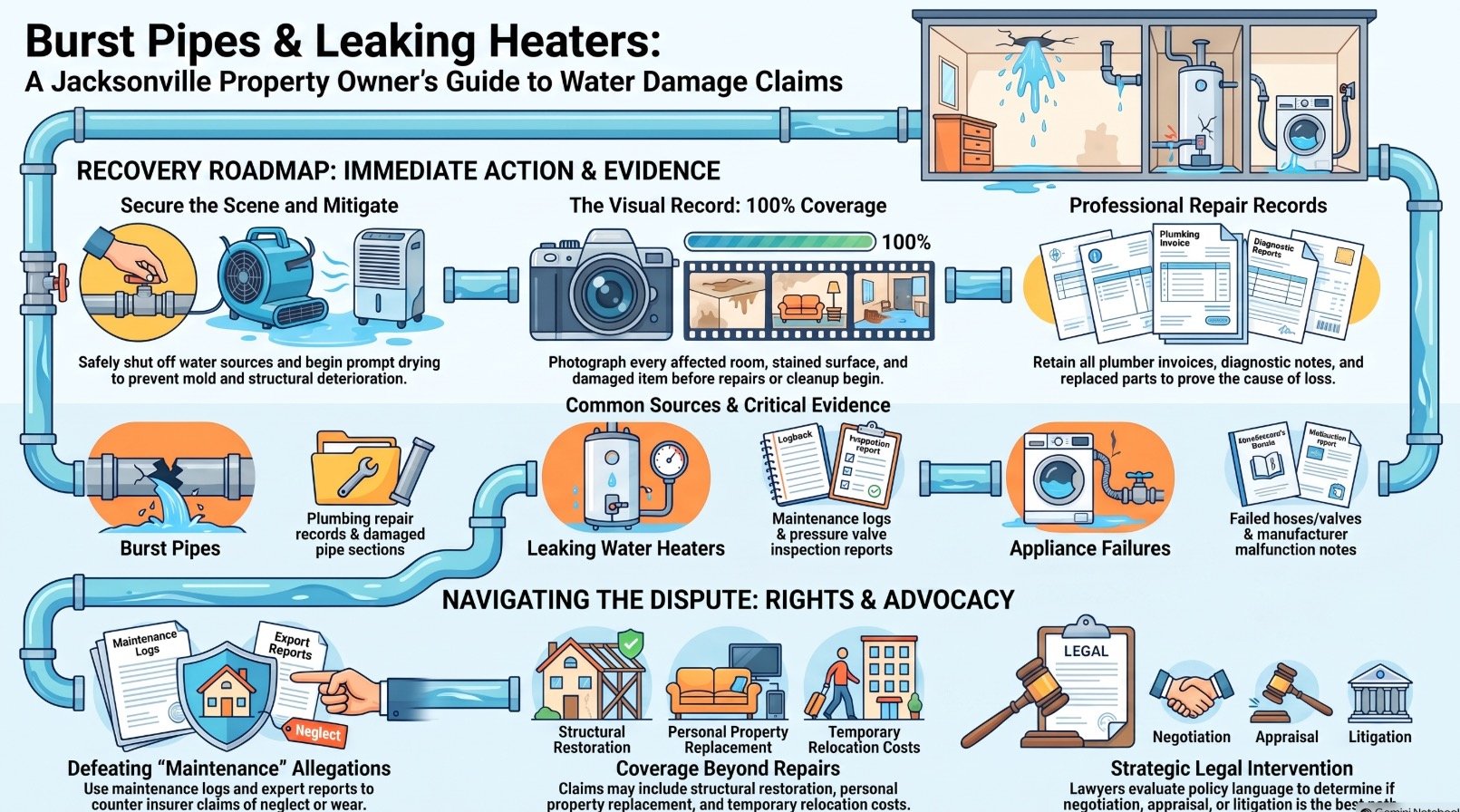
When water or pipe damage affects a Jacksonville property, an attorney can help evaluate the loss, document the damage, and address disputes with the insurance company. Legal support may begin with reviewing the policy, identifying applicable coverage, and preserving evidence before repairs alter the scene. Counsel can guide timely water shutoff measures, coordinate Insurance documentation, and encourage prompt mold mitigation to protect occupants, neighbors, and service personnel.
A lawyer may also help organize photographs, invoices, plumber reports, remediation records, and communications with adjusters. When questions arise about hidden moisture, damaged materials, or unsafe conditions, a structural assessment can clarify the extent of harm and support a complete claim. This advocacy helps property owners present accurate information while reducing avoidable delays. Through careful claim preparation and measured negotiation, legal representation supports fair consideration of covered losses, allowing responsible owners to restore safe spaces and continue serving families, tenants, customers, and the wider Jacksonville community.
Understanding Jacksonville Property Claim Water & Pipe Damage Cases


After identifying how legal representation may support a claim, it is important to understand what makes water and pipe damage cases in Jacksonville distinct. These matters often involve urgent property concerns, disputed policy language, and the need to protect families, tenants, or business occupants from further hardship. A claim may require careful review of coverage terms, repair estimates, inspection findings, and communications with the insurer.
OUR CONSULTATIONSARE FREE
START YOUR FREE CASE REVIEW

Evidence preservation is often central because damaged materials, photographs, maintenance records, and expert assessments may help show the extent and timing of the loss. When documentation is incomplete or delayed, insurers may challenge responsibility or reduce payment. An insurance claim denial may arise from exclusions, alleged late notice, or disputes about whether the loss is covered.
For those serving affected property owners, these cases require steady attention, organized proof, and a clear understanding of policy duties. A disciplined approach may improve fairness and accountability throughout the claim process.
Don’t Wait. Call Our Florida Personal Injury Lawyers Now!
Common Causes of Jacksonville Property Claim Water & Pipe Damage
Water and pipe damage claims in Jacksonville often arise from several recurring sources, each requiring careful documentation and timely action. Common causes include burst pipes, leaking water heaters, storm-related flooding, and appliance line failures, all of which can lead to significant property loss. Understanding these causes helps clarify how damage occurred, whether coverage may apply, and what evidence may be needed to support a claim.
Burst Pipes


Because plumbing failures can release large volumes of water quickly, burst pipes are among the most disruptive causes of property damage in Jacksonville homes and businesses. Aging supply lines, corrosion, excessive pressure, improper installation, and sudden temperature changes may cause pipes to rupture behind walls, under floors, or above ceilings. When water spreads quickly, it can damage drywall, flooring, furnishings, electrical systems, and critical records used to serve residents, customers, or vulnerable community members. Prompt shutoff, documentation, and professional mitigation help limit losses. Preventive Maintenance, including inspections and pressure regulation, may reduce risk and support a later claim. Insurers may still raise coverage disputes, alleging neglect, wear, or delayed reporting. Careful evidence preservation can help address Insurance Denials and support fair claim evaluation.
Leaking Water Heaters
Leaking water heaters can cause substantial property damage when storage tanks, supply connections, pressure relief valves, or drain fittings fail without prompt detection. In Jacksonville homes and service facilities, even a slow leak may damage flooring, drywall, insulation, cabinetry, and nearby personal property. Corrosion, sediment buildup, loose fittings, excessive pressure, and aging components often contribute to water heater failures. Preventive maintenance tips include scheduling regular inspections, flushing the tank as recommended, checking for rust, and confirming that valves discharge properly. Safe installation practices also matter, including proper placement, secure connections, drain pans, and code-compliant pressure controls. When damage occurs, careful documentation of the source, affected areas, and repair needs can support an insurance claim while helping property owners restore safe, dependable conditions for those they serve.
Storm-Related Flooding
When severe storms move through Jacksonville, heavy rainfall, storm surge, and overwhelmed drainage systems can allow floodwater to enter homes, businesses, and service facilities with little warning. These events may damage flooring, walls, electrical components, records, furniture, and stored supplies needed to care for residents, clients, or the public. Storm surge risks are especially serious in low-lying coastal areas, where rising water can carry debris, contaminants, and salt that worsen structural harm. Indoor flooding damage often requires prompt documentation, moisture assessment, and mitigation to reduce mold growth and preserve usable spaces. Property owners serving others may face urgent pressure to restore operations while working through coverage exclusions, flood policy requirements, and claim disputes. Careful review of policy language and loss evidence can support a more accurate claim presentation.
Appliance Line Failures
Appliance line failures are a frequent source of water and pipe damage in Jacksonville properties, particularly where washing machines, dishwashers, refrigerators, ice makers, and water heaters rely on aging or poorly secured supply connections. A cracked hose, loose valve, corroded fitting, or sudden appliance malfunction can release water into walls, flooring, cabinets, and adjacent rooms. Property owners and service-focused professionals should document visible damage, stop the water source when possible, and preserve damaged parts for inspection. Appliance Failure Coverage may apply when the loss is sudden and accidental, though policy exclusions and maintenance questions often require careful review. A Hidden Leak Investigation can identify moisture behind surfaces, helping clarify the cause, timeline, and scope of damage for a well-supported Jacksonville property insurance claim after appliance-related water loss.
Legal Rights of Jacksonville Property Claim Water & Pipe Damage Victims
After water or pipe damage, Jacksonville property owners and injured occupants may have legal rights to insurance coverage, property restoration, temporary relocation costs, and compensation for related physical harm. These rights may support families, tenants, employees, or guests who need safe shelter, medical care, and restored living conditions. Responsible advocacy often begins with careful documentation, prompt notice, and practical water mitigation actions.
Careful documentation and prompt action can help protect Jacksonville occupants after water or pipe damage.
- Coverage rights: Policyholders may pursue payment for covered structural damage, damaged personal property, loss of use, and necessary cleanup services.
- Health-related claims: Injured occupants may seek compensation when exposure to unsafe conditions results in illness, falls, electrical hazards, or other harm.
- Insurance dispute options: When payment is delayed, denied, or undervalued, legal review may help determine whether negotiation, appraisal, mediation, or litigation is appropriate.
These protections help ensure damaged properties are addressed responsibly, while vulnerable occupants receive informed guidance during recovery.
Why Do Jacksonville Property Claim Water & Pipe Damages Happen?
Because water can move quickly through walls, flooring, ceilings, and electrical systems, Jacksonville property claim water and pipe damage injuries often occur when a plumbing failure is not detected or controlled in time. Common Leakage triggers include ruptured supply lines, worn appliance hoses, failed water heaters, roof intrusions, clogged drains, and storm-related pressure changes. When moisture spreads into hidden spaces, residents, guests, or workers may face slip hazards, weakened structural materials, mold exposure, or electrical risks.
These incidents may also arise from Homeownership neglect, including delayed maintenance, ignored stains, poor ventilation, or failure to inspect aging fixtures. In other cases, Unseen corrosion inside pipes gradually weakens metal until sudden breaks occur. Multi-unit buildings may add further risk when one owner’s plumbing problem affects neighboring units. Understanding these causes helps property owners, tenants, insurers, and service professionals assess responsibility carefully, protect vulnerable occupants, and support fair resolution after significant water-related harm occurs.
What Should You Do After a Jacksonville Property Claim for Water & Pipe Damage?
After a Jacksonville water or pipe damage incident, a property owner should first stop the water source, if safe to do so, to reduce further loss. Then carefully document the damage with photographs, videos, repair records, and any related communications. Before accepting an insurance decision or settlement, the property owner may benefit from contacting a lawyer to evaluate the claim and protect available rights.
Stop The Water
When water is actively entering a Jacksonville property, the first priority is to stop the source safely. A responsible occupant, manager, or caregiver should locate Emergency shutoff valves and turn off the affected supply line, or the main water valve, when conditions allow. If water is near electrical outlets, panels, or standing in occupied areas, utility assistance or emergency services may be necessary before further action. Prompt water damage mitigation helps protect residents, visitors, neighbors, and service personnel from avoidable hazards. Qualified plumbers, maintenance staff, or restoration professionals should address broken pipes, failed appliances, roof intrusions, or overflowing fixtures quickly. Acting with care preserves safety, reduces continuing loss, and supports a more orderly claim process without placing anyone at unnecessary risk.
Document The Damage
Start documenting as soon as the property is safe to enter and the water source is controlled. Property owners, managers, or caretakers should photograph and video all affected rooms, including ceilings, walls, floors, cabinets, furniture, and personal items. Images should show standing water, stains, warped materials, damaged pipes, and any cleanup already performed. Written notes should identify dates, times, odors, visible mold concerns, and steps taken for moisture control. Keep receipts for emergency services, drying equipment, temporary repairs, and replacement supplies. Do not discard damaged items until they are listed and photographed, unless removal is necessary for Mold prevention or safety. Organized records help explain the loss clearly, support responsible recovery, and assist those working to restore the property.
Contact A Lawyer
A well-documented loss can place a property owner in a stronger position, but legal guidance may still be needed to protect the claim and address disputes with the insurance company. After water or pipe damage, a Jacksonville property owner should contact a lawyer promptly, especially when coverage is unclear, payment is delayed, or the insurer questions the cause of loss. Emergency legal advice may help preserve evidence, prevent harmful statements, and guide communications with adjusters. An Initial case evaluation allows counsel to review the policy, photographs, repair estimates, mitigation records, and claim correspondence. This review can identify deadlines, exclusions, and potential bad faith concerns. With informed legal support, the owner may pursue fair compensation while remaining focused on restoring safety, shelter, and stability for others affected.
Critical Evidence in a Jacksonville Property Claim Water & Pipe Damage Case
Strong evidence can determine whether a Jacksonville water and pipe damage claim is properly valued, disputed, or denied. Essential materials often include: 1. Photos and videos showing the damage and source; 2. Plumbing repair records confirming the cause and scope of repairs; 3. Insurance policy documents, damage logs, and expense records establishing coverage, losses, and costs. These records help create a clear timeline, support the claimed damages, and strengthen the property owner’s position during the insurance process.
Photos And Videos
In a Jacksonville property claim involving water or pipe damage, photos and videos often provide the clearest record of the loss before conditions change. Clear images can show standing water, stained ceilings, warped flooring, damaged walls, and affected personal property. Before-and-after photos help compare the property’s condition before the event with the damage that followed, giving adjusters, attorneys, and service providers a reliable visual reference. Timeline video logs may also document how the damage progressed, when mitigation began, and whether conditions worsened despite reasonable care. Organize these records by date, location, and room whenever possible. Accurate visual evidence supports fair claim review, helps protect households, and allows advocates to serve property owners with diligence, honesty, and a well-documented presentation.
Plumbing Repair Records
Beyond visual documentation, plumbing repair records can provide direct evidence of the source, cause, and scope of water or pipe damage in a Jacksonville property claim. Invoices, work orders, diagnostic notes, and replacement part records may identify a failed supply line, corroded fitting, blocked drain, or other condition tied to a Water leak. These records help clarify when the problem was discovered, what repairs were performed, and whether additional damage remained after service. For property owners seeking to protect households, tenants, or community spaces, organized repair documentation supports responsible action and transparent claim presentation. Plumber observations may also guide later Mold testing when moisture intrusion affected walls, flooring, or cabinetry. Accurate records can strengthen damage assessments and assist professionals evaluating causation, timing, and necessary remediation.
Insurance Policy Documents
When water or pipe damage leads to a Jacksonville property claim, the insurance policy documents define the coverage framework that controls the claim evaluation. These materials identify covered perils, duties after loss, notice requirements, and the standards an insurer may apply when reviewing the damage. Policy exclusions are especially important because they may limit or bar recovery for gradual leaks, wear, faulty maintenance, or specific pipe conditions. Coverage limits also guide the maximum available payment for dwelling repairs, personal property, mitigation services, and additional living needs. In a service-focused claim process, careful review helps ensure that the property owner’s rights are understood and that the insurer is held to the written promise. Complete policy forms, endorsements, and declarations pages provide essential context for fair resolution, accountability, and informed advocacy.
Damage And Expense Logs
After the policy documents establish the coverage framework, damage and expense logs help show how the water or pipe loss affected the property and the owner’s finances over time. These records may include dated photographs, room-by-room descriptions, drying costs, temporary lodging receipts, and plumber invoice tracking. Consistent entries support an Insurance claim strategy by connecting each expense to the covered event, rather than leaving the insurer to question necessity or timing. When moisture remains, mold documentation can confirm continuing harm and the need for prompt remediation. Clear logs also assist professionals who serve families, tenants, or vulnerable owners by preserving facts before memories fade. For settlement negotiation tips, organized proof often strengthens valuation, reduces disputes, and promotes a fair resolution based on documented loss.
Don’t Wait. Call Our Florida Personal Injury Lawyers Now!
Long-Term Effects of Jacksonville Property Claim Water & Pipe Damage
Long-term water and pipe damage can create serious risks for Jacksonville property owners, including hidden structural deterioration that may worsen over time. Mold exposure concerns may also arise when moisture remains trapped in walls, flooring, or ventilation systems, creating potential health and remediation issues. These conditions often complicate financial recovery, as insurers may dispute the cause, extent, or timing of the claimed damage.
Structural Damage Risks
Although water damage may appear limited to flooring, drywall, or visible stains, prolonged moisture from pipe failures can weaken the structural components that support a Jacksonville property. A hidden leak, left unaddressed, may compromise wood framing, subflooring, ceiling supports, and load-bearing materials. Over time, these conditions can create Safety hazards, including sagging surfaces, weakened stairways, or unstable rooms that place occupants, guests, and service providers at risk.
Structural damage often develops gradually, making early documentation and professional evaluation necessary. Property owners who serve families, tenants, customers, or vulnerable residents may need prompt repairs to preserve safe conditions and prevent broader disruption. Insurance claim disputes may arise when damage is concealed, misclassified, or underestimated. Careful inspection records, photographs, and repair estimates can help establish the scope of loss.
Mold Exposure Concerns
Moisture that repairs structural materials can also create conditions for mold growth, especially when pipe leaks remain hidden behind walls, beneath flooring, or inside ceiling cavities. In Jacksonville properties, prolonged dampness may affect indoor air quality and create Mold Health concerns for occupants, visitors, and those assisting vulnerable residents. Exposure can aggravate respiratory conditions, trigger allergic reactions, or cause persistent irritation, particularly when contamination spreads unnoticed. A careful assessment helps identify affected materials, moisture sources, and areas requiring containment. Proper Remediation Steps may include drying, removing contaminated materials, filtration, and verifying that moisture levels have been controlled. Documentation of these conditions can support a clear understanding of the damage and the measures needed to restore a safer environment for those who depend on the property.
Financial Recovery Challenges
When water or pipe damage disrupts a Jacksonville property, financial recovery may extend well beyond the initial repair estimate. Owners may face temporary relocation costs, higher utility bills, storage fees, and replacement expenses for damaged belongings. If the property supports a household caregiver, nonprofit worker, or service-oriented professional, lost wages can further strain already limited resources. Budgeting setbacks often develop when insurance payments are delayed, underestimated, or disputed, leaving critical repairs unfinished. Long-term moisture issues may also reduce property value and increase future maintenance costs. Careful documentation, timely claim communication, and review of policy benefits can help preserve available recovery options. A qualified property claim lawyer may help by identifying covered losses, challenging improper denials, and guiding the insured toward fair compensation with disciplined, practical counsel.
Proving Liability in Jacksonville Property Claim Water & Pipe Damage Cases
Proving liability in a Jacksonville property claim involving water or pipe damage requires evidence that identifies the source of the loss, the responsible party, and the scope of resulting damage. This may involve documenting a failed water heater, ruptured supply line, poor maintenance, defective installation, or delayed repairs by a property owner, contractor, landlord, or other accountable party.
Effective proof often includes photographs, repair records, inspection reports, plumbing invoices, witness statements, and expert evaluations. These materials help establish when the damage began, whether reasonable care was used, and how the event harmed the property and its occupants. In cases involving mold damage, timely documentation is especially important because moisture conditions can change quickly after cleanup begins. A careful liability review supports fair accountability, protects those affected, and helps responsible parties understand their duty to restore safe living or working conditions after preventable water intrusion.
Dealing With Insurance Companies After a Jacksonville Property Claim Water & Pipe Damage
After a Jacksonville property suffers water or pipe damage, communication with the insurance company can strongly affect the claim’s value and progress. Property owners, tenants, and caretakers should report the loss promptly, yet avoid statements that guess at causes, dates, or responsibility. A careful policy coverage review helps identify duties after loss, exclusions, limits, and any deadlines that may affect recovery.
Insurance representatives may request recorded statements, broad authorizations, or early repair estimates. Handle these requests carefully, especially when families, residents, or business occupants depend on a fair resolution. Adjuster missteps, such as overlooking hidden moisture, undervaluing damaged materials, or misclassifying the source of water, can create serious hardship. Clear documentation, respectful communication, and organized records support an honest evaluation. Legal guidance may help preserve the insured’s rights while maintaining a cooperative posture with the carrier, consistent with service, stewardship, and accountability.
What to Expect During a Jacksonville Property Claim Water & Pipe Damage Claim Process
A Jacksonville property claim involving water or pipe damage typically begins with prompt reporting to the insurer, followed by careful documentation of the losses. The process often includes an insurance adjuster inspection, where the adjuster evaluates the extent and cause of the damage against the policy terms. After the inspection, claim settlement negotiations may determine whether the property owner receives fair payment for repairs, replacement, and related covered losses.
Reporting The Damage
When water or pipe damage is discovered, begin the reporting stage promptly and with careful documentation. The property owner should notify the insurer as soon as practical, using the claim reporting number or online portal identified in the policy. Before calling, basic Water source identification may help explain whether the loss appears related to a burst pipe, appliance failure, roof intrusion, or plumbing backup. When safe, take emergency shutoff steps, including closing the main valve or contacting qualified assistance, to protect occupants and limit harm to others. During the report, the insured should provide dates, locations, visible conditions, and mitigation efforts without speculation. Clear communication supports fair handling, preserves policy rights, and helps service providers respond efficiently to protect the property and community.
Documenting Your Losses
During the documentation stage, the property owner should create a clear record of the damage, affected areas, and expenses related to the loss. Photographs and videos should show water intrusion, damaged flooring, walls, ceilings, plumbing components, and personal property. Written notes should identify dates, times, odors, moisture concerns, and any steps taken to prevent mold. Preserve receipts, contractor estimates, lodging costs, cleanup invoices, and repair-related communications in an organized file. This record may help demonstrate the scope of the loss and support budgeting for repairs to safely return to normal use. Careful documentation also helps protect families, tenants, employees, and visitors who may rely on the property owner’s responsible action after a water or pipe damage event.
Insurance Adjuster Inspection
Why does the insurance adjuster inspection matter so much after a water or pipe damage loss? It often shapes the insurer’s understanding of the damage, its cause, and the repairs needed to restore the property responsibly. During the visit, the adjuster may photograph affected rooms, examine flooring, walls, cabinets, and plumbing connections, and review prior documentation. The adjuster may consider a water meter reading when evaluating whether hidden plumbing failure contributed to the loss. Leak detection reports, moisture readings, plumber invoices, and mitigation records can help confirm the source and extent of damage. The property owner should remain organized, answer questions accurately, and avoid speculation. A careful inspection supports a fair claim review, protects community resources, and helps families return to safe, functional housing.
Claim Settlement Negotiations
After the adjuster completes the inspection, the claim often moves toward evaluation, coverage review, and settlement discussions. During this phase, the insurer may compare repair estimates, policy limits, exclusions, photographs, moisture reports, and mitigation invoices. A Jacksonville property claim water and pipe damage lawyer may assess whether the carrier’s offer reflects the full scope of covered loss, including hidden plumbing damage and necessary restoration.
A sound Negotiation strategy depends on organized documentation, credible estimates, and a clear explanation of why payment should increase. Settlement leverage may come from expert reports, code compliance issues, prior communications, or evidence that delays worsened the damage. Throughout negotiations, counsel can help property owners pursue fair resolution while preserving dignity, stability, and the resources needed to restore safe living conditions for others.
Compensation for Jacksonville Property Claim Water & Pipe Damage Damages
When a Jacksonville property suffers water or pipe damage, compensation may hinge on the origin of the loss, the policy language, and the extent of documented damage. Coverage may address repairs to flooring, drywall, cabinetry, plumbing components, and damaged personal property when the loss falls within covered terms. A proper property settlement may also include costs for water extraction, structural drying, debris removal, and mold remediation when supported by evidence and permitted under the policy.
For those serving families, tenants, congregations, or vulnerable residents, prompt compensation can help restore safe living conditions and protect property use. Documentation often includes photographs, repair estimates, moisture readings, invoices, and communications with the insurer. Disputes may arise when an insurer questions the cause, scope, or necessity of the claimed work. Careful presentation of the claim can help ensure that covered losses are evaluated fairly and that necessary restoration is not delayed without adequate justification.
Economic vs Non-Economic Damages in Jacksonville Property Claim Water & Pipe Damage Cases
Economic and non-economic damages in Jacksonville water and pipe damage claims may include repair cost losses, lost use damages, and related emotional stress claims. Economic losses often concern measurable expenses, such as restoration work, replacement materials, temporary housing, or diminished rental value. Non-economic damages are less tangible, but they may become relevant when severe property disruption causes significant stress, inconvenience, or loss of normal living conditions.
Repair Cost Losses
Although water and pipe damage can disrupt a property quickly, the most contested losses often involve the cost to repair, replace, or restore damaged areas to their pre-loss condition. These economic damages may include plumbing work, drywall removal, flooring replacement, cabinetry repair, mold-related remediation, and necessary structural restoration. In Jacksonville property claims, insurers may dispute pricing, scope, depreciation, or whether certain damage resulted from a covered event. Careful claims documentation, including photographs, estimates, invoices, moisture readings, and contractor reports, helps establish the reasonable value of needed repairs. Preventive maintenance records may also support the owner’s position by showing responsible care before the loss occurred. For households, businesses, and community-serving organizations, accurate repair valuation is critical to restoring safe, functional property without shifting covered costs onto the insured.
Lost Use Damages
After a serious water or pipe failure, lost use damages may arise when covered damage prevents an owner from safely occupying, renting, operating, or fully using the property. These damages are typically economic, because they involve measurable losses such as temporary housing, lost rental income, storage costs, interrupted business operations, and added transportation expenses. In Jacksonville claims, documentation should connect each loss to the covered event, including invoices, lease records, repair timelines, and relocation receipts. Mold remediation may extend the period of lost use when contamination makes rooms or systems unsafe. Policy language often controls whether additional living expense, fair rental value, or business interruption benefits apply. Insurer tactics may include disputing necessity, duration, or causation, so careful proof helps preserve benefits for families, tenants, and property-dependent services.
Emotional Stress Claims
When a water or pipe damage event disrupts a home, rental property, or business, emotional stress may follow from displacement, damaged belongings, mold concerns, financial pressure, and prolonged claim disputes. In Jacksonville property claims, emotional stress is generally considered non-economic damage, separate from repair costs, replacement expenses, and lost use. Recovery may depend on policy language, the insurer’s conduct, and whether the distress connects to a legally recognized claim beyond ordinary frustration. Careful documentation, including medical records, counseling notes, photographs, communications, and witness observations, can help clarify severity. Those serving affected families or business owners should recognize that compensation timelines may differ from structural damage payments. Lawsuit eligibility may arise when denial, delay, or bad faith conduct causes additional harm that supports broader legal remedies.
Don’t Wait. Call Our Florida Personal Injury Lawyers Now!
When a Jacksonville Property Claim Water & Pipe Damage Case Goes to Trial vs Settlement
A Jacksonville property claim involving water or pipe damage may settle, but trial becomes necessary when the insurer and policyholder cannot agree on coverage, causation, repair costs, or the extent of related losses. Settlement may offer faster relief, lower expense, and privacy, helping families and service-minded property owners restore safe conditions promptly. Effective negotiation tactics often rely on repair estimates, photographs, expert opinions, and documentation of interrupted use.
Trial strategy becomes important when an insurer maintains a denial, undervalues damage, or disputes whether the pipe failure caused the loss. Litigation can create settlement leverage by showing readiness to present evidence before a judge or jury. However, court timelines may extend the dispute, requiring patience and organized records. A careful evaluation compares the likely recovery, risks, expenses, and community impact of delay, so the chosen path supports both accountability and practical restoration efforts.
Florida Laws That May Affect Your Jacksonville Property Claim Water & Pipe Damage Case
Because Florida property insurance law imposes specific duties on both insurers and policyholders, a Jacksonville water or pipe damage claim may turn on more than the visible damage alone. These rules often guide how you report, document, investigate, and value the damage.
- Policyholder duties: Florida insurance requirements may require prompt notice, access for inspection, sworn proof of loss, and cooperation during the claim review process.
- Damage control: The duty to mitigate requires reasonable steps to limit further harm, such as shutting off water, arranging temporary repairs, and preserving damaged materials.
- Insurer obligations: Carriers must evaluate claims fairly, communicate essential decisions, and explain coverage positions based on the policy and available evidence.
For homeowners, landlords, churches, nonprofits, and service-focused organizations, careful compliance can protect resources intended for others. A lawyer may help identify applicable duties, respond to insurer requests, and preserve a clear record supporting the Jacksonville property claim.
The Statute of Limitations for Jacksonville Property Claim Water & Pipe Damage Cases
Florida deadlines can significantly affect a Jacksonville property claim involving water or pipe damage, especially when delayed reporting, disputed coverage, or prolonged negotiations complicate the timeline. Under Florida law, policyholders generally must act within defined limitation periods when pursuing claims arising from damaged property. These deadlines may differ from the shorter notice duties contained in the insurance policy itself, making careful attention to both legal and contractual requirements important.
In water or pipe damage matters, insurance coverage timelines may control when you must report, document, supplement, or challenge a claim. Separate reporting requirements timelines may apply after discovering the loss, after receiving a denial, or after identifying additional damage. Missed deadlines can weaken an otherwise valid claim and may limit available recovery. For property owners committed to protecting households, tenants, guests, or community spaces, timely action supports responsible stewardship and preserves the ability to seek fair consideration under Florida law.
How a Jacksonville Property Claim Water & Pipe Damage Lawyer Can Help You
Meeting Florida deadlines is only one part of safeguarding a water or pipe damage claim, and legal guidance can help ensure the claim is handled accurately from the outset. A Jacksonville property claim water and pipe damage lawyer can review policy terms, organize evidence, and communicate with insurers so the property owner may focus on family, tenants, employees, or others relying on a safe environment.
- Documenting losses: Counsel may help gather photographs, repair estimates, plumbing reports, moisture readings, and records of Emergency mitigation to present a complete claim file.
- Addressing insurer conduct: Legal support can evaluate delayed responses, low payment offers, denied items, and coverage disputes under the policy language.
- Valuing the claim: A lawyer can assess structural repairs, damaged contents, loss of use, and related expenses to pursue fair payment.
This support promotes orderly claim handling and helps protect resources needed to restore the property responsibly after water damage.
When to Contact a Jacksonville Property Claim Water & Pipe Damage Lawyer
When should a property owner seek legal guidance after water or pipe damage in Jacksonville? Contact may be appropriate soon after the loss is discovered, especially when standing water, broken plumbing, mold concerns, or structural harm affects residents, tenants, or business operations. Emergency mitigation should begin promptly, yet owners should also consider how early decisions may affect coverage.
Legal guidance may also be needed when Evidence preservation is at risk. Damaged materials, photographs, repair invoices, plumber reports, and communications with the insurer can become important Claim documentation. Prompt organization helps support a clear record of what occurred and what services were required to protect others using the property.
A property owner may also seek assistance if an Insurance delay prevents timely inspection, payment, or approval for necessary repairs. Early contact can clarify deadlines, communication duties, and documentation needs before disputes become harder to resolve through the claims process.
Why You Need an Experienced Jacksonville Property Claim Water & Pipe Damage Lawyer
Because water and pipe damage claims often involve hidden conditions, shifting repair estimates, and disputed policy language, an experienced Jacksonville property claim water and pipe damage lawyer can help evaluate the claim before important mistakes occur. Such guidance is important when families, landlords, churches, and community organizations must restore safe spaces for those who depend on them. A lawyer can review coverage, preserve evidence, and address insurer requests that may affect payment. Document timelines can be essential, since delays, mitigation efforts, and notice dates often influence how a carrier evaluates responsibility. When moisture remains behind walls or beneath flooring, a mold inspection may also support the full scope of necessary repairs. Experienced counsel can help present the loss in an organized manner, respond to underpayment concerns, and reduce the risk that valid damage is overlooked. This support allows policyholders to pursue fair recovery while focusing on protecting occupants and continuing service.
How to Choose the Right Jacksonville Property Claim Water & Pipe Damage Lawyer for Your Case
Selecting the right Jacksonville property claim water and pipe damage lawyer requires careful attention to the lawyer’s experience, communication practices, and understanding of insurance disputes. Property owners should look for counsel familiar with burst pipes, hidden leaks, mold concerns, and disputed coverage decisions. Timing evidence preservation matters because photographs, repair records, moisture readings, and damaged materials can strongly affect the claim’s strength.
Selecting qualified counsel also means checking whether the lawyer explains the process clearly, responds promptly, and carefully reviews policy language. A capable attorney should understand how insurers investigate losses, estimate repairs, and challenge causation. This guidance can help families, landlords, and community-minded property owners protect resources needed to restore safe living conditions for others.
The decision should not rest on advertising or convenience alone. It should reflect competence, preparation, and a practical commitment to pursuing fair insurance benefits while reducing confusion during a difficult recovery period.
About The Law Offices of Anidjar & Levine
For property owners facing water or pipe damage disputes in Jacksonville, The Law Offices of Anidjar & Levine provides legal representation focused on insurance claim challenges, coverage issues, and recovery after property losses. This Legal Firm Overview reflects a practice committed to helping clients understand policy obligations, document damages, and pursue fair consideration from insurers.
As Local Counsel, the firm serves homeowners, landlords, and other property owners with attention to the practical burdens that follow leaks, burst pipes, mold concerns, and related structural harm. Its attorneys review claim denials, delayed payments, underpaid losses, and disputes involving policy interpretation. The firm’s approach emphasizes preparation, responsive communication, and advocacy designed to reduce uncertainty during a difficult process.
The Law Offices of Anidjar & Levine supports clients by gathering evidence, coordinating with relevant professionals, and presenting claims with care. Its role is to protect property owners’ interests while helping them move toward repair, stability, and recovery.
Frequently Asked Questions
Can Hidden Pipe Leaks Qualify for Insurance Coverage?
Yes, hidden pipe leaks may qualify for insurance coverage when the loss is sudden, accidental, and not caused by long-term neglect. A policyholder serving family or community interests should act promptly, because the duty to mitigate requires reasonable steps to prevent further damage. A documentation checklist should include photos, plumber reports, repair invoices, and communication records. Coverage depends on policy language, exclusions, maintenance history, and timely notice to the insurer.
Should I Repair Water Damage Before the Adjuster Visits?
No, permanent repairs should usually wait until the adjuster inspects the damage, unless immediate action is required to protect occupants or prevent further loss. Temporary mitigation, such as stopping water intrusion and drying affected areas, is appropriate. Create a documentary photo record before cleanup, showing damage, materials, and contents. Moisture tracking should also be preserved to help the claim reflect conditions accurately and support fair service to affected property owners.
What if My Insurer Blames Poor Maintenance?
If an insurer blames poor maintenance, the policyholder should request the specific exclusion, supporting evidence, and a clear Policy Interpretation. Documented Repairs, inspection records, photographs, and contractor opinions may show responsible care and distinguish sudden damage from neglect. A neutral professional can review the denial, identify gaps, and prepare a service-focused response. Prompt, organized communication helps protect benefits while ensuring the claim is evaluated fairly, accurately, and according to policy terms.
Does Mold Damage Require a Separate Property Claim?
Mold damage may require a separate claim when it involves independent damages, delayed discovery, or conditions distinct from the original water loss. Coverage depends on policy terms, mold coverage limits, and evidence of causation. Careful insurance documentation, including photographs, remediation reports, and moisture findings, helps clarify whether mold is part of the existing claim or must be presented separately. Those assisting policyholders should preserve records promptly and support accurate, complete claim review.
Can a Denied Water Damage Claim Be Reopened?
Yes, a denied claim may be reopened when new evidence, policy interpretation, or insurer error justifies further review. The policyholder should examine appeal deadlines, request a written explanation, and pursue a careful coverage review before responding. A clear documentation checklist may include photographs, repair estimates, mitigation invoices, plumber reports, and prior communications. Those assisting the insured should act promptly, preserve records, and present the request with disciplined, service-centered professionalism.
—————————
Water and pipe damage claims in Jacksonville require careful documentation, prompt action, and a clear understanding of insurance obligations. When coverage disputes, delays, or underpaid claims arise, experienced legal counsel can help protect a property owner’s financial interests. The Law Offices of Anidjar and Levine can evaluate the circumstances, communicate with insurers, and pursue appropriate compensation. For additional legal guidance, contact a Jacksonville Personal Injury Lawyer. Prompt legal support may improve the claim process and help ensure that property damage losses are addressed properly.