The Law Offices of Anidjar and Levine help Jacksonville property owners document fire and smoke damage, preserve evidence, review insurance coverage, and communicate with insurers after a fire. Legal support may include tracking claim deadlines, organizing repair estimates, proving smoke contamination, addressing temporary housing losses, and challenging underpayment or denial. These claims often involve hidden damage, health concerns, and disputes over the cause or extent of the loss. For related legal assistance, visit our Jacksonville Personal Injury Lawyer page. The sections below explain important rights, common claim issues, and when legal help may be needed.
Main Takeaways
- A Jacksonville fire and smoke damage lawyer helps document losses, preserve evidence, and comply with policy claim requirements.
- Prompt insurer notice, written confirmations, and organized records support a stronger property insurance claim.
- Fire losses may include structural damage, smoke contamination, damaged contents, emergency repairs, and loss of safe housing.
- Lawyers can review adjuster decisions, contractor estimates, coverage disputes, delays, and underpayment issues.
- Smoke exposure claims may require medical records, environmental testing, and proof connecting injuries to the fire event.
How We Can Help With Your Jacksonville Property Claim Fire & Smoke Damage Injury Claim
After a fire, how can a property owner protect the value of a claim while managing urgent repairs, smoke contamination, and insurer demands? A Jacksonville property claim fire and smoke damage lawyer can provide organized guidance, steady advocacy, and careful documentation from the earliest stages. Counsel may coordinate evidence preservation, review policy obligations, and help ensure temporary repairs do not diminish the claim. This support allows owners, families, and community-focused organizations to continue serving others while their losses are evaluated.
Legal assistance may also include communicating with adjusters, reviewing contractor estimates, and analyzing smoke-related contamination affecting structures, contents, and operations. When a Property appraisal is needed, counsel can help prepare valuation materials and challenge incomplete assessments. The lawyer may monitor the settlement timeline, address delays, and pursue fair payment when coverage is disputed, underpaid, or wrongfully denied, keeping the claim aligned with policy terms and documented damages.
Understanding Jacksonville Property Claim Fire & Smoke Damage Injury Cases


Understanding Jacksonville property claim fire and smoke damage injury cases begins with recognizing that these losses often involve more than visible structural harm. Smoke exposure, contaminated debris, evacuation injuries, and damaged living conditions may affect residents, guests, workers, or others who need careful support. A well-developed claim considers Fire risk, policy duties, safety conditions, and the practical impact on those harmed.
OUR CONSULTATIONSARE FREE
START YOUR FREE CASE REVIEW

These cases often require organized proof. Inspection records may show prior conditions, property maintenance, code concerns, or insurer observations that help clarify the dispute. Medical documentation is also critical, because treatment notes, diagnostic findings, and physician opinions can connect symptoms to the event. Careful review of injury causation helps separate fire-related harm from unrelated health issues, which may affect compensation and coverage decisions. In Jacksonville claims, a disciplined approach allows injured individuals and responsible advocates to pursue fair resolution while honoring the needs of families, neighbors, and vulnerable community members.
Common Causes of Jacksonville Property Claim Fire & Smoke Damage
Common causes of Jacksonville property claim fire and smoke damage often include kitchen cooking fires, electrical system failures, heating equipment hazards, and lightning or storm-related events. Each source may create distinct damage patterns that affect structural components, personal property, and the scope of insurance coverage. Identifying the cause is an important step in documenting the claim, evaluating liability, and pursuing appropriate compensation.
Kitchen Cooking Fires


When a kitchen cooking fire breaks out, the resulting damage often extends beyond the immediate burn area and affects cabinets, appliances, walls, ceilings, flooring, and ventilation systems. In Jacksonville homes, unattended cooking, overheated oil, and combustible items near stovetops frequently lead to serious smoke and soot contamination. Kitchen grease buildup can intensify flames, spread residue through nearby surfaces, and complicate cleanup for families seeking to restore a safe living space. Proper range hood maintenance may reduce accumulated residue, but once damage occurs, careful documentation is essential. Property owners often need to identify affected materials, hidden smoke migration, and lingering odors before repairs begin. A thorough claim review helps guarantee the full scope of fire, smoke, and cleanup losses is presented accurately to the insurer.
Electrical System Failures
Because electrical fires can begin behind walls, inside panels, or near overloaded outlets, the visible damage may represent only a small portion of the total loss. In Jacksonville properties, Circuit breaker issues may allow abnormal current to continue long enough to ignite nearby materials, damage appliances, or compromise building systems. Outdated wiring insulation can become brittle, cracked, or heat-weakened, creating conditions that spread smoke through cavities and adjoining rooms. After such a loss, careful documentation helps property owners identify hidden burn patterns, soot contamination, and necessary code-related repairs. Those assisting affected families, congregations, or small businesses should encourage prompt inspection by qualified professionals, preservation of damaged components, and a thorough review of policy benefits, so recovery decisions are based on evidence rather than assumptions after fire damage.
Heating Equipment Hazards
Heating equipment can cause fire and smoke losses that overlap with electrical concerns, especially when space heaters, furnaces, heat pumps, or portable units rely on aging circuits or improper connections. In Jacksonville properties, these hazards often arise when heaters are placed near curtains, bedding, stored supplies, or furniture, allowing radiant heat to ignite nearby materials. Blocked vents, worn wiring, clogged filters, and neglected burners can also increase smoke, soot, and structural damage. Responsible property care includes Heating safety tips such as maintaining clear space around units, avoiding extension cords, and turning devices off when rooms are unattended. An HVAC maintenance check may reveal overheating components, poor airflow, or unsafe installation before a loss occurs. Careful documentation after damage helps clarify cause, extent, and needed repairs.
Lightning And Storms
Although many fire losses begin inside a structure, lightning and severe storms can introduce sudden ignition risks that affect Jacksonville homes and commercial properties with little warning. Lightning Strikes may travel through wiring, roofing components, trees, or utility connections, creating fires, smoke infiltration, and hidden electrical damage. Severe winds can also drive rain into vulnerable areas, compromise roofs, and spread embers from nearby ignition points, causing related Storm Damage. After such events, property owners often must act quickly to protect occupants, document conditions, and prevent further loss. For those committed to serving families, tenants, customers, or community members, a careful claim response supports safety and recovery. Insurers may question causation, maintenance, or preexisting conditions, making timely inspections, photographs, repair estimates, and professional guidance important to a well-supported claim.
Legal Rights of Jacksonville Property Claim Fire & Smoke Damage Injury Victims
After a fire or smoke event, Jacksonville property owners and occupants may have legal rights that extend beyond the immediate insurance claim. These rights may involve fair claim handling, safe housing concerns, medical expense recovery, and accountability when losses are undervalued or delayed. Careful Smoke damage documentation can support both property and injury-related claims, especially when smoke exposure affects residents, guests, or employees.
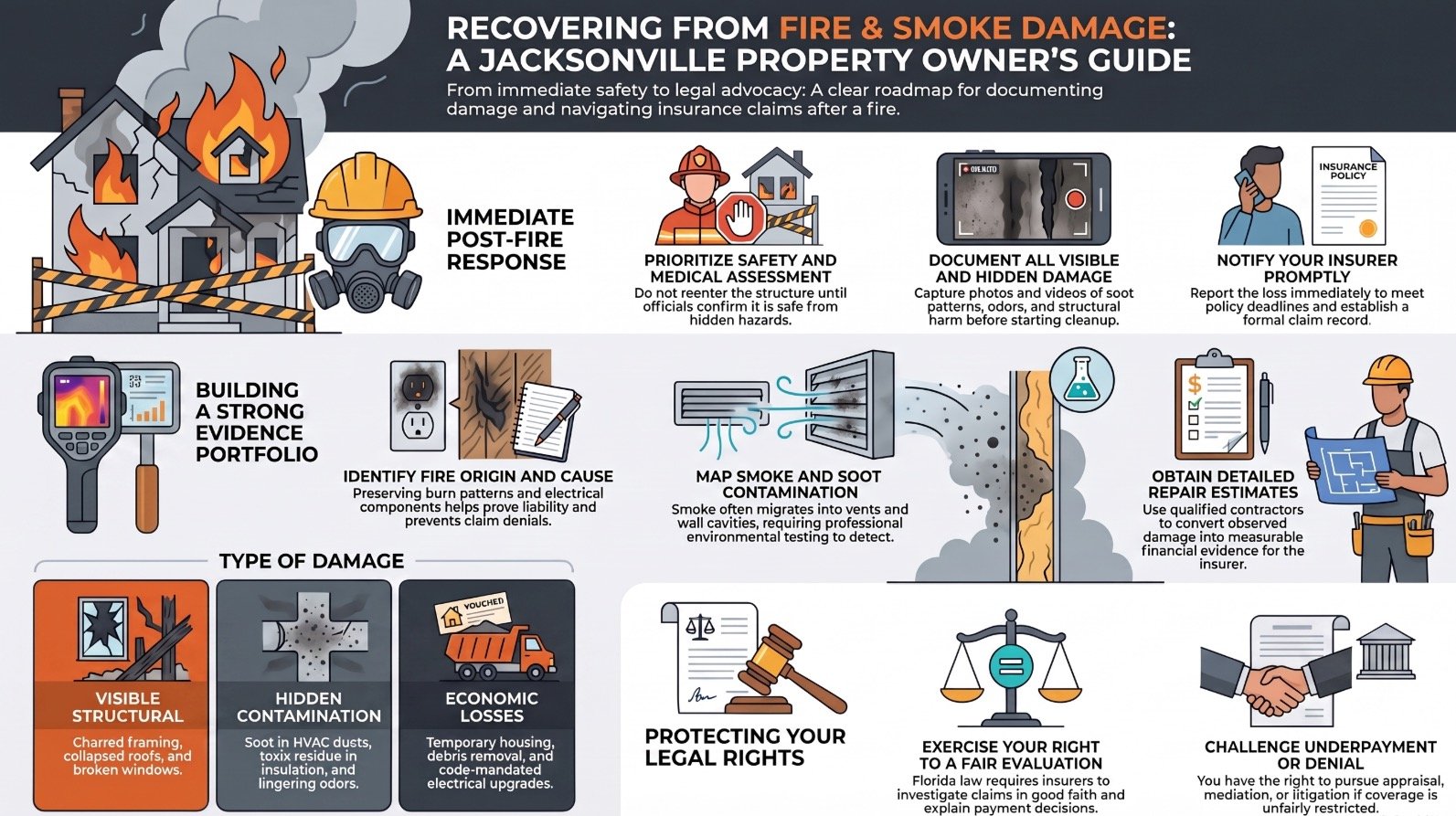
- Right to a fair evaluation: Insurers must review covered losses in good faith and clearly explain payment decisions.
- Right to challenge denials: Insurance dispute resolution may help address underpayment, delay, or denial through negotiation, appraisal, mediation, or litigation.
- Right to protect vulnerable people: Families, caregivers, and community members may seek remedies that support relocation, treatment, cleanup, and restoration.
A Jacksonville fire and smoke damage lawyer may help injured victims preserve evidence, meet deadlines, and pursue lawful compensation with diligence and purpose.
Don’t Wait. Call Our Florida Personal Injury Lawyers Now!
Why Do Jacksonville Property Claim Fire & Smoke Damage Injuries Happen?
Why do fire and smoke damage injuries occur so often in property claim disputes? In Jacksonville, these injuries often arise because Fire causes are varied, including electrical failures, cooking incidents, lightning, defective appliances, arson, and unsafe building conditions. When a fire begins, smoke can spread through walls, vents, attics, and shared spaces, affecting occupants far from visible flames. This exposure may create serious health impacts, especially for children, older adults, people with asthma, and those serving vulnerable households.
Property claim disputes may intensify when damage is underestimated or when the connection between smoke exposure and injury is questioned. Insurance delays can leave families, caregivers, tenants, and property owners without timely repairs, safe housing, or needed remediation. As conditions worsen, soot, odors, and hidden contamination may continue to affect daily life. These injuries happen because fire damage is rarely isolated, and smoke often creates broader, less visible harm.
What Should You Do After a Jacksonville Property Claim Fire & Smoke Damage Injury?
After a fire or smoke damage incident in Jacksonville, the first priority is to ensure immediate safety and seek necessary medical attention. Once the property is secure, carefully document all visible damage with photographs, videos, and written notes. Promptly notify the insurer and provide accurate information to begin the claim process.
Ensure Immediate Safety
When fire or smoke damage affects a Jacksonville property, prioritize immediate safety over evaluating losses or preserving belongings. Occupants should leave the structure promptly, assist children, older adults, visitors, and people with disabilities, and follow evacuation guidance from emergency personnel. No one should reenter the building until firefighters or qualified officials confirm that it is safe, because weakened floors, live electrical hazards, toxic residue, and hidden hot spots may remain. Anyone exposed to smoke should be assessed for smoke inhalation, especially if coughing, dizziness, chest tightness, confusion, or breathing difficulty appears. Prompt medical attention protects health and creates a reliable injury record. Property owners and caretakers should also secure pets, notify neighbors when appropriate, and cooperate fully with first responders at the scene.
Document All Damage
Once emergency officials allow safe access, the property owner should begin documenting all visible fire, smoke, water, and structural damage before cleanup or repairs begin. Photographs and videos should capture each room, exterior areas, damaged contents, soot patterns, broken windows, collapsed materials, and standing water. Emergency documentation steps may include creating a dated inventory, preserving receipts for temporary repairs, and noting odors, electrical issues, or compromised support features. Fire safety precautions remain crucial, so no one should disturb unstable debris, enter weakened spaces, or handle hazardous materials without proper guidance. Careful records help responsible parties understand the full scope of loss and support orderly recovery efforts. A methodical approach also helps protect family members, neighbors, tenants, and service providers from preventable risks during the early post-fire assessment period.
Notify Your Insurer
After thorough documentation, promptly notify the property owner’s insurance company using the reporting method required by the policy or insurer. In the Fire aftermath, timely policy notification helps protect claim rights and supports an orderly review. The owner, or a trusted representative serving the household or business, should record each insurer contact, including dates, names, claim numbers, and instructions received. Written confirmation is advisable after any phone report, because clear records reduce disputes about compliance. Practical documentation tips include sending photographs, repair estimates, emergency service invoices, and inventory lists through approved channels while retaining copies. No admission about cause or coverage should be offered beyond known facts. Careful notice allows adjusters to inspect damage while preserving the owner’s position under the policy.
Critical Evidence in a Jacksonville Property Claim Fire & Smoke Damage Injury Case
Critical evidence can strongly influence the outcome of a Jacksonville fire and smoke damage claim, particularly when liability, coverage, or repair value is disputed.
Key materials often include:
1. Fire origin evidence
2. Smoke damage documentation
3. Repair cost estimates and insurance policy records
These records help establish the cause, scope, and financial impact of the loss with the precision insurers and courts typically require.
Fire Origin Evidence
Where a fire began often determines how a Jacksonville property claim is investigated, valued, and disputed. Origin evidence may include burn patterns, electrical components, appliances, fuel sources, debris, photographs, and witness observations. When secured promptly, these materials can help identify whether the loss involved accidental causes, defective products, negligent maintenance, or another responsible factor. Lost Evidence Preservation is important because cleanup, repairs, or removal of damaged items can weaken a claim and limit later review. A careful process should protect the scene, document the chain of custody, and prevent avoidable destruction. Expert Fire Analysis may also assist by interpreting physical indicators and separating reliable findings from speculation. For families, businesses, and caregivers seeking recovery, accurate origin evidence supports fair decisions and helps direct accountability where it properly belongs.
Smoke Damage Documentation
Smoke damage can extend far beyond the area touched by flames, making accurate documentation a central part of any Jacksonville property claim involving fire and smoke loss. Effective records may include dated photographs of soot patterns, stained surfaces, damaged contents, and affected ventilation areas. Professionals may also preserve air quality records, visibility testing results, and notes showing odor migration through rooms, attics, or shared spaces. Because smoke residue can combine with humidity, moisture control records may help explain ongoing contamination or secondary damage. A clear claim timeline can show when damage was discovered, reported, inspected, and monitored. Careful documentation supports fair insurer review, helps those responsible restore safe conditions, and protects families, tenants, employees, or customers from unresolved smoke-related exposure risks.
Repair Cost Estimates
After documenting smoke damage, repair cost estimates convert observed fire and smoke conditions into measurable financial evidence for a Jacksonville property claim. Qualified contractors, mitigation professionals, and restoration estimators may assess the scope of work needed to return the structure to a safe, usable condition. These estimates often address Fire spread, smoke migration, structural cleaning, debris removal, flooring replacement, painting, odor treatment, and air duct cleaning. Detailed pricing can show why surface cleaning alone may be inadequate when soot has penetrated materials or circulated through ventilation systems. For those seeking to serve affected families or businesses responsibly, accurate estimates support fair evaluation, reduce confusion, and guide necessary restoration decisions. Clear cost documentation also helps distinguish visible repairs from hidden damage requiring professional attention.
Insurance Policy Records
In a Jacksonville fire and smoke damage claim, insurance policy records define the coverage terms that control how property losses are evaluated, paid, limited, or disputed. These records may include declarations pages, endorsements, exclusions, renewal notices, and prior amendments. Careful review helps identify covered structures, personal property provisions, loss-of-use benefits, deductibles, and coverage limits. For families, property owners, and community members seeking stability after a fire, accurate Claim documentation supports fair treatment and informed decisions. Policy records also clarify duties after loss, notice requirements, mitigation obligations, and appraisal or dispute procedures. When insurers question payment, these documents provide the framework for measuring compliance and accountability. Organized policy evidence can help confirm promised protections, reveal improper limitations, and support a stronger fire and smoke damage claim.
Long-Term Effects of Jacksonville Property Claim Fire & Smoke Damage Injuries
Fire and smoke damage can have long-term consequences beyond the initial loss, including chronic respiratory complications from inhaled toxins and soot exposure. Lingering structural contamination may also affect the property’s safety and habitability, even after surface-level repairs appear complete. Delayed insurance disputes often arise when these lasting conditions are underestimated, disputed, or excluded from the claim evaluation.
Chronic Respiratory Complications
When smoke exposure is significant or repeated, respiratory injuries may progress beyond short-term irritation and develop into chronic complications that affect daily function. Individuals may experience persistent coughing, wheezing, shortness of breath, chest tightness, or reduced tolerance for physical activity. These symptoms can interfere with caregiving, employment, volunteer service, and other responsibilities that require steady health and stamina.
In Jacksonville fire and smoke damage claims, Indoor Air conditions may be relevant when evaluating whether exposure contributed to ongoing respiratory decline. Medical Evidence, including physician evaluations, pulmonary testing, imaging, and treatment records, can help document the nature and duration of the condition. Chronic bronchitis, aggravated asthma, and reactive airway symptoms may require continued recovery. Clear documentation supports a more complete understanding of harm.
Lingering Structural Contamination
Respiratory complications may continue alongside another long-term concern after a Jacksonville fire: contamination that remains embedded within the structure itself. Smoke residue, soot, chemical particles, and moisture from suppression efforts can settle into framing, insulation, drywall, flooring, and ventilation pathways. These hidden deposits may continue affecting Air Quality long after visible cleanup appears complete. For families, workers, volunteers, and caregivers entering the property, lingering contamination can create avoidable exposure risks if restoration is incomplete.
Careful inspection, environmental sampling, and Health Testing may help determine whether harmful substances remain. Charred materials, compromised ducts, and porous surfaces often require dedicated remediation rather than routine cleaning. A thorough response protects occupants, supports safe rebuilding, and allows those serving affected households to make informed, responsible decisions about reentry, repairs, and continued assistance.
Delayed Insurance Disputes
Although the physical cleanup may appear finished, delayed insurance disputes can emerge months after a Jacksonville fire as hidden damage, incomplete estimates, and continuing smoke-related conditions become clearer. Property owners, community caretakers, and service providers may then face claim timeline delays that hinder repairs and disrupt support for affected households. Careful Policy communication becomes critical, because missed notices, unclear denials, or shifting explanations can limit recovery options. Evidence preservation also remains important after restoration begins, including photographs, contractor reports, air testing, damaged materials, and records of temporary housing or business interruption. A measured insurer negotiation strategy can help address supplemental claims, underpayment concerns, and disputed exclusions. When handled with diligence, these efforts support fair consideration, protect vulnerable occupants, and promote responsible recovery for Jacksonville properties.
Proving Liability in Jacksonville Property Claim Fire & Smoke Damage Injury Cases
In Jacksonville fire and smoke damage injury cases, proving liability requires evidence that connects the property loss or physical harm to a responsible party’s negligent conduct, policy breach, or failure to maintain safe conditions. This process may involve reviewing building maintenance records, code violations, electrical systems, appliance history, or security measures that affected evacuation and safety. Fire investigator reports can help identify the origin and cause of the fire, while witness statements may clarify what occurred before, during, and after the incident.
Liability may rest with a landlord, business owner, contractor, manufacturer, or another party whose conduct placed residents, visitors, or workers at risk. Attorneys serving injured individuals often evaluate whether reasonable precautions were ignored, whether warnings were absent, and whether unsafe conditions were allowed to continue. Careful documentation supports accountability, helps preserve community safety, and provides a structured basis for seeking lawful recovery after preventable fire and smoke harm.
Dealing With Insurance Companies After a Jacksonville Property Claim Fire & Smoke Damage Injury
After a fire or smoke damage injury, insurance companies often become involved quickly, seeking statements, documentation, and access to the damaged property. Their representatives may seem helpful, but their duty is to the policy and the company’s interests. Injured property owners, tenants, or families assisting a vulnerable loved one should treat each communication with care. Accurate records, photographs, repair estimates, medical information, and correspondence can help preserve the truth and support fair evaluation.
Concerns may arise when insurers minimize smoke contamination, dispute the cause of loss, or request repeated information without clear justification. Such conduct can delay claims and, in serious cases, lead to bad-faith denials. A Jacksonville fire and smoke damage lawyer may help communicate with adjusters, protect sensitive information, and challenge unfair positions. This guidance can allow injured individuals and caregivers to focus on safety, recovery, and meeting the practical needs of those affected.
What to Expect During a Jacksonville Property Claim Fire & Smoke Damage Injury Claim Process
A Jacksonville fire and smoke damage claim typically begins with an initial damage assessment, followed by timely insurance claim filing. The process then requires careful evidence and documentation, including photographs, repair estimates, policy records, and communications with the insurer. As the claim progresses, settlement negotiations may determine whether the property owner receives fair compensation for covered losses.
Initial Damage Assessment
When a fire or smoke event affects a Jacksonville property, the initial damage assessment establishes the foundation for the entire insurance claim. During this stage, inspectors, contractors, or qualified professionals identify visible structural harm, damaged contents, soot intrusion, lingering odors, and possible safety concerns. Careful observation supports informed decisions for families, business owners, and community members seeking to restore safe conditions. Documented Evidence may include photographs, videos, repair estimates, inventory notes, and written descriptions of affected areas. Smoke Documentation is especially important because residue can spread beyond burned rooms and harm walls, ceilings, ventilation systems, and personal property. A thorough assessment clarifies the scope of loss, preserves important details, and reduces uncertainty before later claim steps begin. Timely action also protects health, limits deterioration, and supports recovery planning.
Insurance Claim Filing
Once the initial damage assessment is complete, filing an insurance claim becomes the formal step that notifies the carrier of the fire and smoke loss and begins the review process. During this stage, the property owner or representative submits required notice under the policy, identifies the type of loss, and requests claim handling in accordance with applicable duties. A careful policy coverage review helps determine available benefits, deadlines, exclusions, and responsibilities that may affect recovery. For those serving families, tenants, or community members, timely filing supports stability and reduces unnecessary delay. The insurer may assign an adjuster, open a claim number, and explain next steps. Understanding common claim denial reasons, such as late notice or excluded losses, helps you take informed action from the start.
Evidence And Documentation
After the claim is opened, evidence and documentation become central to proving the scope, cause, and financial impact of the fire and smoke damage. A Jacksonville property claim attorney may review photographs, repair estimates, fire department reports, inventory lists, medical records, and communications with the insurer. Scene preservation is often important because disturbed debris, discarded belongings, or premature repairs may weaken proof of loss. Witness interviews can also help confirm timelines, visible damage, smoke conditions, evacuation issues, or statements made by insurance representatives. For those committed to serving affected families and businesses, careful documentation supports a fair review and helps prevent overlooked losses. Organized records, dated photographs, receipts, and expert inspections provide a clearer foundation for presenting the claim accurately under the applicable policy.
Settlement Negotiation Process
As documentation is assembled and the insurer completes its review, the settlement negotiation process usually begins with an evaluation of the covered losses and the amount needed to restore the property or compensate for related harm. In Jacksonville fire and smoke claims, this stage may involve repair estimates, temporary housing costs, medical concerns, and business interruption losses. Careful evidence handling helps ensure photographs, invoices, expert reports, and correspondence remain organized and persuasive. The insurer may issue an initial offer, which the claimant’s representative can compare against policy terms and documented damages. Negotiations often require measured responses, updated proof, and attention to settlement timelines. When handled with diligence, the process supports fair compensation, responsible recovery, and continued service to those affected by the loss.
Don’t Wait. Call Our Florida Personal Injury Lawyers Now!
Compensation for Jacksonville Property Claim Fire & Smoke Damage Injury Damages
When fire or smoke damages a Jacksonville property, compensation may go further than the cost of visible repairs. A claim may account for structural restoration, smoke mitigation, damaged contents, temporary relocation, and necessary code-compliant rebuilding. When injuries occur, compensation may also cover medical treatment, rehabilitation needs, and documented impacts linked to the fire. Careful evaluation helps ensure that recovery efforts support residents, caregivers, tenants, and community members who depend on a safe environment.
Insurance settlement disputes often arise when carriers undervalue soot contamination, deny full replacement costs, or question whether specific losses are fire-related. A Jacksonville property claim lawyer may review policy language, contractor estimates, inspection findings, and medical records to present a complete damages package. Strong documentation can also reinforce future fire safety planning, helping property owners reduce hazards while pursuing fair payment. The goal is a resolution that restores safety, stability, and practical support for those affected by fire and smoke losses.
Economic vs Non-Economic Damages in Jacksonville Property Claim Fire & Smoke Damage Cases
Fire and smoke damage claims in Jacksonville may involve both economic damages, such as repair costs, lost property value, and temporary housing expenses, and non-economic impacts tied to disruption, distress, or loss of use. Each category requires careful documentation, because insurers often distinguish measurable financial losses from broader consequences that affect the property owner’s daily life. Establishing claim value depends on credible evidence, clear loss calculations, and a complete presentation of how the fire or smoke damage affected the property and its occupants.
Economic Damage Categories
Although every fire and smoke damage claim depends on the policy language and the specific facts of the loss, economic damages generally refer to measurable financial losses tied to damaged property, repair needs, and related expenses. These categories may include structural repairs, contents replacement, debris removal, temporary housing, business interruption, and code-compliant rebuilding costs. In some Jacksonville claims, Lost wages may also be relevant when the loss prevents an owner, resident, or caregiver from working while addressing urgent property needs. Careful records help insurers, adjusters, and legal representatives evaluate the claim with fairness and accuracy. Estimates, receipts, invoices, photographs, inventory lists, and contractor reports often support the financial assessment. When smoke exposure causes treatment costs, medical documentation may further connect covered conditions to recoverable economic expenses.
Non-Economic Loss Impacts
After identifying measurable costs, a fire or smoke damage claim may also involve non-economic impacts that are harder to quantify but still significant to the policyholder’s overall experience. These impacts may include emotional distress from displacement, disrupted family routines, or a loss of safety in the home. In Jacksonville claims, such harm can affect daily stability, especially when smoke odors, visible damage, or prolonged repairs interfere with normal living. A policyholder may also experience loss of enjoyment when damaged property prevents meaningful use of living spaces, cherished belongings, or community-centered activities. For those serving others, recognizing these human consequences promotes a more complete understanding of recovery, beyond invoices and repair estimates, while maintaining focus on the policyholder’s dignity and restoration after loss.
Proving Claim Value
Proving claim value requires more than identifying the personal hardship that follows a loss, because insurers typically evaluate fire and smoke damage through documented evidence, policy language, and recognized valuation methods. In Jacksonville property claims, economic damages may include repair estimates, replacement costs, temporary housing, debris removal, business interruption, and smoke or soot remediation. Non-economic effects, while meaningful to families and communities, are usually harder to compensate unless tied to covered losses. A careful review of Insurance coverage helps determine which damages qualify, what exclusions apply, and how policy limits may restrict recovery. Attorneys, adjusters, contractors, and restoration professionals may help organize proof so the claim reflects the actual loss. Accurate valuation supports fair payment and helps restore stability after destructive property damage.
When a Jacksonville Property Claim Fire & Smoke Damage Injury Case Goes to Trial vs Settlement
When a Jacksonville property claim involving fire and smoke damage cannot be resolved through negotiation, the dispute may proceed toward litigation and, in some cases, trial. The decision often depends on the strength of the evidence, disputed repair costs, coverage positions, and whether the insurer has fairly evaluated the loss. A clear Trial timeline helps property owners, families, and service-focused advocates understand deadlines, discovery, expert review, mediation, and possible court dates.
Settlement may remain possible at nearly every stage. Strong documentation, credible estimates, photographs, inventories, and expert opinions can increase settlement leverage and guide a sound negotiation strategy. When the insurer’s offer does not reflect the documented damage, litigation may provide a structured path to seek a more accurate outcome. Trial, however, can take time, cost money, and involve uncertainty. A lawyer can weigh the risks of court against the benefits of resolution, helping the claimant pursue restoration while staying focused on responsibility, fairness, and practical recovery.
Florida Laws That May Affect Your Jacksonville Property Claim Fire & Smoke Damage Case
Several Florida laws may influence how a Jacksonville fire and smoke damage property claim is reported, investigated, valued, and disputed. These rules often shape the duties of insurers, property owners, contractors, and public adjusters, especially when damaged homes or service-oriented facilities must be restored safely.
Florida law can shape how Jacksonville fire and smoke damage claims are reported, investigated, valued, and resolved.
- Florida code compliance may affect repair estimates when rebuilding requires upgraded electrical, structural, roofing, or fire-safety work beyond the pre-loss condition.
- Policy interpretation remains central, because insurance coverage exclusions may limit payment for smoke residue, mold following firefighting efforts, vacancy issues, intentional acts, or wear-related damage.
- Florida’s claim-handling standards may require timely acknowledgment, fair investigation, written explanations, and reasonable communication, helping ensure that families, congregations, nonprofits, and community-serving businesses are not left without guidance.
A lawyer reviewing these legal issues can assess whether the insurer applied Florida law properly, valued covered damage fairly, and met the claimant’s obligations throughout the process.
The Statute of Limitations for Jacksonville Property Claim Fire & Smoke Damage Injury Cases
Beyond the Florida laws that govern claim handling and policy interpretation, strict filing deadlines can determine whether a Jacksonville fire and smoke damage case may proceed at all. In Florida, property damage and related injury claims must be brought within statutory time limits, and missing a deadline can bar recovery, regardless of the severity of the loss. These deadlines may differ depending on whether the case involves an insurance contract, negligence, wrongful conduct, or injury caused by unsafe premises.
Fire and smoke damage matters may also involve facts that affect timing and responsibility. Building code violations, delayed repairs, or unsafe maintenance practices may support claims tied to preventable harm. Comparative negligence rules may reduce compensation if an injured person is found partly responsible for the incident or resulting damages. Careful attention to dates, notices, and documented losses helps preserve rights while promoting accountability for harmed property owners and injured occupants.
Don’t Wait. Call Our Florida Personal Injury Lawyers Now!
How a Jacksonville Property Claim Fire & Smoke Damage Lawyer Can Help You
How can a Jacksonville property claim fire and smoke damage lawyer assist after a serious loss? Legal support can help restore order when a family, charity, church, or service-focused business must protect people, property, and resources. Counsel reviews policy language, documents damage, and communicates with the insurer to reduce confusion.
Legal support can help clarify coverage, document fire and smoke damage, and guide communications after a serious property loss.
- Claim preparation: The lawyer may organize estimates, photographs, inventories, repair records, and Property damage timelines, helping present a clear account of covered losses.
- Insurer communications: Counsel can respond to questions, monitor deadlines, and address insurance adjuster tactics that may undervalue smoke contamination, structural harm, or business interruption losses.
- Dispute resolution: If payment is delayed, denied, or insufficient, the lawyer may pursue negotiation, appraisal, or litigation while keeping the claimant’s service obligations in focus.
This assistance helps property owners make informed decisions, preserve evidence, and seek fair compensation under the policy.
When to Contact a Jacksonville Property Claim Fire & Smoke Damage Lawyer
The timing of legal involvement can affect the strength, organization, and outcome of a fire or smoke damage claim. Property owners in Jacksonville should consider contacting a fire and smoke damage lawyer soon after the property is safe to access, especially when damage is extensive, business operations are disrupted, or temporary housing is needed. Early guidance can help families, landlords, nonprofits, and business owners meet Emergency timelines while maintaining focus on caring for those who depend on them.
Prompt contact is also important when an insurer requests recorded statements, extensive documentation, or rapid inspections. Evidence preservation may require photographs, repair estimates, inventory records, smoke residue documentation, and communications with contractors before conditions change. If the insurer delays, disputes the cause of loss, questions the scope of repairs, or offers an incomplete settlement, legal review may be appropriate. Early involvement supports orderly claim handling without unnecessary disruption.
Why You Need an Experienced Jacksonville Property Claim Fire & Smoke Damage Lawyer
Securing experienced legal counsel can be crucial when a fire or smoke damage claim involves disputed coverage, incomplete inspections, or pressure to accept a reduced settlement. An attorney familiar with Jacksonville property claims can evaluate policy terms, identify insurer obligations, and address delays that may burden families, nonprofits, churches, or service-focused businesses trying to restore safe spaces for others.
Fire losses often require careful evidence preservation, including photographs, repair estimates, expert reports, inventory records, and communications with adjusters. When documentation is organized early, the claim can be presented with greater accuracy and strength. Counsel may also coordinate independent assessments to challenge undervaluation, hidden smoke contamination findings, or improper exclusions.
If negotiations fail, a measured Litigation strategy can help pursue the benefits owed under the policy while protecting the claimant’s broader recovery goals. Experienced representation provides structure, accountability, and informed advocacy during a stressful process, allowing property owners to focus on rebuilding and continuing service to their community.
How to Choose the Right Jacksonville Property Claim Fire & Smoke Damage Lawyer for Your Case
When should a property owner begin evaluating legal representation after fire or smoke damage in Jacksonville? The prudent answer is immediately, before repair decisions, insurer inspections, or recorded statements affect the claim. A suitable lawyer should understand policy duties, local claims practices, and the urgent need to preserve evidence, including photographs, inventories, estimates, and communications.
Property owners should assess Client communication by asking how updates are provided, who handles questions, and how quickly concerns receive responses. They should also consider whether the lawyer develops a clear case strategy, tailored to the property loss, coverage issues, and the owner’s responsibilities to family, tenants, employees, or the community.
Experience with insurer negotiations is important, but so is practical guidance on settlement timelines. A dependable lawyer explains likely phases, prepares for delays, and protects the owner from premature offers. The right choice combines responsiveness, disciplined documentation, and focused advocacy throughout the claim.
About The Law Offices of Anidjar & Levine
For Jacksonville property owners facing fire or smoke damage, the Law Offices of Anidjar & Levine provides legal guidance focused on protecting insurance claim rights and pursuing fair compensation under the policy. The firm helps clients review coverage, document losses, communicate with insurers, and challenge delayed, denied, or undervalued claims.
Its attorneys understand that fire-related property damage can disrupt families, businesses, tenants, and community responsibilities. They approach each matter with organized case preparation, careful Evidence Preservation, and attention to deadlines that may affect recovery. When smoke exposure or related injuries are involved, the firm may also support accurate Medical Recordkeeping to help connect damages with the incident.
The Law Offices of Anidjar & Levine emphasizes service, accessibility, and accountability throughout the claims process. By handling legal burdens, the firm allows property owners to focus on safety, restoration, and the needs of those who depend on them after a serious fire loss.
Frequently Asked Questions
Can I Stay in My Home After Fire or Smoke Damage?
Whether you can stay in a home after fire or smoke damage depends on Emergency habitability, structural safety, air quality, utilities, and official clearance. Residents should leave if soot, odors, electrical hazards, or water damage threaten their health. Prompt documentation and compliance with insurer notice timelines help preserve coverage for temporary housing. Those assisting occupants should encourage inspections by qualified professionals before reentry to ensure decisions protect vulnerable residents, property, and recovery rights.
Will My Policy Cover Smoke Damage Without Visible Flames?
Yes, many policies provide Smoke Damage Coverage even when no visible flames occurred. Coverage often depends on whether smoke caused direct physical damage, contamination, odor, or loss of safe use. Hidden Flame Requirements are uncommon, but policy wording, exclusions, and proof standards matter. A service-minded policyholder should document conditions, preserve damaged items, request professional testing, and report the claim promptly to ensure the insurer evaluates the loss fairly and thoroughly.
Can I Recover Costs for Temporary Housing During Repairs?
Yes, you may recover temporary housing costs when repairs make a residence unsafe or unsuitable. A policy often provides habitability coverage, sometimes called loss of use or additional living expense coverage. The claimant should document out-of-pocket costs, including lodging, meals, and necessary travel, with receipts and dates. Insurance reimbursement depends on policy limits, exclusions, and proof that the expenses were reasonable, necessary, and directly related to the covered damage.
Should I Repair Fire Damage Before the Insurance Adjuster Visits?
Generally, one should not complete permanent fire damage repairs before the insurance adjuster visits. Documenting Evidence through photographs, videos, inventories, and saved damaged materials helps preserve the claim’s accuracy. However, Mitigating Losses remains required, so reasonable temporary measures, such as boarding openings, covering roofs, or drying water intrusion, may be appropriate. Those serving the household should keep receipts, avoid discarding items prematurely, and notify the insurer before significant work begins.
What if My Insurance Claim Is Denied After a Fire?
If an insurance claim is denied after a fire, the policyholder should request the denial reasons in writing, review policy terms, and preserve all documentation and evidence. Photographs, repair estimates, inventories, communications, and expert reports may support appeals of denied claims. A qualified professional can identify misinterpretations, missed damages, or unfair claim practices. Prompt, organized action helps protect recovery rights and supports responsible restoration for those depending on the property.
—————————
Fire and smoke damage claims may involve complex insurance disputes, strict deadlines, and substantial property losses. A Jacksonville property claim fire and smoke damage lawyer can help assess coverage, document damages, negotiate with insurers, and pursue fair compensation when a claim is delayed, denied, or undervalued. The Law Offices of Anidjar and Levine offer focused legal guidance for property owners seeking accountability and recovery after fire-related damage. For additional legal assistance, visit our Jacksonville Personal Injury Lawyer page. Timely support can help protect your rights and strengthen your claim.