A Jacksonville property claim storm and weather damage lawyer helps policyholders document losses, review coverage, meet policy deadlines, and challenge delayed, denied, or underpaid claims. The Law Offices of Anidjar and Levine can help organize photos, repair estimates, inspection reports, receipts, and insurer communications into a strong claim package. Counsel can also address disputes involving wind damage, water intrusion, hail, debris impact, mold, and structural deterioration. For related legal guidance, visit the Jacksonville Personal Injury Lawyer page. The sections below explain important rights, evidence, deadlines, and claim strategies in greater detail.
Main Takeaways
- A Jacksonville storm damage lawyer helps document losses, review coverage, and organize evidence for a stronger insurance claim.
- Legal support can address roof leaks, wind damage, hail impacts, flooding disputes, and water intrusion claim issues.
- Attorneys help manage policy deadlines, proof-of-loss requirements, insurer communications, and supplemental claim submissions.
- A lawyer can challenge unfair delays, underpayments, undervalued inspections, or improper denials by the insurance company.
- Strong claims often include photos, repair estimates, inspection reports, receipts, mitigation records, and written communications from the adjuster.
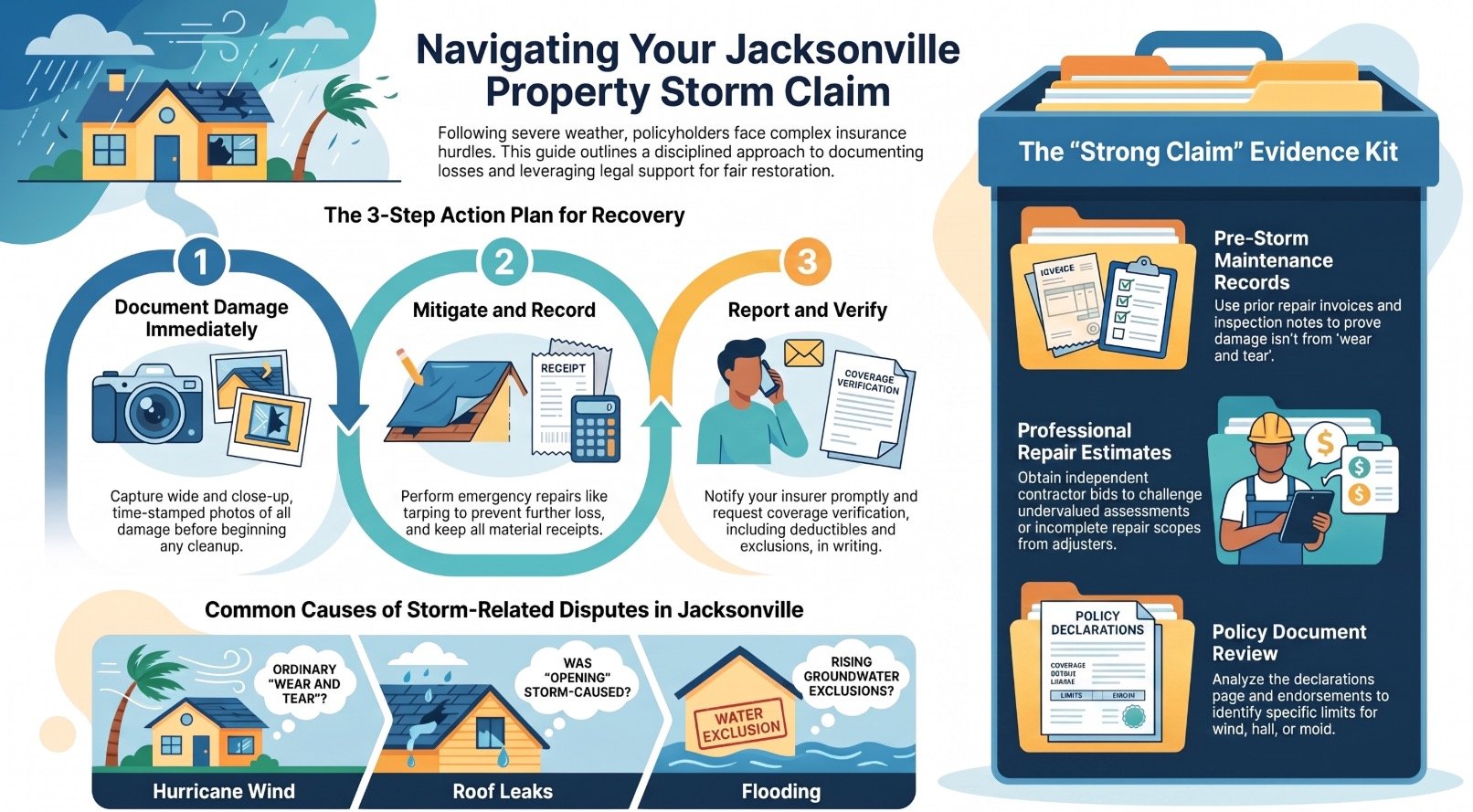
How We Can Help With Your Jacksonville Property Claim Storm & Weather Damage Injury Claim
Protecting a storm or weather damage claim in Jacksonville often requires prompt documentation, careful policy review, and a clear response to insurance company delays or underpayments. A lawyer can help organize the documentation checklist, preserve repair estimates, photographs, inspection reports, receipts, and communications, then present them in a structured claim package. This support allows property owners to focus on caring for family, tenants, employees, or neighbors while the claim receives disciplined attention.
Counsel may evaluate coverage, identify missed benefits, respond to adjuster requests, and challenge undervalued damage assessments. When insurers delay decisions, legal guidance can clarify Settlement timelines and press for timely action under applicable policy duties. If negotiation becomes necessary, the lawyer can prepare evidence, address disputed causation, and seek fair payment for covered losses. This careful advocacy serves the broader goal of restoring safe property conditions and helping affected households or businesses move forward with stability and dignity.
Understanding Jacksonville Property Claim Storm & Weather Damage Injury Cases


After considering how legal guidance may support a claim, it is important to understand what makes storm and weather damage cases in Jacksonville distinct. These matters often involve insurance coverage questions, property loss documentation, and the practical burden on owners trying to protect homes, businesses, and community resources. A claim may require careful review of policy language, exclusions, deductibles, and duties after loss, because each provision can affect recovery.
OUR CONSULTATIONSARE FREE
START YOUR FREE CASE REVIEW

Policy deadline management is especially important because missed notice dates, proof-of-loss requirements, or supplemental claim periods may limit available benefits. An evidence preservation approach also helps ensure that photographs, repair estimates, inspection findings, receipts, and communications are organized before conditions change or records are lost. For those committed to serving families, tenants, customers, or neighbors, understanding these cases means recognizing both the financial consequences and the responsibility to pursue fair, timely insurance consideration under the policy.
Common Causes of Jacksonville Property Claim Storm & Weather Damage
Storm and weather damage claims in Jacksonville commonly arise from several distinct sources, each requiring careful review of policy terms and physical evidence. Hurricane wind damage, roof leak claims, flooding and water damage, and hail or debris impact often create intricate disputes over causation, coverage, and repair costs. Understanding these common causes helps clarify how property losses occur, why insurers may challenge claims, and what documentation may support recovery.
Hurricane Wind Damage


Hurricane wind damage can leave Jacksonville properties with serious structural and exterior harm, even when the building appears intact immediately following the storm. Powerful gusts may loosen siding, damage windows, bend fencing, tear gutters, and compromise attached structures. Wind-driven rain can enter through small openings around frames, vents, and damaged exterior materials, creating interior deterioration that may not be immediately visible. If moisture remains trapped, mold growth can develop and affect living conditions, business operations, and community service efforts. Property owners, managers, and nonprofit leaders often need accurate documentation to protect resources meant for others. Careful photographs, repair estimates, inspection reports, and timely notice to the insurer can support a wind damage claim. Proper evaluation helps distinguish storm-related harm from ordinary wear, reducing disputes during review.
Roof Leak Claims
Roof leaks often develop from the same high winds and wind-driven rain that damage exterior building components across Jacksonville. Missing shingles, lifted flashing, punctured membranes, and compromised roof vents can allow moisture into interior spaces, even when damage is not immediately visible. Property owners, facility managers, and community organizations serving vulnerable residents should document stains, softened drywall, damaged insulation, and any structural crack that appears after a storm. Delayed attention may lead to mold concerns, electrical hazards, or ceiling collapse, especially where water collects above occupied rooms. Insurance carriers may dispute whether the opening resulted from storm forces or deferred maintenance. Careful inspection, photographs, repair estimates, and weather records can support a roof leak claim and help restore safe, dependable shelter for those relying on the property.
Flooding And Water Damage
Across Jacksonville, flooding and water damage may result from heavy rainfall, storm surge, overwhelmed drainage systems, broken exterior openings, or wind-driven rain entering through damaged building components. These losses can affect flooring, walls, electrical systems, insulation, furnishings, and stored supplies needed for homes, ministries, nonprofits, or service-oriented businesses. Prompt documentation is often crucial because moisture can spread quickly and create secondary damage if cleanup is delayed. Claims may involve disputes over whether the source was covered storm intrusion, Basement seepage, sewer backup, or excluded floodwater. Carefully reviewing policy language, photographs, mitigation records, and repair estimates helps clarify the cause and scope of loss. For property owners focused on serving others, timely claim action supports safe restoration and continuity of essential daily operations.
Hail And Debris Impact
During severe thunderstorms, hail and windborne debris can strike shingles, tiles, siding, windows, gutters, fences, signage, and exterior equipment with enough force to create both visible and hidden damage. Even small punctures, bruised roofing materials, loosened flashing, or cracked seals may allow moisture intrusion that later affects interiors and personal property. Property owners, managers, and community organizations should document impact points, preserve damaged materials when safe, and request prompt professional inspections. These mitigation steps help reduce further loss while supporting a clear claim record. Liability coverage may also become relevant when damaged trees, signs, or building components injure others or harm neighboring property. Careful assessment, timely notice, and organized repair estimates allow insurers to evaluate the scope of storm-related impact with greater accuracy.
Don’t Wait. Call Our Florida Personal Injury Lawyers Now!
Legal Rights of Jacksonville Property Claim Storm & Weather Damage Injury Victims
When severe weather damages a home or commercial property, Jacksonville policyholders have legal rights that may protect them from unfair claim delays, underpayments, or improper denials. These rights can support recovery efforts, particularly when families, businesses, and community caregivers must restore safe spaces for others. A lawyer may review policy duties, deadlines, and insurer conduct to identify legal options after coverage denials or disputed payments.
- Prompt documentation of roof, window, water, and structural damage may help preserve evidence.
- Written communications with insurers can clarify promises, requests, and concerns about claim handling.
- Independent inspections may help measure losses when adjuster findings appear incomplete.
- A coordinated claim strategy may protect benefits needed for repairs, relocation, or continued service.
Property owners may also have the right to challenge unreasonable decisions through negotiation, appraisal, or litigation. Timely guidance can help prevent avoidable mistakes while supporting orderly, lawful recovery after storm and weather damage.
Why Do Jacksonville Property Claim Storm & Weather Damage Injuries Happen?
Storm and weather damage injuries in Jacksonville often happen because powerful wind, heavy rain, storm surge, and flying debris can weaken structures before occupants, workers, or visitors recognize the danger. Roofs may loosen, ceilings may absorb water, and walls may shift under pressure. When damaged areas are not secured, people entering homes, businesses, or common spaces may face falling materials, slick floors, exposed wiring, or unstable surfaces.
Injuries also occur when maintenance problems, delayed repairs, or inadequate Property Inspections leave hidden hazards unaddressed. A property may appear usable while serious damage remains behind drywall, beneath flooring, or around electrical systems. Commercial sites, rental properties, and shared buildings carry added risks when multiple parties share responsibility for upkeep and communication. Missing Coverage can further complicate recovery, especially when owners learn that certain storm-related losses were excluded, limited, or disputed. These conditions create preventable dangers for families, customers, tenants, and workers who rely on safe premises.
What Should You Do After a Jacksonville Property Claim Storm & Weather Damage Injury?
After a Jacksonville storm or weather-damage injury, a property owner should document the damage immediately by preserving photographs, videos, and relevant records. Prompt notice to the insurer is also important because policy deadlines and claim requirements may affect recovery. Legal counsel can then review the claim, address coverage disputes, and help protect the owner’s rights.
Document Damage Immediately
In the hours following a severe weather event, prompt documentation can become one of the most important steps in a Jacksonville property damage claim. A careful record helps show what occurred, supports accurate repair planning, and preserves details that may fade as cleanup begins. Property owners should use a Document checklist that includes damaged rooms, roofing, windows, personal property, standing water, debris, and any temporary safety measures taken. Photo timing matters because images taken before repairs, removal, or drying can show the storm’s effects more clearly. Take wide and close photos and videos, date them, and organize them by location. Written notes should identify odors, leaks, structural concerns, and utility issues. This disciplined approach helps families protect their homes while creating reliable information for later review.
Contact Your Insurer
Once immediate hazards are addressed, the property owner should contact the insurer as soon as reasonably possible to report the storm or weather damage claim. Prompt notice supports orderly claim handling and helps preserve important policy rights. During the call, the owner should request the claim number, the adjuster’s contact information, and any deadlines for submitting documents. Policy coverage verification should be requested in writing, including applicable deductibles, exclusions, and duties after loss. The owner should accurately describe known damage without guessing about causes or repair costs. Report emergency mitigation steps, such as tarping a roof or removing standing water, and support them with receipts. Clear communication allows the insurer to begin review while the owner continues protecting the property and assisting occupants responsibly.
Call A Lawyer
When storm damage also causes injury, a Jacksonville property owner or injured occupant should consider contacting a lawyer promptly, particularly if there are disputes over coverage, unsafe conditions, delayed repairs, or responsibility for the accident. Legal counsel can review policy language, preserve evidence, and identify parties that may share fault, including contractors, landlords, businesses, or negligent maintenance providers. Emergency documentation, such as photographs, repair invoices, medical records, and witness statements, should be organized before evidence is lost or altered. A lawyer may also help track Insurer deadlines, claim notices, examinations, and proof-of-loss requirements. For those seeking to serve family members, tenants, guests, or vulnerable neighbors, timely legal guidance can support safer repairs, fair compensation, and accountable decision-making after a storm-related injury in Jacksonville.
Critical Evidence in a Jacksonville Property Claim Storm & Weather Damage Injury Case
Critical evidence can determine whether a Jacksonville storm and weather damage claim is properly valued, disputed, or denied. A well-documented file should connect the property’s prior condition, the storm event, the resulting damage, and repair costs.
Vital materials may include:
- Pre-storm property condition records
- Damage photos and videos
- Repair estimates and invoices
- Insurance policy documents
Pre-Storm Property Condition
Before a storm affects a Jacksonville property, its documented condition can become one of the most important forms of evidence in a weather damage claim. Insurers often examine whether damage resulted from a covered storm event or from long-standing deterioration, neglect, or prior defects. A completed Storm preparedness checklist may show that the owner acted responsibly before severe weather arrived. Pre-damage maintenance records, including roof inspections, repair invoices, gutter service notes, and contractor evaluations, can help establish that the property was maintained with reasonable care. This evidence may also support residents, tenants, guests, or others affected by unsafe post-storm conditions. When records are organized and dated, they help counsel, adjusters, and experts compare the property’s prior condition with claimed storm-related damage.
Damage Photos And Videos
After a storm passes through Jacksonville, photographs and videos may become central evidence in proving the extent, timing, and cause of property damage. Clear images of roof openings, interior water intrusion, fallen trees, damaged fencing, and affected personal property can help document conditions before cleanup begins. Video footage may also show active leaks, standing water, or wind-related destruction from multiple angles. For Weather Safety, document only when the area is secure, with no exposure to downed power lines, unstable structures, or flood hazards. Time-stamped files, organized by room or exterior location, may support the Claim Timeline and help identify when damage was discovered. Careful visual records can help advocates, adjusters, and legal professionals serve property owners with accuracy, consistency, and responsible proof after severe weather events.
Repair Estimates And Invoices
Photographs and videos may show what a storm damaged, but repair estimates and invoices often help establish what it will take to restore the property and what costs have already been incurred. In a Jacksonville storm or weather damage claim, these records can clarify the Scope of repairs, materials needed, labor charges, and emergency measures taken to prevent further harm. A contractor’s written estimate may support the property owner’s position when an insurer undervalues damage or overlooks necessary work. Paid invoices can also show reasonable expenses already accepted by service providers. Estimate disputes often arise when adjusters, contractors, and owners disagree about pricing, repair methods, or hidden damage. Carefully preserving all estimates, supplements, receipts, and communications helps create an organized record for fair claim evaluation and resolution.
Insurance Policy Documents
Because coverage depends on the contract between the property owner and the insurer, the insurance policy is often one of the most important documents in a Jacksonville storm or weather damage claim. It identifies covered perils, deductible amounts, reporting duties, valuation methods, and deadlines that may affect recovery. Careful review helps determine Claim coverage for wind, rain intrusion, hail, fallen trees, mold, or related interior damage. The policy also reveals policy exclusions, limitations, endorsements, and conditions that insurers may cite when delaying or denying payment. For those seeking to serve affected families, accurate policy analysis supports fair advocacy and informed decisions. Preserving the full policy, declarations page, amendments, and correspondence allows counsel to compare the insurer’s position against the actual contract language governing the loss and duties.
Don’t Wait. Call Our Florida Personal Injury Lawyers Now!
Long-Term Effects of Jacksonville Property Claim Storm & Weather Damage Injuries
Storm and weather damage in Jacksonville can produce long-term property effects that are not always visible immediately after the event. Delayed structural damage, mold and moisture intrusion, and ongoing repair disputes may complicate both property use and insurance claim resolution. These issues can also create financial recovery challenges, particularly when insurers undervalue damage or delay payment.
Delayed Structural Damage
After severe weather passes through Jacksonville, structural damage may not be immediately visible, yet it can continue to develop beneath roofing materials, behind walls, or within the foundation. Small openings may allow water intrusion that weakens framing, corrodes fasteners, and shifts load-bearing components over time. For property owners committed to protecting families, tenants, employees, or community members, timely evaluation supports responsible care and prevents unsafe conditions from worsening. Cracked stucco, uneven flooring, sticking doors, ceiling stains, or expanding wall gaps may indicate delayed movement requiring professional review. Effective property mitigation can preserve evidence, limit further deterioration, and support an insurance claim. Although hidden mold may accompany unresolved intrusion, structural concerns require separate documentation, including photographs, repair estimates, and engineering opinions when damage threatens stability or continued occupancy.
Mold And Moisture
Structural damage often brings moisture problems that can remain hidden long after visible storm debris is removed. In Jacksonville’s humid climate, trapped water can encourage mold growth inside wall cavities, flooring systems, insulation, and ventilation pathways. These conditions may affect occupants, volunteers, tenants, and workers who enter damaged properties to assist with recovery or provide vital services. Dehumidification failures can worsen contamination when drying equipment is delayed, undersized, or improperly monitored. A thorough biohazard assessment may be necessary when mold, bacteria, sewage intrusion, or saturated materials create health concerns. Property owners and representatives should document moisture readings, damaged materials, odors, and remediation recommendations. Careful evaluation helps distinguish ordinary cleanup from conditions requiring professional containment, removal, and verification before safe use can reasonably resume.
Financial Recovery Challenges
When severe weather damage disrupts a property, financial recovery often becomes a long-term challenge rather than a short repair process. Owners may face temporary housing costs, business interruption, structural repairs, and delayed remediation expenses that exceed available funds. For families, nonprofits, and service-focused organizations, these pressures can limit the ability to protect residents, clients, or community members who depend on safe facilities. Underinsured claims may leave significant gaps between actual losses and policy payments, forcing difficult choices about repairs and necessary needs. Coverage disputes can further delay assistance when insurers question damage sources, repair scope, or policy exclusions. Careful documentation, prompt reporting, and informed claim review help preserve recovery options. Long-term planning becomes necessary when storm losses affect both property stability and mission-driven service obligations.
Proving Liability in Jacksonville Property Claim Storm & Weather Damage Injury Cases
Because storm and weather damage claims often involve several possible causes, proving liability in a Jacksonville property claim requires a careful review of the insurance policy, the property’s condition before the event, and the evidence showing how the loss occurred. The Burden of proof generally requires the claimant to show that a covered event, such as wind, hail, rain intrusion, or fallen debris, caused the damage at issue.
Reliable documentation often includes photographs, repair records, maintenance history, inspection reports, weather data, and testimony from contractors or engineers. These materials help establish the timeline of damage and separate storm-related losses from wear, neglect, or preexisting defects. Causation standards may require proof that the covered peril directly caused the loss or was the efficient cause in a chain of events. Careful evidence gathering supports fair recovery, helps protect family stability, and advances responsible service to affected property owners.
Dealing With Insurance Companies After a Jacksonville Property Claim Storm & Weather Damage Injury
After you organize liability and causation evidence, communicating with the insurance company often becomes the next major challenge in a Jacksonville storm and weather damage claim. Adjusters may request statements, documents, inspections, or repair estimates, and each response can affect how they value the claim. Careful communication helps protect the property owner’s position while supporting fair treatment under the policy.
A lawyer may review coverage terms, identify improper denials, and prepare a policy appeal when the insurer overlooks damage, undervalues repairs, or relies on incomplete findings. This advocacy can also create settlement leverage by presenting organized proof, expert opinions, and documented losses clearly. For individuals focused on serving their families, tenants, neighbors, or communities, accurate claim handling matters. It helps restore safe property conditions and reduces the burden caused by delayed payments. Professional guidance can keep discussions focused, prevent unnecessary admissions, and encourage the insurer to evaluate the claim responsibly.
What to Expect During a Jacksonville Property Claim Storm & Weather Damage Injury Claim Process
A Jacksonville storm and weather damage claim typically begins with prompt reporting of the damage, followed by careful documentation of property losses through photographs, repair estimates, and related records. The insurance adjuster’s inspection then becomes a vital stage, as the findings may influence coverage decisions and the amount offered. If the insurer disputes the extent of damage or undervalues the claim, settlement negotiations may be necessary to pursue fair compensation under the policy.
Reporting Storm Damage
When storm damage affects a Jacksonville property, the claim process typically begins with prompt notice to the insurance company. This report should identify the date of loss, the property address, and the known areas affected, while preserving accuracy and restraint. A clear storm timeline helps connect reported conditions to the event, especially when wind, rain, hail, or flooding occurred in close sequence. Emergency documentation may support urgent mitigation efforts, such as tarping or water removal, without addressing the full scope of loss. The insurer then opens a claim, assigns a number, and may schedule an inspection. Early review of policy coverage helps clarify duties, deadlines, exclusions, and available benefits. If communication later raises an adjuster dispute, timely reporting creates a reliable foundation for resolution and service to affected occupants.
Documenting Property Losses
Documenting property losses begins with a careful record of visible damage, emergency conditions, and affected areas before repairs alter the scene. The claimant should gather dated photographs, videos, repair receipts, lists of damaged items, and notes describing when the damage was first observed. This process supports evidence preservation and helps responsible parties understand the full scope of loss accurately and carefully. If temporary measures are needed to protect occupants, neighbors, or volunteers, record those actions with invoices and clear explanations. A written inventory may include room locations, item ages, estimated values, and any safety concerns requiring immediate attention. Organized records can also help counsel evaluate coverage issues, loss categories, and the inspection timeline without relying on memory alone. Consistent documentation promotes fair review and respectful stewardship.
Insurance Adjuster Inspection
After organizing initial loss records, the insurance adjuster inspection becomes the next major step in evaluating a Jacksonville storm or weather damage claim. During this visit, the adjuster reviews affected areas, compares reported losses with visible conditions, and asks questions about the damage timeline. Property owners often serve the process well by remaining available, calm, and prepared with a documentation checklist that includes photographs, repair estimates, receipts, and prior maintenance records. Careful observation is important because adjuster tactics may include limiting the inspection scope, attributing damage to wear, or overlooking hidden moisture. Take notes during the visit, including inspected rooms, roof sections, and statements made. Accurate participation reduces confusion, supports an honest evaluation, and may lessen the risk of Claim denial later.
Claim Settlement Negotiations
Once the insurer reviews the inspection findings and claim documents, settlement negotiations often begin with the insurer’s estimate, coverage position, or payment offer. The policyholder’s representative may compare that offer with repair invoices, contractor reports, photographs, and policy terms to identify unpaid damage. Scope of coverage becomes central, particularly when wind, rain intrusion, fallen trees, or related losses are disputed. In Jacksonville storm claims, negotiations may address pricing, code upgrades, temporary repairs, personal property, and additional living expenses. If insurer claim delays arise, counsel may seek written explanations, updated decisions, or compliance with statutory requirements. A careful negotiation process helps protect families, churches, nonprofits, and service-focused property owners seeking restoration. When settlement discussions fail, unresolved issues may lead to appraisal, mediation, litigation, or other remedies under Florida law.
Compensation for Jacksonville Property Claim Storm & Weather Damage Injury Damages
When storm or severe weather damages property in Jacksonville, compensation may depend on the type of policy, the cause of the loss, and the strength of the supporting evidence. Available recovery may address roof repairs, water intrusion, structural damage, contents replacement, debris removal, temporary relocation, and code-required upgrades when covered. For community members restoring homes, businesses, and places of service, careful documentation helps protect needed resources.
A lawyer may review estimates, photographs, inspection reports, contractor opinions, and communications with the insurer to measure whether the claim payment reflects the covered loss. Policy exclusions reviews are important because wind, flood, mold, wear, and maintenance provisions can affect payment. Settlement timeline planning also helps insured parties prepare for inspections, supplemental claims, proof-of-loss deadlines, and possible appraisal or litigation. Properly presented claims can support fair compensation while reducing delay, confusion, and avoidable hardship for those depending on timely repairs after a storm.
Economic vs Non-Economic Damages in Jacksonville Property Claim Storm & Weather Damage Cases
In Jacksonville storm and weather damage cases, economic damages often include repair and replacement costs, as well as loss of use when a property cannot be safely occupied or used. Non-economic damages may include emotional distress, particularly when severe damage disrupts stability, security, or daily life. Distinguishing between these categories helps clarify the scope of a property claim and the evidence needed to support it.
Repair And Replacement Costs
Repair and replacement costs often form the core of economic damages in Jacksonville storm and weather damage property claims, because they reflect the measurable expense of restoring a home, business, or structure to its pre-loss condition. These costs may include roofing, siding, windows, interior finishes, electrical components, and other damaged property elements. Careful claim documentation helps identify the full scope of necessary work, including materials, labor, permits, and contractor estimates. When insurers dispute whether upgrades meet current building standards, code coverage disputes may arise, especially after older properties sustain wind, rain, or debris damage. A fair evaluation considers both visible harm and hidden damage discovered during repairs. Accurate repair and replacement assessments support responsible stewardship, helping property owners preserve safe, functional spaces for those they serve daily.
Loss Of Use
Beyond the direct cost of repairing or replacing damaged property, Jacksonville storm and weather damage claims may also involve loss of use damages, which address the financial impact of being unable to occupy or use the property as intended. These damages are generally economic, covering measurable expenses such as temporary relocation, increased transportation costs, storage fees, or substitute business space. For families, churches, nonprofits, or service-focused organizations, loss of use may disrupt daily operations and limit the ability to support others. Careful insurance documentation is crucial, including receipts, lease agreements, mileage records, and written proof of necessary expenses. A Jacksonville property claim lawyer may evaluate policy language, challenge underpaid benefits, and help present a well-supported claim tied directly to covered storm damage.
Emotional Distress Impacts
Storm damage can impose emotional strain that extends past financial loss, especially when a home, place of worship, nonprofit facility, or business space becomes unsafe or unusable. In Jacksonville claims, emotional distress may include anxiety symptoms, property stress, and insomnia effects that disrupt family stability, community service, or daily operations. These harms are generally considered non-economic damages, while related expenses, such as Therapy Costs, may support an economic component when properly documented. Claimants who serve vulnerable residents, congregations, or clients may face added pressure when damaged property limits their ability to help others. Evidence may include medical records, counseling invoices, personal journals, photographs, and witness statements. Careful documentation helps distinguish ordinary frustration from compensable distress connected to covered storm and weather damage and resulting hardships.
When a Jacksonville Property Claim Storm & Weather Damage Injury Case Goes to Trial vs Settlement
Although many Jacksonville storm and weather damage property claims resolve through settlement, some disputes proceed to trial when the insurer and policyholder cannot agree on coverage, the cause of loss, or the value of necessary repairs. A settlement may serve families, nonprofits, landlords, or business owners by restoring funds sooner, limiting disruption, and preserving resources for rebuilding. Strong documentation, expert inspections, repair estimates, photographs, and communication records can create settlement leverage before litigation advances.
Trial becomes more likely when an insurer denies responsibility, undervalues structural damage, disputes wind or water causation, or questions whether repairs are reasonable. An organized Evidence timeline may help clarify when damage occurred, how it progressed, and what steps were taken to protect the property. At trial, you present witnesses, contractors, engineers, and claim records for a decision. The process may take longer, but it can provide a formal path when fair resolution is otherwise unavailable.
Don’t Wait. Call Our Florida Personal Injury Lawyers Now!
Florida Laws That May Affect Your Jacksonville Property Claim Storm & Weather Damage Case
When a property owner pursues a storm or weather damage claim in Jacksonville, Florida, insurance laws can influence every stage of the dispute, from notice of loss to payment, denial, appraisal, or litigation. These rules shape how insurers investigate losses, communicate decisions, and honor policy duties, while owners document damage and protect repairs.
Florida insurance laws shape storm claim duties, deadlines, investigations, and dispute options from notice through resolution.
- Florida Statute Basics may guide policy interpretation, claim handling standards, and required insurer responses.
- Insurance Claims Deadlines can affect notice requirements, proof submissions, and cooperation during investigation.
- Anti-concurrent causation, deductible, and matching provisions may affect payment after wind, rain, or flood damage.
- Appraisal, mediation, and attorney-fee rules may influence resolution strategies before court involvement.
For families, churches, nonprofits, and local businesses serving others, compliance supports stewardship of damaged property and available resources. A careful review of the policy, correspondence, estimates, and applicable Florida rules helps identify whether the insurer acted fairly and whether further action is appropriate.
The Statute of Limitations for Jacksonville Property Claim Storm & Weather Damage Injury Cases
Florida law governs how Jacksonville property insurance claims are reported, investigated, and resolved, and it also sets strict time limits for filing a lawsuit if a dispute cannot be settled. For many residential property insurance disputes, the deadline is measured from the date of loss, meaning the day the storm, wind, hail, or other covered event caused damage. Missing this deadline may bar recovery, even when the damage is serious, and the policyholder acted in good faith.
Understanding Home insurance basics helps owners, churches, nonprofits, and service-minded property managers protect resources meant to support families and communities. The required claim filing steps, including prompt notice, documentation, and cooperation with inspections, do not replace the separate lawsuit deadline. Policyholders should track dates carefully after hurricanes, tropical storms, or severe weather in Jacksonville. Because statutes and policy terms can change, reviewing deadlines on time helps preserve legal rights before negotiations reach an impasse or denial.
How a Jacksonville Property Claim Storm & Weather Damage Lawyer Can Help You
How can a Jacksonville property claim storm and weather damage lawyer assist after a disputed or underpaid loss? Counsel can evaluate the claim record, compare damage findings with policy duties, and help the insured present a clear, documented request for benefits. This support is especially valuable for families, congregations, nonprofits, and caretakers seeking to restore safe property conditions.
- Conducting Policy timeline reviews to identify notice dates, insurer deadlines, inspection history, and payment decisions.
- Preparing Evidence retention checklists for photographs, repair invoices, mitigation records, weather reports, and damaged materials.
- Communicating with adjusters, engineers, and contractors to reduce confusion and preserve a respectful, organized claim process.
- Evaluating denial letters, partial payments, and coverage positions to determine whether the insurer’s decision is supported by the policy.
Through careful documentation and disciplined advocacy, a lawyer can help transform a burdensome claim dispute into a structured process focused on recovery, accountability, and practical property restoration.
When to Contact a Jacksonville Property Claim Storm & Weather Damage Lawyer
After a storm loss, the timing of legal guidance can affect the strength and organization of the property claim. A Jacksonville property owner may consider contacting a storm and weather damage lawyer as soon as significant damage is discovered, especially when the property serves residents, tenants, customers, or others who depend on safe conditions. Early consultation may help preserve Weather documentation, photographs, repair estimates, and communications with contractors before evidence changes or disappears.
Legal contact may also be appropriate when insurance adjusters request recorded statements, question the cause of damage, or delay inspection. If the insurer raises concerns about policy coverage, exclusions, prior damage, or liability, prompt review can clarify the issues before positions become fixed. You may also contact a lawyer when emergency repairs are needed, when a claim involves multiple structures, or when insurer correspondence is unclear, incomplete, or inconsistent with the observed damage.
Why You Need an Experienced Jacksonville Property Claim Storm & Weather Damage Lawyer
Timely legal contact is only part of protecting a storm or weather damage claim; the lawyer’s experience can greatly affect how the claim is evaluated, documented, and presented. In Jacksonville, storm losses often involve roof damage, water intrusion, mold concerns, structural issues, and disputes over policy language. An experienced property claim lawyer can identify coverage issues early, coordinate accurate documentation, and help prevent avoidable gaps that may weaken recovery.
Experience is especially important when insurers delay, underpay, or refuse payment. A lawyer familiar with denied claims strategy can assess the stated reasons for denial, compare them with the policy and damage evidence, and prepare a focused response. Through Evidence preservation guidance, the lawyer can also help safeguard photographs, repair estimates, inspection records, and communications so they are maintained properly. This support allows property owners to pursue fair benefits while continuing to serve their families, tenants, congregations, or communities with stability.
How to Choose the Right Jacksonville Property Claim Storm & Weather Damage Lawyer for Your Case
Choosing the right Jacksonville property claim storm and weather damage lawyer begins with evaluating whether the lawyer has direct experience handling disputed insurance claims involving wind, hail, roof damage, water intrusion, and related structural losses. A qualified lawyer should understand how insurers investigate claims, value repairs, and interpret exclusions that may affect recovery. Careful policy coverage reviews are necessary, because they help identify benefits, deadlines, duties after loss, and possible grounds for challenging an underpayment or denial.
Property owners should also consider the lawyer’s approach to documentation, expert coordination, and claim presentation. Strong Client communication strategies matter because clients often need clear updates, practical guidance, and respectful support while managing repairs and family responsibilities. The right lawyer should explain available options, preserve evidence, and pursue fair compensation with disciplined attention to detail. This selection process helps ensure that the client’s property, time, and recovery are protected through focused legal advocacy.
About The Law Offices of Anidjar & Levine
A careful evaluation of legal representation naturally brings The Law Offices of Anidjar & Levine into the picture as a firm that assists Jacksonville property owners with storm and weather damage claims. The firm represents individuals and families seeking fair treatment after hurricanes, windstorms, hail, flooding, and related losses affect their homes or businesses. Its attorneys review policy terms, document Local damage, and address insurer disputes with a structured, evidence-based approach.
The Law Offices of Anidjar & Levine is known for client-focused service, consistent communication, and careful case preparation. For property owners who serve their households, employees, tenants, or communities, timely claim support can help restore stability after serious weather events. The firm’s team identifies coverage issues, responds to claim delays, and pursues compensation when insurers undervalue or deny valid claims. This support allows clients to focus on recovery while their legal concerns are handled with diligence.
Frequently Asked Questions
Can Renters File Storm Damage Claims for Damaged Personal Belongings?
Yes, renters may file storm damage claims for damaged belongings when renters insurance includes covered perils affecting personal property. A claimant should review coverage limits, exclusions, and deductible terms before proceeding. Timely notice, photographs, receipts, inventories, and proof of loss help support the claim. Those serving affected households should encourage organized documentation and careful communication with the insurer to ensure the renter receives all benefits available under the policy.
Will Flood Damage Be Covered Under My Standard Property Insurance Policy?
Flood damage is typically not covered under a standard property insurance policy, because most policies contain a water exclusion for flooding, storm surge, or rising groundwater. Separate flood insurance is usually required and is subject to its own coverage limits, deductibles, and documentation requirements. Those assisting affected households should review declarations pages, endorsements, and denial letters carefully, then encourage prompt notice, photographs, inventories, and professional guidance when coverage remains uncertain after a loss.
Should I Make Temporary Repairs Before the Insurance Adjuster Arrives?
Yes, make temporary repairs when necessary to prevent further damage and protect occupants. The policyholder should document photo evidence before any work begins, including damaged areas and emergency conditions. Reasonable steps, such as tarping a roof or removing water, are generally appropriate. They should keep receipts for materials and labor, avoid permanent repairs until inspection, and provide all records to the adjuster promptly for claim evaluation.
Can Prior Property Damage Affect My Jacksonville Storm Damage Claim?
Yes, prior damage can affect a storm damage claim, particularly when the insurer questions what harm the storm actually caused. Clear causation evidence helps distinguish new losses from older conditions. A careful maintenance history may show responsible property care and support fair evaluation. Useful documentation tips include preserving dated photos, repair invoices, inspection reports, and mitigation records, enabling those assisting the claimant to present the facts accurately and support the recovery process.
What if My Insurer Blames Damage on Poor Maintenance?
If an insurer attributes damage to poor maintenance, the claim may still be valid when storm conditions caused or worsened the loss. In maintenance blame disputes, a policyholder should preserve repair records, inspection reports, photographs, weather data, and contractor opinions. Strong evidence documentation helps distinguish preexisting conditions from covered storm damage. Professionals evaluating the matter can serve the insured by presenting facts clearly, challenging unsupported conclusions, and demanding fair claim evaluation.
—————————
Storm and weather damage can leave Jacksonville property owners facing costly repairs, insurance disputes, and significant uncertainty. A qualified property claim lawyer can review policy coverage, document losses, negotiate with insurers, and pursue fair compensation when claims are delayed, denied, or undervalued. The Law Offices of Anidjar and Levine offer experienced legal guidance for these challenging matters, helping clients protect their rights and seek the recovery they deserve after hurricanes, windstorms, flooding, and other severe weather events. Learn more from a Jacksonville Personal Injury Lawyer.