The Law Offices of Anidjar and Levine can review policy terms, assess vessel damage or injury losses, and explain potential legal options. Claims may involve storm damage, collisions, theft, mechanical failures, or unsafe boating conditions. Coverage, liability, and deadlines depend on the facts, policy language, and whether state or federal maritime law applies. Prompt medical care, accurate incident reports, photographs, repair records, and preserved communications can support an evaluation. For related injury matters, a Tampa Personal Injury Lawyer may also provide guidance. The following information outlines essential claim considerations.
Main Takeaways
- A Tampa boat and marine claims lawyer can review your policy, explain coverage, exclusions, deductibles, and notice requirements.
- Property claims may cover documented damage to the vessel, dock, equipment, or other property, subject to policy terms and proof of loss.
- Storm damage, collisions, groundings, theft, vandalism, and mechanical failures may trigger claims, depending on the cause and exclusions.
- Preserve photos, repair estimates, receipts, maintenance records, and damaged items to support your claim.
- An attorney can communicate with insurers, challenge claim handling, and help protect your rights and deadlines.


How We Can Help With Your Tampa Property Claim Boat & Marine Claims Injury Claim
When a boating accident causes property damage or physical injury, a Tampa boat and marine claims lawyer can help identify available insurance coverage, document losses, and manage communications with insurers. A careful review of the policy can clarify notice requirements, covered property, and conditions that may affect a claim. Marine policy exclusions also merit close attention because wording may limit recovery for particular causes of damage or circumstances.
Counsel can help organize repair estimates, photographs, receipts, maintenance records, and other supporting materials. Where a vessel’s value is disputed, vessel valuation methods may include market comparisons, replacement cost analysis, or consideration of age and condition, depending on the policy terms. A lawyer can assess which approach applies and present relevant evidence clearly and in an orderly manner.
This support can reduce avoidable delays and help claimants understand their options. By addressing coverage questions and maintaining accurate records, counsel can help boat owners and families seek a fair resolution while keeping communications professional and focused.
OUR CONSULTATIONSARE FREE
START YOUR FREE CASE REVIEW

Understanding Tampa Property Claim Boat & Marine Claims Injury Cases
Tampa boat and marine injury claims may involve collisions, onboard falls, equipment failures, or other incidents that cause physical harm. These cases require careful review of where an incident occurred, who controlled the vessel, and what duties applied. The legal framework may depend on Florida maritime jurisdiction, including whether state law, federal maritime law, or both govern the claim. Determining the applicable rules helps clarify available remedies and filing requirements.
Evidence can include incident reports, medical records, photographs, witness statements, and vessel documentation. Prompt preservation of these materials may help establish the sequence of events and the extent of injury. Recreational boating regulations may also inform whether required safety practices were followed, though their relevance depends on the specific facts and governing law.
A thorough assessment considers liability, causation, damages, insurance coverage, and deadlines. Clear guidance can help injured people and their families understand the process, protect their interests, and make informed decisions while pursuing a fair resolution.
Common Causes of Tampa Property Claim Boat & Marine Claims
Boat and marine property claims in Tampa often arise from hurricanes and severe storms that can damage vessels, docks, and onboard equipment. Collisions and groundings may cause substantial physical damage, while theft and vandalism can result in losses to vessels or their contents. Mechanical failures may also lead to repair costs or related property damage, depending on the cause and applicable policy terms.
Hurricane and Storm Damage
Hurricanes and severe storms can damage boats and marine property through high winds, storm surge, flooding, and flying debris. In Tampa, storm surge may lift vessels from their moorings, carry them inland, or expose them to contaminated floodwater. Wind damage can tear sails and covers, break windows, dislodge equipment, and harm docks or storage structures. Heavy rain may enter cabins and electrical systems, while debris can puncture hulls or damage other exposed property. Owners and operators who assist affected communities should document conditions safely, preserve photographs and repair records, and notify the insurer promptly. Policy terms may distinguish among wind, flood, and surge losses, so coverage depends on the contract and circumstances. A careful review can clarify notice requirements, exclusions, deductibles, and evidence needed to evaluate the claim.
Collisions and Groundings
Beyond storm-related losses, collisions and groundings are common causes of boat and marine property claims in Tampa. Vessel traffic, restricted channels, changing water levels, and poorly marked navigation hazards can contribute to accidents in the bay, rivers, and surrounding waterways. A collision may damage the hull, propulsion system, or onboard equipment, while a grounding can cause structural damage below the waterline. In severe cases, a Hull breach may allow water intrusion and lead to additional losses. Claim outcomes often depend on the policy terms, the documented cause of damage, and timely reporting. Owners can support a clear assessment by preserving photographs, repair estimates, incident reports, and maintenance records. Prompt attention to safety and accurate documentation can help protect property interests while supporting responsible recovery for everyone affected.
Theft and Vandalism
Theft and vandalism can cause substantial losses for vessel owners in Tampa, particularly when boats are left at marinas, docks, or storage facilities. Unauthorized entry may result in missing electronics, safety gear, fishing equipment, or other valuable property. Vandalism can also damage hulls, windows, wiring, and onboard furnishings, leaving a vessel unsafe or unusable until repairs are completed.
Marina security measures, including controlled access, lighting, surveillance, and regular patrols, may reduce exposure but cannot eliminate risk. Owners can help protect their interests by documenting vessel contents, keeping receipts and photographs, and promptly reporting suspected theft or damage to law enforcement and the insurer. Coverage may depend on policy terms, exclusions, deductibles, and proof of loss. A careful review can clarify available benefits and support an accurate claim, while helping owners restore their vessels and return to serving their communities.
Mechanical Failures
Mechanical failures can leave Tampa vessels stranded, damaged, or unsafe to operate, sometimes resulting in costly repairs and related property losses. Common causes include worn components, cooling-system problems, fuel contamination, electrical faults, and neglected maintenance. Saltwater exposure, heat, and heavy use can accelerate deterioration, particularly when owners do not follow recommended maintenance schedules. Engine diagnostics may help identify developing problems before they cause a breakdown, but service records and inspection reports are also important when documenting a loss. A marine insurance policy may cover sudden mechanical damage in some circumstances, while excluding wear, corrosion, or inadequate upkeep. Coverage depends on the policy language, the cause of failure, and any applicable exclusions. Promptly securing the vessel, preserving damaged parts, and reporting the incident can help protect safety and support a thorough claim review.
Don’t Wait. Call Our Florida Personal Injury Lawyers Now!


Legal Rights of Tampa Property Claim Boat & Marine Claims Injury Victims
When a boat or marine incident causes property damage or personal injury in Tampa, affected individuals may have legal rights under Florida law and applicable maritime rules. Those rights may include seeking payment for documented losses, pursuing compensation where another party’s negligence caused harm, and challenging an insurer’s handling of a valid claim.
The applicable rules can depend on the location and circumstances of the incident.
- Property ownership rights may allow an owner to seek recovery for damage to a vessel, equipment, or other property, subject to proof of ownership and loss.
- Injured people may pursue available damages for medical expenses, lost income, and other legally recognized harm, while preserving records and meeting applicable deadlines.
- Policy interpretation can determine coverage, exclusions, notice duties, and claim procedures; a careful review may clarify an insurer’s obligations.
A qualified attorney can assess relevant law, explain options, and help claimants pursue fair outcomes while protecting their ability to support family members and others who depend on them.
Why Do Tampa Property Claim Boat & Marine Claims Injuries Happen?
Boat and marine injuries in Tampa often result from preventable hazards, including operator inattention, excessive speed, impaired judgment, unsafe passenger conduct, or inadequate vessel maintenance. These conditions can cause collisions, falls overboard, propeller injuries, and damage to nearby property. Heavy boat traffic, changing weather, and limited visibility may increase risk, especially when operators fail to adjust to surrounding conditions.
Some incidents stem from defective equipment, slippery docks, poorly marked hazards, or neglected marina walkways. Inadequate marina maintenance can leave guests, workers, and vessel owners exposed to unsafe conditions. Clear warnings, sound repairs, and consistent inspections help protect everyone who uses waterfront facilities.
Boat safety education also plays an important role in prevention. Training can help operators understand navigation rules, assess weather, and respond responsibly around passengers and other vessels. When individuals and businesses follow established safety practices, they support a safer boating environment and reduce preventable harm to Tampa’s boating community.
What Should You Do After a Tampa Boat & Marine Property Claim Injury?
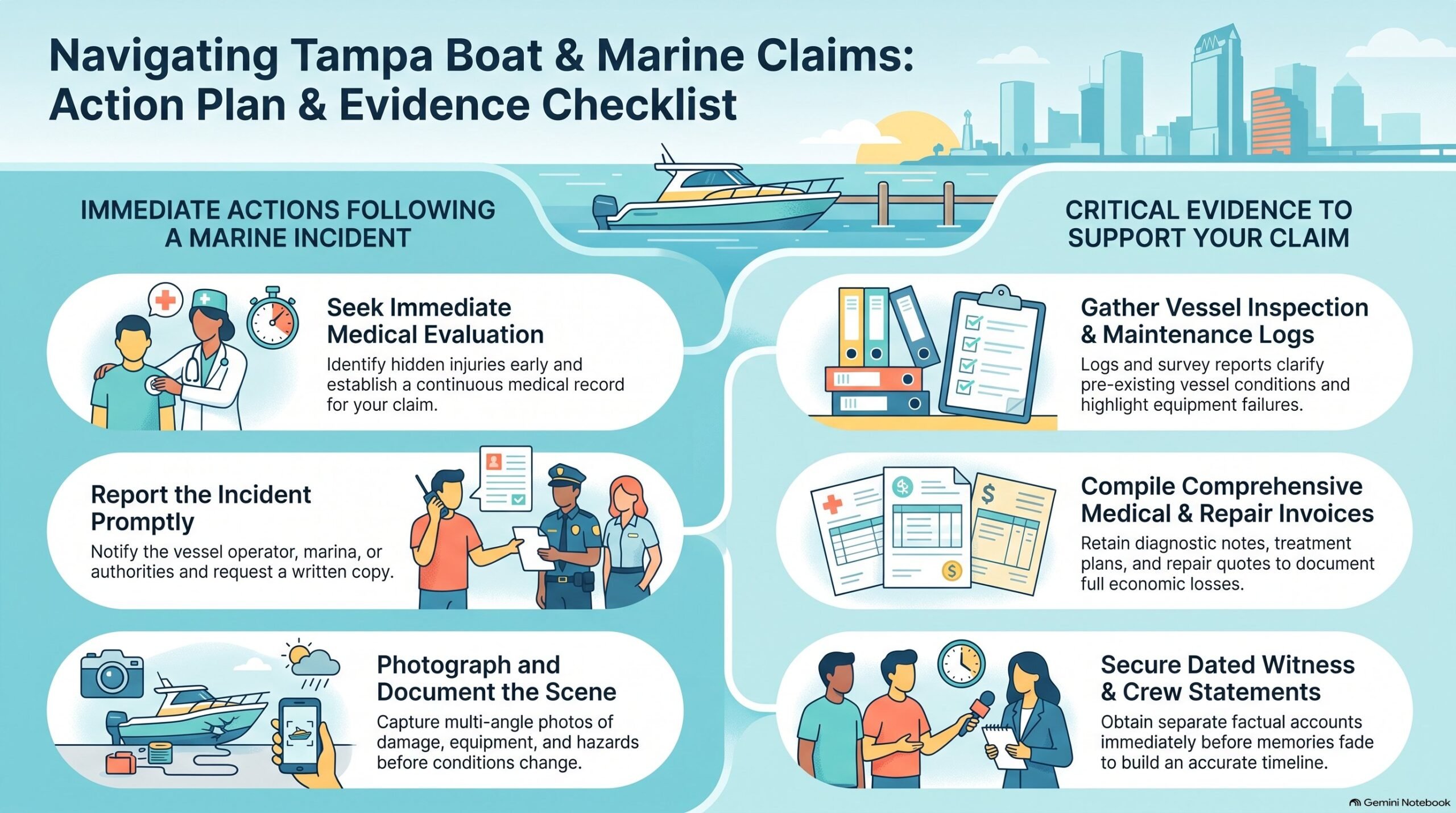
After a boat or marine injury, the injured person should promptly seek medical attention, even if the harm initially appears minor. Report the incident to the appropriate vessel operator, property owner, or authority, and keep a record of when and how you reported it. Photographs of the scene, visible injuries, and any relevant hazards can help preserve important evidence.
Seek Medical Attention
Prompt medical evaluation is essential after a boat or marine injury, even if the person initially believes the harm is minor. Prompt Care can identify conditions that may not be immediately apparent, including head trauma, internal injuries, or complications from immersion. The injured person should seek assessment from an appropriate medical provider as soon as possible and accurately describe the incident, symptoms, and any changes in their condition. Medical professionals can determine whether emergency treatment, diagnostic testing, or expert care is needed. Following the recommended treatment follow-up plan is equally important. Attending appointments, completing prescribed therapies, and reporting new or worsening symptoms can support recovery and create a clear medical record. Timely, consistent care also helps the injured person protect their health while remaining able to assist others safely.
Report the Incident
Once immediate medical needs are addressed, the injured person should promptly report the incident to the appropriate party, such as the vessel operator, marina, property owner, or claims administrator. Timely Incident Reporting helps responsible parties respond, address safety concerns, and begin reviewing the claim. The report should state when and where the event occurred, describe the injury and its known circumstances, and identify any immediate assistance provided. The injured person should request that the report be recorded and ask for a copy or reference number, if available. Agency Notifications may also be required when the event involves a commercial vessel, navigable waters, or another regulated activity. Applicable reporting duties can depend on the circumstances, so the injured person should avoid delaying notice while determining every requirement. Accurate, prompt communication supports accountability and helps protect others from similar harm.
Document the Scene
Because conditions on a vessel or at a marina can change quickly, documenting the scene may help preserve important evidence. If it is safe, an injured person or companion should record the location and visible conditions before equipment is moved or repairs begin. Photograph Damage from several angles, including the vessel, dock, nearby hazards, and any relevant warning signs. Images should show both close details and the surrounding area, with the date and time noted when possible. Preserve Debris, damaged components, and relevant personal property without altering or discarding them. A written account can identify witnesses, describe weather and lighting, and note when conditions changed. Documentation should not delay medical care or create further danger. Store copies securely and share them with appropriate representatives when requested.
Don’t Wait. Call Our Florida Personal Injury Lawyers Now!
Critical Evidence in a Tampa Property Claim Boat & Marine Claims Injury Case
Key evidence can help establish how a boating incident occurred, the vessel’s condition, and the extent of any injuries.
Relevant records and accounts may include:
- Incident scene documentation and vessel inspection records
- Medical treatment documentation
- Witness and crew statements
Careful preservation of these materials can support a clear assessment of the claim.
Incident Scene Documentation
When a boating or marine incident occurs in Tampa, prompt scene documentation can preserve evidence that may otherwise be lost or altered. Photographs and video can record vessel positions, visible damage, debris, water conditions, lighting, and nearby hazards before cleanup or changing weather affects the area. Take images from multiple angles and include wide views as well as close details, without disturbing objects or creating additional risks. Weatherproof camera placement can help maintain reliable coverage in locations where spray or rain is likely. Timestamped photo organization allows investigators, insurers, and other responsible parties to efficiently review the sequence and context of images. Witness names and contact details, along with brief, factual notes about observations, can also support an accurate account while respecting privacy and safety.
Vessel Inspection Records
Scene photographs can document visible conditions, while vessel inspection records may reveal defects or maintenance issues that are not apparent at the time of an incident. Maintenance logs can show whether required servicing occurred, when repairs were completed, and whether recurring problems were reported. Survey reports may identify structural concerns, equipment deficiencies, or safety recommendations made before the event. Collectively, these records can help clarify the vessel’s condition and whether an owner or operator had notice of a potential hazard. Their value depends on accuracy, completeness, and timing. Investigators may compare entries with repair invoices, inspection dates, and incident details to assess consistency. Preserving original records and related communications can support a fair review, help responsible parties understand what happened, and guide decisions about appropriate corrective measures without relying on assumptions.
Medical Treatment Documentation
Medical treatment documentation can establish the nature, timing, and progression of injuries after a boating incident. Emergency department records, diagnostic results, prescriptions, and provider notes can show what symptoms were reported and what care was recommended. Consistent records help clarify the treatment timeline, including when symptoms appeared, whether they changed, and how clinicians addressed them. Follow-up visits, therapy records, and expert evaluations may further document recovery needs and any lasting limitations. Accurate, complete documentation can help a claim reviewer assess whether medical expenses and requested compensation correspond to the reported injuries. Patients can support clear review by keeping copies of bills, visit summaries, and instructions, and by following prescribed care when possible. Prompt attention to missing or inconsistent records may reduce confusion and help confirm that the injury’s documented effects receive appropriate consideration.
Witness And Crew Statements
Witness and crew statements can preserve important details about a Tampa boating incident before memories fade or accounts diverge. Prompt, separate interviews may clarify the vessel’s movements, weather, safety procedures, and events immediately before an injury or property loss. Each person should describe only what they observed, heard, or did, distinguishing direct knowledge from assumptions. Investigators can compare accounts with photographs, maintenance records, navigation data, and medical documentation. Consistent statements across independent witnesses may support a reliable timeline, while differences can flag details that require further review. Crew credibility may depend on training, responsibilities, visibility, and any relationship to the vessel owner or operator. Careful documentation helps protect accurate evidence and supports fair consideration of everyone affected. Statements should be dated, attributed, and preserved without pressure or alteration.
Long-Term Effects of Tampa Property Claim Boat & Marine Claims Injuries
Boat and marine injuries may cause chronic pain and reduced mobility that interfere with daily activities long after the incident. Some individuals also experience lasting neurological effects, which can require continued evaluation and treatment. These conditions may create ongoing medical and financial needs to consider when evaluating a property claim.
Chronic Pain And Mobility
When a boat or marine accident causes lasting injuries, chronic pain and reduced mobility can affect a person’s ability to work, manage daily tasks, and maintain independence. Persistent discomfort may limit standing, lifting, walking, or using stairs, while symptoms can vary from day to day. These challenges may also disrupt sleep and make routine responsibilities more difficult.
A coordinated care plan can help injured individuals preserve function and participate in family, work, and community life. Pain flare management may include pacing activities, following medical guidance, and adjusting tasks when symptoms intensify. Physical therapy can support strength and flexibility, while adaptive mobility tools, such as braces, canes, or walkers, may improve safety and access. Consistent follow-up helps clinicians assess progress and revise treatment. Documentation of symptoms, limitations, and care can also clarify the lasting effects of an injury.
Lasting Neurological Effects
After a Tampa boat or marine accident, neurological injuries may cause lasting changes in memory, concentration, balance, sensation, or coordination. These effects can interfere with a person’s ability to work, communicate, and participate in familiar activities. Cognitive impairment may make it difficult to process information, follow instructions, or make decisions, even when physical injuries appear to have recovered. Some individuals experience personality changes, including increased irritability, reduced emotional control, or withdrawal from social relationships. Such changes can affect family members, coworkers, and others who rely on the injured person’s judgment or support. Neurological symptoms may emerge gradually or fluctuate over time, making careful documentation important. Medical assessments can help identify the nature and extent of these lasting effects and clarify how they influence daily functioning and relationships.
Ongoing Medical And Financial Needs
Long-term injuries from a Tampa boat or marine accident may require ongoing medical care and create financial needs that continue well beyond initial treatment. Treatment may include expert visits, rehabilitation, medication, assistive equipment, or home modifications. A careful assessment of Future care needs can help identify likely services, their expected duration, and associated costs. Medical professionals may document how the injury affects daily activities and whether additional treatment is reasonably anticipated.
Injured individuals may also face reduced work capacity, interrupted careers, or the need to change occupations. Income planning can account for these losses alongside continuing expenses and household responsibilities. Records of medical costs, employment history, and projected care needs may support a clearer evaluation of long-term financial effects. This information can help families make informed decisions and preserve resources for recovery and necessary care.
Proving Liability in Tampa Property Claim Boat & Marine Claims Injury Cases
Proving liability in a Tampa boat or marine injury claim requires evidence that identifies who was responsible and how that conduct caused the injury. A careful investigation may examine the operator’s decisions, the vessel’s condition, and the circumstances surrounding the incident. Negligent navigation, such as excessive speed, unsafe turns, or failure to maintain a proper lookout, may indicate a breach of the duty to operate with reasonable care. Operator impairment may also be relevant when evidence shows that alcohol, drugs, or another condition affected safe control of the vessel.
Useful evidence can include witness accounts, photographs, video, incident reports, vessel maintenance records, and navigation data. Medical documentation may help connect the collision or other event to the reported injuries. Depending on the facts, responsibility may involve a vessel operator, owner, rental company, or another party with a safety duty. Establishing a clear timeline and preserving available evidence can help clarify what occurred. A thorough assessment supports accountability and helps injured people pursue a fair resolution.
Dealing With Insurance Companies After a Tampa Property Claim Boat & Marine Claims Injury
When an injured person files a boat or marine claim in Tampa, communications with insurers can influence how the claim is evaluated and resolved. Insurers may request statements, records, photographs, or other information about the incident and the resulting harm. Accurate, consistent responses can help clarify relevant facts, while speculation or incomplete descriptions may create misunderstandings. The injured person should preserve correspondence and provide requested materials carefully, without overstating or minimizing the impact of the injury.
Policy exclusions and coverage limits can affect which losses an insurer considers payable. A policy may distinguish among vessel damage, medical expenses, lost income, and liability to others. Reviewing the applicable language can help identify questions that require attention, including whether another policy may apply. An attorney can communicate with insurers, assess requests, and explain available protections in plain terms. Careful, respectful communication supports a fair evaluation and helps injured people focus on recovery while protecting their interests and the needs of those who depend on them.
What to Expect During a Tampa Property Claim Boat & Marine Claims Injury Claim Process
A boat or marine injury claim generally begins with promptly reporting the incident and documenting injuries, treatment, and related losses. The claim is then investigated through evidence review and assessment of responsibility and damages. Depending on the findings and negotiations, it may resolve through a settlement or proceed to litigation.
Report The Incident
After a boat or marine injury in Tampa, prompt incident reporting can help preserve evidence and establish an accurate record of what occurred. The injured person or a responsible representative should notify the vessel operator, marina, property owner, or other appropriate party as soon as practical. Incident reporting should include the date, time, location, and a neutral description of the event, along with the names of witnesses and responding personnel. Request a written report, and retain a copy when available. Notify the relevant insurer promptly, following applicable policy requirements. Statements should remain factual and limited to what the person knows firsthand. If public authorities respond, record their contact details and any report reference number. Timely, careful reporting can support a fair review and help protect everyone involved.
Document Your Injuries
Thorough injury documentation can help establish the nature and extent of harm after a Tampa boating or marine incident. Prompt medical evaluation allows providers to identify injuries, recommend treatment, and create a clear clinical record. The injured person should describe symptoms accurately, including pain, dizziness, limited movement, or later-developing symptoms. Record follow-up appointments and prescribed care, along with missed work and limits on ordinary responsibilities.
A Personal Injury Journal can help organize daily observations without replacing medical records. Entries may note symptoms, treatment effects, sleep disruption, and assistance needed with routine tasks. Photographs of visible injuries, dated when possible, can supplement written descriptions. Keep records of prescriptions, bills, and appointment dates in one place. Tracking Recovery Milestones, including setbacks, provides a useful account of progress and ongoing needs for those supporting the injured person.
Investigate The Claim
Once a Tampa boat or marine injury claim is reported, the investigation typically focuses on how the incident occurred, who may be responsible, and what losses resulted. Investigators may examine the vessel, maintenance records, safety equipment, weather conditions, and applicable navigation rules. Witness statements, photographs, incident reports, and medical records can help establish the sequence of events and document the injury’s effects. The insurer may request recorded statements or additional records, so claimants should provide accurate information and retain copies of relevant materials. A careful coverage review considers the policy’s terms, exclusions, limits, and notice requirements. Policy interpretation may determine whether the reported injury and related expenses fall within the available protection. Prompt cooperation and organized documentation can help clarify disputed facts and support a fair assessment of the claim while respecting the needs of everyone affected.
Resolve Or Litigate
When the investigation clarifies the facts, a Tampa boat or marine injury claim may proceed through settlement negotiations or, if disputes remain, litigation. During negotiations, the injured person’s representative presents evidence of liability, medical needs, lost income, and other documented losses. A sound Settlement strategy considers the claim’s full value, available insurance, and the risks of accepting or rejecting an offer. Insurers may request additional records or dispute responsibility, so review carefully before deciding.
If negotiations do not produce a fair resolution, litigation may provide a formal process for presenting evidence and seeking compensation. Litigation readiness includes meeting filing deadlines, organizing records, identifying witnesses, and preparing for court procedures. Throughout either path, clear communication helps the injured person make informed choices while protecting the ability to pursue a lawful recovery and maintain responsibilities to family and community.
Compensation for Tampa Property Claim Boat & Marine Claims Injury Damages
What compensation may be available after a boating accident in Tampa depends on the nature of the loss and the evidence supporting the claim. A property claim may address physical damage to a vessel and related equipment, subject to applicable policy terms, liability rules, and coverage limits. Depending on the extent of the damage, the claim may include repair costs or Hull replacement when repairs are not practical. It may also cover reasonable salvage expenses, towing, storage, and necessary steps to prevent further damage. Documentation such as photographs, repair estimates, invoices, survey reports, and maintenance records can help establish the condition of the vessel and the amount of the claimed loss. Prompt notice to the insurer and careful preservation of damaged property may support a fair review. When another party’s conduct contributed to the incident, evidence of responsibility may also affect recovery. A lawyer can assess available coverage, identify relevant losses, and help pursue compensation while respecting everyone’s interests.
Economic vs Non-Economic Damages in Tampa Property Claim Boat & Marine Claims Cases
Boat and marine claims may involve economic losses, such as repair costs, lost income, and other documented expenses. They may also include non-economic harm, including pain, suffering, or disruption to daily life. Establishing the value of either category requires clear evidence connecting the claimed losses to the incident.
Economic Losses
After a boat or marine property claim in Tampa, damages may include both economic losses and, in limited circumstances, non-economic losses. Economic losses are measurable financial harms supported by records, estimates, and other reliable evidence. They may include reasonable repair costs, replacement expenses, towing and storage charges, and temporary costs needed to protect the vessel from further damage. Owners who use vessels for business may also document lost charter revenue caused by covered damage and resulting downtime. A claim may further involve diminished vessel value if repairs do not restore the boat’s market value to its pre-loss level. Receipts, contracts, maintenance records, and qualified appraisals can help establish these amounts. Careful documentation allows insurers and decision-makers to assess the financial impact accurately and supports a fair resolution for owners, operators, and affected clients.
Non-Economic Harm
Non-economic harm may arise when a covered marine property loss causes documented personal disruption beyond the vessel’s repair or replacement costs. These effects differ from economic losses, which generally involve measurable expenses such as repairs, storage, or replacement. Emotional distress may follow a serious incident, particularly when a vessel supports family responsibilities, community service, or regular work. Loss of enjoyment may also occur when damage prevents an owner from using the boat for recreation, transportation, or assistance to others. Such effects are distinct from the physical damage itself and may be treated differently under a policy or applicable law. Coverage for non-economic harm is not automatic; it depends on the policy terms, the nature of the claim, and governing law. A careful distinction helps clarify the types of relief potentially available after a marine property loss.
Proving Your Damages
Establishing damages in a Tampa boat or marine property claim requires evidence linking each claimed loss to the incident and supporting its value. Economic damages may include vessel repairs, replacement parts, towing, storage, and reasonable loss-of-use expenses. Repair cost estimates, invoices, photographs, maintenance records, and surveyor reports can document the damage and establish costs. Depreciation calculations may affect the value assigned to damaged property or a total loss, so records of the vessel’s condition and market value can be important. Non-economic harm may involve distress or disruption, but it is distinct from measurable financial losses and may require different supporting evidence. A careful claim file helps insurers and decision-makers assess each category fairly. Organized documentation also supports a clear account of the loss and can help preserve resources for the people who depend on the vessel.
Don’t Wait. Call Our Florida Personal Injury Lawyers Now!
When a Tampa Property Claim Boat & Marine Claims Injury Case Goes to Trial vs Settlement
Whether a Tampa boat and marine injury claim should proceed to trial or settle depends on the strength of the evidence, the extent of the injuries, and the parties’ willingness to resolve disputed issues. Settlement negotiations may offer a way to conclude a claim without the uncertainty, expense, and time associated with a courtroom proceeding. A settlement can also provide a defined outcome and allow injured people to focus on recovery and their responsibilities to family or community.
If the parties cannot agree on fair compensation, a trial may be necessary. Each side presents evidence and arguments, and a judge or jury evaluates the disputed facts. The process can take longer and place greater demands on the injured person, who may need to testify and answer questions. After closing arguments, the jury deliberates and reaches a verdict. The choice between settlement and trial depends on the claim’s circumstances, the available proof, and the injured person’s informed priorities.
Florida Laws That May Affect Your Tampa Property Claim Boat & Marine Claims Case
The decision to settle or proceed to trial in a Tampa boat or marine claim may depend in part on Florida laws governing liability, deadlines, and available damages. These rules can shape how responsibility is assessed and what evidence supports a property loss. A careful review may also help claimants protect resources needed by families, employees, and others who rely on the damaged vessel.
- Florida negligence principles may assign responsibility among parties based on their conduct and the circumstances of a collision, grounding, or other incident.
- Florida maritime statutes may address vessel operation, safety duties, and property damage. Federal maritime law may also apply, depending on the location and nature of the event.
- Vessel insurance regulations and policy terms can affect coverage, exclusions, notice requirements, and the documentation needed to support a claim.
The applicable rules depend on the facts. A qualified attorney can identify relevant laws, evaluate available records, and explain how legal requirements may affect recovery without disrupting legitimate service commitments.
The Statute of Limitations for Tampa Property Claim Boat & Marine Claims Injury Cases
Because filing deadlines can determine whether a claim may proceed, injured people and vessel owners should identify the applicable limitation period promptly after a Tampa boating incident. Florida law generally allows two years to file a negligence action for an injury occurring on or after March 24, 2023; earlier incidents may be governed by a different period. Claims involving deaths, property damage, government vessels, or contractual obligations may follow separate deadlines and notice requirements.
A Federal filing deadline may apply when a case falls within admiralty jurisdiction, which depends on the incident’s location and connection to maritime activity. Many maritime personal injury claims must be filed within three years, but exceptions can shorten that period or impose additional conditions. The governing rule is not determined solely by the boat’s location in Tampa Bay. Delays can also affect evidence and witness availability, even when a filing period remains open. Promptly confirming the applicable deadline helps preserve a fair opportunity to seek accountability and support those affected.
How a Tampa Property Claim Boat & Marine Claims Lawyer Can Help You
After a boating incident, a Tampa boat and marine claims lawyer can assess the circumstances, identify potentially responsible parties, and explain which legal rules may apply. The lawyer can help claimants pursue fair treatment while protecting the interests of passengers, crew members, and others affected by the loss.
Support may include:
- Reviewing insurance policies, repair estimates, and incident records to clarify available coverage and document the damage.
- Conducting a Policy appraisal and evaluating salvage valuation to assess the vessel’s condition, repair costs, and remaining value.
- Communicating with insurers, opposing parties, and relevant professionals to organize evidence and present a supported claim.
A lawyer may also examine whether negligence, unsafe equipment, or another party’s conduct contributed to the incident. This review can help distinguish covered property losses from injury-related claims and identify appropriate avenues for recovery. By managing claim documentation and negotiations, counsel can reduce avoidable disputes and help clients focus on practical responsibilities, including supporting affected individuals and restoring safe operations where possible. The approach depends on the facts and policy terms.
When to Contact a Tampa Property Claim Boat & Marine Claims Lawyer
Timely legal guidance can help protect a boat or marine claim when damage, injuries, or coverage disputes arise. A boat owner may contact a Tampa property claim boat and marine claims lawyer soon after a collision, storm, fire, theft, or other covered event. Early review can help preserve relevant records, document damage, and identify deadlines for notifying the insurer or submitting a claim.
Legal guidance may also be appropriate when an insurer delays its response, requests extensive documentation, offers an amount that does not reflect the reported loss, or questions whether the policy applies. These concerns can affect a vessel’s repair, safe operation, and the owner’s ability to support passengers, employees, or others who depend on it.
Policy renewal is another useful time to seek clarification. Reviewing changed terms, exclusions, or limits before renewal may help identify potential gaps. Prompt attention to emerging issues can support informed decisions while claim details and policy records remain accessible.
Why You Need an Experienced Tampa Property Claim Boat & Marine Claims Lawyer
An experienced Tampa property claim boat and marine claims lawyer can help owners navigate through policy language, insurer investigations, and disputed valuations. Marine losses may involve storm damage, grounding, collision, theft, or equipment damage, each raising distinct questions about coverage and proof. Counsel can provide careful Coverage interpretation, explaining relevant exclusions, conditions, deductibles, and post-loss duties. This guidance helps owners understand what documentation may support a claim and how to respond to requests without overlooking important details.
An attorney can also assess whether an insurer’s investigation adequately accounts for the vessel’s condition, repair needs, and the circumstances of the incident. Surveyor selection may matter when an independent assessment is needed to document damage or evaluate repair estimates. Experienced counsel can help coordinate that process and address disagreements over scope or value. By organizing evidence, communicating with the insurer, and identifying potential claim issues, a lawyer can reduce avoidable delays and help owners pursue a fair resolution while preserving resources for their families, crews, and communities.
How to Choose the Right Tampa Property Claim Boat & Marine Claims Lawyer for Your Case
Choosing the right Tampa boat and marine claims lawyer requires more than confirming that an attorney handles insurance disputes. A careful review can help policyholders identify counsel prepared to address the specific facts, coverage terms, and financial stakes of a vessel claim.
Relevant experience matters. The lawyer should understand marine insurance policies, property damage evaluations, repair estimates, and disputes over exclusions or delays. Lawyer credentials, including Florida licensure, disciplinary history, and focused experience with boat claims, can help assess professional qualifications. Clients may also ask how the attorney communicates, who will handle the case, and what documentation is needed.
Explain fee structures before representation begins. The agreement should state how fees and case expenses are calculated, when payment is due, and whether costs remain payable if the claim does not succeed. A clear discussion supports informed decisions and responsible planning. By comparing experience, communication practices, and written terms, claimants can select counsel whose approach aligns with their needs and helps them pursue a fair resolution.
About The Law Offices of Anidjar & Levine
The Law Offices of Anidjar & Levine represents clients in Florida property insurance disputes, including claims involving boats and other marine property.
The firm assists policyholders seeking answers after damage, delays, or disagreements with insurers.
Its work may include reviewing policy terms, organizing claim records, communicating with insurance companies, and explaining available legal options.
These services can help clients make informed decisions while protecting property and pursuing fair consideration of a claim.
Firm history provides context for the firm’s development and its work on behalf of people facing legal challenges.
Prospective clients can review public information about its practice areas, offices, and case experience when evaluating whether the firm suits their needs.
Attorney credentials, including bar admission, education, and relevant experience, are also important factors to weigh.
The firm can explain how its attorneys approach marine property disputes and what information it may need for an initial review.
Clear communication about fees, timelines, and responsibilities helps clients understand the process and decide how to proceed.
Frequently Asked Questions
Does Homeowners Insurance Cover a Boat Stored on My Property?
Homeowners insurance may provide limited storage coverage for a boat kept on the property, but protection depends on the policy, the boat’s value, and how it is stored. Some policies cover boat theft or damage only up to a modest limit and exclude certain causes of loss. The owner should review the policy’s personal property provisions, exclusions, and liability terms, then confirm coverage with the insurer before relying on it.
Are Boat Lifts, Docks, and Marine Equipment Covered Under Property Insurance?
Boat lifts, docks, and marine equipment may be covered under property insurance, but protection depends on the policy, ownership, location, and cause of damage. Coverage limits may apply separately to structures, personal property, or equipment, and may not reflect replacement costs. Policy exclusions can restrict coverage for flooding, storm surge, wear, corrosion, or improper maintenance. The insured should review policy language, document property condition, and confirm applicable protections with the insurer before a loss occurs.
Can I File a Claim for Damage Caused by a Hurricane or Storm Surge?
A policyholder may file a claim for hurricane or storm-surge damage, but coverage depends on the policy’s terms, exclusions, and applicable limits. Wind damage may be covered, while flood-related losses can be excluded or require separate flood insurance. Storm surge exclusions and hurricane deductibles may substantially affect payment. The policyholder should document damage, take reasonable steps to prevent further loss, and promptly notify the insurer. A qualified professional can review the denial or settlement for accuracy.
What Should I Do if My Insurer Denies My Boat or Marine Property Claim?
After an insurer denies a boat or marine property claim, the policyholder should obtain the denial letter and policy, then begin reviewing denial reasons against the documented damage and coverage terms. They should preserve photographs, repair estimates, inspection reports, and communications, while noting all appeal deadlines. If the evidence supports coverage, a written appeal may prompt reconsideration. A qualified claims professional or attorney can help assess disputed exclusions and guide an effective response.
Can a Marine Surveyor Help Assess Damage to My Boat?
Yes, a qualified marine surveyor can inspect a boat, document visible and concealed damage, and assess likely causes and repair needs. A Marine surveyor damage assessment may include photographs, measurements, and findings that help clarify the vessel’s condition for owners, repair professionals, and insurers. The surveyor can also provide boat repair cost estimates or review contractor quotes. Independent findings may support informed decisions, though coverage and payment remain subject to the policy and insurer’s review.
—————————
A boat or marine injury can create significant medical, financial, and legal concerns, particularly when an insurer disputes responsibility or the extent of a loss.
Prompt documentation and careful review of the available evidence can help protect a claimant’s options.
The Law Offices of Anidjar and Levine represent people pursuing property and injury claims in Tampa.
Those affected by a marine incident may consult an experienced Tampa Personal Injury Lawyer to understand their rights, deadlines, and potential next steps.