

The Law Offices of Anidjar and Levine help Melbourne boat and marine claimants assess property damage, insurance coverage, and legal options after an incident. We review policy wording, exclusions, limits, notice requirements, and evidence to identify potential sources of compensation and address insurer challenges. Whether damage involves a collision, storm, grounding, theft, or mechanical failure, we can help organize records and explain practical next steps. For related legal support, visit our Melbourne Personal Injury Lawyer page. The sections below outline common claim issues, possible rights, and how a marine claims lawyer may assist.
Main Takeaways
- A Melbourne boat and marine claims lawyer can review property damage claims involving vessels, engines, equipment, moorings, and waterfront facilities.
- Coverage depends on policy wording, exclusions, limits, notice requirements, and evidence establishing how the damage occurred.
- Storm, flood, collision, grounding, theft, vandalism, and mechanical failure claims may require different records and coverage assessments.
- Preserve photographs, incident reports, repair estimates, receipts, service records, and insurer correspondence to support your claim.
- A lawyer can assess delays, low offers, denials, and possible challenges while explaining practical legal options.
How We Can Help With Your Melbourne Property Claim Boat & Marine Claims Injury Claim
When a boating incident causes property damage or personal injury, we can help you comprehend your rights and pursue a claim. We’ll listen carefully, review the available information, and explain practical options in clear terms. Our goal is to help you seek a fair resolution while reducing the burden of handling a complicated claim alone.
We can examine your insurance policy, identify relevant duties, and provide careful Policy interpretation. We’ll also assess how coverage exclusions may affect your claim and explain any questions that merit further attention. If the insurer requests documents or challenges your account, we can help you prepare a focused response supported by records and applicable policy language.


Throughout the process, we’ll keep you informed, answer your questions, and handle communications with professionalism. We recognize that resolving a claim can matter not only to you, but also to family members, employees, or others who depend on you. We’ll work to protect your interests and pursue an outcome grounded in the facts and your policy.
Don’t Wait. Call Our Florida Personal Injury Lawyers Now!
Understanding Melbourne Property Claim Boat & Marine Claims Injury Cases
Understanding a Melbourne boat or marine injury claim starts with identifying how the incident occurred, who may be responsible, and what insurance cover applies. We’ll help you establish the relevant facts and understand how they affect your options.
OUR CONSULTATIONSARE FREE
START YOUR FREE CASE REVIEW

These cases may involve passengers, crew, operators, vessel owners, or other parties. We’ll examine available records, agreements, and insurance documents to clarify each party’s role and the potential sources of compensation. If you’re supporting an injured person, careful documentation can help protect their interests while they focus on recovery.
Policy terms matter. Marine policy exclusions may limit cover in particular circumstances, so we’ll review the wording and explain its practical effect. We’ll also consider seaworthiness standards, which can inform whether a vessel met applicable safety obligations. The evidence must support any conclusions about responsibility or coverage.
We’ll explain the claims process, identify what information you may need, and help you make informed decisions. Each matter turns on its specific facts, applicable law, and policy language.
Common Causes of Melbourne Property Claim Boat & Marine Claims


We commonly see Melbourne boat and marine claims arise from storm and flood damage, which can harm vessels, equipment, and moorings. Collisions and groundings may cause substantial physical damage, while theft and vandalism can result in loss or costly repairs. Mechanical failures can also lead to claims, and we’ll explain how these incidents may affect your coverage.
Storm And Flood Damage
Storms and floods can cause extensive damage to boats, marine equipment and related property across Melbourne, but the cause and timing of the damage can affect whether an insurance claim is covered. Strong winds may tear covers, damage moorings or drive rainwater into vessels, while rising water can inundate storage areas and waterfront facilities. We can help you review your policy’s Flood insurance coverage, including exclusions, limits, and requirements that may apply to particular property or events.
After damage occurs, take reasonable steps to protect people and prevent further loss. Emergency mitigation may include moving equipment to a safer location, arranging temporary covers and documenting conditions before repairs begin, where it’s safe to do so. Keep receipts, photographs and relevant communications. We can assess the evidence, explain your options and support a clear, fair claim process for you and those who depend on your services.
Collision And Grounding
When a vessel collides with another boat, a berth or a fixed structure, or runs aground, the resulting damage can affect both marine property and business operations. These incidents may damage hulls, engines, navigation equipment, docks, or cargo, while disrupting services that customers and communities rely on. We can help you assess the loss, document the circumstances, and understand how your insurance policy may respond.
Collisions can follow poor visibility, mechanical failure, operator error, or failure to follow Navigation rules. Grounding hazards include shallow water, submerged objects, shifting sandbars, and inaccurate charts. Even a seemingly minor impact can cause hidden structural damage or pollution concerns that require prompt attention. We can guide you through reporting requirements, evidence gathering, and insurer communications, helping you pursue a fair claim while protecting those who depend on your vessel.
Theft And Vandalism
Theft or vandalism can damage a vessel, its equipment, or property kept aboard, leaving owners with repair costs and interrupted operations. When this happens, we can help you identify the loss, gather evidence, and understand the policy terms that may apply. Report the incident promptly to police and your insurer, and keep copies of reports, photographs, receipts, and repair estimates. Clear records can support your claim and help establish the value of missing or damaged items.
Strong marina security measures, including controlled access, lighting, and surveillance, may reduce risks, but they can’t prevent every incident. If your vessel is stolen, notify relevant authorities and your insurer without delay. We can guide you through stolen vessel recovery issues and the claims process, helping you pursue a fair outcome while protecting your ability to serve customers and the wider community.
Mechanical Failures
Why do mechanical failures lead to marine insurance disputes? A breakdown can damage your vessel, interrupt its use, and create uncertainty about whether your policy covers the loss. We can help you understand the issues insurers commonly examine, including maintenance records, the vessel’s age, and the cause of the failure.
Engine Diagnostics may help identify whether an engine problem resulted from sudden damage, gradual wear, or inadequate servicing. Insurers may also investigate Component Defects, installation quality, and compliance with manufacturer guidance. These distinctions can affect how insurers assess a claim and whether exclusions apply.
If your boat’s failure has caused property damage or left you facing repair costs, preserve invoices, service reports, photographs, and expert findings. We can review the evidence, explain your options, and communicate with the insurer so you can focus on supporting those who depend on you.
Legal Rights of Melbourne Property Claim Boat & Marine Claims Injury Victims
If you’re injured in a boating incident in Melbourne, you may have legal rights to seek compensation for your losses. We can help you understand your options and pursue a claim while you focus on recovery and supporting those who depend on you.
Your rights may include:
- Compensation for medical expenses, rehabilitation, and related care
- Recovery of lost income and, where applicable, reduced future earning capacity
- Damages for pain, suffering, and the impact on daily life
- Access to legal advice about deadlines, evidence, and responsible parties
The rules that apply can depend on where the incident occurred, how the vessel was used, and the parties involved. Maritime jurisdiction may affect which laws and courts govern your claim, so we’ll assess those details before advising you. Passenger rights may also apply when you were traveling aboard a vessel, including rights to pursue a remedy for injury. Keep relevant records and seek prompt advice, because time limits can restrict your ability to bring a claim. We’ll explain each step clearly and treat your circumstances with care.
Why Do Melbourne Property Claim Boat & Marine Claims Injuries Happen?
Understanding how boating injuries occur can help identify who may be responsible and what evidence could support a claim. On Melbourne’s waterways, collisions, falls, and other harm often result from preventable failures in judgment, maintenance, or safety practices. By recognizing these causes, we can better protect people who depend on responsible boating.
Navigation hazards, including submerged objects, shallow water, changing conditions, and crowded channels, can contribute to accidents when operators fail to keep a proper lookout or adjust their speed. Operator fatigue can slow reactions and impair decision-making, especially during long trips or in demanding conditions. Inadequate training, distraction, alcohol or drug use, and failure to follow navigation rules can also increase risk.
Mechanical defects may cause sudden loss of control or power, while poorly maintained equipment can fail when needed. Owners, operators, manufacturers, or maintenance providers may each have responsibilities, depending on the circumstances. Identifying the specific cause helps us assess whether negligent conduct contributed to an injury and who may be accountable.
What Should You Do After a Melbourne Property Claim Boat & Marine Claims Injury?
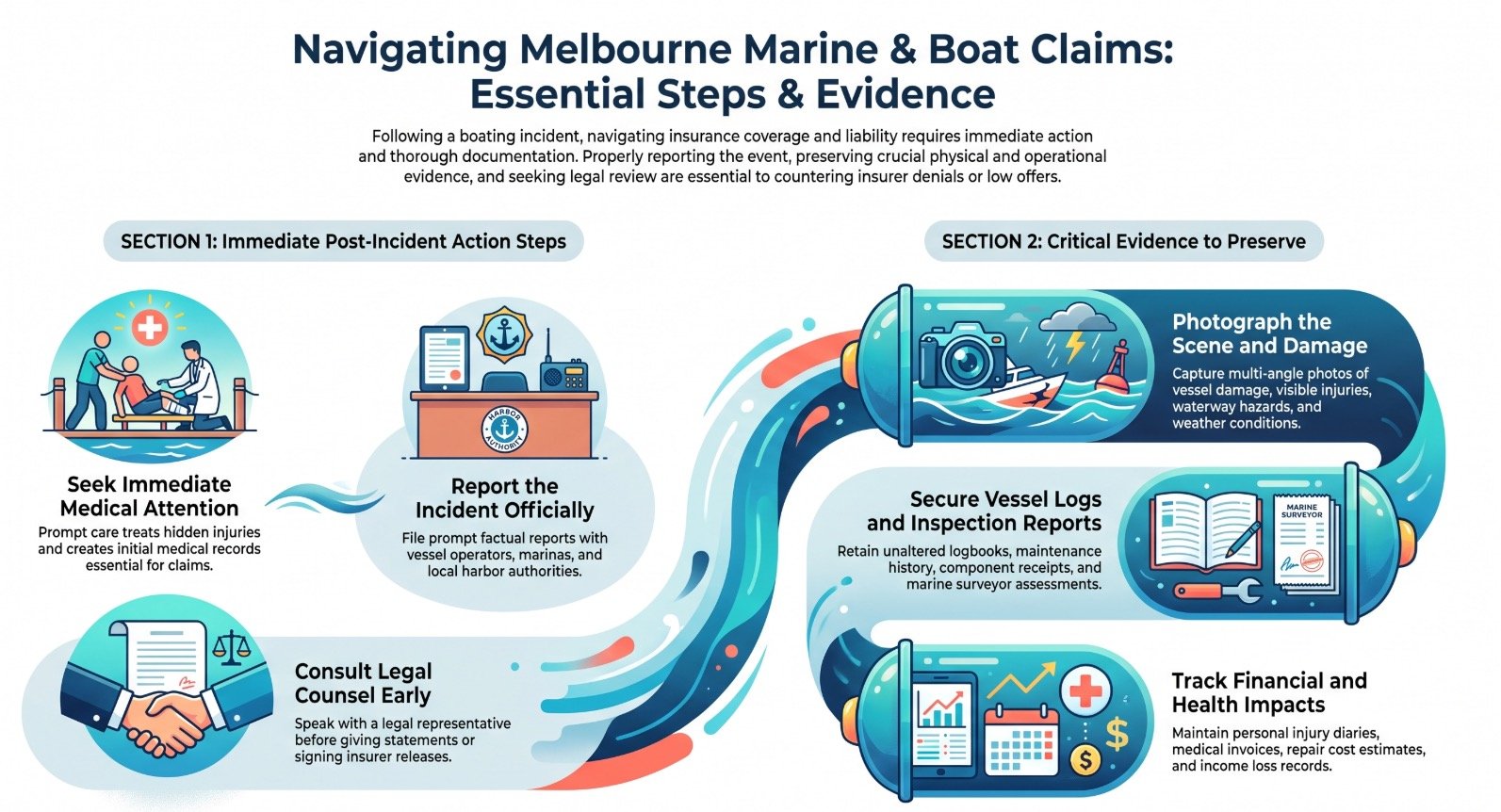
After a boat or marine injury, we should seek immediate medical care, even if the harm seems minor. Report the incident to the relevant operator or authority and request a record of what happened. We should also document our injuries with photographs and keep copies of medical records and related expenses.
Seek Immediate Medical Care
Seek medical care promptly after a boat or marine injury, even when symptoms seem minor or delayed. Adrenaline can mask pain, and conditions such as concussion, internal bleeding, or hypothermia may worsen without obvious early signs. Call emergency services for severe symptoms, including breathing difficulty, heavy bleeding, confusion, or loss of consciousness. Otherwise, arrange a prompt assessment with a doctor or attend an emergency department.
Follow medical advice carefully, and explain how the incident occurred, what symptoms you noticed, and when they began. Accurate information helps clinicians choose appropriate treatment and monitor your recovery. Keep records of diagnoses, prescriptions, referrals, and follow-up appointments, and request copies of relevant medical documents. Attend each appointment, even if you feel better, because timely care protects your health and supports a clear account of your injuries.
Report The Incident
Report the incident promptly to the boat operator, marina, vessel owner, or other responsible party, and ask them to record what happened. Provide a clear, factual account, including when and where the event occurred and who was involved. Report hazards or unsafe conduct so those responsible can take steps to protect other passengers and visitors. Ask for the incident report filing process, request a copy of any report, and note the name and role of the person receiving your account. If the event occurred on navigable waters, check whether Harbor authority notification is required and who must make it. Follow up in writing to confirm the report was received, and keep communications with relevant parties. Prompt, accurate reporting supports accountability and helps prevent similar incidents from affecting others.
Document Your Injuries
Document your injuries as soon as you can, even if they seem minor at first. After a boat or marine incident, we should seek medical care promptly and explain how the event occurred. A clinician’s records can connect our injuries to the incident and guide appropriate treatment. We should photograph visible injuries, damaged equipment, and any relevant conditions, while respecting others’ privacy.
Keep a Personal injury diary to record pain, treatment, medication, missed work, and changes in daily activities. Consistent symptom tracking helps us describe how our condition develops and affects our responsibilities, including caring for family or supporting others. Save medical reports, receipts, prescriptions, and correspondence in one secure place. We shouldn’t exaggerate or guess; accurate, dated details provide a reliable account. If symptoms worsen, seek further medical advice and update our records.
Critical Evidence in a Melbourne Property Claim Boat & Marine Claims Injury Case
Strong evidence can help us establish how your boating injury occurred and support your property claim. We’ll assess the records and materials that may clarify responsibility and the extent of your losses.
Preserve relevant evidence promptly, as details can become harder to verify over time.
- Incident scene photographs and documentation
- Medical records and professional reports
- Vessel and equipment inspection evidence
- Witness statements and vessel logs
Incident Scene Documentation
When a boating incident causes injury or property damage, clear scene evidence can help establish what happened and who may be responsible. If it’s safe, we encourage you to document the location promptly, before conditions or equipment change. Photograph the vessel, surrounding waterway, nearby structures, visible damage, and any hazards from several angles. Photographic sequencing can show the overall scene first, then closer details, helping others understand how each feature relates to the incident. Record the date, time, location, and witness names, and note relevant conditions such as visibility, water movement, and lighting. Don’t disturb objects or enter unsafe areas to obtain images. Preserve original files and keep copies in weatherproof storage, particularly when handling paper notes or removable media. Careful documentation can support a fair assessment and help protect everyone affected.
Medical Records And Reports
After a boating incident, medical records and reports can provide essential evidence of the injuries sustained and the treatment required. We can help you gather hospital notes, ambulance records, imaging results, prescriptions, and follow-up assessments to show how the incident affected your health. These documents may also clarify when symptoms began, which treatments clinicians recommended, and whether your recovery has changed over time.
Record preservation matters. Keep copies of every report, appointment summary, receipt, and referral, and ask providers to correct factual errors through proper channels. Consistent documentation helps us present a clear account of your needs and support a fair assessment of your claim.
When medical opinions differ, expert interpretation can explain complex findings and connect injuries to ongoing care. We’ll help you organize relevant evidence so decision-makers can understand your circumstances and consider appropriate support.
Vessel And Equipment Evidence
Medical records can document the harm a boating incident caused, while vessel and equipment evidence may help explain how it happened and who may be responsible. We can help preserve relevant evidence so you can pursue a fair claim and protect those who depend on you.
Prompt hull photographs may reveal impact points, cracks, or other damage before repairs alter the vessel. We should also preserve damaged components and arrange an appropriate inspection, because a defect or failure may clarify the cause of the incident. Equipment inventories can identify safety gear, navigation devices, and other items on board, including their condition and maintenance history. Receipts, manuals, and repair records may help establish ownership, age, and prior problems. We can organize these materials and share them with qualified experts to support a clear assessment of responsibility and losses.
Witness Statements And Logs
Witness statements and boating logs can help establish the sequence of events and clarify what happened before, during, and after an incident. We can help you identify people with relevant knowledge, including passengers, crew, marina staff, and first responders. Prompt, independent accounts may preserve details that memories can lose over time. Crew testimony can explain operating procedures, safety checks, weather conditions, and decisions made on board. Compare accounts carefully and note differences without pressuring witnesses or shaping their recollections.
Logbook preservation is equally important. Secure the vessel’s logbooks, maintenance records, incident reports, and electronic entries, and keep originals unchanged. These records may show the vessel’s location, speed, course, and condition. We can help organize this evidence so insurers and decision-makers can assess the claim fairly and understand its impact on everyone affected.
Don’t Wait. Call Our Florida Personal Injury Lawyers Now!
Long-Term Effects of Melbourne Property Claim Boat & Marine Claims Injuries
Boat and marine injuries can affect your health and daily life long after the incident. We’ll consider how chronic pain and lasting mobility limitations may restrict work, independence, and routine activities. Ongoing psychological effects can also shape recovery, so it’s important to assess their impact alongside physical injuries.
Chronic Pain
Chronic pain can continue long after a boating injury has recovered, affecting your mobility, sleep, work, and daily activities. When pain persists, even routine responsibilities can become difficult, and the strain may affect your relationships and wellbeing. We recognize that you may also be trying to support family, colleagues, or others who depend on you.
Your treatment team can help develop a Chronic pain management plan suited to your condition. This may include medication, rehabilitation, counseling, or other recommended care. Keep records of symptoms, appointments, treatment costs, and how pain flare-ups affect your daily life. These details can help explain the injury’s ongoing consequences.
If another party’s negligence caused your boating injury, we can help you understand whether you may claim compensation for reasonable treatment expenses, lost income, and related losses.
Lasting Mobility Limitations
Persistent pain can also affect mobility after a boating injury, limiting your ability to walk, climb stairs, balance, or perform everyday tasks. When these restrictions continue, we can help you understand how they may affect work, family responsibilities, and your capacity to serve others. A lasting injury might prevent you from returning to physically demanding duties or volunteering in roles that require lifting, standing, or travel. Your recovery plan may include rehabilitation, mobility aids, or changes to your home and workplace. If you can’t resume your former occupation, Career retraining may help you pursue suitable work that uses your skills. Adaptive recreation can also support safe participation in meaningful activities. We’ll consider medical evidence and the practical impact of your limitations when evaluating a marine injury claim and its potential long-term costs.
Ongoing Psychological Effects
After a serious boating injury, psychological effects can continue long after physical wounds begin to recover. We may experience anxiety, low mood, or fear around boats and water, even when medical treatment has ended. Sleep disruption can reduce concentration and make daily responsibilities harder to manage. These effects may also strain relationships, particularly when loved ones don’t understand why we avoid activities or need ongoing support.
Recognizing these changes matters. We can speak with a doctor or mental health professional, describe how symptoms affect our work and home life, and follow recommended treatment. Keeping records of appointments, symptoms, and related expenses may also help explain the injury’s broader impact when pursuing a claim. By seeking support early, we protect our wellbeing and remain better able to care for the people who depend on us.
Proving Liability in Melbourne Property Claim Boat & Marine Claims Injury Cases
To prove liability in a Melbourne boat or marine injury claim, we must show that another party owed you a duty of care, breached that duty, and caused your injury or loss. We’ll examine the circumstances carefully, because clear evidence can help protect your rights and support a fair outcome.
Maritime liability standards may apply to operators, owners, employers, or other parties responsible for safety. We’ll assess whether they followed relevant duties, including maintaining vessels, providing suitable equipment, and warning people about hazards. Where a collision or unsafe maneuver caused harm, negligent navigation rules may help establish whether an operator failed to act with reasonable care.
Useful evidence can include witness accounts, photographs, vessel records, incident reports, and medical documents. We’ll help you preserve relevant material and connect the conduct to your injuries, expenses, or other losses. Each case depends on its facts, so we’ll identify the responsible parties and explain the legal issues clearly, enabling you to make informed decisions while seeking accountability and supporting those affected.
Dealing With Insurance Companies After a Melbourne Property Claim Boat & Marine Claims Injury
When an insurer contacts you about a Melbourne boat or marine injury claim, we can help you respond carefully and protect your position. We’ll explain your rights, review policy terms, and help you provide accurate information without speculating or accepting blame. Keep relevant correspondence, photographs, medical records, and expense receipts, and refer the insurer to us before signing a release or giving a recorded statement.
Insurers may request documents to assess liability, injuries, and losses. We’ll help you respond to reasonable requests while protecting private information and keeping your account consistent with the evidence. If the insurer delays, offers less than your losses justify, or denies your claim, we’ll review its reasons and identify options for challenging that decision.
You merit clear guidance while you focus on your recovery and responsibilities to others. We’ll communicate firmly and professionally, seek fair treatment, and address conduct that may indicate bad faith. Our role is to help you understand your choices and pursue a just outcome without unnecessary conflict.
What to Expect During a Melbourne Property Claim Boat & Marine Claims Injury Claim Process
We’ll begin by evaluating your claim, clarifying the issues and the information needed to support it. We’ll then gather relevant evidence and investigate liability to determine who may be responsible. Once we establish the facts, we’ll pursue a settlement or, if necessary, prepare for a hearing.
Initial Claim Assessment
An initial assessment helps us understand how your boat or marine incident occurred, the losses you’ve suffered, and which insurance or legal pathways may apply. We’ll listen carefully to your account and clarify how the incident has affected your health, property, work, and responsibilities to others. This discussion helps us identify urgent concerns and establish what support you may need while your claim progresses.
We’ll conduct a Coverage evaluation by reviewing the relevant policy, claim circumstances, and potential exclusions or limits. Through careful policy interpretation, we’ll explain your rights and obligations in clear terms, including any notice requirements and available options. We’ll also consider whether another party may bear responsibility and whether additional legal avenues warrant attention. You’ll receive practical guidance about likely next steps, expected timeframes, and decisions that may affect your claim, so you can make informed choices with confidence.
Evidence Collection
As your boat or marine claim progresses, we’ll gather and preserve evidence that clarifies how the incident occurred and supports the losses you’re claiming. We’ll help you collect photographs, repair records, invoices, maintenance documents, and relevant communications. Keep damaged items and avoid repairs or disposal until we’ve discussed suitable steps with you. Evidence preservation can protect important details while allowing necessary safety measures and urgent repairs to proceed. We’ll also coordinate a surveyor when an independent assessment can document the vessel’s condition, damage, and repair requirements. You can help by recording dates, retaining receipts, and sharing information promptly with our team. We’ll organize these materials into a clear claim file and explain what additional records may assist. Careful collection supports a thorough presentation of your losses and helps us serve your interests responsibly throughout the process.
Liability Investigation
Determining liability requires a careful review of how the incident occurred and who may be responsible. We’ll examine the available evidence, including repair records, photographs, witness accounts, and any incident reports, to establish a clear timeline. This review helps us identify whether another party’s actions, a vessel defect, or unsafe conditions contributed to your injury or loss.
Marine surveyors can assess damage, inspect the vessel, and provide technical findings that clarify how the event unfolded. We’ll also consider the duties owed by owners, operators, manufacturers, or other parties, and whether they met those obligations. Careful policy interpretation helps us understand how your insurer defines coverage, exclusions, and responsibilities. We’ll explain what the findings mean and keep your interests central throughout the investigation, so you can make informed decisions while supporting those who depend on you.
Settlement Or Hearing
Once we’ve assessed liability and the available evidence, we’ll explain whether settlement or a hearing is the more practical next step. We’ll discuss your priorities, likely outcomes, and the time and cost involved, so you can make an informed decision while keeping your family or business responsibilities in view.
If settlement appears suitable, we’ll guide you through settlement negotiation and explain each offer before you respond. Mediation preparation may include organizing repair estimates, medical records, photographs, and witness accounts. We’ll help you present your losses clearly and consider whether proposed terms address your needs.
If the parties can’t agree, we’ll prepare your claim for a hearing, explain the process, and help you understand what evidence and testimony may be required. Throughout, we’ll protect your interests and pursue a fair resolution.
Compensation for Melbourne Property Claim Boat & Marine Claims Injury Damages
If a boating accident in Melbourne has injured you, the compensation available may depend on who was responsible, the circumstances of the incident and the losses you’ve suffered. We’ll help you identify the relevant claim pathway, gather supporting records and present a clear account of how the injury has affected you.
Depending on the circumstances, a claim may involve an insurer, a boat owner, an operator or another responsible party. We’ll review incident reports, medical evidence and witness accounts to establish what happened and who may be liable. A careful damage assessment can document the treatment and support you’ve needed, as well as other injury-related effects.
Where an insurance policy applies, policy interpretation can determine whether the loss is covered and what limits or exclusions may matter. We’ll explain the available options in plain language, help you meet applicable time limits and communicate with the relevant parties. Our focus is to protect your interests while pursuing a fair outcome supported by reliable evidence.
Economic vs Non-Economic Damages in Melbourne Property Claim Boat & Marine Claims Cases
We’ll distinguish economic losses, such as repair costs and other measurable expenses, from non-economic losses, including distress caused by boat or marine property damage. We’ll explain how evidence helps establish the extent and value of each type of loss. Understanding this distinction can help you assess the compensation you may be able to claim.
Economic Losses and Repair Costs
In a Melbourne boat or marine property claim, economic losses cover measurable financial harm, while non-economic damages relate to impacts without a direct monetary value. We’ll focus here on costs you can document and connect to the incident.
These losses may include reasonable repair expenses, replacement parts, towing, storage, and fees for necessary inspections. Repair cost estimates from qualified marine professionals can help show the work required and support your claim. Keep invoices, receipts, photographs, and reports, and record any payments you’ve made.
Vessel downtime losses may also matter when damage prevents commercial use or causes verifiable lost income. We’ll help you identify relevant records, such as booking cancellations and trading accounts, and assess whether the claimed amount is supported. Clear evidence helps insurers and decision-makers understand the financial impact and supports a fair outcome for everyone affected.
Non-Economic Losses and Distress
Repair invoices and documented income losses can establish economic damages, but a boat or marine property incident may also cause distress, inconvenience, or disruption to daily life. These non-economic effects differ from measurable financial losses. They may include anxiety about using a damaged vessel, interrupted family routines, or the strain of losing a valued place for recreation and connection. Loss of enjoyment of boating can affect how you spend time with loved ones and participate in your community. We recognize that these personal impacts matter, particularly when a vessel supports shared activities or meaningful service to others. Emotional distress valuation concerns how the incident has affected your wellbeing, rather than the cost of repairs or lost income. We can help you understand how these harms may fit within a claim, without treating them as guaranteed compensation.
Proving and Valuing Damages
To prove and value damages in a Melbourne boat or marine property claim, we separate measurable financial losses from personal impacts that may not have a direct price. We help you gather invoices, repair records, survey reports, photographs, and evidence of lost income to support each claimed expense. A qualified assessor can provide a Repair cost appraisal, identifying necessary work and reasonable costs to restore the vessel or damaged property. We also examine a depreciation calculation where the policy or claim requires an adjustment for age, condition, or prior wear. These figures help us distinguish repair costs from any reduction in value. Non-economic harm, such as distress or loss of use, requires separate evidence and careful explanation. By presenting clear records, we can pursue fair compensation while protecting your ability to serve others.
When a Melbourne Property Claim Boat & Marine Claims Injury Case Goes to Trial vs Settlement
Whether a boat or marine injury claim settles or proceeds to trial depends on the evidence, the parties’ willingness to negotiate, and the compensation at stake. We’ll assess the strengths and uncertainties of your case, including how clearly the evidence supports responsibility and the losses you’ve experienced. A settlement may provide a more predictable resolution and avoid the time, expense, and stress of a trial. It can also let you focus on recovery and serving the people who depend on you.
If negotiations don’t produce a fair offer, we may recommend presenting your claim in court. At trial, each side introduces evidence and arguments, and the decision-maker determines the outcome. Jury deliberations can make results less predictable, even when a case appears strong. We’ll discuss possible outcomes, the demands of testifying, and appeal prospects before you choose a path. Jointly, we’ll weigh the risks and benefits of settlement against trial, keeping your priorities and long-term needs central to every decision.
Florida Laws That May Affect Your Melbourne Property Claim Boat & Marine Claims Case
The laws governing a Melbourne boat or marine injury claim can affect who may be held responsible, what compensation you can seek, and how long you have to act. Florida rules may shape how we investigate a collision, assess fault, and pursue a fair recovery for you and others affected.
- Florida navigation statutes set safety duties for vessel operators, including rules on speed, lookout, and right of way.
- Comparative fault may reduce your compensation if evidence shows that your conduct contributed to the incident.
- Boating under the influence laws can influence liability when impairment played a role in a crash or injury.
- Marine policy exclusions may limit coverage, so we review policy wording, endorsements, and the circumstances of the loss.
Property damage claims may also require proof of ownership, repair costs, and compliance with insurer requirements. We can help preserve records, identify applicable rules, and explain how they affect your options. Because each case turns on its facts, prompt legal guidance can help protect your interests while supporting those who depend on you.
Don’t Wait. Call Our Florida Personal Injury Lawyers Now!
The Statute of Limitations for Melbourne Property Claim Boat & Marine Claims Injury Cases
Because filing deadlines can determine whether you may pursue compensation, we identify the limitation period that applies to your Melbourne boat or marine injury claim as early as possible. The governing deadline depends on where the incident occurred, who owned or operated the vessel, and which laws apply. A claim involving a private boat on state waters may follow different rules from an injury involving commercial shipping or navigable waters.
Maritime jurisdiction can affect both the applicable law and the time available to file. Some maritime claims have a three-year limitation period, while Florida law may set a different deadline for negligence claims. Special rules can apply to government vessels, minors, or claims involving delayed discovery of an injury. Written notice requirements may also arise before a lawsuit can proceed.
Accurate Deadline calculation requires reviewing the incident date, the parties involved, and the location. Acting promptly helps preserve records and supports fair accountability for everyone affected. Don’t assume you have ample time.
How a Melbourne Property Claim Boat & Marine Claims Lawyer Can Help You
When a boat or marine incident disrupts your life, we can investigate what happened, identify potentially responsible parties, and explain your legal options. We’ll evaluate the evidence, review insurance documents, and help you pursue a fair outcome while keeping your responsibilities and community commitments in view.
Our support may include:
- Gathering incident reports, photographs, repair records, and witness accounts to establish what occurred.
- Evaluating injury, vessel damage, lost income, and other documented losses.
- Reviewing Policy exclusions and claim decisions to identify coverage issues and challenge unsupported denials.
- Addressing marina disputes involving maintenance, storage, access, or responsibility for damage.
We can communicate with insurers and other parties, organize your claim, and explain each step in clear terms. If negotiations don’t resolve the matter, we’ll outline available dispute-resolution or court options and help you make informed decisions. Our aim is to protect your interests while pursuing accountability and practical solutions for everyone affected.
When to Contact a Melbourne Property Claim Boat & Marine Claims Lawyer
Contact us promptly after a boating incident if you’re injured, your vessel is damaged, an insurer disputes or denies your claim, or another party may be responsible. Early advice can help you meet notification deadlines, preserve relevant records, and understand what to do while the facts remain clear. If the incident affects passengers, employees, or people who depend on your vessel, timely action can also support their welfare and help prevent further loss.
We can assist when you’re unsure whether your policy responds, an insurer requests documents, or settlement terms seem incomplete. A Policy review can clarify applicable benefits, responsibilities, and coverage exclusions before you make decisions or accept an offer. Contact us as soon as you receive a denial, reservation of rights, or request for a recorded statement. Keep photographs, repair estimates, incident reports, and correspondence, and avoid altering or disposing of damaged property where practical. If a deadline is approaching, tell us immediately so we can assess available options and help you respond appropriately.
Why You Need an Experienced Melbourne Property Claim Boat & Marine Claims Lawyer
An experienced Melbourne boat and marine claims lawyer can help you assess your policy, establish the facts, and respond effectively to an insurer’s decisions. When a vessel is damaged or lost, we can explain your rights, identify relevant evidence, and present a clear claim that reflects the full impact on your work and responsibilities. This support matters when delays or disputes threaten your ability to serve clients, employees, or the wider community.
Marine matters can involve intricate policy terms, repair assessments, liability questions, or Maritime contract disputes. We can interpret these issues and help you understand the options available before you make decisions that may affect recovery. Where a rescue or recovery operation raises questions about salvage rights, we can clarify the legal considerations and protect your interests.
With experienced guidance, you can address insurer requests with confidence, avoid preventable errors, and focus on restoring operations. We’ll help you pursue a fair outcome while keeping your practical obligations in view.
How to Choose the Right Melbourne Property Claim Boat & Marine Claims Lawyer for Your Case
Choosing the right Melbourne boat and marine claims lawyer starts with finding someone who understands marine insurance disputes and the practical demands of your case. Ask how the lawyer has handled claims involving vessel damage, theft, business interruption, or disputed policy terms. Relevant experience can help us assess the insurer’s position and identify evidence that supports your claim.
Review Lawyer Credentials, including admission to practice, experience with insurance matters, and any relevant professional memberships. We should also ask who will manage our case, how often we’ll receive updates, and what documents the lawyer needs to evaluate the dispute. Clear communication matters when we’re seeking a fair outcome while protecting our family, employees, or community responsibilities.
Discuss Fee Structures before signing an agreement. Request a written explanation of rates, possible expenses, and payment obligations if the claim doesn’t succeed. Compare the proposed services and terms, not just the quoted price. A careful review helps us choose representation suited to our needs and make informed decisions.
About The Law Offices of Anidjar & Levine
The Law Offices of Anidjar & Levine represents clients in insurance disputes, including claims involving boats and other marine property. We help policyholders understand their options when an insurer delays, underpays, or denies a claim. Our work begins with listening carefully to your concerns and reviewing the policy, damage records, and communications with the insurer.
Our Firm History reflects a commitment to representing people facing difficult legal and personal challenges. We understand that a damaged vessel can affect your livelihood, family plans, or ability to serve your community. We approach each matter with care and focus on practical steps that protect your interests.
Our attorneys’ credentials and experience shape how we assess coverage disputes, gather supporting evidence, and communicate with insurers. We explain the process in clear terms, answer your questions, and keep you informed as your case progresses. If you’re dealing with a marine property claim in Melbourne, we can discuss your circumstances and help you determine a suitable path forward.
Frequently Asked Questions
Does Boat Insurance Cover Damage Caused by Hurricanes or Flooding?
Boat insurance may cover hurricane or flood damage, but protection depends on your policy’s wording, limits, and exclusions. We recommend checking whether your coverage includes wind damage, rising water, and storm surge, since insurers may treat these causes differently. Review any named-storm deductibles, navigation restrictions, and requirements for securing or relocating your boat. If damage occurs, document it promptly and contact your insurer. We can help you understand the policy and pursue a fair claim.
Can I File a Marine Insurance Claim for a Boat Stored Outside Florida?
Yes, we can help you file a marine insurance claim for a boat stored outside Florida, but coverage depends on your policy’s coverage territory and the circumstances of the loss. We should review where the boat was kept, whether you notified your insurer, and any policy exclusions that may apply. Promptly report the damage, preserve photographs and repair records, and avoid repairs beyond necessary emergency measures until your insurer provides guidance.
What Should I Do if My Insurer Denies My Boat Damage Claim?
If your insurer denies your boat damage claim, we should first review the denial letter and note any deadlines for challenging the decision. Request a denial review in writing, addressing each reason the insurer gives and citing relevant policy terms. Gather supporting evidence, including photographs, repair estimates, maintenance records, and communications with the insurer. We can help you organize a clear response, meet filing deadlines, and pursue available appeal or dispute-resolution options.
Are Boat Owners Required to Disclose Prior Repairs When Selling a Vessel?
Boat owners aren’t always legally required to disclose every prior repair when selling a vessel, but they must not misrepresent its condition or conceal known material defects. We recommend reviewing applicable disclosure laws, the sale contract, and any vessel sales warranties before listing. Accurate repair records help you answer buyers’ questions and reduce disputes. If repairs affected safety or value, disclose them clearly and provide supporting documentation to protect both parties’ interests.
Can a Marine Surveyor’s Report Affect My Property Insurance Claim?
Yes, a marine surveyor’s report can affect your property insurance claim by documenting the vessel’s condition, repair needs, and likely cause of loss. We can help you assess whether the Survey findings support your account or raise issues the insurer may rely on. Because damage causation often determines coverage, we’ll compare the report with policy terms, repair records, and other evidence, then explain your options for responding and supporting a fair claim.
—————————
If you’ve suffered an injury in a boating or marine incident, The Law Offices of Anidjar and Levine can help you understand your rights and evaluate your options. We investigate the circumstances, identify potentially responsible parties, and pursue evidence-based compensation. Deadlines and legal requirements may affect your claim, so consider speaking with a lawyer promptly. Learn more about working with a Melbourne Personal Injury Lawyer. We’ll explain the process, address your concerns, and work to protect your interests while you focus on recovery.

