The Law Offices of Anidjar and Levine helps victims evaluate potential civil and related legal claims, protect essential evidence, and pursue accountability against those responsible.
Counsel may address workplace coercion, digital harassment, grooming, trafficking-related conduct, and exploitation involving authority, threats, or incapacity.
Legal support often includes safety planning, confidentiality concerns, protective injunctions, and damages for financial and personal harm.
The sections below explain key rights, immediate steps, and how the Florida claim process generally unfolds with guidance from a Florida Sexual Assault Lawyer.
Main Takeaways
- A Florida sexual exploitation lawyer evaluates coercion, grooming, digital abuse, workplace pressure, and incapacity to identify civil and criminal legal options.
- A lawyer helps preserve key evidence, including messages, emails, photos, medical records, witness details, and incident timelines.
- Victims in Florida may seek protective injunctions, confidentiality protections, restitution, and civil damages against responsible individuals or entities.
- Common cases involve workplace power imbalances, online grooming, trafficking, threats, financial pressure, and exploitation within intimate or trusted relationships.
- Prompt confidential legal guidance can help meet filing deadlines, clarify reporting options, and coordinate safety planning with advocates, counselors, or shelters.
How We Can Help With Your Florida Sexual Exploitation Claim
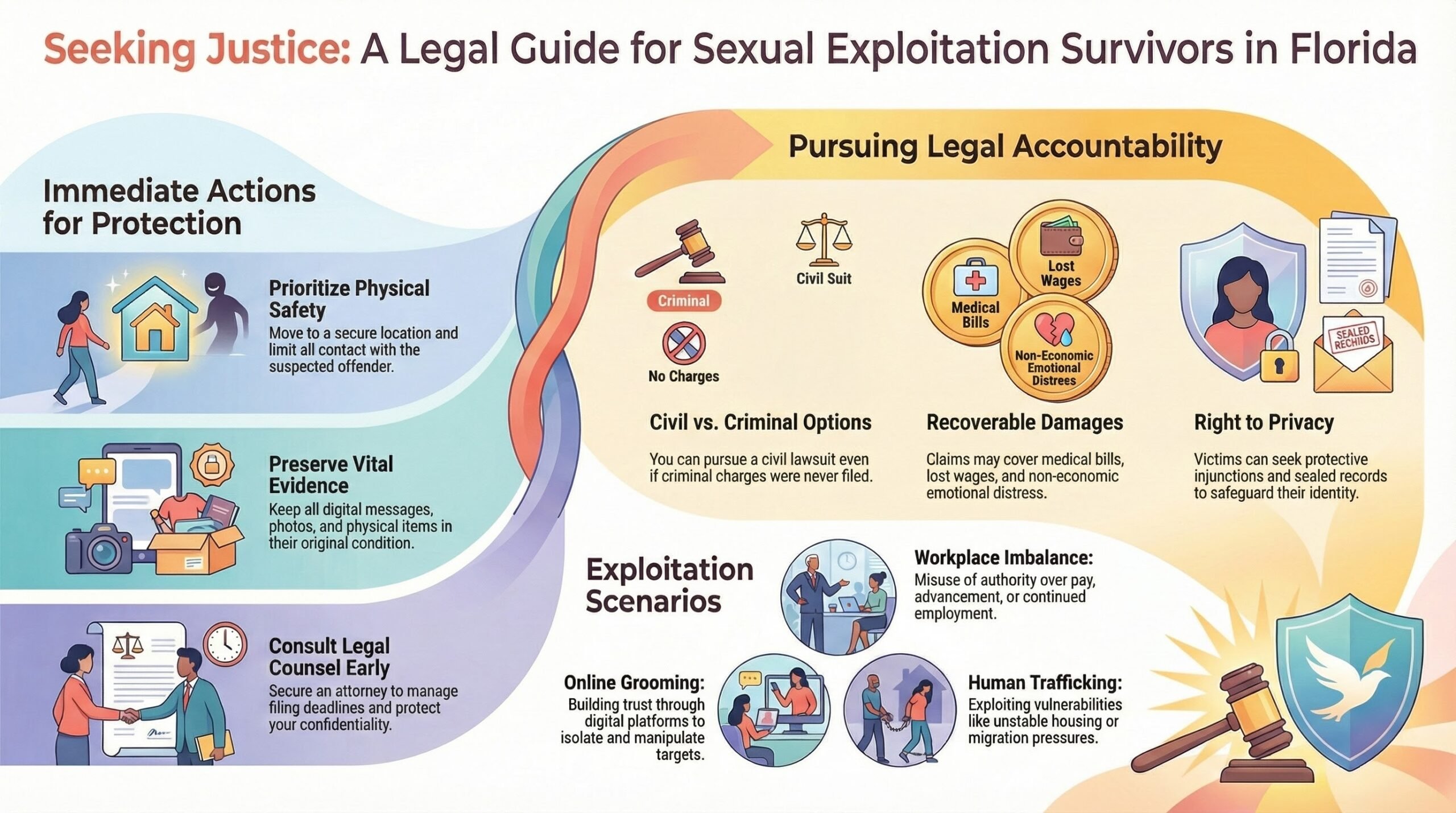
When sexual exploitation has caused profound personal and financial harm, a Florida sexual exploitation lawyer can help evaluate the facts of the case, identify available legal claims, and develop a strategy aimed at securing accountability. Counsel may organize Evidence preservation efforts, protect records, and coordinate with trusted professionals who support recovery and stability.
A structured legal approach can also address workplace misconduct, digital harassment, coercive conduct, and related losses that disrupt a survivor’s safety and livelihood. Through careful case management, the attorney may guide online safety planning, reduce unnecessary contact with harmful parties, and help clients make informed choices at each stage. Strong victim advocacy remains central, ensuring that survivors are heard, treated with dignity, and connected with practical resources that promote long-term well-being.
In service to those seeking to protect themselves and others, legal representation can provide clarity, steady support, and a focused path toward meaningful remedies and lasting accountability.
Understanding Sexual Exploitation Cases in Florida


Because sexual exploitation can arise in several settings, understanding these cases in Florida requires close attention to the specific conduct involved, the relationship between the parties, and the harm that followed. Florida law examines whether a person used coercion, manipulation, authority, or incapacity to obtain sexual activity, images, or other benefits without lawful and voluntary agreement.
OUR CONSULTATIONSARE FREE
START YOUR FREE CASE REVIEW

A careful review often includes Consent laws, the age and capacity of each person, digital communications, medical records, and witness accounts. Courts and counsel may also evaluate patterns of grooming, threats, financial pressure, or misuse of trust, while distinguishing criminal issues from civil claims for damages. In service-oriented communities, informed guidance can help protect dignity, promote accountability, and support fair treatment for those affected.
Early evidence preservation is also important because messages, photographs, surveillance footage, and online data may be altered or lost. A structured legal assessment helps clarify rights, responsibilities, and available remedies under Florida law for survivors.
Common Scenarios When Sexual Exploitation Might Take Place in Florida
Sexual exploitation in Florida may arise in several recurring settings, often involving unequal power, manipulation, or threats that undermine meaningful consent. Common examples include workplace power imbalances, online grooming tactics, human trafficking situations, and coercion within intimate relationships. Recognizing these scenarios helps clarify how exploitative conduct may develop and why prompt legal evaluation may be necessary.
Workplace Power Imbalances
Although many professional settings appear structured and well-regulated, workplace power imbalances can create conditions in which sexual exploitation occurs, particularly where one person controls another’s schedule, compensation, advancement, or continued employment.


In these environments, a supervisor, manager, or owner may misuse authority to pressure a subordinate into sexual conduct by implying benefits for compliance or harm for refusal. Such circumstances may involve coerced consent, where apparent agreement is shaped by fear rather than free choice. Victims may remain silent because of Workplace retaliation, including reduced hours, demotion, exclusion, damaged references, or termination.
Service-minded communities often recognize the importance of protecting vulnerable workers, encouraging safe reporting, and respectful intervention. Careful legal review can help determine whether exploitative conduct violated civil rights, employment protections, or criminal laws in Florida.
Online Grooming Tactics
When contact begins on social media, gaming platforms, messaging apps, or other digital spaces, online grooming can develop gradually and with few outward signs of danger. Offenders may build trust through attention, gifts, secrecy, or emotional dependence, then introduce sexual topics, requests for images, or private meetings. This pattern often reflects digital predation, in which calculated behavior is designed to reduce resistance and isolate the target from supportive adults or peers.
In Florida, these situations may involve false identities, age misrepresentation, or persistent pressure framed as affection. A service-minded reader should recognize how consent manipulation can distort judgment, especially when a minor or vulnerable person believes compliance will preserve connection or safety. Early documentation, careful reporting, and informed legal guidance can help protect affected individuals and support accountability.
Human Trafficking Situations
How human trafficking situations arise in Florida often depends on a mix of vulnerability, coercion, and control rather than a single obvious event. Common scenarios may involve fraudulent job offers, unstable housing, migration pressures, substance dependency, or youth lacking consistent protection. Exploitation can occur in hotels, private residences, agricultural areas, truck stops, clubs, or through digital platforms that conceal organizers and buyers.
Those seeking to serve affected individuals often focus on warning signs, immediate safety, and respectful documentation. Online safety planning may help reduce exposure to recruiters, preserve evidence, and support safer communication. Trauma-informed support is also crucial because many individuals fear authorities, feel shame, or struggle to describe what occurred. A careful, service-centered response can improve access to protection, medical care, and legal remedies.
Coercion In Intimate Relationships
Because coercion in intimate relationships can be masked as loyalty, protection, or financial support, sexual exploitation in Florida may develop within a dating, domestic, or otherwise close personal relationship rather than through an obvious abduction or overt threat. In these cases, a partner may use Relationship control tactics, including isolation, monitoring, debt creation, threats involving children, or pressure to perform sexual acts for money, housing, or drugs.
Service-minded professionals often note that apparent cooperation does not always reflect free choice, especially where fear, dependency, or trauma shapes behavior. Consent under pressure is not meaningful consent. Careful legal and community intervention can help identify patterns of exploitation, protect vulnerable individuals, and connect survivors with trauma-informed advocacy, shelter, medical care, and other practical resources that support safety, dignity, and long-term recovery.

Legal Rights of Sexual Exploitation Victims in Florida
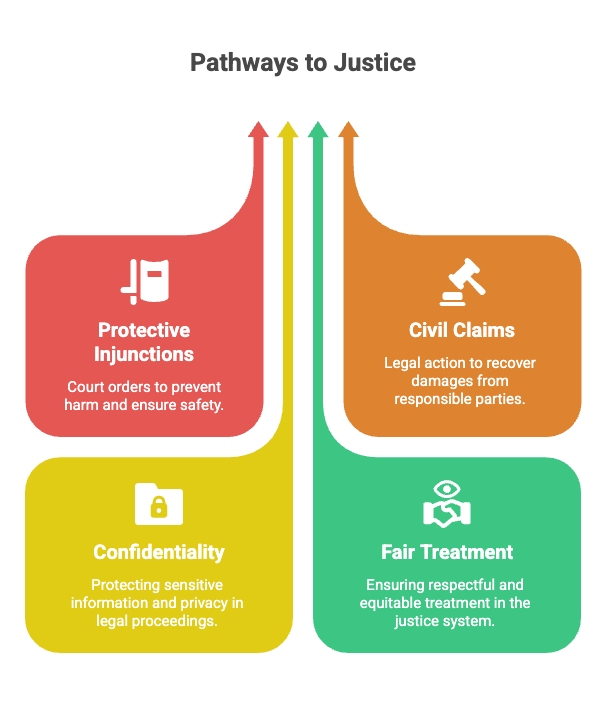
Although the effects of sexual exploitation can be profound, Florida law affords victims important legal rights designed to protect their safety, dignity, and access to justice. These rights recognize the central issues of Consent and Capacity, while also preserving meaningful Reporting Options through criminal, civil, and administrative channels. A service-minded legal approach often emphasizes informed decision-making, privacy, and respectful treatment throughout proceedings.
Key protections commonly include:
- the right to seek protective injunctions and other court-ordered safeguards
- the right to pursue civil claims for damages against responsible parties
- the right to confidentiality in certain records and sensitive proceedings
- the right to be heard and treated fairly within the criminal justice process
Florida law may also support access to victim advocates, restitution, and accommodations that reduce unnecessary trauma. When properly asserted, these protections help victims preserve autonomy, participate in proceedings with greater security, and obtain accountability from those who caused harm under applicable Florida law.
Steps to Take After a Sexual Exploitation Incident in Florida
After a sexual exploitation incident in Florida, the first priority is to secure immediate safety and move to a protected environment when possible. It is also important to preserve evidence carefully, including communications, photographs, medical records, and any other materials that may support a future claim. Prompt contact with legal support can help a victim understand available options, protect legal rights, and take informed next steps.
Seek Immediate Safety
When personal safety is at risk, the first priority is to move to a secure location away from the person or environment involved in the exploitation. This may include contacting a trusted family member, friend, advocate, or crisis resource that can assist with Immediate shelter options and transportation. If danger appears urgent, emergency assistance should be requested without delay.
Supportive action also includes limiting contact with the suspected offender and informing only dependable individuals who can help protect the affected person. Community organizations, faith leaders, and victim service providers may coordinate housing, planning, and basic needs with discretion. Attention should also be given to Safe document storage, including identification, financial records, medication information, and contact numbers. Early safety measures often create the stability needed for later legal, medical, and supportive decisions.
Preserve Evidence Carefully
Once immediate safety has been addressed, careful preservation of evidence can help protect legal rights and support any future criminal or civil action. Clothing, bedding, photographs, messages, emails, social media records, and call logs should be kept in their original condition whenever possible to maintain the integrity of the evidence. Prompt incident documentation may include dates, times, locations, descriptions, and identifying details while memories remain clear.
Screenshots and backups can strengthen digital safety, especially when online coercion, threats, or image sharing are involved. If other individuals observed relevant events or communications, discreet witness contact information should be recorded accurately. Personal items should be stored securely, and digital accounts should be protected with updated passwords and authentication measures. A careful, organized approach can serve both personal recovery efforts and the broader pursuit of accountability and community protection.
Contact Legal Support
Timely legal guidance can help an affected person understand available protections, preserve important claims, and avoid actions that may unintentionally weaken a future case. Prompt consultation with a qualified attorney may also clarify reporting options, confidentiality concerns, and the role of law enforcement in Florida.
Legal support can coordinate Victim advocacy services, safety planning, and referrals to counselors, medical providers, or shelters when needed. Counsel may explain potential civil remedies, assist with protective orders, and address questions about statutory defenses that could arise in related proceedings. Early representation also helps organize documentation, manage communications with insurers or investigators, and reduce unnecessary stress on the affected person and family.
By acting quickly, a survivor is better positioned to make informed decisions, safeguard dignity, and support a more effective path toward accountability and recovery.
How a Florida Sexual Exploitation Lawyer Can Help You Initiate a Case
Many survivors face significant legal and practical barriers at the outset of a claim, and a Florida sexual exploitation lawyer can provide the structure needed to move the process forward. Counsel typically begins by offering confidential legal advice, reviewing basic facts, identifying potential defendants, and explaining filing deadlines, available evidence, and immediate safety options, including victim protection orders when appropriate.
Early legal support often helps a survivor act with greater clarity and purpose.
An attorney may assist by:
- documenting incidents and preserving digital, medical, or witness evidence
- coordinating reports with law enforcement or relevant agencies
- evaluating civil claims, compensation options, and jurisdictional issues
- preparing filings and managing communication with opposing parties
This guidance reduces confusion and allows those supporting survivors to respond in an organized, service-minded way. By building a case carefully from the start, counsel helps protect rights, strengthen credibility, and create a more stable path toward accountability under Florida law.
Long-Term Effects of Sexual Exploitation Trauma
Sexual exploitation trauma can produce lasting emotional and psychological harm, often affecting a person’s sense of safety, stability, and self-worth long after the abuse has ended. It may also create serious challenges in relationships, as trust, intimacy, and communication are frequently disrupted by unresolved trauma. In addition, survivors may experience ongoing physical symptoms and behavioral changes, which can interfere with daily functioning, employment, and overall well-being.
Emotional And Psychological Impact
Although the immediate harm of exploitation may be visible, the long-term emotional and psychological effects often emerge more gradually and can disrupt nearly every aspect of a survivor’s life. Many experience persistent anxiety, depression, shame, emotional numbness, sleep disturbance, and difficulty concentrating, which can impair daily functioning and long-term stability. Trauma triggers may provoke intense fear or dissociation, even in otherwise ordinary settings, while unresolved stress can contribute to self-destructive behaviors or substance misuse.
Those assisting survivors should recognize that recovery is rarely linear and often requires patient, informed support. Access to recovery resources, a timely counseling referral, and practical coping strategies can help survivors manage symptoms, restore a sense of safety, and strengthen resilience over time. Early intervention often improves outcomes and reduces the risk of worsening psychological harm.
Relationship And Trust Challenges
Long after the immediate danger has passed, trauma from exploitation can continue to disrupt a survivor’s ability to form and maintain healthy relationships. Trust may erode gradually, making ordinary interactions feel uncertain, guarded, or unsafe. Survivors may struggle to distinguish genuine care from control, especially when exploitation involves workplace authority, coercion, or digital manipulation. As a result, boundaries can become difficult to assess, communicate, or enforce.
These challenges often affect family connections, friendships, intimate partnerships, and professional relationships. A survivor may withdraw to avoid vulnerability, or remain hyperaware of perceived motives and power imbalances. Supportive advocates, counselors, and legal professionals can help create environments where consistency, respect, and informed choice are prioritized. Over time, dependable support may help survivors rebuild trust, strengthen autonomy, and develop healthier relational expectations.
Physical And Behavioral Effects
Even after exploitation has ended, trauma may continue to produce persistent physical symptoms and behavioral changes that interfere with daily functioning. Survivors may experience headaches, chronic pain, fatigue, digestive problems, and disrupted sleep, often linked to long-term trauma. PTSD Symptoms may include hypervigilance, intrusive memories, panic responses, and difficulty concentrating, which can impair work, caregiving, and decision-making capacities.
Behavioral Change may appear through withdrawal, irritability, avoidance of reminders, substance misuse, or compulsive efforts to regain control. Safety Fears often remain elevated, causing survivors to scan environments, mistrust ordinary interactions, or alter routines in ways that limit independence. For those committed to serving survivors, recognizing these effects supports informed advocacy, compassionate intervention, and access to medical, psychological, and legal resources that promote long-term stability.
What to Expect During a Florida Sexual Exploitation Claim Process
A Florida sexual exploitation claim process typically begins with an initial case evaluation, during which the facts, legal options, and potential grounds for recovery are assessed. It then moves to filing the legal claim and conducting evidence collection and investigation, both of which are critical to establishing liability and documenting harm. Depending on the strength of the evidence and the parties’ positions, the matter may conclude through settlement negotiations or proceed to trial.
Initial Case Evaluation
What should be expected during an initial case evaluation in a Florida sexual exploitation claim? This stage usually begins with a confidential consult, where an attorney listens carefully, gathers core facts, and explains whether the reported conduct may support a civil claim under Florida law. The discussion often centers on timelines, available records, witnesses, and immediate safety or privacy concerns.
During this evaluation, counsel may outline how evidence is preserved, what documentation could strengthen the matter, and which legal issues may affect viability. A service-minded audience often values clarity, dignity, and practical guidance, and those priorities are typically reflected here. The attorney also identifies potential barriers, answers preliminary questions, and provides measured next steps, while avoiding promises about outcomes until counsel completes a fuller review.
Filing The Legal Claim
In many Florida sexual exploitation matters, filing the legal claim marks the point at which preliminary concerns are translated into formal allegations and procedural deadlines begin to control the case. At this stage, counsel generally prepares the complaint, identifies the proper parties, and confirms the statute of limitations so the action is filed within the applicable limits.
The filing also establishes the framework for service, court responses, and early motions. A careful presentation of claims can help protect dignity, promote accountability, and support informed decisions by those seeking to serve and safeguard others. Basic references to evidence types may appear in pleadings when needed to state the claim clearly, yet detailed proof development usually follows later under court rules. Once filed, the matter enters a structured process in which compliance, accuracy, and timeliness carry significant weight for all participants.
Evidence And Investigation
Once a sexual exploitation claim is filed in Florida, attention often turns to the evidence and investigation process that will shape how the allegations are examined and supported. Attorneys and investigators typically gather records, communications, medical documentation, and other materials that may clarify timelines, conduct, and resulting harm. Careful handling of witness statements is important because consistent, well-documented accounts can strengthen credibility and reduce confusion.
The investigation may also involve digital forensics basics, including review of texts, emails, social media activity, photographs, metadata, and device histories. Professionals often work methodically to preserve evidence, avoid contamination, and identify corroborating details. Throughout this stage, the focus remains on building an accurate factual record to assist those seeking accountability, protection, and informed guidance, while respecting privacy, legal procedures, and evidentiary standards under Florida law.
Settlement Or Trial
Although many Florida sexual exploitation claims resolve before a courtroom hearing, the path may proceed toward settlement discussions or trial depending on the strength of the evidence, the parties’ positions, and the extent of disputed facts. During settlement, counsel evaluates damages, liability, and a prudent Negotiation strategy to pursue accountability while reducing additional strain on survivors and their families.
If negotiations fail, the matter may advance to trial, where each side presents testimony, documents, and expert analysis before a judge or jury. Trial preparation often centers on witness credibility, consistency of prior statements, and the reliability of supporting records. Attorneys also prepare survivors for questioning and explain courtroom procedures with care and respect. Whether through settlement or verdict, the process seeks lawful remedies, meaningful protection, and a measured path toward justice and community safety.

Compensation for Florida Sexual Exploitation Damages
Addressing compensation for Florida sexual exploitation damages requires a careful assessment of both economic and non-economic harm. Courts and counsel often examine evidentiary documentation, treatment records, witness statements, and digital proof to measure loss and support accountability. This process seeks not only financial recovery but also practical resources that help survivors rebuild stability and dignity through compassionate legal action.
| Harm Considered | Human Impact |
|---|---|
| Privacy invasion | Trust in daily life may feel permanently shaken |
| Public exposure | Families and communities may struggle to restore safety |
Compensation analysis may also consider future care needs, reputational disruption, and the lasting effects of exploitation on education, relationships, and service to others. In some matters, media responsibility guidelines become relevant when harmful publication or distribution worsens injury. A thorough claim presents facts with care, honors the survivor’s experience, and encourages institutions, insurers, and wrongdoers to respond with responsibility, fairness, and urgency under Florida law.
Economic vs Non-Economic Damages in Florida Sexual Exploitation Cases
In Florida sexual exploitation cases, damages are generally divided into economic losses, which include measurable financial harms such as medical expenses and lost income, and non-economic losses, which address pain, emotional suffering, and related personal harm. This distinction is important because each category is assessed under different forms of proof and may require separate documentation, testimony, and supporting evidence.
Establishing the value of either type of damage often depends on the strength of the record, the credibility of the evidence, and the extent to which the harm can be clearly connected to the exploitation.
Economic Damages Explained
When a Florida sexual exploitation claim is evaluated, economic damages refer to the measurable financial losses caused by the abuse, while non-economic damages compensate for harms that do not have a fixed dollar amount. In practice, these damages often include medical bills, counseling expenses, lost wages, reduced earning capacity, relocation costs, and other documented out-of-pocket losses.
Careful proof is crucial. Attorneys may gather invoices, employment records, treatment estimates, and expert opinions to show how violations of privacy laws and consent boundaries produced direct financial consequences. This analysis helps courts and insurers assign compensation that supports safety, treatment, and long-term stability.
For service-minded families and advocates, understanding economic damages clarifies what assistance may be recovered, strengthens case planning, and promotes informed decisions focused on protection, accountability, and practical recovery for survivors and their households.
Non-Economic Losses Overview
Although economic damages measure documented financial loss, non-economic damages account for the personal harm that cannot be captured by bills, receipts, or wage statements. In Florida sexual exploitation cases, these losses often include emotional distress, loss of dignity, anxiety, shame, and disruption of daily relationships. They recognize the human impact of abuse and the lasting burdens survivors may carry while continuing to serve their families and communities.
These compensation categories are distinct from measurable expenses, yet they remain central to a complete civil claim. Trauma symptoms, including fear, sleep disturbance, and diminished trust, may inform the broader picture of harm. Evidence preservation and careful legal reporting can also support a clear record of how exploitation affected well-being, functioning, and personal security over time, after the abuse occurred.
Proving Damage Value
Because damage value must be tied to credible evidence, Florida sexual exploitation claims are typically built through a structured presentation of both economic and non-economic harm. Economic damages often include medical expenses, counseling costs, lost income, diminished earning capacity, and other measurable financial losses supported by records, invoices, and expert analysis.
Non-economic damages require careful proof because they address pain, humiliation, trauma, and loss of enjoyment of life. In these cases, the burden of proof is met through consistent testimony, treatment history, and professional opinions that connect the exploitation to lasting emotional injury. Courts and insurers also assess witness credibility when weighing the severity, duration, and daily impact of the harm. A disciplined evidentiary approach helps ensure that compensation reflects the full scope of injury and supports meaningful accountability and recovery.
When a Florida Sexual Exploitation Case Goes to Trial vs Settlement
While many Florida sexual exploitation claims resolve through negotiated settlement, some proceed to trial when liability is disputed, damages are contested, or the parties differ sharply on accountability and compensation. Settlement may offer privacy, faster closure, and reduced stress for survivors and families seeking stability and care resources. Counsel often evaluates evidence timelines, available witnesses, institutional records, and the likelihood of securing meaningful compensation without prolonged litigation.
A trial may become necessary when a defendant denies wrongdoing, minimizes harm, or refuses fair terms that reflect the survivor’s needs and the community’s interest in accountability. In that setting, preparation centers on documentation, expert testimony, and jury credibility, since jurors must weigh conflicting accounts and assess the reliability of each source.
Effective legal advocacy helps service-minded families understand risks, costs, and potential outcomes, allowing informed decisions that balance restoration, public responsibility, and the pursuit of justice through either path.
The Statute of Limitations for Florida Sexual Exploitation Cases
When a sexual exploitation claim arises in Florida, the statute of limitations becomes a central issue because it determines how long a survivor or family may have to file a civil lawsuit. Florida law may apply different filing deadlines depending on the survivor’s age, the nature of the misconduct, and when the harm was discovered. Because these rules can be highly fact-specific, careful review of the governing statute is often necessary.
Time limits matter not only for procedural reasons, but also for the fair administration of justice. Evidence preservation becomes more difficult as records disappear, memories fade, and witnesses become unavailable. At the same time, victim trauma can delay disclosure, especially when fear, coercion, or psychological harm affected the survivor’s ability to come forward.
For communities committed to serving others with dignity, understanding these deadlines supports informed action, responsible advocacy, and stronger protection of survivors’ legal rights under Florida civil law and applicable court procedures.
When to Contact a Sexual Exploitation Lawyer in Florida
How soon a person should contact a sexual exploitation lawyer in Florida often depends on the immediate need to protect legal rights, preserve evidence, and assess potential civil claims. Early action can help document communications, medical records, digital materials, and witness information before details are lost or altered. It may also support Urgent reporting to proper authorities or institutions when safety, privacy, or ongoing harm is a concern.
Prompt contact is often advisable after any incident, disclosure, or discovery of exploitative conduct, especially when a minor, vulnerable adult, employee, student, or patient may be involved. A timely consultation can help a person understand reporting options, coordinate supportive next steps, and avoid mistakes that could affect future claims. It is also important when questions arise about legal deadlines, confidentiality, or preservation of electronic evidence.
For those seeking to serve and protect others, acting without unnecessary delay may help safeguard both accountability and recovery.
Why You Need an Experienced Florida Sexual Exploitation Lawyer
Because sexual exploitation claims often involve overlapping civil, criminal, institutional, and evidentiary issues, an experienced Florida sexual exploitation lawyer can provide focused guidance that protects both legal rights and the integrity of a potential case. Such counsel helps survivors, families, and community advocates respond with order, discretion, and purpose during a highly sensitive period.
Experienced representation supports early evidence preservation, careful documentation, and communication with agencies, schools, employers, or care facilities. It also strengthens Risk proofing by identifying procedural errors, limiting harmful disclosures, and reducing actions that could compromise claims. In matters involving fear, intimidation, or retaliation, strategic witness protection measures can help safeguard testimony and encourage cooperation.
A seasoned lawyer also understands applicable deadlines, reporting obligations, and trauma-informed approaches that promote dignity while pursuing accountability. For those committed to protecting others and advancing justice, experienced legal guidance offers structure, credibility, and a disciplined path toward meaningful legal and institutional action.
How to Choose the Right Sexual Exploitation Lawyer for Your Case in Florida
Which attorney is best suited to a sexual exploitation matter in Florida depends on more than general litigation experience, as these cases often require knowledge of trauma-sensitive representation, evidence preservation, institutional liability, and parallel civil or criminal proceedings. A careful selection process should focus on service, judgment, and the ability to protect dignity throughout the claim.
Meaningful evaluation often begins with initial consultation criteria, including responsiveness, clarity about fees, case strategy, confidentiality practices, and willingness to coordinate with counselors, advocates, or law enforcement when appropriate. Client experience reviews may also reveal whether a lawyer communicates respectfully, meets deadlines, and remains attentive during difficult phases of litigation.
It is also prudent to consider trial readiness, familiarity with Florida procedural rules, and experience handling claims against individuals, employers, schools, religious organizations, or other institutions. The right lawyer should combine legal skill with disciplined advocacy that supports accountability, safety, and informed decision-making for all involved.
About The Law Offices of Anidjar & Levine
Once the relevant qualifications have been identified, attention may turn to the law firm itself and the services it provides.
The Law Offices of Anidjar & Levine presents itself as a Florida firm focused on responsive representation, practical guidance, and careful client communication in serious injury and abuse-related matters.
In cases involving sexual exploitation, the firm’s role may include case evaluation, evidence review, coordination with investigators, and pursuit of civil remedies against responsible parties.
Its approach emphasizes Victim advocacy, recognizing that survivors often need both legal guidance and respectful treatment at every stage of the process.
The firm also offers confidential consultations, which may help individuals and families assess options without unnecessary exposure or pressure.
Attention is commonly given to accessibility, timely updates, and preparation for negotiation or litigation when appropriate.
For readers seeking a service-minded legal team, the firm may be an option for informed counsel, structured support, and steady representation under Florida law.
Frequently Asked Questions
Can Undocumented Immigrants File Sexual Exploitation Claims in Florida?
Yes, undocumented immigrants can file sexual exploitation claims in Florida. A person’s immigration status generally does not bar access to courts or available civil remedies under state law. Florida and federal protections may allow survivors to seek damages, injunctions, and other relief. Because these matters are fact-specific, careful legal guidance is important. Service providers and attorneys can help survivors understand options, preserve evidence, and pursue protection with dignity.
Will Pursuing a Claim Affect My Privacy or Public Record Exposure?
Pursuing a claim may affect privacy to some extent, but exposure is often limited through confidential consultations and strategic court requests. Many matters are resolved without trial, reducing public visibility. In appropriate circumstances, attorneys may seek sealed case records or protective orders to safeguard identifying details. Each case differs, and careful planning helps a person serve both personal justice and broader community protection while minimizing unnecessary disclosure of sensitive information whenever possible.
Can I Sue if the Perpetrator Was Never Criminally Charged?
Yes, a person may sue even if the perpetrator was never criminally charged. A Civil Claim is separate from a criminal case, and it serves different purposes for those seeking accountability and protection. The burden of proof is also lower in civil court than in criminal proceedings. As a result, a lack of charges, or even an acquittal, does not automatically prevent recovery of damages or other lawful relief through litigation.
What if the Exploitation Occurred Partly Online or Across State Lines?
Yes, exploitation that occurred partly online or across state lines can still support a civil claim. Courts often examine Digital Jurisdiction Issues, including where harmful conduct occurred, where evidence is stored, and where the victim suffered harm. Interstate Victim Rights may allow claims in more than one forum. An attorney can assess applicable state and federal laws, preserve digital evidence, and help the survivor pursue accountability with clarity and care.
Can Family Members Recover Damages Related to a Victim’s Exploitation?
Yes, family members may recover damages related to a victim’s exploitation, depending on the facts, the harm suffered, and applicable law. Courts may allow claims for wrongful death, loss of support, or emotional injury, and civil recovery options can vary by jurisdiction. A careful review of statute limitations is critical because filing deadlines often affect whether a claim may proceed. Prompt legal evaluation usually best protects affected families.
—————————
Victims of sexual exploitation in Florida often face serious legal, emotional, and financial consequences.
A qualified attorney can help protect their rights, assess available claims, gather evidence, and pursue accountability against responsible parties. Timely legal action may also preserve key evidence and strengthen a case.
The Florida Sexual Assault Lawyer team at The Law Offices of Anidjar & Levine provides experienced representation for individuals seeking guidance and recovery after exploitation, offering clear legal support throughout each stage of the process in Florida.