The Law Offices of Anidjar and Levine helps families protect a child, preserve evidence, and evaluate whether a school, employee, volunteer, or contractor failed in its duty of care.
These cases often involve negligent hiring, weak supervision, ignored warning signs, or failures to report suspected abuse as required by law.
Counsel can coordinate with authorities, secure records, and pursue civil claims for trauma-related losses.
The sections that follow explain crucial rights, steps, and case considerations in Florida.
Learn more by visiting Florida Sexual Assault Lawyer.
Main Takeaways
- A Florida school sexual abuse lawyer investigates how the abuse happened and whether schools ignored warning signs or failed to protect students.
- Claims may involve negligent hiring, poor supervision, inadequate training, unsafe isolation practices, or failures to follow Florida mandatory reporting laws.
- Responsible parties can include school districts, administrators, teachers, coaches, volunteers, contractors, or others with authority or access to students.
- Families should report abuse promptly to law enforcement, school officials, or the Florida Abuse Hotline and preserve messages, records, clothing, and witness information.
- A lawyer can help seek compensation for counseling, medical care, emotional distress, and other losses while protecting the child’s privacy.
How We Can Help With Your Florida School Sexual Abuse Claim
When a student has been harmed in a Florida school setting, experienced legal counsel can help identify the responsible parties, preserve key evidence, and evaluate whether the abuse resulted from negligent hiring, supervision, reporting failures, or other institutional misconduct.
From a service-focused perspective, legal representation supports families by organizing facts, managing communication with schools and insurers, and pursuing accountability through appropriate civil action. Counsel can guide a confidential consultation, explain available options with clarity, and build a strategy centered on the student’s welfare and long-term needs. This assistance often includes evidence preservation, review of school records, witness coordination, and analysis of prior complaints or policy violations.
Attorneys may also work with experts to assess institutional practices and document the effects of the harm. Throughout the process, the objective remains steady: to reduce burdens on the family, protect the student’s interests, and seek meaningful remedies that promote safety, responsibility, and stronger protections for others in the school community.
Understanding School Sexual Abuse Cases in Florida
Because these matters often involve both individual misconduct and institutional failure, understanding school sexual abuse cases in Florida requires close attention to how the abuse occurred, who had authority or control, and whether warning signs were ignored.


These cases often require careful review of school policies, supervisory practices, internal communications, and prior complaints. A proper assessment considers whether staff misconduct was enabled by negligent hiring, poor training, weak supervision, or failures in Mandatory reporting duties under Florida law. It also examines whether administrators, teachers, volunteers, or contractors had access to students without sufficient safeguards.
OUR CONSULTATIONSARE FREE
START YOUR FREE CASE REVIEW

For families focused on protecting others, the legal process can help reveal patterns, promote accountability, and encourage safer educational environments. Early evidence preservation is often important because records, electronic messages, disciplinary files, and witness recollections may shape the claim. A clear understanding of these issues helps victims and advocates assess responsibility, protect students, and support informed action through lawful channels across Florida communities.
Common Scenarios When School Sexual Abuse Might Take Place in Florida
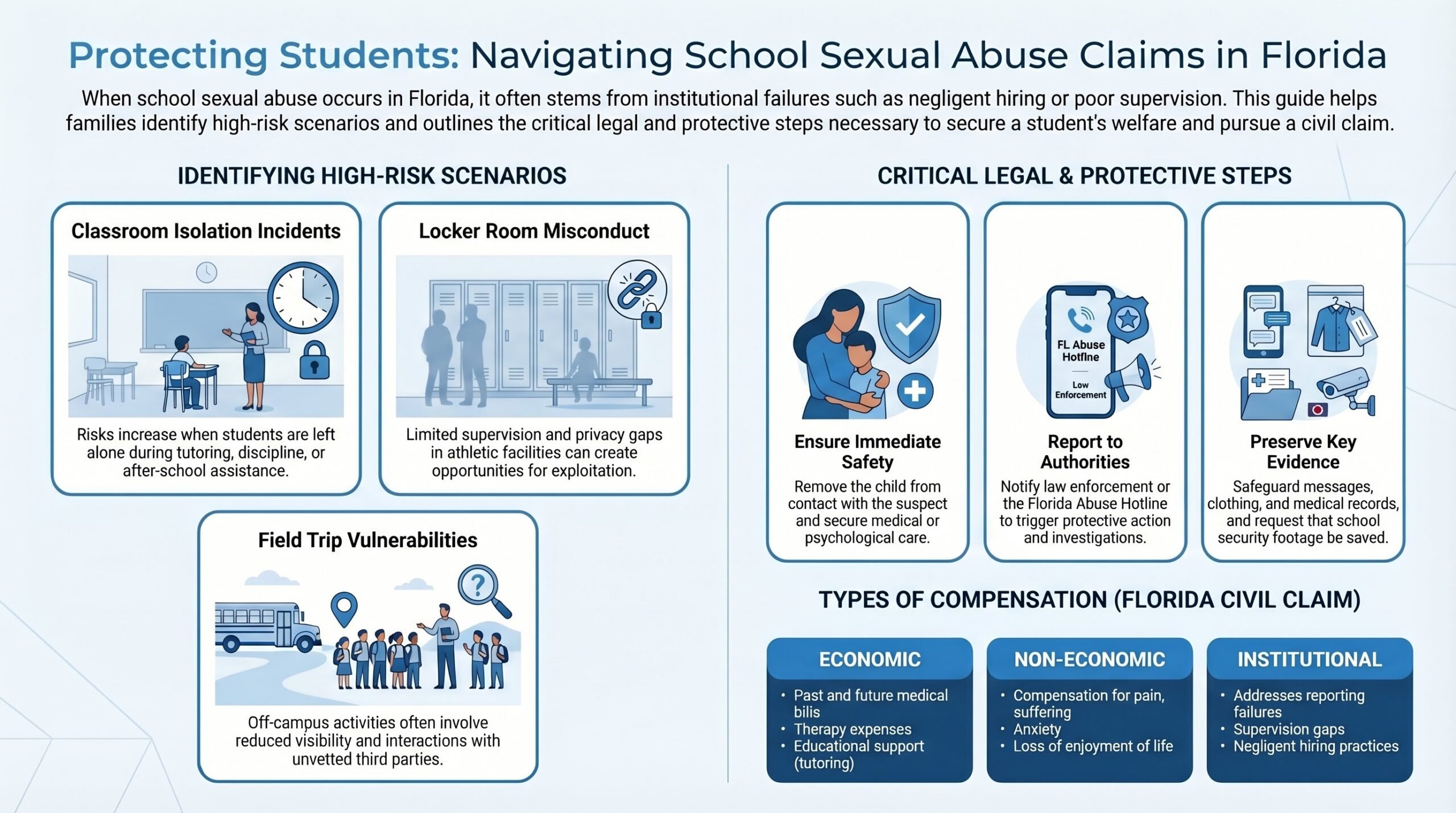
School sexual abuse in Florida may arise in several recurring settings where students are left vulnerable, and oversight is limited. Common examples include classroom isolation incidents, locker room misconduct, abuse during field trips, and failures in staff supervision. Identifying how these circumstances occur can help clarify potential liability and the legal issues that may follow.
Classroom Isolation Incidents


Although classrooms are generally understood to be supervised environments, isolated incidents can still occur when a student is left alone with a teacher, aide, coach, or other school employee behind a closed door or in a room where normal observation is not possible. Such situations may develop during tutoring, discipline, makeup work, or after-school assistance.
In service-oriented communities, careful attention to patterns of student isolation can help identify preventable risks before harm occurs. Warning signs may include repeated one-on-one meetings, covered windows, unusual schedule changes, or staff discouraging interruptions. Bystander reporting failures, whether by employees or students, can allow concerning conduct to continue without timely review. Schools that prioritize open-door practices, visible supervision, and prompt reporting create safer learning conditions.
Clear documentation and consistent oversight support accountability and strengthen protection for vulnerable students statewide.
Locker Room Misconduct
When supervision is limited or privacy controls are poorly managed, locker rooms can become settings where sexual abuse occurs outside the view of other staff or students. In Florida schools, these incidents may involve coaches, aides, volunteers, or peers exploiting changing areas, showers, or isolated storage spaces connected to athletic facilities. The enclosed nature of locker rooms can complicate evidence gathering and delay disclosure, especially when students fear embarrassment, retaliation, or disbelief.
Investigations may also face Witness credibility issues because few people are present, and accounts can conflict. Reporting timeline concerns often arise when a student waits to speak until emotional harm becomes harder to conceal. Schools that serve students responsibly are expected to maintain active supervision, clear access rules, prompt reporting channels, and consistent safeguards that reduce opportunities for misconduct.
Field Trip Abuse
Why can field trips present elevated risk factors for sexual abuse in Florida schools? Off-campus activities may involve transportation, hotel stays, crowded venues, and interactions with volunteers or third parties. These changing environments can reduce visibility and complicate prompt intervention, especially when students are separated into smaller groups or moved between locations during the day.
When abuse is alleged, a service-minded legal response focuses on student safety, mandatory reporting, and careful handling of evidence from the outset. Schools and related organizations may face civil liability if preventable harm occurred or warnings were ignored. Early documentation can preserve timelines, electronic messages, travel records, and location data. Attorneys may also coordinate witness interviews with students, chaperones, drivers, and venue staff to identify patterns, corroborate disclosures, and support accountability for harmed children and families.
Staff Supervision Failures
In many Florida school settings, sexual abuse may occur where staff supervision is inconsistent, poorly structured, or absent during routine parts of the day. Hallway transitions, locker rooms, after-school programs, substitute coverage periods, and unsupervised classrooms can create opportunities for misconduct when accountability is weak and reporting lines are unclear.
These failures may also involve inadequate screening, poor boundary enforcement, or delayed responses to warning signs. Student privacy violations sometimes arise when adults isolate children under the guise of assistance, discipline, or mentoring. When administrators overlook prior complaints, ignore policy gaps, or fail to monitor high-risk areas, the school may breach its duty of care.
A service-minded response emphasizes prevention, prompt intervention, and transparent procedures that protect students, support families, and reinforce a safer educational environment for everyone on campus.
Legal Rights of School Sexual Abuse Victims in Florida
How do Florida laws protect students who have suffered sexual abuse at school? Florida law recognizes strong rights for victims, while placing clear duties on educators, administrators, and institutions entrusted with student safety.
These protections reflect a broader commitment to safeguarding vulnerable children and promoting accountability within school settings statewide.
- Victims may be protected by mandated reporting laws, which require certain school personnel to report suspected abuse.
- Students and families may pursue civil liability claims against schools or responsible parties when negligence contributed to harm.
- Florida law may permit compensation for medical care, counseling, emotional distress, and other abuse-related losses.
- Privacy protections and victim-centered court procedures may help reduce further trauma during legal proceedings.

These rights exist to support recovery, encourage institutional responsibility, and uphold the dignity of harmed students. In many cases, legal protections also reinforce the public duty to prevent future abuse and to serve affected families with care.
Steps to Take After a School Sexual Abuse Incident in Florida
After a school sexual abuse incident in Florida, the first priority is to ensure the student’s immediate safety and remove the child from any further contact with the suspected abuser. The incident should then be reported promptly to law enforcement, school officials, or child protective authorities, as timely reporting can affect both protection measures and future legal action. It is also important to preserve essential evidence, including messages, clothing, medical records, and written accounts, because these materials may support an investigation and any subsequent claim.
Ensure Immediate Safety
Above all, the child’s immediate safety must be secured without delay. Caregivers and trusted adults should remove the child from any contact with the suspected offender and from any setting that feels unsafe. If remaining at home or at school raises concerns, arrangements for safe housing should be considered at once, with attention to stability, privacy, and emotional reassurance.
Immediate protection also includes seeking medical attention when needed and connecting the child with victim advocacy and support services to address urgent needs. Adults serving the child should remain calm, listen carefully, and avoid pressing for extensive details. They should also understand that Mandatory reporting obligations may apply to certain professionals, though the immediate priority remains protection, supervision, and the creation of a secure environment where the child is supported and believed.
Report The Abuse
When a school sexual abuse incident is suspected or disclosed, a prompt report to the proper authorities is a critical next step in protecting the child and preserving the integrity of any investigation. In Florida, reports may be made to law enforcement, the Florida Abuse Hotline, or designated child protective authorities, depending on the circumstances and the child’s immediate needs.
School employees and other professionals should understand mandatory reporting duties because delay can place additional children at risk and hinder institutional accountability. Families and supportive community members can also report concerns in good faith, even when all facts are not yet known. A clear, timely report helps officials assess danger, begin protective action, and determine whether school administrators or third parties may face consequences, including potential civil liability under Florida law.
Preserve Key Evidence
Prompt reporting should be followed by careful preservation of evidence, because the quality of later criminal and civil proceedings often depends on what is documented and retained in the early stages.
Those assisting a student should safeguard clothing, messages, emails, photographs, and medical records without alteration. Incident documentation should be organized by date, time, location, and persons involved, with factual notes kept separate from opinions. Witness accounts should be collected promptly, while memories remain fresh and before outside influence affects recollection.
Schools and families should also request video preservation from security systems, buses, hallways, and nearby facilities before footage is overwritten. Any physical item should be stored securely, labeled clearly, and handled as little as possible to protect the chain of custody. Careful preservation strengthens accountability, supports investigators, and helps protect other students from harm.
How a Florida School Sexual Abuse Lawyer Can Help You Initiate a Case
How does a Florida school sexual abuse lawyer help initiate a case? Counsel provides structure, discretion, and direction at the earliest stage. A lawyer reviews the basic facts, explains legal options, and helps families act in ways that protect the child and the public interest.
The attorney also guides Reporting Procedures and supports Evidence Preservation so critical records, messages, and witness information are not lost.
- Evaluates timelines, school involvement, and potential claims under Florida law.
- Coordinates safe communication with authorities, administrators, and other necessary parties.
- Identifies documents, digital records, and witness accounts that may support the case.
- Prepares filings and next steps with care, accuracy, and respect for confidentiality.
This early guidance helps prevent procedural mistakes and reduces avoidable delays. It also allows those seeking accountability to proceed in an organized, service-minded manner. By managing the initial legal process, counsel helps survivors and families focus on protection, reporting, and informed decision-making from the outset.

Long-Term Effects of School Sexual Abuse Trauma
School sexual abuse trauma may produce lasting emotional and psychological harm, including anxiety, depression, and persistent distress that can continue well into adulthood. Survivors may also experience academic setbacks and social difficulties, as trauma often affects concentration, school performance, and the ability to engage comfortably with peers. In addition, long-term trust and relationship problems are common, as the abuse may alter how a survivor perceives safety, authority, and personal boundaries.
Emotional And Psychological Impact
Although the immediate harm of sexual abuse in an educational setting may not always be visible, the long-term emotional and psychological effects can be profound and enduring. Survivors may experience anxiety, depression, shame, hypervigilance, and persistent mistrust, often long after the abuse has ended. Ordinary events can become trauma triggers, provoking fear, panic, or dissociation without warning. Many individuals develop coping mechanisms that once served a protective role, yet later interfere with emotional regulation, healthy attachment, and daily stability.
Those who support survivors should recognize that recovery is rarely linear. Emotional pain may surface in cycles, shaped by memory, stress, and unresolved grief. Professional intervention, trauma-informed care, and consistent validation can help restore safety and self-worth. Careful legal advocacy may also support recovery by affirming accountability, preserving dignity, and encouraging access to vital therapeutic resources.
Academic And Social Struggles
Because trauma frequently disrupts concentration, memory, and a sense of safety, survivors of sexual abuse in educational settings may experience lasting academic and social difficulties that extend well beyond the period of abuse. Grades may decline as Classroom anxiety, absenteeism, fatigue, and trauma triggers interfere with participation, testing, and assignment completion. Some students struggle to remain present during lessons, while others avoid activities that resemble the context of abuse.
Social functioning may also be affected within school communities. The Bullying aftermath can intensify isolation, particularly when rumors, stigma, or peer retaliation follow disclosure or visible distress. Extracurricular involvement may decrease, and disciplinary issues may arise when trauma responses are misunderstood as defiance. In service-oriented advocacy, recognizing these patterns can support timely intervention, educational accommodations, and safer learning environments for affected students statewide.
Trust And Relationship Difficulties
When sexual abuse occurs within an educational environment, it can alter a survivor’s ability to trust others long after the immediate harm has ended. Relationships may feel unsafe, even when others offer consistent support and care. Boundary violations committed by authority figures can distort expectations about intimacy, protection, and personal safety.
As a result, survivors may struggle to form healthy friendships, maintain family connections, or engage confidently in future professional settings. Communication breakdowns are also common because fear, shame, and hypervigilance can interfere with honest expression and mutual understanding. Some survivors withdraw to avoid further harm, while others become overly accommodating to prevent conflict. These patterns are not character flaws.
They are protective responses shaped by trauma, and they often require patient, informed support from advocates, counselors, and compassionate community members over time.
What to Expect During a Florida School Sexual Abuse Claim Process
A Florida school sexual abuse claim process often begins with an initial case evaluation, during which the facts, potential claims, and legal options are assessed. It then typically moves to the collection of evidence and documentation, followed by the formal filing of the claim and any related investigation by the appropriate parties. Depending on the strength of the evidence and the opposing side’s response, the matter may be resolved through settlement or proceed to trial.
Initial Case Evaluation
How does an initial case evaluation shape a Florida school sexual abuse claim? It establishes direction, clarifies concerns, and helps advocates understand how best to protect a child, support a family, and pursue accountability through a careful legal review.
During this stage, counsel typically considers a credibility assessment, a preliminary timeline of evidence, potential witness statements, and relevant school policies. The evaluation also identifies immediate legal questions, possible institutional duties, and whether the reported conduct may support a civil claim under Florida law. This early review helps determine what guidance should be provided, which concerns require urgent attention, and how communication should proceed with sensitivity and purpose.
For those committed to serving vulnerable people, a thorough initial evaluation offers structure, informed judgment, and a responsible path forward for everyone involved thereafter.
Evidence And Documentation
Following the initial case evaluation, attention often turns to the evidence and documentation that can support a Florida school sexual abuse claim. Careful collection helps preserve facts, protect the affected child, and promote accountability within educational settings.
Relevant materials may include medical records, counseling notes, school communications, incident reports, photographs, and Digital evidence such as texts, emails, social media messages, or security footage. Families are often encouraged to organize dates, names, and locations, while attorneys may help identify patterns through witness timelines and supporting records. Consistent documentation can clarify how concerns were reported, how the school responded, and whether warning signs were overlooked.
When maintained thoughtfully and securely, these materials can strengthen understanding of the harm experienced and support informed decisions centered on the child’s wellbeing and future safety.
Filing And Investigation
Once sufficient information has been gathered, the filing and investigation stage generally begins with formal notice of the claim, a review of applicable deadlines, and an assessment of which parties may bear legal responsibility under Florida law. Counsel may also evaluate Mandated reporting duties, possible institutional failures, and whether a criminal referral has been made or should be anticipated.
During this period, records requests, witness interviews, and coordination with agencies involved in child protection often help clarify what occurred, when decision-makers learned of concerns, and whether proper safety measures were followed. Attorneys typically examine school policies, staffing history, prior complaints, and communication logs to identify patterns of neglect or concealment. The process is designed to support accountability, protect vulnerable students, and prepare a clear factual foundation for the claim.
Settlement Or Trial
Although many Florida school sexual abuse claims resolve through negotiated settlement, some proceed to trial when liability, damages, or institutional knowledge remains disputed. During this stage, counsel evaluates Investigative evidence, witness credibility, and proof of damages to determine whether a settlement serves the survivor’s interests and the broader goal of accountability. Settlement may provide privacy, reduced stress, and a shorter case timeline, while still securing financial recovery for therapy, education, and future care needs.
Trial, however, may become necessary if a school denies responsibility, minimizes harm, or refuses fair compensation. In court, each side presents documents, testimony, and expert analysis, and a judge or jury assesses fault and losses. A careful, service-minded legal approach helps survivors and families pursue resolution with dignity, protection, and informed expectations throughout the process.

Compensation for Florida School Sexual Abuse Damages
When a student suffers sexual abuse in a Florida school setting, the resulting legal claim may seek compensation for a wide range of damages tied to the harm endured. Recovery may depend on available evidence, institutional responsibility, and legal barriers such as liability limits or negligence defenses raised by school districts or related parties.
| Category | What It Addresses | Key Consideration |
|---|---|---|
| Medical care | Treatment, counseling, evaluation | Documented need |
| Educational impact | Tutoring, transfers, support services | School disruption |
| Lasting harm | Trauma symptoms, daily impairment | Professional opinions |
| Institutional conduct | Reporting failures, supervision gaps | Proof of notice |
A careful presentation of claims can help survivors and families access resources that support safety, stability, and long-term healing. In many cases, compensation also reflects the seriousness of trust violations in an educational environment and the preventable failures that enabled abuse. Florida law and case facts will shape the outcome.
Economic vs Non-Economic Damages in Florida School Sexual Abuse Cases
In Florida school sexual abuse cases, damages are generally divided into economic losses, such as medical costs and lost income, and non-economic losses, such as pain, suffering, and emotional distress. The value of these categories is assessed through different forms of evidence, with economic damages tied to documented financial harm and non-economic damages measured through the broader impact on the survivor’s life.
Establishing either type of claim requires clear proof, including records, expert opinions, and other evidence linking the abuse to the asserted losses.
Economic Damages Explained
Because financial losses can continue long after the abuse is discovered, Florida law distinguishes between economic damages and non-economic damages in school sexual abuse cases. Economic damages address measurable costs tied to the harm and its aftermath, helping families and advocates understand what support may be needed.
These damages may include past and future medical bills, therapy expenses, prescription costs, educational support, lost wages, reduced earning capacity, and, when necessary, relocation or safety-related expenses. In some matters, additional costs arise from medical negligence during treatment or from disputes involving insurance coverage for counseling and related care. Documentation often includes invoices, employment records, expert opinions, and school or treatment reports.
Careful calculation is important because a complete claim can protect resources, promote stability, and help affected individuals pursue recovery with practical support and informed planning.
Non-Economic Losses Valued
Non-economic damages address the profound personal harm that cannot be measured through bills, receipts, or wage records. In Florida school sexual abuse cases, these losses recognize suffering that affects dignity, relationships, trust, and daily functioning long after the abuse occurred.
Non-economic damages may include pain and suffering, loss of enjoyment of life, anxiety, depression, humiliation, and other forms of emotional harm. Their value depends on the survivor’s lived experience and the proven impacts on education, family life, community involvement, and future well-being. During settlement negotiation, these damages often require careful evaluation because they are deeply personal rather than strictly financial.
A service-minded legal approach considers how trauma alters a person’s sense of safety and purpose, while seeking accountability that reflects the full human cost of abuse and recovery.
Proving Damage Claims
To recover either economic or non-economic damages in a Florida school sexual abuse case, a claimant must present credible evidence linking the abuse to specific losses and ongoing harm. Economic claims often rely on Medical Records, billing statements, therapy costs, educational disruptions, and proof of reduced earning capacity. Non-economic claims require careful testimony showing pain, trauma, humiliation, and lasting psychological effects.
Courts and insurers typically expect thorough Damages Documentation supported by an Expert Review from treating professionals, vocational experts, or mental health experts. This evidence helps explain the Financial Impact of the abuse on daily functioning, family stability, and future opportunities. A service-minded legal advocate gathers records, preserves witness statements, and, with care, organizes expert findings so the claim reflects both measurable expenses and the full human consequences under Florida law.
When a Florida School Sexual Abuse Case Goes to Trial vs Settlement
In Florida school sexual abuse cases, the decision to proceed to trial or resolve the matter through settlement depends on several case-specific factors, including the strength of the evidence, the extent of the harm suffered, and the willingness of the school or insurer to accept responsibility. Counsel evaluates witness credibility, available records, expert opinions, and the survivor’s goals before recommending a path that best supports accountability and long-term recovery.
Settlement may provide privacy, faster compensation, and reduced emotional strain, especially when liability is clear and meaningful terms are offered. Trial may become necessary when responsibility is denied, damages are minimized, or institutional misconduct warrants public examination. Effective courtroom strategy can increase settlement leverage during negotiations, while the prospect of Jury deliberations introduces uncertainty for both sides.
A careful assessment of risks, costs, and likely outcomes guides this decision. The chosen course should reflect informed judgment, protection of the survivor’s interests, and a commitment to responsible advocacy.

The Statute of Limitations for Florida School Sexual Abuse Cases
Because filing deadlines can determine whether a claim may proceed at all, the statute of limitations is a significant issue in Florida school sexual abuse cases. Florida law sets time limits for civil actions, but those limits can vary based on the survivor’s age, the type of claim, and the facts showing when harm was understood.
In some matters, Tolling provisions may pause the running of time when a survivor is a minor or when fraud, concealment, or incapacity affects timely filing. Discovery rules may also matter, especially when psychological injury or the connection between abuse and later harm was not reasonably recognized until years afterward. These rules reflect a broader public interest in protecting vulnerable individuals and supporting accountability within schools.
Even so, limitation questions remain highly fact-specific. Courts may closely examine records, dates, and statutory language to decide whether a case is timely. Careful attention to these deadlines is critical for preserving legal rights and institutional responsibility.
When to Contact a School Sexual Abuse Lawyer in Florida
When should a survivor or family contact a school sexual abuse lawyer in Florida? Contact should occur as soon as abuse is suspected, disclosed, or discovered, even if facts remain incomplete. Early legal guidance helps preserve documents, electronic records, witness names, and school communications that may later become difficult to obtain. Prompt consultation also supports informed decisions about reporting obligations and available protective steps.
A timely conversation is especially important when a school employee, volunteer, contractor, or student may be involved. Counsel can explain Mandatory reporting timelines, how internal school reports differ from law enforcement reports, and what immediate actions may protect others from harm. Early contact also helps families understand victim confidentiality rules, privacy concerns, and how to limit unnecessary disclosure during a sensitive period.
Even when a survivor is unsure about moving forward, obtaining clear information early can help a family respond carefully, support recovery, and serve the broader school community responsibly and compassionately.
Why You Need an Experienced Florida School Sexual Abuse Lawyer
Although any attorney can explain the basic steps of a civil claim, an experienced Florida school sexual abuse lawyer provides focused knowledge that is often crucial to identifying liability, preserving evidence, and protecting a survivor’s legal rights. These cases frequently involve school policies, mandatory reporting duties, federal oversight, and complicated timelines that can affect both claims and investigations.
Experienced counsel can evaluate whether a district, private school, contractor, or employee failed to act on warning signs or mishandled prior complaints. That analysis matters when defendants raise liability defenses or attempt to shift blame through allegations of wrongful reporting. Skilled representation also helps secure records, witness statements, and electronic evidence before they are lost.
In addition, an attorney familiar with these matters can present survivor testimony with care, reducing unnecessary harm while supporting a clear factual record. This level of preparation serves accountability, strengthens civil claims, and helps institutions answer for preventable failures.
How to Choose the Right School Sexual Abuse Lawyer for Your Case in Florida
Selecting the right school sexual abuse lawyer in Florida can shape both the strength of a civil claim and the survivor’s experience throughout the legal process. Careful evaluation should begin with the attorney’s record handling institutional abuse matters, including claims against public and private schools, staff members, and third parties.
A qualified lawyer should demonstrate skill in Investigating Liability, preserving evidence, interviewing witnesses, and identifying policy failures that allowed abuse to occur. Familiarity with Federal Protections, including Title IX issues, may also matter when school misconduct involves discrimination, reporting failures, or deliberate indifference. Survivors and families often benefit from counsel who communicates clearly, respects privacy, and explains each stage of the case with patience and consistency.
Practical considerations include resources for expert review, knowledge of Florida filing deadlines, and readiness for settlement negotiations or trial. Choosing counsel with trauma-informed judgment and disciplined advocacy can better support accountability, safety improvements, and meaningful recovery.
About The Law Offices of Anidjar & Levine
Because institutional abuse claims demand both legal precision and careful client support, The Law Offices of Anidjar & Levine presents services designed to address the serious and sensitive nature of school sexual abuse cases in Florida.
The firm approaches these matters with disciplined preparation, clear communication, and a commitment to protecting survivors while pursuing accountability from schools and other responsible entities.
Its attorneys evaluate evidence, explain legal options, and guide families through each stage of the claims process with professionalism and respect.
Confidential Consultations allow survivors and their supporters to discuss concerns in a secure setting, while Privacy Considerations remain central to case strategy and client communication.
The firm also emphasizes responsiveness, helping clients receive updates and practical assistance when urgent questions arise.
By combining compassionate service with focused advocacy, The Law Offices of Anidjar & Levine aims to support recovery, safeguard legal rights, and advance claims that may help protect other students from preventable harm.

Frequently Asked Questions
Can School Sexual Abuse Claims Involve Private Schools and Charter Schools in Florida?
Yes, school sexual abuse claims in Florida can involve private schools and charter schools. Private School Coverage may apply when administrators, staff, or volunteers failed to prevent abuse or respond appropriately to reports. Charter School Liability can arise when the school, governing body, or affiliated entities neglect supervision, hiring, or safety duties. Each case depends on the facts, applicable law, and whether the responsible parties breached obligations owed to students and families.
Are Anonymous Reports Useful Before Filing a Florida School Sexual Abuse Lawsuit?
Yes, anonymous reports can be useful before filing a Florida school sexual abuse lawsuit. Their value in anonymous reporting lies in alerting authorities, documenting patterns of misconduct, and protecting others from further harm. However, such reports alone may not establish lawsuit readiness because formal evidence, witness accounts, and documented damages are usually required. A careful review by qualified counsel helps determine whether anonymous information can support a stronger, service-oriented legal response.
Can Social Media Evidence Affect a School Sexual Abuse Case in Florida?
Yes, social media evidence can affect a school sexual abuse case in Florida. Courts may consider posts, messages, photos, and metadata when they support credibility, timelines, notice, or patterns of conduct. Digital forensics may help authenticate disputed content and recover deleted material. However, privacy limitations, evidentiary rules, and relevance standards restrict what can be used. Careful preservation and lawful collection best serve those seeking accountability, protection, and informed judicial review.
What Role Do School Surveillance Videos Play in Abuse Investigations?
School camera footage can provide a timely, objective record of hallways, entrances, and other common areas, helping investigators verify movements, timelines, and witness accounts. Its value often lies in strengthening the credibility of the investigation, especially when statements conflict or memories are incomplete. Video may also reveal gaps in supervision, policy violations, or potential corroboration. However, footage is only one part of a thorough inquiry, and investigators must carefully assess its scope, quality, and limitations.
Can Multiple Victims Join Together in One Florida School Abuse Case?
Yes, multiple victims may act jointly in one Florida school abuse case when their claims involve related facts, similar misconduct, or common defendants. Joint litigation can improve efficiency, reduce inconsistent rulings, and strengthen presentation through shared evidence. Courts still examine whether combined claims remain fair to each person involved. In some circumstances, separate cases are preferred to protect individual interests, address privacy concerns, or address distinct damages that require individualized proof and testimony.
—————————
School sexual abuse cases in Florida demand prompt action, careful documentation, and informed legal guidance.
Victims and their families may have important rights under state law, including the ability to pursue accountability against responsible individuals and institutions.
A qualified Florida school sexual abuse lawyer can evaluate the facts, protect the victim’s interests, and guide the claim through each stage of the legal process.
The Florida Sexual Assault Lawyer team at The Law Offices of Anidjar and Levine can provide experienced representation in these sensitive matters.