Law Offices of Anidjar and Levine helps survivors protect safety, preserve evidence, and assess potential claims involving boundary violations, coercion, confidentiality breaches, and institutional negligence.
Counsel typically gathers records, secures communications, coordinates experts, and manages contact with insurers, licensing boards, healthcare entities, and opposing counsel.
Legal guidance can also support reporting to law enforcement or regulators while protecting privacy and dignity.
The sections below explain the main rights, immediate steps, and how these cases proceed in Florida.
Learn more by visiting a Florida Sexual Assault Lawyer.
Main Takeaways
- A Florida psychiatrist sexual abuse lawyer evaluates facts, identifies viable claims, and explains options while protecting your privacy and dignity.
- These cases often involve boundary violations, coercion, confidentiality breaches, HIPAA issues, and exploitation of the psychiatrist-patient power imbalance.
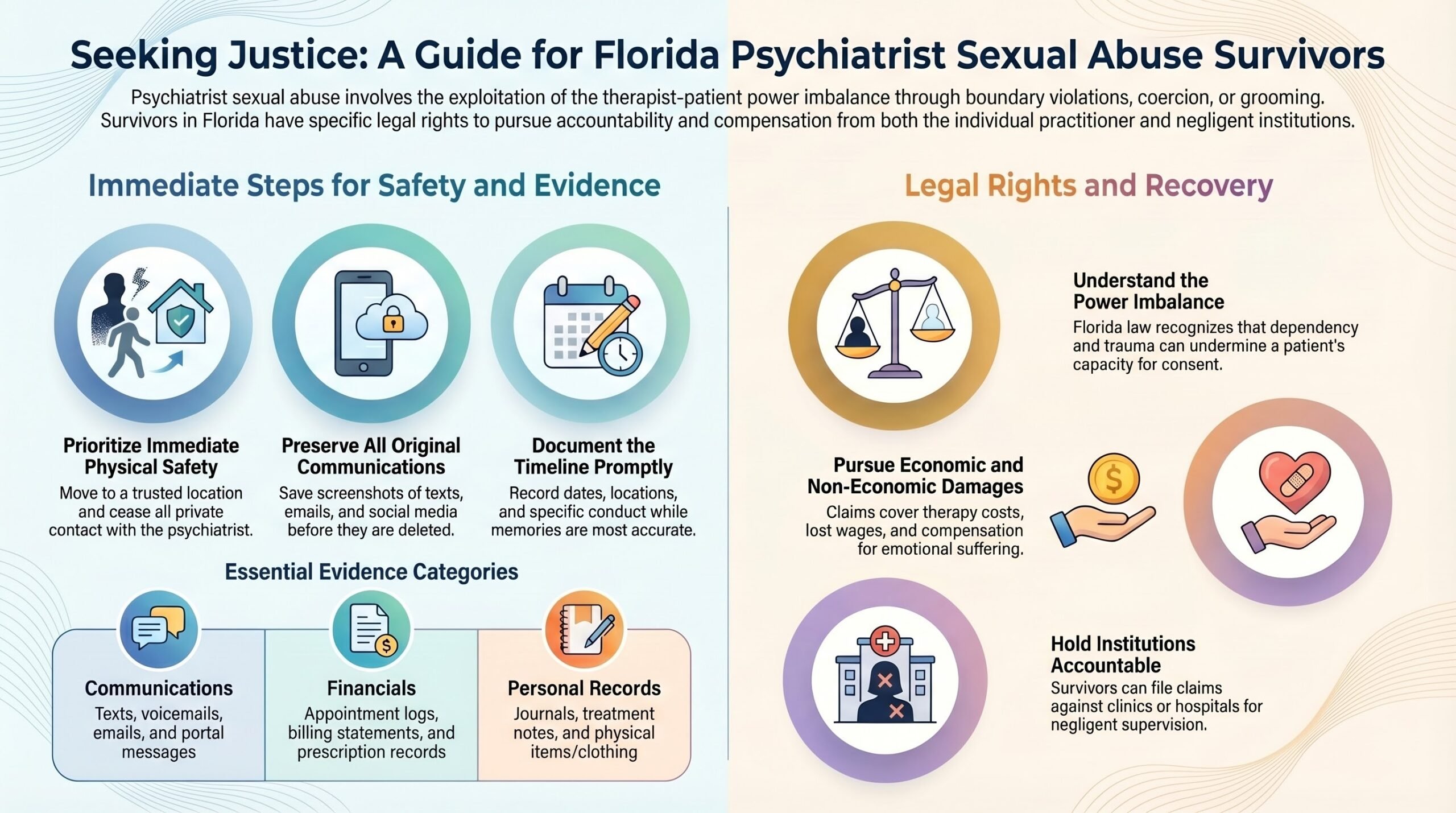
- Immediate priorities are safety, avoiding further private contact, notifying appropriate facility staff, and preserving messages, records, billing logs, and timelines.
- A lawyer can help report misconduct to law enforcement, licensing boards, healthcare entities, and insurers without jeopardizing related civil claims.
- Potential recovery may include therapy costs, damages for pain and suffering, and claims against clinics or hospitals for negligent supervision.


How We Can Help With Your Florida Psychiatrist Sexual Abuse Claim
When a psychiatrist violates the trust inherent in the therapeutic relationship, a Florida psychiatrist sexual abuse lawyer can help evaluate the facts, identify viable legal claims, and explain the options available under state law. Counsel may gather records, interview witnesses, preserve communications, and coordinate with appropriate experts to carefully assess harm and document patterns of misconduct.
Legal support often includes identifying Confidentiality violations, HIPAA breaches, improper boundaries, coercive conduct, and related institutional failures. An attorney may communicate with insurers, licensing bodies, healthcare entities, and opposing counsel so the affected person can focus on safety, recovery, and family responsibilities.
Representation may also involve advising on reporting options, protecting privacy during the process, and seeking accountability from all responsible parties. Throughout the matter, effective counsel serves with diligence, discretion, and respect. The goal is to provide clear guidance, reduce uncertainty, and pursue a result that honors dignity, protects others, and promotes lasting community trust.
OUR CONSULTATIONSARE FREE
START YOUR FREE CASE REVIEW

Understanding Psychiatrist Sexual Abuse Cases in Florida
A clear understanding of psychiatrist sexual abuse cases in Florida begins with the nature of the psychiatrist-patient relationship, which is defined by trust, dependency, and a strict duty to maintain professional boundaries. When that duty is violated, the harm often extends beyond a single act and may undermine a patient’s safety, dignity, and capacity to seek future care.
Florida cases commonly involve a careful review of professional ethics, licensing standards, medical records, and communications. The central issue is whether a psychiatrist exploited a power imbalance for personal gratification rather than therapeutic purpose. Investigators and counsel may also examine grooming behavior, coercion, manipulation, and confidentiality breaches that deepen emotional injury and obstruct reporting. Because many patients are receiving treatment for vulnerable conditions, the legal system may treat these violations as especially serious.
A service-minded approach recognizes that informed advocacy can help recover patients, support accountability, and reinforce ethical care throughout Florida’s mental health system.
Common Scenarios When a Psychiatrist’s Sexual Abuse Might Take Place in Florida
Sexual abuse by psychiatrists in Florida may arise in several recurring settings where professional authority and patient vulnerability intersect. Common examples include misconduct during therapy sessions, abuse within inpatient facilities, improper online communications that erode clinical boundaries, and exploitation during medication management appointments. Identifying these scenarios helps clarify how abusive conduct may develop and why prompt legal review is often necessary.
During Therapy Sessions
Because therapy sessions often involve private, emotionally charged conversations, they can create circumstances in which a psychiatrist exploits trust, authority, and a patient’s psychological vulnerability for sexual purposes. In this setting, a clear power imbalance may undermine patient consent, especially when the patient relies on the psychiatrist for guidance, diagnosis, medication management, or emotional stability.
Misconduct during therapy may include sexual comments, suggestive questions unrelated to treatment, unnecessary physical contact, requests for secrecy, or coercive behavior disguised as clinical care. A psychiatrist may also blur professional boundaries by encouraging dependency, framing sexual acts as therapeutic, or exploiting disclosures about trauma, loneliness, or past abuse. For those committed to protecting others, recognizing these warning signs can help support survivors, preserve dignity, and encourage timely reporting and legal accountability under Florida law.
Inpatient Facility Misconduct
Similar abuses may also arise in inpatient psychiatric facilities, where patients often face heightened dependence, limited privacy, and reduced control over their daily environment. In these settings, vulnerable individuals may rely on psychiatrists and other personnel for medication, supervision, privileges, and discharge planning, creating conditions where coercion can be harder to recognize or report.
Examples of staff misconduct may include sexual comments, unnecessary physical contact, exposure during examinations or observation, or exploiting sedation, isolation, or confusion. Misconduct may also occur when a provider disregards patient boundaries during nighttime rounds, seclusion checks, transportation, or assistance with hygiene. For those committed to protecting others, recognizing these patterns can support timely reporting, institutional accountability, and safer treatment environments for patients receiving inpatient psychiatric care throughout Florida facilities.
Boundary Violations Online
Although digital communication can support continuity of care, boundary violations may develop when a psychiatrist uses email, text messages, social media, telehealth platforms, or private messaging in ways that shift the relationship from professional to personal or sexual. Such conduct may include late-night conversations, flirtatious comments, requests for personal photos, or secret communications outside documented channels.
These behaviors can exploit Power dynamics, especially when a patient seeks guidance, safety, and trust during vulnerable periods. In Florida, online misconduct may also involve grooming through repeated emotional disclosures, suggestive compliments, or invitations to connect on personal accounts. Warning signs often include secrecy, favoritism, and communication unrelated to treatment goals. Service-minded advocates may help identify harmful patterns, preserve evidence, and support accountability when digital boundaries are crossed and patients are harmed.
Medication Appointment Abuse
When medication management visits occur in brief, private settings, the same clinical structure that supports treatment can also be misused to facilitate sexual abuse. In Florida, these appointments may involve discussions of side effects, sleep, anxiety, or intimate symptoms, creating opportunities for consent violations disguised as medical necessity. A psychiatrist may exploit trust by requesting unnecessary physical contact, invasive questions, or private disclosures unrelated to treatment.
Some survivors describe coercion tactics tied to prescription access, dosage changes, or threats of hospitalization. Others report grooming through repeated boundary testing during routine follow-ups. Because patients often depend on medication stability, they may feel unable to object or leave. Careful documentation, prompt reporting, and informed legal guidance can help protect vulnerable individuals and support accountability within psychiatric care settings and broader communities.


Legal Rights of Psychiatrist Sexual Abuse Victims in Florida
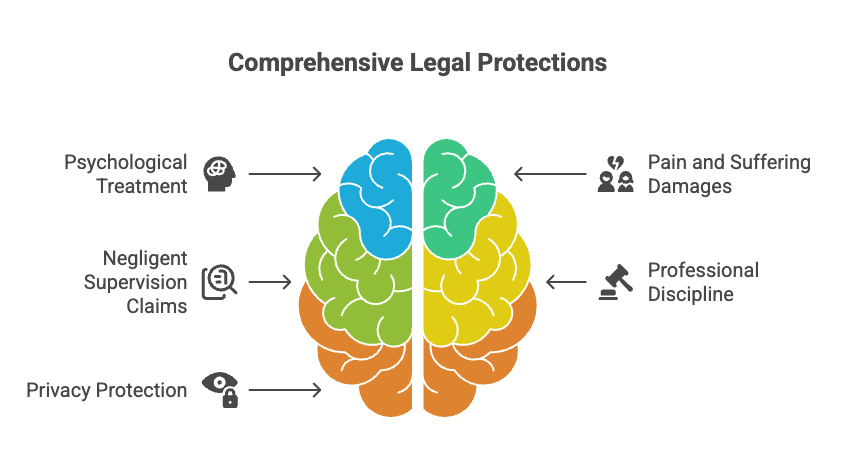
Because Florida law recognizes the profound imbalance of power in a psychiatrist-patient relationship, victims of psychiatrist sexual abuse may have important legal rights to pursue accountability and financial recovery. Florida courts may examine consent capacity, recognizing that trauma, medication, dependency, and clinical authority can undermine meaningful agreement. Civil claims may seek damages for therapy costs, lost income, emotional suffering, and other related harm. In some circumstances, professional licensing rules, institutional negligence standards, and mandated reporting duties may also shape liability and oversight.
Florida law may hold abusive psychiatrists and negligent institutions accountable when power, dependency, and trauma undermine meaningful patient consent.
- Compensation for psychological treatment and related expenses
- Damages for pain, suffering, and diminished quality of life
- Claims against clinics, hospitals, or employers for negligent supervision
- Professional discipline through licensing boards and regulatory agencies
- Protection of privacy interests during sensitive legal proceedings
These rights can help protect vulnerable patients, reinforce ethical standards, and support safer mental health care for the communities they serve throughout Florida.
Steps to Take After a Psychiatrist’s Sexual Abuse Incident in Florida
After a psychiatrist’s sexual abuse incident in Florida, the first priority is to confirm immediate safety and remove the individual from any ongoing risk. It is also important to preserve vital evidence, including communications, treatment records, and personal notes that may support a future claim or investigation. Once safety is secured and evidence is protected, reporting the misconduct and seeking legal counsel are often the next necessary steps.
Ensure Immediate Safety
If an incident of sexual abuse by a psychiatrist has just occurred, the first priority is to secure immediate physical safety and leave the setting as soon as possible. The person should move to a trusted location, contact emergency services if danger remains, and seek assistance from a reliable friend, family member, advocate, or crisis resource.
Immediate victim protection may also include avoiding further private contact with the psychiatrist and, when appropriate, notifying facility security or administrators. Survivor support services can help coordinate crisis counseling, transportation, and safe housing if needed. In Florida, mandatory reporting obligations may arise for certain professionals or institutions, particularly when vulnerable adults or minors are involved.
Clear documentation guidance from advocates or attorneys may assist with next steps, while keeping the focus on stabilizing safety, health, and access to compassionate support.
Preserve Critical Evidence
Once immediate safety has been addressed, preserving evidence should begin as soon as reasonably possible, since it can affect both criminal investigations and civil legal claims in Florida. A survivor or supportive advocate should keep all potentially relevant materials in their original form, including messages, appointment logs, billing statements, journals, clothing, and photographs. Digital screenshots may help capture texts, emails, call histories, portal messages, or social media contacts before information changes or disappears.
Careful preservation of the timeline is also important, with dates, locations, witnesses, and specific conduct recorded promptly and consistently. Confidential records, including treatment notes or discharge paperwork, should be stored securely without alteration. Maintaining documentation integrity strengthens the factual record and can help professionals, agencies, and courts evaluate what occurred while protecting the survivor’s dignity, privacy, and long-term interests.
Report And Seek Counsel
Because a psychiatrist’s sexual abuse may implicate criminal law, professional licensing rules, and civil liability at the same time, prompt reporting and informed legal guidance are often essential steps in Florida. A survivor may report misconduct to law enforcement, the Florida Board of Medicine, a hospital, clinic, or insurer, depending on where the abuse occurred and who employed the psychiatrist. Counsel can explain confidentiality reporting obligations, potential time limits, and options for protecting identity where possible.
An attorney may also coordinate with trauma-informed professionals to support safety planning, documentation, and communications that reduce further harm. Early legal advice can help preserve claims, avoid damaging statements, and organize records for criminal or civil proceedings. These measures strengthen accountability and assist those working to protect others from similar abuse.
How a Florida Psychiatrist Sexual Abuse Lawyer Can Help You Initiate a Case
When a patient is prepared to take legal action, a Florida psychiatrist sexual abuse lawyer can provide the structure and guidance needed to begin the process properly. Counsel often explains filing options, deadlines, confidentiality protections, and access to medical records, helping the patient move forward in an orderly, service-minded way that supports accountability and community safety.
A lawyer may assist by:
- reviewing the facts and identifying potential legal claims
- preserving messages, notes, billing files, and other evidence
- requesting records and documenting professional boundary violations
- communicating with insurers, licensing bodies, and opposing counsel
- preparing a complaint and explaining each procedural step clearly
This early support helps reduce confusion and protects the integrity of the case. It also allows the patient to make informed decisions without unnecessary pressure. By organizing evidence, clarifying rights, and managing required filings, counsel creates a practical path toward justice while respecting the patient’s privacy, dignity, and desire to prevent harm to others.
Long-Term Effects of Psychiatrist Sexual Abuse Trauma
Psychiatrist sexual abuse trauma may produce long-term emotional and psychological harm, including anxiety, depression, shame, and persistent distress that interferes with daily functioning. It may also contribute to serious relationship and trust issues, making it difficult for a survivor to establish boundaries, maintain intimacy, or feel secure in professional and personal settings. In some cases, the trauma is further reflected in lasting physical symptoms, such as sleep disruption, chronic pain, headaches, or other stress-related conditions.
Emotional And Psychological Harm
The emotional and psychological harm caused by sexual abuse in a psychiatric setting often extends far beyond the period of direct misconduct. Survivors may experience persistent trauma symptoms, including panic, shame, dissociation, depression, and intrusive memories that disrupt daily functioning and personal stability.
Because the abuse occurs within a therapeutic context, the resulting injury is often intensified by emotional manipulation and a profound power imbalance. A PTSD diagnosis may follow, along with sleep disturbance, hypervigilance, self-blame, and impaired concentration. Some individuals develop anxiety disorders, substance misuse, or thoughts of self-harm. Others struggle with identity disturbance, emotional numbness, and diminished self-worth.
For those seeking to support recovery, it is important to recognize that these effects are serious, enduring, and deserving of compassionate, trauma-informed care and meaningful legal accountability.
Relationship And Trust Issues
Erode is often the most accurate verb for what sexual abuse by a psychiatrist does to a survivor’s ability to trust. Relationships may become marked by suspicion, guardedness, and persistent uncertainty about another person’s motives. Because the abuse occurred within professional power dynamics, survivors may struggle to distinguish care from manipulation in later personal, medical, or therapeutic settings.
Trust injuries also affect consent boundaries. A survivor may second-guess instincts, tolerate troubling conduct, or withdraw from closeness altogether to avoid further exploitation. Family members, caregivers, faith communities, and service professionals should recognize that these responses are not character flaws. They are adaptive efforts to stay safe after profound betrayal. Over time, unresolved mistrust can interfere with intimacy, cooperation, and help-seeking, making informed legal support and trauma-sensitive advocacy especially important for long-term recovery.
Lasting Physical Symptoms
Because trauma is not confined to memory or emotion, long-term sexual abuse by a psychiatrist may also produce lasting physical symptoms that disrupt daily functioning and overall health. Survivors may experience chronic pain, headaches, gastrointestinal distress, sleep disturbance, fatigue, and elevated stress responses that persist long after the abuse ends.
These Somatic Symptoms often reflect the body’s prolonged state of alarm, not personal weakness or exaggeration. In some cases, survivors require long-term medication to manage anxiety, depression, insomnia, or related conditions that affect physical well-being. Medical problems may also worsen when fear, shame, or mistrust delays treatment.
Those who support survivors should recognize that physical suffering can be a direct consequence of abuse, and that informed legal and clinical guidance may help restore safety, dignity, and stability over time.
What to Expect During a Florida Psychiatrist Sexual Abuse Claim Process
A Florida psychiatrist’s sexual abuse claim process often begins with an initial case evaluation, during which the facts, potential legal issues, and available options are carefully reviewed. It then proceeds to file the claim and conduct evidence collection and investigation, which may include records, witness statements, and other supporting documentation. Depending on the strength of the evidence and the parties’ positions, the matter may conclude through settlement or proceed to trial.
Initial Case Evaluation
Often, the initial case evaluation serves as the point at which a Florida psychiatrist’s sexual abuse claim begins to take shape in practical and legal terms. During this meeting, counsel generally listens carefully, outlines confidentiality expectations, and gathers a focused timeline of treatment, communications, and harmful conduct.
Attention is often given to Trauma documentation, including medical records, therapy notes, journals, messages, and witness information that may help clarify patterns of exploitation and resulting harm. The evaluation also reviews legal options in a measured way, helping survivors and supportive families understand potential remedies, deadlines, and institutional responsibilities without pressure.
A careful attorney may identify immediate protective concerns, recommend preserving evidence, and explain how compassionate advocacy can support accountability, informed decision-making, and the broader goal of protecting others from similar abuse.
Filing The Claim
Once the initial evaluation has clarified the factual background and legal issues, the filing stage generally begins with preparation of a formal claim that identifies the parties, outlines the alleged misconduct, and states the harm said to have resulted from the psychiatrist’s abuse.
Counsel then determines the proper court, frames the legal causes of action, and files the pleading within applicable statute deadlines. This stage also includes required notices, service on defendants, and careful attention to privacy concerns that may affect the handling of sensitive records.
Although evidence gathering continues in a limited organizational sense, the primary purpose here is to place the matter before the court and preserve the survivor’s rights. For those committed to serving others, timely filing can also promote accountability, encourage safer professional boundaries, and support broader protection for vulnerable patients statewide.
Evidence And Investigation
During the evidence and investigation stage, counsel works to assemble records, witness information, and other material that may substantiate the alleged abuse and its effects. This often includes treatment notes, appointment histories, billing files, licensing records, and digital records such as emails, texts, and portal messages.
Counsel may also identify Witness statements from family members, coworkers, or other patients who observed changes in behavior, disclosures, or boundary violations. Investigators may review timelines, preserve relevant communications, and consult qualified professionals when interpretation of psychiatric practices is necessary.
Throughout this phase, attention is given to accuracy, confidentiality, and trauma-informed handling of sensitive information. A careful investigation helps clarify what occurred, supports accountability, and equips those assisting survivors to respond with diligence, respect, and a commitment to meaningful protection for others.
Settlement Or Trial
If the evidence supports liability and damages, a Florida psychiatrist’s sexual abuse claim may proceed toward negotiated settlement or, when resolution cannot be reached, trial. Counsel generally evaluates the strength of the evidence, the credibility of witnesses, insurance coverage, and the survivor’s goals before recommending a path. Strong proof can increase Negotiation leverage, encouraging meaningful offers without requiring courtroom testimony. Settlement may provide privacy, faster compensation, and reduced emotional strain, which can help families continue to serve and support affected loved ones.
When settlement discussions fail, trial strategy becomes central. Attorneys prepare exhibits, expert testimony, and direct examination to present a clear account of misconduct and harm. The defense may contest liability, causation, or damages, making careful preparation necessary. Whether resolved by agreement or verdict, the process focuses on accountability, protection of others, and fair compensation under Florida law.
Compensation for Florida Psychiatrist Sexual Abuse Damages
Because psychiatric sexual abuse can cause profound personal and financial harm, compensation in a Florida civil claim may include damages for emotional distress, psychological treatment, medical expenses, lost income, and other losses tied to the misconduct.
A careful claim often depends on damage evidence that shows how the abuse disrupted daily functioning, relationships, and the ability to serve family, work, or community. Records, expert opinions, and witness accounts may help connect Emotional distress and related harm to the psychiatrist’s conduct.
| Proof Source | Purpose |
|---|---|
| Treatment records | Show trauma symptoms and ongoing care |
| Employment and witness evidence | Show reduced functioning and life impact |
Courts and insurers may evaluate both past and continuing harm, including therapy needs, medication costs, and documented setbacks in employment or education. Clear documentation can strengthen accountability and help secure resources for recovery, safety, and meaningful support. This process may help survivors regain stability and continue serving others with dignity.
Economic vs Non-Economic Damages in Florida Psychiatrist Sexual Abuse Cases
Florida psychiatrist sexual abuse cases may involve both economic damages, such as medical expenses, therapy costs, and lost income, and non-economic damages, including pain and suffering, emotional distress, and loss of enjoyment of life. This distinction is important because each category addresses a different form of harm and may require different types of supporting evidence. In Florida, proving these damages often depends on treatment records, financial documentation, expert testimony, and other evidence that shows the extent of the losses suffered.
Economic Damage Categories
Damage analysis in psychiatrist sexual abuse cases generally begins with a clear distinction between economic and non-economic losses. Economic damages concern measurable financial harm tied to treatment, recovery, and daily functioning. These categories help families, advocates, and legal teams document concrete needs with care and accuracy.
Common examples include Medical bills for hospital visits, medications, and related care, as well as therapy costs for ongoing counseling and psychiatric treatment. Lost wages may apply when a survivor misses work, loses employment, or faces reduced earning capacity because of trauma-related conditions.
Support expenses can include transportation to appointments, childcare during treatment, household assistance, and other necessary services. In Florida claims, records, invoices, employment documents, and expert assessments often support these calculations, allowing compensation requests to reflect actual financial burdens in a disciplined and service-oriented manner.
Non-Economic Losses Explained
While economic losses focus on measurable financial costs, non-economic damages address the personal and psychological harm that cannot be captured through bills or wage records. In Florida, psychiatrist sexual abuse cases, non-economic damages may include pain, suffering, emotional distress, humiliation, anxiety, and loss of enjoyment of daily life. These losses recognize how abuse can disrupt relationships, spiritual well-being, trust, and the ability to serve family, work, and community with stability.
Because these injuries are deeply personal, they reflect changes in dignity, peace of mind, and overall quality of life rather than direct expenses. A legal claim may, in turn, seek accountability for enduring trauma, sleep disruption, fear, and the diminished capacity to participate fully in meaningful activities. This category exists to acknowledge human harm with seriousness, respect, compassion, and fairness.
Proving Damages In Florida
Although every case turns on its specific facts, proving damages in a Florida psychiatrist sexual abuse claim generally requires credible evidence that connects the misconduct to both measurable financial losses and substantial personal harm. Economic damages may include therapy expenses, medication costs, lost income, reduced earning capacity, and other out-of-pocket losses documented through bills, employment records, and expert analysis.
Non-economic damages address psychological injuries, pain, suffering, humiliation, and diminished quality of life. To present clear proof of harm, counsel often relies on therapy records, treating provider opinions, and testimony from mental health experts who can explain Trauma impacts over time. Family observations, journals, and workplace evidence may also support causation and severity. Careful documentation helps courts and insurers evaluate the full extent of injury and fair compensation available.
When a Florida Psychiatrist Sexual Abuse Case Goes to Trial vs Settlement
Because each psychiatrist’s sexual abuse claim presents distinct facts, evidence, and legal risks, the decision to pursue trial or accept a settlement in Florida typically depends on a careful evaluation of liability, damages, credibility, and the survivor’s objectives. Counsel often begins with risk evaluation and evidence preservation, reviewing records, witness accounts, expert opinions, and institutional conduct to determine whether negotiations or courtroom presentation may better advance accountability and recovery.
Settlement may offer privacy, faster resolution, and reduced emotional strain, especially when liability is strong and fair compensation is available. Trial may become appropriate when defendants deny misconduct, dispute damages, or refuse meaningful terms. In those circumstances, formal testimony, cross-examination, and public scrutiny can expose wrongdoing and encourage broader protection for patients.
Attorneys typically explain likely outcomes, litigation costs, and evidentiary challenges so survivors can make informed choices consistent with personal values and community-minded goals. The appropriate path depends on legal strength, practical considerations, and the survivor’s informed preferences.
The Statute of Limitations for Florida Psychiatrist Sexual Abuse Cases
How long a survivor has to file a civil claim is often one of the most important legal issues in a Florida psychiatrist sexual abuse case. Florida law may set different filing deadlines depending on the facts, the survivor’s age, and when harm was discovered or reasonably understood. Because these rules can be highly specific, careful evaluation of claims is important at the outset.
Courts may also examine whether tolling applies, including circumstances involving delayed discovery, incapacity, or concealment of abuse. Even when a deadline appears distant, Evidence preservation remains vital because records, witness memories, and institutional documents can become harder to secure over time. A timely review of treatment records, licensing materials, and related communications often helps clarify which statutory period governs.
For organizations and advocates committed to serving survivors well, understanding these limitations periods supports informed decisions, protects access to civil remedies, and helps ensure that accountability efforts proceed within the bounds of Florida law.
When to Contact a Psychiatrist Sexual Abuse Lawyer in Florida
Time limits often shape the legal analysis, yet the point at which a survivor or family seeks counsel can be just as important to the strength of a Florida psychiatrist sexual abuse claim. Contact is often prudent as soon as boundary violations, coercive sexual conduct, or improper touching are suspected, documented, or disclosed. Early action may help preserve communications, appointment records, billing files, witness recollections, and evidence concerning Therapy consent and professional boundaries.
Prompt consultation may also be appropriate when a treating psychiatrist used authority, medication management, or confidential disclosures to obtain sexual access. Families may seek guidance after behavioral changes, abrupt treatment termination, unexplained gifts, or secrecy surrounding sessions. Even when certainty is lacking, timely legal review can clarify reporting options, civil rights, available records, and Statute timing concerns. A lawyer may also assess whether delayed recognition, trauma responses, or institutional knowledge affects the claim’s factual development and legal posture under Florida law.
Why You Need an Experienced Florida Psychiatrist Sexual Abuse Lawyer
Although survivors may understand that a psychiatrist’s sexual conduct with a patient is improper, an experienced Florida psychiatrist sexual abuse lawyer is often necessary to evaluate the claim within the state’s civil, evidentiary, and professional-regulation framework. Such counsel can identify whether misconduct involved coercion, grooming, Confidentiality breaches, consent violations, or related ethical failures that support civil liability and professional discipline.
Experienced representation also helps preserve records, obtain expert review, and connect patterns of abuse to measurable harm. A lawyer familiar with Florida law can assess reporting duties, statutes of limitation, institutional responsibility, and the evidentiary issues that often arise when misconduct occurred during treatment. This guidance can help survivors pursue accountability in a manner that respects dignity and supports community safety.
By organizing facts carefully and presenting them credibly, counsel strengthens the possibility of meaningful recovery, including compensation for therapy costs, emotional suffering, lost income, and other damages recognized under Florida law.
How to Choose the Right Psychiatrist Sexual Abuse Lawyer for Your Case in Florida
Selecting counsel for a psychiatrist’s sexual abuse case in Florida requires careful attention to experience, professional focus, and the ability to manage sensitive facts with discretion. A careful review of credentials, prior case results, and courtroom readiness can help families and advocates identify representation suited to protecting vulnerable individuals and advancing accountability.
Important factors include evaluating an attorney’s experience in abuse, malpractice, and institutional liability claims, as well as reviewing disciplinary history and professional reputation. A lawyer should communicate clearly, explain options honestly, and demonstrate respect for the survivor’s privacy, dignity, and long-term wellbeing. Selecting contingency fees should involve understanding percentages, litigation costs, and whether payment obligations change if recovery is not obtained.
It is also wise to explore available support staff, access to experts, and willingness to pursue settlement or trial as the facts require. Thoughtful selection can strengthen a case while helping survivors and those who support them seek justice responsibly.
About The Law Offices of Anidjar & Levine
Once a survivor or family has identified the qualities to look for in counsel, attention often turns to the law firm’s background, resources, and approach to representation.
The Law Offices of Anidjar & Levine presents itself as a firm committed to responsive service, careful case preparation, and consistent client communication at every stage of a claim.
In matters involving psychiatrist sexual abuse, the firm emphasizes respectful advocacy and practical support for those seeking accountability.
Its team offers a Confidential consultation, allowing survivors and families to discuss concerns privately and evaluate legal options without pressure.
The firm also highlights compassionate guidance, recognizing that these cases often involve profound personal harm, institutional questions, and sensitive evidence.
By combining legal knowledge with an organized, service-oriented model, The Law Offices of Anidjar & Levine aims to help clients pursue justice, protect their dignity, and make informed decisions that promote safety, support recovery, and advance the broader interests of the communities they serve.
Frequently Asked Questions
Can I Report a Psychiatrist’s Sexual Abuse Anonymously in Florida?
Yes, psychiatrist sexual abuse can be reported anonymously in Florida through certain anonymous reporting options, although full anonymity may limit investigation or follow-up. A person may contact Florida reporting agencies, including the Florida Department of Health or local law enforcement, to ask about confidential procedures before sharing details. Those seeking to protect others are often encouraged to document incidents carefully and promptly obtain guidance from a qualified advocate or attorney.
What Evidence Should I Preserve After Inappropriate Contact With a Psychiatrist?
Evidence to preserve includes contemporaneous notes, texts, emails, voicemails, billing statements, appointment logs, and witness names. A person should save photos of documentation of injuries, locations, gifts, or messages, and keep medication records showing prescriptions, dosage changes, or unusual treatment patterns. Clothing and other physical items should be stored securely and left unchanged. Dates, times, and descriptions should be recorded promptly because accurate preservation can strengthen reporting, protect others, and support accountability.
Can Family Members File Claims Related to Psychiatrist’s Sexual Abuse?
Yes, family members may file claims related to a psychiatrist’s sexual abuse in limited circumstances. Their ability often depends on state law, the harm suffered, and whether they possess shared damages rights through the injured person’s claim. If the abuse contributed to a death, certain relatives may pursue wrongful death claims. Careful legal review helps families understand available remedies, preserve evidence, and take informed steps that support accountability and recovery.
Does Malpractice Insurance Cover Psychiatrist Sexual Abuse Claims in Florida?
Generally, malpractice insurance does not cover psychiatrist sexual abuse claims in Florida. Florida coverage often excludes intentional, criminal, or exploitative conduct, and policy exclusions typically bar damages arising from sexual misconduct. Some policies may still fund a limited legal defense until facts are established, but indemnity is usually denied. Those seeking accountability should review the specific policy language carefully, because coverage questions depend on exclusions, endorsements, and the allegations asserted.
Are Telehealth Psychiatry Sessions Included in Sexual Abuse Claims?
Yes, telehealth psychiatry sessions may be included in sexual abuse claims when misconduct occurs during video, audio, messaging, or other remote treatment interactions. A detached review would consider whether professional boundaries were violated, whether consent forms addressed communication methods, and whether confidentiality limits were properly explained. Those evaluating harm often examine records, platform communications, and reporting duties, while seeking accountable, service-oriented remedies that protect patients and support ethical psychiatric care.
—————————
Sexual abuse claims against psychiatrists in Florida require careful legal evaluation, prompt action, and a clear understanding of the victim’s rights.
When misconduct occurs, experienced legal counsel can help preserve evidence, assess liability, and pursue appropriate compensation.
The Florida Sexual Assault Lawyer team at Law Offices of Anidjar & Levine represents survivors with the focus and discretion these cases demand.
A qualified Florida psychiatrist sexual abuse lawyer can provide the guidance needed to hold wrongdoers accountable and protect a victim’s future.