
A Florida Sexual Assault Lawyer from Law Offices of Anidjar and Levine helps protect vulnerable nursing home residents, preserve medical and electronic evidence, and evaluate whether facility negligence, poor supervision, or ignored complaints contributed to sexual abuse.
Counsel typically assists with prompt reporting to law enforcement and regulators, coordinates investigations, and pursues civil claims for medical costs, counseling, pain, suffering, and relocation-related losses.
Families seeking accountability, immediate protection, and guidance on the claim process will find the following information useful.
Main Takeaways
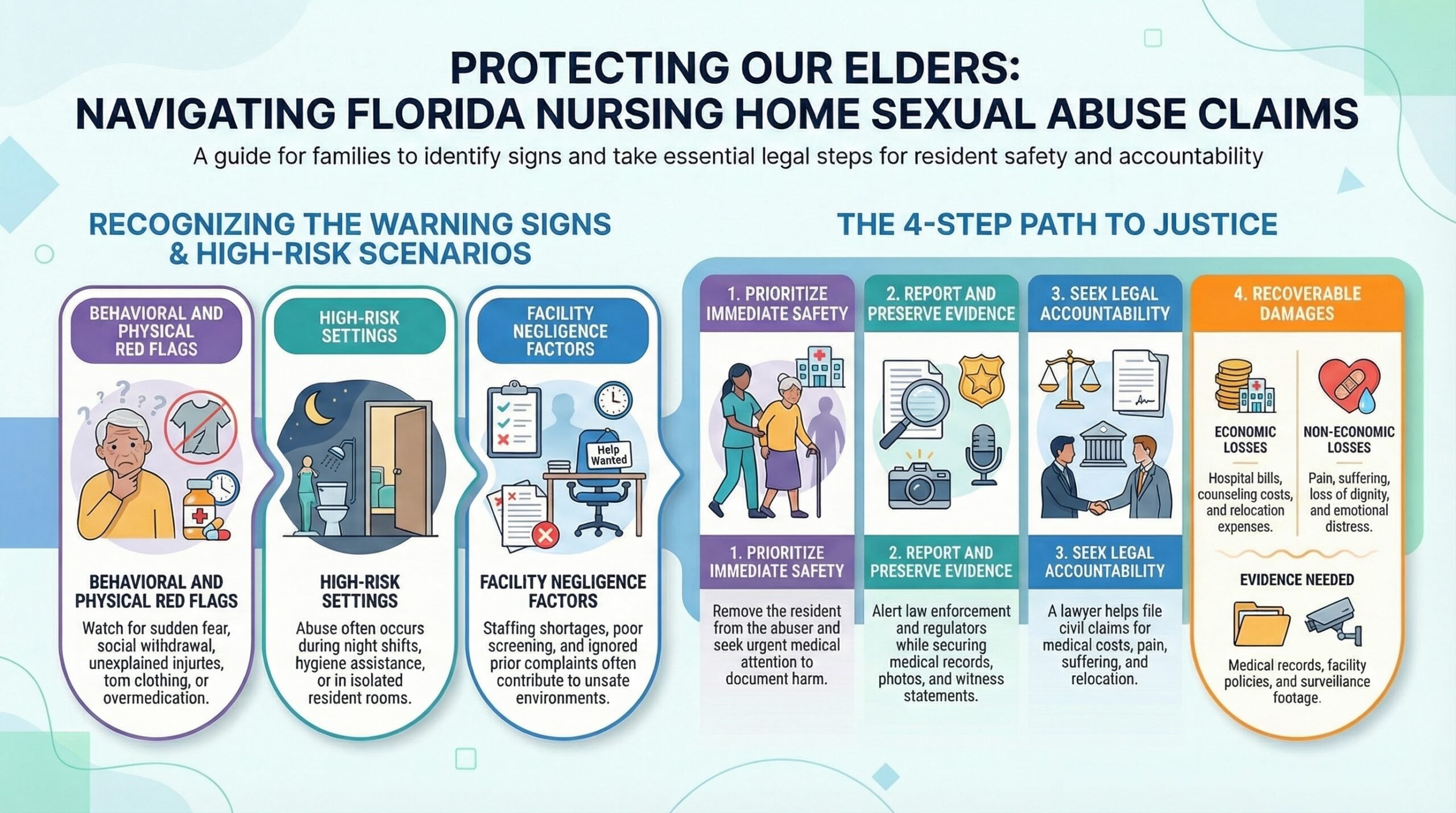
- A Florida nursing home sexual abuse lawyer helps protect the resident, preserve evidence, and identify potential claims against facilities or responsible individuals.
- Immediate steps include seeking medical care, ensuring the resident’s safety, and reporting abuse to law enforcement, regulators, and adult protective services.
- Strong cases often involve evidence such as medical records, witness statements, photographs, facility policies, and surveillance or electronic records.
- Abuse may involve staff, visitors, or residents and often relates to poor supervision, staffing shortages, screening failures, or ignored prior complaints.
- Families should watch for warning signs like fear, unexplained injuries, torn clothing, sudden behavioral changes, or signs of isolation or overmedication.


How We Can Help With Your Florida Nursing Home Sexual Abuse Claim
In Florida nursing home sexual abuse claims, legal counsel can play a central role in protecting the residents’ rights, preserving critical evidence, and pursuing accountability against all responsible parties. Attorneys often begin by listening carefully to concerned families, documenting reports, securing records, and identifying urgent steps needed to protect the resident from further harm.
From there, counsel may coordinate with trusted professionals, evaluate the resident’s capacity, and assess whether staff negligence contributed to unsafe conditions or failed supervision. Legal teams can communicate with facilities, insurers, and outside agencies so families are not left to manage the burden alone. They may also gather witness statements, review policies, and preserve surveillance or electronic records before materials are lost.
Throughout the process, effective representation helps families act with purpose, uphold the resident’s dignity, and seek meaningful remedies that support safety, accountability, and long-term care planning. This service-centered approach provides structure, guidance, and protection during an extraordinarily difficult time for everyone involved.
OUR CONSULTATIONSARE FREE
START YOUR FREE CASE REVIEW

Understanding Nursing Home Sexual Abuse Cases in Florida
A clear understanding of nursing home sexual abuse cases in Florida begins with recognizing how these matters arise, what forms the abuse may take, and why vulnerable residents are at heightened risk. These cases often involve unwanted touching, coerced acts, exposure, or exploitation of residents who depend on others for daily care and protection.
Florida facilities serve individuals whose age, illness, cognitive decline, or physical limitations may reduce their ability to report harm promptly or consistently. In many matters, abuse concerns are intertwined with broader neglect indicators, including Staffing Shortages, weak supervision, poor screening, and failures to follow resident safety protocols.
Infection Control Violations may also reflect larger operational breakdowns that place residents in danger and suggest deficient oversight. For families, caregivers, and advocates committed to serving others, understanding these cases requires close attention to patterns, documentation, behavioral changes, and facility responses. Careful review helps identify whether legal accountability and resident protection measures are warranted promptly.
Common Scenarios When Nursing Home Sexual Abuse Might Take Place in Florida
Certain circumstances within Florida nursing homes may create opportunities for sexual abuse to occur, particularly where supervision is limited or vulnerable residents are left without protection. These incidents may arise in resident rooms, during bathing and hygiene assistance, or on night shifts when staffing is reduced, and oversight may be weaker. Risk may also increase when residents are medicated, cognitively impaired, or intentionally isolated from others.
Resident Room Assaults
When supervision lapses or privacy policies are poorly enforced, resident rooms can become one of the most common settings for sexual abuse in Florida nursing homes. These incidents may involve staff members, other residents, or outside visitors who exploit isolation, impaired cognition, or limited mobility. Warning signs can include sudden fearfulness, unexplained injuries, torn clothing, and abrupt behavioral changes after time spent alone.
Facilities that serve vulnerable adults are expected to reduce these risks through careful screening, consistent monitoring, prompt reporting, and effective staff training. Room assignment decisions, visitor controls, and response protocols also matter. When administrators ignore prior complaints or fail to protect residents after known threats, legal accountability may follow. Depending on the facts, offenders and negligent institutions may face civil liability and criminal penalties under Florida law.
Bathing And Hygiene Abuse
Bathing and hygiene routines present another setting in which sexual abuse may occur in Florida nursing homes, particularly because residents are often unclothed, physically dependent, and separated from other staff or family members during care. This vulnerability can be exploited through inappropriate touching, unnecessary exposure, or coercive conduct disguised as assistance. In some cases, staff misconduct may involve entering without consent, prolonging intimate care, or ignoring a resident’s objections.
Abuse may also occur when a resident is subjected to wrongful restraint during toileting, bathing, or changing, leaving the individual unable to resist or report what happened. Those committed to protecting vulnerable adults often watch for sudden fear of bathing, unexplained injuries, torn clothing, or unusual withdrawal. Careful reporting and prompt intervention can help safeguard resident dignity and safety.
Night Shift Misconduct
Why do overnight hours so often present heightened risk in Florida nursing homes? During late shifts, facilities may operate with fewer supervisors, reduced family presence, and diminished administrative oversight. Those conditions can permit misconduct to go unnoticed, especially when reporting systems are weak or coworkers fail to intervene. Staff negligence patterns may include skipped rounds, poor documentation, and inattentive monitoring of secluded areas.
Night Shift Misconduct can arise when an employee misuses access to private rooms, ignores call lights, or exploits residents who require nighttime assistance. In these settings, resident vulnerability may be exploited during toileting, repositioning, or routine checks, when privacy is expected, and witnesses are limited. Care-focused families and advocates often watch for behavioral changes, unexplained fear, and inconsistent records, because early recognition can support protection, accountability, and safer overnight care.
Drugged Or Isolated Residents
Although many Florida nursing home residents depend on medication and supervised care for legitimate medical needs, the risk of sexual abuse can increase sharply if a resident is improperly sedated, chemically restrained, or intentionally isolated from others. In these circumstances, impaired awareness and separation from witnesses may create opportunities for exploitation that would not exist in a properly monitored setting. Such conditions often raise serious concerns about Consent violations, especially when a resident cannot understand, resist, or report misconduct.
Facilities committed to resident protection should monitor medication practices, supervision patterns, and room access with great care. Unexplained drowsiness, sudden withdrawal, missed check-ins, or restricted family contact may signal abuse or neglect. Thorough reporting procedures, prompt investigations, and strong staff accountability are important to preserving dignity, preventing harm, and protecting vulnerable residents from further abuse.


Legal Rights of Nursing Home Sexual Abuse Victims in Florida
When a nursing home resident in Florida suffers sexual abuse, the law provides important protections and remedies designed to preserve safety, dignity, and accountability. Florida and federal rules recognize each resident’s right to be free from abuse, neglect, humiliation, and exploitation. These rights remain enforceable even where medication errors or staffing shortages contribute to unsafe conditions or poor supervision.
Key legal protections include:
- The right to live in an environment that protects bodily privacy, personal dignity, and freedom from sexual mistreatment by staff, visitors, or other residents.
- The right to pursue civil claims against negligent facilities, management companies, or individuals whose misconduct or failures allowed abuse to occur.
- The right to expect regulatory compliance, including proper screening, training, monitoring, and reporting under Florida law and nursing home standards.
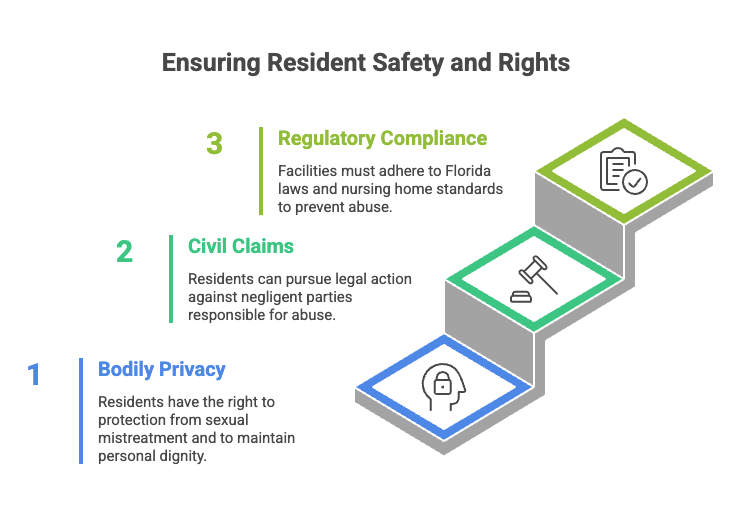
These legal rights help families and advocates serve vulnerable residents by promoting accountability, strengthening facility practices, and supporting justice for those harmed.
Steps to Take After a Nursing Home Sexual Abuse Incident in Florida
After a nursing home sexual abuse incident in Florida, the immediate priority is to secure the resident’s safety and remove them from further harm. The abuse should then be reported promptly to facility administrators, law enforcement, and appropriate state agencies so that an official record is created and protective measures can begin. It is also important to preserve crucial evidence, including medical records, photographs, clothing, and witness information, because these materials may support later investigations and legal claims.
Ensure Immediate Safety
Prioritize the resident’s immediate safety by removing the person from any contact with the suspected abuser and ensuring close supervision in a secure setting. Caregivers should focus on comfort, privacy, and calm support while preserving the resident’s dignity and physical well-being at all times.
Immediate medical attention may be necessary to address injuries, reduce distress, and assess urgent health needs. Consent and capacity should be considered when making decisions, especially if cognitive impairment affects understanding or communication. Trusted family members or guardians may help support protective choices that reflect the resident’s best interests.
The facility should also take prompt internal measures that reinforce staff accountability, including reassignment of involved personnel and heightened monitoring. A safe environment allows the resident to recover while compassionate advocates prepare for the next appropriate steps.
Report The Abuse
In the next stage, the abuse should be reported without delay to the nursing home administration, local law enforcement, and the appropriate Florida regulatory agencies. Prompt reporting helps protect the resident, alert oversight authorities, and support a safer environment for others in care.
Florida law may impose mandatory reporting duties on certain professionals, caregivers, and facility personnel. Family members and advocates can also make reports when concerns arise. Clear, timely notice encourages immediate review, strengthens facility accountability, and reduces the risk of further harm. Reports should identify the resident, describe what was observed or disclosed, and note when and where the incident occurred.
Those serving vulnerable adults should approach this step with diligence, respect, and a focus on residents’ welfare, while ensuring that all concerns are promptly brought to the appropriate authorities.
Preserve Key Evidence
Because important proof can be lost, altered, or overlooked within a short period, preserving crucial evidence should begin as soon as concerns arise about sexual abuse in a Florida nursing home. Families and advocates can serve vulnerable residents by gathering Witness statements, retaining video documentation, and requesting copies of incident reports without delay. They should also secure medical records that reflect examinations, injuries, behavioral changes, or treatment recommendations.
Careful attention to staff communication may reveal timelines, inconsistencies, or prior warnings that support the resident’s account. Physical items, photographs, and digital files should be stored to protect the chain of custody, thereby minimizing questions about tampering. Organized records help attorneys, investigators, and authorities evaluate facts accurately and take informed action on behalf of the resident.
How a Florida Nursing Home Sexual Abuse Lawyer Can Help You Initiate a Case
Begin by understanding that a Florida nursing home sexual abuse lawyer can evaluate the reported misconduct, identify potential legal claims, and determine the immediate steps needed to protect the resident and preserve crucial evidence. Early guidance often centers on Client safety planning, immediate medical care, and prompt reporting to appropriate authorities.
A lawyer may help initiate a case by organizing significant actions such as:
- Reviewing records, witness accounts, photographs, and facility policies to identify negligence, abuse, or supervision failures.
- Coordinating reports to law enforcement, adult protective services, and regulators while helping families avoid procedural mistakes.
- Preparing notices, preserving documentation, and filing claims within applicable deadlines under Florida law.
This support can reduce confusion during a difficult period and create a structured path toward accountability. By clarifying responsibilities, explaining options, and gathering reliable evidence, counsel helps families act in the service of a vulnerable resident’s dignity, protection, and lawful interests from the very beginning.
Long-Term Effects of Nursing Home Sexual Abuse Trauma
Nursing home sexual abuse trauma can produce severe emotional and psychological harm, including anxiety, depression, shame, and persistent distress that may continue long after the abuse has ended. It may also result in lasting physical consequences, such as chronic pain, sleep disruption, and other health complications that undermine an elderly resident’s well-being and daily functioning. In many cases, these effects are further compounded by social withdrawal and fear, which can damage trust, isolate the victim, and hinder recuperation.
Emotional And Psychological Harm
Although physical injuries may recover over time, the emotional and psychological harm caused by sexual abuse in a Florida nursing home often persists long after the incident itself. Residents may develop anxiety, depression, shame, disturbed sleep, withdrawal, and a profound loss of trust in caregivers, relatives, and institutions meant to protect them.
These effects can impair communication, daily functioning, and willingness to accept necessary care. In many cases, culpability underreporting and survivor credibility issues further deepen trauma, especially when cognitive decline, fear of retaliation, or dependence on staff complicate disclosure. Families and advocates serving vulnerable adults often observe increased confusion, agitation, or hopelessness after abuse.
Meaningful support requires careful documentation, trauma-informed intervention, and respectful legal action that recognizes the resident’s dignity, voice, and continuing need for safety and compassionate accountability.
Lasting Physical Consequences
When sexual abuse occurs in a Florida nursing home, the physical consequences may extend far beyond the immediate incident and can be especially severe for elderly residents with frail health or chronic medical conditions. Lasting harm may include chronic pain, infections, bruising that resolves slowly, pelvic injuries, sleep disruption, weight loss, and worsened mobility. Existing illnesses may deteriorate under stress, and recovery often becomes more difficult with age.
Care teams and families serving vulnerable residents should recognize that emotional trauma effects can also aggravate physical symptoms, including elevated blood pressure, gastrointestinal problems, and persistent fatigue. In some facilities, staffing neglect patterns allow injuries to go untreated or documented too late, increasing medical complications. Careful evaluation, prompt reporting, and consistent medical follow-up may help protect health, preserve dignity, and support accountability after abuse.
Social Withdrawal And Fear
Why might a previously engaged resident begin avoiding meals, activities, or even familiar caregivers after sexual abuse in a Florida nursing home? Social withdrawal often reflects trauma, not choice. A resident may associate common spaces, routines, or trusted staff with danger, especially after consent was refused and ignored. Fear can deepen when abuse involves coercion tactics, threats, or manipulation by someone in authority.
In many cases, survivors become quiet, isolated, and hypervigilant. They may decline visits, resist assistance with bathing, or react strongly to touch, voices, or closed doors. Reporting intimidation and fear of staff retaliation can further silence them, particularly when dependence on caregivers feels unavoidable. For families and advocates seeking to serve well, these behavioral changes may signal profound distress and the need for immediate protection, trauma-informed evaluation, and careful legal review.
What to Expect During a Florida Nursing Home Sexual Abuse Claim Process
A Florida nursing home sexual abuse claim process typically begins with reporting abuse allegations to the appropriate authorities and documenting the known facts. It then investigates facility misconduct, during which records, witness statements, and compliance issues may be examined. If sufficient grounds exist, a legal claim may be filed, followed by efforts to obtain compensation and reach a resolution of the case.
Reporting Abuse Allegations
How abuse allegations are reported can shape both resident safety and the strength of a future legal claim. In Florida nursing home cases, prompt notice to administrators, law enforcement, and appropriate state agencies helps create a clear record of what was disclosed, when it was disclosed, and who received the report. Mandatory reporting rules may require certain staff members and healthcare professionals to act without delay.
Families often strengthen their reporting efforts by documenting observed injuries, behavioral changes, dates, witness names, and prior complaints. This information may later help show patterns linked to staffing negligence or failures in resident supervision. Reporting should remain focused on immediate protection, preservation of relevant facts, and compliance with facility and state procedures. Clear, timely reporting supports accountability while honoring the resident’s dignity, safety, and overall well-being.
Investigating Facility Misconduct
When allegations point to sexual abuse in a Florida nursing home, the investigative stage typically focuses on whether the facility failed to protect the resident through inadequate supervision, negligent hiring, poor staff training, or breakdowns in reporting and response procedures.
This review often includes personnel files, incident reports, surveillance records, care logs, and prior complaints. Investigators may look for patterns of staff negligence that suggest ignored warning signs or repeated policy violations. They also assess whether administrators acted promptly, preserved dignity, and supported resident safety after concerns arose. Medical findings, facility documentation, and evidence witness accounts can help clarify timelines and identify responsible parties.
A careful investigation serves families and vulnerable residents by uncovering preventable failures, promoting accountability, and guiding informed decisions to protect others from similar harm in long-term care settings.
Filing The Legal Claim
Once adequate facts have been gathered, filing a legal claim in a Florida nursing home sexual abuse matter generally begins with identifying the proper parties, assessing available evidence, and determining which legal theories apply to the facility and any individual wrongdoers.
Counsel typically prepares the complaint, ensures timely filing under applicable deadlines, and arranges formal service on each defendant. Early attention is given to evidence preservation, including records, surveillance, staffing logs, and internal reports that may clarify what occurred. Witness documentation is also organized carefully, especially statements from residents, employees, family members, and medical providers.
The court process may then include responses from defendants, preliminary motions, and structured discovery requests. Throughout this stage, the focus remains on building a clear factual record, protecting vulnerable residents, and advancing accountability through orderly legal procedures.
Compensation And Case Resolution
Securing compensation in a Florida nursing home sexual abuse claim generally involves evaluating the full extent of harm, identifying legally recoverable damages, and determining whether the matter will resolve through settlement or proceed toward trial. Recoverable losses may include medical treatment, counseling expenses, pain and suffering, and other consequences affecting the resident’s dignity and daily functioning.
Case resolution often depends on the strength of the evidence, witness credibility, and proof of Caregiver negligence by staff, administrators, or third-party providers. Attorneys may negotiate with insurers and facility counsel while preparing the matter as though a trial remains possible.
If settlement discussions fail to produce fair terms, litigation can continue through discovery, motions, and courtroom presentation. Throughout the process, careful documentation and informed advocacy help families pursue accountability, protect vulnerable residents, and support safer standards of care for others.
Compensation for Florida Nursing Home Sexual Abuse Damages
Although no civil recovery can undo the harm caused by sexual abuse in a Florida nursing home, compensation may provide essential financial support and a measure of accountability for the resident and the family. After a careful Case Evaluation, counsel may pursue claims tied to abuse, neglect, supervision failures, or facility misconduct. In some matters involving fatal consequences, related Wrongful Death rights may also require review under Florida law.
| Consideration | Why it matters |
|---|---|
| Prompt reporting | Preserves evidence |
| Medical review | Documents harm |
| Witness statements | Supports credibility |
| Facility records | Shows notice patterns |
Compensation can assist with treatment needs, protective relocation, investigative costs, and other losses connected to the abuse. It may also encourage safer staffing, stronger screening, and better internal reporting practices within long-term care settings. For families committed to protecting vulnerable residents, a timely legal response often serves both the individual survivor and the broader community through accountability and prevention.
Economic vs Non-Economic Damages in Florida Nursing Home Sexual Abuse Cases
Florida nursing home sexual abuse cases may involve both economic damages, which address measurable financial losses, and non-economic damages, which compensate for harms such as pain, suffering, and emotional distress. A clear understanding of this distinction helps frame how compensation is assessed under Florida law. Proving these damages often requires medical records, billing documentation, expert analysis, and other evidence that connects the abuse to the resident’s losses.
Economic Damages Explained
When a resident suffers sexual abuse in a nursing home, economic damages refer to the measurable financial losses caused by the misconduct and its aftermath. These losses may include hospital bills, counseling expenses, medication costs, relocation expenses, and other out-of-pocket charges tied to safety and recovery. In cases involving Care Facility Neglect, records often help document the extent of these damages.
A Florida claim may also seek compensation for future treatment, increased care needs, and financial harm resulting from administrative failures or inadequate supervision. Careful documentation, billing statements, and expert review can strengthen the evidentiary foundation. For families committed to protection and Victim Advocacy, understanding economic damages helps clarify what resources may be recovered to support the resident’s continued care, stability, and practical needs. Accurate valuation remains critical throughout the legal process.
Non-Economic Losses Overview
Because many harms caused by nursing home sexual abuse do not appear on invoices or account statements, non-economic damages address the resident’s intangible losses, including pain, humiliation, emotional distress, loss of dignity, and diminished quality of life.
In Florida cases, these losses recognize the human impact of abuse that can alter trust, sleep, relationships, and daily functioning. They are especially important when Consent and Dementia issues arise, because a resident’s confusion or cognitive decline may deepen fear, shame, and vulnerability. Non-economic damages also reflect the broader consequences of Facility Neglect, where inadequate supervision, poor training, or ignored warning signs allow abuse to occur.
For families and advocates committed to protecting older adults, this category of damages affirms that personal suffering matters, even when financial records cannot fully capture the resident’s experience.
Proving Damages In Florida
Although damages in nursing home sexual abuse cases often include profound emotional harm, proving them in Florida requires clear evidence of both economic and non-economic losses. Economic damages may include medical treatment, counseling costs, relocation expenses, and other measurable financial consequences tied to the abuse.
Non-economic damages address pain, humiliation, trauma, loss of dignity, and diminished quality of life. To establish these losses, attorneys often rely on evidence documentation, including medical records, incident reports, photographs, expert evaluations, and care notes. Testimony from family members, caregivers, and professionals can strengthen the credibility of witnesses’ accounts of behavioral changes and ongoing suffering.
Florida courts generally assess whether the claimed damages are supported by consistent records and reliable testimony. Careful preparation helps families pursue accountability while honoring the resident’s experience and need for protection.
When a Florida Nursing Home Sexual Abuse Case Goes to Trial vs Settlement
Many Florida nursing home sexual abuse claims resolve through settlement, yet some proceed to trial where liability, damages, and institutional misconduct must be proved before a judge or jury. The decision often depends on the strength of the evidence, the facility’s willingness to accept responsibility, and the survivor’s goals for accountability and protection of others.
Counsel evaluates the trial strategy by reviewing records, prior complaints, staffing practices, and expert opinions. Strong witness preparation is crucial when residents, family members, employees, and medical professionals may testify about abuse, reporting failures, or resulting trauma. Settlement leverage increases when documentation shows preventable harm, ignored warning signs, or regulatory violations. Through damages negotiation, parties may address medical care, psychological treatment, pain and suffering, and loss of dignity.
If a facility denies fault or minimizes harm, a trial may offer a clearer path to public accountability. If the settlement provides meaningful compensation and corrective action, the resolution may better serve restoration and resident safety.
The Statute of Limitations for Florida Nursing Home Sexual Abuse Cases
When a Florida nursing home sexual abuse claim is being evaluated, the statute of limitations becomes a central legal issue because it sets the deadline for filing suit. Florida law may allow different filing periods depending on the facts, the resident’s capacity, and when the abuse or resulting harm was discovered through reasonable diligence by those seeking to protect vulnerable adults.
This timing analysis often intersects with Consent requirements, medical records, incident reports, and regulatory findings. If a resident lacked capacity, questions may arise about whether limitations were tolled or whether a representative could act earlier. Courts may also examine concealment, delayed reporting, and the facility’s internal response. These issues matter because missed deadlines can bar otherwise valid claims involving serious misconduct.
In addition, facility liability may depend on proving negligent supervision, hiring, retention, or failures in reporting and resident protection. Careful attention to limitation periods helps families and advocates preserve accountability and support safer care environments for all residents.
When to Contact a Nursing Home Sexual Abuse Lawyer in Florida
Questions about filing deadlines often lead directly to another practical issue, namely, how soon legal counsel should be involved after suspected nursing home sexual abuse in Florida. Prompt contact is often wise once warning signs, disclosures, injuries, or troubling staff conduct suggest possible abuse. Early guidance can help families and advocates preserve records, document observations, and report concerns through proper channels while memories remain fresh. Timely action also supports efforts to protect vulnerable residents from further harm.
Delays can create difficulties because evidence may be lost, witnesses may become harder to reach, and legal deadlines may continue to run in the background. A lawyer should generally be contacted as soon as credible concerns arise, even if all facts are not yet known. This is especially important when questions exist about the statute of limitations, internal facility reports, medical documentation, or communication with administrators and state agencies. Early consultation promotes informed decisions and more organized next steps for everyone involved.
Why You Need an Experienced Florida Nursing Home Sexual Abuse Lawyer
Why does experience matter so much in these cases? An experienced Florida nursing home sexual abuse lawyer understands how abuse claims develop, how facilities respond, and how vulnerable residents are often silenced. That knowledge helps protect dignity, preserve evidence, and identify patterns of neglect that may otherwise remain hidden from families and authorities.
Experience also matters because these cases involve intricate legal and factual issues, including Consent liability, reporting duties, medical documentation, and institutional accountability. A seasoned lawyer can examine whether staff training was adequate, whether warning signs were ignored, and whether administrators failed to supervise employees or screen them properly. This level of analysis supports stronger claims and promotes safer care for other residents.
It also helps families and advocates pursue justice in a way that honors the harmed person’s wellbeing, while encouraging nursing homes to correct dangerous practices and strengthen protections for those who depend on them every day.
How to Choose the Right Nursing Home Sexual Abuse Lawyer for Your Case in Florida
Experience helps reveal how these claims should be investigated, but selecting the right Florida nursing home sexual abuse lawyer requires a more focused review of the attorney’s qualifications, approach, and record with abuse and neglect litigation. Families often benefit from comparing courtroom experience, settlement history, and familiarity with nursing home regulations and reporting duties.
Thoughtful Interview questions can help determine whether counsel listens carefully, explains options clearly, and respects the survivor’s dignity. Case communication should be consistent, timely, and easy to understand, especially when relatives are balancing medical needs, protection planning, and emotional strain. It is also prudent to ask how the firm handles confidentiality concerns, including records, witness statements, and sensitive family information.
Clear explanations of contingency fees are equally important because families caring for vulnerable loved ones should understand the costs before representation begins. A careful selection process can support accountability, informed decision-making, and safer outcomes for residents across Florida communities.
About The Law Offices of Anidjar & Levine
When families seek legal guidance after suspected sexual abuse in a Florida nursing home, The Law Offices of Anidjar & Levine presents a client-centered approach grounded in personal injury and abuse litigation.
The firm emphasizes careful case evaluation, responsive communication, and practical support for families seeking protection, accountability, and dignified treatment for vulnerable residents.
Its work in nursing home abuse matters reflects a broader commitment to Resident advocacy and staff accountability.
Attorneys investigate facility records, reporting failures, supervision lapses, and other warning signs that may reveal neglect or intentional harm.
They also help families understand legal options, preserve evidence, and pursue compensation for medical care, emotional suffering, and related losses.
The Law Offices of Anidjar & Levine is recognized for maintaining accessibility while advancing serious claims with discipline and professionalism.
For families motivated by service, safety, and justice, the firm offers representation focused on protecting residents and encouraging higher standards of care across Florida long-term care settings.
Frequently Asked Questions
Can Family Members Install Cameras in a Florida Nursing Home Resident’s Room?
Yes, family members may sometimes install cameras in a Florida nursing home resident’s room, but permission is often required. The decision usually depends on facility policies, the resident’s consent, roommate approval, and Florida consent laws. Facilities must also respect the privacy rights residents retain while receiving care. Because rules can vary, families generally benefit from reviewing admission agreements, speaking with administrators, and confirming whether state regulations or special circumstances limit recording.
Are Anonymous Reports of Nursing Home Sexual Abuse Allowed in Florida?
Yes, anonymous reports of nursing home sexual abuse are generally allowed in Florida through state agencies and abuse hotlines. Anonymous reporting options help concerned individuals act quickly when a resident may be in danger. Reporting procedure details vary by agency, yet reporters should provide specific facts, dates, and observations whenever possible. While anonymity can protect the reporter, complete information better supports investigation, resident safety, and timely intervention by appropriate authorities.
Can Immigration Status Affect a Nursing Home Sexual Abuse Claim in Florida?
Immigration status generally should not bar a nursing home sexual abuse claim in Florida, though it can affect practical issues. Courts focus on the abuse, liability, and damages limitations, not Immigration eligibility alone. Yet Fear of deportation may deter victims or families from acting, and reporting impacts can complicate evidence gathering. Prompt legal guidance helps protect rights, encourage safe reporting, and support accountability for vulnerable residents and their caregivers.
What Evidence Should Families Preserve Before Reporting Suspected Nursing Home Sexual Abuse?
Families should preserve all relevant evidence before reporting suspected sexual abuse, including medical documentation, photographs of injuries, clothing, bedding, incident reports, and communications with staff. They should secure witness statements from residents, employees, or visitors who observed concerning behavior or conditions. Dates, times, and names should be recorded carefully. Any requests for surveillance footage should be made promptly. Thorough preservation supports accountability, protects the resident’s well-being, and strengthens any subsequent investigation or claim.
Do Florida Nursing Homes Conduct Background Checks on Employees and Contractors?
Yes, Florida nursing homes generally conduct background checks on employees and many contractors. State law requires Florida hiring screening for positions involving direct resident care or access to vulnerable adults, and facilities commonly use criminal record checks to identify disqualifying offenses. Contractors may also be screened when their duties create resident contact. These measures help organizations protect residents, support responsible service, and meet regulatory obligations designed to safeguard vulnerable populations.
—————————
Florida nursing home sexual abuse claims demand prompt action, careful documentation, and informed legal guidance.
Victims and their families may have important rights under Florida law, including the right to pursue accountability against negligent facilities and responsible parties.
An experienced Florida Sexual Assault Lawyer can evaluate the facts, protect the victim’s interests, and seek appropriate compensation.
Law Offices of Anidjar & Levine represents clients in these serious matters with focused advocacy and a clear commitment to protecting vulnerable residents.