A Florida non-consensual image-sharing lawyer helps victims evaluate the facts, preserve digital evidence, and identify civil or criminal remedies to prevent further harm.
Law Offices of Anidjar and Levine may organize screenshots, links, messages, and account records, communicate with platforms for takedown efforts, and seek damages or injunctive relief in court when appropriate.
Prompt legal action can strengthen removal efforts, protect privacy interests, and support accountability under Florida law.
Additional guidance below explains the process and available options.
For related legal support, visit Florida Sexual Assault Lawyer.
Main Takeaways
- A Florida lawyer can evaluate the facts, identify civil and criminal remedies, and act quickly to reduce ongoing harm from non-consensual image sharing.
- Counsel helps preserve evidence, including screenshots, links, messages, usernames, timestamps, and device records showing when and how images were shared.
- A lawyer can contact platforms, prepare takedown requests, and organize reports to websites or apps where intimate content appears.
- Florida cases often involve breakups, hacking, coercion, workplace sharing, or distribution that exceeded the original consent given.
- Legal remedies may include damages, injunctive relief, protective orders, and claims tied to privacy violations, harassment, reputational harm, or cyberstalking.


How We Can Help With Your Florida Non-Consensual Image Sharing Claim
When intimate images are shared without consent, a Florida attorney can help evaluate the facts, identify available civil and criminal remedies, and take prompt action to limit further harm. Legal counsel may gather records, preserve online evidence, communicate with platforms, and prepare a focused strategy that protects the client’s dignity and safety. With a clear overview of Consent law, counsel can explain relevant standards, outline practical options, and support informed decisions at each stage.
An attorney may also address Digital privacy rights by requesting content removal, sending preservation or cease-and-desist notices, and coordinating with service providers when appropriate. Careful guidance can reduce exposure, strengthen documentation, and help clients respond without unnecessary delay. In service to those seeking justice, representation often includes compassionate communication, organized case management, and steady advocacy designed to restore control, protect future opportunities, and promote accountability under Florida law for injured individuals and their families.
OUR CONSULTATIONSARE FREE
START YOUR FREE CASE REVIEW

Understanding Non-Consensual Image Sharing Cases in Florida
Although these matters often arise through private relationships and online conduct, non-consensual image-sharing cases in Florida present serious legal issues involving consent, privacy, intent, and resulting harm. These claims often require careful review of how images were obtained, whether permission existed, and if any later distribution exceeded agreed Consent boundaries under the circumstances.
Florida law may recognize both criminal exposure and civil liability, depending on the facts and the nature of the disclosure. Courts and counsel may evaluate the reasonable expectation of digital privacy, the purpose behind the sharing, and the extent of personal, reputational, or professional injury. Evidence preservation is often crucial, including messages, posts, account records, and proof of dissemination.
For those committed to serving others with dignity, understanding these cases supports informed action, respectful advocacy, and protection of vulnerable individuals. A structured legal assessment can promptly help identify rights, available remedies, and practical next steps under Florida law.
Common Scenarios When Non-Consensual Image Sharing Might Take Place in Florida
Non-consensual image sharing in Florida often arises in several recurring situations, each with distinct factual and legal concerns. Common examples include breakups motivated by revenge, hacked private accounts, coercion within intimate relationships, and the circulation of images in workplace or school settings. Identifying how the sharing occurred is often an important first step in evaluating potential legal claims and available remedies.
Breakups And Revenge
After a breakup, private images are sometimes shared out of spite, in retaliation, or to embarrass a former partner. In Florida, this conduct may arise when trust deteriorates, and one person uses intimate material to regain control, damage reputation, or pressure reconciliation. Such behavior can affect families, workplaces, and community standing.
A service-minded legal response often emphasizes protection, accountability, and practical support for the harmed person. Counsel may recommend Evidence preservation steps, including saving screenshots, links, dates, and messages that show distribution or threats. Early action can assist law enforcement and strengthen civil claims. Digital consent education also serves an important preventive role by helping individuals understand boundaries, respect privacy, and recognize that the end of a relationship does not create permission to share intimate content.
Hacked Private Accounts
When private accounts are hacked, intimate images may be copied and distributed without the account holder’s knowledge or permission. In Florida, this form of Account Hacking can affect email, cloud storage, social media, and password-protected devices. A wrongdoer may gain access through stolen passwords, phishing messages, or unauthorized password resets, then download or share sensitive files widely. Victims often discover the breach only after images appear online or are sent to others.
In these situations, prompt Evidence Preservation can support efforts to protect the victim and identify the source. Helpful steps may include saving screenshots, recording usernames, retaining suspicious emails, and documenting dates, times, and links. Service providers and legal counsel may assist with account recovery, takedown requests, and measures that reduce further harm and protect affected communities.
Coercion In Relationships
Intimate image abuse may also arise within dating, domestic, or former partner relationships, where pressure and manipulation are used to obtain or threaten disclosure of private material. In these situations, one person may exploit trust, demand images as proof of loyalty, or use Digital blackmail tactics to control communication, finances, or parenting decisions. The harm often escalates after separation, when threats to post content are used to force reconciliation or silence reports of abuse.
A service-minded legal approach recognizes both safety and dignity, helping affected individuals document conduct, preserve evidence, and pursue protective remedies under Florida law. It also emphasizes social media accountability, since rapid online distribution can deepen trauma and complicate removal efforts. Careful intervention may reduce further harm and support informed, practical next steps for recovery.
Workplace And School Sharing
Although non-consensual image sharing is often associated with personal relationships, it may also occur in workplaces and schools, where access to devices, group chats, shared networks, and social platforms can make private material easy to circulate. In professional settings, a coworker may forward intimate content to embarrass, intimidate, or retaliate, creating Workplace harassment and damaging a person’s livelihood and dignity.
In educational settings, students may repost or trade images to shame classmates, intensify School bullying, or pressure others into silence. Such conduct can spread quickly, especially when bystanders fail to intervene or report what they receive. A Florida lawyer may help affected individuals understand legal remedies, preserve evidence, and pursue protective action that supports safety, accountability, and respectful treatment within institutions and communities for all.


Legal Rights of Non-Consensual Image Sharing Victims in Florida
Protecting victims of non-consensual image sharing in Florida requires a clear understanding of the legal rights available under state law. Florida law may provide civil remedies, criminal enforcement, and court orders to limit ongoing harm. These rights help restore dignity, support community safety, and encourage responsible digital conduct.
Attorneys also evaluate related issues such as Cyberstalking defenses, platform takedowns, privacy violations, and reputational injury.
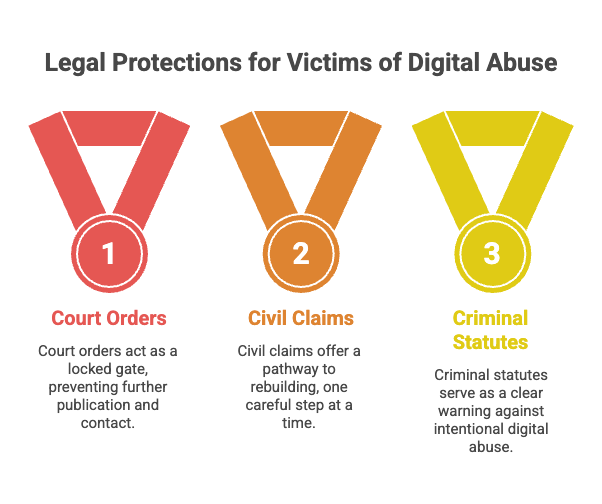
- Court orders can resemble a locked gate, restricting further publication or contact.
- Civil claims may offer a pathway like rebuilding a damaged home, one careful step at a time.
- Criminal statutes can serve as a clear warning against intentional digital abuse.
- Privacy protections may function like a shelter, guarding personal autonomy and emotional wellbeing.
A victim may have standing to seek damages, injunctive relief, and enforcement of protective laws. Legal counsel can clarify available options while preserving the focus on service, accountability, and long-term protection for others.
Steps to Take After a Non-Consensual Image Sharing Incident in Florida
Following a non-consensual image-sharing incident in Florida, prompt and organized action can affect both personal protection and any future legal claim. Initial steps often include preserving digital evidence, reporting the distribution to relevant platforms or authorities, and evaluating available legal remedies under state law. A clear understanding of these measures helps frame the response and supports efforts to limit further harm.
Preserve Digital Evidence
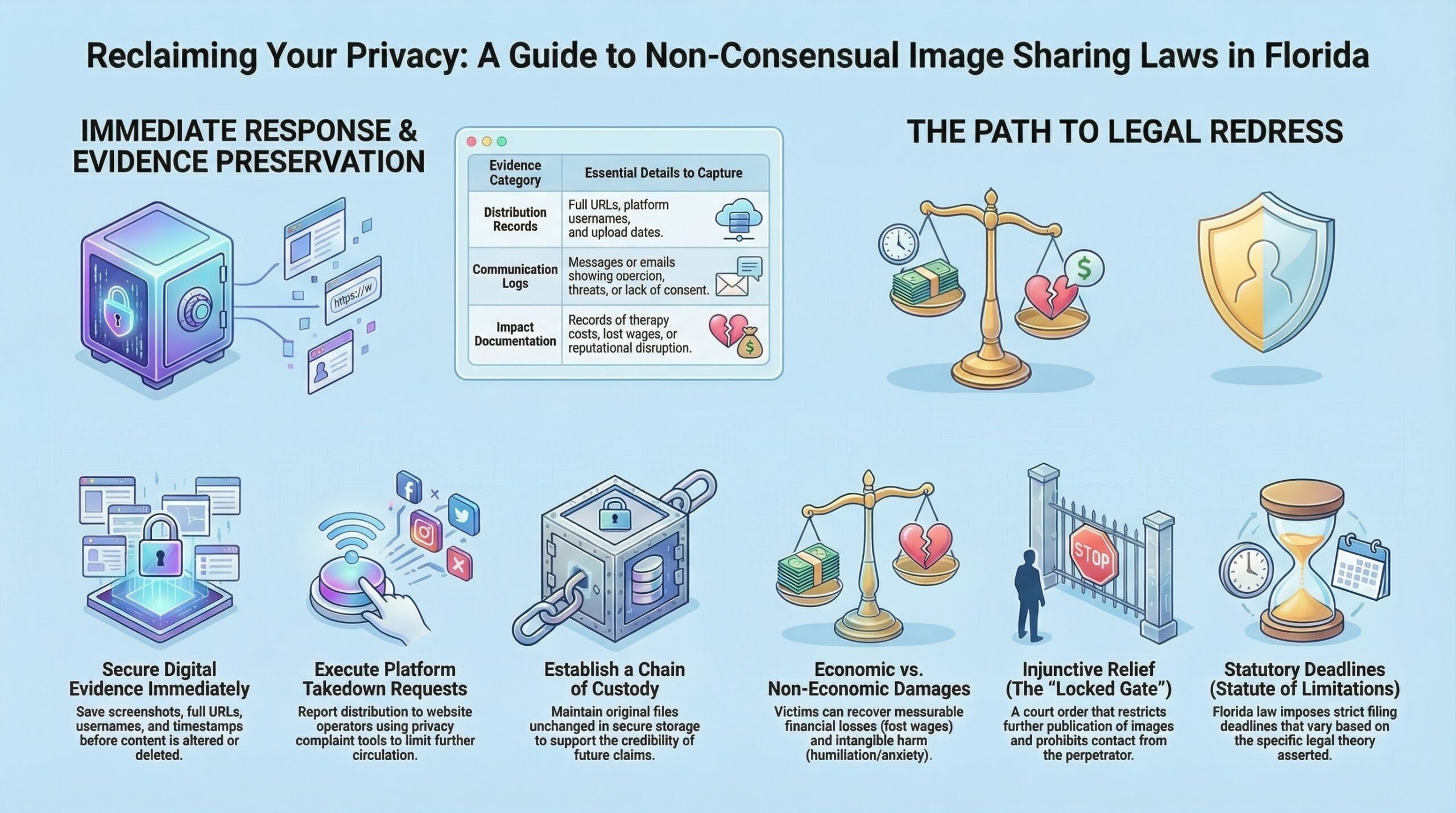
When non-consensual images are discovered online or sent through digital platforms, preserving evidence should begin immediately, because online content can be altered, deleted, or moved within minutes. A careful record may include screenshots, full URLs, usernames, dates, timestamps, and any related messages or account details. Original files should remain unchanged, and copies should be placed in secure storage to reduce the risk of accidental loss or modification.
Where possible, Digital forensics methods can help authenticate content and identify relevant metadata. Device imaging may be appropriate when phones, tablets, or computers contain important evidence, because it creates a reliable duplicate for later review. Maintaining a clear chain of custody supports credibility by showing who handled the material, when it was accessed, and how it remained protected throughout the preservation process.
Report The Distribution
Because rapid reporting can limit further circulation and strengthen later enforcement efforts, the distribution should be reported promptly to the relevant platform, website operator, or application using that service’s abuse or privacy complaint process. An effective report of the distribution tips includes identifying each URL, username, upload date, and screenshot already gathered from the victim’s digital documentation.
A clear platform removal request should explain that the material was shared without consent and cite any instances of impersonation, harassment, or violations of privacy policies. When available, the service’s internal tracking number should be saved and matched to an evidence preservation checklist for later follow-up. If the content appears on multiple sites, each location should be reported separately, with consistent facts and organized records, so community advocates and support personnel can respond efficiently and responsibly.
Seek Legal Remedies
After reports have been submitted and evidence has been organized, legal remedies should be considered to stop further dissemination and address the harm already caused. An attorney may evaluate civil claims, injunctions, and other court orders that require the removal of images and prohibit renewed sharing. Counsel can also coordinate with platforms, law enforcement, and schools or employers when appropriate.
In Florida, prompt legal action may help preserve rights and limit continuing exposure. Cyberbullying reporting may support broader protective measures when harassment accompanies distribution. Attorneys often recommend victim support resources to strengthen recovery while legal matters proceed. They may also advise online privacy strategies and digital safety planning, including account security changes, documentation practices, and communication boundaries. These steps help protect dignity, reduce risk, and promote informed, service-oriented advocacy.
How a Florida Non-Consensual Image Sharing Lawyer Can Help You Initiate a Case
Although the decision to pursue legal action may feel urgent, a Florida non-consensual image-sharing lawyer can provide the structure needed to initiate a case properly and efficiently. Counsel typically begins by evaluating facts, identifying potential defendants, and explaining how privacy law applies to digital distribution, consent, and available remedies. This early guidance helps a harmed person act carefully, protect others, and avoid missteps during a difficult period.
A lawyer may also support evidence preservation by organizing records that show when, where, and how images were shared.
Useful materials often include:
- Screenshots showing usernames, dates, and visible posts
- Links, messages, and platform reports documenting circulation
- Device records preserving downloads, uploads, or account access
- Witness statements describing discovery and resulting disruption
With this foundation, counsel can prepare notices, communicate with platforms, and file the appropriate civil action. A structured response promotes accountability while honoring dignity, safety, and service to those affected and surrounding communities.
Long-Term Effects of Non-Consensual Image-Sharing Trauma
Non-consensual image sharing can produce lasting emotional and psychological harm, including anxiety, depression, and persistent feelings of humiliation or loss of control. Its effects often extend into personal relationships, where trust may erode, and survivors may struggle with intimacy, communication, and a sense of safety. The resulting damage can also affect careers and social standing, as reputational harm, workplace consequences, and community stigma may continue long after the initial violation.
Emotional And Psychological Harm
When intimate images are distributed without permission, the psychological impact often extends well beyond the initial violation. Survivors may experience persistent stigma and shame, which can alter daily functioning, concentration, and overall emotional stability. Many also live with ongoing anxiety and fear, especially when they cannot control where the material appears or who may view it next.
Over time, this harm may deepen into depression, sleep disruption, panic symptoms, and social withdrawal. Some individuals develop hypervigilance, avoiding public settings, online activity, or professional opportunities because exposure feels constant and unpredictable. Service-minded advocates often recognize that recovery requires more than removal efforts alone. Compassionate legal guidance, trauma-informed counseling, and practical safety planning can help restore a sense of control. Early support may reduce lasting psychological injury and strengthen long-term emotional resilience.
Relationship And Trust Damage
Because intimate image abuse often breaches deeply personal boundaries, it can cause lasting damage to a person’s ability to trust romantic partners, friends, family members, and even professional contacts. Survivors may become guarded, withdraw from support systems, and question others’ motives, even when care is genuine. This erosion of trust can strain marriages, friendships, and family bonds, creating isolation during a period when compassionate assistance is most needed.
Reputation loss may also intensify suspicion, as survivors fear judgment, gossip, or further betrayal within close relationships. In many cases, recovery requires consistent reassurance, trauma-informed counseling, and practical advocacy that restores a sense of safety. Evidence preservation can support accountability and help survivors feel more secure, especially when trusted professionals guide them through reporting options, protective measures, and respectful communication with loved ones.
Career And Social Impact
Although the immediate violation is intensely personal, the long-term effects of intimate image abuse often extend into a survivor’s career and broader social standing. Professional opportunities may narrow when employers, clients, or colleagues encounter shared material online, even when the survivor bears no fault. Reputational harm can impair advancement, networking, and community participation, while persistent anxiety may reduce focus, attendance, and confidence in service-oriented roles.
Over time, ongoing exposure can weaken trust in institutions and compromise digital privacy, making ordinary communication feel unsafe. In many cases, legal action addressing criminal consequences and civil liability helps restore agency and deter further harm. Strong victim advocacy also supports practical recovery by connecting survivors with reporting options, workplace protections, counseling resources, and strategies for rebuilding professional credibility and social stability over time.
What to Expect During a Florida Non-Consensual Image Sharing Claim Process
A Florida non-consensual image-sharing claim generally begins by filing the claim and identifying the legal basis for relief. The process then centers on gathering crucial evidence, such as messages, screenshots, platform records, and proof of harm, while following a court process timeline that may vary by case intricacy. Potential legal outcomes may include injunctive relief, monetary damages, settlement, or other court-ordered remedies permitted under Florida law.
Filing The Claim
When a Florida non-consensual image-sharing claim is filed, the process generally begins with a careful review of the facts, the available digital evidence, and the identity of the person or persons responsible for distributing the material. Counsel then evaluates jurisdiction, available causes of action, and the relief that may best protect the affected person and community.
After that review, formal court filings are prepared and submitted in the appropriate Florida court. These filings may request damages, injunctive relief, and orders requiring the removal of the images from websites or platforms. The defendant is then served and given an opportunity to respond within the required deadlines. The court may schedule early hearings to address urgent concerns, especially where continued distribution threatens ongoing harm. Throughout this stage, procedural accuracy remains crucial to advancing the claim effectively.
Gathering Key Evidence
Because digital material can be deleted, altered, or reposted within minutes, gathering critical evidence is often one of the most important stages in a Florida non-consensual image-sharing claim. Attorneys often advise preserving screenshots, URLs, account names, dates, messages, and platform notices as soon as possible. Victim documentation may also include records showing lack of consent, emotional harm, reputational impact, and efforts to request removal.
A careful review of the evidence helps identify where the content appeared, who may have distributed it, and whether any additional parties were involved. Digital timelines are useful for organizing posts, communications, takedown requests, and subsequent reposting activity. Third-party records, witness statements, and preserved metadata can further strengthen the claim. Prompt, organized collection supports accountability and helps those seeking to protect others pursue informed, responsible legal action.
Court Process Timeline
With evidence preserved and organized, attention often turns to the sequence of legal steps in a Florida non-consensual image-sharing claim. Counsel typically begins by reviewing Digital proof, confirming timelines, and evaluating whether filing in civil court is appropriate under applicable law.
Next, pleadings are prepared, filed, and formally served. The responding party is given time to answer, after which discovery may begin. During this phase, both sides exchange records, request platform data, and evaluate witness testimony under evidentiary standards and admissibility rules. Pretrial hearings may address privacy concerns, scheduling, and disputes about sensitive material.
If the matter proceeds, mediation or settlement discussions may occur before trial. When hearings or trial dates arrive, the court considers documented emotional harm, credibility, and whether the available proof satisfies legal requirements.
Potential Legal Outcomes
Although each claim turns on its specific facts, potential legal outcomes in a Florida non-consensual image-sharing case generally include injunctive relief, monetary damages, a negotiated settlement, or dismissal if the evidence does not meet the required legal standard.
Courts may order the removal of images, prohibit further distribution, and award compensation for emotional harm, reputational injury, lost income, and related expenses. Some matters are resolved through settlement, which can provide confidential terms, prompt takedown measures, and practical protections for affected individuals and families. Defendants may raise First Amendment defenses, contest consent, or dispute causation and damages.
In some cases, social media liability issues affect preservation of evidence, platform responses, and the scope of available remedies. A careful legal review helps community-minded clients understand realistic expectations, protect dignity, and pursue outcomes that support safety, accountability, and restoration.
Compensation for Florida Non-Consensual Image Sharing Damages
When intimate images are shared without consent, Florida law may allow an injured person to pursue compensation for the harm that follows. Through careful Evidence preservation, counsel can document posts, messages, takedown efforts, and platform records that support civil remedies. A service-minded legal approach often seeks accountability while protecting privacy, dignity, and future safety throughout representation.
| Step | Purpose | Benefit |
|---|---|---|
| Preserve records | Support claims | Strengthens case |
| Review options | Guide decisions | Promotes clarity |
| Prepare thoroughly | Improve position | Encourages resolution |
Compensation may be pursued through negotiated agreements or court action, depending on the facts and the defendant’s response. Early settlement negotiations may resolve a claim efficiently, but trial readiness remains important when cooperation fails. Florida procedures can also support injunctions, removal efforts, and other practical relief designed to limit further distribution. In many matters, disciplined preparation helps survivors and those serving them pursue meaningful legal protection.
Economic vs Non-Economic Damages in Florida Non-Consensual Image Sharing Cases
In Florida non-consensual image sharing cases, damages may include both economic losses, such as lost wages, therapy costs, and reputational harm with measurable financial effects, and non-economic harms, including emotional distress and humiliation. Courts evaluate these categories differently, particularly when assigning value to intangible injuries that lack clear market-based figures. Proving damages in court often requires documentation, witness testimony, and other evidence that connects the image sharing to the claimant’s specific financial and personal harm.
Economic Loss Categories
Because damages in non-consensual image-sharing cases often extend beyond immediate emotional harm, Florida law generally distinguishes between economic losses, which can be measured in financial terms, and non-economic losses, which address intangible personal harm. Economic loss categories may include lost wages, diminished earning capacity, therapy expenses tied to work disruption, relocation costs, digital security expenses, and out-of-pocket costs for reputation repair.
In some matters, victims also incur childcare, transportation, or temporary housing expenses while addressing safety concerns and restoring Privacy Rights. Documentation is important because courts and insurers often require records such as invoices, pay stubs, receipts, employment evaluations, and expert assessments. These measurable losses help establish the financial impact of the misconduct and clarify the Legal Consequences that may follow under Florida civil claims and related proceedings.
Non-Economic Harm Valuation
Although economic losses can often be documented through bills, wage records, and receipts, non-economic harm in Florida non-consensual image sharing cases requires a different form of valuation that focuses on the severity, duration, and personal impact of the injury. Courts and counsel generally examine humiliation, anxiety, loss of dignity, reputational disruption, and interference with relationships or community participation.
This assessment recognizes that the harm may continue long after images circulate, especially when Deceptive motives intensified the invasion and deepened the sense of betrayal. A careful valuation considers whether the conduct altered daily functioning, trust, or the person’s ability to serve family, workplace, faith, or civic commitments. In that framework, emotional restitution refers not to reversing the event, but to assigning measured value to profound human suffering and lasting personal disruption.
Proving Damages In Court
Valuation principles must ultimately be supported by admissible proof, and Florida non-consensual image sharing cases often require a disciplined presentation of both economic and non-economic damages. Economic losses may include therapy costs, lost wages, diminished earning capacity, relocation expenses, and security measures taken to protect a survivor and family members. These claims are often strengthened by records, expert testimony, and digital forensics that trace the material’s publication, reach, and persistence online.
Non-economic damages address humiliation, anxiety, reputational injury, sleep disruption, and harm to relationships or community standing. Testimony from the affected person, treating providers, employers, and trusted witnesses can help a court understand the depth and duration of suffering. Careful jury selection also matters, because fair-minded jurors must evaluate intangible harm without bias, speculation, or minimization.
When a Florida Non-Consensual Image Sharing Case Goes to Trial vs Settlement
When a Florida non-consensual image sharing case moves forward, the decision to resolve it through settlement or proceed to trial generally depends on the strength of the available evidence, the extent of the harm suffered, and the willingness of each side to accept legal and financial risk. Evidence preservation often shapes early case value, while damages proof helps counsel assess whether private resolution can meaningfully address the victim’s losses and safety concerns.
Settlement strategy may focus on compensation, removal efforts, confidentiality terms, and enforceable restrictions against further distribution. This path can reduce stress, cost, and public exposure, which may serve the injured person’s broader recovery and community responsibilities. A trial, however, may become necessary when liability is denied, harmful conduct is disputed, or settlement offers fail to reflect the seriousness of the injury. In that setting, trial testimony from the victim, witnesses, and digital experts may be crucial to establish responsibility, credibility, and the full impact of the misconduct.
The Statute of Limitations for Florida Non-Consensual Image Sharing Cases
A statute of limitations sets the deadline for filing a civil claim, and that deadline can be pivotal in Florida non-consensual image-sharing cases. In service-oriented legal matters, timeliness protects both accountability and access to remedies. Florida law may impose specific Civil claim deadlines depending on the facts alleged, the harm suffered, and the legal theory asserted.
Separate timing rules may also affect related criminal proceedings. Criminal penalty timing is governed by statutes that set deadlines for filing charges, and those periods do not always align with the timeline for a private lawsuit. This distinction matters because a victim may have civil rights even when criminal prosecution is unavailable or delayed. Careful attention to dates, publication history, and discovery of the conduct can shape whether a claim proceeds.
Court rules, tolling principles, and exceptions may further influence the analysis. A prompt review of the timeline helps preserve options and supports informed, responsible decision-making.
When to Contact a Non-Consensual Image Sharing Lawyer in Florida
Often, the right time to contact a non-consensual image sharing lawyer in Florida is as soon as a person learns that an intimate image or recording has been disclosed, threatened, or used without permission. Early action can help preserve vital facts, identify possible violations of Privacy Laws, and reduce further circulation through prompt legal measures and platform requests.
Contact may also be appropriate when someone suspects coercion, Evidence Theft, impersonation, extortion, or unauthorized access to a device or account. A lawyer may be consulted after online discovery, after notice from a third party, or when a former partner threatens exposure to gain control.
Prompt communication is also important when children, workplaces, schools, or community organizations could be affected. Even if the full scope of distribution remains unclear, timely guidance can help a person document events, protect digital information, and make informed decisions that support personal dignity, safety, and the well-being of others.
Why You Need an Experienced Florida Non-Consensual Image Sharing Lawyer
Early legal guidance helps preserve rights, but the value of counsel also depends on experience with the legal and practical issues that non-consensual image sharing cases present in Florida. An experienced lawyer understands how digital evidence is collected, how privacy harms develop, and how swift action may limit further distribution and protect affected families, workplaces, and communities.
Experience also matters because these matters may involve overlapping civil claims, Online Harassment concerns, protective measures, and possible criminal defense issues. Skilled counsel can coordinate strategy, communicate with platforms and investigators, and pursue remedies that align with a client’s broader responsibilities to children, elders, colleagues, or vulnerable community members.
In service-minded situations, this guidance supports informed decisions rather than reactive choices. Seasoned representation helps evaluate damages, preserve records, address reputational injury, and respond to urgent threats with discipline. In a fast-moving digital setting, practical judgment and knowledge of Florida law can materially affect safety, accountability, and long-term recovery.
How to Choose the Right Non-Consensual Image Sharing Lawyer for Your Case in Florida
How should a person evaluate counsel for a non-consensual image-sharing matter in Florida when timing, privacy, and long-term consequences are all at stake? A careful review should begin with the lawyer’s experience handling urgent privacy disputes, digital evidence issues, and sensitive reputational harm. Attention to Client communication priorities is crucial because survivors and supportive families often need timely updates, discretion, and practical guidance.
The selection process should also include a focused Case strategy consultation. During that meeting, counsel should explain possible civil remedies, protective measures, and realistic timelines without overstating results. Strong lawyers also provide evidence-preservation tips to help protect screenshots, metadata, platform records, and witness information before materials disappear.
Finally, a thoughtful evaluation considers Negotiation outcomes planning, including takedown requests, settlement goals, and steps to limit further distribution. A lawyer who combines responsiveness, strategic judgment, and respect for dignity is often best positioned to serve both immediate needs and broader recovery goals.
About The Law Offices of Anidjar & Levine
After considering the qualities that matter when selecting counsel for a non-consensual image-sharing matter in Florida, attention may turn to the firm itself and the support it provides.
The Law Offices of Anidjar & Levine presents itself as a client-centered practice that emphasizes responsiveness, clear communication, and practical guidance during sensitive legal matters.
In cases involving private images, a firm’s role often extends beyond filing claims or explaining Florida law.
The Law Offices of Anidjar & Levine may assist clients in identifying immediate steps, preserving digital evidence, and understanding Online reporting options that can help limit further distribution.
The firm also recognizes that legal representation works best when paired with broader victim support resources, including referrals that address safety, privacy, and emotional well-being.
For individuals seeking to protect dignity while serving the interests of justice, the firm’s approach reflects structure, accessibility, and a commitment to helping clients move forward with confidence and informed judgment.
Frequently Asked Questions
Can Non-Consensual Image Sharing Affect Immigration Status in Florida?
Yes, non-consensual image sharing can affect immigration status in Florida. A charge or conviction may create criminal immigration risk, especially if it involves exploitation, harassment, or related offenses. Immigration authorities may consider conduct, court records, and sentencing outcomes during applications or removal proceedings. USCIS reporting may also arise through background checks or disclosures. Careful legal guidance helps protect both immigration interests and the well-being of everyone affected by the matter.
Are Minors Treated Differently in Florida Non-Consensual Image Sharing Cases?
Yes, minors are often treated differently in Florida non-consensual image-sharing cases. Courts examine juvenile culpability, developmental maturity, and the minor’s capacity to understand consequences. Sentencing differences may include diversion, counseling, probation, or placement within the juvenile system rather than adult penalties. However, severe facts, prior conduct, or related offenses can increase exposure. Service-minded guidance helps families protect the minor’s rights, support accountability, and pursue outcomes that encourage rehabilitation and future stability.
Can Anonymous Online Users Be Identified in Non-Consensual Image-Sharing Cases?
Yes, anonymous online users can often be identified in non-consensual image-sharing cases. Investigators may use digital forensics to trace account activity, metadata, and device connections. Courts can authorize ISP subpoenas to obtain subscriber records, IP logs, and related account information. While anonymity tools may complicate identification, they do not always prevent it. Careful legal action and technical analysis often provide meaningful paths toward accountability and protection for victims.
Does Deleting Shared Images Erase Evidence Needed for a Legal Claim?
Deleting shared images does not necessarily erase evidence needed for a legal claim. Copies may persist through platform data retention, recipient devices, screenshots, metadata, and backups, despite evidence-preservation limits. A careful response often includes prompt legal reporting duties and preservation requests to relevant platforms or parties. If a person destroys material after notice, courts may impose spoliation sanctions. Early documentation helps protect others and supports a stronger, more reliable claim.
Can Employers Discipline Someone for Non-Consensual Image Sharing Allegations?
Yes, employers can discipline someone for allegations of non-consensual image sharing, particularly when Workplace policies prohibit misconduct that harms others or disrupts operations. The disciplinary process usually depends on the employer’s rules, the available evidence, and whether the conduct affects the workplace. In many settings, employers may investigate allegations, impose suspension, or terminate employment. A careful response often protects colleagues, supports accountability, and helps maintain a safe, respectful environment.
—————————
Victims of non-consensual image sharing in Florida may face serious personal, financial, and reputational harm, but legal remedies are available.
With timely action, evidence preservation, and knowledgeable legal guidance, they can pursue accountability and protect their rights.
The Law Offices of Anidjar & Levine assists clients in evaluating claims, addressing immediate concerns, and seeking appropriate relief under Florida law.
Speaking with an experienced Florida Sexual Assault Lawyer can help victims make informed decisions and move forward with greater confidence.