Law Offices of Anidjar and Levine helps survivors assess claims against schools, churches, foster care facilities, sports programs, and other organizations that may have failed to prevent abuse.
Counsel evaluates timelines, liable parties, reporting duties, and filing deadlines under Florida law, while preserving records, coordinating evidence, and protecting confidentiality where available.
Legal guidance also supports safety planning, communication with institutions and insurers, and careful case preparation.
The additional points below explain the options, process, and rights.
For related legal support, visit Florida Sexual Assault Lawyer.
Main Takeaways
- A Florida institutional sexual abuse lawyer evaluates facts, timelines, and institutions to identify liable parties and available claims under state law.
- Counsel preserves records, gathers witness accounts, and seeks internal policies, reports, and forensic evidence to strengthen the case.
- Lawyers assess institutional failures such as poor supervision, ignored complaints, unsafe hiring, and violations of Florida-mandated reporting duties.
- Florida counsel manages notices, complaints, deadlines, and confidentiality options while communicating with insurers, institutions, and opposing counsel.
- Attorneys also help survivors prioritize safety, medical care, therapy support, and documentation after abuse in schools, churches, sports, or foster care settings.


How We Can Help With Your Florida Institutional Sexual Abuse Claim
When institutional sexual abuse is alleged in Florida, legal counsel can help survivors and their families evaluate the facts, identify potentially liable parties, and pursue appropriate civil remedies under state law. Counsel may organize records, preserve evidence, coordinate communications, and manage filing requirements so families can focus on stability, safety, and service to one another.
A professional legal team also helps clients understand practical choices at each stage of a claim. This includes explaining victim confidentiality options, preparing clear documentation, and engaging with insurers, institutions, and opposing counsel in a careful, respectful manner. Attorneys may connect survivors with emotional support services and other community resources that promote recovery while legal work proceeds.
They can assess deadlines, estimate recoverable losses, and build a strategy tailored to the survivor’s needs and goals. Throughout the process, counsel provides steady guidance, protects client dignity, and seeks accountability through a disciplined, survivor-centered approach under Florida law.
OUR CONSULTATIONSARE FREE
START YOUR FREE CASE REVIEW

Understanding Institutional Sexual Abuse Cases in Florida
Although each matter turns on its own facts, institutional sexual abuse cases in Florida commonly involve allegations that an organization, such as a school, church, youth program, medical facility, or residential institution, failed to prevent, detect, report, or respond appropriately to sexual abuse committed within its care or authority structure.
These claims often examine institutional knowledge, supervision practices, hiring and retention decisions, internal policies, and compliance with Mandated Reporting duties under Florida law. A careful review may focus on whether warning signs were overlooked, complaints were minimized, records were mishandled, or protective measures were not enforced. In service-oriented settings, accountability can promote safer environments for children, vulnerable adults, and families who rely on trusted institutions.
Legal evaluation also considers causation, damages, and applicable filing deadlines, as well as relevant Statute Updates that may affect survivor rights and organizational responsibilities. A clear understanding of these issues helps individuals and communities pursue informed, responsible action.
Common Scenarios When Institutional Sexual Abuse Might Take Place in Florida
Institutional sexual abuse in Florida may arise in a range of settings where authority, trust, and limited oversight intersect. Common examples include schools and universities, religious organizations, youth sports programs, and foster care facilities, each of which may place vulnerable individuals in close contact with adults or supervisors. Identifying these recurring scenarios helps clarify how abuse can occur and why legal accountability may become necessary.
Schools And Universities
Within schools and universities, sexual abuse may occur in settings where adults or older students hold authority, supervision, or special access to minors and vulnerable individuals. Risks may arise during classroom instruction, athletics, counseling, transportation, dormitory life, or activities tied to student discipline. Abuse can involve teachers, coaches, staff members, volunteers, or peers who exploit trust, isolation, or institutional power.
Institutions are expected to maintain protective policies, supervise interactions, conduct background checks, and follow mandatory reporting duties when misconduct is suspected. Failures may include ignoring complaints, minimizing warning signs, discouraging disclosures, or allowing unsupervised access after prior concerns. When schools or universities neglect these responsibilities, survivors and families may seek accountability to protect others, encourage safer practices, and support long-term recovery and institutional reform.
Religious Organizations
Religious organizations may present similar risks when clergy, youth leaders, counselors, volunteers, or other trusted figures are given authority, privacy, or repeated access to children and vulnerable adults. Misconduct may arise during pastoral counseling, private meetings, mission travel, retreats, confession, transportation, housing assistance, or care programs that lack meaningful oversight. In some matters, institutional failures include ignoring reports, minimizing concerns, transferring accused individuals, or neglecting screening and supervision duties.
A careful legal review may examine governing policies, reporting practices, prior complaints, and whether leaders acted reasonably to protect those in their care. Victim support often involves trauma-informed advocacy, access to counseling resources, and guidance through reporting options. Because Florida law can impose strict statute timelines, prompt evaluation is often important for preserving claims and accountability.
Youth Sports Programs
Often, youth sports programs can create conditions in which coaches, trainers, team staff, volunteers, or older athletes gain unusual access to minors through practices, travel, locker rooms, private instruction, and one-on-one communications. When oversight is weak, boundaries may erode gradually, and inappropriate conduct may be concealed behind discipline, mentorship, or competitive expectations.
Institutions serving young athletes are expected to implement screening, supervision, and prompt intervention. Risks may increase when adults control playing time, transportation, scholarships, or opportunities for advancement, making it harder for children and families to disclose.
Careful team abuse reporting procedures can support early detection, while thorough documentation of coach misconduct may reveal patterns of grooming, retaliation, or complaints that are ignored. In Florida, these settings may raise serious questions about institutional knowledge, negligence, policy failures, and the consistent enforcement of reasonable protective measures.
Foster Care Facilities
Strong Child protection policies are essential, yet written rules alone do not prevent harm. Effective screening, supervision, training, and prompt intervention are necessary to protect vulnerable children. Mandated reporting requirements also play a significant role, because delayed or ignored reports can allow abuse to continue. When agencies neglect warnings, disregard complaints, or fail to act responsibly, legal accountability may help secure protection, answers, and resources for survivors and concerned families.


Legal Rights of Institutional Sexual Abuse Victims in Florida
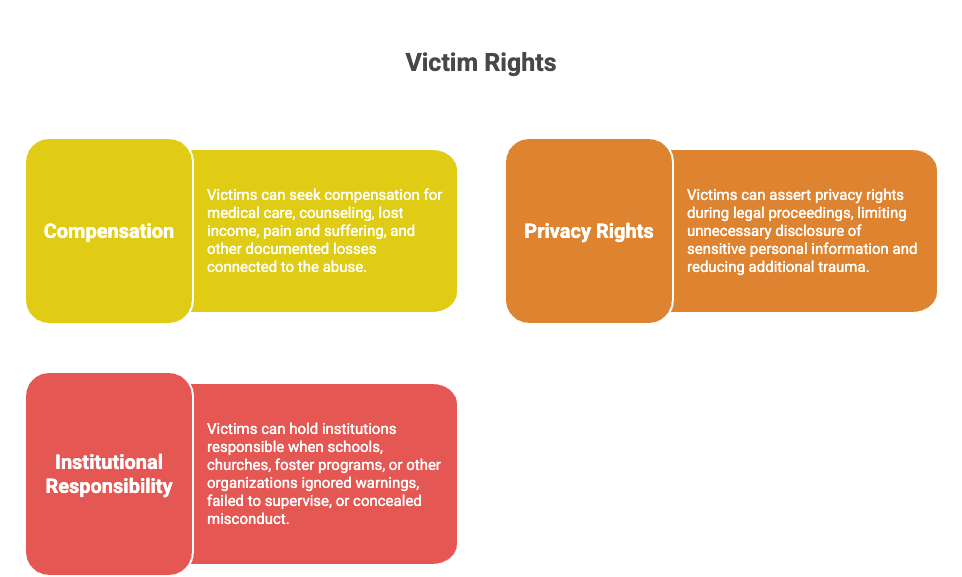
Although the aftermath of institutional sexual abuse can be overwhelming, victims in Florida retain important legal rights designed to protect their safety, preserve their dignity, and provide access to justice. State law may allow civil claims against abusers and institutions whose negligence enabled harm. These rights can help survivors pursue accountability while also locating emotional restoration options and victim support resources that strengthen long-term recovery.
Florida survivors of institutional sexual abuse may pursue justice, protect their dignity, and access support that fosters recovery.
- Victims may seek compensation for medical care, counseling, lost income, pain and suffering, and other documented losses connected to the abuse.
- They may assert privacy rights during legal proceedings, limiting unnecessary disclosure of sensitive personal information and reducing additional trauma.
- They may hold institutions responsible when schools, churches, foster programs, or other organizations ignored warnings, failed to supervise, or concealed misconduct.
Florida law also recognizes that many survivors need time before pursuing legal remedies. Applicable deadlines and exceptions can affect access to justice, making accurate legal evaluation especially important for community-serving advocates.
Steps to Take After an Institutional Sexual Abuse Incident in Florida
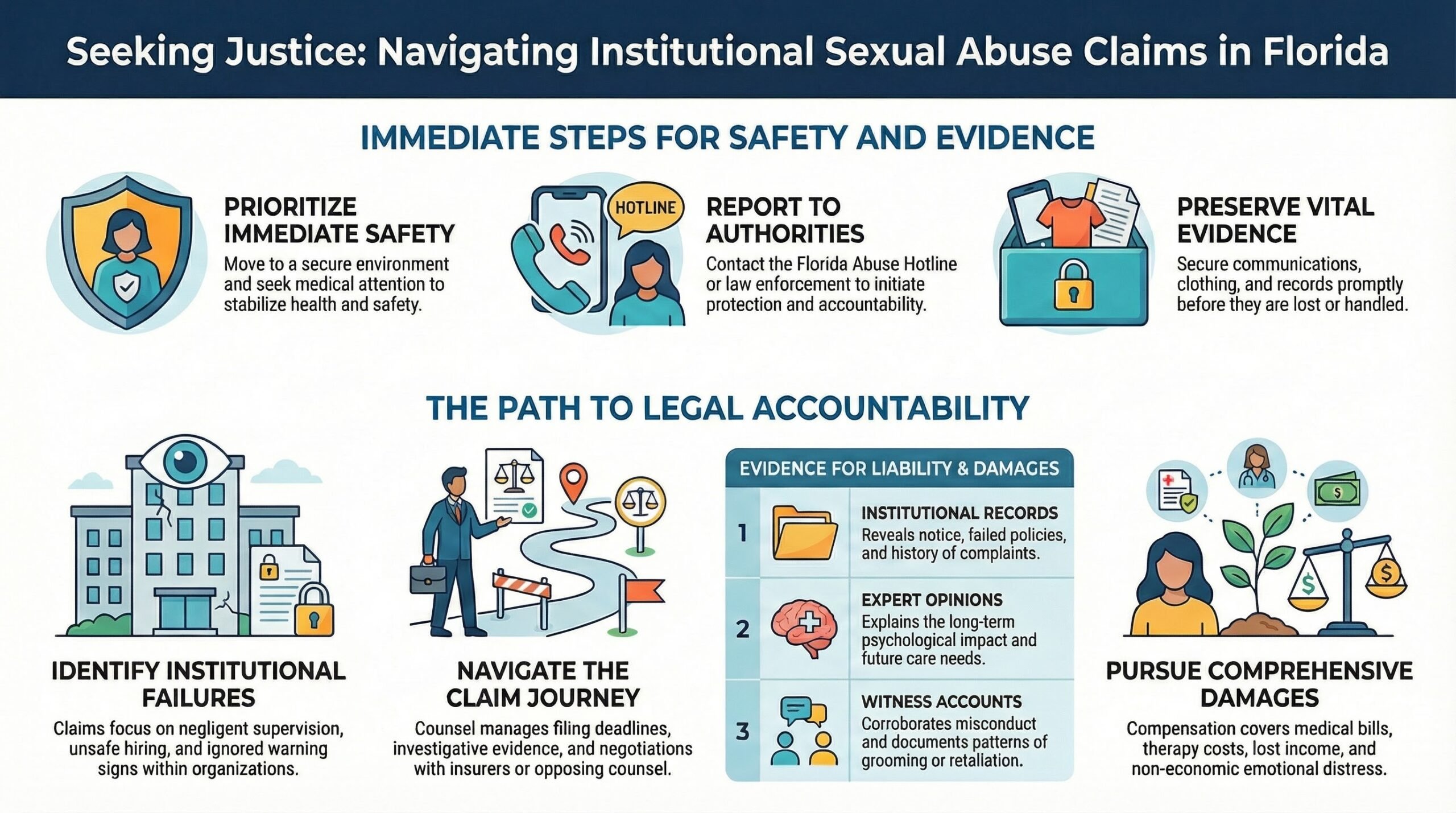
After an institutional sexual abuse incident in Florida, the priority is to guarantee immediate safety and obtain necessary medical attention. The abuse should then be reported to the appropriate authorities or institutional officials, as timely reporting may support both protection and accountability. It is also important to preserve vital evidence, including communications, records, and clothing, because such materials may be essential in any subsequent investigation or legal action.
Ensure Immediate Safety
When institutional sexual abuse is suspected or disclosed, immediate safety must take priority over every other concern. The person affected should be moved to a secure environment away from the alleged offender and any setting that could allow further contact. Trusted caregivers, administrators, or advocates should focus on calm, protective measures, privacy, and basic needs, including medical attention when necessary.
Practical safety planning may include arranging supervision, changing housing or schedules, preserving supportive communication, and limiting access by involved personnel. Those assisting should document immediate concerns for internal coordination while avoiding confrontational actions that could increase risk. Compassionate support also matters. Access to therapy resources can help stabilize the individual, reduce isolation, and strengthen informed decision-making during the earliest stage of response and immediate recovery.
Report The Abuse
Because prompt reporting can protect others and preserve critical evidence, suspected institutional sexual abuse in Florida should be reported to the appropriate authorities as soon as it is safe to do so. A person may contact local law enforcement, the Florida Abuse Hotline, or designated agency officials, depending on the setting and the victim’s immediate needs.
Those seeking to serve and protect vulnerable people should understand available mandatory reporting options, especially when the victim is a child, elder, or disabled adult. Reports should be factual, timely, and directed to entities with legal authority to investigate and intervene. If the abuse occurred within a school, church, detention center, or care facility, internal reporting may supplement, but not replace, external notification. Victim support services can also help survivors access crisis counseling, advocacy, and guidance during the next steps.
Preserve Key Evidence
Preserve all available evidence promptly, as careful documentation can support both a criminal investigation and any related civil claim involving institutional sexual abuse in Florida. This may include clothing, bedding, electronic messages, photographs, medical records, and written timelines detailing dates, locations, and parties involved.
Individuals assisting survivors should encourage secure storage of materials and limit unnecessary handling that could affect reliability. Evidence preservation records can help establish when items were collected, where they were kept, and who accessed them. Prompt medical evaluation may also identify physical findings and create additional documentation.
If others observed concerning conduct, witness testimony documentation should be gathered while memories remain clear. Organized, accurate records may strengthen accountability efforts, protect vulnerable community members, and help legal professionals assess the full scope of institutional responsibility and resulting harm.
How a Florida Institutional Sexual Abuse Lawyer Can Help You Initiate a Case
How, then, does legal counsel help in moving a claim from uncertainty to formal action? A Florida institutional sexual abuse lawyer typically begins by reviewing the facts, identifying responsible parties, and explaining available legal options with care and clarity. Counsel may also coordinate preservation of Forensic evidence, secure records, and guide witness preparation so accounts are documented accurately and respectfully.
Legal counsel brings structure to uncertainty by clarifying options, preserving evidence, and preparing accounts with care and respect.
- Case assessment: The lawyer evaluates timelines, institutions involved, and potential claims under Florida law, helping the individual understand what must be shown.
- Evidence development: Counsel gathers documents, interviews witnesses, and seeks internal policies, incident reports, and other materials that may support accountability.
- Filing strategy: The lawyer prepares notices, drafts the complaint, and ensures procedural rules and deadlines are met, reducing avoidable obstacles.
Through these steps, legal counsel provides structure, protects the integrity of the claim, and supports a process aimed at truth, responsibility, and service to others.
Long-Term Effects of Institutional Sexual Abuse Trauma
Institutional sexual abuse trauma can produce lasting psychological harm, including anxiety, depression, post-traumatic stress, and other serious emotional effects that may persist for years. It also commonly disrupts a person’s ability to form healthy relationships, often leading to deep trust issues with authority figures, family members, and intimate partners. In many cases, these injuries extend into daily functioning, affecting work, education, decision-making, and overall stability.
Lasting Psychological Harm
Over time, the psychological harm caused by institutional sexual abuse can extend far beyond the abuse itself, shaping a survivor’s emotional health, relationships, and daily functioning for years. Many survivors experience persistent anxiety, depression, shame, hypervigilance, sleep disturbance, and difficulty concentrating, even in otherwise safe environments. Trauma triggers may arise unexpectedly through sounds, locations, routines, or authority figures, causing intense distress and disrupting work, education, and personal stability.
Some survivors also face self-blame, emotional numbness, panic symptoms, or post-traumatic stress responses that interfere with ordinary tasks and long-term wellbeing. Compassionate advocacy often recognizes that recovery is not linear and that timely, trauma-informed mental health treatment can support restoration. Understanding these lasting effects helps caregivers, attorneys, and institutions respond with greater care, accountability, and informed service to those harmed.
Relationship And Trust Issues
The effects of institutional sexual abuse frequently extend into a survivor’s ability to form and maintain healthy relationships long after the abuse has ended. Trust may become deeply complicated, particularly when authority figures or caretakers use grooming tactics to exploit dependency and silence disclosure.
Survivors may struggle to identify safe boundaries, interpret motives, or believe consistent care is genuine. In some cases, trauma bonding can create confusion about loyalty, affection, and coercion, especially when abuse was intertwined with attention, rewards, or spiritual influence.
These patterns may affect friendships, family connections, and intimate partnerships, often leading to isolation or repeated involvement with controlling individuals. For those seeking to support survivors, patient listening, reliable conduct, and respect for personal autonomy are vital to restoring a sense of relational safety and mutual trust over time.
Impact On Daily Functioning
Because trauma responses often persist long after the abuse ends, daily functioning may be disrupted in ways that affect work, school, self-care, and routine decision-making. Survivors may struggle with concentration, sleep disturbances, missed appointments, or reduced confidence in ordinary tasks, which can limit independence and stability.
These difficulties often require structured support from professionals, caregivers, and trusted advocates who understand trauma’s enduring effects. Effective Coping strategies may include therapy, predictable routines, mindfulness practices, and gradual goal setting. For younger survivors, responsive school support systems can help address attendance problems, academic decline, and social withdrawal.
In service-oriented settings, recognizing these functional impairments is vital to providing informed assistance, protecting dignity, and promoting recovery. Care that is patient, consistent, and trauma-informed may strengthen resilience over time and restore daily capacity.
What to Expect During a Florida Institutional Sexual Abuse Claim Process
A Florida institutional sexual abuse claim process typically begins with an initial case evaluation, during which the facts, potential liability, and applicable deadlines are assessed. If the matter moves forward, the claim is filed and supported through investigation and evidence gathering, including records, witness statements, and other relevant documentation. From there, the case may proceed toward settlement negotiations or, if necessary, trial, depending on the strength of the evidence and the parties’ positions.
Initial Case Evaluation
What occurs during an initial case evaluation in a Florida institutional sexual abuse claim often determines how the matter will proceed. During this meeting, counsel generally reviews the survivor’s account, identifies the institution involved, and examines available records with care and respect. The purpose is to understand crucial facts, assess legal issues, and recognize immediate needs for protection and support.
A thorough evaluation may also consider Trauma Documentation, medical or counseling history, and relevant witness statements. Attention is given to dates, locations, prior reports, and any institutional response or failure to act. The attorney may explain confidentiality, potential timelines, and what information could strengthen the claim. This stage is not about formal filings, but about building a clear, responsible foundation that honors the survivor’s experience and promotes informed, service-minded decision-making.
Filing The Claim
Once the preliminary evaluation is complete, filing the claim typically begins with preparing a formal complaint that identifies the responsible institution, outlines the alleged abuse, and states the legal grounds for relief under Florida law.
Counsel then conducts a jurisdictional review to confirm the proper court, venue, and filing deadlines. The complaint is filed, served on the institution, and followed by required procedural notices. At this stage, the court assigns a case number and establishes initial scheduling expectations. Survivors and those assisting them are often guided through each filing step with care, so their participation remains informed and purposeful.
An initial evidentiary timeline may also be outlined to organize forthcoming deadlines and court requirements, while preserving compliance with Florida procedural rules and maintaining a structured path toward accountability and meaningful civil remedies.
Investigation And Evidence
Following the filing of the complaint, the claim typically enters the investigation and evidence phase, where counsel begins assembling the factual record to support the allegations against the institution. Attorneys may gather internal reports, personnel files, prior complaints, communications, and surveillance records, and identify witnesses who can clarify what occurred and whether warning signs were ignored.
Medical, counseling, or school records may be reviewed when relevant and legally obtainable. Throughout this stage, counsel often explains confidentiality options and works to reduce unnecessary exposure of sensitive information. The process may also include coordination with experts who assess institutional policies, report failures, and trauma effects. Because many survivors prioritize helping others, careful documentation can strengthen accountability efforts and inform victim support resources within affected communities and future safeguards.
Settlement Or Trial
Although many claims resolve before a courtroom verdict, the settlement or trial stage is where the strength of the evidence, the institution’s legal exposure, and the survivor’s objectives are weighed most directly. Counsel typically applies a careful Negotiation strategy, evaluating damages, accountability measures, confidentiality terms, and the likelihood of success if litigation continues. Institutions may seek to limit financial and reputational harm, while survivors often prioritize safety, truth, and meaningful reform for others.
If settlement discussions fail, the case may proceed to a jury trial. At that point, witness testimony, expert opinions, and documentary evidence are presented under court rules and tested through cross-examination. Trial carries greater uncertainty, but it can also produce public findings and broader institutional scrutiny. Each path requires preparation, discipline, and informed decision-making throughout every stage.
Compensation for Florida Institutional Sexual Abuse Damages
When institutional sexual abuse causes lasting harm, Florida law may allow survivors to seek compensation for a range of damages tied to the abuse and its consequences. This process often considers emotional trauma, the need for ongoing care, and the effects on daily functioning. Strong legal protections can support survivors who choose to act, while careful evidence preservation and clear report procedures may strengthen a claim and promote accountability.
| Consideration | Relevance |
|---|---|
| Medical records | Document treatment needs |
| Therapy history | Shows continuing psychological impact |
| Witness accounts | Corroborate reported misconduct |
| Institutional records | Reveal notice, policies, failures |
| Expert opinions | Explain lasting harm and care |
Compensation may also reflect diminished quality of life, loss of trust, and other serious consequences that service-minded advocates work to address with care. A Florida institutional sexual abuse lawyer can evaluate available remedies and guide survivors toward informed, trauma-aware decisions.
Economic vs Non-Economic Damages in Florida Institutional Sexual Abuse Cases
In Florida institutional sexual abuse cases, damages are generally divided into economic and non-economic categories, each addressing a different type of harm. Economic damages refer to measurable financial losses, such as medical treatment costs, therapy expenses, lost income, and other out-of-pocket consequences, while non-economic damages concern less tangible injuries, including pain and suffering, emotional distress, and loss of enjoyment of life. Establishing either form of damages in Florida requires credible documentation, consistent testimony, and evidence linking the abuse to the claimed losses.
Economic Damages Explained
Because institutional sexual abuse often leaves survivors facing measurable financial losses as well as profound personal harm, Florida law generally separates recoverable damages into two broad categories: economic and non-economic damages.
Economic damages concern documented monetary costs tied to the abuse and its aftermath. In Florida institutional sexual abuse cases, these losses may include past and future medical treatment, therapy expenses, prescription costs, lost wages, diminished earning capacity, and other out-of-pocket expenditures. Records reflecting trauma counseling options, hospital care, transportation, and victim advocate support may help establish the extent of these losses.
Courts and insurers often rely on invoices, employment records, expert opinions, and treatment plans to calculate a fair amount. By identifying concrete financial burdens, economic damages aim to restore resources survivors needed for safety, recovery, and continued stability after institutional misconduct.
Non-Economic Losses Overview
How do non-economic losses differ from the financial harms measured through bills, wage records, and other documentation? In Florida institutional sexual abuse cases, they address human suffering that cannot be totaled on receipts, yet often shapes daily functioning and a survivor’s capacity to care for others. These losses may include pain, humiliation, loss of trust, anxiety, depression, and diminished enjoyment of life.
Non-economic harm may also relate to a PTSD diagnosis, ongoing counseling needs, and emotional distress claims tied to disrupted relationships or spiritual well-being. Unlike financial losses, these harms are not reduced by Medicaid eligibility, although public benefits can affect broader case planning. Because Florida law can impose limits based on the timing of statutes, survivors and families often benefit from informed guidance that recognizes both personal dignity and long-term recovery needs.
Proving Damages In Florida
Proving damages in a Florida institutional sexual abuse case requires more than identifying categories of harm; it requires evidence that connects the abuse to specific financial and non-economic losses. Economic damages may include therapy costs, medical treatment, lost wages, reduced earning capacity, and other measurable expenses documented through records, invoices, employment history, and expert testimony.
Non-economic damages often require equally careful proof. Testimony from mental health professionals, family members, and the survivor may help establish pain, suffering, loss of enjoyment of life, and emotional distress damages. Consistency between treatment records and personal accounts can strengthen credibility.
Counsel also evaluates how the statute of limitations affects available claims and supporting evidence. A service-focused legal approach emphasizes thorough documentation, respectful advocacy, and a clear presentation of harm so accountability can be pursued effectively.
When a Florida Institutional Sexual Abuse Case Goes to Trial vs Settlement
Resolution in a Florida institutional sexual abuse case may occur through settlement or proceed to trial, and the appropriate path depends on the strength of the evidence, the defendant’s willingness to accept responsibility, and the survivor’s legal and personal objectives. Settlement may provide privacy, faster closure, and reduced litigation stress, particularly when liability is clear, and compensation can address treatment needs and long-term harm.
Trial may become necessary when institutions deny misconduct, dispute damages, or refuse meaningful accountability. In those circumstances, careful evidence handling and thorough deposition preparation can shape credibility, preserve testimony, and expose failures in supervision, reporting, or internal safeguards. A trial also offers a public forum that may advance protection for others by bringing institutional conduct into the open.
Counsel evaluates settlement offers against probable verdict ranges, litigation costs, appeal risks, and the survivor’s priorities. The decision is case-specific, guided by informed judgment, respectful advocacy, and a commitment to safety, dignity, and community responsibility.
The Statute of Limitations for Florida Institutional Sexual Abuse Cases
Because filing deadlines can determine whether a survivor may pursue compensation at all, the statute of limitations is a key issue in Florida institutional sexual abuse cases. Florida law has changed over time, and the applicable deadline may depend on the survivor’s age, the date of the abuse, and when the harm was discovered.
For institutions, these timelines can shape exposure and record-keeping duties. For survivors and those who support them, understanding the governing period helps protect legal rights while encouraging responsible action. Evidence preservation is especially important because documents, electronic communications, and witness memories may become harder to obtain as years pass. Courts may also examine whether tolling rules or statutory exceptions apply in a particular matter.
A careful review of dates, institutional conduct, and available proof is therefore critical. Early attorney consultation can help clarify which deadlines govern, what claims may still be viable, and how procedural requirements affect a civil case under Florida law.
When to Contact an Institutional Sexual Abuse Lawyer in Florida
Timing often affects both a survivor’s legal options and an institution’s potential liability, which is why contact with an institutional sexual abuse lawyer in Florida should be considered as soon as abuse is suspected, disclosed, or discovered. Early communication helps families, caregivers, advocates, and service-minded leaders understand next steps while protecting the survivor’s well-being and preserving important facts.
A prompt consultation may be appropriate after a child reports abuse, when warning signs emerge, after an internal complaint, or once records suggest neglectful supervision, concealment, or policy failures. Legal counsel can also provide Immediate reporting guidance that aligns protective action with applicable reporting duties.
In many situations, timely advice supports a careful response that avoids accidental loss of information. An Evidence preservation checklist may help identify messages, emails, personnel files, incident reports, photographs, medical records, and witness names before they disappear. Contact should not wait for an institution to complete its own review or offer explanations.
Why You Need an Experienced Florida Institutional Sexual Abuse Lawyer
Although many claims involve similar forms of misconduct, institutional sexual abuse cases in Florida often turn on complex questions of negligent supervision, hiring practices, reporting failures, record retention, and organizational control. An experienced lawyer helps identify how these failures intersect with state law, internal policies, and duties owed to vulnerable people in schools, churches, camps, medical settings, and care facilities.
Experience matters because these cases frequently require prompt preservation of evidence, careful witness interviews, and review of archived personnel files, incident reports, and prior complaints. Counsel with substantial experience in institutional abuse can assess Consent standards, examine whether adults in authority exploited power imbalances, and trace how administrators responded to warning signs. Skilled representation also helps present the full scope of harm in a clear, disciplined manner that supports accountability and encourages safer practices for others. In service-oriented communities, this guidance can protect individual rights while reinforcing institutional responsibility and prevention.
How to Choose the Right Institutional Sexual Abuse Lawyer for Your Case in Florida
How should a survivor or family evaluate counsel for an institutional sexual abuse case in Florida when legal experience alone may not tell the full story? A careful review should consider whether the lawyer demonstrates trauma-informed communication, respect for privacy, and a clear commitment to Evidence preservation from the earliest stages of investigation.
It is also important to assess the attorney’s record with intricate institutional claims involving schools, churches, youth programs, healthcare providers, or residential facilities. Strong counsel explains strategy plainly, addresses deadlines under Florida law, and prepares a case that reflects both liability and the impact on recovery.
Responsive communication, access to professional resources, and readiness for litigation may indicate effective representation. Families serving a survivor’s long-term well-being should look for steadiness, integrity, and attention to detail. Initial consultations can help reveal whether counsel listens carefully, answers difficult questions directly, and approaches the matter with discipline, dignity, and sustained focus throughout proceedings.
About The Law Offices of Anidjar & Levine
When survivors and families seek representation for claims involving institutional sexual abuse in Florida, The Law Offices of Anidjar & Levine presents a practice focused on client service, case preparation, and disciplined advocacy.
The firm approaches these matters with careful attention to dignity, privacy, and the practical needs of those pursuing accountability through civil claims.
Its attorneys evaluate institutional records, reporting histories, and supervision failures to identify where Consent requirements and safeguarding procedures may have been ignored.
This method supports a thorough review of schools, religious organizations, care facilities, and youth programs whose policies or omissions may have enabled abuse.
The firm also emphasizes clear communication, timely updates, and responsive support so clients can make informed decisions at each stage.
Frequently Asked Questions
How Is Attorney-Client Confidentiality Protected in These Cases?
Attorney-client confidentiality is protected through privilege confidentiality rules that generally prevent lawyers from disclosing privileged communications without client consent. It applies to private discussions made for legal advice, whether spoken, written, or electronic. Attorneys also use secure files, limit staff access, and handle cases carefully to safeguard sensitive information. Exceptions are narrow, such as preventing imminent harm or complying with specific legal or court-ordered disclosure requirements.
Can I Switch Lawyers During an Ongoing Institutional Sexual Abuse Case?
Yes, a person may change lawyers during an ongoing case, provided the shift does not violate court orders or prejudice the matter. When switching counsel, it is prudent to review any fee agreement, notify current counsel in writing, and coordinate deadlines carefully. Requesting file access is typically appropriate, as the case file helps new counsel continue effective representation. Courts may require formal substitution procedures before the change becomes fully effective.
Will My Immigration Status Affect My Ability to File a Claim?
Immigration status does not automatically prevent a person from filing a claim, though it may influence certain eligibility requirements and procedural considerations. Courts generally focus on the underlying facts, available evidence, and compliance with case-filing timelines rather than on citizenship alone. Because institutional abuse matters often affect vulnerable communities, careful legal review is critical. A qualified attorney can assess risks, protect rights, and help guarantee the claim proceeds properly.
Are Virtual Consultations Available for Institutional Sexual Abuse Cases?
Yes, virtual consultations are commonly available for institutional sexual abuse cases. Many firms offer remote intake to help individuals seek guidance safely, promptly, and with fewer barriers to access. These meetings typically include privacy assurances, secure communication methods, and clear explanations of next steps. This approach supports those who wish to protect others by reporting abuse, while receiving informed legal guidance in a confidential, professional setting and preserving personal dignity throughout.
How Are Legal Fees Structured for Florida Institutional Sexual Abuse Claims?
Legal fees are often structured through a contingency fee, meaning counsel is paid only if recovery occurs. Some matters may involve a flat retainer or billing hourly, though these models are less common in sensitive claims. Firms should explain percentages, litigation expenses, and cost reimbursement terms at the outset. Clear fee agreements help survivors and families make informed decisions, protect resources, and focus on accountability, recovery, and long-term community safety.
—————————
Institutional sexual abuse claims in Florida require careful legal evaluation, timely action, and a clear understanding of a survivor’s rights.
An experienced attorney can assess the facts, identify liable institutions, and pursue accountability through the appropriate legal channels.
The Florida Sexual Assault Lawyer team at Law Offices of Anidjar and Levine provides focused representation for those seeking justice and financial recovery.
With informed legal guidance, survivors may take meaningful steps to protect their interests and hold negligent parties responsible.