Law Offices of Anidjar and Levine helps survivors determine whether a mandated reporter, employer, school, healthcare provider, or institution failed to notify authorities despite warning signs or disclosures.
Counsel evaluates who had a legal duty, what information was available, and whether that omission caused additional harm.
Legal guidance may include preserving evidence, reporting to the appropriate agencies, assessing civil claims, and explaining potential criminal exposure.
Survivors may also benefit from speaking with a Florida Sexual Assault Lawyer.
The sections below outline these issues in greater detail.
Main Takeaways
- A Florida lawyer can assess whether a person or institution had a legal duty to report suspected sexual abuse and failed to act.
- Failure to report may support civil claims against schools, healthcare providers, religious organizations, foster agencies, or other negligent parties.
- An attorney can identify evidence such as disclosures, warning signs, records, timelines, and witness statements showing that a reporting obligation existed.
- Lawyers also explain possible criminal exposure for knowing and reporting violations, while keeping civil compensation claims separate and clear.
- Prompt legal guidance helps preserve evidence, protect privacy, and coordinate reports to law enforcement or the Florida Abuse Hotline.


How We Can Help With Your Florida Failure to Report Sexual Abuse Claim
When a school, employer, healthcare provider, or other responsible party fails to report suspected sexual abuse as required by Florida law, that omission can create serious legal consequences and deepen the harm suffered by the victim. In these matters, counsel can provide structured guidance focused on protection, accountability, and recovery for those affected.
An attorney can assess the facts, identify liable parties, and explain available legal options with care and clarity. Evidence preservation is often a first priority, because records, communications, internal reports, and witness statements may prove required to a strong claim. Counsel can also manage contact with institutions and insurers, reducing additional stress on survivors and families. Through careful investigation, legal advocates can build a claim for damages tied to emotional harm, treatment costs, and related losses.
They also explain Civil versus criminal, so clients understand how a civil action differs from a state prosecution. The objective remains service, justice, and meaningful support.
OUR CONSULTATIONSARE FREE
START YOUR FREE CASE REVIEW

Understanding Failure to Report Sexual Abuse Cases in Florida
Failure to report sexual abuse cases in Florida arises when a person or institution with a legal duty to notify authorities of suspected abuse does not do so, despite information that should have prompted a report. These matters center on whether warning signs, disclosures, or credible observations created a reporting obligation under Florida law and whether that obligation was ignored.
A careful understanding of these cases helps communities protect vulnerable individuals and respond responsibly. Legal review often examines who had the duty to report, what information was available, when action should have occurred, and how the failure may have affected safety and accountability. In many situations, timely evaluation includes legal eligibility checks to determine possible civil claims and related rights.
Survivors and families may also need guidance toward Victim support resources that address counseling, advocacy, and practical assistance. A structured legal approach can help clarify responsibilities, preserve evidence, and support informed decisions focused on protection, recovery, and public safety.
Common Scenarios When Failure to Report Sexual Abuse Might Take Place in Florida
Failure to report sexual abuse in Florida may arise in several settings where legal duties and institutional pressures intersect. Common examples include school staff nonreporting, healthcare provider omissions, religious institution coverups, and foster care reporting failures. Each scenario may involve different reporting obligations, internal barriers, and potential consequences under Florida law.
School Staff Nonreporting
Although Florida law generally requires school employees and other mandated reporters to notify authorities of suspected child sexual abuse, nonreporting can still occur in school settings through delay, misjudgment, or deliberate inaction. Administrators, teachers, coaches, and support staff may minimize disclosures, rely on internal discipline, or wrongly believe uncertainty excuses silence. Such failures can undermine student safety and community trust.
In these situations, Mandatory reporter duties apply regardless of a minor’s apparent willingness, because consent and reporting thresholds differ under Florida law. Gaps in training compliance may leave staff confused about documentation, timing, or where reports must be directed. When a school employee fails to act, legal consequences may include criminal and civil liability, as well as institutional scrutiny, employment discipline, and renewed attention to protective policies and reporting culture.
Healthcare Provider Omissions
When suspected sexual abuse presents in a medical setting, reporting omissions may arise if a physician, nurse, counselor, or other healthcare professional attributes injuries or disclosures to noncriminal causes and does not promptly notify the proper authorities. In Florida, these situations may involve missed warning signs, inadequate documentation, or reliance on a caregiver’s explanation despite conflicting clinical indicators.
Mandatory reporting duties exist to protect vulnerable patients, particularly children and dependent adults, when abuse is reasonably suspected rather than conclusively proven. A provider may also fail to escalate concerns after observing repeated trauma, sexually transmitted infections, or behavioral changes consistent with abuse. For families seeking accountability and protection, civil liability theories may examine whether the provider’s inaction allowed continued harm, delayed intervention, or interfered with an investigation intended to restore the patient and others.
Religious Institution Coverups
In some religious institutions, sexual abuse may remain unreported because clergy, administrators, or affiliated staff choose to address allegations internally rather than notify law enforcement or child protective authorities. Such responses may include private counseling, reassignment, or informal discipline, even when clergy misconduct allegations involve minors or vulnerable adults. When leaders prioritize institutional reputation, donor confidence, or congregational stability, victims may be denied timely protection and access to supportive resources.
Mandatory reporting duties exist to help safeguard those at risk, yet confusion about exemptions, loyalty to leadership, or fear of scandal can delay action. A careful review of reporting failures may reveal whether responsible parties ignored warning signs, discouraged disclosure, or withheld crucial information. Accountability in these matters supports community safety, transparency, and compassionate service to those harmed.
Foster Care Reporting Failures
Examine foster care reporting failures closely, and a recurring pattern may emerge in which caseworkers, placement agencies, foster parents, or supervisors do not promptly alert child protective authorities or law enforcement after signs of sexual abuse appear. In Florida, these lapses may follow dismissed disclosures, incomplete incident notes, or transfers that obscure prior complaints. Service-minded advocates often observe that delayed reporting can increase danger, complicate treatment, and weaken accountability.
Related concerns may include evidence-preservation mistakes, such as failing to secure clothing, messages, or medical records, and errors in calculating damages when long-term trauma is undervalued. A careful review may consider staffing shortages, inadequate training, fragmented oversight, and fear of institutional criticism. When reporting duties are neglected, vulnerable children may remain exposed, while opportunities for protection, investigation, and meaningful legal recourse are reduced.


Legal Rights of Failure to Report Sexual Abuse Victims in Florida
Although Florida law imposes reporting obligations on certain professionals and institutions, survivors affected by a failure to report sexual abuse may still have important legal rights under both civil and criminal law. When mandatory reporting duties are ignored, victims may seek accountability from abusers and, in some cases, from organizations whose omissions contributed to ongoing harm.
Florida law may permit claims for damages related to trauma, medical care, counseling, lost income, and other measurable losses.
- Survivors may pursue civil claims against negligent parties that failed to protect them.
- Prosecutors may examine whether criminal liability applies to individuals who knowingly violated reporting duties.
- Courts may recognize rights to privacy, safety, and respectful treatment throughout legal proceedings.
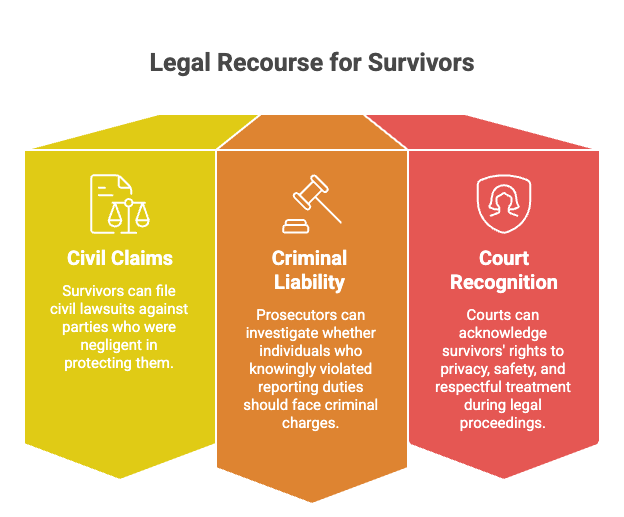
These rights exist to promote protection, dignity, and justice for vulnerable people and the communities that support them. A careful legal evaluation can clarify whether statutory duties, institutional policies, and the facts of the abuse create additional grounds for relief under Florida law.
Steps to Take After a Failure to Report a Sexual Abuse Incident in Florida
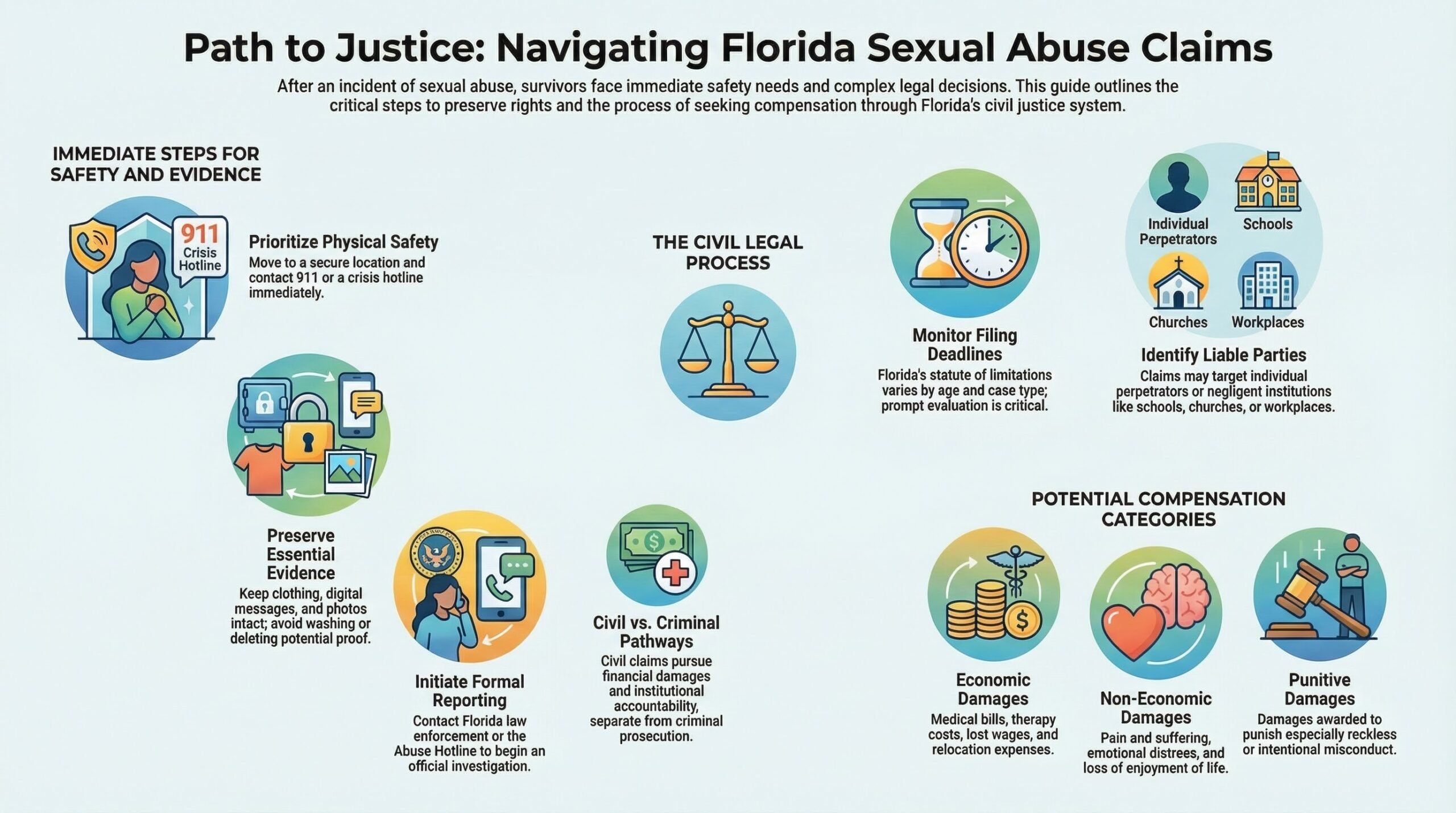
After a failure to report a sexual abuse incident in Florida, several immediate steps may help protect both the individual’s well-being and any future legal claim. These measures often include preserving essential evidence, reporting the matter to the appropriate authorities, and consulting a Florida lawyer to assess available legal options. A prompt and organized response can strengthen documentation, support official action, and clarify the next course of action.
Preserve Critical Evidence
In the wake of a failure to report sexual abuse in Florida, preserving pivotal evidence is often necessary to protect a survivor’s legal rights and support any future civil or criminal investigation. Careful evidence preservation may include saving emails, text messages, photographs, medical records, and contemporaneous notes in secure locations. Digital timestamping can help verify when files were created or transmitted, which may strengthen credibility later.
If others observed relevant events or disclosures, witness statement collection should be handled promptly and respectfully, while memories remain fresh. Physical items should be stored without alteration, and chain-of-custody records should be maintained to document who handled each item and when. These measures can help protect vulnerable individuals, support advocates and counsel, and preserve facts with integrity over time.
Report To Authorities
When a failure to report sexual abuse is suspected in Florida, notifying the appropriate authorities should be treated as a prompt and deliberate step. A report may be made to local law enforcement, the Florida Abuse Hotline, or the relevant child protective agency, depending on the circumstances and the victim’s age. Clear, factual information should be provided, including names, dates, locations, and any known safety risks.
Those assisting survivors or vulnerable individuals should understand that mandatory disclosure laws and reporting duties exist to protect others from further harm. If an institution, caregiver, teacher, or medical professional may have withheld a report, that concern should also be communicated to investigators. Timely reporting can support accountability, encourage protective intervention, and help public agencies assess whether additional victims may be at risk.
Consult A Florida Lawyer
Legal guidance should be sought as soon as concerns arise that sexual abuse was not properly reported in Florida, particularly where a survivor’s safety, evidence preservation, or institutional accountability may be at issue. A Florida lawyer can assess whether Mandatory reporting laws apply, identify who may have breached a professional duty, and explain available civil or criminal avenues. Counsel may also help organize records, communications, and witness information relevant to reporting procedures and institutional responses.
By carefully reviewing timelines, an attorney can address legal deadlines that may affect claims or related actions. This step supports informed decision-making and helps those seeking to protect others proceed responsibly. Early consultation may also reduce avoidable mistakes, strengthen documentation efforts, and clarify how to cooperate with authorities while preserving the survivor’s interests and long-term rights.
How a Florida Failure to Report Sexual Abuse Lawyer Can Help You Initiate a Case
Although the aftermath of sexual abuse often involves confusion, fear, and institutional resistance, a Florida failure to report sexual abuse lawyer can provide the structure and legal guidance needed to begin a case with clarity and purpose. Counsel typically evaluates reporting timelines, identifies breaches of mandated reporter duties, and explains which parties may be legally accountable under Florida law. This early assessment helps survivors and supportive communities act in ways that protect both dignity and legal options.
A lawyer may also guide the first practical steps, including evidence preservation and secure communication with investigators or agencies. Useful support often includes:
- reviewing records, messages, and institutional policies for signs of nonreporting
- coordinating confidential interviews and documenting witness accounts carefully
- preparing notices, filings, and a strategy for civil claims or related proceedings
Long-Term Effects of Failure to Report Sexual Abuse Trauma
Failure to report sexual abuse trauma can contribute to significant emotional and psychological harm, including persistent anxiety, depression, and unresolved distress. It may also interfere with the ability to form healthy relationships, as trust difficulties and social withdrawal often continue long after the abuse occurred. In some cases, the trauma is accompanied by lasting physical symptoms, such as sleep disruption, chronic pain, and other stress-related health concerns.
Emotional And Psychological Impact
When sexual abuse trauma remains unreported, the emotional and psychological effects often deepen over time, shaping the survivor’s sense of safety, trust, and self-worth in lasting ways. Many experience chronic anxiety, depression, shame, hypervigilance, and intrusive memories that interrupt daily functioning and weaken resilience. Without timely intervention, trauma coping mechanisms may become harmful, including withdrawal, self-blame, emotional numbing, or substance misuse.
These responses are not signs of weakness, but indicators of unresolved injury requiring compassionate, informed support. Over the years, suppressed trauma can contribute to sleep disturbance, panic symptoms, concentration problems, and persistent fear. Access to qualified mental health services may help survivors process experiences, reduce symptoms, and support stability. For those committed to protecting others, recognizing these long-term effects is necessary to responding responsibly and promoting recovery and dignity.
Relationship And Trust Difficulties
Unreported sexual abuse trauma often extends beyond internal distress and disrupts a survivor’s ability to form and maintain healthy relationships over time. Trust can become fragile, leading to hesitation, withdrawal, or fear when closeness is expected. In many cases, Communication barriers develop because the survivor struggles to express needs, establish boundaries, or accurately interpret another person’s intentions.
These difficulties can affect family bonds, friendships, intimate partnerships, and professional interactions. Some survivors may place misplaced confidence in unsafe individuals, while remaining guarded with those who offer genuine support. Others may overaccommodate, seeking safety through compliance rather than mutual respect. For those committed to helping, understanding these patterns is critical. Patient-informed support can encourage healthier connections, reinforce personal agency, and create conditions for the gradual, careful restoration of trust through consistent care.
Lasting Physical Symptoms
Although the psychological impact of sexual abuse often receives primary attention, long-term physical symptoms may also persist for years when trauma remains unaddressed. Survivors of Childhood harm may experience chronic pain, gastrointestinal distress, headaches, sleep disruption, and weakened immune functioning. These conditions can interfere with work, caregiving, education, and daily responsibilities, especially when the abuse was never reported and support was delayed.
A service-oriented response recognizes that medical needs merit careful attention alongside emotional care. Consistent medical documentation may help connect symptoms to trauma, guide appropriate referrals, and support informed advocacy. In many cases, trauma recovery requires collaboration among physicians, counselors, and other professionals who understand trauma’s effects on the body. For some survivors, ongoing treatment remains necessary to manage symptoms, restore stability, and improve long-term functioning.
What to Expect During a Florida Failure to Report Sexual Abuse Claim Process
A Florida failure to report sexual abuse claim process typically begins with filing the initial claim and identifying the parties whose conduct may have contributed to the harm. The matter then turns to gathering crucial evidence, which may include records, witness statements, internal reports, and other documentation relevant to notice, response, and resulting damages. From there, the claim may proceed through settlement negotiations or litigation, with possible outcomes ranging from negotiated compensation to a court judgment or dismissal.
Filing The Initial Claim
For many survivors, filing the initial claim in a Florida failure to report sexual abuse case begins with a structured review of the facts, including when the abuse occurred, who knew or should have known about it, and whether a mandated reporter or institution failed to act as required by law.
Counsel typically identifies the proper defendants, confirms filing deadlines, and outlines the legal theories that may support accountability. The initial claim may be presented through a civil complaint or a formal notice, depending on the circumstances and parties involved. During this stage, the survivor is often guided with care, dignity, and respect, so informed decisions can be made without unnecessary strain. Early planning may also address Evidence collection and settlement preparation, while preserving the survivor’s interests and the broader goal of protecting others from preventable harm.
Gathering Key Evidence
Once the claim is underway, gathering essential evidence becomes a central part of a Florida failure to report sexual abuse case, because liability often turns on what was known, when it was known, and whether a legal duty to report was ignored.
Attorneys typically collect internal reports, emails, personnel files, policy manuals, and prior complaints that may show awareness of abuse or warning signs. They may interview witnesses, including staff, family members, and others who observed concerning conduct or received disclosures. Medical records, counseling notes, and related documentation can help establish harm, timing, and consistency of reported events.
Attorneys also review mandatory reporting laws, institutional procedures, and timelines to compare expected actions with what actually occurred. This careful process helps build a factual foundation that supports accountability, protects vulnerable people, and advances a service-centered pursuit of justice.
Settlement And Litigation
Although many claims resolve outside the courtroom, settlement and litigation in a Florida failure to report sexual abuse case often proceed on parallel tracks as attorneys assess liability, damages, and the strength of the available evidence. Counsel commonly prepares a demand package, engages insurers or institutional representatives, and reviews whether witnesses, records, and reporting failures support meaningful negotiations.
At the same time, litigation may involve filing pleadings, exchanging discovery, taking depositions, and presenting motions that clarify disputed facts and legal duties. Attorneys may also coordinate civil strategy with any related criminal liability investigation, while keeping the client informed and protected. Careful damage proof is critical, including treatment records, expert opinions, and documentation of educational, vocational, or personal harm. This structured process helps survivors pursue accountability with steadiness, preparation, and respect.
Possible Case Outcomes
Because the outcome of a Florida failure to report sexual abuse claim depends on the facts, evidence, and parties involved, several different resolutions may be possible as the case moves forward. A claim may end in dismissal, settlement, or trial, depending on liability standards, witness credibility, and available records.
If the evidence shows a legal duty existed and was breached, compensation may be awarded for medical care, counseling, lost income, and other harm. Strong damage proof often influences settlement value and trial outcomes. In some matters, multiple defendants may share responsibility, including institutions, supervisors, or mandated reporters. Courts may also limit recovery if evidence is incomplete or deadlines were missed. For people seeking accountability and protection for others, each outcome can still provide important answers, financial support, and a clearer path toward safety and recovery.
Compensation for Florida Failure to Report Sexual Abuse Damages
In Florida, failure to report sexual abuse cases, compensation is intended to address the full scope of harm caused not only by the underlying abuse, but also by the additional damage that may result when a mandated report is not made. Courts may consider legal evidence showing delayed intervention, emotional distress, school negligence, or healthcare misconduct when valuing damages. This process aims to support accountability and protect others from preventable harm.
| Factor | Relevance | Purpose |
|---|---|---|
| Delayed reporting | Prolonged exposure | Measure added harm |
| Institutional failures | Notice and inaction | Promote safety |
| Corroborating records | Stronger proof | Support fair value |
Compensation may reflect the survivor’s changed daily functioning, need for continued care, and the broader impact on personal stability and trust. In service-oriented communities, these claims can also encourage stronger reporting practices, better supervision, and safer environments for children and vulnerable adults. Each case depends on facts, documentation, witness accounts, and credible professional evaluation.
Economic vs Non-Economic Damages in Florida: Failure to Report Sexual Abuse Cases
In Florida failure to report sexual abuse cases are generally divided into economic losses and non-economic harm. Economic damages address measurable financial effects, such as medical expenses, therapy costs, and lost income, while non-economic damages concern pain and suffering, emotional distress, and other intangible injuries. A proper claim often depends on clear evidence that proves both the financial impact and the broader personal harm recognized under Florida law.
Economic Damages Overview
When a Florida failure to report sexual abuse claim is evaluated, economic damages refer to the measurable financial losses tied to the abuse and its aftermath, while non-economic damages address the human consequences that do not carry a fixed dollar amount. In practice, economic damages may include therapy expenses, hospital bills, prescription costs, lost wages, reduced earning capacity, relocation expenses, and other out-of-pocket losses reasonably connected to the failure to report.
A careful review often considers insurance coverage options that may help satisfy part of a judgment or settlement. Strong claims also depend on evidentiary documentation, such as invoices, employment records, receipts, treatment summaries, and expert assessments. By organizing these materials, counsel can present a clear financial picture that supports accountability and helps families seek practical, service-minded relief through the civil justice process.
Non-Economic Harm Explained
Although economic losses can often be documented through bills and wage records, non-economic harm in a Florida failure to report sexual abuse case addresses the serious personal consequences that do not appear on a ledger. These damages may include pain, humiliation, anxiety, loss of trust, disrupted relationships, and diminished enjoyment of daily life. They also reflect how unresolved harm can shape education, work, spiritual life, and the ability to serve others with stability and confidence.
In some matters, trauma triggers, depression, or fear of authority figures remain long after the underlying abuse or related medical negligence is discovered. Florida law recognizes that these injuries are deeply real, even when they cannot be measured by invoices alone. A careful legal evaluation considers the human impact with dignity, seriousness, compassion, and respect for survivors and families.
Proving Losses In Florida
Because damages in a Florida failure to report sexual abuse case must be supported with credible evidence, proving losses requires a careful distinction between economic and non-economic harm. Economic damages are typically demonstrated through records of medical treatment, counseling expenses, lost wages, reduced earning capacity, and costs associated with long-term recovery. These measurable losses help demonstrate the financial impact on the survivor and the household.
Non-economic damages address harms that do not appear on invoices or pay stubs. Courts may consider testimony, clinical evaluations, and other evidence showing emotional distress, pain, suffering, loss of enjoyment of life, and lasting psychological effects. In service to accountability and recovery, thorough documentation allows counsel to present a clear picture of the survivor’s losses and the full consequences of the reporting failure.
When a Florida Failure to Report Sexual Abuse Case Goes to Trial vs Settlement
While many Florida failure to report sexual abuse claims resolve through negotiated settlement, some proceed to trial when the parties sharply dispute liability, damages, or the credibility of important evidence. In evaluating trial versus settlement, counsel assesses witness consistency, institutional records, and the impact of disclosure on the claim. Settlement may provide privacy, quicker resolution, and reduced litigation strain, which can support survivors and families seeking stability and accountability.
A case is more likely to reach trial when defendants deny knowledge, challenge causation, or minimize the harm caused by inaction. A trial can offer a public forum for fact-finding and may result in a verdict that reflects the seriousness of the misconduct. However, it also involves greater expense, longer timelines, and uncertain outcomes. A service-oriented legal team prepares each matter as if trial is possible, while still pursuing fair settlement terms that protect the survivor’s interests and encourage safer practices within Florida institutions and communities.
The Statute of Limitations for Florida Failure to Report Sexual Abuse Cases
When a Florida failure to report sexual abuse claim is evaluated, the statute of limitations often becomes one of the first and most consequential issues reviewed. Florida law applies different filing periods depending on the legal theory asserted, the claimant’s age at the time of the abuse, and whether damages are sought from an individual, an institution, or a mandated reporter under applicable law.
Careful attention to Statute requirements is critical because missed deadlines can prevent otherwise valid claims from proceeding. In some matters, tolling exceptions may extend the filing period, including circumstances involving delayed discovery, concealment, minority, or mental incapacity. Courts examine these issues closely, and records, timelines, and witness information often become central to that analysis.
For families, advocates, and community members seeking accountability and protection for others, understanding limitation periods helps preserve the opportunity to pursue civil remedies. A timely review of dates and facts supports informed decision-making and promotes responsible action in service to affected individuals.
When to Contact a Failure to Report Sexual Abuse Lawyer in Florida
Statutory deadlines often dictate how quickly a matter should be reviewed, but timing is only one factor in deciding whether to consult legal counsel. A failure to report sexual abuse lawyer in Florida may be contacted as soon as there is concern that a mandatory reporter, institution, or supervising adult did not act appropriately after learning of suspected abuse.
Early legal consultation can help a family or advocate understand reporting deadlines, available options, and immediate steps that may protect others from harm. Prompt attention also supports Evidence preservation, including records, messages, internal reports, and witness recollections that may become harder to obtain over time.
Contact may also be appropriate when questions arise about confidentiality, interactions with schools or organizations, or access to victim support services. Even when a person is uncertain whether a legal claim exists, an initial review can clarify responsibilities, identify practical next steps, and promote informed, service-minded decision-making for all involved.
Why You Need an Experienced Florida Failure to Report Sexual Abuse Lawyer
Because failure-to-report sexual abuse matters often involve overlapping duties, institutional policies, and sensitive factual disputes, experienced Florida counsel can provide focused analysis that less seasoned representation may overlook. Such representation helps survivors and concerned families understand reporting obligations, civil liability theories, and procedural steps that may affect accountability and community protection.
An experienced lawyer can identify relevant records, interview appropriate witnesses, and coordinate Evidence preservation before documents, messages, or surveillance materials are lost. Counsel also evaluates Statute timeframes, which may differ depending on the facts, the parties involved, and the claims asserted. This guidance supports timely action and reduces avoidable setbacks.
Seasoned legal representation is also important when schools, religious organizations, healthcare providers, or other institutions deny knowledge, shift responsibility, or rely on internal procedures. Careful legal analysis can clarify who had duties to act, what warnings existed, and whether failures to report contributed to further harm.
How to Choose the Right Failure to Report Sexual Abuse Lawyer for Your Case in Florida
Selecting the right Florida failure-to-report sexual abuse lawyer requires careful attention to experience, case focus, and the ability to evaluate institutional misconduct. A prudent review begins with attorneys who regularly handle abuse-related civil claims and understand the reporting duties imposed on schools, churches, healthcare providers, and youth organizations throughout Florida.
Potential clients should compare courtroom background, investigation resources, and communication practices. Clear explanations matter because survivors and families often seek accountability that may protect others from harm. During consultations, the lawyer should discuss selecting a legal strategy based on available evidence, responsible parties, and the client’s goals for justice, privacy, and long-term support.
It is also wise to ask about vetting case timelines, including statutory deadlines, document preservation, witness availability, and expected litigation stages. Fee structures, trauma-informed representation, and willingness to pursue institutional records can further distinguish capable counsel. Careful selection helps align legal representation with service, truth, and meaningful protection for vulnerable communities statewide.
About The Law Offices of Anidjar & Levine
After evaluating the qualities that distinguish effective counsel in failure-to-report sexual abuse cases, attention may turn to the firm itself and the representation it provides.
The Law Offices of Anidjar & Levine is recognized for a client-centered approach grounded in responsiveness, preparation, and clear communication.
In matters involving Mandated Reporting Duties, the firm examines whether institutions, professionals, or organizations failed to act when warning signs or disclosures required intervention.
Its attorneys assess available records, identify responsible parties, and explain how Florida law may apply, including possible Florida Legal Exceptions that affect reporting obligations.
The firm also emphasizes practical guidance, helping clients understand timelines, evidence preservation, and potential civil remedies.
For individuals and families seeking accountability in the service of community safety, the firm presents itself as a resource committed to careful case evaluation and respectful advocacy.
Its work reflects an understanding that legal action can support recovery, protection, and broader institutional responsibility for survivors and communities alike.
Frequently Asked Questions
Can Institutions Lose Licenses for Failing to Report Sexual Abuse?
Yes, institutions can lose licenses for failing to report sexual abuse, depending on state law, regulatory findings, and the severity of noncompliance. Agencies overseeing institutional licensing may impose suspension, revocation, fines, or corrective mandates when reporting duties are ignored. Reporting penalties often increase where vulnerable individuals were harmed, patterns of concealment existed, or leadership failed to act. Care-focused organizations are expected to maintain lawful reporting systems and protect those they serve.
Are Anonymous Reports of Sexual Abuse Allowed in Florida?
Yes, anonymous reports of sexual abuse are generally allowed in Florida, especially through hotlines and certain agency reporting procedures. However, anonymity can affect follow-up, investigation, and the ability to verify details needed to protect vulnerable people. Those seeking to serve others should also understand the limits of confidentiality, because some professionals must disclose identifying information when the law requires formal action. Careful reporting, with as much factual detail as possible, remains crucial.
Who Is Legally Considered a Mandatory Reporter in Florida?
In Florida, mandatory reporters include physicians, nurses, teachers, school officials, social workers, law enforcement officers, and others whose work regularly involves children, elderly persons, or vulnerable adults. These mandated reporter roles arise from statute and, in many cases, from professional licensing duties. Any person who knows or reasonably suspects abuse, abandonment, or neglect should promptly report it, reflecting a legal obligation to protect those who may be unable to protect themselves.
Can Failure to Report Sexual Abuse Lead to Criminal Charges?
Yes, failure to report sexual abuse can lead to criminal charges when a person has a legal duty to report and knowingly does not act. Such inaction may create Potential criminal liability, especially for mandatory reporters serving vulnerable individuals. It can also expose the person or institution to civil lawsuits from victims or families. Careful compliance with reporting laws helps protect others, supports accountability, and reduces preventable harm in communities.
Do Schools and Churches Have Different Reporting Obligations in Florida?
Yes. In Florida, schools and churches may face different reporting obligations, although both must protect children and notify authorities when abuse is suspected. An educational duty often applies to school personnel through statutory mandates and internal policies. Faith-based reporting may involve clergy-specific considerations, yet it does not excuse compliance with mandatory reporting laws. Each institution should maintain clear procedures, train staff carefully, and act promptly to serve vulnerable individuals.
—————————
Victims of sexual abuse may have legal options when a person or institution failed to report known or suspected misconduct.
In Florida, these cases often involve schools, churches, care facilities, and other organizations with reporting duties.
A qualified attorney can evaluate the facts, identify liable parties, and pursue compensation for the harm caused.
The Florida Sexual Assault Lawyer team at Law Offices of Anidjar and Levine provides focused legal guidance for those seeking accountability, protection, and a clear path forward.