Law Offices of Anidjar and Levine helps protect a worker’s rights by preserving evidence, documenting harm, and identifying civil, criminal, and workplace remedies.
Counsel may assess employer failures, coercion, retaliation, and unsafe reporting systems while guiding internal complaints, agency filings, and potential litigation.
Early legal support can reduce missed deadlines, protect against procedural mistakes, and address ongoing workplace harm.
The sections below explain common claim scenarios, legal rights, practical next steps, and how experienced counsel, including a Florida Sexual Assault Lawyer, may assist.
Main Takeaways
- A Florida employer sexual abuse lawyer helps preserve evidence, document harm, and explain civil, criminal, and workplace reporting options early.
- Claims may involve supervisor coercion, negligent hiring, ignored complaints, poor oversight, or retaliation after reporting sexual misconduct.
- Workplace abuse can happen during hiring, promotions, work travel, remote assignments, or company events with reduced oversight.
- Retaliation may include demotion, reduced hours, exclusion, hostile treatment, sudden discipline, transfers, or schedule changes meant to force resignation.
- After an incident, keep a timeline, save emails and texts, identify witnesses, report safely in writing, and avoid private meetings with the accused.


How We Can Help With Your Florida Employer Sexual Abuse Claim
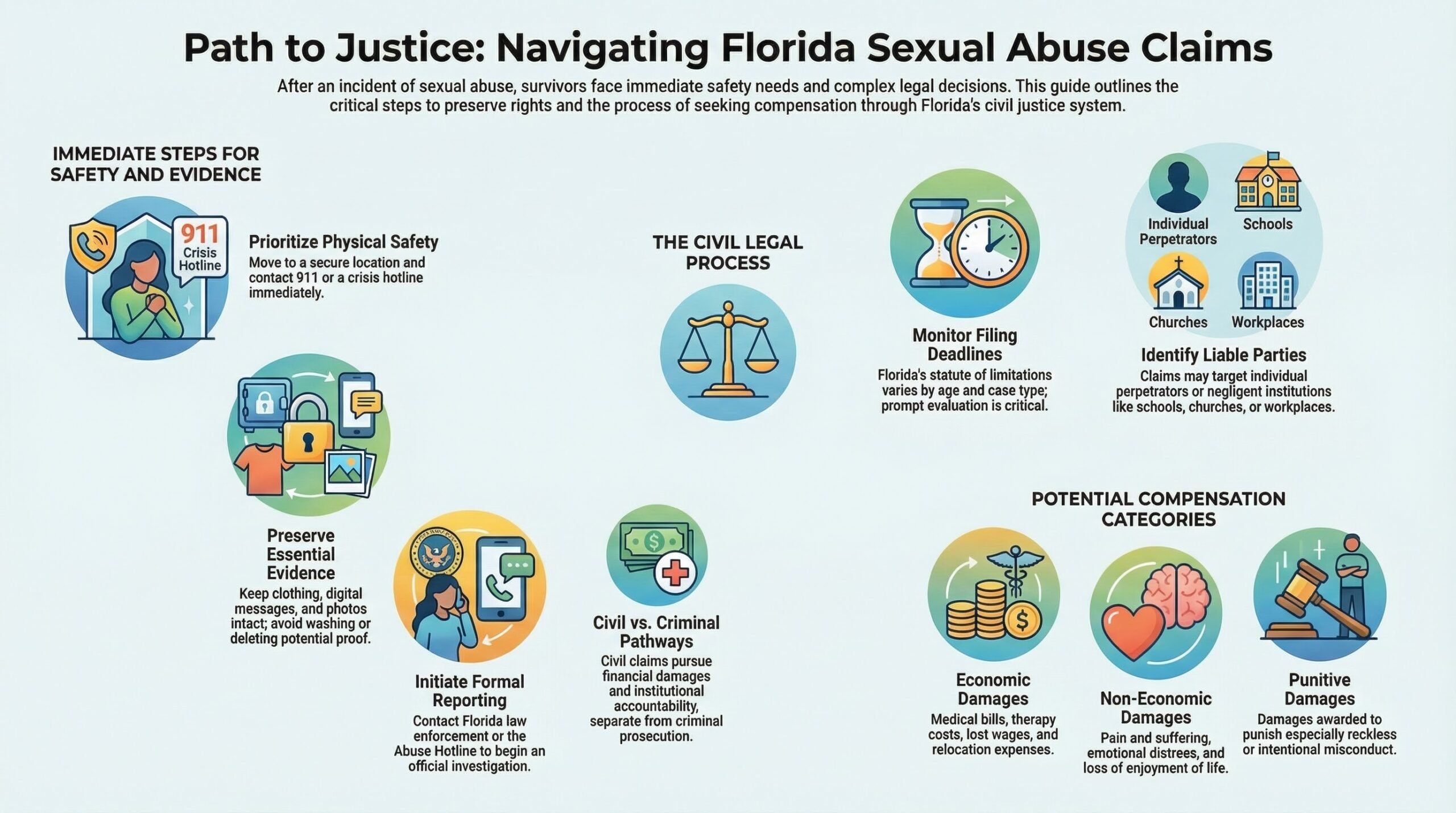
When an employee suffers sexual abuse in the workplace, legal counsel can provide structured guidance from the outset of the claim. An attorney can help preserve evidence, document harm, and outline practical next steps with care and discretion. This support often includes reviewing Workplace policies, identifying reporting channels, and preparing communications that protect the employee’s interests while promoting accountability.
Counsel may also coordinate with investigators, gather witness statements, and assess records that may strengthen the claim. Throughout the process, the legal team can explain deadlines, organize documentation, and advocate for measures that reduce further harm in the workplace.
If concerns arise about mistreatment after reporting, counsel can address retaliation defense strategies and help safeguard the employee’s position. By offering steady guidance and informed representation, an attorney serves those seeking safety, dignity, and justice, while helping them make clear decisions during a difficult and deeply sensitive period for all involved.
OUR CONSULTATIONSARE FREE
START YOUR FREE CASE REVIEW

Understanding Employer Sexual Abuse Cases in Florida
Many employer sexual abuse cases in Florida arise from abuse of authority, failures in supervision, or workplace conditions that allow misconduct to continue unchecked. These claims often involve more than one wrongful act. They may reflect negligent hiring, inadequate reporting systems, ignored complaints, or retaliation against workers who try to protect themselves or others.
Florida employer sexual abuse cases require careful evaluation of facts, policies, and power dynamics within the organization. A proper understanding includes how workplace boundaries were defined, whether management enforced them, and how the employer responded after warning signs appeared. Evidence may include internal communications, prior reports, personnel records, and witness accounts.
Legal review also considers the harm suffered, including emotional injury, professional disruption, and lost security at work. For those committed to serving others, informed action can help promote accountability, strengthen prevention, and support safer environments. Meaningful survivor support remains an important part of a responsible legal and organizational response.
Common Scenarios When Employer Sexual Abuse Might Take Place in Florida
Employer sexual abuse in Florida may arise in several workplace settings, often where power imbalances create opportunities for coercion or retaliation. Common examples include pressure tied to hiring or promotion decisions, abuse occurring during work travel, and misconduct at company events where professional boundaries may be ignored. These situations may also involve adverse treatment after a report is made, which can further complicate both the employee’s safety and the legal issues involved.
Hiring And Promotion Coercion
Although hiring and advancement decisions should be based on worthiness, sexual coercion may arise when a supervisor, manager, or business owner suggests that employment, a promotion, or better working conditions depend on compliance with sexual demands. In these situations, workers may face quid pro quo threats that exploit financial need, career goals, and fear of retaliation. Applicants may be pressured during interviews, while current employees may encounter improper conditions tied to raises, scheduling, or leadership opportunities.
Such pressure can produce coerced decisions that do not reflect genuine consent. For organizations committed to serving others with integrity, recognizing these warning signs is important. Clear reporting channels, prompt investigations, and consistent accountability measures help protect dignity, preserve fairness, and reduce the risk that authority will be misused for sexual exploitation within the workplace.
Abuse During Work Travel
When job duties require travel, the risk of sexual abuse may increase because normal workplace oversight is reduced and employees are often placed in unfamiliar settings with supervisors or coworkers who hold greater power. Overnight trips, shared transportation, remote job sites, and hotel stays can create opportunities for coercive conduct, verbal harassment, or unwanted physical contact.
In these settings, an employee may feel pressure to tolerate misconduct to protect employment, complete assignments, or avoid retaliation, far from usual support systems. Abusers may exploit isolation, alcohol availability, or control over schedules, lodging, and expenses.
They may also test workplace boundaries by sending inappropriate messages, making late-night room visits, or demanding private meetings. Employers serving their workforce should implement safeguards, reporting channels, and travel protocols that reduce vulnerability and reinforce dignity, accountability, and safety.
Misconduct At Company Events
Company-sponsored events can present similar risks, particularly where social expectations, alcohol service, and reduced supervision blur professional boundaries. In Florida workplaces, holiday parties, conferences, fundraisers, and other social events may create opportunities for inappropriate touching, sexual comments, isolation, or coercive behavior by supervisors, coworkers, vendors, or clients. Power imbalances can persist even outside normal work hours, especially when attendance feels expected or when advancement appears tied to participation.
From a service-minded perspective, recognizing these patterns helps protect dignity, safety, and accountability within the workplace community. Employers may still bear responsibility when misconduct occurs at sponsored gatherings, at after-parties linked to work functions, or when transportation is arranged through the company. Careful documentation, witness identification, and prompt legal evaluation can help affected individuals understand whether employer negligence contributed to the harm suffered.
Retaliation After Reporting
Even after a report is made, workplace sexual abuse may continue through retaliation designed to punish, isolate, or silence the person who came forward. In Florida workplaces, retaliation may take the form of demotion, reduced hours, exclusion from meetings, negative evaluations, or sudden discipline unsupported by prior performance records.
Such conduct can deepen harm and discourage others from reporting workplace harassment. Coworkers may also participate by spreading rumors, withholding cooperation, or creating a hostile environment that undermines dignity and job security. In some cases, employers misuse transfers or schedule changes to force resignation while avoiding direct termination.
Whistleblower protection laws and anti-retaliation rules may offer important safeguards, especially when a worker reports unlawful conduct in good faith. Careful documentation, prompt legal guidance, and informed advocacy can help protect accountability, safety, and continued service to others.


Legal Rights of Employer Sexual Abuse Victims in Florida
Because Florida law recognizes workplace sexual abuse as both a civil wrong and, in many cases, criminal conduct, victims may have the right to pursue compensation, report the misconduct to law enforcement, and seek protection from further harm. These rights may arise under employment laws, tort principles, and anti-discrimination statutes.
They may extend to claims involving Workplace policy violations, negligent supervision, hostile work environments, and employer liability for abusive conduct.
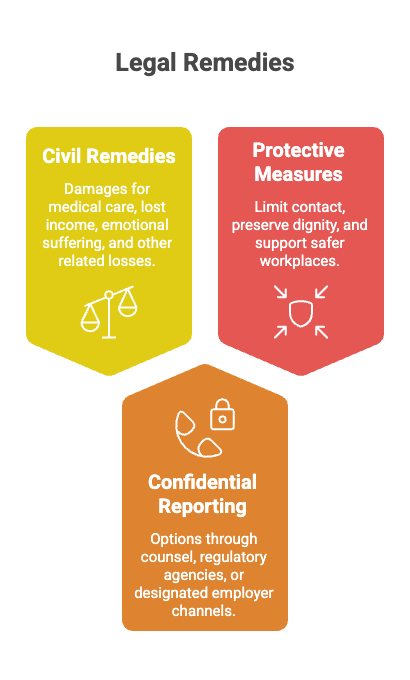
- Civil remedies may include damages for medical care, lost income, emotional suffering, and other related losses.
- Confidential reporting options may exist through counsel, regulatory agencies, or designated employer channels, depending on the circumstances.
- Protective legal measures may help limit contact, preserve dignity, and support safer workplaces for others.
Florida victims may also have rights during internal investigations and court proceedings, including privacy interests and freedom from unlawful retaliation. A qualified attorney can evaluate available claims while advancing accountability, safety, and justice for the broader community.
Steps to Take After an Employer Sexual Abuse Incident in Florida
After an employer sexual abuse incident in Florida, immediate action can affect both personal safety and any future legal claim. Important early measures include preserving available evidence, making a report through safe and appropriate channels, and avoiding steps that could compromise documentation. Promptly consulting Florida counsel can help a victim understand available options, protect legal rights, and proceed in a manner that supports accountability.
Preserve Evidence Immediately
When workplace sexual abuse is reported or suspected, preserving evidence immediately is critical to protecting both the individual’s safety and any future legal claim. Helpful steps often include confidential documentation of dates, locations, conduct, and any physical or digital evidence connected to the incident.
An organized incident timeline can support accuracy and reduce later confusion. Relevant emails, texts, images, schedules, badges, and medical records should be retained in their original form whenever possible. Secure communications are also important, especially when discussing sensitive facts with trusted counsel or support personnel.
Witness identification should be handled carefully by noting names, roles, and what each person may have observed. Clothing or damaged property may also need preservation. Prompt, careful recordkeeping can strengthen accountability efforts and help those seeking to protect others from further harm.
Report Abuse Safely
Preserving records and physical evidence often supports the next step: reporting the abuse in a manner that protects personal safety, confidentiality, and legal rights. A survivor may report internally through designated human resources channels, compliance officers, or trusted supervisors, while documenting dates, names, and responses.
If immediate danger exists, contacting law enforcement or emergency services may be necessary. When reporting workplace misconduct, it is often wise to use written communication, retain copies, and avoid private meetings with the accused.
A support person may accompany the report where policy allows. Employers should also be reminded to preserve relevant files, messages, and surveillance footage. If coworkers observe concerning conduct, careful requests for statements can strengthen witness protection measures and reduce opportunities for retaliation, intimidation, or loss of evidence.
Consult Florida Counsel
In Florida, consulting experienced legal counsel promptly can help a survivor understand available civil, criminal, and workplace remedies while reducing the risk of missed deadlines or harmful missteps. Counsel can assess facts, preserve evidence, explain options, and coordinate supportive referrals that respect the survivor’s safety, dignity, and goals.
A Florida attorney may also clarify employer reporting obligations, anti-retaliation protections, and procedures for internal complaints, agency filings, or litigation. When workplace harassment or sexual abuse involves supervisors, coworkers, or third parties, timely legal guidance can identify responsible parties and potential claims.
Counsel may help organize records, communications, witness information, and medical documentation in a careful, service-oriented manner. Early advice often strengthens accountability efforts and helps survivors make informed decisions that protect their well-being, employment interests, and broader ability to serve others.
How a Florida Employer Sexual Abuse Lawyer Can Help You Initiate a Case
How does a Florida employer sexual abuse lawyer help initiate a case? Counsel begins by listening carefully, identifying relevant facts, and explaining workplace rights under Florida and federal law. The lawyer then assesses potential claims, preserves evidence, and outlines legal timelines so important deadlines are not missed.
This early guidance supports informed action and helps a survivor pursue accountability with clarity and purpose.
- Reviews messages, records, complaints, and witness information to strengthen the initial case evaluation.
- Explains reporting options, internal procedures, and whether outside agencies should be notified promptly.
- Prepares filings, correspondence, and strategy while protecting privacy and reducing avoidable contact.
A Florida attorney also helps organize documentation, request employment records, and frame the harm in a legally meaningful way. By managing communications and procedural steps, counsel enables the individual to focus on personal stability and service to others, while the case is built on a disciplined, well-supported foundation.
Long-Term Effects of Employer Sexual Abuse Trauma
Employer sexual abuse can produce enduring emotional and psychological harm, often affecting a person’s sense of stability, confidence, and overall well-being long after the misconduct ends. It may also undermine workplace trust and safety, making routine professional interactions feel uncertain, threatening, or difficult to manage. In many cases, these effects contribute to lasting career disruption, including reduced performance, missed opportunities, and decisions to leave a position or profession altogether.
Emotional And Psychological Harm
Although the abusive conduct may end when the job ends or the perpetrator is removed, the emotional and psychological harm often continues for years. Survivors may experience workplace fear, intrusive memories, shame, sleep disruption, depression, anxiety, and difficulty concentrating, all of which can affect daily functioning and future employment stability.
In many cases, a qualified mental health professional may identify a trauma diagnosis, such as post-traumatic stress disorder or related conditions. Emotional injuries can also strain family relationships, reduce self-esteem, and impair a person’s ability to make decisions with confidence.
Those who seek to support survivors should recognize that mending is rarely linear and that compassionate, informed care can play a meaningful role. Careful legal and clinical documentation may also help demonstrate the lasting impact of employer sexual abuse.
Workplace Trust And Safety
In the aftermath of workplace sexual abuse, trust in professional settings is often deeply compromised. Survivors may remain vigilant around supervisors, coworkers, and in routine interactions, even after the immediate danger has ended. This erosion of trust can weaken a sense of belonging and reduce confidence in organizational care.
Long-term safety concerns also affect how individuals interpret workplace systems. Policy reporting procedures may feel unreliable if earlier complaints were ignored, minimized, or mishandled. Confidence in witness protections may also decline, especially where retaliation, silence, or favoritism shaped the environment.
For service-minded professionals, these conditions can interfere with collaboration, healthy boundaries, and confidence in shared missions. A trauma-informed workplace response, supported by consistent accountability, can help restore stability, credibility, and a basic expectation of safety for everyone.
Lasting Career Disruption
When sexual abuse occurs within a workplace, the resulting trauma can disrupt a person’s career long after the abusive conduct has stopped. Survivors may struggle with concentration, confidence, attendance, and professional relationships, even after leaving the harmful environment. Workplace harassment often undermines performance evaluations, promotion opportunities, and long-term earning potential, creating barriers that persist across future positions.
In service-oriented professions, these effects may also diminish a person’s capacity to support colleagues, clients, or the public with consistency and trust. Fear of retaliation, reputational harm, and recurring stress responses can lead to resignation, career changes, or extended unemployment. Effective employment recovery frequently requires legal guidance, trauma-informed care, and workplace protections that restore stability, accountability, and the ability to participate in meaningful work with dignity.
What to Expect During a Florida Employer Sexual Abuse Claim Process
A Florida employer sexual abuse claim process typically begins with filing the initial claim and identifying the legal grounds for recovery. It then proceeds through the collection of evidence and records, followed by investigation and related legal proceedings that shape the strength and direction of the case. Depending on the facts, available evidence, and the parties’ positions, the matter may be resolved through a negotiated settlement or a trial.
Filing The Initial Claim
Because the initial filing sets the course of a Florida employer sexual abuse claim, careful preparation is essential from the outset. A claimant typically begins by identifying the proper forum, meeting applicable deadlines, and submitting a clear statement of allegations that aligns with governing workplace and civil standards.
At this stage, counsel often outlines immediate steps to preserve evidence while avoiding premature disputes over proof that are better addressed later. The filing may also address an employer retaliation response, especially when schedule changes, demotion, isolation, or termination follow disclosure.
Notices to agencies or internal compliance channels may be required before litigation proceeds, depending on the circumstances. Throughout this opening phase, organized communication, respectful documentation, and prompt legal guidance help protect the claimant’s position and support a process aimed at accountability and institutional responsibility.
Gathering Evidence And Records
Although the evidentiary phase often develops over time, gathering records and preserving proof usually begins immediately after a report or filing in a Florida employer sexual abuse claim. Relevant materials may include emails, text messages, personnel files, schedules, security footage, medical records, and internal complaints.
A careful record can help protect the reporting individual and support those working to promote accountability. Attorneys often encourage organized timelines, saved communications, and detailed notes that identify dates, locations, and involved parties.
Witness accounts may also be documented while memories remain fresh. In some matters, social media posts, photographs, or metadata may help confirm interactions, locations, or changes in behavior. Proper preservation matters because altered or deleted information can reduce reliability. Clear documentation allows advocates and counsel to assess harm, credibility, and available sources of corroboration.
Investigation And Legal Proceedings
Once records have been preserved, attention often turns to the investigation and legal proceedings that shape a Florida employer sexual abuse claim. Counsel typically reviews employer policies, reporting channels, personnel files, and prior complaints to identify patterns, notice, and possible negligence. Early witness interviews may clarify timelines, corroborate disclosures, and reveal whether supervisors responded appropriately.
The legal process often includes pleadings, written discovery, subpoenas, and court-managed deadlines. Attorneys may seek electronic communications, security footage, training materials, and internal investigation records. A careful deposition strategy helps prepare the survivor and test the accuracy of employer representatives and other witnesses.
Experts may also evaluate trauma, workplace practices, or document retention issues. Throughout this stage, informed advocacy can help survivors participate with dignity while supporting accountability, institutional reform, and protection for others.
Settlement Or Trial Outcome
When a Florida employer sexual abuse claim advances beyond investigation and discovery, the case may resolve through settlement negotiations or proceed to trial, depending on the strength of the evidence, the parties’ positions, and the survivor’s goals. During settlement discussions, counsel may evaluate compensation, confidentiality terms, and corrective workplace measures that protect others. Some matters also involve workplace mediation, where structured negotiation may help avoid prolonged litigation while preserving the survivor’s control over important decisions.
If a settlement is not reached, trial preparation becomes essential. Attorneys organize documents, expert analysis, and witness testimony to present a clear account of liability and damages. A judge or jury then determines responsibility and any financial award. Throughout either path, careful legal guidance can help survivors pursue accountability, encourage safer workplaces, and support the broader well-being of the community.
Compensation for Florida Employer Sexual Abuse Damages
Securing compensation for damages caused by employer sexual abuse in Florida requires a careful assessment of both the harm suffered and the legal basis for recovery. Courts and insurers may consider medical documentation, witness statements, reporting history, and the employer’s conduct when valuing a claim. Thoughtful advocacy often highlights emotional recovery options and practical support that help survivors rebuild stability.
| Consideration | Purpose | Example |
|---|---|---|
| Evidence strength | Supports liability | Records, messages |
| Severity of harm | Shows impact | Therapy history |
| Employer behavior | Informs punitive damages factors | Concealment, retaliation |
A complete claim may seek accountability for trauma-related treatment, reputational harm, and other lasting consequences tied to the abuse. In some matters, compensation also reflects whether the employer ignored warnings, failed to supervise, or enabled repeated misconduct. Because many survivors hope to protect others, pursuing damages can serve a broader community purpose while reinforcing workplace safety standards. Legal guidance helps preserve evidence and present damages persuasively.
Economic vs Non-Economic Damages in Florida Employer Sexual Abuse Cases
In Florida employer sexual abuse cases, damages are generally divided into economic losses and non-economic harm, each serving a distinct role in compensation. Economic damage categories often include medical expenses, lost wages, reduced earning capacity, and other measurable financial costs, while the valuation of non-economic harm addresses pain and suffering, emotional distress, and related personal consequences.
Florida compensation factors may influence both categories, including the severity of the abuse, the duration of its effects, and the strength of the evidence supporting the claimed losses.
Economic Damage Categories
Although damages in Florida employer sexual abuse cases are often discussed as a single recovery, the law generally separates them into economic and non-economic categories. Economic damages address measurable financial losses connected to the abuse and its aftermath, helping survivors restore stability and continue serving their families and communities.
These categories may include past and future medical expenses, counseling costs, prescription costs, lost wages, reduced earning capacity, and out-of-pocket transportation or relocation expenses. In some matters, documentation may also show employment benefits lost because of reporting, resignation, or termination. Although emotional distress is typically classified elsewhere, treatment expenses related to that condition can appear within economic damages.
Courts may also distinguish compensatory losses from punitive consequences, which serve different legal purposes. Careful records, expert opinions, and employment evidence often shape these recoverable amounts.
Non-Economic Harm Valuation
Where financial records can quantify medical bills or lost income, non-economic damages address the intangible human impact of employer sexual abuse that cannot be measured by receipts or payroll data alone. In Florida cases, these losses may include humiliation, anxiety, sleep disruption, loss of dignity, and diminished enjoyment of daily life. Courts and juries evaluate testimony, treatment history, and credible evidence showing how the abuse altered relationships, concentration, confidence, and a survivor’s sense of safety.
Emotional distress damages recognize profound suffering even when no exact dollar formula exists. In especially egregious circumstances, punitive relief standards may also become relevant, though they serve a distinct purpose from compensating personal harm. Careful valuation seeks a fair measure of injury while respecting the seriousness of abuse and the survivor’s continuing recovery and future wellbeing.
Florida Compensation Factors
Because compensation in Florida employer sexual abuse cases often extends beyond a single category of loss, damages are generally evaluated through two primary frameworks: economic and non-economic harm. Economic damages often include medical treatment, counseling costs, lost wages, reduced earning capacity, and other documented financial effects. These amounts rely on records, expert review, and monetary damage estimates tied to the survivor’s specific circumstances.
Non-economic damages address pain, emotional distress, humiliation, anxiety, loss of dignity, and lasting effects on daily life and relationships. In evaluating both categories, Florida courts and counsel may consider the abuse itself, the employer’s knowledge, supervisory failures, and available workplace reporting options. A careful damage analysis helps survivors, advocates, and service-minded professionals understand how accountability may support recovery, safety improvements, and meaningful civil recovery for affected individuals.
When a Florida Employer Sexual Abuse Case Goes to Trial vs Settlement
How a Florida employer sexual abuse case proceeds often depends on the strength of the evidence, the extent of the harm, and the willingness of the parties to resolve the matter without a verdict. Many claims settle when liability appears clear, witnesses are credible, and a fair damages calculation can be reached through negotiation or mediation.
A trial becomes more likely when facts are disputed, responsibility is denied, or settlement offers do not reflect the survivor’s losses and need for justice. In that setting, counsel prepares for discovery, expert testimony, jury selection, and a public presentation of the evidence. Trial may offer accountability and a fuller airing of misconduct, yet it also involves greater delay, expense, and uncertainty.
Settlement can provide privacy, faster financial support, and reduced emotional strain, which may better serve the survivor’s recovery and family stability. The appropriate path is determined by case specifics, legal strategy, and the survivor’s informed goals and values.
The Statute of Limitations for Florida Employer Sexual Abuse Cases
Timing is often decisive in Florida employer sexual abuse litigation, as strict filing deadlines can determine whether a survivor may pursue a civil claim at all. Florida law applies different limitation periods depending on the facts, the survivor’s age, and the legal theory asserted against the employer or other responsible parties.
In many cases, courts examine when the abuse occurred, when the injury was discovered, and whether any statutory exceptions extend the Reporting deadline. This analysis requires careful attention because civil and criminal timelines differ. Criminal prosecution may follow separate rules established by statute, while civil lawsuits usually focus on compensation for harm, institutional accountability, and future protection of others.
Certain claims involving minors or delayed psychological injury may receive different treatment under Florida law. Because missed deadlines can bar recovery entirely, accurate evaluation of the statute of limitations remains necessary to serve survivors and protect community safety throughout the state.
When to Contact an Employer Sexual Abuse Lawyer in Florida
Awareness of filing deadlines often raises the question of when to contact legal counsel. In Florida workplace sexual abuse matters, contact is often appropriate as soon as misconduct is recognized, documented, or disclosed. Early guidance can help preserve records, identify witnesses, and clarify legal timeframes without delaying protective action. It may also assist a person focused on serving others by helping them respond carefully, support colleagues, and reduce further harm.
Counsel may also be contacted while evaluating reporting options within the employer, through government agencies, or with law enforcement. This step is often important when misconduct continues despite complaints, when ceasing harassment becomes urgent, or when a worker fears intimidation. Contact may be especially timely after retaliation, such as a demotion, a schedule change, exclusion, or termination. Prompt consultation can help a person understand immediate responsibilities, available procedures, and how to proceed in ways that protect dignity, safety, and the integrity of future claims.
Why You Need an Experienced Florida Employer Sexual Abuse Lawyer
Because workplace sexual abuse claims in Florida often involve overlapping employment policies, evidentiary concerns, and statutory requirements, experienced legal counsel can be important to evaluating the full scope of a potential case. An experienced Florida employer sexual abuse lawyer can identify viable claims, preserve essential evidence, and assess how Workplace power affected reporting, retaliation, or coerced silence.
Seasoned counsel also understands how state and federal laws may intersect, including civil rights protections, negligence theories, and, in some settings, Title IX obligations. That knowledge helps clarify whether an employer, supervisor, institution, or third party may share responsibility for preventing harm. Skilled representation supports survivors by organizing records, securing witness statements, and presenting facts in a manner that serves accountability and community safety.
It also reduces the risk that procedural mistakes, missed deadlines, or incomplete documentation will undermine a strong claim. In matters with serious personal and organizational consequences, experience often shapes both legal strategy and meaningful avenues for justice.
How to Choose the Right Employer Sexual Abuse Lawyer for Your Case in Florida
In selecting counsel for a workplace sexual abuse matter in Florida, careful attention should be given to an attorney’s relevant experience, litigation background, and understanding of the legal issues that commonly arise in these cases. A prudent evaluation includes prior experience handling employer liability claims, knowledge of Workplace retaliation protections, and a clear approach to preserving evidence from the earliest stage.
Prospective clients should review whether the lawyer communicates plainly, acts with professionalism, and demonstrates respect for the individual’s safety, dignity, and service to others affected by harmful conduct. Strong legal representation often includes timely investigations, witness coordination, and familiarity with employer policies, insurance issues, and confidentiality concerns.
It is also important to assess how the attorney explains fees, expected timelines, and a realistic compensation strategy based on documented losses and long-term consequences. Choosing counsel through careful comparison can help support informed decisions and responsible advocacy throughout the Florida civil process for survivors.
About The Law Offices of Anidjar & Levine
When legal representation is needed after workplace sexual abuse, The Law Offices of Anidjar & Levine presents a client-centered approach grounded in preparation, responsiveness, and close attention to the facts of each case.
The firm emphasizes clear communication and practical guidance, helping survivors understand legal options while preserving dignity throughout the process.
Its attorneys evaluate evidence, identify responsible parties, and assess whether workplace policies were ignored or inadequately enforced.
This structured approach supports claims involving negligent hiring, supervision, retention, or failures to address complaints.
The firm also recognizes that protecting employee rights may require prompt action, careful documentation, and coordination with investigators or other professionals.
By focusing on service, accountability, and informed advocacy, The Law Offices of Anidjar & Levine seeks outcomes that promote safety and institutional responsibility.
For individuals and families committed to protecting others from harm, the firm offers representation intended to advance justice, reinforce respectful workplace standards, and encourage safer organizational practices across Florida communities statewide.
Frequently Asked Questions
Can I File Anonymously in a Florida Employer Sexual Abuse Case?
Yes, a person may sometimes file anonymously in a Florida employer sexual abuse case, but court approval is usually required. Anonymously online options may exist for initial agency complaints, yet anonymous reporting limits often affect investigations, evidence gathering, and the ability to obtain relief. A careful legal review helps determine whether privacy protections, pseudonym requests, or confidential reporting channels can best support accountability, safety, and service to others.
Will Reporting Employer Sexual Abuse Affect My Immigration Status in Florida?
Reporting employer sexual abuse in Florida does not automatically harm a person’s immigration status. Immigration Consequences depend on individual circumstances, not merely on making a report. Federal Protections may assist certain victims, including options tied to investigations or cooperation with authorities. Careful legal guidance helps protect both safety and status. A qualified attorney can assess risks, explain available remedies, and support informed decisions that serve the person’s long-term well-being.
Can Coworkers Be Witnesses if They Fear Retaliation From the Employer?
Yes, coworkers can serve as witnesses even when retaliation concerns exist. Their testimony may still support a case if witness credibility is established through consistent statements, records, or corroborating evidence. Witness fear is common, and courts or agencies may consider that when evaluating reporting risk and workplace dynamics. An attorney or investigator can help protect witnesses, document concerns, and encourage truthful participation while reducing exposure to improper employer pressure or intimidation.
Are Employer Sexual Abuse Settlements in Florida Usually Confidential?
Yes, many Florida employer sexual abuse settlements include settlement confidentiality terms, but they are not always absolute or guaranteed. Their scope depends on negotiation, public policy, and the specific facts involved. The enforceability of nondisclosure agreements may be limited when their terms conflict with laws protecting reporting, cooperation with investigations, or truthful testimony. Those seeking to protect others should have counsel review any proposed restrictions carefully before signing to ensure clarity.
What Evidence From Social Media Can Impact My Sexual Abuse Claim?
Social media evidence can greatly affect a sexual abuse claim. Admissible Posts may include messages, photos, videos, location tags, and comments that support or undermine allegations. Timeline Corroboration can arise from timestamps, check-ins, and communications showing when events occurred or how parties interacted. Courts and insurers may also examine deleted content, inconsistencies, or posts about emotional distress and daily functioning. Careful preservation and review of all accounts is often crucial.
—————————
Employer sexual abuse claims in Florida require prompt action, careful documentation, and informed legal guidance.
Victims may have the right to pursue compensation and hold both the abuser and negligent employers accountable under Florida law.
An experienced attorney can assess the facts, protect the victim’s interests, and build a strong claim.
The Law Offices of Anidjar and Levine represent individuals in these matters with focused advocacy, clear communication, and a commitment to pursuing meaningful legal results.
For related legal support, visit our Florida Sexual Assault Lawyer page.