Law Offices of Anidjar and Levine helps survivors and families protect immediate safety, preserve key evidence, and understand reporting duties and legal rights in cases involving disabled sexual abuse in Florida.
These matters often involve caregiver power, communication barriers, and institutional failures in group homes, nursing facilities, schools, or private residences.
Counsel can organize records, address insurers and facilities, identify responsible parties, and pursue compensation for physical, emotional, and financial harm.
The sections below explain the process, rights, and practical next steps.
Learn more by visiting a Florida Sexual Assault Lawyer.
Main Takeaways
- A Florida disabled sexual abuse lawyer helps preserve medical, digital, and witness evidence before records disappear or memories fade.
- These cases often involve caregiver power imbalances, communication barriers, and trauma-related disclosure delays requiring careful, fact-focused legal advocacy.
- An attorney can investigate facilities, group homes, schools, caregivers, and transportation providers to identify all responsible parties.
- A lawyer manages Florida filing deadlines, prepares claims, and handles insurers, institutions, and investigators to protect the survivor’s interests.
- Legal support can also coordinate trauma-informed reporting strategies and help seek accountability for long-term emotional, physical, and behavioral harm.


How We Can Help With Your Florida Disabled Sexual Abuse Claim
A Florida disabled sexual abuse claim often requires a careful, structured legal approach that accounts for both the abuse itself and the unique vulnerabilities of the victim. Legal counsel can assist by organizing facts, identifying responsible parties, and creating a strategy centered on accountability, dignity, and practical support for the injured person and their caregivers.
This assistance often begins with Evidence preservation, including securing records, communications, photographs, and witness statements before important details are lost. Counsel may also coordinate with trusted professionals to document harm and present the claim clearly and responsibly. In addition, victim advocacy support can help families locate protective services, counseling resources, and communication accommodations that respect the victim’s needs.
Throughout the process, an attorney can manage deadlines, prepare required filings, and communicate with insurers or institutions in a firm, service-oriented manner. This focused guidance helps families pursue justice while reducing avoidable stress during an already difficult period.
OUR CONSULTATIONSARE FREE
START YOUR FREE CASE REVIEW

Understanding Disabled Sexual Abuse Cases in Florida
Building on the practical steps involved in pursuing a claim, an informed review of disabled sexual abuse cases in Florida begins with the specific circumstances that often make these matters distinct. These cases frequently involve power imbalances, communication barriers, dependence on caregivers, and questions about trauma consent, all of which require careful, service-minded evaluation.
Florida law and institutional policies may impose duties that affect how evidence is preserved, how disclosures are documented, and when mandated reporting is required. A sound understanding also considers the survivor’s disability-related needs, including accessible communication, support accommodations, and the impact of prior trauma on memory and reporting. In many matters, credibility cannot be judged by conventional assumptions about behavior, delay, or expression.
Professionals serving survivors must, for this reason, approach each case with patience, respect, and disciplined attention to facts. This framework helps families, advocates, and legal teams assess accountability while protecting dignity, safety, and long-term well-being for all involved.
Common Scenarios When Disabled Sexual Abuse Might Take Place in Florida
Disabled sexual abuse in Florida may arise in several settings where vulnerable individuals depend on others for daily care, supervision, or transportation. Common examples include abuse in group homes, assaults in nursing facilities, incidents during school transportation, and misconduct by caregivers in private or institutional environments. Identifying these recurring scenarios helps clarify how abuse may occur and why careful oversight, reporting, and legal review are often necessary.
Group Home Abuse
When oversight is limited, and residents depend heavily on caregivers for daily needs, group homes can become settings where sexual abuse occurs without immediate detection. Risk may increase during bathing, dressing, toileting, transportation, or overnight supervision, especially when staffing is inconsistent or poorly trained. Residents with communication barriers, cognitive disabilities, or fear of retaliation may struggle to report harm clearly or promptly.
In these situations, responsible intervention depends on attentive supervision, thorough screening, and strict compliance with Mandatory reporting laws. Providers, families, and advocates often play a critical role by recognizing behavioral changes, unexplained injuries, or sudden withdrawal. A legal response informed by victim-centered advocacy helps protect dignity, support disclosure, and pursue accountability against individuals or organizations that failed to prevent foreseeable abuse and ongoing harm.
Nursing Facility Assault
Within nursing facilities, sexual assault may occur in bedrooms, bathrooms, treatment areas, or other spaces where residents rely on staff for intimate care and privacy is limited. Risk increases when supervision is weak, staffing shortages persist, or administrators ignore warning signs involving employees, visitors, or other residents. Disabled adults may face violations of resident consent when cognitive, physical, or communication impairments prevent clear agreement or resistance.
Caregivers and advocates often serve others by watching for behavioral changes, unexplained injuries, fear of certain personnel, or sudden withdrawal. Proper reporting, trauma-informed response, and immediate medical evaluation can protect dignity and preserve evidence. When a facility fails to screen workers, monitor interactions, or respond to complaints, legal accountability may arise through regulatory action or lawsuits for facility neglect in Florida.
School Transportation Incidents
During school transportation, sexual abuse may occur on buses, vans, or vehicles where students with disabilities depend on drivers, aides, or attendants for supervision and physical assistance. Risk may increase during isolated routes, lengthy rides, or transfers when student supervision is weakened, and communication barriers prevent prompt disclosure. In these settings, families and advocates often look to monitoring systems, careful staffing, and documented procedures to reduce opportunities for misconduct.
When warning signs emerge, mandated reporting duties become crucial so concerns are addressed quickly and protective measures can be implemented without delay. Investigations may examine route assignments, camera coverage, staffing practices, and prior complaints to determine whether preventable failures occurred. In some cases, school district liability may arise if negligent oversight, inadequate screening, or deficient policies contributed to the abuse.
Caregiver Misconduct Cases
Because caregivers often have direct access to intimate routines, caregiver misconduct cases may arise in homes, group living settings, respite programs, or other care environments where a disabled person relies on another adult for bathing, dressing, toileting, transportation, communication assistance, or medication support. Such cases may involve grooming, coercion, exposure, unwanted touching, sexual assault, or exploitation of communication barriers and dependency.
Consent and capacity are central concerns, particularly when cognitive, developmental, or physical disabilities affect a person’s ability to understand, refuse, or report abuse. Families, service providers, and advocates often serve an important protective role by recognizing behavioral changes, unexplained injuries, fear responses, or sudden withdrawal. Florida facilities and professionals may also have mandated reporting duties, requiring prompt action when abuse is suspected, disclosed, witnessed, or otherwise discovered.


Legal Rights of Disabled Sexual Abuse Victims in Florida
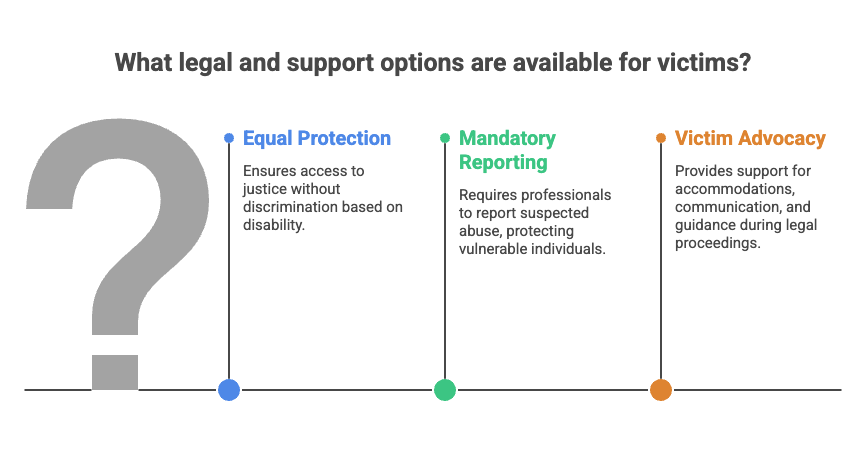
Although survivors with disabilities often face added barriers to reporting abuse and obtaining support, Florida law affords them the same fundamental right to safety, dignity, and legal recourse as any other victim of sexual abuse. These protections apply in homes, schools, care facilities, transportation settings, and other environments where trust and dependence may increase vulnerability.
Florida law protects disabled survivors’ equal right to safety, dignity, and legal recourse in every setting where vulnerability may be exploited.
- Equal protection under civil and criminal law safeguards access to justice without discrimination on the basis of disability.
- Mandatory reporting laws may require certain professionals and caregivers to report suspected abuse involving vulnerable adults or minors.
- Victim advocacy support can help survivors obtain accommodations, communication assistance, protective measures, and informed guidance during legal proceedings.
Florida law also recognizes the importance of accessibility. Survivors may be entitled to interpreters, modified communication methods, and reasonable accommodations that allow meaningful participation in investigations and court processes. In many cases, civil claims may seek accountability and compensation for resulting physical, emotional, and financial harm.
Steps to Take After a Disabled Sexual Abuse Incident in Florida
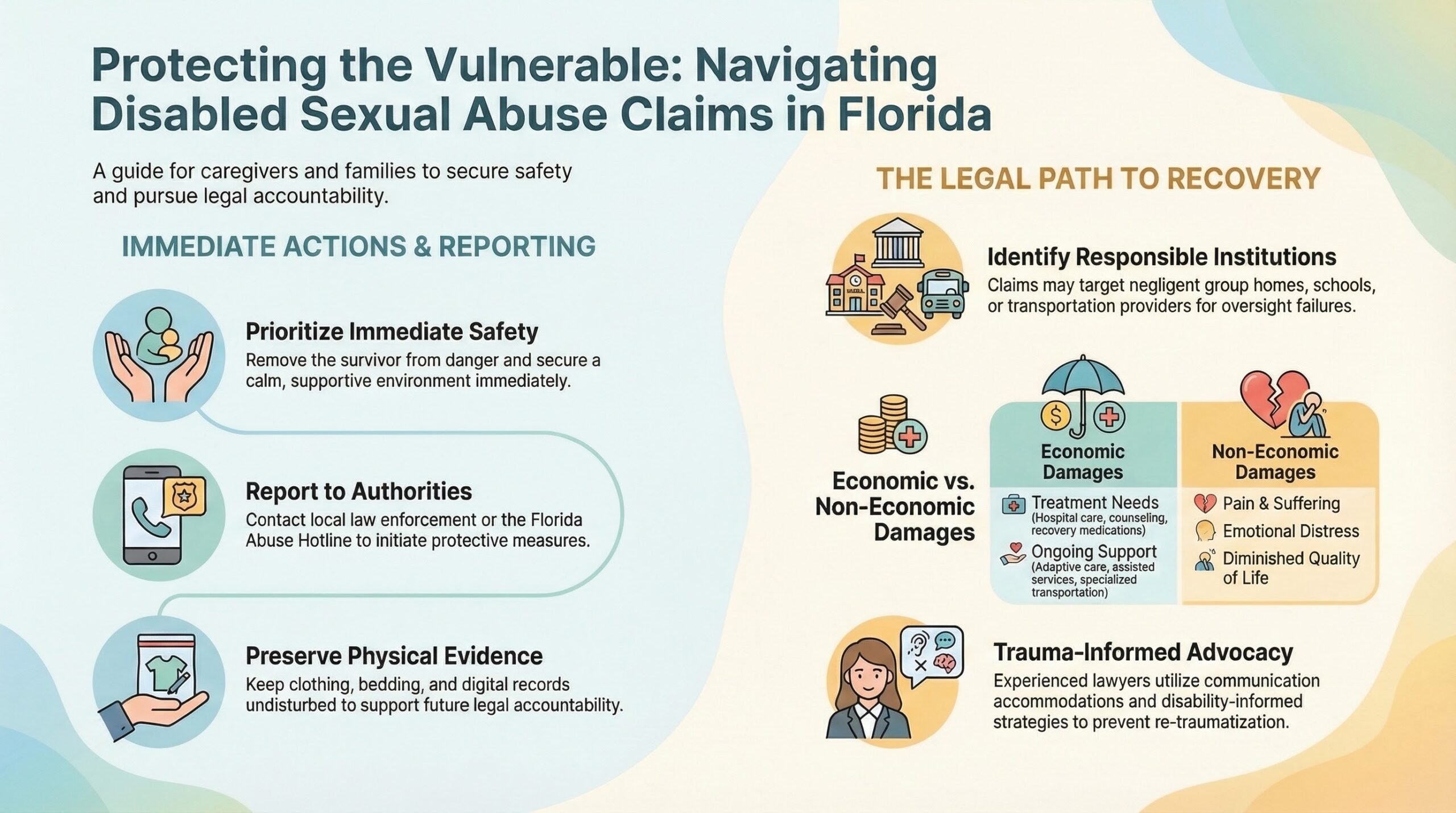
After a disabled sexual abuse incident in Florida, the immediate priority is to guarantee the victim’s safety and remove them from any ongoing risk. The abuse should then be reported to the appropriate authorities or facility administrators, so that protective measures and formal investigations can begin without delay. It is also important to preserve crucial evidence, including medical records, photographs, clothing, and written communications, as these materials may support both legal action and accountability.
Ensure Immediate Safety
When a disabled sexual abuse incident is discovered, immediate safety should be the first priority. Caregivers, family members, or trusted professionals should remove the person from any dangerous environment and secure a calm, supportive setting. Safety planning may include arranging supervision, limiting contact with the suspected abuser, and addressing accessibility needs that affect protection and comfort.
Immediate medical care should be considered as soon as possible, especially if there are injuries, pain, or signs of trauma. A compassionate, disability-informed response can reduce further harm and preserve dignity. Evidence protection is also important, so clothing, bedding, or personal items should remain undisturbed when possible. Victim advocacy services can help coordinate supportive resources, accommodations, and trauma-sensitive assistance while keeping the individual’s well-being at the center of every decision.
Report The Abuse
Once immediate safety and urgent medical needs have been addressed, the abuse should be reported without unnecessary delay to the appropriate authorities in Florida. Reports may be made to local law enforcement, the Florida Abuse Hotline, or adult protective services, depending on the survivor’s age, living situation, and level of dependence.
Caregivers, administrators, and professionals who serve disabled individuals should understand mandatory reporting options and act promptly when concerns arise. Timely reporting helps initiate protective measures, promotes accountability, and can reduce the risk of further harm to others in care settings.
It is also important to connect the survivor with victim support resources, including advocacy organizations, disability service agencies, and crisis counselors. These services can help the individual understand available protections and handle the reporting process with greater stability.
Preserve Key Evidence
Because physical and digital evidence can deteriorate or disappear quickly, careful preservation should begin as early as possible following a disabled sexual abuse incident in Florida. Clothing, bedding, photographs of injuries, medication logs, and assistive device records may later help clarify what occurred. Caregivers and advocates should avoid washing items or altering the scene unless immediate safety requires it.
Contemporaneous notes, witness names, and dates of unusual behavior changes can also support accountability. A prompt Victim interview, conducted by trained professionals, may protect memory details while reducing repeated questioning. Text messages, emails, surveillance footage, and other digital records should be saved, backed up, and shared only with trusted authorities or legal counsel. Thoughtful evidence preservation can strengthen reporting efforts and help service-oriented professionals protect vulnerable individuals from further harm.
How a Florida Disabled Sexual Abuse Lawyer Can Help You Initiate a Case
Initiating a case after sexual abuse involving a disabled individual requires prompt, informed action, and a Florida disabled sexual abuse lawyer can provide the structure needed to begin that process properly.
Counsel often begins by evaluating immediate safety concerns, identifying responsible parties, and organizing trauma documentation to support accountability and compassionate advocacy.
- A lawyer can assess facts, timelines, and available records to determine viable legal claims.
- Counsel can guide a careful strategy for the police report that protects the survivor’s interests while preserving evidence.
- An attorney can communicate with caregivers, facilities, and investigators to reduce confusion and support orderly action.
This assistance helps families and advocates serve the affected person with dignity. A lawyer may also explain reporting duties, filing deadlines, and consent issues related to disability, ensuring that early decisions strengthen the case rather than compromise it. Clear guidance at the outset can create a reliable foundation for justice.
Long-Term Effects of Disabled Sexual Abuse Trauma
Disabled sexual abuse trauma can produce lasting emotional and psychological harm, including chronic anxiety, depression, and post-traumatic stress symptoms that affect daily functioning. It may also lead to physical and behavioral consequences, such as sleep disturbances, self-isolation, changes in appetite, and difficulties with personal care or routine activities. Over time, these effects can contribute to lifelong relationship challenges, limiting trust, communication, and the ability to maintain healthy personal and social connections.
Emotional And Psychological Harm
Although physical injuries may recover over time, the emotional and psychological harm caused by sexual abuse against a person with disabilities often persists for years and can affect nearly every aspect of daily life. Survivors may experience enduring fear, shame, grief, distrust, and profound isolation, especially when consent dynamics and coercion patterns were manipulated by a caregiver, authority figure, or trusted peer.
Such trauma can alter self-worth, impair relationships, and disrupt a person’s sense of safety, autonomy, and dignity. Many individuals also struggle with anxiety, depression, intrusive memories, and difficulty concentrating, which may interfere with education, employment, and community involvement. For families, advocates, and service professionals committed to helping others, recognizing these emotional consequences is crucial to providing informed support, validation, and access to trauma-focused legal and therapeutic resources.
Physical And Behavioral Impact
Because trauma often affects the body as well as the mind, the long-term effects of sexual abuse against a person with disabilities may include chronic pain, sleep disruption, gastrointestinal problems, headaches, fatigue, and other stress-related physical symptoms that persist long after the abuse has ended.
Behavioral changes may also emerge over time, including withdrawal, hypervigilance, self-neglect, changes in appetite, and increased reliance on substances or harmful coping habits. In many cases, unequal power dynamics intensify fear and reduce a survivor’s ability to report abuse or seek timely care.
Service-oriented professionals should recognize that long-term stigma can further complicate treatment, especially when disability-related needs are misunderstood or minimized. Careful, informed support may help identify these patterns early and promote safer, more responsive intervention for survivors.
Lifelong Relationship Challenges
These lasting physical and behavioral effects often extend into a survivor’s ability to form and maintain healthy relationships over time. Trust may remain fragile, especially when past abuse involved caregiver power, dependency, or manipulation disguised as assistance. Survivors may struggle to identify safe intimacy, communicate Consent boundaries, or respond calmly to ordinary conflict.
Service-minded professionals often observe that trauma can shape friendships, family roles, and romantic attachments for many years. Some survivors withdraw to preserve safety, while others remain vulnerable to coercive dynamics that feel familiar. Consistent trauma support, clear communication, and respect for autonomy can help reduce these patterns. In many cases, advocacy planning also strengthens long-term stability by identifying protective resources, addressing accommodation needs, and supporting informed choices in future relationships and community settings.
What to Expect During a Florida Disabled Sexual Abuse Claim Process
A Florida disabled sexual abuse claim process typically begins with an initial case evaluation, during which the facts, potential liability, and legal options are assessed. It then moves to the collection of evidence and documentation, followed by the formal filing of the claim within the applicable legal deadlines. Depending on the strength of the case and the parties’ positions, the matter may conclude through settlement negotiations or proceed to trial.
Initial Case Evaluation
Often, the initial case evaluation in a Florida disabled sexual abuse claim begins with a careful review of the reported abuse, the survivor’s circumstances, and any available records or witness information. During this stage, counsel assesses whether the facts suggest a viable civil claim and identifies immediate concerns affecting safety, capacity, and support needs.
The evaluation may also consider Trauma documentation, Witness statements, communication barriers, and the role of caregivers or institutions. Attorneys often explain the general legal process, likely timelines, and how representation may proceed if the matter moves forward. They may ask focused, respectful questions to understand how the abuse allegedly occurred and who may bear responsibility. This early review helps families, advocates, and service-minded supporters determine practical next steps while centering the survivor’s well-being and informed participation throughout the process.
Evidence And Documentation
Following the initial case evaluation, attention generally shifts to gathering and preserving the evidence that may support a Florida disabled sexual abuse claim. This stage often includes collecting medical records, photographs, communications, and facility documents that may clarify what occurred and when.
Careful documentation can help advocates, caregivers, and families serve the survivor with accuracy and respect. Attorneys commonly review incident logs, prior complaints, staffing records, and any available surveillance footage. They may also assess Witness credibility by comparing statements for consistency, context, and corroboration.
The reporting timeline is important because it can show when concerns first arose and whether delays affected the availability of evidence. Organized records may strengthen understanding of harm, support accountability, and help professionals present the survivor’s experience in a clear, reliable manner for further legal review.
Filing The Claim
With the available documentation assembled, the process of filing a Florida disabled sexual abuse claim generally begins when an attorney prepares the formal allegations, identifies the responsible parties, and determines the proper court or legal forum.
The claim is then drafted and filed within applicable deadlines, while the survivor is guided through each required step with care and respect. Evidence collection continues during this stage, and witness statements may be organized to support the factual record. The attorney may also coordinate with medical providers, advocates, or investigators when additional clarification is needed.
Defendants must be formally notified, and procedural rules must be followed closely to prevent avoidable delay to the claim. Throughout the filing, a service-minded legal team works to reduce burdens on the survivor while building a clear, accountable case for justice.
Settlement Or Trial
Although many Florida disabled sexual abuse claims resolve before a courtroom appearance becomes necessary, the case may proceed toward settlement negotiations or trial depending on the strength of the evidence, the extent of the harm, and the willingness of the opposing parties to accept responsibility.
During settlement discussions, counsel evaluates damages, reviews liability, and develops a careful Negotiation strategy aimed at securing resources for treatment, protection, and long-term support. If a fair resolution is not offered, trial preparation becomes vital. This phase may include witness interviews, expert consultation, document review, and organized presentation planning.
Regardless of the path taken, the legal team remains focused on accountability and the survivor’s welfare. A disciplined approach helps decision makers understand the abuse, its impact, and the need for meaningful compensation and corrective action for vulnerable individuals and their families.
Compensation for Florida Disabled Sexual Abuse Damages
In Florida, compensation for disabled sexual abuse cases is intended to address the full scope of harm suffered by the survivor, including physical injuries, psychological trauma, medical expenses, long-term therapy costs, and other related losses. Careful case development often relies on Medical documentation, provider opinions, and records showing how abuse disrupted daily functioning, independence, and trust. This process also supports accountability and broader efforts to safeguard children and vulnerable adults.
| Area | What it may cover | Why it matters |
|---|---|---|
| Treatment needs | Hospital care, counseling, and medications | Supports recovery and stability |
| Ongoing support | Assisted services, adaptive care, transportation | Addresses disability-related impact |
| Evidence sources | Medical documentation, evaluations, and witness records | Strengthens proof of harm |
| Protective outcomes | Institutional reforms, reporting changes, and training | Promotes safeguarding children |
A thorough claim seeks resources that help survivors obtain care, rebuild security, and reduce future hardship while encouraging safer practices within institutions and caregiving environments.
Economic vs Non-Economic Damages in Florida Disabled Sexual Abuse Cases
Florida disabled sexual abuse cases may involve both economic damages, such as medical expenses, therapy costs, and lost income, and non-economic losses, including pain and suffering, emotional distress, and diminished quality of life. This distinction is important because each category addresses a different aspect of the harm suffered and may require different forms of documentation and proof. In Florida, establishing these damages often depends on medical records, expert opinions, financial evidence, and other materials that connect the abuse to the claimed losses.
Economic Damages Explained
Because these claims often involve substantial financial consequences, economic damages refer to the measurable monetary losses caused by sexual abuse of a disabled person, while non-economic damages address harms that do not carry a fixed price. In Florida cases, these losses may include emergency treatment, counseling costs, prescription expenses, transportation to appointments, assistive care, and lost wages or diminished earning capacity.
Careful proof is crucial when advocates seek resources that support safety, treatment, and stability. Medical documentation can establish the necessity, scope, and cost of care, while witness statements may help confirm service needs, missed work, or changes requiring paid assistance. Financial records, invoices, employment files, and expert assessments often strengthen the claim. A disabled sexual abuse lawyer in Florida may use this evidence to calculate recoverable losses and pursue full compensation responsibly.
Non-Economic Losses Overview
While economic damages address measurable financial losses, non-economic damages concern the personal harms that do not come with a fixed dollar value. In Florida, disabled sexual abuse cases, these losses may include pain, emotional distress, humiliation, loss of dignity, and diminished enjoyment of daily life. They recognize how abuse can alter relationships, independence, and a survivor’s sense of safety.
For those committed to helping vulnerable people, understanding these harms supports more complete advocacy. Trauma compensation seeks to acknowledge the lasting human impact that financial records cannot capture. In some cases, punitive damages may also arise, serving a different purpose by addressing especially wrongful conduct. As a result, these legal remedies reflect that justice should account not only for expenses incurred but also for profound personal suffering and the disruption of a person’s well-being.
Proving Damages In Florida
Although damages may be divided into economic and non-economic categories, proving them in a Florida disabled sexual abuse case requires a careful showing of how the abuse caused specific financial and personal harm. Economic damages often include medical treatment, counseling, transportation, lost wages, and long-term care costs. Non-economic damages may address pain, emotional distress, loss of dignity, and diminished quality of life.
To serve vulnerable survivors well, attorneys generally rely on records, expert opinions, and testimony linking the abuse to each loss claimed. Evidence preservation is critical because medical files, facility reports, photographs, and digital communications can strengthen causation and value. Witness protection also matters, especially when caregivers, staff members, or family observers fear retaliation. Clear documentation and credible testimony help courts and insurers evaluate damages with fairness, accuracy, and respect.
When a Florida Disabled Sexual Abuse Case Goes to Trial vs Settlement
Whether a Florida disabled sexual abuse case proceeds to trial or resolves through settlement depends on the strength of the evidence, the extent of the harm, and the willingness of the parties to accept risk. In evaluating that choice, counsel often examines liability standards, evidence requirements, expert testimony, and credibility assessments to determine how a judge or jury may respond.
Settlement may serve survivors by providing compensation sooner, reducing stress, and limiting repeated exposure to painful facts. It can also encourage institutions to adopt safer practices when accountability is clearly established. Trial becomes more likely when responsibility is disputed, damages are contested, or settlement offers fail to reflect the seriousness of the abuse and its lasting effects.
At trial, witnesses, records, and professional opinions are presented in a structured forum, and the outcome rests on formal findings. A careful legal strategy weighs service, protection, and truth while seeking a result that supports recovery, dignity, and community safety.
The Statute of Limitations for Florida Disabled Sexual Abuse Cases
Because filing deadlines can determine whether a claim may proceed at all, the statute of limitations is a central issue in Florida disabled sexual abuse cases. Florida law may apply different time limits depending on the survivor’s age, the nature of the abuse, and whether delayed discovery affects when a claim accrues. Careful review of civil statute limits is hence important.
In matters involving disabled survivors, courts may also consider facts related to dependency, communication barriers, and institutional control when evaluating timelines. Separate rules can govern claims against individual abusers, care facilities, schools, or other organizations. In addition, evidentiary deadlines may affect access to records, witness testimony, and preserved documentation that can support accountability and community protection.
Some criminal proceedings follow different limitation rules than civil actions, and those distinctions can matter greatly. A disciplined assessment of dates, records, and legal exceptions helps families, advocates, and service-minded communities understand whether a Florida claim remains timely under applicable law.
When to Contact a Disabled Sexual Abuse Lawyer in Florida
When should a disabled sexual abuse lawyer in Florida be contacted? Contact should be made as soon as abuse is suspected, disclosed, or discovered, even if full details are not yet known. Early action helps protect the survivor’s well-being, supports timely reporting, and allows families or caregivers to make informed decisions with care and dignity.
Prompt contact also assists in preserving medical evidence, documenting injuries, and collecting communications and records from facilities, schools, transportation providers, or caregivers. A lawyer may help guide victim care coordination so the disabled person receives medical attention, counseling, protective services, and appropriate accommodations during interviews or examinations.
This step is especially important when the survivor has communication barriers, cognitive limitations, or dependence on others for daily needs. Waiting can make evidence harder to secure and can increase risks to the individual and others in the same environment. Timely legal guidance supports protection, accountability, and compassionate service to vulnerable community members.
Why You Need an Experienced Florida Disabled Sexual Abuse Lawyer
Although any attorney can explain basic legal procedures, an experienced Florida disabled sexual abuse lawyer is often essential in cases involving survivors with physical, intellectual, developmental, or communication-related disabilities. These matters require careful attention to accessibility, evidentiary challenges, and the survivor’s ability to participate safely in the legal process.
Experienced counsel understands how disability affects reporting, interviewing, and credibility assessments. Such attorneys work with professionals who support communication access, protective accommodations, and trauma-informed care, helping reduce retraumatization while preserving the integrity of the claim. They also recognize the importance of Mandatory reporting rules, institutional duties, and failures by caregivers, schools, facilities, or service providers.
In many cases, liability depends on patterns of neglect, inadequate supervision, or ignored warning signs. A seasoned lawyer can identify these issues, coordinate with investigators, and pursue accountability through civil action. This level of knowledge helps survivors and those assisting them seek justice with dignity, safety, and respect.
How to Choose the Right Disabled Sexual Abuse Lawyer for Your Case in Florida
In selecting counsel for a disabled sexual abuse case in Florida, careful attention should be given to the lawyer’s experience with both sexual abuse litigation and disability related advocacy. Effective representation often requires knowledge of communication barriers, accommodation rights, and the lasting effects of trauma. Families and caregivers serving vulnerable individuals should look for a lawyer who demonstrates trauma-informed advocacy, patience, and respect in every interaction.
A careful selection process may include reviewing case results, professional reputation, and willingness to explain legal options clearly. Interview credibility also matters, because initial consultations can reveal whether counsel listens attentively, responds thoughtfully, and understands the client’s specific needs. A strong attorney should coordinate with medical providers, counselors, and support networks when appropriate, while maintaining confidentiality and dignity. In service to survivors, the right lawyer combines legal skill with steady judgment, accessibility, and a commitment to pursuing accountability through compassionate, client-centered representation in every stage.
About The Law Offices of Anidjar & Levine
The Law Offices of Anidjar & Levine represent injured and vulnerable clients across Florida, including survivors pursuing civil claims arising from sexual abuse involving disabled individuals.
The firm is known for attentive service, practical guidance, and a disciplined approach to sensitive injury matters that require care and discretion.
Its attorneys and staff emphasize accessibility, clear communication, and prompt responses, which can be especially important for families and caretakers seeking trustworthy legal support.
Through careful case evaluation, the firm reviews facts, identifies potential defendants, and explains available civil remedies in a direct, understandable manner.
This structured process helps clients make informed decisions while preserving dignity and personal autonomy.
The firm’s work also reflects a broader commitment to victim advocacy.
By pursuing accountability against negligent institutions, caregivers, or other responsible parties, the office seeks outcomes that support recovery, protection, and long-term stability.
Its representation aligns legal action with the principles of service, responsibility, and community care.
Frequently Asked Questions
Can Family Members Attend Confidential Meetings With My Lawyer?
Yes, family members may attend confidential meetings with a lawyer if the client consents. The attorney typically explains how family involvement can affect confidentiality, privilege, and case strategy. In matters involving HIPAA privacy, written authorization may also be necessary before medical information is shared. A careful lawyer helps the client decide whether another person’s presence will provide support, improve communication, or create complications that could weaken privacy protections later.
Are Interpreter Services Available for Deaf or Nonverbal Abuse Survivors?
Yes, interpreter services are often available for deaf or nonverbal abuse survivors through law firms, courts, hospitals, and advocacy organizations. These services may include sign language interpreters, CART, assistive communication devices, or other language access accommodations. Providers generally aim to support confidential communication so survivors can share information accurately, understand their options, and participate fully in legal and support processes. Availability may depend on the specific provider and setting.
Can I Switch Lawyers if I’m Unhappy With My Current Representation?
Yes, a client may usually switch lawyers if the current representation no longer serves the client’s interests. A careful review of the fee agreement, case status, and any pending deadlines is critical before making that decision. In many matters, conflict resolution should be attempted first, especially when communication problems may be repaired. If replacement becomes necessary, attorney withdrawal and substitution must follow court rules to protect the client’s position.
Will Pursuing a Claim Affect My Disability Benefits or Housing Eligibility?
Pursuing a claim may affect benefits or housing eligibility, depending on the recovery and program rules. How claims affect assistance often turns on whether funds count as income or resources. SSDI reporting is generally limited, because SSDI is not needs-based, though related programs may differ. Section eligibility and HUD requirements can be impacted if settlements increase countable assets. Careful planning and prompt disclosure help protect support while serving long-term interests.
Do Florida Lawyers Offer Virtual Consultations for Disabled Sexual Abuse Cases?
Yes, many Florida lawyers offer virtual consultations for sexual abuse cases, including accommodations designed to support disabled clients. Their virtual availability often includes video meetings, phone calls, and accessible communication tools. During an initial telehealth process, the attorney typically reviews facts, explains legal options, and discusses confidentiality and next steps. This approach helps clients, families, and advocates obtain informed guidance while reducing travel burdens and improving access to crucial legal support.
—————————
Disabled sexual abuse claims in Florida require careful legal analysis, prompt action, and a clear understanding of victims’ rights.
When abuse occurs in care facilities, schools, transportation settings, or other supervised environments, accountability may extend beyond the individual offender.
A qualified Florida disabled sexual abuse lawyer can evaluate the facts, protect crucial evidence, and pursue appropriate compensation.
The Florida Sexual Assault Lawyer team at Law Offices of Anidjar and Levine provides focused representation and a serious commitment to justice.