The Law Offices of Anidjar and Levine help injured drivers, passengers, and workers pursue compensation after crashes involving unsafe lane closures, poor signage, negligent motorists or contractors, or traffic control failures.
A Florida car accident lawyer can preserve evidence, review police reports and construction records, identify liable parties, handle insurers, and document medical losses, wage loss, pain, and long-term effects.
Prompt legal guidance is important because sites change quickly and deadlines apply, while the following sections explain essential rights and claim steps.
Main Takeaways
- A Florida work zone accident lawyer can identify liable drivers, contractors, agencies, trucking companies, or traffic control providers.
- Prompt legal help preserves evidence like crash reports, photos, witness statements, signage records, and construction plans.
- Common causes of work zone crashes include speeding, distracted driving, poor signage, lane shifts, debris, uneven pavement, and bad weather.
- An attorney can handle insurers, document damages, evaluate coverage, and challenge delayed or undervalued claims.
- Florida comparative fault rules may affect compensation when multiple parties share responsibility for a work zone crash.
How We Can Help With Your Florida Work Zone Accident Injury Claim
After a work zone accident, an injured person may face medical treatment, lost income, vehicle damage, and uncertainty about which party is legally responsible. A Florida work zone accident injury lawyer can provide steady guidance, protect the person’s interests, and help relieve burdens that interfere with recovery and family responsibilities.
Legal support may include prompt evidence preservation, such as securing photographs, roadway records, witness information, contractor details, and available video footage. Counsel can communicate with insurers, evaluate coverage, document damages, and pursue fair compensation through negotiation or litigation when appropriate. If an insurer delays, undervalues, or wrongfully denies a valid claim, insurance bad-faith concerns may also require careful review.
This assistance allows the injured person to focus on health, service to loved ones, and daily obligations, while the legal team manages deadlines, claim strategy, and communications with responsible parties in a disciplined and professional manner.
Understanding Florida Work Zone Accident Injury Cases


When a crash occurs in or near a construction zone, the legal issues often extend beyond ordinary traffic negligence. These cases may involve injured drivers, passengers, road workers, contractors, public agencies, or commercial carriers, each with distinct duties and potential liability. A careful review may examine lane closures, warning systems, traffic control plans, maintenance responsibilities, and adherence to project requirements.
OUR CONSULTATIONSARE FREE
START YOUR FREE CASE REVIEW

Florida law also requires attention to Comparative fault disputes, because insurers may argue that several parties share responsibility for the harm. Evidence must be preserved early, including photographs, witness statements, project records, vehicle data, and medical documentation. When large trucks are involved, trucking safety regulations may shape the investigation, especially regarding driver behavior, vehicle condition, and company oversight.
For those committed to protecting injured people and their families, understanding these claims helps ensure accountability is pursued with discipline, fairness, and respect for the serious consequences that follow work zone collisions.
Common Causes of Florida Work Zone Accidents
Florida work zone accidents often stem from preventable conditions, including distracted driving, improper lane merges, poor work zone signage, and speeding near workers. These factors can reduce reaction time, create confusion, and increase the likelihood of severe collisions in already restricted traffic patterns. Identifying the cause of a work zone crash is necessary because liability may depend on driver conduct, construction zone management, or compliance with safety requirements.
Distracted Driver Behavior


Because work zones require constant attention to shifting traffic patterns, lane closures, reduced speed limits, and the presence of road crews, distracted driving can quickly create dangerous conditions for everyone nearby. Phone use, navigation adjustments, eating, or conversations may reduce driver attention at the exact moment caution is needed most. In Florida construction areas, even brief inattention can prevent timely recognition of flaggers, equipment, warning signs, stopped traffic, or workers positioned near travel lanes. Strong hazard awareness helps drivers respond responsibly and protect those serving the public through roadway maintenance and improvement. When motorists fail to remain focused, they increase the risk of rear-end crashes, sideswipes, and injuries to vulnerable workers. Careful attention remains a basic duty in every active work zone.
Improper Lane Merges
As traffic patterns narrow or shift through a construction area, improper lane merges can create sudden points of conflict among vehicles, equipment, and workers. Drivers who delay merging, accelerate to gain position, or misjudge the available space may force nearby motorists into abrupt braking or evasive actions. In work zones, these decisions carry heightened risk because lanes are often reduced and margins for correction are limited. Driver fatigue can further impair judgment, slowing reaction time and reducing awareness of surrounding vehicles. When a collision occurs near crews or heavy machinery, emergency response may be complicated by restricted access and dense traffic. For those committed to public safety, recognizing unsafe merging behavior is critical, as careful lane discipline helps protect motorists, construction personnel, and responders serving the community in Florida.
Poor Work Zone Signage
When signage is missing, obscured, or placed too close to a lane shift, drivers may not receive enough warning to adjust safely. In Florida work zones, clear signs help motorists understand detours, narrowed lanes, equipment entry points, and changing traffic patterns. Poor placement can cause confusion, abrupt braking, or unsafe merges, especially where construction crews, volunteers, inspectors, and emergency personnel are present. Distracted pedestrian activity near temporary walkways may further complicate a driver’s ability to interpret warnings in time.
Driver fatigue also increases the need for visible, consistent signage, as tired motorists may process information more slowly. When signs are faded, obscured by machinery, or inconsistent with lane markings, preventable collisions may occur, resulting in serious consequences for injured workers, drivers, and nearby community members.
Speeding Near Workers
Even with proper signage, excessive speed can make a Florida work zone dangerous within seconds, particularly near crews operating close to active traffic lanes. Drivers traveling too fast have less time to recognize lane shifts, equipment movement, flaggers, or workers entering protected areas. Higher speeds also increase crash severity, placing construction personnel, motorists, and first responders at greater risk of serious injury.
Highway safety depends on drivers reducing speed before reaching narrowed lanes, uneven pavement, or temporary traffic patterns. When motorists disregard posted limits, they undermine the protective purpose of work zone design. Effective enforcement strategies, including visible patrols, speed monitoring, and doubled fines, help encourage compliance and protect those serving the public through road maintenance and improvement. Careful speed control remains a basic duty in every Florida work zone.
Legal Rights of Florida Work Zone Accident Injury Victims
After a serious work zone crash, injured victims in Florida may have the right to seek compensation from every party whose negligence contributed to the collision. These rights may extend to drivers, contractors, employers, equipment owners, or public entities, depending on the evidence. Careful legal review helps protect access to medical care, income replacement, and long-term support.
A serious Florida work zone crash may involve multiple liable parties and significant compensation rights.
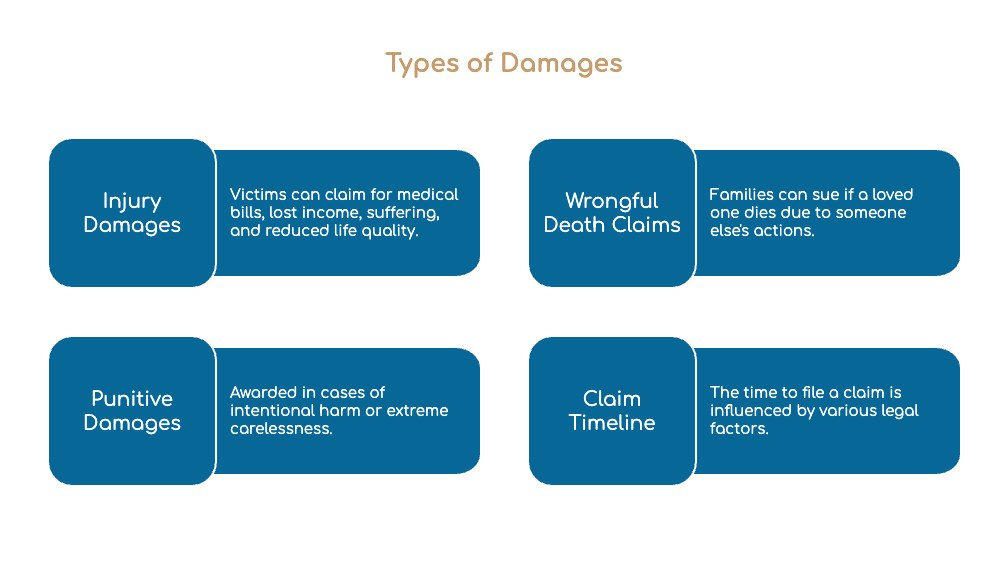
- Injury victims may pursue damages for medical expenses, lost wages, pain, disability, and reduced quality of life.
- Families may bring a Wrongful death claim when a loved one dies, subject to statutory eligibility criteria.
- Punitive damages may be available in limited cases involving intentional misconduct or gross negligence.
- The claim timeline depends on notice rules, filing deadlines, insurance requirements, and the parties involved.
For those committed to caring for injured workers, passengers, or grieving families, understanding these rights supports informed decision-making and helps preserve accountability after a preventable work zone collision.
Why Do Florida Work Zone Accident Injuries Happen?
Because highway construction changes normal traffic patterns, Florida work zone accidents often happen when drivers, contractors, or other responsible parties fail to account for reduced lanes, shifting barriers, uneven pavement, heavy equipment, and workers near active traffic. These conditions demand careful planning, clear warnings, and disciplined conduct from everyone involved.
Injuries may result from speeding, distracted driving, improper lane changes, or confusion caused by inadequate signage. Contractors may contribute when traffic control devices are poorly placed, temporary signals malfunction, or debris remains in travel lanes. Weather hazards, including heavy rain, glare, fog, and wet pavement, can further reduce visibility and stopping distance. Construction fatigue also plays a role, particularly when long shifts, repetitive tasks, or insufficient rest affect judgment and coordination.
For communities that value protecting others, understanding these causes reinforces the importance of prevention. Safer work zones depend on responsible driving, careful site management, and respect for those maintaining Florida’s roads.
What Should You Do After a Florida Work Zone Accident Injury?
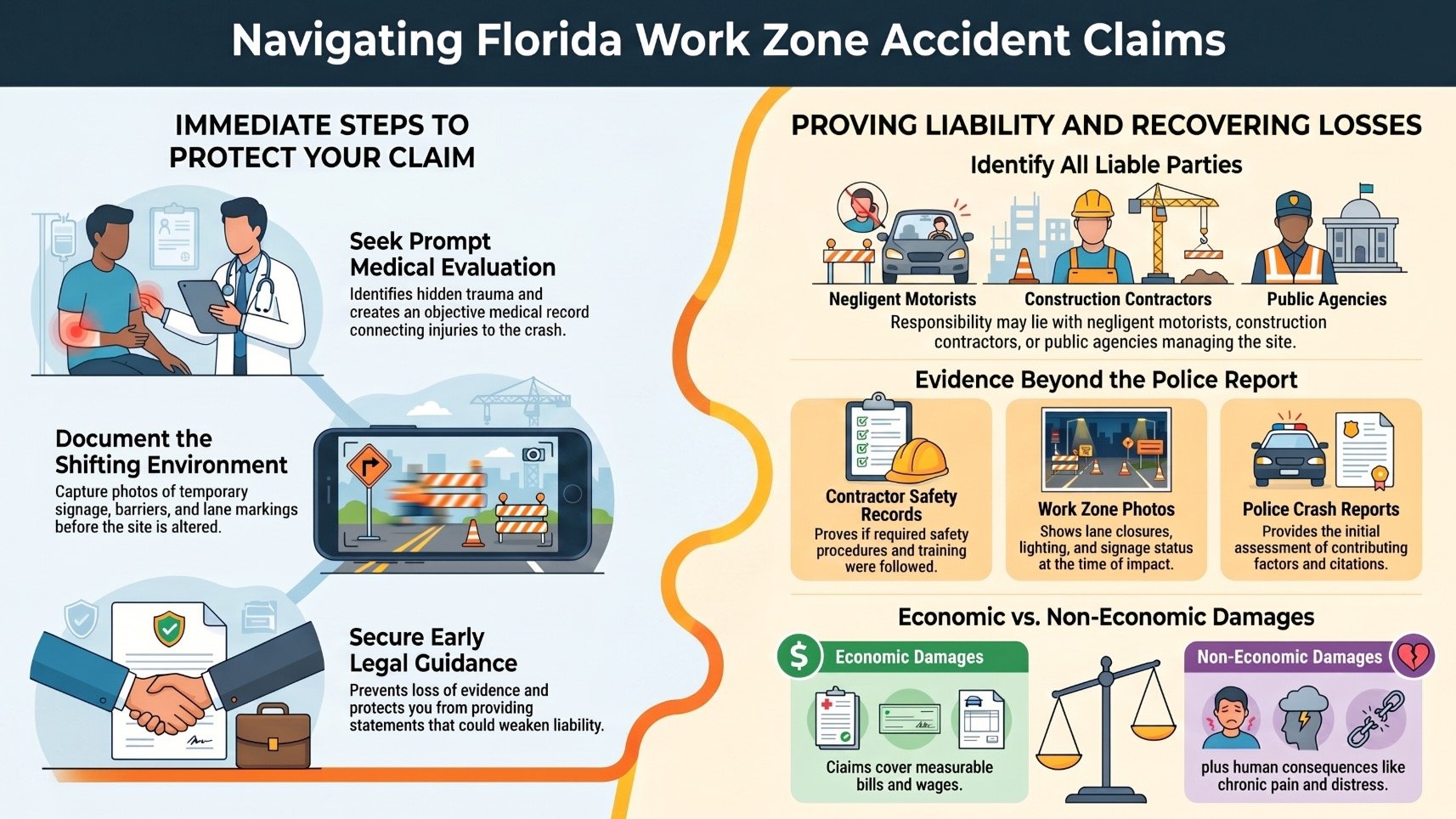
After a Florida work zone accident, an injured person should seek immediate medical care to address injuries and create a clear treatment record. The accident should also be documented through photographs, witness information, and any available reports, as these details may become important evidence. Contacting a lawyer promptly can help preserve legal rights, evaluate liability, and guide the next steps in pursuing compensation.
Seek Immediate Medical Care
When injuries occur in a Florida work zone accident, prompt medical evaluation is essential, even if symptoms initially appear minor. A medical professional can identify hidden trauma, including concussions, internal injuries, or soft tissue damage, before complications develop. This step helps prevent further injury because timely diagnosis enables injured workers, drivers, pedestrians, and responders to follow proper treatment limits and safety precautions during recovery. Seeking care also reflects concern for those who may depend on the injured person’s service, labor, or assistance.
In addition, medical records create an objective account of injuries, treatment dates, and physician recommendations. These records may assist with preserving accident evidence, without replacing later investigation. Delaying treatment can weaken recovery and raise questions about the injury’s cause, severity, and connection to the work zone incident.
Document The Accident
If it is safe to do so, documenting a Florida work zone accident should begin as soon as the injured person’s immediate medical needs and emergency hazards have been addressed. Safety documentation may include photographs of vehicle positions, lane closures, signage, lighting, cones, barriers, debris, skid marks, equipment, and visible injuries. Video evidence can help show traffic flow, worker activity, construction conditions, and hazards that may change quickly. A witness recording, when lawful and respectful, may preserve statements from drivers, workers, or bystanders who observed what occurred. Scene preservation is important because work zones are often altered rapidly to restore traffic and operations. Accurate records, including the time, location, weather, and responding agencies, can support a clear account while serving the injured person’s future needs.
Contact A Lawyer
Why should legal counsel be contacted promptly following a Florida work zone accident? Early legal guidance helps protect the injured person’s rights while allowing attention to medical care, family duties, and community responsibilities. A lawyer can preserve records, identify responsible contractors, drivers, or agencies, and begin fault evidence gathering before skid marks, signs, surveillance footage, or witness memories disappear. Counsel may also communicate with insurers, reducing pressure on the injured person to give statements that could weaken a claim. In intricate construction zones, liability may involve multiple parties and safety rules, requiring careful review.
An attorney can develop settlement negotiation strategies based on injuries, lost wages, future care, and documented negligence. Prompt contact supports a fair process and helps ensure that accountable parties address the harm caused.
Critical Evidence in a Florida Work Zone Accident Injury Case
Significant evidence in a Florida work zone accident injury case often determines how fault, causation, and damages are evaluated by insurers, contractors, and courts.
Essential materials may include:
- Police crash reports
- Work zone photos
- Witness statements
- Contractor safety records
Each item can help clarify road conditions, safety compliance, driver conduct, and whether preventable hazards contributed to the injury.
Police Crash Reports
In a Florida work zone accident case, a police crash report often serves as one of the earliest and most important records of what occurred at the scene. It may identify involved drivers, witnesses, roadway conditions, lane closures, citations, and the officer’s initial assessment of contributing factors. For injured workers, motorists, and families seeking accountability, this report can help organize facts that support fair decision-making and responsible service to those harmed.
Police reports may also assist with Traffic pattern analysis and the review of motorist behavior trends near construction areas. These details can reveal whether speeding, distraction, unsafe merging, or failure to obey posted warnings played a role. While not always conclusive, the report provides a foundation for further investigation and careful legal evaluation.
Work Zone Photos
Beyond the police crash report, work zone photos can provide direct visual evidence of the conditions that existed before, during, or shortly after a Florida construction zone accident. Images may show lane closures, missing signs, poor lighting, uneven pavement, debris, barrier placement, skid marks, vehicle positions, and damage patterns. These details can help clarify whether contractors, drivers, or public agencies failed to protect road users who depended on safe traffic control. Photographs may also support accident reconstruction by preserving conditions that quickly change after cleanup or repairs.
Images of tires, lights, brakes, or commercial equipment may raise concerns about vehicle maintenance when a mechanical failure is suspected. When gathered promptly and organized carefully, work zone photos can help attorneys, insurers, and courts evaluate responsibility with greater accuracy, fairness, and service-minded purpose.
Witness Statements
Witness statements can provide essential context when a Florida work zone accident involves disputed lane changes, unclear signal placement, sudden stops, or conflicting accounts of driver and contractor conduct. Neutral observers may describe traffic flow, warning devices, vehicle speed, visibility, and the actions of workers or motorists before impact. Their accounts can help clarify how the crash occurred and may support injured individuals as they try to serve their families and communities while recovering. Prompt collection is important because memories fade, contact information changes, and construction conditions may shift quickly.
Statements should be compared with police reports, photographs, video evidence, and medical documentation to identify consistency. Careful witness development may also address liability defenses, including claims that the injured person ignored warnings or caused the collision.
Contractor Safety Records
When a Florida work zone accident raises questions about contractor conduct, safety records may reveal whether the company followed required procedures before the collision occurred. These records can include training logs, inspection reports, traffic control plans, equipment maintenance files, and prior violation notices. A careful review may show whether warning signs were placed correctly, barriers were maintained, and workers received proper instruction. Such evidence can also clarify whether driver negligence was the sole cause or whether unsafe site management contributed to the harm. Consistent documentation may support a contractor’s position, while missing or altered records can raise serious concerns. These materials may also strengthen or weaken witness credibility by confirming or contradicting what observers reported.
For injured persons, safety records help identify responsible parties and promote accountability.
Long-Term Effects of Florida Work Zone Accidents and Injuries
Work zone accident injuries in Florida can create lasting consequences that extend well beyond initial medical treatment. Chronic pain complications may limit daily function, while reduced earning capacity can affect long-term financial stability. Emotional trauma effects, including anxiety and distress, may also influence recovery and the overall value of an injury claim.
Chronic Pain Complications
Chronic pain can disrupt nearly every part of life after a Florida work zone accident, especially when injuries involve the spine, joints, nerves, or soft tissue. Ongoing pain may limit mobility, disturb sleep, and make routine caregiving, household, and community responsibilities harder to manage consistently. Some injured individuals require long-term treatment, including physical therapy, injections, assistive devices, or prescription medicine. Medication side effects may create additional concerns, such as fatigue, dizziness, or reduced concentration, which can complicate daily functioning and recovery. When pain becomes persistent, medical documentation is critical to show its severity, duration, and impact. In some cases, disability benefits may help provide needed stability while the injured person pursues appropriate care. Careful legal guidance can help protect the person’s rights.
Reduced Earning Capacity
Persistent pain and functional limitations may also affect a person’s ability to earn a living after a Florida work zone accident. Reduced earning capacity may arise when injuries prevent a worker from returning to prior duties, advancing in a career, or maintaining consistent hours. Medical restrictions, reduced mobility, and ongoing treatment needs can limit job options, especially for individuals in construction, transportation, public service, or caregiving roles. When a trucking company’s negligence contributes to a serious crash, financial recovery may include future income losses supported by medical and vocational evidence. Careful evaluation helps protect injured individuals and their families from long-term hardship. In fatal cases, Wrongful death claims may address the income and support the deceased would have provided to dependents and households.
Emotional Trauma Effects
After a serious Florida work zone accident, emotional trauma may continue long after physical injuries begin to recover. Survivors may experience anxiety near traffic, sleep disruption, irritability, depression, or intrusive memories that affect work, family care, and daily responsibilities. These effects can also slow fear recovery, especially when the injured person must return to driving or construction-related environments.
Careful documentation of psychological symptoms helps connect emotional harm to the incident. Post-incident therapy, medical evaluation, and consistent follow-up can support stability while creating records needed for a claim. Legal support may help identify recoverable damages, including counseling costs and reduced quality of life. Community resources, faith-based assistance, and victim services may also provide practical help, allowing injured individuals and caregivers to focus on recovery.
Proving Liability in Florida Work Zone Accidents Injury Cases
When a crash occurs in or near a Florida construction zone, proving liability requires a careful review of how the collision happened, who controlled the work area, and whether any party failed to follow required safety practices. Liability Standards may involve drivers, contractors, subcontractors, government agencies, equipment operators, or traffic control providers. Each party’s conduct must be measured against the duties to maintain safe routes, provide clear warnings, install proper barriers, and exercise reasonable site management.
Comparative Negligence may also affect recovery when more than one person contributed to the harm. A careful assessment helps determine whether speeding, distracted driving, poor signage, lane shifts, or unsafe equipment placement played a role. Evidence Preservation may also depend on the inclusion of photographs, video, maintenance records, traffic control plans, witness statements, and incident reports. Prompt action reduces Spoliation Risks, since construction sites change quickly and important proof may disappear. Careful investigation supports accountability and helps protect injured people with disciplined, service-centered advocacy.
Dealing With Insurance Companies After a Florida Work Zone Accident Injury
Because insurance issues often start before the full scope of injury is known, communications with insurers after a Florida work zone accident should be handled with care. Adjusters may request recorded statements, medical authorizations, or fast settlements that do not reflect ongoing treatment needs, lost wages, or future limitations. An injured person or a family member assisting during recovery should provide only accurate, necessary information and avoid speculation about fault, pain levels, or prior conditions.
Insurance companies often review police reports, construction records, citations, and witness accounts when evaluating responsibility. Issues such as dealing with traffic fines may affect how an insurer views the event, but they do not replace a careful legal analysis focused on proving negligence. Compassionate support should include organized documentation, consistent medical follow-up, and protection from coercive communications. Legal guidance can help ensure that insurers receive complete, reliable information while the injured person’s rights and dignity remain protected.
What to Expect During a Florida Work Zone Accident Injury Claim Process
A Florida work zone accident injury claim typically begins with prompt reporting of the accident, followed by a careful review of the circumstances surrounding the crash. The process often includes investigating fault, preserving evidence, and addressing insurance claims with attention to deadlines and policy requirements. When injuries result in medical expenses, lost income, or long-term harm, the claim may focus on seeking appropriate compensation under Florida law.
Reporting The Accident
After a work zone accident in Florida, prompt reporting helps preserve evidence, establish a clear timeline, and protect the injured person’s ability to pursue compensation. The incident should be reported to law enforcement, the employer, when applicable, and any responsible project or site supervisor. Accurate names, badge numbers, report numbers, and agency contacts should be recorded. Medical attention should also be sought and documented, even when injuries seem minor. Families supporting an injured person may help gather basic information, photographs, contact information for witnesses, and insurance details. ATV collision documentation may be relevant when specialized vehicles are involved in the work zone. In severe cases, early records can also support Wrongful death claims. Careful reporting serves the injured person, assists caregivers, and creates an organized foundation for the claim process.
Investigating Fault
When a fault is investigated in a Florida work zone accident claim, the review often begins with identifying every person, company, or agency that may have contributed to the crash. This may include drivers, contractors, subcontractors, equipment operators, traffic control providers, or public entities responsible for roadway oversight. Investigators examine police reports, site photographs, witness statements, construction plans, signage placement, lane closures, lighting, and compliance with safety rules. Liability standards help determine whether a party failed to act with reasonable care under the circumstances.
Because work zones involve shared responsibilities, more than one party may bear fault. Florida’s comparative negligence rules may also affect the evaluation if the injured person is alleged to have contributed to the collision. A careful investigation supports accountability and promotes safer service to the public.
Handling Insurance Claims
Because work zone crashes often involve multiple insurance policies, the claims process usually begins with identifying each available source of coverage. Adjusters may examine liability coverage, personal injury protection, uninsured motorist benefits, employer policies, or contractor insurance. Careful review of traffic citations can help clarify disputed facts and support accurate reporting.
Effective claim handling also requires Medical documentation strategies, including prompt treatment records, follow-up notes, diagnostic results, and work restrictions. These materials help insurers evaluate the claim consistently and reduce avoidable delays. Understanding insurance claim timelines is equally important, since missed notices or incomplete submissions can weaken a file. Representatives serving injured individuals may use settlement negotiation tactics focused on organized evidence, measured communication, and documented needs. This structured approach supports orderly claim review without addressing final compensation outcomes.
Seeking Injury Compensation
Once available insurance coverage and claim requirements are identified, the injury compensation process in a Florida work zone accident claim typically turns to proving liability, documenting damages, and presenting a supported demand for payment. This stage may involve gathering incident reports, witness statements, photographs, construction records, and safety compliance evidence. Medical bill documentation helps establish the financial impact of treatment, while lost wages analysis may show income disruption caused by the injury. For those serving injured workers, drivers, or families, careful organization promotes fairness and accountability. The insurer may respond with questions, requests for clarification, or a settlement offer. If negotiations do not resolve the claim, litigation may be considered. Throughout the process, each step should support a clear connection between negligence, injury, and measurable loss.
Compensation for Florida Work Zone Accident Injury Damages
After a serious work zone accident in Florida, compensation may be available for the financial, physical, and personal losses caused by the crash. A claim may involve a careless driver, contractor, subcontractor, government entity, or equipment operator, depending on who failed to protect others in or near the construction area. The process often requires careful review of traffic control plans, warning signs, lane closures, lighting, worker conduct, and crash reports.
Florida law may also require evaluation of negligence defenses, including arguments that the injured person contributed to the incident or failed to act reasonably. These issues can affect recovery and must be addressed with accurate evidence. In rare cases involving intentional misconduct or extreme disregard for safety, the calculation of punitive damages may be relevant. Such damages are not routine, but they may serve the broader public interest by discouraging dangerous conduct in work zones and promoting safer practices for drivers, workers, and communities.
Economic vs Non-Economic Damages in Florida Work Zone Accident Cases
Damages in Florida work zone accident cases are generally divided into economic and non-economic losses. Economic damage categories may include medical expenses, lost income, and repair costs, while non-economic losses address pain, suffering, and reduced quality of life. Proving work zone damages requires clear documentation, credible evidence, and a careful connection between the accident and the claimed losses.
Economic Damage Categories
In Florida work zone accident cases, economic damages refer to the measurable financial losses caused by the injury, supported through records, invoices, wage documentation, and expert analysis. These categories commonly include emergency treatment, hospitalization, surgery, rehabilitation, prescription costs, medical equipment, and follow-up care. Medical bills calculation requires careful review of paid charges, outstanding balances, insurance adjustments, and reasonably expected future treatment. Economic damages may also include lost income, reduced earning capacity, transportation expenses for care, and necessary household services when injuries prevent the performance of daily tasks.
Proof of lost wages often depends on pay stubs, tax records, employer statements, and work restriction notes from medical providers. By documenting these losses with discipline, a claim can present the practical financial needs required to restore stability and support responsible recovery.
Non-Economic Losses
While economic losses reflect measurable financial harm, non-economic losses encompass the human consequences of a Florida work zone accident that do not appear on invoices or wage records. These losses may include physical pain, emotional distress, disfigurement, loss of enjoyment of life, anxiety, sleep disruption, and strain on family relationships. In severe cases, a victim may face lasting limitations that alter independence, dignity, and the ability to serve others in daily life. Non-economic damages recognize that injury affects more than employment or medical spending. In matters involving work zone liability, these harms must be evaluated with care, consistency, and respect for the person’s lived experience. Although proof of negligence supports the claim, the focus remains on how the accident affected the injured person’s quality of life and personal well-being.
Proving Work Zone Damages
Proving work zone damages requires more than identifying the categories of harm an injured person may claim. Economic losses demand records, including medical bills, wage statements, repair estimates, and documentation of future care needs. Non-economic damages require careful support through treating provider notes, pain journals, family observations, and evidence showing how the injury changed daily life. In Florida work zone accident cases, evidence preservation is critical because construction layouts, warning signs, traffic patterns, and vehicle debris may change quickly. Photographs, reports, and surveillance footage can help connect unsafe conditions to the injuries suffered. Witness credibility also affects the strength of the claim, especially when accounts address speed, lane closures, flagger conduct, or visibility. Thorough proof helps secure compensation that reflects both measurable costs and human consequences.
When a Florida Work Zone Accident Injury Case Goes to Trial vs Settlement
Because work zone accident claims often involve construction companies, government contractors, insurers, and disputed safety practices, the decision to settle or proceed to trial depends on the strength of the evidence and the willingness of each party to accept responsibility. Settlement may provide a faster resolution, reduce uncertainty, and help injured individuals obtain support without enduring prolonged litigation. This path is often appropriate when damages are well documented and fault is reasonably clear.
Trial may become necessary when Liability disputes remain unresolved, settlement offers fail to reflect the harm caused, or responsible parties deny unsafe conduct. In these cases, evidence preservation is critical, including photographs, maintenance records, traffic control plans, and incident reports. Witness credibility may also influence whether a jury accepts one version of events over another. A careful legal evaluation helps determine whether continued negotiation serves the injured person’s needs, or whether trial is required to pursue fair accountability.
Florida Laws That May Affect Your Florida Work Zone Accidents Case
Several Florida laws may influence how liability, damages, and deadlines are evaluated after a work zone accident. These rules can affect injured motorists, workers, contractors, and public entities, especially when service, safety, and accountability are central concerns.
- Comparative negligence may reduce compensation if an injured person is partly responsible, such as by speeding, ignoring lane closures, or failing to follow flagger directions.
- Florida traffic and construction safety regulations may help determine whether contractors, subcontractors, or drivers acted with reasonable care in protecting the public.
- Government liability rules may apply when a state, county, or municipal agency controls roadway design, signage, inspection, or maintenance in the work zone.
- Evidence preservation is vital, including photographs, dash camera footage, incident reports, maintenance records, and witness information, because work zones often change quickly.
A careful legal review helps identify responsible parties and supports fair recovery for those harmed while traveling through or serving within Florida construction zones.
The Statute of Limitations for Florida Work Zone Accident Injury Cases
After a Florida work zone accident, the statute of limitations sets the legal deadline for filing an injury lawsuit, and missing that deadline can prevent an injured person from seeking compensation through the courts. In many Florida negligence cases, the filing period is generally two years from the date of the accident, although specific facts may affect how the deadline is calculated.
Timely action supports both legal compliance and responsible service to injured individuals, families, and the community. Delays may weaken a claim because Common Evidence, such as crash reports, photographs, medical records, witness statements, and construction zone documents, can become harder to obtain or verify. The deadline also matters during Insurance Negotiations, since settlement discussions do not usually stop the statute of limitations from running.
A person injured in a work zone should be aware that government entities, contractors, or multiple drivers may create additional timing concerns.
How a Florida Work Zone Accident Injury Lawyer Can Help You
When an injury claim involves a Florida work zone, a lawyer can help identify the responsible parties, preserve crucial evidence, and evaluate how construction activity, traffic control measures, driver conduct, and safety regulations affected the crash. This support allows injured people and their families to pursue accountability while focusing on recovery and service to others.
A lawyer may assist by:
- Investigating contractors, subcontractors, government entities, and drivers whose actions contributed to unsafe conditions.
- Reviewing lane closures, signage, lighting, barriers, and Safety equipment to determine whether proper protections were used.
- Analyzing medical records, wage losses, future care needs, and other damages with careful documentation.
- Addressing comparative fault arguments that may be raised to reduce the value of a claim.
Through organized advocacy, a Florida work zone accident injury lawyer can present evidence clearly, communicate with insurers, and pursue compensation that reflects both immediate harm and long-term consequences for the injured person.
When to Contact a Florida Work Zone Accident Injury Lawyer
Because work zone crashes often involve multiple parties and rapidly changing evidence, legal guidance should be sought as soon as possible after the injury occurs. Early contact helps protect the injured person’s interests while allowing family members, caregivers, or community supporters to focus on recovery and practical needs. Car crashes in construction zones may involve drivers, contractors, government agencies, equipment operators, or employers, and each may hold information that should be identified promptly.
Timely communication also supports the preservation of evidence, including photographs, traffic control plans, witness statements, surveillance footage, and maintenance records. Delays can make these materials harder to locate or verify. A lawyer should also be contacted when injuries require medical treatment, when missed work occurs, when liability is unclear, or when insurance representatives request recorded statements. Prompt action is especially important when workplace safety issues contributed to the incident, or when statute deadlines may limit the time available to pursue a claim.
Why You Need an Experienced Florida Work Zone Accident Injury Lawyer
An experienced Florida work-zone accident injury lawyer is needed due to the complex nature of construction-zone crashes and the many legal issues they may involve. These cases may include negligent drivers, unsafe lane shifts, poor signage, government contractors, trucking companies, or roadway maintenance crews. Careful legal review helps injured people, families, and community helpers understand which parties may be responsible.
Work zones often contain commercial vehicles, temporary barriers, uneven pavement, and changing traffic patterns. A lawyer can examine crash reports, witness accounts, site plans, and safety records to determine whether reasonable care was used. In truck-related crashes, Truck Maintenance Reviews and Driver Fatigue Management records may show whether preventable failures contributed to harm.
Experienced legal guidance also helps protect deadlines, insurance claims, and evidence before they are lost. This support allows injured individuals to focus on recovery while pursuing accountability, safety, and fair compensation after a serious Florida work zone accident.
How to Choose the Right Florida Work Zone Accident Injury Lawyer for Your Case
Choosing the right Florida work zone accident injury lawyer requires careful attention to experience, investigative resources, and familiarity with the hazards unique to roadway construction areas. A qualified attorney should understand lane closures, temporary traffic controls, contractor duties, and the conduct of drivers, workers, and public agencies. This knowledge helps identify responsible parties and supports a claim built on reliable facts.
In evaluating counsel, injured individuals may look for prompt Evidence preservation, including crash scene documentation, vehicle inspections, witness statements, and construction records. Strong client communication is also necessary because clients often need clear guidance during recovery and while supporting their families. A capable lawyer explains deadlines, insurance issues, and case strategy in direct terms.
The right advocate should also show commitment to service, treating each case as an opportunity to protect an injured person’s stability, medical care, and future. Careful selection can help ensure the claim is handled with diligence and purpose.
About The Law Offices of Anidjar & Levine
With a focus on personal injury representation across Florida, The Law Offices of Anidjar & Levine handles work zone accident claims involving injured drivers, passengers, pedestrians, and roadway workers. The firm assists clients who have been harmed by unsafe lane shifts, unclear signage, negligent contractors, speeding motorists, or failures in traffic control.
Its legal team evaluates Work zone liability by reviewing construction plans, crash reports, witness statements, maintenance records, and applicable safety standards. Early evidence preservation is emphasized because surveillance footage, vehicle data, debris patterns, and contractor documentation can become unavailable quickly after a collision.
The firm’s service model reflects an understanding that injured people often need guidance, not added burdens. Staff members help coordinate case communication, address insurance issues, and pursue compensation for medical care, lost income, and other losses. Through disciplined investigation and client-focused advocacy, the firm supports those seeking accountability after a serious Florida work zone accident.
Frequently Asked Questions
Can Tourists File Florida Work Zone Accident Claims?
Yes, tourists may file Florida work zone accident claims when negligence, unsafe conditions, or contractor misconduct caused injury. Tourist legal eligibility generally depends on where the crash occurred, available evidence, and compliance with Florida deadlines. The out-of-state filing process may allow representation without repeated travel, though documentation and medical records remain required. Those assisting injured visitors should encourage prompt legal review to preserve rights and support accountability.
Are Undocumented Workers Eligible for Injury Compensation?
Yes, undocumented workers may be eligible for injury compensation, though eligibility limits and proof requirements can affect the claim. An employer generally cannot deny benefits solely because of immigration status. The worker must show the injury occurred during covered employment, report it promptly, and provide medical and wage evidence. Those serving injured laborers should encourage careful documentation and legal guidance, especially when retaliation, unpaid wages, or disputed employment status is involved.
Do Work Zone Speed Cameras Affect Accident Claims?
Yes, work zone speed cameras can affect accident claims by providing objective evidence of compliance with or violations of speed limits. Such records may influence liability assessments, especially when comparative fault is disputed. If a driver exceeded posted limits, insurers or courts may assign greater responsibility. If compliance is shown, the evidence may support an injured person’s position, assisting advocates and service-focused professionals in pursuing fair compensation with accuracy and integrity.
Can Passengers Injured in Work Zones Sue?
Yes, passengers injured in work zones may sue responsible parties. Work Zone Liability may involve negligent drivers, contractors, government entities, or construction companies that failed to maintain safe conditions. Passenger Legal Rights allow injured individuals to seek compensation for medical care, lost income, pain, and related losses. A careful investigation helps identify fault, preserve evidence, and support a claim that serves justice, accountability, and the injured passenger’s recovery.
Are Rental Car Crashes Handled Differently?
Yes, rental car crashes may involve additional issues, but injury claims still depend on fault determination and available coverage. Rental car insurance, personal auto policies, credit card benefits, and liability coverage may all require review. For visitors, the legal process for tourism can complicate reporting, medical documentation, and communication. Damage calculation should include medical costs, lost income, pain, and future needs, ensuring that responsible parties are identified and claims are properly pursued.
—————————
A Florida work zone accident can leave victims facing serious injuries, financial strain, and complex legal questions. A qualified injury lawyer can evaluate liability, preserve evidence, manage insurer communications, and pursue compensation for medical costs, lost income, and other damages.
The Law Offices of Anidjar and Levine provide experienced guidance for injured victims throughout Florida, including those seeking help from a Florida Car Accident Lawyer.
Prompt legal review can help secure important rights and help ensure each claim is handled with diligence, accuracy, and appropriate urgency.