The Law Offices of Anidjar and Levine help injured victims pursue compensation when an at-fault driver’s insurance is insufficient. Legal support may include reviewing policy limits, identifying UM benefits, preserving medical and wage evidence, handling insurer requests, and monitoring notice deadlines.
These claims often require proof of fault, documented damages, and coverage gaps. They may involve multiple insurers and disputed evaluations.
The sections below explain how these claims work, what victims should consider next, and when speaking with a Florida Car Accident Lawyer may help.
Main Takeaways
- A Florida underinsured motorist lawyer reviews policies, coverage limits, UM benefits, and notice requirements after a serious crash.
- Underinsured motorist coverage may apply when the at-fault driver’s liability limits cannot cover medical bills, lost income, and damages.
- Legal help organizes medical records, wage documentation, repair estimates, witness statements, and other evidence supporting the claim.
- Attorneys can challenge claim denials, payment delays, low settlement offers, and disputes over fault or injury severity.
- UM claims may involve multiple insurers, strict deadlines, proof requirements, and policy conditions requiring careful handling.
How We Can Help With Your Florida Underinsured Motorist Accident Injury Claim
Pursue a Florida underinsured motorist accident injury claim with guidance that addresses both the insurance coverage dispute and the full value of the injured person’s losses. A dedicated legal team can review available policies, identify underinsured motorist benefits, and coordinate No Fault Coverage issues so medical care, wage loss, and related needs are documented with care. This support helps injured people and their families focus on recovery while advocates manage communications with insurers.
Counsel may gather medical records, employment information, repair documentation, and witness evidence to present a clear claim. Careful attention to Claim Deadlines, notice requirements, and policy conditions helps protect the injured person’s rights. When an insurer undervalues harm or delays payment, legal representation can press for a fair resolution through negotiation or, when necessary, litigation. The goal remains practical and service-centered: securing resources that help restore stability, dignity, and long-term well-being after a serious accident in Florida.
Understanding Florida Underinsured Motorist Accident Injury Cases


When an at-fault driver carries liability insurance that is too limited to cover the harm caused, a Florida underinsured motorist accident injury case may involve both a claim against that driver and a separate claim under the injured person’s own policy. These cases focus on the difference between the responsible driver’s available insurance and the full value of the injured person’s losses, including medical care, lost income, and lasting impairment.
OUR CONSULTATIONSARE FREE
START YOUR FREE CASE REVIEW

Underinsured motorist coverage may provide support when liability Coverage Limits are exhausted or plainly insufficient. The injured person must still establish fault, document damages, and comply with policy duties. A timely Proof of Claim can help preserve access to benefits and demonstrate the seriousness of the loss.
For those committed to helping injured individuals and families, these cases require careful evaluation, organized records, and steady advocacy. Proper handling can protect financial stability while promoting fair accountability under Florida insurance law.
Common Causes of Florida Underinsured Motorist Accidents
Common causes of Florida underinsured motorist accidents often include distracted driving crashes, speeding and reckless conduct, and collisions involving impaired drivers. These factors can increase the severity of injuries, while limited insurance coverage may leave victims without sufficient compensation. Understanding how these causes arise helps explain why underinsured motorist claims may be necessary after a serious crash.
Distracted Driving Crashes


Because distracted driving often leads to severe collisions, it is a significant cause of Florida underinsured motorist accident claims. Distracted driving includes visual, manual, and cognitive inattention that prevents a driver from responding safely to roadway conditions. Cellphone use remains a leading concern, particularly when drivers read messages, enter directions, or make calls while moving through traffic. Text related crashes can leave injured people dependent on underinsured motorist coverage when the at-fault driver lacks adequate insurance.
Lane distraction, including drifting while adjusting devices, eating, or speaking with passengers, may cause side-impact crashes, rollovers, or multi-vehicle incidents. For those committed to serving injured individuals, careful investigation helps identify evidence of distraction, support valid claims, and pursue compensation that reflects medical needs, lost income, and long-term recovery.
Speeding And Recklessness
Speeding and reckless driving often magnify the dangers created by inattentive behavior, and they remain major factors in Florida underinsured motorist accident claims. Excessive speed reduces reaction time, increases stopping distance, and escalates the force of impact, leaving injured people with losses that may exceed the at-fault driver’s coverage. Reckless conduct, such as aggressive lane changes, tailgating, or ignoring traffic signals, may also show disregard for public safety.
Careful documentation helps those serving injured victims identify Reckless Driver Evidence, including crash reports, witness statements, vehicle damage patterns, and available camera footage. Because underinsured motorist claims depend on timely action, Insurance Claim Deadlines must be monitored closely. Prompt investigation supports accountability, preserves evidence, and helps ensure that injured parties receive informed guidance after serious roadway harm.
Impaired Driver Collisions
When a driver operates a vehicle under the influence of alcohol, drugs, or impairing medication, the risk of a severe Florida collision rises sharply. Impaired motorists may drift between lanes, ignore traffic signals, misjudge speed, or react too slowly to avoid harm. These crashes often injure careful drivers, passengers, pedestrians, and others who rely on public roadways for safe travel. Distracted driving may also appear alongside impairment, further complicating fault analysis. After a crash, witnesses’ statements, police observations, toxicology evidence, and repair estimates may help clarify how the impact occurred. Insurance adjusters often examine these materials when evaluating injury claims and vehicle damage. For those committed to protecting vulnerable people, prompt documentation supports accountability and helps preserve evidence needed to pursue responsible recovery.
Inadequate Insurance Coverage
Impaired driving often causes serious injuries, but the financial harm may deepen when the at-fault driver lacks sufficient insurance to cover the losses. In Florida, inadequate insurance coverage frequently leaves injured people facing unpaid medical bills, lost income, rehabilitation costs, and long-term care needs. Coverage Limits may be too low to satisfy the full value of a claim, especially when multiple victims are harmed in one crash. Underinsured motorist coverage can help fill this gap, yet insurers may dispute damages, delay payment, or issue Claim Denials that burden families already serving an injured loved one. A careful review of available policies, liability evidence, and documented losses can determine whether additional recovery is possible through underinsured motorist benefits or other responsible sources after a serious collision in Florida.
Legal Rights of Florida Underinsured Motorist Accident Injury Victims
After a serious collision, an injured person may have important rights under Florida law even if the at-fault driver carries too little insurance to cover the full extent of the harm. These rights may include pursuing benefits through underinsured motorist coverage, seeking payment for medical care, lost income, and lasting impairment, and challenging unfair claim decisions. Property damage disputes may also affect the overall settlement valuation, especially when vehicle loss reflects crash severity.
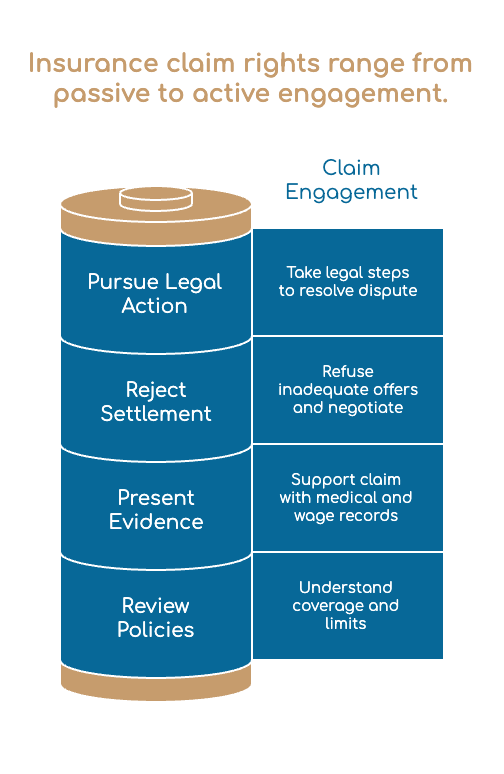
Florida collision victims may have rights to underinsured motorist benefits, fair compensation, and claim review.
Victims should understand significant protections:
- The right to review available insurance policies and coverage limits.
- The right to present medical evidence, wage records, and expert opinions.
- The right to reject an inadequate settlement offer.
- The right to pursue legal action within applicable deadlines.
A careful legal review can help ensure that injured people, families, and caregivers receive fair consideration. This process supports accountability while helping those harmed obtain resources needed for recovery and service to others.
Why Do Florida Underinsured Motorist Accident Injuries Happen?
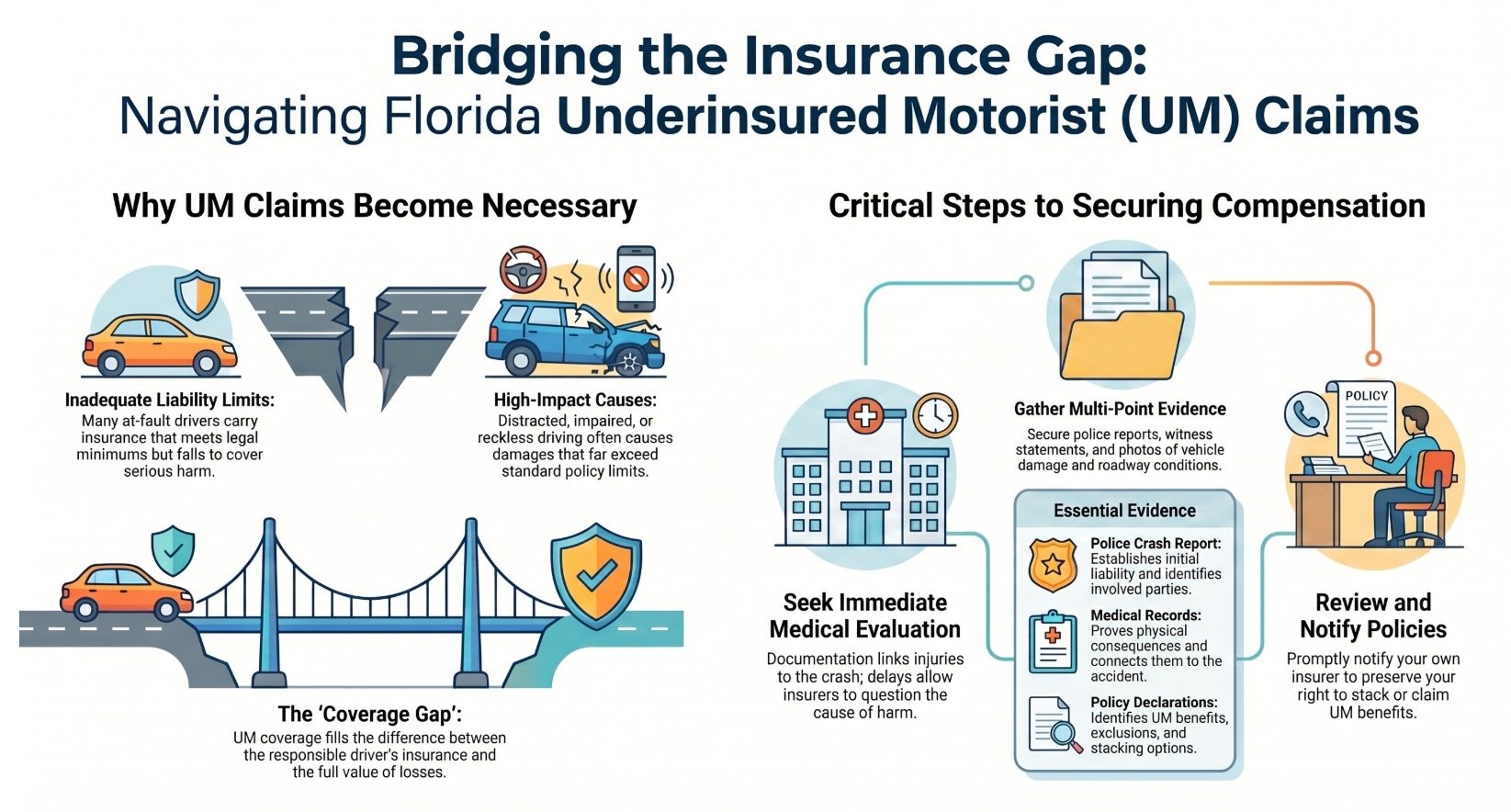
Why do Florida underinsured motorist accident injuries occur despite mandatory insurance laws? They often happen because the at-fault driver carries insurance that meets legal minimums but cannot fully compensate serious harm. Florida’s insurance structure may leave injured people facing medical expenses, lost income, and long-term care needs that exceed available Policy Limits.
These injuries also arise from Coverage Gaps between required benefits and actual damages. A driver may comply with the law yet lack adequate bodily injury coverage, or multiple injured parties may have to share limited funds. For those committed to protecting families, patients, or community members, these gaps can create lasting financial strain.
Complications may increase when Claim Procedures involve several insurers, disputed liability, or delayed evaluations of injury severity. Legal Deadlines can further affect available recovery when time-sensitive rights are not preserved. Underinsured motorist injuries, therefore, result from lawful but insufficient coverage, simpler insurance systems, and damages that exceed expected protection.
What Should You Do After a Florida Underinsured Motorist Accident Injury?
After a Florida underinsured motorist accident, an injured person should take prompt steps to protect health, preserve evidence, and support any future claim. Seeking medical care, documenting crash evidence, and contacting the insurer are central actions that may affect recovery and available benefits. Each step should be handled carefully, because early decisions can influence how the injury claim is evaluated.
Seek Medical Care
Even when injuries appear minor at the scene, prompt medical evaluation remains essential after a Florida underinsured motorist accident. A physician can identify hidden trauma, including concussion, soft tissue damage, internal injury, or delayed pain conditions. Early care also helps restore the injured person’s health while preserving a reliable connection between the collision and later symptoms. Treatment timelines matter, because delays may allow insurers to question whether injuries were caused by the crash. The injured person should follow medical advice, attend referrals, complete therapy, and report worsening symptoms without delay. A practical documentation checklist includes emergency room records, diagnostic results, prescriptions, therapy notes, work restrictions, and out-of-pocket medical receipts. Careful follow-through supports recovery and helps legal counsel evaluate damages with accuracy, compassion, and disciplined attention to service.
Document Crash Evidence
Medical care records show the nature and extent of injury, but crash evidence helps explain how the collision occurred and why underinsured motorist coverage may be needed. A careful record preserves facts for those responsible for evaluating harm and allocating financial responsibility. Photographs of vehicle damage, skid marks, roadway conditions, traffic signals, debris fields, and visible injuries may clarify impact forces and fault. Witness names, phone numbers, and brief statements should be gathered when it is safe to do so.
Nearby businesses, homes, buses, or traffic systems may have surveillance footage that shows the sequence of events. Vehicle Telematics, including speed, braking, and airbag deployment data, may also assist in reconstruction. Promptly preserving this information supports an accurate account and helps protect an injured person’s ability to seek fair recovery.
Contact Your Insurer
Because insurance obligations often begin quickly, an injured person should notify his or her own automobile insurer soon after a Florida crash involving a potentially underinsured driver. This notice should be accurate, brief, and limited to known facts, while avoiding speculation about fault or the full extent of injuries. Prompt contact helps preserve underinsured motorist benefits and allows the insurer to open a file, assign an adjuster, and explain required forms. A careful claim timeline review may identify deadlines for notice, medical benefits, recorded statements, and proof of loss. Treatment documentation should also be organized to include emergency records, physician notes, diagnostic results, prescriptions, and therapy plans. Clear communication supports fair claim handling and helps ensure that available coverage may serve the injured person’s recovery needs.
Critical Evidence in a Florida Underinsured Motorist Accident Injury Case
Essential evidence in a Florida underinsured motorist accident injury case helps establish fault, prove damages, and identify available coverage.
Essential materials often include:
- Police Crash Report
- Medical Treatment Records
- Insurance Policy Documents
- Witness Statements
Each item may affect how the claim is evaluated, particularly when the at-fault driver’s insurance is insufficient to cover the injured party’s losses.
Police Crash Report
After a Florida underinsured motorist accident, the police crash report often becomes one of the first documents reviewed when evaluating how the collision occurred and who may be responsible. A police crash report may be crucial and may include driver information, insurance details, vehicle positions, witness names, roadway conditions, citations, and the officer’s narrative. These details can help a lawyer assess liability, identify coverage issues, and preserve facts that may support a later claim.
However, the report is not always complete or fully accurate. Important report inaccuracies may involve incorrect diagrams, missing witnesses, misstated driver comments, or errors in time, location, or insurance information. Careful review allows counsel to compare the report with other evidence and address mistakes before they affect an underinsured motorist claim.
Medical Treatment Records
While the police crash report helps document how the collision occurred, medical treatment records often establish the physical consequences of a Florida underinsured motorist accident. These records may include emergency care notes, diagnostic imaging, physician evaluations, therapy reports, prescriptions, and discharge instructions. Alongside this, they help connect the injured person’s condition to the crash, which supports Crash liability and damages analysis. Consistent treatment documentation can also strengthen witness credibility by showing that reported pain and limitations align with medical findings. In insurance negotiations, these records help explain the need for care, the duration of recovery, and the effect on daily service, work, and family responsibilities. When injuries exceed available policy limits, complete medical documentation becomes especially important in presenting a clear, compassionate, and well-supported claim for fair compensation.
Insurance Policy Documents
Because insurance coverage often determines the practical value of an injury claim, insurance policy documents are essential evidence in a Florida underinsured motorist accident case. These records identify available UM benefits, exclusions, endorsements, notice duties, and conditions that may affect recovery. A careful Policy limits review can show whether the at-fault driver’s coverage is insufficient and whether additional protection exists through the injured person’s own policy or a household policy. Declarations pages, full policy forms, renewal records, and rejection or selection forms may also reveal issues involving stacking, priority of coverage, or improper waiver of benefits. In UM coverage disputes, accurate document analysis helps clarify each insurer’s obligations. For those serving injured clients, these materials support fair evaluation, responsible negotiation, and informed decisions about pursuing rightful compensation.
Witness Statements
Witness statements can play a decisive role in a Florida underinsured motorist accident injury case, especially when liability, crash mechanics, or the severity of impact is disputed. Independent observers may describe vehicle speeds, traffic signals, lane positions, weather conditions, and the injured person’s immediate condition. Careful Witness identification helps preserve contact information before memories fade or individuals become difficult to locate. Attorneys may compare accounts with police reports, photographs, medical records, and vehicle damage to evaluate the credibility of statements.
Consistent, detailed testimony can support a claim for benefits when the at-fault driver lacks adequate insurance. In service to injured clients, a thorough review of witnesses helps present the facts fairly, accurately, and with respect for the legal process and community safety. Such evidence can meaningfully strengthen negotiations or litigation.
Long-Term Effects of Florida Underinsured Motorist Accident Injuries
Florida underinsured motorist accident injuries may cause lasting consequences, including chronic pain complications that affect daily function and quality of life. These injuries can also reduce lost earning capacity, especially when physical limitations prevent a return to prior work duties. Ongoing medical needs, such as therapy, physician care, and future procedures, often become central issues in evaluating the full value of a claim.
Chronic Pain Complications
After an underinsured motorist accident, chronic pain can become one of the most disruptive long-term complications for an injured person, especially when the available insurance coverage does not reflect the full extent of the harm. Persistent neck, back, joint, or nerve pain may require ongoing medical attention, careful monitoring, and coordinated support. Medication delays can worsen symptoms and interfere with recovery, making timely care critical. Pain documentation helps establish the duration, severity, and daily impact of the condition. An insurance coverage review may identify whether additional benefits are available for necessary care.
Providers and advocates often help develop long-term treatment plans that address therapy, subspecialist appointments, diagnostic testing, and symptom management. This process supports informed decisions and helps protect the injured person’s health and dignity.
Lost Earning Capacity
Chronic pain and other lasting impairments can affect more than medical stability, as they may also reduce a person’s ability to work, advance in a career, or maintain consistent income. In underinsured motorist claims, lost earning capacity addresses the difference between prior vocational prospects and future earning capacity limited by the crash. This analysis may consider education, job history, physical restrictions, transferable skills, and likely career progression. Fault vs damages remains important because proving another driver caused the collision differs from proving the full economic harm that follows. When an insurer undervalues diminished earning ability, delays review, or ignores credible employment evidence, concerns involving insurance bad faith may arise. Careful documentation supports fair recovery, helping injured individuals protect dignity, stability, and their ability to serve families and communities.
Ongoing Medical Needs
Often, the long-term consequences of an underinsured motorist accident extend beyond initial emergency care, requiring ongoing treatment, monitoring, medication, therapy, or future procedures. Injured individuals may face Chronic symptoms that limit mobility, concentration, sleep, or daily functioning, creating continued needs that affect family support, employment, and community responsibilities. Medical records, expert opinions, and rehabilitation plans help identify future treatment that may be necessary to preserve health and independence. A disability evaluation may also clarify functional limitations, work restrictions, and the level of assistance required. For many, pain management becomes a necessary part of recovery, especially when injuries involve the spine, joints, or nerves. Careful documentation of these needs supports a more complete understanding of losses when available insurance coverage is insufficient.
Proving Liability in Florida Underinsured Motorist Accident Injury Cases
Because an underinsured motorist claim still depends on fault, proving liability is a central part of any Florida accident injury case. The injured person must show that the at-fault driver breached a duty of care and caused harm that exceeds available coverage. This process often begins with evidence preservation, including photographs, vehicle damage records, crash reports, witness statements, medical documentation, and available video footage. Careful collection helps protect facts before memories fade or physical proof is lost.
Florida’s Comparative negligence rules may also affect recovery. If the injured person is assigned a percentage of fault, compensation may be reduced accordingly, and significant fault findings can limit recovery. For those committed to caring for injured individuals and families, accurate liability proof supports fairness and accountability. A lawyer may evaluate road conditions, driver conduct, traffic laws, and expert findings to establish a clear, service-focused presentation of responsibility and resulting harm in Florida.
Dealing With Insurance Companies After a Florida Underinsured Motorist Accident Injury
After a Florida underinsured motorist accident, insurance communications can quickly become a significant part of the injury claim. Adjusters may request recorded statements, medical authorizations, repair records, or explanations of how the crash affected daily life and service responsibilities. Each response should be accurate, measured, and supported by documentation, because incomplete or casual statements may later be used to limit recovery.
The injured person’s insurer and the at-fault driver’s insurer may evaluate different issues, including liability, damages, Coverage Limits, and available underinsured motorist benefits. Careful review of policy language helps identify obligations, notice requirements, and exclusions. Written communication also preserves a clear record, which can be important if questions arise regarding cooperation or the Claims Timeline.
Those committed to caring for family, clients, or community often benefit from guidance that protects their ability to recover and avoids unnecessary disputes with insurers, especially when financial responsibility is shared among multiple sources of coverage.
What to Expect During a Florida Underinsured Motorist Accident Injury Claim Process
A Florida underinsured motorist accident injury claim typically begins with reporting the accident, preserving crucial records, and notifying the appropriate insurance carriers. The process then requires careful review of available coverage, including the at-fault driver’s limits and the injured person’s underinsured motorist benefits. To pursue fair compensation, the claimant must prove damages through evidence and may need to negotiate a settlement when the insurer disputes liability, coverage, or the value of the claim.
Reporting The Accident
In the initial stage of a Florida underinsured motorist accident injury claim, reporting the accident creates the record that insurers, attorneys, and medical providers may later rely on to evaluate liability and damages. Law enforcement should be contacted when injuries, significant property damage, or disputed facts are present, and the responding officer’s report may become a central reference. The injured person should provide clear, accurate information, while avoiding speculation about fault or the extent of injuries. Prompt notice also supports Car safety concerns, because hazards, vehicle positions, and roadway conditions can be addressed before others are harmed. Careful evidence preservation begins at the scene through photographs, witness names, medical attention, and repair documentation. These steps help protect the claim while supporting fair and responsible resolution.
Reviewing Insurance Coverage
Once the accident has been reported and the initial facts are documented, the claim typically moves to a review of all available insurance coverage. This step identifies the at-fault driver’s liability policy, the injured person’s underinsured motorist benefits, and any policy endorsements that may affect recovery. Careful review helps determine coverage limits, notice requirements, exclusions, and whether multiple policies may apply. For those committed to serving an injured person responsibly, this process promotes informed decisions before negotiations begin. Insurers may dispute applicability, delay confirmation, or issue a claim denial if policy terms are misunderstood or deadlines are missed. The coverage review also provides the framework for settlement valuation, since available insurance often shapes the practical path toward resolution, accountability, and fair compensation under Florida law.
Proving Your Damages
Proving damages becomes a central focus after coverage is identified because an underinsured motorist claim depends on showing the full extent of the injured person’s losses. This step often requires careful documentation of injuries, treatment, income loss, and daily limitations. Medical records help connect the crash to the harm suffered, while physician opinions may explain future care needs or lasting impairment. Evidence preservation also serves an important purpose, including photographs, repair estimates, witness information, employment records, and receipts for out-of-pocket expenses. For those committed to helping injured people regain stability, organized proof supports a fair evaluation of the claim. A Florida underinsured motorist accident injury lawyer may review these materials, identify missing documentation, and present damages with accuracy, dignity, and respect for the injured person’s recovery.
Negotiating A Settlement
After damages are documented and organized, settlement negotiations typically become the next major stage of a Florida underinsured motorist accident injury claim. During this phase, the claimant’s representative may present medical documentation, wage loss records, and evidence of emotional distress to the insurance carrier. The insurer then evaluates the demand, reviews policy limits, and may respond with a lower offer. Negotiations often involve careful exchanges, where each side weighs liability, injury severity, future care needs, and available coverage.
A fair settlement should reflect the harm suffered while helping restore stability for the injured person and family. When insurers undervalue losses, further advocacy may be necessary. This process requires patience, preparation, and a service-minded commitment to securing responsible compensation for those affected by another driver’s inadequate coverage.
Compensation for Florida Underinsured Motorist Accident Injury Damages
In a Florida underinsured motorist accident claim, compensation is intended to address the gap between the at-fault driver’s available insurance and the full value of the injured person’s damages. This protection may apply after the liable driver’s policy is exhausted, subject to the injured person’s own policy terms and compensation limits. Careful review of coverage is necessary because stacking, exclusions, and notice requirements may affect recovery.
A lawyer may help present documentation that shows the seriousness of the injuries, the need for treatment, and the relationship between the collision and the claimed harm. Evidence of medical necessity can be especially important when an insurer questions ongoing care or attempts to reduce payment. The process often requires organized records, timely communication, and firm advocacy. For those committed to helping injured individuals regain stability, proper claim development can support fair consideration and discourage undervaluation by insurers seeking to limit responsibility.
Economic vs Non-Economic Damages in Florida Underinsured Motorist Accident Cases
In Florida underinsured motorist accident cases, damages are generally evaluated as economic losses, non-economic losses, and the evidence required to prove each category. Economic damages may include medical expenses, lost income, and future care costs, while non-economic damages address pain, suffering, and diminished quality of life. Proper documentation, expert analysis, and a clear connection to the accident are essential when presenting UM damages to an insurer or court.
Economic Damage Categories
Economic damages in a Florida underinsured motorist accident case refer to the measurable financial losses caused by the crash, including medical expenses, lost income, reduced earning capacity, rehabilitation costs, and related out-of-pocket expenses. These categories help identify the practical resources needed to restore stability and support continued care. Medical Documentation is central because treatment records, billing statements, and physician opinions connect expenses to the collision. Pain Management costs may include therapy, prescriptions, injections, or specialist visits when medically necessary.
Lost Income is supported through wage records, employer statements, tax documents, and work restrictions. Reduced earning capacity may require vocational or economic analysis. Liability Evidence also matters, since proof of fault strengthens the financial claim against available coverage. Accurate records allow insurers, attorneys, and courts to evaluate losses responsibly.
Non-Economic Losses
Beyond the financial records, non-economic losses in a Florida underinsured motorist accident case address the personal harm that cannot be measured by invoices, pay stubs, or receipts. These damages concern the human impact of an injury, including Valuing pain, emotional distress, future quality, and life limitations that may follow a serious crash. A person may face chronic discomfort, anxiety while traveling, loss of independence, or reduced ability to care for family, volunteer, worship, or participate in community life. In this context, compensation recognizes that service to others often depends on health, mobility, and emotional stability. Non-economic losses also reflect disrupted relationships, altered routines, and diminished enjoyment of daily activities. Their purpose is to acknowledge suffering with dignity while addressing the lasting personal consequences of preventable harm.
Proving UM Damages
Proving damages in a Florida underinsured motorist accident case requires a clear showing of both measurable financial losses and personal harm that affects daily life. Economic damages may include medical bills, rehabilitation costs, lost wages, reduced earning capacity, and future care needs. Non-economic damages may involve pain, emotional distress, physical limitations, and loss of enjoyment of life. Proper evidence preservation is critical, including medical records, photographs, employment documents, witness statements, and expert evaluations. An insurance policy review also helps determine available UM benefits, coverage limits, exclusions, and notice requirements. By carefully organizing the evidence, an injured person’s claim can reflect the full impact of the collision. This process supports fair evaluation, responsible advocacy, and a service-focused approach to protecting injured clients’ recovery rights under Florida law.
When a Florida Underinsured Motorist Accident Injury Case Goes to Trial vs Settlement
In a Florida underinsured motorist accident injury case, the decision to settle or proceed to trial often depends on the strength of the evidence, the extent of the injuries, and the insurer’s willingness to offer fair compensation. A careful settlement evaluation may compare medical records, wage loss, future care needs, and the practical risks of continued dispute.
When settlement discussions do not fully reflect the harm suffered, litigation may be necessary to promote accountability and support the injured person’s recovery. Trial strategy focuses on presenting credible testimony, clear medical proof, and a coherent explanation of how the crash changed daily life. Jury selection also matters because jurors must be able to assess responsibility, damages, and the purpose of underinsured motorist coverage fairly.
Litigation timelines can be longer than negotiated resolutions, requiring patience, preparation, and steady communication. A lawyer may recommend trial when the potential benefit justifies the added time, cost, and uncertainty.
Florida Laws That May Affect Your Florida Underinsured Motorist Accident Case
Whether a Florida underinsured motorist accident case resolves through settlement or proceeds to trial, applicable state law can strongly affect the value, timing, and available recovery. These rules guide how insurers evaluate claims, how fault is allocated, and how damages are pursued when the at-fault driver lacks adequate coverage.
Key legal considerations may include:
- Comparative Negligence, which can reduce recovery when the injured person shares responsibility.
- Policy Limits, which may restrict payment even when damages exceed available coverage.
- Florida’s insurance requirements, including personal injury protection, which may affect early benefits.
- Contract terms in the underinsured motorist policy, including notice and cooperation duties.
A careful review of these factors helps protect the injured person’s interests while promoting fair accountability. For families, caregivers, and advocates seeking to support an injured loved one, understanding these laws can improve decision-making and reduce avoidable disputes over claims during an already difficult recovery process.
The Statute of Limitations for Florida Underinsured Motorist Accident Injury Cases
Because filing deadlines can determine whether compensation remains available, the statute of limitations is a crucial issue in Florida underinsured motorist accident injury cases. Florida generally imposes strict time limits for bringing injury-related claims, and missing the applicable deadline may prevent recovery, even when injuries are serious and coverage exists. These deadlines should be evaluated early, with attention to the crash date, insurance policy language, notice requirements, and any contractual duties connected to underinsured motorist benefits.
Timely action also supports orderly settlement negotiations, since insurers often assess risk differently when a claim is prepared before deadlines approach. Mediation strategies may be shaped by the remaining filing period, the completeness of medical documentation, and the strength of liability evidence. Practical planning may also involve understanding Attorney fee schedules, contingency agreements, and case costs, so injured individuals can make informed decisions while preserving claims intended to restore stability and serve dependents.
How a Florida Underinsured Motorist Accident Injury Lawyer Can Help You
After a serious crash, a Florida underinsured motorist accident injury lawyer can help evaluate all available sources of compensation, including the at-fault driver’s liability coverage and the injured person’s own UM/UIM policy. This assessment often requires careful review of insurance coverage limits, medical records, wage documentation, and evidence showing how the injury affects daily service, caregiving, and work responsibilities.
A Florida underinsured motorist injury lawyer can assess coverage options and document losses after a serious crash.
Legal counsel may support the claim by:
- Identifying applicable policies and exclusions
- Calculating losses beyond initial medical bills
- Preparing documentation for insurers
- Monitoring the claim filing timeline
A lawyer can also communicate with insurance carriers, respond to disputes, and present evidence showing why the available liability coverage does not fully address the harm caused. For injured people committed to supporting families, communities, or those in their care, this guidance can protect financial stability while promoting a fair recovery process. Professional representation helps organize detailed facts into a clear, substantiated claim.
When to Contact a Florida Underinsured Motorist Accident Injury Lawyer
When should an injured person seek legal guidance after learning that the at-fault driver may not have enough insurance to cover the losses? Contact should be considered as soon as serious injuries, ongoing treatment, lost income, or disputed fault become apparent. Early attention helps protect deadlines, preserve evidence, and organize claim documentation before records become incomplete or difficult to obtain.
A Florida underinsured motorist accident injury lawyer may also be contacted when the insurer confirms low Coverage limits, delays communication, questions medical care, or requests broad statements. These moments can affect how a claim is presented and evaluated. Prompt consultation allows the injured person, family members, or caregivers to understand available insurance sources, including personal underinsured motorist coverage, without overlooking important notice requirements.
Those serving an injured person should encourage timely action when medical bills continue rising. Delay can weaken documentation and reduce opportunities to present a complete, orderly record of the harm suffered.
Why You Need an Experienced Florida Underinsured Motorist Accident Injury Lawyer
Although an underinsured motorist claim may appear to involve only a comparison between losses and available coverage, these cases often require careful legal evaluation. An experienced Florida underinsured motorist accident injury lawyer can assess liability, damages, policy language, and the effect of available benefits on a person’s recovery. This guidance helps injured individuals and their families pursue fair compensation while preserving resources needed for care, stability, and service to others. Gainesville underinsured motorist claims can be particularly complex due to local traffic regulations and insurance laws. Individuals in this situation should seek the assistance of a knowledgeable attorney who is familiar with the nuances of such claims in Gainesville. By taking proactive steps, victims can improve their chances of receiving the compensation they deserve.
Insurers may dispute the severity of injuries, question the treatment, or argue that another party should pay. Familiarity with insurer tactics allows counsel to respond with organized evidence, medical documentation, and a clear presentation of damages. A lawyer also develops a settlement strategy that accounts for future medical needs, lost income, pain, and practical burdens resulting from the accident. Without experienced representation, a claimant may accept less than the claim’s full value or miss important legal requirements under Florida law.
How to Choose the Right Florida Underinsured Motorist Accident Injury Lawyer for Your Case
Choosing the right Florida underinsured motorist accident injury lawyer begins with evaluating whether the attorney has specific experience handling UM and UIM claims, not merely general personal injury cases. These matters often require careful policy review, evidence development, and negotiations with insurance carriers that may resist fair payment. A qualified lawyer should demonstrate knowledge of Florida insurance requirements, coverage limits, medical documentation, and damages arising from serious injuries.
Prospective clients should also assess Client communication, because attentive updates help injured individuals understand their options and serve their families with greater confidence. The lawyer’s approach to settlement timelines is equally important, since rushed resolutions may undervalue losses, while unnecessary delays can increase hardship. A dependable attorney should explain likely case stages, anticipated challenges, and the evidence needed to support recovery. Selecting counsel with preparation, integrity, and a service-focused approach can help protect the injured person’s rights while promoting a more orderly path toward compensation.
About The Law Offices of Anidjar & Levine
For injured motorists seeking guidance after a crash involving inadequate insurance coverage, The Law Offices of Anidjar & Levine provides legal representation focused on protecting clients’ rights and pursuing available compensation. The firm assists people facing medical bills, lost income, vehicle damage, and long-term recovery needs after underinsured motorist accidents throughout Florida.
The Anidjar & Levine History reflects a commitment to client service, diligent case preparation, and steady advocacy for injured individuals and families. Its attorneys work to reduce burdens on clients by managing insurance communications, gathering evidence, reviewing policy limits, and identifying all potential sources of recovery.
The firm’s Case Strategy Approach centers on careful investigation, practical assessment, and consistent communication. Each case is evaluated according to liability, damages, insurance coverage, and the client’s personal circumstances. Through this structured process, the firm seeks fair outcomes while helping clients move forward with dignity, stability, and informed confidence after a difficult collision.
Frequently Asked Questions
Does Underinsured Motorist Coverage Apply to Hit-And-Run Accidents in Florida?
Yes, underinsured motorist coverage may apply to hit-and-run accidents in Florida when the fleeing driver cannot be identified, because the driver may be treated as uninsured. Coverage depends on the policy language, reporting requirements, and available evidence. Injured persons should act promptly, document losses, and serve all notice obligations. Insurers may apply hit-and-run limits, exclusions, or proof standards before providing benefits.
Can Passengers File Underinsured Motorist Claims After a Florida Accident?
Yes, passengers may file underinsured motorist claims after a Florida accident when coverage applies. First-party eligibility depends on the policy language, vehicle occupancy, and household coverage. A passenger must provide proof of damages, including medical records, lost income, and injury-related losses. Policy limits control available recovery, even when harm is severe. Notice requirements must be followed promptly, so insurers can evaluate claims and protect all eligible injured parties.
Will My Premiums Increase After Using Underinsured Motorist Coverage?
Premiums do not always increase after using underinsured motorist coverage. Insurers review fault, claim history, policy terms, and state rating rules before changing rates. If the insured did not cause the crash, the Impact premium may be limited or prohibited, depending on the circumstances. However, coverage costs can change at renewal. Those assisting injured people should encourage careful documentation, timely notice, and review of any proposed increase.
Can I Stack Multiple Underinsured Motorist Policies in Florida?
Yes, stacking UM may be allowed in Florida when policies permit it, and the insured has not rejected stacking in writing. Stacking can combine policy limits across vehicles or policies, increasing available recovery after a serious loss. When multiple insurers are involved, coverage overlap must be reviewed carefully to determine priority, exclusions, and payable amounts. A service-minded adviser should examine declarations, rejection forms, and claims history before guiding next steps.
Does Underinsured Motorist Coverage Apply While Driving a Rental Car?
Underinsured motorist coverage may apply while driving a rental car, depending on the insured person’s auto policy, the rental car coverage terms, and any exclusions. In many cases, coverage follows the insured rather than the vehicle, but policy limits still control available recovery. A careful review helps determine whether benefits support injured persons, passengers, or others affected. Serving clients responsibly requires confirming coverage before relying on protection after a rental-related crash.
—————————
Underinsured motorist claims in Florida can involve complicated insurance issues, disputed damages, and strict procedural requirements. Injury victims benefit from legal guidance that protects their rights, evaluates available coverage, and pursues fair compensation for medical costs, lost income, and related losses.
The Law Offices of Anidjar and Levine provides focused representation for those injured by underinsured drivers, including support from a Florida Car Accident Lawyer.
Prompt legal action can help preserve evidence, meet deadlines, and strengthen the claim from the beginning.