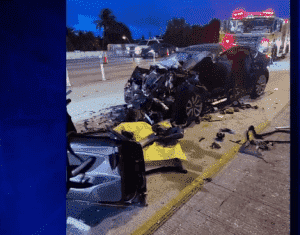
The Law Offices of Anidjar and Levine evaluates whether crash forces, defective restraints, improper belt fit, or another party’s negligence caused or worsened an occupant’s injuries.
A Florida car accident lawyer may review medical records, crash reports, vehicle damage, restraint marks, photographs, and witness statements.
They can preserve seatbelt components, coordinate expert analysis, and handle insurer disputes involving causation, comparative fault, and damages.
The following sections explain how these claims are built, proven, and pursued under Florida law.
Main Takeaways
- A Florida seatbelt injury lawyer investigates whether crash forces, restraint defects, poor belt fit, or negligence caused or worsened injuries.
- Key evidence includes medical records, crash reports, vehicle-damage photos, restraint-mark evidence, witness statements, and seatbelt component inspections.
- Lawyers may preserve buckles, webbing, retractors, pretensioners, anchors, and vehicle interiors for expert evaluation.
- A lawyer handles insurer communications and addresses liability disputes, medical causation, comparative fault, and damages.
- Compensation may include medical care, lost income, pain, disability, future treatment, and claims against negligent drivers or manufacturers.
How We Can Help With Your Florida Seatbelt Injury Claim
After a crash involving a seatbelt-related injury, a Florida seatbelt injury lawyer can help determine whether the injury resulted from crash forces, a defective restraint system, improper seatbelt design, or another party’s negligence. Legal guidance may include reviewing medical records, crash reports, vehicle damage, restraint marks, and witness statements to build strong evidentiary documentation. This careful process supports those seeking accountability while protecting the injured person’s dignity and long-term needs.
Counsel may also coordinate expert evaluations, preserve vehicle components, and communicate with insurers on the claimant’s behalf. A focused insurance claim strategy can address liability disputes, medical causation, comparative fault arguments, and the full measure of damages. By organizing facts and presenting them clearly, a lawyer helps reduce confusion during a difficult recovery period. This support allows families, caregivers, and service-minded advocates to concentrate on care, stability, and responsible decision-making while the legal claim proceeds efficiently and with purpose.
Understanding Florida Seatbelt Injury Cases


When a motor vehicle collision occurs, seatbelt injuries may involve more than visible bruising or soreness. In Florida claims, these injuries can raise questions about medical causation, restraint use, vehicle damage, and the extent of harm suffered by an injured occupant. A careful review helps separate assumptions from documented facts, especially when insurance carriers rely on seatbelt myths to reduce the value of a claim.
OUR CONSULTATIONSARE FREE
START YOUR FREE CASE REVIEW

Understanding these cases requires attention to medical records, diagnostic findings, crash reports, witness statements, and photographs of the vehicle interior. Evidence preservation is crucial because damaged restraints, pretensioners, buckles, and occupant marks may help explain how the injury occurred. A lawyer reviewing a seatbelt injury case may also consider the timing of symptoms, the person’s prior health, and whether emergency care was delayed. This organized approach supports fair evaluation and helps protect the injured person’s dignity, recovery needs, and access to responsible legal remedies under Florida law.
Florida Seatbelt Injury Statistics — Why Evidence Must Be Preserved Immediately
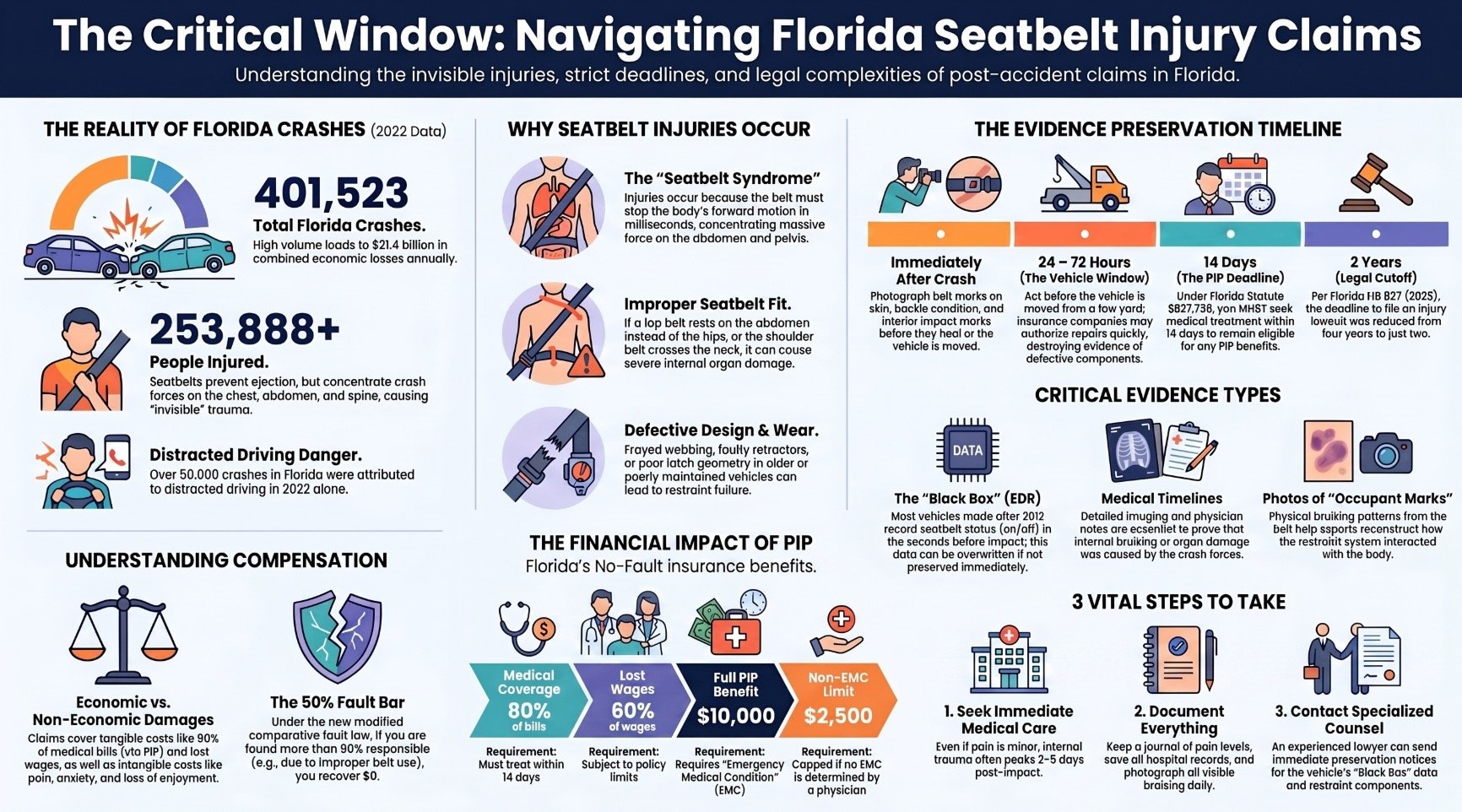
Florida’s crash volume makes seatbelt injury claims more common — and more contested — than many injured people expect. According to the FLHSMV 2022 Florida Traffic Crash Facts, Florida recorded 401,523 crashes in 2022, resulting in 3,535 fatalities and more than 253,888 injuries, with combined economic losses totaling $21.4 billion. In the vast majority of those crashes, seatbelts were present — yet the same restraint that prevents ejection can also concentrate crash forces on the chest, abdomen, and spine.


Distracted driving contributed to more than 50,000 crashes statewide, and the NHTSA attributed 3,308 fatalities nationally to distracted driving in 2022. When insurers dispute whether a seatbelt functioned properly or the claimant was wearing one, the evidence window for proving those facts can be measured in hours — making early preservation not optional but essential.
Florida Seatbelt Injury — Evidence Preservation Window
After a crash, different types of seatbelt injury evidence disappear on different schedules. Each window that closes makes your claim harder to prove.
Florida HB 837 (2023) impact on seatbelt injury claims: Before March 24, 2023, Florida used a pure comparative fault system. HB 837 shifted this to modified comparative fault — if a court assigns you more than 50% of fault, you recover nothing at all. In seatbelt cases, insurers now have a direct financial incentive to argue that improper seatbelt positioning, failure to wear a seatbelt, or preexisting conditions caused a significant share of harm. The new 50% bar gives those arguments real stakes. Early legal engagement, combined with immediate evidence preservation, is the most effective way to protect your claim under the new system.
Common Causes of Florida Seatbelt Injuries
Common causes of Florida seatbelt injuries often involve improper seatbelt fit, defective seatbelt design, sudden collision forces, or worn seatbelt components. These factors may affect how the restraint system performs during a crash, increasing the risk of harm to restrained occupants. A careful review of the vehicle, the seatbelt system, and the circumstances of the collision can help determine whether preventable failures contributed to the injury.
Improper seatbelt fit
In many crashes in Florida, an improper seatbelt fit can turn a protective device into a source of serious injury. When the lap belt rests across the abdomen rather than the hips, or the shoulder belt crosses the neck or slips off the shoulder, crash forces may concentrate on vulnerable organs, the spine, or soft tissues. This seatbelt mispositioning may occur when children use adult restraints too early, occupants sit improperly, or a belt is routed over bulky clothing. During sudden stops, side impacts, or rollover dynamics, poor fit can increase the risk of abdominal trauma, chest injuries, spinal damage, or ejection-related harm. Careful evaluation of belt placement, occupant size, seating posture, and crash circumstances helps determine whether improper fit contributed to preventable harm in Florida.
Defective seatbelt design
Although seatbelts are intended to manage crash forces safely, a defective seatbelt design can create unreasonable risks for Florida motorists and passengers. Design flaws may involve weak webbing, poor latch geometry, unsafe retractor placement, or belt systems that fail to remain positioned across the strongest areas of the body. When a restraint system is poorly engineered, an injured person may rely on a seatbelt malfunction theory to examine whether the product performed as safely as expected. These matters often require careful review of design records, testing data, recall history, and applicable safety standards. In appropriate cases, consumer protection claims may also address misleading assurances about safety or durability. Legal evaluation helps injured occupants, families, and community advocates pursue accountability while promoting safer vehicle restraints.
Sudden collision forces
Even when a seatbelt is properly designed, sudden collision forces can overwhelm the body and expose weaknesses in how the restraint performs during impact. In severe crashes in Florida, rapid deceleration may drive the torso forward while the belt restrains movement, placing intense pressure on the chest, abdomen, neck, and shoulders. These forces can contribute to fractures, internal trauma, and whiplash injuries, particularly when a vehicle is struck at high speed or from an unexpected angle. For those focused on serving injured individuals, understanding these dynamics is crucial to evaluating occupant safety and the full extent of harm. A careful review of crash conditions, medical findings, and restraint performance can help determine whether the seatbelt functioned reasonably or whether the collision forces created preventable injury risks.
Worn seatbelt components
Over time, seatbelt components can wear down from repeated use, heat, humidity, vehicle age, or prior crash stress, reducing the restraint system’s ability to protect an occupant during a collision. Frayed webbing, weakened retractors, damaged anchors, and recurring buckle failures may prevent proper restraint when force is greatest. In Florida’s climate, moisture and high temperatures can accelerate corrosion or material fatigue, especially in older vehicles or poorly maintained fleets. Those responsible for passenger safety should treat visible wear, sticking buckles, or slow retraction as warning signs requiring inspection. When repairs are inadequate, seatbelt retrofit options may help restore protection, particularly for vehicles lacking modern restraint features. Careful documentation of defects, maintenance history, and injury patterns can support evaluation of whether worn components contributed to preventable harm after a crash.
Legal Rights of Florida Seatbelt Injury Victims
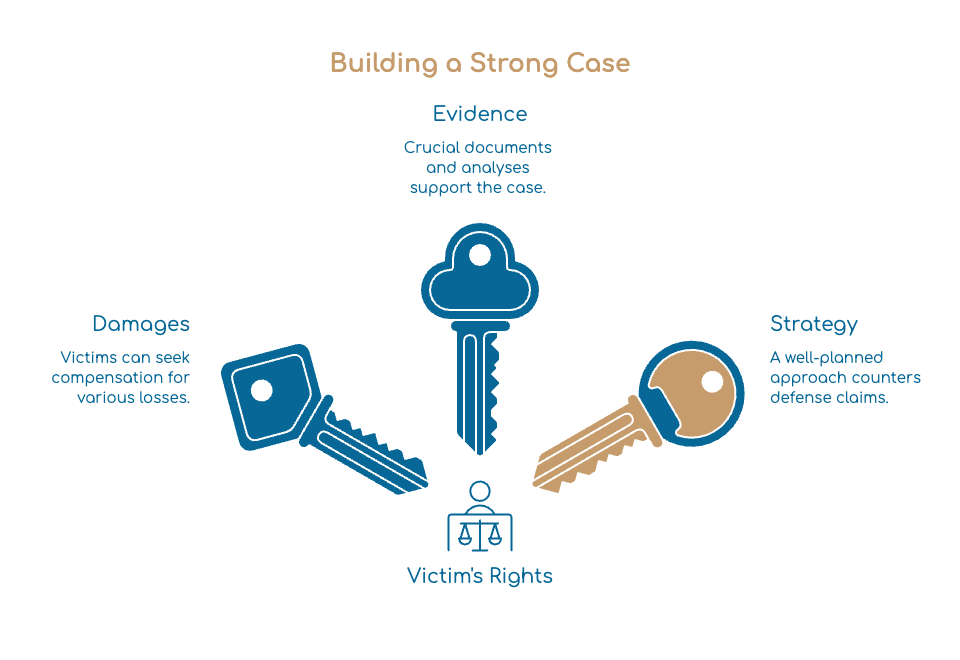
When a seatbelt causes or worsens an injury in a Florida crash, the injured person may still have important legal rights under state law. These rights may include claims against negligent drivers, vehicle owners, or responsible product manufacturers.
Comparative negligence can affect recovery, but it does not automatically bar compensation when facts support the claim.
- Victims may seek damages for medical care, lost income, pain, disability, and future treatment needs.
- Evidence may include medical records, crash reports, restraint system inspections, photographs, and expert analysis.
- A careful trial strategy may address defense claims that the victim’s own conduct reduced or caused the injury.
For advocates who serve injured people, the focus remains on accountability, safety, and fair restoration. Prompt legal review can help preserve evidence, identify responsible parties, and protect the victim from unfair blame. Florida deadlines also make timely action crucial after a serious collision or restraint-related injury.
Why Do Florida Seatbelt Injuries Happen?
Why do seatbelt injuries occur in crashes that the restraint system is meant to make safer? They happen because a seatbelt must stop the body’s forward motion in milliseconds, concentrating force across the chest, abdomen, shoulder, and pelvis. In severe collisions, that force can cause bruising, rib fractures, internal injuries, or soft tissue damage, even when the belt prevents worse harm.
Improper belt placement, defective restraints, vehicle design, occupant size, crash angle, and sudden deceleration may increase the risk of injury. Older adults, children, pregnant occupants, and medically fragile passengers may face greater vulnerability. For families and caregivers seeking to protect others, recognizing these causes helps them express concern without assigning blame too quickly.
Seatbelt injury cases may become intricate when medical causation, crash severity, or restraint performance is disputed. These disputes can affect compensation timelines, and insurance claims may be delayed while adjusters review records, vehicle evidence, and expert findings.
What Should You Do After a Florida Seatbelt Injury?
After a Florida seatbelt injury, an injured person should seek prompt medical treatment to identify internal trauma, soft tissue damage, or delayed symptoms. The person should also document visible injuries, medical care, vehicle damage, and any available evidence related to the crash. Because liability and insurance issues can become intricate, contacting a lawyer may help protect legal rights and preserve a potential claim.
Seek medical treatment
Although a seatbelt injury may seem minor at first, prompt medical evaluation is essential after a Florida car accident. Medical professionals can identify internal trauma, soft tissue damage, rib injuries, abdominal harm, or delayed symptoms that may not be immediately apparent. A person committed to caring for others should also protect personal health, because untreated injuries can worsen and reduce the ability to fulfill family, work, or community responsibilities.
Timely treatment also helps establish that injuries are connected to the crash, which may become important during insurance coverage disputes. Physicians can recommend appropriate care, referrals, and activity restrictions based on clinical findings. Before speaking with insurers, the injured person should consider refraining from recorded statements until legal guidance is obtained, as premature comments may affect benefits or claims.
Document your injuries
Medical care should be followed by careful documentation of every injury, symptom, and limitation associated with seatbelt trauma. The injured person should keep copies of hospital records, diagnostic images, prescriptions, discharge instructions, and therapy notes. Daily photographs of bruising, abrasions, swelling, or restricted movement can show how harm develops over time. A written journal may record pain levels, missed work, sleep disruption, caregiving needs, and activities that can no longer be performed safely.
This record can help preserve the truth when common insurance tactics attempt to minimize soft-tissue injuries or blame discomfort on prior conditions. Witness statement collection also supports accurate reporting, especially from passengers, first responders, coworkers, or family members who observed pain, mobility limits, or changes in daily function after the collision.
Contact a lawyer
When should legal counsel become involved in a Florida seatbelt injury claim? As soon as medical needs are stabilized, injured persons should seek guidance from a lawyer who understands crash-related restraint injuries. Early involvement supports the preservation of evidence, including vehicle condition, belt marks, photographs, medical records, and witness statements. Counsel may also help caregivers and families safeguard the injured person’s interests while focusing on recovery and service to others affected by the event.
A lawyer can evaluate liability, address allegations of improper seatbelt use, and communicate with insurers. Insurance company delays may threaten timely treatment, wage support, and just compensation. Legal representation helps ensure deadlines are met, records are organized, and settlement discussions reflect the full extent of the injury under Florida law.
Critical Evidence in a Florida Seatbelt Injury Case
Essential evidence in a Florida seatbelt injury case may determine whether the restraint system functioned properly and how the injury occurred. Essential materials often include the police crash report, vehicle damage photos, and medical treatment records. When seatbelt defect evidence is also preserved, it may help establish whether a failed latch, torn webbing, or faulty retractor contributed to the claimant’s injuries.
Police crash report
A police crash report often serves as one of the first organized records of a Florida seatbelt injury collision. Prepared by the responding officer, it may document roadway conditions, driver statements, citations, and preliminary observations about restraint use. Through scene investigation, the officer may note skid marks, debris patterns, traffic controls, and the positions of involved vehicles, helping clarify how the crash occurred. Witness interviews may also preserve timely accounts from passengers, bystanders, or other drivers before memories fade. For those serving injured people, this report can guide early evaluation of fault, insurance issues, and disputed seatbelt allegations. Although not always conclusive, it provides a structured foundation for further inquiry, supports careful case preparation, and helps identify evidence requiring prompt follow-up under Florida procedures in serious injury claims.
Vehicle damage photos
Although the police crash report may provide an initial framework, vehicle damage photos often reveal details that written descriptions cannot fully capture. In a Florida seatbelt injury case, these images may show impact location, crush patterns, airbag deployment, and interior contact points, including injuries, bruising, or displaced restraint components that may not appear in written reports. Attorneys may use photographs to evaluate accident causation and determine whether the force of impact aligns with claimed restraint-related injuries.
Clear images can also assist in evaluating whether belt components appear damaged, buckle latch points show abnormal wear, or anchor points are displaced. When preserved promptly, photographs help responsible advocates serve injured people by clarifying disputed facts, supporting fair evaluation, and guiding further investigation into how the collision and restraint system interacted.
Medical treatment records
When a seatbelt injury is disputed after a Florida collision, medical treatment records often provide the clearest timeline of physical complaints, diagnoses, and clinical findings. Emergency notes, imaging reports, surgical summaries, therapy records, and follow-up evaluations may connect bruising, fractures, organ trauma, or spinal injuries to the restraint’s force. These records also document pain progression, functional limits, prescribed care, and provider observations, helping responsible advocates serve injured persons with accuracy and dignity. Prompt treatment supports evidence preservation, because delays may invite arguments that symptoms came from another cause.
In severe cases, records may also help assess wrongful death eligibility by showing whether collision-related injuries contributed to fatal complications. Careful collection and review of these materials strengthen accountability, damage evaluation, and informed legal guidance for families.
Seatbelt defect evidence
Because a seatbelt injury may involve more than crash forces alone, defect evidence can become central to proving how the restraint system failed to protect an occupant in a Florida collision. Investigators may examine the buckle, latch plate, webbing, retractor, pretensioner, and anchor points for damage, abnormal wear, or malfunction. Vehicle data, repair history, recalls, and expert inspections may also show whether the restraint performed as designed. Clear documentation helps distinguish a true product failure from claims of seatbelt misuse, which insurers or manufacturers may raise to limit responsibility. Evidence of seatbelt misuse or its absence may include photographs, witness statements, belt markings, and biomechanical analysis. Promptly preserving the vehicle and restraint components supports a fair evaluation and helps injured persons and caregivers pursue accountability with accurate, service-centered evidence.
Event Data Recorders and Seatbelt Status Evidence in Florida Crashes
Most vehicles manufactured after 2012 are equipped with an event data recorder (EDR) — sometimes called a black box — that captures critical vehicle data in the seconds before and during a crash. According to the National Highway Traffic Safety Administration (NHTSA), EDR systems record parameters such as vehicle speed, brake application, throttle position, steering angle, airbag deployment timing, and — critically — seat-belt status for each occupied seating position. In a Florida seatbelt injury case, this last data point is often decisive.
When an insurer or opposing party claims that an occupant was not wearing a seatbelt or that the belt was improperly positioned, EDR data can directly confirm or refute that assertion. Similarly, if the defense argues that crash speed was lower than claimed, or that the vehicle did not experience the forces necessary to explain the injuries, EDR data provides an objective, pre-litigation record to challenge that position. We send formal preservation notices immediately upon being retained and work with certified EDR extraction specialists to retrieve and authenticate the data before the vehicle is repaired or operated further, as the vehicle can silently overwrite the pre-crash record.
Florida Personal Injury Protection (PIP) and Seatbelt Injuries
Florida’s no-fault insurance system means that after a crash, your own insurer — not the at-fault driver’s insurer — is the first source of payment for medical bills and lost wages. Every Florida driver must carry a minimum of $10,000 in personal injury protection (PIP) coverage under Florida Statute §627.736, and this coverage applies regardless of who caused the collision or whether a seatbelt was involved.
PIP pays 80% of reasonable medical expenses and 60% of lost wages up to the policy limit, regardless of fault. However, to remain eligible, you must seek initial medical treatment within 14 days of the crash date. For seatbelt injury cases, this deadline is particularly consequential: abdominal trauma, internal bruising, and soft tissue injuries often do not produce peak pain until two to five days after impact, creating a real risk that injured people delay treatment until the window has nearly closed.
Florida’s emergency medical condition (EMC) rule further divides PIP into two tiers. If a treating physician, osteopathic doctor, advanced registered nurse practitioner, or physician assistant determines that you have an emergency medical condition, your full $10,000 is available. If no qualifying provider makes that determination, benefits are capped at $2,500 — a gap that can leave seriously injured people with significant unpaid medical bills. Our attorneys can help identify which providers in your treatment network are qualified to make the EMC determination and ensure your records accurately reflect that assessment.
Long-Term Effects of Florida Seatbelt Injuries
Seatbelt injuries in Florida collisions may lead to long-term complications that extend beyond visible bruising or initial discomfort. Chronic pain, internal organ damage, and psychological trauma can affect a person’s health, daily function, and ability to work. These lasting effects often require careful medical evaluation, documentation, and legal analysis when pursuing compensation.
Chronic pain complications
Although many crash-related injuries appear to improve within weeks, chronic pain can persist long after a Florida seatbelt injury and substantially affect a person’s daily function, work capacity, and medical outlook. Persistent neck, shoulder, chest wall, or lower back pain may limit mobility, disturb sleep, and require ongoing therapy, medication, or specialist care. When pain prevents employment, workers’ compensation issues may arise if the collision occurred during job duties. Some injured persons also face claim denial, disputed causation, or limits in insurance coverage, especially when underinsured motorists are involved. Careful documentation, consistent treatment, and clear medical opinions can help establish the continuing impact of pain. For service-minded families and caregivers, understanding these complications supports patient advocacy and informed decisions throughout recovery.
Internal organ damage
When the force of a collision drives a restraint across the abdomen or chest, internal organ damage may develop even when external injuries appear limited. Injuries to the liver, spleen, kidneys, lungs, or intestines can create bleeding, infection, reduced function, and delayed complications that require careful monitoring. In serious crashes, emergency medical response may determine whether concealed trauma is identified before deterioration occurs. Medical providers often rely on imaging, laboratory results, and repeated examinations because symptoms may emerge gradually. Seatbelt failure can be caused by defective latching, poor restraint positioning, or improper tension, each increasing the risk of concentrated force on vulnerable organs. For those committed to serving injured people, documenting diagnosis, treatment needs, and long-term limitations helps clarify the full impact of these harms.
Psychological trauma affects
After a severe collision, psychological trauma may persist long after visible injuries have begun to recover. Seatbelt injuries, combined with the force of impact, can leave survivors with anxiety, sleep disruption, panic responses, depression, or fear of driving. These effects may reduce concentration, strain family responsibilities, and limit a person’s ability to work or provide care for others. Medical documentation from counselors, psychologists, or physicians can help clarify the link between the crash and ongoing emotional harm. In post-crash litigation, psychological symptoms may be assessed alongside physical injuries to show the full scope of damages. They may also affect insurance settlement discussions, particularly when treatment is ongoing. Careful legal review can ensure that emotional suffering is addressed with the same seriousness as bodily injury.
Proving Liability in Florida Seatbelt Injury Cases
In Florida seatbelt injury cases, proving liability requires a careful review of how the crash occurred, how the restraint system performed, and whether another party’s negligence contributed to the harm. Evidence may include crash reports, witness statements, vehicle inspection findings, medical records, and expert analysis of the seatbelt’s function during impact. Each detail helps determine whether the injury resulted from reckless driving, defective equipment, poor vehicle maintenance, or another preventable act.
Damages documentation is also required, as it connects the injury to measurable losses, including medical treatment, rehabilitation needs, lost income, and long-term limitations. Clear records support a fair evaluation and may reduce confusion if an insurance dispute later arises. Attorneys serving injured clients often work with medical providers, accident reconstruction specialists, and safety experts to build a reliable picture of liability. This process helps protect the injured person’s rights while promoting accountability for conduct that caused preventable harm.
Dealing With Insurance Companies After a Florida Seatbelt Injury
Because insurance companies often focus on limiting exposure, communication following a Florida seatbelt injury should be handled with care and precision. Adjusters may request recorded statements, broad medical authorizations, or early settlement discussions before the full nature of the injury is understood. A measured approach helps protect the injured person’s interests while supporting fair review of the claim.
Prompt notice to the insurer may be necessary, but statements should remain factual and limited. Claim timelines can affect available benefits, response requirements, and documentation needs, making organized communication crucial. Evidence preservation is equally important, including photographs of the restraint system, vehicle damage, medical records, and witness information. Those assisting an injured person should encourage careful recordkeeping and avoid speculation about fault, symptoms, or future recovery. Professional guidance can help ensure that necessary information is provided without weakening the claim or compromising the person’s ability to pursue appropriate compensation.
What to Expect During a Florida Seatbelt Injury Claim Process
A Florida seatbelt injury claim typically begins with the initial filing, followed by a careful review of medical evidence to assess the nature and extent of the injuries. The process also involves evaluating liability and fault, particularly when insurers argue that seatbelt use contributed to the harm suffered. Settlement negotiations may then proceed, with compensation depending on documented injuries, disputed fault, and the strength of the supporting evidence.
Initial claim filing
After a seatbelt-related injury occurs in a Florida crash, the initial claim filing usually begins with identifying all available insurance coverage and providing timely notice to the appropriate insurers. This step may involve the at-fault driver’s liability policy, the injured person’s personal injury protection benefits, and any uninsured or underinsured motorist coverage. Careful filing helps meet deadlines, clarify coverage positions, and establish a record of responsible communication. Witness statement collection may also begin early, as neutral accounts can help explain how the collision occurred and how restraint systems were used. Insurers may raise a comparative negligence defense, arguing that improper seatbelt use contributed to harm. A well-organized claim allows counsel to serve the injured person’s interests while protecting evidence, coordinating notices, and preparing for later evaluation.
Medical evidence review
Once the claim has been opened and coverage issues are identified, the medical evidence review becomes a central part of evaluating a Florida seatbelt injury claim. Adjusters examine emergency records, diagnostic imaging, physician notes, therapy reports, and billing statements to understand the nature and extent of harm. Documentation deadlines must be tracked carefully because missing records or late submissions may weaken the presentation of treatment needs. Attorneys often organize medical timelines, identify gaps in care, and seek clarification from providers when records are incomplete. This review also helps address insurance tactics, such as questioning whether treatment was necessary or related to the crash. A careful, service-focused approach ensures that the injured person’s condition is presented accurately, respectfully, and with the supporting evidence needed for fair claim consideration.
Liability and fault
When liability is reviewed in a Florida seatbelt injury claim, the focus turns to how the crash occurred, who contributed to it, and whether the injured person’s use or nonuse of a seatbelt affects the case’s value. Investigators may examine police reports, witness statements, photographs, vehicle damage, traffic laws, and available video evidence to identify negligent conduct. Florida’s comparative fault rules may reduce compensation if the injured person is found partly responsible for the harm. Seatbelt evidence can be important when insurers argue that certain injuries would have been less severe with proper use of seat belts. A careful review helps address disputes over fault before they distort the record. This evaluation also prepares the claim for insurance negotiations while keeping attention on accountability, fairness, and the injured person’s recovery.
Settlement negotiations
As the claim moves from fault analysis to negotiation, the injured person’s medical evidence, wage loss, pain-related limitations, and seatbelt-related defenses often shape the value of the case. Insurers may argue that nonuse or improper use of a seatbelt increased the risk of certain injuries, requiring careful responses grounded in records, expert opinions, and documented crash facts. The police report may influence the early evaluation, especially when it notes citations, the use of restraint, or conflicting statements. Counsel often presents treatment history, future care needs, and loss documentation in a structured demand package. Practical evidence-preservation steps include keeping damaged seat belts, photographs, repair records, and medical instructions. Through patient negotiation, the process should seek fair compensation while respecting the injured person’s needs and the broader duty to promote safety.
Compensation for Florida Seatbelt Injury Damages
Although seatbelts are designed to reduce the severity of crash injuries, they can also cause significant harm when a collision forces the restraint system against the body. Compensation in these cases may be pursued when evidence shows that another driver, a defective restraint, or other negligent conduct contributed to the harm. A Florida seatbelt injury lawyer may help document liability, preserve medical records, and coordinate communications with insurers so injured individuals can focus on recovery and service to their families and communities.
Insurance claim timelines are important because delays may affect the ability to obtain benefits, respond to insurer requests, and preserve legal rights. Counsel may also assess whether aggravated misconduct supports a request for punitive damages, while considering Florida’s punitive damages limits and statutory requirements. Careful case preparation can strengthen negotiations, support fair valuation, and promote accountability from responsible parties without overstating the injuries or available remedies under Florida law.
Economic vs. Non-Economic Damages in Florida Seatbelt Cases
In Florida seatbelt injury cases, damages are often separated into economic losses, such as medical bills and lost wages, and non-economic losses, such as pain and emotional distress. This distinction helps clarify the financial and personal impact of a crash, particularly when injuries require ongoing care or limit a person’s ability to work. Proving these damages requires organized medical records, employment documentation, and credible evidence showing how the crash affected the injured person’s life.
Medical bills and lost wages
After a crash involving a seatbelt-related injury, medical bills and lost wages often form the foundation of an injured person’s economic damages claim. These losses may include emergency treatment, diagnostic testing, surgery, rehabilitation, prescriptions, and follow-up care. When seatbelt mechanics contribute to chest, abdominal, shoulder, or spinal trauma, careful documentation helps connect treatment costs to the collision.
Lost wages may also be recoverable when injuries prevent the person from working during recovery. Pay records, tax documents, employer statements, and medical restrictions can support this portion of the claim. In Florida, the compensation process may involve insurance coverage, liability disputes, and proof of causation. Accurate records allow advocates, caregivers, and legal professionals to serve injured individuals with diligence, helping preserve financial stability after a serious seatbelt-related crash.
Pain and emotional distress
When a seatbelt-related injury causes lasting pain, anxiety, or disruption to daily life, the damages claim may extend beyond medical bills and lost wages. These non-economic damages may include physical discomfort, emotional distress, loss of enjoyment, sleep disruption, and strain on family relationships. In serious cases, a survivor may face fear of travel, depression, or reduced independence, requiring compassionate attention from those assisting the injured person. Florida law may also recognize profound losses in wrongful death claims, where surviving relatives endure grief, companionship loss, and emotional suffering. Because these harms are personal and not easily measured, insurers often challenge them. An insurance claim denial may disregard the human impact of injury, making careful evaluation of non-economic damages fundamental in seatbelt cases.
Proving damages after crashes
To establish the full value of a seatbelt-related injury claim, the injured person must prove both economic and non-economic damages with credible evidence. Economic damages may include hospital bills, follow-up care, rehabilitation, lost wages, and reduced earning ability. Strong medical expense documentation helps show how the crash caused measurable financial loss and why future treatment may be necessary. Non-economic damages address pain, emotional distress, loss of mobility, and reduced daily function. These harms often require testimony from physicians, relatives, caregivers, or others who observe the person’s limitations. In Florida seatbelt cases, insurers may argue that improper use of a seatbelt worsened injuries. Careful records, expert opinions, and responses to insurance denials can help correct incomplete claims assessments and support fair compensation. This proof serves the injured person’s recovery.
When a Florida Seatbelt Injury Case Goes to Trial vs. Settlement
Although many Florida seatbelt injury claims resolve through settlement, some proceed to trial when liability, causation, injury severity, or damages remain disputed. Settlement may serve injured clients by reducing delay, limiting uncertainty, and preserving resources for medical care and family needs. A fair resolution often depends on documented treatment, credible expert opinions, and a clear explanation of how the restraint-related injury changed daily life.
When negotiations fail, a trial may become necessary to pursue accountability. Trial strategy focuses on presenting medical evidence, crash dynamics, and witness testimony in a manner that helps jurors understand the harm without exaggeration. Jury selection also matters because jurors may hold assumptions about seatbelt use, prior health conditions, or the seriousness of soft-tissue and internal injuries. A prepared legal team evaluates risk, settlement value, and courtroom proof before recommending the next step. The central goal remains service to the injured person through honest guidance and disciplined advocacy.
Florida Laws That May Affect Your Florida Seatbelt Case
Several Florida laws may influence how a seatbelt injury case is assessed, especially when fault, insurance coverage, and damages are disputed.
These rules can shape how injured people, caregivers, and legal advocates protect a claim while seeking accountability.
- Seatbelt use requirements: Florida law generally requires drivers, front-seat passengers, and certain minors to use seatbelts, which may affect arguments about injury avoidance.
- Comparative negligence rules: If a person’s failure to wear a seatbelt contributed to a worsened injury, compensation may be reduced based on assigned fault, even when another driver caused the crash. Under HB 837, being found more than 50% at fault bars recovery entirely.
- Insurance and proof issues: Personal injury protection coverage, liability coverage, medical records, vehicle inspections, and witness statements may all affect recovery. Evidence preservation steps include keeping the damaged seatbelt, photographing injuries, saving repair records, and avoiding early statements that may be misinterpreted.
Careful legal review helps ensure the case is assessed fairly and responsibly.
The Statute of Limitations for Florida Seatbelt Injury Cases
When a seatbelt-related injury claim arises after a Florida crash, the statute of limitations may determine how long an injured person has to file a lawsuit. In most Florida personal injury matters, the filing deadline is generally two years from the date of the accident, subject to limited exceptions. This two-year window was established by HB 837, effective March 24, 2023, which halved the prior four-year limit. If the deadline expires, the injured person may lose the ability to seek damages through the court system, even when the injuries are serious.
This time limit also affects evidence gathering. Medical records, crash reports, witness statements, vehicle data, and photographs may become harder to obtain over time. Prompt documentation can help clarify whether a restraint system failed, was improperly used, or contributed to the harm. Florida’s negligence standard may require careful proof of fault, causation, and damages. For those committed to protecting injured individuals and promoting accountability, attention to filing deadlines supports orderly, fair, and responsible claims.
How a Florida Seatbelt Injury Lawyer Can Help You
After a crash involving a seatbelt-related injury, a Florida seatbelt injury lawyer can help evaluate whether the harm resulted from negligent driving, improper restraint use, a defective seatbelt system, or another contributing factor.
This guidance can support injured people and their families while they focus on care, recovery, and service to those who depend on them.
- Investigating responsibility: The lawyer may review crash reports, medical records, vehicle damage, and witness accounts to identify liable parties and challenge seatbelt myths that unfairly blame the injured person.
- Protecting critical evidence: By preserving evidence, the lawyer can seek to secure the vehicle, restraint components, photographs, electronic data, and maintenance records before they are lost or altered.
- Pursuing fair compensation: The lawyer may calculate medical expenses, lost income, pain, limitations, and future care needs, then communicate with insurers or responsible parties to seek an outcome grounded in documented harm.
When to Contact a Florida Seatbelt Injury Lawyer
Because seatbelt-related injuries can involve both medical and legal issues, legal guidance should be sought as soon as serious pain, visible trauma, hospitalization, or uncertainty about the restraint system arises. Early contact is especially important when bruising, chest pain, abdominal tenderness, neck injury, or breathing difficulty appears after a collision, since these conditions may worsen after the initial emergency response.
A lawyer should also be contacted when crash facts are disputed, passengers need protection, or a caregiver is helping an injured person manage treatment, records, and appointments. Prompt action helps preserve photographs, vehicle evidence, medical documentation, and witness information before they become difficult to obtain.
Contact is also appropriate when insurance delays interfere with access to benefits, claim evaluation, or necessary communication. Florida claims may be subject to strict filing deadlines, so waiting too long can limit available options. Timely guidance helps injured individuals and those assisting them respond with order, care, and preparedness.
Why You Need an Experienced Florida Seatbelt Injury Lawyer
Although a seatbelt can save a life, the injuries it may cause or reveal in a collision often require careful legal and medical analysis. An experienced Florida seatbelt injury lawyer helps connect documented trauma, crash mechanics, and liability evidence, especially when abdominal injuries, spinal damage, or internal bleeding are disputed. This support can protect injured people and grieving families from being overlooked during a complicated claims process.
Florida cases may involve comparative fault arguments, delayed diagnosis, and insurers claiming that seatbelt use, or nonuse, caused the harm. Skilled legal guidance can identify insurance bad-faith tactics, preserve medical proof, and pursue full compensation for treatment, lost income, pain, and future care. In fatal crashes, counsel may also assist with wrongful death claims, ensuring that surviving relatives understand their rights. Experienced representation allows those caring for an injured loved one to focus on care, stability, and informed decision-making while the legal burden is managed.
How to Choose the Right Florida Seatbelt Injury Lawyer for Your Case
Selecting the right Florida seatbelt injury lawyer requires more than choosing a firm that handles general car accident claims. The lawyer should understand how seatbelt use, alleged nonuse, and causation of injury may affect liability and compensation under Florida law. A careful review of case experience, litigation history, and knowledge of medical evidence can help identify counsel prepared to serve an injured person’s needs.
Prospective clients should also consider client communication priorities. A reliable lawyer explains the process, provides timely updates, and treats questions with respect, especially when families are managing pain, care responsibilities, and financial pressure. Clear communication supports informed decisions and protects the client’s dignity.
Fee structure is another practical consideration. Many injury lawyers offer contingency fee options, meaning payment is typically collected only if compensation is recovered. Before signing an agreement, the client should understand the costs, responsibilities, and the lawyer’s plan to pursue fair accountability.
About The Law Offices of Anidjar & Levine
Founded in 2005 by Marc Anidjar and Glen Levine, the firm began as a two-person operation working out of a construction office conference room. Over the past 20 years, that modest start has grown into one of Florida’s most recognized personal injury practices — with more than $1 billion recovered in settlements on behalf of injury clients across the state. We bring that same determination and depth of experience to every case we handle.
When someone needs legal guidance after a seatbelt-related injury in Florida, The Law Offices of Anidjar & Levine offers representation focused on personal injury claims, motor vehicle accidents, and the practical challenges injured people face after a crash. The firm assists clients by evaluating liability, reviewing medical records, documenting losses, and communicating with insurance companies on their behalf. Its approach reflects a service-oriented commitment to helping injured individuals protect their rights while they focus on recovery and daily responsibilities.
The firm provides free consultations, allowing potential clients to discuss their circumstances before deciding how to proceed. This initial review can help identify legal options, possible sources of compensation, and important filing deadlines. The Law Offices of Anidjar & Levine also handles cases on a contingency fee basis, which means attorneys’ fees are generally collected only if compensation is recovered. This structure supports access to legal representation for people facing financial strain after a serious collision.
Frequently Asked Questions
Can Seatbelt Injuries Appear Days After a Crash?
Yes, seatbelt injuries can appear days after a crash. Delayed symptom onset may occur when bruising, soft tissue damage, rib injuries, or internal trauma develops gradually after impact. A person caring for an injured individual should encourage prompt medical evaluation, even when the pain seems minor. Abdominal pain, dizziness, swelling, deep bruising, or breathing difficulty may signal serious harm. Timely documentation also supports appropriate care, responsible decisions, and protection of the injured person.
Do Seatbelt Injuries Affect Pregnant Accident Victims Differently?
Yes, seatbelt injuries can affect pregnant accident victims differently because maternal trauma may also endanger the fetus. Placental injury, uterine irritation, or premature contractions can occur even when external bruising appears limited. Caregivers should watch for delayed symptoms, including abdominal pain, bleeding, dizziness, or reduced fetal movement. Prompt evaluation, emotional support, and thorough medical documentation help protect both patients, guide treatment, and preserve accurate records for later review after any collision.
Can Children Suffer Unique Injuries From Seatbelts?
Yes, children can suffer unique seatbelt injuries because their smaller bodies and developing bones fit restraints differently. Poor child restraint use may allow abdominal compression, neck strain, or spinal trauma, while belt friction can cause burns or bruising. Caregivers serving a child’s welfare should follow safety laws, seek prompt medical evaluation, and document injury timelines, since symptoms may appear gradually and affect treatment, recovery planning, and accountability after a crash.
Are Seatbelt Injury Cases Different for Rideshare Passengers?
Yes, seatbelt injury cases may differ for rideshare passengers because multiple insurance layers and parties can affect recovery. Rideshare coverage may depend on whether the driver was logged in, waiting for a request, or transporting a passenger. Liability challenges can involve the rideshare company, driver, another motorist, or vehicle manufacturer. Careful investigation helps protect injured passengers and supports those serving their needs through accurate claims handling.
Can Defective Seatbelt Design Contribute to My Injuries?
Yes, defective design can contribute to injuries when a restraint system fails to protect an occupant as reasonably expected. Issues may involve poor belt geometry, weak anchors, or inadequate force management. A seatbelt recall can indicate known safety concerns. Manufacturing defects may also cause a properly designed belt to malfunction. Those serving injured passengers should preserve evidence, review vehicle records, and consult qualified experts promptly.
How Does Florida’s Personal Injury Protection (PIP) Coverage Work After a Seatbelt Injury?
Florida requires all drivers to carry at least $10,000 in personal injury protection (PIP) coverage. After a crash, PIP pays 80% of reasonable medical bills and 60% of lost wages regardless of fault — but you must seek treatment within 14 days of the accident to remain eligible. If a physician determines an emergency medical condition exists, the full $10,000 is available; otherwise, benefits are capped at $2,500. PIP applies to seatbelt injury claims regardless of whether a defect or another driver caused the harm.
Can an Event Data Recorder Prove My Seatbelt Was Being Worn at the Time of the Crash?
Yes. Most vehicles manufactured after 2012 record seat-belt status in the event data recorder (EDR) in the seconds before and during impact. If an insurer or opposing party claims you were not wearing your seatbelt, EDR data can directly confirm or refute that claim. EDR data can be overwritten when the vehicle is operated after the crash, so preservation requests must be sent immediately after an attorney is retained.
Seatbelt injuries can create serious medical, financial, and legal challenges after a Florida collision.
A qualified Florida car accident lawyer can evaluate the crash, identify liable parties, address insurance disputes, and pursue fair compensation for the victim’s losses.
The Law Offices of Anidjar and Levine provide focused legal guidance to injured clients throughout the claims process.
Prompt legal action can help preserve evidence, protect rights, and support a stronger claim for recovery.