A seatbelt can save your life and still cause serious harm. We examine the crash, the restraint system, and every insurer’s argument — then fight for every dollar of compensation you are owed.
The Law Offices of Anidjar & Levine helps Gainesville seatbelt injury clients pursue compensation when a crash, defective restraint system, or another party’s negligence caused or worsened their injuries.
Our Gainesville Car Accident Lawyer reviews medical records, crash reports, restraint evidence, and insurer communications to identify liable parties and calculate losses, including medical care, lost income, pain, and future needs.
We also address blame-shifting arguments involving belt use or treatment.
Below, we explain how these claims work and what steps you can take to protect your case.
Main Takeaways
- A Gainesville seatbelt injury lawyer can identify liable parties, including negligent drivers, manufacturers, repair shops, or maintenance providers.
- Legal help includes reviewing crash reports, medical records, and restraint performance, as well as preserving evidence before it disappears.
- Compensation may cover medical care, lost income, pain, disability, therapy, and future treatment needs.
- Lawyers counter insurer tactics that minimize seatbelt injuries, dispute treatment, or unfairly shift blame to the injured person.
- Claims may involve improper belt positioning, high-speed impacts, defective buckles, failed retractors, or sudden crash forces.
How We Can Help With Your Gainesville Seatbelt Injury Claim
When a seatbelt causes or worsens an injury in a Gainesville crash, we can help you determine who may be liable and what compensation you may pursue. We listen to your account, review medical records, preserve crash evidence, and identify every responsible party, including negligent drivers, manufacturers, or maintenance providers. Our goal is to support your recovery while protecting your right to serve your family, workplace, and community.


We handle insurer communications, calculate losses, and prepare a claim that reflects medical care, lost income, pain, and future needs. We also address comparative negligence defenses when insurers argue that your seatbelt use, seating position, or conduct reduced your claim. Because Florida settlement timelines vary by treatment progress, evidence, and negotiation posture, we keep you informed at each stage. If a fair resolution is not possible, we are prepared to file suit and present your case with clarity, discipline, purpose, and proven evidence.
Understanding Gainesville Seatbelt Injury Cases
OUR CONSULTATIONSARE FREE
START YOUR FREE CASE REVIEW

To build a strong claim, we first need to understand how seatbelt injuries happen and why they can complicate a Gainesville car accident case. We look closely at medical records, crash reports, and the way the restraint affected your body during impact. These injuries may involve bruising, fractures, internal trauma, or nerve damage — and insurers often minimize them.
We also address seatbelt myths and common misconceptions that may affect how others view your claim. Wearing a seatbelt does not mean your injuries are minor, nor does it excuse another person’s negligent driving. We prepare for insurance tactics that shift blame, question your treatment, or argue that your pain came from another source.
Our role is to help you pursue accountability while protecting your dignity. With careful review of the evidence and informed settlement strategies, we work to present your damages clearly, support your recovery, and serve your long-term needs.
Gainesville Seatbelt Injury Statistics: What the Data Reveals


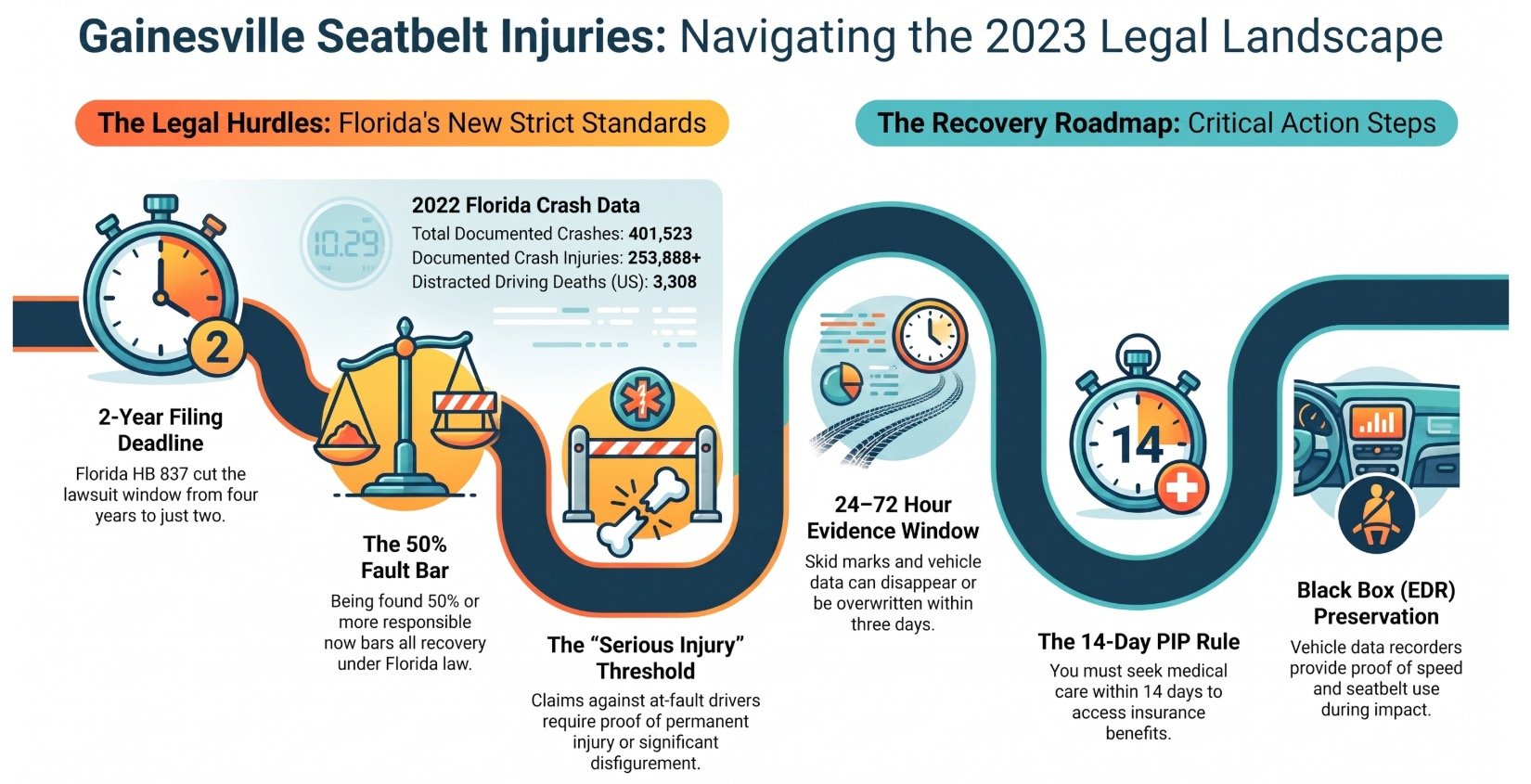
The scale of crash injuries across Florida helps illustrate why evidence preservation and prompt legal action are so critical after a seatbelt-related injury. According to the FLHSMV 2022 Florida Traffic Crash Facts, Florida recorded 401,523 total crashes in 2022, resulting in 253,888 or more documented injuries. While seatbelts save thousands of lives each year, they can also cause significant trauma when crash forces are extreme, restraint systems fail, or belt positioning is improper during impact. Nationally, NHTSA data shows 3,308 distracted-driving deaths in 2022 alone — crashes caused by the same inattentive behavior that leads to the high-speed impacts most likely to turn a seatbelt into a source of serious injury.
Under Florida’s 2023 tort reform law (HB 837), the statute of limitations is now two years from the crash date, and physical evidence of a crash — skid marks, debris, vehicle data — can begin to disappear within 24 to 72 hours. These timelines underscore why acting quickly is not optional: it is essential to protecting your right to full recovery.
Florida PIP and No-Fault Coverage After a Seatbelt Injury
Florida is a no-fault state, which means your own Personal Injury Protection (PIP) coverage is the first source of compensation after most crashes — regardless of who caused the accident. Florida law requires a minimum of $10,000 in PIP coverage, which pays 80% of reasonable medical bills and 60% of lost wages up to that limit. To access these benefits, you must seek medical treatment within 14 days of the crash. Waiting longer can disqualify you from PIP coverage entirely. To learn more about how PIP works and how it interacts with a seatbelt injury claim, read our guide: Florida PIP Insurance Explained.
PIP has an important threshold rule: if your seatbelt injury does not meet the definition of a “serious injury” under Florida law — which includes permanent injury, significant and permanent disfigurement, or death — you may be limited to PIP benefits and cannot bring a claim directly against the at-fault driver. We evaluate your injuries carefully against this threshold and advise you on whether additional claims are available.
Common Causes of Gainesville Seatbelt Injuries
We often see seatbelt injuries arise when a restraint fails to protect as intended during a crash. Common causes include improper seatbelt positioning, high-speed collisions, defective seatbelt mechanisms, and sudden impact forces. By identifying these factors early, we can better evaluate how the injury occurred and who may be responsible.
Improper Seatbelt Positioning
Although seatbelts save lives, improper positioning can turn a protective device into a source of serious injury during a Gainesville car accident. We often see harm when the lap belt rests on the abdomen rather than the hips, or when the shoulder belt crosses the neck, face, or under the arm. These positions reduce occupant safety and may cause abdominal trauma, chest injuries, neck damage, or spinal strain. We encourage you to check belt fit for every passenger, especially children, older adults, and those using adaptive equipment. If injuries occurred despite proper use, we also examine whether a seatbelt recall, design issue, or installation problem contributed. By identifying positioning errors early, we help protect those you care for and preserve important evidence for a potential claim.
High-Speed Collisions
When a crash occurs at high speed, a seatbelt must absorb and redirect extreme forces within seconds. We understand these collisions can cause chest, shoulder, abdominal, and spinal injuries — even when you wore your restraint properly. As we help you understand what happened, we look at vehicle speed, impact angle, braking, road conditions, and occupant position. We also address seatbelt safety myths because believing a seatbelt always prevents injury can lead to unfair blame being placed on a seriously injured person. Seatbelts save lives, but severe force can still harm careful people. If you were injured while trying to protect yourself or others, we can evaluate the facts of the crash and pursue accountability with care, discipline, and respect.
Defective Seatbelt Mechanisms
Even if a seatbelt looks intact after a crash, the mechanism may have failed at the exact moment it needed to work. We look beyond surface damage to determine whether a latch, retractor, pretensioner, or buckle released, jammed, or failed to lock properly. These failures can place you and those you care for at greater risk, especially when a vehicle’s safety system does not perform as designed. We review maintenance records, prior complaints, seatbelt recalls, and evidence of manufacturing defects to identify whether the restraint system was unsafe before the collision. When we investigate these claims, we work to protect injured people and support families seeking accountability. Defective mechanisms require careful analysis, because responsibility may extend beyond another driver to a manufacturer, distributor, or repair provider.
Sudden Impact Forces
Because a crash can subject the body to violent forward and lateral forces, a seatbelt must control movement without causing avoidable harm. We examine how sudden impact forces interact with the restraint system, the vehicle interior, and your body. Collision biomechanics helps us understand why bruised ribs, abdominal trauma, spinal injuries, or shoulder damage may occur even when you were properly restrained. When buckling failures, webbing stretch, or latch defects reduce protection, the body may strike the wheel, dashboard, door, or glass with greater force. We also consider crash speed, impact angle, occupant position, and emergency response records. By identifying these factors, we help you serve your recovery, your family, and your community with accurate evidence, responsible claims, and informed legal decisions after a Gainesville crash.
Legal Rights After a Gainesville Seatbelt Injury
After a seatbelt injury, injured people in Gainesville may have the right to pursue compensation if another driver, a defective restraint system, or another negligent party caused or worsened their harm. We help you understand these rights so you can protect your health, your family, and your ability to serve others.
Compensation may be available when negligence or a defective restraint system worsens a Gainesville seatbelt injury.
Your claim may include:
- Medical losses, including emergency care, follow-up treatment, therapy, and future care needs.
- Income losses, when pain, disability, or appointments keep you from working or providing for your family.
- Human losses, including pain, limited mobility, and reduced participation in daily life and the community.
Insurers may raise negligence defenses, arguing you wore the belt incorrectly or caused part of the crash. Under comparative fault, your recovery may be reduced if evidence shows partial responsibility. We work to answer these claims with records, expert analysis, and witness proof — while keeping your dignity and long-term needs central to the case.
Why Do Gainesville Seatbelt Injuries Happen?
Understanding your legal rights is only part of protecting your claim; we also need to identify why the seatbelt injury occurred. Seatbelt injuries often happen when a collision forces the belt to lock, tighten, or press violently against the chest, abdomen, shoulder, or neck. While the restraint may save a life, it can also cause serious harm when crash forces are extreme.
We also look closely at preventable causes, including driver distraction, speeding, impaired driving, and unsafe lane changes. These behaviors can create the violent impact that turns a protective device into a source of injury. In some cases, defective design, poor installation, worn components, or seatbelt recall issues may contribute to the harm.
When we examine causation, we serve your best interests by identifying every responsible party. That careful review helps us connect the injury to the crash, the restraint system, and any negligent conduct that placed you at risk.
What Should You Do After a Gainesville Seatbelt Injury?
After a Gainesville seatbelt injury, we want you to seek medical care promptly, even if your symptoms seem minor at first. We also recommend that you document your injuries, treatment, pain levels, and any changes in your daily activities. Once you have addressed your immediate health needs, we can help you contact an attorney who can protect your rights and evaluate your potential claim.
Seek Medical Care
Seek medical care as soon as possible if a seatbelt injured you in a Gainesville crash — even if your pain seems minor at first. We understand your first concern may be helping others, but prompt evaluation protects your health and supports responsible next steps. Seatbelt trauma can involve internal injuries, chest damage, abdominal harm, or spinal strain that may worsen without treatment. Tell the provider exactly where the restraint contacted your body and follow all recommended care. While medical needs come first, we can also begin thinking about crash photos, witness statements, evidence preservation, and insurance contact — so important facts are not lost. Do not delay care to speak with an insurer. We encourage you to accept emergency transport when needed and seek follow-up treatment if symptoms develop.
Document Your Injuries
As your medical treatment begins, document your injuries carefully to create a clear record of how the seatbelt trauma affected you after the Gainesville crash. We recommend keeping daily notes that track symptoms, pain levels, movement limits, sleep problems, and medication effects. If headaches occur, maintain a headache diary with dates, duration, severity, triggers, and any related nausea or vision changes. Photograph visible marks regularly to document bruising, swelling, abrasions, and changes in color or size as healing progresses. Save discharge papers, prescriptions, therapy instructions, and follow-up summaries in one secure place. We should also record emotional distress, including anxiety while riding, irritability, or fear after the collision. Careful documentation helps communicate your needs to medical providers and supports the creation of truthful, organized recovery records for others.
A thorough account of your condition — as detailed as the medical records your attorney will later request — can meaningfully strengthen your claim.
Contact an Attorney
Your injury records can help us assess the strength of your claim, but you should not wait until treatment ends to contact an attorney. We can protect your rights early, preserve accident scene documentation, and address questions before insurers shape the narrative. When you are focused on recovery, family duties, and service to others, we step in to manage deadlines, evidence, and 24/7 insurance communication. We will review medical records, crash reports, photographs, witness accounts, and seatbelt-related injury patterns to identify liable parties and available coverage. Early guidance also helps you avoid statements that could reduce compensation. If a seatbelt injury has disrupted your work, caregiving, or community responsibilities, contact us promptly. We are prepared to evaluate your case and pursue fair recovery. We stand ready to serve you.
Critical Evidence in a Gainesville Seatbelt Injury Case
To build a strong Gainesville seatbelt injury case, we focus on evidence that connects the restraint system, the crash, and your medical harm. Essential proof may include: 1. seatbelt damage evidence, 2. medical injury documentation, 3. crash scene photos with vehicle inspection records, and 4. event data recorder (EDR) information. We use these materials to evaluate fault, identify defects or misuse, and support the full extent of your injury claim.
Seatbelt Damage Evidence
When a crash causes serious harm, the seatbelt itself can become one of the most important pieces of evidence in the case. We look for torn webbing, stretched fibers, burn marks, latch failure, retractor problems, and signs that the belt locked or failed to lock during impact. These details can help explain how your body moved and whether the restraint system performed as intended.
We also work to preserve the vehicle before repairs, salvage, or disposal destroys critical proof. Photographs, inspection reports, dashcam footage, and witness statements can strengthen the record and connect visible seatbelt damage to the collision sequence. By protecting this evidence early, we help you serve the truth, support accountability, and build a clearer claim for fair compensation.
Medical Injury Documentation
Because medical records often show the clearest link between the crash and the harm it caused, we examine them carefully in every Gainesville seatbelt injury case. We review emergency evaluations, diagnostic imaging, physician notes, therapy records, prescriptions, and referrals to understand how the seatbelt injury affected your health. These records help us show when symptoms began, how treatment progressed, and whether lasting limitations remain. We also look for documentation of impairment, including work restrictions, mobility limitations, pain findings, and future care needs. Clear medical evidence strengthens insurance negotiations by helping insurers see the full human impact — not just billing totals. When we organize these records with care, we protect your dignity, support accountability, and help pursue compensation that can serve your recovery.
Crash Scene Photos
Medical records tell us what injuries occurred, but crash scene photos help show how they happened. We use photographs to understand seatbelt positioning, point of impact, debris patterns, roadway conditions, skid marks, and vehicle resting locations. These images can clarify whether a restraint system limited harm or contributed to chest, shoulder, neck, or abdominal trauma.
We also compare photos with police narratives to identify traffic report inaccuracies that may affect your claim. A single overlooked detail — such as damaged guardrails or misplaced personal items — can change how fault and causation of injury are understood. When possible, we pair photographs with witness statement collection to preserve observations from people who saw the crash unfold. Taken together, this evidence helps us provide you with a more complete, reliable account of the collision.
Vehicle Inspection Records
After a crash, vehicle inspection records can reveal whether a seatbelt worked as intended or failed in a way that worsened your injuries. We review repair histories, recall notices, maintenance logs, and post-crash inspections to identify defects, prior damage, or improper repairs. These records help us serve your recovery by connecting the restraint system’s condition to the harm you suffered.
We also act quickly to protect the vehicle and related documentation. A spoliation letter — a formal written demand for evidence preservation — can be sent to insurers, towing yards, repair shops, and vehicle owners to prevent crucial proof from being altered or destroyed before your claim is fully evaluated. When we secure inspection records early, we strengthen your claim and support a fair evaluation of responsibility. This careful review can make a decisive difference in a Gainesville seatbelt injury case.
Event Data Recorder (EDR) Evidence in Seatbelt Injury Cases
Most passenger vehicles manufactured after 2012 contain an Event Data Recorder (EDR) — sometimes called a “black box” — that captures critical data in the seconds before and during a crash. According to NHTSA, this data typically includes vehicle speed, brake application, throttle position, steering angle, and whether seatbelts were buckled at the time of impact. In seatbelt injury cases, EDR data can directly address insurer arguments about belt use or vehicle speed — two factors that frequently affect fault determinations. We send formal preservation demands to all responsible parties immediately upon retention, because EDR data can be overwritten when the ignition is cycled after the crash. We also work with certified EDR specialists to retrieve and authenticate the recording before it is lost.
To learn how black box data has helped clients in situations like yours, read our resource: How Black Box Data Can Help Your Car Accident Case.
Long-Term Effects of Gainesville Seatbelt Injuries
We help you understand how seatbelt injuries can cause lasting harm beyond the initial crash. Chronic pain, internal organ damage, and psychological trauma may affect your health, work, and daily life for months or years. We evaluate these long-term effects carefully, because they can substantially influence the value and direction of your Gainesville injury claim.
Chronic Pain Complications
Although a seatbelt can prevent fatal harm in a Gainesville crash, the force it places on the chest, abdomen, neck, and spine can lead to chronic pain that lasts long after visible injuries have recovered. We often see persistent stiffness, nerve irritation, headaches, and reduced mobility disrupt work, caregiving, and community service. You may need whiplash treatment, diagnostic imaging, medication management, injections, or guided physical therapy to restore function. When symptoms continue, long-term rehabilitation therapy can help you rebuild strength, improve posture, and manage pain with disciplined care. We encourage prompt medical follow-up, consistent documentation, and attention to how pain limits daily responsibilities. These records help connect your ongoing suffering to the crash and support a claim for fair compensation. Chronic pain deserves serious legal review — and serious advocacy.
Internal Organ Damage
Chronic pain may signal deeper trauma, including internal organ damage caused by the intense pressure of a seatbelt during a Gainesville collision. We help you recognize warning signs that may appear hours or days later, such as abdominal swelling, dizziness, nausea, deep bruising, or worsening tenderness. These seatbelt injury symptoms can indicate harm to the liver, spleen, kidneys, lungs, or intestines — and delayed treatment can seriously threaten recovery.
We encourage prompt medical evaluation because clear records support both healing and accountability. When we review your case, we connect medical findings with the crash forces, vehicle damage, and documented complaints. This careful approach supports compensation understanding that includes medical expenses, lost income, future care, and reduced quality of life — while we work to protect your ability to serve others.
Psychological Trauma Effects
After a serious Gainesville crash, psychological trauma can persist long after visible seatbelt injuries begin to heal. We often see survivors struggle with anxiety, sleep disruption, irritability, and fear of driving — even while they continue caring for family, work, and community responsibilities. These symptoms warrant careful attention because untreated distress can affect recovery, relationships, and daily service to others.
We help you consider treatment options, including counseling referrals, PTSD evaluation, coping strategies, long-term support, and documentation that connects emotional harm to the collision. Early evaluation can identify warning signs, including flashbacks, avoidance, panic, or depression. With proper care, you can rebuild confidence, protect your legal claim, and continue serving those who depend on your steadiness, compassion, and practical judgment each day.
Proving Liability in Gainesville Seatbelt Injury Cases
Liability in a Gainesville seatbelt injury case depends on a careful review of how the crash happened, how the restraint system performed, and who contributed to the harm. We examine police reports, vehicle damage, witness accounts, roadway conditions, and available crash data to identify negligent conduct. When a seatbelt failed, locked improperly, or caused unusual trauma, we also consider whether a product defect or maintenance issue played a role.
We know your case must connect conduct to injury with reliable evidence. Medical causation proof helps show that the crash, restraint forces, or belt malfunction caused or worsened specific injuries. Doctors, experts, and reconstruction professionals may explain those links with clarity and authority.
Comparative negligence defenses can reduce recovery if another party claims you misused the belt or contributed to the collision. We address those claims directly, protect the record, and build proof that supports accountability for the harm suffered.
Dealing With Insurance Companies After a Gainesville Seatbelt Injury
When you are dealing with insurers after a Gainesville seatbelt injury, early communication can shape the value and direction of your claim. We help you protect your position by keeping statements accurate, limited, and consistent with the evidence. Insurers may request recorded statements, medical authorizations, or quick settlement discussions before the full impact of your injuries is clear. We encourage careful review before you respond, because even well-meaning people can unintentionally weaken their claim.
Claim documentation matters. Medical records, photographs, repair estimates, witness details, and proof of missed work help show how the crash affected your health and responsibilities. We organize these materials so insurers receive a clear, reliable picture of your losses.
Strong settlement strategies require patience, preparation, and a firm understanding of your damages. We work to prevent rushed decisions, challenge undervalued offers, and pursue compensation that reflects your medical needs, financial burdens, and long-term recovery.
What to Expect During a Gainesville Seatbelt Injury Claim Process
We guide you through each stage of a Gainesville seatbelt injury claim, beginning with an initial case review and careful collection of medical evidence. We then use that evidence to address insurance claim negotiations, challenge improper fault arguments, and protect the value of your claim. If the insurer will not make a fair settlement offer, we prepare your case for litigation and pursue the compensation you are entitled to seek.
Initial Case Review
Before a Gainesville seatbelt injury claim can move forward, we conduct an initial case review to understand how the crash happened, how the seatbelt affected your injuries, and what evidence may support compensation. We listen closely to your account, identify responsible parties, and evaluate whether seatbelt use or malfunction may affect liability. We also consider deadlines, available coverage, and immediate concerns that may affect your ability to serve your family, workplace, and community as you recover.
During this review, we explain the claims process, discuss the required medical documentation, and outline how insurance negotiations may unfold. We answer your questions directly, protect your interests from the start, and help you make informed decisions before any formal demand or filing occurs in your claim.
Medical Evidence Collection
After the initial review identifies the primary injury issues, we begin collecting medical evidence that connects the Gainesville crash, seatbelt forces, and your diagnosed conditions. We request emergency records, imaging reports, physician notes, therapy records, prescriptions, and bills. We also track follow-up care because consistent treatment helps document pain, mobility limits, organ trauma, bruising, or spinal injuries.
We organize this evidence with care, respecting your time and your role in serving family, work, and community. We may coordinate the collection of witness statements to support how the crash occurred and how symptoms appeared afterward. We also monitor insurance claim deadlines to ensure vital records arrive before crucial filing dates. This stage builds a clear medical foundation, preserving facts needed to evaluate injury severity and long-term care needs.
Insurance Claim Negotiations
Presenting a strong insurance claim requires more than submitting medical bills and waiting for a response. We prepare each claim so the insurer understands your injury, treatment needs, lost income, and daily limitations. During negotiations, we review policy terms, document the availability of no-fault coverage, and address any attempts to minimize harm caused by seatbelt trauma. We also communicate with adjusters, respond to questions, and correct incomplete or misleading evaluations.
You can expect careful attention to payout timelines, because delays may affect medical care, household stability, and your ability to serve those who depend on you. We organize evidence, calculate damages, and present a clear demand that reflects the full impact of the crash. This process helps protect your rights while promoting fair, timely claim resolution.
Settlement or Litigation
When a fair settlement is not available, we prepare your Gainesville seatbelt injury claim for the next step while continuing to pursue a practical resolution. We explain the litigation timeline, file necessary pleadings, and protect your ability to present evidence that reflects the harm you have suffered and the responsibilities you still carry.
Our trial strategy includes witness preparation, medical evidence, accident reconstruction, and a careful review of the defense arguments regarding seatbelt use. We also discuss jury verdict factors, such as injury severity, credibility, medical expenses, lost income, and how the crash affected your service to family, work, and community. If negotiations improve, we will evaluate each offer with you. If a trial becomes necessary, we are ready to present your claim with discipline, purpose, and clear evidence.
Compensation for Gainesville Seatbelt Injury Damages
Although seatbelts save lives, a defective restraint system or severe crash force can cause serious injuries that lead to extensive financial and personal losses. We help you pursue compensation that reflects the full impact of the harm — not just the first bills that arrive. In Gainesville seatbelt injury claims, we gather medical records, crash evidence, expert opinions, and witness statements to show how the restraint failure or collision caused measurable damage.
We also deal directly with insurers, because undervalued claims can delay care and strain families who are trying to serve, work, and recover. When insurance bad faith appears, we identify it and respond firmly. If settlement discussions do not produce a fair result, we prepare the case for court and use prior trial verdicts to guide strategy. Our goal is to protect your dignity, support your recovery, and seek accountability from every responsible party.
To understand how courts and insurers calculate these values, read: Average Car Accident Settlement in Florida. We stand with you throughout the claim process.
Economic vs. Non-Economic Damages in Gainesville Seatbelt Cases
We separate economic damages — such as medical bills and lost wages — from non-economic damages, including pain and emotional distress, so you understand the full value of your claim. We also examine how a seatbelt injury affects your daily life, work capacity, and recovery needs. To prove these damages, we gather records, expert opinions, and other evidence that connect your losses to the crash.
Medical Bills and Lost Wages
After a seatbelt injury in Gainesville, medical bills and lost wages often form the foundation of an injury claim — but they do not tell the whole story. We help you document emergency care, surgery, therapy, prescriptions, future treatment, missed income, and reduced earning capacity with clear records and reliable calculations. These economic losses show how the crash disrupted your ability to work, provide, and serve those who depend on you.
We also examine liability apportionment, because Florida rules may reduce recovery when fault is shared. In serious cases, wrongful death claims may include final medical expenses and lost financial support. We also address attorney fees, costs, and case expenses, so you understand the potential net recovery before making decisions about settlement or litigation.
Pain and Emotional Distress
When a seatbelt injury causes lasting pain, anxiety, sleep disruption, or emotional distress, the claim must address more than receipts and wage records. We recognize that service-minded clients often try to keep helping others even while their own health declines. Non-economic damages account for physical suffering, loss of enjoyment, fear while riding, and the daily burden of post-crash coping. We consider how pain limits caregiving, work, worship, volunteering, and family responsibilities. We also encourage attention to therapy options, stress management, and support groups, because appropriate care can improve recovery and stability. These losses are real, even when they do not appear on an invoice. In a Gainesville seatbelt injury case, we evaluate how the crash changed your life, not only what it cost financially.
Proving Seatbelt Injury Damages
Because damages must be proven, not assumed, a Gainesville seatbelt injury claim needs clear evidence that separates financial losses from the personal harm the crash caused. We help you document economic damages, including medical bills, lost wages, rehabilitation costs, and future care needs. We also present non-economic damages, such as pain, emotional distress, reduced mobility, and loss of daily independence.
Witness testimony, expert analysis, medical records, and employment documentation can show how the injury changed your life. We also evaluate comparative fault rules, settlement strategy, and insurance arguments that may reduce compensation if seatbelt use is disputed. By organizing proof early, we strengthen your claim and help protect the resources you need to recover, serve your family, and move forward with stability.
When a Gainesville Seatbelt Injury Case Goes to Trial vs. Settlement
Although many seatbelt injury claimsresolve through settlement, we prepare every Gainesville case as if it may need to go before a jury. This approach protects your ability to seek fair compensation while encouraging the insurer to evaluate the claim seriously. We focus early on evidence preservation, including medical records, vehicle data, photographs, and any available crash documentation.
Settlement may serve your needs when liability, damages, and future care requirements are well supported. Trial becomes necessary when an insurer disputes causation, undervalues your losses, or refuses to acknowledge the full impact on your life and service to others. We assess the burden of proof, develop a clear trial strategy, and organize witness testimony that explains what happened and how the injury has changed your daily responsibilities.
Throughout the process, we advise you carefully, deliberate each step, and pursue the path most likely to support your long-term recovery.
Florida Laws That May Affect Your Gainesville Seatbelt Case
A strong trial or settlement strategy must account for the Florida laws that shape every Gainesville seatbelt injury case. We examine how these rules affect responsibility, damages, and the evidence needed to serve your recovery well.
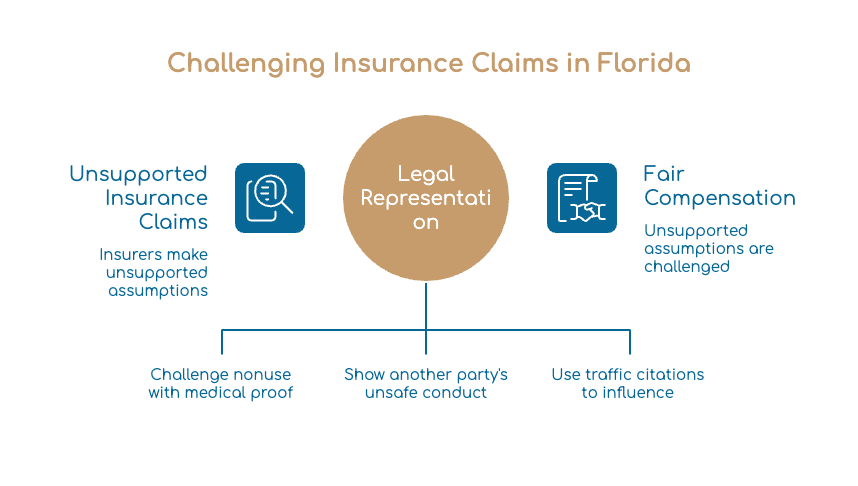
- Seatbelt use: Florida law requires that many drivers and passengers wear seat belts. If an insurer claims nonuse worsened your injuries, we challenge unsupported assumptions with medical proof.
- Comparative negligence: Florida’s comparative negligence rules may reduce compensation when an injured person shares fault. We work to limit blame-shifting and show how another party’s unsafe conduct caused harm.
- Traffic citations: Police-issued traffic citations can influence negotiations, especially when they document speeding, distraction, impairment, or failure to yield.
We also review crash reports, vehicle damage, witness accounts, and medical findings. By connecting Florida law to the facts, we help you pursue a result that supports healing, stability, and service to those who depend on you.
The Statute of Limitations for Gainesville Seatbelt Injury Cases
Under Florida law, the statute of limitations sets a strict deadline for filing a Gainesville seatbelt injury lawsuit — and missing it can prevent you from recovering compensation regardless of how serious your injuries are. We recognize that after serving others or caring for family, it is easy to delay taking action while medical needs, work constraints, and transportation issues persist.
Florida generally allows two years from the date of a negligence-related injury to file a lawsuit, following the 2023 reform under HB 837. This deadline differs from an insurance claim timeline, which may begin almost immediately after the crash. We treat both timelines with care, because early steps can protect later rights.
A strong documentation checklist may include medical records, crash reports, photographs, repair estimates, and proof of lost income. We also preserve witness statements while memories remain reliable. These materials support a damages calculation that reflects medical costs, lost wages, pain, and other harms — before time limits expire.
How a Gainesville Seatbelt Injury Lawyer Can Help You
Meeting legal deadlines is only one part of protecting your claim after a seatbelt-related injury. We help you organize the facts, document medical needs, and present a clear path toward recovery — so you can keep focusing on family, work, and service to others.
- We prioritize client communication, giving you regular updates, direct answers, and a practical case timeline that explains each important step.
- We build an insurance strategy by reviewing policies, identifying liable parties, and responding to adjusters with evidence — not speculation.
- We guide compensation planning by evaluating medical bills, lost income, future care needs, pain, and the impact of your injuries on your daily responsibilities.
Our role is to reduce confusion and protect your interests with steady legal direction. We gather records, consult appropriate experts, and prepare each claim as if it may require litigation — while seeking a fair resolution at every stage.
When to Contact a Gainesville Seatbelt Injury Lawyer
After a crash involving a seatbelt injury, you should contact a Gainesville seatbelt injury lawyer as soon as your immediate medical needs are stable. Early contact helps us guide you through practical steps while facts remain clear and records remain accessible. We can advise you on post-accident documentation, including medical visits, photographs of bruising and vehicle damage, discharge papers, and written notes about pain or mobility limitations.
You should reach out before speaking at length with insurance representatives, signing releases, or repairing or disposing of the vehicle. These actions may affect evidence preservation, especially when the seatbelt, buckle, latch plate, pretensioner, or airbag system must be inspected. We also encourage you to keep appointment records, expense receipts, and communications related to the collision.
Why You Need an Experienced Gainesville Seatbelt Injury Lawyer
Once you have protected the evidence and started documenting your injuries, experienced legal guidance can help determine the direction of your claim. We believe that after a crash, you may be focused on healing, supporting your family, and returning to your daily responsibilities. A Gainesville seatbelt injury lawyer helps ensure those priorities are not undermined by insurance tactics or incomplete records.
We evaluate how the seatbelt injury occurred, connect medical findings to the collision, and pursue evidence preservation before vital proof disappears. We also address comparative fault analysis, especially when an insurer argues that seatbelt use, misuse, or vehicle positioning contributed to your injuries. These arguments can reduce compensation if they are not challenged with clear facts.
How to Choose the Right Gainesville Seatbelt Injury Lawyer for Your Case
How do you identify the right lawyer when a seatbelt injury claim may involve medical disputes, crash reconstruction, and insurance blame-shifting? We recommend looking for counsel who understands both injury law and the practical needs of people trying to heal, work, and care for others after a crash.
Start with relevant experience. Ask whether the lawyer has handled seatbelt-related injury claims, disputed causation, and cases involving aggravated injuries. Review how the firm investigates evidence, works with medical providers, and addresses insurer arguments that the seatbelt caused or worsened harm.
Client communication also matters. You should expect clear updates, direct answers, and a process that respects your time and responsibilities. Ask who will manage your case and how often you will hear from them.
Finally, discuss contingency fees before signing. You deserve transparent terms, no surprises, and representation focused on serving your recovery and protecting your legal rights.
Real Reviews From Our Clients!
Jackie Sheen ★★★★★
“I was hurt in a car accident and had no idea where to start. Anidjar & Levine took my case seriously from the very first call. They handled everything — the insurance company, the paperwork, all of it — and kept me informed the whole way through. I cannot thank them enough for taking such a weight off my shoulders during such a difficult time.”
DY Projects ★★★★★
“After my accident, I was dealing with serious injuries and a lot of stress. The team at Anidjar & Levine was compassionate, professional, and relentless in fighting for what I deserved. They truly made a difficult time much more manageable. I would recommend them to anyone who has been injured.”
Maddie Dalby ★★★★★
“Anidjar & Levine went above and beyond for me. They explained every step of the process, were always available when I had questions, and made sure I received fair compensation. I felt like I was in the best possible hands. I would recommend them to anyone who needs a personal injury attorney in Florida.”
About The Law Offices of Anidjar & Levine
Founded in 2005 by Marc Anidjar and Glen Levine, the firm began as a two-person operation working out of a construction office conference room. Over the past 20 years, that modest start has grown into one of Florida’s most recognized personal injury practices — with more than $1 billion recovered in settlements on behalf of injury clients across the state. We bring that same determination and depth of experience to every case we handle.
When you are facing the aftermath of a seatbelt-related crash injury, The Law Offices of Anidjar & Levine can help you understand your rights and pursue the compensation you may be owed. We serve injured people in Gainesville with focused legal guidance, careful case management, and respect for the burdens a serious injury places on your family.
We begin with a client consultation strategy designed to identify your needs, explain available legal options, and determine how the crash affected your health, work, and daily responsibilities. Our team listens closely, because effective advocacy starts with understanding your goals and the people who depend on you.
We also take prompt steps to preserve evidence, including reviewing crash reports, medical records, vehicle data, photographs, and witness information. By building a clear record, we work to hold negligent parties accountable and support your claim with reliable proof. We are prepared to guide you through each stage with diligence and care.
Past results do not guarantee a similar outcome in future cases. Each case is evaluated individually based on its unique facts and circumstances.
Frequently Asked Questions
Can Children Suffer Different Seatbelt Injuries Than Adults?
Yes, children can suffer different seatbelt injuries than adults because their bodies are smaller and still developing. We often see child injury patterns involving the abdomen, spine, neck, and head — especially when belts fit poorly. Different crash forces can place pressure on vulnerable growth areas. If you care for an injured child, we help you recognize these risks, seek proper medical review, and protect their long-term well-being.
Can a Seatbelt Injury Appear Days After a Crash?
Yes, a seatbelt injury can appear days after a crash. We encourage you to watch for delayed symptoms, including bruising, pain, dizziness, or abdominal tenderness. Soft tissue damage may worsen gradually, and internal bleeding can remain hidden at first. A delayed diagnosis can limit treatment options, so we urge you to seek prompt medical care. By acting early, we help preserve both your health and your ability to serve others.
Are Pregnant Passengers at Higher Risk for Seatbelt Injuries?
Yes, pregnant passengers face higher risks from seatbelt injuries, because trauma can affect both the mother and the developing child. We encourage you to prioritize seatbelt safety by placing the lap belt low across the hips — never over the abdomen — and positioning the shoulder belt across the chest. After any crash, even with minor discomfort, we recommend prompt medical evaluation to protect maternal health and the child’s well-being.
Can Defective Seatbelts Cause or Worsen Injuries?
Yes, defective seatbelts can cause or worsen injuries when they fail during a collision. We help you understand how defective design, hidden mechanisms, or manufacturer defects may prevent proper restraint, increase force on the body, or allow dangerous movement inside the vehicle. When safety systems fail, we examine evidence carefully, preserve vehicle components, and seek accountability from responsible manufacturers — not just other drivers.
Do Seatbelt Injuries Require Specialist Medical Care?
Yes, seatbelt injuries often require specialist medical care, especially when they involve chest, abdominal, spine, or internal trauma. We encourage prompt post-crash treatment because delayed symptoms can mask serious harm. Targeted imaging, orthopedic review, trauma evaluation, or neurological assessment may protect your recovery and your ability to serve others responsibly. We help you understand why coordinated care, timely records, and consistent follow-up matter so much to your claim.
How Long Do I Have to File a Seatbelt Injury Lawsuit in Florida?
Under Florida’s 2023 tort reform law (HB 837), most personal injury claims must be filed within 2 years of the date of the accident. This is a strict legal deadline — missing it can permanently bar you from compensation, regardless of how serious your injuries are. Insurance claim timelines can be even shorter. Contact an attorney as early as possible to protect your rights, preserve critical evidence, and avoid costly delays.
How Does Florida’s Modified Comparative Fault Rule Affect My Seatbelt Injury Claim?
Under Florida HB 837 (2023), if you are found 50% or more responsible for the crash, you are completely barred from recovering any compensation — even for serious, documented injuries. If your fault is below 50%, your recovery is reduced by your percentage of responsibility. In seatbelt cases, insurers often argue that improper belt use contributed to your injuries. We challenge those arguments aggressively with medical evidence, crash reconstruction, and witness testimony.
If you suffered injuries involving a seatbelt in Gainesville, The Law Offices of Anidjar & Levine can help you understand your rights and pursue fair compensation. These claims often require careful review of crash evidence, medical records, product issues, and insurance coverage.
Our team knows how to build a strong case and protect you from tactics that reduce your recovery. Contact our Gainesville Car Accident Lawyer today for a free consultation, and let us help you move forward.