The Law Offices of Anidjar and Levine helps injured victims after rear-end crashes protect claims, organize evidence, and pursue compensation through insurance negotiations or legal action.
Counsel may assess medical records, vehicle damage, witness accounts, policy coverage, and comparative fault issues.
In Florida, victims may use personal injury protection benefits and, when injuries meet legal thresholds, seek damages from an at-fault driver.
Understanding the process early can prevent costly mistakes, and a Florida Car Accident Lawyer can explain important steps.
Main Takeaways
- A Florida rear-end accident lawyer can help preserve evidence, organize medical records, and prepare a strong injury claim.
- Injured drivers may seek PIP benefits regardless of fault and pursue further compensation if injuries meet Florida’s threshold.
- Rear-end liability often begins with the trailing driver, but insurers may dispute fault by invoking comparative negligence.
- Strong claims rely on crash reports, vehicle damage, witness statements, treatment records, and proof of lost income.
- Consult legal counsel before recorded statements or early settlements to avoid undervaluing future medical needs and damages.


How We Can Help With Your Florida Rear-End Car Accident Injury Claim
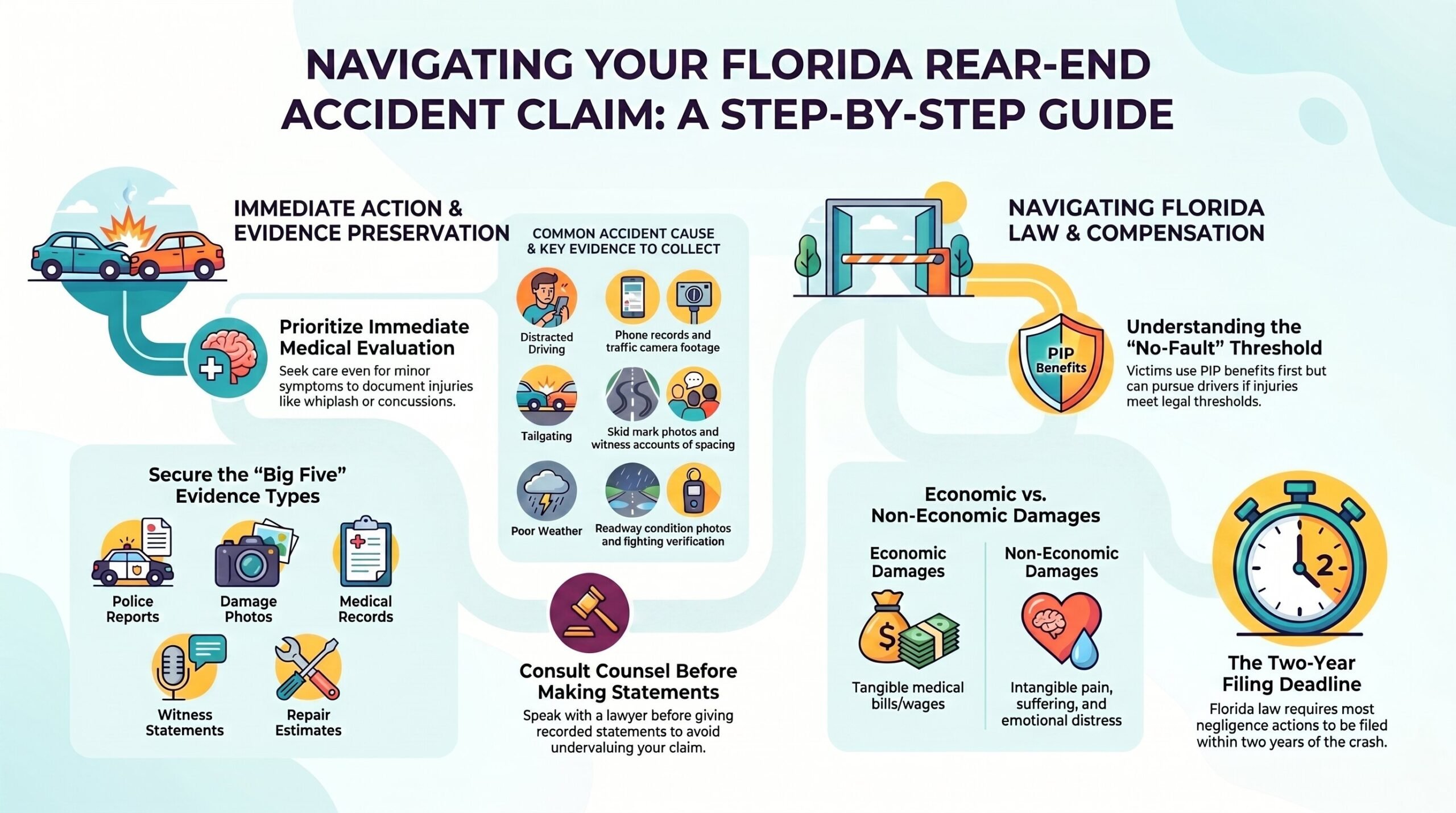
A Florida car accident lawyer can help an injured person address the legal and insurance issues that often follow a rear-end collision. Counsel may begin by listening carefully, identifying immediate needs, and guiding the person toward organized next steps. This support can include an evidence preservation checklist, such as securing photographs, medical records, repair estimates, witness information, and communications from insurers.
The lawyer may also manage claim preparation, calculate documented losses, and communicate with insurance representatives on the injured person’s behalf. Effective Insurance negotiation strategies may involve presenting liability facts clearly, connecting treatment records to claimed damages, and responding to settlement positions with well-supported analysis. This approach can reduce confusion and help protect the person from accepting an inadequate offer.
For individuals focused on recovery and service to family, work, and community, legal representation can provide structure, careful advocacy, and dependable guidance throughout the claim process after a rear-end crash.
OUR CONSULTATIONSARE FREE
START YOUR FREE CASE REVIEW

Understanding Florida Rear-End Car Accident Injury Cases
Understanding how Florida rear-end car accident injury cases are evaluated helps place the lawyer’s role in proper context. These matters often require careful review of medical records, crash reports, vehicle damage, witness statements, and the injured person’s daily limitations. A lawyer assesses how the collision affected health, work, caregiving duties, and long-term stability, while preserving evidence that may support a fair recovery.
Florida law may involve Comparative fault when responsibility is disputed or when an insurer argues that the injured person contributed to the harm. This assessment can affect compensation, making clear documentation and timely legal guidance important. Insurance negotiations also require a disciplined presentation of damages, including medical expenses, lost income, pain, and future care needs. A lawyer’s role is not only to pursue compensation but to help restore order for those harmed, so they can focus on recovery, family responsibilities, and service to others.
Common Causes of Florida Rear-End Car Accidents
Rear-end car accidents in Florida often result from preventable driving behaviors and roadway conditions. Common causes include distracted driving, tailgating drivers, sudden traffic stops, and poor weather conditions that reduce visibility or traction. Identifying these factors can help clarify liability, evaluate driver conduct, and support a stronger injury claim.
Distracted Driving
On Florida roads, distracted driving remains one of the most common causes of rear-end car accidents. A driver who looks away to read smartphone notifications, adjusts navigation, or engages in hands-free texting may fail to recognize slowing traffic ahead. Even brief lapses can reduce reaction time and prevent safe stopping, especially near intersections, school zones, and congested service areas.
Multitasking while driving also divides attention between the roadway and unrelated tasks, creating preventable danger for passengers, motorists, cyclists, and any nearby distracted pedestrians. For those committed to serving injured individuals, these crashes often reveal a clear need for accountability and careful review of evidence. Phone records, witness statements, vehicle data, and traffic camera footage may help establish how distraction contributed to the collision and resulting injuries in Florida.
Tailgating Drivers
Beyond distraction, following another vehicle too closely is a frequent cause of rear-end car accidents in Florida because it leaves little room to react when traffic slows or stops. Tailgating often reflects impatience, aggressive driving, or poor judgment, and it places other roadway users at unnecessary risk. A safe following distance allows drivers to observe brake lights, road conditions, and surrounding movement with sufficient time to respond.
When a driver fails to maintain that distance, the resulting impact may cause significant harm, including neck, back, and head injuries. In later insurance negotiations, evidence of tailgating can help clarify fault and support a claim for damages. Those serving injured people may review crash reports, witness accounts, and vehicle damage to evaluate whether unsafe spacing contributed to the collision.
Sudden Traffic Stops
When traffic comes to an abrupt stop, even attentive drivers may have limited time to respond, but the risk becomes far greater when motorists are speeding, distracted, or following too closely. Sudden stops often occur near congestion, school zones, construction lanes, intersections, or crash scenes, where drivers must adjust quickly to changing conditions.
Under Florida Traffic law, motorists are expected to maintain a safe distance and control their speed so they can stop without striking the vehicle ahead. After a rear-end collision, an insurance investigation may review vehicle damage, witness accounts, camera footage, and phone records to determine whether the rear driver acted responsibly. Careful evaluation helps injured people, their families, and those assisting them understand fault, available coverage, and the steps needed to seek fair recovery.
Poor Weather Conditions
During periods of heavy rain, fog, high winds, or slick pavement, Florida drivers must adjust their speed, following distance, and braking habits to account for reduced visibility and longer stopping distances. When motorists fail to make these adjustments, rear-end collisions can occur with little warning, especially on congested highways, bridges, and local roads.
Poor weather often magnifies existing hazards, including distraction, driver fatigue, and aggressive behavior. Road rage may lead a motorist to tailgate or brake abruptly, even when conditions require patience and caution. A careful driver should recognize that wet pavement reduces tire traction and increases the risk of skidding. By slowing down and maintaining a safe buffer, drivers help protect passengers, pedestrians, and other road users who depend on responsible conduct.


Legal Rights of Florida Rear-End Car Accident Injury Victims
After a rear-end collision in Florida, an injured person may have several legal rights that affect medical care, insurance benefits, and financial recovery. These rights can guide decisions made during treatment, in reporting claims, and in communication with insurers. Careful medical documentation may support injury claims, especially when fault insurance disputes arise.
Medical documentation and informed choices can help protect recovery, benefits, and financial stability after a Florida rear-end collision.
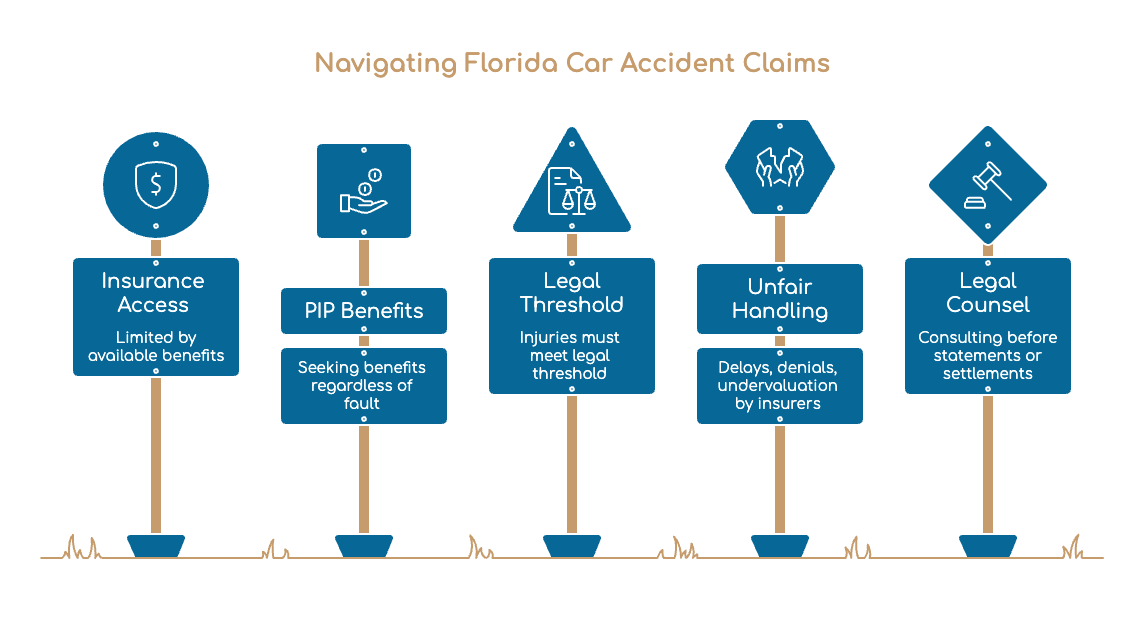
- Access to prompt medical evaluation and ongoing treatment through available insurance benefits.
- The ability to seek personal injury protection benefits, regardless of who caused the crash.
- The right to pursue compensation from an at-fault driver when injuries meet Florida’s legal threshold.
- Protection from unfair claim handling, including delays, denials, or undervaluation by insurers.
- The opportunity to consult legal counsel before giving statements or accepting settlements.
For those committed to serving injured community members, understanding these rights helps protect dignity, stability, and accountability. A rear-end accident claim should be handled with patience, accuracy, and attention to the person’s long-term needs.
Why Do Florida Rear-End Car Accident Injuries Happen?
Understanding legal rights is only part of evaluating a rear-end collision claim, because the cause of the injury often shapes questions of fault, insurance coverage, and damages. These collisions may occur when a driver follows too closely, looks away from traffic, or fails to adjust to congestion, rain, or sudden stops. Speeding violations can increase impact force, making neck, back, and head injuries more severe. Unsafe lane changes may also trigger rear-end crashes when a vehicle cuts in abruptly, leaving another driver no safe distance to stop.
Other causes involve conditions beyond ordinary driver error. Defective vehicle parts, including worn tires or faulty lights, can prevent drivers from avoiding danger. Malfunctioning brakes may turn a routine stop into a serious collision, raising questions about maintenance, repairs, or product liability. Identifying these causes helps injured people, families, advocates, and service providers understand how accountability may be evaluated under Florida law.
What Should You Do After a Florida Rear-End Car Accident Injury?
After a Florida rear-end car accident injury, the injured person should seek immediate medical care, even when symptoms appear minor. The crash scene should be documented with photographs, witness information, and available police details, because this evidence may become important later. An injury lawyer can then evaluate the claim, protect legal rights, and address insurance issues with appropriate urgency.
Seek Immediate Medical Care
When a rear-end collision occurs, injured individuals should seek medical care as soon as possible, even if symptoms appear minor at first. Prompt evaluation protects health, supports recovery, and helps caregivers identify injuries that may worsen without treatment, including concussions, spinal trauma, and soft tissue damage. Medical records also create a reliable account of injuries, treatment needs, and future limitations, which may become important if Insurance Denials arise.
In severe cases, delayed care can place vulnerable patients at greater risk, and families may later face issues connected to Wrongful Death claims. A timely examination allows physicians to recommend appropriate therapy, medication, referrals, or diagnostic testing. Those assisting the injured should encourage follow-up care, preserve appointment records, and carefully follow all medical instructions after the crash.
Document The Crash Scene
Medical treatment addresses the injured person’s immediate needs, but crash-scene documentation can preserve facts that may later be disputed. When safe, a person may photograph vehicle positions, bumper damage, skid marks, debris, roadway conditions, and visible injuries. Images should include wide views and close details, with time and location data preserved when possible. Emergency vehicle documentation, including fire rescue or police presence, may help confirm response timing and scene conditions.
Traffic signal verification can also be important, especially when the rear-end impact occurred near an intersection or a sudden stop. Witness names, phone numbers, and brief observations should be recorded respectfully, without pressuring anyone. A calm, organized effort to document the scene can support truthful reporting, assist those harmed, and protect the integrity of later claims.
Contact an Injury Lawyer
In the days following a rear-end collision, contacting a Florida injury lawyer can help an injured person understand legal rights, insurance obligations, and the steps needed to protect a potential claim. Early guidance may support careful decision-making, especially when medical needs, vehicle damage, and missed work create pressure. A lawyer may review available evidence, explain communication boundaries with insurers, and identify deadlines that could affect recovery.
Through a Car Accident Investigation, counsel can examine crash reports, photographs, witness statements, and treatment records to determine how the collision occurred and who may be responsible. Injured individuals may also consider Legal Consultation Options to ask informed questions before choosing representation. This step can promote order, preserve important information, and help families serve the injured person’s long-term wellbeing.
Critical Evidence in a Florida Rear-End Car Accident Injury Case
Critical evidence in a Florida rear-end car accident injury case often determines how clearly fault, causation, and damages can be established.
Critical materials may include:
- Police crash reports
- Vehicle damage photos
- Medical treatment records
- Witness statements
- Repair estimates
These records help create a factual timeline, support injury claims, and allow legal counsel to assess the strength of the case.
Police Crash Reports
After a rear-end collision in Florida, the police crash report is often among the first documents reviewed by insurers, attorneys, and medical providers evaluating the injury claim. This report may identify drivers, passengers, location, weather, roadway conditions, statements, citations, and the officer’s initial assessment of fault. For injured individuals and those assisting them, it can support Evidence preservation by creating a timely record before memories fade or circumstances change.
The report may also help evaluate witness credibility, especially when independent accounts align with the sequence of events described at the scene. Although not always conclusive, a crash report can guide further investigation, medical documentation, and claim strategy. Careful review allows advocates to address inaccuracies promptly and protect the injured person’s right to fair consideration.
Vehicle Damage Photos
Vehicle damage photos preserve visual proof of the force, direction, and physical consequences of a Florida rear-end collision. Images of crushed bumpers, bent frames, broken lights, displaced panels, and interior damage can help clarify how the impact occurred and whether the rear vehicle was struck with substantial force. These photographs may support statements from drivers, passengers, witnesses, and responding officers, while helping a lawyer evaluate liability with care and diligence.
Clear photos taken at the scene, repair facility, or tow yard can also reduce Insurance Disputes about whether the collision caused the claimed property damage. Missing Photos may weaken the record, especially when vehicles are repaired, sold, or destroyed. Prompt documentation serves injured persons, families, and the court by preserving honest evidence before conditions change permanently.
Medical Treatment Records
From the first medical evaluation forward, treatment records create a dated account of the injuries, symptoms, diagnoses, and care connected to a Florida rear-end collision. These records may include emergency room notes, imaging results, physician findings, therapy plans, prescriptions, and follow-up recommendations. They help show whether pain, mobility limits, neurological complaints, or other conditions developed consistently after the impact.
Accurate documentation also supports caregivers, insurers, and legal professionals seeking a fair understanding of the harm sustained. When crash details involve Vehicle maintenance, tire blowouts, or related mechanical issues, medical timelines may help connect the physical injuries to the event. Although Witness credibility and witness interviews are addressed separately, treatment records can confirm whether reported symptoms align with observed clinical findings, strengthening the overall evidentiary record.
Witness Statements
Witness statements can provide an independent account of how a Florida rear-end collision occurred, especially when the drivers involved offer conflicting descriptions of the crash. Neutral observers may describe vehicle speeds, traffic signals, braking, lane position, weather, and driver behavior before impact. These details can help clarify liability and support an injured person’s claim with fairness and accuracy.
Eyewitness credibility depends on the witness’s location, attention, eyesight, consistency, and lack of personal interest in the outcome. Statement timelines also matter because accounts collected soon after the collision are often more reliable than memories recorded weeks later. An attorney may review each statement, compare it with police reports and physical evidence, and determine whether the testimony can strengthen a claim for medical losses, income disruption, and other damages.
Long-Term Effects of Florida Rear-End Car Accident Injuries
Rear-end car accidents in Florida can cause injuries that persist long after the initial collision, affecting mobility, work capacity, and daily routines. Chronic neck pain and lingering back injuries may require ongoing medical care, while emotional trauma can interfere with sleep, concentration, and overall well-being. These long-term effects are often central to evaluating the full value of an injury claim.
Chronic Neck Pain
Although some rear-end collisions appear minor at first, chronic neck pain can develop when the force of impact strains muscles, ligaments, discs, or joints in the cervical spine. This pain may persist for months, limiting sleep, work duties, caregiving tasks, and community service activities. Medical evaluation is important because symptoms may intensify after the initial shock subsides.
Treatment may include imaging, medication, therapy, injections, or structured whiplash recovery planning. Accurate records help connect the injury to the crash, document physical limitations, and support future care needs. In Florida, claims for chronic neck pain can affect an insurance settlement when ongoing treatment, reduced function, or lasting impairment is established. Careful legal guidance helps injured individuals pursue compensation while preserving their ability to support their families and others.
Lingering Back Injuries
Neck pain is not the only long-term condition that can follow a Florida rear-end collision, as the same impact forces may also injure the middle or lower back. Sudden compression, twisting, and muscle strain can affect discs, joints, ligaments, and nerves, leaving an injured person with persistent pain, stiffness, weakness, or reduced mobility.
These symptoms may interfere with caregiving, household responsibilities, employment, and other service-centered duties that require strength and endurance. While Whiplash recovery often receives attention, back injuries may progress slowly and require imaging, therapy, injections, or expert care. Untreated conditions, including herniated discs or chronic lumbar strain, may contribute to long-term disability. Careful documentation of symptoms, treatment, limitations, and future medical needs can help clarify the full impact of these injuries after a rear-end crash.
Emotional Trauma Effects
After a rear-end collision, the psychological effects may persist long after visible injuries have improved. Individuals may experience anxiety, irritability, fear of driving, or heightened startle responses that interfere with work, family duties, and community service. Post-accident nightmares can disrupt sleep, reduce concentration, and increase emotional exhaustion during routine responsibilities. When a traumatic brain injury is also present, mood changes, memory problems, and reduced impulse control may complicate recovery and strain relationships.
These symptoms should be documented with the same care as physical injuries, including counseling records, medical evaluations, and reports from trusted observers. Early mental health support can help protect stability, restore confidence, and strengthen the injured person’s ability to care for others while pursuing a Florida injury claim.
Proving Liability in Florida Rear-End Car Accident Injury Cases
When a rear-end collision occurs in Florida, liability often begins with the presumption that the trailing driver failed to maintain a safe following distance or proper control of the vehicle. However, that presumption can be challenged, making careful proof crucial for an injured person seeking fair accountability.
Proving fault requires a clear review of the crash scene, vehicle damage, traffic conditions, witness statements, police reports, medical records, and any available video footage. Evidence preservation is especially important because skid marks fade, vehicles are repaired, and digital recordings may be deleted. A responsible legal review may also examine whether the lead driver made an abrupt unsafe stop, whether brake lights failed, or whether another vehicle contributed to the collision.
Strong liability evidence helps protect injured individuals from unfair blame and may reduce the risk of insurance coverage denial. Careful documentation supports a service-centered pursuit of justice for those harmed.
Dealing With Insurance Companies After a Florida Rear-End Car Accident Injury
Once liability evidence begins to take shape, insurance communications often become the next major concern in a Florida rear-end car accident injury claim. Adjusters may request statements, medical authorizations, or details about the crash, and each response can affect the value of the claim. Careful handling helps protect the injured person’s interests while supporting a fair and orderly review.
Insurance companies often evaluate policy coverage, injury documentation, vehicle damage, and prior medical history before taking a position. Those serving injured individuals should encourage the maintenance of organized records, prompt reporting, and caution before accepting early settlement offers. A release signed too soon may limit recovery for future medical needs or lost income.
Attention to claim deadlines is also crucial because missed notices or late submissions can create avoidable disputes. Clear communication, accurate documentation, and guidance from a Florida rear-end car accident injury lawyer can help ensure insurers address the claim responsibly and in good faith.
What to Expect During a Florida Rear-End Car Accident Injury Claim Process
A Florida rear-end car accident injury claim generally begins with timely accident reporting, followed by the collection of evidence needed to establish fault and document injuries. The process may involve communications with insurance adjusters, review of medical records, and assessment of available coverage under Florida law. Negotiating injury compensation requires a clear presentation of liability, damages, and the long-term impact of the collision.
Reporting The Accident
After a rear-end collision in Florida, promptly reporting the accident creates an official record that may be important in an injury claim. Drivers should contact law enforcement when injuries, significant damage, or disputed circumstances are present, and should remain at the scene until authorized to leave. A responding officer may prepare a crash report, record identifying information, and note visible conditions.
Vehicle damage documentation, including photographs and repair estimates, should be preserved in an organized manner. Those assisting an injured person should encourage calm, accurate statements rather than speculation. Witness names, contact details, and brief observations may also be collected, supporting later witness credibility assessment. Timely notice to an insurer is usually required, but statements should remain factual and limited to the reported events.
Proving Fault And Injuries
In a Florida rear-end car accident injury claim, proving fault and injuries usually requires evidence that connects the rear driver’s conduct to the collision and links the crash to the claimant’s medical condition. Investigators may review the crash report, vehicle damage, witness statements, photographs, and Video Evidence from traffic cameras, businesses, or dash cameras.
These materials help show whether the rear driver followed too closely, failed to brake, or was distracted. Medical records, diagnostic testing, treatment notes, and provider opinions help establish the nature, timing, and extent of injury. Because Florida applies Comparative Negligence, any conduct by the injured person may be evaluated, including sudden stops or unsafe lane changes. Careful documentation supports a fair assessment while honoring the needs of injured people seeking recovery.
Dealing With Insurance
Once evidence of fault and injury begins to take shape, the claim typically moves into sustained communication with insurance companies. Adjusters may request medical records, wage information, statements, and documentation of vehicle damage. Each response should be accurate, timely, and limited to what is necessary, because unclear answers may affect the claim. In Florida rear-end collision cases, insurers often review coverage, compare medical findings with reported symptoms, and evaluate whether treatment appears related to the crash.
A lawyer may help organize submissions, track deadlines, and protect the injured person from avoidable errors. If an insurer delays, misrepresents coverage, or refuses to review valid evidence, concerns about insurance bad faith may arise. When benefits are denied, claim denial appeals may require careful documentation and prompt, structured legal responses.
Negotiating Injury Compensation
When the insurer has enough information to evaluate liability, injuries, and available coverage, settlement negotiations may begin with a demand for compensation. This demand should present medical records, proof of wage loss, repair documentation, and the human impact of the crash clearly. A careful representative reviews insurance adjusters’ tactics, including low initial offers, requests for recorded statements, or efforts to minimize treatment needs.
Sound evidence-preservation steps, such as saving photographs, vehicle data, witness details, and medical timelines, strengthen the claim and support a fair evaluation. Negotiations may involve several counteroffers before resolution. The injured person’s advocate seeks compensation for medical care, lost income, pain, and future needs while maintaining professional communication, protecting the claim’s value, and encouraging a resolution that serves justice and recovery.
Compensation for Florida Rear-End Car Accident Injury Damages
After a rear-end collision in Florida, compensation may address both the immediate and long-term consequences of a crash-related injury. A claim often depends on careful documentation, including medical records, evidence of repairs, employment information, and consistent statements from those involved. For injured people who serve families, coworkers, or communities, recovery can help restore stability and preserve the ability to meet important responsibilities.
Florida’s insurance system may require review of available policies, applicable benefits, and insurance coverage limits. When losses exceed available coverage, additional sources of recovery may need to be evaluated with care. Liability may appear clear in many rear-end crashes, yet disputes can still arise over impact severity, prior medical conditions, or witness credibility issues.
A lawyer may assist by organizing evidence, addressing insurer objections, and presenting the full effect of the injury. This process helps ensure that compensation is pursued with diligence, accuracy, and respect for the injured person’s needs.
Economic vs Non-Economic Damages in Florida Rear-End Car Accident Cases
In Florida rear-end car accident cases, damages are generally categorized as economic or non-economic, depending on the nature of the loss. Economic damages may include medical bills and lost wages, while non-economic damages address pain, emotional distress, and reduced quality of life. Proving these damages in Florida requires clear documentation, credible evidence, and a careful connection between the collision and the claimed harm.
Medical Bills And Lost Wages
For a person injured in a Florida rear-end car accident, medical bills and lost wages often form the core of the economic damages claim, while pain, suffering, and related losses fall under non-economic damages. Economic losses may include emergency care, follow-up visits, therapy, medication, diagnostic testing, and reduced earnings during recovery. Medical documentation helps connect each expense to the collision and supports a clear, service-focused presentation of need.
Wage records, employer statements, and tax documents may show missed work, reduced hours, or diminished earning capacity. Comparative negligence can affect recovery if the injured person is found partly responsible. The settlement timeline often depends on treatment progress, records collection, and insurer review. Attorney fees should be evaluated carefully, including whether fees are contingency-based and deducted after recovery.
Pain And Emotional Distress
When physical injuries disrupt daily life, pain and emotional distress may become central parts of a Florida rear-end car accident claim. These harms are generally considered non-economic damages because they reflect personal suffering rather than direct financial loss. Ongoing neck pain, back strain, headaches, anxiety, sleep disruption, and fear of driving can affect a person’s ability to serve family, work, and community with steadiness.
Appropriate pain management strategies may include medical care, therapy, rehabilitation, and structured activity changes that support function. Emotional recovery support may involve counseling, stress management, and family assistance after the collision. In rear-end cases, these damages recognize that restoration involves more than bills or wages. They address the human impact of injury, including loss of comfort, confidence, and daily peace.
Proving Damages In Florida
After a rear-end collision, proving damages in Florida requires clear evidence that connects the crash to specific financial losses and personal harm. Economic damages may include medical bills, rehabilitation costs, Lost-Wage claims, reduced earning capacity, and Property Damage, as documented through invoices, estimates, employment records, and expert evaluations. Non-economic damages address pain, emotional distress, inconvenience, and diminished quality of life, often supported by medical notes, testimony, and consistent treatment history.
A careful presentation of damages helps insurers, courts, and responsible parties understand the full impact on the injured person. When an insurer unreasonably delays, undervalues, or denies a valid claim, Insurance Bad Faith may become an additional concern. Proper documentation serves both accountability and service, helping injured individuals pursue fair recovery with dignity.
When a Florida Rear-End Car Accident Injury Case Goes to Trial vs Settlement
Resolving a Florida rear-end car accident injury case depends on liability evidence, the seriousness of the injuries, available insurance coverage, and the willingness of each side to make reasonable compromises. Many cases settle after medical records, proof of wage loss, expert opinions, and crash evidence are reviewed. Settlement may provide a timely resolution, reduce uncertainty, and help injured persons focus on recovery, family responsibilities, and service to others.
A case may proceed to trial when fault is disputed, damages are undervalued, or an insurer refuses to offer fair compensation. Trial preparation includes organizing evidence, preparing witnesses, evaluating medical testimony, and presenting the harm in a clear, respectful manner. Jury selection also matters because jurors must be able to fairly consider the evidence and assess credibility. While a trial can increase pressure on the defense, it also carries risks, delays, and added costs. Each path should be evaluated with disciplined judgment and careful guidance.
Florida Laws That May Affect Your Florida Rear-End Car Accident Case
The outcome of a Florida rear-end car accident case is shaped not only by settlement strategy or trial readiness but also by the specific laws governing fault, insurance benefits, deadlines, and recoverable damages. These rules affect how an injured person receives care, proves harm, and seeks financial accountability after another driver’s negligence.
Florida rear-end accident claims depend on legal rules that shape care, proof, fault, and financial recovery.
- Florida’s no-fault system generally requires injured motorists to first seek personal injury protection benefits for medical expenses and lost income.
- Comparative negligence may reduce compensation if the injured party is found to be partly responsible for the crash or the resulting injuries.
- Serious injury requirements can affect whether a claimant may recover pain and suffering and other non-economic damages.
- Insurance coverage limits often shape available recovery, especially when injuries exceed the at-fault driver’s policy.
- Evidence rules influence how medical records, witness testimony, vehicle damage, and expert opinions are presented.
A lawyer’s evaluation can help align legal action with the client’s need for care, stability, and justice.
The Statute of Limitations for Florida Rear-End Car Accident Injury Cases
Because strict filing deadlines can determine whether an injury claim may proceed, the statute of limitations is a critical issue in Florida rear-end car accident cases. Under current Florida law, most negligence actions arising from car accidents must be filed within 2 years of the crash. If a case is not filed within that period, the injured person may lose the right to seek compensation through the courts, regardless of the severity of the injuries.
This deadline also affects insurance settlement strategies, since insurers may have less incentive to resolve a claim once the filing period has expired. Timely action supports careful preservation of evidence, medical documentation, and witness identification, all of which may be essential when proving negligence. For individuals and families focused on recovery and service to others, understanding this deadline helps protect lawful claims while promoting orderly, responsible resolution of accident-related losses in Florida after serious rear-end collisions.
How a Florida Rear-End Car Accident Injury Lawyer Can Help You
After a serious rear-end collision, a Florida rear-end car accident injury lawyer can help an injured person evaluate the claim, identify responsible parties, and pursue compensation through the appropriate legal and insurance channels. This guidance can protect medical stability, financial dignity, and a family’s capacity to continue serving others.
Legal guidance after a rear-end collision can protect recovery, financial stability, and informed decision-making.
- Reviews crash reports, medical records, vehicle damage, and witness accounts to establish how the collision occurred.
- Identifies available insurance coverage, including bodily injury, uninsured motorist, and personal injury protection benefits.
- Applies insurance negotiation strategies to address denied, delayed, or undervalued claims with documented support.
- Calculates losses involving treatment costs, missed income, reduced earning ability, pain, and future care needs.
- Conducts a trial readiness assessment, preparing evidence and legal arguments if settlement discussions fail.
Through organized advocacy, the lawyer helps reduce confusion and supports informed decisions. This role allows the injured person to focus on recovery while the claim moves forward with discipline.
When to Contact a Florida Rear-End Car Accident Injury Lawyer
Knowing how legal counsel can assist is only part of protecting an injury claim; timing can also affect the strength of the case. After a rear-end collision, an injured person should consider contacting a Florida rear-end car accident injury lawyer as soon as immediate medical needs are addressed. Early contact allows guidance before insurance statements are given, forms are signed, or settlement discussions begin. It also supports the timely collection of evidence, including vehicle damage records, crash reports, witness information, photographs, and available video footage.
Prompt legal review may be especially important when injuries require continuing care, time away from work, or help with daily responsibilities. Medical expenses can increase quickly, and documentation should be organized from the beginning. If liability is disputed, symptoms worsen, or an insurer delays communication, contacting counsel may help preserve important rights. For individuals focused on caring for family, patients, or community members, early action can reduce avoidable burdens later.
Why You Need an Experienced Florida Rear-End Car Accident Injury Lawyer
Although rear-end collisions may appear straightforward, an experienced Florida rear-end car accident injury lawyer can identify legal and factual issues that are not immediately obvious. Liability may be disputed when multiple vehicles are involved, sudden stops occur, road conditions are poor, or allegations of comparative negligence are made. A lawyer can review medical records, crash reports, vehicle damage, witness statements, and insurance communications to build a clear account of harm and responsibility.
For injured people and the families who support them, careful legal guidance can reduce confusion during a difficult recovery. An attorney can help document lost income, treatment needs, pain, and long-term limitations, while ensuring an Insurance Claim is presented with accurate and complete information. Experience also supports a disciplined Settlement Strategy, one that considers future care, policy limits, and the full effect of injuries. This approach helps protect the injured person’s dignity, financial stability, and ability to continue caring for others.
How to Choose the Right Florida Rear-End Car Accident Injury Lawyer for Your Case
Often, the right Florida rear-end car accident injury lawyer is identified by evaluating relevant experience, communication practices, and the ability to handle disputed liability or complex damages. A careful selection process helps injured people receive attentive guidance while protecting their ability to recover losses. The lawyer should understand Florida insurance rules, comparative negligence, medical evidence, and the tactics insurers may use to reduce claims.
An Initial case evaluation can reveal whether the attorney listens carefully, explains legal options clearly, and identifies evidence that may strengthen the claim. This meeting also allows the injured person or family to assess whether the lawyer’s approach reflects patience, service, and practical judgment.
Client fee arrangements should be explained in writing, including contingency fees, costs, and any responsibilities if the case is unsuccessful. A qualified lawyer should provide consistent updates, prepare each case thoroughly, and pursue a resolution that serves the client’s medical and financial needs.
About The Law Offices of Anidjar & Levine
The Law Offices of Anidjar & Levine provides legal representation for injured people throughout Florida, including those harmed in rear-end car accidents caused by negligent drivers.
The firm assists clients with insurance claims, liability disputes, medical documentation, and the pursuit of compensation for losses tied to collisions.
Its attorneys and staff focus on client service, timely communication, and careful case preparation.
They work to reduce burdens on injured people so clients may concentrate on medical care, family responsibilities, and recovery.
The firm’s approach reflects a commitment to serving individuals who face disruption after preventable crashes.
The Law Offices of Anidjar & Levine also maintains a presence beyond case work through community outreach and public information efforts.
Any legal advertising associated with the firm is intended to help injured Floridians understand available legal options.
The firm represents clients with professionalism, diligence, and attention to the practical consequences of serious accidents.
Frequently Asked Questions
Can a Rear-End Accident Aggravate a Pre-Existing Injury?
Yes, a rear-end accident can aggravate a pre-existing injury when the impact worsens prior symptoms or creates new limitations. The injured person’s claim often depends on medical documentation showing the condition before and after the collision. Insurance coverage limits may affect available recovery, even when aggravation is clearly proven. Careful records help demonstrate causation, support fair evaluation, and assist those responsible for serving the injured with accuracy and diligence.
What if Multiple Vehicles Were Involved in the Rear-End Crash?
When multiple vehicles are involved, the fault may be allocated among several drivers, not only the last vehicle. Investigators examine impact points, speeds, following distances, improper lane changes, and whether distraction causes delayed braking or cascading chain reactions. Each injured person should document treatment, preserve photographs, and identify witnesses. A careful liability review helps ensure responsibility is assigned fairly, supporting those harmed while promoting accountability, safety, and responsible service to others.
Do Rear-End Accident Claims Differ for Rideshare Passengers?
Yes, rear-end accident claims can differ for rideshare passengers because liability and insurance layers may be more complicated. Passenger injuries may involve the rideshare driver, another motorist, or both, depending on fault. Rideshare coverage often changes based on whether the driver was logged in, waiting, or transporting a passenger. A careful claim review helps protect injured passengers and supports fair recovery through available insurance sources.
Can Vehicle Defects Contribute to a Rear-End Accident?
Yes, vehicle defects can contribute to a rear-end accident when faulty brakes, worn components, or malfunctioning safety features prevent timely braking. Defective headrests may also worsen neck injuries after impact, affecting the harm suffered by occupants. Those assisting injured people should recognize that responsibility may extend beyond drivers to manufacturers, repair shops, or parts suppliers. Careful investigation, preservation of evidence, and expert review help identify whether a defect played a role.
What if the Other Driver Was Uninsured?
If the other driver was uninsured, the injured person may pursue Uninsured liability options through their own uninsured coverage, when available. Prompt evidence collection, including police reports, photographs, medical records, and witness accounts, helps protect the claim. Claim deadlines must be followed carefully, since delays can limit recovery. A service-minded legal approach focuses on securing needed care, documenting losses, and pursuing available compensation with discipline and accuracy.
—————————
Rear-end collisions in Florida can create intricate medical, financial, and legal challenges for injured victims.
A knowledgeable car accident lawyer can evaluate liability, document damages, negotiate with insurers, and pursue fair compensation when necessary.
The Law Offices of Anidjar and Levine provides focused legal guidance for those affected by these crashes, including help from a Florida Car Accident Lawyer.
Prompt legal action may help protect important rights, preserve evidence, and support a stronger injury claim under Florida law.