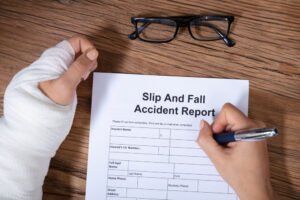
The Law Offices of Anidjar and Levine help evaluate claims involving lasting impairment, future medical care, reduced mobility, lost income, and diminishedearning ability.
These cases often require medical proof connecting the crash to permanent limitations, evidence preservation, PIP review, and analysis of no-fault exceptions.
A Florida Car Accident Lawyer may coordinate records, expert opinions, insurer communications, and settlement negotiations to pursue compensation reflecting lifelong harm.
The sections below explain key rights, evidence, liability issues, and case considerations.
Main Takeaways
- A Florida permanent disability car accident lawyer can coordinate evidence, insurers, medical providers, and responsible parties.
- Permanent injury claims require medical proof linking the crash to lasting impairment and long-term limitations.
- Florida PIP benefits usually apply first, but serious permanent injuries may allow claims against the at-fault driver.
- Recoverable damages may include future care, rehabilitation, assistive equipment, lost income, reduced earning capacity, and household support.
- Experts such as physicians, vocational specialists, and life care planners can help establish future needs and the disability’s impact.


How We Can Help With Your Florida Permanent Disability Car Accident Injury Claim
After a car accident causes a permanent disability, the injured person may face medical recovery uncertainty, lost earning capacity, long-term care needs, and pressure from insurance companies to resolve the claim before the full impact is known. A Florida permanent disability car accident injury lawyer can provide organized guidance while protecting the person’s dignity and future stability. The lawyer may coordinate Evidence preservation, including crash reports, vehicle data, medical records, witness statements, and photographs, to ensure the claim is supported by reliable evidence.
The legal team may also communicate with insurers, health care providers, and other responsible parties, reducing the burden on the injured person and family members. Through careful claim evaluation, the lawyer can identify damages tied to ongoing care, reduced independence, household support, and diminished work ability. During settlement negotiations, counsel can advocate for compensation that reflects the lasting harm rather than short-term convenience, helping the injured person secure the resources needed for continued care and services.
OUR CONSULTATIONSARE FREE
START YOUR FREE CASE REVIEW

Understanding Florida Permanent Disability Car Accident Injury Cases
A permanent disability car accident injury case in Florida involves more than proving that a crash occurred and that an injury followed. These cases require careful evaluation of the medical condition, the expected long-term limitations, and the effect on daily life, employment, and the ability to serve family or community needs. Florida law generally requires injured people to use personal injury protection benefits first, but serious and permanent harm may qualify under no-fault exceptions, allowing a claim against the responsible driver.
Causation standards also play a central role. Medical evidence must link the collision to the permanent impairment and address prior conditions or alternative explanations raised by insurers. Physicians, vocational professionals, and life care planners may help define the extent of loss and future needs. A well-prepared case presents disability not as an isolated diagnosis, but as a lasting change that requires accountability, practical support, and fair compensation under Florida law.
Common Causes of Florida Permanent Disability Car Accident
Permanent disability after a Florida car accident often results from severe impact forces, unsafe driver conduct, or collisions involving large vehicles. Common causes include distracted driving crashes, drunk driving collisions, high-speed accidents, and commercial vehicle wrecks, each of which can produce catastrophic injuries with lasting consequences. Identifying the cause of the crash is essential because it helps establish liability, damages, and the legal strategy for pursuing compensation.
Distracted Driving Crashes
Too often, distracted driving crashes in Florida cause injuries that extend far beyond the initial collision, including spinal cord damage, traumatic brain injuries, amputations, and other conditions that may result in permanent disability. These collisions frequently involve phone use, navigation adjustments, eating, grooming, or conversations that pull attention from the road. Even a brief distraction can cause lane drift, delayed braking, or failure to notice pedestrians, cyclists, and stopped traffic.
For injured individuals and families, the consequences may require lifelong medical care, mobility support, and assistance with daily tasks. Those who serve accident survivors often recognize that careful investigation is fundamental, including review of phone records, vehicle data, witness accounts, and roadway evidence. Establishing a distraction can help clarify fault and support claims for long-term losses.
Drunk Driving Collisions
Beyond distracted driving, drunk driving collisions remain a major cause of catastrophic injuries and permanent disability on Florida roads. When a driver operates a vehicle impaired by alcohol, reaction time, judgment, and coordination decline, placing occupants, pedestrians, and caregivers at severe risk. Victims may suffer spinal cord damage, traumatic brain injuries, amputations, or complicated orthopedic harm requiring lifelong assistance and rehabilitation.
In evaluating these cases, attorneys may review police reports, BAC test results, witness statements, and dashboard camera footage to establish impairment and link it to the crash. This evidence can help protect injured individuals and support claims for medical care, lost earning capacity, assistive equipment, and future support. A careful legal response helps families pursue accountability while focusing on dignity, stability, and compassionate service.
High-Speed Accidents
Why do high-speed accidents so often lead to permanent disability in Florida car accident cases? Greater speed increases crash force, reducing the body’s ability to withstand impact and limiting a driver’s time to react. Victims may suffer spinal cord damage, traumatic brain injuries, amputations, severe fractures, or internal injuries that permanently alter mobility and independence.
High-speed motorcycle collisions are especially dangerous because riders have limited protection from direct impact with vehicles, pavement, or roadside objects. Rollover crashes also create grave risks, including ejection, roof crush injuries, and repeated trauma as the vehicle turns. For those committed to serving injured individuals and families, these cases require careful attention to medical evidence, future care needs, lost earning capacity, and the lasting human consequences of preventable speeding.
Commercial Vehicle Wrecks
When a commercial vehicle is involved in a Florida crash, the risk of permanent disability often increases because of the vehicle’s size, weight, and operating demands. Delivery trucks, tractor-trailers, buses, and service vehicles can cause catastrophic harm when drivers are fatigued, distracted, poorly trained, or pressured to meet unsafe schedules.
These wrecks may leave victims with spinal cord damage, traumatic brain injuries, amputations, or lasting mobility limits that require long-term care. Truck accident liability may involve the driver, employer, maintenance company, cargo loader, or vehicle owner, depending on the evidence. Workplace safety standards also matter, especially when companies fail to inspect vehicles, manage driver hours, or enforce safe practices. Careful investigation helps identify failures and supports fair recovery for those facing permanent disability.


Legal Rights of Florida Permanent Disability Car Accident Injury Victims
After a serious collision results in permanent disability, Florida injury victims may have legal rights that extend well beyond immediate medical bills. These rights may support long-term care, lost earning capacity, home modifications, and compensation for diminished quality of life. When a person can no longer work, serve family, or participate in community life as before, the legal claim must reflect those lasting burdens.
Key rights and protections may include:
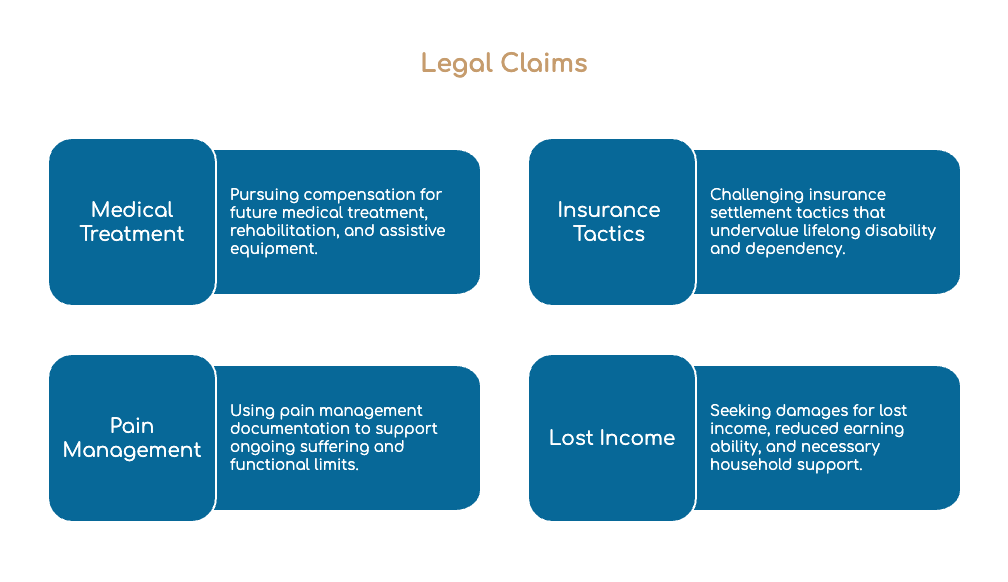
- Pursuing compensation for future medical treatment, rehabilitation, and assistive equipment.
- Challenging insurance settlement tactics that undervalue lifelong disability and dependency.
- Using pain management documentation to support ongoing suffering and functional limits.
- Seeking damages for lost income, reduced earning ability, and necessary household support.
A Florida permanent disability claim should be evaluated with careful attention to medical proof, financial projections, and personal impact. This approach helps protect injured individuals while honoring the caregivers, relatives, and advocates who support their recovery.
Why Do Florida Permanent Disability Car Accident Injuries Happen?
Understanding legal rights also requires examining the causes of the injuries that lead to permanent disability. In Florida, these injuries often arise from high-speed collisions, impaired driving, distracted driving, fatigued operation, and failures to yield at intersections. Severe crashes may cause spinal cord damage, traumatic brain injuries, amputations, or severe orthopedic harm, leaving victims with lasting functional limits.
Permanent disability can also result when commercial drivers, rideshare operators, or private motorists disregard safety rules designed to protect the public. Poor road design, inadequate maintenance, limited visibility, and defective vehicle components may also contribute. While Vehicle Safety Features, including airbags, stability control, and collision avoidance systems, reduce harm, they cannot eliminate the consequences of reckless or careless conduct.
For those committed to serving injured individuals and safer communities, understanding these causes supports accountability and the Prevention of Future Accidents. Careful analysis helps identify patterns, responsible parties, and safety failures that place others at risk.
What Should You Do After a Florida Permanent Disability Car Accident Injury?
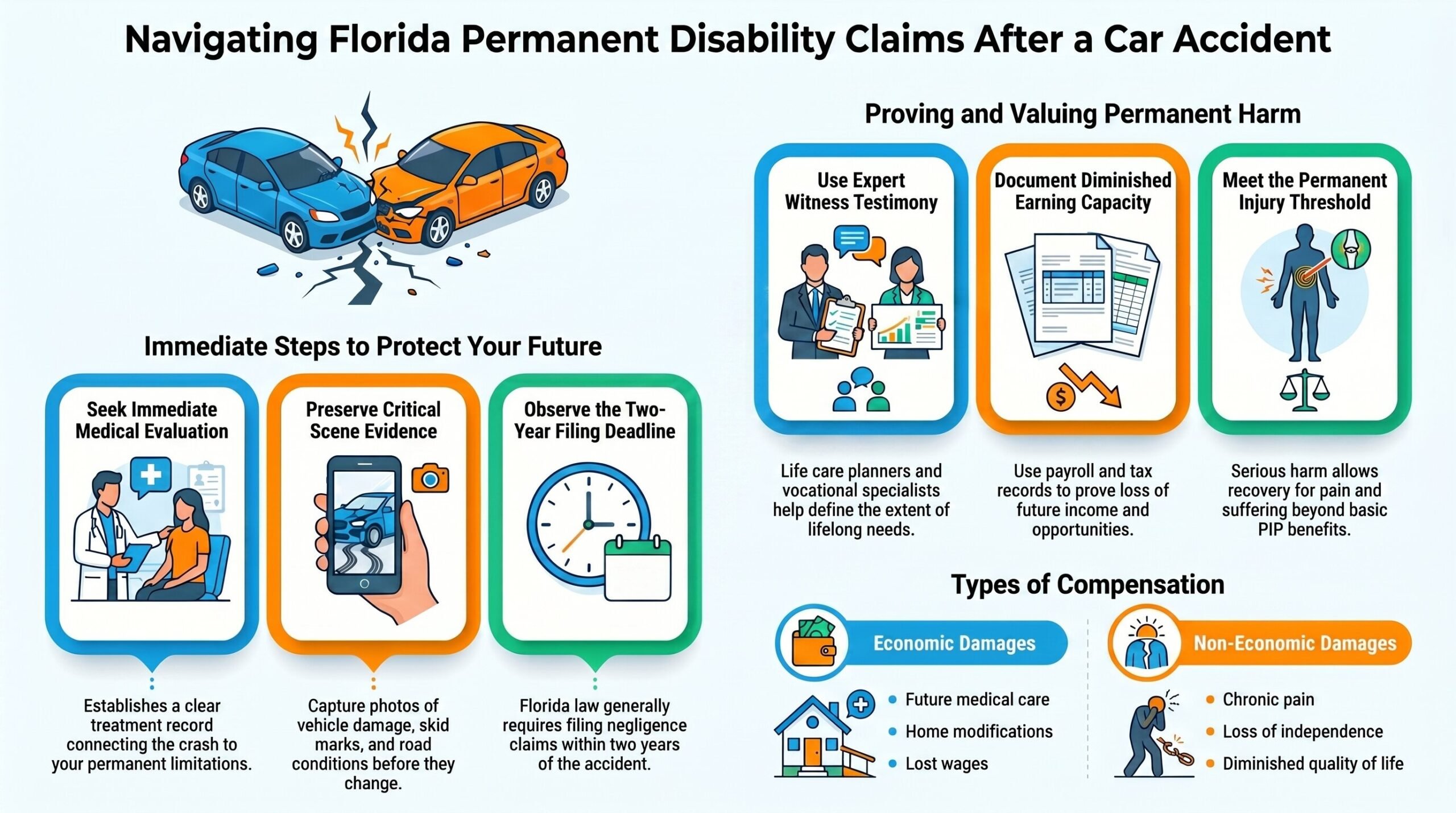
After a Florida car accident causing permanent disability, an injured person should seek immediate medical care to protect their health and create a clear treatment record. All available accident evidence, including photographs, witness information, medical records, and insurance communications, should be preserved as early as possible. A disability lawyer may then evaluate liability, damages, and available benefits while helping protect the injured person’s legal rights.
Seek Immediate Medical Care
When a Florida car accident may have caused a permanent disability, immediate medical care is essential to protect the injured person’s health, prognosis, and legal claim. Even if pain appears manageable, hidden spinal, brain, nerve, or internal injuries may worsen without prompt evaluation. Emergency physicians, experts, and rehabilitation providers can identify serious conditions, initiate treatment, and create records linking the injuries to the crash.
The injured person should seek immediate medical care, follow all discharge instructions, attend referrals, and avoid gaps in treatment. Caregivers and family members can help document symptoms, including pain levels, mobility limits, cognitive changes, and daily functional problems. They should also preserve documentation such as hospital records, imaging results, prescriptions, work restrictions, and therapy notes, which may later support benefits or compensation.
Document All Accident Evidence
In the hours and days following a Florida car accident involving possible permanent disability, thorough evidence documentation can help preserve the facts before they are lost, altered, or disputed. If safely possible, Photos and Videos should capture vehicle positions, damage, skid marks, traffic signals, road conditions, weather, debris, visible injuries, and any assistive devices affected by the crash. These records may later help medical providers, insurers, and other responsible parties understand the severity and progression of harm.
A careful record should also include the police report number, insurance details, towing information, and names of responding officers. Witness Contact information is especially important, including names, phone numbers, email addresses, and brief statements. Organized documentation supports accurate communication and helps protect the injured person’s dignity, needs, and future care.
Contact A Disability Lawyer
Why should a person with a suspected permanent disability contact a lawyer promptly after a Florida car accident? Early legal guidance helps protect medical, financial, and personal interests while the injured person focuses on treatment and recovery. A disability lawyer can review Insurance paperwork, explain deadlines, and identify benefits that may support long-term care. Counsel may also coordinate evidence gathering, including medical records, crash reports, witness statements, and expert evaluations, before important details are lost.
This support can be especially valuable when insurers question the severity, permanence, or cause of the injury. For families, caregivers, and advocates serving the injured person, legal representation can provide structure, accountability, and informed direction. Prompt contact allows the claim to be developed carefully, with compassion, discipline, and attention to future needs.
Critical Evidence in a Florida Permanent Disability Car Accident Injury Case
Critical evidence in a Florida permanent disability car accident injury case helps establish the severity, cause, and financial impact of the injury. Key forms of proof may include:
- Medical records and diagnoses
- Accident scene evidence
- Expert witness testimony
- Lost income documentation
Each category can support liability, damages, and the long-term consequences of the disability.
Medical Records And Diagnoses
When a Florida car accident causes permanent disability, medical records and diagnoses often become the foundation of the injury claim. These documents show the nature of the impairment, the treatment provided, and the expected long-term limitations. Physicians’ notes, imaging results, surgical reports, expert assessments, and therapy records help connect the injury to the collision and demonstrate how daily function has changed.
Careful symptom tracking can reveal persistent pain, reduced mobility, cognitive changes, or emotional effects that require continued support. Records also document rehabilitation progress, including gains, setbacks, and remaining barriers to independence. For attorneys, insurers, and courts, consistent medical documentation offers an objective basis for evaluating care needs, lost earning capacity, and future expenses, while honoring the injured person’s need for stability and dignity.
Accident Scene Evidence
Medical documentation may explain the extent of a permanent disability, but evidence from the accident scene often helps establish how the collision occurred and who may be legally responsible. In a Florida car accident claim, early attention to roadway conditions, vehicle placement, skid marks, debris, traffic signals, and visible hazards may protect facts that later become disputed.
Photographs preservation supports a clear record of damage, surroundings, injuries, and contributing conditions before repairs, cleanup, or weather alters the scene. The collection of witness statements also plays an important role, as neutral observers may describe speed, lane changes, impairment, distraction, or failure to yield. When gathered carefully, this evidence can help attorneys present a reliable account that supports fair accountability, responsible service to the injured person, and informed pursuit of long-term recovery needs.
Expert Witness Testimony
Although accident scene evidence may show how a collision occurred, expert witness testimony can explain why those facts matter in a permanent disability claim. Medical experts may describe the nature of spinal trauma, nerve damage, or mobility loss, while clarifying whether the condition is permanent under Florida law. Rehabilitation specialists can address future treatment needs, adaptive equipment, and pain management concerns that affect daily care and dignity.
These opinions help connect clinical findings to the injured person’s long-term limitations, not merely the initial emergency treatment. In serious cases, a life care planner may support Damages calculation by outlining projected medical services, home modifications, and attendant care. Clear expert testimony gives insurers, judges, and juries reliable guidance when evaluating responsibility, ongoing need, and fair compensation.
Lost Income Documentation
Because permanent disability can reduce or remove earning capacity, lost income documentation is a central part of proving financial harm after a Florida car accident. Records from employers, payroll providers, and tax filings help show earnings before the injury and the financial changes that followed. Evidence of lost wages may include pay stubs, W-2 forms, 1099 records, attendance logs, disability leave records, and written confirmation of time off work.
For self-employed individuals, profit and loss statements, invoices, contracts, and bank records may be necessary. This documentation can help medical and vocational findings translate into measurable economic loss. When carefully organized, these records support a clearer claim for past income loss and diminished future earning capacity, helping ensure that the injured person’s long-term needs are properly considered.
Long-Term Effects of Florida Permanent Disability Car Accident Injuries
Permanent disability after a Florida car accident can create lasting consequences, including chronic pain complications that interfere with daily function and medical stability. Reduced mobility may limit independence, require ongoing assistance, and affect a person’s ability to perform routine activities. These injuries may also cause lost earning capacity, particularly when physical restrictions prevent a return to prior employment or comparable work.
Chronic Pain Complications
When chronic pain develops after a serious Florida car accident, the injury often extends far beyond the initial trauma and becomes a lasting medical, financial, and legal concern. Persistent pain may require ongoing treatment, medication, expert care, and careful documentation to show how daily life and earning capacity are affected. For injured individuals and those assisting them, accurate records help demonstrate the seriousness of the condition and support future care needs.
Insurance claim strategies should account for recurring medical costs, pain management, and the likelihood of permanent symptoms. During settlement negotiation, the value of the claim may depend on credible medical opinions, treatment history, and evidence of functional limitations, ensuring compensation reflects the continuing burden rather than only the immediate injury. Legal guidance helps protect those needs.
Reduced Mobility Challenges
Chronic pain often overlaps with another lasting consequence of serious Florida car accident injuries: reduced mobility. Damage to the spine, hips, knees, or nervous system may limit safe standing, walking, bending, or transferring. These restrictions can affect bathing, cooking, transportation, medical attendance, and participation in family or community life. Caregivers, advocates, and legal representatives often evaluate how mobility loss changes daily routines and increases dependence on others.
Wheelchair access claims may address ramps, widened doorways, vehicle modifications, and accessible housing features needed for safe movement. Medical records may also document therapy, assistive devices, and pain management options that support function while reducing the risk of further injury. A careful assessment helps identify practical needs, preserve dignity, and ensure that long-term support reflects the person’s actual limitations and foreseeable care requirements.
Lost Earning Capacity
After a severe Florida car accident, lost earning capacity may become one of the most significant long-term consequences of a permanent disability. An injured person may no longer perform former duties, maintain prior hours, or advance within a chosen field. This loss affects not only income but also the ability to support family, contribute to the community, and serve others through meaningful work.
Evaluating Future Workloss often requires medical evidence, employment history, wage records, and expert analysis of likely career limitations. Vocational Rehabilitation may help identify retraining options, adaptive tools, or suitable alternative employment. However, when permanent restrictions prevent comparable earnings, compensation may need to reflect the full economic impact. Careful documentation helps show how the injury changed future opportunities, independence, and long-term financial stability.
Proving Liability in Florida Permanent Disability Car Accident Injury Cases
Although a permanent disability can make the consequences of a crash clear, liability in a Florida car accident case must still be proven through specific evidence. Fault may be determined by police reports, witness statements, traffic camera footage, vehicle damage, roadway conditions, and expert analysis. Evidence preservation and insurance negotiations are important concerns, because important proof can disappear quickly after a collision.
A careful liability review considers whether another driver violated traffic laws, drove while distracted, followed too closely, failed to yield, or acted carelessly under the circumstances. In more complex cases, responsibility may also extend to employers, vehicle owners, maintenance providers, or other parties whose conduct contributed to the crash.
Medical documentation, damages valuation, and supporting the broader claim by connecting the collision to lasting impairment and measurable losses. For injured individuals and those serving them, a disciplined investigation helps establish accountability, protect legal rights, and present a clear record of how the crash caused permanent harm.
Dealing With Insurance Companies After a Florida Permanent Disability Car Accident Injury
In a Florida permanent disability car accident claim, insurance companies often begin evaluating exposure long before the full medical and financial impact is known. Adjusters may request statements, medical authorizations, or early discussions that appear routine, yet these steps can shape the value assigned to the claim. Careful communication protects the injured person’s dignity while preserving evidence needed to address lifelong limitations, caregiving needs, and lost earning capacity.
Effective Negotiation strategies focus on documented damages, consistent medical opinions, and a clear presentation of future care requirements. A lawyer may help make sure that insurers do not undervalue service-oriented losses, such as the inability to provide support within a family or community.
The settlement timeline can be affected by the severity of impairment, insurance coverage, and the need to understand the long-term prognosis. Patience, accuracy, and disciplined advocacy are crucial when an insurer seeks resolution before the disability is fully measured.
What to Expect During a Florida Permanent Disability Car Accident Injury Claim Process
A Florida permanent disability car accident injury claim typically begins with a thorough medical evaluation, which helps document the severity, permanence, and future impact of the injury. The process then moves through insurance claim filing and disability damage valuation, where medical records, income loss, future care needs, and functional limitations are assessed. Depending on the insurer’s response and the value of the claim, the matter may proceed toward settlement negotiations or litigation.
Medical Evaluation Process
When a car accident causes a suspected permanent disability, the medical evaluation process becomes one of the most important parts of a Florida injury claim. Physicians assess injuries, functional limitations, pain levels, mobility, and the likelihood of lasting impairment. Diagnostic testing, expert referrals, therapy records, and physician opinions help establish whether the condition is permanent under Florida standards.
A careful evaluation also connects medical findings to the crash, which may require reviewing distraction evidence, witness statements, emergency records, and treatment history. For those serving injured individuals, thorough documentation supports compassionate advocacy and informed decision-making. Medical providers may evaluate work restrictions, future care needs, assistive devices, and limitations in daily living. Consistent follow-up care is critical because gaps in treatment may weaken the documented relationship between the collision and the disability.
Insurance Claim Filing
After the medical record begins to define the nature and extent of the disability, the insurance claim filing stage places those findings before the applicable insurers for review. In Florida, this may include notice to personal injury protection coverage, the at-fault driver’s insurer, and any available uninsured or underinsured motorist carrier. The submission should identify the parties, accident date, policy information, and liability basics, including how the crash occurred and why responsibility may attach.
Medical evidence is then organized to show diagnoses, treatment history, restrictions, and the relationship between the collision and impairment. Insurers may request records, statements, authorizations, or clarification from providers. A careful filing process helps preserve deadlines, supports orderly communication, and allows advocates to serve the injured person with diligence and accuracy.
Disability Damage Valuation
As the claim moves from filing to evaluation, disability damage valuation focuses on measuring how the permanent impairment has changed the injured person’s life, work capacity, and financial stability. This stage may review medical opinions, impairment ratings, treatment needs, wage loss, reduced earning ability, and the cost of future assistance. For those committed to serving others, the analysis should also consider how limitations affect caregiving, household duties, and community involvement.
Documentation from physicians, vocational experts, employers, and family members can help present a complete picture. Accurate valuation supports insurance negotiations by connecting each loss to credible evidence, rather than assumptions. It also informs settlement strategy by identifying the full scope of damages before any demand is presented to the insurer for review.
Settlement Or Litigation
Whether a permanent disability claim resolves through settlement or proceeds to litigation, the process usually turns on the strength of the evidence, the insurer’s evaluation of liability, and the projected value of long-term losses. Insurance negotiation may involve medical records, expert opinions, wage documentation, and life-care planning to show how the injury affects daily function, service to family, and future stability.
If the insurer disputes fault, minimizes impairment, or undervalues future care, litigation may become necessary. In that setting, trial strategy focuses on clearly presenting the disability, proving causation, and demonstrating the full human and financial impact without exaggeration. A well-prepared claim can encourage fair resolution, while readiness for trial helps protect the injured person’s dignity, support needs, and lawful recovery under Florida law.
Compensation for Florida Permanent Disability Car Accident Injury Damages
The compensation available for a permanent disability after a Florida car accident depends on the severity of the impairment, the injured person’s long-term medical needs, and the financial impact on the person’s ability to work and live independently.
Attorneys often evaluate medical records, physician opinions, functional limitations, and projected care requirements to determine the full scope of recoverable losses. This review may include future treatment, assistive devices, home modifications, transportation needs, and support services that preserve dignity and daily function.
Because permanent disability claims involve lasting consequences, careful documentation is critical. Insurers’ tactics may include disputing causation, minimizing the impairment, or arguing that future care is unnecessary.
A well-prepared legal team can respond with expert testimony, consistent medical evidence, and a trial strategy focused on accountability. The goal is to secure compensation that helps the injured person receive care, maintain stability, and continue participating in family and community life.
Economic vs Non-Economic Damages in Florida Permanent Disability Car Accident Cases
In Florida car accident permanent disability cases, damages are commonly divided into economic and non-economic categories. Economic damages may include medical costs and lost earning capacity, while non-economic damages address harms such as pain and suffering. This distinction helps clarify how a permanent injury affects both financial stability and overall quality of life.
Medical Costs
Medical costs often form the foundation of economic damages in Florida permanent disability car accident cases because they reflect the direct financial burden of diagnosis, treatment, rehabilitation, and long-term care. These expenses may include emergency services, hospitalization, surgery, medication, assistive devices, home health support, and future medical needs.
Careful documentation helps show how the injury affects daily living and what resources are necessary to preserve dignity and stability. In severe cases, medical evidence may also support Wrongful death eligibility when injuries ultimately prove fatal. If unsafe design, manufacturing errors, or failed components contributed to the crash, vehicle defect claims may help identify additional responsible parties. Accurate valuation allows advocates to seek compensation that supports treatment, reduces family strain, and promotes sustained care for the injured person.
Lost Earning Capacity
Stability often depends on the ability to earn income, making lost earning capacity a highly important category of economic damages in Florida permanent disability car accident cases. When an injury limits future work, compensation may address reduced wages, lost promotions, diminished benefits, and shortened career paths. A Vocational assessment can help identify what work, if any, remains practical considering medical restrictions, education, experience, and labor market conditions.
Financial experts may then compare projected lifetime earnings before and after the crash. Courts also consider earnings mitigation, including reasonable efforts to retrain, seek suitable employment, or adapt to remaining abilities. For caregivers, providers, and advocates, documenting these losses supports a more complete claim, helping injured individuals preserve dignity, household security, and long-term access to necessary support.
Pain And Suffering
When permanent disability follows a serious car accident, pain and suffering may become one of the most significant forms of non-economic damages in a Florida injury claim. These damages address the human impact of lasting impairment, including chronic pain, reduced mobility, loss of independence, and diminished participation in family, work, or community life.
Unlike future medical expenses, which involve projected treatment costs, pain and suffering require careful evaluation of how the injury changes daily existence. Attorneys may rely on medical records, expert opinions, and witness statements to show the severity and duration of harm. Emotional distress claims may also arise when disability causes anxiety, depression, or trauma. In service-centered representation, documenting these losses helps protect dignity and seek fair compensation under Florida law.
When a Florida Permanent Disability Car Accident Injury Case Goes to Trial vs Settlement
In many Florida permanent disability car accident cases, the decision to settle or proceed to trial depends on the strength of the evidence, the severity of the long-term impairment, and the insurer’s willingness to offer fair compensation. Settlement may provide timely relief, reduce stress, and preserve resources for medical care, family support, and community responsibilities. It can also protect an injured person from the uncertainty of a courtroom outcome.
When negotiations fail, a trial may become necessary to present medical opinions, employment limitations, future care needs, and witness testimony. Trial Mediation may occur before courtroom proceedings, giving both sides another opportunity to resolve the claim responsibly. If no agreement is reached, Jury Selection, evidence presentation, and argument follow. A lawyer’s role is to prepare the case with discipline, ensure the injured person’s losses are clearly shown, and pursue a result that supports dignity, stability, and long-term care.
Florida Laws That May Affect Your Florida Permanent Disability Car Accident Case
After settlement or trial strategy is considered, the legal rules governing a Florida permanent disability car accident case often determine what claims may be brought, what evidence must be presented, and how compensation is calculated. These rules can shape how an injured person, family, or advocate protects dignity, access to care, and financial stability after a severe crash.
- Florida’s No-Fault Coverage generally requires injured occupants to first seek personal injury protection benefits, regardless of who caused the collision.
- A permanent injury threshold may allow recovery beyond basic benefits, including claims for pain and suffering and long-term loss of function.
- Comparative fault rules may reduce compensation when evidence shows the injured person shared responsibility for the crash.
- Available insurance, including bodily injury coverage and Policy Limits, may affect practical recovery, even when damages are substantial.
Careful legal evaluation helps align medical proof, insurance obligations, and service-centered advocacy with Florida’s governing injury laws.
The Statute of Limitations for Florida Permanent Disability Car Accident Injury Cases
Because Florida law imposes strict filing deadlines, the statute of limitations can be one of the most essential issues in a permanent disability car accident injury case. In most Florida negligence claims arising from car accidents, an injured person has two years from the crash date to file a lawsuit. If the deadline expires, the claim may be barred, regardless of the severity of the disability or the need for lifelong care.
Timely action supports responsible service to injured people and their families. Evidence preservation may require prompt collection of crash reports, vehicle data, witness statements, photographs, and treatment records. Insurance communication should also be handled carefully, because statements or delays may affect the claim’s progress.
In cases involving permanent disability, medical causation must be documented through records that connect the collision to the lasting impairment. Early expert consultation can help clarify prognosis, functional limitations, and future care needs before essential deadlines pass.
How a Florida Permanent Disability Car Accident Injury Lawyer Can Help You
Strict filing deadlines make early legal guidance especially important in permanent disability car accident cases. A Florida lawyer can help an injured person protect benefits, organize evidence, and pursue compensation that supports long-term care, family stability, and continued dignity.
- Evaluates medical records, work restrictions, and expert opinions to show how the disability affects daily life and future service to others.
- Challenges: Wrongful denial by identifying missing proof, policy errors, or improper insurer reasoning.
- Manages insurance appeals, communications, and documentation, reducing confusion for families already carrying caregiving burdens.
- Investigate claim delays, disability scams, and undervalued settlement offers that may threaten vital support.
A lawyer may also calculate future medical costs, lost earning capacity, home modifications, and attendant care needs. By coordinating with physicians, vocational experts, and financial professionals, counsel presents a complete claim. This structured advocacy helps ensure that the injured person’s needs are addressed with accuracy, fairness, and accountability.
When to Contact a Florida Permanent Disability Car Accident Injury Lawyer
When a crash results in lasting physical limitations, cognitive impairment, or an inability to return to work, contacting a Florida permanent disability car accident injury lawyer should occur as soon as the disability becomes apparent or is reasonably suspected. Early contact is especially important when physicians indicate long-term restrictions, ongoing treatment, or permanent work limitations.
A lawyer may also be contacted when an insurer delays communication, disputes medical findings, questions the need for care, or issues a Wrongful Denial of benefits. These moments can affect access to treatment, financial stability, and the injured person’s ability to support family responsibilities. Prompt legal consultation is also appropriate when claim documents are confusing, settlement offers appear premature, or Policy Violations may have affected the handling of the claim.
For individuals committed to caring for dependents, employees, or community members, timely action helps protect critical resources and ensure that important evidence and medical records remain available.
Why You Need an Experienced Florida Permanent Disability Car Accident Injury Lawyer
Although permanent disability claims often begin with medical treatment, they quickly involve complex legal, financial, and insurance issues that require experienced guidance. A Florida lawyer can help connect the injury, diagnosis, work limitations, and future care needs into a clear claim for compensation. This support is especially important when the injured person can no longer serve family, clients, coworkers, or the community in the same way.
Experienced counsel understands Insurance negotiation strategies used when carriers question impairment ratings, future medical costs, lost earning capacity, or the permanence of a condition. A lawyer can also provide evidence-preservation tips to ensure records, photographs, vehicle data, witness statements, and expert opinions are secured before they are lost or challenged.
Permanent disability cases require careful valuation and disciplined advocacy. Without experienced representation, important damages may be overlooked, deadlines may be missed, and insurers may undervalue lifelong consequences that affect dignity, independence, and the ability to care for others.
How to Choose the Right Florida Permanent Disability Car Accident Injury Lawyer for Your Case
Because permanent disability claims can affect medical care, income, and long-term independence, choosing the right Florida car accident injury lawyer requires careful evaluation. The attorney should have substantial experience with catastrophic injury cases, disability-related damages, and disputed liability issues. A careful client may review the lawyer’s history with settlements, trials, expert witnesses, and negotiations involving future medical needs.
A suitable lawyer should also provide organized guidance from the beginning. This includes explaining the Insurance claim timeline, identifying deadlines, and helping the injured person understand each required step. The lawyer should use a clear Medical document checklist to gather hospital records, diagnostic reports, expert opinions, therapy notes, work restrictions, and prognosis statements.
For those committed to serving an injured loved one, communication is essential. The right legal representative should respond promptly, explain options plainly, and respect the person’s dignity while pursuing full compensation for present and future losses.
About The Law Offices of Anidjar & Levine
Selecting a law firm for a permanent disability car accident claim requires attention to experience, resources, and client service.
The Law Offices of Anidjar & Levine represent injured clients throughout Florida, including those facing long-term impairment after serious collisions.
Its attorneys focus on building claims through organized Case Investigation, careful review of medical records, accident reports, witness accounts, and insurance communications.
The firm’s approach emphasizes Evidence Preservation because permanent disability cases often depend on proof that may weaken or disappear over time.
This may include vehicle damage records, scene photographs, surveillance footage, and expert evaluations.
By managing these details, the firm helps clients concentrate on medical care, family responsibilities, and daily adjustments.
The Law Offices of Anidjar & Levine also provides client communication intended to reduce uncertainty during the legal process.
For individuals and families seeking accountable representation, the firm offers structured support while pursuing compensation for medical needs, lost income, and reduced quality of life.
Frequently Asked Questions
Can Undocumented Immigrants File Permanent Disability Claims After Florida Car Accidents?
Yes. Undocumented immigrants may file permanent disability claims after Florida car accidents, though benefits eligibility depends on the claim type, injury severity, and available proof. They should understand documentation requirements, including medical records, accident reports, wage evidence, and identity-related information when applicable. Advocates serving injured individuals should encourage prompt medical care and legal guidance, because immigration status does not automatically eliminate the right to pursue compensation for serious accident-related disabilities.
Will Surveillance Affect My Florida Permanent Disability Car Accident Injury Claim?
Yes, surveillance can affect a permanent disability claim, particularly when video evidence appears to contradict reported limitations. Surveillance admissibility depends on legality, relevance, and proper disclosure. Claimants should act consistently with medical restrictions, not exaggerate or minimize symptoms. Attorney strategy often includes reviewing footage, explaining context, and challenging misleading edits. Privacy considerations remain important, especially if investigators intrude where a person reasonably expects privacy while seeking rightful support.
Can Pre-Existing Disabilities Impact My Florida Car Accident Case?
Yes, pre-existing disabilities can affect a Florida car accident case, but they do not bar recovery. A careful review of medical records helps distinguish prior limitations from new or aggravated injuries. When the crash worsens an existing condition, compensation may still be available for that aggravation. Insurance coverage limits also shape potential recovery, requiring disciplined documentation, credible medical opinions, and service-focused advocacy that protects the injured person’s lawful interests.
Are Family Members Compensated for Caregiving After Permanent Disability?
Yes, family members may receive legal compensation for caregiving when their services are necessary, reasonable, and linked to the permanent disability caused by the crash. Caregiver coverage may include assistance with bathing, transportation, medication, meals, and daily supervision. The value often depends on medical proof, care logs, and comparable professional rates. A claim should document both past and future care needs, ensuring devoted family support is properly valued.
How Are Future Home Modifications Valued in Permanent Disability Claims?
Future home modifications are valued by estimating the reasonable costs needed to provide home accessibility, safety, and long-term functional support. Valuation methods may include contractor bids, life-care planning assessments, medical recommendations, and expert testimony addressing the person’s permanent limitations. Adjustments can cover ramps, widened doorways, bathroom redesigns, lifts, flooring changes, and adaptive technology. The goal is to measure necessary, service-oriented improvements that preserve dignity, independence, and daily care capacity.
—————————
A permanent disability after a Florida car accident can affect every aspect of a victim’s future, from medical needs to financial stability.
Legal guidance can help protect the injured party’s rights, establish liability, and pursue compensation for long-term losses.
The Law Offices of Anidjar and Levine provides experienced representation for individuals facing these serious claims, including help from a Florida Car Accident Lawyer.
A consultation can help determine available legal options and the next steps toward recovery.