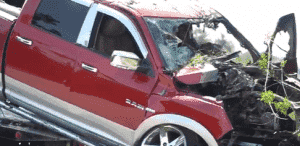
The Law Offices of Anidjar and Levine helps crash victims on Florida Interstate I-4 investigate collisions, preserve evidence, prove liability, and pursue compensation for medical bills, lost income, pain and suffering, and long-term losses.
These cases may involve multiple vehicles, commercial carriers, rideshare drivers, roadway hazards, weather, or disputed insurance issues.
Legal support can include obtaining reports, witness statements, medical records, video, and evidence of damage.
For more information, visit this Florida Car Accident Lawyer resource.
The sections below explain pivotal rights, steps to claim, and factors for selecting a lawyer.
Main Takeaways
- An I-4 injury lawyer investigates crashes quickly, preserving reports, medical records, witness statements, video, and roadway evidence.
- I-4 accidents often involve complex liability from commuters, tourists, rideshare drivers, commercial vehicles, trucks, or public entities.
- Common I-4 crash causes include speeding, distraction, tailgating, impairment, congestion, construction zones, weather, and unsafe lane changes.
- Legal help can document medical costs, lost income, chronic pain, emotional trauma, and long-term limitations after an I-4 collision.
- Attorneys handle insurer communication, negotiate based on verified evidence, and prepare for litigation when a fair settlement is not offered.
How We Can Help With Your Florida Interstate I-4 Car Accident Injury Claim
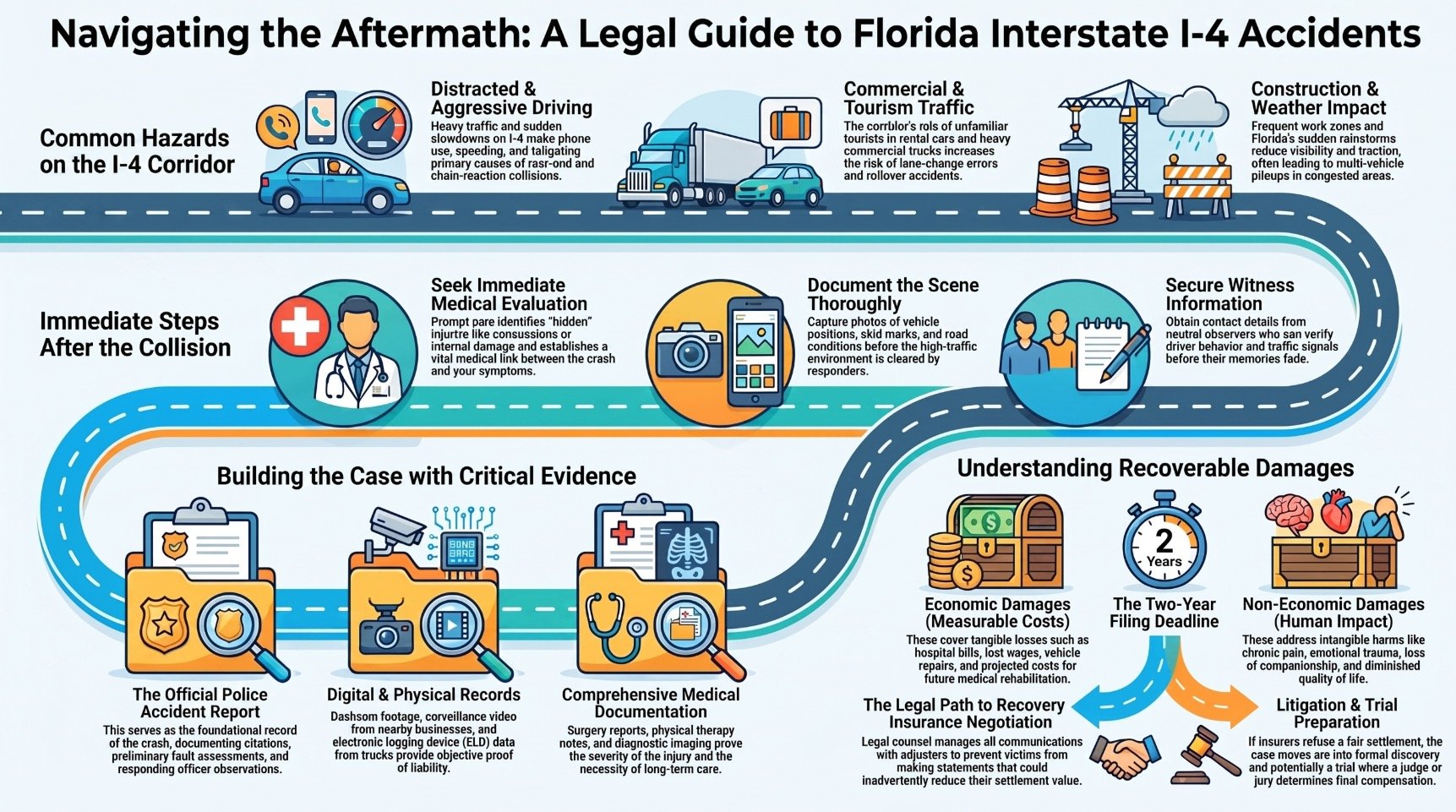
An injury claim after a collision on Florida Interstate I-4 often requires prompt investigation, careful preservation of evidence, and a clear understanding of state insurance rules. A legal team may assist by gathering crash reports, medical records, witness statements, roadway data, and available video evidence before key details are lost. This support helps injured people focus on treatment, family responsibilities, and community obligations while their claims are organized with discipline.
Counsel may evaluate Driver Negligence by reviewing speed, distraction, impairment, unsafe lane changes, following distance, and compliance with traffic laws. The firm can also communicate with insurers, document damages, and protect the claimant from statements that may reduce recovery. A sound Negotiation Strategy is built on verified facts, consistent medical proof, and a careful assessment of losses. When settlement discussions are inadequate, litigation preparation may show that the claim is supported, serious, and ready for formal resolution through legal channels.
Understanding Florida Interstate I-4 Car Accident Injury Cases


Because Interstate I-4 carries heavy commuter, tourist, and commercial traffic across Florida, injury cases arising from crashes on this corridor often involve complex facts and multiple sources of responsibility. These claims may require careful evaluation of medical records, insurance coverage, roadway evidence, vehicle damage, and the long-term effect of injuries on work, mobility, and daily care needs.
OUR CONSULTATIONSARE FREE
START YOUR FREE CASE REVIEW

An I-4 injury case may involve private motorists, rideshare operators, business vehicles, public entities, or commercial carriers. In truck accident cases, additional records, safety policies, and carrier obligations may affect the scope of liability and available compensation. When a crash results in death, Wrongful death lawsuits may allow eligible survivors to seek accountability for financial losses and human harm recognized under Florida law.
A service-minded legal approach focuses on protecting the injured, supporting families, and preserving evidence while claims are assessed. Understanding these cases helps communities respond with diligence, order, and compassion after serious highway collisions.
Common Causes of Florida Interstate I-4 Car Accidents
Florida Interstate I-4 car accidents often result from preventable driver conduct and challenging roadway conditions. Common causes include distracted driving, speeding and tailgating, impaired driving, and heavy traffic congestion, each of which can increase the risk of severe collisions. Understanding these factors helps explain how liability may arise and why careful investigation is often necessary after an I-4 crash.
Distracted Driving


On Interstate I-4, distracted driving remains a major cause of serious car accidents due to the corridor’s heavy traffic, frequent lane changes, and sudden slowdowns. Drivers who divert attention from the roadway may miss braking traffic, drifting vehicles, work-zone signals, or hazards near entrance and exit ramps. Mobile phone distractions, including texting, navigation adjustments, and hands-free conversations, can reduce awareness during crucial seconds when careful judgment is needed. Other distractions may include eating, reaching for objects, interacting with passengers, or monitoring in-vehicle systems.
For those committed to protecting the public, consistent attention supports safer travel and responsible roadway conduct. Pedestrian awareness strategies are also important near ramps, service areas, and crash scenes, where motorists should remain alert to responders, stranded occupants, and nearby foot traffic.
Speeding And Tailgating
Speeding and tailgating are persistent factors in serious Interstate I-4 car accidents, particularly where dense traffic, merging vehicles, and abrupt slowdowns leave little margin for error. Excessive speed reduces reaction time and increases crash severity, while following too closely can prevent drivers from stopping safely when traffic changes suddenly. Aggressive driving often includes speeding violations, reckless lane changes, and unsafe pressure on nearby motorists, creating conditions that endanger families, workers, visitors, and responders serving the public.
The tailgating impact may involve rear-end collisions, chain-reaction crashes, and secondary injuries when vehicles are forced into adjacent lanes or barriers. Careful review of traffic patterns, skid evidence, vehicle damage, and witness accounts can help determine whether unlawful speed or unsafe following distance contributed to the collision and resulting harm.
Impaired Driving
Unsafe speed and close following can become even more dangerous when a driver is impaired by alcohol, drugs, fatigue, or certain medications. Impairment reduces judgment, slows reaction time, and weakens the ability to recognize hazards along Interstate I-4. A driver who drifts between lanes, brakes late, or fails to adjust to changing roadway conditions may place families, workers, and visitors at serious risk. Fatigued driving can be especially harmful because drowsiness may resemble intoxication, causing delayed responses and poor lane control. Limited night visibility may further reduce a driver’s ability to detect stopped vehicles, pedestrians near disabled cars, or emergency responders. Those committed to serving injured persons should recognize impairment as a preventable cause of harm, often requiring careful investigation, witness review, and documentation of negligent driving behavior.
Heavy Traffic Congestion
Heavy traffic congestion frequently contributes to serious collisions along Florida Interstate I-4, where dense commuter flow, tourism traffic, construction zones, and sudden slowdowns can leave little room for driver error. In crowded conditions, a brief distraction, an unsafe following distance, or an improper merge may trigger rear-end impacts, sideswipes, and multi-vehicle crashes. Weather-related hazards can intensify these risks by reducing visibility, limiting tire traction, and making abrupt braking more dangerous.
Congestion also increases the likelihood of lane departure crashes, particularly when drivers drift, weave, or attempt sudden lane changes to avoid delays. For injured motorists, passengers, and families, careful investigation may reveal whether another driver, commercial operator, or roadway condition contributed to the harm. Legal support can help protect recovery while serving those affected with diligence and respect.
Legal Rights of Florida Interstate I-4 Car Accidents Injury Victims
After a crash on Interstate I-4, injured victims in Florida may have legal rights to pursue compensation for medical expenses, lost income, pain and suffering, and other losses caused by another party’s negligence. These rights may apply even when injuries appear delayed, disputed, or misunderstood due to common injury myths.
Florida law allows injured persons to seek accountability through insurance claims or civil actions, depending on the facts. Families may also pursue Wrongful death claims when a loved one’s life is taken through careless conduct.
Legal guidance can help protect evidence, meet deadlines, and properly value losses.
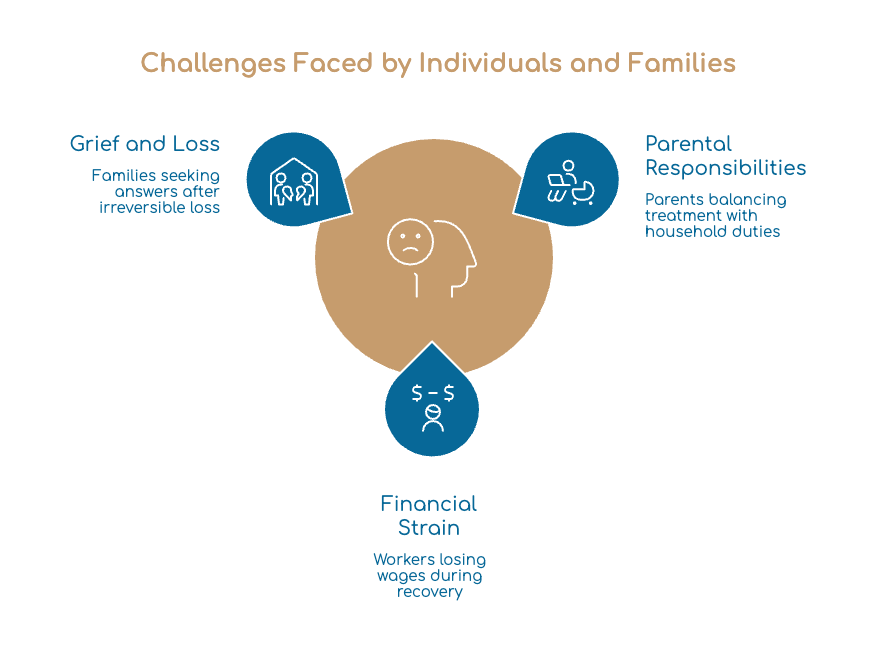
- A parent may need treatment while still supporting a household.
- A worker may lose wages while trying to recover with dignity.
- A grieving family may seek answers after an irreversible loss.
Those who serve injured victims can help by encouraging timely medical care, documentation, and informed legal review.
Why Do Florida Interstate I-4 Car Accident Injuries Happen?
Because Interstate I-4 carries dense commuter traffic, commercial vehicles, tourists, and local drivers through rapidly changing road conditions, serious car accident injuries often result from a combination of preventable hazards. Heavy congestion, abrupt lane changes, speeding, distracted driving, and aggressive merging can leave little time for safe reaction. Construction zones and unfamiliar exits may further increase confusion, especially when drivers fail to adjust speed or follow traffic control devices.
Commercial traffic creates added dangers, including Truck rollover risks when cargo shifts, drivers turn too sharply, or vehicles enter curves at unsafe speeds. Smaller vehicles may be crushed or forced from travel lanes during these events. Motorcycle visibility issues also contribute to severe injuries, as riders can be hidden in blind spots or overlooked during lane changes. Weather, fatigue, impairment, and poor following distance can intensify each risk. These causes show why careful roadway conduct protects the wider community and helps preserve life.
What Should You Do After a Florida Interstate I-4 Car Accident Injury?
After an injury on Florida Interstate I-4, the injured person should seek immediate medical care, even when symptoms appear minor. If it is safe to do so, documenting the crash scene with photographs, witness information, and police details can help preserve important evidence. Contacting an injury lawyer promptly may also protect legal rights, clarify insurance issues, and support a timely claim.
Seek Immediate Medical Care
Seek medical evaluation as soon as possible following a car accident on Florida Interstate I-4, even when injuries appear minor at the scene. Prompt care helps identify concussions, internal injuries, soft tissue damage, and delayed symptoms that may worsen without treatment. Medical records also establish a clear connection between the crash and the injuries, which can support any later claim for compensation. A person focused on serving family, coworkers, or community should protect personal health first, because recovery supports continued responsibility to others. Follow all treatment instructions, attend follow-up visits, and keep organized records of diagnoses, prescriptions, and restrictions. Adopt Evidence Collection through medical documentation rather than roadside investigation. Avoid Social Media posts about pain, activities, or the collision, because statements may be misinterpreted by insurers or opposing parties.
Document The Crash Scene
At the scene of a crash on Florida Interstate I-4, careful documentation can preserve details that may be difficult to confirm later. When it is safe to do so, an injured person or a trusted helper should record the positions of vehicles, skid marks, traffic signals, roadway debris, weather conditions, and visible injuries. Photos of damage should include multiple angles, license plates, and surrounding landmarks to show context. Any available dashcam footage should be saved promptly, before files are overwritten. Gathering witness contact information is also important, since neutral observers may later clarify how the collision occurred. Officers may complete reports, yet independent records can assist medical providers, insurers, and investigators. A timely vehicle inspection may identify impact patterns, mechanical issues, or safety defects that support an accurate account of events.
Contact An Injury Lawyer
Following a serious crash on Florida Interstate I-4, contacting an injury lawyer can help an injured person protect legal rights before evidence is lost, deadlines expire, or insurance communications become damaging. Immediate consultation allows counsel to carefully review police reports, medical needs, vehicle damage, witness information, and roadway conditions. A lawyer may also handle contact with the insurer, reducing the risk that a person gives incomplete statements while still in pain or under stress. For families caring for an injured loved one, legal guidance can clarify next steps, preserve records, and support informed decision-making. Many firms offer a no-cost case review, allowing the injured person to assess potential claims without financial pressure. Early legal involvement can help pursue accountability, fair compensation, and orderly case preparation.
Critical Evidence in a Florida Interstate I-4 Car Accident Injury Case
Critical evidence in a Florida Interstate I-4 car accident injury case may determine whether an injured person can prove fault, damages, and the full human cost of the collision. Key evidence often includes: 1. crash scene evidence, including vehicle positions and road conditions; 2. police accident reports, documenting initial findings and violations; 3. medical records documentation and witness statements, preserving injuries, treatment, and firsthand accounts. When this evidence is incomplete or lost, the injured person may face a more difficult path toward accountability and fair compensation.
Crash Scene Evidence
Because I-4 crash scenes can change within minutes, early evidence preservation often becomes a significant factor in an injury claim. Skid marks fade, debris is cleared, damaged vehicles are moved, and roadway conditions may no longer reflect what drivers encountered. Careful photographs, video footage, measurements, and notes can support improving incident documentation before vital details disappear. Images of lane positions, vehicle damage, traffic signals, weather, lighting, construction zones, and visible injuries may help clarify how the collision occurred. Nearby businesses, traffic cameras, rideshare records, and dash cameras may also provide useful information.
Preserving eyewitness accounts is equally important, since memories can weaken or become less precise. Promptly identifying witnesses and recording their observations can help ensure that injured parties and those assisting them have reliable evidence.
Police Accident Reports
A police accident report often serves as one of the most important records after an I-4 collision, since it provides an official summary of the crash and the responding officer’s observations. It may identify drivers, passengers, witnesses, roadway conditions, citations, and preliminary fault assessments. For those seeking to serve injured people with care and accuracy, this report helps organize facts before evidence is lost or memories fade. It may also reference a Traffic light camera, nearby surveillance sources, or statements that support further investigation. Insurance representatives may compare the report with photographs, repair estimates, and vehicle damage valuations to evaluate the severity of the impact. While not always conclusive, the report can guide legal strategy, strengthen accountability, and help preserve a fair record of what occurred on Florida’s Interstate I-4.
Medical Records Documentation
After the police accident report helps establish how an I-4 collision occurred, medical records documentation helps establish what physical harm resulted from it. Emergency room charts, diagnostic imaging, physician notes, prescriptions, therapy records, and surgical reports can show the nature, timing, and severity of injuries. These records also help connect the crash to ongoing pain, mobility limits, lost function, and future care needs. When reviewed with Dashcam footage and insurance paperwork, medical documentation can support a consistent account of the claim. Careful recordkeeping also serves injured individuals by preserving the evidence needed for a fair evaluation, without relying on memory alone. Gaps in treatment, missed appointments, or incomplete histories may be questioned, so prompt care and accurate reporting remain important after an Interstate I-4 accident in Florida.
Witness Statements
When an Interstate I-4 crash is disputed, witness statements can provide independent details that are not always captured in police reports, medical records, or photographs of vehicle damage. Neutral observers may describe driver behavior, traffic flow, lane changes, braking patterns, or moments of distraction before impact. They may also note road conditions, weather, visibility, construction zones, or debris that contributed to the collision. In injury claims, these accounts can help clarify fault and support the injured person’s need for fair treatment. Prompt collection is important because memories fade and witnesses may become difficult to locate. A lawyer may identify witnesses, obtain recorded statements, and compare their observations with physical evidence. Careful review of these statements can strengthen a claim and promote a more accurate understanding of responsibility.
Long-Term Effects of Florida Interstate I-4 Car Accident Injuries
Injuries from Florida Interstate I-4 car accidents may create lasting consequences that extend well beyond the initial emergency treatment. Chronic pain conditions, emotional trauma, and ongoing medical needs can affect a person’s ability to work, manage daily responsibilities, and maintain overall stability. These long-term effects often require careful evaluation, as they may significantly affect the value and direction of an injury claim.
Chronic Pain Conditions
Chronic pain often becomes one of the most disruptive long-term consequences of serious car accidents on Florida Interstate I-4, especially when trauma affects the neck, back, shoulders, hips, or joints. These conditions may persist after fractures treat or soft tissue injuries stabilize, limiting mobility and daily function. Neuropathic Pain can develop when damaged nerves send abnormal signals, causing burning, tingling, or shooting sensations that require ongoing care. Persistent pain may also interfere with rest, and related conditions, such as Sleep Apnea, can worsen fatigue and hinder physical recovery. For those committed to serving injured individuals, recognizing chronic pain helps guarantee that medical needs, treatment expenses, and long-term limitations are properly documented. Careful evaluation supports fair consideration of how enduring pain affects work, caregiving responsibilities, and independence after an I-4 collision.
Emotional Trauma Impact
How does emotional trauma continue after the visible injuries from an I-4 collision begin to recover? Many crash survivors carry fear, irritability, sleep disruption, or loss of confidence long after leaving the roadway. These reactions may affect family roles, work duties, and the ability to serve others with steadiness and patience. Stress and coping become central concerns when daily routines feel unsafe or unpredictable. A survivor may avoid driving, relive the collision, or struggle with guilt about passengers and loved ones. Post-crash financial strain can intensify distress, especially when missed wages, transportation limits, or household pressures accumulate. In injury claims, emotional harm may be considered alongside physical losses, helping decision-makers understand the broader human impact of an I-4 crash and the support needed for recovery.
Ongoing Medical Needs
Often, the most serious consequences of an I-4 collision become clear only after emergency treatment ends and the injured person begins ongoing medical care. Continued treatment may involve follow-up visits with physicians, diagnostic imaging, expert evaluations, and careful monitoring of symptoms that interfere with daily function. Physical rehabilitation may be necessary to restore mobility, rebuild strength, and reduce pain after fractures, spinal injuries, or soft-tissue damage. Medication management may also be required when pain, inflammation, nerve symptoms, or emotional distress persist beyond the initial recovery period. These needs can place financial and practical strain on families already committed to caring for an injured person. Accurate documentation of treatment, limitations, and future care recommendations helps identify the full scope of losses connected to the collision and recovery.
Proving Liability in Florida Interstate I-4 Car Accidents Injury Cases
When a crash occurs on Interstate I-4, proving liability requires a careful review of driver conduct, roadway conditions, traffic patterns, and the evidence available after the collision. Investigators may examine police reports, photographs, video footage, witness statements, vehicle damage, and crash reconstruction findings to determine how the incident occurred. Common causes may include Traffic signal violations near ramps or intersections, speeding, distracted driving, impaired driving, and following too closely.
Lane change errors are also significant on I-4, where heavy congestion and sudden merging can create serious hazards. A driver who fails to signal, checks mirrors inadequately, or moves into another vehicle’s path may be responsible for resulting injuries. Liability may also involve multiple parties, requiring a balanced review of each driver’s conduct. Careful evidence preservation helps injured individuals, families, and advocates understand what happened and pursue accountability through a documented, fact-based process. This analysis supports responsible service to those who have been harmed.
Dealing With Insurance Companies After a Florida Interstate I-4 Car Accident Injury
After liability evidence is gathered and reviewed, communications with insurance companies become a significant part of an Interstate I-4 injury claim. Adjusters may request recorded statements, medical authorizations, or broad releases, each of which can affect the injured person’s ability to recover fair compensation. Careful handling protects the claimant’s interests while allowing necessary information to be shared accurately.
Insurance carriers often evaluate treatment records, wage documentation, vehicle damage, and prior medical history. They may question the severity of injuries or argue that care was unrelated to the crash. In matters involving public benefits, Medicare liens must also be identified and addressed to ensure repayment obligations do not undermine the injured person’s recovery or future stability.
During settlement negotiations, a well-supported demand can present the full impact of the collision, including medical needs, lost income, pain, and the interruption of service to family or community caused by the injury. Professional communication helps maintain focus, reduce pressure, and promote accountable resolution.
What to Expect During a Florida Interstate I-4 Car Accident Injury Claim Process
The injury claim process after a Florida Interstate I-4 crash typically begins with reporting the collision, documenting injuries, and preserving essential evidence. Claimants may then face insurance negotiations, where liability, damages, and policy limits often become central issues. If a fair resolution is not reached, filing an injury lawsuit may become necessary to pursue full and lawful compensation.
Reporting The Crash
Because an I-4 collision can involve high speeds, multiple vehicles, and serious injuries, prompt reporting is a pivotal first step in preserving both safety and evidence. Law enforcement should be contacted immediately, especially when anyone is hurt, traffic is blocked, or a vehicle cannot be moved safely. A formal crash report creates an official record that may guide later claim decisions and reduce confusion among involved parties. Drivers should provide accurate facts, cooperate respectfully, and avoid admitting fault at the scene. Emergency responders also help protect others from further harm by controlling hazards and directing traffic. Early notice to insurers initiates the necessary insurance documentation while preserving details such as policy information and available dashcam video. Careful reporting supports accountability and helps injured people seek appropriate legal review.
Gathering Key Evidence
For an injury claim arising from an I-4 crash, essential evidence often determines how fault, damages, and insurance coverage are evaluated. Documentation may include crash reports, photographs of vehicles and roadway conditions, medical records, witness information, dashcam footage, and communications with responding agencies. A careful review can help identify unsafe lane changes, speeding, distracted driving, impaired driving, or hazardous road conditions. For those serving injured people, promptly preserving evidence supports accountability and protects the claimant’s dignity during the adaptation to injury. Records of missed work, treatment limitations, and functional restrictions may also assist with employer disability planning when the crash affects continued employment. Organized evidence allows legal counsel to assess liability, document losses, and prepare the claim with accuracy, compassion, and discipline before formal insurance discussions begin.
Negotiating Insurance Claims
After evidence has been collected and organized, the injury claim typically moves into focused communication with insurance carriers, where liability, medical treatment, damages, and available coverage are evaluated. Adjusters review records, repair estimates, wage documentation, and witness accounts, while representatives for the injured person present the claim clearly and with supporting evidence. This stage often includes policy limits evaluation, especially when serious injuries, commercial vehicles, or multiple victims are involved. Careful negotiation can help protect a claimant from accepting an inadequate offer before the full impact of the crash is understood. In fatal collisions, Wrongful death claims require added attention to family losses, funeral expenses, and future support. Effective advocacy seeks a fair resolution while respecting the needs of those harmed and the surrounding community.
Filing Injury Lawsuits
When settlement negotiations do not produce a fair resolution, filing a personal injury lawsuit may become necessary to preserve the injured person’s rights and move the claim into formal litigation. This step begins with a complaint that identifies the parties, outlines the facts of the I-4 collision, and states the damages sought. After service, the defendant responds, and both sides enter discovery, where records, testimony, and expert opinions are exchanged. Comparative fault disputes often become central, especially when insurers argue that speed, lane changes, or distracted driving reduced liability. Counsel may continue settlement negotiation strategies during litigation, using stronger evidence and procedural deadlines to encourage resolution. If no agreement is reached, the case may proceed to trial, where a judge or jury carefully evaluates responsibility and compensation.
Compensation for Florida Interstate I-4 Car Accidents Injury Damages
Although every I-4 collision presents different facts, compensation for injury damages in Florida generally depends on the severity of the injuries, the available insurance coverage, and the evidence connecting the crash to the losses claimed. A careful claim review may include police reports, medical records, witness accounts, crash photographs, and vehicle data, each of which helps establish what occurred and who should be held financially responsible.
Because Interstate I-4 often involves commuters, tourists, commercial vehicles, and multi-car impacts, claim evaluation may require organized communication with insurers and responsible parties. Property damage valuation can also support the broader claim by documenting impact force, repair costs, and vehicle loss. When liability is contested, fault dispute resolution may involve comparative fault analysis, expert review, or negotiation before litigation advances. A service-focused legal approach helps protect injured persons from avoidable delay, incomplete documentation, and unfair settlement pressure while maintaining attention on lawful recovery and practical client needs after a serious crash.
Economic vs Non-Economic Damages in Florida Interstate I-4 Car Accident Cases
In Florida Interstate I-4 car accident cases, damages are generally divided into economic losses, such as medical expenses, lost wages, and vehicle repair costs, and non-economic losses, such as pain, emotional distress, and reduced quality of life. Each category requires careful evaluation because financial records, medical documentation, and credible testimony often determine the strength of a claim. Proving accident damages requires a clear connection between the crash, the injuries sustained, and the losses being claimed.
Economic Damage Categories
After an I-4 collision, economic damages refer to the measurable financial losses that can be documented through records, bills, receipts, wage statements, and expert analysis. Common categories include emergency treatment, hospitalization, surgery, rehabilitation, prescription costs, medical equipment, and projected future care. Lost income may also be claimed when injuries prevent work, reduce earning capacity, or require extended recovery time. Property damage, vehicle replacement, towing, storage, and rental expenses may further support the financial claim. In severe cases, household services and necessary home modifications may be evaluated. Wrongful death claims may include funeral expenses, final medical bills, and lost financial support. These losses must be carefully calculated, especially when insurance policy limits affect available recovery. Accurate documentation helps injured people and families pursue responsible compensation.
Non-Economic Damage Examples
Financial losses are only one part of the harm caused by a serious I-4 car accident, because many consequences do not appear on invoices or wage records. Non-economic damages address the human impact of injury, including pain, physical limitation, disfigurement, and diminished enjoyment of daily life. A crash victim may endure mental anguish after repeated medical treatment, disrupted sleep, or fear of traveling on busy highways. Family relationships may also suffer when an injured person can no longer provide the same care, guidance, affection, or participation in household life, creating concerns about loss of companionship. These harms can be especially significant when permanent impairment changes work, parenting, worship, or community service. In Florida I-4 accident cases, such damages recognize suffering that affects dignity, independence, and meaningful connection.
Proving Accident Damages
Although damages may seem clear to an injured person, proving them in a Florida I-4 car accident case requires organized evidence that connects each loss to the crash. Economic damages often rely on medical bills, repair estimates, wage records, and expert opinions about future care or reduced earning capacity. Non-economic damages require careful documentation of pain, emotional distress, limitations, and changes in daily life, often supported by treatment notes and credible witnesses. Attorneys serving injured clients assess these records with discipline, anticipating insurance adjuster tactics that may minimize suffering or dispute causation. Settlement timelines can depend on medical recovery, evidence quality, and insurer responses. A well-prepared claim helps present the full human and financial impact, while supporting fair compensation under Florida law for injured people and families alike.
When a Florida Interstate I-4 Car Accident Injury Case Goes to Trial vs Settlement
Along the route through Central Florida, an I-4 car accident injury claim may resolve through settlement or proceed to trial, depending on liability, damages, insurance coverage, and the willingness of each party to negotiate in good faith. Settlement often serves injured motorists by reducing delay, limiting uncertainty, and preserving resources for medical care, family needs, and future stability. Strong documentation, credible witnesses, and clear proof of losses can increase leverage in settlement negotiations and encourage a fair resolution before court.
Trial becomes more likely when fault is disputed, injuries are undervalued, or an insurer refuses to offer adequate compensation. In that setting, counsel evaluates evidence, expert testimony, jury presentation, and risk tolerance. Trial strategy decisions may include whether to call treating physicians, accident reconstruction experts, or economic experts. While a trial can lead to accountability and greater compensation, it also requires patience, preparation, and careful guidance focused on the injured person’s long-term well-being.
Florida Laws That May Affect Your Florida Interstate I-4 Car Accidents Case
Because Florida law controls many parts of an I-4 car accident injury claim, injured motorists must consider how state rules affect fault, insurance benefits, medical deadlines, and available compensation. Florida’s no-fault system generally requires drivers to seek initial benefits through personal injury protection coverage, regardless of who caused the crash. However, serious injuries may permit a claim against the at-fault driver.
Florida law can shape fault, insurance benefits, medical deadlines, and compensation after an I-4 crash.
Key laws may shape the case in important ways:
- Comparative Negligence can reduce compensation when an injured person shares blame, creating real concern for families serving a recovering loved one.
- Traffic Statutes help establish unsafe conduct on I-4, such as speeding, improper lane changes, following too closely, or impaired driving.
- Insurance rules may affect medical bill payment, wage-loss recovery, and the availability of additional damages after the collision.
A careful legal review can protect the injured person’s dignity, support caregivers, and promote accountability.
The Statute of Limitations for Florida Interstate I-4 Car Accidents Injury Cases
After a serious collision on Florida Interstate I-4, the statute of limitations becomes one of the most important deadlines in an injury case. In Florida, most negligence claims involving motor vehicle injuries must be filed within two years from the date of the crash. If the deadline passes, an injured person may lose the right to seek compensation, regardless of the severity of the harm or the strength of the claim.
This deadline also affects practical steps that support accountability and care for others. Evidence preservation should begin early, because vehicle damage, roadway conditions, surveillance footage, and witness memories may change or disappear. Accident scene documentation, including photographs, reports, and location details, can help establish what occurred before records become incomplete. Families, caregivers, and community members who assist an injured person should understand that timely action protects legal rights while promoting a careful, responsible response after a serious I-4 crash.
How a Florida Interstate I-4 Car Accident Injury Lawyer Can Help You
When an injury claim arises from a serious crash on Florida Interstate I-4, a car accident injury lawyer can provide structured guidance from the earliest stages of the case. Legal counsel may review crash reports, medical records, witness accounts, and roadway conditions to identify how negligence occurred. This may include analyzing Truck lane changes, unsafe speeds, distracted driving, or weather-related hazards that placed motorists and passengers at risk.
Early legal guidance can clarify negligence, preserve evidence, and help injured I-4 crash victims protect their claims.
- They help injured people seek resources for medical care, rehabilitation, and daily needs.
- They protect families from being overlooked by insurers focused on limiting payment.
- They support accountability, helping to make communities safer for those who travel, work, and serve others.
A lawyer may also calculate damages, communicate with insurance carriers, preserve evidence, and prepare the claim for negotiation or litigation. Through this work, the injured person’s burden is reduced, allowing recovery and family responsibilities to remain central.
When to Contact a Florida Interstate I-4 Car Accident Injury Lawyer
The timing of legal contact can greatly affect how an injury claim develops after a crash on Florida Interstate I-4. A lawyer should be reached soon after emergency medical needs are addressed, particularly when injuries, multiple vehicles, commercial carriers, disputed fault, or uninsured drivers are involved. Early guidance can help an injured person avoid statements or decisions that may later affect the claim.
The question of when to call often arises while families are still focused on care, transportation, and daily obligations. Prompt legal contact supports orderly communication with insurers while allowing the injured person and caregivers to concentrate on recovery and service to those who depend on them. Evidence Preservation is also urgent. Skid marks fade, vehicles are repaired, camera footage may be overwritten, and witnesses can become difficult to locate. Contacting counsel early helps ensure important information is identified, requested, and protected before it becomes unavailable or incomplete for review.
Why You Need an Experienced Florida Interstate I-4 Car Accident Injury Lawyer
Because Interstate I-4 presents a multifaceted mix of commuter traffic, tourism-related congestion, commercial vehicles, and high-speed travel, injury claims arising from crashes on this corridor often require experienced legal review. An attorney familiar with Florida injury law can assess fault, preserve evidence, and evaluate damages in ways that support responsible advocacy for the injured. This guidance is especially important when victims face medical bills, lost income, long-term pain, or family disruption after a serious collision.
Experienced counsel also understands how insurers scrutinize Car Accident Claims and attempt to limit payment through disputed liability, low valuations, or Insurance Denials. Careful legal representation can help ensure that records, witness statements, crash reports, and expert opinions are organized with intention. For individuals who value fairness, accountability, and service to others, this support helps protect the injured person’s dignity while pursuing compensation that accurately reflects the crash’s real impact.
How to Choose the Right Florida Interstate I-4 Car Accident Injury Lawyer for Your Case
Selecting the right Florida Interstate I-4 car accident injury lawyer requires attention to experience, resources, and the attorney’s ability to manage complex roadway crash claims. A careful review should include prior work involving multi-vehicle collisions, commercial drivers, severe injuries, and insurance disputes that are common along I-4. Choosing an attorney also means evaluating licensure, trial readiness, professional standing, and familiarity with Florida negligence law.
Families seeking guidance should focus on clear communication, respectful service, and a demonstrated commitment to protecting injured people. Evaluating the case strategy is equally important because a strong lawyer should explain how evidence will be gathered, liability assessed, and damages documented. This may involve crash reports, medical records, expert analysis, and witness statements. The right advocate should provide honest expectations, consistent updates, and a structured plan designed to reduce burdens while pursuing fair compensation with diligence, care, and professional responsibility.
About The Law Offices of Anidjar & Levine
For individuals injured in collisions along Interstate I-4, the Law Offices of Anidjar & Levine provides legal representation focused on personal injury claims, insurance negotiations, and litigation when necessary. The firm assists clients who face medical expenses, lost income, vehicle damage, and long recovery periods after serious crashes. Its attorneys evaluate liability, gather evidence, communicate with insurers, and pursue compensation designed to support stability and restoration.
The firm’s approach reflects careful service to injured people and their families, with attention to communication, preparation, and accountability. In each case, counsel may assess Trial vs Settlement considerations, including the strength of evidence, insurance coverage, damages, and the client’s long-term needs. When appropriate, Mediation Options may be explored to resolve disputes efficiently while preserving the client’s right to proceed further. Through structured advocacy, the Law Offices of Anidjar & Levine helps clients steer the legal process with informed guidance and purposeful representation.
Frequently Asked Questions
Are I-4 Crash Cases Different for Tourists Visiting Florida?
Yes, I-4 crash cases can differ for tourists visiting Florida because travel schedules, rental vehicles, unfamiliar roads, and out-of-state insurance may complicate claims. Investigators often must quickly preserve tourist evidence, including hotel records, ride receipts, photographs, and witness details, before visitors leave. Language barriers may also affect medical care, statements, and documentation. A service-focused legal team can coordinate evidence, communication, and deadlines with professionalism and care for injured travelers.
Can Poor Road Design Affect My I-4 Accident Claim?
Yes. Poor road design can affect an I-4 accident claim when unsafe geometry, inadequate shoulders, confusing exits, or deficient signage clarity contributed to the crash. Such conditions may support a claim for negligence against a government agency, contractor, or maintenance entity, depending on notice and legal immunity rules. A careful investigation can assess traffic safety records, engineering standards, and prior complaints, helping injured persons pursue accountability while promoting safer travel for the broader community.
What if My I-4 Accident Involved a Rental Car?
If an I-4 accident involved a rental car, liability may depend on the driver’s negligence, the rental agreement, and available insurance coverage. Rental Car Liability often involves the renter’s personal auto policy, optional rental coverage, credit card benefits, or the rental company’s obligations. Injured parties should preserve records, identify all applicable policies, and report the crash promptly, helping to ensure that responsible resources are available to serve those harmed.
Do I-4 Construction Zones Change How Claims Are Handled?
Yes, construction zones can change how I-4 claims are handled. Investigators may assess lane shifts, signage, barriers, speed reductions, contractor conduct, and work-zone design. Comparative fault rules may divide responsibility among drivers, contractors, agencies, or other parties. Federal highway liability may also arise when federally funded standards are implicated. A careful review helps injured persons pursue accountability while supporting safer public travel and responsible service to the community.
Can Weather Conditions Impact an I-4 Accident Case?
Yes, weather conditions can strongly affect an I-4 accident case by influencing visibility, braking distance, road traction, and driver decision-making. Hurricane-related events may cause debris, flooding, or sudden lane closures, altering traffic patterns and complicating fault analysis. Investigators often review weather reports, roadway conditions, and witness accounts. Those serving injured individuals should recognize that severe weather does not excuse negligence, but it may affect liability, causation, and the evaluation of evidence.
—————————
Interstate I-4 collision claims require prompt attention, careful review of evidence, and an informed legal strategy. Injured victims may face medical expenses, lost income, long-term pain, and complex insurance disputes.
A qualified Florida Car Accident Lawyer can assess liability, protect legal rights, and pursue fair compensation under applicable law.
The Law Offices of Anidjar and Levine provides experienced representation for injured motorists, passengers, and families seeking accountability after serious crashes on Florida’s Interstate I-4.