

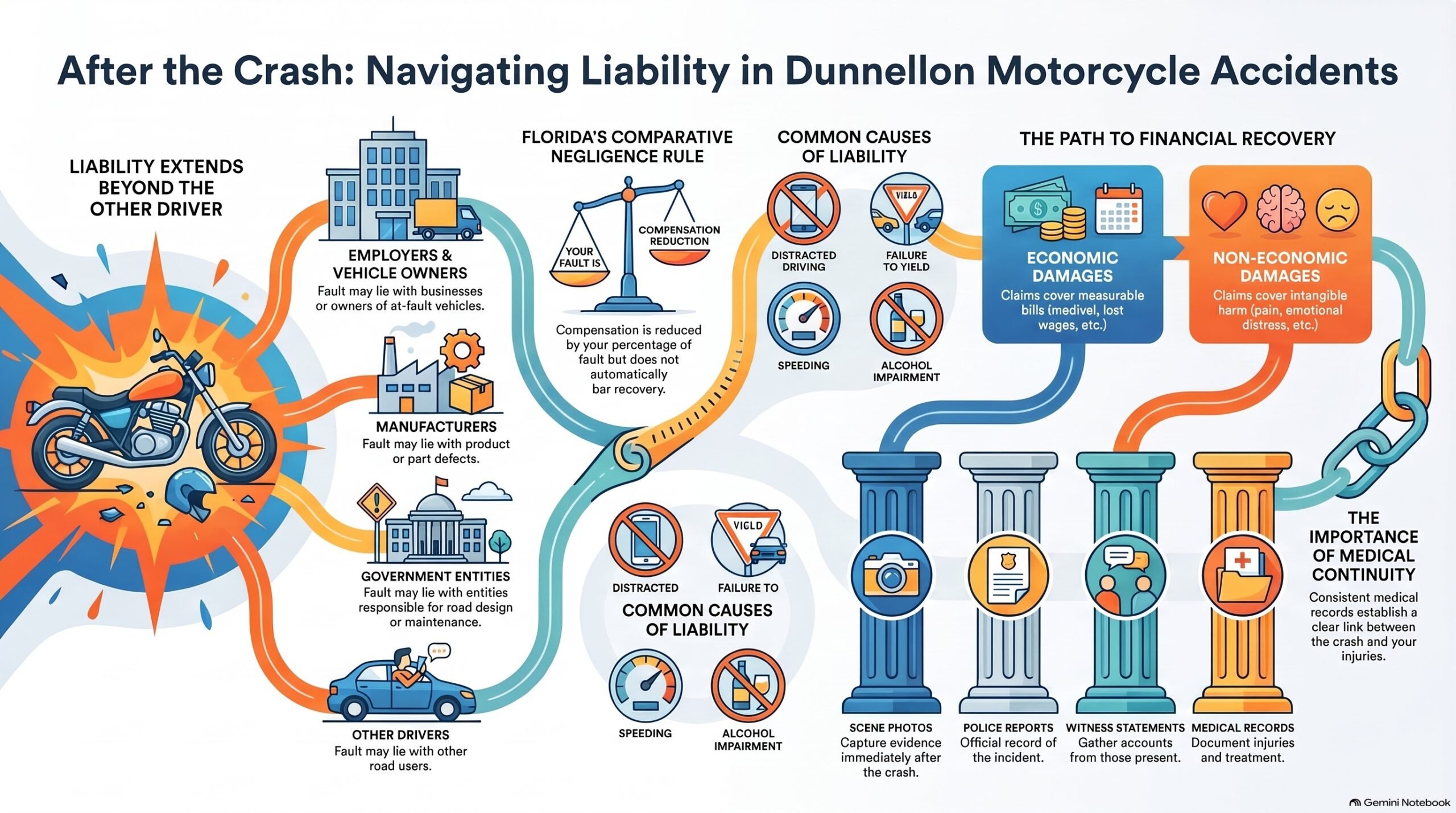
The Law Offices of Anidjar and Levine helps investigate Dunnellon motorcycle accidents to identify every potentially at-fault party, including drivers, employers, vehicle owners, manufacturers, and government entities. The investigation may involve crash reports, photographs, witness statements, surveillance footage, vehicle data, roadway conditions, and medical records. Florida comparative negligence rules may reduce compensation according to a rider’s assigned responsibility but do not automatically eliminate recovery. Legal counsel can preserve evidence, address insurance disputes, and pursue damages for treatment, lost income, pain, and future care. Learn more from a Dunnellon Personal Injury Lawyer about available legal options.
Main Takeaways
- A Dunnellon motorcycle accident lawyer investigates drivers, employers, vehicle owners, manufacturers, and government entities that may share liability.
- Evidence may include crash reports, photographs, witness statements, surveillance video, vehicle data, medical records, and roadway conditions.
- Common causes include distracted driving, speeding, impaired driving, unsafe lane changes, failure to yield, and hazardous road conditions.
- Florida comparative negligence may reduce compensation based on the rider’s assigned percentage of fault, but does not automatically bar recovery.
- Potential compensation can include medical expenses, future care, lost income, reduced earning capacity, property damage, pain, and household assistance.


How We Can Help With Your Dunnellon Motorcycle Accident At-Fault Parties Injury Claim
A Dunnellon motorcycle accident at-fault-party lawyer can help an injured motorcyclist identify all potentially liable parties, gather evidence, and pursue compensation through negotiation or litigation. The lawyer may review collision reports, photographs, witness accounts, insurance records, and roadway conditions to determine how negligence contributed to the incident. Evidence preservation is crucial because damaged vehicles, surveillance recordings, electronic data, and physical conditions can change or disappear. Counsel can send preservation requests and coordinate inspections when appropriate.
The legal team may also organize medical documentation, including emergency records, diagnostic results, treatment notes, prescriptions, and prognosis statements. This information helps establish the nature of injuries and supports a clear account of necessary care. Communication with insurers can be handled on the client’s behalf, reducing the risk of incomplete statements or premature settlement decisions. By evaluating available coverage, calculating documented losses, and maintaining orderly claim records, the lawyer can support an informed resolution while keeping the injured motorcyclist’s recovery and long-term needs central to the process.
OUR CONSULTATIONSARE FREE
START YOUR FREE CASE REVIEW

Understanding Dunnellon Motorcycle Accident At-Fault Parties Injury Cases
When a motorcycle crash occurs in Dunnellon, determining which parties may be legally responsible requires a careful review of the facts, applicable traffic laws, and available evidence. An injury case may involve another driver, an employer, a vehicle owner, a manufacturer, or a government entity, depending on the documented circumstances. Investigators and attorneys may examine crash reports, photographs, medical records, witness accounts, and roadway evidence to establish Fault Allocation.
Florida’s Comparative Negligence rules can reduce compensation when an injured rider shares responsibility, making accurate fact development crucial. Insurance Liability may extend beyond the immediately involved driver, particularly when coverage, employment relationships, or defective equipment are disputed. A careful review also identifies deadlines, available policies, and damages related to treatment, lost income, and continuing limitations.
Legal professionals serving injured individuals often use this information to develop a practical Settlement Strategy. Their objective is to present supported claims, communicate respectfully, and pursue fair accountability while preparing for litigation if negotiations do not provide adequate compensation.
Common Causes of Dunnellon Motorcycle Accident At-Fault Parties
Common causes of Dunnellon motorcycle accidents include distracted driving, speeding, reckless maneuvers, and failure to yield the right of way. Impaired driving under the influence of alcohol or drugs may also substantially increase collision risks and support an at-fault determination. Identifying the specific conduct involved is crucial when evaluating liability and potential legal claims.
Distracted Driving
Distracted driving is a significant cause of motorcycle collisions in Dunnellon, particularly when motorists divert their attention from traffic, road conditions, or surrounding riders. Common distractions include texting, adjusting navigation systems, eating, reaching for objects, and engaging with passengers. Because motorcycles occupy a smaller visual field, even brief inattention can prevent a driver from recognizing a rider, judging distance, or responding to a lane change. Investigations may examine phone records, vehicle data, witness statements, traffic-camera footage, and admissions concerning device use. Florida’s restrictions on wireless communication can make texting violations relevant when determining whether a motorist breached a duty of care. Although hands-free enforcement may limit certain device-related conduct, hands-free calls can still impair awareness. Documenting these facts supports accountability and helps injured riders pursue appropriate assistance.
Speeding And Reckless Driving
Speeding and reckless driving can substantially increase the severity and likelihood of motorcycle collisions in Dunnellon. Excessive speed reduces a driver’s reaction time, lengthens stopping distance, and intensifies the force transferred during impact. Aggressive driving actions, rapid lane changes, racing, and driving while impaired may further compromise roadway safety. These behaviors can endanger motorcyclists, who have limited physical protection and may suffer severe injuries even in brief collisions. Law enforcement may issue speeding penalties or pursue additional charges when conduct demonstrates disregard for public safety. Evidence may include traffic citations, crash reconstruction findings, surveillance footage, vehicle data, and witness accounts. A careful investigation can help identify responsible parties and support injured individuals seeking medical care, financial assistance, and accountability. Distracted texting may compound the dangers of speeding by diverting attention from changing traffic conditions.
Failure To Yield
When a motorist fails to yield the right of way, a motorcycle collision can occur with little opportunity for the rider to avoid impact. Intersections, turning lanes, and merging areas require careful compliance with Right of Way rules, particularly because motorcycles may be less visible than larger vehicles. Drivers who turn across an approaching motorcycle, enter traffic without adequate clearance, or proceed through an intersection prematurely may create a dangerous conflict. Stop sign failures are another frequent cause, especially when a driver rolls through a sign or misjudges the rider’s distance and speed. Investigators may examine traffic signals, witness accounts, vehicle damage, roadway markings, and available video to determine whether a driver disregarded another road user’s priority. Establishing these facts can help affected individuals pursue appropriate support and accountability.
Driving Under the Influence
Alcohol or drug impairment can cause a motorist to overlook a motorcycle’s presence, misjudge its speed, or respond too slowly to changing traffic conditions. Impaired driving may involve alcohol, prescription medication, or illicit substances, each of which can diminish judgment, coordination, and attention. When a collision occurs, evidence of impairment may help establish fault and support an injured motorcyclist’s effort to obtain appropriate compensation. Investigators may review witness accounts, surveillance footage, vehicle data, and police reports. Sobriety checkpoint laws govern how officers may conduct certain roadside screenings, while DUI BAC testing can provide evidence of alcohol concentration when administered according to applicable procedures. Although a criminal charge is not required for a civil claim, timely preservation of records remains important. Legal professionals can help injured individuals and families understand their rights and serve their interests responsibly.
Don’t Wait. Call Our Florida Personal Injury Lawyers Now!


Legal Rights of Dunnellon Motorcycle Accident At-Fault Parties Injury Victims
Although a motorcyclist may be found partly or primarily at fault for a Dunnellon collision, that determination does not automatically eliminate the injured person’s legal rights. Florida’s comparative-fault rules may reduce compensation according to the person’s assigned percentage of responsibility, while still permitting recovery in qualifying circumstances.
An injured at-fault party may pursue compensation for documented losses by focusing on:
- Medical treatment, rehabilitation, medication, and related future care.
- Lost income, reduced earning capacity, and necessary household assistance.
- Property damage, pain, and other legally recognized damages.
Proving Fault requires a complete review of collision evidence, medical records, witness accounts, and insurance positions. Legal counsel can also assess whether another driver, vehicle owner, manufacturer, roadway entity, or insurer shares responsibility. Prompt preservation of evidence is important because physical conditions and recollections may change. A careful Settlement Strategy should account for comparative fault, available coverage, long-term medical needs, and litigation risks. Serving the injured person’s interests requires candid guidance, ethical advocacy, and protection against unsupported liability allegations.
Why Do Dunnellon Motorcycle Accident At-Fault Parties Injuries Happen?
Understanding why injuries occur can help clarify the facts behind disputed liability in a Dunnellon motorcycle accident. Crashes may result from a driver’s failure to yield, unsafe lane changes, distracted driving, speeding, or impaired judgment. Motorcyclists can also face hazards when a vehicle’s size or position makes them difficult to detect, particularly at intersections and during turns.
Weather and visibility can materially influence collision risks. Rain, fog, glare, darkness, and strong winds may reduce sight distance, obscure motorcycles, or affect vehicle control. These conditions do not automatically establish fault, but they can help explain how an accident developed.
Other road condition factors include potholes, loose gravel, uneven pavement, standing water, inadequate lighting, and unclear lane markings. Mechanical defects, improper motorcycle maintenance, and inadequate protective equipment may further affect injury severity. A careful evaluation considers each person’s conduct, roadway design, environmental conditions, and the sequence of events, rather than assuming that an injured motorcyclist caused the harm.
What Should You Do After a Dunnellon Motorcycle Accident At-Fault Party Injury?
After a Dunnellon motorcycle accident injury, the injured motorcyclist should seek immediate medical care, even when symptoms initially appear minor. Accident details should be documented through medical records, photographs, witness information, and the official report. The motorcyclist should also contact a motorcycle injury lawyer to evaluate potential claims and protect applicable legal rights.
Seek Immediate Medical Care
Prompt medical evaluation is important after a Dunnellon motorcycle accident, even if the injured person believes the injuries are minor. A qualified healthcare professional can identify fractures, internal injuries, head trauma, or soft-tissue damage that may not appear immediately. The injured person should follow emergency instructions, attend recommended appointments, and accurately describe symptoms, medications, and prior conditions. Timely treatment may reduce complications, support recovery, and establish a clear medical record of accident-related harm. Providers can explain Pain management options while monitoring warning signs that require urgent attention. Medical bills and treatment decisions should be preserved for review, particularly if an insurer later questions the necessity of the care. An attorney may assist with an insurance denial appeal when benefits are refused, helping protect access to appropriate treatment without disrupting recovery.
Document The Accident
At the accident scene, the injured motorcyclist should document conditions that may help establish how the collision occurred and identify the responsible parties. If medically able, the rider should photograph vehicle positions, roadway markings, traffic signals, debris, visible injuries, helmet damage, and weather or lighting conditions. Images should capture both close details and wider surroundings. Witnesses’ names, contact information, and brief statements may support later fact-finding, while responding officers’ agency and report information should be recorded. The rider should preserve damaged clothing, protective equipment, and motorcycle components without altering them. A written account completed promptly can assist with Crash timeline reconstruction, including events before, during, and after impact. Medical records and symptom notes also support documentation of hidden injuries, particularly when pain or impairment develops gradually rather than immediately.
Contact A Motorcycle Injury Lawyer
A Dunnellon motorcycle accident lawyer can evaluate the available evidence, identify potentially liable parties, and protect the injured rider’s legal interests while claims are investigated. Prompt consultation may help preserve surveillance footage, vehicle data, witness accounts, medical records, and other evidence that could establish fault or support a damages claim. During the initial meeting, the rider should understand what to bring to the consultation, including the crash report, photographs, insurance correspondence, medical bills, treatment records, and employment documentation showing lost income. Counsel can assess claims involving drivers, vehicle owners, employers, manufacturers, road authorities, or insurers. If an insurer denies responsibility or undervalues the injury, the lawyer may advise on Insurance denial appeals and available litigation options. Professional guidance also helps coordinate communications, reduce procedural errors, and advance a fair resolution for the injured person.
Critical Evidence in a Dunnellon Motorcycle Accident At-Fault Parties Injury Case
Establishing liability may depend on preserving and reviewing several categories of evidence:
- Accident scene photos and police crash report
- Witness statements;
- Medical treatment records.
Together, these materials can clarify how the collision occurred, identify potentially responsible parties, and document the resulting injuries and losses.
Accident Scene Photos
Photographs taken at the Dunnellon motorcycle accident scene can provide critical evidence when determining which parties may be legally responsible for a rider’s injuries. Images may preserve vehicle positions, roadway conditions, traffic signals, lane markings, debris, visibility concerns, and property damage before conditions change. Close-up photographs of a motorcycle’s impact points can help link injuries and repair costs to the circumstances of the collision. Wide-angle images may show sightlines, construction hazards, inadequate lighting, or obstructions that contributed to the incident. A rider or witness should photograph details from multiple angles when safely possible, while avoiding interference with emergency efforts. Original files, timestamps, and storage information can support authenticity. This photographic evidence may assist with liability analysis and damages documentation, helping a legal team advocate responsibly for an injured person’s recovery.
Police Crash Reports
Police crash reports provide an official account of the circumstances surrounding a Dunnellon motorcycle accident and may identify individuals or entities whose conduct contributed to the injuries. Officers typically record roadway conditions, vehicle positions, apparent damage, citations, and statements made during the initial investigation. These details can help establish whether a driver failed to yield, followed too closely, or committed traffic signal violations. The report may also note available Dashcam footage, surveillance recordings, or other evidence that can be preserved and reviewed. Although a police report is important, it may contain preliminary conclusions or incomplete information and does not automatically determine legal responsibility. An attorney serving injured motorcyclists can compare the report with medical records, physical evidence, and applicable traffic laws to evaluate liability and protect the injured person’s interests.
Witness Statements
When available, witness statements can provide important evidence in a Dunnellon motorcycle accident injury case by describing what occurred before, during, and after the collision. Independent observers may clarify vehicle speeds, traffic signals, lane positions, visibility, and driver conduct when physical evidence is incomplete or disputed. Their accounts can help identify potential at-fault parties and reveal inconsistencies in other versions of events. Eyewitness credibility depends on factors such as the person’s location, attention, opportunity to observe, consistency, and relationship to anyone involved. A lawyer may obtain contact information, promptly record statements, and preserve relevant communications or recordings. Careful statement preservation reduces the risk of memories changing over time. Witnesses should provide truthful, firsthand information without speculation, while legal representatives can organize these accounts for responsible evaluation and advocacy.
Medical Treatment Records
Medical treatment records provide objective evidence of the injuries sustained in a Dunnellon motorcycle accident and the care required afterward. Emergency evaluations, diagnostic images, prescriptions, therapy notes, and physician opinions can establish the connection between the collision and ongoing limitations. Consistent records also help document pain, functional loss, recommended treatment, and likely future medical needs. When organized with other accident documentation, these materials may clarify how injuries developed, even when property damage appears limited. Timely collection is important because insurance timelines can affect claim evaluation and settlement discussions. Complete records may also address coverage disputes by showing necessary services, treatment dates, and medical expenses. A legal representative can help preserve relevant information, identify gaps, and present it respectfully while seeking accountability and appropriate support for the injured individual.
Don’t Wait. Call Our Florida Personal Injury Lawyers Now!
Long-Term Effects of Dunnellon Motorcycle Accident At-Fault Parties Injuries
Long-term motorcycle accident injuries may cause chronic pain, reduced mobility, and lasting limitations on work or daily activities. Survivors may also experience emotional and mental health effects, including anxiety, depression, or trauma-related symptoms. Continuing treatment, rehabilitation, and lost income can create substantial medical and financial burdens for injured individuals and their families.
Chronic Pain and Mobility Loss
Chronic pain and mobility loss can persist long after a Dunnellon motorcycle accident, particularly when the at-fault party’s conduct causes fractures, nerve damage, spinal injuries, or severe soft-tissue trauma. These conditions may limit walking, lifting, driving, employment, and ordinary household responsibilities. Medical providers can evaluate lasting impairments and develop Pain management options tailored to the injured person’s diagnosis, including medication, injections, rehabilitation, or appropriate surgical care. Physical and occupational experts may also establish mobility therapy plans to improve strength, balance, flexibility, and safe movement. Assistive devices, home modifications, and continued treatment may be necessary when recovery remains incomplete. Documentation of symptoms, appointments, restrictions, and related expenses can help demonstrate the injury’s long-term effects. Legal counsel may assess whether responsible parties must provide compensation for treatment, reduced earning capacity, and necessary future care.
Emotional and Mental Health Effects
Emotional and mental health effects may accompany the physical limitations caused by a Dunnellon motorcycle accident, especially when injuries disrupt independence, employment, relationships, or routine activities. Survivors may experience post-traumatic stress, including intrusive memories, heightened alertness, sleep disturbances, or avoidance of motorcycles and road travel. Persistent symptoms can affect concentration, confidence, and participation in community life. Relationship strain may develop when family members struggle to understand changing needs, emotional reactions, or reduced availability. Qualified mental health professionals can assess these concerns and recommend coping strategies tailored to each person’s circumstances. Counseling, trauma-focused treatment, peer support, and structured routines may assist anxiety recovery and restore a sense of control. Compassionate support from relatives, caregivers, and community organizations can encourage participation in treatment while respecting personal autonomy and privacy.
Ongoing Medical and Financial Burdens
Medical and financial burdens often continue after a Dunnellon motorcycle accident, particularly when injuries require surgery, rehabilitation, medication, assistive devices, or recurring expert care. These needs may limit employment, reduce household income, and create expenses that persist long after insurance payments begin. Affected individuals may also need transportation, home modifications, counseling, or future treatment for complications and permanent impairments. Careful bill documentation helps establish the full scope of past and anticipated costs, including receipts, medical records, wage statements, and provider estimates. During adjuster negotiations, insurers may question treatment, causation, or projected expenses, making organized evidence critical. A Dunnellon motorcycle accident at-fault-party lawyer can coordinate medical evaluations, consult with financial experts, and present a claim that accounts for ongoing care, lost earning capacity, and the practical assistance required for long-term recovery.
Proving Liability in Dunnellon Motorcycle Accident At-Fault Parties Injury Cases
Proving liability in a Dunnellon motorcycle accident injury case requires evidence showing that another party’s negligence caused the collision and resulting damages. Investigators may examine traffic signals, roadway conditions, witness statements, and police reports to establish how the crash occurred. Photographs of vehicle positions, skid marks, property damage, and visible injuries can help connect the negligent conduct to the incident.
Surveillance footage from nearby businesses, residences, or traffic systems may provide an objective account of the events. Vehicle maintenance records can reveal whether defective brakes, tires, lighting, or other mechanical problems contributed to the collision. In some cases, an attorney may consult accident reconstruction experts to analyze speed, visibility, timing, and impact patterns.
Medical records and employment documentation can further demonstrate the extent of injuries and resulting losses. Prompt preservation of evidence is important because footage may be overwritten, vehicles may be repaired, and witnesses’ recollections can fade. Careful preparation supports accountability and helps injured individuals pursue appropriate remedies.
Dealing With Insurance Companies After a Dunnellon Motorcycle Accident At-Fault Parties Injury
After a Dunnellon motorcycle accident, how an injured person communicates with insurance companies can significantly affect the available recovery. A claimant should provide accurate basic information, avoid speculation, and refrain from making recorded statements or signing releases until they understand their significance. Insurers may seek statements that minimize injuries, shift responsibility, or characterize treatment as unrelated. A careful response protects both the claimant and those assisting with the claim.
Insurance claim timelines should be monitored from the date of notice, including requests for information, policy deadlines, and communications concerning available coverage. Timely, organized responses can prevent avoidable delays while preserving an accurate record. The injured person should maintain documentation of medical costs, such as invoices, prescription receipts, treatment summaries, and mileage records. Employment records may also substantiate lost income. All communications should remain courteous and factual. A lawyer can communicate with adjusters, identify inadequate settlement positions, and help ensure that necessary evidence is preserved without prematurely resolving the claim.
What to Expect During a Dunnellon Motorcycle Accident At-Fault Parties Injury Claim Process
The claim process typically begins with an initial assessment of the accident, injuries, insurance coverage, and potential at-fault parties. Counsel then coordinates the collection of evidence, including medical records, crash reports, witness accounts, and other documentation, before addressing liability through negotiations with insurers and opposing parties. Depending on the available evidence and settlement offers, the matter may be resolved through settlement or proceed to trial.
Initial Claim Assessment
An initial claim assessment determines how a Dunnellon motorcycle accident injury case may proceed and which parties could bear financial responsibility. During this phase, a legal professional reviews the client’s account, the circumstances of the injury, treatment status, and immediate financial concerns. Medical documentation helps clarify diagnoses, required care, recovery expectations, and whether reported injuries are consistent with the claimed incident. A coverage review examines potentially applicable insurance policies, limits, exclusions, and the roles of involved drivers, vehicle owners, employers, or other responsible entities. The assessment also considers filing deadlines, comparative fault, and whether early communication with insurers could influence the claim. The injured person may receive guidance about preserving treatment records, avoiding unsupported statements, and directing settlement discussions through appropriate representation. This structured evaluation helps ensure that assistance remains responsive, ethical, and focused on legitimate recovery.
Evidence Collection Process
How evidence is gathered can substantially affect how liability and damages are evaluated in a Dunnellon motorcycle accident claim. An attorney may promptly inspect the crash location, photograph roadway conditions, document vehicle damage, and identify available witnesses. Collecting physical evidence can include securing helmet damage, clothing, motorcycle components, and relevant traffic-control materials before they are repaired, discarded, or altered. Investigators may also obtain collision reports, medical records, employment documentation, and photographs showing injuries and property loss. Preserving digital data is equally important. This may involve requesting surveillance footage, obtaining vehicle or smartphone records when legally permitted, and saving communications related to the incident. Each item is cataloged, dated, and maintained with its source identified. Careful preservation of evidence helps clarify events and supports an accurate assessment of the injury claim.
Liability Negotiations
Once available evidence has been organized, liability negotiations typically begin with a demand that identifies the alleged at-fault parties, explains the basis for responsibility, and details the claimant’s injuries and losses. Insurers or opposing representatives review police reports, witness statements, medical records, photographs, and applicable traffic rules before responding. Discussions may address disputed facts, causation, damages, and whether additional parties share responsibility. Comparative negligence can affect the amount sought if the claimant’s conduct allegedly contributed to the collision, making accurate evidence especially important. Counsel may explain a settlement strategy, communicate professionally, and protect the claimant from premature concessions or misleading statements. Throughout this stage, the process should remain focused on fair accountability and practical assistance for an injured person, while preserving documentation and ensuring that communications accurately reflect the circumstances of the claim.
Settlement Or Trial
Settlement or trial generally follows liability negotiations when the parties have assessed the available evidence, the claimant’s damages, and the likelihood of proving responsibility in court. A settlement may provide compensation sooner, reduce uncertainty, and spare witnesses from extended litigation. Its terms should address medical expenses, lost income, property damage, future care, and any release of claims.
When liability remains contested, or an insurer offers inadequate compensation, the claimant may proceed toward trial. A sound Liability disputes strategy includes preserving photographs, medical records, witness statements, police reports, and expert opinions. Counsel also evaluates comparative negligence and the conduct of each potentially responsible party. Court timeline expectations should include filing deadlines, discovery, mediation, motions, and possible appeals. Throughout the process, the representative should communicate clearly, protect the claimant’s interests, and pursue a fair resolution that supports recovery and accountability.
Compensation for Dunnellon Motorcycle Accident At-Fault Parties Injury Damages
Compensation for injury damages in a Dunnellon motorcycle accident depends on the nature and severity of the injuries, the available insurance coverage, and the evidence establishing fault. A careful evaluation should address emergency treatment, ongoing care, rehabilitation, medication, and limitations affecting daily activities. Medical records, photographs, witness accounts, employment documentation, and accident reports can help establish the extent of harm and support a fair claim.
A Settlement demand strategy should present organized evidence, explain liability, and identify the compensation sought without overstating the facts. Counsel may also pursue applicable coverage from responsible drivers, motorcycle policies, or other potentially liable parties. Future medical valuation requires qualified medical opinions regarding anticipated treatment, monitoring, assistive equipment, or additional procedures. Because injuries can evolve after an accident, premature resolution may leave necessary care unfunded. A lawyer serving injured community members can coordinate medical documentation, communicate with insurers, and negotiate from an informed position. When negotiations fail, the evidence may support formal litigation and judicial review of the claim.
Economic vs Non-Economic Damages in Dunnellon Motorcycle Accident At-Fault Parties Cases
Economic damages include measurable losses such as medical expenses, lost wages, property damage, and future treatment costs. Non-economic damages address less tangible harm, including pain, emotional distress, and diminished quality of life, which require careful valuation. Proving motorcycle accident losses typically depends on medical records, financial documentation, testimony, and other evidence connecting the damages to the at-fault party’s conduct.
Economic Damages Explained
A Dunnellon motorcycle accident claim may involve several categories of damages, depending on the injuries, losses, and conduct of the parties involved. Economic damages compensate for objectively documented financial harm caused by the collision. These losses may include emergency treatment, hospitalization, surgery, medication, rehabilitation, follow-up care, and necessary medical equipment. Medical cost calculation generally reviews bills, insurance payments, treatment records, and reasonably anticipated future care. Property damage, including motorcycle repair or replacement and damaged protective gear, may also qualify. Lost earnings estimates assess wages missed during recovery and potential income reductions due to lasting work limitations. Records such as pay statements, tax documents, employment information, and medical evaluations can support these calculations. Accurate documentation helps injured individuals and their families pursue fair reimbursement while presenting a clear, verifiable claim.
Non-Economic Damages Valued
Beyond documented financial losses, a Dunnellon motorcycle accident claim may address non-economic damages for the physical pain, emotional distress, and reduced quality of life caused by the collision. These damages do not have fixed price tags, so valuation considers injury severity, treatment duration, enduring limitations, and disruptions to relationships, recreation, employment, and daily independence. Pain severity documentation can help convey how symptoms affect ordinary activities and emotional well-being. A serious injury requiring prolonged recovery may justify greater compensation than a temporary condition. The conduct of responsible parties and the permanence of impairment may also influence the assessment. Insurance coverage limits can restrict available recovery, even when harm is substantial. Careful evaluation helps ensure that an injured motorcyclist’s dignity, independence, and continuing needs receive meaningful consideration during settlement discussions or litigation.
Proving Motorcycle Accident Losses
Proving motorcycle accident losses in a Dunnellon claim requires organized evidence that connects each injury, expense, and personal hardship to the collision and the at-fault party’s conduct. Economic damages may include emergency care, rehabilitation, medication, motorcycle repairs, transportation, lost wages, and reduced future earning capacity. Medical records, invoices, employment statements, repair estimates, and receipts provide critical documentation of damages. A careful loss calculation should separate amounts already incurred from reasonably expected future costs and should account for available insurance benefits without overstating the claim. Non-economic damages address pain, emotional distress, diminished enjoyment of life, disfigurement, and limitations on family or community service. Testimony from the injured person, relatives, employers, and treating professionals can demonstrate these effects. Clear timelines and consistent evidence help establish causation, credibility, and fair compensation.
Don’t Wait. Call Our Florida Personal Injury Lawyers Now!
When a Dunnellon Motorcycle Accident At-Fault Parties Injury Case Goes to Trial vs. Settlement
When liability, damages, and available insurance coverage are disputed, a Dunnellon motorcycle accident injury case may proceed to trial rather than settle. Settlement discussions can resolve a claim privately, reduce delay, and provide predictable compensation without requiring testimony. However, an offer may not adequately address medical needs, lost income, property damage, or the need for continuing assistance, particularly when the responsible parties contest the claimed losses.
Trial preparation requires organized evidence, witness coordination, expert consultation, and clear presentation of the injured rider’s circumstances. Jury selection strategy can help identify impartial jurors who will evaluate testimony and records carefully. Trial timeline planning also helps the legal team, client, and supporting witnesses prepare for hearings, discovery deadlines, motions, and the trial itself.
A trial may produce a favorable verdict, but it also carries uncertainty, expense, and additional time. A settlement remains possible before or during trial if the parties reassess their positions. Counsel generally explains both paths so the injured person can make an informed decision focused on recovery and long-term stability.
Florida Laws That May Affect Your Dunnellon Motorcycle Accident At-Fault Parties Case
Florida law can substantially shape how a Dunnellon motorcycle accident claim is investigated, valued, and resolved. Several rules may influence liability, available compensation, and the evidence required to support an injured person’s claims.
- Comparative Negligence: Florida may reduce a motorcyclist’s recovery when the injured rider shares responsibility for the collision. A careful investigation can examine speed, lane position, visibility, helmet use, and each driver’s conduct before assigning fault.
- Evidence and Insurance Requirements: Police reports, medical records, photographs, witness statements, and vehicle data can clarify disputed facts. Florida’s insurance rules may also affect coverage, including limitations on personal injury protection and uninsured or underinsured motorist benefits.
- Statute Tolling: Certain legal circumstances may pause or alter a filing deadline, but tolling is fact-specific and should not be assumed. Prompt consultation helps preserve evidence, identify responsible parties, and protect the interests of those needing medical care, financial stability, and fair treatment.
A qualified attorney can explain how these laws apply to the specific crash and coordinate a thorough, service-oriented response.
The Statute of Limitations for Dunnellon Motorcycle Accident At-Fault Parties Injury Cases
A statute of limitations sets the deadline for filing a Dunnellon motorcycle accident injury lawsuit against parties whose negligence may have caused the crash. In Florida, the applicable period commonly depends on when the injury occurred, the parties involved, and whether the claim is pursued under state or federal law. Recent legislative changes may affect deadlines, so relying on general assumptions can jeopardize a valid claim.
A lawsuit filed after the limitations period expires may be dismissed, even when evidence strongly supports liability. Exceptions can apply, including circumstances involving minors, delayed discovery, or claims against governmental entities, which may require earlier notice. Comparative fault defenses can also affect the case because allegations that an injured rider contributed to the collision may reduce recoverable damages under Florida’s rules.
Prompt preservation of medical records, crash reports, witness information, and repair documentation supports informed evaluation. Settlement timeline estimates should not be mistaken for filing deadlines; negotiations generally do not extend the limitations period unless legally recognized circumstances apply. Timely legal review helps protect available remedies and promotes responsible service to injured individuals.
How a Dunnellon Motorcycle Accident At-Fault Parties Lawyer Can Help You
Timely legal review allows a Dunnellon motorcycle accident at-fault-party lawyer to evaluate potential defendants, preserve evidence, and identify the filing deadlines governing the claim. Counsel can serve injured individuals by developing an accurate account of what occurred and fairly pursuing responsible parties.
Timely legal review helps identify responsible parties, preserve critical evidence, and protect injured motorcyclists’ rights throughout the claims process.
- The lawyer may examine traffic reports, photographs, witness statements, vehicle damage, roadway conditions, and available surveillance to assess negligence.
- Counsel can explain Insurance claim timelines, communicate with adjusters, and organize medical records so that settlement discussions reflect documented losses rather than speculation.
- The lawyer may evaluate allegations concerning motorcycle helmet safety, visibility, maintenance, roadway design, or another driver’s conduct, while addressing comparative-fault arguments with evidence.
A legal representative can also calculate medical expenses, lost income, rehabilitation needs, and other recoverable damages. By coordinating information among clients, families, healthcare providers, insurers, and investigators, counsel helps protect the claim’s accuracy and supports an orderly process focused on accountability, service, and equitable compensation. This guidance may also reduce avoidable administrative burdens during recovery.
When to Contact a Dunnellon Motorcycle Accident At-Fault Parties Lawyer
Because evidence and legal deadlines can become more difficult to address with time, an injured motorcyclist should contact a Dunnellon motorcycle accident at-fault parties lawyer soon after the crash, particularly when fault is disputed or serious injuries are involved. Early guidance can help protect the rider’s interests while medical treatment continues and important decisions remain pending.
Prompt consultation allows counsel to review available records, identify responsible parties, and pursue evidence preservation before photographs, vehicle data, witness recollections, or roadway conditions become unavailable. A lawyer can also explain applicable statutes of limitations, which may limit the period for filing a claim or lawsuit. Insurance defenses may arise from allegations concerning speed, lane position, protective equipment, or comparative responsibility. Addressing those issues early can reduce avoidable complications.
Contacting us before providing a recorded statement, signing a release, or accepting payment may also protect future options. When liability and damages are sufficiently documented, counsel can assist with settlement negotiation while seeking a resolution that supports the injured person’s recovery and ability to serve family and community.
Why You Need an Experienced Dunnellon Motorcycle Accident At-Fault Parties Lawyer
An experienced Dunnellon motorcycle accident at-fault parties lawyer can identify all potentially responsible parties and develop a claim supported by reliable evidence. This may include negligent drivers, vehicle owners, employers, manufacturers, maintenance providers, or governmental entities whose conduct contributed to the collision.
Legal experience is especially valuable when liability involves disputed facts or multiple insurance policies. Through an Insurance coverage review, counsel can determine available benefits, identify exclusions, and pursue compensation from each applicable source without overlooking responsible parties. A lawyer can also coordinate Motorcycle evidence preservation, including photographs, electronic data, maintenance records, witness accounts, and damaged equipment before crucial information disappears.
Experienced representation helps protect an injured motorcyclist from premature statements, inadequate settlement offers, and tactics intended to shift blame. It also allows the claim to be organized around medical documentation, lost income, property damage, and future needs. By diligently serving the injured person’s interests, counsel supports a fair, fact-based resolution while reducing unnecessary burdens during recovery.
How to Choose the Right Dunnellon Motorcycle Accident At-Fault Parties Lawyer for Your Case
Selecting the right Dunnellon motorcycle accident at-fault parties lawyer requires more than reviewing general experience or advertising claims. A careful evaluation should consider the lawyer’s understanding of motorcycle collisions, Florida negligence rules, insurance procedures, and the practical needs of injured clients.
Strong Client communication is important. The lawyer should explain developments clearly, respond within reasonable timeframes, and ensure that the client understands the available options before making decisions. Fee transparency also warrants close attention. A written agreement should identify potential costs, payment arrangements, and any expenses that could affect recovery.
The lawyer’s case strategy should reflect the specific facts, including disputed liability, roadway conditions, vehicle damage, medical evidence, and comparative fault. Early preservation of evidence may protect photographs, witness accounts, electronic records, and accident reports before information is lost. Prospective clients can ask how the lawyer evaluates opposing parties, prepares negotiations, and approaches litigation if necessary. Selecting counsel through these standards helps injured individuals receive diligent, informed, and ethical representation throughout the claim.
About The Law Offices of Anidjar & Levine
The Law Offices of Anidjar & Levine represents individuals injured in motorcycle collisions and other serious accidents throughout Florida, including Dunnellon.
Its legal team examines the circumstances of the crash, identifies potentially responsible drivers, vehicle owners, manufacturers, employers, and other parties, and evaluates available insurance coverage.
For clients seeking a service-oriented advocate, the firm emphasizes communication, careful preparation, and informed decision-making.
Attorneys may investigate traffic violations, roadway conditions, vehicle defects, and negligent maintenance while consulting qualified professionals when specialized opinions are necessary.
Evidence preservation is an important part of this process because photographs, medical records, witness accounts, electronic data, and damaged equipment can help clarify how a collision occurred.
The firm also considers Comparative negligence when assessing a claim.
Florida’s fault rules may affect financial recovery if an injured motorcyclist is assigned a portion of responsibility.
By analyzing competing accounts and applicable law, the attorneys seek to present a well-supported position and pursue compensation for medical expenses, lost income, and related damages.
Frequently Asked Questions
Can I Still Recover Damages if I Was Not Wearing a Helmet?
A rider may still recover damages without a helmet, although compensation could be reduced. Florida’s Helmet Laws generally require approved headgear for riders under 21, while older riders may qualify for exceptions involving insurance coverage. Under Comparative Negligence principles, an insurer or a court may argue that failing to wear a helmet contributed to the head injuries, thereby assigning partial responsibility. The final recovery depends on the evidence, the causation of the injury, the applicable statutes, and the conduct of other involved parties.
What Happens if the At-Fault Motorcyclist Was Uninsured?
If the at-fault motorcyclist was uninsured, the injured person may pursue compensation through their own Uninsured coverage, if available under an automobile or motorcycle policy. This protection can help address medical expenses, lost income, and qualifying damages, subject to policy limits and Florida law. MedPay options may cover reasonable medical costs regardless of fault, although benefits are generally limited. A careful review of insurance policies and timely legal guidance can protect available recovery rights.
Can a Passenger File a Claim After a Dunnellon Motorcycle Accident?
Yes, a passenger may file a claim after a Dunnellon motorcycle accident if injuries resulted from another person’s negligence. Potential defendants can include the motorcycle operator, another driver, or an entity responsible for unsafe conditions. Fault Allocation determines which parties may owe compensation, while Passenger Liability issues may arise if the passenger’s conduct contributed to the incident. Evidence, insurance coverage, medical records, and applicable deadlines should be reviewed promptly by qualified counsel.
Are Motorcycle Accident Settlements Taxable in Florida?
Motorcycle accident settlements are generally not taxable in Florida when they compensate for physical injuries or related medical expenses. However, Florida IRS considerations may arise if a settlement includes punitive damages, interest, lost wages, or compensation unrelated to physical harm. The characterization and allocation of each payment can affect the taxability of personal injury. Because federal rules may apply despite Florida’s lack of state income tax, recipients should consult a qualified tax professional before accepting funds.
Can Family Members Pursue a Wrongful Death Claim After a Fatal Crash?
Yes, eligible family members may pursue a wrongful death claim after a fatal crash, although Florida law identifies specific wrongful death heirs and establishes priority for recovery. A personal representative generally files the action on behalf of the estate and survivors. Recoverable damages may include medical and funeral expenses, lost support, services, companionship, and other financial losses. Liability evidence, insurance coverage, and statutory deadlines can substantially affect the claim’s outcome.
—————————
Motorcycle accident claims in Dunnellon may involve multiple at-fault parties, disputed liability, and serious injuries.
An experienced personal injury lawyer can investigate the collision, identify responsible parties, preserve evidence, and pursue compensation for medical expenses, lost income, property damage, and pain and suffering.
Prompt legal guidance may help protect a victim’s rights when insurers dispute fault or undervalue damages.
The Law Offices of Anidjar and Levine can evaluate the circumstances and explain available legal options.
Learn more from a Dunnellon Personal Injury Lawyer.

