Law Offices of Anidjar and Levine helps injured victims identify fault, preserve evidence, manage insurer communications, and pursue compensation for medical costs, lost income, pain and suffering, and future care after intersection crashes. These cases often involve disputed right-of-way issues, signal violations, distracted driving, impaired driving, or shared fault under Florida comparative negligence rules.
Strong documentation can protect against liability and damages claims. The sections below explain how guidance from a Florida Car Accident Lawyer may support a stronger intersection accident claim.
Main Takeaways
- A Florida intersection car accident lawyer helps determine fault by reviewing police reports, witness statements, photos, signal data, and camera footage.
- Liability often depends on right-of-way violations, red-light violations, failure to yield, distraction, impairment, speeding, or unsafe turns.
- Florida comparative fault rules may reduce compensation if the injured person shares responsibility for the crash.
- Prompt medical care and documentation can protect injury claims, especially when symptoms are delayed or disputed.
- Legal support can manage insurer communications, preserve evidence, organize records, and pursue compensation for crash-related losses.


How We Can Help With Your Florida Intersection Car Accident Injury Claim
After an intersection collision, a Florida car accident injury lawyer can help an injured person identify the cause of the crash, preserve important evidence, and pursue compensation from the responsible party. This support often begins with a careful review of available facts, including police reports, witness statements, traffic signal data, and vehicle damage. The lawyer may guide the injured person in gathering photos of the scene, roadway markings, visible injuries, and property damage before conditions change.
A lawyer can also help organize Medical Records, treatment plans, billing statements, and employment information to document the full impact of the injury. By handling communication with insurers, the lawyer protects the person from statements that may be used unfairly. This service allows the injured person and supportive family members to focus on care, recovery, and practical needs while the claim is prepared with discipline, accuracy, and respect for the person’s long-term well-being and dignity.
OUR CONSULTATIONSARE FREE
START YOUR FREE CASE REVIEW

Understanding Florida Intersection Car Accident Injury Cases
When a collision occurs at a Florida intersection, the legal and factual issues often depend on the movement of each vehicle, the traffic control devices in place, and the conduct of every driver involved. These cases require careful review because multiple parties may share fault, and injuries can affect families, employers, and caregivers who depend on the injured person.
Intersection collision liability is evaluated through records such as crash reports, witness statements, photographs, medical findings, and available camera footage. Proving negligence generally requires showing that a driver failed to use reasonable care and that this failure caused harm. Florida law may also consider comparative fault, which can reduce recovery when an injured person shares responsibility.
Seatbelt injury impacts may become important when evaluating damages and safety compliance. A careful legal assessment helps identify the responsible parties, accurately measure losses, and support fair treatment for those harmed, while promoting accountability within the community after a serious intersection crash.
Common Causes of Florida Intersection Car Accidents
Florida intersection car accidents often result from preventable driver conduct, particularly when traffic signals, right-of-way rules, and surrounding conditions are disregarded. Common contributing factors include distracted driving, failure to yield, red-light running, and impaired driving, each of which can pose serious collision risks in high-traffic areas. Identifying the cause of an intersection crash is an important step in evaluating fault, injury claims, and potential legal recovery.
Distracted Driving
Because intersections require drivers to process traffic signals, lane changes, pedestrians, and opposing vehicles simultaneously, distracted driving can quickly create a serious risk of collision. A brief glance at a phone, navigation screen, or in-car message system may prevent a driver from noticing a changing light, stopped traffic, or a person entering a crosswalk.
Smartphone overuse remains a frequent concern, especially when drivers read texts, adjust applications, or record video while approaching busy crossings. These actions reduce reaction time and impair judgment at moments when careful attention is needed to protect others. Distracted pedestrians may also add intricacy, as they can step into traffic while looking down or wearing headphones. Responsible drivers are expected to anticipate hazards, maintain focus, and operate with care for public safety.
Failure To Yield
Even with attentive driving, intersection safety often depends on each motorist respecting the right-of-way rules that control turns, merging traffic, stop signs, and traffic signals. Failure to yield may occur when a driver turns left across oncoming traffic, enters a roadway from a side street, or proceeds without allowing pedestrians or bicyclists to pass safely.
These collisions can create serious harm for people who rely on careful drivers to protect shared community spaces. In injury claims, investigators review vehicle positions, witness accounts, signage, roadway markings, and timing to determine whether a driver acted reasonably. Right-of-way defenses may arise when fault is disputed, especially if both parties claim lawful movement. Florida’s comparative fault determination can reduce recovery when multiple drivers contributed to the crash.
Red Light Running
When a driver enters an intersection after a traffic signal has turned red, the resulting collision may involve vehicles traveling at full speed from multiple directions. These crashes often cause severe injuries because unsuspecting motorists, cyclists, and pedestrians may proceed lawfully through the intersection. Traffic signal violations can result from distraction, aggressive driving, or a misjudgment of the yellow-light interval.
In Florida, such conduct may support findings of negligence when it contributes to a preventable collision. Those who serve injured individuals should recognize how signal timing, witness statements, camera footage, and vehicle damage patterns may clarify fault. Intersection safety tips include slowing on approach, scanning cross traffic, and waiting briefly before entering after a light changes. Careful review helps protect victims and promote safer community travel.
Impaired Driving
Impaired driving often creates serious danger at Florida intersections, where alcohol, drugs, or certain medications can reduce a driver’s reaction time, judgment, and ability to recognize changing traffic signals. A driver who enters an intersection while impaired may fail to yield, turn improperly, or strike pedestrians, cyclists, or other motorists. Intersection safety depends on attentive decisions, lawful speeds, and the ability to respond quickly to hazards.
When impairment contributes to a crash, accident documentation becomes critical, including police reports, witness statements, photographs, and medical records. Vehicle maintenance may also be reviewed to determine whether the brakes, lights, or tires contributed to the collision. If an insurer ignores clear evidence or delays a valid claim, bad-faith insurance concerns may arise, requiring careful legal evaluation and advocacy.


Legal Rights of Florida Intersection Car Accident Injury Victims
Many Florida intersection crashes raise immediate questions about fault, insurance coverage, and the injured person’s right to compensation. Victims may have rights to pursue medical expenses, lost income, pain, suffering, and future care needs when another party’s conduct caused harm. Comparative negligence can affect recovery because compensation may be reduced by the injured person’s assigned share of responsibility. Fault allocation becomes crucial, especially when insurers attempt to deny coverage or minimize damages.
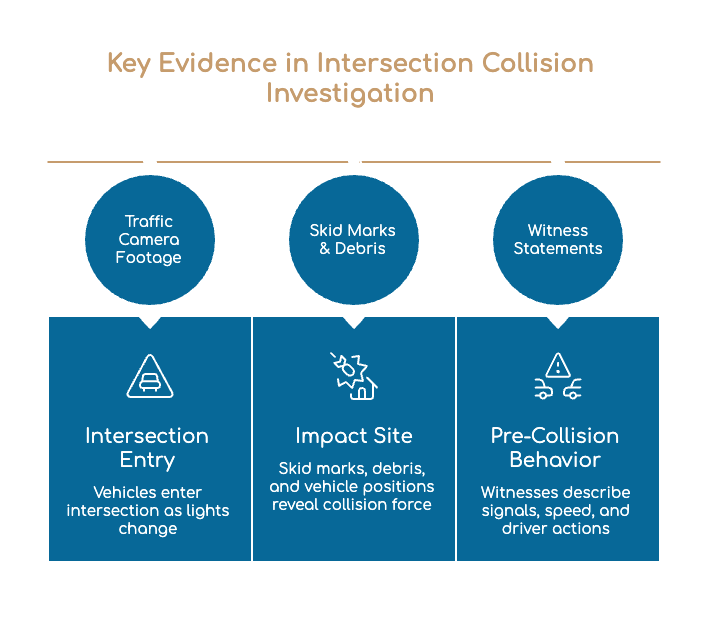
Effective advocacy often begins with evidence preservation, including:
- Traffic camera footage captures vehicles entering the intersection as the lights change.
- Skid marks, debris fields, and vehicle positions showing the force and direction of impact.
- Witness statements describing signals, speed, and driver behavior before the collision.
For those committed to protecting injured people, these rights support accountability and responsible care. Prompt legal guidance can help preserve claims, meet deadlines, and address insurer tactics with disciplined, well-documented action.
Why Do Florida Intersection Car Accident Injuries Happen?
Why do intersection crashes in Florida so often result in serious injuries? Intersections concentrate vehicles, pedestrians, cyclists, turning traffic, and changing signals into a confined space, leaving little room for error. When a driver misjudges speed, fails to yield, or enters a crossing without caution, the impact often occurs at an angle, exposing occupants to severe force.
Common causes include distracted driving, speeding, impaired driving, unsafe left turns, and poor weather visibility. Car signal violations, such as running red lights or ignoring stop signs, frequently create sudden conflicts that other road users cannot avoid. Disputes over intersection right-of-way also contribute to collisions, especially when drivers make assumptions rather than observing traffic controls.
These crashes may reflect preventable choices rather than random events. Understanding why they occur helps communities, caregivers, and safety advocates recognize risks and support injured people with informed, practical care after a serious roadway harm incident.
What Should You Do After a Florida Intersection Car Accident Injury?
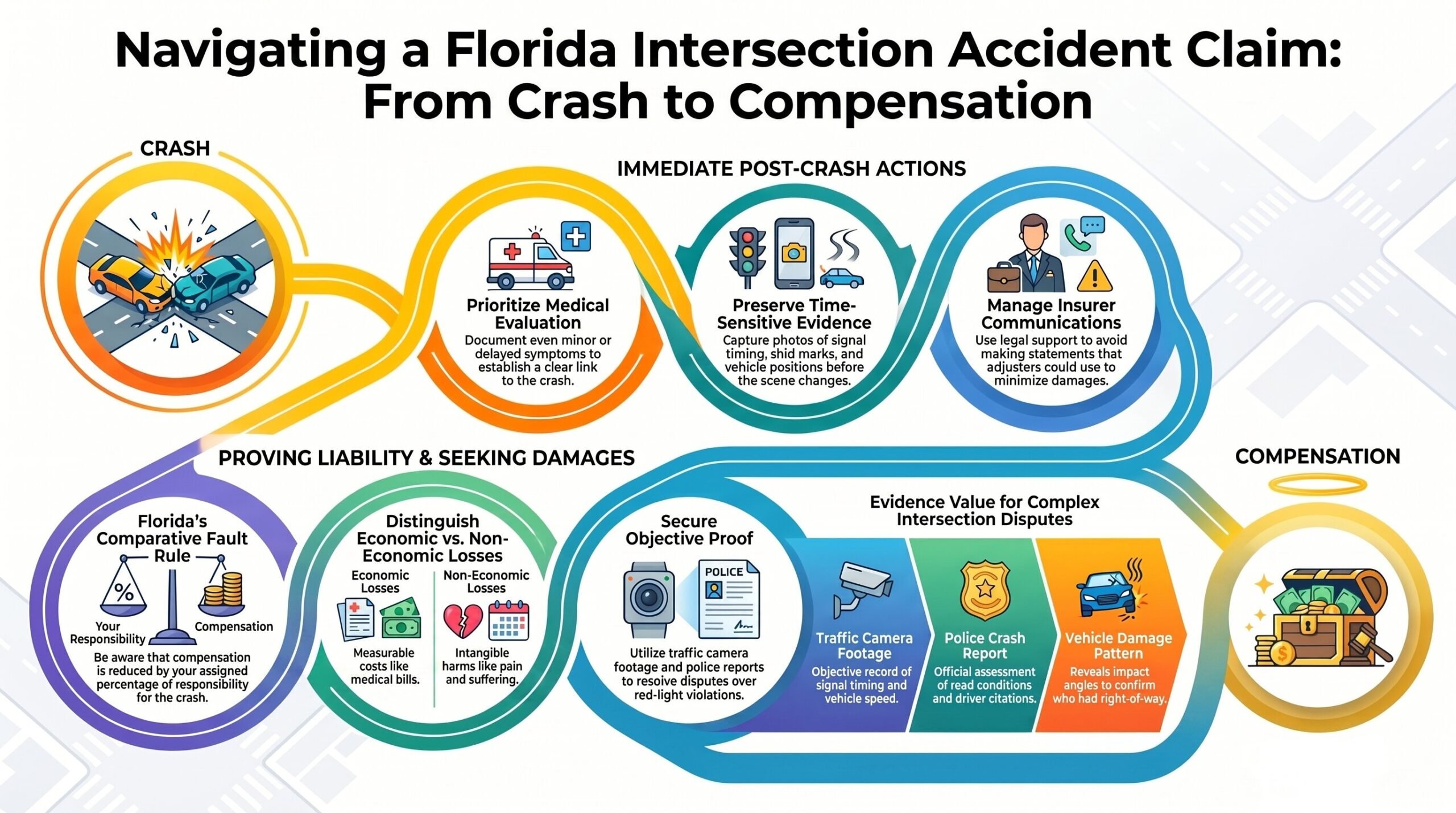
After a car accident at a Florida intersection, an injured person should first prioritize medical care, even if symptoms seem minor. The next step is to document accident evidence, including photographs, witness information, and relevant details about traffic signals or right-of-way issues. Promptly contacting legal help can also protect important rights, especially when fault, insurance coverage, or injury severity is disputed.
Prioritize Medical Care
A person injured in a Florida intersection crash should seek medical care as soon as possible, even when symptoms appear minor or delayed. Emergency medical evaluation can identify injuries that are not immediately visible, including concussion, internal trauma, soft tissue damage, or spinal injury. Prompt treatment also supports recovery, helping the injured person regain stability and continue caring for family, work responsibilities, and community obligations.
Medical providers play an important role in evaluating pain, mobility limits, dizziness, confusion, and other concerns. Documenting symptoms during each appointment creates a clear health record and helps ensure that changes in condition receive proper attention. A person should follow treatment instructions, attend recommended follow-up visits, and report any new or worsening symptoms promptly to protect both health and long-term well-being.
Document Accident Evidence
When it is safe to do so, an injured person should begin preserving evidence from the Florida intersection crash before conditions change or details are lost. Photographs and video should capture vehicle positions, traffic signals, skid marks, debris, lighting, weather, lane markings, and visible injuries. Images of road hazards, obstructed signs, malfunctioning signals, or Negligent maintenance may help explain how the collision occurred.
Witness names, phone numbers, and brief statements should be recorded respectfully, without pressuring anyone. The person should also keep damaged property, medical discharge papers, insurance communications, and any written recollection of events. If police respond, the report number should be noted. Careful documentation supports accurate evaluation, protects the truth, and helps responsible parties understand the full impact on those harmed and their families.
Contact Legal Help
Prompt legal guidance can help an injured person protect important rights following a Florida intersection car accident. A lawyer may provide evidence-preservation tips, including securing traffic camera footage, witness information, medical records, and vehicle damage documentation before key evidence is lost. Counsel can also assist with Establishing fault elements, such as right-of-way violations, distracted driving, speeding, or failure to obey traffic signals.
For those serving injured families, early legal involvement may reduce confusion during recovery. An attorney can handle negotiations with insurers, respond to requests for recorded statements, and evaluate settlement offers with care. Legal support also helps in calculating long-term damages, including future medical treatment, lost earning capacity, rehabilitation needs, and lasting pain, ensuring the claim reflects both present harm and future consequences.
Critical Evidence in a Florida Intersection Car Accident Injury Case
In a Florida intersection car accident injury case, essential evidence often determines how fault, causation, and damages are evaluated.
Important proof may include: 1. traffic camera footage capturing the moment of impact, 2. police crash reports documenting officer observations, and 3. witness statements and vehicle damage evidence showing how the collision occurred. A careful review of these materials can help establish whether a driver ignored a signal, failed to yield, or acted negligently.
Traffic Camera Footage
Why can traffic camera footage be so important after a Florida intersection crash? It can provide an objective record of vehicle positions, traffic signals, lane changes, speed patterns, and the moments before impact. For injured people and those assisting them, this evidence may support fair Liability Determination when memories differ or witnesses are unavailable. Footage can show whether a driver ran a red light, failed to yield, turned improperly, or followed too closely.
It may also help address Insurance Disputes by giving adjusters and attorneys a clearer basis for evaluating fault and damages. Because many cameras overwrite recordings quickly, prompt action is often necessary. A Florida intersection car accident injury lawyer may work to identify, request, and preserve available footage before it is lost forever.
Police Crash Reports
A police crash report can become a central piece of evidence after a collision at a Florida intersection because it often records the first official assessment of what occurred. The report may identify drivers, vehicles, road conditions, citations, and the responding officer’s observations. Its police narrative can help organize the sequence of events, especially when fault is disputed.
For injured individuals seeking fair treatment, this record may support accountability and guide the careful review of liability. Insurance adjusters often examine the report early, comparing its findings with Medical documentation and claimed losses. While the report is not always conclusive, inconsistencies may affect witness credibility and the strength of a claim. A lawyer may review it closely to identify errors, omissions, or details requiring further investigation.
Witness Statements
When an intersection collision is disputed, witness statements may provide pivotal details that physical evidence and police observations cannot fully capture. Independent witnesses may describe lane position, turning movements, driver speed, pedestrian activity, or whether a motorist appeared distracted. Their accounts can also assist in evaluating Traffic signal timing, especially when parties disagree about who had the right of way. In Florida injury cases, attorneys often contact witnesses promptly, because memory may fade and cooperation can decline over time.
Witness credibility issues must also be examined with care, including visibility, distance, bias, consistency, and any relationship to the drivers. Reliable statements help clarify fault and support fair outcomes. For injured people seeking accountability, careful witness evaluation serves truth, protects community safety, and strengthens a claim.
Vehicle Damage Evidence
Because impact patterns often reveal how a collision occurred, vehicle damage evidence can play a crucial role in a disputed Florida intersection accident claim. Crumple zones, paint transfer, broken lights, and intrusion into passenger areas may help clarify speed, angle, and point of impact. When reviewed with police reports, witness statements, and dashcam footage, this evidence can support or challenge accounts of who entered the intersection lawfully. Photographs taken before repairs, towing records, and repair estimates may preserve details that later become vital.
For injured people and the advocates serving them, careful documentation helps guarantee the claim reflects the true force of the crash. Evidence of evasive maneuvering or braking may also show defensive driving, strengthening a fair assessment of responsibility, damages, and the need for accountability in intricate intersection cases.
Long-Term Effects of Florida Intersection Car Accident Injuries
Florida intersection car accident injuries may result in lasting consequences that extend beyond the initial medical treatment and recovery period. Chronic pain conditions, permanent mobility limitations, and emotional trauma can affect a victim’s ability to work, manage daily tasks, and maintain independence. These long-term effects often require careful documentation, as they may materially influence the value and direction of an injury claim.
Chronic Pain Conditions
How can pain persist long after an intersection crash appears to have resolved? Soft tissue trauma, nerve irritation, joint inflammation, and aggravated spinal conditions may continue after visible wounds heal. These Nonfatal Injuries can disrupt sleep, concentration, caregiving, and work responsibilities, requiring consistent medical evaluation and careful follow-up.
Chronic pain may develop gradually, making early records important for explaining how symptoms relate to the crash. Providers often document pain levels, treatment response, medication use, diagnostic findings, and functional limits. Accurate Insurance Documentation helps clarify the severity, duration, and financial impact of ongoing care, including therapy, injections, imaging, and consultant visits. For injured individuals and those supporting them, organized records can preserve dignity, reduce confusion, and assist fair claim review. Legal guidance may help connect medical evidence with recoverable damages.
Permanent Mobility Limitations
Chronic pain after an intersection crash can, in some cases, progress into lasting restrictions on movement, balance, and physical independence. Spinal injuries, fractures, joint damage, and nerve trauma may leave an injured person unable to walk safely, climb stairs, drive, work, or complete daily care without assistance. These limitations often affect families, caregivers, and service providers who must coordinate support with consistency and dignity.
Rehabilitation planning becomes critical when recovery is incomplete or uncertain. Physicians, therapists, and care coordinators may evaluate home modifications, transportation barriers, attendant care, and long-term therapy needs. Mobility device costs, including canes, walkers, wheelchairs, braces, and vehicle adaptations, can create substantial financial strain. A careful legal assessment may help document these future needs and connect the injury’s lasting impact to the intersection collision.
Emotional Trauma Effects
After a serious intersection collision, emotional trauma may persist long after visible injuries begin to mend. Survivors may experience anxiety symptoms, sleep disruption, intrusive memories, irritability, or fear of driving through busy crossings. These effects can interfere with employment, caregiving, medical appointments, and community responsibilities, especially when the person previously served others through work, family, or volunteer roles. Post-accident counseling may help document these harms while supporting recovery through structured treatment.
In Florida injury claims, emotional distress should be evaluated with the same care as physical impairment, particularly when trauma limits daily functioning or worsens pain. Attorneys, medical providers, and mental health professionals can coordinate evidence, treatment history, and witness observations to show how psychological injuries continue affecting the injured person’s future stability and service to others.
Proving Liability in Florida Intersection Car Accident Injury Cases
Why liability matters in a Florida intersection car accident case often becomes clear as soon as the parties dispute who had the right of way. Determining fault requires a careful review of traffic signals, lane positions, turn movements, speed, and driver conduct. A lawyer may examine police reports, witness statements, dash-camera footage, vehicle damage, and nearby surveillance video to determine how the collision occurred.
Florida’s comparative fault rules can assign responsibility to more than one driver, making shared liability timelines important when evaluating deadlines, conduct, and available evidence. Prompt action also supports accuracy, especially when witnesses’ memories fade or video recordings are overwritten. Practical evidence preservation tips include photographing the scene, saving medical records, noting traffic control devices, and securing contact information from witnesses. For injured people and families seeking accountability, liability proof helps clarify responsibility, support recovery efforts, and promote a fair process grounded in documented facts rather than assumptions.
Dealing With Insurance Companies After a Florida Intersection Car Accident Injury
When an intersection collision leads to injury, insurance communications often begin before the full scope of the harm is known. Adjusters may request statements, medical releases, or early settlement discussions while injured persons are still receiving care. A thoughtful response helps safeguard truthful reporting, preserve documentation, and support the avoidance of claim denials.
In Florida intersection cases, insurers may examine signal timing, lane positioning, comparative fault, and medical causation. A lawyer can manage correspondence, review policy wording, and ensure that necessary records are presented in an organized fashion. This approach allows injured individuals and their families to focus on recovery, while their interests are protected with care and diligence.
Effective policy negotiation requires attention to coverage limits, injury severity, lost income, future care needs, and available evidence. Communications should remain accurate, consistent, and restrained. By guiding these exchanges, legal counsel helps prevent avoidable mistakes that could reduce compensation or weaken a valid injury claim after an intersection crash.
What to Expect During a Florida Intersection Car Accident Injury Claim Process
A Florida intersection car accident injury claim typically begins with reporting the crash, then documenting medical treatment and related losses. Insurers review the claim, assess liability, and evaluate records before making coverage or settlement decisions. If settlement negotiations do not resolve the matter, the claim may proceed toward a lawsuit to pursue appropriate compensation.
Reporting The Crash
After an intersection collision occurs in Florida, reporting the crash becomes an important early step in preserving the facts of the incident and creating an official record. Reporting requirements may apply when injuries, death, property damage, or impaired driving is involved. Prompt notice to law enforcement supports public safety and helps first responders assist those affected with care and order.
Police cooperation is also important. Drivers should provide accurate identification, vehicle, and insurance information, while avoiding speculation about fault. Officers may document road conditions, witness statements, traffic signals, and vehicle positions. This process supports evidence preservation, especially when memories fade or the scene changes. The resulting crash report may later assist with insurance documentation, helping claim representatives evaluate coverage, liability, and damages in a structured manner.
Medical Treatment Records
Once the crash has been reported and an official record is underway, medical treatment records become a central part of a Florida intersection car accident injury claim. These records document injuries, diagnoses, treatment plans, prescriptions, referrals, and the progression of recovery after the collision. Prompt medical care supports patient well-being and helps connect the injuries to the intersection crash.
Consistent follow-up visits may also indicate whether pain, mobility limitations, or other symptoms persist over time. Evidence preservation includes keeping hospital records, imaging results, therapy notes, discharge papers, and billing statements in an organized form. Care providers serve an important role by accurately recording observations and patient complaints. Because insurance timelines may affect required submissions, complete and timely records help clarify the nature, duration, and impact of the injuries.
Insurance Claim Review
When medical records and crash documentation are gathered, the insurance claim review typically becomes the next major stage in a Florida intersection car accident injury claim. During this review, adjusters examine police reports, witness statements, treatment records, photographs, and policy terms to assess fault, damages, and available benefits. Careful organization can help injured persons, caregivers, and advocates present the claim with accuracy and service-minded diligence. Insurers may question causation, the necessity of treatment, or the seriousness of injuries, especially when traffic signals, turning movements, or right-of-way issues are disputed. Liability coverage disputes can also arise when multiple drivers, commercial vehicles, or uninsured motorists are involved. If benefits are delayed or rejected, claim denial appeals may require additional documentation, corrected records, or legal analysis to challenge the insurer’s reasoning.
Settlement Or Lawsuit
A completed insurance claim review often leads to a decision point: whether the injury claim can be resolved through settlement negotiations or whether filing a lawsuit may be necessary. In Florida intersection crash cases, this choice depends on liability evidence, injury severity, insurance limits, and the insurer’s response to documented losses. A careful Negotiation Strategy may help secure fair compensation while reducing delay, expense, and strain on the injured person.
However, service to the client also requires a clear assessment of unreasonable offers, disputed fault, or incomplete accountability. When settlement efforts do not meet the claim’s value, Trial Readiness becomes critical. Preparing pleadings, preserving evidence, consulting experts, and meeting court deadlines can strengthen leverage. Each step should protect dignity, promote responsibility, and pursue justice through disciplined advocacy.
Compensation for Florida Intersection Car Accident Injury Damages
After an intersection collision in Florida, compensation may be available for the full range of losses caused by another driver’s negligence. A claim may seek recovery connected to emergency treatment, follow-up care, vehicle damage, lost income, and other consequences that affect daily stability. Medical bill coverage often begins through personal injury protection benefits, but serious injuries may justify additional claims against the at-fault driver.
Comparative negligence impacts the final recovery when more than one party shares responsibility for the crash. For example, a driver who entered on a yellow light may still recover damages if another motorist acted more carelessly, but the award may be reduced by the assigned percentage of fault.
Careful documentation helps protect a valid claim, including police reports, witness statements, camera footage, and medical records. In serving injured clients, legal counsel evaluates available insurance, preserves evidence, and pursues fair compensation with discipline, accuracy, and respect for the person’s needs.
Economic vs Non-Economic Damages in Florida Intersection Car Accident Cases
In Florida intersection car accident cases, damages are generally divided into economic and non-economic losses. Economic damages may include medical bills, lost wages, and vehicle repair costs, while non-economic claims address pain, suffering, emotional distress, and loss of enjoyment of life. Proving these losses often requires medical records, employment documentation, repair estimates, expert opinions, and consistent evidence connecting the injuries to the collision.
Economic Damage Examples
When an intersection collision results in measurable financial loss, economic damages provide a framework for documenting the injured person’s out-of-pocket costs and future monetary harm. These losses may include Medical Bills for emergency care, surgery, rehabilitation, medication, diagnostic testing, and follow-up treatment. Lost Wages may be claimed when injuries prevent the person from working during recovery, while Future Earnings may be evaluated if lasting limitations reduce the ability to earn income.
Property Damage often includes vehicle repair or replacement, towing charges, rental transportation, and damaged personal items inside the vehicle. Careful documentation, including invoices, pay records, medical statements, and repair estimates, helps establish the value of these claims. In serving injured individuals, accurate financial proof supports fair recovery and responsible resolution after a Florida intersection crash.
Non-Economic Damage Claims
Financial records can establish the measurable costs of an intersection crash, but they do not capture every serious consequence of an injury. Non-economic damages address harm that affects dignity, independence, and daily service to family, work, and community. These claims may include pain, suffering, mental anguish, disfigurement, loss of enjoyment of life, and the strain placed on close relationships.
In Florida intersection cases, the value of these losses depends on injury severity, duration, medical outlook, and the extent to which limitations affect ordinary routines. Comparative negligence defenses may reduce recovery when an injured person shares fault, so careful evaluation remains important. Separate from compensatory damages, eligibility for punitive damages arises only when the conduct shows intentional misconduct or gross negligence, not merely careless driving. Such claims require disciplined legal analysis.
Proving Accident Losses
Although every intersection crash has unique facts, proving accident losses in Florida requires a clear separation between economic and non-economic damages. Economic damages include medical bills, rehabilitation costs, property damage, and income disruption, supported by records, invoices, employment files, and proof of lost wages. Non-economic damages address pain, inconvenience, emotional distress, and reduced quality of life, often shown through medical opinions, daily limitations, and credible personal accounts.
Careful documentation helps insurers, courts, and advocates understand how the collision changed the injured person’s life. Attention to insurance claim deadlines also protects the ability to seek compensation before procedural rights are lost. A lawyer evaluating these losses may gather treatment records, consult providers, review earnings history, and present a complete claim that supports fair recovery with accuracy and responsibility.
When a Florida Intersection Car Accident Injury Case Goes to Trial vs Settlement
Because many intersection collisions involve disputed right-of-way, signal timing, or driver attention, a Florida car accident injury case may settle or proceed to trial depending on the strength of the evidence and the parties’ assessment of risk. Settlement may be appropriate when medical records, crash reports, witness statements, and expert opinions clearly support liability and damages. It can provide injured persons with timely compensation, reduce stress, and preserve resources for recovery and family needs.
Trial may become necessary when an insurer undervalues harm, disputes causation, or relies on Comparative negligence defenses to shift blame. A jury may need to evaluate conflicting testimony, traffic camera footage, vehicle damage, and the long-term effect of injuries. In some situations, unreasonable claim handling may also raise concerns involving Insurance bad faith claims. A lawyer’s role is to prepare each case as if trial is possible, while pursuing a fair resolution when it serves the client’s welfare and dignity.
Florida Laws That May Affect Your Florida Intersection Car Accident Case
Several Florida laws can shape the outcome of an intersection car accident injury case, including rules governing fault, insurance coverage, traffic control compliance, and filing deadlines. Florida’s no-fault system may require an injured person to first seek benefits through personal injury protection coverage, while serious injuries may permit claims against the at-fault driver.
Florida intersection accident claims often depend on fault, insurance coverage, traffic laws, and injury severity.
Key legal issues often include:
- Comparative Negligence, where responsibility may be divided if both drivers contributed to the crash, such as one speeding while another failed to yield.
- Traffic signal and right-of-way rules, which may clarify liability when witnesses, camera footage, or police reports show a red-light violation.
- Damages Caps or statutory limits, when applicable, which can influence recovery in certain claims involving specific defendants or categories of damages.
These laws help courts and insurers evaluate accountability, protect injured people, and encourage safer conduct at intersections throughout Florida.
The Statute of Limitations for Florida Intersection Car Accident Injury Cases
Intersection cases may involve disputed signals, multiple drivers, pedestrians, cyclists, or commercial vehicles, making early attention to deadlines important. Comparative negligence rules may reduce recovery when an injured person shares responsibility, but they do not extend the filing period. Those serving an injured family, elder, child, or community member should recognize that missed deadlines can result in the loss of legal rights, regardless of the seriousness of the injuries or losses involved.
How a Florida Intersection Car Accident Injury Lawyer Can Help You
How can legal representation change the course of a Florida intersection injury claim after a serious crash? A lawyer can organize the case, protect the injured person’s interests, and help the family pursue resources needed for care, stability, and continued service to others.
- At the crash scene, counsel may examine signal timing, impact angles, skid marks, and witness accounts to show how negligence unfolded.
- In the claims process, counsel may address Policy limits disputes, insurance delays, medical documentation, and fault arguments with disciplined evidence.
- When coverage is unclear, counsel may review uninsured motorist options and identify additional sources of recovery for treatment and lost income.
A Florida intersection car accident injury lawyer also communicates with insurers, calculates damages, and prepares the claim for negotiation or litigation. This guidance can reduce confusion, preserve important proof, and support a fair outcome while the injured person focuses on recovery and responsibility.
When to Contact a Florida Intersection Car Accident Injury Lawyer
After a serious intersection crash, an injured person should consider contacting a Florida intersection car accident injury lawyer as soon as immediate medical care is addressed. Prompt legal contact can help preserve important records, clarify responsibilities, and support orderly communication during a difficult recovery period.
Certain steps should occur without delay. Immediate Medical care protects health and documents injuries. Police Notification helps establish an official record, especially when traffic signals, right-of-way issues, or multiple vehicles are involved. Before Contacting Insurance, an injured person may benefit from understanding what information should be provided and what statements could affect a future claim.
Timing also matters because Florida cases are governed by post-accident deadlines. Evidence can disappear quickly, witnesses may become harder to locate, and reporting requirements can affect the benefits available. Early guidance allows the injured person and family to focus on care, stability, and responsible decision-making after the crash.
Why You Need an Experienced Florida Intersection Car Accident Injury Lawyer
Because intersection crashes often involve competing accounts, traffic-control evidence, and multiple insurance issues, experienced legal representation can be important to protecting an injured person’s claim. A Florida intersection car accident injury lawyer can examine signal timing, right-of-way rules, vehicle damage, witness statements, and available video to build a clear record of what occurred.
Experienced counsel also understands how Comparative Negligence may affect recovery when insurers argue that an injured person shared fault. Careful evidence development can help place responsibility where it belongs and prevent unfair blame from reducing compensation. This work supports injured individuals, families, and caregivers who need stability as they focus on recovery and service to others.
A lawyer also assists with Damages Calculation, including medical expenses, lost income, future care needs, and pain-related losses. By organizing documentation and addressing insurers’ tactics, counsel can pursue a claim that accurately reflects the full impact of the crash with dignity.
How to Choose the Right Florida Intersection Car Accident Injury Lawyer for Your Case
When selecting a Florida intersection car accident injury lawyer, the injured person should consider whether the attorney has specific experience with right-of-way disputes, traffic signal evidence, comparative fault arguments, and insurance negotiations arising from intersection crashes. A suitable lawyer should know how to review crash reports, camera footage, witness statements, vehicle damage, and medical records with careful attention to service, accountability, and client protection.
The injured person may also evaluate how the lawyer explains the case evaluation strategy, including liability assessment, damages documentation, and the anticipated response from insurers. Clear communication matters because clients often need steady guidance as they focus on recovery and family responsibilities. The lawyer should provide honest expectations about court settlement options, litigation risks, timelines, and potential outcomes.
A thoughtful choice involves reviewing credentials, prior case results, accessibility, and willingness to prepare every claim as though a trial may become necessary. This careful selection helps preserve the client’s rights.
About The Law Offices of Anidjar & Levine
The Law Offices of Anidjar & Levine represents injured clients across Florida in car accident cases, including intersection collisions involving disputed fault, traffic violations, and serious injuries.
The firm assists people who need guidance after crashes caused by negligent drivers, unsafe turns, red-light violations, or failure to yield.
Its legal team evaluates liability at Florida intersections by reviewing crash reports, witness accounts, traffic camera footage, vehicle damage, medical records, and applicable roadway laws.
The firm also develops an evidence-preservation strategy to protect information that may support a claim before it is lost or altered.
This may include securing photographs, surveillance recordings, black box data, and communications with insurers.
Through client-focused service, the firm aims to reduce the burden on injured individuals and their families while pursuing compensation for medical care, lost income, pain and suffering, and related losses.
Its work reflects a commitment to advocacy, accountability, and practical legal support.
Frequently Asked Questions
Can Intersection Design Defects Contribute to My Florida Car Accident Claim?
Yes. Intersection design defects can contribute to a Florida car accident claim when unsafe geometry, poor intersection signage, inadequate roadway lighting, obstructed sightlines, or confusing signal placement create foreseeable hazards. A careful investigation may identify whether negligent design, maintenance failures, or public agency oversight played a role. This information can support injured parties seeking accountability, fair compensation, and safer conditions for others who rely on the roadway.
Do Traffic Camera Tickets Affect Intersection Accident Injury Cases?
Yes, traffic camera tickets can affect intersection accident injury cases, but they rarely decide them on their own. A traffic camera recording may have evidentiary value by showing signal timing, vehicle positions, or red-light violations. However, ticket liability may differ from civil fault because injury claims consider causation and damages. In insurance disputes, such evidence can support careful, service-focused evaluation of responsibility, settlement value, and the injured person’s needs.
What if a Pedestrian Was Injured in a Florida Intersection Crash?
If a pedestrian is injured in a Florida intersection crash, the matter should be evaluated promptly for fault, damages, and insurance coverage. Crosswalk Safety rules, driver conduct, signal timing, visibility, and pedestrian actions may all affect responsibility. Liability Evidence may include police reports, witness statements, camera footage, vehicle damage, and medical records. Those assisting the injured should preserve documentation, encourage timely medical care, and seek qualified legal review.
Are Rideshare Drivers Treated Differently in Intersection Accident Claims?
Yes, rideshare drivers may be treated differently because liability often depends on the app’s status, passenger presence, and the company’s involvement. Rideshare policy considerations include whether the driver was offline, waiting for a request, en route, or transporting a passenger. These stages create differences in insurance coverage that can affect compensation sources. Careful claim review helps injured people receive proper guidance, preserve evidence, and pursue responsible coverage with disciplined, service-focused advocacy.
Can Weather Conditions Affect Fault in a Florida Intersection Accident?
Yes, weather conditions can affect the fault in a Florida intersection accident. Rain, fog, glare, or standing water may require drivers to slow down, increase following distance, and use heightened care. Investigators may review Witness visibility, skid marks, signal timing, and crosswalk signals to determine whether conduct was reasonable. Those serving injured persons should recognize that poor weather rarely excuses negligence, but it can influence how responsibility is assessed.
—————————
Intersection accidents in Florida can leave victims facing serious injuries, financial strain, and complicated insurance issues.
Legal guidance may help protect their rights, establish liability, and pursue fair compensation for medical care, lost income, and other damages.
The Law Offices of Anidjar and Levine provides experienced representation for injured individuals and their families, including support from a Florida Car Accident Lawyer.
Those affected by an intersection crash should consider prompt legal support to preserve evidence, meet deadlines, and make informed decisions about their claim.