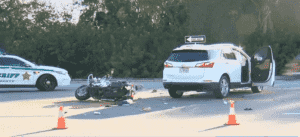
Law Offices of Anidjar and Levine helps injured claimants preserve evidence, investigate fault, and document the full extent of crash-related losses after an intersection collision.
This work often includes reviewing crash reports, witness statements, photographs, medical records, and insurance coverage while addressing deadlines and insurer communications.
Counsel may also pursue compensation for medical expenses, lost income, property damage, and long-term harm through settlement negotiations or litigation when necessary.
Learn more from a Fort Myers Car Accident Lawyer. The sections below outline the process, rights, and available legal options.
Main Takeaways
- A Fort Myers intersection accident lawyer investigates crash reports, witness statements, photos, video, and vehicle data to prove fault.
- They document medical bills, lost income, property damage, and long-term pain to present the full value of your claim.
- Prompt action helps preserve skid marks, debris, signal timing, surveillance footage, and other evidence before it disappears.
- Lawyers explain deadlines, insurance coverage, fee terms, and practical options so families can make informed decisions.
- If settlement talks fail, trial-ready representation strengthens negotiation leverage and protects your interests in court.


How We Can Help With Your Fort Myers Intersection Car Accident Injury Claim
Navigate through a Fort Myers intersection car accident claim with experienced legal support that focuses on the facts, the injuries, and the full extent of the losses involved. A law firm serving this community can organize records, preserve evidence, and manage insurer contact so clients can concentrate on recovery and on continued care for others who depend on them.
Effective representation also requires steady Client communication at each stage. Counsel can explain deadlines, outline practical options, and prepare strong documentation that reflects medical costs, lost income, property damage, and related hardships. Through careful investigation, the firm can gather crash reports, witness statements, photographs, and available electronic data to support a clear demand.
Fee transparency further helps families plan responsibly and make informed decisions without unnecessary strain. When negotiation does not produce a fair result, legal counsel can advance the claim with disciplined advocacy and consistent attention to the client’s goals, obligations, and long-term stability.
OUR CONSULTATIONSARE FREE
START YOUR FREE CASE REVIEW

Understanding Fort Myers Intersection Car Accident Injury Cases
Intersection-collision injury cases in Fort Myers often involve disputed accounts of right-of-way, signal timing, speed, distraction, and visibility, which can make liability difficult to determine without a careful review of the available evidence. These matters are rarely resolved by a single statement alone. They usually require analysis of police reports, witness observations, vehicle damage, surveillance footage, and roadway design.
A proper evaluation also considers intersection dynamics, including lane configuration, turning movements, traffic control devices, and pedestrian interactions. In many cases, sight obstructions such as landscaping, parked vehicles, weather conditions, or nearby structures can affect what each road user could reasonably perceive.
Medical records, scene photographs, and event data may further clarify how the collision occurred and how severely a person was harmed. By understanding these legal and factual issues, injured individuals and their families are better positioned to pursue accountability, protect community safety, and support a recovery process grounded in service, dignity, fairness, and respect.
Common Causes of Fort Myers Intersection Car Accidents
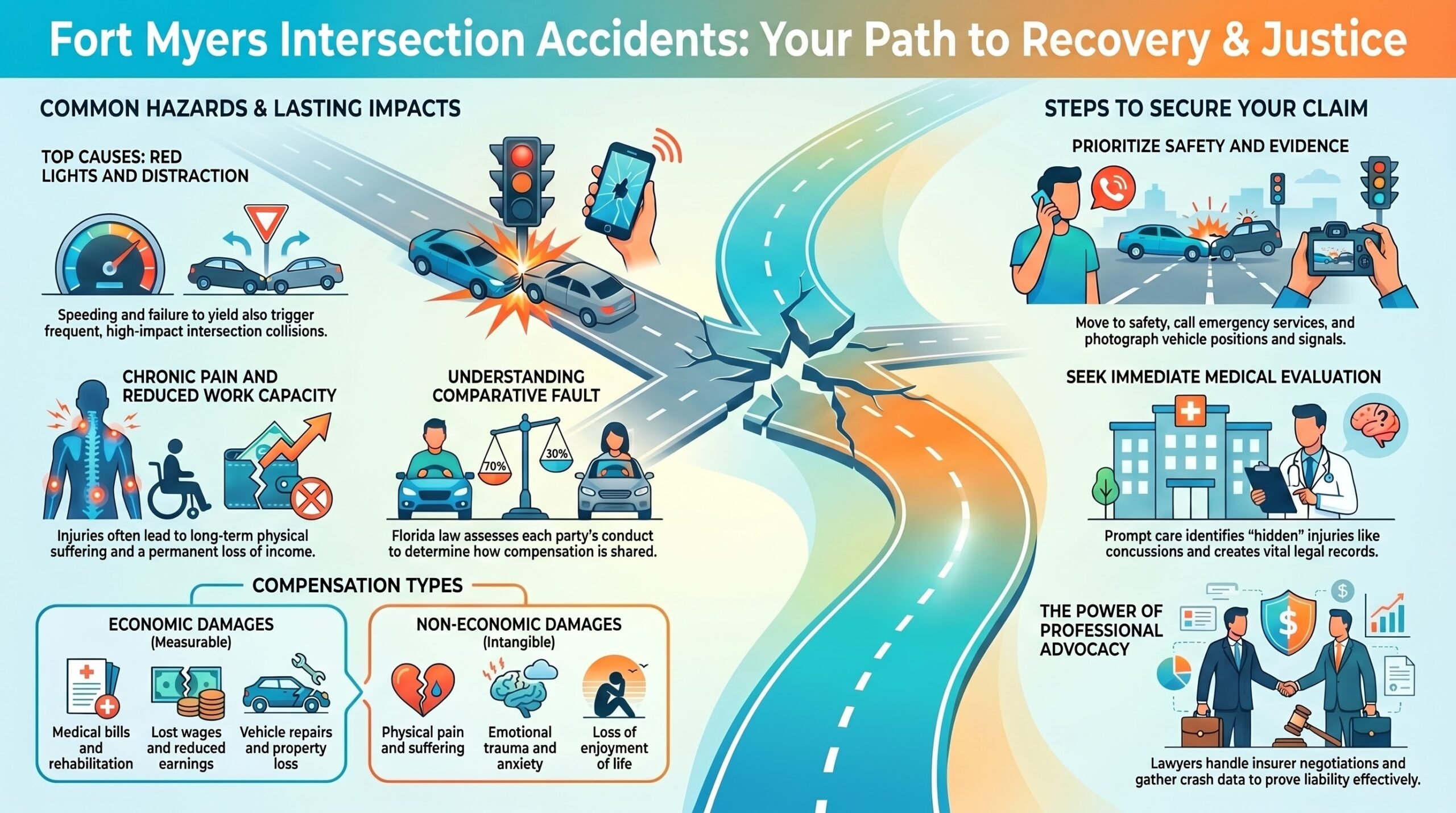
Several recurring factors contribute to intersection collisions in Fort Myers, often creating serious risks for motorists and pedestrians alike. Common causes include red-light violations, distracted driving, failure to yield, and speeding through intersections, each of which can reduce reaction time and increase the likelihood of an impact. A clear understanding of these behaviors helps explain why intersection accidents remain a significant source of injury claims and legal disputes.
Red Light Violations
Often occurring in heavy traffic and under time pressure, red light violations are a leading cause of intersection accidents in Fort Myers. Drivers who enter on a stale yellow or after the signal changes often strike vehicles lawfully crossing, creating severe side-impact collisions and preventable harm.
These incidents also endanger people walking or cycling through marked crossings. Red light cameras may document unlawful entries, yet enforcement alone cannot reverse the risks created by impatience, speeding, and disregard for traffic controls. Pedestrian violations can further complicate liability, but they do not excuse a motorist’s duty to obey signals and yield when required.
A careful legal review often examines timing, visibility, roadway design, witness statements, and crash data to clarify fault and support fair recovery for those injured, and protect community safety.
Distracted Driving Errors
Distracted driving undermines a motorist’s ability to perceive traffic signals, judge gaps, and react to sudden changes at Fort Myers intersections. Even brief inattention can prevent a driver from noticing brake lights, pedestrians, or vehicles turning across the roadway. Cellphone hypnosis refers to the mental capture caused by screens, in which awareness narrows and response times slow. Infotainment distraction poses similar risks when drivers adjust navigation, music, or messages rather than monitoring surrounding traffic.
From a public safety perspective, distracted driving places every road user at unnecessary risk, including families, cyclists, and emergency responders. Responsible driving requires sustained visual, manual, and cognitive attention, especially in busy intersection environments. When a collision occurs, evidence of distraction may help explain why a driver missed obvious hazards and failed to avoid preventable impact there.
Failure To Yield
Ignore, misjudge, or rush through an intersection, and a driver may fail to yield the right of way to traffic, pedestrians, or cyclists lawfully proceeding through it. This failure to yield often occurs during left turns, at stop signs, or when entering from private drives. Even a brief lapse in judgment can place others in immediate danger.
At Fort Myers intersections, right-of-way disputes frequently arise when motorists assume another person will stop or defer. Drivers who disregard signals, overlook crosswalk users, or misunderstand lane priorities create preventable collisions and serious injuries. A careful, service-minded approach to driving requires patience, observation, and respect for every road user. When those duties are ignored, the resulting harm may affect families, workers, and the broader community for years.
Speeding Through Intersections
Beyond right-of-way violations, speeding through intersections is another frequent cause of serious Fort Myers car accidents. Excessive speed reduces a driver’s ability to perceive hazards, judge gaps in traffic, and stop safely when signals change. It also increases crash force, often leaving innocent occupants, pedestrians, and cyclists with severe injuries.
Careful roadway planning can help, yet driver choices remain decisive. Even when speed limit design and intersection geometry are intended to improve safety, motorists who rush through crossings undermine those protections. A detached review of collision patterns shows that speeding commonly combines with distraction, wet pavement, or limited visibility, creating preventable harm.
Communities that value protecting neighbors benefit when drivers approach intersections with patience, maintain lawful speeds, and allow enough time to respond responsibly to changing conditions and unexpected movement.


Legal Rights of Fort Myers Intersection Car Accident Injury Victims
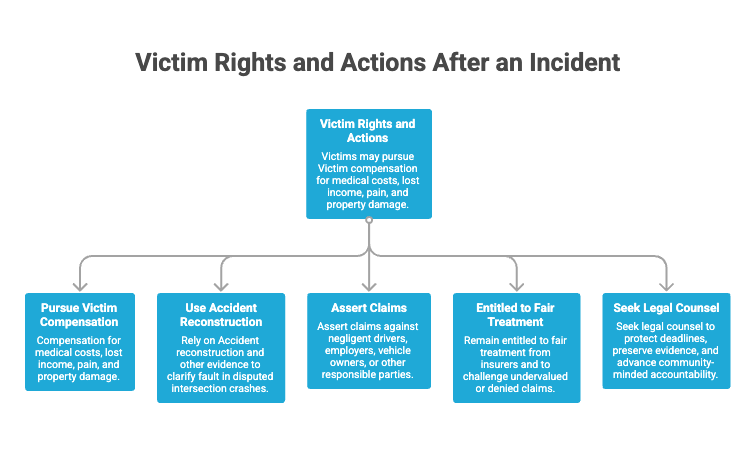
In the aftermath of an intersection collision in Fort Myers, injured victims retain important legal rights under Florida law, including the right to seek medical treatment, document the circumstances of the crash, and pursue compensation for losses caused by another party’s negligence.
These protections help individuals and families seek stability while holding careless drivers accountable through civil claims and insurance processes.
- Victims may pursue Victim compensation for medical costs, lost income, pain, and property damage.
- They may rely on Accident reconstruction and other evidence to clarify fault in disputed intersection crashes.
- They may assert claims against negligent drivers, employers, vehicle owners, or other responsible parties.
- They remain entitled to fair treatment from insurers and to challenge undervalued or denied claims.
- They may seek legal counsel to protect deadlines, preserve evidence, and advance community-minded accountability.
Florida law also recognizes comparative fault principles, which may affect recovery without necessarily barring a claim entirely in cases involving serious injuries.
Steps to Take After a Fort Myers Intersection Car Accident Injury
After a car accident at a Fort Myers intersection, the immediate priority is to ensure safety by moving to a secure location when possible and contacting emergency services. It is also important to gather evidence at the scene, including photographs, witness statements, and details about the vehicles involved, as this information may later support an injury claim. Prompt medical care should follow, as timely evaluation both restores health and creates a record of the injuries connected to the crash.
Ensure Safety First
Prioritize immediate safety by moving to a secure location, if possible, and checking for urgent injuries among all occupants. If a vehicle can be moved without added risk, it should be positioned away from active lanes to reduce danger and support traffic flow. Hazard lights should be activated, and any person with severe pain, bleeding, or loss of consciousness should receive prompt attention through emergency response services.
Those involved should remain calm, avoid sudden movements when injuries are suspected, and follow dispatcher instructions carefully. If relocation is unsafe, occupants should stay belted until help arrives, unless fire or another immediate threat exists. Thoughtful action at this stage protects lives, helps first responders assist others efficiently, and reflects a responsible commitment to the well-being of everyone affected nearby.
Gather Scene Evidence
Document the scene carefully, because clear evidence gathered in the minutes following a Fort Myers intersection collision can strongly affect any later insurance claim or injury case. If conditions allow, a person should use photo documentation to capture vehicle positions, traffic signals, skid marks, debris, road conditions, and visible property damage from several angles. Close and wide shots can preserve important context.
It is also helpful to collect names and contact information from drivers, passengers, and nearby witnesses. Brief witness statements regarding the light sequence, speed, or driver behavior may later clarify disputed facts. Notes should include the time, location, weather, and any statements made by involved parties. By preserving accurate details, individuals place themselves in a stronger position to support accountability and serve the interests of everyone affected fairly.
Seek Medical Care
Seeking prompt medical evaluation is essential following a Fort Myers intersection collision, even when injuries appear minor or symptoms seem delayed. Early assessment helps identify internal trauma, concussions, soft tissue damage, and worsening conditions that may not be immediately visible. It also creates medical records that can support insurance claims and later legal review.
Those assisting injured individuals should encourage adherence to all treatment recommendations, including imaging, expert referrals, therapy, and prescribed medications. Consistent care demonstrates a commitment to recovery and to responsible stewardship of resources. When transportation or mobility is limited, telemedicine follow-up may help maintain continuity of care. In complex cases, second-opinion consultations can clarify diagnoses, confirm treatment plans, and protect long-term health. Immediate and documented care often benefits both recovery and accountability for everyone involved.
How a Fort Myers Intersection Car Accident Injury Lawyer Can Help You
Navigating the aftermath of an intersection collision often requires more than medical care and vehicle repairs, as legal issues can quickly become complicated. A Fort Myers intersection car accident injury lawyer helps injured people protect their rights while they focus on recovery and supporting their families and communities. Counsel evaluates fault, gathers Medical records, and organizes evidence to present a clear claim.
A Fort Myers intersection car accident injury lawyer helps victims protect their rights as they heal and rebuild after a serious crash.
- Carefully investigates crash reports, witness statements, and intersection camera footage.
- Communicates with insurers to reduce pressure and prevent harmful statements.
- Calculates damages for treatment costs, lost income, and property losses.
- Explains Settlement timelines, procedural steps, and available legal options.
- Prepares negotiation strategy and, when necessary, advances the case in court.
With structured guidance, legal counsel can reduce confusion and bring order during a difficult period. This support allows injured individuals to make informed decisions, pursue fair compensation, and continue serving others with greater stability, dignity, and confidence after a serious crash.
Long-Term Effects of Fort Myers Intersection Car Accident Injuries
Fort Myers intersection car accident injuries can produce lasting consequences that extend well beyond the initial recovery period. Many individuals face chronic pain challenges and emotional trauma effects that disrupt daily routines, strain personal relationships, and diminish overall quality of life. In more serious cases, these injuries also reduce work capacity, limiting earning potential and creating ongoing financial pressure.
Chronic Pain Challenges
After an intersection collision in Fort Myers, chronic pain can become one of the most disruptive long-term consequences, affecting physical function, sleep, employment, and overall quality of life. Persistent neck, back, shoulder, or nerve pain may limit mobility, reduce strength, and interfere with routine tasks that once seemed simple. Many injured people require ongoing pain management through medication, physical therapy, injections, or other supportive care designed to restore function.
Chronic discomfort also commonly leads to sleep disruption, which may worsen fatigue, concentration problems, and the ability to safely complete daily responsibilities. In service-oriented families, these limitations can affect caregiving, household duties, and community involvement. Careful medical evaluation, consistent treatment, and thorough documentation often play an important role in understanding the full impact of these lasting physical challenges.
Emotional Trauma Effects
Beyond ongoing physical pain, intersection collisions in Fort Myers may also produce lasting emotional trauma that affects daily functioning and long-term recovery. Survivors may experience post-traumatic stress, including intrusive memories, heightened anxiety, sleep disruption, and fear when approaching busy roads or traffic signals.
These symptoms can gradually reshape routines, relationships, and community involvement. Some individuals develop avoidance behaviors, limiting travel, declining social activities, or relying heavily on others for transportation and support. Emotional distress may also affect concentration, patience, and the ability to engage fully in family responsibilities or volunteer service. Early recognition, compassionate counseling, and consistent mental health treatment often play an important role in recovery. Thorough documentation of these effects may also help demonstrate how an intersection crash altered a person’s quality of life over time.
Reduced Work Capacity
Many people who suffer intersection crash injuries in Fort Myers face lasting limitations that reduce their ability to work at the same pace, in the same role, or for the same number of hours as before. Physical pain, cognitive changes, and chronic fatigue may interfere with concentration, lifting, driving, communication, or other vital tasks that support employers, clients, and the broader community.
Over time, these impairments can create job limitations that require reassignment, reduced schedules, or complete career changes. Some individuals can return only in a diminished capacity, which often leads to reduced earnings and fewer opportunities for advancement.
Careful documentation of medical restrictions, vocational challenges, and income loss helps demonstrate the full impact of reduced work capacity. This information is often important when evaluating long-term damages after a serious Fort Myers intersection collision.
Proving Liability in Fort Myers Intersection Car Accident Injury Cases
Establishing liability in a Fort Myers intersection car accident injury case requires a careful review of how the collision occurred, which driver failed to follow traffic laws, and whether that failure directly caused the injuries at issue. Courts and counsel often examine traffic signals, skid marks, vehicle damage, roadway design, surveillance footage, and data from onboard systems to determine fault with precision.
They also assess witness credibility, because neutral observations from nearby drivers, pedestrians, or business employees may confirm who had the right of way. When physical evidence is disputed, expert reconstruction can help explain speed, braking, visibility, and impact angles in a scientifically grounded manner. Police reports, photographs, medical records, and scene measurements may further link a driver’s negligence to the harm suffered.
In many cases, careful proof of liability supports accountability, protects injured people, and helps families pursue outcomes that promote stability, responsibility, and the well-being of the broader Fort Myers community.
Dealing With Insurance Companies After a Fort Myers Intersection Car Accident Injury
Navigate through insurance communications carefully after a Fort Myers intersection car accident injury, because early statements, settlement discussions, and coverage determinations can materially affect the outcome of a claim. Insurers often request recorded statements, medical authorizations, or broad documentation soon after a collision. A careful, service-minded approach helps protect the injured person while preserving accurate information for all parties involved.
Insurance representatives may appear cooperative, yet claim tactics can minimize losses for the carrier rather than support fair compensation. It is often wise to keep communications factual, brief, and consistent with available records. Detailed notes of calls, letters, emails, and policy information can reduce confusion and strengthen accountability.
Attention should also be given to settlement timelines, since quick offers may not reflect the full extent of injuries, treatment needs, or financial harm. By responding thoughtfully and documenting every exchange, an injured person can better safeguard personal interests while remaining respectful, organized, and focused on recovery and community responsibility.
What to Expect During a Fort Myers Intersection Car Accident Injury Claim Process
A Fort Myers intersection car accident injury claim typically begins with an initial evaluation of the facts, injuries, and available insurance coverage. From there, the process generally focuses on gathering evidence, evaluating liability, and proceeding through structured negotiations with the insurer. If a fair resolution is not reached, the claim may advance toward settlement discussions under greater pressure or formal litigation.
Initial Claim Evaluation
Begin the process with a careful review of how the intersection collision occurred, the reported injuries, and the available insurance coverage. During this initial claim evaluation, counsel typically examines intake details, medical records, employment interruptions, and immediate care needs to understand the claimant’s situation and identify practical priorities.
This stage also includes confirming policy limits, reviewing notice requirements, and outlining a realistic claim timeline. Attorneys often explain available benefits, expected communications with insurers, and the steps needed to protect the injured person’s recovery and financial stability.
Questions about treatment progress, lost income, and out-of-pocket costs are addressed early so families can plan responsibly. A thorough early evaluation supports informed decisions, reduces avoidable delays, and helps those assisting others respond with steadiness, compassion, and a clear sense of purpose throughout.
Evidence And Liability
Once the initial claim evaluation is complete, attention typically shifts to the evidence that will establish how the intersection crash occurred and which party bears legal responsibility. Attorneys and investigators usually review police reports, witness statements, traffic camera footage, vehicle damage, and medical records. Careful scene preservation may also help protect skid marks, debris patterns, signal timing data, and other details that clarify fault.
In more complicated cases, forensic analysis can assist in reconstructing vehicle movement, speed, visibility, and driver response. Liability may rest with one driver, multiple drivers, or, in limited circumstances, a third party responsible for road design or maintenance. A thorough evidence review supports accountability, helps injured people understand their legal position, and promotes a claim process grounded in service, fairness, and community responsibility.
Insurance Negotiation Steps
Negotiating with insurance carriers typically follows the evidence review, as adjusters examine liability, the nature of the injuries, and the financial scope of the claim before meaningful settlement discussions begin. During this stage, documentation is organized, medical updates are gathered, and communications are carefully managed to protect the claimant’s interests. Representatives often assess Policy pitfalls, including coverage limits, exclusions, recorded statements, and timing requirements that may affect recovery.
Effective Negotiation tactics usually involve presenting a clear summary of damages, supporting every claimed loss with supporting records, and responding promptly to the insurer’s questions. Counteroffers may be expected, especially when fault is disputed, or treatment remains ongoing. Throughout the process, careful advocacy helps maintain accuracy, encourages fair evaluation, and supports a resolution that reflects both documented harm and responsible service to the injured person.
Settlement Or Litigation
After the insurer’s position becomes clear, a Fort Myers intersection car accident claim generally moves toward either settlement or litigation, depending on the strength of the evidence, the extent of the injuries, and the parties’ willingness to resolve the matter fairly.
Settlement often remains the preferred path when compensation can meet medical, financial, and personal needs without prolonged delay. Counsel may explain the pros of Mediation, including privacy, lower cost, and the opportunity to reach a respectful resolution that supports recovery. If the insurer disputes fault, minimizes the harm, or refuses to make a reasonable payment, litigation may become necessary.
Trial readiness then matters greatly because thorough preparation can strengthen leverage in ongoing negotiations and protect the injured person’s interests in court. Throughout either path, careful guidance helps families pursue accountability, stability, and the resources needed to serve others.
Compensation for Fort Myers Intersection Car Accident Injury Damages
Accountability often begins with a clear assessment of the losses resulting from a collision at a Fort Myers intersection. Compensation may address the full impact of an injury claim, guided by evidence, medical documentation, repair estimates, and testimony that explains how the crash disrupted daily responsibilities and community service. A careful review helps injured people pursue fair outcomes while supporting the broader goal of roadway safety for everyone.
Florida law can affect recovery when comparative negligence is raised, because each party’s conduct may be examined to determine whether compensation should be reduced. In severe cases involving reckless or intentional misconduct, punitive damages may also be considered to discourage similar behavior and protect the public. Insurance policy limits, liability disputes, and the strength of proof often shape the value of a claim.
Legal counsel can organize records, present a coherent demand, and advocate for accountability so that injured individuals and their families receive meaningful support during recovery and future planning.
Economic vs Non-Economic Damages in Fort Myers Intersection Car Accident Cases
In Fort Myers intersection car accident cases, damages generally fall into two categories: economic losses, which include measurable costs such as medical bills and lost income, and non-economic losses, which address pain, suffering, and other intangible harm.
A clear understanding of this distinction is important because each category is evaluated through different forms of evidence and legal standards. Establishing the value of either type of damage often depends on thorough documentation, credible testimony, and a careful assessment of how the injuries have affected the claimant’s life.
Economic Damages Explained
Clarity is crucial when evaluating damages in a Fort Myers intersection car accident case, because the law separates losses into economic and non-economic categories. Economic damages refer to measurable financial harm supported by bills, receipts, employment records, and repair estimates. These losses often include medical expenses, rehabilitation costs, prescription charges, lost wages, and future reduced earning capacity when injuries limit continued work.
Economic damages may also include property loss, such as vehicle repair or replacement, towing fees, and the cost of damaged personal items. In serious cases, they can cover anticipated medical treatment, home modifications, and transportation assistance. Careful documentation helps families, advocates, and legal counsel present a clear account of financial impact. This structure supports fair recovery and helps injured people regain stability while continuing to care for others.
Non-Economic Losses Overview
Perspective matters when non-economic damages are assessed in a Fort Myers intersection car accident case, because these losses do not appear on invoices or payroll records yet may affect daily life in lasting ways. These damages generally address human consequences such as physical discomfort, emotional suffering, reduced enjoyment of life, inconvenience, and strain on relationships. In service-minded communities, recognizing these harms reflects respect for dignity, independence, and the ability to care for others.
While economic losses measure direct financial impact, non-economic losses require a broader view of how an injury alters routines, well-being, and personal fulfillment. Concepts such as pain valuation and loss quantification are often referenced when describing these less tangible effects. A careful overview helps injured people and their families understand that meaningful harm may exist even when receipts do not fully capture it.
Proving Damage Value
Determining damage value in a Fort Myers intersection car accident case requires a disciplined comparison between losses that can be documented and harms that must be shown through credible supporting evidence. Economic damages are usually proven through medical bills, wage records, repair estimates, and expert damage appraisal addressing diminished earning capacity and future losses.
Non-economic damages require a different presentation. Pain, mental distress, disability, and loss of enjoyment are not measured by invoices, so persuasive proof often includes treatment history, physician opinions, photographs, and testimony from family, coworkers, or caregivers. A careful valuation connects these facts to daily limitations and long-term consequences. In service-oriented representation, thorough preparation helps assure that insurers, opposing counsel, and juries see the full human and financial impact of the collision, without reducing recovery to guesswork alone.
When a Fort Myers Intersection Car Accident Injury Case Goes to Trial vs Settlement
In many Fort Myers intersection car accident injury cases, resolution occurs through settlement, but trial becomes more likely when liability is disputed, injuries are severe, or the insurer refuses to offer compensation that reflects the full extent of the claimant’s losses.
Settlement often serves injured people and their families by reducing delay, expense, and uncertainty. Through investigation, document exchange, and a mediation conference, counsel may present medical records, wage-loss evidence, and expert opinions to support a fair payment. If negotiations remain productive, settlement can provide meaningful support while avoiding the stress of a jury trial.
Trial may be necessary when the parties sharply disagree about fault, causation, future treatment, or long-term financial harm. In that setting, each side presents witnesses, exhibits, and expert testimony for judicial review. A verdict can deliver accountability and full damages, yet it also carries greater risk, added cost, and a longer path to final resolution for everyone involved.
The Statute of Limitations for Fort Myers Intersection Car Accident Injury Cases
After a Fort Myers intersection collision, the time allowed to file a personal injury lawsuit can materially affect whether compensation remains legally available. Florida law sets strict filing deadlines, and missing them can bar recovery even when liability appears clear. For those seeking to protect a household’s stability and continue caring for others, prompt attention to these limits is crucial.
The applicable period may vary depending on the facts, the parties involved, and the type of damages claimed. In limited situations, discovery tolling may affect when the clock begins or pauses, such as when an injury or responsible party could not reasonably be identified immediately. However, tolling rules are narrow and should not be assumed. Evidence can fade, witnesses can become harder to locate, and records may be lost as time passes. A careful review of dates, accident reports, medical treatment, and insurance communications helps preserve a claim and supports a timely, orderly pursuit of legal relief.
When to Contact a Fort Myers Intersection Car Accident Injury Lawyer
Many injured motorists benefit from contacting a Fort Myers intersection car accident injury lawyer as soon as practical, particularly when fault is disputed, injuries require ongoing treatment, or insurers seek recorded statements and quick settlements.
Early legal guidance often helps preserve evidence, identify witnesses, and protect a person from statements that may later be used to limit recovery. An immediate consultation may also assist families who are balancing medical appointments, transportation concerns, and responsibilities to others after a serious crash. Prompt action is especially important when surveillance footage, vehicle data, or roadway evidence could disappear quickly.
A lawyer is often contacted after hospitalization, after an insurance adjuster calls, or when medical bills and lost income begin to create strain. Attention to claim timing can support compliance with notice requirements and filing deadlines while allowing a clearer understanding of damages. Reaching out early can help an injured person make informed decisions that support recovery, accountability, and stability for loved ones and the broader community.
Why You Need an Experienced Fort Myers Intersection Car Accident Injury Lawyer
Prompt contact with counsel can protect a claim, but experience often determines how effectively that protection is put to use in a Fort Myers intersection collision case. Intersections often involve disputed signals, multiple drivers, commercial vehicles, pedestrians, and conflicting witness accounts, all of which can complicate proof and delay fair resolution.
An experienced lawyer evaluates crash reports, video footage, vehicle damage, and medical records with disciplined focus. That background helps identify Intersection liability issues, preserve evidence, and counter efforts to shift blame onto an injured person. Experience also strengthens communication with insurers, experts, and treating providers, supporting a claim that reflects both present losses and future needs.
When settlement efforts fail, seasoned representation matters even more. Knowledge of courtroom procedure, evidentiary standards, and Trial strategy can shape a persuasive presentation before a judge or jury. For individuals seeking justice while protecting their families and communities, experienced legal advocacy serves a practical and indispensable role.
How to Choose the Right Fort Myers Intersection Car Accident Injury Lawyer for Your Case
In choosing the right Fort Myers intersection car accident injury lawyer, attention should center on qualifications that directly affect the outcome of a claim. A careful review of litigation experience, knowledge of Florida traffic injury law, and success in negotiating with insurers can help identify counsel capable of protecting injured people and their families.
Client interviews offer valuable insight into how an attorney communicates, prepares cases, and responds to urgent concerns. Reviews, referrals, and professional standing may further reveal whether the lawyer treats each matter with diligence and respect. Fee structures also merit close examination, because clear terms help clients make informed decisions without added strain.
It is also prudent to ask about trial readiness, access to expert witnesses, and the expected timeline for case progress. By evaluating skill, transparency, and service, a person can select a representative who supports accountability, promotes recovery, and advances the broader goal of justice for those harmed in serious intersection collisions.
About The Law Offices of Anidjar & Levine
Selecting capable counsel naturally leads to a closer look at the firm’s background, resources, and approach to client representation.
The Law Offices of Anidjar & Levine is recognized for providing focused legal advocacy to injured people in Fort Myers, including those harmed in intersection collisions.
The firm emphasizes responsive communication, careful case preparation, and practical guidance during difficult periods.
Its attorneys and staff are known for handling accident claims with diligence and professionalism, while seeking outcomes that support a client’s recovery and long-term stability.
Client testimonials often highlight accessibility, consistent updates, and a service model centered on respect.
These qualities may matter to individuals who value helping families regain security after sudden injury.
Beyond casework, the firm’s Community outreach reflects a broader commitment to public well-being.
That presence can signal a service-oriented philosophy, one that aligns legal representation with responsibility to others.
For many injured residents, that combination of skill and purpose carries meaningful weight.
Frequently Asked Questions
Can I Recover Damages if Poor Road Design Contributed to the Intersection Crash?
Yes, damages may be recoverable when poor road design materially contributed to an intersection crash. A claimant may pursue design liability against the responsible public entity or contractor if hazardous conditions, inadequate signage, or defective traffic control created unreasonable risk. Recovery often depends on proving notice, causation, and damages. However, municipal immunity can limit or bar certain claims, so careful investigation and timely compliance with statutory notice requirements are crucial for effective community-centered accountability.
How Do Traffic Camera Recordings Affect an Intersection Accident Injury Claim?
Traffic camera recordings can strongly influence an intersection accident injury claim by clarifying vehicle positions, signal phases, and driver conduct. They may provide objective evidence, preserve witness accounts, or expose inconsistencies. Claim evaluation often depends on the integrity of the footage, the chain of custody, and timely requests before deletion. Privacy concerns may affect access, yet courts and insurers frequently weigh reliable traffic camera evidence heavily when determining liability, damages, and fair recovery.
Can Rideshare or Delivery Driver Involvement Change My Injury Case?
Yes, involvement by a rideshare or delivery driver can materially change an injury case. It may affect rideshare liability, available insurance coverage, employer responsibility, and the classification of the driver’s work status at the time of impact. Delivery immunity issues may also arise under limited legal protections. A careful review helps injured people identify all responsible parties, preserve evidence, and pursue compensation that more fully serves their recovery needs.
What if Multiple Vehicles Caused the Intersection Accident Simultaneously?
When multiple vehicles collide at an intersection at once, liability is often divided among the drivers under the principle of shared liability. A simultaneous impact does not prevent recovery, but it can complicate proof of each party’s contribution to the harm. Investigators, insurers, and counsel typically examine vehicle damage, witness statements, video, and timing data. That process helps identify fault accurately and supports fair compensation for those affected and injured.
Are Expert Witnesses Needed in Complex Intersection Car Accident Injury Cases?
Yes, expert witnesses are often needed in complicated intersection car accident injury cases. They help clarify disputed liability, injury causation, and the sequence of events, which supports fair outcomes for all affected parties. Authorities in accident reconstruction can explain vehicle movements, traffic controls, and impact timing. Experts offering biomechanical analysis may address how forces contributed to specific injuries. Their testimony often strengthens credibility when insurers or opposing parties challenge the claim.
—————————
Intersection accidents in Fort Myers often lead to serious injuries, contested liability, and significant financial burdens.
Understanding the common causes of these crashes, the legal remedies available, and the steps to take after an accident can help strengthen an injury claim.
Working with a knowledgeable Fort Myers Car Accident Lawyer may help injured individuals protect their rights, preserve important evidence, and seek fair compensation.
The Law Offices of Anidjar & Levine provides dedicated representation and strategic advocacy throughout the claims process and any related legal action.