The Law Offices of Anidjar and Levine helps injured motorists prepare claims, preserve evidence, and manage insurance communications after serious interstate crashes. A Florida Car Accident Lawyer may review police reports, medical records, crash photos, witness statements, vehicle damage, and commercial truck records when needed.
Counsel can evaluate fault, causation, damages, deadlines, and insurer disputes while protecting the claim from avoidable errors. The sections below explain the process, common crash factors, and essential steps after an I-75 collision.
Main Takeaways
- A Florida I-75 car accident injury lawyer helps gather evidence, medical records, crash reports, photos, and insurer communications.
- Legal counsel can identify liable parties, including drivers, trucking companies, repair providers, or manufacturers in complex crashes.
- An attorney can handle adjuster communications, insurance deadlines, claim notices, and denial responses while you focus on recovery.
- Strong evidence, including police reports, witness statements, medical records, and vehicle damage documentation, supports fault, causation, and damages.
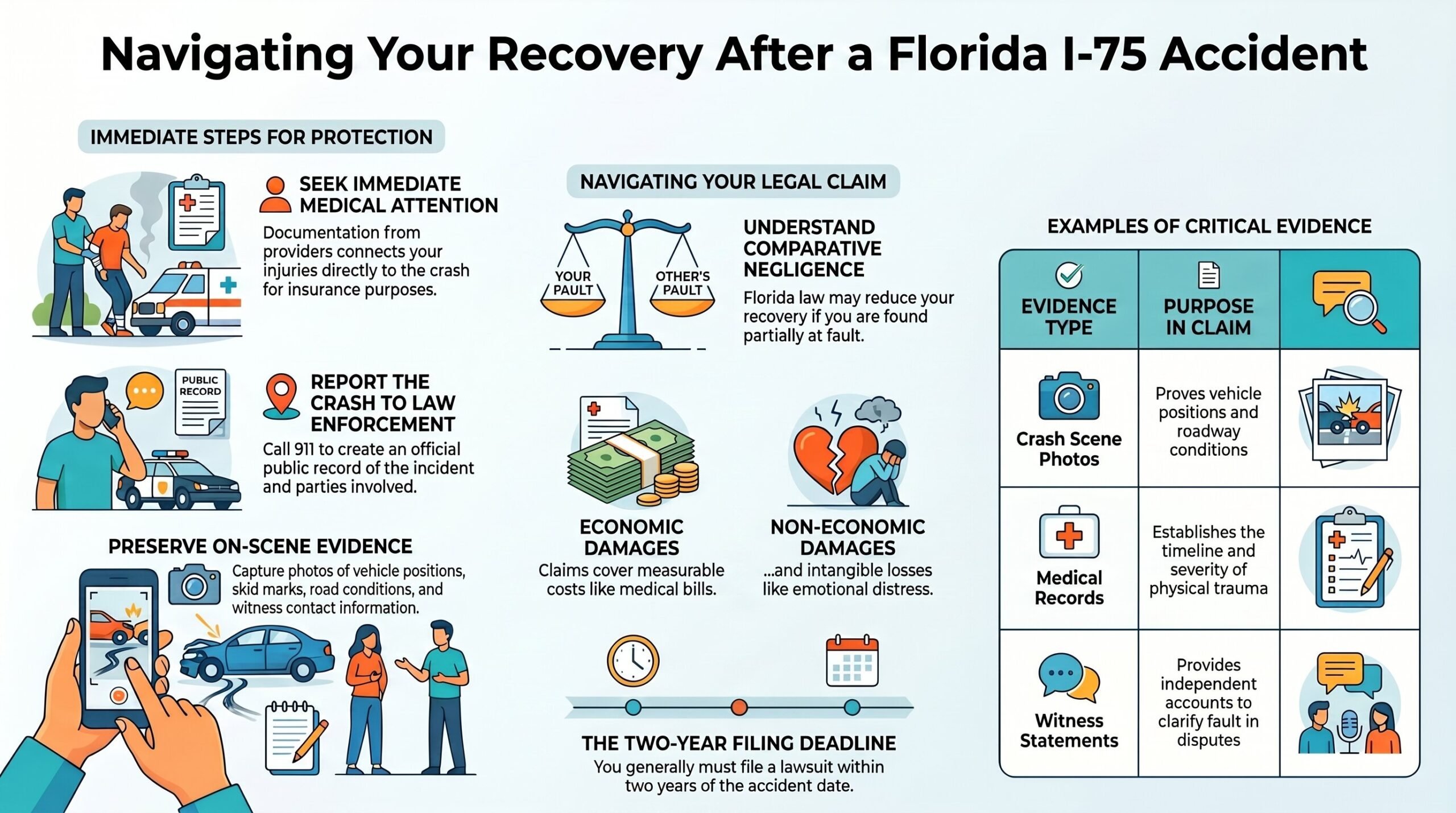
- After an I-75 crash, seek medical care, report the accident, preserve evidence, and understand Florida comparative negligence rules.


How We Can Help With Your Florida I-75 Car Accident Injury Claim
After an I-75 crash, an injured person may face medical treatment, insurance calls, vehicle damage, and uncertainty about fault all at once. A Florida I-75 car accident injury lawyer can help organize these burdens with disciplined attention and a service-centered approach. The firm may gather crash reports, medical records, witness information, photographs, repair estimates, and insurer correspondence, then use those materials to present a clear claim for compensation.
Legal support also includes tracking Insurance deadlines, preparing required notices, and communicating with adjusters so the injured person can focus on recovery and family responsibilities. When insurers dispute treatment, minimize losses, or issue adverse decisions, counsel can prepare claim denial responses supported by evidence and policy language. This guidance can help protect the injured person from avoidable errors, rushed statements, and incomplete documentation. Through steady advocacy, the lawyer works to pursue a fair resolution while respecting the client’s need for stability.
OUR CONSULTATIONSARE FREE
START YOUR FREE CASE REVIEW

Understanding Florida I-75 Car Accident Injury Cases
Effective legal assistance begins with a clear understanding of how Florida I-75 car accident injury cases develop, from the cause of the collision to the evidence needed to prove damages. These cases often involve multiple vehicles, serious injuries, commercial carriers, and intricate insurance issues. A careful review helps identify responsible parties and preserves facts that may otherwise be lost.
Attorneys serving injured individuals evaluate police reports, medical records, roadway evidence, witness statements, and available video. They also examine vehicle condition, cargo records, driver logs, and repair histories when commercial trucks are involved. Negligent maintenance or a truck defect may expand liability beyond the driver to a company, repair provider, or manufacturer.
Because I-75 is a major transportation corridor, injury claims may require prompt investigation and coordinated support. Effective representation focuses on documenting losses, protecting legal rights, and helping injured people pursue recovery with dignity, purpose, and disciplined attention to proof.
Common Causes of Florida I-75 Car Accidents
Florida I-75 car accidents often result from predictable hazards, including distracted driving, speeding and tailgating, impaired driving, and poor weather conditions. These factors can reduce reaction time, increase crash severity, and create dangerous conditions for motorists traveling at highway speeds. Understanding these common causes helps clarify how negligence may contribute to injury claims after a serious collision.
Distracted Driving
Too often, distracted driving turns a routine trip on I-75 into a serious collision, especially when a driver looks away from the road, handles a phone, adjusts navigation, or focuses on passengers instead of traffic conditions. A Mobile Phone can divert attention long enough for a vehicle to miss a Red Light, drift from its lane, or fail to notice slowing traffic.
On I-75, even brief inattention can affect nearby families, workers, and travelers who depend on others’ appropriate conduct. Distracted drivers may make unsafe Lane Changes without checking mirrors or blind spots. Fatigue Driving can increase the danger, because tired motorists are less able to recognize hazards and respond responsibly. Injury claims often examine whether attentive driving could have prevented the crash and protected others.
Speeding And Tailgating
Speeding and tailgating create serious hazards on I-75, where high traffic volume, sudden congestion, and fast-moving lanes leave little room for error. When drivers exceed safe speeds, they reduce reaction time and increase crash severity, especially near merging areas, construction zones, or traffic lights at interchanges. Tailgating further limits visibility and impedes orderly responses to road hazards, such as stopped vehicles, debris, or sudden lane changes.
Large commercial vehicles require greater truck braking distance, making close following especially dangerous when traffic slows without warning. These behaviors can trigger rear-end collisions, multi-vehicle crashes, and secondary impacts involving disabled motorists or responders assisting at the scene. In nearby access areas, excessive speed may also contribute to pedestrian injuries. Careful spacing and lawful speeds help protect every traveler on I-75.
Impaired Driving
Although impairment is a well-known roadway danger, it remains a persistent cause of serious crashes on I-75, particularly during late-night travel, holiday periods, and high-traffic events. Drivers affected by alcohol, drugs, or certain medications may show delayed reactions, poor judgment, lane drifting, and reduced awareness of surrounding traffic. These risks increase on an interstate where speeds are high and safe decision-making is critical.
Fatigued Driving can create similar impairment, limiting attention and slowing responses when traffic changes suddenly. For victims, DUI Consequences often extend beyond the crash scene, including medical treatment, lost income, long-term disability, and emotional hardship. Attorneys reviewing these cases may examine toxicology reports, citations, witness statements, and crash evidence to identify negligence and support those harmed through preventable conduct.
Poor Weather Conditions
When heavy rain, fog, or sudden storms reduce visibility, I-75 can become especially dangerous for drivers who fail to adjust to changing conditions. Wet pavement increases stopping distance, while standing water may cause vehicles to hydroplane across multiple lanes. In poor weather, safe lane merging requires patience, clear signals, and reduced speed, yet hurried drivers often create avoidable hazards for nearby motorists.
Reduced nighttime visibility can further limit a driver’s ability to see disabled vehicles, traffic slowdowns, or emergency responders assisting others. Severe weather may also contribute to head-on collisions when vehicles drift across medians or lose control near exits. After these crashes, liability disputes commonly arise, especially when several drivers, road conditions, or maintenance issues may have contributed to the harm.


Legal Rights of Florida I-75 Car Accident Injury Victims
After a collision on Interstate 75, injured victims in Florida may have the right to pursue compensation for medical expenses, lost income, property damage, and other losses caused by another party’s negligence. These rights help restore stability and support responsible care for families, employers, and communities affected by serious crashes.
Florida law also applies Comparative Negligence, which may reduce recovery if the injured person shares fault.
Prompt Evidence Preservation can protect claims and promote fair accountability.
- Seeking medical treatment creates records that connect injuries to the crash.
- Reporting the accident helps establish an official account of events.
- Preserving photographs, vehicle damage, and witness information may strengthen liability evidence.
- Reviewing insurance coverage can identify available benefits and claim requirements.
- Consulting legal counsel may help victims meet deadlines and protect their interests.
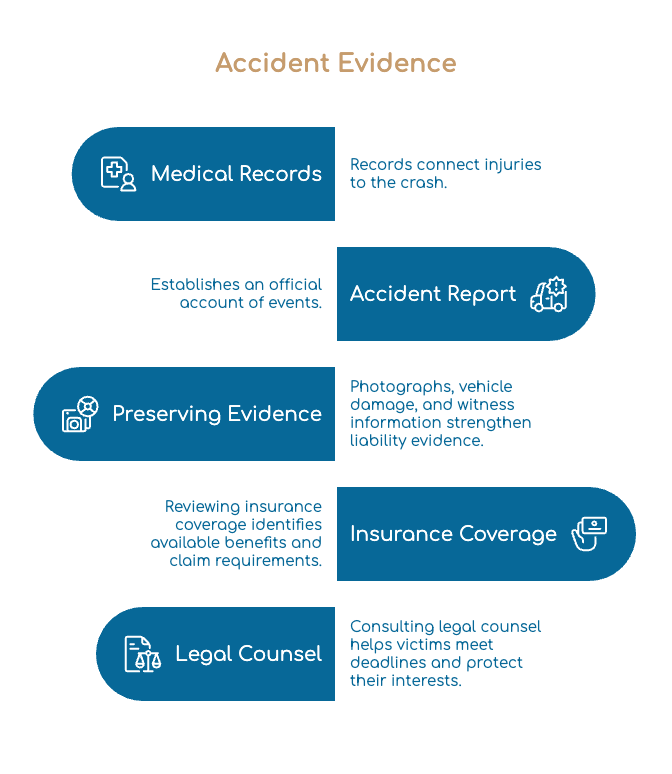
These legal protections allow injured persons to seek orderly, respectful recovery while serving dependents and others who rely on them.
Why Do Florida I-75 Car Accident Injuries Happen?
Why do Florida I-75 car accident injuries happen so often on a major interstate designed for high-volume travel? The causes often reflect a combination of speed, congestion, driver inattention, and the demanding conditions of long-distance travel. I-75 carries commuters, tourists, commercial vehicles, and service providers, creating frequent changes in speed and lane position. When drivers follow too closely, drift while distracted, or fail to adjust during rain, construction, or heavy traffic, serious crashes may result.
Truck collisions are especially dangerous because large commercial vehicles require greater stopping distances and generate severe impact forces. Smaller vehicles may sustain catastrophic damage, particularly during lane changes, merging, or sudden slowdowns. Pedestrian injuries may also occur near disabled vehicles, crash scenes, ramps, rest areas, or construction zones, where people are exposed to fast-moving traffic. These injury patterns show how roadway design, human error, vehicle size, and environmental conditions can combine to place vulnerable individuals at risk.
What Should You Do After a Florida I-75 Car Accident Injury?
After a Florida I-75 car accident injury, the steps taken immediately after the crash can affect both health and any future legal claim. An injured person should seek medical attention, report the crash to the appropriate authorities, and begin documenting damages as soon as circumstances allow. These actions help create a clear record of the incident, the injuries sustained, and the losses connected to the collision.
Seek Medical Attention
Immediate medical attention is one of the most important steps for any person injured in an I-75 car accident in Florida. Even when injuries appear minor, trained providers can identify hidden trauma, document findings, and begin appropriate care. A prompt evaluation also helps protect others who may depend on the injured person for guidance, support, or service.
Medical providers may recommend imaging, medication, therapy, or expert consultation. The injured person should follow an Aftercare checklist, attend all follow-up appointments, and keep detailed symptom documentation as pain, dizziness, stiffness, or emotional distress develops.
Clear records help connect injuries to the collision and guide treatment decisions. When recovery affects job duties, return-to-work planning should be addressed with medical professionals before resuming demanding physical activity safely.
Report The Crash
Report the crash to law enforcement as soon as safety allows, because an official crash report can become a significant record after a Florida I-75 car accident injury. Calling 911 also helps make sure that injured people receive prompt assistance and that hazards affecting other travelers are addressed. Drivers should remain at the scene unless urgent medical care requires them to leave, and they should cooperate respectfully with responding officers.
As part of responsible emergency steps, each person should provide accurate identifying and insurance information, while avoiding guesses about fault or unnecessary statements. Officers can record locations, parties, vehicles, and apparent contributing factors, which supports orderly communication later. Keeping evidence begins with ensuring the crash is formally reported, so that families, caregivers, and legal representatives have a reliable public record to review.
Document Your Damages
In the days following a Florida I-75 car accident injury, careful documentation of damages can help preserve the facts needed for an insurance claim or legal review. The injured person should keep financial paperwork, medical receipts, repair estimates, wage records, and transportation costs in one organized file. Photographs of vehicle damage, visible injuries, and damaged personal items may also support an accurate evaluation.
A written accident timeline and symptom log can show how pain, treatment, missed work, and daily limitations developed over time. Family members or caregivers who assist with appointments, medication, or household duties may note the help provided. Consistent records allow insurers, medical providers, and legal professionals to clearly understand losses, reduce disputes, and support fair consideration of the harm caused by the crash.
Critical Evidence in a Florida I-75 Car Accident Injury Case
Critical evidence in a Florida I-75 car accident injury case often determines how clearly fault, damages, and causation can be established. The following materials may help document the collision, support the injury claim, and preserve important facts:
- Crash scene photos
- Police accident reports
- Medical treatment records
- Witness statements
- Vehicle damage documentation
Timely collection and careful review of this evidence can strengthen a claim and reduce disputes over liability or the extent of injuries.
Crash Scene Photos
Why do crash scene photos matter so much after an I-75 collision in Florida? They preserve conditions that may disappear within minutes, including vehicle positions, skid marks, debris fields, road defects, weather, lighting, and traffic control devices. Clear images can help injury lawyers, insurers, and reconstruction professionals understand how harm occurred and who may be responsible.
Photos may also reveal Vehicle Malfunctions, such as tire failure, broken lights, or deployed safety systems, which can affect liability analysis. For collisions occurring after dark, images showing visibility, shoulder conditions, and reflector placement may support Nighttime Safety concerns. When taken respectfully and lawfully, these photos serve injured people by protecting facts, reducing speculation, and helping advocates pursue fair accountability for medical losses, lost income, and long-term care needs.
Police Accident Reports
After an I-75 collision in Florida, a police accident report can become a central source of information for evaluating fault, injuries, and insurance issues. The report may identify drivers, passengers, witnesses, vehicle positions, citations, road conditions, and the responding officer’s observations. For those committed to protecting injured people, this document helps organize facts before memories fade or evidence disappears.
It may also note whether dashcam footage, traffic cameras, or commercial vehicle records could assist the investigation. Although the report may not decide legal responsibility, insurers often review it closely when evaluating liability. A lawyer may compare the report with photographs, witness statements, and repair evidence, then use consistent findings in an attorney demand letter. Careful review can expose omissions, errors, or details requiring further investigation.
Medical Treatment Records
Medical treatment records often provide the clearest timeline of how injuries developed, how they were diagnosed, and what care became necessary following an I-75 collision in Florida. These records may include emergency evaluations, imaging results, physician notes, therapy plans, prescriptions, referrals, and discharge instructions. They help connect the crash to specific physical harm, especially when symptoms progress over time.
Documentation timing is important because delays in treatment may raise questions about causation, severity, or the need for continued care. Consistent records also support accurate insurance communications, reducing confusion about medical expenses, work restrictions, and future treatment needs. For those serving injured individuals, careful review of these records helps present a truthful, organized account of recovery and the resources required for stability. They may also clarify the prognosis.
Witness Statements
When a crash occurs on I-75, witness statements can provide independent details that are not fully captured in police reports, vehicle damage assessments, or medical records. Neutral witnesses may describe traffic flow, lane changes, vehicle speed, weather conditions, or distracted driving patterns observed before impact. Their accounts can help clarify fault, especially when drivers give conflicting versions of events.
Prompt collection of these statements is important because memories fade, travelers leave the area, and contact information may become difficult to verify. For injured individuals and those assisting them, careful witness documentation supports a more complete claim presentation. It may also help align evidence with insurance claim timelines, reducing avoidable delays. Reliable statements, preserved early, can strengthen the factual foundation needed for fair evaluation and resolution.
Long-Term Effects of Florida I-75 Car Accident Injuries
Long-term effects of Florida I-75 car accident injuries may include chronic pain, lasting emotional trauma, and ongoing limitations that affect daily life and employment. These consequences often require structured pain management, mental health support, and continued medical care long after the initial treatment ends. Future medical expenses should be carefully evaluated, since they may substantially influence the value of an injury claim.
Chronic Pain Management
A serious collision on Florida’s I-75 can leave an injured person with chronic pain that persists for months or years after the initial trauma. Back injuries, nerve damage, joint instability, and soft tissue disorders may require coordinated medical oversight, consistent documentation, and careful treatment adjustments. Effective chronic pain management often includes diagnostic follow-up, medication review, interventional care, and physical therapy planning tailored to functional limits and recovery goals.
Providers may also monitor for opioid misuse, especially when pain medication is prescribed over extended periods. For those serving injured individuals, attention to daily limitations, work restrictions, and transportation barriers can improve continuity of care. Legal evaluation may consider future treatment costs, reduced earning capacity, and the sustained impact of pain on ordinary activities. Accurate records support fair compensation claims.
Emotional Trauma Recovery
Serious crashes on Florida’s I-75 may cause emotional trauma that continues well after physical injuries begin to stabilize. Survivors may experience anxiety, sleep disruption, irritability, fear of driving, or intrusive memories that affect family, work, and community responsibilities. These symptoms can limit a person’s ability to serve others with patience, consistency, and clear judgment. Emotional recovery often requires structured support, including PTSD counseling when trauma responses interfere with daily life.
Licensed therapists may help injured individuals identify triggers, rebuild confidence, and develop coping strategies for stress, panic, and avoidance. Family members and caregivers can also provide steady encouragement while respecting boundaries. Recognizing psychological harm as part of the injury process helps ensure that recovery addresses the whole person, not only visible physical damage. Professional guidance supports long-term stability.
Future Medical Expenses
Emotional trauma may be only one part of the lasting burden after an I-75 collision, because many injured individuals also face medical needs that extend months or years beyond the initial emergency care. Future medical expenses may include surgeries, relevant medical consultations, rehabilitation, mobility equipment, imaging, Pain Mediation, and home health assistance. These costs should be carefully evaluated when seeking compensation, since an early settlement may fail to cover continued treatment.
Physicians, life-care planners, and financial experts often help estimate future care needs with accuracy and compassion. Disability Documentation can also support claims involving reduced independence, permanent limitations, or the need for ongoing support. A Florida I-75 car accident injury lawyer may gather records, consult experts, and pursue resources that help injured people maintain stability and dignity.
Proving Liability in Florida I-75 Car Accident Injury Cases
When a collision occurs on I-75, proving liability requires a careful review of how the crash happened, which driver breached a duty of care, and whether that breach caused the injured person’s losses. This process may involve examining police reports, witness statements, vehicle damage, skid marks, roadway conditions, and electronic data from the vehicles involved.
Surveillance footage from nearby businesses, toll areas, or transportation facilities may also help clarify events before impact. A traffic camera may show lane changes, speeding, sudden braking, or unsafe merging near ramps and construction zones.
In Florida, liability may be shared among multiple parties, including negligent drivers, commercial vehicle operators, or entities responsible for hazardous road conditions. Each fact must be evaluated with discipline and care, especially when serving injured individuals who need guidance after serious harm. Strong evidence helps establish fault, connect conduct to injuries, and support a fair, lawful claim for recovery.
Dealing With Insurance Companies After a Florida I-75 Car Accident Injury
Dealing with insurance companies after a Florida I-75 car accident injury requires caution, preparation, and a clear understanding of how insurers evaluate claims. Adjusters may appear helpful, yet their role is to protect the company’s financial interests. Injured individuals should provide accurate basic information, but avoid recorded statements or broad medical authorizations without informed guidance.
Careful organization supports a fair review of losses. Tracking claim communications helps document dates, names, statements, and requests, reducing confusion if disagreements arise. Preserving evidence receipts for medical care, prescriptions, transportation, vehicle repairs, and assistive services also helps connect expenses to the crash.
A service-minded approach includes protecting the injured person’s dignity while ensuring accountability. Prompt reporting, consistent documentation, and measured communication can prevent avoidable disputes. When injuries are serious, legal counsel may handle insurer contact, review settlement offers, and help safeguard compensation needed for recovery, family stability, and future care.
What to Expect During a Florida I-75 Car Accident Injury Claim Process
A Florida I-75 car accident injury claim typically begins with an initial case evaluation, during which the facts, injuries, and potential liability are reviewed. The process then moves to filing the insurance claim and collecting evidence, including medical records, crash reports, witness statements, and documentation of losses. Settlement negotiation follows, with each step requiring careful attention to deadlines, claim value, and the insurer’s response.
Initial Case Evaluation
Before a Florida I-75 car accident injury claim can move forward, the initial case evaluation helps determine the legal, medical, and insurance issues that may affect recovery. During this review, an attorney may examine the circumstances of the crash, injury severity, available evidence, medical treatment history, and potential sources of compensation. This assessment also identifies whether comparative fault, delayed care, disputed causation, or incomplete documentation may weaken the claim.
For injured individuals and families seeking support, the evaluation provides direction, structure, and informed guidance during a difficult period. It may also address risks such as insurance claim denials and early-settlement valuation concerns. By reviewing damages, liability, and long-term needs, the attorney can outline practical next steps without making premature decisions. This foundation supports a more organized claim strategy.
Insurance Claim Filing
Once the initial case evaluation is complete, filing the insurance claim typically becomes the next structured step in a Florida I-75 car accident injury claim. This stage involves notifying the appropriate insurers, identifying applicable coverage, and submitting required forms within recognized filing deadlines. Attorneys help injured individuals organize claim documentation, including basic loss information, policy details, and medical billing summaries, while avoiding premature statements that may affect recovery.
Because service to injured people requires accuracy and diligence, each submission should be reviewed for completeness before delivery. Insurers may assign adjusters, request clarification, or reference settlement deadlines during the review period. A lawyer monitors communications, preserves procedural rights, and helps ensure the claim advances responsibly, so the injured person can focus on health and family obligations.
Evidence Collection Process
After the insurance claim has been opened, the evidence collection process typically becomes central to proving fault, documenting injuries, and establishing the value of damages. Investigators may gather the crash report, photographs, vehicle damage records, medical documentation, and roadway condition information from the I-75 collision scene. Witness discovery can help identify drivers, passengers, first responders, or bystanders who observed the sequence of events and can provide reliable statements.
Video surveillance, including traffic cameras, dash cameras, footage from nearby businesses, or toll-area recordings, may clarify speed, lane position, braking, and impact points. Attorneys may also preserve cell phone records, maintenance logs, and expert evaluations when relevant. This careful process supports injured individuals by creating an organized record that allows their needs, losses, and long-term care concerns to be assessed accurately.
Settlement Negotiation Steps
How settlement negotiations begin often depends on the strength of the evidence, the extent of medical treatment, and the clarity of liability in the I-75 collision. After records are organized, the attorney may prepare a demand package outlining injuries, expenses, wage losses, and future care needs. Damage proofing supports this presentation by connecting medical findings, repair estimates, photographs, and witness accounts to the claimed losses.
The insurer then reviews the demand, responds with an offer, or requests more information. Counsel may evaluate settlement strategy ideas, compare the offer with documented harm, and advise whether a counteroffer serves the injured person’s interests. Negotiations can involve several exchanges, always focused on fair compensation, responsible resolution, and the preservation of the claimant’s dignity while reducing further hardship. In disputed cases, litigation may follow.
Compensation for Florida I-75 Car Accident Injury Damages
When an I-75 collision in Florida causes serious injuries, compensation may include both economic and non-economic damages tied to the crash. A claim may address emergency care, hospitalization, rehabilitation, medication, assistive devices, lost income, reduced earning capacity, and the long-term needs created by permanent impairment. It may also consider the human consequences of trauma, including pain, emotional distress, and loss of normal daily function.
Careful documentation helps establish how the crash changed the injured person’s life and what support is needed for recovery. Medical records, wage information, expert opinions, and repair evidence may all strengthen the claim. Medical billing disputes can arise when providers, insurers, or lienholders disagree about charges or payment responsibility. Evidence from car safety technology, including event data or driver-assistance systems, may also help clarify how the collision occurred. A lawyer’s role is to organize this information and pursue fair compensation through disciplined advocacy.
Economic vs Non-Economic Damages in Florida I-75 Car Accident Cases
In Florida I-75 car accident cases, damages are generally divided into economic and non-economic losses, each requiring careful evaluation. Economic damages may include medical bills, lost income, and vehicle repair costs, while non-economic damages may include pain and suffering, emotional distress, and loss of enjoyment of life. Proving these damages often depends on medical records, financial documentation, expert opinions, and clear evidence connecting the losses to the accident.
Economic Damage Examples
Because economic damages are tied to measurable financial losses, they often form the foundation of a Florida I-75 car accident injury claim. These losses may include medical bills for emergency care, surgery, rehabilitation, prescriptions, and follow-up treatment. Lost wages can also be documented when an injured person misses work during recovery or must reduce their hours due to physical limitations.
In more severe cases, future earnings may be considered when injuries prevent a return to the same occupation or limit long-term advancement. Disability impacts may increase the value of economic damages when ongoing care, assistive devices, home modifications, or vocational retraining are necessary. Careful documentation helps attorneys, insurers, and courts evaluate how the crash affected financial stability, enabling those serving injured individuals to pursue fair recoveries accurately.
Non-Economic Damage Examples
Although non-economic damages are not based on invoices or wage records, they may represent a significant part of a Florida I-75 car accident injury claim. These losses address the human consequences of an injury, including physical pain, mental anguish, loss of enjoyment of life, inconvenience, and harm to close personal relationships. A person may face daily discomfort, disrupted sleep, reduced mobility, or the inability to serve family, work, and community as before.
While economic losses cover treatment costs and painful medical bills, non-economic damages recognize suffering that cannot be measured in dollars. In serious collisions, emotional distress recovery may reflect anxiety, fear of driving, depression, or trauma linked to the crash. These damages help acknowledge the full impact of an injury on a person’s life.
Proving Accident Damages
When an injury claim arises from a Florida I-75 collision, proving damages requires more than showing that a crash occurred. The injured person must present records, testimony, and documentation linking losses to the collision. Economic damages may include medical bills, rehabilitation costs, lost income, reduced earning capacity, and property damage. Non-economic damages address pain, Emotional Distress, loss of enjoyment, and lasting impairment.
In severe cases, Wrongful Death damages may support surviving family members with funeral expenses and loss of support. Careful proof helps insurers, courts, and opposing parties evaluate the full human and financial impact. Attorneys often gather expert opinions, treatment histories, wage records, and family statements while ensuring deadline compliance. If an insurer unfairly delays or denies valid payment, Insurance Bad Faith may become relevant.
When a Florida I-75 Car Accident Injury Case Goes to Trial vs Settlement
A lawsuit arising from an I-75 car accident in Florida may resolve through settlement or proceed to trial, depending on liability disputes, injury severity, available insurance coverage, and the strength of the evidence. Settlement often allows injured persons and their families to receive compensation without the delay, expense, and uncertainty of a courtroom. It may also support practical needs, such as medical care, transportation, and household stability.
Trial becomes more likely when an insurer undervalues the claim, disputes fault, challenges medical evidence, or refuses fair negotiation. In some matters, insurance denial appeals may also shape the path forward, especially when coverage decisions affect recovery options. Attorneys evaluate witness testimony, crash reconstruction, medical records, and expert opinions before recommending settlement or trial.
Cases involving extreme misconduct may require review of punitive damages criteria. Careful preparation helps protect the injured person’s interests while promoting accountability, fairness, and responsible resolution.
Florida Laws That May Affect Your Florida I-75 Car Accident Case
Settlement strategy and trial preparation are both shaped by the legal rules that govern Florida I-75 car accident injury claims. These rules guide fault analysis, insurance issues, and the evidence needed to support a person injured while traveling, working, or assisting others on the roadway.
Legal rules shape fault, insurance recovery, and evidence strategy after an I-75 car accident injury.
- Florida traffic statutes may establish duties involving speed, lane changes, following distance, impaired driving, and safe vehicle operation.
- Comparative negligence rules can reduce compensation when an injured person shares responsibility for the crash.
- No-fault insurance requirements often require initial medical benefits through personal injury protection coverage.
- Commercial vehicle regulations may affect claims involving trucks, buses, delivery vehicles, or rideshare operators.
- Seat belt, roadway maintenance, and emergency response evidence may influence liability and damages.
A careful legal review helps identify all responsible parties and preserves the facts needed to support an injured person’s recovery. It also supports fair accountability when negligent conduct harms families, caregivers, workers, and communities along I-75.
The Statute of Limitations for Florida I-75 Car Accident Injury Cases
Because time limits can determine whether an injured person may pursue compensation, the statute of limitations is a crucial issue in Florida I-75 car accident injury cases. In many Florida negligence claims, an injured person generally must file a lawsuit within two years from the date of the crash. If the deadline expires, the court may dismiss the claim regardless of the severity of the injury or financial hardship.
This period also affects evidence preservation. Crash reports, surveillance footage, vehicle data, medical records, and witness memories can become harder to secure as time passes. Prompt attention helps protect facts needed to evaluate fault, damages, and causation.
Florida’s Comparative negligence rules may also influence the value of a claim when multiple drivers share responsibility. Meeting the filing deadline does not guarantee recovery, but missing it can end the opportunity to be heard. Careful tracking of dates supports accountability and helps injured people pursue lawful relief.
How a Florida I-75 Car Accident Injury Lawyer Can Help You
After a serious crash on I-75, a Florida car accident injury lawyer can help an injured person evaluate the claim, identify responsible parties, and protect important legal deadlines. Legal guidance can also support families, caregivers, and community members seeking fair recovery without worsening financial strain.
Timely legal guidance after an I-75 crash can protect claims, deadlines, and financial recovery.
- Reviews crash reports, medical records, and available video evidence
- Coordinates with experts to assess injuries, lost income, and future care
- Communicates with insurers, reducing pressure on the injured person
- Provides Settlement negotiation tips based on liability, damages, and policy limits
- Evaluates Insurance bad faith claims when carriers delay, deny, or undervalue valid claims
A lawyer may also examine whether multiple drivers, trucking companies, vehicle owners, or government entities contributed to the collision. This careful investigation helps present a complete account of harm. By organizing evidence and advocating for lawful compensation, counsel helps injured people pursue stability while preserving dignity and focusing on recovery.
When to Contact a Florida I-75 Car Accident Injury Lawyer
The assistance described above is most effective when requested early, while evidence remains available and legal deadlines have not narrowed the injured person’s options. After an I-75 collision, contact should occur once emergency medical needs are addressed, especially when injuries require ongoing care, work is missed, or fault is disputed. Early guidance helps preserve crash reports, photographs, witness information, vehicle data, and medical documentation before records become incomplete or difficult to obtain.
A lawyer should also be contacted before recorded statements are given or releases are signed. Insurance settlement timelines can move quickly, and early offers may not reflect future treatment, lost earning capacity, or long-term limitations. If injuries prevent a return to work, legal coordination may also support related issues, including Social Security disability considerations.
Prompt contact allows the injured person and their family to focus on recovery, caregiving responsibilities, and practical needs while protecting the claim from avoidable delays or procedural errors.
Why You Need an Experienced Florida I-75 Car Accident Injury Lawyer
When an I-75 crash causes serious injury, experience matters because these claims often involve complex evidence, multiple insurance policies, and disputes over fault or damages. An experienced Florida I-75 car accident injury lawyer understands how roadway conditions, commercial traffic, medical documentation, and crash reconstruction may shape a claim. This knowledge helps injured individuals and their families pursue lawful compensation while focusing on recovery and service to those depending on them.
Comparative negligence impacts the value of a Florida injury claim, since compensation may be reduced when fault is shared. Skilled counsel can address unfair blame, preserve essential proof, and present damages with accuracy. Experience also matters when insurers delay, undervalue, or deny valid claims. Familiarity with insurance bad-faith strategies allows counsel to identify improper conduct and respond with appropriate legal action. In serious I-75 cases, knowledgeable advocacy can protect dignity, financial stability, and access to needed care.
How to Choose the Right Florida I-75 Car Accident Injury Lawyer for Your Case
A claimant’s choice of counsel can materially affect the direction and outcome of an I-75 injury case, particularly where severe injuries, disputed liability, or commercial vehicles are involved. The selection process should begin with clear Case evaluation criteria, including experience with highway collisions, knowledge of Florida negligence law, access to experts, and a record of managing complicated insurance disputes.
A suitable lawyer should communicate carefully, explain available legal options, and treat the injured person’s recovery with practical respect. Compassion, however, should be paired with disciplined preparation. Important trial-readiness factors include the ability to preserve evidence, analyze crash reports, question witnesses, assess future medical needs, and prepare the matter as if litigation may become necessary.
Claimants should also consider responsiveness, fee structure, and willingness to answer questions directly. A lawyer who combines service-minded representation with strategic judgment can help protect the claimant’s rights while pursuing fair compensation for injury-related losses.
About The Law Offices of Anidjar & Levine
For individuals injured in serious Florida traffic collisions, The Law Offices of Anidjar & Levine offers legal representation focused on protecting clients’ rights and pursuing compensation for accident-related losses.
The firm assists clients with medical care coordination, claim preparation, and communication with insurers, allowing injured people and their families to focus on recovery and, where possible, service to others.
Its attorneys address vital issues that can affect a case, including the Insurance Timeline, liability disputes, and the value of medical expenses, lost income, and long-term harm.
The firm also emphasizes Evidence Preservation, recognizing that crash reports, witness statements, vehicle damage, photographs, and electronic data may be crucial to proving fault.
Through client-centered representation, The Law Offices of Anidjar & Levine seeks to reduce legal burdens while maintaining careful attention to deadlines and documentation.
This approach supports injured Floridians who need steady guidance after an I-75 accident.
Frequently Asked Questions
Does I-75 Construction Activity Affect My Accident Claim?
Yes, construction activity on I-75 can affect an accident claim. Investigators may examine construction signage issues, lane shifts, reduced-speed zones, and traffic-merge impacts to determine whether a contractor, agency, driver, or multiple parties contributed to the crash. Evidence such as photographs, reports, and witness statements helps clarify responsibility. For those seeking to serve injured individuals well, careful review supports fair accountability and informed, timely claim decisions.
Can I Recover Damages for Damaged Cargo or Personal Items?
Yes, damaged cargo or personal items may be recoverable when another party’s negligence caused the loss. Lost Property claims require careful Evidence Collection, including photographs, repair estimates, witness statements, and police reports. Receipts and documentation help establish ownership, value, and replacement cost. A service-focused claimant should preserve damaged items, avoid premature disposal, and report losses promptly, allowing insurers, attorneys, or courts to evaluate compensation fairly and accurately.
What if an Out-Of-State Driver Caused My I-75 Crash?
If an out-of-state driver caused an I-75 crash, Florida law may still govern the injury claim, especially when the collision occurred within Florida. Out-of-state liability can involve insurance coverage, jurisdiction, and service of legal papers across state lines. An Interstate Claim should be evaluated promptly, so injured parties can protect evidence, meet deadlines, and pursue compensation while continuing to support dependents, coworkers, and community responsibilities.
Are Commercial Truck Accidents on I-75 Handled Differently?
Yes, commercial truck accidents on I-75 are handled differently because they often involve federal safety regulations, corporate defendants, and higher truck coverage limits. Investigators may review driver logs, maintenance records, cargo loading, and employer practices to identify responsible parties. Insurance limits are often larger, but claims may be more aggressively defended. A careful, service-focused approach helps protect injured people, preserve evidence, and pursue fair compensation through disciplined legal action.
Can Poor Highway Lighting Impact My I-75 Accident Case?
Yes, poor lighting can affect an I-75 accident case by creating visibility issues that influence driver decisions, reaction time, and the proof of negligence. Investigators may examine roadway design, maintenance records, prior complaints, and crash evidence to determine whether inadequate lighting contributed to the collision. This evidence can have a significant impact by supporting liability against a negligent driver, government entity, or contractor responsible for safe roadway conditions.
—————————
Florida I-75 car accident injury claims require careful investigation, timely action, and informed legal guidance.
Victims may face medical expenses, lost income, and long-term recovery needs, while insurers often seek to limit compensation.
An experienced Florida Car Accident Lawyer can protect a claimant’s rights, evaluate available damages, and manage the legal process.
The Law Offices of Anidjar and Levine provide focused representation for injured individuals seeking accountability and fair recovery.