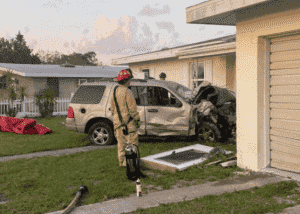
The Law Offices of Anidjar and Levine helps injured victims identify liable parties after food delivery car accidents, including drivers, platforms, restaurants, insurers, or other motorists.
Counsel can preserve crash reports, photographs, witness statements, app records, vehicle data, and surveillance footage before evidence disappears.
A lawyer may also review coverage, document medical bills and lost income, and pursue compensation through insurance claims or Florida litigation.
The sections below explain liability, evidence, causes, rights, and when legal help may be needed.
Learn more from a Florida car accident lawyer.
Main Takeaways
- A Florida food delivery accident lawyer can identify liable parties, including drivers, platforms, restaurants, insurers, or other motorists.
- Key evidence may include crash reports, photos, witness statements, app records, phone data, medical records, and surveillance footage.
- Liability often depends on whether the driver was using an app, a personal vehicle, or working under delivery deadlines.
- Common causes include distracted app use, speeding, fatigue, unsafe parking, poor vehicle maintenance, rain, glare, flooding, and congested intersections.
- Legal support can help manage insurance claims, document damages, negotiate compensation, and pursue litigation when necessary.
How We Can Help With Your Florida Food Delivery Car Accident Injury Claim
After a food delivery car accident in Florida, an injury claim may involve several responsible parties, including the delivery driver, a restaurant, a delivery platform, an insurance company, or another negligent motorist. Legal guidance can help injured individuals protect their interests while they focus on recovery and family responsibilities. A lawyer may coordinate the preservation of evidence, including crash reports, photographs, witness statements, vehicle data, delivery app records, and available surveillance footage. Careful review of insurance documentation can clarify coverage issues, policy limits, and claim deadlines that may affect compensation.
Counsel may also communicate with insurers, evaluate medical bills, document lost income, and assess the long-term effect of the injuries. This support can reduce the burden on victims and those assisting them. By organizing records, identifying accountable parties, and presenting a well-supported demand, legal representation helps pursue fair compensation through negotiation or, when necessary, civil litigation in Florida courts.
Understanding Florida Food Delivery Car Accidents Injury Cases


Understanding how these cases develop begins with recognizing the legal and practical differences between an ordinary collision and one involving food delivery activity. A delivery driver may be using a personal vehicle, working through an app, or operating under time-sensitive instructions that affect how a claim is evaluated. For injured people and those committed to helping them, the focus is often on identifying every responsible party and preserving facts before they disappear.
OUR CONSULTATIONSARE FREE
START YOUR FREE CASE REVIEW

Liability basics may involve the driver, an insurance carrier, a delivery platform, or another entity connected to the trip. Each case requires careful review of the driver’s status, available coverage, and whether the delivery was active at the time of the crash. Proof of negligence generally depends on records, witness statements, crash reports, app data, photographs, and medical documentation. These elements help show duty, breach, causation, and damages, allowing the injured person’s needs to be addressed through a structured legal process.
Florida Food Delivery Accident Statistics — Why Evidence Must Be Secured Immediately
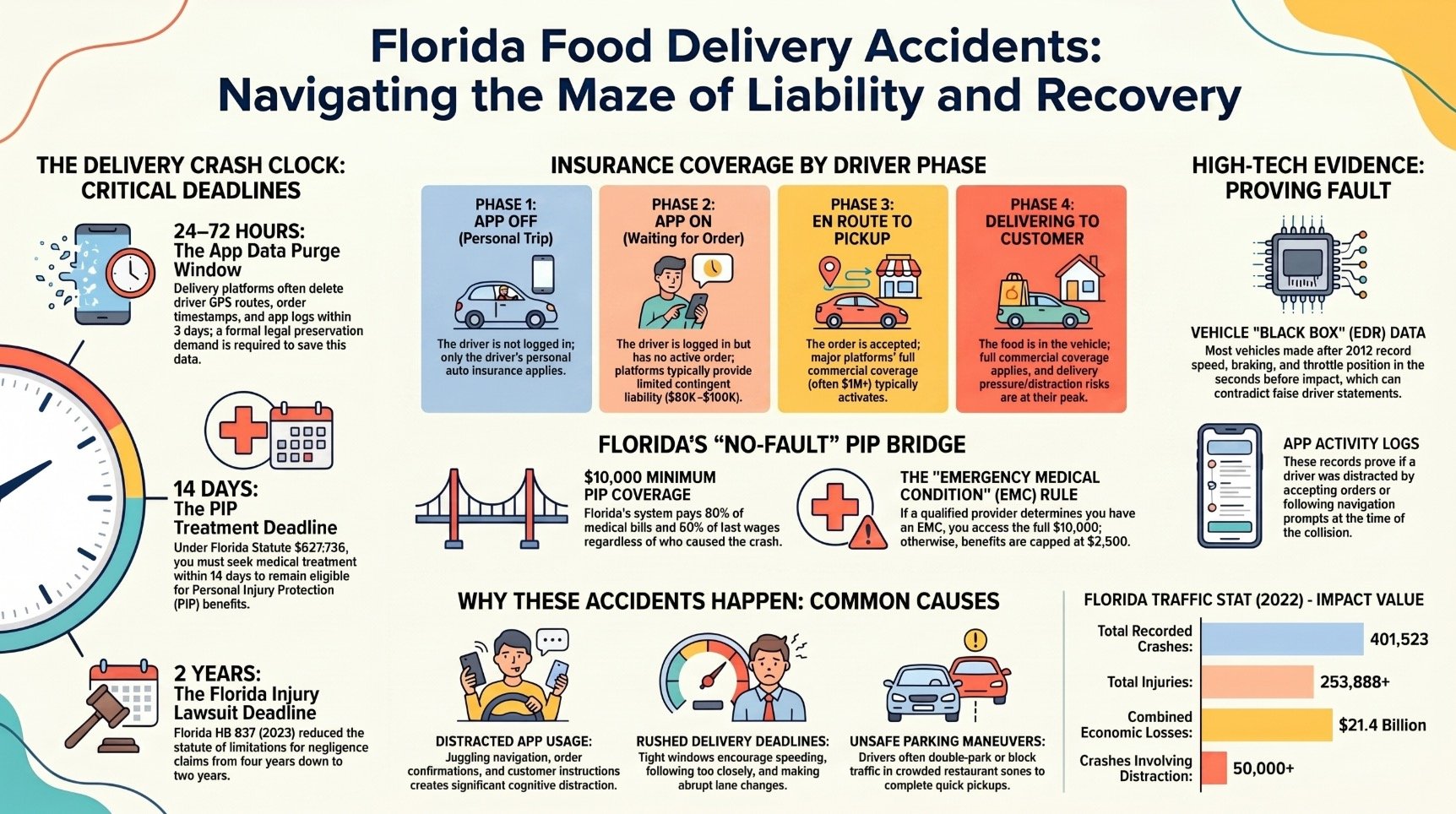
Food delivery crashes occupy a uniquely dangerous niche in Florida’s traffic landscape: a driver juggling real-time app navigation, order confirmations, and unfamiliar residential streets is far more cognitively distracted than a typical motorist. According to the FLHSMV 2022 Florida Traffic Crash Facts, Florida recorded 401,523 crashes in 2022, resulting in 3,535 fatalities and more than 253,888 injuries, with combined economic losses totaling $21.4 billion. Distracted driving contributed to more than 50,000 Florida crashes statewide — and delivery app interaction represents one of the fastest-growing categories of in-vehicle distraction.


Brain injuries are a common consequence of these high-force collisions: the Mayo Clinic notes that traumatic brain injury symptoms may not appear immediately and can worsen significantly without prompt evaluation. In food delivery crashes specifically, the most critical evidence — driver app logs, GPS route data, delivery timestamps, and order status — can be permanently deleted by platforms on routine purge cycles within 24–72 hours of the crash, making immediate preservation not a best practice but a necessity.
Florida Food Delivery Crash — Who Pays, and When
Food delivery crashes are uniquely complex because insurance liability shifts depending on exactly what the driver was doing at the moment of impact. Knowing these phases is the first step in identifying every available coverage source.
Florida HB 837 (2023) impact on food delivery crash claims: Before March 24, 2023, Florida’s pure comparative fault system allowed recovery even when an injured person shared some blame. HB 837 converted this to modified comparative fault — if a court finds you more than 50% at fault, you recover nothing. In food delivery crashes where multiple parties (driver, platform, another motorist, the injured person) all contributed, insurers now have a direct financial incentive to build a record that assigns the injured person more than 50% of fault. Prompt app data preservation, witness identification, and GPS route evidence are the most effective way to lock in the factual record before that manipulation can occur.
Common Causes of Florida Food Delivery Car Accidents
Florida food delivery car accidents often arise from predictable risk factors, including distracted app usage, rushed delivery deadlines, driver fatigue, and unsafe parking maneuvers. These hazards can impair judgment, reduce reaction time, and increase the likelihood of collisions involving motorists, pedestrians, or cyclists. Identifying the cause of a crash is important for evaluating liability, insurance coverage, and the injured party’s potential legal recovery.
Distracted app usage
Often, food delivery collisions occur because drivers divide their attention between the road and the delivery app. A driver may look down to accept an order, confirm a pickup, read customer instructions, or follow changing navigation prompts. This phone distraction can delay reactions to pedestrians, cyclists, traffic signals, and vehicles slowing ahead. Even brief glances away from the roadway may create serious risk, especially in dense Florida traffic. Texting violations may also arise when drivers type updates, respond to messages, or manually adjust app settings while moving. For injured people, these details can help identify negligent conduct. Attorneys may review phone records, app activity, crash reports, and witness statements to determine whether distracted app usage contributed to the collision and resulting harm, supporting accountability and safer community service.
Rushed delivery deadlines
App-based distractions are not the only pressure that may affect a delivery driver’s judgment; tight delivery windows can also encourage unsafe choices behind the wheel. When platforms, restaurants, or customer expectations create pressure on delivery timelines, a driver may speed, follow too closely, or make abrupt lane changes to avoid perceived penalties. These decisions can endanger pedestrians, cyclists, families, and service workers who share Florida’s roads. Route optimization mistakes may increase risk when an app directs a driver through congested areas, confusing intersections, or unsafe shortcuts. A driver focused on meeting a deadline may also misjudge traffic signals or fail to yield. In injury claims, evidence of unrealistic timing demands may help explain why a preventable crash occurred during a food delivery trip.
Driver fatigue
Driver fatigue frequently contributes to food delivery crashes when drivers work late hours, accept back-to-back orders, or combine delivery work with another job. In Florida, long shifts and late-night routes can reduce alertness, slow reaction time, and impair judgment, even when a driver intends to serve customers responsibly. Sleep deprivation may cause drifting between lanes, delayed braking, missed traffic signals, or poor awareness of pedestrians and cyclists. Delivery drivers often feel pressure to remain available during peak demand, but fatigue can make routine driving decisions unsafe. When a collision occurs, investigators may review work schedules, app activity, delivery timing, and phone records to determine whether exhaustion played a role. Recognizing fatigue as a preventable risk supports safer service for customers, drivers, and the broader community.
Unsafe parking maneuvers
Beyond fatigue-related errors, unsafe parking operations are another common cause of Florida food delivery car accidents. Delivery drivers often stop in crowded restaurant areas, apartment complexes, and residential streets where limited space increases risk. Parking lot hazards, including pedestrians, shopping carts, blind corners, and reversing vehicles, can create dangerous conditions when drivers move quickly to complete orders. Accidents may occur when a driver double-parks, blocks traffic, backs without checking mirrors, or pulls into traffic from a curbside stop. Improper signaling can also prevent other motorists, cyclists, and pedestrians from understanding the driver’s intentions.
For individuals committed to protecting others, these risks show the importance of careful stopping, patient observation, and lawful vehicle positioning. Responsible parking practices help reduce preventable injuries during food delivery operations across Florida communities.
Legal Rights of Florida Food Delivery Car Accidents Injury Victims
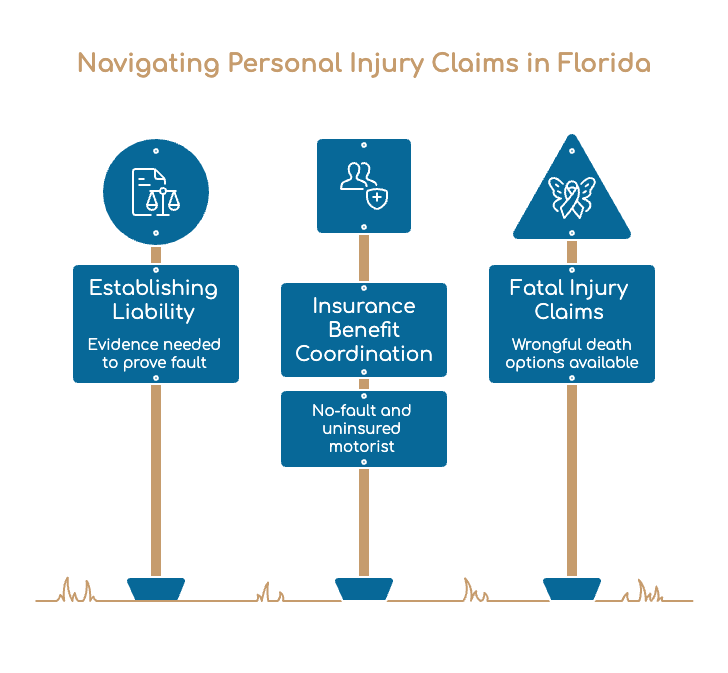
When a food delivery driver is involved in a car accident in Florida, an injured victim may have several legal rights depending on the cause of the crash, the driver’s employment status, and the available insurance coverage. These rights may support recovery for medical bills, lost income, pain, disability, and future care needs. When families are serving an injured loved one, clear guidance can help preserve evidence and protect claims.
- Personal injury claims: A victim may pursue compensation from a negligent driver, delivery company, or other responsible party when liability is supported by evidence.
- Insurance benefits: Florida no-fault benefits may apply first, while uninsured motorist coverage may provide added protection when the at-fault driver lacks adequate insurance.
- Family remedies: If an accident results in a fatal injury, wrongful death options may allow eligible survivors to seek damages for financial losses, support, and companionship.
Timely legal review can help identify available protections.
Why Do Florida Food Delivery Car Accidents Happen?
Why do Florida food delivery car accident injuries happen so often in busy urban and suburban areas? Many crashes arise from delivery pressure, distracted driving, unfamiliar routes, and frequent stopping near homes, restaurants, and apartment complexes. Drivers may rush to complete orders, check navigation apps, or search for addresses, which reduces attention to pedestrians, cyclists, and nearby vehicles.
Weather and road conditions also play a significant role. Heavy rain, glare, flooding, uneven pavement, and congested intersections can make routine deliveries more hazardous. In communities where service to others depends on timely transportation, these risks can affect drivers, customers, and the public.
Vehicle maintenance is another frequent concern. Worn brakes, poor tire tread, broken lights, or neglected inspections can increase stopping distance and reduce control. When delivery companies, app platforms, or individual drivers fail to prioritize safe practices, preventable collisions may occur, causing injuries that disrupt work, caregiving, and daily responsibilities for many families across Florida.
What Should You Do After a Florida Food Delivery Car Accident Injury?
After a Florida food delivery car accident injury, the injured person should seek prompt medical care, even when symptoms appear minor at first. The crash should also be reported to law enforcement and, when appropriate, to the delivery company or insurer. Essential evidence, including photographs, witness information, app records, and medical documentation, should be preserved to protect against any potential injury claim.
Seek medical care
Although the crash scene may seem manageable, prompt medical care is one of the most important steps after a Florida food delivery car accident injury. Injured drivers, passengers, bicyclists, or pedestrians should receive evaluation from emergency personnel, an urgent care clinic, or a qualified physician. Some injuries, including concussions, internal trauma, and soft tissue damage, may not appear immediately, yet can worsen without treatment.
Medical records also support car crash documentation by linking symptoms, diagnoses, and treatment to the collision. This information may help protect an injured person’s ability to seek compensation, especially when insurers question causation or delay payment. Clear treatment records can also assist with insurance denial appeals. Seeking care benefits the injured person, their family, and those who rely on them for stability and support.
Report the crash
At the scene or as soon as safely possible, a Florida food delivery car accident should be reported to the proper authorities. Calling 911 allows dispatchers to send police, medical responders, or fire rescue when needed. If anyone is injured, emergency first aid should be requested immediately, and those present should avoid moving injured persons unless the situation requires it. Reporting also creates an official record, which may later help clarify responsibility and confirm that the incident occurred during a delivery assignment.
The responding officer should receive accurate, calm information, including the location, the vehicles involved, visible injuries, and vehicle-impact details. Drivers should cooperate respectfully, provide license and insurance information, and answer factual questions. A prompt report supports public safety, assists injured people, and helps establish an orderly response.
Preserve key evidence
Once the crash scene is secured and medical needs are addressed, preserving evidence becomes a vital step in a Florida food-delivery car-accident injury claim. Injured persons, witnesses, and caregivers should safeguard photographs, video, vehicle damage records, delivery app screenshots, receipts, and communications with insurers or companies. Food delivery cases may involve GPS tracking, driver app logs, order times, and route details that show speed, location, or work status. Prompt data preservation requests can help prevent the deletion of electronic records held by delivery platforms, restaurants, or vehicle systems. A written record of pain, treatment, missed work, and daily limitations may also support the claim. Careful evidence collection serves the injured person and assists those seeking accountability, fair compensation, and safer community roadways for others.
Critical Evidence in a Florida Food Delivery Car Accident Injury Case
Essential evidence in a Florida food delivery car accident injury case can determine fault, insurance coverage, and the value of claimed damages.
Principal records often include:
- Police accident reports and witness statements
- Driver app records showing delivery status, route, and timing
- Medical treatment records linking injuries to the crash
Police accident reports
When a food delivery crash occurs in Florida, the police accident report often becomes one of the first important documents reviewed in an injury claim. This report may identify the drivers, vehicles, crash location, contributing factors, citations, witness names, and the officer’s observations. For injured people and those serving their recovery, it can provide an organized starting point for understanding what occurred.
Although important, the report is not always complete or final. Officers may rely on limited statements, roadway evidence, or immediate impressions at the scene. An attorney’s investigation may compare the report with photographs, medical records, witness accounts, and dashcam footage. This careful review can reveal inconsistencies, confirm fault, and preserve evidence needed to pursue accountability with accuracy and purpose.
Driver app records
Because food delivery drivers often use mobile platforms to accept orders, navigate routes, and confirm deliveries, driver app records can become important evidence after a Florida car accident. These records may show when an order was accepted, the assigned route, GPS location data, delivery deadlines, and whether the driver was actively working for the platform. Such data can help clarify whether speed, distraction, red light violations, or failure to yield contributed to the crash. In injury claims, these records may also assist in identifying insurance coverage and the responsible parties. Prompt preservation is important because app data may be overwritten or difficult to obtain later. Careful review supports accountability, helps protect injured persons, and promotes safer service for the community.
Witness statements
Along with driver app records, witness statements can provide an independent account of how a Florida food delivery car accident occurred. Bystanders, nearby business employees, rideshare passengers, or other motorists may observe speeding, distraction, unsafe turns, or sudden lane changes before impact. Their observations can help clarify disputed facts when drivers, insurers, or delivery companies offer conflicting versions of events. Promptly collecting witness contact details is important, because memories fade and people may become difficult to locate. Phone camera footage from witnesses may also show vehicle positions, traffic signals, delivery bags, weather conditions, or conduct after the crash. For those committed to helping injured people, preserving these statements supports fairness, accountability, and a clearer understanding of responsibility under Florida law in a food delivery collision claim.
Medical treatment records
After a Florida food delivery car accident, medical treatment records often become central evidence in proving the nature, cause, and severity of an injured person’s losses. These records may include emergency reports, diagnostic imaging, physician notes, prescriptions, therapy plans, and surgical documentation. They help link injuries to the collision, demonstrate the necessary care, and support claims for future treatment. Accurate records also assist caregivers, insurers, and legal advocates in understanding how the harm affects daily service, work, and family responsibilities. Gaps in treatment may be questioned, so consistent follow-up is important. When long-term insurance benefits are involved, documentation may influence eligibility and payment decisions. Records can also reveal concerns involving medical negligence, if delayed diagnosis, improper treatment, or preventable complications worsened the injured person’s condition after the crash.
Event Data Recorders and Food Delivery Crash Evidence in Florida
When a delivery driver disputes their speed, braking, or attentiveness before a crash, objective vehicle data can cut through conflicting accounts faster than any witness. According to the National Highway Traffic Safety Administration (NHTSA), most vehicles manufactured after 2012 are equipped with an event data recorder (EDR) that captures vehicle speed, brake application, throttle position, steering angle, and seat-belt status in the seconds immediately before impact. In a food delivery crash, EDR data showing no braking and sustained high speed directly contradicts a driver’s claim that they were operating normally or that another vehicle caused the crash.
EDR data does not disappear the way app logs do — it is stored in the vehicle’s control modules — but it can be silently overwritten the next time the ignition is turned on after the crash. A vehicle operated even briefly after a collision may no longer contain the pre-impact data that would have proven the case. We send formal preservation letters to at-fault drivers and their insurers immediately upon being retained, requiring that the vehicle not be repaired or transported in ways that could damage the EDR module, and we work with certified EDR extraction specialists to retrieve the data under authenticated chain-of-custody protocols before it is lost.
Florida Personal Injury Protection (PIP) and Food Delivery Accident Injuries
Florida is a no-fault insurance state, which means that after a food delivery crash, your own insurer — not the driver’s, not the platform’s — is the first source of payment for medical bills and lost wages. Every Florida driver must carry a minimum of $10,000 in personal injury protection (PIP) coverage under Florida Statute §627.736. PIP pays 80% of reasonable medical expenses and 60% of lost wages regardless of fault — but only if you seek initial medical treatment within 14 days of the crash date.
This 14-day deadline is particularly dangerous in food delivery crashes because liability disputes between the driver’s personal insurer and the delivery platform often begin immediately. An injured person may assume the platform’s commercial coverage will pay and delay their own medical care while waiting for that question to be resolved — only to discover that PIP has lapsed entirely because the 14-day window has closed. PIP does not wait for liability to be sorted out. Seek treatment first, then let the coverage dispute play out.
Florida’s emergency medical condition (EMC) rule also determines how much of the $10,000 is accessible. If a qualifying provider — physician, osteopathic doctor, advanced registered nurse practitioner, or physician assistant — determines you have an emergency medical condition, the full $10,000 is available. Without that determination, benefits are capped at $2,500. In serious delivery crashes where platform commercial coverage ($1M+) is available in the background, PIP serves as the immediate bridge for medical costs while the larger liability claim is built — making timely treatment the single most important financial decision an injured victim can make in the first two weeks after a delivery crash.
Long-Term Effects of Florida Food Delivery Car Accident Injuries
Long-term injuries from Florida food delivery car accidents may involve chronic pain complications that interfere with work, daily routines, and medical stability. Lasting mobility limitations can also affect independence, transportation needs, and the ability to perform required job duties. These outcomes often contribute to long-term financial strain, especially when treatment costs, lost income, and reduced earning capacity continue after the initial recovery period.
Chronic pain complications
Often, chronic pain becomes one of the most disruptive long-term complications after a Florida food delivery car accident, especially when crash injuries involve the spine, joints, nerves, or soft tissue. Persistent pain may interfere with sleep, concentration, caregiving duties, and the injured person’s ability to consistently serve customers, family members, or community needs. Medical providers may evaluate treatment options such as physical therapy, injections, nerve blocks, counseling, or carefully monitored pain medication, depending on the diagnosis and severity of symptoms. Chronic pain can also create financial pressure through repeated appointments, diagnostic testing, and reduced work capacity. Because symptoms may fluctuate over time, detailed medical records are important. They help connect ongoing suffering to the crash and support a fair injury claim.
Lasting mobility limitations
When injuries affect the legs, hips, knees, feet, spine, or balance systems, lasting mobility limitations may become a serious consequence of a Florida food delivery car accident. These limitations may restrict walking, standing, lifting, driving, or safely negotiating stairs, thereby reducing a person’s ability to assist family, coworkers, and community members. Spinal injury recovery may require therapy, medical monitoring, assistive devices, and careful documentation of functional progress. Even when improvement occurs, lingering weakness, instability, numbness, or reduced range of motion may remain. Medical providers often evaluate whether limitations are temporary, permanent, or likely to worsen. Because mobility concerns can evolve slowly, settlement timeline delays may arise while the full extent of impairment becomes clear, ensuring any claim reflects the lasting physical impact.
Long-term financial strain
Although physical recovery may receive immediate attention, financial strain can become one of the most persistent long-term effects of a Florida food delivery car accident injury. Lost income, reduced earning capacity, and ongoing treatment needs can burden injured drivers and their families for years. Medical bills become a necessary part of documenting expenses, follow-up care, rehabilitation, medications, and future health needs. For those committed to serving customers and communities, financial instability may limit their ability to return to dependable work. Insurance denials can further delay access to needed resources, creating additional pressure during recovery. Careful settlement negotiation may address present losses and anticipated costs, including long-term support. A thorough legal evaluation can help preserve financial stability while injured workers focus on recovery, family responsibilities, and future service.
Proving Liability in Florida Food Delivery Car Accidents Injury Cases
Because food delivery crashes can involve multiple parties and overlapping insurance policies, proving liability requires a careful review of the driver’s conduct, the delivery company’s role, and the circumstances surrounding the collision. Evidence may include police reports, witness accounts, app records, delivery status, vehicle damage, traffic camera footage, and phone data. These details help determine whether the driver was distracted, speeding, fatigued, illegally parked, or violating traffic laws while serving a customer.
Insurance coverage basics also matter because coverage may change depending on whether the driver was logged into the app, waiting for an order, traveling to a restaurant, or delivering food. Fault allocation disputes may arise when the driver, another motorist, a business, or even a vehicle owner contributed to the crash. A careful liability review supports fair accountability, helps protect injured people, and promotes responsible conduct by service providers throughout Florida communities following serious delivery-related collisions.
Dealing With Insurance Companies After a Florida Food Delivery Car Accident Injury
After a food delivery crash in Florida, insurance communications can become complicated quickly, especially where personal auto coverage, commercial policies, app-based coverage, and third-party insurers may all be involved. Adjusters may request statements, medical authorizations, or quick settlements before the full extent of the harm is understood. An injured person benefits from careful documentation, measured responses, and a clear record of treatment, lost income, and vehicle damage.
Insurers often examine whether the driver was logged into an app, carrying an order, or acting outside policy terms. These details can affect available coverage and responsibility. Proving negligence remains central, including showing unsafe driving, distraction, speeding, or failure to yield. Negotiating medical bills may also be necessary when liens, copays, or delayed payments place pressure on the injured person. A lawyer can manage communications, reduce avoidable mistakes, and protect the person’s ability to seek fair compensation while allowing attention to recovery and service to family.
What to Expect During a Florida Food Delivery Car Accident Injury Claim Process
A Florida food delivery car accident injury claim typically begins with reporting the accident, then preserving evidence that may establish fault and damages. The process often requires careful review of insurance coverage, including personal auto policies, delivery app coverage, and any applicable commercial coverage. Once liability, injuries, and available coverage are assessed, settlement negotiations may begin with a focus on securing fair compensation.
Reporting the accident
When a food delivery crash occurs in Florida, prompt notification creates an official record that can influence every stage of the injury claim. The driver, passenger, or injured pedestrian should ensure law enforcement is contacted, especially when injuries, significant vehicle damage, or disputed fault are involved. A police report may document the time, location, parties, and preliminary observations, helping insurers and attorneys assess the claim responsibly. Delivery drivers should also notify the platform in accordance with company procedures, while being careful with their statements. The importance of dashcam data and safety app controls may arise during reporting, particularly when platform systems record trip status or driver activity. Accurate reporting supports public safety, protects vulnerable road users, and helps injured people seek fair consideration without delaying medical attention or legal review.
Gathering key evidence
Because evidence can disappear quickly, gathering important information early is an important part of the Florida food delivery car accident injury claim process. Investigators may collect crash reports, photographs, delivery app records, vehicle damage documentation, medical records, and location data. These materials help clarify how the collision occurred, whether the driver was actively delivering food, and how the injuries affected the person harmed. Witness interviews may also provide crucial context, especially when roadway conditions, traffic signals, or driver conduct are disputed. Attorneys serving injured clients often preserve communications with delivery platforms, employers, and insurers, while avoiding premature conclusions about insurance coverage. Careful evidence collection supports a fair review of responsibility and damages, helping ensure that injured individuals are treated with dignity, accuracy, and respect throughout the claim.
Determining insurance coverage
After the available evidence identifies the driver’s activity at the time of the crash, the next step often involves determining which insurance policies may apply. This review may include the delivery driver’s personal auto policy, any coverage from the food delivery platform, and the injured person’s own protection. Careful evaluation helps ensure that those harmed receive responsible support while their medical and financial needs are assessed.
Insurers may examine coverage exclusions, policy endorsements, and whether the driver was logged into an app, waiting for an order, or completing a delivery. If available coverage is limited, uninsured or underinsured motorist benefits may become important. Reviewing those limits can clarify whether additional sources of compensation exist. This process requires accuracy, patience, and attention to the duties owed to injured individuals.
Negotiating your settlement
Once coverage and damages are better understood, settlement negotiations typically focus on whether the insurer’s offer fairly reflects the injured person’s losses. In Florida food delivery crashes, this review may include medical bills, lost income, reduced earning capacity, pain, and future care needs. Counsel may present records, photographs, witness statements, and expert opinions to support a demand. If an insurance dispute arises over app-based coverage, fault, or the severity of injuries, negotiations may require additional documentation and firm responses. The settlement timeline can vary, depending on treatment progress, insurer cooperation, and the number of responsible parties. A fair resolution should account for immediate needs and long-term stability, allowing the injured person to move forward while preserving dignity, financial security, and access to necessary care.
Compensation for Florida Food Delivery Car Accidents Injury Damages
Pursuing compensation after a Florida food delivery car accident often requires a careful review of medical expenses, lost income, vehicle damage, and the long-term impact of the injuries. Claims may involve the delivery driver, a third-party motorist, an insurer, or a delivery platform, depending on the facts and applicable coverage. A lawyer may assess policy limits, app-based insurance periods, crash reports, medical records, and witness statements to support a fair recovery.
Practical insurance settlement steps include avoiding rushed statements, documenting every communication, and seeking guidance before accepting any offer. Effective evidence preservation includes saving delivery app data, photographs, repair estimates, receipts, and witness names. These steps help protect the injured person’s ability to present a complete claim. For those committed to serving families and communities, proper compensation can support recovery, restore stability, and reduce the burdens caused by preventable roadway harm after a delivery-related collision.
Economic vs. Non-Economic Damages in Florida Food Delivery Car Accident Cases
In Florida food-delivery car-accident cases, damages are generally divided into economic losses, such as medical expenses and lost income, and non-economic losses, such as pain, suffering, and diminished quality of life. Each category serves a different purpose in measuring the harm caused by the crash, particularly when injuries affect both financial stability and personal well-being. Proving these damages requires clear documentation, credible testimony, and a careful assessment of how the accident changed the injured person’s life.
Defining economic damages
After a Florida food delivery car accident, economic damages are the measurable financial losses resulting from the crash. These losses may include emergency treatment, hospital bills, rehabilitation costs, prescription expenses, lost wages, reduced earning capacity, vehicle repair, rental transportation, and other documented out-of-pocket costs. In claims involving delivery drivers, insurance coverage can be complicated because personal policies, employer policies, and app-based commercial coverage may each require review. Strong medical documentation helps connect treatment costs to the collision and supports accurate valuation. Payroll records, repair invoices, and receipts also help demonstrate the financial impact. During settlement negotiations, reliable records and consistent witness accounts can strengthen a claim. Economic damages focus on restoring financial stability, allowing injured people and their families to continue meeting key needs after the accident.
Common non-economic losses
While economic damages address financial losses that can be proven with records, non-economic damages involve the personal harm that does not appear on an invoice or wage statement. In Florida food delivery car accident cases, these losses may include pain, emotional distress, loss of enjoyment of life, inconvenience, and diminished relationships with loved ones. An injured delivery driver, passenger, pedestrian, or other motorist may struggle with anxiety in traffic, disrupted sleep, or reduced ability to care for family members and serve the community. These harms can affect dignity, independence, and daily purpose long after physical injuries have begun to improve. Because non-economic losses are deeply personal, they often become significant in any legal settlement, especially when the accident causes lasting limitations, visible scarring, chronic discomfort, or profound changes in normal living.
Proving Florida accident damages
Because damages must be proven before compensation can be recovered, a Florida food delivery car accident claim depends on evidence that connects the crash to both financial losses and personal harm. Economic damages may include medical bills, lost income, rehabilitation costs, vehicle repairs, and future care needs. Non-economic damages may involve pain, emotional distress, inconvenience, disability, and loss of enjoyment of life. Careful evidence preservation helps document these losses through records, photographs, witness statements, delivery app data, and medical opinions. A lawyer may also review employment status, insurance coverage, and the driver’s delivery activity at the time of impact. During settlement negotiation, organized proof can help present the full value of the claim, allowing injured people to seek fair recovery with dignity, service, and accountability.
When a Florida Food Delivery Car Accident Injury Case Goes to Trial vs. Settlement
Whether a Florida food delivery car accident injury case proceeds to trial or resolves through settlement depends on the strength of the evidence, the severity of the injuries, the available insurance coverage, and the willingness of each party to accept a fair resolution. Evidence preservation is often central because delivery app data, crash reports, medical records, photographs, and witness statements may shape the value of the claim.
Many cases resolve through insurance or settlement negotiations when liability is clear and compensation can meet the injured person’s needs. A settlement may reduce delay, limit stress, and help restore stability for families, caregivers, and others who depend on the injured person’s recovery.
Trial may become necessary when an insurer disputes fault, minimizes injuries, or refuses reasonable compensation. In that setting, courtroom strategy focuses on presenting credible proof, explaining damages clearly, and helping a jury understand how the collision affected daily life, work, and service to others.
Florida Laws That May Affect Your Florida Food Delivery Car Accidents Case
Florida law shapes both settlement negotiations and trial strategy in a food delivery car accident injury case, since statutory rules can affect fault, compensation, insurance coverage, and filing deadlines.
A careful legal review may help injured people, caregivers, and service-minded families understand how responsibility is evaluated when a delivery driver, another motorist, or a company policy contributed to harm.
- Negligence elements require the injured party to show duty, breach, causation, and damages, supported by police reports, witness accounts, medical records, and delivery app data.
- Comparative fault rules under Florida HB 837 (2023) may reduce or eliminate compensation if the injured person is assigned more than 50% of the blame, making accurate preservation of evidence critical.
- Insurance coverage rules may involve the driver’s personal policy, commercial coverage, or platform-related insurance, depending on whether the driver was waiting, en route, or completing a delivery at the time of impact.
These laws guide fair accountability and promote responsible service within Florida communities.
The Statute of Limitations for Florida Food Delivery Car Accidents Injury Cases
After a food delivery car accident, the statute of limitations sets the legal deadline for filing an injury lawsuit, and missing that deadline can prevent an injured person from pursuing compensation in court. In Florida, most negligence-based injury claims must be filed within two years of the crash under HB 837 (effective March 24, 2023), although limited exceptions may apply. This deadline matters when an injured person is recovering, caring for family, or returning to work, because service to others should not cause a loss of legal rights.
Separate insurance claim deadlines, policy notice requirements, and delivery platform reporting rules may arise much sooner than the lawsuit deadline. Prompt attention helps protect medical records, crash reports, photographs, app data, witness information, and vehicle inspection details. Evidence preservation steps include saving delivery receipts, screenshots, messages, dashcam footage, and damaged property before routine deletion or repair occurs. Timely action supports accuracy, accountability, and an orderly review of responsibility under Florida law.
How a Florida Food Delivery Car Accident Injury Lawyer Can Help You
When a crash involves a food delivery driver, a Florida food delivery car accident injury lawyer can help identify the parties, insurance policies, and evidence needed to evaluate a claim. This assistance supports injured people and their families as they focus on recovery, caregiving, and the restoration of daily responsibilities.
- Claim investigation: The lawyer may review police reports, app records, delivery status, vehicle data, witness statements, and medical documentation to determine how the collision occurred.
- Insurance negotiation: Food delivery cases may involve personal auto coverage, commercial policies, or app-based insurance. Counsel can communicate with adjusters, address coverage disputes, and present documented losses with clarity.
- Settlement strategy: A lawyer can assess medical expenses, lost income, pain, future care needs, and liability issues before recommending whether an offer reflects the claim’s value.
Through organized advocacy, legal counsel helps protect the injured person’s interests while promoting a fair, evidence-based resolution.
When to Contact a Florida Food Delivery Car Accident Injury Lawyer
Why should legal guidance be considered promptly following a food delivery collision? An injured person, family member, or caregiver may face medical needs, missed work, and questions from insurers within days. Contacting a Florida food delivery car accidents injury lawyer early can support evidence preservation, including vehicle damage, delivery app records, photos, witness details, and available surveillance footage before it is lost.
Prompt contact is also important when the fault is disputed, injuries appear serious, multiple drivers are involved, or the delivery driver was working through an app or restaurant. These circumstances can create confusion about which insurance policy applies. Early guidance may help prevent statements or paperwork from harming a claim, especially when an insurance denial is possible.
Those caring for an injured loved one should seek help when recovery requires attention and claim deadlines approach. Timely consultation allows practical steps to be taken while the facts remain clear and accessible.
Why You Need an Experienced Florida Food Delivery Car Accident Injury Lawyer
Early contact with counsel is often only the first step, because food delivery collision claims can involve layered insurance issues, disputed employment status, and rapidly changing evidence. An experienced Florida food delivery car accidents injury lawyer understands how driver app logs, delivery status, vehicle data, witness accounts, and medical records may affect responsibility and recovery.
These cases often require careful evidence preservation before phone records disappear, dashcam footage is overwritten, or insurers narrow the facts. Counsel can identify potentially responsible parties, including the delivery driver, platform, vehicle owner, or another motorist, while keeping the injured person’s needs at the center of the claim.
Experience also shapes settlement strategy. A lawyer who understands Florida injury law can evaluate damages, anticipate insurer defenses, and present a claim supported by proof rather than assumption. This guidance helps injured people seek fair compensation while protecting resources needed for recovery, family stability, and continued service to others.
How to Choose the Right Florida Food Delivery Car Accident Injury Lawyer for Your Case
How can an injured person distinguish a qualified attorney from one who simply advertises accident services? Careful evaluation should begin with relevant experience handling food delivery crash claims, including cases involving app-based drivers, commercial coverage disputes, and negligent third parties. A suitable lawyer should understand how delivery platforms, personal auto insurers, and liability carriers may attempt to shift responsibility.
The injured person should also look for disciplined case management. Strong representation includes prompt preservation of evidence, accurate review of medical documentation, clear communication with treating providers, and organized calculation of lost income, future care, and other damages. Attorneys who serve clients well explain each step, respect the medical recovery process, and keep the claimant informed without causing confusion.
A capable lawyer should also have experience with insurance denial appeals, settlement negotiations, and litigation when fair compensation is not offered. The right choice is a professional who combines preparation, compassion, and firm advocacy for the injured person’s lawful recovery.
About The Law Offices of Anidjar & Levine
Founded in 2005 by Marc Anidjar and Glen Levine, the firm began as a two-person operation working out of a construction office conference room. Over the past 20 years, that modest start has grown into one of Florida’s most recognized personal injury practices — with more than $1 billion recovered in settlements on behalf of injury clients across the state. We bring that same determination and depth of experience to every case we handle.
For injured people seeking guidance after a food delivery car accident in Florida, The Law Offices of Anidjar & Levine provides legal representation focused on accountability, insurance recovery, and client support. The firm assists clients harmed by negligent drivers, delivery app operators, commercial insurers, and other responsible parties. Its attorneys work to identify available coverage, document losses, and pursue compensation for medical care, lost income, and long-term effects.
The firm’s approach includes a careful investigation strategy designed to clarify how the crash occurred and who may be liable. Prompt evidence preservation may involve securing police reports, witness statements, vehicle data, delivery records, photographs, and medical documentation. By managing communications with insurers and opposing parties, the firm helps clients focus on recovery and family responsibilities. Its service model reflects a commitment to people who need capable advocacy, practical guidance, and steady support after a serious delivery-related collision in Florida.
Frequently Asked Questions
Are food delivery drivers considered employees or independent contractors in Florida?
Food delivery drivers in Florida may be employees or independent contractors, depending on control, payment structure, and platform policies. Companies often classify drivers as contractors, but worker misclassification rules may challenge that label when supervision or economic dependence is significant. Vicarious liability status can depend on this classification, especially after an accident. Those serving injured persons should assess contracts, app practices, and actual working conditions before reaching conclusions.
Can I sue a food delivery app after a crash in Florida?
Yes, an injured person may sue a food delivery app after a Florida crash when evidence shows legal fault beyond mere use of the platform. Liability may arise from negligent dispatch, unsafe policies, poor screening, or failure to address known risks. Driver negligence can also support claims against the driver and sometimes others. Each case requires careful review of contracts, app records, insurance coverage, and conduct, so responsible service to injured parties remains important.
What if the delivery driver was between orders when they hit me?
If the driver was between orders, liability depends on app status and coverage timing. Insurers may argue the driver was off duty, while victims may show the app remained active, creating commercial exposure. Evidence preservation is critical, including app logs, GPS data, communications, and witness accounts. A careful review can identify responsible coverage, support medical recovery, and help ensure injured people receive fair protection while their needs are addressed.
Does personal auto insurance cover food delivery accidents in Florida?
Personal auto insurance typically does not cover accidents that occur while a driver is delivering food, unless the policy includes specific rideshare or delivery endorsements. Florida coverage requirements mandate PIP benefits, but PIP limitations may restrict recovery, especially for serious injuries or losses beyond policy limits. A careful claim review helps injured people understand available benefits, identify responsible insurers, and protect resources needed for medical care, recovery, and continued service to others.
Can passengers injured in a food delivery vehicle file a claim?
Yes, passengers injured in a food delivery vehicle may file a claim against responsible parties. Injured passengers can seek compensation from the driver’s personal policy, the delivery company’s coverage, or the insurer of another negligent driver. Workers’ compensation generally protects employees, not passengers, unless employment status applies. Those assisting injured persons should help preserve evidence, obtain medical care, and identify insurance sources, because liability and coverage often depend on the delivery activity at the time of the crash.
How does Florida’s personal injury protection (PIP) coverage apply after a food delivery car accident?
Florida requires all drivers to carry at least $10,000 in personal injury protection (PIP) coverage. After a food delivery crash, PIP pays 80% of reasonable medical bills and 60% of lost wages regardless of fault — but only if you seek treatment within 14 days of the accident. If a physician determines an emergency medical condition exists, the full $10,000 is available; otherwise, benefits are capped at $2,500. PIP is always the first source of payment in Florida, regardless of which party caused the crash or which commercial policy may ultimately apply.
Can vehicle black box data prove what a delivery driver was doing before a crash?
Yes. Most vehicles manufactured after 2012 contain an event data recorder (EDR) that captures vehicle speed, braking, throttle position, and steering input in the seconds before impact. In food delivery cases, EDR data showing no brake application and sustained high speed directly contradicts a driver’s claim that they were operating normally. EDR data can be overwritten if the vehicle is operated after the crash, so formal preservation requests must be sent to the at-fault driver and their insurer immediately after an attorney is retained.
Food delivery car accident claims in Florida often involve complicated liability issues, insurance disputes, and significant injury-related losses.
Prompt legal guidance can help protect a victim’s rights, preserve evidence, and pursue fair compensation for medical care, lost income, and other damages.
The Law Offices of Anidjar and Levine provides experienced representation as Florida car accident lawyers for injured parties throughout the state, offering focused support at each stage of the claims process and working to hold negligent drivers and insurers accountable.