The Law Offices of Anidjar and Levine helps identify liable parties after fleet vehicle accidents in Florida, including drivers, employers, vehicle owners, and maintenance providers.
These cases often require review of crash reports, commercial insurance policies, driver logs, dispatch records, GPS data, maintenance history, and witness statements.
A Florida Car Accident Lawyer may document medical expenses, lost income, future care needs, pain-related losses, and coverage disputes.
Early legal involvement can preserve relevant evidence before it is lost, altered, or overwritten; the following sections explain the process in more detail.
Main Takeaways
- A Florida fleet vehicle accident lawyer can identify liable parties, including drivers, employers, vehicle owners, and maintenance contractors.
- Fleet crash claims often require reviewing commercial insurance policies, crash reports, dispatch records, and company safety procedures.
- Preserving evidence like dashcam footage, driver logs, maintenance records, photos, and witness statements can strengthen an injury claim.
- Compensation may include medical expenses, lost wages, future care needs, long-term limitations, and pain-related losses.
- Legal help can resolve coverage disputes involving commercial carriers, overlapping policies, and corporate responsibility in fleet operations.


How We Can Help With Your Florida Fleet Vehicle Accident Injury Claim
When a fleet vehicle accident causes injury, a Florida personal injury lawyer can help determine who may be liable, preserve key evidence, and pursue compensation through the appropriate insurance or legal claims.
Legal guidance may include reviewing crash reports, identifying commercial insurance coverage, communicating with adjusters, and documenting medical losses with care and accuracy. For injured people and families focused on recovery, this support can reduce confusion and promote orderly decision-making.
A lawyer may also coordinate evidence preservation by seeking driver records, vehicle maintenance logs, onboard data, photographs, witness statements, and company policies before they are lost or altered. Careful case evaluation can clarify damages, including medical expenses, lost income, future care needs, and pain-related losses.
With a measured settlement strategy, counsel can respond to insurer tactics, assess offers against documented harm, and prepare for litigation when fair resolution is not offered. This work supports accountability while respecting the injured person’s dignity.
OUR CONSULTATIONSARE FREE
START YOUR FREE CASE REVIEW

Understanding Florida Fleet Vehicle Accident Injury Cases
Because fleet vehicles are often operated for business purposes, injury cases involving these vehicles may present issues beyond those found in ordinary passenger car accidents. These matters can involve corporate ownership, employee conduct, contracted drivers, insurance coverage, and records maintained by the business. A careful review may identify whether a company had proper policies, training practices, inspection procedures, and supervision in place.
In Florida, fleet vehicle injury cases may also require attention to Federal safety regulations, especially when commercial transportation, interstate activity, or regulated vehicle classes are involved. OSHA compliance may be relevant when the vehicle was used in a workplace setting or as part of an employee’s assigned duties.
For injured individuals, including those committed to serving families, patients, clients, or communities, these cases require organized documentation and informed legal evaluation. Understanding the legal framework helps determine responsible parties, available compensation, and the evidence needed to support a claim.
Common Causes of Florida Fleet Vehicle Accidents
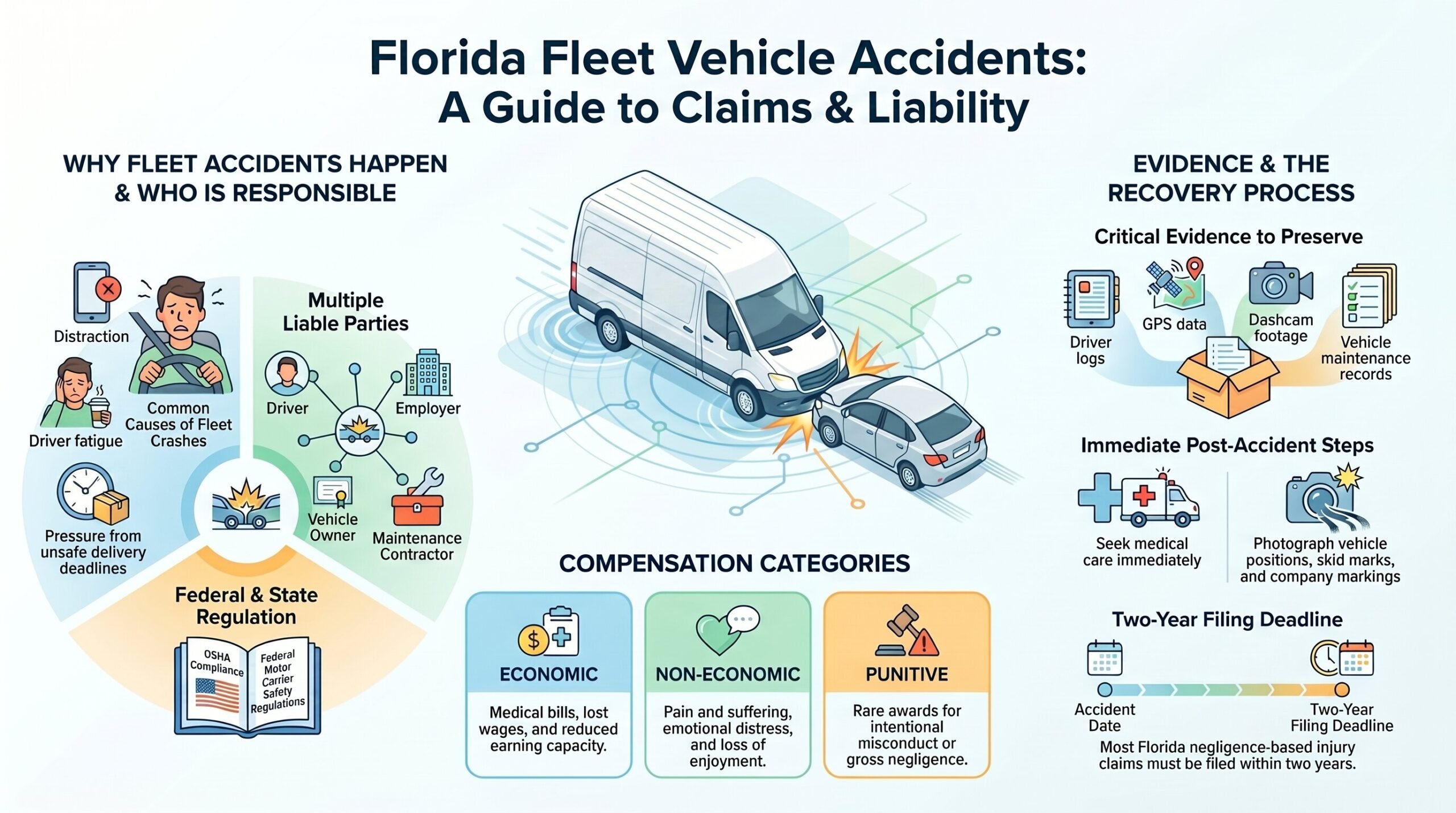
Florida fleet vehicle accidents often stem from preventable conditions that put drivers, passengers, and other road users at risk. Common causes may include distracted fleet drivers, poor vehicle maintenance, driver fatigue, and unsafe delivery deadlines imposed by company policies or scheduling demands. Identifying these factors is crucial when evaluating liability, negligence, and the full circumstances surrounding an injury claim.
Distracted Fleet Drivers
Although commercial driving requires constant attention, distracted fleet drivers remain a significant cause of accidents involving fleet vehicles in Florida. Drivers operating delivery vans, service trucks, rideshare vehicles, or company cars may become distracted by Cell Phone Use, dispatch messages, food, passengers, or in-cab technology. Even a brief lapse can reduce reaction time, increase stopping distance, and place motorists, pedestrians, and service workers at serious risk.
Fleet operations often depend on schedules, customer requests, and Route Planning updates, but these duties should never take precedence over safe driving. Responsible companies can protect the public by training drivers, enforcing communication policies, and requiring stops before reviewing directions or messages. When distraction contributes to a crash, injured individuals may need legal guidance to identify accountable parties and pursue appropriate compensation.
Poor Vehicle Maintenance
For many fleet operators, poor vehicle maintenance is a significant hazard that can turn routine travel into a serious Florida fleet vehicle accident. Worn brakes, underinflated tires, faulty lights, and neglected steering components can place drivers, passengers, and the public at unnecessary risk. Organizations committed to serving clients and communities should treat maintenance schedules as vital safeguards rather than administrative burdens.
Clear Workplace policies help assign responsibility for inspections, repairs, and documentation before vehicles return to service. Effective safety training also teaches employees how to identify warning signs and promptly report defects. Regular compliance audits can reveal gaps in recordkeeping, vendor oversight, or repair practices. When preventable mechanical failures cause harm, maintenance history may become important evidence in evaluating accountability and protecting injured persons.
Driver Fatigue Risks
During long routes or demanding schedules, driver fatigue can become a major factor in a Florida fleet vehicle accident. Fatigued drivers may experience slower reaction times, reduced attention, and impaired judgment, creating serious risks for passengers, other motorists, pedestrians, and those receiving services. The issue of fatigue versus sleep is important because a driver may be awake yet still too impaired by exhaustion to operate safely.
Fleet operators should monitor work hours, rest periods, and warning signs such as drifting, delayed braking, or inconsistent speed. Federal driving rules may apply to certain commercial drivers, and violations can indicate preventable negligence. When fatigue contributes to a collision, records, schedules, logs, and communications may help determine whether the driver or employer failed to protect the public with appropriate care.
Unsafe Delivery Deadlines
Unsafe delivery deadlines can place dangerous pressure on fleet drivers, particularly when companies prioritize speed over safe driving practices. In Florida, demanding delivery schedules may encourage speeding, unsafe lane changes, rolling stops, and reduced rest periods. These conditions increase the risk of Distracted driving, as drivers may monitor dispatch messages, navigation tools, or customer updates while operating large vehicles.
When a company sets unrealistic expectations or fails to monitor safety compliance, employer liability may arise after a serious collision. Organizations that serve the public have a duty to balance efficiency with responsible transportation practices. Proper route planning, reasonable time windows, and clear safety policies help protect drivers, customers, and other road users. When deadlines override caution, preventable accidents involving fleet vehicles can cause substantial harm and legal consequences.


Legal Rights of Florida Fleet Vehicle Accident Injury Victims
When a fleet vehicle crash occurs in Florida, injured victims may have the right to pursue compensation from multiple responsible parties, including the driver, the driver’s employer, the vehicle owner, or a third-party maintenance provider. These rights support access to medical care, wage recovery, and accountability after preventable harm. A careful liability investigation may identify commercial policies, service records, dispatch records, and other sources of recovery.
Florida fleet crash claims may involve multiple parties, requiring careful investigation to protect compensation rights.
Victims and their advocates often focus on:
- Prompt evidence preservation, including vehicle data, photographs, and maintenance documents.
- Collection of eyewitness testimony before memories fade or witnesses become unavailable.
- Review of employment relationships, vehicle ownership, and operational control.
- Assessment of damages, including treatment costs, lost income, and long-term limitations.
- Resolution of insurance coverage disputes involving commercial carriers or overlapping policies.
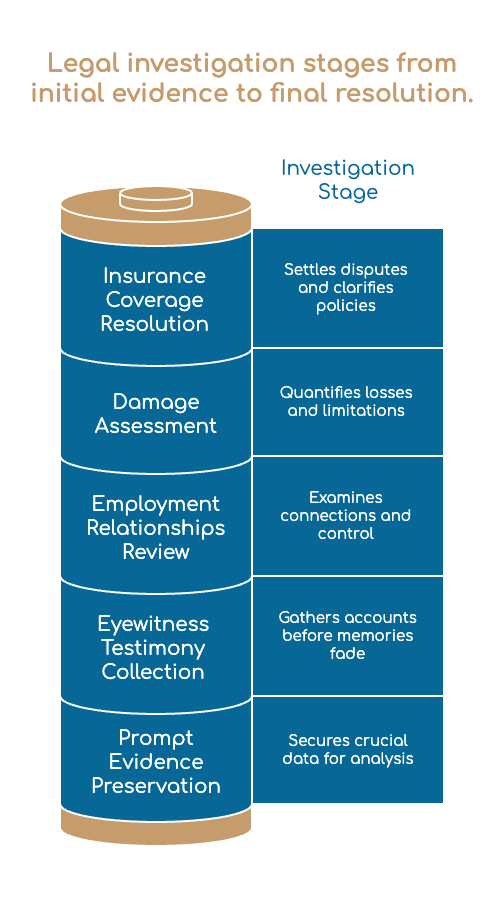
Florida law gives injured individuals a pathway to seek fair compensation while encouraging responsible parties to uphold safer service standards for the community at large.
Why Do Florida Fleet Vehicle Accident Injuries Happen?
On Florida’s roads, injuries from fleet vehicle accidents often result from a combination of driver conduct, company policies, vehicle condition, and operational pressure. Delivery vans, rideshare vehicles, service trucks, and commercial cars may operate under tight schedules, increasing the risk of speeding, fatigue, distraction, and unsafe lane changes. When employers fail to screen drivers, enforce safety rules, or monitor performance, preventable harm can follow.
Mechanical neglect also contributes to serious crashes. Worn brakes, overloaded cargo, poor tire maintenance, and ignored warning systems may place the public at risk. Because fleet operations involve business interests, liability coverage can become disputed, especially when insurers question whether the driver was working within assigned duties. These disputes may lead to insurance denial, even when injuries are significant.
For injured individuals and those supporting them, evidence preservation and medical documentation often become central to understanding how the crash occurred and who may be responsible under Florida law.
What Should You Do After a Florida Fleet Vehicle Accident Injury?
After a Florida fleet vehicle accident, an injured person should seek immediate medical care to identify injuries and create a reliable medical record. If it is safe to do so, documenting the accident scene through photographs, witness information, and vehicle details may help preserve important evidence. Contacting a fleet accident lawyer can also be important, as these cases often involve employers, insurers, and intricate liability issues.
Seek Immediate Medical Care
Even if an injury appears minor at the scene, prompt medical evaluation is vital following a Florida fleet vehicle accident. Medical professionals can identify hidden trauma, including soft tissue damage, concussions, internal injuries, or conditions that may later develop into chronic pain. Early treatment also helps heal the injured person’s health, allowing caregivers, family members, and support providers to respond responsibly and effectively.
Medical records may also establish a clear connection between the collision and the injury. This documentation can become vital when insurance carriers, fleet operators, or defense representatives question the severity or cause of harm. By seeking care without delay, an injured person supports both recovery and accountability. In some cases, hiring experts may help explain medical findings and the long-term impact of treatment needs.
Document The Accident Scene
Prompt medical care protects health, but evidence from the accident scene may also affect the strength of a future injury claim. When conditions permit, the injured person or a trusted helper should preserve crucial details before vehicles are moved or hazards are cleared. Useful evidence may include photographs of vehicle positions, skid marks, debris, traffic signals, license plates, company markings, weather conditions, and visible property damage.
Photographing injuries soon after the collision can also help show how the injury appeared before bruising, swelling, or treatment altered its appearance. Witness statements should be gathered respectfully, with names, phone numbers, and brief descriptions of what each person observed. This careful documentation supports accurate reporting, assists those responsible for evaluating the crash, and helps protect the injured person’s ability to seek fair recovery later.
Contact A Fleet Accident Lawyer
In the days following a Florida fleet vehicle accident, contacting a lawyer with experience in commercial and fleet-related injury claims can help protect the injured person’s legal position. Counsel can identify responsible parties, preserve company records, and guide communication with insurers before statements are misused. For individuals focused on caring for family members, coworkers, or passengers, legal guidance can reduce confusion and support steady decision-making.
A lawyer may arrange an expert evidence review, examine police report accuracy, and compare vehicle data, maintenance records, and witness accounts. This review helps shape an insurance claim strategy that reflects medical needs, lost income, and long-term care concerns. Counsel can also explain the settlement timeline expectations so the injured person understands the key stages, possible delays, and decisions that require informed consent.
Critical Evidence in a Florida Fleet Vehicle Accident Injury Case
Critical evidence in a Florida fleet vehicle accident injury case can clarify fault, corporate responsibility, and the extent of preventable risk. Key materials may include:
- Driver logs
- Vehicle maintenance records
- Dashcam footage
- Crash scene evidence
- Company safety policies
These records can help determine whether the driver, employer, or another party failed to meet required safety standards.
Driver Logs
When a collision involves a commercial or fleet vehicle, driver logs may reveal whether the driver or the employer violated safety rules before the crash. These records can show hours driven, rest periods, route timing, and potential fatigue concerns. In a Florida injury case, a careful breakdown of log reliability may compare handwritten entries, electronic logging data, GPS information, dispatch notes, and fuel receipts.
Discrepancies can indicate falsification, poor supervision, or pressure to meet unsafe schedules. Attorneys serving injured people often move quickly because records may be overwritten or lost. Practical tips for obtaining driving records include sending preservation letters, requesting employer policies, seeking electronic log downloads, and using subpoenas when necessary. Reliable logs help establish accountability, support fair recovery, and promote safer fleet practices.
Vehicle Maintenance Records
Driver logs may explain how a fleet vehicle was operated before a crash, but maintenance records can show whether the vehicle should have been on the road at all. These records may reveal overdue inspections, ignored brake problems, tire defects, handling issues, or repeated repairs that warned a company of danger. In a Florida fleet vehicle accident injury case, careful review of service histories can help determine whether the fleet owner placed public safety above convenience or profit.
Maintenance files also support Claim Documentation by connecting mechanical neglect to the collision and resulting injuries. When combined with Safe Hiring practices, they help show whether a company used responsible systems to protect drivers, passengers, and the community. Accurate records can preserve accountability and strengthen an injured person’s pursuit of lawful relief.
Dashcam Footage
Because a fleet vehicle crash can unfold in seconds, dashcam footage may provide one of the clearest records of how the collision occurred. A careful review of dashcam footage may show vehicle speed, lane position, braking, driver attentiveness, traffic signals, and the actions of nearby motorists before impact. For injured people and those assisting them, this evidence can help clarify responsibility when memories are incomplete or accounts differ.
Fleet operators may control the recording system, so timely preservation requests are important to prevent loss, overwriting, or alteration. Attorneys may also examine chain-of-custody evidence to confirm who accessed the video, when it was saved, and whether it remained intact. When properly authenticated, dashcam footage can support negotiations, insurance claims, and litigation with objective detail and reliable context.
Crash Scene Evidence
After a fleet vehicle crash, physical evidence at the scene may help establish how the collision occurred and who may be responsible. Skid marks, vehicle resting positions, debris fields, roadway damage, and fluid trails can reveal speed, direction, braking, and points of impact. Photographs taken promptly may preserve conditions before cleanup, weather changes, or repairs alter the scene.
Witness statements can further clarify what happened, especially when bystanders observed the driver’s behavior, lane changes, or compliance with traffic signals. A nearby traffic camera may also capture the fleet vehicle’s movement before and during impact. For injured individuals and families seeking accountability, careful preservation of evidence supports a fair evaluation of fault. Prompt investigation can help protect important details that may otherwise be lost, disputed, or overlooked during the claims process in Florida.
Long-Term Effects of Florida Fleet Vehicle Accident Injuries
Fleet vehicle accident injuries in Florida may result in long-term consequences, including chronic pain conditions that interfere with daily function and independence. These injuries can also reduce earning capacity, particularly when physical limitations prevent a return to prior job duties. Ongoing medical needs, such as therapy, medication, specialized care, or future procedures, may significantly affect the value and complexity of an injury claim.
Chronic Pain Conditions
A chronic pain condition may develop when injuries from a Florida fleet vehicle accident do not fully resolve, even after emergency treatment, surgery, or physical therapy. Persistent neck, back, shoulder, or nerve pain can affect sleep, mobility, caregiving duties, and daily service to others. These conditions may require ongoing medical monitoring, diagnostic testing, pain management, and future treatment planning to address changing symptoms.
Care providers may recommend injections, therapy, assistive devices, or prescription medication, although medication side effects can create additional health concerns. Documentation is important because chronic pain is often difficult to measure through imaging alone. Medical records, medical opinions, and consistent treatment histories may help explain how pain limits ordinary activities and long-term well-being after a serious fleet vehicle collision in Florida.
Reduced Earning Capacity
When injuries from a Florida fleet vehicle accident interfere with a person’s ability to perform job duties, reduced earning capacity may become a significant long-term concern. A worker who once served clients, patients, passengers, or the public may face limits in lifting, standing, driving, concentrating, or completing necessary tasks. These restrictions can lead to lower wages, fewer hours, reassignment, or the need to leave a chosen field.
Vocational rehabilitation may help identify transferable skills, training options, and suitable employment paths, but it may not fully restore prior income. Future job loss can also be relevant when an injury makes continued employment unstable. Evaluating reduced earning capacity often requires careful review of work history, education, physical limitations, and labor market conditions after the accident.
Ongoing Medical Needs
Long-term medical care may become necessary after a Florida fleet vehicle accident, particularly when injuries cause lasting pain, mobility limitations, nerve damage, or cognitive problems. These conditions may require visits from a competent provider, diagnostic testing, medication management, physical therapy, counseling, assistive devices, or home modifications. Future treatment planning helps identify the care an injured person may need months or years after the crash, including procedures that support stability and dignity.
A sound rehabilitation strategy also considers functional goals, safe movement, work restrictions, and the person’s ability to serve family, community, or dependents. Medical documentation is critical because ongoing needs often shape the value of an injury claim. Careful evaluation can connect future costs to the fleet vehicle accident and support fair compensation for sustained harm.
Proving Liability in Florida Fleet Vehicle Accident Injury Cases
Because fleet vehicle crashes often involve multiple parties, proving liability requires a careful review of the driver’s conduct, the employer’s responsibilities, and the vehicle’s ownership and maintenance history. Evidence may include crash reports, driver logs, GPS data, maintenance records, hiring files, and witness statements. These materials help identify whether the driver acted carelessly, whether the company failed to train or supervise properly, or whether unsafe vehicle conditions contributed to the harm.
Florida’s Comparative negligence rules may reduce recovery if an injured person shares fault, making accurate evidence critical. When a company knowingly allows dangerous conduct, ignores safety rules, or permits an unfit driver to operate a fleet vehicle, punitive damages may be considered in limited cases.
A focused liability investigation helps protect injured individuals and supports fair accountability. For those committed to serving others, this process also encourages safer business practices, responsible supervision, and stronger public protection on Florida roads.
Dealing With Insurance Companies After a Florida Fleet Vehicle Accident Injury
After liability has been examined, the insurance process often becomes the next major challenge in a Florida fleet vehicle accident injury claim. Fleet accidents may involve commercial policies, employer coverage, personal injury protection, and potential Uninsured Motorist benefits. Each insurer may seek statements, records, or documents that affect valuation, so careful coordination helps protect the injured person’s interests.
Coverage Limits are especially important because fleet policies may provide higher protection, yet exclusions, layered coverage, or disputed employment status can complicate recovery. Insurers may also raise questions about medical necessity, wage loss, or the connection between the crash and the injury.
Settlement Timeframes can vary based on the severity of harm, available documentation, and the insurer’s willingness to evaluate losses in good faith. When payment is delayed, reduced, or refused, Claim Denial Appeals may require organized evidence and precise legal arguments. Skilled guidance supports a fair process while preserving dignity and care.
What to Expect During a Florida Fleet Vehicle Accident Injury Claim Process
A Florida fleet vehicle accident injury claim often begins with prompt reporting of the accident, followed by a careful review of driver conduct, company policies, and vehicle maintenance records. Investigating fleet liability is critical because responsibility may extend beyond the individual driver to an employer, contractor, or corporate vehicle owner. The process typically includes insurance negotiations and, when supported by the evidence, pursuit of compensation for medical expenses, lost income, and other injury-related losses.
Reporting The Accident
When a fleet vehicle accident occurs in Florida, prompt reporting is an essential step in protecting an injury claim. The injured person, responding personnel, or company representative should notify law enforcement, request medical assistance, and, when safe, ensure hazards are reduced. These Emergency response steps help establish an official record while prioritizing care for everyone involved.
After immediate needs are addressed, the report should include the time, location, vehicle identifiers, driver information, employer details, and any visible injuries. Witness statement capture should begin as soon as feasible, since memories may fade and contact information can be lost. Reports to insurers or fleet managers should remain factual, concise, and consistent. Careful reporting helps support later claim review without drawing conclusions about fault or broader fleet responsibility.
Investigating Fleet Liability
Once the accident has been reported and the initial records are preserved, the claim process often shifts toward determining whether the fleet owner, employer, maintenance contractor, or another party may share legal responsibility. Investigators may review driver logs, hiring files, training records, dispatch instructions, vehicle inspection reports, and maintenance histories. These materials can reveal evidence of employer negligence, such as unsafe scheduling, poor supervision, inadequate screening, or ignored repair needs.
Witness statements, crash data, photographs, and police findings may also help establish how the collision occurred and who had control over the vehicle. Careful investigation supports a fair assessment of fault while protecting injured people, families, and service-minded workers. It may also clarify corporate relationships, leased vehicle arrangements, and facts that later contribute to insurance coverage disputes in Florida claims.
Handling Insurance Negotiations
Insurance negotiations in a Florida fleet vehicle accident claim often begin after liability evidence, medical records, wage documentation, and coverage information have been gathered. The insurer may review driver logs, maintenance history, company policies, photographs, and witness interviews before responding to a demand. A careful settlement strategy helps present the claim in an organized manner, showing how the fleet operator’s conduct affected the injured person’s recovery, work, and daily responsibilities.
Communication should remain accurate, respectful, and measured, especially when parties seek a fair resolution that supports recovery and accountability. Adjusters may dispute fault, treatment, or the seriousness of injuries, so each response should be supported by records and facts. Through disciplined negotiation, the claim can move toward informed evaluation without overlooking important evidence or procedural requirements under Florida law.
Pursuing Injury Compensation
After negotiations clarify the disputed issues, the injury compensation process in a Florida fleet vehicle accident claim may involve continued documentation, settlement evaluation, or litigation if a fair resolution is not reached. Counsel may review medical records, vehicle data, employment policies, repair findings, and witness statements to determine whether the insurance claim reflects the full harm sustained.
No immediate medical treatment can complicate valuation, so later care must be documented in the records and supported by credible provider opinions. Prompt evidence collection remains important, particularly when fleet logs, maintenance files, or driver schedules may show preventable risk. A final demand may address medical expenses, lost income, reduced capacity, pain, and future needs. If settlement efforts fail, filing suit allows structured discovery, sworn testimony, and judicial oversight to pursue accountable compensation.
Compensation for Florida Fleet Vehicle Accident Injury Damages
When a fleet vehicle accident causes injury in Florida, compensation may depend on the extent of the harm, the available insurance coverage, and the legal responsibility of the driver, employer, or vehicle owner. A careful review of liability can help identify all accountable parties, including companies that failed to train drivers, maintain vehicles, or enforce safe operating policies.
Claims may require prompt action because commercial insurers often start investigations immediately. Evidence preservation strategies can protect service logs, GPS data, dash camera footage, inspection records, and driver communications before they are lost or altered. Traffic control documentation may also help show how roadway conditions, signals, lane closures, or work zones affected the collision.
A lawyer evaluating these matters may coordinate records, witness accounts, and accident reports to support a fair claim. This process serves injured individuals by pursuing accountability, promoting safer fleet practices, and helping ensure that available compensation is properly considered.
Economic vs Non-Economic Damages in Florida Fleet Vehicle Accident Cases
In Florida fleet vehicle accident cases, damages are generally divided into economic and non-economic losses, each serving a distinct role in evaluating compensation. Economic damages may include medical expense recovery and lost income claims, which are supported by records, bills, wage statements, and other financial documentation. Non-economic damages address pain and suffering, including the physical discomfort, emotional distress, and loss of normal life that may follow a serious collision.
Medical Expense Recovery
Because medical treatment often begins before fault is fully determined, recovery of medical expenses in a Florida fleet vehicle accident case requires careful documentation and a clear understanding of available insurance sources. Bills may involve emergency care, diagnostic testing, surgery, rehabilitation, prescriptions, and pain management options. Each expense should be supported by records linking treatment to the collision, not unrelated conditions.
Florida personal injury protection benefits may apply first, while liability coverage, commercial policies, or excess coverage may become relevant as responsibility is evaluated. Careful attention to insurance claim timelines helps protect access to payment and prevents avoidable disputes. For those serving injured individuals, organized medical records, provider statements, and consistent follow-up can help present a reliable claim for past and anticipated care.
Lost Income Claims
After a fleet vehicle collision disrupts an injured person’s ability to work, lost income claims may become a central part of economic damages in a Florida injury case. These claims may include missed wages, reduced earning capacity, lost benefits, and diminished business income supported by payroll records, tax returns, employer statements, and medical restrictions. When Trucking Company Negligence causes a crash, the responsible company may be liable for income losses resulting from unsafe hiring, poor supervision, or inadequate vehicle maintenance. Careful documentation helps show how the injury limited the person’s ability to serve clients, support family, or maintain employment. In fatal cases, related financial losses may also be evaluated within Wrongful Death Settlements, including lost support and services that would have benefited surviving family members.
Pain And Suffering
Lost income claims address measurable financial harm, but pain and suffering damages account for the personal impact that does not appear on a paycheck, invoice, or tax return. In Florida fleet vehicle accident cases, these non-economic damages may reflect physical pain, emotional distress, loss of enjoyment, scarring, disability, and the disruption of daily life. Their value often depends on medical evidence, the severity of injuries, the duration of treatment, and credible testimony from those who understand the injured person’s changed condition.
In wrongful death claims, related damages may address survivors’ mental pain and loss of companionship. Courts and insurers evaluate these losses carefully, because they require fair judgment rather than simple calculation. In rare cases involving intentional misconduct or gross negligence, punitive damages may also be considered under Florida law.
When a Florida Fleet Vehicle Accident Injury Case Goes to Trial vs Settlement
When liability, damages, and insurance coverage can be evaluated with sufficient certainty, many Florida fleet vehicle accident injury cases resolve through settlement rather than trial. Settlement may spare injured people, families, employers, and insurers the delay, cost, and strain of courtroom proceedings, while still providing resources for medical care, lost income, and recovery needs.
A case may proceed to trial when fault is disputed, injuries are minimized, records are challenged, or an insurer refuses to offer fair compensation. Trial preparation requires a disciplined litigation strategy, including witness review, expert testimony, vehicle data analysis, and careful presentation of company policies or driver conduct. Jury selection also becomes important because jurors must assess evidence fairly and understand the harm caused by the collision.
Both paths require service-minded advocacy. The goal is not unnecessary conflict, but a just result that supports restoration, accountability, and responsible resolution.
Florida Laws That May Affect Your Florida Fleet Vehicle Accident Case
Several Florida laws may shape how a fleet vehicle accident injury case is investigated, valued, and resolved. These rules can affect injured drivers, passengers, pedestrians, and service-minded organizations that rely on vehicles to assist the public.
Florida fleet accident claims require careful review because multiple laws may affect fault, coverage, and recovery.
- Florida’s Comparative Negligence rule may reduce compensation when an injured person shares fault for the crash.
- Vicarious liability principles may hold an employer responsible when a fleet driver causes harm while performing job duties.
- Commercial insurance requirements can influence available coverage, claim handling, and recovery options after a serious collision.
- Government Liability rules may apply when a public agency, municipal vehicle, or government contractor is involved.
- Florida traffic statutes, inspection duties, and vehicle maintenance standards may help establish unsafe driving, poor supervision, or negligent upkeep.
Each law should be reviewed with care, because fleet cases often involve layered responsibility. A focused legal evaluation can help identify accountable parties and protect the injured person’s right to fair recovery.
The Statute of Limitations for Florida Fleet Vehicle Accident Injury Cases
Beyond the laws that determine fault, insurance coverage, and public agency responsibility, stringent filing deadlines can control whether a Florida fleet vehicle accident injury claim may proceed at all. In Florida, most negligence-based injury claims must be filed within two years of the accident date. When a government-owned fleet vehicle is involved, earlier notice requirements may apply, including written notice to the proper agency before litigation can begin.
Liability deadlines are important because missed time limits can bar recovery, even when injuries are serious and fault seems clear. These rules also affect evidence preservation. Fleet vehicle cases may involve driver logs, dispatch records, maintenance files, GPS data, inspection reports, and internal safety materials. Such records can change, be overwritten, or become difficult to obtain as time passes.
Prompt action supports accurate evaluation, protects the injured person’s rights, and helps ensure that responsible parties remain accountable under Florida law, especially when public service vehicles are involved.
How a Florida Fleet Vehicle Accident Injury Lawyer Can Help You
Because fleet vehicle claims often involve commercial policies, employer liability, and agency procedures, a Florida fleet vehicle accident injury lawyer can help identify the responsible parties and preserve the evidence needed to support a claim. This guidance can be especially valuable when injured people, families, or caregivers are trying to restore stability and continue serving others with dignity.
A Florida fleet vehicle accident lawyer can help protect evidence and clarify liability after a commercial crash.
A lawyer may assist by coordinating crucial tasks, including:
- Conducting Risk assessment to evaluate liability, damages, and potential defenses.
- Reviewing insurance coverage under commercial, employer, and excess policies.
- Managing evidence preservation, including driver logs, maintenance records, and incident reports.
- Communicating with insurers, fleet operators, and opposing parties in a structured manner.
- Handling settlement negotiations to pursue fair compensation for medical costs, lost income, and other losses.
Through organized advocacy, counsel can reduce confusion, protect the claim’s integrity, and present the facts in a clear, service-focused manner.
When to Contact a Florida Fleet Vehicle Accident Injury Lawyer
After a fleet vehicle collision, prompt legal consultation may help protect evidence, clarify insurance issues, and prevent avoidable mistakes in the claims process. Contact is especially important when injuries require medical care, when a commercial driver was involved, or when the vehicle belonged to an employer, rental provider, delivery company, government entity, or nonprofit organization serving the public.
Early guidance may also be useful when accident reports are incomplete, when witnesses become difficult to locate, or when the company’s insurer requests a recorded statement. Insurance coverage questions can arise quickly because fleet policies may involve layered coverage, employer responsibility, or multiple carriers. A lawyer can help identify deadlines, preserve maintenance records, driver logs, electronic data, and communications that may affect the claim.
Individuals should also seek legal input before accepting payment or signing releases. Settlement negotiation strategies are better considered after medical needs, lost income, and future care concerns are reasonably understood.
Why You Need an Experienced Florida Fleet Vehicle Accident Injury Lawyer
Prompt action is only one part of protecting a fleet vehicle accident claim; the quality of the legal guidance can significantly affect how liability, insurance coverage, and damages are assessed. Fleet collisions often involve employers, drivers, maintenance contractors, leasing entities, and commercial insurers, creating layered responsibility that requires careful investigation. An experienced Florida fleet vehicle accident injury lawyer can identify governing safety rules, preserve service records, analyze driver histories, and evaluate whether company practices placed the public at risk.
For injured people and families focused on recovery and community responsibilities, skilled representation can provide needed structure during a difficult period. Proving damages requires more than presenting medical bills; it may involve documenting lost income, future care needs, diminished function, and the wider impact of injury. Counsel also evaluates settlement positions through informed trial strategy, helping ensure that insurers understand the risks of undervaluing the claim. This disciplined approach supports accountability and fair compensation.
How to Choose the Right Florida Fleet Vehicle Accident Injury Lawyer for Your Case
Selecting the right Florida fleet vehicle accident injury lawyer requires careful attention to experience, resources, and case strategy. A suitable attorney should understand commercial insurance policies, employer liability, driver logs, vehicle maintenance records, and the regulations that govern business-owned vehicles. This knowledge helps protect injured individuals and supports families seeking stability after a serious collision.
The lawyer’s approach should include a clear Negotiation Strategy, supported by evidence, medical documentation, and an accurate assessment of long-term losses. Strong communication is also important, as clients should receive informed guidance while focusing on recovery and responsibilities to others.
Pretrial Preparation should begin early, even when settlement remains possible. A well-prepared lawyer investigates liability, preserves vital records, consults qualified experts, and anticipates defense arguments. Injured parties should choose counsel who demonstrates diligence, compassion, and disciplined advocacy, ensuring the case is positioned for a fair resolution through settlement discussions or, if necessary, courtroom proceedings.
About The Law Offices of Anidjar & Levine
When injured individuals need guidance after a collision involving a fleet vehicle, The Law Offices of Anidjar & Levine provides legal representation focused on accountability, evidence development, and client support.
The firm assists clients harmed by commercial vans, service trucks, delivery vehicles, and other fleet-operated transportation across Florida.
Its legal team evaluates liability through careful review of driver conduct, employer practices, maintenance records, dispatch materials, and insurance coverage.
In cases involving Florida Negligence, the firm examines whether unsafe hiring, inadequate supervision, distracted driving, speeding, or poor vehicle upkeep contributed to the crash.
When applicable, it also considers Federal Regulations governing commercial operations, driver qualifications, inspection duties, and recordkeeping.
The firm’s approach reflects a commitment to serving injured people with organized advocacy and responsive communication.
By managing insurers, preserving evidence, and preparing claims for negotiation or litigation, The Law Offices of Anidjar & Levine helps clients pursue compensation while focusing on recovery and stability.
Frequently Asked Questions
Can I Sue if the Fleet Vehicle Was Government-Owned?
Yes, an injured person may sue if the fleet vehicle was government-owned, but strict rules apply. Florida’s sovereign immunity waiver allows certain negligence claims against public entities, including vehicle accidents, subject to notice deadlines and damage caps. Limited waiver exceptions may still bar recovery, depending on the agency’s function and the facts. A careful review helps protect the injured person’s rights while promoting accountable public service and responsible government operations.
Are Rental Company Fleet Vehicles Treated Differently in Florida?
Yes, rental company fleet vehicles may be treated differently in Florida, especially because federal law often limits rental company liability when the renter causes a crash. However, liability may still arise from negligent maintenance, improper entrustment, or company misconduct. State liability rules and insurance coverage must be reviewed carefully, since available recovery may depend on rental agreements, driver coverage, and statutory requirements, supporting responsible service to injured parties.
Do Fleet Companies Need Special Insurance in Florida?
Yes. In Florida, fleet companies generally need commercial policies suited to business vehicle use, with policy limits that meet statutory and operational risks. Coverage requirements may vary by vehicle type, weight, passenger capacity, and services provided. Responsible operators serving the public should also evaluate uninsured motorist options to protect injured occupants. Failure to disclose fleet use, drivers, or vehicle purposes can support an insurer’s claim denial after a serious crash.
Can Vehicle Maintenance Records Reveal Repeated Safety Violations?
Yes, maintenance logs can reveal prior safety problems, recurring defects, and overlooked repairs that place others at risk. These records may show whether a company identified brake issues, tire wear, handling concerns, or inspection failures before an incident occurred. A careful review also helps assess compliance history, including whether required services were delayed or ignored. Such evidence can clarify responsibility and support efforts to protect injured people and the public.
Are Rideshare Vehicles Considered Fleet Vehicles Under Florida Law?
Rideshare vehicles are generally not classified as fleet vehicles under Florida law because drivers usually own or lease them individually. However, companies may still face questions involving vicarious liability, operational control, and required insurance coverage. Those assisting injured passengers, pedestrians, or other motorists should examine driver status, app activity, and policy limits. Careful review supports fair accountability while guiding affected persons toward lawful, service-focused recovery options.
—————————
Fleet vehicle accidents can create intricate injury claims involving employers, insurers, and multiple sources of liability.
A Florida fleet vehicle accident injury lawyer can evaluate the crash, preserve evidence, identify responsible parties, and pursue compensation for medical costs, lost income, and related damages.
The Law Offices of Anidjar and Levine provides experienced legal guidance for injured victims seeking accountability, including support from a Florida Car Accident Lawyer.
Prompt legal support can protect a claimant’s rights and improve the ability to pursue a fair recovery.