The Law Offices of Anidjar and Levine helps victims build claims after crashes involving speeding, aggressive lane changes, impairment, distraction, or other dangerous conduct.
A Florida Car Accident Lawyer may assist with investigating the crash, preserving photos, video, witness statements, police reports, and medical records, identifying liable parties, and documenting medical costs, lost income, pain, and future care needs.
Strong evidence can affect fault disputes, comparative negligence, and compensation.
The sections below explain these issues in greater detail.
Main Takeaways
- A Florida reckless driving injury lawyer investigates crashes, preserves evidence, reviews reports, interviews witnesses, and builds fault-based claims.
- Reckless driving may involve speeding, aggressive lane changes, impairment, racing, tailgating, red-light running, or ignoring dangerous conditions.
- Compensation may cover medical bills, lost income, reduced earning capacity, pain and suffering, and future treatment needs.
- Strong claims rely on police reports, witness statements, traffic footage, evidence of vehicle damage, and prompt medical documentation.
- Florida comparative negligence rules may reduce recovery, so clear proof of reckless conduct and the impact on the injured party is important.


How We Can Help With Your Florida Reckless Driving Car Accident Injury Claim
After a reckless driving crash, an injured person may face medical treatment, lost income, insurance disputes, and uncertainty about how to prove fault. A Florida reckless driving car accident injury lawyer can help organize the claim with diligence and purpose, allowing the injured person and family to focus on recovery and service to one another.
Legal support may include prompt Crash investigation, preservation of evidence, review of police reports, witness interviews, medical record analysis, and consultation with appropriate experts. Counsel can identify responsible parties, document the full extent of losses, and prepare a claim that reflects both immediate needs and long-term consequences.
During insurance negotiations, the lawyer can communicate with adjusters, respond to coverage issues, and challenge unfair settlement positions. If a fair resolution is not offered, the lawyer may prepare the matter for litigation while continuing to protect the client’s rights, dignity, and access to necessary support.
OUR CONSULTATIONSARE FREE
START YOUR FREE CASE REVIEW

Understanding Florida Reckless Driving Car Accident Injury Cases
When a crash involves reckless driving, the injury claim often turns on conduct that goes beyond ordinary carelessness. Florida law may treat reckless driving as a conscious disregard for the safety of others, which can affect liability, available damages, and the strength of an injured person’s claim. These cases require careful review of police reports, witness accounts, roadway evidence, medical records, and any facts showing how the driver’s behavior created unreasonable danger.
A reckless driving injury case may also involve additional parties when a Faulty vehicle contributed to the collision. Mechanical defects, improper maintenance, or ignored safety concerns can complicate the investigation and require evaluation of repair records, inspection history, and ownership responsibilities.
For injured individuals, the purpose of this process is not only compensation but accountability that promotes safer conduct. A lawyer’s role is to organize evidence, identify responsible parties, and present the harm with accuracy and dignity.
Common Causes of Florida Reckless Driving Car Accidents
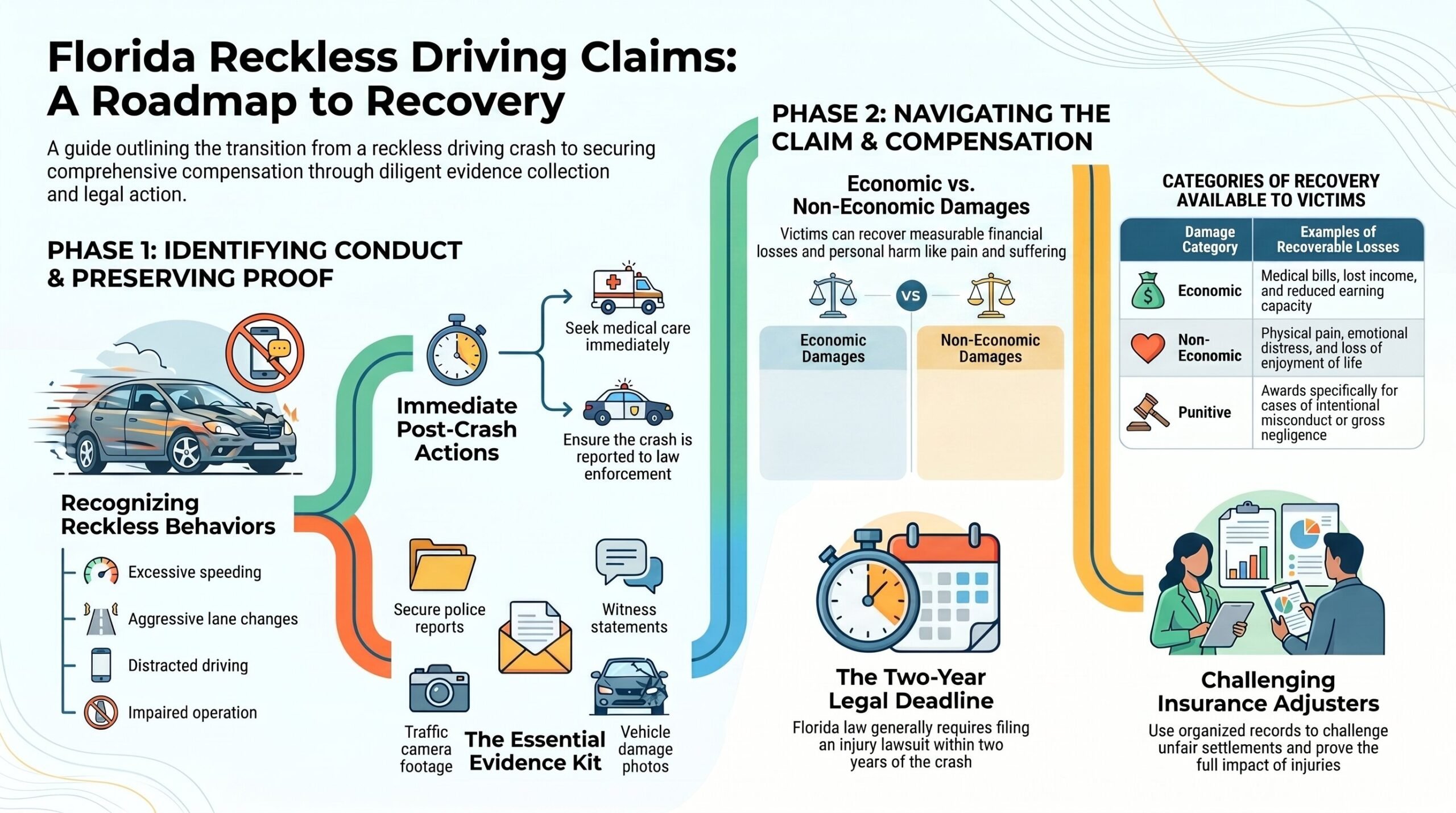
Common causes of Florida reckless driving car accidents often include excessive speeding, aggressive lane changes, distracted driving, and impaired driving. These behaviors can reduce reaction time, increase crash severity, and create dangerous conditions for other motorists, passengers, pedestrians, and cyclists. Understanding how these factors contribute to a collision can help clarify liability, damages, and the legal issues involved in an injury claim.
Excessive Speeding
Excessive speeding frequently turns a manageable traffic situation into a severe collision, especially on Florida’s congested highways, urban roads, and high-speed corridors. When a driver travels above the posted limit or too fast for weather, visibility, or traffic conditions, reaction time decreases and stopping distance increases. These choices can endanger families, commuters, pedestrians, and first responders who depend on careful driving for community safety.
In injury claims, speed may be shown through crash reconstruction, vehicle damage, electronic data, witness statements, and dashcam proof. When a speeding driver flees the scene, hit-and-run liability may also become a central issue, affecting insurance claims and civil recovery. Careful legal evaluation helps identify responsible parties and preserve evidence before it is lost, disputed, or destroyed.
Aggressive Lane Changes
Although lane changes are routine parts of driving, aggressive lane changes can create sudden and dangerous conditions on Florida roads. Drivers who weave through traffic, cut in close to others, or shift lanes without adequate space may leave surrounding motorists little time to respond. These actions often contribute to sideswipe collisions, rear-end crashes, and multi-vehicle impacts, particularly on congested highways and urban corridors.
Unsafe merging patterns can also endanger motorcyclists, commercial drivers, and families traveling in adjacent lanes. In some cases, aggressive lane movements are connected to Road rage incidents, where impatience or hostility escalates ordinary traffic conflict. For injured victims and those assisting them, recognizing this conduct is important for evaluating fault, preserving evidence, and pursuing accountability after a reckless-driving crash.
Distracted Driving
Distracted driving can be just as dangerous as aggressive lane changes because it reduces a driver’s ability to recognize hazards, maintain lane position, and react to changing traffic conditions. In Florida, common driver distraction hazards include texting, navigation adjustments, eating, grooming, and interacting with passengers while operating a vehicle. Text message neglect is especially concerning because it diverts visual, manual, and mental attention from the roadway.
Even brief inattention may cause a driver to miss stopped traffic, drifting vehicles, pedestrians, cyclists, or emergency responders. For individuals committed to serving others, recognizing these risks supports safer decisions and helps protect vulnerable road users. When distraction contributes to reckless driving, the resulting collisions may cause severe injuries, extensive losses, and legal accountability for preventable harm to victims.
Impaired Driving
Why does impaired driving so often lead to reckless collisions on Florida roads? Alcohol, drugs, and some medications reduce judgment, reaction time, coordination, and awareness, causing drivers to speed, drift, ignore signals, or make dangerous turns. These choices endanger families, workers, pedestrians, and those providing aid after a crash. Impairment may also involve broader responsibility, including employer liability when a company permits an intoxicated employee to drive for work or fails to enforce safety policies.
Florida crashes may further involve impaired pedestrians, sometimes described as drunk walking, when their conduct contributes to roadway danger. Careful investigation can identify toxicology evidence, witness accounts, video footage, and service records. This information helps injured people seek accountability, while supporting safer communities through responsible prevention and enforcement efforts statewide.


Legal Rights of Florida Reckless Driving Car Accident Injury Victims
When a reckless driver causes a crash in Florida, injured victims may have the right to pursue compensation for medical expenses, lost income, pain and suffering, and other losses tied to the collision. These rights are intended to restore stability while supporting families, caregivers, and communities affected by preventable harm.
Comparative negligence rules may reduce recovery if an injured person shares fault, making careful review of the evidence critical.
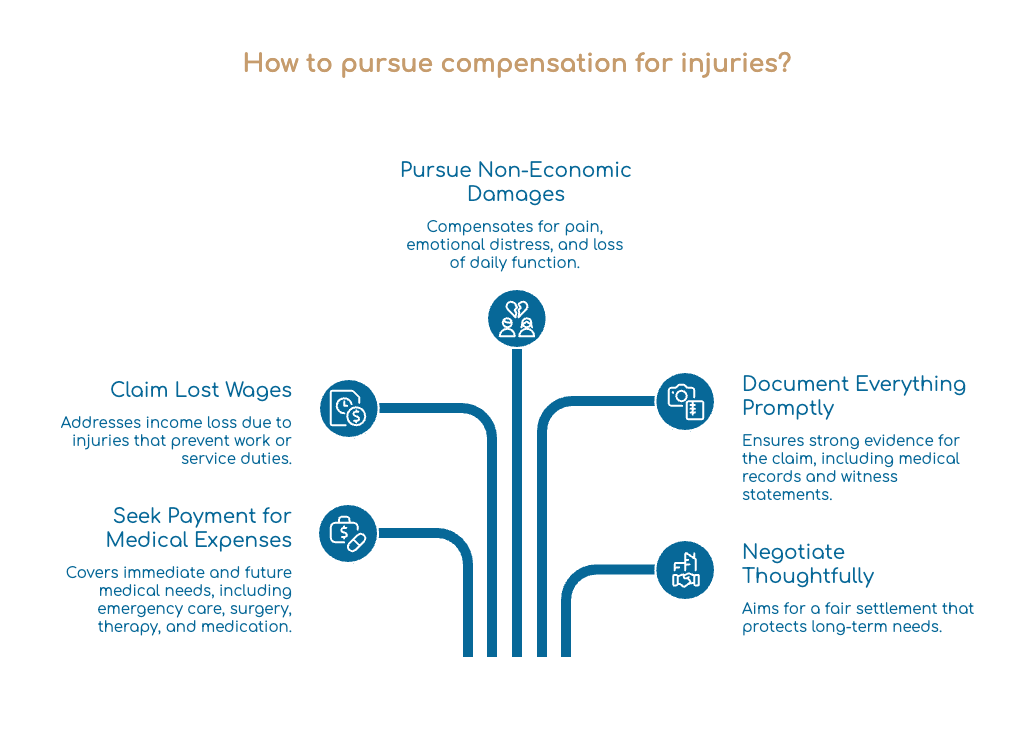
- Victims may seek payment for emergency care, surgery, therapy, medication, and future treatment needs.
- Lost wages and reduced earning capacity may be included when injuries limit work or service duties.
- Pain, emotional distress, and loss of daily function may support non-economic damage claims.
- Prompt documentation, including medical records and witness statements, can strengthen claim presentation.
- A thoughtful settlement negotiation strategy may help resolve claims fairly while protecting long-term needs.
Legal guidance can help injured persons understand deadlines, insurance issues, and available remedies.
Why Do Florida Reckless Driving Car Accident Injuries Happen?
Across Florida, reckless driving injuries often occur because a driver chooses speed, aggression, impairment, or distraction over the basic duty to operate a vehicle with reasonable care. These choices can turn routine travel into a preventable collision, placing passengers, pedestrians, cyclists, and other motorists at serious risk. Excessive lane changes, tailgating, racing, running red lights, and ignoring weather or traffic conditions frequently contribute to harmful crashes.
Such conduct may also create legal and financial consequences beyond a traffic fine, including criminal charges in severe cases. For injured people and families seeking stability, the cause of the crash may affect insurance coverage, liability disputes, and the ability to secure fair compensation. Clear medical documentation often helps connect injuries to the collision and shows the human cost of reckless conduct. Understanding why these injuries happen supports accountability, encourages safer roads, and helps communities better serve those harmed by irresponsible driving.
What Should You Do After a Florida Reckless Driving Car Accident Injury?
After a Florida reckless driving car accident injury, prompt action can affect both medical recovery and any potential legal claim. An injured person should seek immediate medical care, report the crash to the proper authorities, and preserve evidence related to the collision. These steps help document the harm suffered, establish the circumstances of the crash, and protect the injured party’s ability to pursue compensation.
Seek Immediate Medical Care
Even if injuries appear minor at the scene, prompt medical evaluation is one of the most important steps following a Florida reckless driving crash. Medical professionals can identify Emergency symptoms, including head trauma, internal bleeding, spinal injuries, or delayed pain that may not be immediately obvious. Caregivers, family members, and bystanders who wish to assist the injured person should encourage evaluation without delay, especially when shock or confusion is present.
A medical visit also helps document injuries, treatment recommendations, limitations, and future care needs. These records may later clarify how the collision caused by reckless driving affected the injured person’s health and daily responsibilities. When it is safe to do so, those assisting should gather witness names for later reference, while ensuring that medical attention remains the priority for everyone involved.
Report The Crash
When a reckless driving crash occurs in Florida, the collision should be reported to law enforcement as soon as it is safe to do so. Officers can secure the scene, assist injured persons, direct traffic, and create an official record. A timely report also helps identify drivers, passengers, witnesses, vehicle positions, road conditions, and apparent violations. Those present should give accurate, calm statements, while avoiding speculation about fault or injuries.
Basic Evidence preservation steps may include noting the officer’s name, agency, report number, and the location where the report can be obtained. If possible, photographs and witness contact information should be shared with responding officers. A careful review of the Police report details later may reveal errors that should be addressed through proper procedures, supporting accuracy and accountability for all involved.
Protect Your Claim
To protect an injury claim following a Florida reckless driving crash, the injured person should take deliberate steps that support medical documentation, liability evidence, and insurance compliance. Prompt medical treatment, consistent follow-up care, and careful recordkeeping help show the full impact of the injury. The person should retain photographs, repair estimates, witness information, and all crash-related expenses. Preserving electronic evidence, such as dashcam footage, phone data, vehicle data, and surveillance recordings, may help prove reckless conduct.
Communications with insurers should remain accurate, limited, and documented, because statements may affect compensation. Effective Insurance negotiation strategies often depend on organized records, clear proof of damages, and timely responses. By acting carefully, the injured person supports a fair process that serves accountability, recovery, and community safety.
Critical Evidence in a Florida Reckless Driving Car Accident Injury Case
Critical evidence often determines whether a Florida reckless driving injury claim can clearly establish fault, causation, and damages. Key materials may include:
- Police crash reports
- Witness statements
- Traffic camera footage
- Vehicle damage evidence
- Medical records linking injuries to the collision
Each item can help clarify how the crash occurred, identify reckless conduct, and support the injured party’s claim for compensation.
Police Crash Reports
After a reckless-driving crash in Florida, the police crash report is often one of the first documents reviewed in an injury claim. It may record the location, time, roadway conditions, vehicle positions, citations, insurance details, and the responding officer’s observations. For an injured person seeking help with dignity, this report can provide early Liability Evidence that guides a careful investigation.
Although the report may not determine fault on its own, it can identify facts that support or weaken a claim. Insurers and attorneys may compare its contents with medical records, vehicle damage, and traffic laws. Errors or omissions should be addressed promptly because opposing parties may use them to raise Negligence Defenses. A complete review helps protect the injured person’s rights and supports responsible accountability.
Witness Statements
When a reckless-driving crash occurs in Florida, witness statements can help clarify how the collision occurred before memories fade or physical evidence changes. Independent observers may report speeding, unsafe lane changes, aggressive behavior, or disregard for traffic controls, offering guidance to those seeking accountability and care for injured people.
Attorneys often compare these accounts with medical records, vehicle damage, and officer observations to identify consistent facts. Eyewitness credibility is evaluated by considering the witness’s location, opportunity to observe, attentiveness, and lack of bias. Accurate witness statement timelines also matter because statements collected soon after the crash are often more reliable than later recollections. Preserving names, contact information, and written or recorded accounts can strengthen a claim while supporting fair, service-minded resolution for victims and families.
Traffic Camera Footage
In many Florida reckless driving cases, traffic camera footage can provide an objective record of events that witness statements and driver accounts may not fully capture. Footage from intersection cameras, roadway monitoring systems, or nearby public safety cameras may show speed, lane changes, signal compliance, or aggressive maneuvers before impact. This evidence can help clarify Traffic violation basics by showing whether a driver ignored a red light, failed to yield, or drove with willful disregard for safety.
Attorneys may act promptly to identify camera locations, request preservation, and secure recordings before they are routinely deleted. When liability is disputed, video evidence may also support Insurance coverage basics by helping insurers evaluate fault, causation, and claim value. Reliable footage can strengthen efforts to serve injured persons with fairness.
Vehicle Damage Evidence
Because physical damage often reflects the force and direction of impact, evidence of vehicle damage can play a central role in a Florida reckless driving car accident injury case. Crumpled panels, broken glass, frame deformation, airbag deployment, and skid-related impact patterns may help show excessive speed, unsafe lane changes, or loss of control. Photographs, repair estimates, towing records, and inspection reports can support Insurance claim documentation and help connect the collision mechanics to reported injuries.
When carefully preserved, this evidence may also clarify whether a reckless driver ignored the safety of others sharing the road. Severe damage may further support emotional distress by showing the frightening nature of the crash. Attorneys, adjusters, and investigators often review vehicle damage alongside medical records, witness statements, and evidence from the scene.
Long-Term Effects of Florida Reckless Driving Car Accident Injuries
Reckless driving collisions in Florida can cause lasting injuries that extend well beyond initial medical treatment and vehicle damage. Chronic pain complications and emotional trauma may affect daily functioning, while ongoing limitations can interfere with employment stability. When reduced earning capacity results from these injuries, the long-term financial impact may become a central issue in evaluating a claim.
Chronic Pain Complications
Chronic pain is a common long-term complication after a Florida reckless driving car accident, particularly when the collision causes damage to the neck, back, joints, nerves, or soft tissue. Persistent pain may limit mobility, reduce work capacity, and require ongoing medical treatment, rehabilitation, medication, or expert care. For those assisting injured individuals, careful documentation of symptoms, diagnoses, and treatment needs can support a clearer understanding of future burdens.
Chronic pain may also complicate claims when insurance disputes arise over the severity, cause, or duration of the injury. In severe cases, related complications may appear alongside claims involving catastrophic harm or Wrongful death, requiring careful review of medical and legal records. Effective advocacy helps guarantee injured parties receive recognition for enduring physical limitations.
Emotional Trauma Impacts
Emotional trauma after a Florida reckless driving car accident can persist long after physical injuries begin to recover, affecting sleep, concentration, mood, and daily functioning. Survivors may experience anxiety, intrusive memories, fear of driving, irritability, or withdrawal from family and community responsibilities. These effects can interfere with caregiving, volunteer service, worship participation, and other meaningful commitments centered on helping others.
Post-crash counseling may provide structured support, helping injured persons process fear, grief, and uncertainty while developing safer coping methods. Consistent treatment also creates evidence documentation, including therapy records, symptom histories, and professional observations. Such records may help demonstrate how reckless conduct caused lasting emotional harm. Careful documentation, compassionate support, and timely evaluation can protect the injured person’s well-being while clarifying the full scope of recoverable damages.
Reduced Earning Capacity
Beyond the psychological effects of a serious crash, long-term injuries may also limit a person’s ability to earn income in the same manner as before the collision. Reduced earning capacity may arise when chronic pain, mobility restrictions, cognitive impairment, or recurring medical treatment prevents a return to prior duties. In Florida reckless driving cases, this loss may affect workers, caregivers, and community servants whose roles require stamina, judgment, or physical reliability.
Future medical documentation can help connect lasting limitations to the crash and support projections of diminished income over time. Workplace accommodation claims may also show whether modified duties, reduced hours, or reassignment remain realistic. Careful evaluation of employment history, medical opinions, and vocational evidence helps identify the full financial impact of an injury.
Proving Liability in Florida Reckless Driving Car Accident Injury Cases
When a reckless-driving crash results in injury, proving liability in Florida requires evidence that the at-fault driver acted with willful or wanton disregard for the safety of others. This may involve speeding, aggressive lane changes, racing, ignoring traffic signals, or driving despite known hazards. A careful investigation can gather police reports, citations, witness statements, video footage, vehicle damage patterns, and medical records that connect the reckless conduct to the injuries suffered.
Liability also depends on showing causation and damages with reliable documentation. Those serving injured people may focus on preserving evidence early, because delays can affect the Insurance timeline and weaken the factual record. Clear proof may also reduce reasons for claim denial, such as disputed fault, insufficient medical support, or allegations that another event caused the harm. In Florida, comparative fault may affect recovery, so each fact should be organized to show how the reckless driver’s conduct directly produced the crash and resulting losses.
Dealing With Insurance Companies After a Florida Reckless Driving Car Accident Injury
After a reckless-driving crash in Florida, insurance companies often begin evaluating fault, injuries, and coverage before the injured person fully understands the value of their claim. Adjusters may request statements, medical authorizations, and details about lost income, while appearing helpful and service-oriented. Careful communication is important because incomplete remarks can be used to reduce responsibility or challenge the seriousness of injuries.
A Recorded medical history may be reviewed closely to identify earlier conditions, treatment gaps, or inconsistencies. Prior insurance claims may also receive attention, especially when insurers argue that current symptoms predate the reckless-driving collision. For injured individuals focused on recovery and family obligations, these inquiries can feel burdensome and intrusive.
Legal guidance can help protect accurate information, limit unnecessary disclosures, and ensure that communications remain consistent with the documented harm. This support allows the injured person to pursue fair compensation while maintaining dignity and order.
What to Expect During a Florida Reckless Driving Car Accident Injury Claim Process
A Florida reckless driving injury claim typically begins with reporting the crash, seeking medical care, and preserving evidence that may show how the dangerous conduct caused harm. The process then moves through pivotal stages, including gathering records, reviewing insurance coverage, and evaluating liability, damages, and available compensation. Depending on the insurer’s response, the claim may be resolved through settlement negotiations or proceed to a lawsuit when fair compensation is disputed.
Reporting The Crash
The first step after a reckless-driving crash in Florida is to ensure the accident is properly reported to law enforcement. When injuries, death, suspected impairment, hit-and-run conduct, or significant property damage are involved, a formal crash report helps create an official record. Responding officers may document roadway conditions, driver statements, citations, and initial observations relevant to reckless behavior.
An injured person should cooperate respectfully, provide accurate facts, and avoid speculation about fault or medical outcomes. If transported for care, hospital documentation can connect reported injuries to the crash timeline.
Dashcam preservation should also be requested promptly when vehicles, rideshare services, or nearby fleets may have recorded the incident. Proper reporting supports accountability, protects the injured, and assists advocates seeking fair treatment through the claim process.
Gathering Key Evidence
Once the crash has been reported, the injury claim process often turns to preserving and organizing evidence before it is lost, altered, or disputed. Photographs of vehicle damage, skid marks, traffic signals, debris, and visible injuries can help establish how reckless conduct caused harm. Witness names, contact information, dash camera footage, nearby surveillance video, and roadway conditions should be gathered promptly and handled with care.
Medical documentation tips include seeking timely treatment, following provider instructions, saving bills, and keeping records of symptoms, missed work, and daily limitations. These materials may later support Insurance negotiation strategies by connecting injuries to the collision and showing the full impact on the injured person’s life. Careful evidence collection also helps legal advocates serve clients with accuracy, diligence, and compassion.
Insurance Claim Review
After evidence has been preserved, the insurance claim review typically begins with a close examination of coverage, liability, injuries, and damages. In Florida reckless driving cases, this review may include policy limits, exclusions, medical records, crash reports, witness statements, and repair documentation. The process helps identify whether the insurer is evaluating the claim fairly and whether the injured person’s losses are fully supported.
Denied coverage reviews may become necessary when an insurer questions fault, disputes policy terms, or challenges the connection between the crash and the injuries. Careful evidence preservation strategies allow advocates to present organized, reliable materials that support accountability. This stage serves the injured person by promoting accuracy, protecting rights, and ensuring the claim is reviewed diligently before further legal decisions are made.
Settlement Or Lawsuit
When the insurance review clarifies the strengths and risks of a Florida reckless driving injury claim, the matter may move toward settlement discussions or formal litigation. Insurance negotiation often begins with a demand supported by medical records, crash evidence, wage loss details, and damage valuation. The insurer may respond with questions, disputes, or an offer, while counsel evaluates whether the proposal fairly serves the injured person’s recovery needs.
Settlement timelines vary with injury severity, treatment progress, liability disputes, and insurer responsiveness. If negotiations do not produce a just result, filing a lawsuit may become necessary. Litigation allows discovery, sworn testimony, expert review, and court supervision. A measured trial strategy helps preserve credibility, clearly present reckless conduct, and pursue accountability while maintaining focus on restoring stability for the injured person.
Compensation for Florida Reckless Driving Car Accident Injury Damages
Because reckless driving often involves a conscious disregard for the safety of others, the damages in a Florida car accident claim may extend well beyond the immediate cost of medical treatment. Compensation may reflect the full scope of harm caused by unsafe conduct, including care needs, income disruption, vehicle repair, and the practical burdens placed on an injured person’s household.
A careful presentation of claims helps insurers, attorneys, and courts evaluate the injury fairly. Useful insurance claim tips include reporting the crash promptly, avoiding recorded statements without guidance, preserving photographs, and keeping all communication organized. Strong medical expense documentation is equally important, including hospital bills, therapy invoices, prescription records, diagnostic reports, and mileage logs for treatment-related travel.
When reckless driving affects a person’s ability to serve family, clients, coworkers, or the community, compensation should account for those real consequences. A well-supported claim promotes accountability and helps restore stability after preventable harm.
Economic vs Non-Economic Damages in Florida Reckless Driving Car Accident Cases
In Florida reckless driving car accident cases, damages are generally divided into economic and non-economic losses. Economic damages address measurable financial harm, while non-economic damages account for personal losses such as pain, suffering, and diminished quality of life. Establishing the value of both categories requires clear evidence, careful documentation, and a reasoned connection between the reckless conduct and the resulting injuries.
Economic Damages Explained
Economic damages in a Florida reckless driving car accident case refer to the measurable financial losses caused by the crash. These losses may include emergency care, hospitalization, surgery, rehabilitation, prescription costs, medical equipment, lost income, reduced earning capacity, vehicle repair, rental transportation, and other documented out-of-pocket expenses.
Because these damages support practical recovery, careful records help protect an injured person’s ability to meet obligations and continue serving family, work, and community.
Medical record documentation is especially important because treatment notes, billing statements, and provider opinions link the injury to the reckless-driving collision. Wage records, tax documents, and repair invoices may also strengthen the claim. Insurance adjuster tactics may involve questioning the necessity, timing, or cost of care, so organized evidence helps present a clear and reliable financial picture.
Non-Economic Damages Explained
Non-economic damages address the human losses that cannot be measured by invoices, wage statements, or repair estimates after a reckless driving car accident in Florida. These damages recognize that an injured person may endure suffering that affects dignity, relationships, independence, and daily purpose. They may include physical pain, emotional distress, mental anguish, inconvenience, disfigurement, loss of enjoyment of life, and loss of companionship in appropriate cases.
In reckless driving claims, pain severity can influence how the harm is understood, especially when injuries disrupt caregiving, community service, or ordinary family responsibilities. Florida law allows consideration of these personal consequences because civil recovery is not limited to financial expenses. Non-economic damages serve a restorative function, acknowledging the deeper impact of unsafe conduct while seeking fair recognition for losses that are real, personal, and enduring.
Proving Damage Value
After a Florida reckless-driving car accident, demonstrating the damage value requires more than identifying the injury itself. Economic damages must be supported through medical expense documentation, wage records, repair estimates, and evidence of future treatment needs. These records help establish the measurable financial burden placed on the injured person and the household.
Non-economic damages require a different showing, including testimony, medical opinions, and documentation of pain, limitations, emotional distress, and reduced quality of life. A careful evaluation also considers Insurance policy limits, comparative fault issues, and the severity of reckless conduct. When presented clearly, this evidence allows decision-makers to understand both the financial losses and the human impact. Strong proof supports fair recovery and helps ensure the injured person’s needs are responsibly addressed.
When a Florida Reckless Driving Car Accident Injury Case Goes to Trial vs Settlement
When a reckless-driving crash in Florida results in serious injuries, the decision to settle or proceed to trial depends on the strength of the evidence, the extent of damages, and the conduct of the insurance company or the defendant. Settlement may serve injured people by providing faster compensation, reduced stress, and privacy. Trial may be necessary when liability is disputed, losses are undervalued, or the insurer refuses a fair resolution.
A lawyer evaluates medical records, crash reports, witness accounts, expert opinions, and evidence preservation strategies to determine whether settlement discussions are productive. The process may also involve negotiating medical bills, identifying future care needs, and presenting damages in a clear, documented manner.
If negotiations fail, trial preparation can place pressure on the opposing side and give a jury the opportunity to decide responsibility and value. Each path requires disciplined judgment focused on protecting the injured person’s recovery, dignity, and long-term stability after harm.
Florida Laws That May Affect Your Florida Reckless Driving Car Accident Case
Because Florida law shapes nearly every stage of a reckless driving injury claim, an injured person’s ability to recover compensation often depends on how those rules apply to the facts of the crash. Courts and insurers may consider traffic violations, insurance requirements, medical evidence, and fault allocation when evaluating responsibility. A careful legal review can help protect the injured person while supporting fair accountability.
Florida law can shape injury recovery by governing fault, insurance claims, evidence review, and accountability after a reckless-driving crash.
- Comparative negligence rules may reduce recovery if the injured person shares responsibility for the collision.
- Florida’s no-fault insurance system may require initial claims to be made through personal injury protection benefits.
- Evidence of reckless driving, such as excessive speed or aggressive maneuvering, may strengthen liability arguments.
- Driver statute defenses may be raised when a driver claims compliance with traffic laws or emergency conditions.
- Police reports, witness statements, and medical records can help clarify disputed facts.
These laws guide service-minded advocates in pursuing compensation with diligence, accuracy, and respect for those harmed.
The Statute of Limitations for Florida Reckless Driving Car Accident Injury Cases
In Florida reckless-driving car-accident injury cases, the statute of limitations sets the legal deadline for filing a lawsuit against the responsible party. For most negligence-based injury claims, Florida generally requires the injured person to file within two years from the date of the crash. Missing this deadline may bar recovery, regardless of the severity of the harm or the strength of the evidence.
This deadline matters because reckless driving cases may involve serious losses, medical needs, and duties to protect family or community well-being. Comparative negligence can also affect recovery if the injured person is found partly responsible for the collision. When reckless conduct involves impaired driving, DUI consequences may proceed separately from the civil injury claim, but they do not usually extend the filing deadline.
Prompt attention to the limitation period helps preserve legal rights, supports orderly claims, and promotes accountability for conduct that endangers others on Florida roads.
How a Florida Reckless Driving Car Accident Injury Lawyer Can Help You
After a reckless-driving crash, a Florida car accident injury lawyer can help an injured person identify the liable parties, preserve essential evidence, and pursue compensation through an insurance claim or a civil lawsuit. Counsel may coordinate records, consult experts, and present facts with care, allowing the injured person and family to focus on recovery and responsibilities to others.
- Investigates police reports, witness accounts, vehicle damage, video footage, and roadway conditions.
- Evaluates Liability defenses, including comparative fault claims raised by insurers or opposing parties.
- Performs damages calculation for medical care, lost income, reduced earning ability, pain, and future needs.
- Handles insurance negotiations with documentation, deadlines, and reasoned demands for fair resolution.
- Prepares litigation strategy when settlement efforts do not adequately reflect the harm caused.
This support can bring order to a difficult process, protect legal rights, and promote accountability after conduct that endangered the community.
When to Contact a Florida Reckless Driving Car Accident Injury Lawyer
When injuries, disputed fault, or significant vehicle damage follow a reckless driving collision, legal guidance should be sought as soon as reasonably possible. Early contact allows an attorney to assess deadlines, identify responsible parties, and help protect the injured person’s ability to seek lawful recovery. This timing is especially important when witnesses may become difficult to locate, roadway conditions change, or vehicle data may be lost.
Evidence preservation should begin promptly after the crash. Photographs, police reports, medical records, repair estimates, and witness information can help clarify what occurred and support a careful review of the claim. Prompt attention also reduces the risk of valuable facts being overlooked.
Contact may also be appropriate before speaking in detail with insurers. Insurance negotiations can begin quickly, and statements made early may affect later claim handling. Timely legal consultation helps injured individuals make informed decisions while focusing on care, stability, and responsibilities to their families and communities.
Why You Need an Experienced Florida Reckless Driving Car Accident Injury Lawyer
Because reckless driving cases often involve serious conduct and contested facts, an experienced Florida car accident injury lawyer can provide important guidance from the outset. Such counsel helps injured people, families, and caregivers understand available claims, preserve evidence, and respond to insurers with care. In matters involving speeding, aggressive lane changes, impaired driving, or disregard for safety, liability may require witness statements, crash reports, video footage, and expert review.
A lawyer also explains Insurance coverage basics, including personal injury protection, bodily injury liability, uninsured motorist coverage, and policy limits. This guidance can be crucial when medical needs are urgent and financial pressure is rising. Careful medical bill documentation supports the full value of treatment, rehabilitation, lost income, and future care needs.
By coordinating records, deadlines, and negotiations, legal representation helps protect recovery while allowing the injured person and support network to focus on restoration, stability, and responsible service to others.
How to Choose the Right Florida Reckless Driving Car Accident Injury Lawyer for Your Case
How should an injured person evaluate legal representation after a reckless driving crash in Florida? The decision should begin with a careful case evaluation, including the lawyer’s experience with reckless driving collisions, injury documentation, insurance disputes, and courtroom preparation. A qualified attorney should explain likely challenges, identify available sources of compensation, and offer guidance that supports the client’s recovery and family responsibilities.
Client communication is also crucial. The lawyer should provide clear updates, answer questions promptly, and help the injured person make informed choices without unnecessary pressure. The fee structure should be transparent, including contingency terms, litigation costs, and any obligations if recovery is not achieved.
A sound settlement strategy is another important factor. The attorney should assess medical needs, lost income, pain, and long-term effects before recommending negotiation or trial. The right lawyer demonstrates skill, integrity, and a service-focused commitment to protecting the injured person’s interests throughout the course of the claim.
About The Law Offices of Anidjar & Levine
The Law Offices of Anidjar & Levine represents injured people in Florida who have been harmed in reckless driving crashes, offering legal support focused on accountability, compensation, and client service.
The firm approaches each case with attention to the person behind the claim, recognizing that serious injuries can affect families, work, mobility, and long-term stability.
Its legal team investigates crash causes, reviews evidence, communicates with insurers, and prepares claims that reflect medical costs, lost income, pain and suffering, and future needs.
Through structured Client Communication Strategies, the firm keeps clients informed, answers questions, and reduces uncertainty during a difficult process.
The firm also uses Case Timeline Planning to organize deadlines, evidence development, negotiations, and litigation steps when necessary.
This method supports careful preparation and consistent advocacy.
For people seeking service-minded representation after reckless-driving accidents, the firm provides guidance to protect rights and promote meaningful recovery throughout Florida.
Frequently Asked Questions
Can Reckless Driving Charges Affect My Immigration Status?
Yes. Reckless driving charges can affect immigration status, depending on the facts, prior history, and final disposition. Immigration consequences may arise if the conduct involves alcohol, injury, fleeing, or aggravating factors. A conviction, plea, or withheld adjudication can create court record impact during visa, residency, or naturalization review. A noncitizen should seek coordinated guidance from criminal defense and immigration counsel before resolving the case to protect future service-oriented goals.
Will a Reckless Driving Crash Increase My Insurance Premiums?
Yes, a reckless driving crash will likely increase insurance premiums, especially when fault is supported by Traffic signal violations, citations, or adverse police findings. Insurers review risk history, crash severity, payments made, and claim documentation before adjusting rates. A person committed to serving others should report facts accurately, preserve records, and avoid statements that distort responsibility. Premium effects vary by carrier, prior record, coverage terms, and state underwriting rules.
Can I Recover Damages if the Reckless Driver Was Uninsured?
Yes, an injured person may recover damages even when the reckless driver was uninsured. Available recovery often depends on Uninsured motorists’ benefits, health insurance, medical payment coverage, and any other responsible parties. Policy limits recovery may restrict compensation, so careful review of all coverage is vital. A professional evaluation can help preserve evidence, document losses, and pursue compensation that supports the injured person’s needs while promoting accountability and community well-being.
Do Reckless Driving Accident Claims Involve Punitive Damages?
Yes, reckless driving accident claims may involve punitive damages, but only when the facts satisfy strict evidentiary thresholds. A claimant must show conduct beyond ordinary negligence, such as intentional misconduct or gross negligence. Courts examine whether the driver acted with conscious disregard for others’ safety. Those assisting injured people should preserve reports, witness statements, and evidence of impairment or extreme speed, because such proof may support accountability beyond compensatory damages.
Can Passengers File Claims After a Reckless Driving Accident?
Yes, passengers may file claims after a reckless driving accident, regardless of which driver they rode with. Passenger compensation options may include claims against the reckless driver, another negligent motorist, or applicable insurance coverage. Because shared liability rules can affect how fault is divided among drivers, careful review of evidence is critical. A passenger’s role is generally protected, allowing recovery for medical costs, lost income, and related harm.
—————————
Reckless driving accidents in Florida can cause serious injuries, financial strain, and lasting disruption.
Victims may have the right to pursue compensation for medical expenses, lost income, pain and suffering, and other damages.
A qualified Florida Car Accident Lawyer can investigate the crash, establish liability, negotiate with insurers, and pursue litigation when necessary.
The Law Offices of Anidjar and Levine provides experienced legal guidance to help injured clients protect their rights.