The Law Offices of Anidjar and Levine helps victims pursue compensation after crashes involving illegal drugs, misused prescriptions, or medication-related impairment.
A Florida Car Accident Lawyer can gather police reports, toxicology results, medical records, witness statements, photos, and video evidence to prove fault and damages.
Claims may seek payment for medical care, lost income, future treatment, pain, disability, and wrongful death losses.
The sections below explain how these cases are evaluated, developed, and resolved.
Main Takeaways
- A Florida drug-impaired driving injury lawyer gathers crash reports, toxicology results, medical records, witness statements, photos, and video evidence.
- Proving liability requires linking drug impairment to unsafe driving, causation, and documented injuries or financial losses.
- Evidence may show delayed reactions, poor judgment, lane drifting, confusion, slurred speech, or other impairment-related crash factors.
- A lawyer can handle insurance communications, settlement negotiations, medical documentation, lost-income claims, and future-care damages.
- If insurers dispute fault or undervalue injuries, the lawyer can prepare the case for litigation under Florida law.


How We Can Help With Your Florida Drug-Impaired Driving Accident Injury Claim
After a drug-impaired driving crash, an injured person may face urgent medical needs, insurance pressure, and uncertainty about how to prove fault. A Florida drug-impaired driving accident injury lawyer can provide structured guidance while protecting the claimant from rushed decisions. Counsel may gather crash reports, medical records, witness statements, toxicology information, and available video evidence, then organize those materials into a clear claim presentation.
A legal team can also establish a Case evaluation timeline, helping the injured person understand when evidence should be reviewed, damages should be calculated, and settlement discussions should be considered. This process supports informed service to the claimant’s household, caregivers, and community responsibilities. An Insurance negotiation strategy may address medical expenses, lost income, future care, pain, and other documented losses.
When insurers dispute causation or undervalue injuries, counsel can respond with evidence-based demands and, when necessary, prepare the claim for litigation while maintaining disciplined communication throughout each stage for accountability.
OUR CONSULTATIONSARE FREE
START YOUR FREE CASE REVIEW

Understanding Florida Drug-Impaired Driving Accident Injury Cases
When a crash involves suspected drug impairment, the injury claim often turns on evidence that explains both the driver’s condition and the cause of the collision. In Florida, these cases may involve toxicology results, officer observations, witness accounts, medical records, and crash reconstruction materials. Each item can help establish whether impairment affected judgment, reaction time, or lawful driving behavior.
A Criminal investigation may proceed separately from the civil injury claim, but its findings can still influence liability and available proof. Victims, families, and caregivers should understand that a criminal charge is not required before a civil claim may be pursued. The civil process focuses on compensation for losses, including medical care, lost income, pain, and long-term limitations.
Early attorney consultation can help preserve evidence, address insurance communications, and identify all responsible parties. Careful legal guidance supports injured people while helping them pursue accountability with dignity, order, and practical purpose after a serious collision in Florida.
Common Causes of Florida Drug-Impaired Driving Accidents
Common causes of Florida drug-impaired driving accidents often involve prescription medication misuse, illegal drug use, and the combined effects of multiple substances. These risks may become more severe when fatigue interacts with drug effects, reducing reaction time, judgment, and vehicle control. Identifying these causes is crucial in evaluating liability, injury claims, and the evidence needed to support an accident case.
Prescription Medication Misuse
Although many medications are lawfully prescribed, their misuse can create serious driving risks on Florida roads. Drivers may take higher doses than directed, combine prescriptions with alcohol, or operate vehicles before understanding side effects such as slowed reaction time, confusion, drowsiness, or blurred vision. Even routine medications for pain, anxiety, sleep disorders, or muscle spasms can impair judgment when used improperly.
Medication diversion also contributes to preventable crashes when prescriptions are shared, sold, or taken by individuals without medical supervision. In Florida accident investigations, impairment thresholds may be difficult to measure because the effects of prescription medications vary with dosage, tolerance, and timing. Attorneys evaluating these collisions may examine pharmacy records, medical instructions, toxicology reports, and witness observations to determine whether medication misuse contributed to the injured person’s harm.
Illegal Drug Use
Illegal drug use creates severe roadway hazards because substances such as cocaine, methamphetamine, heroin, fentanyl, MDMA, and hallucinogens can distort perception, reduce coordination, increase risk-taking, or cause sudden loss of consciousness. These impairments may prevent a driver from recognizing traffic signals, maintaining lanes, judging speed, or responding to pedestrians and emergency vehicles. Unlike lawful medical use, illegal drug consumption often involves unknown potency, unpredictable reactions, and delayed recognition of danger.
Prescription effects may provide useful comparisons, but illicit substances frequently create more erratic driving patterns and greater public safety concerns. When impairment contributes to a collision, crash liability may extend to the drug-impaired driver through evidence such as toxicology results, officer observations, witness statements, and collision reconstruction, supporting accountability for injured people seeking recovery and protection.
Polydrug Impairment
When a driver combines alcohol, prescription medication, over-the-counter drugs, or illegal substances, the resulting impairment can be more severe and unpredictable than the effect of any single substance. Polydrug impairment may reduce coordination, judgment, reaction time, and perception, creating substantial danger for passengers, pedestrians, and other motorists. In Florida injury claims, investigators may examine toxicology results, medication records, witness accounts, and crash evidence to determine whether multiple substances contributed to unsafe driving.
The distinction between prescription and illegal drug use does not eliminate responsibility, because lawful medication can still impair a driver when misused or combined with alcohol. Overdose Consequences may also arise, including loss of consciousness or medical emergencies behind the wheel. Careful legal review helps injured people pursue accountability and needed support after preventable collisions.
Fatigue And Drug Effects
Fatigue often intensifies the impairing effects of drugs, making it more difficult for a driver to stay alert, process hazards, and respond safely to changing traffic conditions. In Florida crashes, investigators may consider whether prescription medication, illegal substances, or over-the-counter drugs combined with sleep-related impairment reduce attention and judgment.
Drowsiness can slow reaction time, distort distance perception, and weaken lane control, especially during long commutes, overnight work schedules, or extended travel. Careful review of medical records, witness accounts, and driving behavior may reveal symptom progression, such as drifting, delayed braking, confusion, or inconsistent speed. For those seeking to protect injured people and promote safer roads, recognizing fatigue as a compounding factor helps clarify responsibility and supports a thorough, service-focused legal response after a collision.


Legal Rights of Florida Drug-Impaired Driving Accident Injury Victims
Injured victims of drug-impaired driving accidents in Florida may have the right to pursue compensation when another driver’s unlawful or negligent conduct causes harm. These rights may extend to medical costs, lost income, pain, disability, and future care needs. Families serving injured loved ones often benefit from clear legal guidance, especially when recovery requires coordinated treatment, transportation, and crash survivor support.
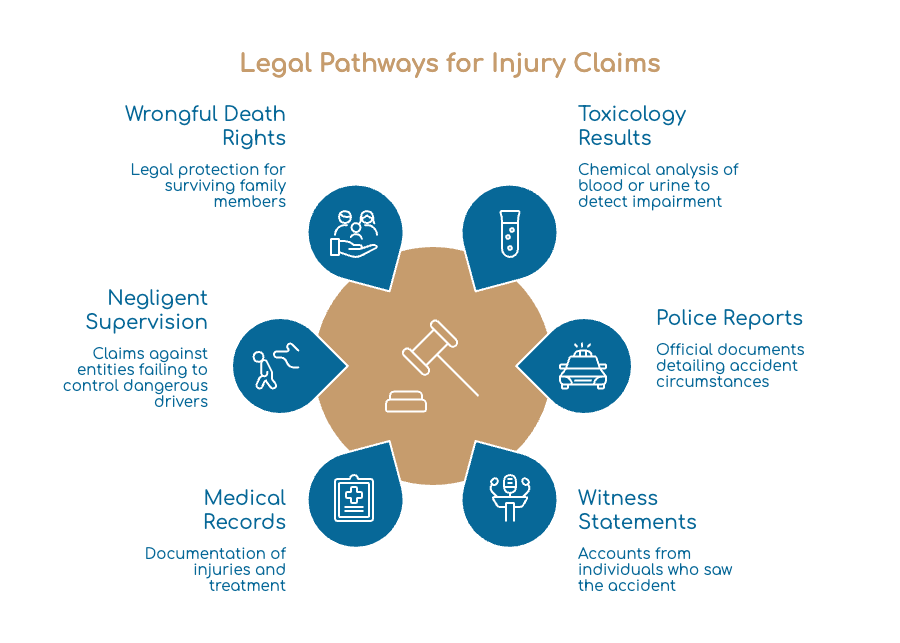
Injured victims may seek compensation when drug-impaired drivers cause serious harm and lasting recovery challenges.
- Victims may file injury claims against impaired drivers and available insurers.
- Evidence may include toxicology results, police reports, witness statements, and medical records.
- Compensation may address emergency care, rehabilitation, diminished earning capacity, and suffering.
- Negligent supervision claims may arise when an entity fails to control a dangerous driver.
- Wrongful death rights may protect surviving family members after a fatal collision.
Florida law imposes deadlines and proof requirements. Prompt legal review can help preserve evidence, identify responsible parties, and protect the victim’s ability to seek fair accountability.
Why Do Florida Drug-Impaired Driving Accident Injuries Happen?
Why do drug-impaired driving crashes occur so often on Florida roads? They often result from reduced perception, delayed reaction time, and impaired judgment caused by illegal drugs, misused prescriptions, or certain over-the-counter medications. A driver under the influence may fail to recognize hazards, misjudge distance, or respond too slowly to changing traffic conditions. These impairments can lead to Traffic signal neglect, sudden braking, unsafe turns, and collisions with pedestrians, cyclists, or other motorists.
Drug impairment also contributes to poor lane discipline, including drifting, weaving, and crossing center lines without awareness. On busy Florida roads, these errors can quickly endanger families, workers, visitors, and those serving the public. Weather, congestion, nighttime travel, and high-speed corridors may further magnify the risk. While each crash has unique facts, drug-impaired driving injuries commonly occur because a driver’s ability to operate a vehicle safely has been compromised.
What Should You Do After a Florida Drug-Impaired Driving Accident Injury?
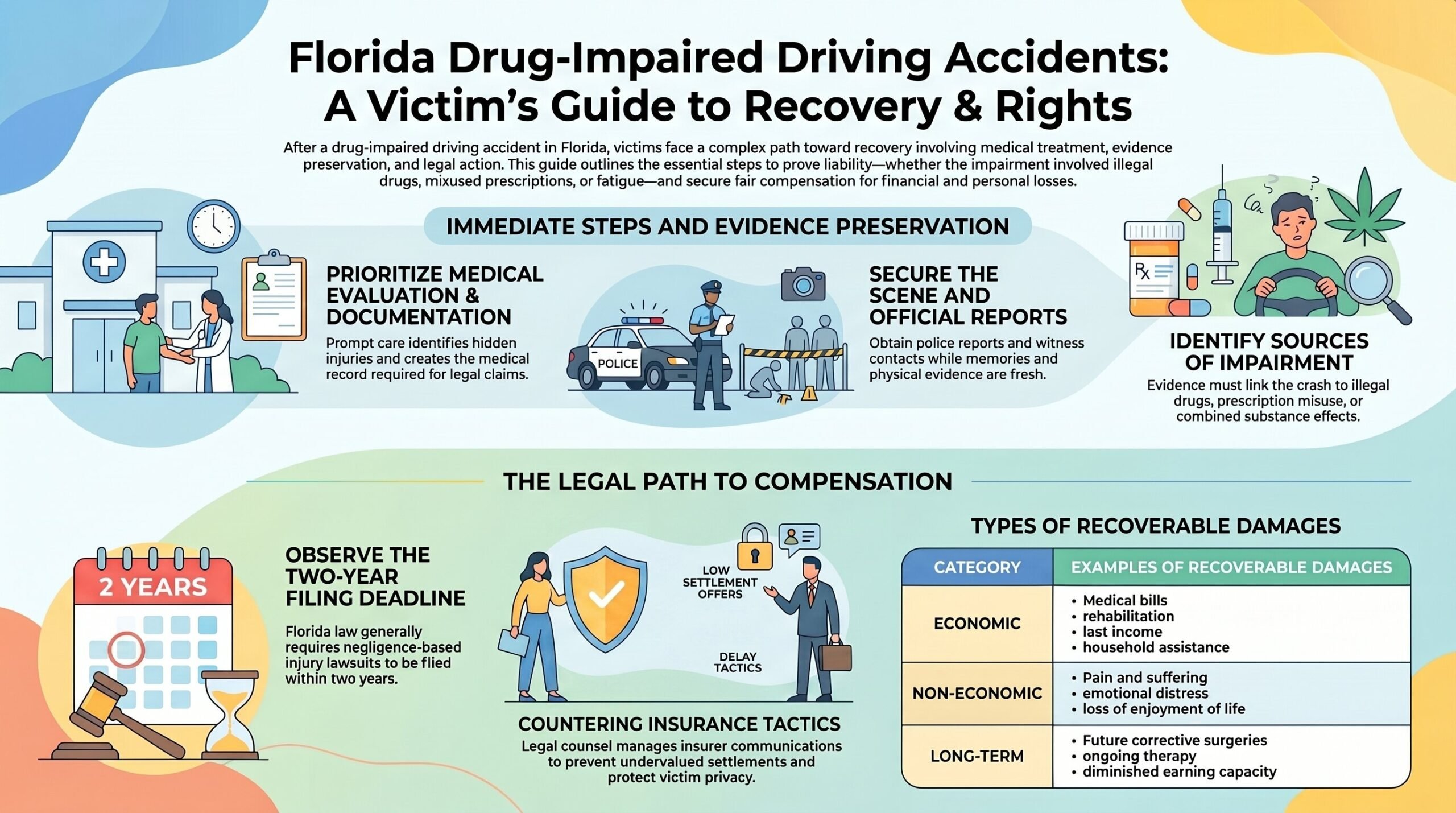
After a Florida drug-impaired driving accident, an injured person’s immediate actions can affect both medical recovery and any future legal claim. Prompt medical care, proper crash reporting, and careful preservation of evidence help establish the cause, severity, and consequences of the collision. These steps create a clearer record of the incident, which may become critical when pursuing compensation from the impaired driver or other responsible parties.
Seek Immediate Medical Care
Because drug impairment can complicate both the nature of a crash and the symptoms that follow, prompt medical evaluation is a critical first step after a Florida drug-impaired driving accident. Injured individuals may not immediately recognize concussions, internal trauma, soft tissue damage, or delayed pain responses. A medical provider can assess urgent conditions, identify Medication Side Effects that may affect recovery, and recommend appropriate treatment.
This care also protects the injured person’s well-being by creating clear Medical Documentation of injuries, symptoms, diagnoses, and care plans. Such records may later help show how the crash affected daily responsibilities, family support, and the ability to serve others. Follow-up appointments, prescribed therapy, and expert referrals should be taken seriously, as consistent care supports both healing and an accurate record of the injury.
Report The Crash
Medical care should be followed by a timely report to law enforcement, especially when drug impairment may have contributed to the collision. A formal crash report creates an official record that can help injured people, families, insurers, and public servants understand what occurred. Officers may document observations of impairment, interview drivers and witnesses, and determine whether Drug test procedures are appropriate under Florida law.
Prompt reporting also supports community safety by allowing authorities to remove an impaired driver from the roadway when necessary. Delays may weaken accountability, invite disputes about fault, or raise concerns about evidence tampering. A person involved in the crash should provide accurate facts, avoid speculation, and, when able, request the report number before leaving the scene. This step helps preserve order and promotes responsible resolution.
Preserve Key Evidence
When drug impairment is suspected, preserving evidence early can help determine how the crash happened and who may be legally responsible. Injured persons, if able, should ensure crash scene documentation includes photographs of vehicle positions, roadway marks, debris, traffic signals, weather conditions, and visible injuries. Witness names, contact details, and statements should be recorded promptly, since memories may fade.
Medical records, prescriptions, toxicology results, and police reports may also help clarify impairment issues. Vehicles should not be repaired or discarded before inspection because damage patterns can assist reconstruction. Any physical items, digital footage, or electronic data should be secured carefully to maintain an evidence chain of custody. These steps support accountability, protect the injured, and help legal counsel serve families seeking fair recovery under Florida law.
Critical Evidence in a Florida Drug-Impaired Driving Accident Injury Case
Critical evidence in a Florida drug-impaired driving accident injury case helps establish impairment, fault, and the extent of harm caused by the collision. The strongest claims often depend on timely preservation and careful review of key materials, including:
- Police crash reports
- Toxicology test results
- Officer bodycam footage
- Witness statements
- Accident scene and vehicle damage photos
Police Crash Reports
In a Florida drug-impaired driving accident injury case, the police crash report often serves as an early framework for understanding how the collision occurred and who may bear responsibility. Prepared by the responding officer, it may identify drivers, passengers, vehicles, roadway conditions, citations, diagrams, and statements gathered at the scene.
For injured individuals and those assisting them, the report can help organize next steps with care and diligence. It may also support comparisons with Medical records, vehicle damage, and later investigative findings. Because officers record observations close in time to the crash, the report may influence witness credibility, especially when accounts conflict. However, it is not the final proof of liability. Careful review by counsel can reveal errors, omissions, or leads requiring further investigation.
Toxicology Test Results
Although a police crash report may suggest drug impairment, toxicology test results can provide more specific evidence regarding whether a driver had drugs or related substances in the body near the time of the collision. These records may identify controlled substances, prescription medications, metabolites, and blood alcohol levels that affect reaction time, judgment, and coordination.
In an injury claim, careful review can help determine whether impairment contributed to the crash and the harm suffered by victims. Qualified experts may also evaluate collection methods, chain of custody, timing, and laboratory reliability, including specialized issues such as phosphorus testing when relevant to suspected chemical exposure. Accurate interpretation supports fair accountability while serving injured people with dignity, ensuring that conclusions rest on reliable science rather than assumption, bias, or incomplete information.
Officer Bodycam Footage
From the first moments after a collision, officer bodycam footage may capture details that later become important in a Florida drug-impaired driving accident injury case. The recording can show the driver’s speech, balance, alertness, and responses during roadside questioning, helping clarify whether impairment indicators were present. Bodycam reliability and officer credibility may become central when reports are compared with the actual recorded interaction. If statements in a report differ from the video, careful review may reveal gaps that affect the injury claim.
Video timing and dashcam context also matter. A bodycam may begin after crucial events, while dashboard footage may show vehicle movement, field procedures, or scene conditions before contact. Meanwhile, these recordings can help attorneys evaluate police observations, preserve accuracy, and support a careful search for accountability.
Witness Statements And Photos
Beyond officer bodycam and dashcam footage, witness statements and photos may provide a broader view of what occurred before, during, and after a Florida drug-impaired driving collision. Neutral witnesses may describe erratic driving, delayed braking, drifting, confusion, or visible impairment that officers did not personally observe. Their accounts can help establish a liability timeline, especially when paired with photographs of vehicle positions, skid marks, roadway debris, traffic signals, lighting, weather, and visible injuries.
Photos taken shortly after impact may preserve details that later disappear, supporting insurers, attorneys, and caregivers seeking accurate answers for those harmed. When aligned with Medical documentation, these materials can connect the crash mechanics to specific injuries and treatment needs. Prompt collection protects evidence, strengthens accountability, and supports fair recovery for injured individuals.
Long-Term Effects of Florida Drug-Impaired Driving Accident Injuries
Drug-impaired driving accidents in Florida can cause lasting injuries that extend beyond initial emergency treatment and short-term recovery. Victims may face chronic pain conditions, cognitive and emotional harm, and functional limitations that affect work, family responsibilities, and daily activities. These long-term effects often require careful evaluation of future medical needs, including ongoing treatment, rehabilitation, medication, and supportive care.
Chronic Pain Conditions
Although some crash injuries appear to recover within weeks, chronic pain can persist for months or years after a Florida drug-impaired driving accident. Victims may develop lasting neck, back, joint, or nerve pain that limits mobility, work capacity, and daily caregiving responsibilities. These conditions often require ongoing medical evaluation, physical therapy, injections, or carefully monitored pain management.
Medication side effects may interfere with alertness, balance, or routine activities, creating additional burdens for families and support providers. Sleep deprivation can also intensify pain sensitivity, slow physical recovery, and reduce tolerance for ordinary tasks. When chronic pain follows a crash caused by drug impairment, documentation becomes critical. Treatment records, diagnostic findings, and provider opinions can help clarify the injury’s duration, functional impact, and future care needs within a legal claim.
Cognitive And Emotional Harm
Physical injuries and chronic pain are often accompanied by cognitive and emotional consequences that can substantially affect long-term recovery after a Florida drug-impaired driving accident. A survivor may experience memory problems, reduced concentration, irritability, anxiety, depression, or post-traumatic stress responses that interfere with employment, caregiving, and community involvement. These effects can be especially difficult when the collision was preventable, caused by a driver impaired by drugs.
Victim mental health may require careful documentation, including observations from treating providers, counselors, employers, and relatives. Family support can play an important role by helping identify behavioral changes, encouraging consistent care, and reducing isolation. In injury claims, these harms may demonstrate how the accident altered daily functioning, relationships, independence, and the survivor’s capacity to serve others.
Future Medical Needs
When serious injuries continue beyond the initial recovery period, future medical needs may become a central issue in a Florida drug-impaired driving accident claim. These needs may include ongoing physician visits, corrective surgeries, diagnostic testing, pain management, counseling, and assistive devices. Careful rehabilitation planning can help identify services required to preserve function, dignity, and independence over time.
Medical providers may also evaluate Medication side effects, especially when long-term prescriptions affect alertness, mood, mobility, or organ health. For injured individuals and those who care for them, accurate projections can support responsible decisions and compassionate support. A legal assessment may consider life-care plans, expert opinions, and documented treatment history to estimate future costs. Addressing these needs helps preserve that recovery resources reflect the lasting consequences of the crash.
Proving Liability in Florida Drug-Impaired Driving Accident Injury Cases
Proving liability in a Florida drug-impaired driving accident requires evidence showing that the impaired driver breached a legal duty and caused the injured person’s losses. This process may include police reports, toxicology results, crash reconstruction, medical records, photographs, and vehicle data. Careful evidence preservation helps protect facts that may otherwise be lost, altered, or disputed.
Liability also depends on establishing a connection between impairment and the collision itself. A driver may be negligent when drugs affect reaction time, judgment, lane control, or attention. Witness credibility can be important, particularly when bystanders, passengers, or responding officers observed erratic driving, confusion, slurred speech, or unsafe conduct before or after the crash.
A thorough review may also identify other responsible parties, such as a vehicle owner who allowed unsafe use. By establishing duty, breach, causation, and damages, the legal process supports accountability and helps injured people seek necessary care with dignity.
Dealing With Insurance Companies After a Florida Drug-Impaired Driving Accident Injury
After liability evidence is gathered, communications with insurance companies often become a major concern in a Florida drug-impaired driving accident injury claim. Insurers may seek recorded statements, broad medical releases, or quick settlements before the full impact is understood. Careful oversight helps protect the injured person’s dignity, privacy, and financial stability.
A lawyer may manage insurer contact, ensuring that statements remain accurate and that requests do not exceed what is reasonable. Evidence preservation and witness coordination can support a clear account of the crash while preventing disputed facts from weakening the claim. Medical documentation is also crucial, especially when injuries require ongoing treatment, rehabilitation, or long-term care.
Adjusters often examine gaps in treatment, prior conditions, and projected expenses. Organized records allow harm to be presented accurately and with respect. This disciplined approach serves injured individuals by reducing pressure, preserving essential rights, and encouraging fair evaluation of losses.
What to Expect During a Florida Drug-Impaired Driving Accident Injury Claim Process
A Florida drug-impaired driving accident injury claim typically begins with an initial case evaluation, where liability, damages, and available insurance coverage are reviewed. The process then moves into evidence collection, including crash reports, medical records, witness statements, and documentation related to suspected drug impairment. Depending on the strength of the claim and the insurer’s response, the matter may proceed through insurance negotiations, settlement discussions, or litigation.
Initial Case Evaluation
When a Florida drug-impaired driving accident injury claim begins, the initial case evaluation is used to determine whether the available facts support a viable claim for compensation. This review typically considers the circumstances of the crash, reported impairment concerns, injury severity, insurance coverage, and the claimant’s immediate needs. A lawyer may assess whether Medical expenses, lost income, and ongoing care appear connected to the collision.
The evaluation also helps identify deadlines, potential defendants, and early legal issues that could affect recovery. An evidence timeline may be outlined in general terms to understand when key events occurred, without conducting a full investigation at this stage. For injured individuals and their families, this step provides direction, encourages informed decisions, and supports a service-focused approach to pursuing fair accountability under Florida law.
Evidence Collection Process
Once the initial case evaluation identifies a potentially viable claim, the evidence collection process begins to confirm how the crash occurred, who may be responsible, and how the injuries relate to the collision. This stage may involve obtaining police reports, toxicology findings, crash-scene photographs, vehicle damage records, and any available video footage.
Medical documentation is reviewed to connect diagnosed injuries, treatment needs, and recovery limits to the impact. Witness interviews may help preserve observations of unsafe driving, indicators of impairment, traffic conditions, or statements made after the collision. Investigators may also examine roadway conditions, electronic data, and the timeline of events. Careful evidence gathering supports a clear record, protects the injured person’s dignity, and helps ensure that responsible parties are evaluated based on accurate and complete information.
Insurance Claim Negotiations
After the evidence has been organized, insurance claim negotiations typically begin with a formal presentation of liability, injuries, medical expenses, lost income, and other documented losses. The insurer reviews the demand package, compares it with policy limits, and evaluates whether drug impairment strengthens responsibility for the crash. A careful claim value strategy considers medical prognosis, ongoing care needs, wage disruption, and the human impact on daily life.
Representatives may use Negotiation tactics such as disputing causation, minimizing treatment, or requesting recorded statements. Those assisting the injured person must respond with complete records, consistent explanations, and measured advocacy. The process often involves several exchanges, each requiring patience, accuracy, and respect for the injured person’s recovery. Clear communication helps protect the claim and supports fair consideration.
Settlement Or Litigation
If negotiations produce a fair offer, a Florida drug-impaired driving accident injury claim may resolve through settlement without the need for a lawsuit. Settlement can provide timely compensation for medical care, lost income, and other harms, while reducing stress for injured individuals and families. A sound Negotiation strategy considers liability evidence, toxicology findings, crash reports, treatment needs, and available insurance coverage.
When insurers deny responsibility or undervalue losses, litigation may become necessary. Filing a lawsuit does not always mean trial, but it preserves legal rights and increases pressure for a proper resolution. Trial preparation may include witness interviews, expert review, depositions, and careful organization of damages. Through each stage, the process should remain focused on accountability, recovery, and protecting those affected by impaired driving.
Compensation for Florida Drug-Impaired Driving Accident Injury Damages
In a Florida drug-impaired driving accident claim, compensation is intended to address the financial, physical, and personal harm caused by the collision. The process requires careful damages valuation, supported by evidence such as medical records, employment documentation, expert opinions, and proof of how the injuries changed daily life. A lawyer may evaluate the impaired driver’s conduct, available insurance coverage, and any aggravating facts that show the severity of the wrongdoing.
Florida’s comparative fault rules may affect recovery if another party argues that the injured person shares responsibility for the crash. Even then, a properly prepared claim can present the facts clearly and protect the person’s right to seek appropriate compensation. For those committed to helping injured individuals rebuild, this evaluation serves a practical purpose. It connects documented losses to legal accountability, encourages fair resolution, and supports a path toward stability after harm caused by drug-impaired driving.
Economic vs Non-Economic Damages in Florida Drug-Impaired Driving Accident Cases
In Florida drug-impaired driving accident cases, damages are generally divided into economic losses and non-economic harms. Economic damages may include medical bills, lost income, and other recoverable financial losses, while non-economic damages address pain, suffering, and reduced quality of life. Proving damage value often requires medical records, employment evidence, expert opinions, and documentation showing how the crash affected the injured person’s daily life.
Recoverable Financial Losses
After a drug-impaired driving crash, recoverable financial losses may include both economic and non-economic damages, depending on the severity of the injuries and the effect on the injured person’s life. Economic damages often cover ambulance transport, hospital care, rehabilitation, prescriptions, medical devices, lost wages, reduced earning capacity, and necessary household assistance.
Accurate documentation of medical expenses helps link treatment costs to the collision and supports fair reimbursement. Wage records, tax returns, employer statements, and vocational assessments may also show how the injuries disrupted productive service to family, work, and community. Non-economic damages may address personal harms beyond bills, but they require careful presentation. In every claim, proving liability requires evidence, including crash reports, witness statements, toxicology results, and video footage, to establish responsibility and recoverable compensation.
Pain And Suffering
Financial losses are only one part of the harm caused by a Florida drug-impaired driving accident, as many injuries also produce pain, physical limitations, emotional distress, and lasting disruption to daily life. These non-economic damages address human consequences that cannot be measured through bills alone. A victim may face chronic discomfort, reduced mobility, anxiety while traveling, sleep disruption, or the loss of meaningful family and community activities.
When impairment was linked to illegal drugs or Prescription side effects, the resulting suffering may be especially troubling for those committed to protecting others from preventable harm. Serious crashes can also create long-term impairment, requiring ongoing adjustment to work, caregiving, faith service, and personal independence. Florida law recognizes that such losses warrant careful consideration in an injury claim.
Proving Damage Value
Because damage value depends on proof rather than assumption, a Florida drug-impaired driving accident claim must distinguish clearly between economic losses and non-economic harm. Economic damages may include medical costs, rehabilitation expenses, lost income, reduced earning capacity, and other documented financial burdens caused by the collision. These losses are often supported through bills, wage records, medical reports, and expert opinions. Non-economic damages address the human impact, including pain, emotional distress, loss of enjoyment, and disruption of daily life. Their value requires credible testimony, treatment history, and evidence showing how injuries changed the person’s routine and relationships. Careful documentation helps present the full extent of harm, allowing decision-makers to understand both measurable expenses and the deeper consequences suffered by the injured person.
When a Florida Drug-Impaired Driving Accident Injury Case Goes to Trial vs Settlement
When a Florida drug-impaired driving accident injury case is evaluated for resolution, the decision to settle or proceed to trial depends on the strength of the evidence, the severity of the injuries, disputed liability, and the insurer’s willingness to offer fair compensation.
Settlement may serve an injured person by providing certainty, privacy, and faster access to needed resources for medical care and recovery support. However, when an insurer minimizes impairment evidence, disputes causation, or undervalues long-term harm, a trial may become necessary.
Trial Strategy often focuses on toxicology findings, witness observations, crash reconstruction, medical testimony, and the human effect of the injuries. Comparative Negligence may also influence negotiations and trial preparation when the defense claims the injured person contributed to the crash. A careful evaluation helps determine whether settlement protects the person’s dignity and future needs, or whether a jury should be asked to decide accountability and fair compensation through a verdict.
Florida Laws That May Affect Your Florida Drug-Impaired Driving Accident Case
Although every case depends on its specific facts, several Florida laws may directly affect a drug-impaired driving accident injury claim, including traffic safety statutes, negligence rules, insurance requirements, and limits on recovery of damages. These rules help courts, insurers, and injured people evaluate responsibility, medical losses, and community safety concerns.
Florida laws can shape responsibility, insurance benefits, and damages after a drug-impaired driving accident.
- Florida DUI laws address impairment by controlled substances, prescription drugs, and related blood alcohol evidence.
- Criminal penalties may support civil claims, but a separate injury case must prove damages.
- Florida’s comparative negligence rule can reduce recovery if an injured person shares fault.
- Personal injury protection requirements may affect early medical benefits and coordination of claims.
- In fatal crashes, wrongful death laws may allow eligible survivors to seek specific losses.
A careful legal review may identify which statutes apply, preserve useful evidence, and support fair accountability. For service-minded families, understanding these laws can help protect well-being, financial stability, and the dignity of those harmed.
The Statute of Limitations for Florida Drug-Impaired Driving Accident Injury Cases
In Florida, the statute of limitations sets a strict deadline for filing a drug-impaired driving accident injury lawsuit, and missing that deadline can prevent an injured person from pursuing compensation in court. For most negligence-based injury claims, Florida generally allows two years from the date of the crash, though certain circumstances may alter how a deadline is calculated. Families serving an injured loved one should recognize that civil deadlines operate separately from Criminal penalties arising from impaired driving charges.
Time also affects the strength of a claim. Records may disappear, witnesses may become unavailable, and issues involving legal bloodwork can become harder to evaluate. In some cases, attorney defenses in the criminal matter, including evidence suppression, may affect related facts, but they do not pause the civil filing period on their own. Prompt attention to deadlines helps preserve accountability, supports orderly case preparation, and protects the injured person’s opportunity to seek lawful recovery.
How a Florida Drug-Impaired Driving Accident Injury Lawyer Can Help You
After considering the strict filing deadlines for Florida injury claims, the next concern is how an injured person can safeguard the value and course of the case. A Florida drug-impaired driving accident injury lawyer helps organize facts, preserve evidence, and present the claim with precision. This support allows the injured person and family to focus on recovery, caregiving, and service to others while the legal process is managed with care.
Careful legal guidance helps protect evidence, preserve deadlines, and keep the injury claim focused on recovery.
- Investigates police reports, toxicology evidence, witness accounts, and crash details.
- Coordinates medical records, treatment history, and pain documentation to show impact.
- Identifies available insurance coverage, liable parties, and possible compensation sources.
- Handles Insurance negotiation with adjusters seeking to limit payment.
- Prepares the case for settlement review or litigation if a fair resolution is denied.
Through disciplined case management, counsel helps ensure losses are measured carefully, deadlines are met, and the injured person’s needs are presented with dignity, accuracy, and strength.
When to Contact a Florida Drug-Impaired Driving Accident Injury Lawyer
Soon after a suspected drug-impaired driving crash, an injured person should contact a Florida drug-impaired driving accident injury lawyer as early as possible to safeguard evidence, confirm deadlines, and steer clear of missteps with insurers. Prompt contact is especially important when officers note possible impairment, prescription medication use, illegal substances, or unusual driver behavior. Toxicology timelines can be brief, and delays may affect the availability or worth of test results.
Early legal guidance also supports the preservation of evidence, including photographs, vehicle data, surveillance video, witness information, medical records, and crash reports. A lawyer may help determine who should receive preservation notices before records are deleted, overwritten, or misplaced. Contact should occur before providing recorded statements, signing releases, or accepting early settlement offers.
For injured individuals, families, caregivers, and advocates focused on helping others recover, timely action can bring order to uncertainty and help ensure that important facts are not lost during the claims process.
Why You Need an Experienced Florida Drug-Impaired Driving Accident Injury Lawyer
An experienced Florida drug-impaired driving accident injury lawyer can identify issues that are often missed in ordinary crash claims, including delayed toxicology results, prescription drug defenses, mixed-substance impairment, and disputes over causation. This experience helps protect injured people, grieving families, and community members who depend on fair accountability in cases of preventable harm.
Drug-impaired driving cases often require careful review of police reports, medical records, field observations, pharmacy evidence, and expert opinions. A lawyer can connect these facts to the injured person’s losses, while addressing defenses that attempt to shift blame or minimize impairment. Effective Insurance negotiation tactics may help counter low settlement offers, incomplete investigations, or arguments that injuries were unrelated to the crash.
If litigation becomes necessary, courtroom evidence strategy is critical. The lawyer may organize testimony, challenge weak defense claims, and present impairment evidence clearly, so the court can evaluate responsibility accurately, with dignity and fairness for all parties involved.
How to Choose the Right Florida Drug-Impaired Driving Accident Injury Lawyer for Your Case
In a drug-impaired driving injury case, the right Florida lawyer should have specific experience with impairment evidence, crash causation, insurance disputes, and the civil litigation process. Families should look for counsel who can review toxicology findings, police reports, medical records, and witness accounts with disciplined attention to detail. This helps protect injured clients and supports fair accountability when unsafe choices harm others.
A suitable lawyer should also explain strategy clearly, including how damages are documented, how settlement demands are prepared, and when litigation may be necessary. For severe injuries or fatal crashes, experience with Wrongful Death Claims is especially important, because these cases require careful proof of losses and respect for grieving families.
Clients may also consider communication practices, case resources, and Contingency Fee Options before making a decision. A lawyer who provides practical guidance, timely updates, and organized representation can help injured people pursue justice while focusing on recovery and family responsibilities.
About The Law Offices of Anidjar & Levine
When a crash involves suspected drug impairment, The Law Offices of Anidjar & Levine provides legal representation focused on protecting injured clients and holding negligent drivers accountable.
The firm assists people harmed by impaired motorists, including those facing medical bills, lost income, and long-term recovery needs.
Its attorneys investigate collision evidence, communicate with insurers, and pursue compensation through settlement negotiations or litigation when necessary.
The firm’s approach reflects a client-first strategy, emphasizing responsive communication, careful case preparation, and attention to each client’s practical needs.
Staff members help coordinate repairs, provide medical care information, and update claims, allowing injured individuals to focus on recovery.
The Law Offices of Anidjar & Levine also promotes case cost transparency by explaining fee arrangements and litigation expenses before representation moves forward.
This commitment supports informed decisions and responsible advocacy.
For injured Floridians, the firm offers structured legal guidance aimed at accountability, recovery, and service grounded in professionalism.
Florida Drug-Impaired Driving Accident Injury Lawyer,
Frequently Asked Questions
Can Prescription Drug Impairment Affect a Florida Accident Claim?
Yes, prescription drug impairment can greatly affect a Florida accident claim. Even lawful medication use may influence fault determination if it reduces alertness, judgment, or reaction time. The Evidence burden rests on the party alleging impairment and requires medical records, testimony, or toxicology results. Causation proof must connect the impairment to the crash and injuries. For service-minded advocates, careful documentation helps guarantee that responsibility is assessed fairly and injured persons receive support.
What if the Impaired Driver Was Working During the Crash?
If the impaired driver was working at the time of the crash, Employer liability may arise when job duties contributed to the harm. Courts may examine workplace negligence, hiring practices, supervision, drug policies, and compliance with commercial driving rules. Victims may pursue claims against both driver and employer. If the injured person was also working, workers’ comp coverage may apply, while separate third-party claims can help address losses beyond employment benefits.
Can Passengers Sue After a Drug-Impaired Driving Accident?
Yes, passengers may sue after a drug-impaired driving accident if another party’s negligence caused their injuries. Civil liability may apply to the impaired driver, a vehicle owner, or another responsible party, depending on the facts. Passengers can seek compensation for medical care, lost income, pain, and related losses. Insurance coverage often determines available recovery, so careful review of policies, exclusions, and claim deadlines is important to protect the injured passenger’s interests.
Do Drug-Impaired Driving Cases Involve Criminal Court Proceedings?
Yes, drug-impaired driving cases often involve criminal court proceedings when prosecutors allege impaired operation, injury, or unlawful substance use. The criminal case may address the validity of the arrest, evidence handling, toxicology results, and plea negotiations. While the state seeks penalties, injured people may separately pursue civil claims for compensation. Those serving victims should understand that criminal outcomes can influence, but do not control, related injury cases, liability findings, or damages recovery.
Can a Pharmacist or Doctor Be Liable for Overprescribing Medication?
Yes, a pharmacist or doctor may be liable for overprescribing medication when conduct violates Liability standards tied to medical negligence. A provider has a professional duty to evaluate patient history, risks, dosage, and prescribing limits before issuing or dispensing medication. If improper prescribing foreseeably harms a patient or third party, liability may arise. Those serving injured individuals should assess records, warnings, and deviations from accepted clinical practice.
—————————
Drug-impaired driving accidents can leave victims facing serious injuries, financial strain, and difficult legal questions.
A Florida Car Accident Lawyer can evaluate the crash, identify liable parties, and pursue compensation through insurance claims or litigation.
Timely legal guidance may help preserve evidence and protect the victim’s rights.
The Law Offices of Anidjar and Levine provides experienced representation for injured individuals seeking accountability and fair recovery after a preventable drug-impaired driving collision.