The Law Offices of Anidjar and Levine help injured victims pursue compensation after arm and leg injuries caused by car accidents by proving fault, documenting medical harm, and managing insurance disputes.
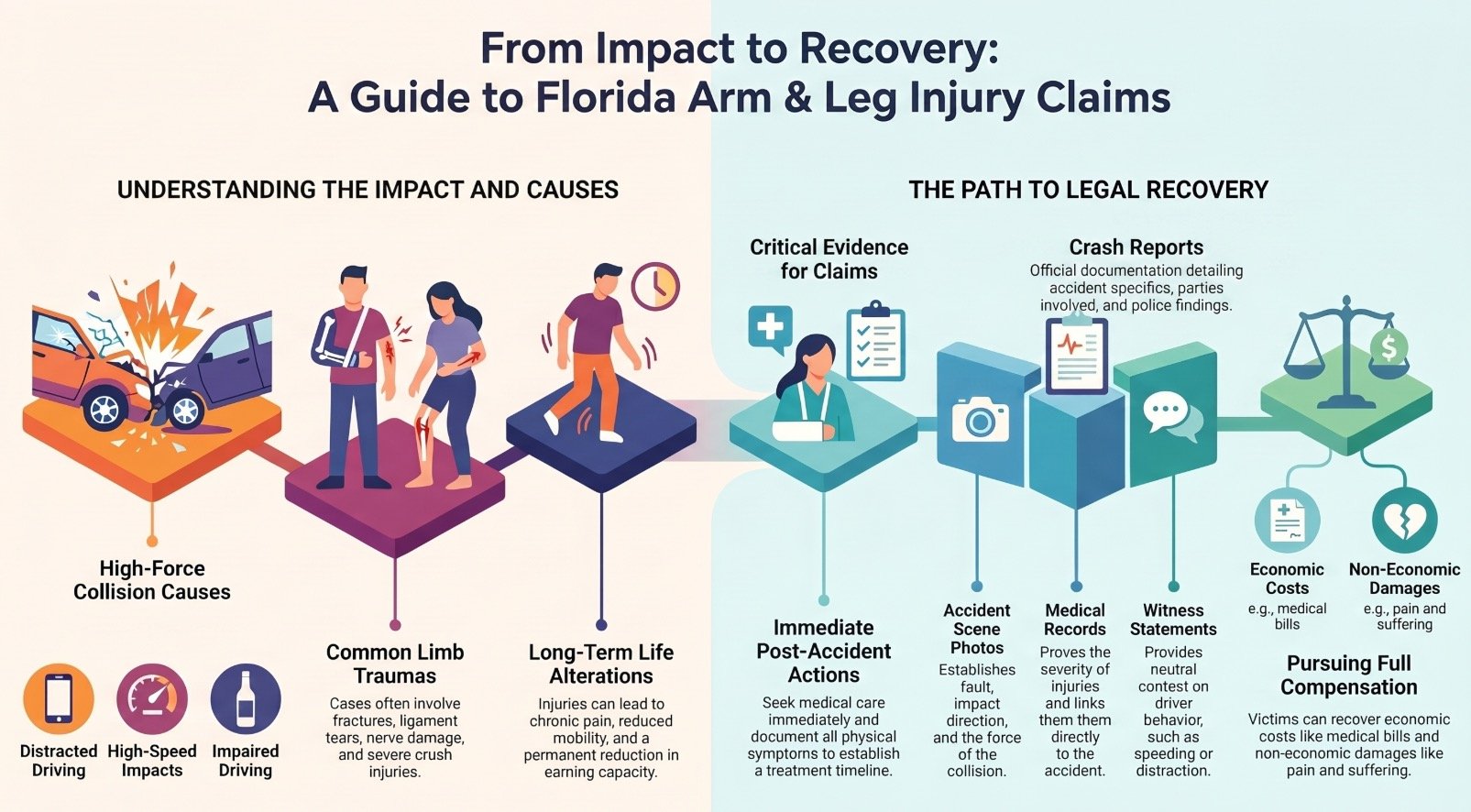
These cases may involve fractures, ligament tears, nerve damage, crush injuries, chronic pain, and reduced mobility.
A Florida Car Accident Lawyer can gather crash evidence, organize treatment records, identify insurance coverage, address comparative negligence issues, and value losses such as medical care, lost income, disability, and future treatment needs.
The sections below explain these issues further.
Main Takeaways
- A Florida car accident arm and leg injury lawyer helps document injuries, treatment, mobility limits, and accident-related losses.
- Common limb injuries include fractures, ligament tears, nerve damage, joint trauma, crush injuries, and severe soft tissue damage.
- Legal claims may seek compensation for medical bills, lost wages, reduced earning capacity, pain, suffering, and long-term disability.
- Strong evidence can include crash reports, photos, witness statements, medical records, surveillance footage, and expert opinions.
- Contacting a lawyer early can help meet deadlines, manage insurers, preserve evidence, and address liability disputes.
How We Can Help With Your Florida Car Accident Arm And Leg Injury Claim
After a serious Florida car accident, arm and leg injuries can affect mobility, employment, daily activities, and long-term medical needs. A Florida car accident arm and leg injury lawyer can help by organizing medical records, documenting functional limits, and identifying all available insurance coverage. This support allows injured individuals and their families to focus on recovery while their claim is handled with care and diligence.
Legal counsel can also investigate the crash, gather witness statements, preserve evidence, and address Liability denial tactics used by insurers or opposing parties. Careful claim preparation strengthens the ability to show fault and connect the injuries to the collision.


A thorough settlement value calculation may include medical expenses, lost income, reduced earning capacity, rehabilitation needs, pain, and future care. By presenting a well-supported demand, the lawyer seeks fair compensation and protects the injured person’s interests throughout negotiations or, if necessary, litigation.
Understanding Florida Car Accident Arm And Leg Injury Cases
OUR CONSULTATIONSARE FREE
START YOUR FREE CASE REVIEW

Understanding these claims begins with recognizing how arm and leg injuries develop in Florida car accidents and why they often require careful legal and medical review. Fractures, ligament tears, nerve damage, joint injuries, and crush trauma may affect mobility, employment, caregiving duties, and daily service to others. Each case must be evaluated based on medical records, diagnostic findings, physicians’ opinions, and the injured person’s functional limitations.
Common injury costs may include emergency treatment, surgery, rehabilitation, medication, assistive devices, lost income, and future care needs. These expenses can create serious burdens for individuals and families who depend on steady health and work capacity. A sound settlement claim strategy considers both immediate losses and long-term consequences, including reduced earning ability and permanent impairment. In Florida, documentation, timely treatment, and careful review of evidence can strongly influence the value of a claim. A lawyer’s role is to organize these facts clearly and pursue fair compensation.
Common Causes of Florida Car Accident Arm And Leg


Florida car accidents causing arm and leg injuries often arise from preventable driver conduct and dangerous roadway decisions. Common causes include distracted driving crashes, high-speed collisions, drunk driving accidents, and unsafe lane changes, each of which can create severe impact forces. Understanding these causes helps clarify how liability may be established and why prompt legal evaluation can be important after an injury.
Distracted Driving Crashes
When a driver’s attention shifts from the road to a phone, navigation system, passenger, or other distraction, the risk of a severe crash rises quickly. Distracted driving commonly leads to delayed braking, drifting out of a lane, missing traffic signals, and unsafe turns. These events can cause arm and leg injuries when occupants brace for impact, strike interior surfaces, or become pinned by damaged vehicle structures. Texting violations are especially concerning because they combine visual, manual, and cognitive distraction, leaving little time to protect nearby motorists, pedestrians, and passengers. Rear-end collisions often result when a distracted driver fails to notice slowing traffic. Careful investigation may include phone records, witness statements, vehicle data, and crash-scene evidence to identify negligence, support those harmed, and advance justice and public safety.
High-Speed Collisions
Distracted driving is often more dangerous when combined with excessive speed, as a driver has even less time to recognize hazards and respond safely. In Florida collisions, high velocity can turn a manageable impact into a severe crash, placing tremendous force on arms, wrists, hips, knees, and legs. Victims may suffer fractures, crushed limbs, ligament damage, or injuries requiring surgery and extended rehabilitation. Those assisting injured people should understand that prompt Evidence preservation can help clarify how speed contributed to the crash, including skid marks, vehicle damage, traffic camera footage, and witness accounts. Careful medical documentation also supports the connection between the collision and each arm or leg injury. Early evaluation helps preserve treatment options, support recovery planning, and strengthen any claim seeking fair compensation for lasting physical limitations.
Drunk Driving Accidents
Because alcohol impairs judgment, coordination, and reaction time, drunk driving accidents often create sudden and violent impacts that place vehicle occupants at serious risk of arm and leg injuries. An impaired driver may fail to brake, overlook traffic signals, or strike another vehicle with force that fractures bones, damages joints, or crushes limbs. These cases require careful attention to evidence preservation, including vehicle damage, medical records, toxicology results, and roadway conditions. Witness testimonies may also help clarify the driver’s behavior before impact, including erratic speed, delayed responses, or signs of intoxication.
For injured individuals and those assisting them, prompt documentation can support accountability and appropriate care. A Florida car accident arm and leg injury lawyer may evaluate these facts to determine liability and pursue available compensation.
Unsafe Lane Changes
Although lane changes are routine, unsafe lane changes can cause severe side-impact or sideswipe collisions that place arms and legs at significant risk of injury. In Florida traffic, these crashes often occur when a driver fails to check blind spots, signals too late, drifts between lanes, or misjudges the speed of nearby vehicles. Impaired lane judgment may result from distraction, fatigue, intoxication, or aggressive driving, leading to sudden impacts that force occupants against doors, dashboards, or center consoles. Fractures, crush injuries, ligament damage, and nerve trauma may follow, especially when vehicles are pushed into adjacent lanes or barriers. Careful investigation can reveal patterns of driver negligence, including unsafe merging or repeated traffic violations, helping injured individuals pursue accountability while supporting recovery, stability, and continued service to their communities.
Legal Rights of Florida Car Accident Arm And Leg Injury Victims
After a serious Florida car accident, victims with arm and leg injuries may have the right to pursue compensation for medical expenses, lost income, reduced earning capacity, pain and suffering, and long-term disability. These rights can help injured people preserve dignity, support dependents, and continue serving their families and communities during recovery.
Florida law may allow claims against negligent drivers, vehicle owners, employers, or other responsible parties. Strong Liability evidence, including medical records, crash reports, photographs, witness statements, and expert opinions, can support the injured person’s position during insurance negotiation or litigation.
Strong evidence can help injured Florida crash victims pursue accountability from negligent drivers and other responsible parties.
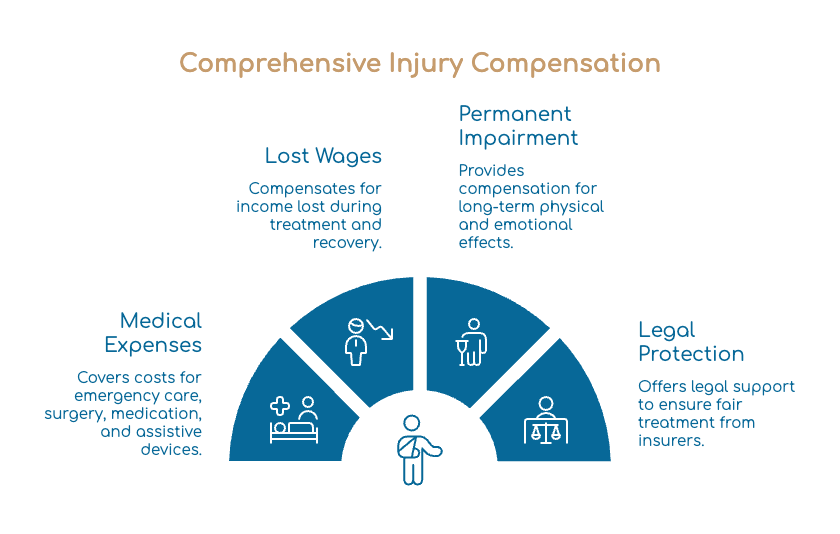
- Payment for emergency care, surgery, rehabilitation, medication, and assistive devices
- Recovery of wages lost during treatment, therapy, and physical restrictions
- Compensation for permanent impairment, scarring, mobility loss, or chronic pain
- Legal protection when insurers dispute fault, minimize injuries, or delay payment
Timely action is important because filing deadlines and evidence preservation can affect recovery.
Why Do Florida Car Accident Arm And Leg Injuries Happen?
In the violent force of a Florida car accident, arm and leg injuries often occur when the body strikes vehicle interiors, is crushed by collapsing structures, or absorbs impact through bracing and twisting motions. These injuries may arise in frontal crashes, side impacts, rollovers, rear-end collisions, and pedestrian accidents, where limbs are exposed to sudden pressure, sharp movement, or direct trauma.
Common causes include speeding, distracted driving, impaired driving, and unsafe lane changes. Traffic signal violations can place vehicles into intersections at dangerous angles, increasing the risk of broken bones, torn ligaments, nerve damage, and severe soft tissue injuries. Poor vehicle maintenance may also contribute when worn brakes, defective tires, or faulty handling systems prevent a driver from avoiding a crash. For those committed to serving injured people, understanding these causes helps explain how preventable conduct can cause life-altering harm that requires careful legal and medical attention.
What Should You Do After a Florida Car Accident Arm And Leg Injury?
After a Florida car accident causes an arm or leg injury, the injured person should take prompt steps to protect both health and any potential legal claim. Immediate medical care, careful documentation of injuries, and preservation of related evidence can help establish the severity and cause of the harm. Contacting a lawyer soon after the crash may also help secure that deadlines, insurance issues, and compensation rights are properly addressed.
Seek Immediate Medical Care
When an arm or leg injury is suspected following a Florida car accident, prompt medical evaluation is essential, even if symptoms appear minor at first. Fractures, ligament damage, nerve trauma, and internal bleeding may worsen without timely care. Emergency physicians, urgent care providers, or orthopedic experts can identify conditions that are not immediately visible and begin appropriate treatment. This step also supports post-accident documentation because medical records can show when symptoms began and what care was recommended. For injured individuals who hope to remain available to their families, workplaces, and communities, early treatment promotes safer recovery and reduces avoidable complications. It also helps guide insurance communication strategies by confirming that medical attention was sought without delay and that the injury was taken seriously from the outset.
Document Your Injuries
Medical treatment should be followed by careful injury documentation, because clear records can help connect arm and leg injuries to the Florida car accident. The injured person should photograph bruising, swelling, casts, surgical sites, mobility devices, and any visible changes during Burn recovery. Daily pain tracking may record intensity, location, limits on walking, lifting, bathing, dressing, driving, and work duties. Medical bills, discharge papers, prescriptions, therapy instructions, and test results should be organized as insurance documentation. A simple journal may also note sleep disruption, missed family responsibilities, and coping strategies used to manage discomfort while continuing to care for others. Witness names, accident photographs, and damaged clothing may provide additional context.
Consistent documentation helps physicians, insurers, and other decision-makers understand the injury’s course and practical impact.
Contact A Lawyer
For a person dealing with an arm or leg injury after a Florida car accident, contacting a lawyer can help protect important rights before insurance issues become difficult to manage. An attorney can review emergency response documentation, medical records, and crash details to determine how the injury affects daily care, work duties, and long-term stability. This guidance may help the injured person avoid statements or forms that could weaken a claim. A lawyer can also evaluate Car insurance coverage, including personal injury protection, liability limits, and potential uninsured motorist benefits. When recovery requires assistance from family, caregivers, or community members, legal support can clarify available compensation for necessary services. Early contact allows evidence to be preserved, deadlines to be monitored, and communications with insurers to be handled professionally.
Critical Evidence in a Florida Car Accident Arm And Leg Injury Case
Critical evidence can shape the strength of a Florida car accident arm and leg injury case, particularly when liability, injury severity, and damages are disputed. A careful review of the following materials may help establish how the crash occurred, how the injuries developed, and why compensation is warranted.
- Accident scene photos
- Medical treatment records
- Witness statements
- Vehicle damage evidence
Accident Scene Photos
When a collision results in arm or leg injuries, accident-scene photos can preserve details that may later be disputed or disappear entirely. Images of vehicle positions, skid marks, debris fields, traffic signals, road defects, weather conditions, and visible damage can help clarify how the crash occurred. For injured individuals and those assisting them, these photographs may support a clearer account of fault, impact direction, and force. Photos should be taken from multiple angles when safe and should include wide views and close-up details. Dashcam footage may strengthen this evidence by showing movement prior to impact. Scene timestamp accuracy is also important because timing can affect the reliability of lighting, traffic, and roadway conditions. Careful documentation allows advocates to preserve facts before they are altered, removed, or forgotten.
Medical Treatment Records
Accident scene photos may help establish how a crash occurred, but medical treatment records help prove what injuries resulted from it. In a Florida arm and leg injury case, these records may document fractures, ligament tears, nerve damage, surgeries, therapy, medication, and recovery limitations. They also connect the timing of treatment to the collision, which can strengthen causation arguments and reduce disputes about unrelated conditions. Clear records from physicians, hospitals, and rehabilitation providers may provide proof of pain and suffering by showing ongoing symptoms, mobility restrictions, and the need for continued care. They can also help address issues of witness credibility when personal accounts conflict with clinical findings. For those committed to serving injured people, accurate medical documentation supports fair evaluation, responsible advocacy, and a more complete understanding of the harm suffered.
Witness Statements
Although physical evidence and medical records are central to proving a Florida car accident arm and leg injury claim, witness statements may provide important context about how the collision occurred and what happened immediately afterward. Neutral observers, passengers, nearby workers, or first responders may describe driver conduct, traffic signals, road conditions, pain complaints, visible distress, and movement limitations. These accounts can support Accident causation analysis by clarifying timing, speed, distraction, or failure to yield. A careful Evidence collection strategy should promptly identify witnesses, preserve contact information, and record statements while memories remain reliable. For injured individuals seeking fair accountability, witness testimony may help demonstrate the practical human impact of the crash, including immediate difficulty standing, walking, lifting, or using an injured arm.
Vehicle Damage Evidence
Because the condition of the vehicles often reflects the force, angle, and mechanics of a collision, vehicle damage evidence can play a significant role in a Florida car accident arm-and-leg injury case. Crushed doors, bent frames, shattered glass, and intrusion into the passenger area may help explain how limbs were trapped, struck, or twisted. Photographs, repair estimates, and inspection findings can support medical conclusions and clarify disputed liability. A careful police report analysis may identify impact points, roadway conditions, and officer observations that correspond with the damage pattern. When available, a review of surveillance footage can further confirm vehicle movement before impact. Attorneys serving injured clients may use this evidence to present a clear account of harm, responsibility, and the practical support needed after severe arm or leg trauma.
Long-Term Effects of Florida Car Accident Arm And Leg Injuries
Florida car accident arm and leg injuries can produce lasting consequences, including chronic pain, reduced strength, and persistent weakness. These conditions may limit mobility, interfere with work duties, and affect the injured person’s ability to perform daily activities. Future medical needs, such as surgery, therapy, medication, or assistive devices, may also become central issues in evaluating the full value of a claim.
Chronic Pain And Weakness
Often, chronic pain and weakness after a Florida car accident develop gradually, as damaged muscles, nerves, ligaments, tendons, or bones fail to recover fully or begin to affect nearby structures. These symptoms may persist after fractures repair, swelling decreases, or visible bruising fades, making careful medical documentation critical. Persistent aching, burning, numbness, or reduced grip strength can indicate nerve irritation, scar tissue, or incomplete tissue repair. Physical therapy goals may focus on reducing inflammation, restoring strength, and preventing compensation injuries in other areas. For those serving injured clients, consistent records help show how pain limits daily care, household duties, and personal responsibilities. Insurance claim delays can interrupt treatment, worsen symptoms, and complicate recovery planning. Legal evaluation may help connect ongoing impairment to the original collision and related medical needs.
Mobility And Work Limitations
When arm and leg injuries do not fully resolve after a car accident, mobility and work capacity may remain restricted long after initial treatment ends. A person may struggle with standing, walking, lifting, gripping, climbing stairs, or driving, limiting both employment and caregiving roles. These limitations can reduce earnings, narrow job options, and increase dependence on family or community support. Careful documentation of missed work, reduced duties, and physical restrictions helps clarify the practical impact of the injury. Compensation negotiation strategies may address lost income, diminished earning capacity, and the value of tasks the injured person can no longer perform. Workplace adjustment support, including modified schedules, adaptive equipment, or reassigned duties, may help preserve dignity and productivity while recognizing ongoing physical boundaries. Legal evaluation can organize evidence and protect fair recovery.
Future Medical Needs
Although initial treatment may stabilize an arm or leg injury after a car accident, future medical needs can remain significant for months or years. Ongoing care may include orthopedic follow-up, imaging, physical therapy, pain management, assistive devices, or additional surgery if healing is incomplete. For injured individuals committed to family, community, and work responsibilities, these needs can affect daily service to others and long-term independence. Workplace Rehabilitation may be necessary when reduced strength, limited range of motion, or permanent restrictions interfere with job duties.
Accurate Treatment Cost Estimates help document projected expenses for therapy sessions, specialist visits, medications, transportation, and adaptive equipment. A lawyer may use medical opinions and financial records to evaluate future damages, helping ensure that any claim accounts for continuing care rather than only immediate losses.
Proving Liability in Florida Car Accident Arm And Leg Injury Cases
Because arm and leg injuries can involve substantial medical costs, lost income, and long-term physical limitations, proving liability is a central issue in a Florida car accident claim. Liability depends on showing that another party failed to use reasonable care and that this failure caused the injury. Evidence preservation is critical, including photographs, crash reports, witness statements, vehicle damage, medical records, and available surveillance footage.
Florida’s comparative negligence rules may reduce compensation if the injured person is found partly responsible for the collision. Careful investigation helps identify speeding, distraction, impairment, unsafe lane changes, or failure to yield. Strong proof also helps prevent claim denials and supports accurate evaluation of damages. While Insurance delays may arise when facts are disputed, well-organized evidence allows the claim to proceed with greater clarity. A lawyer can help assemble facts, consult qualified experts, and present responsibility in a manner that serves truth, accountability, and the injured person’s recovery.
Dealing With Insurance Companies After a Florida Car Accident Arm And Leg Injury
After liability evidence begins to take shape, the injured person often must deal with insurance companies focused on limiting financial exposure. Adjusters may request recorded statements, broad medical authorizations, or quick settlement discussions before the full impact of an arm or leg injury is known. Careful communication is critical because incomplete remarks can be used to dispute severity, causation, or daily limitations.
A Florida car accident lawyer may help protect the injured person by organizing medical records, employment information, and pain documentation that reflects treatment, mobility limits, and ongoing discomfort. This evidence supports a clearer view of losses and discourages undervaluation. Negotiation tactics used by insurers may include minimizing future care, questioning preexisting conditions, or emphasizing gaps in treatment. A measured legal response can keep the focus on verified harm and fair compensation. For service-minded families supporting an injured loved one, informed guidance can reduce confusion and promote decisions grounded in dignity and accountability.
What to Expect During a Florida Car Accident Arm And Leg Injury Claim Process
A Florida car accident arm and leg injury claim generally begins with thorough documentation of medical treatment, followed by timely filing of the insurance claim. The process often requires a liability investigation, including a review of crash reports, witness statements, medical records, and other relevant evidence. Settlement negotiations then address injury severity, treatment costs, lost income, and long-term limitations before a claim is resolved.
Medical Treatment Documentation
During a Florida car accident arm and leg injury claim, medical treatment documentation serves as the foundation for proving the nature, severity, and progression of the injuries. Records from emergency care, diagnostic imaging, surgery, therapy, and follow-up visits help establish a clear medical history. Providers should note pain levels, mobility limits, work restrictions, prescribed medications, and assistive devices. Rehabilitation timelines are especially important because arm and leg injuries often require extended recovery, therapy, or future procedures.
The documentation’s importance extends to showing whether the injured person followed medical guidance and attended appointments consistently. Accurate records also help caregivers, advocates, and legal professionals understand daily limitations and long-term needs. Clear documentation supports a fair evaluation of damages without relying solely on personal statements, memory, or post-accident assumptions.
Insurance Claim Filing
Strong medical documentation supports the next step in a Florida car accident arm and leg injury claim: filing the appropriate insurance claims. The injured person, often through counsel, submits notice to applicable insurers, which may include personal injury protection, health insurance, and the at-fault driver’s carrier. A clear documentation checklist helps organize emergency records, diagnostic results, treatment notes, wage information, photographs, and expense receipts. This organized approach serves adjusters, medical providers, and family members by reducing confusion and preserving important details.
The Claim timeline often begins with prompt notice, followed by insurer acknowledgment, document review, and requests for additional information. Deadlines may vary by policy and claim type, so careful tracking is essential. Proper filing does not decide fault; it preserves benefits while the broader claim develops.
Liability Investigation Process
Once insurance claims are opened, the liability investigation focuses on determining how the collision occurred and which parties may bear legal responsibility. For arm and leg injury claims, investigators review police reports, crash scene details, vehicle damage, witness accounts, medical records, and available video. Evidence preservation is important because roadway debris, surveillance footage, and vehicle data may disappear quickly. An attorney may also evaluate Insurance adjuster tactics, including requests for recorded statements or efforts to shift blame before the full facts are known. The investigation must also consider Florida’s statute of limitations, which sets strict filing deadlines. Thorough liability review supports accurate fault assessment, protects the injured person’s rights, and prepares the claim for later settlement negotiation without prematurely addressing resolution terms or case value.
Settlement Negotiation Steps
After the liability review and medical documentation are sufficiently developed, settlement negotiations typically begin with a demand package submitted to the at-fault driver’s insurer or another responsible party’s carrier. This package usually explains fault, injury severity, treatment history, lost income, and the effect of arm or leg limitations on daily service, caregiving, and work duties. Accurate medical bill documentation supports the requested amount and helps reduce disputes over necessity or cost. The insurer then reviews coverage, compares damages, and may issue an initial offer. Counsel evaluates that offer against evidence, future care needs, and Insurance claim timelines. Counteroffers may follow, with each response documented carefully. If negotiations remain fair and grounded in proof, resolution may occur. If not, litigation may become necessary to protect recovery rights.
Compensation for Florida Car Accident Arm And Leg Injury Damages
In the aftermath of a Florida car accident, compensation for arm and leg injuries may address both the financial losses and the personal consequences caused by the crash. A claim may involve fractures, nerve damage, torn ligaments, amputations, surgical repair, rehabilitation, assistive devices, and future care needs. Medical documentation is central because treatment records, diagnostic imaging, therapy notes, and physician opinions help connect the injury to the collision and support the requested recovery.
A lawyer may evaluate available insurance coverage, liability evidence, and the timeline of the insurance claim to determine when to submit demands, respond to adjuster inquiries, or consider litigation. Compensation is often influenced by the severity of impairment, length of treatment, work restrictions, and the effect on daily responsibilities. For injured people who serve families, workplaces, and communities, a well-prepared claim can help restore stability while recognizing the practical burdens created by serious arm and leg trauma after a preventable crash.
Economic vs Non-Economic Damages in Florida Car Accident Arm And Leg Cases
In Florida car accident arm and leg injury cases, damages are generally separated into economic losses, such as medical bills and lost wages, and non-economic losses, such as pain and suffering. This distinction matters because each category requires different evidence, valuation methods, and legal analysis. Proving Florida damages often depends on medical records, employment documentation, expert opinions, and clear evidence of how the injury affected the person’s life.
Medical Bills And Wages
The financial impact of a Florida car accident involving arm or leg injuries often begins with medical bills and lost wages, which are treated as economic damages because they can be documented through records, invoices, and employment evidence. These losses may include ambulance charges, emergency care, surgery, rehabilitation, medication, assistive devices, and follow-up visits. A clear Treatment timeline helps connect each expense to the crash and shows how the injury affected the person’s ability to work. Wage claims may rely on pay stubs, tax records, employer statements, and disability notes from medical providers. Evidence preservation is critical because organized records support accurate valuation and responsible advocacy. Careful documentation allows those serving the injured person to present measurable losses fairly, diligently, and with professional credibility in Florida claims.
Pain And Suffering
Although medical bills and lost wages can be measured through financial records, pain and suffering in Florida car accident arm and leg injury cases involve non-economic damages that reflect the human impact of the injury. These damages may concern chronic discomfort, reduced mobility, emotional strain, sleep disruption, and the loss of activities that once supported family, work, or community service. A fractured leg, nerve injury, or damaged arm can limit independence and require ongoing adjustment. Functional rehabilitation may restore strength and movement, yet the process can be demanding and prolonged. Pain management strategies may help reduce symptoms, but they do not always eliminate daily limitations. In this circumstance, non-economic damages recognize that recovery includes more than bills; it includes dignity, participation, and restored quality of life.
Proving Florida Damages
Proving damages after pain and suffering has been identified requires evidence that clearly separates economic losses from non-economic harm. In Florida arm and leg injury cases, economic damages may include emergency care, surgery, rehabilitation, medication, lost wages, and reduced earning capacity. Medical Documentation, billing records, employment files, and expert opinions help accurately establish these measurable losses.
Non-economic damages address the human consequences that do not appear on invoices. These may include physical limitation, loss of mobility, emotional distress, disfigurement, and reduced enjoyment of daily life. Evidence of Pain Impact may come from physician notes, therapy reports, photographs, and testimony from those who observed the injured person’s struggle. Careful proof allows advocates to present a complete claim while supporting accountability, service, and fair compensation under Florida law.
When a Florida Car Accident Arm And Leg Injury Case Goes to Trial vs Settlement
In Florida car accident cases involving arm and leg injuries, the decision to settle or proceed to trial often depends on the severity of the injuries, the strength of the evidence, disputed liability, and the insurer’s willingness to offer fair compensation. Settlement may provide a faster resolution, reduce stress, and preserve resources for medical care, rehabilitation, and family support. It can be appropriate when the insurer acknowledges responsibility and reasonably values the harm.
Trial may become necessary when an insurer minimizes fractures, nerve damage, amputation risks, permanent impairment, lost earning capacity, or long-term assistance needs. In those cases, the legal team may develop a trial strategy focused on medical evidence, credible witnesses, and a clear presentation of damages. Jury selection also becomes important because jurors must fairly evaluate pain, disability, and future care needs. A well-prepared case can encourage settlement before trial or position the injured person to seek justice in court.
Florida Laws That May Affect Your Florida Car Accident Arm And Leg Case
Florida law can materially affect the value, strategy, and timing of a car accident claim involving arm and leg injuries. Several rules may shape how medical bills, lost income, mobility limitations, and long-term care needs are evaluated. A lawyer examining such a case typically reviews insurance coverage, evidence of fault, and injury severity with careful attention to Florida’s claims framework.
- No Fault PIP coverage may pay initial medical expenses and certain wage losses, regardless of fault, subject to policy limits and eligibility requirements.
- Comparative Negligence rules may reduce compensation if the injured person is found partly responsible for the crash.
- Serious injury standards may influence whether damages beyond PIP benefits, including pain and suffering, can be pursued.
- Insurance notice and documentation duties may affect whether treatment records, impairment evidence, and service-related care needs are properly considered.
These laws often require prompt, organized action to protect the injured person’s ability to seek fair recovery.
The Statute of Limitations for Florida Car Accident Arm And Leg Injury Cases
Deadlines are another major legal factor in a Florida car accident arm and leg injury case, because even a well-documented claim can be barred if it is filed too late. Under Florida law, most negligence claims arising from car accidents must be filed within two years from the date of the crash. This limit can affect injured people who are focused on medical care, family responsibilities, and serving others while trying to recover from fractures, nerve damage, amputations, or mobility loss.
Timely action also supports the preservation of evidence, including medical records, crash reports, vehicle damage documentation, witness accounts, and photographs of visible injuries. Delays may weaken the ability to prove how the injury occurred and how it affected daily life. Although insurance negotiations may begin soon after the collision, they do not automatically pause the filing deadline. A missed statute of limitations can prevent recovery, regardless of the injury’s severity or long-term impact.
How a Florida Car Accident Arm And Leg Injury Lawyer Can Help You
After a serious crash, a Florida car accident arm and leg injury lawyer can help by evaluating the claim, identifying responsible parties, and coordinating the evidence needed to prove the full extent of the injury. This support allows injured people and their families to focus on care, recovery, and service to those who depend on them.
- Preserving Evidence, including crash reports, medical records, witness statements, and scene documentation, before important details are lost.
- Addressing Insurance Tactics, such as delayed responses, low settlement offers, or attempts to minimize permanent arm and leg limitations.
- Calculating damages tied to surgery, rehabilitation, lost income, mobility devices, home modifications, and future medical needs.
- Handling intricate cases involving Motorcycle Collisions, commercial vehicles, severe disability, or Wrongful Death Claims with careful attention to legal standards.
Through organized advocacy, counsel can present the human impact of injuries while pursuing compensation that supports dignity, stability, and long-term care.
When to Contact a Florida Car Accident Arm And Leg Injury Lawyer
When an arm or leg injury causes significant pain, limited mobility, hospitalization, surgery, or time away from work, legal guidance should be sought as soon as reasonably possible. Early contact is especially important when the injured person serves a family, workplace, congregation, or community that depends on steady care and support. Prompt evaluation can help preserve medical records, crash evidence, witness information, and documentation of lost income or reduced capacity.
A Florida car accident arm and leg injury lawyer should also be contacted before giving recorded statements, signing releases, or accepting payment from an insurer. Insurance adjuster tactics may include requests for incomplete medical histories, pressure to minimize symptoms, or questions designed to shift fault. Settlement delay games may arise when treatment is ongoing, expenses are increasing, and household needs remain urgent. Timely legal contact helps the injured person understand deadlines, protect the claim, and make informed decisions while focusing on recovery and responsibilities.
Why You Need an Experienced Florida Car Accident Arm And Leg Injury Lawyer
Early legal contact is only the first step; the quality of the representation often determines how effectively the injury claim is developed and presented. Arm and leg injuries can limit work, mobility, caregiving, and daily service to others, making accurate valuation vital. An experienced Florida car accident arm and leg injury lawyer understands how fractures, nerve damage, amputations, ligament tears, and chronic pain affect both immediate needs and future responsibilities.
Skilled counsel also anticipates Comparative negligence defenses, which insurers may use to reduce compensation by blaming the injured person. Through prompt investigation, witness coordination, medical record review, and evidence preservation techniques, the lawyer helps protect facts before they are lost or distorted. Experience matters when connecting medical findings to crash mechanics, documenting long-term limitations, and presenting damages with discipline. This level of advocacy supports a claim that reflects the full human, financial, and practical impact of serious limb injuries in Florida.
How to Choose the Right Florida Car Accident Arm And Leg Injury Lawyer for Your Case
Because serious limb injuries can affect every part of a person’s life, choosing the right Florida car accident arm and leg injury lawyer should involve more than a quick review of advertisements or general claims experience. A careful selection process should consider whether the attorney understands medical treatment, long-term impairment, lost earning capacity, and the daily support an injured person may need.
A meaningful Client trust evaluation may include reviewing communication practices, case updates, prior results, and the lawyer’s willingness to explain legal choices patiently and respectfully. Families serving an injured loved one should also ask how evidence will be gathered, how specialists may be involved, and how settlement decisions will be evaluated.
Clear case costs negotiation is also important. The attorney should explain fee arrangements, litigation expenses, and financial responsibilities before representation begins. A suitable lawyer provides steady guidance, protects the client’s dignity, and pursues compensation with disciplined preparation and accountability.
About The Law Offices of Anidjar & Levine
For individuals seeking representation after a serious car accident, The Law Offices of Anidjar & Levine provides legal support focused on the physical, financial, and practical consequences of arm and leg injuries. The firm assists injured clients by organizing medical records, reviewing accident details, and identifying damages that may affect recovery, employment, and daily responsibilities.
The client intake process and case evaluation are designed to help accident victims understand whether a claim may be pursued and what evidence may be needed. The firm’s representatives gather information carefully, recognizing that many clients are also managing treatment, mobility limitations, and family obligations.
The Law Offices of Anidjar & Levine also emphasizes Attorney fee transparency, legal consultation options, and clear communication throughout the representation. This approach helps clients make informed decisions while the legal team handles negotiations, insurance communications, and related case tasks, allowing injured individuals to focus on recovery and those who depend on them.
Frequently Asked Questions
Can Pre-Existing Limb Conditions Affect My Florida Car Accident Injury Claim?
Yes, pre-existing limb conditions can affect a Florida car accident injury claim, but they do not automatically bar recovery. The central issue is whether the crash worsened the condition or caused new harm. Pre-existing condition documentation helps distinguish prior limitations from accident-related injuries. Medical causation evidence, including physician opinions and diagnostic records, can support fair compensation while helping advocates serve injured persons with accuracy, dignity, and responsibility.
What if My Arm or Leg Injury Symptoms Appear Days Later?
Delayed symptom onset can occur after a crash, as swelling, nerve irritation, or soft-tissue trauma may become noticeable later. The injured person should seek prompt medical evaluation, follow treatment instructions, and prioritize evidence documentation, including photos, journals, and work limitations. Clinicians may assess Scar tissue progression and medical causation to connect the condition to the collision. Timely reporting helps protect the claim and supports fair service to those harmed.
Are Motorcycle Passengers Eligible for Arm and Leg Injury Compensation?
Yes, motorcycle passengers may be eligible for compensation for arm and leg injuries when another party’s negligence contributed to the crash. Eligibility criteria often include documented injuries, medical treatment, evidence of liability, and available insurance coverage. Claims may involve the motorcycle operator, another driver, vehicle owners, or uninsured motorists’ coverage. A service-focused advocate helps injured passengers pursue medical costs, lost income, rehabilitation needs, and other legally recoverable damages with care.
Can I Recover Damages for Prosthetics or Mobility Devices?
Yes, an injured person may recover damages for prosthetics or mobility devices when the evidence supports their need. Medical necessity documentation from treating providers helps establish reimbursement for prosthetics, mobility device costs, and related adjustments. Claims may also include future maintenance planning, replacements, fittings, and training. Careful documentation supports fair compensation, enabling the injured person to restore independence, preserve dignity, and continue serving family, community, and workplace responsibilities.
Does Florida PIP Cover Physical Therapy for Limb Injuries?
Yes. Florida PIP Coverage may pay for physical therapy for limb injuries when treatment meets Medical Necessity standards and is related to the crash. Benefits generally cover 80 percent of reasonable medical expenses, subject to policy limits and statutory requirements. A treating provider should document the injury, therapy plan, functional limitations, and expected improvement. Those assisting an injured person should encourage prompt care, accurate records, and timely claim submission.
—————————
A Florida car accident involving arm and leg injuries can create lasting medical, financial, and personal consequences. Skilled legal representation helps protect an injured person’s rights, establish liability, document damages, and pursue fair compensation from responsible parties and insurers.
The Law Offices of Anidjar and Levine provides experienced guidance as your Florida Car Accident Lawyer throughout the claims process, allowing victims to focus on recovery while their legal interests are addressed with diligence, strategy, and a clear understanding of Florida injury law.