The Law Offices of Anidjar and Levine can help injured victims pursue compensation after crashes involving lane shifts, unclear signage, negligent drivers, contractors, or traffic control failures. A Daytona Beach Car Accident Lawyer may investigate liability, preserve photos, video, contractor logs, police reports, and medical records, and handle insurer communications.
These claims often involve multiple responsible parties and changing site conditions. Understanding the claims process, evidence needs, and available damages can help victims evaluate their next steps with greater confidence.
Main Takeaways
- A Daytona Beach work zone accident lawyer can investigate liability involving drivers, contractors, subcontractors, agencies, or traffic control companies.
- Legal counsel can preserve key evidence, including photos, videos, police reports, contractor logs, permits, and witness statements.
- Injury claims may include medical bills, lost income, vehicle damage, pain, mobility loss, and long-term care needs.
- A lawyer can handle insurer communications and limit risky requests for recorded statements or broad medical authorizations.
- Strong claims rely on prompt reporting, medical documentation, roadway condition evidence, and careful settlement evaluation.
How We Can Help With Your Daytona Beach Work Zone Accident Injury Claim
After a work zone crash in Daytona Beach, an injured person may face medical treatment, lost income, vehicle damage, and disputes over who caused the collision. Legal counsel can help by organizing evidence, identifying responsible parties, and communicating with insurers so the injured person can focus on recovery and family responsibilities.
A lawyer may request Surveillance footage, highway camera records, police reports, contractor logs, and witness statements to evaluate how lane closures, signage, barriers, or driver conduct contributed to the harm. Careful review of medical records, wage records, repair estimates, and correspondence also supports a complete claim package.


Insurers often rely on Claim denial reasons, documentation errors, missed deadlines, disputed treatment, or alleged comparative fault. Counsel can address these issues through timely filings, corrected records, expert input, and clear demand presentations. This service helps protect the injured person’s rights while promoting accountability in public spaces.
Understanding Daytona Beach Work Zone Accident Injury Cases
OUR CONSULTATIONSARE FREE
START YOUR FREE CASE REVIEW

When a collision occurs in or near a construction zone, the resulting injury case may involve more than an ordinary traffic accident. These matters often require careful review of roadway conditions, project activity, traffic control records, and the conduct of multiple parties. A Daytona Beach work zone accident case may include drivers, contractors, subcontractors, equipment operators, or public entities, depending on the facts.
Evidence handling is especially important because signs, barriers, lane markings, and site layouts may change quickly. Witness credibility must also be assessed with care, since workers, motorists, and responders may view events from different positions. Medical causation connects the crash to the person’s injuries, treatment needs, and long-term limitations. Loss calculation then addresses medical expenses, lost income, reduced earning ability, and other proven harms. Through organized investigation and respectful attention to the injured person’s needs, these cases can support accountability while helping restore stability after disruption.
Common Causes of Daytona Beach Work Zone Accidents


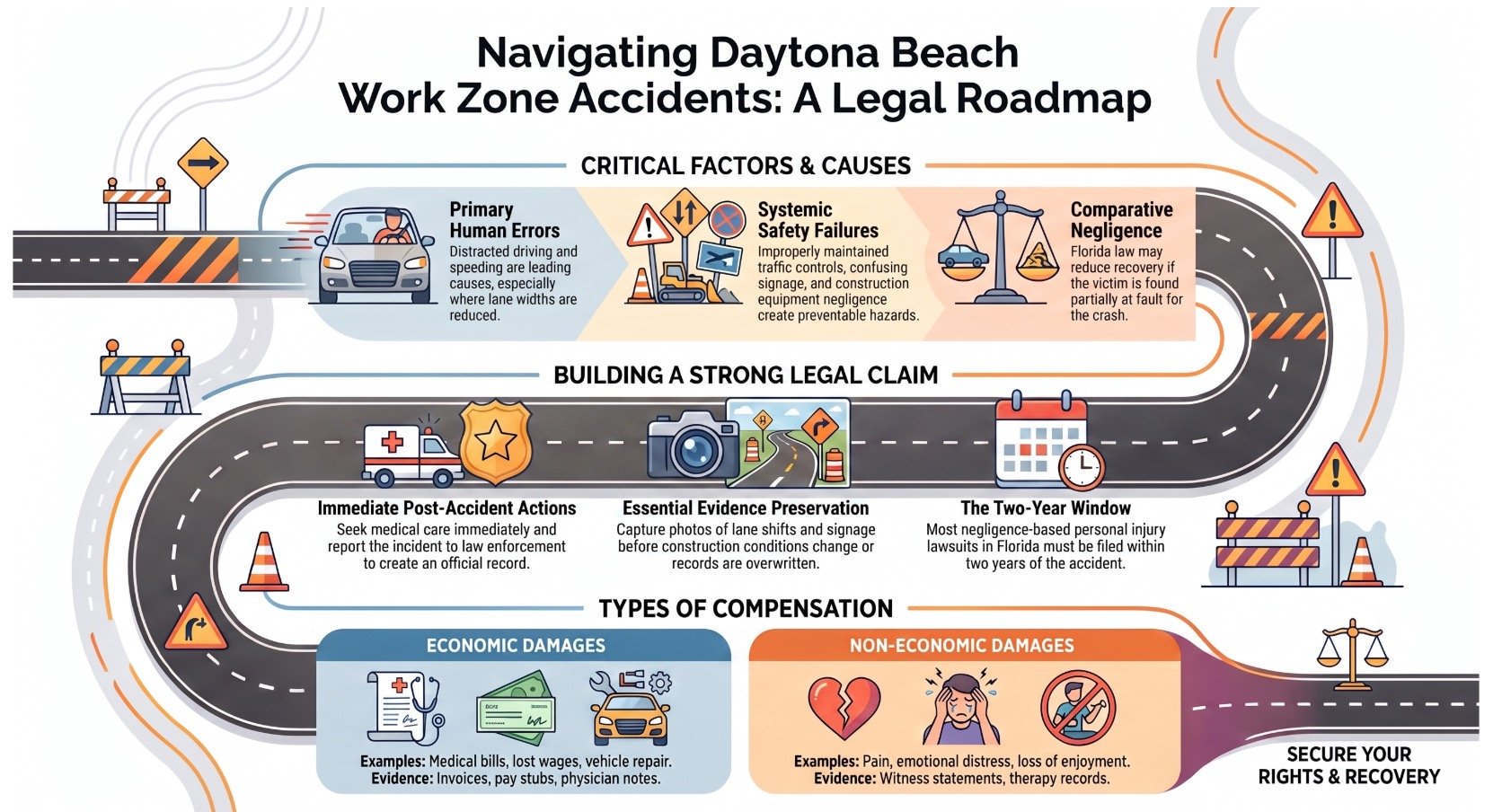
Daytona Beach work zone accidents often arise from preventable conditions that disrupt safe traffic flow and worker protection. Common causes include distracted driver behavior, speeding through active zones, poor traffic control, and hazards created by construction equipment. Each factor can increase the risk of serious collisions, especially when drivers, contractors, or other responsible parties fail to follow required safety practices.
Distracted Driver Behavior
Distracted driver behavior is a significant cause of work zone accidents in Daytona Beach, where shifting traffic patterns, reduced lane widths, and nearby road crews demand constant attention. Distracted driving often involves cell phone use, navigation systems, eating, or conversations that draw focus from changing roadway conditions. Even brief driver inattention can prevent a motorist from noticing cones, flaggers, stopped vehicles, or workers entering protected areas. These lapses place construction crews, other drivers, passengers, and public servants at serious risk.
Reckless lane changes can also result from distraction, particularly when drivers fail to check mirrors, follow temporary markings, or recognize merging instructions. In work zones, attentive driving supports community safety and helps protect those performing essential roadway improvements for residents, visitors, and emergency responders throughout Daytona Beach.
Speeding Through Zones
Speeding frequently contributes to work zone accidents because reduced reaction time leaves drivers unable to respond safely to lane shifts, stopped traffic, construction vehicles, or workers near the roadway. In Daytona Beach, elevated speeds can turn minor driver errors into severe collisions, especially where narrowed lanes and uneven surfaces require careful control. Aggressive Driving, including tailgating, unsafe passing, and accelerating through restricted areas, increases danger for road crews and motorists who are already maneuvering confined spaces. Speed Limit Compliance serves an important public safety purpose, allowing drivers more time to recognize hazards and protect those serving the community through construction, maintenance, and emergency response. When motorists ignore posted limits, injury risks rise, and accountability may depend on whether excessive speed contributed to the crash.
Poor Traffic Control
Even when drivers obey reduced speed limits, a work zone can become hazardous if traffic control measures are unclear, incomplete, or improperly maintained. Cones, barriers, lane markings, warning signs, and flagging operations must guide motorists with consistency and enough advance notice. When these safeguards are misplaced, obscured, or conflicting, drivers may merge too late, brake suddenly, or drift into restricted areas.
Poor traffic control is especially dangerous when Driver fatigue reduces alertness or when night visibility limits the ability to recognize changing patterns. In Daytona Beach, heavy tourism traffic and unfamiliar routes can further increase confusion. Those responsible for planning and maintaining traffic control should account for foreseeable risks, helping protect workers, motorists, passengers, pedestrians, and emergency responders who rely on orderly movement through construction areas safely.
Construction Equipment Hazards
When construction equipment operates near active traffic, work zones can expose motorists and workers to severe, fast-developing hazards. Dump trucks, cranes, graders, and loaders require wide turning areas, limited stopping distances, and clear communication. When site planning is inadequate, these machines may enter travel lanes, block visibility, or create debris fields that endanger passing drivers. Equipment Operator Negligence can also cause collisions when operators reverse without spotters, ignore signals, exceed safe speeds, or fail to inspect machinery before use. Workers face additional danger when a Lack Of PPE leaves them less visible and less protected near moving equipment. Careful oversight, proper training, and consistent safety procedures help reduce these risks. When preventable failures occur, injured individuals may need guidance in identifying responsible parties and preserving evidence.
Legal Rights of Daytona Beach Work Zone Accident Injury Victims
Injured motorists, passengers, pedestrians, and road workers may have legal rights after a Daytona Beach work zone accident, particularly when unsafe construction practices, negligent driving, poor traffic control, or inadequate warnings contributed to the crash. These rights may include seeking compensation for medical care, lost income, pain, disability, and future needs. A careful legal review can help protect those who serve families, coworkers, and the public.
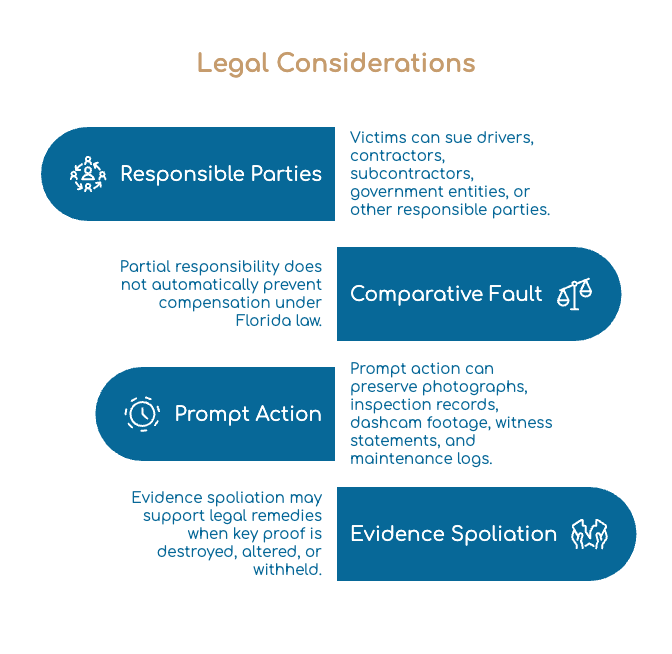
- Victims may pursue claims against drivers, contractors, subcontractors, government entities, or other responsible parties.
- Comparative fault may affect recovery, but partial responsibility does not automatically prevent compensation under Florida law.
- Prompt action can preserve photographs, inspection records, dashcam footage, witness statements, and maintenance logs.
- Evidence spoliation may support legal remedies when key proof is destroyed, altered, or withheld.
Legal guidance can help injury victims understand deadlines, insurance issues, and available claims while focusing on recovery and continued service to others.
Why Do Daytona Beach Work Zone Accident Injuries Happen?
Understanding legal rights after a Daytona Beach work zone accident often begins with identifying why the injury occurred. These incidents often arise from overlapping roadway, construction, and human factors. Lane shifts, uneven pavement, temporary barriers, and unclear signage can create hazards for drivers, passengers, pedestrians, and road workers. When traffic moves near active crews, even a brief lapse in attention may cause severe harm.
Nighttime visibility can also play a major role, especially when lighting is poor, reflective devices are missing, or drivers fail to reduce speed. Heavy equipment, changing traffic patterns, and narrowed lanes increase the need for careful planning and supervision. Worker fatigue may contribute when long shifts, heat, or demanding schedules affect judgment and response time. In other cases, speeding, distracted driving, impaired driving, or inadequate maintenance of the work zone can worsen danger. Understanding these causes helps clarify responsibility and supports safer roadway practices for the community.
What Should You Do After a Daytona Beach Work Zone Accident Injury?
After a Daytona Beach work zone accident injury, prompt action can protect both health and potential legal claims. The injured person should seek immediate medical care, report the accident to the proper authorities, and guarantee the incident is formally documented. Preserving important evidence, including photographs, witness information, and records, may help clarify liability and support any future claim.
Seek Immediate Medical Care
When a work zone accident occurs in Daytona Beach, prompt medical evaluation should be treated as a priority, even if the injury appears minor at first. Delayed symptoms, including head trauma, internal injuries, spinal damage, or soft tissue complications, may worsen without timely care. Medical professionals can identify hidden conditions, recommend appropriate treatment, and create records that connect the injury to the incident.
A person serving injured workers, passengers, pedestrians, or nearby motorists should encourage calm action and immediate attention to health. Follow all treatment instructions, attend follow-up visits, and keep copies of medical records, prescriptions, and bills. Preserve accident documentation, including photographs, witness information, and insurance communications, as these materials may support future claims. Injured individuals should also get legal guidance promptly to protect rights.
Report The Accident
A timely report is a crucial step following a Daytona Beach work zone accident, because it creates an official record of the incident and helps preserve important facts. The injured person should notify the appropriate authority, such as law enforcement, a site supervisor, or an employer, depending on where and how the injury occurred. This report can identify involved parties, note road or site conditions, and record the time and location with accuracy.
Prompt reporting also supports those who later review the event, including insurers, medical providers, and legal advocates seeking fair outcomes. It may help retain proof before details fade. A report can also reflect witness recollection, medical records, and injury documentation, giving future decision-makers a clearer foundation for evaluating responsibility and needed assistance.
Preserve Critical Evidence
Once the accident has been reported, preserving evidence helps protect the injured person’s ability to prove what happened and who may be responsible. Helpful witnesses, family members, or advocates can assist by photographing vehicle positions, traffic control devices, debris, skid marks, warning signs, and visible injuries before conditions change. Video footage preservation should begin quickly, since nearby businesses, construction contractors, traffic cameras, and private properties may overwrite recordings. Dashcam retrieval from involved vehicles can also provide an objective view of lane shifts, speed, signage, and driver conduct.
Records should be kept in organized files, including medical papers, towing receipts, insurance denial documentation, and correspondence with adjusters. Repair estimate collection is also important, as it may show impact severity and support claims involving property damage and related losses.
Critical Evidence in a Daytona Beach Work Zone Accident Injury Case
Strong evidence is critical in a Daytona Beach work zone accident injury case, because liability may depend on construction conditions, traffic controls, and the actions of multiple parties. Important materials may include: 1. Crash scene photos 2. Traffic control records 3. Witness statements 4. Medical treatment documentation. Each category can help establish how the collision occurred, whether safety rules were followed, and how the injuries affected the claimant.
Crash Scene Photos
Because work zones change quickly, crash scene photos can preserve essential details that may disappear within hours after a Daytona Beach construction-zone collision. Images may show vehicle positions, skid marks, debris fields, lane shifts, blocked sightlines, weather conditions, lighting, and visible injuries. They may also capture damaged barriers, cones, signs, equipment, or pavement defects before repairs or cleanup alter the scene. For injured workers, motorists, and families seeking to serve their communities responsibly, careful photographs help present facts with accuracy and dignity. Counsel may review these images to evaluate fault, identify witnesses, and explain the mechanisms of injury. They also assist with documenting losses in settlement negotiations by connecting physical damage and medical harm to the crash environment. Clear photos can strengthen claims and reduce disputes later.
Traffic Control Records
In a Daytona Beach work zone accident case, traffic control records can show whether the construction area was planned, marked, and maintained in a reasonably safe manner. These records may include lane closure permits, signage diagrams, barricade logs, inspection reports, and contractor communications. They help determine if warning signs were placed correctly, if detours were clear, and if traffic devices were repaired when damaged. When reviewed with care, they may also separate site safety failures from Driver negligence factors, such as speeding, distraction, or ignoring posted warnings. Prompt evidence preservation steps are important because project records may be updated, moved, or discarded as work progresses. A careful review can support accountability, encourage safer practices, and help injured persons pursue fair recovery after a serious work zone crash.
Witness Statements
Traffic control records may explain how a Daytona Beach work zone was designed and maintained, but witness statements often reveal how conditions actually appeared to drivers, workers, and bystanders at the time of the crash. These accounts may describe confusing lane shifts, missing signs, poor lighting, speeding vehicles, or unsafe worker conduct. Promptly gathered statements can preserve details before memories fade or stories change. They may assist in establishing fault elements by linking specific conduct to the collision, including failures by contractors, motorists, or other responsible parties. Witnesses may also help with corroborating damages proof by describing visible distress, vehicle impact, or immediate limitations observed after the incident. For advocates serving injured people, careful witness interviews can strengthen a claim while honoring accuracy, fairness, and accountability.
Medical Treatment Documentation
After a Daytona Beach work zone collision, medical treatment documentation can become one of the most essential forms of evidence in an injury claim. Emergency records, diagnostic imaging, physician notes, prescriptions, therapy reports, and follow-up evaluations help connect the crash to the injuries sustained. This documentation may serve as Essential Evidence by showing the severity of harm, the timing of symptoms, and the need for continuing care. It can also support Proving Liability when records align with crash reports, witness accounts, and documented roadway hazards. For injured workers, drivers, pedestrians, or passengers, complete medical records help accurately present the full impact of the incident. Consistent treatment also demonstrates responsible efforts to recover, which may strengthen a claim while honoring the needs of others affected.
Long-Term Effects of Daytona Beach Work Zone Accident Injuries
Work zone accident injuries in Daytona Beach can create lasting consequences, including chronic pain, reduced mobility, and limitations on daily activities. Victims may also experience emotional distress, memory problems, or cognitive difficulties that affect work, relationships, and independence. Future medical costs, ongoing therapy, and long-term care needs are key factors when evaluating the full impact of these injuries.
Chronic Pain And Mobility
Persistent pain and reduced mobility are among the most disruptive long-term consequences of injuries sustained in Daytona Beach work zone accidents. Damage to the spine, joints, muscles, or nerves may limit walking, lifting, driving, and routine caregiving tasks. These limitations can affect a person’s ability to work, assist family members, and participate in community responsibilities. Ongoing treatment, therapy, assistive devices, and expert evaluations often become necessary.
Claim documentation should clearly connect functional limitations to the accident, treatment needs, and future care. Medical timelines help show how symptoms developed, persisted, or worsened after the collision. Witness credibility may support accounts of visible pain, altered movement, or reduced activity. During insurance negotiations, accurate evidence of chronic pain and mobility loss can help address long-term needs with greater fairness.
Emotional And Cognitive Effects
Physical limitations are not the only lasting consequences of serious injuries in Daytona Beach work zone accidents. Many injured workers and motorists experience anxiety, depression, sleep disruption, irritability, and fear of returning to traffic or construction environments. Head trauma may also cause memory problems, reduced concentration, slower processing, or difficulty making decisions. These changes can affect employment, family responsibilities, and the ability to serve others with patience and consistency.
Careful Nursing documentation may help identify mood changes, confusion, headaches, or behavioral concerns that develop after the accident. When symptoms persist, trauma counseling can provide structured support, coping strategies, and clinical insight. Emotional and cognitive harm should be treated as a serious part of recovery, not as a secondary concern, especially when it limits daily functioning.
Future Medical Costs
Calculating future medical costs is essential when injuries from a Daytona Beach work zone accident require treatment beyond the initial emergency response. These expenses may include surgeries, rehabilitation, mobility devices, medication, home modifications, and ongoing specialized care. Careful documentation helps injured individuals, families, and advocates understand the resources needed to preserve dignity, independence, and long-term stability. Physicians, life care planners, and financial professionals may provide projections that support accurate valuation.
Future expenses also influence Settlement negotiation strategies, particularly when insurers attempt to limit payment to short-term treatment. A thorough claim should address anticipated complications, reduced earning capacity, and necessary support services. Comparative negligence defenses may affect recovery, so evidence must clearly link the accident to projected care needs and preserve access to essential treatment.
Proving Liability in Daytona Beach Work Zone Accident Injury Cases
In Daytona Beach work zone accident cases, proving liability requires a careful review of how the collision occurred, who controlled the construction area, and whether required safety measures were followed. Responsibility may rest with a negligent driver, contractor, subcontractor, government agency, equipment operator, or traffic control company. Evidence often includes crash reports, lane closure plans, signage records, photographs, witness statements, vehicle data, and construction logs.
A careful investigation helps determine whether hazards were created, ignored, or inadequately marked. Missing barriers, poor lighting, confusing detours, unsafe equipment placement, and failure to comply with Florida safety standards may support a claim. When injuries are fatal, Wrongful death criteria must also be evaluated, including the relationship of survivors and recoverable losses. Liability proof should be organized early to preserve evidence and protect injured persons. It may also help identify conduct that later supports challenges to insurance bad-faith tactics without shifting focus from fault.
Dealing With Insurance Companies After a Daytona Beach Work Zone Accident Injury
After a Daytona Beach work zone accident, insurance companies often begin evaluating fault, damages, and coverage before an injured person fully understands the value of the claim. Adjusters may request recorded statements, broad medical authorizations, or quick summaries of pain and limitations. These requests can affect later negotiations, especially when responses are incomplete or imprecise.
Careful communication helps protect the injured person’s interests while respecting the orderly resolution of claims. Documentation errors, such as missing treatment records, unclear wage-loss evidence, or inconsistent symptom descriptions, may give insurers grounds to reduce or dispute payment. A lawyer can help organize medical bills, employment records, photographs, witness information, and repair estimates so the claim is presented with accuracy and discipline.
A sound settlement strategy considers liability evidence, future care needs, lost income, and the human impact of the injury. This approach encourages fair evaluation rather than rushed decisions driven by insurer pressure.
What to Expect During a Daytona Beach Work Zone Accident Injury Claim Process
A Daytona Beach work zone accident injury claim typically begins with prompt reporting of the accident, followed by careful documentation of injuries, roadway conditions, and parties involved. The process may also require gathering crucial evidence, addressing insurer inquiries, and evaluating settlement offers with close attention to liability and damages. Each stage can affect the final resolution of the claim, making accuracy, consistency, and timely action essential.
Reporting The Accident
When a collision occurs in a Daytona Beach work zone, prompt reporting establishes the foundation for any later injury claim. The injured person, or a responsible representative, should notify law enforcement, emergency responders, and the appropriate workplace or project authority as soon as conditions permit. Accurate reporting helps safeguard public safety, supports proper medical response, and ensures that official records identify the location, parties involved, and immediate consequences.
This step also assists with Legal filing deadlines and avoiding insurance delays. Insurers often review the timing and consistency of reports before evaluating a claim. A delayed or incomplete report may invite disputes over how the crash happened or whether the injuries were related. Timely notice demonstrates responsibility, preserves procedural rights, and supports an orderly claim process.
Gathering Key Evidence
Before an injury claim can be evaluated, key evidence must be identified, preserved, and organized in a way that supports a clear account of the work zone collision. This may include photographs of lane closures, warning signs, vehicle damage, debris patterns, and visible injuries. Witness names, medical records, crash reports, and contractor information may also help clarify how the incident occurred. A Department records request can provide permits, traffic control plans, inspection notes, or prior complaints involving the work area. Insurance coverage verification may be documented to identify potentially responsible parties without addressing claim negotiations. Careful evidence gathering serves injured individuals, families, and the broader community by promoting accountability. Timely preservation is especially important when construction conditions change quickly after a serious accident in Daytona Beach.
Dealing With Insurers
After critical evidence has been preserved, communications with insurers often become a central part of a Daytona Beach work zone accident injury claim. Adjusters may request statements, medical authorizations, employment records, or information about prior injuries. Each response should be accurate, limited, and consistent with documented facts, because insurers often evaluate liability and damages through careful review.
A claimant may face multiple carriers, including those for negligent drivers, contractors, subcontractors, or commercial entities. Policy coverage limits can affect available compensation and shape the insurer’s evaluation. If an insurer disputes fault, minimizes injuries, or issues a refusal, counsel may prepare a denial appeal strategy supported by records, expert opinions, and witness accounts. Careful handling helps protect the injured person’s dignity while ensuring responsible parties are properly evaluated.
Resolving Your Claim
How a Daytona Beach work zone accident claim resolves depends on the strength of the evidence, the severity of the injuries, the available insurance coverage, and the willingness of each party to accept legal responsibility. The process often begins with Florida accident reporting, medical documentation, witness statements, and preservation of work zone records. A claimant’s legal team may evaluate liability among drivers, contractors, agencies, or equipment operators, then prepare a demand supported by damages evidence. Insurance adjuster timelines can affect negotiations, especially when carriers request records, review treatment, or dispute fault. If settlement discussions serve the injured person’s long-term needs, the claim may resolve without litigation. When negotiations fail, filing suit may become necessary to protect accountability, secure compensation, and support recovery for those harmed.
Compensation for Daytona Beach Work Zone Accident Injury Damages
In a Daytona Beach work zone accident claim, guarantee may address both the immediate costs of an injury and the longer-term losses that follow. These claims often arise from hazardous traffic patterns, inadequate warnings, unsafe construction practices, or a Negligent lane change near workers, drivers, or pedestrians. When pedestrian harm occurs, the impact may extend beyond medical treatment, affecting mobility, caregiving duties, and the ability to serve family or community.
A lawyer may evaluate the facts, identify responsible parties, and document the full scope of injury-related damages. This process can include reviewing crash reports, construction records, witness statements, and medical evidence. Assurance may reflect hospital care, rehabilitation, assistive needs, lost work capacity, and the practical burdens created by lasting physical limitations. Careful claim preparation helps ensure that insurers and opposing parties consider the true consequences of the accident, rather than minimizing the person’s needs during recovery and beyond.
Economic vs Non-Economic Damages in Daytona Beach Work Zone Accident Cases
In Daytona Beach work zone accident cases, damages are generally divided into economic and non-economic losses. Economic damages may include medical expenses, lost wages, and reduced earning capacity, while non-economic damages address pain, suffering, emotional distress, and loss of enjoyment of life. Proving these losses often requires medical records, employment documentation, expert opinions, and other evidence connecting the injury to the accident.
Economic Damages Explained
After a work zone accident in Daytona Beach, economic damages refer to the measurable financial losses tied directly to the injury and its consequences. These damages may include emergency care, hospitalization, rehabilitation, prescription costs, lost wages, reduced earning capacity, and necessary household assistance. They may also cover property damage, transportation to medical appointments, and future treatment supported by medical opinions. In cases involving Faulty signage, inadequate Traffic control, poor Vehicle maintenance, or Equipment failures, financial records help connect negligent conduct to specific losses. Attorneys, insurers, and courts often review bills, pay records, repair estimates, and expert evaluations to calculate these amounts. For injured workers, drivers, and families serving dependents, economic damages provide practical support for restoring stability and meeting crucial obligations after a serious work zone collision.
Non-Economic Damages Explained
Non-economic damages address the personal harm that cannot be measured through bills, invoices, or wage records, but still may considerably affect an injured person’s life following a Daytona Beach work zone accident. These losses may include pain, emotional distress, loss of enjoyment of life, disfigurement, and strain on family relationships. For individuals committed to serving others, such harm can be especially disruptive when injuries limit caregiving, community involvement, or daily acts of support. Florida’s Comparative Negligence rules may influence recovery if the injured person is found partly responsible, reducing compensation in proportion to fault. Although these damages are subjective, they remain an important part of a claim. Careful Evidence Collection can help reflect the depth of personal suffering without relying solely on financial records or medical expenses.
Proving Accident Losses
When a Daytona Beach work zone accident causes injury, proving losses requires a clear separation between measurable financial harm and the personal consequences that do not appear on a receipt. Economic damages may include medical bills, rehabilitation costs, reduced earnings, property damage, and future lost income when an injury limits long-term work capacity. Non-economic damages address pain, emotional distress, disfigurement, and loss of normal life, which must be supported through credible evidence.
Damages documentation helps connect each claimed loss to the crash. Records from physicians, employers, therapists, and caregivers can show how injuries changed daily function and financial stability. Witness accounts, photographs, and expert evaluations may also assist. A careful presentation allows decision makers to understand both practical needs and human impact with fairness and responsibility.
When a Daytona Beach Work Zone Accident Injury Case Goes to Trial vs Settlement
Although many Daytona Beach work zone accident injury claims resolve through settlement, a case may proceed to trial when the parties cannot agree on fault, the severity of injuries, or the value of damages. Settlement often offers a more predictable outcome, reduced delay, and privacy for injured workers, drivers, or families seeking stability after disruption.
Trial may become necessary when insurers undervalue medical needs, lost income, pain, or long-term limitations. A lawyer may develop a Trial Strategy focused on clear evidence, credible witnesses, and persuasive presentation of construction-zone hazards. Jury Selection can also shape how facts are understood, especially where roadway duties, driver conduct, and contractor practices are disputed.
The Case Timeline may lengthen when litigation proceeds through discovery, expert review, motions, and courtroom presentation. However, readiness for trial can create Settlement Leverage, encouraging fair negotiation. The goal remains practical service, securing accountability and resources that help injured people rebuild with dignity.
Florida Laws That May Affect Your Daytona Beach Work Zone Accident Case
Because Florida law controls many issues in a Daytona Beach work zone accident case, the outcome may depend on rules governing negligence, roadway safety, insurance coverage, and filing deadlines. These laws help identify who failed to exercise reasonable care and how injured people may seek support.
- Comparative negligence: Florida’s modified Comparative negligence rule may reduce or bar recovery when an injured person shares fault, making careful review of the evidence crucial.
- Work zone safety duties: Contractors, agencies, and drivers may need to follow lane closure plans, warning sign requirements, and safe traffic control practices.
- Traffic signal rules: Violations of traffic signal rules, flagger directions, or temporary control devices may help establish unsafe conduct in a construction zone.
- Insurance requirements: Personal injury protection, bodily injury coverage, and commercial policies may affect available compensation and the order of claims.
These rules promote accountability while helping injured community members seek practical relief after preventable harm.
The Statute of Limitations for Daytona Beach Work Zone Accident Injury Cases
Florida’s negligence, roadway safety, and insurance rules can shape a Daytona Beach work zone accident claim, but filing deadlines may determine whether the claim can proceed at all. Under Florida law, most negligence-based personal injury lawsuits must be filed within two years from the date of the accident. Missing this deadline may prevent an injured person from seeking compensation, regardless of the severity of the harm.
Work zone cases may involve multiple responsible parties, including drivers, contractors, subcontractors, or government entities. Some claims, especially those involving public agencies, may require earlier notice steps before a lawsuit is filed. Because these timelines can affect families, caregivers, and community members who depend on fair recovery, careful attention is crucial.
Liability evidence gathering should begin promptly, as roadway conditions, warning signs, debris, and witness memories can change quickly. Proactive legal consultation may help clarify applicable deadlines and preserve the opportunity to pursue a timely injury claim.
How a Daytona Beach Work Zone Accident Lawyer Can Help You
A Daytona Beach work zone accident lawyer can assess the facts, identify potentially liable parties, and determine how Florida law applies to the injured person’s claim. This support helps injured people and their families pursue accountability while focusing on recovery and community responsibilities.
Legal guidance can clarify liability, protect claims, and support injured people through the recovery process.
- Investigation and evidence review: Counsel may examine crash reports, construction plans, traffic control devices, photographs, witness accounts, and maintenance records to evaluate negligence.
- Client interview preparation: The lawyer may help the injured person organize medical history, employment details, and accident recollections so the claim is presented clearly and accurately.
- Insurance negotiation strategy: Legal counsel can evaluate policy limits, damages, comparative fault arguments, and settlement offers to pursue fair compensation without unnecessary conflict.
- Claim coordination: The attorney may communicate with insurers, contractors, government entities, and medical providers, helping preserve documentation and reduce administrative burdens for those serving, supporting, or caring for the injured person.
When to Contact a Daytona Beach Work Zone Accident Lawyer
After a work zone collision in Daytona Beach, legal guidance should be sought as soon as the injured person’s immediate medical needs are addressed. Early contact can help preserve photographs, witness information, construction records, and traffic control details before they are lost or changed. This timing is especially important when Work zone speeding, lane closures, unclear signage, or contractor activity may have contributed to the crash.
A lawyer should also be contacted before providing recorded statements, signing releases, or discussing fault with insurers. Families and caregivers often want to protect an injured person while also cooperating in good faith, yet insurance negotiation pitfalls can arise quickly. Adjusters may request incomplete medical information, undervalue future treatment, or frame questions in ways that affect the claim. Prompt legal consultation allows the injured person and supportive family members to understand deadlines, document expenses, and make informed decisions while focusing on recovery, caregiving, and responsible next steps.
Why You Need an Experienced Daytona Beach Work Zone Accident Lawyer
When a collision occurs in or near an active construction zone, the resulting claim often involves more than a standard traffic accident. Multiple parties may share responsibility, including negligent drivers, contractors, subcontractors, equipment operators, and government entities responsible for roadway safety. An experienced Daytona Beach work zone accident lawyer can evaluate these relationships, preserve crucial evidence, and identify the rules that apply to lane closures, signage, barriers, and traffic control plans.
Injured people often face medical needs, lost income, and family responsibilities while trying to serve their communities and care for others. Skilled legal guidance helps protect their ability to recover without being overwhelmed by insurers or opposing parties. Counsel can manage insurance adjuster negotiations, address disputed liability, and pursue Coverage denial appeals when benefits are improperly refused. Experience also matters because evidence from the construction zone can disappear quickly. Prompt investigation allows a lawyer to seek fair compensation while the injured person focuses on restoration.
How to Choose the Right Daytona Beach Work Zone Accidents Lawyer for Your Case
Selecting the right attorney begins with reviewing whether the lawyer has direct experience handling work zone accident claims in Daytona Beach and the surrounding areas. The attorney should understand construction zone regulations, roadway hazards, contractor responsibilities, and the needs of injured clients seeking practical guidance. A thorough Client case evaluation can show whether the lawyer carefully identifies liability issues, available damages, and deadlines.
Prospective clients may also ask whether the firm provides a clear documentation checklist, including medical records, crash reports, photographs, witness details, and wage information. This helps preserve evidence and supports organized decision-making. The lawyer’s approach to insurance negotiation should be measured, persistent, and focused on fair recovery, not quick closure. If settlement efforts fail, an overview of the trial strategy can reveal preparedness for litigation. The right lawyer communicates clearly, respects the client’s service-oriented priorities, and works to restore stability after a preventable work zone collision.
About The Law Offices of Anidjar & Levine
For injured people seeking guidance after a Daytona Beach work zone collision, The Law Offices of Anidjar & Levine provides legal representation focused on accountability, case preparation, and client support. The firm assists clients by reviewing crash facts, identifying responsible parties, preserving evidence, and communicating with insurers, medical providers, and other involved entities.
Its attorneys understand that work zone cases may involve construction companies, contractors, drivers, government agencies, or equipment operators. They evaluate Liability defenses early, addressing claims that road conditions, worker conduct, or driver error caused or contributed to the crash.
The firm also supports clients when insurance companies delay, undervalue, or deny valid claims. When insurance bad faith concerns arise, the attorneys examine claim handling, policy obligations, and available remedies. Through organized advocacy and consistent communication, The Law Offices of Anidjar & Levine works to help injured individuals pursue compensation while focusing on recovery, stability, and service to their families and communities.
Frequently Asked Questions
Can Tourists File Work Zone Accident Claims in Daytona Beach?
Yes, tourists may file work zone accident claims in Daytona Beach when another party’s negligence caused injury or loss. Visitors have the same right to seek compensation as residents, subject to Florida law, liability insurance requirements, and applicable claim procedures. Those assisting injured travelers should help preserve evidence, obtain medical records, and identify responsible contractors or drivers. Filing deadline extensions may apply in limited circumstances, but prompt action remains critical.
Do Work Zone Accident Claims Differ for Bicyclists or Pedestrians?
Yes. Work zone accident claims often differ for bicyclists and pedestrians because their injuries, right-of-way issues, visibility concerns, and safety protections require careful review. Comparative fault may be argued if conduct, signals, or designated paths are disputed. Strong documentation evidence, including photos, witness statements, medical records, and traffic control details, helps establish responsibility. Those serving injured people should evaluate each vulnerable road user’s circumstances with precision, care, and diligence.
Can Defective Construction Equipment Affect My Accident Claim?
Yes. Defective construction equipment can materially create claim impact by showing that unsafe machinery contributed to the injury. Equipment malfunction may indicate maintenance failures, poor inspections, or worker negligence by those responsible for safe operation. A reviewing attorney would examine service records, site procedures, and witness accounts to identify accountable parties. This evidence helps protect injured persons, promotes safer practices, and supports fair compensation for harm caused by preventable hazards.
What if Poor Lighting Contributed to My Work Zone Crash?
Poor lighting may support a claim if it reduced driver visibility and contributed to the crash. Investigators may review lighting plans, warning devices, reflective markings, and whether night time hazards were reasonably addressed. Traffic signal glare may also matter if it confused drivers or obscured lane changes. A responsible party could include a contractor, agency, or maintenance provider. Careful documentation helps protect injured people and promotes safer work zones for others.
Are Rideshare Passengers Covered After Work Zone Accidents?
Yes, rideshare passengers are generally covered after work zone accidents through available insurance sources, depending on fault and the driver’s app status. Coverage may involve the rideshare company’s policy, another driver’s insurer, or responsible construction parties. Negligent signage, worker distraction, unsafe lane shifts, or inadequate traffic control may support claims. A careful review helps protect injured passengers while ensuring accountable parties serve community safety and lawful responsibility.
—————————
A Daytona Beach work zone accident can leave victims facing serious injuries, financial strain, and complicated legal questions. A qualified lawyer can investigate the crash, identify liable parties, protect the victim’s rights, and pursue fair compensation. A Daytona Beach Car Accident Lawyer from The Law Offices of Anidjar and Levine can provide knowledgeable guidance for injured clients throughout the claims process.
Prompt legal action may help preserve evidence, meet deadlines, and strengthen the case for recovery after a work zone accident.