The Law Offices of Anidjar and Levine can help injured victims prove fault, document losses, and address insurance disputes after a preventable, unsafe lane-change collision.
Legal support may involve reviewing police reports, witness statements, vehicle damage, roadway evidence, dashcam footage, and medical records.
These cases often involve disputed driver conduct, blind spot errors, speeding, fatigue, or comparative negligence.
An attorney may also evaluate settlement offers and denial appeals.
Learn more from a Daytona Beach Car Accident Lawyer.
The sections below explain central claim issues and legal options.
Main Takeaways
- A Daytona Beach unsafe lane-change accident lawyer can investigate fault using crash reports, witness statements, vehicle damage, roadway markings, and video evidence.
- Legal help can address insurer disputes, settlement offers, denial appeals, and documentation of medical treatment and future care needs.
- Unsafe lane change claims often involve distracted driving, blind-spot errors, speeding, impairment, fatigue, weather conditions, or misjudged traffic.
- Victims may seek compensation for medical care, lost income, reduced earning ability, property damage, and pain.
- Prompt medical treatment, crash reporting, and evidence preservation can strengthen a claim and reduce the risk of insurance denial.


How We Can Help With Your Daytona Beach Unsafe Lane Change Accident Injury Claim
When an unsafe lane change causes a collision, an injury claim often depends on clear proof of fault, the full extent of the victim’s losses, and careful handling of insurance company tactics. A Daytona Beach unsafe lane change accident lawyer can serve injured individuals by investigating available evidence, identifying liable parties, and organizing the claim with disciplined attention to deadlines. Counsel may gather crash reports, witness statements, vehicle damage documentation, and roadway evidence, while coordinating requests for medical records to establish treatment needs and future care concerns.
Legal support also includes communicating with insurers, evaluating settlement offers, and protecting the claimant from statements that may be misused. If an insurer undervalues or rejects a valid claim, counsel can prepare Insurance denial appeals with supporting documentation and reasoned legal arguments. Through steady advocacy, the attorney helps pursue compensation for medical expenses, lost income, pain, and related damages, while allowing the injured person to focus on recovery.
OUR CONSULTATIONSARE FREE
START YOUR FREE CASE REVIEW

Understanding Daytona Beach Unsafe Lane Change Accident Injury Cases
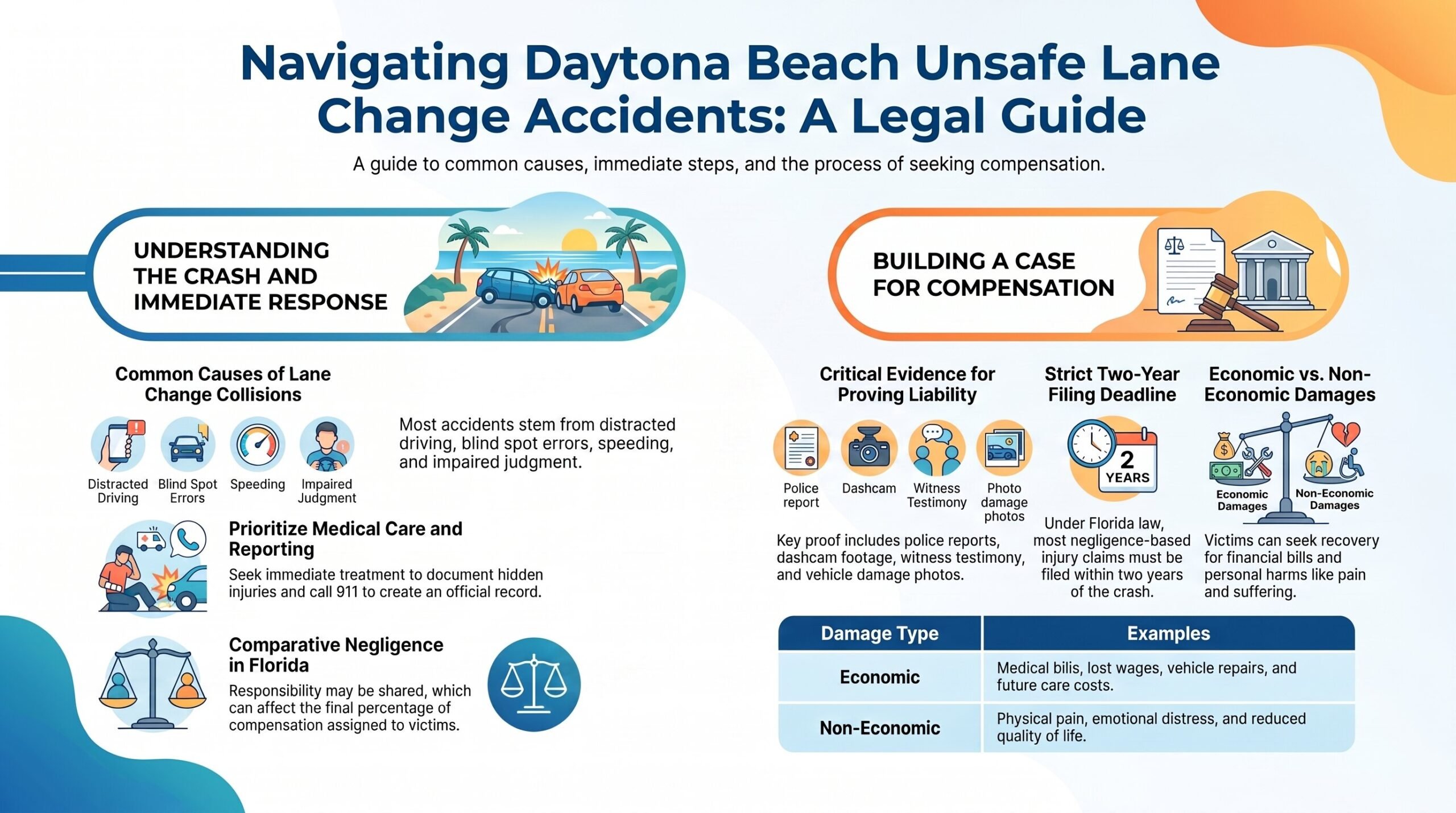
Although unsafe lane changes may appear straightforward, these accident cases often involve disputed facts, multiple contributing causes, and significant questions about driver conduct. In Daytona Beach, an injury claim may require careful review of police reports, witness statements, vehicle damage, roadway markings, and available video evidence. Each detail can help clarify whether a driver failed to maintain a proper lane, misjudged surrounding traffic, or created an unreasonable risk to others.
These cases also require attention to Comparative Negligence Basics, because responsibility may be divided among more than one party. An injured person may still pursue compensation, but the recovery amount can be affected by the assigned percentage of fault. Traffic Signal Violations may also become relevant when a lane change occurs near an intersection or controlled roadway. A thorough legal evaluation helps protect the injured person’s interests, supports accurate fault analysis, and promotes accountability for conduct that places the community at risk.
Common Causes of Daytona Beach Unsafe Lane Change Accident
Unsafe lane-change accidents in Daytona Beach often result from preventable driver conduct, including distracted driving, blind-spot errors, and unsafe movement between lanes. Speeding while changing lanes can reduce reaction time and increase the severity of a collision, especially in congested traffic or near intersections. Impaired driver judgment, whether caused by alcohol, drugs, fatigue, or other factors, may also lead to miscalculated lane changes and serious roadway hazards.
Distracted Driving
Distracted driving often contributes to unsafe lane change accidents in Daytona Beach because it reduces a driver’s ability to monitor traffic, judge speed, and respond to changing road conditions. When attention shifts to a phone, navigation system, passenger, food, or other in-vehicle activity, the driver may drift from a lane or signal too late. Distracted Driving also affects Driver Behavior by delaying reactions and weakening decision-making during routine traffic movements.
In areas serving residents, visitors, workers, and emergency responders, even a brief lapse can place others at unnecessary risk. Careful drivers support community safety by keeping their eyes on the road, hands on the wheel, and focus on surrounding traffic. Consistent attention helps prevent avoidable crashes and promotes responsible conduct on Daytona Beach roadways for all.
Blind Spot Errors
Blind-spot errors occur when a driver fails to detect a nearby vehicle, motorcycle, bicycle, or pedestrian before changing lanes. In Daytona Beach, these mistakes often arise when mirrors are poorly adjusted, drivers neglect shoulder checks, or larger vehicles block a clear view. Motorcyclists and bicyclists are especially vulnerable because their smaller profiles can disappear beside cars, trucks, or commercial vehicles.
Weather-related crashes may also involve blind spot errors when rain, glare, or fog reduces visibility and makes nearby traffic harder to identify. Road debris hazards can further complicate lane changes, causing drivers to focus on avoiding obstacles rather than checking surrounding traffic. Careful observation, proper mirror use, and patient decision-making help protect others and reduce preventable unsafe lane change collisions.
Speeding Between Lanes
Speeding between lanes often compounds the risks created by poor visibility, because a driver who changes lanes too quickly has less time to identify nearby traffic and correct a dangerous action. In Daytona Beach traffic, this conduct may endanger commuters, visitors, pedestrians, and service workers who depend on orderly use of the roadway. Rapid lateral movement can shorten reaction time, increase stopping distance, and make a minor misjudgment far more severe.
Driver behavior analysis may examine speed, spacing, turn signal use, and whether the action matched surrounding conditions. Lane marking clarity also matters, especially where construction, glare, or worn paint affects a driver’s ability to track lane boundaries. Careful review of these factors helps determine whether excessive speed contributed to an unsafe lane change and resulting harm.
Impaired Driver Judgment
Impaired judgment often plays a central role in unsafe lane change accidents, particularly when alcohol, drugs, fatigue, or certain medications affect a driver’s ability to assess traffic conditions. In Daytona Beach traffic, delayed reactions may prevent a motorist from recognizing nearby vehicles, lane markings, or changes in speed. Impaired judgment can also create reckless patterns, such as abrupt merging, failure to signal, or drifting across lanes without adequate space.
When distracted perception combines with intoxication or exhaustion, a driver may overlook motorcycles, pedestrians, or vehicles in blind spots. Traffic signal confusion may further increase the risk, especially near intersections or congested corridors. For those serving injured individuals, understanding these causes helps identify negligent conduct and support careful evaluation of accident responsibility after a lane change collision.


Legal Rights of Daytona Beach Unsafe Lane Change Accident Injury Victims
When an unsafe lane change causes a collision in Daytona Beach, injured victims may have the right to pursue compensation from the driver or other parties responsible for the crash. These rights may include recovery for medical care, lost income, reduced earning ability, property damage, and pain caused by the event. Insurance claim deadlines must be observed, because delays can limit available remedies.
Comparative negligence rules may also affect recovery if more than one person shared fault.
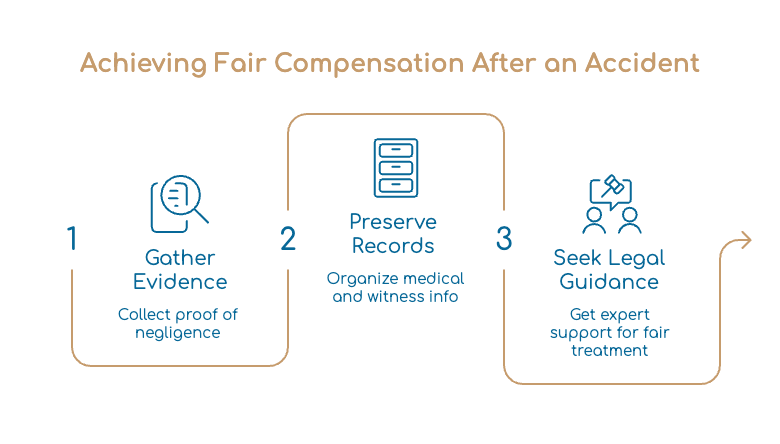
- Victims may seek evidence that shows the other driver failed to use reasonable care.
- Families may help preserve records, medical notes, and witness information with diligence.
- Legal guidance may support fair treatment when insurers question the existence of injuries or losses.
These protections are designed to restore stability, not create advantage. A careful claim allows injured people, and those assisting them, to pursue accountability while focusing on recovery, dignity, and practical needs after the crash.
Why Do Unsafe Lane-Change Accidents Happen at Daytona Beach?
Why do unsafe lane change injuries occur so often in Daytona Beach traffic? They often result from preventable failures in attention, judgment, and vehicle control. Drivers may move between lanes without checking blind spots, signaling properly, or allowing enough space for nearby vehicles. In busy corridors, a single careless operation can place motorcyclists, pedestrians, tourists, and local commuters at serious risk.
Driver fatigue factors also contribute to these collisions, especially when motorists travel long distances, work extended hours, or drive late at night. Fatigue slows reaction time and weakens decision-making. Weather visibility issues, including heavy rain, glare, fog, and wet road spray, can further reduce a driver’s ability to see adjacent traffic before changing lanes.
Unsafe lane changes may also occur when drivers speed, follow too closely, use phones, or misjudge traffic flow. Understanding these causes helps communities promote safer conduct and protect vulnerable road users.
What Should You Do After an Unsafe Lane-Change Accident in Daytona Beach?
After an unsafe lane-change accident in Daytona Beach, an injured person should take immediate steps to protect both their health and any potential claim. Prompt medical treatment, a timely crash report, and careful preservation of vital evidence can help establish the extent of injuries and the cause of the collision. These actions may also reduce disputes with insurance companies, particularly when fault or damages are contested.
Seek Medical Treatment
Immediate medical evaluation is essential for anyone injured in an unsafe lane-change accident in Daytona Beach, even if symptoms appear minor at first. Prompt care helps identify hidden injuries, such as concussions, soft tissue damage, or internal trauma, that may worsen without treatment. Documented symptoms also create an objective record linking the injury to the collision, reducing the risk of insurance claim denial.
Medical providers can accurately guide treatment, referrals, work restrictions, and future medical planning. For individuals focused on serving family, clients, or community, timely care supports recovery and preserves their ability to meet responsibilities. Records from the treatment may also assist legal counsel in reviewing a traffic citation by showing the physical consequences of the unsafe lane change. Delays can weaken both health outcomes and injury claims.
Report The Crash
Once medical needs are being addressed, the crash should be reported to law enforcement as soon as possible. A prompt report helps protect injured persons, supports public safety, and creates an official record of what occurred. In Daytona Beach, officers can respond to the location, manage traffic hazards, speak with involved drivers, and note apparent violations connected to an unsafe lane change. If anyone is injured, the parties should seek immediate assistance by calling 911 and following the dispatcher’s instructions until help arrives.
When it is safe, those present may document scene details for the responding officer, including the location, vehicle positions, traffic conditions, and visible damage. Clear, respectful cooperation with law enforcement can help ensure that the report accurately reflects the circumstances without escalating conflict or confusion.
Preserve Key Evidence
While the official crash report is important, injured persons should also preserve evidence that may show how the unsafe lane change occurred and how the collision caused harm. Photographs of vehicle positions, lane markings, debris, traffic signals, skid marks, and visible injuries can assist those evaluating responsibility later. Witness names, phone numbers, and brief written observations should be secured before memories fade.
Damaged property, repair estimates, towing records, and dashcam footage should be saved without alteration. Injured persons should Preserve Medical Records, including emergency care notes, diagnostic results, prescriptions, therapy records, and work restrictions. These materials help connect the crash to the injuries and daily limitations. They should also avoid speaking with insurance before receiving guidance, as recorded statements may be used to minimize valid claims.
Critical Evidence in a Daytona Beach Unsafe Lane Change Accident Injury Case
Critical evidence in a Daytona Beach unsafe-lane-change accident injury case often determines whether fault can be clearly established and damages properly supported. Key materials may include: 1. police accident reports, 2. dashcam video footage and witness testimony, and 3. vehicle damage photos, each helping reconstruct how the collision occurred. When preserved promptly, this evidence can strengthen a claim and address disputes over lane position, signaling, speed, and driver awareness.
Police Accident Reports
After an unsafe lane change collision in Daytona Beach, the police accident report often becomes one of the first central records reviewed in an injury case. This report may identify drivers, witnesses, vehicle positions, road conditions, citations, and the officer’s initial assessment of contributing factors. For those committed to helping injured people recover, it provides an organized starting point for understanding what occurred and what further proof may be needed.
In Nighttime Crashes, the report may note lighting, visibility, and whether reduced sightlines affected driver judgment. Lane Markings Clarity may also be documented, especially when faded lines, construction patterns, or poor roadway maintenance influenced safe lane movement. While not always conclusive, the report can guide investigation, support accountability, and help protect the injured person’s claim.
Dashcam Video Footage
Dashcam video footage can provide a direct, time-stamped view of how an unsafe lane change occurred in Daytona Beach, making it a valuable source of evidence in an injury case. It may show vehicle positions, lane markings, use of turn signals, traffic flow, speed changes, and the moment of impact. When preserved promptly, this evidence can help support accurate liability Determination and reduce uncertainty about driver conduct.
A careful review may also reveal whether nearby Surveillance Footage should be requested from businesses, traffic systems, or property owners. Attorneys serving injured individuals often work to secure and analyze these recordings before they are deleted or overwritten. Clear video evidence can strengthen a claim, assist negotiations, and help ensure that responsibility is assessed with fairness and precision.
Witness Testimony
When an unsafe lane change causes a collision in Daytona Beach, witness testimony can provide an independent account of the events leading up to impact. Bystanders, passengers, or nearby drivers may describe signal use, vehicle positioning, speed, traffic flow, and whether a driver checked blind spots before moving over. These observations can help clarify disputed facts when the involved motorists give conflicting statements.
Witness credibility is assessed through consistency, vantage point, attention, and absence of bias. Promptly identifying witnesses is important because memories can fade, and contact information may become difficult to obtain. Independent corroboration from neutral witnesses can strengthen an injury claim by supporting the injured person’s account and helping insurers, attorneys, or courts evaluate fault with greater confidence, while promoting fair treatment for those harmed.
Vehicle Damage Photos
In a Daytona Beach unsafe lane-change accident, vehicle damage photos can preserve important physical evidence before repairs, weather, towing, or further handling alter the vehicles’ condition. These images may show impact points, paint transfer, crush patterns, debris location, and relative vehicle positioning. When reviewed with police reports and medical records, photographic evidence can help establish a Liability timeline and clarify how the lane change occurred.
Clear photos also support those assisting injured people by reducing uncertainty and promoting fair evaluation of claims. Insurers may challenge fault or issue an insurance denial when the damage record is incomplete. For that reason, timely photographs from multiple angles can strengthen case preparation. They may guide expert review, negotiation decisions, and settlement strategy while protecting the injured party’s ability to seek accountability.
Long-Term Effects of Daytona Beach Unsafe Lane Change Accident Injuries
Unsafe lane change accidents in Daytona Beach may cause lasting injuries that affect chronic pain, mobility, and daily physical function. Victims may also experience emotional distress, cognitive difficulties, or reduced independence, depending on the severity of the collision. These long-term effects can create ongoing medical costs, making a careful assessment of future damages critical in an injury claim.
Chronic Pain And Mobility
Although some collision injuries appear manageable at first, chronic pain and reduced mobility can become lasting consequences of an unsafe lane change accident in Daytona Beach. Damage to the spine, joints, muscles, or nerves may limit walking, lifting, driving, and caregiving duties, affecting both independence and service to family or community. Ongoing treatment may include physical therapy, injections, surgery, assistive devices, and long-term medication management.
When pain prevents steady work or daily function, documentation from physicians and rehabilitation providers becomes crucial. In severe cases involving Wrongful death, related claims may also address survival damages for suffering endured before death. Investigations should consider whether Vehicle defects or manufacturing liability contributed to the crash or worsened injuries, and ensure that all responsible parties are evaluated with care. Accurate records support fair recovery.
Emotional And Cognitive Effects
After a serious lane change crash, emotional and cognitive injuries may persist long after visible wounds have healed. Survivors may experience anxiety, depression, irritability, sleep disruption, or fear of driving, which can affect work, family responsibilities, and community involvement. Cognitive symptoms may include memory problems, reduced concentration, slower processing, confusion, or difficulty making decisions.
These challenges are often associated with Brain Injury Recovery, especially when a concussion or traumatic brain injury occurred. Caretakers, employers, and service providers may notice changes before the injured person fully understands them. Insurance Claim Stress can intensify these symptoms, particularly when documentation demands, delays, or disputes create additional pressure. Recognizing these effects helps ensure that the person’s needs are taken seriously and addressed with patience, structure, and informed support.
Ongoing Medical Costs
Emotional and cognitive symptoms can also increase the financial burden of recovery, especially when ongoing treatment, follow-up evaluations, and supportive care become necessary. After an unsafe lane change crash, injured individuals may face repeated diagnostic testing, expert visits, medication adjustments, physical therapy, and counseling. These expenses can continue long after visible wounds improve, creating pressure on families, caregivers, and service providers who help coordinate care.
Pain management budgeting becomes crucial when chronic discomfort requires injections, rehabilitation, assistive devices, or prescription monitoring. At the same time, Insurance medical scrutiny may question whether future treatment is reasonable, related, or necessary. Careful documentation, consistent medical attendance, and clear provider opinions can support the value of continuing care and help ensure injured people receive the resources needed for stability and dignity.
Proving Liability in Daytona Beach Unsafe Lane Change Accident Injury Cases
Liability in a Daytona Beach unsafe lane-change accident often turns on whether the at-fault driver failed to exercise reasonable care before changing lanes. Evidence may show that the driver ignored mirrors, failed to signal, drifted across markings, or entered a lane without confirming that it was clear. Police reports, roadway evidence, vehicle damage, traffic camera footage, and witness statements can help establish how the collision occurred.
A careful review may also address lane assignment mistakes, especially when drivers misunderstand merge areas, turn lanes, or construction patterns. These errors can still support liability when a prudent driver would have slowed, yielded, or stayed within the proper lane. Comparative fault defenses may arise if the injured person is accused of speeding, following too closely, or failing to react. Clear documentation helps protect those harmed, supports accountability, and promotes safer conduct for the wider Daytona Beach community.
Dealing With Insurance Companies After a Daytona Beach Unsafe Lane Change Accident Injury
When dealing with insurers, an injured person in a Daytona Beach unsafe-lane-change accident may face questions, document requests, and settlement pressure before the full extent of the harm is known. Insurance adjusters often seek recorded statements, medical authorizations, or early releases that may affect the value of a claim. Careful claim documentation helps protect the injured person’s position by including medical records, proof of wage loss, repair estimates, photographs, and witness information.
Insurers may also rely on policy exclusions, disputed fault, or gaps in treatment to reduce payment. A Wrongful denial can create serious hardship, especially when medical needs and household responsibilities continue. Coverage disputes may involve the at-fault driver’s policy, uninsured motorist benefits, or overlapping insurance sources. A lawyer can communicate with insurers, review settlement offers, and help prevent avoidable mistakes. This support allows the injured person and family members to focus on recovery, stability, and caring for those who depend on them.
What to Expect During a Daytona Beach Unsafe Lane Change Accident Injury Claim Process
A Daytona Beach unsafe lane change accident injury claim typically begins with an initial evaluation of liability, damages, and available insurance coverage. The process then moves through evidence collection, including police reports, medical records, witness statements, and accident documentation, followed by structured negotiations with the insurance carrier. If a fair settlement cannot be reached, the claim may proceed toward litigation, where fault and compensation are addressed through the court process.
Initial Claim Evaluation
How does the initial claim evaluation shape the course of an unsafe lane-change accident injury case in Daytona Beach? It provides a structured review of liability, damages, and available avenues for recovery before formal action begins. An attorney may assess the facts of the crash, identify the insurers involved, and consider whether the lane change violated traffic duties. This stage often includes attention to Evidence preservation, medical documentation, eyewitness statements, and early insurance negotiation strategy, without delaying needed care or support.
For injured people and families, the evaluation offers direction during a difficult period. It helps clarify deadlines, potential compensation categories, and practical concerns such as treatment continuity and wage loss. A careful review also allows advocates to serve clients responsibly, setting realistic expectations while protecting the injured person’s dignity and legal interests.
Evidence Collection Steps
After the initial claim evaluation identifies likely liability issues and recovery options, evidence collection begins to assess the strength of the Daytona Beach unsafe lane-change accident injury claim. This stage often includes obtaining crash reports, photographs, traffic camera footage, vehicle damage records, and medical documentation. Investigators may also examine lane markings, roadway conditions, and the final positions of the vehicles to understand how the collision occurred.
A crucial witness can provide important details about signaling, speed, blind spots, or sudden movement between lanes. Careful preservation of this information supports injured persons who are seeking orderly accountability and fair treatment. Records must be gathered promptly, as delays may weaken the evidence and increase the risk of insurance denial, especially when fault is disputed or injuries are in question.
Insurance Negotiation Process
Once the supporting evidence has been organized, the insurance negotiation process usually begins with a demand package that explains liability, injuries, medical treatment, lost income, and other damages resulting from the unsafe lane-change collision. The insurer reviews fault, policy terms, Coverage Limits, and medical records before issuing a response. Adjusters may request clarification, so careful records, consistent statements, and practical Documentation Tips help protect the claim’s value.
Claim Timing also matters, because delays in treatment, reporting, or submission can invite disputes about causation or seriousness. A measured Settlement Strategy focuses on verified losses, future care needs, and the injury’s impact on daily responsibilities. Throughout this stage, the injured person’s representative communicates professionally, answers reasonable inquiries, and seeks a resolution that supports recovery and continued service to others.
Settlement Or Litigation
When negotiations do not produce a fair resolution, an unsafe lane change accident claim may proceed to litigation, where a court evaluates liability, damages, and disputed facts. This step does not prevent settlement, but it often changes the Negotiation strategy by showing that the injured person is prepared to pursue accountability.
Attorneys may file pleadings, exchange evidence, take depositions, and consult experts who can explain crash dynamics, medical needs, and financial losses. Throughout this stage, the injured party’s legal team may continue seeking a practical settlement that supports recovery and reduces uncertainty. If agreement remains impossible, trial preparation becomes critical. The case is organized for presentation to a judge or jury, with careful attention to credible proof and service to justice.
Compensation for Daytona Beach Unsafe Lane Change Accident Injury Damages
Pursuing compensation after an unsafe lane-change accident in Daytona Beach requires a careful evaluation of the injured person’s losses, evidence of fault, and available insurance coverage. A lawyer may review police reports, witness statements, vehicle damage, medical documentation, and traffic camera footage to determine how the improper maneuver caused harm. This process supports a claim that reflects the full impact of the collision while maintaining respect for those affected.
Effective Settlement negotiation strategies often involve presenting organized proof, addressing liability disputes early, and responding firmly to undervalued offers. Insurance claim timelines also matter, because delays can affect evidence, medical review, and the carrier’s willingness to resolve the claim responsibly.
Legal guidance can help coordinate communications, preserve deadlines, and reduce unnecessary pressure on the injured person. Through careful advocacy, a claim may be positioned for fair resolution, whether through settlement discussions or, when necessary, continued legal action.
Economic vs Non-Economic Damages in Daytona Beach Unsafe Lane Change Accident Cases
In Daytona Beach unsafe lane change accident cases, damages are generally classified as economic or non-economic, depending on the type of loss involved. Economic damages may include medical expenses, lost wages, and vehicle repair costs, while non-economic damages may account for pain, suffering, emotional distress, and reduced quality of life. Proving these losses often requires medical records, employment documentation, repair estimates, expert opinions, and other evidence that connects the damages to the accident.
Economic Damage Examples
After an unsafe lane-change accident in Daytona Beach, economic damages refer to the measurable financial losses resulting from the crash. These losses may include emergency care, hospital bills, surgery, rehabilitation, prescription costs, assistive devices, and future medical treatment. They may also include lost wages, reduced earning capacity, vehicle repair or replacement, rental transportation, towing fees, and other necessary out-of-pocket expenses.
Careful organization of medical documentation helps establish the connection between treatment, cost, and the collision. Records, invoices, pay statements, repair estimates, and receipts can support a clear accounting of losses. Insurance claim timelines also matter, because delays or missed deadlines may affect recovery. For injured people and those assisting them, accurate records help present damages responsibly and support a fair evaluation of financial harm.
Non-Economic Damage Examples
Non-economic damages in a Daytona Beach unsafe lane change accident case address the personal harms that do not come with a fixed bill or receipt. These losses may include physical pain, emotional distress, anxiety while driving, loss of sleep, disfigurement, inconvenience, and reduced enjoyment of daily life. A person who once cared for family members, volunteered, or worked with steady confidence may face limitations that affect identity and purpose.
These damages recognize that an unsafe lane change can disrupt dignity, relationships, and independence, not only finances. Insurance denial tactics may minimize these effects by calling them subjective or unrelated. Careful settlement documentation can describe how injuries changed routines, responsibilities, and community participation, helping present the human impact with accuracy, respect, and appropriate seriousness during negotiations or review.
Proving Accident Losses
Proving accident losses in a Daytona Beach unsafe-lane-change case requires evidence linking both financial costs and personal harm to the collision. Economic damages may be shown through medical bills, wage records, repair estimates, and documentation of future treatment needs. Non-economic damages require a different form of proof, including medical opinions, testimony from caregivers, and records describing pain, emotional strain, or reduced daily function.
Careful documentation helps clarify how the injury changed the person’s ability to work, serve family, and support the community. Insurance claim disputes often arise when insurers question the severity of harm or the necessity of care. Florida comparative negligence may also reduce recovery if fault is shared. Strong proof allows losses to be valued fairly and presented with discipline.
When a Daytona Beach Unsafe Lane Change Accident Injury Case Goes to Trial vs Settlement
When an unsafe lane change accident injury case in Daytona Beach is evaluated, the decision to settle or proceed to trial often depends on liability disputes, the severity of injuries, insurance coverage, and the strength of the available evidence. Settlement may serve injured individuals by resolving claims efficiently, reducing delay, and providing needed support without the uncertainty of a courtroom result. Through careful insurance negotiation, a lawyer may present medical records, wage documentation, crash reports, and witness statements to encourage a fair resolution.
Trial may become necessary when insurers deny responsibility, undervalue losses, or challenge the connection between the collision and the injuries. In those situations, evidence preservation becomes critical, including vehicle damage records, photographs, surveillance footage, and expert analysis. Trial preparation also requires organized testimony, clear presentation of damages, and a court strategy focused on explaining how the unsafe lane change caused harm. Each path should reflect the injured person’s needs and long-term recovery.
Florida Laws That May Affect Your Daytona Beach Unsafe Lane Change Accident Case
Florida law can substantially influence how a Daytona Beach unsafe-lane-change accident case is investigated, valued, and resolved. These rules guide how responsibility is assessed, how injuries are classified, and how insurers or courts review driver conduct. For injured people and those assisting them, understanding these standards supports careful decision-making and fair advocacy.
- Comparative Negligence may reduce compensation if the injured person is found partly responsible, making an accurate review of the evidence crucial.
- Florida Thresholds; Lane Marking Rules may affect whether an injury claim can proceed beyond no-fault benefits and whether a driver violated roadway markings.
- Right-of-Way Standards help determine whether a lane-changing driver failed to yield, created a hazard, or acted without reasonable care.
Police reports, witness statements, vehicle damage, and traffic-camera evidence may all be measured against these legal principles. A lawyer can apply these rules to protect the injured person’s interests while promoting accountability and public safety.
The Statute of Limitations for Daytona Beach Unsafe Lane Change Accident Injury Cases
Because filing deadlines can determine whether an injured person may pursue compensation, the statute of limitations is a pivotal issue in Daytona Beach unsafe-lane-change accident cases. Under Florida law, many negligence-based injury claims must be filed within two years from the crash date. If that period expires, a court may dismiss the case, even when injuries, medical costs, and losses are significant.
Timely action also supports careful service to the injured person’s needs. Records may disappear, witnesses may become difficult to locate, and vehicle data may be lost. Evidence preservation techniques can help maintain photographs, roadway details, medical documentation, dashcam footage, and repair records before they become unavailable.
The deadline may also affect Comparative fault determination because each party’s conduct must be evaluated based on reliable facts. When filing occurs within the required period, the claim remains positioned for proper review, accountability, and orderly resolution under Florida law.
How a Daytona Beach Unsafe Lane Change Accident Lawyer Can Help You
After a filing deadline is identified, a Daytona Beach unsafe lane change accident lawyer can help protect the claim by organizing the facts, preserving evidence, and evaluating the legal issues that may affect recovery. This assistance supports injured people, families, and caregivers who must make careful decisions while serving others’ needs.
Timely legal guidance can help preserve evidence, clarify claims, and support families after an unsafe lane-change crash.
- Investigating fault: Counsel may review crash reports, witness accounts, video footage, and vehicle damage to determine whether an unsafe lane change caused the collision.
- Assessing damages: A lawyer may document medical costs, lost income, long-term care needs, Car Seat Safety concerns, and the practical effect on family responsibilities.
- Handling claims: Legal representation may communicate with insurers, address liability disputes, prepare settlement demands, and pursue litigation when needed.
In severe cases, counsel may also evaluate Wrongful Death Claims, helping surviving relatives seek accountability with dignity, order, and attention to the community responsibilities affected by the loss.
When to Contact a Daytona Beach Unsafe Lane Change Accident Lawyer
A person injured in an unsafe lane-change crash should consider contacting a Daytona Beach lawyer as soon as medical needs are addressed and immediate safety concerns are resolved. This often means after a hospital visit, once diagnosis, treatment instructions, and discharge records are available. Early guidance can help the injured person protect important information while focusing on recovery and family responsibilities.
When to contact a lawyer is especially important before speaking to your insurance company, giving recorded statements, or accepting early settlement offers. Insurers may request details while facts remain unclear, and careful timing can prevent mistakes that affect a claim. Contact should also occur before evidence disappears, including vehicle damage, roadway debris, dash-camera footage, traffic-camera recordings, witness recollections, and phone records.
Prompt action supports an orderly review of the crash, preserves facts, and allows the injured person and family to make informed decisions while serving their health, household, and community obligations.
Why You Need an Experienced Daytona Beach Unsafe Lane Change Accident Lawyer
An experienced Daytona Beach unsafe lane-change accident lawyer can provide essential guidance when fault, injuries, and insurance responsibility are disputed. These collisions often involve conflicting accounts, unclear roadway evidence, and drivers who minimize unsafe conduct. Legal guidance helps injured people protect their rights while they focus on recovery, family obligations, and community responsibilities.
A lawyer can evaluate crash reports, witness statements, vehicle damage, and Medical documentation to connect the lane change to the resulting harm. This work is important when insurers question treatment needs, preexisting conditions, or the seriousness of injuries. Careful case development may also identify all responsible parties, including negligent drivers, commercial operators, or others whose actions contributed to the crash.
Effective insurance communication is another reason experience matters. A lawyer can respond to adjusters, document losses, and prevent statements from being misused. This support helps accident victims pursue fair compensation with order, dignity, and accountability.
How to Choose the Right Daytona Beach Unsafe Lane Change Accident Lawyer for Your Case
Choosing the right Daytona Beach unsafe lane change accident lawyer begins with evaluating experience, case focus, and the attorney’s ability to handle disputed liability claims. A suitable lawyer should understand how sudden lane changes affect injured drivers, passengers, cyclists, and others who depend on responsible road use. Careful selection supports a client’s ability to seek accountability while preserving dignity during a difficult recovery.
Important considerations include Case strategy, evidence planning, insurance response, and witness coordination. The lawyer should explain how police reports, vehicle damage, medical records, camera footage, and statements may support the claim. Clear communication is also essential, especially when clients are managing treatment, missed work, and family responsibilities.
A qualified attorney should provide realistic guidance, avoid exaggerated promises, and prepare each matter with disciplined attention. The right choice is often the lawyer who listens carefully, identifies service-oriented goals, and protects the client’s interests through organized, steady advocacy.
About The Law Offices of Anidjar & Levine
The Law Offices of Anidjar & Levine represents injured clients in Daytona Beach and throughout Florida, including those harmed in unsafe lane change accidents.
The firm focuses on helping people recover from preventable crashes while handling legal burdens that might otherwise interfere with medical treatment, family responsibilities, and community service.
Its team provides guidance through each stage of a claim, beginning with a structured Legal consultation process that helps identify losses, liability issues, and available insurance coverage.
Attorneys also conduct evidence strategy planning, which may involve crash reports, witness statements, vehicle damage, medical records, and other proof needed to support a claim.
The firm’s approach reflects careful preparation, consistent communication, and respect for each client’s circumstances.
By managing negotiations and, when necessary, litigation, the Law Offices of Anidjar & Levine works to protect injured clients and pursue compensation that supports recovery and stability.
Frequently Asked Questions
Can Tourists File Unsafe Lane Change Claims in Daytona Beach?
Yes, tourists may file unsafe lane-change claims in Daytona Beach when another driver’s negligence causes injury or property damage. Their rights generally mirror those of residents, though Florida tourist claim limits, insurance coverage, and filing deadlines require careful review. Service-minded helpers should preserve police reports, medical records, photos, witness statements, and evidence of uninsured drivers when coverage is disputed. Prompt legal guidance can protect compensation opportunities and procedural compliance.
Do Rental Car Accidents Affect Unsafe Lane Change Claims?
Rental car accidents can affect unsafe lane change claims, especially when liability, insurance coverage, and driver conduct require careful review. Negligent Operation may be shown through improper signaling, unsafe merging, or failure to check blind spots. Comparative Negligence can reduce recovery if the injured person also contributed to the crash. Those assisting victims should gather rental agreements, police reports, witness accounts, and insurance details to support a fair, service-focused resolution.
Can Dashcam Footage From Another Driver Support My Claim?
Yes, dashcam footage from another driver can support a claim if it clearly shows the unsafe lane change, vehicle positions, and surrounding traffic conditions. Such video timeline evidence may help establish fault and counter conflicting statements. However, dashcam authenticity issues must be addressed through source verification, metadata, and chain of custody. A careful review allows advocates to present reliable evidence that serves injured persons and supports a fair resolution.
Are Motorcycle Unsafe-Lane-Change Accidents Handled Differently?
Yes, motorcycle unsafe-lane-change accidents are often handled differently because rider visibility, injury severity, and roadway positioning require focused review. Comparative negligence may be raised, so evidence preservation, including helmet damage, skid marks, vehicle data, and witness accounts, becomes critical. Attorney strategy typically emphasizes driver awareness duties and the motorcyclist’s lawful conduct. During claim negotiation, clear documentation helps protect the injured rider’s interests while promoting fair, service-centered resolution.
Can Poor Road Design Contribute to Unsafe Lane Change Crashes?
Yes, poor road design can contribute to unsafe lane change crashes. Poor signage, confusing intersections, faded lane markings, inadequate merge areas, or obstructed visibility may cause drivers to misjudge gaps or make sudden movements. A careful review of roadway conditions can help identify whether design defects played a role. Those serving injured people should consider traffic patterns, maintenance history, and engineering choices when evaluating responsibility and promoting safer travel for the community.
—————————
A Daytona Beach unsafe lane change accident can leave victims facing serious injuries, financial strain, and difficult legal decisions.
The Law Offices of Anidjar and Levine can evaluate the collision, identify liable parties, and pursue compensation for medical expenses, lost income, and related damages.
Prompt legal guidance from a Daytona Beach Car Accident Lawyer may help preserve evidence and protect the victim’s rights.
Those injured in an unsafe lane change accident should consider contacting an experienced lawyer to discuss their claim.