The Law Offices of Anidjar and Levine can help injured people preserve crash evidence, evaluate fault, and manage insurance claims after unsafe or illegal U-turn collisions.
Legal support may include securing police reports, video footage, witness statements, medical records, and vehicle damage evidence.
Counsel can also address comparative negligence arguments, denied claims, undervalued settlements, and long-term losses such as future care or reduced income.
The sections below explain crucial rights, evidence issues, and claim steps in greater detail.
To learn more, visit our Daytona Beach Car Accident Lawyer page.
Main Takeaways
- A Daytona Beach U-turn accident lawyer can help preserve crash reports, photos, witness statements, video footage, and roadway evidence.
- Liability often depends on illegal turns, failure to yield, poor visibility, speeding, signaling, lane position, and right-of-way issues.
- Seek medical care immediately after a U-turn crash to document hidden injuries like concussions, spinal trauma, or soft tissue damage.
- Legal support can handle insurer communications, evaluate settlement offers, and challenge delays, denials, or undervalued claims.
- Prompt guidance helps protect deadlines, coordinate medical records, and document the full impact of injuries on daily life.
How We Can Help With Your Daytona Beach U-Turn Accident Injury Claim
After a U-turn collision in Daytona Beach, an injury claim often depends on careful evidence gathering, clear liability analysis, and accurate documentation of damages. A law firm can help by preserving crash reports, photographs, witness statements, medical records, and roadway evidence before important details are lost. Counsel may also coordinate with treating providers to document injuries, future care needs, lost income, and the broader effect on daily responsibilities.
For clients focused on caring for family and community, legal support can reduce administrative burdens while protecting the right to fair compensation. Attorneys may communicate with insurers, evaluate settlement offers, and challenge delays, denials, or undervaluation that may suggest insurance bad faith. In severe cases, they can also assist families with Wrongful death claims, helping identify eligible survivors and recoverable losses. This guidance allows injured persons and grieving families to pursue accountability with order, dignity, and informed decision-making.
Understanding Daytona Beach U-Turn Accident Injury Cases


Because U-turn crashes often occur where drivers must judge speed, distance, traffic control devices, and roadway visibility within seconds, these cases require close analysis of both driver conduct and surrounding conditions. In Daytona Beach, an injury case may involve questions about lawful turning locations, right-of-way, signaling, lane position, and whether nearby traffic had a fair opportunity to respond. These facts matter because a single driver error can place passengers, pedestrians, bicyclists, and other motorists at serious risk.
OUR CONSULTATIONSARE FREE
START YOUR FREE CASE REVIEW

Understanding these claims also requires attention to intersection safety and the harm that follows a sudden impact. Injured people may need medical evaluation, documentation of lost income, and support while facing insurance inquiries. For advocates, caregivers, and community members seeking to serve those affected, the focus remains on preserving evidence, identifying responsible parties, and helping the injured pursue fair recovery under Florida law with diligence, accuracy, and respect for the truth.
Common Causes of Daytona Beach U-Turn Accident
Daytona Beach U-turn accidents often result from unlawful or careless driving decisions, including illegal U-turns, distracted driving, and failure to yield to oncoming traffic. Poor driver visibility can further increase the risk, particularly on busy roads, near intersections, or in areas with obstructed sightlines. Identifying the specific cause of a U-turn collision is crucial, as it may determine fault, liability, and the injured person’s ability to seek compensation.
Illegal U-Turns


An illegal U-turn can pose immediate danger when a driver reverses direction in a restricted area, ignores posted signs, or makes a turn where visibility is limited. In Daytona Beach, these actions often occur near busy intersections, commercial entrances, and pedestrian crossings, where other road users expect predictable movement. Intersection violations may force approaching drivers to brake suddenly or swerve, increasing the risk of serious collisions. Such conduct can reflect driver negligence, particularly when roadway signage clearly prohibits the turn or directs traffic to safer routes. Pedestrian safety is also placed at risk when a turning vehicle enters a crosswalk or conflicts with people lawfully crossing.
Careful review of traffic controls, witness accounts, and crash evidence may help determine whether an unlawful U-turn contributed to the collision and resulting harm.
Poor Driver Visibility
Poor driver visibility often contributes to U-turn accidents when a motorist cannot clearly see approaching vehicles, pedestrians, cyclists, or roadway conditions before reversing direction. In Daytona Beach, visibility may be reduced by parked cars, large trucks, landscaping, roadway curves, glare, heavy rain, or inadequate lighting. When a driver begins a U-turn without a clear view, others may have little time to slow, yield, or move safely away. Poor lane control can worsen the hazard, especially if the turning vehicle crosses multiple lanes or stops unexpectedly. A reckless left turn, made from an improper position or without confirming that the path is clear, may endanger vulnerable road users. Careful observation, safe positioning, and patience help protect the community from preventable harm.
Distracted Driving
Visibility problems become even more dangerous when a driver is also distracted during a U-turn. Phone use, navigation adjustments, eating, or conversations can divert attention at the exact moment careful judgment is required. In Daytona Beach traffic, a distracted driver may misread lane position, overlook approaching vehicles, or react too slowly to changing conditions. These lapses can undermine roadside safety for motorists, pedestrians, bicyclists, and emergency responders who rely on predictable driving behavior. Distraction also compounds the risks posed by speeding violations, since higher speeds reduce the time available to recognize danger and execute a safe driving action. While failure to yield may arise in some crashes, distraction often explains why a driver failed to notice a hazard in time. Careful attention remains vital during every U-turn.
Failure To Yield
When a driver attempts a U-turn without yielding to oncoming traffic, nearby vehicles, pedestrians, or bicyclists, the operation can quickly create a dangerous conflict. In Daytona Beach, failure to yield often occurs at busy intersections, commercial entrances, and multilane roads where drivers misjudge speed or distance. A motorist who ignores the intersection right-of-way may place others in a position where they have little time to react, increasing the risk of side-impact or rear-end collisions. These crashes may also involve traffic signal violations, especially when a driver turns on a red light, at a flashing signal, or during a prohibited movement. For those committed to protecting community safety, understanding yield duties is critical. Careful investigation can show whether a driver disregarded legal obligations and caused preventable harm to others.
Legal Rights of Daytona Beach U-Turn Accident Injury Victims
After a U-turn accident in Daytona Beach, injured victims may have the right to pursue compensation when another driver’s careless or unlawful movement caused the crash. These rights may include claims for medical expenses, lost income, pain, and future care needs. Insurance coverage basics often shape the first stage of recovery, including personal injury protection, bodily injury coverage, and available policy limits. Comparative negligence defenses may also affect compensation if an insurer argues the injured person shared fault.
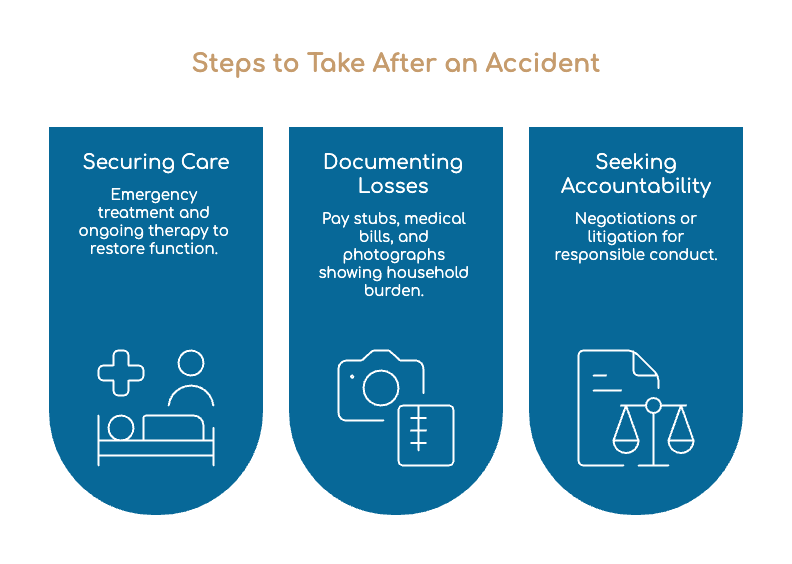
Important rights may involve:
- Securing care, from emergency treatment under bright hospital lights to ongoing therapy that restores daily function.
- Documenting losses, including pay stubs, medical bills, and photographs that show the real burden placed on a household.
- Seeking accountability, through negotiations or litigation, when responsible conduct would have protected others on the road.
These protections help injured people rebuild with dignity while promoting safer choices within the community after serious roadway harm.
Why Do Daytona Beach U-Turn Accident Injuries Happen?
Why do U-turn crashes in Daytona Beach so often lead to serious injuries? These collisions often occur because a turning driver misjudges distance, overlooks oncoming traffic, or attempts the turn where visibility is limited. When another vehicle is approaching at travel speed, the available reaction time may be extremely short. Speeding violations can make the impact more forceful, increasing the risk of fractures, head trauma, spinal injuries, and other lasting harm.
U-turn accidents may also involve rear-end collisions when a driver slows abruptly or stops in a travel lane before making a U-turn. Drivers behind may be distracted, following too closely, or unable to anticipate the sudden change. Pedestrians, bicyclists, and motorcyclists face added danger because they have less protection during impact. Understanding these causes helps safety-minded community members recognize preventable risks, support responsible driving practices, and appreciate why injured people may need careful legal evaluation after a serious crash in the area.
What Should You Do After a Daytona Beach U-Turn Accident Injury?
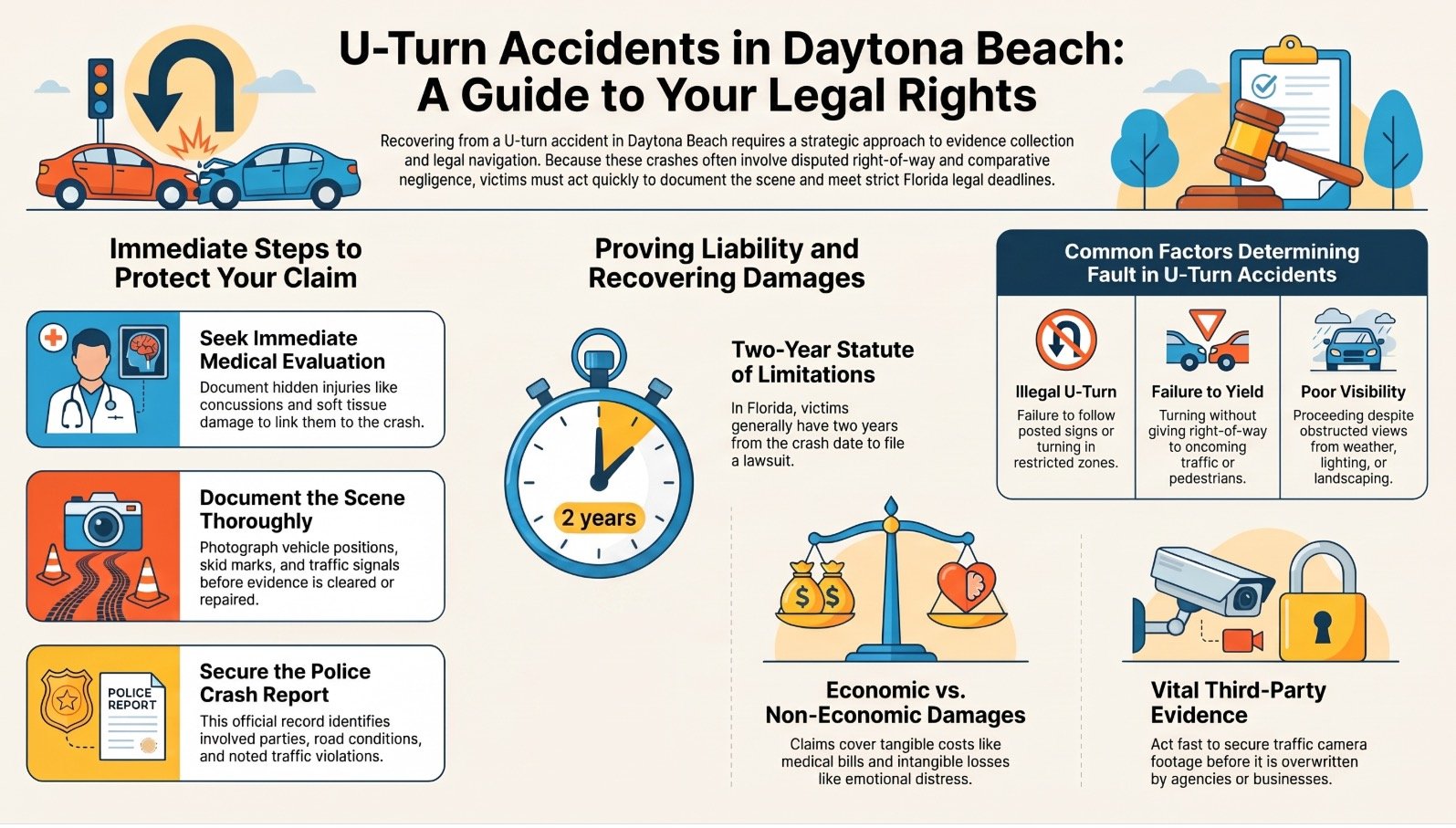
After a Daytona Beach U-turn accident injury, an injured person should seek immediate medical care, even when symptoms appear minor. Careful documentation of the accident scene, including photographs, witness information, and vehicle damage, can help preserve important evidence. Promptly contacting a local lawyer may also protect legal rights and support a more informed approach to any injury claim.
Seek Immediate Medical Care
Medical evaluation should be a priority for anyone injured in a Daytona Beach U-turn accident, even when symptoms appear minor at the scene. Prompt care helps identify hidden injuries, including concussions, internal trauma, soft tissue damage, and conditions that may later develop into Chronic Pain. Emergency Treatment also protects the injured person’s health by allowing trained providers to stabilize urgent concerns and recommend appropriate follow-up care. For those dedicated to supporting family, coworkers, or community members, seeking care promptly preserves the ability to recover and serve responsibly. Medical Records created after the crash may also show the connection between the collision and the injuries sustained. Delays can complicate diagnosis, treatment, and legal evaluation, making immediate medical attention an important step after any serious accident.
Document The Accident Scene
At the scene of a Daytona Beach U-turn accident, careful documentation can preserve important details that might otherwise be lost quickly. If it is safe, injured individuals or helpers should record the location, traffic signals, skid marks, debris, road conditions, and any visible injuries. They should photograph vehicle positions before cars are moved, capturing wide views and close details from several angles. License plates, damage patterns, lane markings, and nearby signs may later clarify how the collision occurred. It is also important to document witness accounts, including names, phone numbers, and brief statements from those who saw the U-turn or surrounding traffic. Calm, respectful communication helps protect everyone’s dignity while gathering facts. These records can support accurate reports, medical care, and a clear understanding of the crash.
Contact A Local Lawyer
Careful documentation can be valuable, but injured individuals should also consider contacting a local Daytona Beach U-turn accident lawyer as soon as practical. Prompt legal guidance can help protect the injured person’s rights while allowing family members, caregivers, and community helpers to focus on care and recovery. A lawyer may explain Evidence preservation steps, including securing video footage, witness information, vehicle data, and roadway records before they become unavailable.
Local counsel can also monitor insurance claim timelines, statutory deadlines, and communication from adjusters. This support may reduce mistakes that could weaken a claim or delay needed compensation. By coordinating records, medical documentation, and liability analysis, an attorney can provide structured direction during a difficult period, while serving the injured person’s long-term financial and medical interests.
Critical Evidence in a Daytona Beach U-Turn Accident Injury Case
Critical evidence can determine how a Daytona Beach U-turn accident occurred, who had the right of way, and whether negligence caused the injury.
Key proof may include:
1. Police crash reports,
2. Traffic camera footage and witness statements, and
3. Vehicle damage evidence, each helping reconstruct the moments before impact.
Preserving these materials early can strengthen an injury claim and reduce disputes over fault.
Police Crash Reports
When a U-turn collision occurs in Daytona Beach, the police crash report is often one of the first important records used to determine how the accident happened and who may be responsible. This report may identify involved drivers, vehicle positions, road conditions, witness information, and any noted Florida traffic violations. For injured individuals and those assisting them, the report can support evidence preservation by documenting facts before memories fade or vehicles are repaired. It may also become central during an insurance dispute, especially when fault is denied or minimized.
Although the report is not always conclusive, it helps attorneys compare statements, medical records, and patterns of damage. Obtaining it promptly also supports the legal timeline, allowing claims to be reviewed, investigated, and pursued within applicable deadlines.
Traffic Camera Footage
Because many U-turn collisions occur at busy intersections or in commercial corridors, traffic camera footage may provide valuable evidence in a Daytona Beach injury case. Such footage can show vehicle positions, signal phases, lane usage, speed patterns, and whether a driver began an unsafe turn. Attorneys often act quickly to identify cameras maintained by the city, nearby businesses, parking facilities, or roadway agencies, since recordings may be overwritten within days. Preserved video can support fault analysis, assist reconstruction experts, and strengthen a claim during Insurance negotiation discussions with adjusters. It may also help resolve disputes when accounts differ, without relying solely on memory. In appropriate cases, video review may guide witness credibility checks by comparing statements to visible events, while keeping the focus on objective, service-minded advocacy.
Witness Statements
Traffic camera footage may show how a collision unfolded, but witness statements can add important context about what occurred before, during, and after a U-turn accident in Daytona Beach. Neutral observers may describe turn signals, vehicle speeds, lane positions, traffic flow, and driver behavior that cameras do not capture clearly. Their accounts can help clarify whether a driver acted carelessly, whether another motorist contributed to the crash, and how Comparative negligence may affect recovery. Promptly gathering names, contact information, and written or recorded statements helps preserve accuracy before memories fade. Consistent witness testimony may also support liability discussions with insurers, assist attorneys in evaluating the strength of the case, and influence settlement timelines. Careful documentation serves the injured person, medical providers, and legal advocates seeking a fair resolution.
Vehicle Damage Evidence
Vehicle damage can reveal important details about impact angles, vehicle movement, and the force involved in a Daytona Beach U-turn accident. Scrapes, crushed panels, broken lights, and transfer marks may show whether a turning vehicle crossed into another lane or failed to yield. These observations can support proof of a lane violation when matched with roadway markings, photographs, and repair assessments. Damage patterns also help identify factors of driver negligence, including improper lookout, unsafe turning speed, or failure to signal. For injured people seeking fair treatment, careful documentation preserves facts that might otherwise be disputed. Attorneys, investigators, and reconstruction professionals may review vehicle damage to connect physical evidence with witness statements and traffic laws. This process helps clarify responsibility and supports a well-prepared injury claim for accountability after serious harm.
Long-Term Effects of Daytona Beach U-Turn Accident Injuries
U-turn accident injuries in Daytona Beach may cause long-term consequences that extend well beyond the initial medical treatment. Chronic pain management, reduced mobility, and emotional trauma can affect daily routines, employment capacity, and overall quality of life. These lasting effects are often important when evaluating the full scope of an injured person’s damages.
Chronic Pain Management
When injuries from a Daytona Beach U-turn accident do not fully resolve, chronic pain can become a lasting medical and legal concern. Persistent pain may require coordinated care, including physician monitoring, physical therapy, injections, counseling, and careful medication management. Because opioid risks can affect treatment decisions, providers often consider safer alternatives and document why any controlled medication is necessary. For injured individuals who serve families, workplaces, and communities, unmanaged pain may disrupt responsibilities and create financial strain. Legal evaluation may address future medical costs, reduced earning capacity, and the need for disability benefits when pain prevents consistent work. Detailed records, expert opinions, and treatment compliance help establish the severity of the condition. A Daytona Beach U-turn accident lawyer may use this evidence to pursue fair compensation.
Reduced Mobility
Although some injuries may appear stable after initial treatment, reduced mobility can persist following a Daytona Beach U-turn accident, limiting a person’s ability to walk, lift, drive, work, or complete daily tasks. This limitation may result from fractures, spinal injuries, ligament damage, joint trauma, or complications following surgery. Caregivers, employers, and service providers may need to understand how these restrictions affect independence, transportation, and household responsibilities. Medical records, therapy evaluations, and functional capacity assessments can help document the scope of impairment. Assistive device needs, including braces, walkers, canes, wheelchairs, or modified vehicles, may increase long-term costs. Injured individuals may also require home modifications or ongoing rehabilitation. A legal claim may identify financial support options for treatment, adaptive equipment, lost income, and future care.
Emotional Trauma
Physical limitations are often accompanied by psychological injuries that affect recovery after a Daytona Beach U-turn accident. Emotional trauma may develop when an injured person relives the collision, avoids driving, or struggles with fear during routine travel. These reactions can interfere with medical care, employment, caregiving duties, and community involvement. Anxiety impacts may also appear as sleep disruption, irritability, concentration problems, or heightened distress near intersections and traffic patterns. Post accident counseling can provide structured support, helping victims process the event and rebuild practical coping skills. When symptoms are severe or persistent, PTSD recovery may require coordinated treatment from mental health providers and physicians. Careful documentation of these conditions helps show how psychological harm contributes to long-term losses and support. Legal advocates may address these effects in claims.
Proving Liability in Daytona Beach U-Turn Accident Injury Cases
A successful U-turn accident injury claim in Daytona Beach depends on proving that another driver acted negligently and that this conduct caused the crash. Liability may be shown through crash reports, roadway evidence, vehicle damage, video footage, and testimony from those who observed the collision. Traffic signal violations, unsafe lane changes, failure to yield, or turning from an improper position may demonstrate that a driver disregarded the duty to operate with reasonable care.
Careful review also addresses comparative negligence, because injured persons may face allegations that their own actions contributed to the accident. Witness credibility can become important when accounts differ about speed, signaling, location, or right of way. Strong documentation helps clarify disputed facts and supports a fair assessment of responsibility. Although insurance disputes may arise, the central focus remains on establishing fault through reliable evidence. This process helps protect injured community members and promotes accountability on Daytona Beach roads.
Dealing With Insurance Companies After a Daytona Beach U-Turn Accident Injury
After a U-turn accident in Daytona Beach, insurance companies often start evaluating liability, damages, and potential defenses shortly after the collision is reported. Their representatives may request recorded statements, medical authorizations, photographs, or vehicle repair details. Injured individuals should understand that these requests may serve the insurer’s financial interests rather than the community-centered goal of restoring safety and stability.
Adjusters may also use settlement tactics that reduce the severity of the injury, question treatment needs, or suggest shared fault before all evidence is reviewed. Careful documentation of medical care, lost income, pain limitations, and daily support needs can help preserve a more accurate claim record. The Statute deadline also demands attention, because delay may weaken legal options even when injuries are significant. Those assisting an injured person should encourage organized communication, avoid speculation, and ensure that any offer is assessed in light of the full harm caused by the U-turn collision.
What to Expect During a Daytona Beach U-Turn Accident Injury Claim Process
A Daytona Beach U-turn accident injury claim typically begins with an initial case evaluation, where liability, damages, and available insurance coverage are assessed. The process then moves into evidence collection, including crash reports, medical records, witness statements, and related documentation, before insurance claim negotiations begin. If a fair settlement cannot be reached, the claim may proceed toward litigation, where the injured party’s rights and damages are presented through the court process.
Initial Case Evaluation
During an initial case evaluation, a Daytona Beach U-turn accident lawyer reviews the available facts to determine how the collision occurred, who may be legally responsible, and whether the injured person has a viable claim for compensation. This meeting may address medical treatment, lost income, pain limitations, and the client’s immediate needs with careful respect for the person’s recovery. The lawyer may identify deadlines, potential coverage issues, and common risks, including Evidence preservation mistakes that can weaken a claim if ignored. The evaluation may also prepare the injured person for Insurance delay tactics, such as repeated requests or slow responses. By clarifying rights, obligations, and next steps, the lawyer helps the client make informed decisions while protecting the claim’s value from the beginning.
Evidence Collection Process
Once the claim moves beyond the initial evaluation, the evidence-collection process focuses on securing information explaining how the U-turn collision occurred and how the injuries have affected the claimant’s life. This may include crash reports, scene photographs, traffic camera footage, witness accounts, vehicle damage records, and medical treatment files. Careful review helps identify gaps, inconsistencies, or Medical documentation errors that may distort the severity or timing of injuries. Attorneys also examine phone records, roadway conditions, and applicable traffic laws to clarify responsibility. Because adjuster statement risks can arise when injured persons provide recorded comments without guidance, communications are usually approached with caution. A well-organized evidence record supports accurate decision-making, protects the claimant’s dignity, and helps service-focused advocates present the facts with discipline, care, and integrity.
Insurance Claim Negotiations
After the evidence record has been developed, insurance claim negotiations typically begin with a demand package that explains liability, documents the injuries, and outlines the financial losses connected to the Daytona Beach U-turn accident. The insurer reviews police reports, witness statements, medical documentation, and repair estimates while evaluating policy coverage and claimed damages. Liability disputes may arise when adjusters question turn signals, right-of-way, visibility, or comparative fault. In response, the injured person’s representative may clarify facts, provide supplemental records, and address gaps that could affect fair evaluation. Negotiations also involve monitoring settlement deadlines, including insurer response periods and legal time limits that protect the claim. Careful communication supports an orderly process, helping all parties evaluate harm responsibly while preserving the injured person’s rights.
Settlement Or Litigation
When negotiations do not produce a fair resolution, the claim may proceed toward litigation, although many Daytona Beach U-turn accident cases still settle before trial. A lawsuit can create structure, deadlines, and access to evidence through discovery, helping clarify fault, damages, and the full impact on the injured person’s ability to serve family, work, and community. Counsel may evaluate the benefits of mediation, including privacy, cost control, and the opportunity for a practical resolution without courtroom uncertainty. If settlement remains inadequate, trial preparation becomes necessary. This process may include witness coordination, expert testimony, medical record review, and presentation of crash evidence. Throughout each stage, the objective remains a result that reflects accountability, supports recovery, and respects the injured person’s dignity, losses, and future needs under Florida law.
Compensation for Daytona Beach U-Turn Accident Injury Damages
Although every case depends on its specific facts, compensation for Daytona Beach U-turn accident injury damages may include both financial losses and the personal impact of the collision. A claim may seek payment for medical care, rehabilitation, lost income, reduced earning ability, and other consequences tied to the crash. It may also address how injuries affect mobility, independence, family responsibilities, and the ability to serve others in daily life.
A careful evaluation considers police reports, witness statements, medical records, vehicle damage, and roadway conditions. Liability defenses may focus on speed, signaling, visibility, comparative fault, or whether the U-turn was lawful under the circumstances. These issues can influence the value of a claim and the evidence needed to support it.
An effective Settlement strategy should present the injury’s full scope, anticipate insurer objections, and document future needs. When negotiations fail to reflect fair accountability, litigation may become necessary to pursue just compensation.
Economic vs Non-Economic Damages in Daytona Beach U-Turn Accident Cases
Economic damages in Daytona Beach U-turn accident cases often include medical bills, rehabilitation costs, lost wages, and reduced earning capacity. Non-economic damages address less tangible harm, such as pain, emotional distress, anxiety, and loss of enjoyment of life. Proving these damage values generally requires medical records, wage documentation, expert opinions, and consistent evidence showing how the collision affected the injured person’s life.
Medical Bills And Lost Wages
Calculateable losses often form the foundation of a Daytona Beach U-turn accident claim, particularly where medical bills and lost wages show the direct financial impact of the collision. These damages may include ambulance charges, hospital treatment, surgery, rehabilitation, prescriptions, follow-up care, and documented income loss during recovery. When injuries limit future earning ability, vocational records and medical opinions may help measure the continuing financial harm. Settlement negotiation tactics often focus on presenting complete records, organized timelines, and employer verification to show how the crash disrupted daily service, work duties, and family responsibilities. Common insurance denial reasons include alleged treatment gaps, disputed necessity of care, preexisting conditions, or insufficient wage documentation. Careful evidence collection supports fair evaluation and helps distinguish measurable economic losses from other categories of damages in each claim.
Pain And Emotional Distress
Beyond bills and wage records, a Daytona Beach U-turn accident claim may also involve pain and emotional distress, which fall under non-economic damages. These losses reflect the human consequences of injury, including persistent discomfort, sleep disruption, anxiety near traffic, reduced independence, and strain on family responsibilities. For individuals committed to caring for others, such limitations may affect caregiving, employment service, and community involvement. In severe cases, non-economic damages may also arise in Wrongful death claims, where surviving relatives endure grief, loss of companionship, and changed household roles. During car accident mediation, these harms may be addressed alongside financial losses, though they are not measured by invoices. Their value depends on the nature of the injury, the length of suffering, and the impact on daily life.
Proving Damage Values
When a Daytona Beach U-turn accident claim is evaluated, proving the value of damages requires more than establishing that an injury occurred. Economic damages may include medical bills, rehabilitation costs, lost wages, reduced earning capacity, and necessary household support. These losses require records, invoices, employer statements, and medical opinions that connect the crash to the expenses. Non-economic damages address pain, emotional distress, loss of enjoyment, and daily limitations, often supported by treatment notes, family observations, and credible testimony. Evidence preservation issues can affect both categories, especially when vehicle data, photos, or surveillance footage is unavailable. Comparative negligence factors may also reduce recovery if the injured person is partly blamed. A careful valuation helps ensure the claim reflects the person’s losses, responsibilities, and future care needs.
When a Daytona Beach U-Turn Accident Injury Case Goes to Trial vs Settlement
Although many Daytona Beach U-turn accident injury claims resolve through settlement, some cases proceed to trial when liability, damages, or insurance coverage remains disputed. Settlement may serve injured people by reducing delay, expense, and uncertainty, particularly when evidence clearly supports fault, and the insurer offers fair compensation. A trial becomes necessary when an insurer undervalues injuries, disputes medical needs, or refuses to recognize the long-term effects of the crash.
A prepared legal team evaluates both paths with care. Proving Damages requires organized medical records, expert opinions, wage documentation, and testimony that explains how the injury changed daily life. Court Deadlines also shape strategy, because missed filing dates, discovery requirements, or pretrial obligations may weaken a case. Before trial, mediation and negotiation often continue, allowing resolution without a verdict. If trial is required, the attorney presents evidence to a judge or jury and seeks a result that reflects the injured person’s losses.
Florida Laws That May Affect Your Daytona Beach U-Turn Accident Case
Because U-turn crashes often involve disputed right-of-way issues, Florida traffic and injury laws can greatly affect how a Daytona Beach case is assessed. Florida law generally requires a driver making a U-turn to do so only when the movement can be completed safely and without interfering with approaching traffic. Evidence of improper signaling, unsafe lane positioning, or disregard for posted signs may influence liability.
Key legal factors may include:
- Roadway signs at an intersection warn drivers that turns are limited.
- Skid marks and vehicle resting positions, showing how quickly danger appeared.
- Witness statements and camera footage to clarify whether another driver had time to respond.
Florida’s comparative negligence rule may reduce compensation if the injured person shared fault. Police procedure also matters, because crash reports, citations, and officer observations can shape early case assessments. Careful review helps ensure that responsibility is assigned fairly, accurately serving injured persons and the wider community.
The Statute of Limitations for Daytona Beach U-Turn Accident Injury Cases
After a Daytona Beach U-turn accident, the statute of limitations can determine whether an injured person retains the right to pursue compensation through a lawsuit. In most Florida negligence cases, the deadline is two years from the date of the crash. Missing this filing period may prevent recovery, even when injuries are severe, and responsibility appears clear. Because families, caregivers, and community members often rely on timely accountability to support healing, awareness of this deadline is vital.
Certain facts may affect when a claim should be evaluated, including injuries that develop gradually, crashes involving government vehicles, or related U-turn citation disputes. Evidence related to local traffic signal timing, roadway design, and driver conduct can also become harder to preserve over time. Prompt attention helps protect witness memories, records, and medical documentation. Anyone harmed in such a collision should treat the limitation period as a firm legal boundary, not a flexible administrative guideline.
How a Daytona Beach U-Turn Accident Lawyer Can Help You
When a U-turn collision raises questions about fault, injury severity, or insurance coverage, a Daytona Beach U-turn accident lawyer can provide structured guidance from the earliest stages of the claim. Counsel may review the crash report, photographs, medical records, and witness accounts to build a clear account of how the collision occurred and who must respond.
Early legal guidance can clarify fault, preserve evidence, and support an organized U-turn accident claim.
- A careful investigation can clearly show the roadway layout, turn signal use, traffic flow, and impact points.
- Legal analysis can identify liability defenses, including claims that another driver failed to yield, sped, or acted unpredictably.
- Case management can organize treatment records, proof of wages, repair estimates, and insurer communications into a single coherent presentation.
A lawyer may also evaluate damages, negotiate medical liens, and address insurance tactics that reduce valid claims. This support helps injured people pursue recovery while maintaining focus on family, work, caregiving duties, and service to the community.
When to Contact a Daytona Beach U-Turn Accident Lawyer
A Daytona Beach U-turn accident lawyer should be contacted as soon as there are injuries, disputed facts, insurance delays, or concerns about who had the right of way. Early contact helps preserve evidence, identify witnesses, and clarify how traffic laws apply to the collision. Prompt guidance is also important when medical needs affect a family, employer, caregiver, or community member who depends on the injured person’s support.
Legal deadlines can affect the ability to seek compensation, including the Statute of limitations that applies to personal injury claims. Delays may also complicate policy coverage questions, especially when multiple drivers, commercial vehicles, or uninsured motorists are involved. If an insurer avoids communication, undervalues losses, or denies a valid claim without a reasonable basis, concerns about insurance bad faith may arise. Contact is especially important before recorded statements, settlement offers, or releases are provided, because those decisions may affect future recovery.
Why You Need an Experienced Daytona Beach U-Turn Accident Lawyer
Because U-turn collisions often involve conflicting accounts and complex right-of-way issues, an experienced Daytona Beach U-turn accident lawyer can provide essential direction from the outset of a claim. Legal guidance helps injured individuals protect evidence, address insurance communications, and understand how Florida traffic laws may affect fault and compensation.
Experience is especially important when liability is disputed or multiple parties share responsibility. A lawyer can review crash reports, witness statements, medical records, and roadway conditions to build a clear account of what occurred. Effective Negotiation tactics may help secure fair compensation for medical care, lost income, and other losses without placing an unnecessary burden on the injured person or their family.
If insurers refuse to act reasonably, preparation becomes equally important. A sound courtroom strategy can present the facts with discipline and purpose. This support allows victims to focus on recovery, family responsibilities, and continued service to their community.
How to Choose the Right Daytona Beach U-Turn Accident Lawyer for Your Case
Selecting the right Daytona Beach U-turn accident lawyer requires careful attention to experience, communication, and the lawyer’s ability to handle disputed liability. A suitable attorney should understand local traffic patterns, Florida negligence law, and the evidence needed to prove how an improper U-turn caused harm. This may include reviewing crash reports, witness statements, vehicle damage, roadway design, and available video footage.
Client communication is also important, especially for injured people who are focused on recovery and family responsibilities. A reliable lawyer should provide clear updates, explain legal options, and respond to reasonable questions with patience and respect. Fee transparency should be addressed early, so clients understand costs, contingency arrangements, and potential case expenses before making decisions.
The right lawyer will approach the case with preparation, integrity, and service-minded attention. Careful selection can help protect the injured person’s rights while allowing them to concentrate on recuperation and supporting those who depend on them.
About The Law Offices of Anidjar & Levine
For individuals injured in U-turn collisions in Daytona Beach, The Law Offices of Anidjar & Levine provides legal representation focused on accountability, thorough case preparation, and client service. The firm assists crash victims by investigating liability, preserving evidence, communicating with insurers, and pursuing compensation that reflects medical costs, lost income, and other harms.
Its Client intake process is structured to identify urgent needs, explain available legal options, and gather important facts without adding unnecessary burdens to injured clients. From the outset, the firm evaluates police reports, witness statements, vehicle damage, medical records, and applicable traffic laws.
The attorneys develop a Florida case strategy tailored to the circumstances of each collision, including improper turns, failure to yield, distracted driving, or unsafe roadway conditions. Their work supports clients seeking stability after serious accidents, while advancing claims with diligence, professionalism, and respect for the people and families affected by preventable negligence in Daytona Beach.
Frequently Asked Questions
Can Tourists File U-Turn Accident Claims in Daytona Beach?
Yes, tourists may file U-turn accident claims in Daytona Beach when another party’s negligence caused their injuries or losses. Daytona Beach liability rules apply regardless of residency, and evidence such as police reports, medical records, and witness statements remains essential. Tourist insurance coverage may affect payment sources, but it does not prevent a valid claim. Visitors should seek legal guidance promptly, protecting recovery rights while supporting responsible service to injured travelers.
Do U-Turn Crashes Affect Rental Car Agreements?
Yes, U-turn crashes may potentially affect rental car agreements, especially when fault, policy limits, and Contract Liability Terms are reviewed. Rental companies may assess damage charges, loss-of-use fees, or administrative costs. Rental Insurance Claims can reduce exposure if coverage applies, but exclusions may apply due to prohibited driving or carelessness. A careful review helps protect responsible parties, supports fair resolution, and ensures those aiding injured persons act with informed, service-minded diligence.
Can Traffic Camera Footage Be Requested After a U-Turn Crash?
Yes, traffic camera footage may be requested after a U-turn crash, but prompt action is important. The timeframe for requesting footage can be short, because agencies or private owners may overwrite recordings. A person assisting an injured driver should identify the camera source, submit a formal request, and preserve related records. Privacy and access rules may limit release, yet law enforcement reports, subpoenas, or public records procedures can support proper retrieval.
What if Poor Road Signage Contributed to the U-Turn Accident?
If poor road signage contributed to the U-turn accident, responsibility may extend beyond the drivers involved. Reviewing comparative fault is crucial, as government agencies, contractors, or maintenance entities may share liability. Gathering witness statements, photos, traffic reports, and roadway design records can clarify whether warnings were missing, obscured, or confusing. A service-focused legal review helps protect injured individuals while promoting safer roads for the broader community.
Are U-Turn Accidents Common During Daytona Beach Events?
Yes, U-turn accidents can become more common during Daytona Beach events, when event traffic surges create congestion, hurried decisions, and unfamiliar driving patterns. Available crash risk statistics often show higher collision potential in dense traffic corridors, especially near venues, parking areas, and detours. Those serving injured motorists should recognize how visibility limits, pedestrian movement, and driver confusion may combine to make unsafe U-turns more likely during major public gatherings.
—————————
A Daytona Beach U-turn accident can leave victims facing medical bills, lost income, and complicated insurance disputes.
Legal guidance from The Law Offices of Anidjar and Levine may help protect their rights, identify liable parties, and pursue fair compensation for their injuries and losses.
An experienced Daytona Beach Car Accident Lawyer can evaluate the evidence, manage communications, and build a claim aligned with Florida law.
Those injured in a U-turn collision should consider prompt legal support to preserve deadlines and strengthen their position.