The Law Offices of Anidjar and Levine can evaluate whether factors beyond driver error caused a single vehicle crash.
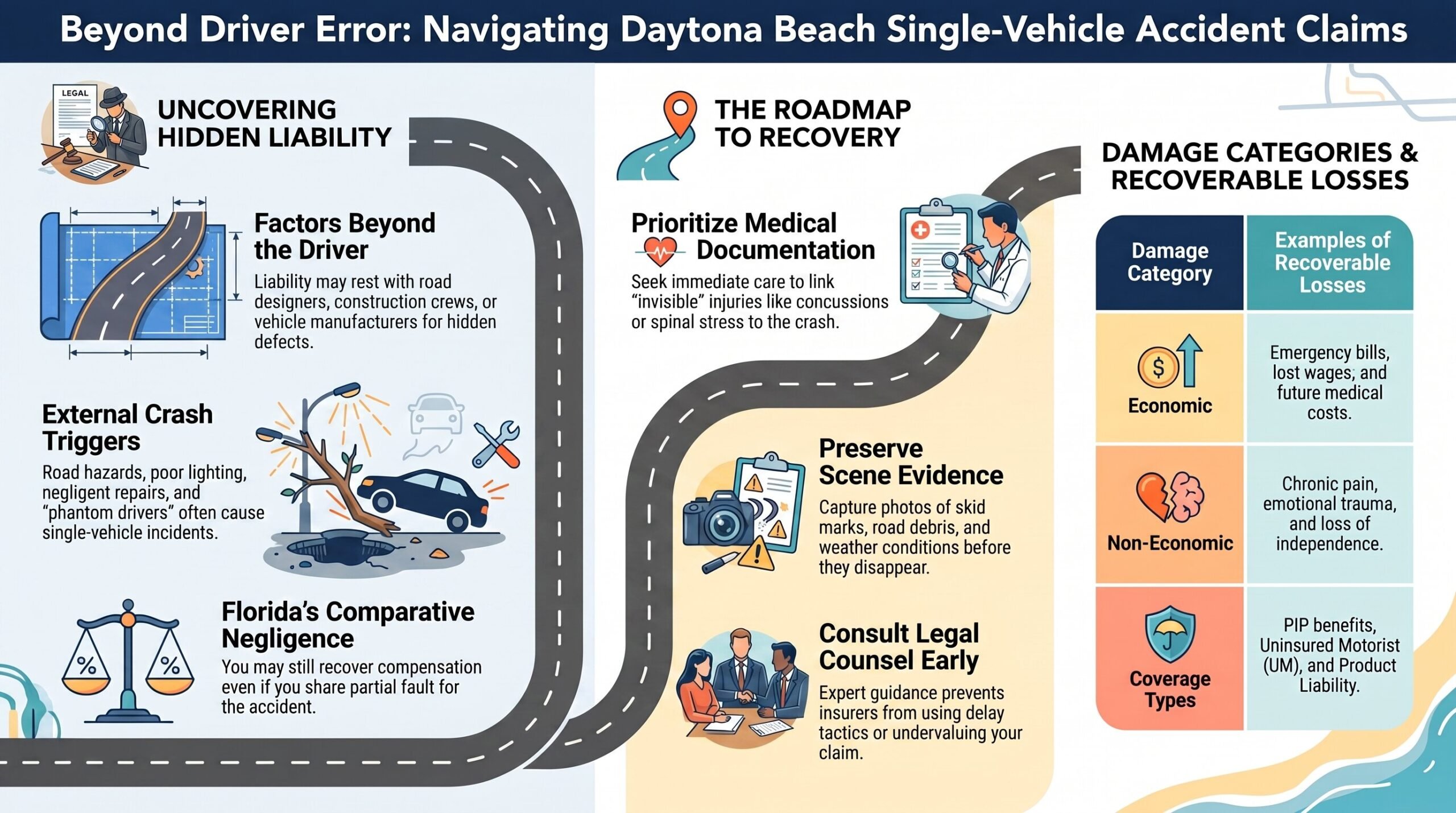
Road defects, unsafe construction zones, poor lighting, weather hazards, vehicle defects, negligent repairs, or another driver’s sudden conduct may affect liability.
Counsel may review police reports, photos, medical records, vehicle data, witness statements, and insurance coverage to identify recovery options.
Florida comparative negligence and policy limits may also affect compensation.
The sections below explain these issues in greater detail. Learn more from a Daytona Beach Car Accident Lawyer.
Main Takeaways
- A single-vehicle crash may still involve liability from road hazards, vehicle defects, construction zones, weather conditions, or another driver’s conduct.
- A Daytona Beach lawyer can investigate police reports, photos, witness statements, vehicle data, medical records, and roadway evidence.
- Florida comparative negligence may reduce compensation if the injured driver shares fault, but it does not always bar recovery.
- Prompt medical care and crash scene documentation can help establish the timing of the injury, causation, and damages.
- Legal guidance can protect against insurer delay tactics, undervaluation, and statements used to dispute your claim.


How We Can Help With Your Daytona Beach Single Vehicle Car Accident Injury Claim
After a single-vehicle crash in Daytona Beach, an injury claim may involve more than just proving that one driver lost control. A lawyer can help identify responsible parties, coordinate medical documentation, and protect the injured person from early pressure by insurers. This service often begins with evidence preservation, including vehicle inspection, scene photographs, maintenance records, roadway conditions, and witness statements. Careful review may reveal defective parts, negligent maintenance, unsafe road design, or other contributing factors.
Legal support also includes assessing medical costs, lost income, future care needs, and the personal impact of serious injury. When insurers question the claim, counsel can use Negotiation tactics grounded in facts, deadlines, and documented losses. The goal is not conflict for its own sake, but fair accountability that supports recovery. Through organized advocacy, the firm can relieve burdens on families, allowing them to focus on care, stability, and service to one another.
OUR CONSULTATIONSARE FREE
START YOUR FREE CASE REVIEW

Understanding Daytona Beach Single Vehicle Car Accident Injury Cases
Although a single-vehicle crash may appear straightforward at first glance, these cases can involve complex questions about causation, fault, and available compensation. An injured driver or passenger may still have a valid claim, even when no other vehicle made contact. Careful review may reveal whether an insurance policy, roadway condition, defective component, or third party’s conduct affects recovery.
In Daytona Beach, single vehicle injury cases often require close attention to policy language and Florida liability rules. Underinsured Motorist benefits may apply when another responsible party lacks sufficient insurance, and UM Coverage may provide important protection for medical bills, lost income, and long-term care needs.
Comparative Negligence can reduce compensation if the injured person shares responsibility, making an accurate review of the evidence essential. Damage Caps may also influence certain claims, depending on the parties involved and the damages sought. A disciplined legal assessment helps injured individuals pursue relief while protecting family stability.
Common Causes of Daytona Beach Single Vehicle Car Accident
Single-vehicle crashes in Daytona Beach may result from several factors, including distracted driving, speeding, reckless driving, hazardous weather, unsafe road conditions, and mechanical failures. Each cause can affect liability, insurance coverage, and the evidence needed to evaluate an injury claim. A careful review of these circumstances helps identify whether driver behavior, external hazards, or vehicle defects contributed to the accident.
Distracted Driving
In Daytona Beach, distracted driving is a leading factor in single-vehicle crashes because even a brief lapse in attention can cause a driver to leave the lane, strike a fixed object, or lose control on a curve. Cellphone distractions, including texting, navigation use, or hands-free conversations, may reduce Driver attention at moments when roadway conditions require careful judgment.
Other distractions can include eating, adjusting controls, tending to passengers, or looking away to observe activity near the road. For those committed to serving injured people, understanding distraction helps identify preventable conduct and support accountability. Evidence may include phone records, witness statements, vehicle data, or roadway surveillance. Careful review can show whether inattention contributed to the crash and the resulting harm suffered by victims.
Speeding And Recklessness
Beyond distraction, speeding and reckless driving often play a significant role in Daytona Beach single-vehicle car accidents because excessive speed reduces the time available to react and increases the force of impact. When a driver exceeds safe limits, sudden steering corrections, sharp braking, or loss of control can cause a vehicle to leave the roadway, strike a fixed object, or overturn. Recklessness may also include aggressive lane changes, tailgating, racing, or conduct associated with Road Rage, each of which places the driver and nearby occupants at unnecessary risk.
For families, responders, and community members focused on protecting others, these behaviors underscore the value of Defensive Driving. Maintaining lawful speeds, yielding appropriately, and choosing patience can reduce preventable harm and support safer travel throughout Daytona Beach for residents and visitors alike.
Weather And Road Hazards
During severe rain or changing coastal conditions, weather and road hazards can contribute to Daytona Beach single-vehicle car accidents by reducing traction, limiting visibility, and creating sudden obstacles in a driver’s path. Standing water, loose sand, debris, uneven shoulders, and poorly marked construction zones may cause a vehicle to leave its lane or roadway. Fog can also impair visibility, especially near bridges, coastal routes, and early-morning travel corridors.
When drivers fail to slow down, increase following distance, or respond carefully to changing conditions, preventable harm may result. Drowsy driving can further reduce reaction time, making hazardous conditions more dangerous. Those who serve injured individuals often examine roadway conditions, weather reports, signage, and driver behavior to determine how the crash occurred and who may be responsible.
Vehicle Mechanical Failures
When a vehicle component fails without warning, a driver may lose control before there is time to react safely. Brake defects, handling malfunctions, worn suspension components, and engine problems can each contribute to a single-vehicle crash in Daytona Beach. Regular vehicle maintenance checks help identify unsafe conditions before they place occupants, pedestrians, or other road users at risk.
Tire blowout prevention is especially important, as underinflated, aged, or damaged tires may fail suddenly at highway speeds. Service records, inspection findings, and repair histories may help determine whether neglect, defective parts, or improper maintenance played a role. For those committed to protecting others, understanding mechanical failure encourages safer ownership practices and supports accountability when preventable hazards cause serious harm on Florida roads. Mechanical issues demand prompt attention.


Legal Rights of Daytona Beach Single Vehicle Car Accident Injury Victims
Although a single vehicle crash may appear to involve only the injured driver or passenger, Florida law may still provide important legal rights and avenues for financial recovery.
Injury victims may need guidance that protects their dignity, supports their recovery, and helps them continue serving their families and communities.
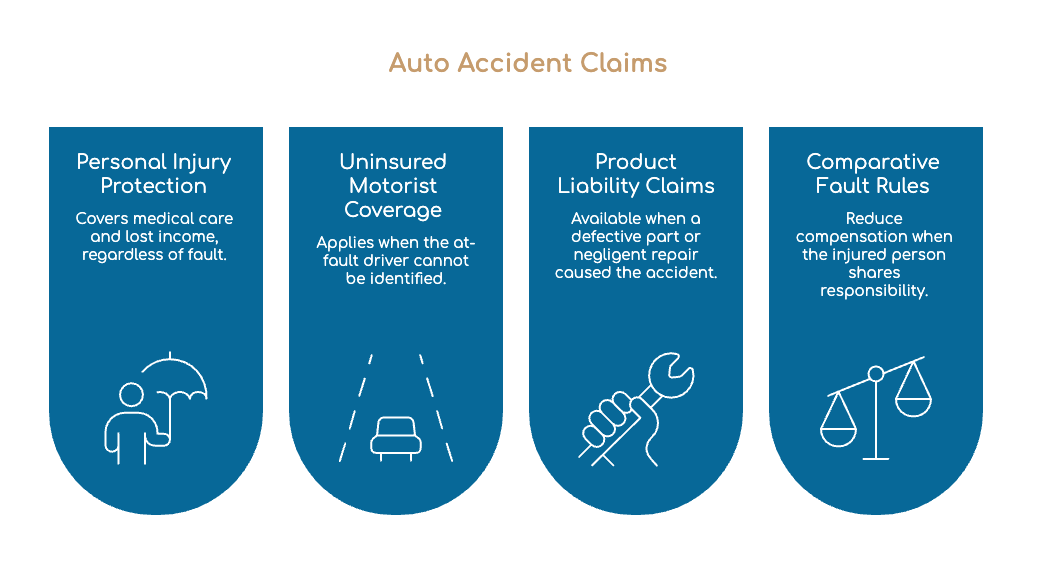
- Personal injury protection benefits may cover medical care and lost income, regardless of who caused the crash.
- Uninsured or underinsured motorist coverage may apply when another driver contributed to the event but cannot be identified.
- Product liability or maintenance claims may be available when a defective part or negligent repair affected vehicle safety.
- Comparative Fault rules may reduce, but not always eliminate, compensation when the injured person shares responsibility.
Victims also have the right to fair claim handling. When an insurer unreasonably delays, denies, or undervalues benefits, an Insurance Bad Faith claim may be considered under Florida law.
Why Do Single-Vehicle Car Accident Injuries Happen at Daytona Beach?
Because single-vehicle crashes often result from multiple contributing factors, the cause of an injury may not be obvious from the accident scene alone. In Daytona Beach, injuries may arise from driver fatigue, poor roadway design, sudden mechanical failure, defective vehicle parts, unsafe construction zones, or hazardous weather conditions. A crash involving only one vehicle does not always mean the driver was solely responsible.
Injuries also occur because the forces involved can be severe, even at moderate speeds. Seat belt trauma, head impacts, spinal stress, and internal injuries may develop after contact with barriers, trees, poles, or uneven pavement. Common injury misdiagnosis can complicate recovery when symptoms initially appear minor but later reveal serious harm.
Insurance delay tactics may further burden injured people by questioning causation or the severity of medical findings. Careful investigation helps identify all contributing causes, allowing responsible parties to be held accountable while supporting fair treatment for the injured.
What Should You Do After a Single-Vehicle Car Accident Injury in Daytona Beach?
After a single-vehicle car accident in Daytona Beach, the injured person should seek immediate medical care, even if symptoms appear minor. It is also important to document the crash scene, including vehicle damage, road conditions, and any visible injuries. Early consultation with a lawyer can help preserve evidence, address insurance issues, and protect the injured person’s legal rights.
Seek Immediate Medical Care
Seek prompt medical evaluation after a single-vehicle car accident in Daytona Beach, even if injuries appear minor or symptoms seem delayed. A physician can identify concussions, internal injuries, soft tissue damage, or spinal trauma that may not be obvious at first. Emergency treatment steps may include calling 911, accepting ambulance transport when needed, following discharge instructions, and attending recommended follow-up visits.
Prompt care also supports the well-being of family members, passengers, and others who depend on the injured person’s stability and recovery. Documenting early symptoms through medical records helps establish when pain, dizziness, numbness, or mobility problems began. This record may become important if insurance questions arise later. Delayed treatment can weaken both health outcomes and injury claims, making timely care a responsible and protective choice.
Document The Crash Scene
The crash scene should be documented as soon as it is safe to do so, since physical evidence can quickly disappear after a single-vehicle car accident in Daytona Beach. Scene safety must come first, including moving away from traffic, fire, leaking fluids, or unstable vehicles. When possible, photographs should capture vehicle damage, skid marks, road defects, debris, weather conditions, lighting, signs, and any nearby hazards.
A responsible helper may secure evidence by preserving damaged personal items, noting witness names, and recording the time and location. Patient documentation is also important, including visible injuries, pain complaints, and medical instructions received at the scene. A careful injury assessment supports later treatment decisions and helps clarify how the crash affected the injured person’s health, responsibilities, and ability to serve others.
Consult A Lawyer Early
When injuries, insurance questions, or disputed facts are involved, an injured person should consult a lawyer soon after a Daytona Beach single-vehicle car accident. Prompt legal guidance can help preserve evidence, identify responsible parties, and prevent avoidable mistakes during the claims process. A lawyer may review Insurance documentation, medical records, police reports, and car accident photos to evaluate whether road defects, vehicle failure, poor maintenance, or another factor contributed to the crash.
Early consultation also supports timely communication with insurers, while protecting the injured person from statements that may be misused. For those focused on caring for family, coworkers, or the community, legal support can reduce burdens and promote informed decisions. Acting early allows essential facts to be secured before memories fade or evidence is lost.
Critical Evidence in a Daytona Beach Single Vehicle Car Accident Injury Case
Critical evidence in a Daytona Beach single vehicle car accident injury case may determine whether negligence, roadway hazards, or other contributing factors can be proven. Key materials often include: 1. Police Crash Reports 2. Vehicle Damage Evidence 3. Roadway Condition Proof 4. Witness And Photo Evidence. Each category can help establish how the crash occurred, who may bear responsibility, and what damages may be recoverable.
Police Crash Reports
After a single-vehicle crash in Daytona Beach, the police crash report is often one of the first records reviewed in an injury case. It may identify the driver, location, time, responding officer, citations, road conditions, and any initial statements made at the scene. Although the report is not the final word on liability, it can guide a careful investigation and help those assisting the injured serve with accuracy.
Counsel may compare the report with medical records, photographs, and roadway facts to identify gaps or errors. It may also show how to gather witness statements when names or contact details are listed. Early review supports the Importance of preserving vehicle blackbox data, because time-sensitive electronic information may clarify speed, braking, and guidance before impact.
Vehicle Damage Evidence
How the vehicle is damaged can reveal facts that a crash report or witness statement may not fully capture. In a Daytona Beach single-vehicle injury case, crushed panels, broken glass, airbag deployment, tire marks on the vehicle, and intrusion into the cabin may help explain the impact severity and occupant movement. Accident photos taken soon after the collision can preserve details before towing, repairs, or disposal alter the evidence.
Vehicle damage logs may also document repair estimates, prior damage, inspection findings, and storage history, helping distinguish crash-related harm from preexisting conditions. For those assisting injured clients or families, careful review of this evidence can support a fair evaluation of liability, causation, and damages. Prompt preservation requests may prevent loss of crucial proof during the claims process.
Roadway Condition Proof
On the roadway itself, physical evidence may provide important proof of what caused a single-vehicle crash in Daytona Beach. Skid marks, gouges, pooled water, loose gravel, broken pavement, missing signs, and defective lighting can help explain why a driver lost control. Careful review of these conditions may show whether a hazardous roadway, rather than driver error alone, contributed to the injury.
Traffic camera footage can support this analysis by showing weather, traffic flow, lane obstructions, or signal problems near the time of the crash. Dashcam video proof may also reveal sudden hazards, uneven surfaces, or debris before impact. Promptly preserving this evidence allows a legal team to evaluate responsibility, protect the injured person’s interests, and support a fair claim for necessary recovery resources.
Witness And Photo Evidence
In a Daytona Beach single-vehicle car accident case, witness statements and photographs can provide independent evidence of what occurred before, during, and after the crash. A bystander may describe traffic flow, weather, lighting, vehicle movement, or hazards that the injured person could not fully observe. Eyewitness credibility often depends on the witness’s location, attention, consistency, and lack of personal interest in the outcome.
Photographs may document skid marks, debris, guardrail damage, road defects, missing signs, or vehicle resting position. Photo authenticity is strengthened when images are time-stamped, preserved in original form, and linked to the person who captured them. For those committed to helping injured community members, careful evidence collection supports fair evaluation, accurate responsibility, and informed legal action after a serious crash.
Long-Term Effects of Daytona Beach Single Vehicle Car Accident Injuries
Single vehicle car accident injuries in Daytona Beach may produce long-term consequences, including chronic pain conditions that interfere with daily routines and ongoing medical needs. Lasting mobility limitations can affect employment, independence, and quality of life, particularly when injuries involve the spine, joints, or lower extremities. Emotional trauma effects, such as anxiety, sleep disruption, or fear of driving, may also influence recovery and the full value of an injury claim.
Chronic Pain Conditions
After a serious crash, chronic pain may develop from injuries that do not fully mend or from damage that becomes more pronounced over time. These conditions may involve the neck, back, shoulders, nerves, or soft tissues, and they can affect sleep, concentration, work capacity, and daily caregiving responsibilities. For individuals committed to serving others, persistent pain may create significant practical and emotional strain.
Medical evaluation is important when pain continues beyond the expected healing period. Pain management options may include medication, injections, therapy, diagnostic imaging, and expert referrals. Consistent treatment documentation can help establish the connection between the crash and ongoing symptoms. In a Daytona Beach single vehicle accident claim, such records may support compensation for future care, reduced earning ability, and the lasting burden of chronic pain.
Lasting Mobility Limitations
Persistent pain may also lead to lasting mobility limitations, especially when injuries affect the spine, hips, knees, ankles, or major muscle groups. After a Daytona Beach single-vehicle crash, reduced range of motion can interfere with walking, standing, lifting, driving, and providing steady care to family members, patients, clients, or community members. Some injured individuals require Mobility Aids, including braces, canes, walkers, or wheelchairs, to preserve independence and prevent further harm.
Limited movement may also contribute to muscle weakness, balance problems, and Sleep Disturbances when discomfort increases during rest. Medical evaluations, physical therapy records, and functional assessments can help document how these restrictions affect daily responsibilities. Careful legal review may be necessary when long-term impairment reduces a person’s ability to work, provide care, or maintain routines.
Emotional Trauma Effects
Emotional trauma can continue long after physical injuries begin to stabilize, particularly when a Daytona Beach single vehicle accident involved intense fear, loss of control, severe pain, or serious property damage. Survivors may experience anxiety, sleep disruption, irritability, intrusive memories, or avoidance of driving, which can affect employment, caregiving, and community responsibilities.
These symptoms may also strain family relationships, especially when others do not recognize the depth of psychological harm. Careful post-crash communication with medical providers, insurers, and legal representatives helps document emotional effects and connect the injured person with appropriate support. Effective coping strategies may include counseling, structured routines, gradual return to driving, and trusted social assistance. Addressing trauma with diligence supports recovery, preserves dignity, and helps others respond with patience, understanding, and informed practical care.
Proving Liability in Daytona Beach Single Vehicle Car Accident Injury Cases
A single vehicle crash in Daytona Beach may appear straightforward, but proving liability often requires a careful review of what caused the driver to lose control or leave the roadway. Evidence may show that defective tires, poor roadway maintenance, unsafe construction zones, inadequate lighting, or another driver’s sudden conduct contributed to the crash.
A lawyer may examine police reports, vehicle data, photographs, witness statements, medical records, and expert findings to determine whether a third party bears responsibility. When several causes exist, Florida’s comparative negligence rules may affect how fault is assigned and how damages are calculated. This analysis can be especially important for injured passengers, families, or others seeking accountability and support after harm occurs.
Thorough liability proof also helps identify patterns of careless conduct, preserve crucial evidence, and challenge unfair blame. If facts are ignored or misrepresented, concerns involving insurance bad faith may later arise during the broader claims process.
Dealing With Insurance Companies After a Daytona Beach Single Vehicle Car Accident Injury
After a single vehicle accident in Daytona Beach, insurance companies often review the claim closely because fault, coverage, and damages may not be immediately clear. Adjusters may question whether road hazards, vehicle defects, weather, or another party contributed to the crash. Injured individuals benefit from careful documentation, including medical records, repair estimates, photographs, and witness information, so the claim reflects the full impact of the injury.
A lawyer may communicate with insurers to reduce the risk of unfair settlement tactics, such as minimizing medical needs, disputing lost income, or pressuring an early resolution before treatment is complete. This guidance can be especially important for those focused on recovery, family responsibilities, or service to others in the community.
When coverage is challenged, denied claim appeals may require organized evidence and a clear explanation of policy obligations. Professional representation helps preserve dignity, accuracy, and fairness during insurance discussions after a serious crash.
What to Expect During a Daytona Beach Single Vehicle Car Accident Injury Claim Process
A Daytona Beach single vehicle car accident injury claim typically begins with prompt accident reporting, followed by a careful review of the facts surrounding the crash. Liability issues may require investigation, even when no other driver was involved, particularly when road conditions, vehicle defects, or third-party negligence are possible factors. The process also includes documenting injury damages and negotiating with the insurance company for a settlement that reflects the claimant’s losses.
Reporting The Accident
When a single vehicle crash occurs in Daytona Beach, prompt reporting is an important step in protecting both legal rights and insurance claims. The injured person, or someone assisting, should contact law enforcement and request emergency medical help when needed. A timely police report creates an official record of the incident, including the date, location, parties involved, and initial observations. Insurance carriers often require notice soon after the collision, so delayed reporting may complicate benefits or settlement discussions.
Helpful details may include roadway conditions, visible injuries, vehicle damage, and contact information for Bystander Witnesses. Nearby businesses, residences, or traffic systems may also have Video Surveillance that should be identified early. Clear reporting helps preserve crucial information while supporting an orderly injury claim process.
Investigating Liability Issues
Although only one vehicle may be involved, liability in a Daytona Beach single vehicle accident can still require careful investigation. Fault determination may involve reviewing road design, weather conditions, vehicle maintenance, driver conduct, and whether another party contributed indirectly. An attorney may examine police reports, witness statements, traffic camera footage, and available physical evidence to identify responsible parties.
This process can also include evaluating whether a defective vehicle part, an unsafe roadway condition, or a negligent third party contributed to the crash. Insurance coverage is then reviewed to determine which policies may apply, including the driver’s policy or coverage held by another accountable entity. Careful investigation helps ensure that injured individuals, families, and those assisting them understand their legal options and avoid overlooking potential avenues for recovery.
Documenting Injury Damages
Proper documentation of injury damages is a critical part of a Daytona Beach single-vehicle car accident claim, as it helps establish the extent of physical, financial, and personal losses resulting from the crash. Records may include emergency reports, diagnostic images, treatment notes, therapy plans, prescriptions, and physician opinions regarding future care.
Wage statements, tax records, and employer letters can show lost income and reduced earning capacity. Photographs of injuries, vehicle damage, roadway conditions, and Premises Hazards may also support the claim. When Negligent Maintenance, Unsafe Workmanship, or Landlord Responsibility contributed to the crash environment, repair records, inspection reports, and witness statements become important. Careful organization of these materials helps legal representatives present a clear account while respecting the injured person’s need for dignity, stability, and continued support.
Negotiating Insurance Settlement
After injury damages have been documented, settlement negotiations typically begin with a demand package sent to the insurance company. This package may include medical records, repair estimates, photographs, Liability proof, and witness statements that clarify how the single vehicle crash occurred. The insurer reviews the submission, evaluates coverage, and may issue a counteroffer that is lower than the claimed losses.
A Daytona Beach attorney can assess whether the offer fairly addresses medical care, lost income, pain, and future needs. Negotiations often require patient communication, organized evidence, and a service-minded commitment to protecting the injured person’s stability. If the insurer disputes causation, treatment, or fault, additional documentation may be presented. When settlement remains inadequate, legal counsel may recommend preparing the claim for litigation.
Compensation for Daytona Beach Single Vehicle Car Accident Injury Damages
When a single vehicle crash in Daytona Beach causes injuries, compensation may depend on a careful evaluation of fault, insurance coverage, and the full scope of the victim’s losses. Even without another driver, recovery may be available through personal injury protection, medical payments coverage, collision benefits, or other policy provisions that support injured persons during hardship.
A lawyer may review whether road hazards, defective vehicle parts, unsafe construction zones, or negligent maintenance contributed to the crash. If another party contributed to the incident, a claim may seek payment from that responsible party. Uninsured Motorist benefits may also apply in limited situations, including crashes involving phantom vehicles or unidentified drivers.
Careful examination of Coverage Options, policy exclusions, deadlines, and documentation requirements can help preserve available benefits. For those committed to helping injured community members, understanding these compensation sources supports informed decisions, steady advocacy, and fair treatment during the claims process after a serious Daytona Beach crash.
Economic vs Non-Economic Damages in Daytona Beach Single Vehicle Car Accident Cases
In Daytona Beach single vehicle car accident cases, damages are commonly divided into economic and non-economic losses. Economic damages may include medical bills and expenses, as well as lost wages and income resulting from the injury. Non-economic damages address harm that is less easily measured, such as pain, emotional distress, and the overall impact on daily life.
Medical Bills And Expenses
For many injured drivers and passengers, medical bills are the most immediate economic damages in a Daytona Beach single vehicle car accident case. These expenses may include emergency transport, hospital care, surgery, diagnostic testing, prescriptions, rehabilitation, and follow-up appointments. Medical treatment should be documented carefully, because records connect the injuries to the crash and help establish the reasonable value of care received.
Providers, insurers, and legal representatives may review invoices, discharge papers, imaging reports, and payment histories to measure financial loss. Evidence preservation is important, especially when receipts, benefit statements, and out-of-pocket expense logs show costs not fully reflected in hospital records. Accurate documentation also assists those serving injured individuals, ensuring claims are evaluated fairly and necessary care is not overlooked during financial recovery efforts.
Pain And Emotional Distress
Pain and emotional distress often represent the human impact of a Daytona Beach single vehicle car accident, separate from the direct financial losses tied to medical care or property damage. These non-economic damages may include chronic pain, reduced mobility, anxiety symptoms, sleepless nights, and the loss of ordinary comfort in daily life. When Traumatic brain injuries or serious orthopedic harm are involved, emotional suffering may affect communication, relationships, and personal independence.
Caregivers, advocates, and service-minded professionals should recognize that these losses merit careful documentation rather than assumptions. Records from physicians, therapists, family observations, and post-accident counseling may help show how the crash changed the injured person’s life. A thorough legal review can connect these human consequences to a claim for fair compensation.
Lost Wages And Income
Lost wages and income losses reflect another major category of harm after a Daytona Beach single vehicle car accident, especially when injuries prevent a person from working or reduce earning capacity. These damages are economic because they can be measured through employment records, tax returns, pay stubs, and professional opinions. Lost Wage Proofs may show missed shifts, reduced hours, used leave time, or an inability to return to prior duties.
Income Verification is also important for self-employed workers, seasonal employees, caregivers, and others whose earnings may not follow a simple pattern. A careful review helps distinguish temporary wage loss from long-term impairment of earning potential. By accurately documenting these losses, the injured person’s claim can reflect the practical financial impact of the crash.
When a Daytona Beach Single Vehicle Car Accident Injury Case Goes to Trial vs Settlement
Although many Daytona Beach single-vehicle car accident injury cases are resolved through settlement, some proceed to trial when liability, damages, insurance coverage, or the value of the claim remains in dispute. Settlement may allow an injured person to secure compensation with greater privacy, reduced delay, and less uncertainty. It can also preserve time and energy for recovery, caregiving, and service to family or community responsibilities.
Trial may become necessary when an insurer undervalues medical needs, lost income, future limitations, or the full human impact of the crash. Trial timeline planning helps prepare witnesses, organize medical proof, address expert testimony, and set realistic expectations for each stage of litigation.
A trial also carries Jury verdict risks, because the final decision rests with others after evidence is presented. Careful case evaluation compares settlement offers with the strength of available proof, the severity of injuries, and the practical burdens of continued litigation.
Florida Laws That May Affect Your Daytona Beach Single Vehicle Car Accident Case
When a single-vehicle crash in Daytona Beach results in injury, Florida law may govern nearly every aspect of the claim, from insurance benefits to fault analysis to filing deadlines. These rules can affect an injured person’s ability to obtain care, protect family stability, and pursue accountability with dignity.
Florida law can influence care, compensation, and accountability after a single vehicle crash in Daytona Beach.
- PIP coverage may provide initial medical and wage-loss benefits, regardless of who caused the crash, if required treatment is sought promptly.
- Comparative negligence can reduce compensation when the injured driver shares responsibility, such as by speeding, distraction, or unsafe vehicle operation.
- Florida insurance law may require review of uninsured motorist coverage, medical payments coverage, and policy exclusions that affect available recovery.
- Evidence rules may influence how crash reports, witness statements, roadway conditions, vehicle defects, and medical records are used to support the claim.
A Daytona Beach attorney can assess these laws and help preserve the injured person’s financial and medical interests.
The Statute of Limitations for Daytona Beach Single Vehicle Car Accident Injury Cases
Because filing deadlines can determine whether an injury claim is heard at all, the statute of limitations is a pivotal issue in a Daytona Beach single vehicle car accident case. In Florida, most negligence-based personal injury actions must be filed within two years of the crash, subject to limited exceptions. This deadline may apply when an injured driver, passenger, pedestrian, or family member alleges that another party contributed to the incident through unsafe conduct.
Single-vehicle crashes may still involve legally responsible parties other than the injured person. Claims involving defective roadway conditions, negligent maintenance, premises liability, or Negligent entrainment may require careful attention to filing dates and notice requirements. Government-related claims may also involve shorter procedural deadlines. Those serving injured individuals should recognize that delay can affect evidence, witness availability, and the ability to seek accountability. Timely evaluation helps preserve the injured person’s opportunity to pursue lawful recovery within Florida’s required timeframe.
How a Daytona Beach Single Vehicle Car Accident Lawyer Can Help You
After a serious crash, a Daytona Beach single-vehicle car accident lawyer can evaluate whether the incident involved factors beyond the driver’s error. Counsel may review roadway design, vehicle defects, hazardous debris, poor signage, or negligent maintenance, helping injured people pursue answers while focusing on recovery and service to their families.
A lawyer can uncover crash factors beyond driver error while injured people focus on recovery.
- Investigating cause: A lawyer can gather reports, photos, witness accounts, and expert opinions to identify all responsible parties.
- Explaining Insurance coverage basics: Counsel can clarify available benefits, policy limits, exclusions, and the effect of fault allegations.
- Addressing repair cost disputes: Legal guidance can challenge undervalued estimates, improper denials, or delays affecting transportation needs.
- Documenting losses: Attorneys can organize medical records, wage information, and future care needs to support a complete claim.
This assistance can reduce confusion, protect important evidence, and promote a fair process for those trying to rebuild responsibly after a single vehicle collision.
When to Contact a Daytona Beach Single Vehicle Car Accident Lawyer
In the days following a single-vehicle crash, legal guidance may be important if injuries are significant, fault is disputed, insurance communications become difficult, or there are signs that road conditions, vehicle failure, or another external factor contributed to the collision. Prompt contact allows a lawyer to review Car accident timelines, identify reporting deadlines, and assess whether a claim may involve more than driver error.
A lawyer should also be contacted when medical treatment is ongoing, the insurer requests a recorded statement, or the crash involved a work-related trip, a government roadway, a defective part, or an unsafe construction zone. Evidence preservation is often time-sensitive, as skid marks fade, vehicles are repaired, surveillance footage is erased, and witnesses become harder to locate.
For families, caregivers, and community-minded individuals seeking to protect an injured person’s stability, early consultation can clarify available options while reducing avoidable mistakes that may affect recovery and accountability after the crash.
Why You Need an Experienced Daytona Beach Single Vehicle Car Accident Lawyer
Although a single-vehicle crash may appear straightforward, an experienced Daytona Beach single-vehicle car accident lawyer can identify legal and factual issues that are often missed early in the claim. These cases may involve unsafe road design, defective vehicle parts, poor maintenance, hazardous debris, or the conduct of another driver who left the scene. Careful investigation helps protect injured individuals, families, and others affected by the crash from conclusions based on insufficient evidence.
Experience also matters because deadlines, insurance communications, and proof requirements can shape the outcome. A lawyer familiar with these claims can gather records, consult appropriate experts, evaluate coverage, and present the facts in a disciplined manner. This guidance may reduce the risk of undervalued claims, procedural mistakes, or harm caused by attorney negligence. For those committed to responsible care for others, skilled legal support helps ensure accountability is pursued with diligence, accuracy, and respect for the injured.
How to Choose the Right Daytona Beach Single Vehicle Car Accident Lawyer for Your Case
How should an injured person verify a Daytona Beach single vehicle car accident lawyer when the facts of the crash may be incomplete or disputed? The selection should focus on counsel who approaches the matter with discipline, compassion, and a clear commitment to serving the client’s recovery needs. A qualified lawyer should explain how evidence collection will address roadway conditions, vehicle defects, witness accounts, medical records, and available camera footage.
Careful Police Report Review is also important because initial reports may overlook details or rely on limited information. The lawyer should identify gaps, correct assumptions, and preserve proof before it is lost. Experience matters when insurers question fault, damages, or causation. Experienced Litigation helps ensure that the claim is prepared for both negotiation and court.
The client should also ask how the lawyer evaluates Trial vs. settlement, communicates case progress, and protects long-term interests while pursuing fair compensation with integrity.
About The Law Offices of Anidjar & Levine
The Law Offices of Anidjar & Levine represents injured people in Daytona Beach and throughout Florida with a client-focused approach to single vehicle car accident claims.
The firm understands that these cases may involve roadway hazards, defective parts, weather conditions, or disputed insurance positions.
Its legal team works to identify responsible parties, protect clients from unfair blame, and pursue compensation for medical care, lost income, and other damages.
The firm supports clients by managing communications with insurers, gathering records, and carefully developing evidence.
Its work may include Insurance investigation strategies, Witness statement collection, crash report review, and consultation with qualified professionals when needed.
This organized approach helps clients focus on recovery while their legal matters are handled with diligence.
The Law Offices of Anidjar & Levine also emphasizes service, accessibility, and consistent updates.
For injured individuals and families seeking guidance, the firm provides structured legal support grounded in preparation, advocacy, and compassion.
Frequently Asked Questions
Can Passengers File Claims After a Single Vehicle Accident?
Yes, passengers may file claims after a single vehicle accident. They are generally not considered at fault, and may seek compensation through the driver’s insurance, their own coverage, or other available policies. Florida statutes and insurer requirements may affect deadlines, benefits, and documentation. Those assisting injured passengers should encourage prompt medical care, evidence preservation, and careful reporting, so valid claims are protected and handled with diligence, fairness, and legal accuracy.
Will My Rates Increase After a Single Vehicle Crash?
Yes, rates may increase after a single vehicle crash, depending on fault determination, policy terms, prior claims, and the insurer’s underwriting rules. If the driver is found responsible, Coverage escalation may occur at renewal, especially when repair costs or injury claims are significant. A claims professional can review the record, explain options, and help protect available benefits, allowing those responsible for others’ care to make informed financial decisions.
Can Poor Road Design Contribute to a Single Vehicle Accident?
Yes, poor road design can contribute to a single-vehicle accident when preventable hazards impair a driver’s ability to travel safely. Poor drainage systems may create standing water, increasing the risk of hydroplaning or loss of control. Unclear road markings can also mislead drivers, especially at night or during bad weather. Those evaluating such crashes should consider whether safer design, maintenance, or warnings could have protected the public.
What if a Rental Car Was Involved in My Accident?
If a rental car was involved, the matter may include Insurance coverage from the driver’s policy, the rental agreement, or credit card benefits. Rental liability depends on fault, contract terms, and applicable law. Vehicle damage should be documented promptly, with photographs, reports, and repair records. The claims process may involve the rental company, insurers, and injured parties, requiring careful communication to protect rights and support responsible resolution.
Do I Need a Police Report for a Single Vehicle Crash?
Yes, a police report is often important after a single vehicle crash, especially if injuries, property damage, or road hazards are involved. It provides Insurance documentation needed to verify facts, support medical or repair claims, and clarify responsibility. Within the Florida claims process, this record helps insurers assess coverage fairly. A responsible driver, seeking to protect others and comply with legal duties, should report the crash promptly and preserve all related evidence.
—————————
A single-vehicle car accident in Daytona Beach can raise intricate questions about liability, insurance coverage, and compensation.
Injured victims may benefit from prompt legal guidance to protect their rights and preserve essential evidence.
An experienced Daytona Beach Car Accident Lawyer can evaluate the claim, address insurer tactics, and pursue damages for medical care, lost income, and related losses.
The Law Offices of Anidjar and Levine provides focused representation for those seeking accountability after a serious single vehicle crash.