The Law Offices of Anidjar and Levine can help injured victims protect evidence, prove fault, and pursue compensation after a side-impact or T-bone crash in Daytona Beach.
These cases often involve red-light violations, failure to yield, distracted driving, or impaired driving.
Legal support may include reviewing police reports, medical records, witness statements, traffic camera footage, and vehicle damage.
An attorney can also handle insurer disputes and evaluate long-term losses.
Learn more by contacting a Daytona Beach Car Accident Lawyer.
Main Takeaways
- A Daytona Beach side-impact collision lawyer can help preserve evidence, assess fault, and coordinate insurance communications.
- Side-impact claims often depend on right-of-way, signal compliance, witness statements, crash reports, and vehicle damage analysis.
- Common causes include running red lights, distracted driving, failure to yield, impaired driving, and unsafe intersection entry.
- Prompt medical care and documentation can connect injuries to the collision and support compensation for losses.
- Legal guidance can challenge unfair fault claims, evaluate insurance limits, and pursue accountability for physical and financial harm.


How We Can Help With Your Daytona Beach Side-Impact Collision Injury Claim
After a side-impact collision in Daytona Beach, an injured person may face medical treatment, insurance disputes, vehicle damage, lost income, and uncertainty about who is legally responsible. A dedicated legal team can serve the injured person by managing the claim with diligence, order, and compassion. Early assistance may include Evidence Preservation, such as securing photographs, crash reports, witness information, medical records, and vehicle data before details are lost or altered.
Counsel may also coordinate communication with insurers, medical providers, and other involved parties, allowing the injured person to focus on recovery and family responsibilities. Through careful Insurance Negotiation, the legal team can evaluate policy limits, challenge unfair fault claims, document damages, and seek compensation that reflects the full impact of the injury. This support helps protect the injured person’s rights while promoting accountability, fairness, and stability during a difficult period. Timely guidance may prevent avoidable errors and strengthen the claim.
OUR CONSULTATIONSARE FREE
START YOUR FREE CASE REVIEW

Understanding Daytona Beach Side-Impact Collision Injury Cases
When a side-impact collision occurs in Daytona Beach, the resulting injury case often depends on how the crash happened, which driver had the right of way, and how the impact affected the occupants. These cases require careful review because the side of a vehicle offers limited protection, often leaving injured people with significant physical, financial, and practical needs.
A well-developed claim generally connects the collision to specific injuries, losses, and long-term consequences. Proof of negligence may include witness statements, vehicle damage analysis, traffic signal information, photographs, and official crash reports. Each detail can help establish responsibility and protect the injured person’s ability to seek compensation.
Medical documentation is equally important. Treatment records, diagnostic imaging, physician opinions, and rehabilitation notes can show the nature and extent of harm. For those assisting injured individuals, organized evidence and consistent care records help present the claim clearly, responsibly, and with appropriate respect for the person’s recovery.
Common Causes of Daytona Beach Side-Impact Collision
Side-impact collisions in Daytona Beach often occur when drivers violate basic traffic duties at intersections or while entering roadways. Common causes include running red lights, distracted driving, failure to yield, and impaired driving, each of which can place occupants at serious risk. Identifying the cause is necessary because liability frequently depends on traffic laws, driver conduct, and the evidence available after the crash.
Running Red Lights
Frequently, red-light violations lead to severe side-impact collisions in Daytona Beach because one driver enters an intersection against a traffic signal and strikes the side of a vehicle with the lawful right of way. These crashes often occur at busy crossings where speed, timing, and traffic signal compliance determine whether travelers remain protected. Intersection safety depends on every motorist honoring red lights, yielding appropriately, and approaching controlled intersections with care for others on the roadway.
After a crash, investigators may review signal sequences, vehicle positions, skid marks, debris fields, and collision documentation to determine how the violation occurred. Eyewitness accounts can also clarify whether a driver accelerated through a red light or failed to stop. Careful evidence review supports accountability and helps injured people seek proper recovery.
Distracted Driving
On busy Daytona Beach roads, distracted driving can cause serious side-impact collisions when a motorist fails to notice a traffic signal, stop sign, turning vehicle, or approaching cross traffic. Texting while driving is especially dangerous because it diverts the driver’s eyes, hands, and attention simultaneously. Even a brief phone distraction can prevent a driver from recognizing changing traffic conditions at an intersection or driveway.
Other distractions, including navigation screens, food, passengers, or in-vehicle controls, may also reduce the time available to react safely. For injured occupants, these crashes can create significant medical, financial, and caregiving needs. A careful investigation may review phone records, witness statements, vehicle data, and roadway evidence to determine whether distraction contributed to the collision and resulting harm.
Failure To Yield
When a driver fails to yield the right of way, a routine intersection, driveway exit, or lane merge can quickly result in a serious side-impact collision. In Daytona Beach, these crashes often occur when motorists turn left across traffic, enter a roadway without sufficient clearance, or disregard Crosswalk Priority while pedestrians are present.
Failure to yield may also occur near parking lots, beach access roads, and signal-controlled intersections, where drivers must exercise caution before proceeding. Right-of-Way Disputes can complicate liability, especially when each party claims the other entered unlawfully or ignored traffic controls. Careful review of crash reports, witness statements, vehicle positions, and traffic camera footage can help determine whether a yielding violation caused the impact and contributed to resulting injuries and losses.
Impaired Driving
Impaired driving is often a significant factor in Daytona Beach side-impact collisions because alcohol, drugs, or certain medications can reduce reaction time, judgment, and the ability to recognize traffic controls. When an impaired driver enters an intersection against a signal, turns across oncoming traffic, or misjudges another vehicle’s speed, occupants may suffer severe lateral impact injuries.
Responders, witnesses, and involved parties can support public safety by observing crash scene etiquette, avoiding interference with emergency personnel, and preserving relevant details. Law enforcement may rely on observations, field sobriety evaluations, and alcohol testing to determine whether impairment contributed to the collision. For injured individuals and families, these findings can help establish responsibility, support insurance claims, and promote accountability that protects others on Daytona Beach roadways.


Legal Rights of Daytona Beach Side-Impact Collision Injury Victims
After a side-impact collision in Daytona Beach, an injured person may have important legal rights under Florida law, including the right to pursue compensation when another driver, vehicle owner, or other party caused the crash. These rights may support recovery of medical expenses, lost income, pain and suffering, and future care needs.
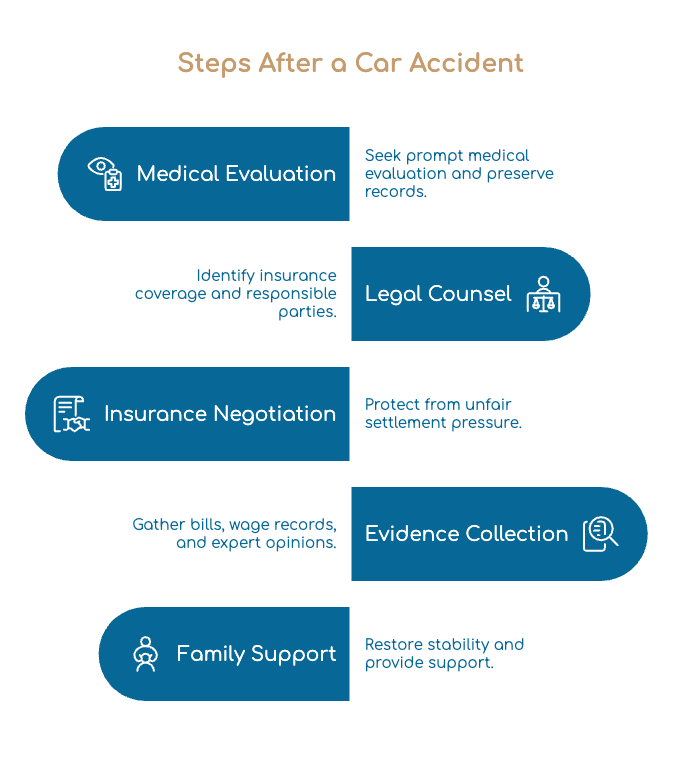
Florida law may allow injured victims of side-impact collisions to seek compensation for medical costs and related losses.
- The victim may seek prompt medical evaluation and preserve records that connect injuries to the collision.
- Legal counsel may identify all available insurance coverage and responsible parties.
- Insurance negotiation strategies may help protect the injured person from unfair settlement pressure.
- Evidence such as bills, wage records, expert opinions, and testimony may assist in proving damages in court.
- A claim may also help restore stability for a family, allowing caregivers and community members to provide support with clearer expectations.
Florida deadlines and claim requirements can affect recovery, so timely legal guidance may preserve options and strengthen the injured person’s position.
Why Do Side-Impact Collision Injuries Happen on Daytona Beach?
Understanding legal rights is only one part of evaluating a Daytona Beach side-impact collision claim; the cause of the crash often determines who may be held responsible. These crashes commonly occur when a driver enters an intersection unlawfully, fails to yield, disregards traffic signals, or misjudges another vehicle’s speed. In Daytona Beach, congestion near commercial areas, beach routes, and tourist corridors can increase the risk when drivers are inattentive or unfamiliar with local roads.
Side-impact injuries may also result from poor crash prevention practices, including speeding, distracted driving, impaired operation, or unsafe lane changes. A violated Safety protocol, such as ignoring stop signs or failing to check cross traffic, can place occupants directly in harm’s way. In some cases, inadequate car maintenance, including worn brakes or defective lights, contributes to a collision. Strong driver education supports safer choices, helping motorists recognize intersection hazards and protect passengers, pedestrians, and others sharing the roadway.
What Should You Do After a Side-Impact Collision Injury in Daytona Beach?
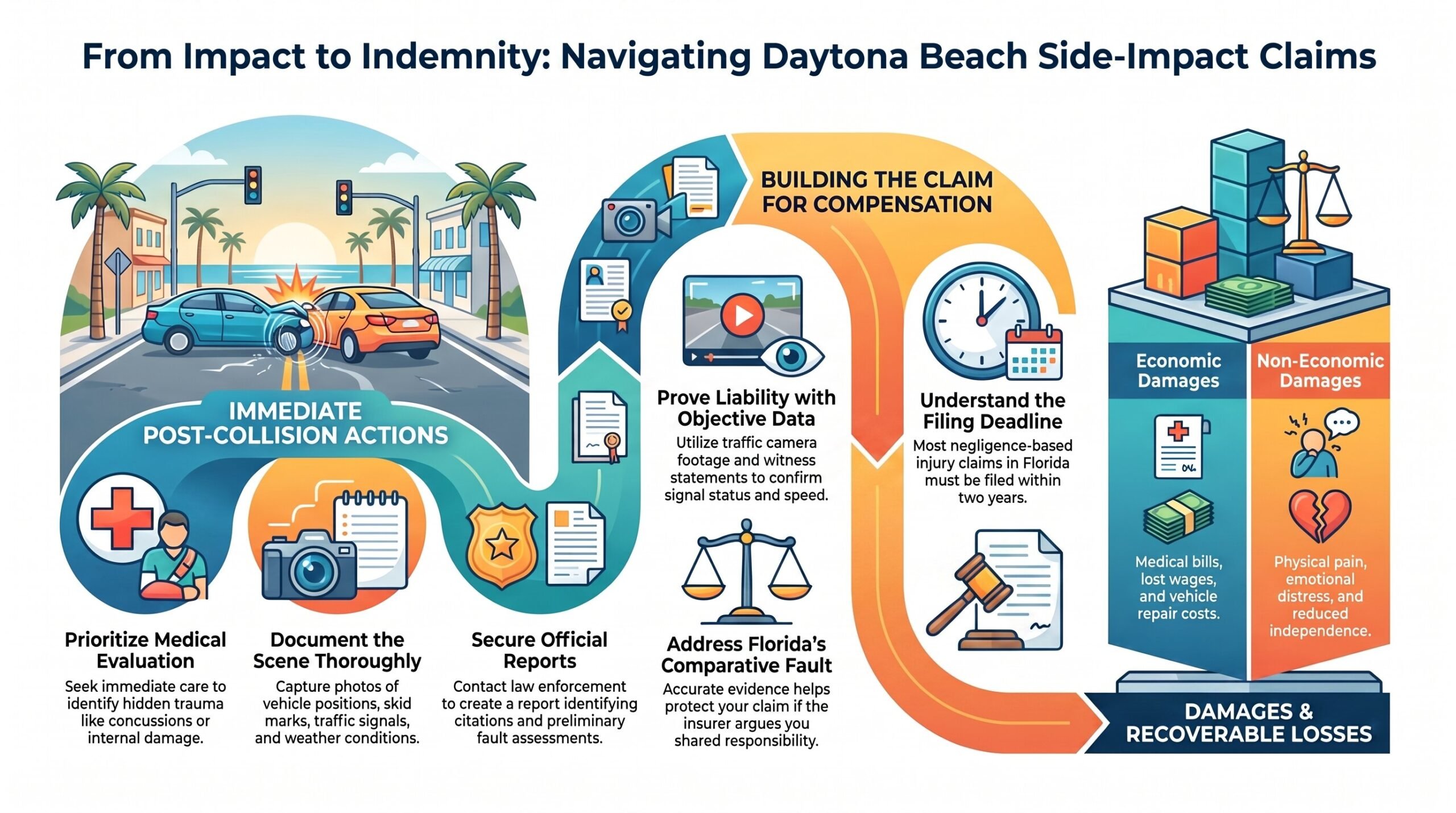
After a Daytona Beach side-impact collision injury, an injured person should seek medical care promptly, even if symptoms appear manageable at first. The crash should also be documented with photographs, witness statements, police reports, and medical treatment records. Once immediate needs are addressed, contacting an attorney can help protect legal rights, preserve evidence, and evaluate potential compensation.
Seek Medical Care
When a side-impact collision occurs in Daytona Beach, prompt medical evaluation is essential, even if the injured person believes the symptoms are minor. A physician can identify hidden injuries, including concussions, internal trauma, spinal damage, or soft-tissue harm that may worsen without treatment. Timely care also supports recovery by enabling providers to develop an appropriate treatment plan and monitor for complications.
For those helping an injured person, arranging transportation to an emergency room, urgent care center, or qualified medical provider can be a practical act of service. Medical records may later clarify the nature, timing, and severity of the injuries. The injured person should also check police documentation and follow medical instructions carefully, because consistent treatment assists both health outcomes and preservation of evidence related to the crash and resulting harm.
Document The Crash
A careful record of the crash can help preserve important facts before evidence is moved, repaired, or forgotten. After a Daytona Beach side-impact collision, an injured person may document the scene by photographing vehicle positions, traffic signals, skid marks, debris, weather conditions, and visible injuries. If physically able, the person may also gather names, phone numbers, driver information, license plates, and witness accounts.
Emergency medical documentation should be kept with discharge papers, diagnostic results, prescriptions, and follow-up instructions, since these records may connect injuries to the collision. A brief written timeline can also support accuracy by documenting pain symptoms, missed work, and transportation difficulties. Organized records may strengthen an insurance claim strategy by helping demonstrate how the collision occurred and how the injury affected daily responsibilities.
Contact An Attorney
Why contact an attorney early in a Daytona Beach side-impact collision case? Early legal guidance helps protect the injured person’s rights while allowing medical providers, family members, and caregivers to focus on recovery. Contacting counsel after crash circumstances are documented enables counsel to preserve evidence, identify liable parties, and address questions before statements are given to insurers.
An attorney can review police reports, photographs, witness accounts, and medical records to build a clear, service-centered claim. Insurance claim filing also requires accuracy, timing, and careful communication, especially when fault is disputed or injuries worsen over time. Legal support can reduce burdens on those assisting the injured person and help pursue compensation for treatment, lost income, and related losses with discipline, purpose, and professional care.
Critical Evidence in a Daytona Beach Side-Impact Collision Injury Case
Critical evidence can determine how fault, impact severity, and causation of injury are evaluated in a Daytona Beach side-impact collision case. Police reports, vehicle damage photos, witness statements, and traffic camera footage may each help establish what occurred before, during, and after the crash. Promptly preserving these materials can strengthen an injury claim and reduce liability disputes.
- Police accident reports may identify traffic violations, driver statements, and preliminary fault assessments.
- Vehicle damage photos can show the angle of impact, crash force, and point of contact.
- Witness statements may confirm signal status, vehicle speed, or unsafe driving conduct.
- Traffic camera footage can provide objective evidence of the collision sequence.
- Medical records should connect reported injuries to the timing and mechanics of the crash.
Police Accident Reports
After a side-impact collision in Daytona Beach, the police accident report often becomes one of the first records used to evaluate how the crash occurred. This report may identify the drivers, location, roadway conditions, citations, and the officer’s initial assessment of contributing factors. For an injured person, it can help preserve important details before memories fade or accounts change.
Witnesses listed in the report may support the later collection of statements, especially when fault is disputed. The report can also guide requests for medical records and injury documentation by connecting the crash date, reported complaints, and emergency response information. Although the report is not always conclusive, it provides a structured starting point for reviewing responsibility, protecting the injured party’s position, and assisting those who seek a fair resolution.
Vehicle Damage Photos
When a side-impact collision causes injury, photographs of the vehicle damage can provide important visual evidence of the crash forces and point of impact. Clear images may show crushed doors, broken glass, deployed airbags, damaged frames, and intrusion into the passenger compartment. This vehicle damage documentation can help explain how an injured person was exposed to harmful force, especially when medical findings must be connected to the collision.
Photos should capture multiple angles, close-up views, wider-scene context, and any visible safety features affected by the impact. If appropriate, photographing injuries may also preserve related evidence, such as bruising from restraints or contact with interior surfaces. Careful documentation supports accurate evaluation, helps protect vulnerable claimants, and promotes responsible decision-making by those reviewing a Daytona Beach side-impact injury case.
Witness Statements
Because side-impact collisions often happen quickly and leave conflicting accounts, witness statements can be an important source of independent information in a Daytona Beach injury case. Neutral observers may describe vehicle speed, traffic signal changes, lane position, braking, or driver behavior before impact. These accounts can help establish crash timelines, especially when drivers remember events differently or injuries affect recall.
Eyewitness credibility is evaluated based on proximity to the scene, opportunity to observe, consistency, and the absence of bias. Prompt collection is important, as memories can fade and witnesses may become difficult to locate. A careful legal review may compare statements with physical evidence, police observations, and medical findings. In service to injured persons, reliable witness information supports a clearer account of fault and the harm caused, aiding fair resolution.
Traffic Camera Footage
Why can traffic camera footage be especially valuable in a Daytona Beach side-impact collision case? It may show the vehicles’ positions, signal phases, speed patterns, and lane movements before impact. This objective record can support injured individuals, families, and advocates seeking fair accountability after a harmful crash. Attorneys may compare footage with GPS tracking, data logs, and witness accounts to identify inconsistencies or confirm responsibility.
Surveillance metadata, timestamps, and camera location details can also help establish sequence and reliability. When preserved promptly, traffic camera footage may reveal whether a driver ran a red light, failed to yield, or entered an intersection unsafely. Because many systems overwrite recordings quickly, timely requests to public agencies or nearby businesses are often essential to protect this vital evidence for a claim.
Long-Term Effects of Daytona Beach Side-Impact Collision Injuries
Side-impact collision injuries in Daytona Beach may cause long-term complications, including chronic pain that affects daily function and medical needs. Reduced mobility can limit independence, employment capacity, and routine activities, especially when spinal, hip, or leg injuries are involved. Emotional trauma may also persist after the crash, contributing to anxiety, sleep disruption, or a reduced sense of safety.
Chronic Pain Complications
After a side-impact collision, chronic pain may develop from injuries to the neck, back, shoulders, hips, ribs, or joints, even when the initial trauma appears manageable. Persistent discomfort can affect concentration, sleep, caregiving duties, and the ability to serve family or community with consistency. Medical documentation is vital, as delayed symptoms may require imaging, expert referrals, therapy, injections, or structured pain management plans.
Medication adherence can demonstrate responsible participation in treatment and help providers evaluate whether symptoms are improving or worsening. In legal matters, evidence of chronic pain may influence insurance negotiations, especially when insurers question its severity, duration, or causation. A careful claim strategy should connect diagnoses, treatment history, work limitations, and future care needs, allowing the injured person’s ongoing suffering to be presented accurately and with dignity.
Mobility And Independence
Mobility limitations can become one of the most disruptive long-term consequences of a Daytona Beach side-impact collision, particularly when pelvic, hip, spinal, knee, or foot injuries interfere with ordinary movement. A person may need assistive devices, home modifications, vehicle adaptations, or ongoing rehabilitation to complete daily tasks safely.
These changes can affect employment, medical appointments, family responsibilities, and community involvement, especially when walking, standing, or driving remains difficult. Public transportation impacts may also arise when bus access, transfer distances, or schedule limits make independent travel unreliable. In more serious cases, long-term caregiving needs can develop, requiring help with bathing, dressing, meals, mobility transfers, and household duties. Careful documentation of these limitations helps clarify the full extent of future support, accessibility costs, and diminished independence.
Emotional Trauma Effects
When the force of a collision occurs at the side of a vehicle, the psychological consequences may continue long after physical injuries begin to stabilize. Survivors may experience anxiety, sleep disruption, avoidance of traffic, and intrusive memories that interfere with work, caregiving, and community responsibilities. In some cases, PTSD symptoms develop, especially when the crash involved sudden impact, entrapment, severe injury, or witnessing harm to others.
These effects can complicate medical treatment because fear and distress may limit attendance at appointments or participation in rehabilitation. For families and advocates seeking to serve the injured person, patience and consistent support are critical. Documentation of emotional changes, counseling needs, and functional limitations may help clarify the full scope of damages. Long-term recovery often requires coordinated medical, psychological, and practical assistance.
Proving Liability in Daytona Beach Side-Impact Collision Injury Cases
Because side-impact crashes often occur at intersections, driveways, and lane-change points, proving liability requires a careful review of how the collision developed. Investigators may examine traffic signals, right-of-way rules, skid marks, vehicle damage patterns, roadway design, and available camera footage. These details can show whether a driver ran a red light, failed to yield, made an unsafe turn, or changed lanes without proper caution.
Reliable proof also depends on witness credibility factors, including vantage point, consistency, attention, and any relationship to the parties involved. Medical records, police reports, and accident reconstruction findings may further connect negligent conduct to the injuries suffered. For those serving injured individuals, careful documentation supports accountability and protects the truth of the event. Although Insurance settlement strategies may later rely on this evidence, the immediate focus is establishing fault through organized, objective facts that clearly identify who caused the Daytona Beach side-impact collision.
Dealing With Insurance Companies After a Daytona Beach Side-Impact Collision Injury
Once liability evidence has been gathered, communication with insurance companies often becomes central to a Daytona Beach side-impact collision injury claim. Insurers may request recorded statements, medical authorizations, repair estimates, and details about lost income. These requests can appear routine, but each response may affect the value and direction of the claim.
A lawyer may help ensure that communications remain accurate, complete, and limited to necessary information. This is especially important when injuries are severe, treatment is ongoing, or family members are considering Wrongful death litigation after a fatal crash. Insurance adjusters may evaluate fault, question medical causation, or seek an early settlement before the full extent of the harm is known.
Careful preservation of evidence also supports fair negotiations. Medical records, vehicle photographs, witness information, and expert findings may help counter incomplete insurer conclusions. Through organized communication, injured individuals and families can focus on recovery, caregiving, and service to others while their legal interests remain protected.
What to Expect During a Daytona Beach Side-Impact Collision Injury Claim Process
A Daytona Beach side-impact collision injury claim typically begins with prompt crash reporting, followed by a careful investigation into fault and liability. The injured person’s medical records, treatment history, and evidence of physical limitations help document the extent of the injuries and related losses. Once the evidence is organized, the claim may proceed to settlement negotiations with the insurance company, where compensation is evaluated based on liability, damages, and available coverage.
Reporting The Crash
After a side-impact collision in Daytona Beach, reporting the crash creates the official record that may later support an injury claim. Drivers should contact law enforcement promptly, request emergency medical assistance when needed, and remain at the scene unless medical transport is required. The responding officer may document vehicle positions, visible damage, injuries, insurance information, and statements from those involved. This report can help caregivers, advocates, and legal representatives understand the event without relying only on memory.
Gathering evidence at the scene may include taking photographs, noting road conditions, and saving medical discharge papers or towing records. Preserving witness testimony is also important, as neutral observers may later clarify what they saw. Accurate reporting helps protect injured people and promotes fair handling of the claim.
Investigating Fault
While the crash report may provide an important starting point, fault in a Daytona Beach side-impact collision usually requires a broader investigation. A careful review may include vehicle positions, traffic signals, skid marks, roadway design, and witness statements. Investigators often examine Common crash causes, such as failure to yield, red-light violations, speeding, distracted driving, or impaired judgment. This work helps clarify whether one driver, multiple drivers, or another party contributed to the collision.
Thorough fault analysis also prepares the claim for insurance liability defenses. Insurers may argue that the injured person shared responsibility, misread traffic conditions, or failed to act reasonably. By gathering reliable evidence early, a legal team can present the facts clearly, support accountability, and help protect the injured person’s right to fair consideration.
Documenting Your Injuries
Begin documenting injuries as soon as medical care starts, because treatment records often become central evidence in a Daytona Beach side-impact collision claim. Medical documentation may include emergency evaluations, imaging results, physician notes, therapy records, prescriptions, referrals, and work restrictions. Each record helps show how the crash affected the injured person’s health, daily responsibilities, and capacity to assist family, coworkers, or community members.
Consistent follow-up care is also important, since gaps in treatment may create questions about the seriousness or cause of an injury. A careful claim file may include pain journals, photographs of visible injuries, mileage to appointments, and records of needed household help. Providers may also address future treatment planning, including surgery, rehabilitation, medication, or long-term limitations, to ensure the full medical impact is clearly captured.
Negotiating A Settlement
Once medical treatment and case documentation are reasonably developed, settlement negotiations may begin with a demand package sent to the insurance carrier. This package typically outlines liability, medical expenses, lost income, pain, impairment, and future care needs. A well-planned Insurance claim strategy helps present the injured person’s losses clearly, while also anticipating defenses involving comparative fault, causation, or preexisting conditions.
Counsel may use settlement valuation methods, including medical cost analysis, wage documentation, policy limits review, and verdict comparisons, to assess a fair resolution range. The insurer may respond with questions, requests for records, or a lower offer. Negotiations then proceed through measured exchanges. When handled carefully, this stage can support accountability, promote efficient recovery, and preserve the claimant’s ability to pursue litigation if settlement remains unreasonable.
Compensation for Daytona Beach Side-Impact Collision Injury Damages
After a side-impact collision in Daytona Beach, injured motorists may be entitled to compensation for the full range of losses caused by another party’s negligence. Pursuing fair recovery requires careful documentation, timely action, and a clear showing that the collision directly caused the claimed injuries and related harm.
A lawyer may evaluate police reports, medical records, witness statements, vehicle damage, photographs, and other evidence in a car accident to build a reliable claim. This evidence can support liability, challenge disputed facts, and show how the crash affected the injured person’s health, responsibilities, and daily service to family, work, and community.
Compensation claims are often resolved through structured communication with insurers. Effective insurance negotiation strategies may include presenting organized records, responding to fault disputes, addressing policy limits, and resisting pressure to accept an inadequate offer. When settlement efforts do not produce a just result, legal action may be considered to protect the injured party’s rights.
Economic vs Non-Economic Damages in Daytona Beach Side-Impact Collision Cases
Damages in Daytona Beach side-impact collision cases are generally divided into economic losses, such as medical bills, lost wages, and repair costs, and non-economic losses, including pain, suffering, and reduced quality of life. Each category requires careful evaluation, because financial records may support direct expenses while personal harm often depends on medical evidence and credible testimony. Proving the value of both forms of damages is vital to pursuing fair compensation after a serious collision.
Economic Damage Examples
Economic damages in a Daytona Beach side-impact collision case are the measurable financial losses tied to the crash and the injured person’s recovery. A Medical expenses overview may include ambulance transport, emergency care, diagnostic imaging, surgery, medication, rehabilitation, follow-up visits, and medically necessary equipment. Future treatment costs may also be included when supported by provider opinions and care plans. Proof of lost wages often includes pay stubs, employer statements, tax records, schedules, and documentation of missed work.
If injuries reduce future earning capacity, vocational records and expert evaluations may help establish the loss. Other economic damages can include vehicle repair or replacement, rental transportation, towing, storage fees, and out-of-pocket costs for necessary household assistance. Careful documentation helps present these losses accurately and supports fair case valuation.
Non-Economic Losses
Non-economic losses in a Daytona Beach side-impact collision case refer to the personal, human consequences of an injury that cannot be measured through bills, receipts, or wage records alone. These losses may include physical pain, emotional distress, reduced independence, disfigurement, loss of enjoyment, and strain on family relationships. For individuals committed to serving others, such harm can also disrupt caregiving, volunteer work, and daily acts of support within the community.
Damages proof often depends on careful evidence gathering, including medical notes, witness observations, photographs, and consistent documentation of pain. Injury recordkeeping may reflect how symptoms affect sleep, mobility, concentration, and ordinary routines. These records help describe the lived impact of trauma while distinguishing personal suffering from financial expenses in the claim.
Proving Damage Value
Establishing the value of a Daytona Beach side-impact collision claim requires a clear separation between measurable financial losses and the personal consequences of injury. Economic damages are supported through medical billing, wage records, repair estimates, and Insurance documentation, allowing each expense to be tied to the crash. Non-economic damages require careful presentation of pain, impairment, emotional distress, and reduced daily function. Those serving an injured person must gather consistent medical records, reliable treatment histories, and statements that strengthen witness credibility.
The same evidence may also assist in proving negligence by connecting the collision mechanics to the resulting harm. A thorough valuation considers future care, lost earning capacity, and the lasting effect on ordinary responsibilities. Clear documentation helps insurers, courts, and advocates evaluate loss with fairness and disciplined judgment.
When a Daytona Beach Side-Impact Collision Injury Case Goes to Trial vs Settlement
Although many Daytona Beach side-impact collision injury cases resolve through settlement, some proceed to trial when liability, damages, or insurance coverage remains disputed. Settlement may serve injured people efficiently when the insurer acknowledges responsibility and offers fair compensation supported by medical records, proof of wages, and repair estimates. A careful Negotiation strategy can encourage resolution while protecting the client from undervalued offers or rushed decisions.
Trial becomes more likely when parties disagree about how the crash occurred, the seriousness of injuries, future care needs, or the connection between the collision and claimed losses. In those matters, trial preparation begins early through witness interviews, expert review, insurance documentation, and evidence preservation, including vehicle photographs, crash data, and medical history.
A lawyer’s role is to present the facts clearly, serve the client’s interests, and help the court understand the full impact of the harm. Whether through settlement or verdict, the objective remains just compensation.
Florida Laws That May Affect Your Daytona Beach Side-Impact Collision Case
Several Florida laws can influence how a Daytona Beach side-impact collision case is evaluated, negotiated, and resolved. These rules shape responsibility, available compensation, and the evidence needed to support an injured person’s claim.
Florida law helps determine fault, compensation, and evidence needs in Daytona Beach side-impact collision claims.
- Florida’s Comparative Fault Rules may reduce compensation when an injured party shares responsibility for the crash, making careful fault analysis crucial.
- The Personal Injury Threshold can affect whether an injured person may pursue damages beyond basic no-fault benefits, including pain and suffering.
- Traffic statutes governing right-of-way, signals, and lane changes often help determine whether a driver acted carelessly.
- Insurance requirements, including personal injury protection coverage, may affect early medical payments and claim strategy.
- Evidence rules influence how police reports, witness statements, medical records, and expert opinions may be presented.
For those serving injured individuals, these laws provide structure for advocacy, accountability, and fair resolution. A thorough legal review helps connect the facts to the protections Florida law provides.
The Statute of Limitations for Daytona Beach Side-Impact Collision Injury Cases
When an injured person considers a legal claim after a Daytona Beach side-impact collision, the statute of limitations is one of the most important deadlines to evaluate. In Florida, many negligence-based injury claims arising from motor vehicle crashes must be filed within 2 years of the collision. Missing this deadline can prevent recovery, regardless of the severity of harm or the strength of the evidence.
This filing period also affects related issues, including Comparative Negligence and Insurance Disputes. Evidence may become harder to preserve over time, and insurers may question delays when evaluating responsibility, medical treatment, and damages. A timely claim supports orderly review of crash reports, witness statements, vehicle damage, and medical records.
For those committed to caring for injured individuals and protecting community safety, awareness of this deadline is essential. Prompt attention helps ensure that valid claims remain available within Florida’s legal framework and procedural requirements.
How a Daytona Beach Side-Impact Collision Lawyer Can Help You
How can legal representation affect the outcome of a Daytona Beach side-impact collision claim? A lawyer can organize facts, identify liable parties, and present damages with disciplined accuracy. This support helps injured people pursue fair recovery while allowing families and caregivers to focus on repair, stability, and service to one another.
- Reviews crash reports, medical records, and witness statements for gaps or inconsistencies.
- Provides Evidence preservation tips, including photographs, vehicle storage, and communication records.
- Monitors Insurance claim timelines, reducing missed deadlines and avoidable disputes.
- Communicates with insurers to help prevent statements that may weaken a valid claim.
- Calculates losses, including treatment costs, lost income, and long-term care needs.
Through structured advocacy, a Daytona Beach side-impact collision lawyer may help convert confusion into an orderly claim. The legal process then becomes less burdensome for those supporting the injured person, and more focused on accountability, practical needs, and lawful compensation.
When to Contact a Daytona Beach Side-Impact Collision Lawyer
After a side-impact collision in Daytona Beach, legal guidance should be considered as soon as injuries, disputed fault, insurance delays, or significant vehicle damage become apparent. Early contact allows an injured person or assisting family member to understand reporting duties, preserve critical evidence, and avoid missteps that may affect a claim. This is especially important when medical symptoms develop gradually, when witnesses must be identified, or when the other driver’s insurer requests statements.
A lawyer may also be contacted when the Insurance claim timeline becomes unclear or when adjusters delay communication. Timely review can help ensure that deadlines are met and that necessary documentation is gathered. Families caring for an injured loved one may need support with requesting medical records, organizing bills, and documenting lost income. Contact is also appropriate before accepting any settlement offer, particularly if treatment remains ongoing or fault has not been fully evaluated. Prompt consultation supports careful decision-making during a difficult period.
Why You Need an Experienced Daytona Beach Side-Impact Collision Lawyer
Because side-impact collisions often involve complex injury patterns and critical liability, experienced legal representation can be essential to protecting an injured person’s claim. These crashes may cause head trauma, spinal injuries, fractures, and internal harm, all of which require careful evaluation. A lawyer can coordinate documentation of damages, including medical records, wage-loss evidence, repair estimates, and expert opinions, so the full impact of the collision is clearly presented.
An experienced Daytona Beach side-impact collision lawyer also understands how insurers assess fault, minimize injuries, and challenge treatment needs. Through structured Insurance negotiation, legal counsel can address unfair settlement positions and pursue compensation that reflects both immediate losses and long-term consequences. This support allows injured individuals and their families to focus on recovery, caregiving, and stability while the legal process is managed with diligence. Skilled advocacy helps ensure that responsibility is pursued fairly and that the injured person’s needs remain central at every stage.
How to Choose the Right Daytona Beach Side-Impact Collision Lawyer for Your Case
When selecting a Daytona Beach side-impact collision lawyer, an injured person should focus on relevant experience, case preparation, and a clear understanding of Florida motor vehicle injury claims. The lawyer should know how these crashes occur, how to identify liable parties, and how to evaluate injuries that may affect work, caregiving, and daily service to others.
A suitable attorney will review evidence carefully, including police reports, medical records, witness statements, and vehicle damage. The lawyer should also explain how Insurance paperwork is handled, what deadlines may apply, and how communication with insurers will be managed. Clear guidance helps the injured person remain organized while prioritizing recovery and family responsibilities.
It is also important to ask about settlement timelines, trial readiness, and case updates. A dependable lawyer should provide honest expectations, answer questions directly, and prepare each claim with the diligence needed to pursue fair compensation under Florida law.
About The Law Offices of Anidjar & Levine
The Law Offices of Anidjar & Levine represents injured individuals in Daytona Beach and throughout Florida in motor vehicle collision claims, including side-impact crashes involving complex liability and serious injuries.
The firm’s work centers on practical service, careful legal guidance, and steady support for people facing medical, financial, and personal disruption after a crash.
Its attorneys approach each claim with structured attention to Client communication, case strategy, evidence gathering, settlement planning, and timely case development.
This disciplined process may include reviewing crash reports, medical records, witness accounts, roadway conditions, insurance issues, and the conduct of each driver involved.
The firm also recognizes that injured clients often need help beyond legal filings.
Its team coordinates case-related tasks, monitors deadlines, and works to reduce burdens while claims proceed.
Through prepared advocacy and responsive service, The Law Offices of Anidjar & Levine helps clients pursue fair compensation with dignity and purpose after a side-impact collision in Daytona Beach.
Frequently Asked Questions
Are Side-Impact Collisions More Common at Daytona Beach Intersections?
Yes, side-impact collisions often occur at Daytona Beach intersections, where turning movements, signal violations, and limited visibility increase the number of conflict points. Intersection frequency can rise during tourist seasons, special events, and peak commuting periods. These crashes are especially concerning because injury severity may be higher when vehicle sides absorb direct force. Community-focused drivers, responders, and advocates should emphasize cautious entry, lawful yielding, and attentive driving to better protect vulnerable road users.
Can Vehicle Design Affect Injuries in a Side-Impact Crash?
Yes, vehicle design can noticeably affect injuries in a side-impact crash. Stronger door structures, side-impact airbags, reinforced pillars, and energy-absorbing materials improve crash survivability by reducing force transfer to occupants. Seatbelt effectiveness also depends on proper restraint geometry and occupant positioning. For those serving injured people, understanding these design factors helps identify preventable harm, evaluate safety performance, and support informed decisions after a serious collision involving vulnerable passengers.
Do Child Passengers Face Unique Risks in Side-Impact Collisions?
Yes. Child passengers face unique risks in side-impact collisions because their bodies are smaller, their bones are still developing, and the striking vehicle may hit near their seated position. Properly installed child safety seats can reduce harm, especially when matched to age, height, and weight. Caregivers who serve children should follow injury prevention guidance, keep children in rear seats, and seek professional seat inspections when available.
Can Weather Conditions Influence Side-Impact Collision Claims?
Yes, weather conditions can influence side-impact collision claims by shaping evidence, fault analysis, and damages. Poor Visibility from rain, fog, or storms may affect driver perception, reaction time, and witness reliability. Investigators often examine whether motorists adjusted their speed, used their headlights, and exercised caution. Collision Liability may shift when a driver fails to respond prudently to hazardous conditions, especially when public safety and the protection of vulnerable passengers are at stake.
Should I Repair My Car Before My Claim Resolves?
Repairs should generally wait until the insurer, adjuster, or legal representative has inspected the vehicle. Repair timing impacts evidence, including damage patterns, photographs, and safety-system data. For those seeking to serve injured parties responsibly, settlement strategy planning requires accurate repair estimates and analysis of vehicle valuation consequences. Documentation readiness steps include preserving photos, invoices, towing records, and written estimates. Emergency safety repairs may proceed, but only after thorough documentation and notice.
—————————
A Daytona Beach side-impact collision can leave victims facing serious injuries, financial losses, and complicated insurance disputes.
Legal guidance can help protect their rights, establish liability, and pursue appropriate compensation for medical care, lost income, and related damages.
The Law Offices of Anidjar and Levine provides focused representation for injured clients throughout the claims process, including help from a Daytona Beach Car Accident Lawyer.
Those affected by a side-impact crash should consider speaking with a qualified attorney promptly to understand their legal options.