The Law Offices of Anidjar and Levine helps injured people assess fault, preserve evidence, address insurance disputes, and pursue compensation after crashes involving drivers, property owners, or other responsible parties.
A Daytona Beach Car Accident Lawyer may handle claims involving limited visibility, failure to yield, poor lighting, unsafe pedestrian routes, or disputed causation of injury.
Legal review can connect medical records, witness statements, reports, and photographs to damages such as medical care, lost income, and pain.
The sections below explain the main issues.
Main Takeaways
- A Daytona Beach parking lot accident lawyer can evaluate fault involving drivers, property owners, contractors, or maintenance companies.
- Common causes include distracted driving, speeding, poor visibility, confusing traffic patterns, and failure to yield near storefronts or exits.
- Evidence such as photos, witness statements, police reports, medical records, and surveillance footage can strengthen a parking lot injury claim.
- Compensation may include medical expenses, lost income, pain, future care needs, and other documented crash-related losses.
- Prompt medical care and timely legal action can help protect injury claims before evidence disappears or deadlines expire.


How We Can Help With Your Daytona Beach Parking Lot Car Accident Injury Claim
After a parking lot crash, an injured person may face disputed fault, limited insurance coverage, and questions about whether the collision caused the claimed injuries. A Daytona Beach parking lot car accident lawyer can help by organizing a focused claim process that protects the client’s interests and supports fair recovery.
Counsel may implement evidence preservation strategies, including prompt requests for surveillance footage, photographs, witness information, vehicle data, and medical documentation. Legal assistance also includes an insurance-denial response when a carrier challenges liability, treatment, or the seriousness of the harm.
The lawyer may evaluate damages, communicate with insurers, and use settlement negotiation tactics grounded in documented losses rather than assumptions. When injuries affect mobility, employment, or daily responsibilities, counsel may coordinate with medical professionals to address long-term care planning. This guidance can help injured people pursue compensation while preserving stability for themselves, their families, and those who depend on their service.
OUR CONSULTATIONSARE FREE
START YOUR FREE CASE REVIEW

Understanding Daytona Beach Parking Lot Car Accident Injury Cases
Although many parking lot collisions occur at low speeds, Daytona Beach parking lot car accident injury cases can involve significant legal and medical issues. Injured individuals may need careful evaluation to determine whether harm was temporary, progressive, or likely to require continuing care. Common injury types include soft tissue damage, back and neck injuries, fractures, concussions, and aggravation of prior conditions.
These cases are often assessed under negligence standards, which examine whether a driver, property owner, or other party failed to exercise reasonable care. Parking lot safety may also influence how liability is reviewed, especially when visibility, traffic flow, or pedestrian protection is relevant.
Medical documentation is critical because it connects the incident to the injuries claimed, supports treatment needs, and helps measure losses. For advocates serving injured people, a well-developed record promotes fairness, accountability, and informed decision-making throughout the claims process, from investigation through resolution and, when necessary, potential litigation.
Common Causes of Daytona Beach Parking Lot Car Accident
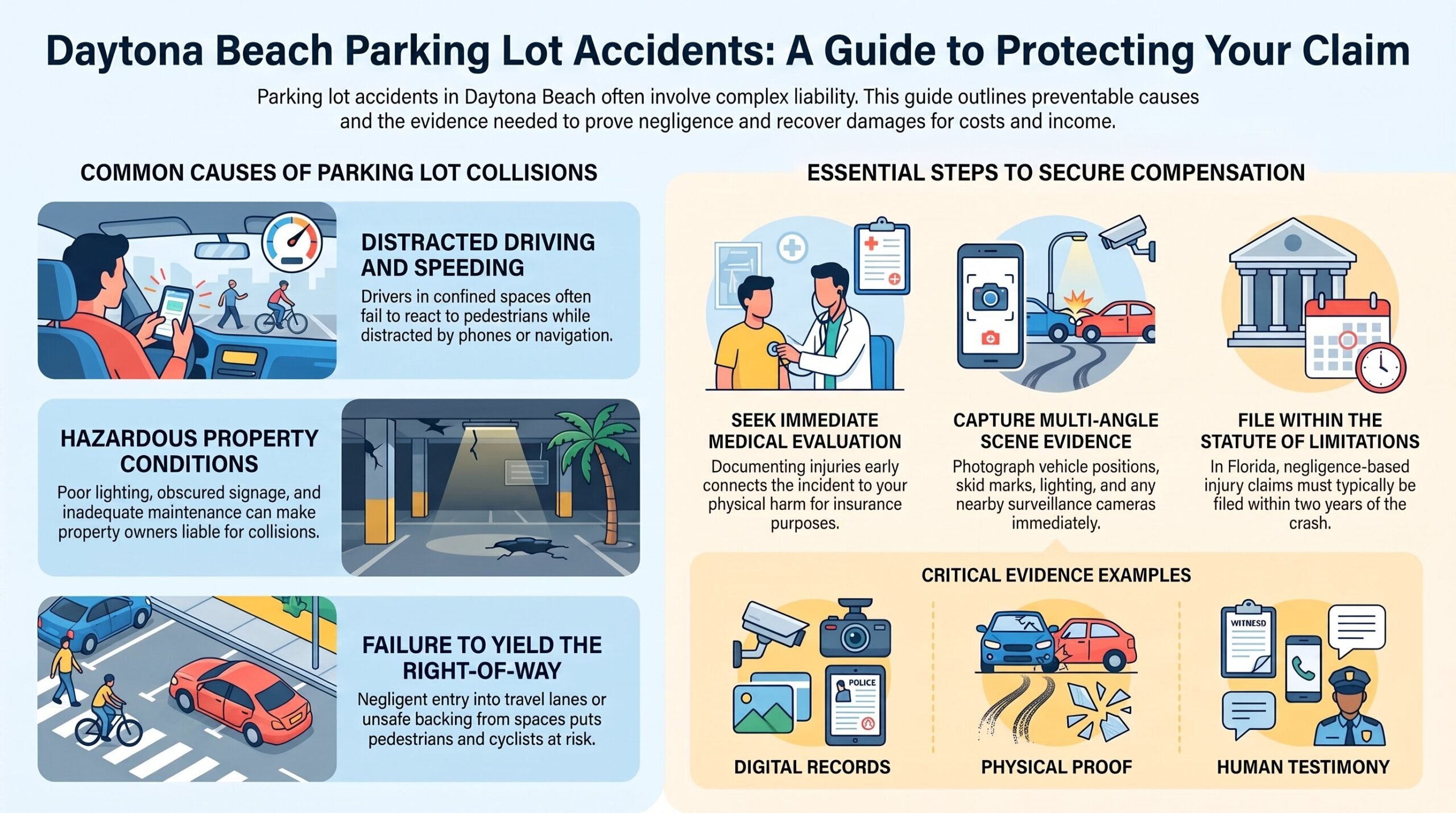
Parking lot accidents in Daytona Beach often result from preventable conduct, including distracted driving, limited visibility, speeding through lots, and failure to yield. These factors can create serious hazards for pedestrians, drivers, and passengers, particularly in crowded commercial areas. Identifying the cause of a collision is key, as it may determine fault, liability, and the available options for pursuing compensation.
Distracted Driving
Distracted driving is a frequent cause of parking lot collisions in Daytona Beach, where drivers must navigate pedestrians, reversing vehicles, shopping carts, traffic signs, and narrow travel lanes in a confined space. Cellphone distraction can divert a driver’s eyes, hands, and attention at the exact moment careful judgment is needed. Even brief inattention may reduce driver reaction time, making it harder to stop, yield, or avoid a person walking to a vehicle.
Other distractions, including adjusting navigation, speaking with passengers, eating, or searching for items, can also create preventable danger. Those who serve injured individuals often examine whether distraction contributed to unsafe backing, failure to yield, or sudden acceleration. Careful investigation may help identify negligent conduct and support accountability for harm caused in these shared areas.
Limited Visibility
Limited visibility can increase the risk of parking lot collisions in Daytona Beach, especially where drivers must make quick decisions in crowded or confined areas. Large vehicles, landscaping, poorly placed carts, inadequate lighting, and blind corners may obstruct a driver’s view of approaching cars or pedestrians. These conditions can be especially concerning near storefronts, crosswalks, loading zones, and accessible parking spaces, where careful observation is essential for pedestrian safety.
Clear parking lot signage may help guide traffic flow, identify pedestrian crossings, and warn drivers about restricted sightlines. Property owners, managers, and drivers each play a role in reducing hazards by maintaining lighting, trimming vegetation, and proceeding cautiously when visibility is limited. When preventable obstructions contribute to a crash, liability may depend on whether reasonable safety measures were followed.
Speeding Through Lots
Even when visibility is adequate, excessive speed can make a collision in a Daytona Beach parking lot far more likely and more severe. Drivers who move too quickly through lanes, entrances, or crowded shopping areas have less time to recognize pedestrians, parked vehicles, carts, and sudden stopping conditions. Reckless speed may turn a minor impact into a serious injury, especially when families, older adults, or service workers are present.
Aggressive driving in these confined spaces can also create confusion for others who are attempting to move carefully and respectfully. When a crash occurs, traffic violations, witness accounts, surveillance footage, and vehicle damage may become important in liability determination. A careful review can help identify whether unsafe speed contributed to the harm and support accountability for those affected.
Failure To Yield
When drivers fail to yield in a Daytona Beach parking lot, ordinary vehicle movements can quickly become hazardous. Vehicles backing from spaces, turning across travel lanes, or entering from side aisles must respect the right of way. Negligent entry into a lane may place pedestrians, cyclists, and other drivers at immediate risk, especially where visibility is limited by parked vehicles or landscaping.
Proper traffic control, including signs, painted arrows, and stop markings, helps guide safe movement, but drivers remain responsible for observing conditions and yielding when required. A failure to yield may indicate careless attention, impatience, or disregard for others sharing the lot. For those committed to serving injured people, identifying these errors can help clarify fault and support a thorough evaluation of resulting harm.


Legal Rights of Daytona Beach Parking Lot Car Accident Injury Victims
After a collision in a Daytona Beach parking lot, injured victims may have the right to pursue compensation when another driver, property owner, or other responsible party contributed to the crash. These rights may include payment for medical care, lost income, pain, and related losses. Legal evaluation often considers negligence standards, parking signage requirements, and whether Premises liability defenses may limit or defeat a claim.
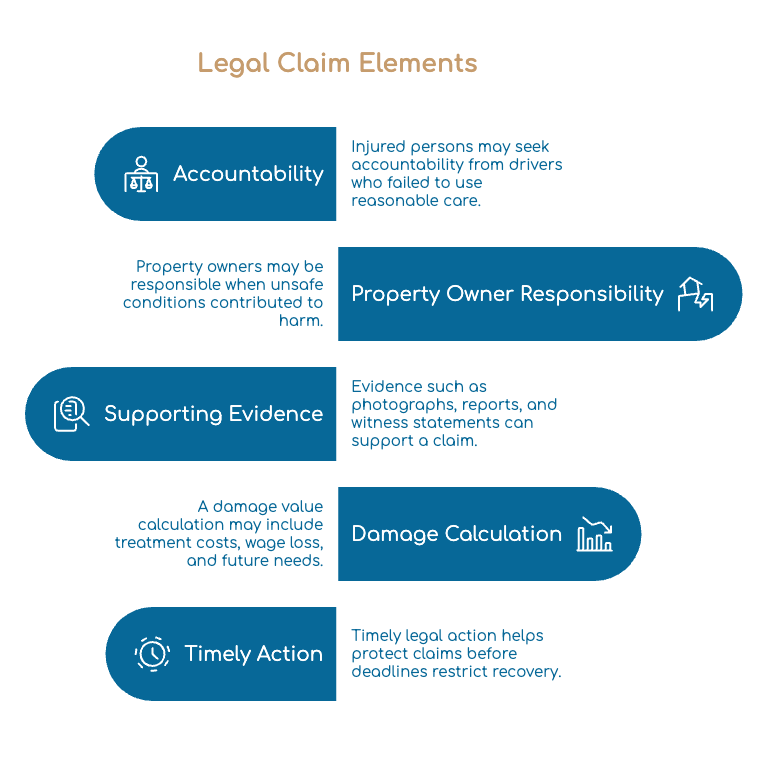
Parking lot crash victims may pursue compensation when negligence or unsafe property conditions contributed to their injuries.
- Injured persons may seek accountability from drivers who failed to use reasonable care.
- Property owners may be responsible when unsafe conditions contributed to harm.
- Evidence such as photographs, reports, and witness statements can support a claim.
- A damage value calculation may include treatment costs, wage loss, and future needs.
- Timely legal action helps protect claims before deadlines restrict recovery.
For those committed to serving injured neighbors, understanding these rights promotes fair outcomes. Each case requires careful review, because liability and compensation depend on specific facts and applicable Florida law.
Why Do Car Accident Injuries in Daytona Beach Parking Lots Happen?
Understanding legal rights also requires examining how parking lot crashes occur, because the cause of an injury often shapes liability and compensation. These incidents often arise from limited visibility, distracted driving, speeding, confusing traffic patterns, or failure to yield near storefronts, crosswalks, and exits. Parking lot hazards, including poor lighting, faded markings, uneven pavement, obstructed signs, and unsafe pedestrian routes, can increase the risk of harm for drivers, passengers, and walkers.
Responsibility may extend beyond a careless motorist when property conditions contribute to the collision. Under premises liability principles, owners and managers may be evaluated based on whether they maintained reasonably safe areas for visitors. Negligence standards may also apply to drivers, contractors, security providers, or maintenance companies whose actions created preventable danger.
Accurate cause analysis helps protect injured individuals and promotes safer community spaces. Evidence preservation may become important when determining how conditions, conduct, and timing contributed to the injury.
What Should You Do After a Daytona Beach Parking Lot Car Accident Injury?
After a car accident in a Daytona Beach parking lot, the injured person should seek immediate medical care, even if symptoms appear minor. The accident scene should be documented with photographs, witness information, and notes about vehicle positions, hazards, and visible damage. The incident should also be reported promptly, while evidence such as surveillance footage, insurance details, and medical records is preserved.
Seek Immediate Medical Care
When a parking lot collision causes pain, dizziness, stiffness, or any visible injury, the injured person should seek medical attention without delay. Prompt evaluation protects health, identifies hidden trauma, and creates a clear medical record connecting injuries to the incident. Even low-speed impacts can cause concussions, soft tissue damage, fractures, or internal injuries that worsen without treatment.
Medical care also supports Pedestrian injury claims by showing that the injured person acted responsibly after harm occurred. Care providers may recommend follow-up visits, diagnostic testing, medication, or therapy, and those instructions should be followed carefully. In severe cases, families may later need Wrongful death guidance if complications prove fatal. Seeking care promptly serves the injured person, supports loved ones, and preserves reliable information for any legal review.
Document The Accident Scene
Once immediate safety and medical needs are addressed, careful documentation of the parking lot accident scene can preserve important evidence before it disappears. A person assisting the injured individual should photograph vehicle positions, visible damage, skid marks, broken glass, signs, lighting, pavement markings, shopping carts, landscaping obstructions, and nearby surveillance cameras. Wide-angle images and close-up photographs can show how the collision occurred and whether hazards contributed to it.
Evidence preservation steps should also include noting the date, time, weather, traffic flow, and names of witnesses willing to share observations. Client statement documentation should capture the injured person’s clear account of pain, vehicle movement, and what was seen or heard, without speculation. Thorough records support later review by insurance representatives, medical providers, and legal counsel handling the claim.
Report And Preserve Evidence
Because parking lot evidence can be quickly removed or overwritten, the injured person or a trusted representative should report the accident and preserve crucial information as soon as practicable. Management should be notified so incident reports, surveillance footage, maintenance records, and witness details are secured before routine deletion or loss.
Law enforcement involvement may also create an official record, especially when injuries, disputed fault, or unsafe driving conduct are present. The injured person should keep medical records, repair estimates, photographs, and all communications with insurers in one organized file. These materials may help confirm Vehicle insurance coverage and support the establishment of negligence factors, including visibility, right-of-way, speed, driver attention, and property conditions. Careful preservation allows advocates to serve the injured person with accuracy, diligence, and accountability.
Critical Evidence in a Daytona Beach Parking Lot Car Accident Injury Case
Critical evidence can strongly influence how fault, causation, and damages are evaluated after a car accident in a Daytona Beach parking lot. Relevant materials should be identified quickly, since some records may be altered, overwritten, or lost with time. Essential evidence may include:
- Surveillance camera footage from nearby businesses or parking lot systems
- Clear photographs of vehicle damage from multiple angles
- Witness contact information and brief statements
- Police or incident reports documenting the crash circumstances
- Photos of skid marks, signage, lighting, and parking lot conditions
Surveillance Camera Footage
When a crash occurs in a Daytona Beach parking lot, surveillance camera footage can provide an objective record of how the collision happened. Cameras from stores, garages, offices, or nearby businesses may show vehicle speeds, right-of-way decisions, pedestrian movement, and the layout of parking lot roadways. This footage can assist those serving injured individuals by preserving facts before memories fade or accounts conflict.
It may also reveal poor lighting, obstructed views, unsafe backing movements, or driver inattention. In some cases, footage may help identify Vehicle maintenance issues, such as brake light failures or stalled vehicles creating hazards. Because many systems overwrite recordings quickly, prompt requests to property owners or managers are important. Properly secured footage can clarify responsibility and support a fair injury claim.
Vehicle Damage Photos
Vehicle damage photos can serve as important visual evidence in a Daytona Beach parking lot car accident injury case, particularly where fault is disputed or the crash occurred at low speed. Clear images of dents, paint transfer, broken lights, bumper displacement, and debris placement may help show impact direction, vehicle positioning, and crash severity.
These photos should be taken from multiple angles, including close views and wider shots that show nearby parking lines, signs, and obstructions. When preserved with Insurance claim documentation, they may support a consistent account of how the collision occurred. They may also assist in comparing property damage with the Medical treatment timeline, helping responsible advocates understand whether reported symptoms developed soon after the incident and align with the available physical evidence. Accurate records help promote fair resolution.
Witness Contact Information
Witness contact information can be vital in a Daytona Beach parking lot car accident injury case because neutral observers may confirm how the collision occurred, where the vehicles were positioned, and whether a driver failed to yield, backed unsafely, or ignored traffic markings. Names, phone numbers, email addresses, and brief notes about what each person saw should be preserved as soon as possible, before memories fade or witnesses become difficult to locate.
Eyewitness statements may help clarify disputed facts, especially when drivers give conflicting accounts or damage patterns do not fully explain the impact. For injured individuals and those assisting them, careful witness documentation supports a fair liability assessment and helps guarantee that responsible parties are identified. Prompt collection also allows counsel to evaluate credibility and preserve helpful testimony.
Police Incident Reports
Although many parking lot collisions appear minor at first, a police incident report can become a central piece of evidence in a Daytona Beach parking lot car accident injury case. This report may document driver statements, vehicle positions, weather conditions, visible injuries, and any contributing conduct observed by responding officers. In service to injured individuals and the community, accurate reporting helps clarify responsibility and supports a fair claim process.
When nearby intersections, access roads, or traffic controls are involved, the report may also note Red Light Violations or recent Speed Limit Changes that affected driver behavior before entry into the parking area. A lawyer may compare the report with photographs, witness accounts, and medical records to identify inconsistencies, preserve facts, and pursue appropriate compensation with diligence.
Long-Term Effects of Daytona Beach Parking Lot Car Accident Injuries
Parking lot car accident injuries in Daytona Beach may produce long-term consequences, including chronic pain conditions, reduced mobility, and emotional trauma. These effects can interfere with daily activities, employment responsibilities, and a person’s overall quality of life. Careful evaluation of lasting harm is often necessary when judging the full value of an injury claim.
Chronic Pain Conditions
After a collision in a Daytona Beach parking lot, chronic pain may develop from injuries that initially appear minor, including soft tissue damage, joint trauma, nerve irritation, or spinal strain. Persistent discomfort can interfere with work, caregiving, volunteering, and daily responsibilities that support others. Medical evaluation is important when pain persists beyond the expected recovery period, especially if headaches, radiating discomfort, or sleep disruption occur.
Treating Whiplash Symptoms may require therapy, diagnostic testing, follow-up care, and careful monitoring. Physicians may prescribe pain relievers, muscle relaxants, or anti-inflammatory drugs, but Medication Side Effects can complicate recovery and daily function. Documentation of recurring pain, treatment plans, and activity limitations may help demonstrate the injury’s lasting impact and support a claim for appropriate compensation.
Reduced Mobility
A limitation in movement can become one of the most disruptive long-term effects of a Daytona Beach parking lot car accident, particularly when injuries involve the neck, back, hips, knees, shoulders, or ankles. Reduced mobility may interfere with walking, standing, driving, working, or assisting family members and community members who rely on consistent care. Some injured persons require canes, braces, therapy, or modified routines to manage daily responsibilities safely.
Accessible parking, curb ramps, and clear travel paths become necessary when mobility is impaired, especially in busy commercial areas where pedestrian safety is a constant concern. These accommodations support independence while reducing strain and fall risks. Careful property design, attentive driving, and collision-prevention practices also help protect vulnerable individuals whose movement limitations make it more difficult to avoid sudden hazards.
Emotional Trauma
How can emotional trauma affect daily life when a Daytona Beach parking lot car accident causes lasting fear, stress, or uncertainty? It may disrupt sleep, concentration, relationships, and the ability to return to normal routines. Survivors may avoid parking lots, driving, or public spaces linked to the collision. These responses can limit work, caregiving, and community involvement, especially when anxiety remains untreated.
Emotional trauma may also complicate physical recovery, because persistent stress can intensify pain and reduce motivation for rehabilitation. In serious cases, symptoms may reflect post-traumatic stress, requiring counseling, medical care, and a structured PTSD recovery process. Supportive families, healthcare providers, and advocates can help document these effects, encourage consistent treatment, and protect the injured person’s dignity while legal and medical needs are addressed with care.
Proving Liability in Daytona Beach Parking Lot Car Accident Injury Cases
Because parking lot collisions often occur at low speeds and in congested areas, proving liability requires a careful review of driver conduct, traffic patterns, visibility, and applicable right-of-way rules. A thorough investigation may consider surveillance footage, vehicle damage, skid marks, lighting, signage, lane markings, and the location of pedestrians or parked vehicles. These details help show whether a driver failed to yield, backed out without caution, drove too fast for conditions, or ignored marked directions.
In Daytona Beach injury cases, liability may also depend on witness credibility, especially when accounts differ on speed, distance, or which vehicle had priority. Careful documentation supports fair decision-making and helps protect injured people seeking respectful treatment. Medical records, repair estimates, photographs, and incident reports can connect the collision to specific harm. Strong evidence also provides a foundation for insurance negotiations, while keeping the focus on accountability, accuracy, and the practical needs of those affected after the crash.
Dealing With Insurance Companies After a Daytona Beach Parking Lot Car Accident Injury
Handling insurance communications after a Daytona Beach parking lot car accident injury requires caution, since insurers often examine every statement, photograph, and medical record for facts that may reduce or dispute a claim. Injured persons, caregivers, and advocates should avoid recorded statements without guidance, especially when pain, medication, or stress may affect accuracy. Clear documentation supports evidence preservation, including medical visits, repair estimates, witness information, and photographs of hazards, vehicle positions, and lighting conditions.
Insurance adjusters may use negotiation tactics that appear cooperative while seeking broad releases, minimized treatment values, or partial fault admissions. A prompt but incomplete response can increase the risk of Claim denial, even when injuries are legitimate. If an insurer ignores material facts, misrepresents policy terms, or delays without justification, concerns involving insurance bad faith may arise. Careful communication helps protect the injured person’s dignity, preserves the ability to serve family responsibilities, and supports a fair evaluation of losses.
What to Expect During a Daytona Beach Parking Lot Car Accident Injury Claim Process
The Daytona Beach parking lot car accident injury claim process generally begins by reporting the accident, preserving crucial evidence, and carefully documenting injuries. Once the necessary information is organized, the injured party may proceed to file the claim and respond to the insurer’s requests. The process often concludes with negotiations over injury compensation, in which liability, medical records, lost income, and long-term effects are carefully evaluated.
Reporting The Accident
After a parking lot collision in Daytona Beach, reporting the accident is one of the first steps that can affect the strength and organization of an injury claim. A prompt report to property management, law enforcement when appropriate, and involved insurers helps create a clear record of what occurred. This process also supports responsible care for injured parties, witnesses, and others affected by the incident.
Underreporting Risks include delayed medical attention, disputed fault, and uncertainty about whether the crash caused the claimed injuries. Accurate reporting may also assist with Evidence Preservation by identifying where the incident happened, when notice was given, and who received the report. Each statement should remain factual, consistent, and complete, avoiding speculation while ensuring key details are documented for later review by counsel and insurers.
Gathering Key Evidence
Once the accident has been reported, gathering crucial evidence helps establish how the collision occurred, who may be responsible, and the extent of the resulting injuries. Photographs of vehicle positions, skid marks, lighting, signage, pavement defects, and nearby surveillance cameras can clarify disputed facts. Witness names and contact information should be promptly preserved, especially when attendants, security personnel, or store employees witnessed the event. Medical records, repair estimates, and incident reports also help show the practical impact on an injured person’s daily service to family, work, and community. Evidence may reveal unsafe parking lot design, poor traffic flow, obstructed sightlines, or inadequate maintenance. In some cases, Negligent supervision by property staff or contractors may have contributed to hazardous conditions that placed visitors at unnecessary risk.
Filing Your Claim
When an injured person begins a Daytona Beach parking lot car accident claim, the process usually starts with identifying all available insurance coverage and notifying the appropriate carriers. This may include the injured person’s PIP coverage, the at-fault driver’s insurer, and, in limited circumstances, a property owner’s liability coverage. Claim forms, medical records, crash reports, photographs, and witness information are then organized for review.
Faulty signage, poor lighting, obstructed views, or unsafe traffic patterns may require focused evidence collection on negligence to show how the parking lot conditions contributed to the crash. Each deadline must be monitored carefully, because late notice or incomplete documentation can weaken a claim. A structured filing process helps protect the injured person’s rights while supporting a fair, service-minded resolution.
Negotiating Injury Compensation
With the claim materials assembled and notice provided, the focus often shifts to the value of the injury claim and the evidence supporting compensation. In a Daytona Beach parking lot collision, this stage may involve reviewing fault, treatment history, lost income, pain limitations, and future care needs. Insurance negotiation tactics often include early low offers, disputed liability, or requests for unnecessary statements. A careful representative evaluates each position, responds with well-organized evidence, and maintains focus on the injured person’s recovery and dignity. Documenting medical expenses is critical, including bills, therapy records, prescription costs, mileage, and projected treatment. Settlement discussions may continue through written demands and counteroffers. If the insurer does not act fairly, the claim may move toward litigation while counsel continues to protect the client’s interests.
Compensation for Daytona Beach Parking Lot Car Accident Injury Damages
Although parking lot crashes often occur at low speeds, the resulting injuries can still lead to high medical costs, lost income, and lasting physical limitations. Compensation may depend on prompt medical care, clear documentation, and careful assessment of how the injury affects daily responsibilities, family support, and community service.
A Daytona Beach parking lot car accident lawyer may help evaluate available insurance coverage, identify liable parties, and present a claim supported by medical records, witness statements, photographs, and incident reports. Effective evidence preservation steps can include securing surveillance footage, documenting vehicle damage, and recording hazardous conditions before they change.
When an insurer questions fault, injury severity, or treatment needs, a focused Insurance dispute strategy may be necessary. This approach can involve responding to low settlement offers, correcting incomplete claim reviews, and preparing for litigation if fair compensation is not offered. Such advocacy supports injured people seeking stability and responsible resolution.
Economic vs Non-Economic Damages in Daytona Beach Parking Lot Car Accident Cases
In Daytona Beach parking lot car accident cases, damages are generally divided into economic losses, such as medical bills and lost wages, and non-economic losses, such as pain and suffering. Economic damages usually require records, invoices, and employment documentation, while non-economic damages depend on evidence showing how the injuries affected daily life. Proving the value of damages often requires careful presentation of medical evidence, financial records, and the broader impact of the accident.
Medical Bills And Lost Wages
After a parking lot collision in Daytona Beach, medical bills and lost wages often form the core of an injured person’s economic damages claim. These losses are measurable, which helps insurers, attorneys, and courts evaluate the financial effect of the crash. Documenting damage begins with collecting ambulance invoices, emergency room charges, diagnostic imaging bills, therapy receipts, and prescription costs. Preserving medical records also supports the connection between the collision and necessary treatment, especially when care continues over time.
Lost income requires proof of wage loss, such as employer statements, pay stubs, tax records, and schedules showing missed work. For those serving families, workplaces, or communities, accurate records protect needed recovery resources. Carefully totaling costs helps present a complete, organized claim for reimbursement of verified economic losses.
Pain And Suffering
Pain and anguish address the personal harm that does not appear on an invoice, but may considerably affect the value of a Daytona Beach parking lot car accident claim. These losses may include physical discomfort, emotional distress, sleep disruption, anxiety in crowded lots, and reduced ability to assist family, coworkers, or community members. Unlike medical bills and lost wages, these damages are non-economic, yet they remain significant when an injury changes daily life.
Insurance negotiations often treat pain and anguish with caution because the harm is personal and cannot be measured by a receipt. Medical documentation can help connect symptoms to the collision, but the focus remains on how the injuries affect normal activities, independence, and service to others. A careful assessment helps ensure these human losses are not overlooked.
Proving Damage Value
A clear understanding of pain and anguish leads directly to the broader issue of proving the full value of damages in a Daytona Beach parking lot car accident case. Economic damages may include medical bills, rehabilitation costs, lost wages, vehicle repairs, and future treatment needs. Non-economic damages address physical discomfort, emotional distress, reduced mobility, and loss of daily enjoyment.
Establishing both categories requires organized records, credible medical opinions, employment documentation, and evidence showing how the collision changed ordinary life. Documenting liability also supports damage valuation, because fault evidence connects the injured person’s losses to the negligent driver’s conduct. Identifying insurance coverage is equally important, since available policies may affect recovery options. A careful presentation helps ensure losses are measured fairly, with respect for the injured person’s needs and dignity.
When a Daytona Beach Parking Lot Car Accident Injury Case Goes to Trial vs Settlement
When a Daytona Beach parking lot car accident injury case is evaluated, the decision to pursue settlement or trial often depends on liability disputes, injury severity, insurance coverage, and the strength of the available evidence. Settlement may serve injured people efficiently when fault is reasonably clear, medical treatment is well documented, and both sides can assess losses without extended conflict. A favorable settlement timeline can reduce stress, preserve resources, and help a claimant focus on recovery and family responsibilities.
A trial may become necessary when an insurer undervalues injuries, disputes causation, or refuses to recognize the full effects of the crash. In that setting, attorneys prepare testimony, medical records, photographs, surveillance footage, and witness accounts for a Jury decision. Trial can offer accountability, but it also involves uncertainty, delay, and added expense. Careful case review helps determine whether continued negotiation or courtroom presentation best serves the injured person’s long-term stability and dignity after resolution.
Florida Laws That May Affect Your Daytona Beach Parking Lot Car Accident Case
Florida law can shape nearly every stage of a Daytona Beach parking lot car accident case, from fault analysis to insurance recovery and filing deadlines. These rules help determine how injured people, drivers, property owners, and insurers should respond with care, fairness, and responsibility.
Florida parking lot accident laws guide fault, insurance recovery, property responsibility, and timely action after a Daytona Beach crash.
- Comparative negligence rules may reduce compensation if an injured person shares fault for the collision, such as by failing to watch for moving vehicles.
- Parking lot duty of care may require property owners to maintain safe traffic patterns, visible signs, lighting, and reasonably clear pedestrian areas.
- Florida no-fault insurance laws may require an injured driver to first seek benefits through personal injury protection coverage.
- Premises liability principles may apply when poor maintenance, obstructed views, or unsafe design contributes to harm.
- Evidence rules may affect how surveillance footage, witness statements, repair records, and medical documentation support a claim.
Understanding these laws can guide responsible decisions after a parking lot crash.
The Statute of Limitations for Daytona Beach Parking Lot Car Accident Injury Cases
Because filing deadlines can determine whether an injured person may pursue compensation at all, the statute of limitations is a critical issue in a Daytona Beach parking lot car accident case. In Florida, injury claims arising from negligence generally must be filed within two years of the crash date. This deadline may apply even when the collision occurred at low speed, on private property, or in a commercial parking area.
Separate insurance claim timelines may also affect how quickly medical benefits, vehicle damage claims, or settlement discussions begin. These timelines do not usually extend the court filing deadline, so delay can create serious risk for injured individuals and those assisting them.
Comparative negligence may also influence the value of a claim if both drivers, a pedestrian, or a property condition contributed to the accident. Careful attention to dates, notice requirements, and documented losses helps preserve the injured person’s ability to seek lawful recovery.
How a Daytona Beach Parking Lot Car Accident Lawyer Can Help You
After a parking lot collision in Daytona Beach, an attorney can help identify the responsible parties, preserve evidence, and evaluate the full extent of the injured person’s losses. This support allows the injured person to focus on recovery, family obligations, and service to others.
- Conducting Evidence preservation, including photos, surveillance footage, vehicle damage records, and witness information.
- Reviewing police reports, medical records, insurance correspondence, and property management records for accuracy.
- Establishing liability when drivers, pedestrians, business owners, or maintenance contractors may have contributed to unsafe conditions.
- Managing client communication with insurers, medical providers, and opposing parties to reduce confusion and protect important rights.
- Calculating damages related to medical care, lost income, reduced mobility, pain, and future treatment needs.
A lawyer may also prepare settlement demands, assess offers, and organize documentation for litigation if necessary. This guidance supports informed decisions and promotes accountable resolution.
When to Contact a Daytona Beach Parking Lot Car Accident Lawyer
When injuries, disputed fault, or insurance complications arise from a parking lot crash, contacting a Daytona Beach parking lot car accident lawyer as soon as possible can help protect the injured person’s claim. Early guidance may be important when a driver, pedestrian, cyclist, or passenger needs medical care, misses work, or faces pressure from an insurer seeking a quick statement.
Legal contact is also appropriate when surveillance footage may exist, witnesses may leave the area, or property owners may hold relevant incident reports. Preserving medical records, photographs, repair estimates, and communication with insurers can support a clear account of harm and responsibility.
A lawyer may also be contacted before discussing payment or accepting an offer. Settlement negotiation strategies often depend on the timing of evidence collection, the extent of treatment, and the documented impact on daily service, caregiving, employment, and community responsibilities after the crash.
Why You Need an Experienced Daytona Beach Parking Lot Car Accident Lawyer
Prompt legal contact is only part of protecting a claim, since the quality of representation can affect how evidence is gathered, liability is evaluated, and damages are presented. In parking lot crashes, details may be overlooked by injured people who are focused on recovery and caring for others. An experienced Daytona Beach parking lot car accident lawyer can identify surveillance footage, witness statements, traffic patterns, property conditions, and vehicle damage that may prove fault.
These cases often involve Insurance tactics designed to reduce payouts, shift blame, or question the seriousness of injuries. Careful legal guidance helps prevent documentation errors in medical records, repair estimates, and incident reports that could weaken a claim. When liability disputes arise between drivers, businesses, property owners, or pedestrians, a lawyer can assess each party’s role under Florida law. Experienced representation also helps monitor claim deadlines, preserve evidence, and present losses in a manner that supports fair compensation.
How to Choose the Right Daytona Beach Parking Lot Car Accident Lawyer for Your Case
Choosing the right Daytona Beach parking lot car accident lawyer begins by evaluating whether the attorney has direct experience handling low-speed collisions, disputed-fault claims, premises-related issues, and insurance company defenses. These cases often require careful attention to surveillance footage, vehicle damage patterns, pedestrian movement, traffic control signs, and witness statements.
A suitable lawyer should use a structured case evaluation process to identify liability, damages, available insurance coverage, and potential obstacles early. This approach helps injured individuals understand the strength of a claim before decisions are made. Strong Client communication strategies are also important, especially for those focused on protecting their families, supporting recovery, and serving others responsibly after an accident.
The lawyer’s responsiveness, record of negotiation, litigation readiness, and ability to explain legal options in plain terms should guide the selection. A careful choice can help preserve evidence, reduce confusion, and support a well-prepared claim for fair compensation.
About The Law Offices of Anidjar & Levine
The Law Offices of Anidjar & Levine represents individuals injured in parking lot car accidents in Daytona Beach and throughout Florida, with a focus on organized case preparation, responsive communication, and diligent pursuit of compensation.
The firm assists clients who may be facing medical treatment, lost income, vehicle damage, and uncertainty after a collision in a commercial lot, apartment complex, hotel, or public parking area.
Its team approaches each matter by explaining the basics of legal representation, preserving evidence, reviewing insurance issues, and identifying liable parties.
This process may include evaluating surveillance footage, accident reports, witness statements, and medical records.
The firm also emphasizes attorney-client communication, helping clients understand case developments and the next steps required.
For individuals and families seeking a service-centered advocate, the firm provides guidance intended to reduce burdens while protecting legal rights.
Its role is to pursue fair recovery through negotiation and, when necessary, litigation.
Frequently Asked Questions
Can Parking Lot Design Defects Contribute to My Accident Claim?
Yes, parking lot design defects may support an accident claim when unsafe layouts, poor sightlines, inadequate signage, or noncompliant traffic flow create foreseeable hazards. An evaluator would examine applicable design standards, maintenance duties, and whether the defect directly contributed to the collision. Failure causation must be shown through evidence, such as photographs, reports, measurements, and witness accounts. This analysis helps determine responsibility while serving the injured party’s lawful interests.
Are Pedestrian Injuries Handled Differently in Parking Lot Accidents?
Yes, pedestrian injuries in parking lot accidents are often evaluated differently because drivers owe heightened care where foot traffic is expected. Investigators assess visibility, speed, signage, lighting, and right-of-way conduct. Comparative negligence rules may reduce recovery if the pedestrian ignored marked paths or warnings. Premises liability limits may also affect claims against property owners. A service-focused legal review helps identify responsible parties and protect injured pedestrians with careful, evidence-based advocacy.
What if the Other Driver Fled the Parking Lot?
If the other driver fled, the incident should be treated as a hit-and-run, requiring Immediate reporting to law enforcement and the property owner. Evidence preservation is crucial, including photos, witness names, surveillance locations, and vehicle details. Those assisting the injured should encourage prompt medical care and accurate documentation. Insurance coverage, including uninsured motorist benefits, may apply, but timely action improves identification efforts and protects any future claim.
Do Private Parking Lots Affect How Claims Are Handled?
Yes, private parking lots can influence how claims are handled, because traffic control, property ownership, and available evidence may differ from public roads. However, insurance requirements generally still apply when a driver causes harm. Liability limits may determine available compensation, especially when injuries or property damage are significant. A careful review of witness accounts, surveillance footage, and policy terms helps ensure injured persons are served fairly and responsibly.
Can Surveillance Footage Be Recovered After Several Weeks?
Yes, surveillance footage may be recovered after several weeks, but success depends on data retention policies, system capacity, and whether recordings were overwritten. A prompt retrieval process is critical and often involves preservation requests to property owners, managers, or security vendors. Those assisting an injured person should act quickly, document the request, and seek legal guidance, because delayed action can limit access to evidence that may clarify fault and support the claim.
—————————
A Daytona Beach parking lot car accident can leave victims facing medical costs, lost income, and uncertainty about liability.
An experienced Daytona Beach Car Accident Lawyer can evaluate the evidence, identify responsible parties, and pursue fair compensation through negotiation or litigation.
The Law Offices of Anidjar and Levine provide informed legal support for injured clients throughout the claims process.
Prompt legal guidance may protect important rights, preserve evidence, and help victims move forward with greater confidence.