span style=”font-weight: 400;”>The Law Offices of Anidjar and Levine can help injured people address disputed fault, overlapping insurance coverage, and intricate evidence after a chain-reaction crash. A Daytona Beach Car Accident Lawyer may review police reports, preserve camera or dashcam footage, identify liable parties, manage claim deadlines, and document medical care, lost income, pain, and long-term limitations.
Legal counsel can also respond to adjusters, challenge denials, and negotiate for fair compensation. The sections below explain pivotal issues that can affect these claims.
Main Takeaways
- A Daytona Beach multi-vehicle car accident lawyer can investigate fault among multiple drivers and insurance policies.
- Key evidence may include police reports, witness statements, photos, vehicle damage, traffic cameras, and crash reconstruction.
- Comparative negligence can reduce compensation if the injured person is found partly responsible.
- Legal support can manage claim deadlines, adjuster communications, medical records, missed work, and damage documentation.
- If insurers deny liability or offer unfair settlements, a lawyer can negotiate, litigate, or take the case to trial.


How We Can Help With Your Daytona Beach Multi-Vehicle Car Accident Injury Claim
After a multi-vehicle collision, determining fault and pursuing compensation can quickly become difficult. A Daytona Beach multi-vehicle car accident lawyer can provide steady guidance, protect the injured person’s interests, and help preserve the ability to recover losses. Legal support may include gathering crash reports, identifying available insurance coverage, communicating with adjusters, and documenting medical care, missed work, and other damages.
A well-managed Insurance claim timeline helps ensure that deadlines are met and that important records are submitted on time. This organized approach can reduce confusion for families, caregivers, and community members who are focused on recovery and service to others.
An effective Compensation negotiation strategy is also important. Counsel may evaluate settlement offers, challenge unsupported denials, and present evidence that reflects the full impact of the injuries. Through disciplined advocacy, the lawyer works to secure fair compensation while allowing the injured person to focus on recovery.
OUR CONSULTATIONSARE FREE
START YOUR FREE CASE REVIEW

Understanding Daytona Beach Multi-Vehicle Car Accident Injury Cases
When several vehicles are involved in a crash, the resulting injury claim often requires a careful review of how the collision developed, which drivers contributed to it, and how each impact affected the injured person. These cases may involve overlapping insurance policies, conflicting statements, and injuries that are difficult to separate by vehicle contact. A structured legal review helps identify responsible parties while respecting the needs of injured individuals and families seeking stability.
Comparative negligence rules can affect recovery when more than one driver shares fault, making accurate allocation of fault crucial. Medical records, police reports, witness accounts, photographs, and vehicle damage patterns may all help clarify liability and damages.
Practical evidence-preservation tips include keeping repair estimates, saving dashcam footage, documenting symptoms, and avoiding the disposal of damaged property. In Daytona Beach, careful preparation can support fair evaluation of losses while helping injured people pursue accountability with dignity and purpose.
Common Causes of Daytona Beach Multi-Vehicle Car Accident
Multi-vehicle car accidents in Daytona Beach often result from a combination of driver conduct and roadway conditions. Common contributing factors include distracted driving, tailgating and speeding, impaired driving, and hazardous weather conditions that reduce visibility or control. Identifying these causes is critical to understanding liability, injury severity, and the evidence needed to support a car accident claim.
Distracted Driving
Because traffic in Daytona Beach can shift quickly around intersections, beach access roads, and tourist corridors, distracted driving is a frequent cause of multi-vehicle car accidents. Drivers who look away, reach for items, adjust navigation, or respond to passengers may fail to notice braking vehicles, lane changes, pedestrians, or signals. Cellphone distractions are especially dangerous because they can combine visual, manual, and mental inattention within seconds.
In a chain reaction crash, one distracted driver may trigger impacts involving several innocent motorists, visitors, cyclists, or families. Investigators often review distracted driving patterns, including phone records, witness statements, dash camera footage, and vehicle data, to determine how attention was diverted. Understanding these behaviors helps protect the community, support injured people, and encourage safer, more responsible travel throughout Daytona Beach.
Tailgating And Speeding
As traffic volume increases along Daytona Beach roadways, tailgating and speeding can sharply reduce a driver’s ability to avoid a sudden hazard. When one motorist follows too closely, a minor slowdown may trigger a chain reaction involving several vehicles. Excessive speed worsens the impact, lengthens stopping distance, and leaves little time for careful decisions that protect passengers, pedestrians, and other drivers.
In multi-vehicle investigations, black box analysis may help determine speed, braking, and throttle use before impact. Vehicle maintenance logs can also show whether worn brakes, tires, or related safety issues contributed to the collision. These records assist attorneys, insurers, and safety professionals in identifying preventable conduct. Careful review supports accountability, helps injured individuals pursue fair compensation, and encourages safer driving practices.
Impaired Driving
When alcohol or drugs impair a driver’s judgment, reaction time, and coordination, a single unsafe decision can place several vehicles in danger. In Daytona Beach, impaired driving may cause a motorist to drift between lanes, miss traffic signals, brake too late, or enter intersections without proper awareness. These errors can trigger chain-reaction collisions, especially where traffic is dense, and vehicles have limited room to avoid impact.
Alcohol impairment often reduces a driver’s ability to judge speed and distance, making safe responses unlikely. Drunk driving also places passengers, pedestrians, and responding community members at risk. Those who serve injured individuals understand the importance of identifying evidence of impairment, including police observations, test results, witness statements, and crash patterns, when evaluating responsibility in multi-vehicle accidents.
Hazardous Weather Conditions
Although Daytona Beach is known for coastal conditions that can change quickly, hazardous weather often becomes most dangerous when several drivers respond differently to the same roadway threat. Sudden rain, standing water, fog, and high winds can reduce visibility, lengthen stopping distances, and make lane changes unpredictable.
In multi-vehicle collisions, one driver’s abrupt braking may trigger a chain reaction, especially on crowded roads near the beach, bridges, or commercial areas. Service-minded responders and advocates often assess whether drivers adjusted their speed, used their headlights, and maintained safe spacing. Weather-related crashes may also involve road rage incidents, where frustration leads to aggressive behavior. Motorcycle involvement can increase the severity of harm, because riders have less protection and may be harder to see in poor conditions. Evidence helps identify responsibility.


Legal Rights of Daytona Beach Multi-Vehicle Car Accident Injury Victims
After a multi-vehicle collision in Daytona Beach, injured victims might have the right to seek compensation from any party whose negligence played a role in the crash. These rights may include recovery for medical care, lost income, pain, suffering, and reduced earning capacity. Because several drivers, insurers, or entities may be involved, Comparative fault disputes can affect how responsibility is assigned and how damages are distributed.
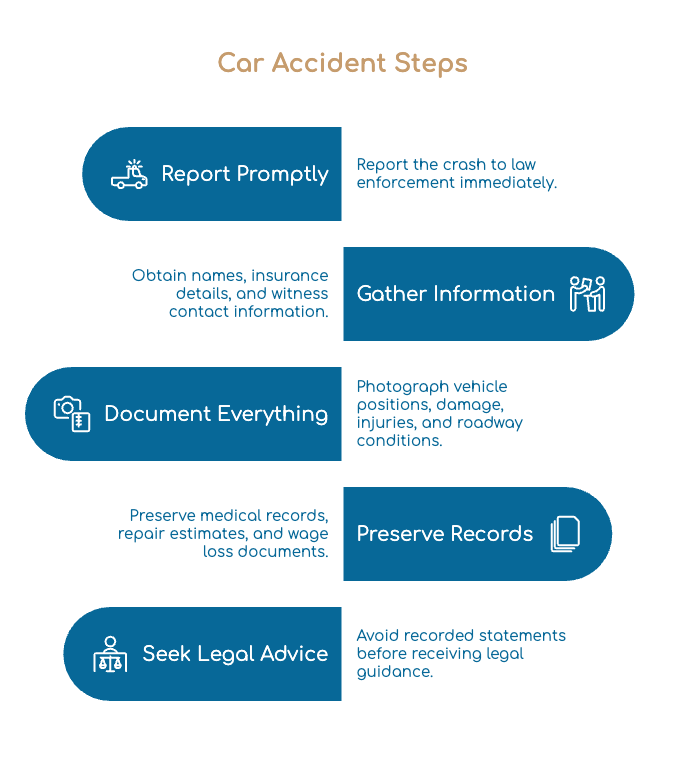
Injury victims and those assisting them should understand practical evidence preservation tips, including:
- Reporting the crash promptly to law enforcement.
- Obtaining names, insurance details, and witness contact information.
- Photographing vehicle positions, damage, injuries, and roadway conditions.
- Preserving medical records, repair estimates, and wage loss documents.
- Avoiding recorded statements before receiving legal guidance.
A careful legal review can help identify all available insurance coverage, protect deadlines, and ensure that victims are treated fairly while they focus on recovery, stability, and serving their families.
Why Do Multi-Vehicle Car Accidents on Daytona Beach Happen?
Understanding the legal rights of injured victims also requires examining how multi-vehicle crashes occur on Daytona Beach roads. These collisions often begin with a single negligent act and then spread rapidly as nearby drivers have little time or space to respond.
Speeding on congested corridors, distracted driving, impaired operation, unsafe lane changes, tailgating, and failure to yield can create chain-reaction impacts. Poor visibility, sudden storms, road construction, and tourist traffic may further increase risk, especially near intersections, bridges, and highway ramps.
Injuries happen because multiple impacts can strike occupants from different directions, increasing force on the head, spine, chest, and limbs. Commercial vehicles, motorcycles, and smaller passenger cars may be involved alongside, creating severe differences in weight and protection. When conduct is especially careless, a crash may lead to Wrongful Death claims. Disputed fault among several drivers can also contribute to Insurance Denials, complicating accountability for those harmed and those serving their recovery.
What Should You Do After a Daytona Beach Multi-Vehicle Car Accident Injury?
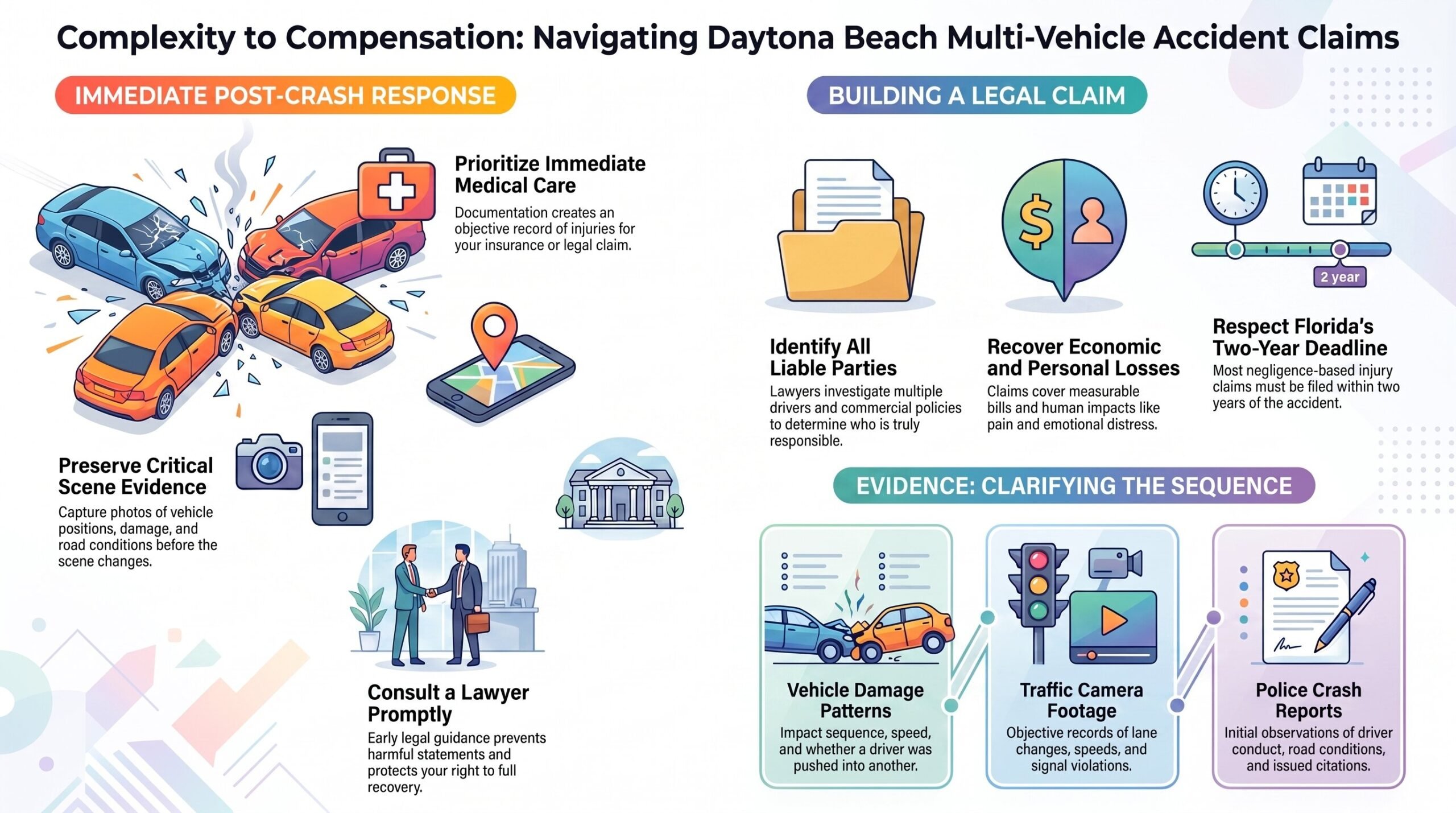
After a Daytona Beach multi-vehicle car accident injury, the injured person should seek immediate medical care, even when symptoms appear minor. If it is safe to do so, documenting the accident scene can preserve important evidence regarding vehicle positions, road conditions, and visible damage. Contacting a car accident lawyer promptly may help protect legal rights, manage insurance communications, and evaluate potential claims.
Seek Immediate Medical Care
When a multi-vehicle collision occurs in Daytona Beach, prompt medical evaluation should be a top priority for every injured person. Even when symptoms appear minor, internal trauma, concussion, or soft tissue damage may develop gradually.
A timely examination protects health, supports proper diagnosis, and helps caregivers respond with informed attention. Emergency medical documentation also creates an objective record of injuries, treatment dates, and medical opinions, which may become important during an insurance or legal claim.
Injured individuals should follow all discharge instructions, attend recommended appointments, and report new symptoms without delay. These steps help establish treatment continuity and show that recovery is being taken seriously. Consistent care also allows medical providers to adjust treatment plans, reduce complications, and safely support the person’s return to daily responsibilities.
Document The Accident Scene
Once medical needs are addressed and safety permits, documenting the accident scene can help preserve important facts before vehicles are moved, debris is cleared, or weather conditions change. Those present may Photograph Scene Damage, vehicle positions, skid marks, traffic signals, road hazards, visible injuries, and surrounding landmarks. Wide-angle images and closer views can show how the collision unfolded and who may have been affected.
Witness names, contact information, license plates, insurance details, and responding officer information should be recorded with care. Notes about lighting, rain, construction, congestion, or impaired visibility may also help Preserve Evidence Details. This careful recordkeeping supports honest reporting, protects injured people, and assists those working to serve victims, families, and the broader community after a serious multi-vehicle crash in Daytona Beach.
Contact A Car Accident Lawyer
Why should legal guidance be sought promptly after a multi-vehicle collision in Daytona Beach? A car accident lawyer can help protect the injured person’s rights while evidence remains available and accounts are still reliable. In crashes involving several drivers, fault may be disputed, and insurers may shift responsibility to limit payment. Counsel can review police reports, medical records, photographs, and witness statements, then identify every liable party.
This support is especially important for those seeking stability, recovery, and the ability to continue serving family or community. An attorney may also manage communications with insurers, preserving insurance leverage and reducing the risk of harmful statements. During Settlement negotiations, legal representation can help pursue compensation for medical bills, lost income, pain, and long-term needs with disciplined, informed advocacy and careful strategy.
Critical Evidence in a Daytona Beach Multi-Vehicle Car Accident Injury Case
Effective evidence in a Daytona Beach multi-vehicle car accident injury case often determines how fault, causation, and damages are evaluated. Essential materials may include:
- Police crash reports
- Vehicle damage patterns
- Witness statements
- Traffic camera footage
- Medical records
Each item can help clarify the sequence of events, identify responsible parties, and support an injury claim with objective documentation.
Police Crash Reports
After a multi-vehicle collision in Daytona Beach, the police crash report often becomes one of the first documents used to understand how the accident occurred and who may bear responsibility. It may identify drivers, passengers, witnesses, road conditions, citations, and the responding officer’s initial observations. While not always conclusive, the report can guide further investigation and help clarify disputed facts.
In cases involving Comparative negligence, this document may influence how fault is divided among multiple drivers. Careful review is important because errors or omissions can affect an injured person’s claim. Prompt evidence preservation, including securing the report and related records, supports a fuller assessment of liability. For those committed to helping injured people, the report provides a practical starting point for informed advocacy and accountability.
Vehicle Damage Patterns
A police crash report may provide the framework for a liability investigation, but vehicle damage patterns often supply the physical evidence needed to test that account. In a Daytona Beach multi-vehicle collision, crushed panels, bumper deformation, airbag deployment, and paint transfer can help clarify the sequence of impacts. These markings may show whether a driver was struck from behind, pushed into another vehicle, or impacted at an angle.
Vehicle crash diagnostics can also preserve data on speed changes, braking, driving, and seatbelt use, when available. Careful review of collision impact factors helps attorneys, insurers, and reconstruction experts identify responsibility more accurately. This evidence supports a fair evaluation of injury claims, helping to protect those harmed while promoting accountability for careless driving in complex roadway events.
Witness Statements
When multiple vehicles collide in Daytona Beach, witness statements can help clarify events that physical damage and police findings may not fully explain. Neutral observers may describe lane positions, braking, speed, signals, or the sequence of impacts, giving injured parties a clearer path toward accountability. Their accounts can also identify drivers who changed lanes abruptly, followed too closely, or failed to yield before the crash.
Police crash documentation may include witness names, contact details, and summarized observations, but further review is often necessary. Careful verification of witness statements helps confirm accuracy, resolve inconsistencies, and preserve details before memories fade. In a multi-vehicle injury case, reliable statements can support fair fault allocation, strengthen negotiations, and assist those seeking justice after harm caused by another driver’s careless conduct.
Traffic Camera Footage
Witness statements can explain what people saw, but traffic camera footage may provide an objective record of how a multi-vehicle collision unfolded in Daytona Beach. Video from intersections, nearby businesses, or transportation systems may show vehicle positions, speeds, lane changes, and Traffic signal violations. This evidence can help clarify the sequence of impacts when several drivers, passengers, and insurers offer competing accounts.
Attorneys may act quickly to identify camera locations, send preservation requests, and prevent important footage from being overwritten. When available, dashcam evidence from involved vehicles or nearby motorists may further support the timeline and show evasive actions. Careful review of video evidence allows injured individuals and their advocates to pursue accountability, protect the truth, and support fair recovery for those harmed.
Long-Term Effects of Daytona Beach Multi-Vehicle Car Accident Injuries
Multi-vehicle accidents in Daytona Beach can leave injured parties with lasting consequences that extend well beyond initial medical treatment. Chronic pain conditions and reduced mobility may interfere with employment, daily responsibilities, and overall physical independence. Emotional trauma, including anxiety or fear related to driving, can also affect recovery and should be considered when evaluating the full impact of an injury claim.
Chronic Pain Conditions
After a serious collision, chronic pain can become one of the most disruptive long-term effects of a Daytona Beach multi-vehicle car accident. Persistent pain may stem from nerve damage, soft tissue injuries, spinal trauma, or poorly healed fractures. These conditions can affect daily routines, employment responsibilities, caregiving duties, and the ability to remain present for loved ones or community needs.
Sleep disruptions, chronic stress, and ongoing medical appointments may further strain physical and emotional endurance. In many cases, chronic pain requires coordinated treatment, including diagnostic testing, medication management, therapy, and expert care. Documentation of symptoms, treatment history, and limitations can be important when evaluating the full impact of an injury claim. Careful legal guidance may help injured individuals pursue resources needed for long-term care, stability, and recovery.
Reduced Mobility
When injuries affect the spine, joints, muscles, or nerves, reduced mobility can become a lasting consequence of a Daytona Beach multi-vehicle car accident. Victims may struggle with walking, lifting, driving, bathing, or returning to work, creating practical burdens for families and caregivers. These limitations often require ongoing therapy, mobility devices, home modifications, or vehicle changes.
Accessibility accommodations may include ramps, widened doorways, bathroom alterations, or adaptive equipment that supports safer daily living. In serious collisions, property damage coverage may address vehicle losses, but it may not fully account for the broader costs associated with physical limitations. Careful documentation of medical restrictions, treatment plans, and necessary support helps clarify the long-term impact. This evidence can assist advocates in pursuing compensation that promotes stability, dignity, and continued service to others.
Emotional Trauma
Although physical injuries often receive immediate attention, emotional trauma can become one of the most persistent long-term effects of a Daytona Beach multi-vehicle car accident. Survivors may experience anxiety, intrusive memories, sleep disruption, irritability, or fear of driving, all of which can interfere with work, family duties, and community involvement. When a crash causes death or severe harm to others, grief recovery may also become necessary, particularly for individuals who witnessed suffering or loss.
Effective care often includes counseling, medical evaluation, and, when appropriate, PTSD treatment designed to restore stability and daily function. Legal claims may account for these psychological injuries when supported by records and professional opinions. Recognizing emotional harm allows caregivers, advocates, and families to respond with patience, structure, and informed support throughout recovery.
Proving Liability in Daytona Beach Multi-Vehicle Car Accident Injury Cases
Frequently, multi-vehicle car accident injury cases in Daytona Beach require a careful investigation because fault may be shared among several drivers, commercial entities, or other responsible parties. Establishing liability often begins with police reports, witness statements, vehicle damage patterns, traffic camera footage, and accident reconstruction when needed. Each fact may help determine whether a driver followed too closely, failed to yield, drove distracted, or violated traffic laws.
A lawyer may also examine maintenance records, employer policies, cargo loading practices, or roadway conditions when broader responsibility is possible. Comparative fault defenses can arise when one party argues that the injured person contributed to the crash, making accurate preservation of evidence especially important. Insurance claim timelines also affect how quickly documentation should be gathered and presented.
For individuals committed to protecting family members, coworkers, or community members after a serious collision, a disciplined liability analysis helps identify responsible parties and supports a fair path toward accountability.
Dealing With Insurance Companies After a Daytona Beach Multi-Vehicle Car Accident Injury
Addressing insurance companies after a Daytona Beach multi-vehicle car accident injury requires caution, because several insurers may attempt to limit their own policyholder’s responsibility while shifting blame to others involved in the crash. Injured individuals often face repeated requests for statements, medical authorizations, or settlement discussions before the full impact of harm is understood. Careful communication helps protect the injured person’s dignity while preserving information needed to serve a fair claim.
A lawyer may evaluate policy limits, identify overlapping coverage, and respond to Coverage denial challenges when insurers dispute responsibility or question medical necessity. This approach also supports claim timeline management, ensuring deadlines, notice requirements, and document submissions are handled with discipline.
In multi-vehicle cases, coordinated advocacy can reduce confusion caused by competing adjusters and conflicting accounts. Proper guidance allows injured people to focus on recovery, family responsibilities, and community obligations while their legal interests remain protected with care and accuracy.
What to Expect During a Daytona Beach Multi-Vehicle Car Accident Injury Claim Process
A Daytona Beach multi-vehicle car accident injury claim typically begins with the initial filing of insurance claims and the collection of supporting evidence. Because several drivers, insurers, and factual disputes may be involved, the liability investigation often shapes the direction of settlement negotiations. If a fair resolution cannot be reached through insurance discussions, the claim may proceed into litigation and, when necessary, trial.
Initial Claim Filing
After a multi-vehicle collision in Daytona Beach, the initial claim filing typically begins with notifying the appropriate insurance carriers and documenting each known source of coverage. This step may include personal injury protection benefits, bodily injury coverage, uninsured motorist coverage, and any applicable commercial policies. A careful filing helps establish timely notice, which can protect the injured person’s access to benefits while medical care continues.
Support staff, caregivers, and legal representatives often assist by organizing medical records, crash reports, photographs, and repair estimates. Evidence preservation should begin early, especially when vehicles, roadway conditions, or digital records may later become unavailable. Witness documentation is also important, including names, contact information, and brief summaries of observations. These efforts create an orderly foundation for the claim without determining fault.
Liability Investigation
Once the initial claim has been filed and essential records are organized, the liability investigation begins by examining how the collision occurred and which parties may share legal responsibility. Investigators may review police reports, roadway conditions, vehicle damage, witness accounts, traffic camera footage, and available electronic data. In multi-vehicle crashes, this process often requires careful sequencing of impacts to determine whether one driver’s conduct set events in motion or whether several acts contributed.
Evidence preservation is essential, especially when vehicles may be repaired, surveillance video may be erased, or physical debris may be removed. Attorneys may also consult reconstruction specialists when facts remain disputed. A thorough Liability investigation helps protect injured people, supports fair accountability, and ensures the claim is built on reliable, service-focused documentation.
Insurance Settlement Negotiations
When liability evidence and medical documentation are sufficiently developed, insurance settlement negotiations typically begin with a structured demand to the responsible insurers. This demand outlines injuries, treatment needs, lost income, pain, and shared-fault issues common in multi-vehicle crashes. A careful Liability coverage analysis helps identify which insurers may owe payment, while a policy limits review determines available coverage before discussions advance. Adjusters may dispute fault, question medical necessity, or seek reductions based on comparative negligence.
Counsel evaluates each response, protects the injured person from premature concessions, and works to secure compensation that supports recovery and ongoing stability. Negotiations may involve several carriers, requiring organized communication and firm documentation. Throughout this process, the goal remains fair resolution without compromising the claimant’s dignity, care needs, or future security.
Litigation And Trial
If settlement negotiations do not yield a fair resolution, litigation may be necessary to preserve the injured person’s rights and advance the claim toward a formal decision. In a Daytona Beach multi-vehicle accident case, the process may involve filing a complaint, exchanging evidence, and addressing disputes before trial. Counsel develops a trial strategy that clarifies fault, damages, and the conduct of each driver or insurer.
Jury selection helps identify fair decision-makers who can evaluate complex facts with care. Opening statements then outline each side’s position, followed by witness testimony, expert opinions, and documentary evidence. Throughout the trial, the focus remains on accountability, truthful presentation, and service to the injured person’s recovery. Closing arguments summarize the evidence and request a just verdict based on the law.
Compensation for Daytona Beach Multi-Vehicle Car Accident Injury Damages
A multi-vehicle collision’s financial impact can extend well beyond the initial crash scene, particularly when several drivers, insurers, and liability disputes are involved. Compensation efforts often require careful coordination of evidence, policy limits, and injury-related records to support a fair recovery. In Daytona Beach cases, attorneys may review police reports, witness accounts, crash reconstruction findings, and insurance communications to identify responsible parties and available coverage.
Medical treatment documentation is especially important because it connects the collision to the injuries, ongoing care needs, and professional recommendations. Accurate records can also help providers, caregivers, and advocates understand how the harm affects daily support needs. When injuries prevent a person from returning to work or serving others in the same capacity, long-term disability claims may become part of the broader recovery process. A structured legal approach helps protect the injured person’s interests while addressing competing insurance positions and intricate issues of responsibility.
Economic vs Non-Economic Damages in Daytona Beach Multi-Vehicle Car Accident Cases
In Daytona Beach multi-vehicle car accident cases, damages are generally divided into economic losses and non-economic losses. Economic damages may include medical bills, lost income, and vehicle repair costs, while non-economic damages may involve pain, suffering, emotional distress, and reduced quality of life. Proving these losses often requires medical records, wage documentation, repair estimates, expert opinions, and other evidence connecting the injuries and expenses to the crash.
Economic Damage Examples
Documenting economic damages after a Daytona Beach multi-vehicle car accident requires a careful review of the financial losses tied directly to the crash. These losses may include ambulance charges, emergency treatment, surgery, hospitalization, rehabilitation, prescription costs, medical equipment, and follow-up care. Future medical planning may also be necessary when injuries require ongoing treatment, visits with experts, therapy, or anticipated procedures.
Property damage is another common category, including vehicle repair, replacement, towing, storage, and rental expenses. Lost income calculations address wages lost during recovery, reduced work hours, lost employment benefits, and diminished earning capacity when injuries affect future earning capacity. Accurate records, invoices, pay statements, tax documents, and medical opinions help link each expense to the collision, enabling responsible parties and insurers to assess financial harm with greater precision and fairness.
Non-Economic Damage Examples
While economic damages focus on measurable financial losses, non-economic damages address the personal harm that does not appear on bills, receipts, or wage records. In a Daytona Beach multi-vehicle collision, these losses may include physical discomfort, emotional distress, anxiety while driving, loss of sleep, reduced enjoyment of family life, and limitations on community service or caregiving roles. Pain impact often extends beyond the initial injury, affecting patience, mobility, independence, and daily dignity.
Medical documentation may describe symptoms, treatment needs, and lasting impairment, while witness credibility can support the extent to which the person’s conduct, mood, or abilities changed after the crash. During insurance negotiations, these damages require careful attention because they reflect human consequences rather than simple arithmetic. Proper recognition helps ensure injured people are treated with respect, fairness, and compassion.
Proving Accident Losses
After a multi-vehicle crash, proving accident losses requires organized evidence that connects each claimed harm to the collision and distinguishes financial losses from personal, non-financial effects. Economic damages may include medical bills, rehabilitation costs, lost income, reduced earning capacity, and vehicle repair expenses. Non-economic damages may involve pain, emotional distress, loss of mobility, and reduced enjoyment of daily life.
Independent evidence, such as medical records, wage statements, repair estimates, photographs, and witness accounts, helps verify these claims with accuracy. In pileups or chain-reaction crashes, liability apportionment can affect how losses are evaluated and recovered from responsible parties. Careful documentation supports fair treatment for injured people, allowing advocates, insurers, and courts to understand both measurable costs and human impact with discipline and compassion.
When a Daytona Beach Multi-Vehicle Car Accident Injury Case Goes to Trial vs Settlement
When a multi-vehicle car accident injury case in Daytona Beach involves disputed fault, serious injuries, or multiple insurance carriers, the decision to settle or proceed to trial can materially affect the outcome. Settlement may provide timely compensation, reduce stress, and preserve resources needed for medical care and family support. Trial may be necessary when insurers undervalue losses, deny responsibility, or rely on conflicting accounts.
A lawyer evaluates liability vs. negligence by examining conduct, causation, and available evidence from each involved driver. Effective deposition strategy can clarify inconsistent statements, identify responsible parties, and preserve testimony from witnesses who may later become unavailable.
Pretrial motions may narrow disputed issues, exclude unreliable opinions, or compel production of required records. If negotiations fail, courtroom evidence, including medical documentation, crash reconstruction, photographs, and witness testimony, must be organized to persuade a judge or jury. The guiding objective remains accountable recovery that supports the injured person’s long-term stability.
Florida Laws That May Affect Your Daytona Beach Multi-Vehicle Car Accident Case
Because multi-vehicle collisions often involve overlapping claims and competing accounts, Florida law can materially influence how a Daytona Beach car accident case is investigated, valued, and resolved. These rules help identify responsibility, preserve fairness, and support injured people seeking needed care.
Florida law can shape fault, evidence, and recovery in complex Daytona Beach multi-vehicle accident claims.
Key legal issues may include:
- Florida’s comparative negligence standard, which may reduce recovery when an injured person shares fault.
- Personal Injury Protection requirements, which can affect early medical payments.
- Insurance coverage limits, including multiple policies and potential uninsured motorist benefits.
- Duties to report crashes involving injury, death, or significant property damage.
- Evidence rules affecting police reports, witness statements, photos, and expert analysis.
In multi-vehicle cases, fault may be divided among several drivers, commercial carriers, or other responsible parties. A careful legal review can help clarify each party’s role, protect valid claims, and promote accountability. This framework allows advocates to pursue compensation while serving injured clients with diligence, accuracy, and respect.
The Statute of Limitations for Daytona Beach Multi-Vehicle Car Accident Injury Cases
Although every collision has its own factual timeline, the statute of limitations creates a firm legal deadline for filing a Daytona Beach multi-vehicle car accident injury lawsuit. In Florida, most negligence-based injury claims arising from vehicle collisions must be filed within 2 years of the crash. Missing this deadline may prevent an injured person from seeking compensation through the court system, even when liability appears clear.
Multi-vehicle cases often involve several drivers, insurers, and disputed accounts of how the crash occurred. For that reason, timely action supports the preservation of evidence, including photographs, witness information, vehicle data, medical records, and roadway conditions. Delays can make it harder to reconstruct events accurately and protect the interests of those harmed.
Insurance negotiation tips may help during early communications, but settlement discussions generally do not stop the filing deadline. Careful attention to timing serves injured individuals, families, and the broader goal of accountability.
How a Daytona Beach Multi-Vehicle Car Accident Lawyer Can Help You
In a multi-vehicle collision, a Daytona Beach car accident lawyer can help by identifying all potentially responsible parties, reviewing the available evidence, and coordinating communications with multiple insurance carriers. This support allows injured individuals and their families to focus on recovery, service obligations, and practical needs while the legal process is managed with care.
Key forms of assistance may include:
- Conducting Evidence preservation, including photographs, reports, vehicle data, and witness statements.
- Evaluating liability among drivers, commercial entities, vehicle owners, and other parties involved.
- Managing insurance negotiation to address medical bills, lost income, and other documented losses.
- Consulting accident reconstruction professionals, medical providers, and financial experts when needed.
- Preparing claims and legal filings that reflect the full scope of harm.
Through organized advocacy, a lawyer can reduce confusion, protect the injured person’s interests, and promote a fair resolution grounded in verified facts and applicable Florida law.
When to Contact a Daytona Beach Multi-Vehicle Car Accident Lawyer
Crash-scene uncertainty can make it difficult to know when legal guidance is necessary after a multi-vehicle accident in Daytona Beach. Contact may be appropriate as soon as injuries are reported, vehicles are disabled, fault is disputed, or more than one insurer becomes involved. Early communication helps protect the injured person’s ability to seek care, support family responsibilities, and respond to requests without harming a claim.
Prompt action also supports Insurance deadline awareness, since notice requirements, medical documentation, and claim submissions may arise quickly after a collision. Delays can create confusion, especially when police reports, witness accounts, and insurer statements develop at different times. The importance of evidence preservation is another reason to act early. Photos, traffic-camera footage, vehicle data, and witness memories may disappear or weaken. A lawyer can identify time-sensitive issues, organize available records, and provide direction before conversations with insurers or other parties become difficult to manage.
Why You Need an Experienced Daytona Beach Multi-Vehicle Car Accident Lawyer
A multi-vehicle collision in Daytona Beach often presents legal and factual issues that are challenging to manage without experienced guidance. Several drivers, passengers, insurers, and witnesses may provide competing accounts, while responsibility may be divided among multiple parties. An experienced lawyer can assess liability, coordinate evidence-preservation strategies, and help ensure that key records, vehicle data, photographs, and witness statements are not lost.
These cases also frequently involve Insurance coverage disputes, including questions about policy limits, uninsured motorist coverage, and the order in which available coverage should apply. Careful legal review can protect an injured person from accepting an incomplete assessment of fault or damages. For those committed to caring for their families and communities, skilled representation supports a fair process while reducing unnecessary burdens. A lawyer familiar with intricate collision claims can communicate with insurers, evaluate medical and financial losses, and pursue accountability with disciplined, informed advocacy.
How to Choose the Right Daytona Beach Multi-Vehicle Car Accident Lawyer for Your Case
Selecting the right lawyer becomes the next practical step after recognizing the intricacy of a Daytona Beach multi-vehicle accident claim. A careful choice can protect the injured person’s interests while helping family members, caregivers, and community supporters understand the path ahead.
Questions to ask should address prior experience with multi-vehicle cases, methods for identifying liable parties, and familiarity with local courts and insurers. The lawyer should explain attorney fees clearly, including contingency arrangements, case costs, and when payment may become due. A client should also ask how the firm preserves the evidence timeline, including police reports, witness statements, vehicle data, medical records, and surveillance footage.
Communication expectations merit equal attention. The lawyer should describe who provides updates, how often contact occurs, and how urgent concerns are handled. A suitable attorney offers organized guidance, realistic assessments, and respectful support, allowing the injured person to focus on recovery while the legal claim proceeds carefully.
About The Law Offices of Anidjar & Levine
The Law Offices of Anidjar & Levine represents injured clients in Daytona Beach and across Florida, including those affected by serious car accidents and elaborate multi-vehicle collisions.
The firm focuses on helping individuals and families pursue compensation after crashes involving complicated facts, multiple drivers, and disputed responsibility.
Its legal team reviews evidence, communicates with insurers, and evaluates issues such as comparative fault and insurance liability.
This approach supports clients who may face uncertainty about medical bills, lost income, vehicle damage, and long-term care needs.
By addressing these concerns diligently, the firm seeks to reduce burdens so clients can focus on recovery.
The Law Offices of Anidjar & Levine also provides client-centered service, including responsive communication and guidance through each stage of the claims process.
Its work reflects a commitment to advocacy, accountability, and practical support for injured people seeking fair treatment after a collision in Daytona Beach.
Frequently Asked Questions
Can Tourists File Daytona Beach Multi-Vehicle Accident Claims in Florida?
Yes, tourists may file claims in Florida after multi-vehicle accidents in Daytona Beach when another party’s negligence caused injury or loss. They should preserve evidence from tourists, including rental records, photographs, medical reports, witness contacts, and travel documents. A statute of limitations applies, so prompt action protects the claim. Those assisting injured visitors should encourage timely medical care, careful documentation, and qualified legal guidance to support fair recovery under Florida law.
What if I Was Driving a Rental Car During the Crash?
If a person was driving a rental car during the crash, the claim may involve personal auto insurance, credit card benefits, or Rental Coverage Options purchased from the agency. Liability still depends on Proof of Driver Negligence, including reports, witness accounts, and vehicle data. A careful review helps identify responsible parties, protect injured travelers, and ensure those serving the public interest pursue compensation through the proper Florida insurance channels.
Can Out-Of-State Insurance Affect My Daytona Beach Accident Claim?
Yes, out-of-state insurance can affect a Daytona Beach accident claim. Insurers may apply different policy terms, coverage limits, reporting rules, and coverage exclusions, all of which require careful verification. Florida law may still govern liability, benefits, and damages. A person assisting an injured party should help preserve records, identify all available policies, and ensure timely notice, so that claims are evaluated accurately, and service to the injured party remains effective.
Are Rideshare Passengers Covered in Multi-Vehicle Accidents?
Yes, rideshare passengers are generally covered in multi-vehicle accidents, though coverage depends on fault, app status, and applicable Rideshare Liability Limits. A passenger may seek recovery under the rideshare company’s policy, the driver’s insurance, or the coverage of other at-fault motorists. Careful Passenger Injury Documentation, including medical records, trip details, and witness information, helps protect the claim and supports fair compensation while serving the injured person’s immediate and long-term needs.
What Happens if a Commercial Vehicle Was Involved?
When a commercial vehicle is involved, the claim may become more intricate because employers, drivers, contractors, and insurers may share responsibility. Investigators typically examine driver logs, maintenance records, cargo practices, and company safety policies. Commercial insurance often provides higher coverage limits, but carriers may aggressively dispute fault. Effective negotiating liability helps protect injured people, supports fair recovery, and promotes accountability for organizations responsible for safe transportation practices.
—————————
Multi-vehicle collisions in Daytona Beach can create intricate questions of fault, insurance coverage, and damages.
Injured victims benefit from prompt legal guidance to protect their rights, preserve evidence, and pursue fair compensation for medical expenses, lost income, and other losses.
The Law Offices of Anidjar and Levine provides experienced representation for those harmed in serious crashes, offering focused support at every stage of the claim.
A Daytona Beach Car Accident Lawyer can help strengthen a case and pursue the recovery available.