The Law Offices of Anidjar and Levine helps injured victims evaluate fault, preserve evidence, and pursue compensation after left-turn intersection or failure-to-yield crashes. A Daytona Beach Car Accident Lawyer may review police reports, traffic signals, witness statements, vehicle damage, medical records, and available video.
Legal counsel can also manage insurer communications, deadlines, coverage issues, and comparative negligence disputes.
Compensation may include medical costs, lost income, reduced earning capacity, pain, future care, and limitations in daily life.
The sections below explain pivotal issues in greater detail.
Main Takeaways
- A Daytona Beach left-turn accident lawyer handles insurers, deadlines, evidence gathering, and claim strategy while you focus on medical recovery.
- Left-turn claims often require a review of right-of-way rules, traffic signals, lane positions, visibility, speed, and driver conduct.
- Evidence may include police reports, medical records, witness statements, photos, vehicle damage, traffic cameras, and nearby surveillance footage.
- Comparative negligence can affect compensation when both drivers share fault, including cases involving speeding oncoming vehicles.
- Settlement value may include medical bills, lost income, reduced earning capacity, pain, future care, and daily-life limitations.


How We Can Help With Your Daytona Beach Left-Turn Car Accident Injury Claim
When a left-turn collision results in serious injuries, a Daytona Beach car accident lawyer can handle the legal and insurance matters while the injured person focuses on medical care. The firm may gather police reports, medical records, witness statements, photographs, and available video to build a clear claim file. Counsel can communicate with insurers, protect deadlines, and prevent recorded statements from being used unfairly.
A careful estimate of settlement value may consider treatment costs, lost income, reduced earning capacity, pain, future care, and the practical effects of injuries on daily service to family and community. The legal team can also identify all available insurance coverage and coordinate with medical billing. A focused Negotiation strategy helps present evidence in an organized manner, respond to defense arguments, and pursue fair compensation without unnecessary delay. If an insurer refuses a reasonable resolution, counsel can prepare the claim for litigation while maintaining steady guidance.
OUR CONSULTATIONSARE FREE
START YOUR FREE CASE REVIEW

Understanding Daytona Beach Left-Turn Car Accident Injury Cases
Because left-turn crashes often occur at intersections, driveways, and turn lanes, these cases usually require a close review of right-of-way rules, traffic signal timing, driver conduct, and roadway conditions. In Daytona Beach, an injury case may involve police reports, witness accounts, vehicle damage, medical records, and available video evidence. Each detail can help clarify how the collision affected the injured person and what losses may be recoverable.
Comparative negligence rules may also influence the outcome, since fault can be assigned to more than one driver. A careful evaluation can determine whether a claimant’s recovery may be reduced by an alleged share of responsibility. Legal professionals often assess visibility, lane position, turn signals, speed estimates, and compliance with traffic controls. Broader intersection safety tips, such as yielding when required and confirming a clear path, may provide useful context when evaluating conduct and promoting safer community travel for everyone.
Common Causes of Daytona Beach Left-Turn Car Accident
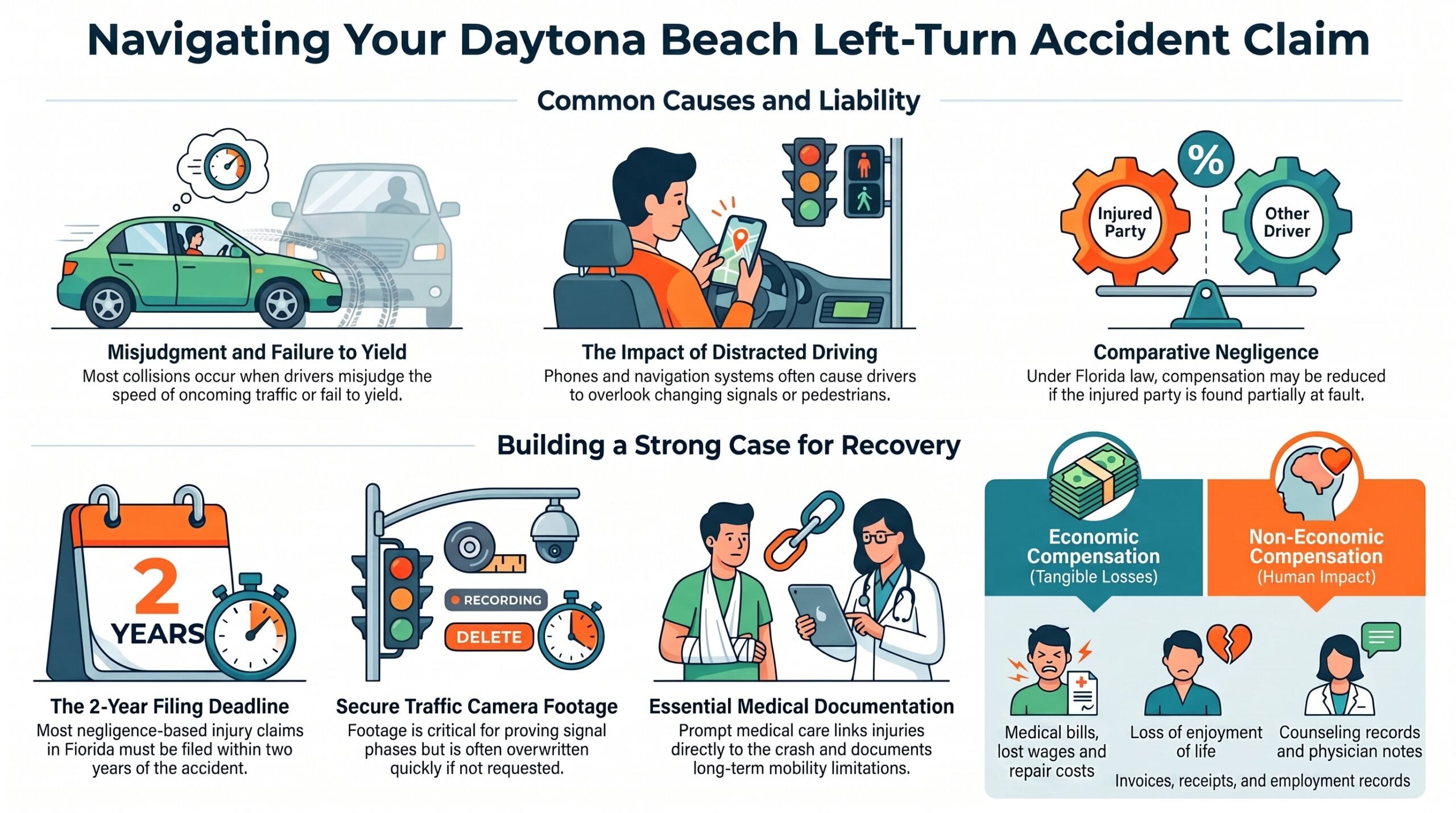
Left-turn collisions in Daytona Beach often arise from preventable driver errors, particularly when motorists fail to yield or misjudge the speed and distance of oncoming traffic. Distracted left turns can further increase the risk, as a driver may overlook traffic signals, pedestrians, cyclists, or vehicles with the right of way. Unsafe intersection maneuvers, including rushed turns or improper lane positioning, commonly contribute to serious crashes and disputed liability.
Failure To Yield
Although many left-turn collisions appear straightforward, failure to yield often involves a careful review of right-of-way rules, traffic signals, driver attention, and roadway conditions. In Daytona Beach, a turning driver may be required to wait until the path is legally clear, especially at intersections, driveways, and commercial entrances.
Traffic signal compliance can determine whether a motorist proceeded lawfully or entered a turn against a protected phase, steady red light, or posted restriction. Investigators may examine signal timing, lane markings, witness accounts, and nearby camera footage to carefully assess right-of-way rules. This analysis can help clarify responsibility while supporting injured people and families seeking fair treatment. Proper evaluation also encourages safer driving practices, accountability, and respect for everyone sharing public roads.
Misjudging Oncoming Traffic
When a driver turns left across traffic, misjudging the speed, distance, or behavior of oncoming vehicles can lead to a serious collision within seconds. In Daytona Beach, these errors may occur at busy intersections, near beach access roads, or along corridors where traffic flow changes quickly. A driver may believe there is enough time to complete the turn, yet an approaching vehicle may be traveling faster than expected.
Poor intersection lighting can further reduce depth perception, making safe judgment more difficult at night or during storms. Investigators may review signal timing, sight lines, roadway design, and witness accounts to determine how the crash occurred. Seatbelt compliance may also affect injury severity, although it does not excuse an unsafe turn that placed others at risk.
Distracted Left Turns
As traffic patterns shift quickly around Daytona Beach intersections, a distracted driver may fail to notice an oncoming vehicle, a changing signal, or a pedestrian in the crosswalk before starting a left turn. Distraction can come from phones, navigation systems, passengers, food, or activity outside the vehicle. Texting while driving is especially dangerous because it divides visual, manual, and mental attention at the precise moment careful judgment is required.
Even a brief glance away can reduce the driver’s ability to assess speed, distance, and gaps in traffic. Distraction may also contribute to lane change errors before or after the turn, increasing the risk of side impacts or secondary collisions. For those committed to protecting others, attentive driving remains a basic duty at every intersection in Daytona Beach.
Unsafe Intersection Maneuvers
Unsafe intersection operations often stem from the same lapse in judgment seen in distracted driving, but they may also result from an intentional yet improper decision. In Daytona Beach, left-turn crashes can result when motorists enter an intersection after misjudging Signal Timing, cutting across traffic, or assuming opposing drivers will yield. These choices place pedestrians, cyclists, passengers, and other drivers at immediate risk.
Unsafe maneuvers may also involve Improper Lane Changing near the turn point, including sudden shifts from through lanes into turn lanes or crossing multiple lanes without adequate clearance. Such conduct reduces reaction time for surrounding traffic and complicates fault analysis after a collision. Careful review of traffic signals, lane markings, witness accounts, and vehicle positions may help identify unsafe conduct and support injured individuals seeking appropriate accountability.


Legal Rights of Daytona Beach Left-Turn Car Accident Injury Victims
After a left-turn collision in Daytona Beach, injured victims may have the right to seek compensation when another driver’s negligence caused or contributed to the crash. These rights may include recovery for medical care, lost income, reduced earning capacity, pain and suffering, and necessary support services. Comparative fault may affect the amount recovered, making careful case evaluation important. Evidence preservation also becomes crucial, especially when records, images, or witness accounts may help clarify responsibility.
Protecting evidence early can help injured Daytona Beach crash victims pursue fair compensation after a left-turn collision.
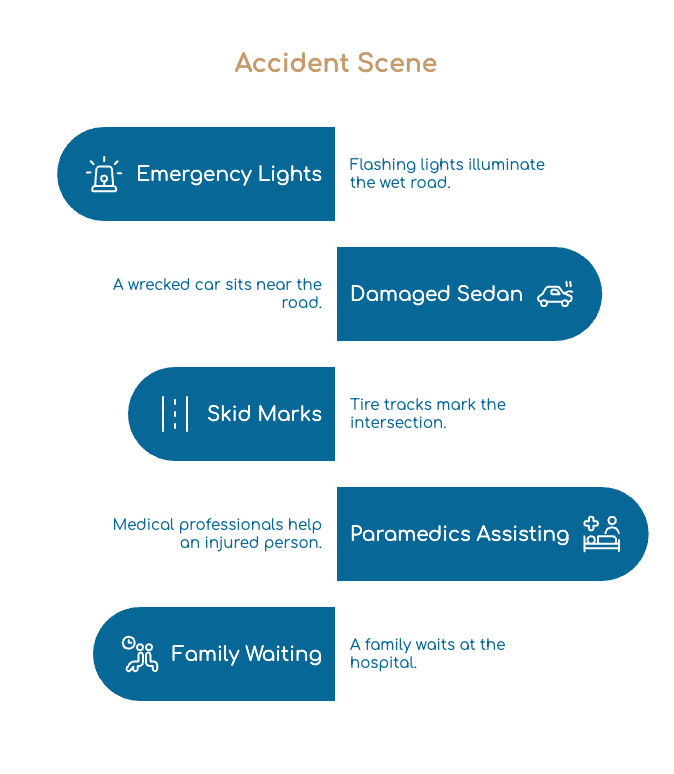
- Emergency lights reflecting across wet pavement
- A damaged sedan resting near the turn lane
- Skid marks leading through a crowded intersection
- Paramedics assisting an injured driver with care
- A family waiting quietly beside a hospital bed
Injury victims may also have the right to communicate through counsel rather than directly with insurers. A lawyer may help meet deadlines, gather documentation, and accurately present losses, allowing victims and their families to focus on recovery and supporting one another.
Why Do Left-Turn Car Accident Injuries Happen at Daytona Beach?
Understanding an injured person’s legal rights also requires examining how left-turn crashes occur, because the cause of the collision often shapes liability, evidence, and available compensation. These collisions often occur when a turning driver misjudges oncoming traffic, assumes another vehicle will slow down, or enters the intersection without a safe gap. In Daytona Beach, busy tourism corridors, multilane roads, and unfamiliar drivers can increase the risk of poor decisions during turns.
Roadway conditions may also contribute. Intersection lighting and driver visibility issues can make it harder to identify motorcycles, pedestrians, cyclists, or fast-approaching vehicles. Lane control confusion and signal timing errors may place drivers in conflicting paths, especially where turn arrows, shared lanes, or intricate traffic patterns are present.
Distraction, impairment, speeding, and failure to yield remain common factors. For those committed to helping injured people, identifying these causes is vital, because each detail can clarify responsibility and support a careful evaluation of harm.
What Should You Do After a Daytona Beach Left-Turn Car Accident Injury?
After a Daytona Beach left-turn car accident injury, the injured person should take prompt steps to protect both health and any potential legal claim. Medical care should be obtained as soon as possible, the crash should be reported to law enforcement, and key evidence should be preserved before it is lost or altered. These actions can help document the cause of the collision, the extent of injuries, and the facts needed to evaluate liability.
Seek Medical Care
Medical care should be a priority for anyone injured in a Daytona Beach left-turn car accident, even when symptoms appear minor at the scene. Prompt evaluation helps identify concussions, internal injuries, soft tissue damage, and other conditions that may worsen without treatment. An injured person should follow medical advice, attend recommended appointments, and keep records of diagnoses, prescriptions, referrals, and work restrictions.
Those assisting an injured person can help document symptoms as they develop, including pain levels, dizziness, stiffness, or reduced mobility. When appropriate, photo evidence of visible injuries, medical devices, and vehicle damage may support an accurate account of harm. Timely care also creates a clear medical history, which may help connect the injury to the collision and protect the person’s ability to seek fair compensation.
Report The Crash
Report the crash to law enforcement as soon as possible, particularly when anyone is injured, a vehicle is disabled, or there is significant property damage. In Daytona Beach, a prompt report helps First Responders manage Scene Safety, direct traffic, and arrange emergency assistance for those in need. An injured person should cooperate respectfully with officers, provide clear facts, and avoid speculation about fault.
If Medical Treatment is required, responders can document the need for transport or on-scene evaluation to support later Injury Documentation. Caregivers, passengers, and bystanders who wish to serve others should remain calm, follow official instructions, and help prevent additional harm without interfering. The responding officer’s report may serve as an important record of the crash, the parties involved, and the immediate conditions observed, including injuries and damage.
Preserve Key Evidence
Once law enforcement has addressed immediate safety concerns, the injured person should take reasonable steps to preserve evidence connected to the left-turn collision. Photographs of vehicle positions, skid marks, traffic signals, debris, road conditions, and visible injuries may help clarify how the crash occurred. If witnesses are present, their names and contact information should be recorded respectfully, as their observations may support findings on intersection safety.
The injured person should keep medical records, repair estimates, towing receipts, and all insurance communications in an organized file. Dashcam footage, nearby surveillance video, and phone records may also become important, particularly when distracted driving is suspected. Preserving this information allows attorneys, insurers, and investigators to accurately assess fault while supporting a fair recovery process for those harmed in the accident.
Critical Evidence in a Daytona Beach Left-Turn Car Accident Injury Case
Substantial evidence in a Daytona Beach left-turn car accident injury case helps establish fault, clarify the sequence of events, and support the injured party’s claim for damages. Major materials may include:
- A police crash report noting roadway conditions, citations, and driver statements
- Traffic camera footage capturing the moment of impact at the intersection
- Witness statements describing vehicle speeds, signals, and right-of-way issues
- Vehicle damage evidence showing crush patterns, impact angles, and collision force
- Photographs of skid marks, debris fields, traffic lights, and lane positions
Each item can provide a clearer picture of how the collision occurred and whether the turning driver failed to yield or acted negligently.
Police Crash Report
When a left-turn crash occurs in Daytona Beach, the police crash report often becomes one of the first major records used to evaluate fault, injuries, roadway conditions, and witness information. This report may identify the turning driver, the direction of travel, traffic controls, citations, contributing factors, and initial statements from involved parties. For those seeking to serve injured clients responsibly, it provides a structured starting point for careful review.
Witness interviews and damage documentation within the report can help clarify whether a driver failed to yield, misjudged oncoming traffic, or violated a signal. Although the report is not always the final word on liability, it can guide further investigation, support insurance claims, and help legal counsel protect an injured person’s interests with accuracy and care.
Traffic Camera Footage
Beyond the police crash report, traffic camera footage may provide an objective view of how a left-turn collision unfolded in Daytona Beach. Such footage can show vehicle positions, lane use, approach speeds, and whether a turning driver entered the intersection lawfully. It may also clarify Traffic light timing, including whether a protected arrow, yellow light, or red signal controlled the movement. Signal visibility can become important when trees, glare, construction devices, or poor maintenance affected what a careful driver could see.
Because many camera systems overwrite recordings quickly, timely preservation requests are often critical. An attorney may identify nearby government, business, or intersection cameras and seek copies of the footage before it is lost. When reviewed carefully, footage can support fair accountability and help injured people pursue the resources needed for recovery.
Witness Statements
Although physical evidence is often central to a Daytona Beach left-turn crash investigation, witness statements can provide important context about driver behavior before and during the collision. Neutral observers may describe traffic signals, vehicle positions, turn timing, speed, distraction, or unsafe moves that affected the impact. These accounts can assist with identifying drivers, especially when confusion follows a serious intersection crash.
A prompt police interview helps preserve details while memories remain clear, and it may reveal whether additional witnesses or recordings exist. Witness credibility is evaluated through consistency, vantage point, attention, and lack of personal interest in the outcome. Statements may also support insurance verification by confirming who was operating each vehicle and whether the reported facts align with available records. Careful follow-up with witnesses can strengthen a fair injury claim.
Vehicle Damage Evidence
In a Daytona Beach left-turn accident, vehicle evidence can help reconstruct how the collision occurred and whether a driver failed to yield, misjudged an oncoming vehicle, or entered the intersection in an unsafe manner. Damage patterns may show point of impact, travel direction, speed, and the angle at which the vehicles met. Crushed panels, broken lights, deployed airbags, and frame deformation can support or challenge driver accounts.
Photographs taken before repairs are especially valuable, as are repair estimates and inspection records. When paired with Braking Skidmarks, roadway debris, and traffic signal timing, this evidence may assist Accident Reconstruction professionals in forming reliable conclusions. Careful preservation of damaged vehicles helps ensure that injured people, families, and those assisting them can pursue accountability with accurate, service-focused documentation.
Long-Term Effects of Daytona Beach Left-Turn Car Accident Injuries
Left-turn car accident injuries in Daytona Beach may produce lasting consequences that extend well beyond the initial recovery period. Chronic pain conditions, reduced mobility, and emotional trauma can affect a person’s ability to work, manage daily activities, and maintain overall quality of life. These long-term effects often become central issues when evaluating the full value of an injury claim.
Chronic Pain Conditions
When injuries from a Daytona Beach left-turn collision do not fully resolve, chronic pain can become a lasting and disruptive condition. Ongoing neck, back, shoulder, or nerve pain may affect daily responsibilities, family support, and the ability to consistently serve others. These conditions often require careful documentation, continued medical evaluation, and a structured pain management plan that may include therapy, medication, injections, or expert care.
Persistent pain can also create financial strain when treatment costs continue long after the crash. In some cases, Workplace accommodations may be necessary, such as modified duties, adjusted schedules, or ergonomic support, allowing the injured person to remain productive while protecting health. A legal claim may consider these long-term burdens when evaluating damages, future care needs, and diminished quality of life.
Reduced Mobility
Although some injuries improve with treatment, reduced mobility after a Daytona Beach left-turn collision may continue to limit how an injured person walks, lifts, bends, drives, or completes routine tasks. These limitations may follow fractures, spinal injuries, joint damage, or nerve impairment, and they can affect independence, employment, caregiving, and community involvement.
Medical providers may recommend physical therapy, mobility aids, home adjustments, or Assistive technology to support safer movement and preserve function. In some cases, vehicle modification may be necessary when injuries interfere with entering, exiting, controlling, braking, or maintaining proper driving posture. Documenting these needs is important because reduced mobility often creates long-term costs, including equipment, transportation changes, and ongoing care. A legal evaluation may help identify losses tied to practical daily limitations.
Emotional Trauma Effects
The emotional impact of a Daytona Beach left-turn car accident may persist long after physical injuries begin to recover. Survivors may experience anxiety, sleep disruption, irritability, or fear of driving through intersections where sudden turns caused harm. These symptoms can affect family responsibilities, employment stability, and the ability to serve others with patience and focus. In Bodily Injury Claims, emotional trauma should be documented through counseling records, physician notes, medication history, and statements from trusted observers.
When distress limits work capacity or requires treatment, Economic Damages Proofs may include therapy invoices, missed wage records, and related transportation expenses. Careful documentation helps show how psychological harm changes daily life, supports fair evaluation, and honors the injured person’s need for practical recovery, dignity, and continued community participation.
Proving Liability in Daytona Beach Left-Turn Car Accident Injury Cases
Because left-turn collisions often involve disputed accounts of speed, signal use, and right-of-way, proving liability requires a careful review of the facts and available evidence. Investigators may examine crash reports, vehicle damage, skid marks, traffic-camera footage, witness statements, and roadway conditions to determine how the impact occurred. This process helps identify whether a driver failed to yield, turned against a signal, misjudged oncoming traffic, or acted with unsafe haste.
Comparative negligence may also affect a claim when both drivers are alleged to share fault. For example, an oncoming driver’s excessive speed may be relevant, even if the turning driver created the primary hazard. Clear evidence can reduce uncertainty and support a fair allocation of responsibility. When an insurance dispute arises over fault, organized documentation becomes especially important. A careful liability analysis serves injured people by protecting truthful accounts, preserving accountability, and helping ensure that responsible parties are held answerable under Florida law.
Dealing With Insurance Companies After a Daytona Beach Left-Turn Car Accident Injury
After a left-turn collision in Daytona Beach, insurance companies often begin evaluating the claim before the injured person fully understands the extent of the losses. Adjusters may request recorded statements, medical authorizations, or early settlement discussions, and each step can affect the value of the claim. Careful communication helps protect the injured person from statements that may be used to dispute fault, minimize injuries, or limit available compensation.
A lawyer may review policy coverage, identify all potentially responsible insurers, and respond to requests in a manner that supports accuracy and fairness. This service can be especially important when medical care, missed work, and long-term limitations remain uncertain. The Settlement timeline may depend on treatment progress, documentation, insurance review, and disputes over liability or damages.
By managing insurer contact with discipline, legal counsel helps preserve the injured person’s position while allowing families, caregivers, and community members to focus on recovery and practical support.
What to Expect During a Daytona Beach Left-Turn Car Accident Injury Claim Process
A Daytona Beach left-turn car accident injury claim typically begins with an initial case evaluation, where liability, damages, and available insurance coverage are assessed. The process then moves to evidence collection, including police reports, medical records, witness statements, and accident scene documentation, followed by insurance claim negotiations. If a fair settlement cannot be reached, the claim may proceed toward litigation, where a settlement or trial may determine the final outcome.
Initial Case Evaluation
The initial case evaluation gives an injured person an opportunity to present the facts of a Daytona Beach left-turn crash and receive a preliminary assessment of the potential claim. During this meeting, an attorney may review the circumstances of the accident, injuries, medical treatment, lost income, and available Insurance paperwork. The purpose is to identify legal issues, responsible parties, and immediate concerns that may affect recovery.
A careful evaluation also helps determine whether urgent steps are needed to preserve evidence, without moving into the full collection process. The attorney may explain filing deadlines, communication with insurers, and the importance of consistent medical care. This early guidance supports informed decisions and helps the injured person pursue fair compensation while allowing legal professionals to serve the case with diligence, structure, and accountability.
Evidence Collection Process
Once a claim moves beyond the initial evaluation, evidence collection becomes a structured effort to verify how the Daytona Beach left-turn collision occurred and its impact on the injured person. Scene documentation may include measurements, traffic signal details, roadway markings, skid evidence, and vehicle resting positions. A careful photo inventory helps preserve visible damage, injuries, debris fields, and environmental conditions before they change.
Witness follow-up is also important, because neutral observations may clarify whether a turning driver failed to yield or misjudged oncoming traffic. Medical records, repair estimates, crash reports, and available video footage are gathered and organized. Evidence preservation supports a fair review of responsibility and losses, allowing advocates to serve the injured person with accuracy, diligence, and respect for the truth throughout the course of the claim.
Insurance Claim Negotiations
During insurance claim negotiations, the injured person’s evidence, medical history, and documented losses are presented to the insurer in a structured manner. Adjusters review police reports, treatment records, repair estimates, and statements to evaluate liability and damages. In a Daytona Beach left-turn collision, disputes may arise over traffic signals, right-of-way, or the timing of the turn.
A Faulty witness statement can complicate review, especially if it conflicts with physical evidence or reliable accounts. The insurer may also raise comparative negligence, arguing that the injured person shared responsibility. Careful documentation helps address these claims with accuracy and fairness. Throughout negotiations, the process should remain organized, respectful, and focused on restoring losses, protecting the injured person’s dignity, and encouraging responsible resolution through clear, service-minded advocacy.
Settlement Or Trial
When negotiations do not fully resolve a Daytona Beach left-turn car accident injury claim, the case may proceed toward settlement evaluation or trial preparation. Counsel may reassess liability evidence, medical records, wage loss documentation, and future care needs to determine whether a proposed settlement serves the injured person’s interests. Negotiation strategies often continue during this stage, especially when clearer proof of fault or damages may encourage a fair resolution.
If settlement remains unlikely, trial preparation may include witness coordination, expert review, exhibit organization, and development of a clear presentation for the court. Each step should support an accurate account of the collision and its consequences. For those committed to helping injured community members, this process promotes accountability, careful advocacy, and a structured path toward lawful compensation.
Compensation for Daytona Beach Left-Turn Car Accident Injury Damages
Securing compensation after a Daytona Beach left-turn car accident often requires a detailed evaluation of the injured person’s losses, the cause of the collision, and the available insurance coverage. Attorneys may review police reports, witness statements, traffic signal timing, and roadway conditions to determine whether a driver failed to yield or ignored Intersection safety duties. Medical documentation is also central because treatment records, diagnostic findings, and physicians’ opinions help link the collision to the claimed injuries.
Florida insurance rules can affect how compensation is pursued, especially when personal injury protection, liability, or uninsured motorist coverage may apply. Comparative fault may also reduce recovery if the injured person shares responsibility for the crash. A careful presentation of the claim allows insurers, judges, or juries to understand the harm caused and the accountability required. Through organized evidence and disciplined advocacy, legal counsel can help protect an injured person’s right to fair compensation.
Economic vs Non-Economic Damages in Daytona Beach Left-Turn Car Accident Cases
Damages in Daytona Beach left-turn car accident cases are generally divided into economic and non-economic losses. Economic damages may include medical bills, lost income, and repair costs, while non-economic damages address pain, suffering, and reduced quality of life. Proving these losses requires clear documentation, credible evidence, and a careful presentation of how the collision affected the injured person.
Economic Damages Explained
After a left-turn collision in Daytona Beach, economic damages are the measurable financial losses resulting from the crash. These damages are supported by records, invoices, receipts, and employment documentation, allowing a claim to reflect the actual financial burden placed on an injured person or surviving family.
Common examples include emergency treatment, hospital care, surgery, rehabilitation, prescription medication, medical equipment, and follow-up appointments. Survivor billing may also become relevant when a family must address medical charges after a fatal crash.
Economic damages can also include property damage, transportation costs for medical visits, and household services the injured person can no longer perform. A lost-wage claim may account for missed work, reduced earning capacity, or interrupted self-employment income, and is supported by reliable financial evidence.
Non-Economic Damages Explained
While economic losses can be measured through bills and wage records, non-economic damages address the personal harm that lacks a fixed market value. In a Daytona Beach left-turn collision, these losses may include pain, emotional distress, loss of enjoyment of life, disfigurement, and the strain placed on family relationships. Such harm can affect a person’s ability to serve, care for others, worship, volunteer, or participate in community life.
The value of these damages often depends on the severity, duration, and daily impact of the injuries. Factors such as Faulty lane markings may shape how the collision occurred, while eyewitness credibility can influence how the human consequences are understood. Non-economic damages recognize that injuries extend beyond financial cost, reaching dignity, independence, and overall well-being after a serious crash.
Proving Your Losses
In a Daytona Beach left-turn accident case, proving losses requires more than identifying an injury or describing how the crash occurred. Economic damages must be supported through medical bills, wage records, repair estimates, receipts, and other records showing measurable financial harm. Non-economic damages require careful documentation of pain, limitations, emotional distress, and reduced daily functioning.
A well-prepared claim organizes Insurance paperwork, treatment notes, diagnostic findings, employment records, and statements from those who understand the person’s responsibilities. This evidence helps present the full impact of the collision with accuracy and dignity. It also supports fair evaluation during settlement timelines, when insurers may question the extent of harm. Clear proof allows the injured person’s needs to be considered responsibly, while helping advocates pursue compensation that reflects both financial loss and human hardship.
When a Daytona Beach Left-Turn Car Accident Injury Case Goes to Trial vs Settlement
Although many left-turn car accident injury claims in Daytona Beach resolve through negotiated settlement, some cases require trial when liability, damages, or insurance coverage remain disputed. Settlement may serve injured people by reducing delay, limiting expense, and providing a measure of financial stability during recovery. It often follows careful documentation of medical care, lost income, pain limitations, and future needs.
Trial becomes necessary when an insurer undervalues the claim, disputes fault, challenges the severity of injuries, or refuses to account for long-term harm. Trial strategy planning allows counsel to identify contested issues, organize witnesses, and present the case with discipline. Jury evidence preparation may include medical records, crash photographs, expert opinions, employment documentation, and testimony from people who understand the injured person’s daily challenges. A trial requires patience and preparation, but it can provide a public forum for accountability when settlement negotiations fail to reflect the collision’s true impact.
Florida Laws That May Affect Your Daytona Beach Left-Turn Car Accident Case
Because Florida traffic and injury laws can shape every stage of a Daytona Beach left-turn car accident case, the legal analysis often begins with the duties imposed on turning drivers, the right-of-way rules, and the evidence needed to prove fault. Florida right-of-way basics generally require a driver turning left to yield to oncoming traffic that is close enough to present a hazard. However, each case depends on speed, signals, visibility, and roadway conditions.
- A sedan waiting beneath a green arrow
- Skid marks stretching across warm pavement
- A motorcycle approaching through coastal glare
- Witnesses pointing toward a damaged intersection
- Traffic cameras capturing seconds before impact
Comparative fault rules may also reduce compensation if an injured person shares responsibility. Attorneys serving injured residents often review police reports, medical records, vehicle damage, and witness accounts to present a careful claim that reflects both public safety and individual accountability after a serious collision.
The Statute of Limitations for Daytona Beach Left-Turn Car Accident Injury Cases
After a Daytona Beach left-turn collision, the statute of limitations establishes a strict deadline for filing an injury lawsuit in Florida civil court. Under current Florida law, most negligence-based car accident injury claims must be filed within 2 years of the crash. Missing this deadline can bar recovery, regardless of the severity of injuries or the strength of the evidence.
This filing period supports orderly resolution, preserves witness memory, and helps ensure that medical records, crash reports, and roadway evidence remain available. For injured people and their caregivers, timely action also enables a more accurate valuation of damages, including medical expenses, lost income, and long-term care needs.
Comparative fault may still affect the amount recoverable, but it does not extend the filing deadline. Those assisting an injured person should recognize that prompt documentation and careful attention to dates can protect the person’s ability to seek lawful compensation in court.
How a Daytona Beach Left-Turn Car Accident Lawyer Can Help You
In the aftermath of a left-turn collision in Daytona Beach, a car accident lawyer can help by investigating fault, preserving pivotal evidence, and evaluating the full value of the injured person’s claim. This support allows families, caregivers, and community members to focus on recovery while legal duties are handled with care and discipline.
- A damaged sedan resting near the turning lane
- Skid marks crossing a sunlit intersection
- Traffic cameras facing the point of impact
- Medical records stacked beside unpaid bills
- Witness statements gathered before memories fade
The lawyer may review state traffic laws, compare testimony with physical evidence, and examine the accuracy of crash reports. Careful analysis can reveal whether a driver failed to yield, misjudged distance, or ignored a signal. The attorney also organizes courtroom evidence, communicates with insurers, and prepares a Trial strategy that reflects the injured person’s losses, future needs, and the pursuit of fair accountability.
When to Contact a Daytona Beach Left-Turn Car Accident Lawyer
Following a left-turn crash, an injured person should contact a Daytona Beach left-turn car accident lawyer as soon as medical needs are addressed and safety concerns are stabilized. Early contact supports the organization of Evidence Preservation, including photographs, traffic-camera footage, witness information, vehicle damage records, and medical documentation. Delays may allow important proof to disappear, especially where intersections are repaired, vehicles are moved, or witnesses become difficult to locate.
Prompt consultation also helps the injured person understand when to file necessary notices, insurance claims, or legal actions within applicable deadlines. This timing matters when a household, workplace, or caregiving role has been disrupted by pain, lost mobility, or financial strain. A timely legal review can help protect the injured person’s ability to seek accountability while allowing family members and community supporters to focus on recovery, transportation, medical appointments, and daily responsibilities. Early guidance promotes order, reduces uncertainty, and preserves options before vital time limits expire.
Why You Need an Experienced Daytona Beach Left-Turn Car Accident Lawyer
Timely legal contact is important, but its value depends greatly on the lawyer’s experience with left-turn collision cases in Daytona Beach. These crashes often involve disputed right-of-way issues, traffic signal timing, witness accounts, and the careful application of Daytona traffic laws. An experienced lawyer understands how these factors affect fault, insurance negotiations, and the injured person’s ability to recover needed support.
For those committed to caring for family members, coworkers, or community responsibilities, a serious collision can disrupt service, income, and stability. Skilled legal guidance helps organize medical records, crash reports, vehicle damage, and communications with insurers. Evidence preservation is especially important because surveillance footage, roadway markings, and electronic vehicle data may be lost or altered with time.
Experience also helps identify negligent driving patterns, such as unsafe turns, speeding, distraction, or failure to yield. This focused approach supports a stronger claim and promotes accountable, orderly resolution.
How to Choose the Right Daytona Beach Left-Turn Car Accident Lawyer for Your Case
When selecting a Daytona Beach left-turn car accident lawyer, an injured person should look for counsel with direct experience handling intersection collisions, disputed liability, and Florida insurance issues. Sound Interview selection criteria include reviewing case results, communication practices, trial readiness, and familiarity with local crash patterns, traffic signals, and police reporting procedures.
The right lawyer should explain how evidence will be preserved, including witness statements, video footage, vehicle damage, medical records, and accident reconstruction materials. They should also show respect for the client’s recovery, offering clear guidance while reducing burdens on the injured person and family caregivers.
Clarity regarding contingency fees is essential before representation begins. A lawyer should describe fee percentages, case costs, reimbursement terms, and when payment may be owed. The injured person should also assess responsiveness, compassion, and willingness to answer questions. Careful selection helps ensure the claim is handled with diligence, service-minded attention, and informed legal judgment.
About The Law Offices of Anidjar & Levine
The Law Offices of Anidjar & Levine represents injured people in Daytona Beach and across Florida in car accident claims, including left-turn crashes, intersection disputes, and contested-fault cases.
The firm serves clients by managing legal burdens while they focus on medical care, family needs, and recovery.
Its legal team reviews police reports, crash photos, medical records, witness accounts, and other Liability evidence to build claims with care and discipline.
In left-turn accident cases, this evidence may help clarify right-of-way issues, signal timing, speed, distraction, or driver inattention.
The firm also employs insurance negotiation strategies to secure fair compensation for medical expenses, lost income, pain and suffering, and other losses.
When insurers dispute responsibility or undervalue the harm, the attorneys prepare each case with a focus on litigation readiness.
Their work reflects a service-centered approach, emphasizing communication, accountability, and practical guidance for injured clients seeking justice.
Frequently Asked Questions
Are Left-Turn Crashes More Common at Certain Intersections in Daytona Beach?
Yes, left-turn crashes may be more common at Daytona Beach intersections with heavy traffic, limited sight lines, and intricate signal timing. Documented intersection patterns often show increased conflicts near commercial corridors, beach access routes, and multilane roads. Rush-hour risk can rise when drivers hurry, misjudge gaps, or encounter pedestrian activity. Careful review of crash reports, signal data, and roadway design helps identify locations where safety improvements may serve the public.
Can Traffic Camera Footage Prove a Left-Turn Accident Claim?
Yes, traffic camera footage can help prove a left-turn accident claim by showing signal phases, vehicle positions, speed, and right-of-way. A responsible investigator should request footage promptly, since delayed action may raise concerns about spoliation of evidence if recordings are erased. The footage must also meet admissibility standards, including authenticity and relevance. When preserved properly, it can serve injured persons by clarifying fault and supporting a fair resolution.
What if Both Drivers Received Citations After the Crash?
If both drivers received citations, liability may still depend on evidence, not the tickets alone. Under Comparative Fault, each driver’s conduct is assessed to determine responsibility and possible compensation. Citation Influence can influence negotiations, yet it is not conclusive proof of negligence. Investigators may review signals, witness statements, vehicle positions, and camera footage. A careful review helps ensure injured people are treated fairly, with accountability assigned according to the facts.
Do Left-Turn Accident Claims Differ for Motorcycle Riders?
Yes. Left-turn accident claims can differ for motorcycle riders because injuries are often more severe, visibility disputes are common, and evidence may be interpreted differently. Helmet safety can affect injury analysis, though it does not automatically decide liability. Fault determination usually examines right-of-way, signal use, speed, lane position, and driver awareness. Those serving injured riders should promptly preserve evidence, carefully assess medical documentation, and address bias against motorcyclists through disciplined advocacy.
Can Out-Of-State Drivers File Daytona Beach Accident Claims?
Yes, out-of-state drivers may file Daytona Beach accident claims when Florida negligence laws apply to the crash. They should preserve out-of-state evidence, obtain police reports, medical records, and witness information, and then promptly follow the required insurance filing steps. Jurisdiction challenges can arise when parties, insurers, or vehicles are based elsewhere. A qualified representative may help coordinate filings, protect deadlines, and pursue fair recovery while supporting responsible service to affected persons.
—————————
A Daytona Beach left-turn car accident can raise intricate questions about fault, evidence, insurance coverage, and damages.
Injured victims benefit from legal guidance that protects their rights and supports a well-documented claim.
The Law Offices of Anidjar and Levine assist clients with investigating collisions, communicating with insurers, and pursuing fair compensation with help from a Daytona Beach Car Accident Lawyer.
Prompt legal action can help preserve essential evidence and strengthen the case, allowing victims to focus on recovery while their claim is handled professionally.