Law Offices of Anidjar and Levine helps injured victims protect evidence, identify available insurance coverage, and pursue compensation after a fleeing driver causes harm.
A Daytona Beach Car Accident Lawyer can assist with reviewing crash reports, locating witnesses, preserving surveillance footage, and documenting medical expenses, lost income, and future care needs.
These cases often involve uninsured motorist coverage and urgent deadlines.
Understanding the claims process, evidence issues, and legal options can help victims make informed decisions after the crash.
Main Takeaways
- A Daytona Beach hit-and-run lawyer can investigate the crash, locate witnesses, and preserve surveillance footage before evidence disappears.
- Legal help can identify available insurance coverage, including uninsured motorist benefits and medical payments coverage.
- Strong claims use police reports, medical records, photos, witness statements, wage records, and proof of future care needs.
- Victims may seek compensation for medical bills, lost income, chronic pain, emotional trauma, and other crash-related losses.
- A lawyer can handle insurance negotiations and manage deadlines while pursuing recovery after a collision with a fleeing driver.


How We Can Help With Your Daytona Beach Hit And Run Car Accident Injury Claim
After a hit-and-run accident in Daytona Beach, an injured person may face medical bills, missed work, vehicle damage, and uncertainty about how to recover compensation when the at-fault driver has not been identified. A lawyer can provide steady guidance, helping protect the injured person’s interests while allowing family members, caregivers, and community supporters to focus on practical needs and recovery.
Legal assistance may include Investigation support, such as reviewing crash reports, locating witnesses, preserving surveillance footage, and coordinating with appropriate authorities. Counsel may also evaluate available insurance coverage, including uninsured motorist benefits, medical payments coverage, and other applicable policy provisions.
Through insurance negotiation, a lawyer can present documentation of injuries, expenses, wage loss, and future care needs in an organized manner. This support helps reduce confusion, encourages fair claim review, and promotes a structured path toward financial recovery after a serious Daytona Beach hit-and-run collision.
OUR CONSULTATIONSARE FREE
START YOUR FREE CASE REVIEW

Understanding Daytona Beach Hit And Run Car Accident Injury Cases
When a driver leaves the scene of a collision, a Daytona Beach hit-and-run car accident injury case often becomes more complex than a standard traffic claim. The injured person may face medical needs, vehicle damage, lost income, and uncertainty about who will be held accountable. These cases require prompt attention because details can disappear quickly, including witness recollections, roadway evidence, and available video footage.
Secure evidence collection is central to building a reliable claim. Law enforcement reports, photographs, medical records, surveillance recordings, and insurance documents may help establish what occurred and support the injured person’s losses. A careful review also identifies potential sources of recovery, including uninsured motorist coverage when the fleeing driver cannot be located.
A victim compensation strategy should reflect the full impact of the injuries, not only immediate bills. For those committed to helping harmed individuals, disciplined case preparation supports fair treatment, accountability, and a path toward meaningful recovery.
Common Causes of Daytona Beach Hit-and-Run Car Accident
Hit-and-run accidents in Daytona Beach often arise from conduct that suggests impaired judgment, unlawful driving, or an attempt to avoid responsibility after a crash. Common causes include drunk driving accidents, distracted driving crashes, speeding and reckless driving, and incidents involving uninsured or unlicensed drivers. Understanding these factors helps clarify how these collisions occur, why drivers may flee, and what issues may affect an injury claim.
Drunk Driving Accidents
In Daytona Beach, drunk driving is a significant cause of hit-and-run car accidents because impaired drivers are more likely to panic, flee, or make irrational decisions after a collision. Alcohol reduces judgment, coordination, and reaction time, increasing the likelihood of severe crashes and unlawful departures from the scene. Victims may be left without immediate assistance, making swift emergency response and witness cooperation critical to protect life and preserve evidence.
Community-focused measures, including sobriety checkpoint strategies, targeted patrols, and public education, support DUI accident prevention by discouraging impaired driving before harm occurs. When a drunk driver flees, investigators may rely on debris, surveillance footage, vehicle damage, and eyewitness accounts. Legal guidance can help injured persons pursue accountability, compensation, and safer roadway practices for all.
Distracted Driving Crashes
Distracted driving is another frequent cause of Daytona Beach hit-and-run car accidents, often involving drivers who look away from the road, remove their hands from the wheel, or lose focus during traffic movement. Phone use, navigation adjustments, eating, and conversations can prevent a driver from noticing stopped vehicles, pedestrians, cyclists, or changing Traffic Signals.
A Teen Driver may be especially vulnerable to these distractions because inexperience can reduce hazard recognition and delay proper responses. When a collision occurs, a distracted driver may panic, misunderstand the severity of the impact, or leave without providing aid. Such conduct can place injured people at greater risk and burden witnesses, responders, and families. Careful investigation may include phone records, camera footage, vehicle data, and statements from those who remained to help.
Speeding And Reckless Driving
When motorists exceed posted limits or drive aggressively, the risk of a severe Daytona Beach hit-and-run crash can rise sharply. Speeding reduces reaction time, lengthens stopping distance, and increases the force of impact, leaving injured people with urgent needs for care and support. Reckless behaviors, including unsafe lane changes, tailgating, and ignoring traffic signals, can also create confusion, making accountability harder after a driver flees.
Weather impacts, such as rain or slick pavement, may further magnify danger when a driver refuses to slow down. Poor street lighting can limit visibility, especially near pedestrians, cyclists, or disabled vehicles. Distracted texting may combine with excessive speed to cause devastating collisions. Road rage can escalate ordinary traffic conflicts into careless decisions that endanger the entire community.
Uninsured Or Unlicensed Drivers
Because uninsured or unlicensed drivers may fear financial liability, criminal penalties, or vehicle impoundment, they are more likely to flee after causing a car accident in Daytona Beach. Their decision can leave injured people without immediate answers, delaying medical care, insurance reporting, and access to needed support. In these cases, careful Evidence preservation becomes especially crucial.
Skid marks, debris, surveillance footage, witness statements, and vehicle fragments may help identify the fleeing driver and protect the injured party’s claim. Wrongful identification remains a serious concern, particularly when stress, darkness, or limited visibility affects witness memory. A careful investigation helps ensure that responsibility is assigned accurately. For those committed to serving injured community members, prompt documentation and coordinated legal action can help restore accountability when an uninsured or unlicensed driver refuses to remain at the scene.


Legal Rights of Daytona Beach Hit And Run Car Accident Injury Victims
After a hit-and-run crash in Daytona Beach, an injured victim retains the same core legal rights as any other person harmed by negligent driving, including the right to seek medical treatment, report the collision, pursue available insurance benefits, and, when the responsible driver is identified, bring a claim for damages. These rights support an orderly recovery and protect families, caregivers, and community members who serve the injured person’s needs.
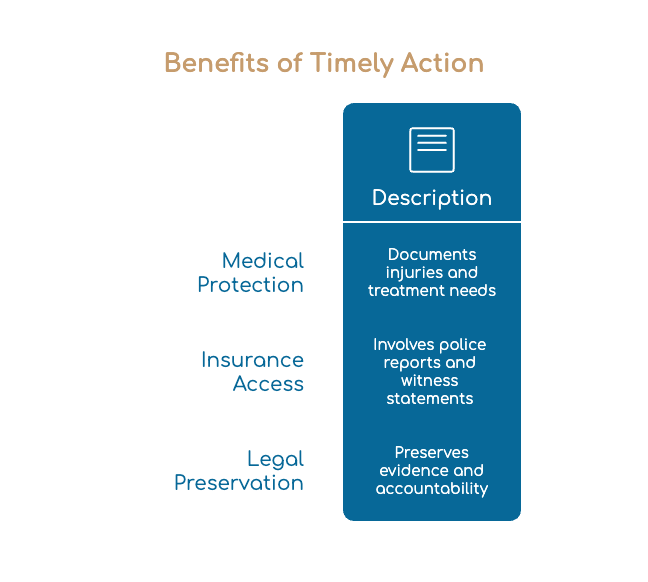
Injured hit-and-run victims retain important rights to medical care, insurance review, and potential legal recovery.
- Medical protection: Emergency medical records can document injuries, treatment needs, and the timing of harm, which may later support Victim compensation.
- Insurance access: A claim investigation may involve police reports, witness statements, vehicle debris, surveillance footage, and uninsured motorist coverage.
- Legal preservation: Legal deadlines can affect whether benefits or lawsuits remain available, so timely action helps preserve evidence and accountability.
A careful rights review helps injured people seek recovery without overlooking practical duties or available sources of support after the collision.
Why Do Daytona Beach Hit-and-Run Car Accident Injuries Happen?
Although every collision has its own facts, hit-and-run injuries in Daytona Beach often occur because a driver’s careless conduct is followed by an unlawful decision to leave the scene. Common causes include speeding, distracted driving, impairment, unsafe lane changes, and failure to yield near intersections, beach access roads, parking areas, and tourist corridors. When a driver flees, injured people may lose immediate access to identifying information, witness cooperation, and timely accountability.
Some cases involve road rage incidents, where aggressive driving, tailgating, or intentional intimidation creates preventable harm. Others may involve Vehicle failure claims, including brake defects, tire failures, or neglected maintenance, although a mechanical problem does not excuse leaving an injured person without aid.
These events often harm pedestrians, cyclists, motorcyclists, passengers, and other motorists who depend on responsible conduct. Understanding why these injuries occur helps communities, advocates, and legal professionals focus on prevention, responsibility, and protection for vulnerable people.
What Should You Do After a Daytona Beach Hit-and-Run Car Accident Injury?
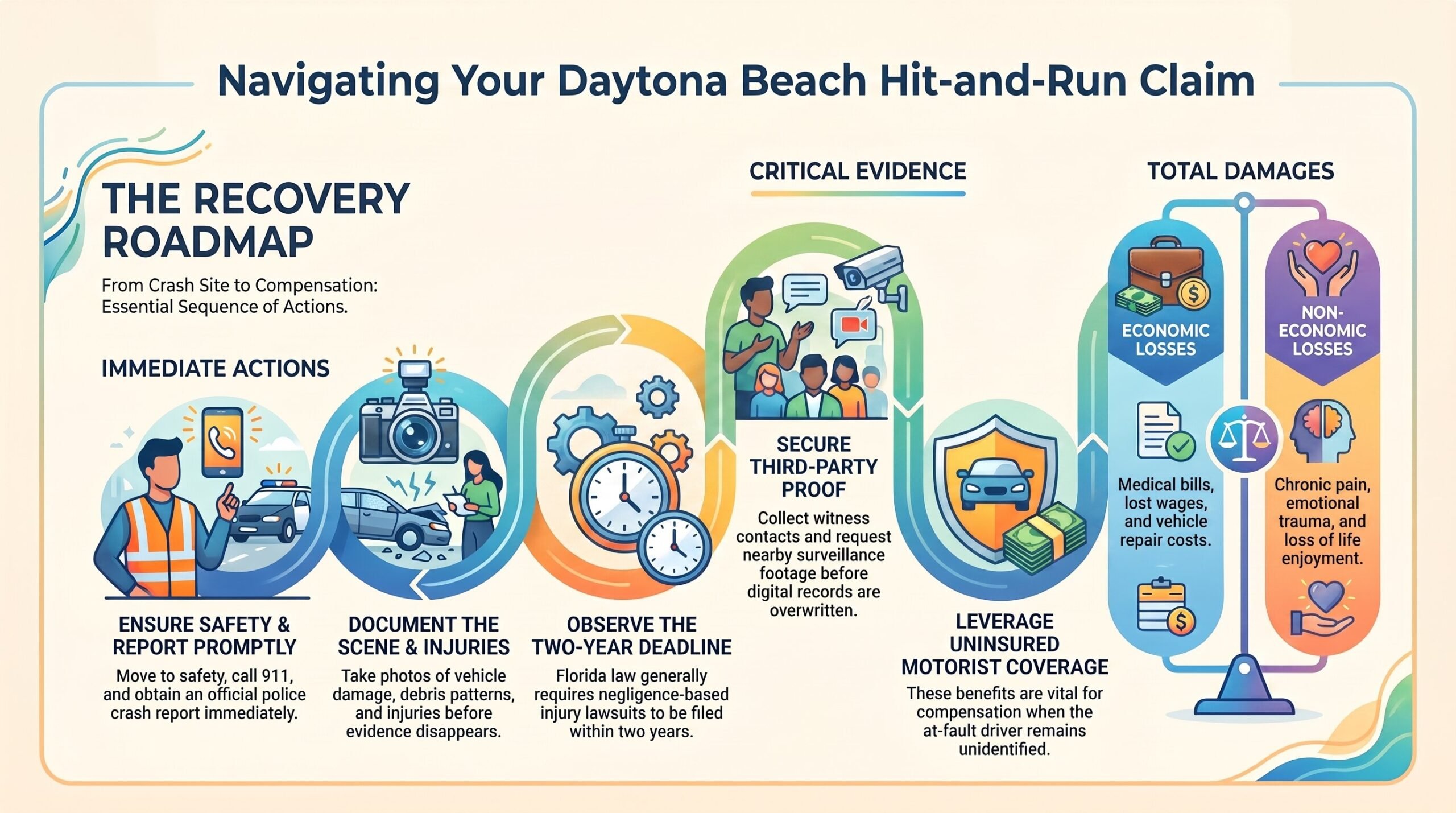
After a Daytona Beach hit-and-run car accident injury, the injured person should first move to safety, seek medical attention, and avoid any action that could worsen the harm. The crash should be reported to law enforcement promptly, since an official record can support both the investigation and any later injury claim. Injury evidence, including photographs, witness information, medical records, and vehicle damage, should be preserved as soon as possible.
Ensure Immediate Safety
In the moments following a Daytona Beach hit-and-run accident, the injured person’s first priority should be immediate safety. If possible, the vehicle should be moved away from traffic to a shoulder, parking lot, or other secure location. Hazard lights should be activated, and occupants should remain alert to approaching vehicles. Emergency response steps include checking for injuries, assisting passengers without causing further harm, and moving only when conditions are safe.
If the vehicle is disabled or creates a roadway danger, Call roadside assistance to help reduce additional risk. Bystanders who wish to serve should offer calm support, help guide others away from danger, and avoid obstructing traffic. Preserving safety allows injured parties, passengers, and witnesses to stabilize before any further action is taken.
Report The Crash
Once immediate safety concerns are addressed, the crash should be reported to law enforcement as soon as possible. A prompt report helps protect the injured person, alerts officers to search for the fleeing driver, and creates an official record for later claims. Those present should call 911, provide the location, describe the vehicle if known, and identify any immediate hazards.
Scene safety tips include remaining in a secure area, using hazard lights when appropriate, and avoiding confrontation if the driver returns. Helpful Evidence documentation steps may include noting the time, direction of travel, witness names, and nearby businesses or cameras. Reports should be accurate, calm, and complete. Service-minded bystanders can assist by staying available for officers and sharing observations without speculation.
Document Injury Evidence
Because injury symptoms may change quickly, careful documentation should begin as soon as the injured person is safe and medically stable. Photographs of visible injuries, damaged property, roadway conditions, and medical devices can help preserve facts that may later fade or be repaired. A trusted helper may record pain levels, mobility limits, missed work, and daily care needs in a dated journal.
It is also important to collect witness contact information from anyone who saw the crash, assisted afterward, or noticed the fleeing vehicle. Medical attention should be sought promptly, even when symptoms appear minor, because delayed complaints may complicate the claim. The injured person or their representative should verify the medical records for accuracy, including diagnoses, treatment dates, referrals, and restrictions, to ensure future support is based on reliable information.
Critical Evidence in a Daytona Beach Hit And Run Car Accident Injury Case
Important evidence in a Daytona Beach hit-and-run injury case helps establish how the crash occurred, who may be responsible, and the extent of the resulting harm. Essential proof may include:
- Police crash reports and responding officer observations.
- Witness statements and surveillance camera footage from nearby homes or businesses.
- Vehicle damage evidence, debris patterns, and physical markings connecting a vehicle to the collision.
Police Crash Reports
After a hit-and-run collision in Daytona Beach, the police crash report often becomes one of the first key records reviewed in an injury claim. This report may document the location, time, roadway conditions, vehicle damage, and responding officer observations. It can also identify Missing driver evidence, such as debris, paint transfer, surveillance leads, or partial plate information.
For an injured person seeking fair compensation, the report helps establish the Florida crash timeline and supports subsequent investigations by insurers, attorneys, and public agencies. It may clarify whether emergency services were called promptly and whether the fleeing driver’s conduct was noted. Although not always conclusive, a well-prepared report provides structure, accountability, and direction, allowing those assisting the injured to preserve rights and pursue available compensation.
Witness Statements
Witness statements can be decisive when the fleeing driver has not yet been identified, as bystanders may recall details not captured in the police crash report. In a Daytona Beach hit-and-run injury case, witnesses may describe the vehicle’s direction of travel, color, damage, license plate characters, or the driver’s conduct before impact. Their accounts can also help confirm the victim’s position, traffic signal status, and sequence of events.
Because Eyewitness Reliability may be affected by distance, lighting, stress, or time, statements should be collected promptly and compared for consistency. Sworn Statements can strengthen a claim by preserving testimony under formal obligations of truthfulness. For those serving injured clients, careful witness follow-up supports accountability, helps insurers evaluate fault, and may assist law enforcement.
Surveillance Camera Footage
Surveillance camera footage can provide objective evidence that supports or clarifies witness accounts in a Daytona Beach hit-and-run car accident injury case. Cameras from nearby businesses, traffic systems, residences, or parking areas may capture the vehicle’s path, time of impact, driver conduct, or departure direction. This digital evidence can help investigators narrow timelines, confirm location details, and assess whether witness statements align with recorded events.
Prompt action is often important, as many systems overwrite recordings within days. A lawyer may send preservation requests to property owners or agencies, helping to protect material that could serve the injured person’s and the community’s interests in accountability. Footage may also assist with Witness identification, particularly when bystanders, license plates, or surrounding circumstances appear clearly enough to support further investigation.
Vehicle Damage Evidence
Vehicle damage evidence can help establish how a Daytona Beach hit-and-run collision occurred, including the angle of impact, relative vehicle positions, and possible direction of travel. Dents, paint transfer, broken glass, and crushed panels may connect an unknown vehicle to the injured person’s car. Careful documentation supports those working to protect victims, preserve facts, and promote accountability. Investigators may compare damage patterns with roadway marks, debris fields, and Traffic light documentation to determine whether a fleeing driver disregarded a signal.
Tire skid analysis can also clarify braking behavior, speed, and evasive movement before impact. Photographs, repair estimates, and inspection reports should be preserved promptly. When gathered correctly, this evidence strengthens injury claims and assists legal advocates in pursuing fair recovery for harmed community members.
Long-Term Effects of Daytona Beach Hit And Run Car Accident Injuries
Hit-and-run injuries in Daytona Beach may create long-term consequences that extend beyond the initial medical emergency, including chronic pain complications that affect daily function and mobility. Emotional trauma can also persist, causing anxiety, sleep disruption, or fear of driving after the collision. These physical and psychological effects often create financial recovery challenges, particularly when ongoing treatment, lost income, and disputed insurance coverage become central issues.
Chronic Pain Complications
Chronic pain can become one of the most disruptive long-term consequences of a Daytona Beach hit-and-run car accident, particularly when injuries to the neck, back, joints, or nerves do not fully recover. Persistent pain may limit mobility, interfere with daily responsibilities, and reduce a person’s ability to provide care, support, or service to others. Medical records, diagnostic findings, and expert evaluations can help show how pain affects function over time.
Chronic pain treatment may include therapy, medication management, injections, rehabilitation, or ongoing physician supervision. When pain prevents regular employment or reduces work capacity, documentation of wage loss becomes important evidence. Pay records, employer statements, and medical restrictions may help connect the injury to lost income, supporting a clearer assessment of long-term damages and future needs.
Emotional Trauma Impacts
After a serious collision, emotional trauma may persist long after physical injuries begin to improve. Survivors of Daytona Beach hit-and-run crashes may experience anxiety, sleep disruption, fear of driving, irritability, or intrusive memories. These post-traumatic symptoms can affect family relationships, work routines, and the ability to participate in community responsibilities. For individuals committed to caring for others, untreated distress may also reduce patience, focus, and emotional availability.
A careful response often includes medical evaluation, mental health treatment, and documentation of psychological harm. Legal Counseling can help injured persons understand how emotional injuries are recognized within a broader claim, without minimizing their lived impact. Compassionate support, consistent treatment, and informed advocacy may provide structure during recovery, while helping survivors regain stability and confidence after a traumatic event.
Financial Recovery Challenges
Over time, the financial consequences of a Daytona Beach hit-and-run car accident can become as disruptive as the physical injuries themselves. Lost wages, reduced earning capacity, transportation costs, and home-care needs may place steady pressure on an injured person and family. Medical bills strain household resources, particularly when treatment continues after insurance benefits are delayed, denied, or limited.
For those committed to serving others, these burdens can also affect their ability to support dependents, workplaces, and community responsibilities. Long-term recovery planning becomes necessary because future surgeries, rehabilitation, medications, and adaptive equipment may require careful documentation and valuation. A lawyer can help identify available insurance coverage, preserve proof of damages, and pursue compensation that reflects both present losses and continuing financial needs after the collision.
Proving Liability in Daytona Beach Hit-and-Run Car Accident Injury Cases
In a Daytona Beach hit-and-run injury case, proving liability often requires a careful review of physical evidence, witness statements, police reports, and available video footage. Each source may help establish how the collision occurred, which vehicle was involved, and whether the fleeing driver acted negligently. Investigators may examine debris patterns, paint transfer, skid marks, damage profiles, roadway conditions, and nearby surveillance recordings to connect the crash to a specific vehicle.
Evidentiary standards require reliable proof, not speculation. Driver identification can rely on license plate information, traffic camera footage, eyewitness descriptions, cell phone records, repair shop records, or admissions made after the incident. Careful documentation is crucial, especially when serving injured individuals who need the truth preserved with diligence and respect.
A lawyer may coordinate with investigators, review official findings, and develop a clear liability theory. Strong proof helps hold the responsible party accountable while supporting a just path forward.
Dealing With Insurance Companies After a Daytona Beach Hit-and-Run Car Accident Injury
When a hit-and-run injury occurs in Daytona Beach, insurance issues can become complicated quickly because the at-fault driver may be unidentified, uninsured, or difficult to locate. Injured people may need to rely on their own policies for medical bills, lost income, and other losses. Insurers often review coverage terms closely, including notice requirements, exclusions, and limits.
Underinsured motorist coverage may provide important protection when the responsible driver is found but lacks sufficient insurance. If the driver remains unknown, the uninsured claims process may become central to recovery. In these situations, careful documentation can support a fair evaluation, including police reports, medical records, photographs, and witness information.
Insurance companies are businesses, and their interests may not fully align with an injured person’s needs. A lawyer can communicate with adjusters, address coverage disputes, and help ensure the claim is presented accurately, with dignity and respect for the injured person’s wellbeing.
What to Expect During a Daytona Beach Hit And Run Car Accident Injury Claim Process
A Daytona Beach hit-and-run car accident injury claim typically begins with prompt crash reporting, followed by efforts to identify the fleeing driver using available evidence. The process also requires clear documentation of medical expenses, lost income, property damage, and other losses connected to the collision. Depending on the facts, an injured person may pursue compensation through the at-fault driver, uninsured motorist coverage, or other available sources.
Reporting The Crash
After a hit-and-run crash in Daytona Beach, reporting the incident promptly is a key first step in protecting an injury claim. The injured person, or a trusted helper, should contact law enforcement, request medical assistance, and preserve Crash Scene Safety when conditions allow. Officers can document location, vehicle damage, injuries, witness information, and available roadway evidence, creating an official report that may later support insurance and legal review.
Florida’s Legal Reporting Requirements often apply when injuries, death, or significant property damage occur. Timely reporting also shows diligence, which may strengthen credibility during the claim process. Those assisting an injured person should provide clear facts, avoid speculation, and obtain the report number. This careful approach helps preserve necessary records for compensation without delaying urgent care.
Identifying The Driver
How the fleeing driver is identified can materially affect the direction of a Daytona Beach hit-and-run injury claim. After the crash is reported, law enforcement and involved parties may rely on Eyewitness identification, nearby surveillance footage, vehicle debris, license plate details, and repair shop information. Investigative tracking may also include locating traffic camera records, reviewing 911 calls, and comparing vehicle descriptions with registered owners.
When a driver is identified, the claim may proceed against that person and any applicable insurance coverage. If identification remains uncertain, other coverage options may need to be reviewed, including uninsured motorist protection. Careful documentation helps preserve useful leads and supports a responsible pursuit of accountability. This process also serves the injured person by promoting order, accuracy, and a fair evaluation of available legal remedies.
Proving Your Losses
Once the responsible driver and available insurance sources are under review, the injury claim must also establish the full extent of the injured person’s losses. This process requires organized medical records, billing statements, wage documentation, repair estimates, and reports showing how the collision affected daily responsibilities. Careful evidence preservation can help connect injuries to the crash, especially when treatment, photographs, witness accounts, and professional evaluations are gathered promptly.
Liability standards may determine who caused the harm, but documented losses show how deeply that harm changed the person’s health, work, and service to family or community. A lawyer may coordinate records, request supporting opinions, and present a clear timeline of recovery. This structured approach helps ensure the claim reflects real consequences, not assumptions or incomplete information.
Pursuing Available Compensation
When the evidence of fault, insurance coverage, and damages has been assembled, the claim can proceed to identify the compensation available under Florida law and the applicable policy limits. This stage may involve reviewing insurance coverages, including personal injury protection, uninsured motorist coverage, medical payments coverage, and any available liability coverage if the driver is found.
Compensation may address medical care, lost income, reduced earning capacity, property damage, and pain-related losses. In some cases, restitution claims may also be pursued through the criminal process, although they do not replace a civil injury claim. A careful evaluation helps ensure that injured individuals are not left without support when resources exist. By pursuing every lawful source, the process can promote accountability while helping restore stability for those harmed.
Compensation for Daytona Beach Hit And Run Car Accident Injury Damages
After a hit-and-run crash in Daytona Beach, injured victims may be entitled to recover compensation for the financial and personal losses caused by the collision. These claims may involve medical treatment, rehabilitation needs, lost income, transportation costs, and other burdens resulting from an at-fault driver leaving the scene. A lawyer may help identify insurance coverage, including uninsured motorist benefits, and present the claim with care.
Strong claims depend on organized documentation steps from the beginning. Victims should preserve police reports, witness information, photographs, repair estimates, and any Rental vehicle records. Careful medical recordkeeping is also important, because treatment notes, prescriptions, referrals, and diagnostic results help connect injuries to the crash.
Proof of expenses, including receipts, invoices, wage statements, and mileage logs, may support fair recovery. Thorough preparation allows the injured person’s needs to be presented responsibly, while encouraging accountability and helping restore stability after a serious roadway incident.
Economic vs Non-Economic Damages in Daytona Beach Hit And Run Car Accident Cases
Damages in Daytona Beach hit-and-run car accident cases are generally divided into economic and non-economic losses, each of which requires careful documentation. Economic damages may include medical expenses, lost income, and vehicle repair costs, while non-economic damages may include pain, suffering, emotional distress, and reduced quality of life. Proving these damages often depends on records, expert opinions, witness statements, and other evidence that connects the injury losses to the collision.
Economic Damage Examples
Documenting economic damages is a crucial step in a Daytona Beach hit-and-run car accident case because these losses represent the measurable financial impact of the collision. Common examples include Medical Expenses, such as emergency care, hospitalization, surgery, therapy, medication, diagnostic testing, and follow-up treatment. These costs may continue when injuries require long-term medical attention or assistive equipment.
Lost Income is another major category, covering wages missed during recovery, reduced earning capacity, and lost employment benefits when the injured person cannot work as before. Other recoverable losses may include vehicle repair or replacement, towing fees, rental transportation, and out-of-pocket costs tied directly to the crash. Careful records help attorneys, insurers, and courts evaluate claims fairly, support accountability, and assist those harmed in rebuilding financial stability.
Non-Economic Losses
Although economic damages address measurable financial losses, non-economic losses reflect the personal harm that cannot be easily proven through bills, receipts, or wage records. In Daytona Beach hit-and-run cases, these losses may include physical pain, reduced enjoyment of daily activities, inconvenience, humiliation, and disruption of family relationships. Emotional distress can also follow a sudden collision, especially when the responsible driver leaves without offering aid or accountability.
These harms often affect how an injured person sleeps, works, serves others, and maintains important responsibilities. The pain impacts may extend beyond the initial injury, shaping mobility, confidence, and independence over time. Because non-economic losses concern human dignity and lived experience, they are an important part of understanding the full consequences of a hit-and-run crash.
Proving Your Damages
After a hit-and-run collision in Daytona Beach, proving damages requires evidence that connects the crash to both the financial losses and the personal consequences suffered by the injured person. Economic damages may include hospital bills, rehabilitation costs, lost wages, and future care needs, and may be supported by Medical documentation, employment records, invoices, and expert opinions. Non-economic damages require careful presentation of pain, emotional distress, reduced mobility, and loss of daily function.
Statements from family members, caregivers, and medical providers may help show how the injury affects ordinary life. During insurance negotiation, organized proof allows a claim to reflect the full scope of harm, not only immediate expenses. Strong documentation helps protect the injured person while supporting fair accountability after an unidentified driver causes preventable loss.
When a Daytona Beach Hit And Run Car Accident Injury Case Goes to Trial vs Settlement
When a Daytona Beach hit and run car accident injury case is evaluated, the decision to pursue settlement or proceed to trial often depends on the strength of the evidence, the available insurance coverage, and the seriousness of the victim’s injuries.
Settlement may serve the injured person by providing timely compensation, reducing uncertainty, and preserving resources for medical care, rehabilitation, and family needs. Attorneys assess witness accounts, police findings, medical records, and insurer positions before recommending resolution.
Trial may become necessary when liability is disputed, damages are undervalued, or the insurer refuses a fair offer. In that setting, Jury Selection can affect how evidence is received and how credibility is weighed. A careful Damages Calculation is also critical, including medical expenses, lost income, pain, impairment, and future care needs. The goal remains responsible advocacy, seeking a result that honors the victim’s losses while supporting recovery and stability.
Florida Laws That May Affect Your Daytona Beach Hit And Run Car Accident Case
The choice between settlement and trial is shaped not only by the facts of the crash but also by the Florida laws governing hit-and-run injury claims in Daytona Beach. These rules help determine fault, insurance duties, and the evidence needed to support an injured person’s recovery.
- Florida comparative negligence may reduce compensation if the injured party is found partly responsible. Careful investigation can protect a claimant from unfair blame.
- Hit-and-run reporting requirements place importance on promptly notifying law enforcement and insurers. Timely reports help preserve public safety, support accountability, and strengthen the claim.
- Florida insurance rules may involve personal injury protection, uninsured motorist coverage, or other available benefits. A lawyer evaluates these sources to serve the injured person’s needs and pursue lawful recovery.
Understanding these laws allows advocates to guide victims with accuracy, dignity, and disciplined attention to justice.
The Statute of Limitations for Daytona Beach Hit And Run Car Accident Injury Cases
In a Daytona Beach hit-and-run injury case, the statute of limitations sets a strict deadline for filing a lawsuit against the responsible party or any legally liable defendant. Under Florida law, most negligence-based injury claims must be filed within 2 years of the crash. Missing this deadline can prevent an injured person from seeking compensation through the courts, even when the harm is severe and the driver fled.
Timely action also supports service to others by preserving the integrity of the claim and encouraging accountability on the road. Evidence may disappear quickly, so witness identification strategies should begin as soon as possible after the collision. Camera footage, police reports, and medical records may also become harder to obtain with time. Separate Florida insurance deadlines may apply to personal injury protection or uninsured motorist claims, making prompt notice and careful documentation essential after a hit-and-run crash.
How a Daytona Beach Hit And Run Car Accident Lawyer Can Help You
Identifying, preserving, and pursuing are central functions of a Daytona Beach hit and run car accident lawyer after a fleeing driver causes injury. Counsel helps organize the response with discipline, ensuring that the injured person, family members, and caregivers can focus on recovery and practical needs.
- Finding responsible parties: A lawyer may review crash reports, witness accounts, surveillance footage, vehicle debris, and traffic patterns to help identify the driver or other liable parties.
- Protecting proof: Evidence preservation strategies may include prompt requests for video, photographs of the scene, vehicle inspections, medical records, and documentation of lost income.
- Preparing claims: Insurance claim documentation can be assembled with accuracy, including uninsured motorist materials, treatment summaries, expense records, and statements supporting damages.
Through these efforts, a lawyer supports accountability, promotes orderly claims handling, and helps injured individuals seek compensation with dignity, purpose, and respect for the broader community.
When to Contact a Daytona Beach Hit And Run Car Accident Lawyer
After considering how legal counsel can help preserve evidence and prepare claims, timing becomes a significant factor in protecting an injured person’s rights. A Daytona Beach hit-and-run car accident lawyer should be contacted as soon as the victim receives necessary medical attention and the incident has been reported to law enforcement. Early communication allows counsel to identify urgent deadlines, request available roadway or business surveillance footage, and guide the next steps.
Prompt contact is also important when facts are unclear, witnesses may be difficult to reach, or the fleeing driver has not been identified. Injury documentation should begin immediately through medical records, photographs, and follow-up care notes, because consistent records help reflect the harm suffered. Police report accuracy also matters, since errors in location, vehicle description, injuries, or witness information can affect later proceedings. Timely legal guidance can help ensure records are complete, organized, and aligned with the injured person’s need for responsible support.
Why You Need an Experienced Daytona Beach Hit And Run Car Accident Lawyer
Because hit-and-run claims often involve missing information, disputed facts, and multiple potential sources of recovery, experienced legal representation can be essential to protecting an injured person’s interests. A knowledgeable Daytona Beach hit-and-run car accident lawyer can help organize the response to a stressful event, identify available coverage, and ensure important deadlines are not overlooked.
Experience matters because these cases require prompt Evidence preservation, including crash reports, witness statements, surveillance footage, vehicle damage records, and medical documentation. Careful client communication also helps injured individuals understand each stage of the claim while remaining focused on treatment and recovery. In addition, thorough insurance documentation can support claims for uninsured motorist benefits, personal injury protection, and other applicable coverage.
For individuals committed to caring for their families and communities, legal guidance can provide structure, accountability, and protection during a difficult recovery process after a serious collision.
How to Choose the Right Daytona Beach Hit And Run Car Accident Lawyer for Your Case
Selecting the right Daytona Beach hit-and-run car accident lawyer begins with evaluating whether the attorney has direct experience handling cases involving unidentified drivers, uninsured motorist claims, and disputed insurance coverage. A suitable attorney should understand the Basics of Car Accidents, including medical documentation, police reports, witness statements, and the deadlines that affect recovery. This knowledge helps injured people and their families pursue support while maintaining focus on restoration and service to others.
The lawyer should also demonstrate skill in Liability Proofing, especially when the at-fault driver fled and evidence may be limited. Careful review of surveillance footage, vehicle debris, accident reconstruction, and insurance correspondence can strengthen a claim. Prospective clients should consider communication practices, case preparation, and willingness to explain legal options clearly. A qualified attorney provides steady guidance, protects the client’s interests, and works to secure compensation that supports medical care, lost income, and long-term stability after a serious collision.
About The Law Offices of Anidjar & Levine
Experience, preparation, and client service define the role of The Law Offices of Anidjar & Levine in representing people injured in Daytona Beach hit-and-run car accidents.
The firm approaches each case with attention to the client’s medical needs, financial pressures, and legal obligations, while maintaining a service-focused commitment to those facing difficult recovery periods.
Its attorneys assist with Rights documentation, insurance communications, claim evaluation, and case strategy, helping injured people understand available legal options after a fleeing driver causes harm.
The firm also emphasizes Evidence preservation, including police reports, witness statements, surveillance footage, vehicle damage records, and medical documentation that may support liability and damages.
Through organized preparation and consistent communication, The Law Offices of Anidjar & Levine works to reduce burdens on clients and protect their interests.
Its representation reflects a disciplined approach to advocacy, designed to pursue accountability while allowing clients to focus on recovery and stability after a serious collision.
Frequently Asked Questions
Can Surveillance Cameras Help Identify a Hit-and-Run Driver?
Yes, surveillance cameras can help identify a hit-and-run driver by capturing vehicle details, direction of travel, license plates, or the driver’s appearance. Nearby businesses, homes, traffic systems, and parking lots may hold crucial footage. Prompt: Digital evidence preservation is essential because recordings may be overwritten quickly. These efforts can also support police investigations, protect injured persons, and strengthen claims while meeting insurance claim timelines.
What if the Hit-and-Run Involved a Rideshare Vehicle?
If a hit-and-run involved a rideshare vehicle, investigators may examine app records, driver status, trip data, and vehicle identification to determine Rideshare Liability. Insurance Coverage often depends on whether the driver was logged in, awaiting a request, or transporting a passenger. Those assisting injured persons should promptly preserve evidence, report the details to the police, notify the rideshare company, and review available policies to support a fair recovery and accountability.
Will My Immigration Status Affect My Injury Claim?
Immigration status should not bar an injured person from seeking compensation, though it may affect privacy concerns, documentation, or willingness to report facts. In the personal injury claim process, liability, damages, medical records, and insurance coverage usually matter most. Advocates serving vulnerable individuals should help preserve evidence, protect dignity, and seek informed legal guidance, especially when fear of exposure could prevent truthful reporting or necessary medical treatment after harm.
Can Passengers File Claims After a Hit-and-Run?
Yes, passengers may file claims after a hit-and-run, regardless of whether the at-fault driver is identified. They may seek compensation through available insurance coverage, including uninsured motorist benefits. Prompt evidence preservation is crucial, including medical records, vehicle information, and scene documentation. Witness statements can also support the claim. Those assisting injured passengers should encourage timely reporting, careful documentation, and review by qualified legal counsel to protect recovery rights.
Are Bicycle or Pedestrian Hit-and-Runs Handled Differently?
Yes, bicycle or pedestrian hit-and-runs are often handled differently because injuries are usually more severe, and liability analysis may involve roadway duties, visibility, and right-of-way rules. Comparative Fault can affect recovery if the cyclist or pedestrian is alleged to share responsibility. Evidence Preservation is vital, including surveillance footage, vehicle debris, witness statements, and medical records. Careful claim handling helps protect vulnerable road users and supports fair accountability.
—————————
A Daytona Beach hit-and-run crash can leave victims facing injuries, financial losses, and unanswered questions.
Legal guidance may help protect their rights, identify available insurance coverage, and pursue compensation through every appropriate channel.
The Law Offices of Anidjar & Levine provides focused representation, and a Daytona Beach Car Accident Lawyer can help injured clients throughout this process.
Victims should act promptly, preserve evidence, and seek qualified legal support to strengthen their claim and move forward with confidence.