A Daytona Beach Car Accident Lawyer from The Law Offices of Anidjar and Levine helps injured victims establish fault, preserve evidence, and pursue compensation after following-too-closely and rear-end collisions.
These claims often involve disputes over the severity of impact, medical causation, preexisting conditions, and comparative fault.
An attorney may gather crash reports, photographs, witness statements, repair estimates, medical records, and available traffic footage while managing communications with insurers.
Careful claim handling can support claims for medical costs, lost income, pain and suffering, and future care, as explained below.
Main Takeaways
- A Daytona Beach following-too-closely accident lawyer can help establish fault using crash reports, photos, witness statements, and evidence of vehicle damage.
- Prompt medical care and consistent documentation help connect injuries to the rear-end or tailgating collision.
- Common disputes involve the severity of impact, preexisting conditions, delayed symptoms, and insurers minimizing injury claims.
- Lawyers can handle adjuster communications, insurance paperwork, settlement timelines, and evidence-supported demand packages.
- Key evidence may include traffic footage, dashcam video, repair estimates, medical records, proof of lost income, and witness statements.


How We Can Help With Your Daytona Beach Following Too Closely Accident Injury Claim
When a following-too-closely collision causes injuries, legal representation can help establish fault, document damages, and protect the claimant from insurance tactics that may undervalue the case. A Daytona Beach attorney may gather crash reports, witness statements, medical records, and repair estimates to build a clear claim.
This support allows injured individuals and their families to focus on recovery, caregiving, and service to others while the legal process is managed with discipline.
Counsel may also handle Insurance documentation, communicate with adjusters, and track settlement timelines to reduce delays and prevent avoidable errors. By evaluating medical expenses, lost income, pain, future care needs, and other losses, the attorney can present a demand supported by evidence.
If negotiations fail, the firm may prepare for litigation while continuing to seek a fair resolution. This steady guidance can help preserve rights, strengthen the claim, and promote accountability after a harmful rear-end collision in Daytona Beach.
OUR CONSULTATIONSARE FREE
START YOUR FREE CASE REVIEW

Understanding Daytona Beach Following Too Closely Accident Injury Cases
Although many rear-end crashes appear straightforward, Daytona Beach following-too-closely accident injury cases often require careful analysis of driver conduct, roadway conditions, vehicle damage, and medical evidence.
These cases may involve disputes over impact severity, preexisting conditions, or whether an injured person’s symptoms are consistent with the collision. For individuals committed to serving others, a careful legal approach helps guarantee injured community members are treated with fairness, dignity, and respect.
Liability challenges can arise when insurers question fault, minimize injuries, or rely on incomplete records. Evidence preservation can be crucial, including photographs, repair estimates, medical documentation, witness information, and available traffic or surveillance footage.
Timely collection of this material can clarify what occurred and support a more accurate evaluation of harm. A well-prepared claim also considers future care needs, lost income, and daily limitations. In this setting, legal guidance can help protect an injured person’s rights throughout the process.
Common Causes of Daytona Beach Following Too Closely Accident
Following too closely accidents in Daytona Beach often result from preventable driving behaviors and roadway conditions that reduce reaction time. Distracted driving, speeding and tailgating, sudden traffic stops, and poor weather conditions commonly contribute to these collisions. Understanding these causes helps clarify how liability may arise when a driver fails to maintain a safe following distance.
Distracted Driving
Distracted driving is a frequent cause of following-too-closely accidents in Daytona Beach because it reduces a driver’s ability to notice changing traffic conditions and respond in time. Even a brief glance away from the road can prevent a motorist from recognizing stopped vehicles, lane shifts, pedestrian activity, or traffic signals. Distracted driving risks increase when drivers text, adjust navigation systems, eat, or speak with passengers instead of maintaining steady attention.
Cell phone negligence is especially concerning because it combines visual, manual, and cognitive distraction, creating a serious hazard for nearby travelers. In legal evaluations, evidence such as phone records, witness statements, and vehicle data may help determine whether inattention contributed to the crash. Careful accountability supports public safety and protects those harmed by preventable driver negligence.
Speeding And Tailgating
As traffic speeds increase, the distance required to stop safely becomes significantly longer, making speeding and tailgating a dangerous combination in Daytona Beach. Drivers who exceed posted limits while following closely reduce the time available to recognize hazards, respond responsibly, and protect others on the roadway.
This conduct may reflect poor judgment, impatience, or Aggressive driving escalation, especially when a driver pressures another vehicle to move faster or leave a lane. In heavier traffic, speeding can also combine with lane change negligence, creating risks when motorists merge or pass without allowing adequate space. For injured persons, families, and community members seeking accountability, these patterns help explain how preventable collisions occur. Careful review of speed, spacing, and driver behavior can support a clear understanding of fault.
Sudden Traffic Stops
Sudden traffic stops often expose the dangers posed by speeding and inadequate spacing, particularly on busy Daytona Beach roads, where traffic conditions can change without warning. When a lead vehicle slows for congestion, a pedestrian crossing, or an emergency vehicle, a following driver must have enough time and distance to respond safely. Rear-end crashes often occur when attention is divided, traffic is dense, or a driver misjudges stopping distance.
Rushing to medical appointments or urgent obligations does not excuse unsafe following behavior. For injured people, prompt reporting and careful recordkeeping can support accountability, while lack of documentation may weaken the ability to explain how the collision occurred. Responsible drivers protect others by remaining alert, maintaining a safe following distance, and anticipating sudden slowdowns in ordinary traffic.
Poor Weather Conditions
During poor weather conditions, following too closely becomes especially dangerous because reduced visibility and slick pavement increase the time and distance needed to stop safely. In Daytona Beach, heavy rain, coastal fog, and sudden storms can create visibility hazards that prevent drivers from seeing brake lights, slowing traffic, or debris ahead.
When motorists fail to increase their following distance, they place others at unnecessary risk, including families, commuters, pedestrians, and public servants responding to emergencies. Wet roads also increase the risk of hydroplaning, causing tires to lose contact with the pavement and making handling or braking less effective. A driver who tailgates in these conditions may be unable to react with care. Responsible driving requires patience, caution, and enough space to protect everyone sharing the roadway.


Legal Rights of Daytona Beach Following Too Closely Accident Injury Victims
Accountability becomes especially important after a following-too-closely collision in Daytona Beach, because injured victims may have the right to pursue compensation when another driver’s unsafe conduct caused the crash. These rights may include recovery for medical care, lost income, pain and suffering, and future limitations resulting from the injury.
Victims may also benefit from understanding how Florida Roadways Liability principles can affect claims involving negligent drivers, unsafe actions, or related hazards such as Car Door Injuries.
A careful legal review can help protect those who serve families, coworkers, and communities as they recover.
- Right to seek compensation: Injured individuals may pursue damages from responsible parties.
- Right to evidence preservation: Crash reports, medical records, photographs, and witness statements may support the claim.
- Right to legal representation: Counsel may communicate with insurers, evaluate losses, and pursue fair recovery.
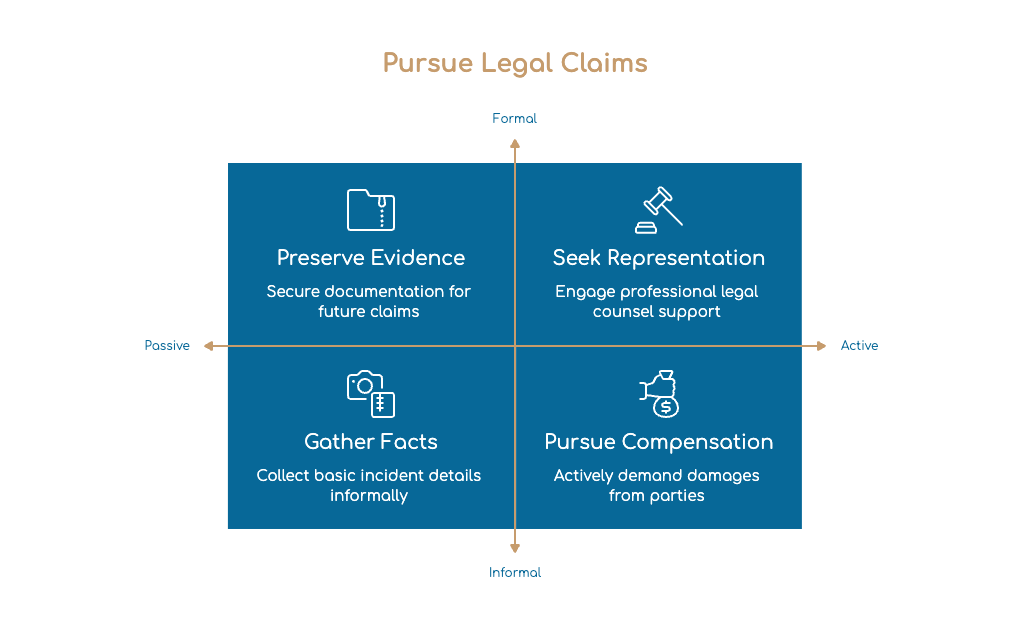
These protections help restore stability after preventable harm.
Why Do Daytona Beach Following-Too-Closely Accident Injuries Happen?
Following too closely in Daytona Beach often results in accident injuries when a driver fails to maintain enough space to stop safely, especially in traffic, near intersections, or along busy coastal roadways. When the lead vehicle slows for pedestrians, cyclists, signals, or congestion, the trailing driver may have too little time to react. Even a brief delay can create a forceful rear-end impact.
Several conditions increase this risk. Traffic flow patterns can shift quickly during tourist seasons, special events, school hours, and beach access periods. Drivers unfamiliar with local roads may brake suddenly, merge late, or misjudge stopping distances. Driver stress factors, including impatience, fatigue, distraction, and pressure to keep pace with surrounding vehicles, can also reduce careful judgment. Rain, glare, and nighttime visibility issues may further limit reaction time. These causes matter because preventable choices can place residents, visitors, workers, and families at risk of serious harm in everyday travel throughout Daytona Beach.
What Should You Do After a Daytona Beach Following-Too-Closely Accident Injury?
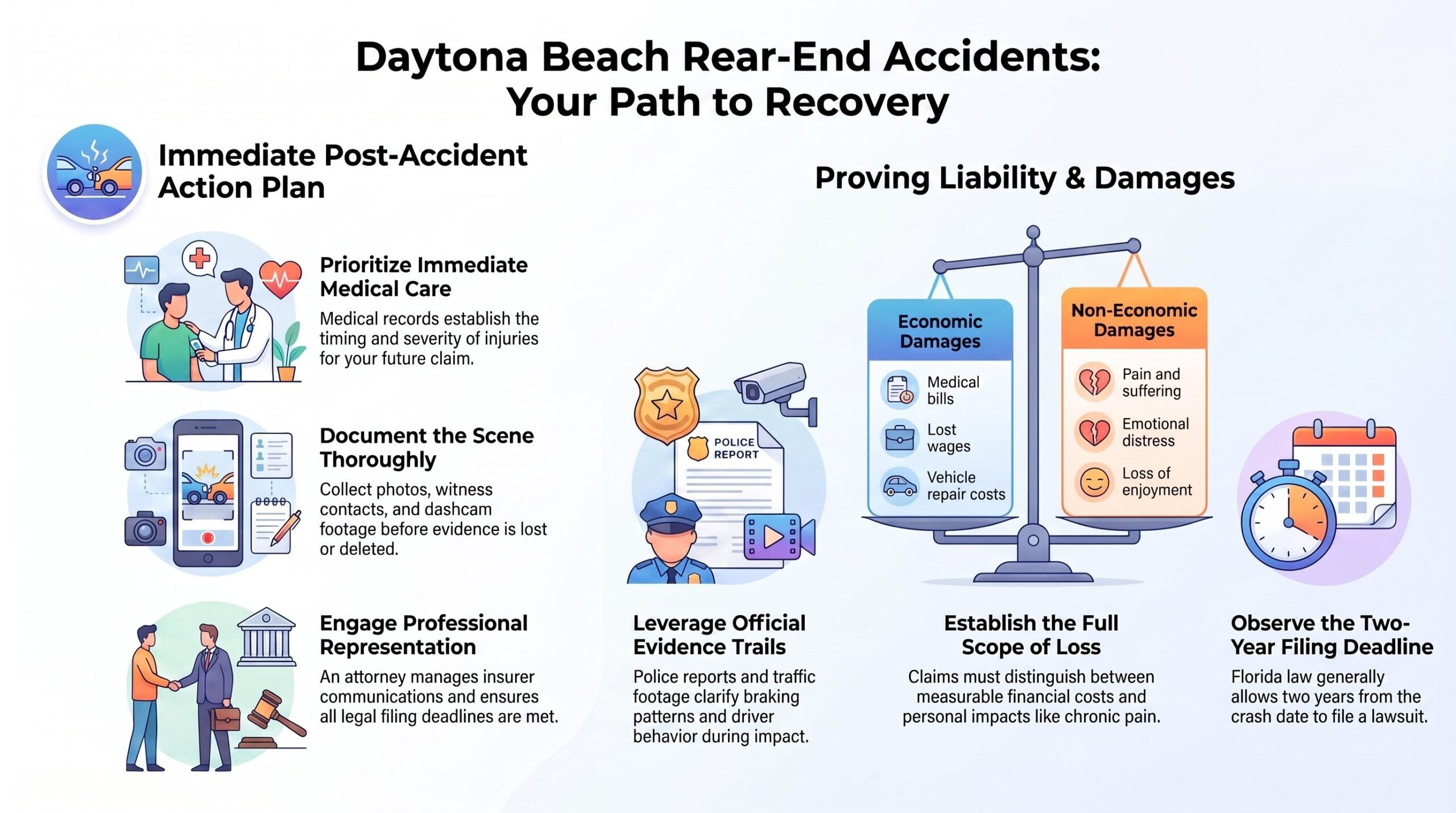
After a following-too-closely accident in Daytona Beach, an injured person should take prompt steps to protect both health and any potential legal claim. Medical care should be obtained promptly, the crash should be documented with photos, reports, and witness statements, and all related records should be preserved. Contacting an attorney can help ensure that evidence is reviewed, deadlines are tracked, and communications with insurers are handled appropriately.
Seek Medical Care
When a person is injured in a Daytona Beach following-too-closely accident, prompt medical care should be a priority. Even when pain appears minor, conditions such as concussion, spinal injury, or internal trauma may develop gradually. A medical evaluation protects the injured person’s health and creates records that may later help explain the nature, timing, and seriousness of the injuries.
Care should include emergency treatment when needed, follow-up appointments, diagnostic testing, therapy, and compliance with medical instructions. Those assisting the injured person may also help organize medical record requests so providers, insurers, or legal representatives can review complete information. While preserving surveillance footage may become important later, medical attention comes first. Timely treatment supports recovery, reduces complications, and helps ensure the person receives appropriate care after the crash.
Document The Crash
Once immediate medical needs are addressed, careful documentation of the crash can help preserve important facts about how the Daytona Beach following-too-closely accident occurred. Crash Scene Documentation may include noting vehicle positions, roadway conditions, traffic signals, skid marks, debris, and visible injuries, when it is safe to do so. Photo Evidence Preservation is especially important, including clear images of vehicle damage, license plates, injuries, road signs, weather conditions, and surrounding landmarks.
Digital Evidence Collection may involve saving dashcam footage, rideshare records, text messages, location data, or insurance communications before they are deleted. Eyewitness Contacting should be handled respectfully, with names, phone numbers, and brief statements recorded when witnesses are willing to help. Organized records can support truthful reporting, protect injured people, and assist those working to serve their recovery needs.
Contact An Attorney
In the days following a Daytona Beach following-too-closely accident, contacting an attorney can help an injured person understand legal rights, insurance obligations, and important deadlines. Counsel may review the facts of the collision, explain available claims, and help protect the person from statements that could reduce compensation. An attorney can also coordinate with healthcare providers to clarify Medical treatment options, future care needs, and the documentation required to support damages.
This guidance may be especially valuable when injuries limit a person’s ability to serve family, work, or community responsibilities. Legal counsel may also organize a crash evidence checklist that includes photographs, witness information, police reports, repair records, and medical bills. Early involvement allows evidence to be preserved, insurers to be notified properly, and the claim to proceed with disciplined attention.
Critical Evidence in a Daytona Beach Following Too Closely Accident Injury Case
Critical evidence can determine whether a following-too-closely collision in Daytona Beach is clearly linked to negligent driving. Key proof may include: 1. Police crash reports, 2. Traffic camera footage, and 3. Witness statements, each of which can help establish timing, distance, and fault. Vehicle damage evidence may further support the sequence of impact and the severity of the crash.
Police Crash Reports
After a following-too-closely collision in Daytona Beach, the police crash report often becomes one of the first important records used to evaluate how the accident occurred and who may be legally responsible. This report may identify the drivers, vehicles, location, roadway conditions, citations, witness information, and the officer’s observations. These police crash report details can help clarify whether a rear driver failed to maintain a safe distance, reacted too late, or contributed through inattentive behavior.
Distracted driving causes, including phone use or diverted attention, may also be noted when supported by statements or physical evidence. For injured individuals and those assisting them, the report provides an organized starting point for insurance claims and legal review. However, it should be examined with care, because errors or omissions may affect liability assessments.
Traffic Camera Footage
Police crash reports may outline the officer’s findings, but traffic camera footage can provide a more direct view of how a following-too-closely accident unfolded in Daytona Beach. Intersection footage may show vehicle spacing, braking patterns, lane position, and whether a driver reacted reasonably to changing traffic conditions. A careful red light analysis can also clarify timing issues, especially when a rear-end collision occurs near a controlled intersection.
For those seeking to serve injured people with diligence, this evidence can help connect conduct to harm with greater precision. Footage may also reveal negligent maintenance issues, including poor lane-marking clarity that affected safe travel. In related investigations, vehicle defect records may be compared with recorded movement to determine whether mechanical problems contributed to the crash.
Witness Statements
Witness statements can play an important role in a Daytona Beach following-too-closely accident case because they may explain details that physical evidence does not fully capture. A bystander, passenger, or nearby driver may describe traffic flow, sudden braking, distracted driving, weather conditions, or each motorist’s conduct before impact. These observations may help clarify how Comparative Negligence applies when fault is disputed or shared.
Attorneys often compare witness accounts with police reports, traffic camera footage, and other case materials to identify consistency or gaps. Reliable statements may also support the injured person’s timeline, which can matter when Handling Medical Records and connecting treatment to the crash. Promptly collecting contact information and written or recorded accounts helps preserve helpful memories before they fade or become influenced by later discussions.
Vehicle Damage Evidence
Vehicle damage evidence can reinforce or challenge the accounts provided by drivers and bystanders in a Daytona Beach following-too-closely accident case. Rear-end crush patterns, bumper height differences, broken lighting, and frame deformation may help clarify impact direction, force, and timing. When reviewed alongside vehicle skid marks, debris location, and roadway conditions, evidence of damage can assist those serving injured individuals in determining whether a driver failed to maintain a safe distance.
Timely documentation is important because repairs, towing, or disposal can alter essential proof. Photographs taken at the scene, repair estimates, inspection reports, and insurance photos retrieval may preserve details that later become disputed. Careful analysis can also identify preexisting damage, secondary impacts, or inconsistencies in statements, supporting a fair evaluation of liability and the injured person’s needs.
Long-Term Effects of Daytona Beach Following Too Closely Accident Injuries
Following too closely accidents in Daytona Beach can cause injuries that extend well beyond initial medical treatment and property damage. Victims may face chronic pain conditions, reduced mobility, and lasting emotional trauma that interfere with work, daily activities, and overall quality of life. These long-term effects often require careful documentation, because they may substantially influence the value and complexity of an injury claim.
Chronic Pain Conditions
A chronic pain condition may develop after a Daytona Beach following too closely accident when soft tissue damage, nerve irritation, spinal trauma, or joint injuries do not fully resolve. Persistent pain can affect concentration, sleep, mood, and the ability to provide dependable care for family members, patients, clients, or community members. Treatment may require ongoing medical monitoring, physical therapy, injections, counseling, or expert referrals.
Workplace accommodations may become necessary when pain limits lifting, sitting, standing, or performing repetitive tasks throughout a full workday. Some injured individuals also need non-driving rehab; Chronic medication costs, disability paperwork, and documentation of functional limits may become important parts of recovery planning. Careful records can help connect lasting pain to the collision, supporting fair evaluation of damages and future needs.
Reduced Mobility
After a Daytona Beach following too closely accident, reduced mobility may result from fractures, ligament damage, spinal injuries, joint trauma, or prolonged pain that limits normal movement. When mobility declines, an injured person may struggle to work, drive, climb stairs, provide care, or complete daily responsibilities that support family and community needs.
Medical treatment may involve surgery, rehabilitation, assistive devices, or long-term physical therapy, depending on the severity of the impairment. Similar mobility restrictions can arise in slip-and-fall premises matters, especially when negligence in Safety signage contributes to preventable harm. In rear-end collisions, careful documentation of movement limitations helps establish how the injury affects independence, service to others, and future earning capacity. Legal evaluation may address medical records, expert opinions, and lasting functional restrictions.
Emotional Trauma
Emotional trauma can persist long after the physical injuries from a Daytona Beach following too closely accident begin to recover. Victims may experience anxiety, sleep disruption, irritability, or fear of driving, which can interfere with employment, caregiving, and community responsibilities. For individuals committed to serving others, these symptoms may be especially distressing when they limit patience, focus, or availability. Timely emotional support from counselors, physicians, family, and trusted advocates can help identify concerns before they worsen.
Effective coping strategies may include structured routines, gradual return to driving, mindfulness practices, and participation in therapy. Documentation of psychological symptoms is also important when evaluating long-term damages. A careful legal assessment may consider emotional trauma alongside physical harm, ensuring the injury’s full impact is accurately recognized after the crash.
Proving Liability in Daytona Beach Following Too Closely Accident Injury Cases
When a following-too-closely crash causes injuries, proving liability often depends on showing that the rear driver failed to maintain a safe distance under the conditions present at the time. Evidence may include crash reports, witness statements, traffic camera footage, vehicle damage patterns, skid marks, and electronic data from the vehicles involved. These materials can help establish speed, reaction time, road conditions, and whether the driver had enough space to stop safely.
A careful case review focuses on proving the elements of negligence, including duty, breach, causation, and damages. Florida law requires drivers to operate with reasonable care, especially in traffic, in rain, in construction zones, or in areas with pedestrians and cyclists.
Comparative fault defenses may arise if the injured person is accused of stopping suddenly, changing lanes unsafely, or contributing to the crash. Clear evidence helps protect injured individuals and supports fair accountability for preventable harm.
Dealing With Insurance Companies After a Daytona Beach Following Too Closely Accident Injury
Because insurers often begin evaluating a claim shortly after a collision, communications with insurance adjusters can greatly affect the outcome of a Daytona Beach following-too-closely accident injury case. Adjusters may request statements, records, or releases before the full extent of harm is known. Careful guidance helps protect injured people while promoting fair treatment and responsible service to all parties involved.
Effective handling requires complete insurance documentation, including policy details, repair estimates, wage records, medical bills, and treatment notes. These materials help establish losses without overstating facts. Settlement timelines may depend on medical progress, coverage disputes, and the insurer’s review practices.
When bills remain unpaid, medical lien negotiations can also influence the amount ultimately available to the injured person. Knowledge of local court procedures may further shape communications, as insurers often consider how a claim would be evaluated if litigation became necessary. Measured, accurate responses reduce confusion and protect the claim’s value.
What to Expect During a Daytona Beach Following Too Closely Accident Injury Claim Process
A Daytona Beach following-too-closely accident injury claim typically begins with an initial case evaluation, in which the facts, injuries, and available legal options are assessed. The process then moves to evidence gathering and investigation, followed by insurance claim negotiations based on liability, damages, and supporting documentation. If a fair settlement cannot be reached, the claim may proceed to litigation, where the dispute is presented through the court process.
Initial Case Evaluation
How does an initial case evaluation shape a following-too-closely accident claim in Daytona Beach? It provides a structured starting point for understanding the injured person’s needs, legal position, and available remedies. During this meeting, an attorney may review the crash account, injuries, insurance coverage, work limitations, and immediate concerns affecting recovery.
Hospital bills are often discussed, along with ongoing treatment costs and the financial pressure placed on the household. The evaluation also helps identify potential settlement options and clarify what a fair claim may require. For those committed to serving family members, patients, or community responsibilities, this stage offers direction and reassurance. It allows the attorney to explain timelines, responsibilities, and next steps without creating false expectations or overlooking important personal hardships.
Evidence And Investigation
After the initial case evaluation identifies the injured person’s concerns and legal issues, the evidence and investigation stage begins to define the strength of the claim. Investigators may gather police reports, scene photographs, vehicle damage records, medical documentation, and witness statements to determine how the rear-end collision occurred.
Cellphone records may be reviewed when distraction is suspected, while roadway conditions, traffic flow, speed, and braking distance can help clarify whether the following driver had enough time to stop. This process also carefully considers the injured person’s treatment needs, work limitations, and daily hardships. By preserving reliable proof early, the claim can be presented with accuracy, integrity, and service to the person harmed, while supporting accountability through facts rather than assumptions.
Insurance Claim Negotiations
Once the supporting evidence is organized, insurance claim negotiations typically begin with a detailed demand that explains liability, injuries, medical treatment, lost income, and other damages connected to the following-too-closely collision. Insurers then review records, compare statements, and evaluate whether the rear driver failed to maintain a safe distance.
Medical treatment options may influence valuation, especially when future care, therapy, or expert visits remain necessary. Careful documentation supports the claim, including documenting crash scene details, repair estimates, and consistent symptom reports. Preserving witness testimony can also strengthen negotiations by confirming traffic conditions, the sequence of events, or unsafe driver behavior. A lawyer may help with avoiding insurance mistakes, such as recorded statements, premature releases, or undervalued offers, while keeping the injured person’s practical needs and dignity central.
Settlement Or Litigation
Settlement or litigation becomes the next major consideration when insurance negotiations do not produce a fair resolution for a Daytona Beach following-too-closely accident claim. A lawyer may evaluate liability evidence, medical documentation, lost income, and long-term care needs before advising whether continued negotiation serves the injured person’s interests. Insurance dispute tactics, such as delayed responses, undervalued damages, or challenges to causation, can require firm legal action.
A settlement offer strategy may involve presenting updated medical records, expert opinions, and a clear demand that reflects the full impact of the crash. If the insurer remains unreasonable, litigation may be filed to seek accountability through the court process. This step can include discovery, depositions, mediation, and trial preparation, all guided by careful advocacy and service-focused judgment.
Compensation for Daytona Beach Following Too Closely Accident Injury Damages
When a following-too-closely collision causes injuries in Daytona Beach, compensation may be available for both financial losses and the broader personal harm caused by the crash. A claim may seek recovery of losses related to medical treatment, lost wages, vehicle damage, rehabilitation needs, and ongoing limitations affecting daily responsibilities. Each case requires careful documentation, especially when the injured person serves family members, coworkers, clients, or the community and can no longer provide the same level of support.
Insurance settlement timelines often depend on the severity of injuries, the length of treatment, and whether the insurer accepts responsibility. Delays may occur when medical records are incomplete or future care remains uncertain. Fault dispute evidence can be essential, including crash reports, witness statements, photographs, vehicle damage patterns, and traffic camera footage.
A Daytona Beach following-too-closely accident lawyer may evaluate these materials, organize the claim, and pursue fair compensation through negotiation or, when necessary, litigation.
Economic vs Non-Economic Damages in Daytona Beach Following Too Closely Accident Cases
Damages in Daytona Beach following-too-closely accident cases are generally divided into economic and non-economic categories. Economic damages address measurable financial losses, while non-economic damages account for personal harm that may not have a fixed dollar value. Proving these losses often requires medical records, financial documentation, expert opinions, and other evidence connecting the injuries to the collision.
Economic Damages Explained
After a following-too-closely accident in Daytona Beach, economic damages refer to the measurable financial losses caused by the crash. These losses may include emergency care, hospitalization, rehabilitation, prescription costs, lost wages, reduced earning capacity, vehicle repair, rental transportation, and other necessary out-of-pocket expenses. Proper documentation helps protect the injured person’s ability to seek reimbursement and supports a fair evaluation of the claim. Medical bills, employment records, repair estimates, receipts, and mileage logs can provide clear proof of financial harm.
Insurance claim timelines should be monitored carefully, as missed deadlines may limit recovery options. Witness statement collection may also assist by confirming how the collision affected work attendance, transportation needs, or immediate expenses. Careful organization allows advocates to serve injured people with accuracy and accountability.
Non-Economic Damages Explained
Although financial losses can often be shown through bills and records, non-economic damages address the personal impact of a following-too-closely accident in Daytona Beach. These losses may include pain, emotional distress, loss of enjoyment, inconvenience, and the strain placed on family relationships. For injured individuals seeking to restore stability and continue serving others, these harms can be deeply disruptive even when no receipt exists.
A careful Negotiation strategy may account for the severity of suffering, recovery limitations, and lasting changes to daily life. Non-economic damages can also affect the settlement timeline, especially when insurance disputes arise over the value of human impact. Through disciplined trial preparation, legal counsel may present these losses with dignity, helping decision-makers understand the full burden created by the collision.
Proving Accident Losses
Proving the full scope of accident losses requires more than identifying pain or listing expenses, particularly in a Daytona Beach rear-end following too closely accident case. Economic damages often include medical bills, rehabilitation costs, lost wages, reduced earning capacity, and property damage. These losses require receipts, employment records, provider statements, and insurance documentation that clearly connects each cost to the collision.
Non-economic damages, including pain, emotional distress, loss of enjoyment, and daily limitations, demand careful explanation through medical records, witness observations, and consistent treatment history. Medical causation is central, because insurers may argue that symptoms came from prior conditions or unrelated events. A well-supported claim helps ensure injured individuals are treated with dignity, while giving decision-makers the reliable evidence needed to value both measurable and personal harms fairly.
When a Daytona Beach Following Too Closely Accident Injury Case Goes to Trial vs Settlement
When a following-too-closely accident in Daytona Beach results in injury, the case may be resolved through settlement or proceed to trial, depending on the strength of the evidence, the severity of damages, and the insurer’s willingness to make a fair offer. Settlement may serve the injured person by providing timely compensation, reducing uncertainty, and allowing attention to remain on recovery, family duties, and community responsibilities.
A case may move toward trial when liability is disputed, losses are undervalued, or Insurance Delay prevents meaningful progress. Careful Evidence Planning helps organize medical records, crash reports, witness accounts, photographs, and expert opinions. This preparation supports Settlement Leverage while also preserving readiness for court.
Trial Strategy focuses on presenting a clear account of harm, responsibility, and financial impact. Although trial may involve greater time and risk, it can become necessary when negotiation fails to produce a result that reflects the injured person’s documented losses.
Florida Laws That May Affect Your Daytona Beach Following Too Closely Accident Case
The outcome of a settlement negotiation or trial often depends on how Florida law applies to the facts of a Daytona Beach following-too-closely accident. Florida traffic rules require drivers to leave a reasonable and prudent distance, considering speed, traffic, and roadway conditions. When that duty is breached, liability may follow, but the analysis rarely ends there.
- Comparative fault defenses may reduce recovery if the injured person also acted carelessly, such as by braking suddenly without cause.
- Insurance coverage options may affect available compensation, including personal injury protection, bodily injury liability, uninsured motorist coverage, and property damage coverage.
- Evidence rules may influence which records, witness statements, photographs, medical documentation, and expert opinions can be used to support a claim.
For individuals committed to serving family, coworkers, and community, these laws can shape the resources available for recovery. Careful legal analysis helps connect responsibility, coverage, and proven harm to a fair resolution.
The Statute of Limitations for Daytona Beach Following Too Closely Accident Injury Cases
Act promptly after a following-too-closely crash in Daytona Beach because Florida law imposes strict deadlines for injury claims. For most negligence-based motor vehicle injury cases, Florida generally allows two years from the date of the crash to file a lawsuit. Missing this deadline can bar recovery, regardless of the severity of the harm or the strength of the evidence.
Deadlines may differ when claims involve government vehicles, minors, wrongful death, or separate insurance bad faith claims. These matters may require earlier notice, specific procedures, or later filing periods depending on the circumstances. Comparative fault disputes can also affect case value, but they do not usually extend the time to sue. Individuals assisting injured family members, clients, or community members should encourage timely medical documentation, the preservation of crash evidence, and careful date tracking. Prompt action protects legal rights and supports responsible care for those harmed by unsafe driving.
How a Daytona Beach Following Too Closely Accident Lawyer Can Help You
After identifying the filing deadline, an injured person must still build a claim that proves fault, causation, and the full extent of damages. A Daytona Beach following-too-closely accident lawyer can organize this work with care, allowing the injured person and family to focus on recovery, stability, and service to others.
- Investigating liability: Counsel may review crash reports, witness accounts, vehicle damage, camera footage, and Traffic violation penalties to show how unsafe following distance caused the collision.
- Addressing defenses: Comparative fault disputes can reduce compensation if insurers argue that the injured person suddenly stopped, improperly changed lanes, or failed to avoid impact. A lawyer can challenge those claims with evidence.
- Documenting losses: Legal representation can gather medical records, wage information, future care opinions, and evidence of daily impact to present a complete damages claim.
Through structured advocacy, the lawyer helps protect the claim’s value while promoting accountability and orderly resolution.
When to Contact a Daytona Beach Following Too Closely Accident Lawyer
Immediate legal guidance is often most useful in the days following a rear-end collision, before evidence is lost, statements are recorded, or insurance positions become fixed. A person injured in Daytona Beach should consider contacting a following-too-closely accident lawyer soon after receiving medical attention, especially when pain develops, a child passenger was involved, or questions arise regarding Car Seat Safety.
Prompt contact is also appropriate when the other driver was a minor, a new license holder, or someone potentially subject to Teen Driver Laws. Early review can help preserve crash details, identify witnesses, and address communications with insurers in an orderly manner. Families who value service to others often seek guidance not only for their own recovery but also to promote accountability and safer driving on local roads. Legal guidance may be especially important when fault is disputed, injuries require ongoing care, or insurance adjusters request recorded statements or broad medical authorizations.
Why You Need an Experienced Daytona Beach Following Too Closely Accident Lawyer
Because rear-end crashes often appear straightforward, an injured person may underestimate the legal and factual issues that can affect recovery. An experienced Daytona Beach following-too-closely accident lawyer can examine liability, vehicle damage, roadway conditions, witness statements, and the injured person’s medical course with disciplined attention. This work helps ensure that the claim reflects the full harm caused, not merely the initial impact.
Careful legal guidance also supports those who value responsibility, fairness, and service to others. By organizing medical bills, documentation, treatment records, wage information, and future care needs, counsel can present a complete picture of loss. Experience is also important when negotiating with insurers because carriers may question causation, minimize pain, or rely on incomplete evidence. A lawyer familiar with these tactics can respond with facts, preserve deadlines, and pursue appropriate compensation, allowing the injured person and family to focus on healing and stability after a serious collision.
How to Choose the Right Daytona Beach Following Too Closely Accident Lawyer for Your Case
The right Daytona Beach following-too-closely accident lawyer should have specific experience with rear-end collision claims, Florida negligence law, and the insurance practices that often shape these cases. A suitable attorney should carefully evaluate liability, medical evidence, vehicle damage, and available coverage, while recognizing how a preventable collision can affect a person’s ability to work, serve family, and meet community responsibilities.
Prospective clients may consider whether the lawyer offers clear Client communication from the first consultation through each major stage of the claim. Timely updates, direct answers, and respectful guidance help injured people make informed decisions during a difficult period. Strong case strategy planning is also vital, including evidence preservation, witness review, damage assessment, and preparation for settlement negotiations or litigation.
The appropriate lawyer should demonstrate diligence, organization, and a commitment to protecting the client’s interests, while pursuing compensation that reflects the full impact of the accident.
About The Law Offices of Anidjar & Levine
For individuals injured in following-too-closely accidents in Daytona Beach, the Law Offices of Anidjar & Levine provides legal representation focused on accountability, careful claim preparation, and client-centered service.
The firm assists clients by investigating crash circumstances, preserving records, and identifying evidence of negligence that may support compensation for medical care, lost income, and other losses.
Its attorneys understand that injured people often need guidance, structure, and steady communication while they recover.
The firm’s role includes managing insurance contact, evaluating settlement offers, and protecting clients from procedural mistakes that could weaken a claim.
Attention to court deadlines is central to this service, as missed filings may affect legal rights.
Through organized case management and responsive support, the Law Offices of Anidjar & Levine seeks to serve injured clients with dignity and diligence.
Its approach reflects a commitment to helping people pursue recovery while reducing avoidable burdens after serious collisions.
Frequently Asked Questions
Can Tourists File Following Too Closely Claims in Daytona Beach?
Yes, tourists may file following-too-closely claims in Daytona Beach when another driver’s unsafe conduct causes harm. Florida road rules require motorists to maintain a reasonable distance, regardless of residency. Injured visitors may seek compensation for medical care, lost income, and related losses, subject to comparative fault limits. Those serving injured travelers should encourage prompt preservation of evidence, notice to the insurer, and qualified legal guidance to effectively protect rights under Florida law.
Are Rear-End Collisions Always Caused by Tailgating?
No, rear-end collisions are not always caused by tailgating. They may also result from sudden stops, unsafe lane changes, brake failure, poor visibility, or roadway hazards. Common liability defenses often argue that the lead driver acted unpredictably or that external conditions contributed. Proving negligence factors requires careful review of distance, speed, attention, road conditions, and witness accounts, so responsible advocates can help protect injured people seeking fair accountability.
What if Multiple Vehicles Were Involved in the Crash?
When multiple vehicles are involved, fault may be shared among several drivers, depending on how each action contributed to the crash. Negligent lane changes, sudden stops, speeding, or following too closely can cause chain-reaction impacts, making careful investigation critical. Evidence such as vehicle damage, witness statements, and traffic footage helps identify responsibility. Those assisting injured people should ensure that every liable party is identified, so that recovery reflects the full scope of harm.
Can Dashcam Footage Help My Following Too Closely Case?
Yes, dashcam footage can strongly support a following-too-closely case by showing speed, spacing, braking, lane position, and the sequence of impacts. Dashcam retrieval should occur promptly, because recordings may be overwritten or lost. Dashcam admissibility depends on authentication, relevance, and the footage’s fair depiction of the event. For those seeking accountability and protection of others, such evidence can clarify fault, challenge inaccurate statements, and guide responsible claim evaluation.
Do Weather Conditions Affect Following Too Closely Accident Claims?
Yes, weather conditions can greatly affect following-too-closely accident claims. Visibility issues, wet pavement, and unexpected road hazards may increase braking distance, requiring greater caution from every driver. However, poor weather does not excuse unsafe driving, driver distraction, or failure to maintain control. Investigators often assess speed, spacing, roadway conditions, and available reaction time to determine fault, helping injured parties and service-focused advocates pursue fair, responsible outcomes.
—————————
A Daytona Beach following-too-closely accident can cause serious injuries, financial strain, and legal uncertainty.
An experienced lawyer can evaluate liability, gather evidence, handle communications with insurers, and pursue fair compensation for medical expenses, lost income, and other losses.
The Law Offices of Anidjar and Levine provides focused representation for injured victims, protecting their rights throughout the claims process.
A Daytona Beach Car Accident Lawyer can offer prompt legal guidance to help preserve evidence, meet deadlines, and strengthen a case from the outset.