The Law Offices of Anidjar and Levine helps injured victims establish fault, preserve evidence, and pursue available compensation after right-of-way crashes.
These claims often involve police reports, witness statements, traffic camera footage, medical records, roadway conditions, and insurance coverage disputes.
A Daytona Beach Car Accident Lawyer may address comparative negligence, delayed injuries, inaccurate crash reports, and insurer objections while preparing for settlement or litigation.
The following sections explain the central issues, rights, and steps for making a claim in greater detail.
Main Takeaways
- A Daytona Beach failure-to-yield accident lawyer can investigate right-of-way, traffic signals, witness accounts, and roadway conditions.
- Legal help may identify sources of compensation for medical bills, lost income, pain, disability, and other crash-related losses.
- Evidence such as photos, crash reports, vehicle damage, medical records, and witness statements can strengthen a failure-to-yield claim.
- Florida comparative negligence rules may reduce compensation if insurers argue you were partly at fault.
- Prompt medical care and early legal guidance can protect deadlines, preserve evidence, and improve settlement negotiations.


How We Can Help With Your Daytona Beach Failure To Yield Accident Injury Claim
After a failure-to-yield accident in Daytona Beach, an injured person may face medical treatment, insurance disputes, lost income, and uncertainty about who is legally responsible. A law firm can help by organizing evidence, reviewing crash reports, consulting medical records, and identifying all available sources of compensation. This support allows the injured person to focus on recovery while the claim is prepared with care and purpose.
Counsel may also address Driver Accountability by examining traffic laws, witness statements, roadway conditions, and insurance positions. A focused Negotiation Strategy can then be developed to present damages clearly, respond to insurer objections, and pursue fair compensation without unnecessary delay. When settlement discussions do not produce an appropriate result, legal representatives may prepare the matter for litigation. This measured approach serves injured clients by protecting their rights, reducing confusion, and promoting a claim process grounded in accuracy, diligence, and responsibility after a serious collision.
OUR CONSULTATIONSARE FREE
START YOUR FREE CASE REVIEW

Understanding Daytona Beach Failure To Yield Accident Injury Cases
Effective legal support begins with a clear understanding of how failure-to-yield accidents occur and why they often lead to disputed injury claims. In Daytona Beach, these cases may involve conflicting accounts, unclear evidence of right-of-way, and injuries that develop after the crash. A careful review helps protect those harmed while promoting accountability for unsafe choices.
Key issues often include Comparative negligence, insurance coverage, injury documentation, and police report accuracy. Comparative negligence may reduce compensation if an injured person is assigned partial fault, making evidence preservation vital. Insurance coverage must be examined to identify available benefits, policy limits, and potential gaps. Injury documentation, including medical records and treatment history, connects physical harm to the collision and supports fair evaluation. Police report accuracy also matters, because errors in diagrams, statements, or citations can influence claim decisions.
A disciplined legal approach serves injured people by clarifying the facts, resolving disputes, and pursuing a just recovery under Florida law.
Common Causes of Daytona Beach Failure To Yield Accident
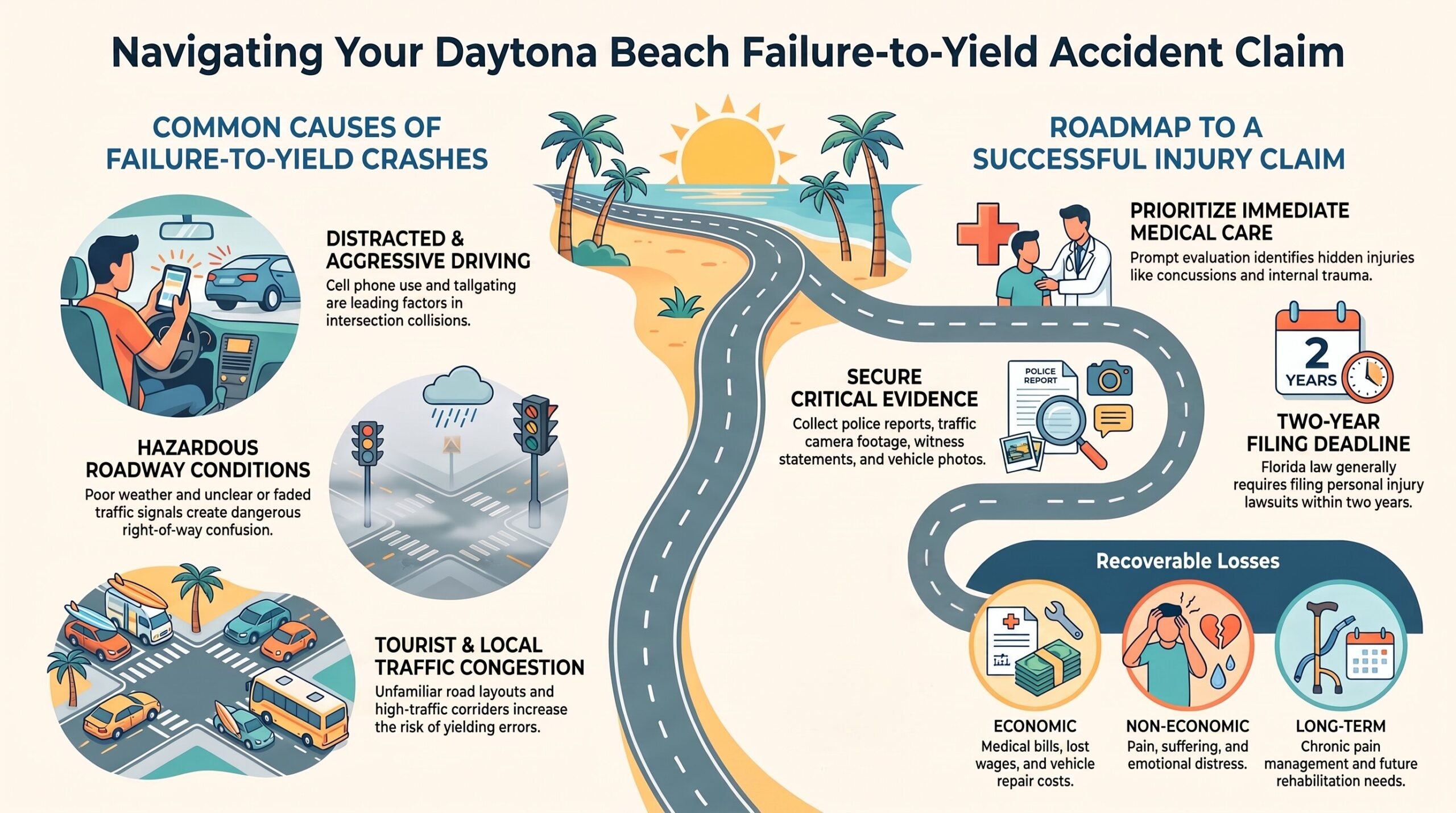
Failure-to-yield accidents in Daytona Beach often result from preventable driver errors and hazardous roadway conditions. Common contributing factors include distracted driving, unclear traffic signals, aggressive driving behavior, and poor weather conditions that reduce visibility or reaction time. Understanding these causes is essential for evaluating fault, identifying liable parties, and evaluating the circumstances surrounding an injury claim.
Distracted Driving
Distracted driving is often a major factor in Daytona Beach failure-to-yield accidents, particularly at intersections, crosswalks, parking lot exits, and merge points where drivers must quickly assess traffic conditions. Cell phone usage, including texting, scrolling, or checking navigation, can divert attention long enough for a driver to miss a pedestrian, cyclist, motorcyclist, or approaching vehicle with the right of way.
Other distractions, such as adjusting vehicle controls, eating, or speaking with passengers, may also reduce awareness and delay appropriate decisions to yield. When attention is divided, drivers may misjudge speed, distance, or available gaps in traffic. These preventable lapses can place vulnerable road users at serious risk, especially in busy community areas where careful driving is essential to public safety and the well-being of others.
Unclear Traffic Signals
Even when a driver is fully attentive, unclear traffic signals can create dangerous uncertainty that contributes to failure-to-yield accidents in Daytona Beach. Faded signal heads, obstructed signs, malfunctioning lights, or poorly marked turn lanes may leave motorists unsure about who has the right of way. This uncertainty often causes confusion at intersections, especially where pedestrians, cyclists, and multiple lanes of traffic converge.
Signal timing can also affect safety when yellow phases are too short, protected turns end abruptly, or coordinated lights change in unexpected patterns. In these situations, drivers may enter an intersection believing they are permitted to proceed, while others lawfully move through the same space. Careful investigation can determine whether roadway design, maintenance issues, or traffic control defects helped cause a collision.
Aggressive Driving Behavior
Aggressive driving often increases the risk of failure-to-yield accidents in Daytona Beach because it pushes motorists to disregard the caution required at intersections, merge points, crosswalks, and turn lanes. Drivers who speed, tailgate, weave through traffic, or rush left turns may misjudge another person’s right of way, creating immediate danger for pedestrians, cyclists, and nearby vehicles.
Road Rage Incidents can intensify these choices, as anger may lead a driver to force entry, block passage, or ignore yielding duties. For those committed to serving injured people, these patterns show why careful investigation matters. Witness accounts, camera footage, and crash reports may reveal impatience or intimidation before impact. Such conduct can lead to severe injury outcomes, especially when vulnerable road users are involved.
Poor Weather Conditions
Poor weather conditions can increase the likelihood of failure-to-yield accidents in Daytona Beach by reducing visibility, limiting tire traction, and increasing the time required to stop safely. Heavy rain, fog, and sudden storms may prevent drivers from accurately judging gaps in traffic, especially at intersections, crosswalks, and highway entry points. When signals, lane markings, or pedestrians are harder to see, a driver may proceed without yielding as required.
Night visibility can further increase these risks, particularly when wet pavement reflects headlights or obscures road signs. Road construction delays may also create unfamiliar traffic patterns, temporary lanes, or congested merge areas that demand extra caution. Responsible drivers should slow down, watch for vulnerable road users, and allow additional space to help protect the community during hazardous weather.


Legal Rights of Daytona Beach Failure To Yield Accident Injury, Victims
When a driver fails to yield and causes a collision in Daytona Beach, injured victims may have the right to pursue compensation for the harm they suffer. These rights may include claims for medical expenses, lost income, pain, disability, and other losses tied to the crash. Florida insurance rights can affect how benefits are accessed, including personal injury protection coverage and potential claims against an at-fault driver.
Injured victims may pursue compensation when a failure-to-yield collision causes serious harm.
- Victims may seek prompt medical care and document all treatment.
- They may report the crash and preserve evidence from the scene.
- They may request review of Intersection fault factors, including signals, signs, lane positions, and witness accounts.
- They may consult legal counsel to protect deadlines and claim value.
Those serving injured individuals should recognize that careful documentation supports fair outcomes. A focused legal review can help determine responsibility, available coverage, and the compensation needed to restore stability after a serious failure-to-yield accident.
Why Do Daytona Beach Failure-To-Yield Accident Injuries Happen?
Why do failure-to-yield accidents in Daytona Beach so often result in serious injuries? These collisions frequently occur where drivers must make quick, careful judgments about the right of way at intersections. When one motorist turns left across traffic, enters a roadway from a side street, or proceeds at a stop sign without yielding, another road user may have little time to react. The impact can strike the side of a vehicle, a less protected area, increasing the risk of head, neck, spinal, and internal injuries.
Daytona Beach also includes busy tourist corridors, unfamiliar road layouts, pedestrian crossings, and bicycle traffic. Traffic pattern confusion can lead drivers to misread signals, overlook lane assignments, or assume other vehicles will stop. Commercial vehicles, motorcycles, and pedestrians may be especially vulnerable when the rules of the road are ignored. These incidents often reflect preventable choices, including distraction, impatience, poor observation, or failure to adjust safely to congestion and local conditions.
What Should You Do After a Daytona Beach Failure-to-Yield Accident Injury?
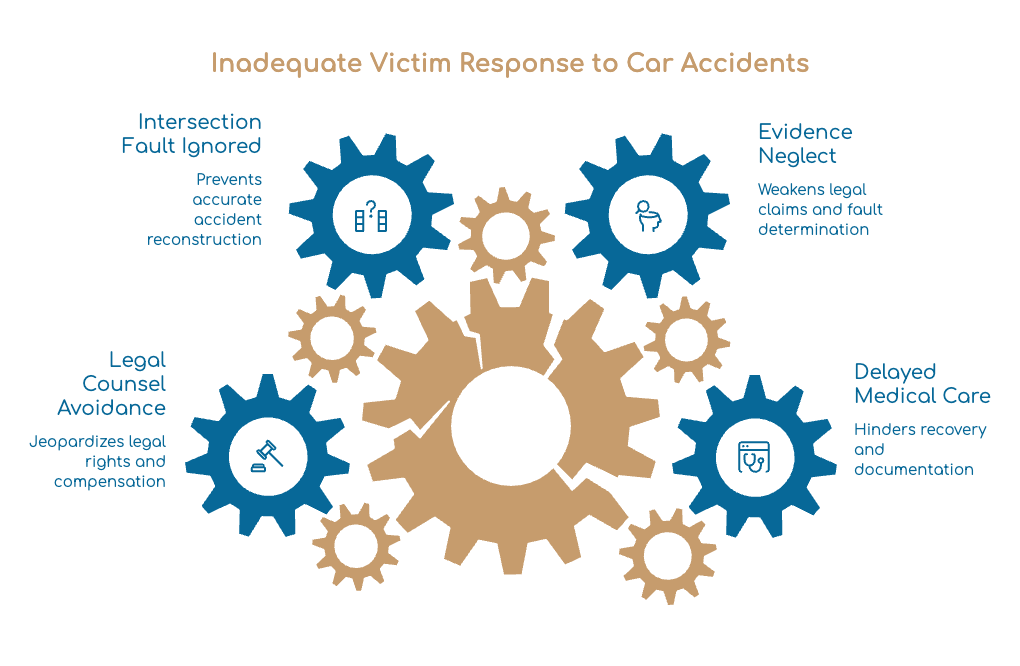
After a Daytona Beach failure-to-yield accident, an injured person should take immediate steps to protect both their well-being and any potential legal claim. Seeking medical attention, documenting the crash scene, and preserving available evidence can help establish the extent of injuries and the circumstances of the collision. Contacting an attorney may also provide guidance on insurance issues, liability disputes, and the pursuit of compensation.
Seek Medical Attention
Medical care should be the first priority for anyone injured in a Daytona Beach failure-to-yield accident, even if symptoms appear minor at the scene. Prompt evaluation helps identify hidden injuries, including concussions, internal trauma, soft tissue damage, or spinal strain, before complications worsen. Emergency responders, urgent care providers, or hospital staff can assess pain, mobility limits, dizziness, confusion, and other warning signs with appropriate attention.
Injured individuals should get medical documentation from every provider, including diagnoses, treatment recommendations, prescriptions, and work restrictions. These records support continuity of care and may help clarify the relationship between the collision and the injury. Consistent follow-up care is also important, because missed appointments can delay recovery and create avoidable uncertainty about medical needs. Timely treatment reflects responsibility toward personal well-being and others.
Document The Crash
Once safety and medical needs are addressed, careful crash documentation can preserve important facts about a Daytona Beach failure-to-yield accident. A patient, service-minded approach includes gathering details that may later help clarify what happened. Photographs should capture vehicle positions, traffic signals, lane markings, skid marks, debris, weather, lighting, and visible injuries.
The injured person, or a trusted helper, should record the time, location, officer information, witness names, and contact details. Notes about statements made at the scene may also become important Liability evidence. Copies of medical records, discharge instructions, repair estimates, and the crash report should be kept in an organized file. Thorough documentation can reduce confusion, support accurate reporting, and help address insurance disputes when accounts of the collision differ, or crucial facts are later questioned.
Contact An Attorney
Well-organized documentation is most effective when promptly reviewed by a qualified Daytona Beach failure-to-yield accident lawyer. After medical needs are addressed, an injured person should consider contacting counsel to evaluate fault, preserve evidence, and protect the claim from avoidable mistakes. An attorney can communicate with insurers, request records, interview witnesses, and assess whether roadway conditions or multiple drivers contributed to the crash.
Many firms offer a free consultation, allowing injured individuals and their families to ask practical questions without immediate financial pressure. Counsel can also verify insurance coverage, identify available policy limits, and explain deadlines that may affect recovery. Prompt legal guidance helps responsible parties remain accountable while supporting the injured person’s ability to focus on treatment, stability, and service to loved ones.
Critical Evidence in a Daytona Beach Failure To Yield Accident Injury Case
Critical evidence often determines whether a failure-to-yield claim can be clearly established, especially when fault is disputed following a Daytona Beach collision. Important materials may include: 1. Police Accident Reports, 2. Traffic Camera Footage, 3. Witness Statements, and 4. Vehicle Damage Photos. Each item can help clarify right-of-way issues, vehicle positions, driver conduct, and the severity of impact.
Police Accident Reports
Because fault is often disputed after a failure-to-yield crash, the police accident report can become one of the most important early sources of evidence in a Daytona Beach injury case. This report may identify the drivers, vehicles, location, roadway conditions, citations issued, witness names, and the officer’s initial observations. Although the report does not always decide liability, it can guide a careful review of how the collision occurred and whether traffic laws were violated.
Attorneys may use its details to protect an injured person’s claim, support informed Negotiation tactics, and shape trial strategy if the insurer refuses fair compensation. For those committed to serving injured community members, securing and analyzing the report promptly helps preserve accuracy, clarify responsibility, and advance a disciplined claim for recovery.
Traffic Camera Footage
Where available, traffic camera footage can provide a clear and time-sensitive record of how a failure-to-yield crash occurred in Daytona Beach. These recordings may show vehicle positions, signal phases, lane movements, braking patterns, and the timing of impact, all of which can assist with crash reconstruction. Liability cameras near intersections, business entrances, and public roadways may preserve details that support a careful review of fault and roadway conditions.
Prompt action is often necessary, because many systems overwrite footage within days or weeks. A dash cam review may also reveal whether a driver ignored a right-of-way duty or reacted reasonably. For court admissibility, footage must be properly obtained, authenticated, and connected to the collision, helping injury advocates serve victims with accurate evidence.
Witness Statements
After a failure-to-yield collision in Daytona Beach, witness statements can help clarify what each driver did before impact and whether the right-of-way was violated. Neutral observers may describe traffic signals, turning movements, driver hesitation, speed, or unsafe lane entry, helping establish the sequence of events. Their accounts can support injured individuals seeking fair treatment and assist professionals working to protect community safety.
Eyewitness credibility, statement consistency, and the witness’s location at the time of the crash may affect how much weight a statement receives. A prompt statement is often valuable because memories may fade, details may change, and outside influence may affect later recollections. Attorneys may compare witness accounts with official reports and other evidence to identify reliable testimony and strengthen a failure-to-yield injury claim.
Vehicle Damage Photos
In a Daytona Beach failure-to-yield accident, vehicle-damage photos can provide crucial visual evidence of how the collision occurred and which driver may have entered the roadway, intersection, or lane unsafely. Images of crushed panels, broken lights, bumper intrusion, and debris patterns may help clarify the point of impact and vehicle movement.
For injured clients, these photographs support fair evaluation of liability, especially when accounts conflict or drivers deny responsibility. Prompt evidence preservation is crucial because vehicles may be repaired, sold, or destroyed before inspection occurs. In severe cases, including Wrongful death claims, photographs may help attorneys, insurers, and experts understand crash forces and sequence. Careful documentation serves injured, grieving families and the justice process by preserving facts that might otherwise be permanently lost.
Long-Term Effects of Daytona Beach Failure To Yield Accident Injuries
Failure-to-yield accidents in Daytona Beach can cause long-term injuries that extend far beyond the initial crash. Chronic pain conditions, reduced mobility, and lasting emotional trauma may affect a person’s ability to work, manage daily tasks, and maintain independence. These consequences often require careful medical documentation, financial evaluation, and legal consideration when evaluating the full impact of an injury claim.
Chronic Pain Conditions
Often, chronic pain develops when injuries from a Daytona Beach failure-to-yield accident do not recover cleanly or place lasting stress on nerves, joints, muscles, or the spine. Persistent headaches, back pain, radiating nerve discomfort, and lingering Whiplash symptoms may continue long after the initial crash. These conditions can affect rest, concentration, caregiving responsibilities, and the ability to reliably serve patients, clients, family members, or community needs.
Careful medical records help show when pain began, how it progressed, and which treatments were required. Thorough insurance documentation may also link ongoing symptoms to the collision rather than to unrelated causes. When chronic pain limits daily function, consistent evaluation by qualified providers can support treatment planning and help clarify the full impact of the injury.
Reduced Mobility Challenges
Mobility limitations can become a lasting concern when fractures, joint injuries, soft tissue damage, or spinal trauma from a Daytona Beach failure-to-yield accident restrict normal movement. Reduced range of motion may affect walking, standing, lifting, driving, and performing daily responsibilities. For injured pedestrians, these challenges can interfere with work, caregiving duties, and community involvement, requiring structured rehabilitation and ongoing medical oversight.
Pedestrian injury recovery may involve physical therapy, mobility aids, home modifications, and follow-up care with orthopedic or neurological physicians. When limitations continue, long-term medical costs can become substantial, especially if future treatment, assistive devices, or vocational changes are needed. Careful documentation of functional restrictions helps identify the full impact of the injury and supports a fair evaluation of present and future recovery needs.
Emotional Trauma Impacts
Emotional trauma can become a significant long-term consequence when a Daytona Beach failure to yield accident leaves an injured person with fear, anxiety, sleep disruption, or intrusive memories. These effects may interfere with work, caregiving duties, transportation, and community involvement, especially when driving near intersections triggers post-crash stress. Some individuals develop PTSD symptoms, including avoidance, heightened vigilance, mood changes, or persistent distress after reminders of the collision.
Emotional recovery often requires coordinated support, patience, and careful documentation of how psychological harm affects daily life. Trauma counseling may help an injured person process the event, restore confidence, and regain stability. For those committed to serving others, recognizing these injuries as legitimate can promote compassionate assistance, informed advocacy, and responsible pursuit of compensation for needed care.
Proving Liability in Daytona Beach Failure To Yield Accident Injury Cases
When a failure-to-yield accident causes injuries in Daytona Beach, establishing liability requires a careful review of the right-of-way rules, driver conduct, and the evidence surrounding the collision. Liability may depend on whether a motorist ignored a stop sign, turned left across oncoming traffic, entered a roadway unsafely, or failed to yield to a pedestrian or bicyclist.
A thorough investigation may include police reports, witness statements, traffic camera footage, vehicle damage, road conditions, and medical documentation. These materials help show how the crash occurred and whether a reasonable driver would have acted differently. For injured people and those supporting their recovery, timely action is important because evidence can disappear quickly.
Insurance claim timelines and Florida legal deadlines may also affect the ability to pursue compensation. Establishing fault with clear evidence supports a stronger injury claim and helps ensure responsibility is assigned to the party whose conduct caused preventable harm.
Dealing With Insurance Companies After a Daytona Beach Failure To Yield Accident Injury
After liability evidence is gathered, the insurance process often becomes the next major challenge in a Daytona Beach failure-to-yield accident injury claim. Insurance adjusters may request statements, review treatment history, and evaluate damages with the company’s financial interests in mind. Injured individuals who serve families, coworkers, and communities often need guidance that supports their recovery while allowing them to focus on it.
Medical bill documentation is central to this stage. Records should clearly connect emergency care, follow-up treatment, therapy, prescriptions, and projected future needs to the collision. Gaps, missing invoices, or unclear coding may be used to question the value of the claim.
A careful Settlement demand strategy can present liability, injuries, wage loss, and human impact in an organized manner. Communication should remain accurate, measured, and consistent. Before responding to offers, legal review may help determine whether the proposed amount reflects the full harm caused by the failure to yield accident.
What to Expect During a Daytona Beach Failure To Yield Accident Injury Claim Process
A Daytona Beach failure-to-yield accident injury claim typically begins with an initial evaluation of liability, damages, and available insurance coverage. The process then moves through evidence gathering, including police reports, medical records, witness statements, and related documentation, before insurance negotiation efforts begin. If a fair settlement cannot be reached, the claim may proceed toward litigation, where disputed issues are resolved through the court process.
Initial Claim Evaluation
During the initial claim evaluation, a Daytona Beach failure-to-yield accident lawyer typically reviews how the collision occurred, which traffic laws may apply, and whether another driver’s failure to yield the right of way caused the crash. This early review helps clarify legal responsibility, identify available insurance coverage, and determine whether the injured person may pursue compensation.
The lawyer may also explain Insurance claim timelines, including notice requirements, insurer response periods, and deadlines that affect a person’s ability to seek recovery. Careful attention is often given to immediate concerns, such as medical care, transportation needs, and financial strain. Witness evidence preservation may also be addressed at a basic level to ensure important information is not lost while the claim is respectfully assessed.
Evidence Gathering Process
In the evidence-gathering process, a Daytona Beach failure-to-yield accident lawyer may begin by collecting records and materials that show how the crash occurred, who had the legal right of way, and how the injury affected the claimant. This may include police reports, photographs, roadway conditions, vehicle damage, and available traffic camera footage. The lawyer may also review medical records to connect the collision to the claimant’s treatment, limitations, and recovery needs. Insurance documentation can help identify coverage, reported statements, and claim timelines. Witness availability is often assessed early, since clear recollections may help confirm signal status, driver conduct, or visibility concerns. These materials are organized carefully, supporting an informed case assessment before any insurance negotiation phase begins. Evidence is preserved to serve justice.
Insurance Negotiation Steps
Once the evidence has been reviewed and organized, the insurance negotiation phase generally begins with a careful evaluation of liability, damages, and available coverage. An attorney may prepare a demand package that explains how the failure to yield caused injury, lost income, treatment needs, and other measurable harm. Medical documentation tips often include keeping complete records, following treatment plans, and noting symptom changes that affect daily responsibilities.
An Evidence preservation checklist may guide the review of photographs, witness statements, repair estimates, crash reports, and communication from insurers. During negotiations, the insurer may question fault, the necessity of treatment, or the value of losses. Each response should be supported by verified records and consistent facts, helping protect the injured person’s interests while promoting a fair, service-focused resolution.
Settlement Or Litigation
If negotiations do not produce a fair resolution, a Daytona Beach failure-to-yield accident injury claim may move from settlement discussions to litigation. At that stage, the process becomes more structured, with pleadings, discovery, depositions, and possible court hearings guiding the claim. Evidence preservation remains crucial, including medical records, crash reports, witness statements, and vehicle damage documentation.
These materials support liability determination and help clarify how the failure to yield caused injury. Insurance disputes may continue during litigation, particularly over fault, damages, or the severity of medical needs. Even after a lawsuit is filed, settlement negotiations can remain active, as both sides evaluate risks and evidence. For those committed to protecting injured people, litigation may provide a necessary path toward accountability, recovery, and resolution after failed negotiations.
Compensation for Daytona Beach Failure To Yield Accident Injury Damages
After a serious failure to yield collision, compensation may be available for physical, financial, and personal losses resulting from the crash. A Daytona Beach injury claim is intended to help the injured person regain stability and address the disruption caused by another driver’s unsafe conduct. The amount recoverable depends on the facts, including the severity of injuries, available insurance coverage, medical documentation, and the conduct of all parties involved.
Florida’s comparative fault rules may also affect the final recovery if the injured person is found partly responsible for the collision. Careful investigation can help identify right-of-way violations, witness accounts, traffic camera evidence, and police findings that support the claim. Settlement timelines vary based on treatment progress, liability disputes, insurer cooperation, and the need for further negotiation. When handled with diligence, the claims process can support accountability, preserve dignity, and help injured individuals move forward with necessary resources.
Economic vs Non-Economic Damages in Daytona Beach Failure To Yield Accident Cases
Damages in a Daytona Beach failure-to-yield accident may be categorized as economic or non-economic, depending on the nature of the loss. Economic damages address measurable financial harm, while non-economic damages reflect personal consequences such as pain, suffering, and reduced quality of life. Proving these accident losses requires clear documentation, credible evidence, and a careful assessment of how the collision affected the injured person.
Economic Damages Explained
In a Daytona Beach failure-to-yield accident case, economic damages refer to the measurable financial losses resulting from the collision. These losses may include emergency treatment, hospital bills, follow-up care, rehabilitation, prescription costs, lost wages, reduced earning capacity, vehicle repairs, rental expenses, and other documented out-of-pocket costs. Careful collection of records, invoices, employment documents, and repair estimates helps establish the full financial impact.
An effective Insurance negotiation strategy often depends on presenting these losses in an organized, evidence-based manner, so the injured person’s needs are accurately valued. The opposing insurer may raise a comparative fault defense, arguing the injured party shares responsibility. Clear documentation can help address that argument while protecting resources needed for recovery, stability, and continued service to family and community after the crash.
Non-Economic Damages Explained
While economic damages address financial losses, non-economic damages account for the personal harm that cannot be measured by invoices or wage records. In Daytona Beach failure-to-yield accident cases, these damages may include pain, emotional distress, loss of enjoyment of life, and the strain placed on family relationships. Their purpose is to recognize how an injury changes daily living, dignity, and the ability to serve others at home, work, or in the community.
Because these losses are subjective, they often become central in insurance negotiations and may affect settlement timelines. If court proceedings become necessary, the value assigned to non-economic harm depends on careful review of evidence, consistent medical documentation, and credible descriptions of the injured person’s experience, without duplicating economic recovery.
Proving Accident Losses
Proving accident losses requires clear evidence that separates measurable financial harm from the personal consequences of injury. In Daytona Beach failure-to-yield cases, economic damages may include emergency care, rehabilitation, lost wages, reduced earning capacity, and vehicle repair costs. Medical record documentation supports these claims by linking treatment, diagnosis, and ongoing limitations to the collision. Bills, employment records, tax documents, and repair estimates further establish the financial impact with precision.
Non-economic damages require a different presentation, focused on pain, emotional distress, impaired mobility, and reduced daily function. An expert testimony strategy may help explain long-term medical needs, permanent impairment, or the effect of injuries on service, family responsibilities, and community participation. Careful documentation allows a claim to reflect both financial loss and human harm.
When a Daytona Beach Failure To Yield Accident Injury Case Goes to Trial vs Settlement
After a failure-to-yield accident in Daytona Beach, an injury case may be resolved through settlement or proceed to trial, depending on the strength of the evidence, the extent of damages, and the insurance company’s willingness to offer fair compensation. Settlement often serves injured people by reducing delay, limiting uncertainty, and preserving resources needed for medical care and household stability.
A lawyer may use a negotiation strategy grounded in records, photographs, expert opinions, and documented losses. When insurance tactics minimize injuries, dispute responsibility, or delay payment, trial preparation may become necessary. This preparation includes organizing exhibits, evaluating witness testimony, preparing the injured person for court, and presenting the harm accurately and with dignity.
A trial may be appropriate when the insurer refuses to provide a reasonable resolution. Settlement may be appropriate when the offer reflects the evidence and future needs. Each path requires careful judgment focused on accountability, recovery, and service to the person injured.
Florida Laws That May Affect Your Daytona Beach Failure To Yield Accident Case
Because Florida traffic and injury laws govern every stage of a failure-to-yield claim, a Daytona Beach case must be evaluated with close attention to fault, insurance coverage, deadlines, and available damages. These rules help injured people, families, and advocates pursue accountability while respecting the legal duties owed by every driver.
- Right-of-way exceptions may apply when emergency vehicles, traffic signals, pedestrian crossings, or unsafe driving alter the usual duty to yield.
- Comparative negligence rules can reduce compensation if the injured person shares responsibility, making careful review of the evidence necessary.
- Florida’s no-fault insurance system often requires initial medical benefits through personal injury protection, even when another driver caused the crash.
- Serious injury requirements may affect whether pain, suffering, and other non-economic damages are available beyond basic insurance benefits.
A careful legal review can identify which statutes, insurance provisions, and roadway duties support a claim for fair recovery.
The Statute of Limitations for Daytona Beach Failure To Yield Accident Injury Cases
When a failure-to-yield crash causes injury in Daytona Beach, the statute of limitations imposes a strict deadline for filing a lawsuit. In Florida, most personal injury claims arising from motor vehicle collisions must be filed within 2 years of the accident. Missing this deadline can prevent an injured person from seeking compensation through the courts, regardless of the harm suffered.
This time limit may affect claims involving an at-fault driver, a vehicle owner, or another responsible party. For example, Negligent Entrustment may arise when someone allowed an unsafe or unqualified driver to use a vehicle. The deadline also applies when liability issues include Comparative Negligence, which may reduce recovery if the injured person shares fault.
Because evidence can fade, records can be lost, and witnesses may become unavailable, timely action helps preserve the facts needed to serve justice, accountability, and the community’s interest in safer roads.
How a Daytona Beach Failure To Yield Accident Lawyer Can Help You
In the wake of a serious failure-to-yield collision, a Daytona Beach failure-to-yield accident lawyer can help evaluate liability, preserve important evidence, and identify every available source of compensation. This support allows injured people and their families to focus on recovery, caregiving, and community responsibilities while the legal claim is handled with discipline.
- Investigation: Counsel may review crash reports, witness accounts, traffic camera footage, and roadway conditions to establish how the right-of-way violation occurred.
- Documentation: A lawyer can organize medical records, wage information, repair estimates, and expert opinions to accurately present losses.
- Negotiation Strategies: Skilled advocacy can address insurance defenses, compare settlement value to documented harm, and pursue fair compensation without unnecessary delay.
- Courtroom Preparation: If litigation becomes necessary, counsel can carefully prepare pleadings, testimony, exhibits, and expert evidence.
Through structured representation, a lawyer serves the injured by seeking accountability and practical financial relief.
When to Contact a Daytona Beach Failure To Yield Accident Lawyer
After a failure-to-yield crash, legal guidance should be sought as soon as injuries, disputed fault, insurance delays, or significant vehicle damage become apparent. Early contact helps preserve records, identify witnesses, and address deadlines before important information is lost. A lawyer may be contacted after emergency care is secured, when medical providers begin documenting injuries, or when a family must make decisions following a Wrongful death.
Prompt attention is also appropriate when an insurer questions the injured person’s account, offers a quick settlement, or fails to respond in good faith. Possible insurance badfaith, may affect how communications and claims are handled. Those assisting an injured loved one, caregiver, passenger, pedestrian, cyclist, or family member should consider seeking guidance before signing releases or providing recorded statements.
Timely consultation supports responsible decision-making, protects the rights of those harmed, and helps families focus on care, recovery, and service to one another after a serious collision.
Why You Need an Experienced Daytona Beach Failure To Yield Accident Lawyer
Timely legal guidance matters because failure-to-yield accidents often involve disputed right-of-way rules, incomplete police reports, conflicting witness accounts, and insurers seeking to limit responsibility. An experienced Daytona Beach failure-to-yield accident lawyer can evaluate traffic patterns, roadway controls, crash damage, and medical records to determine how negligence caused harm. This support is especially important when crashes involve Negligent Entrances from parking lots, side streets, driveways, or private property, where liability may depend on careful reconstruction and local traffic law.
A seasoned lawyer also helps protect injured people from decisions that may reduce recovery. Insurance companies may question treatment, shift blame, or rely on Insurance Coverage Limits to restrict payment. Skilled legal representation can identify all available sources of compensation, document losses, and present claims with accuracy. This work serves injured individuals and their families by promoting accountability, preserving resources for care, and helping communities respond fairly when preventable roadway harm occurs.
How to Choose the Right Daytona Beach Failure To Yield Accident Lawyer for Your Case
When selecting legal counsel, an injured person should look for a Daytona Beach failure-to-yield accident lawyer with direct experience handling right-of-way disputes, intersection crashes, and collisions involving drivers entering from side roads, driveways, or parking areas. The attorney should understand how to evaluate police reports, witness accounts, traffic signals, vehicle damage, and medical records with care and precision.
A thoughtful choice also involves reviewing Client communication practices. A lawyer should provide clear updates, answer questions respectfully, and help the injured person make informed decisions that support recovery and service to family obligations. Fee structures should be explained in writing, including contingency terms and potential case costs.
Knowledge of the local courthouse process is also valuable, because filing rules, scheduling practices, and judicial expectations can affect progress. A sound case strategy should reflect liability evidence, insurance issues, medical needs, and the client’s long-term well-being.
About The Law Offices of Anidjar & Levine
The Law Offices of Anidjar & Levine represents injured clients in Daytona Beach and throughout Florida in motor vehicle accident cases, including failure-to-yield collisions involving disputed right-of-way issues.
The firm assists individuals who are facing medical care, lost income, vehicle damage, and insurance disputes after another driver failed to obey traffic laws.
Its legal team approaches each case with structured Client Communication, ensuring clients understand case progress, deadlines, and available legal options.
This service-minded approach allows injured people and their families to focus on recovery while the firm manages claims, negotiations, and litigation tasks.
The firm also emphasizes careful Evidence Handling, including reviewing crash reports, witness statements, photographs, medical records, and available video footage.
By building well-supported claims, The Law Offices of Anidjar & Levine seeks accountability from negligent drivers and insurers while pursuing fair compensation for those harmed in Daytona Beach failure-to-yield accidents.
Frequently Asked Questions
Can Tourists File Failure-to-Yield Claims in Daytona Beach?
Yes, tourists may file failure-to-yield claims in Daytona Beach when another driver’s negligence causes injury or loss. They should preserve tourist documentation, including rental agreements, hotel records, medical reports, and travel details. Claim evaluation may involve Florida traffic laws, available evidence, and applicable insurance options. A qualified attorney can help coordinate with insurers, ensure filing deadlines are met, and pursue compensation while the visitor focuses on recovery and family responsibilities.
Do Pedestrian Failure-to-Yield Accidents Follow Different Rules?
Yes, pedestrian failure-to-yield accidents often follow distinct rules because duties differ between drivers and walkers. Officials may examine traffic signals, crosswalk visibility, lighting, speed, and whether each person acted with reasonable care. Florida’s comparative negligence system may reduce a pedestrian’s recovery if the pedestrian shares fault. Those serving injured parties should carefully preserve evidence, identify witnesses, and assess roadway conditions, since small factual details can determine liability and available compensation.
Can Poor Road Design Contribute to a Failure-to-Yield Claim?
Yes, poor road design can affect a failure-to-yield claim when unsafe intersections, obstructed sightlines, inadequate signage, or confusing lane markings contribute to the crash. Investigators may assess whether the design compromised road safety and influenced drivers’ or pedestrians’ decisions. For those serving injured individuals, legal causation becomes central because responsibility may extend beyond a single driver to public entities, contractors, or designers whose choices contributed to the hazardous condition.
What if the Other Driver Received No Traffic Citation?
A missing citation does not prevent a valid claim. Evidence, even without a ticket, may include crash reports, witness statements, vehicle damage, camera footage, and roadway conditions. Insurance responsibility is determined by fault, not solely by whether an officer issued a citation. Those assisting an injured person should preserve records, document losses, and seek a careful liability review, so the claim reflects the driver’s conduct and the full impact of the collision.
Are Rideshare Passengers Covered After Accidents Caused by Failure to Yield?
Yes, rideshare passengers are generally covered in accidents involving a failure to yield. Coverage may come from the at-fault driver’s insurance, the rideshare company’s policy, or uninsured motorist protection, depending on the facts. Rideshare liability often depends on whether the app was active and the driver was transporting a passenger. Passenger damages may include medical costs, lost income, pain, and related care needs, supporting fair recovery for those harmed.
—————————
A failure-to-yield accident can leave injured victims facing medical expenses, lost income, and lasting uncertainty.
Legal guidance can help establish liability, protect the victim’s rights, and pursue compensation through insurance negotiations or litigation.
The Law Offices of Anidjar and Levine understands the challenges these cases present and provides focused representation for injured clients in Daytona Beach.
A Daytona Beach Car Accident Lawyer can help preserve evidence, strengthen the claim, and support a more effective path toward financial recovery.